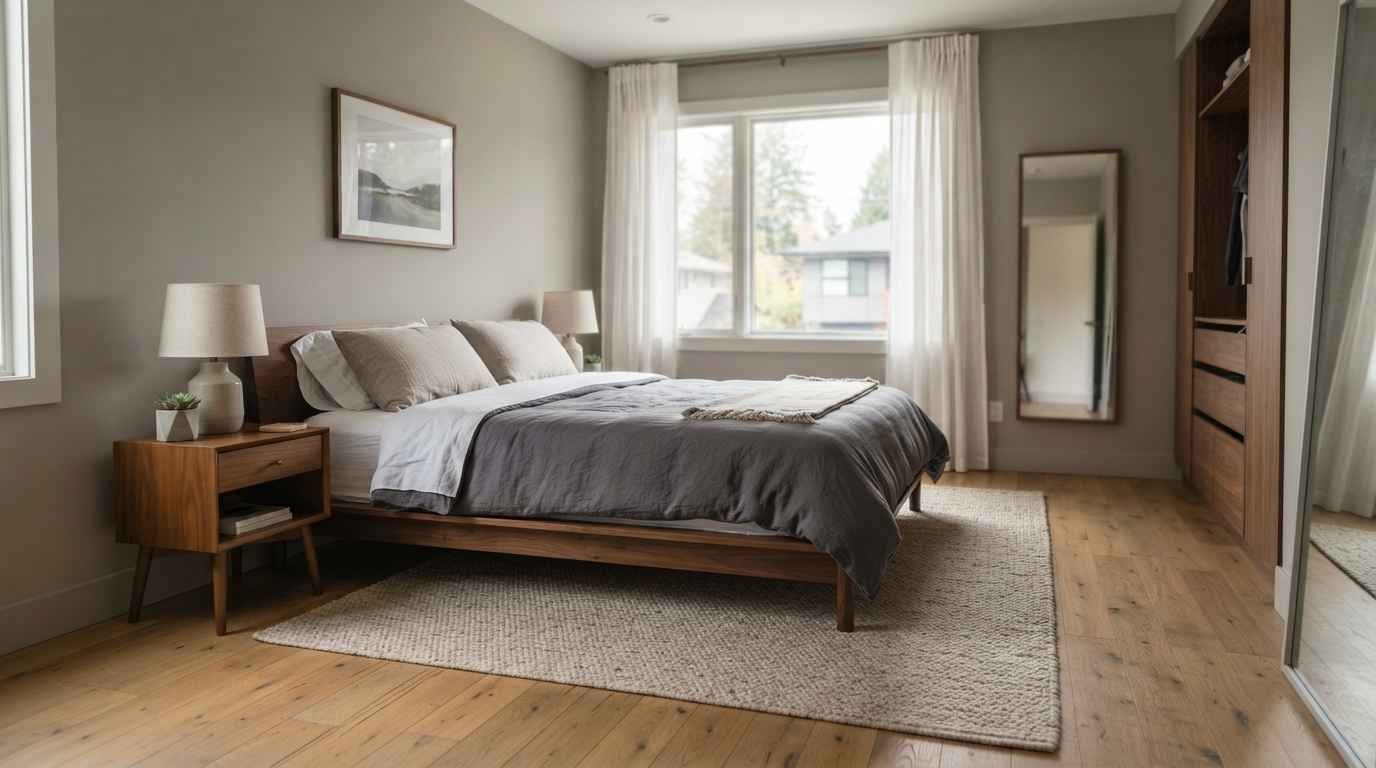
I used to think a “guy’s bedroom” meant a mattress on the floor, a TV mounted crooked on the wall, and a laundry pile that doubled as a nightstand.
Then I redid mine three years ago, and the difference still catches me off guard every time I walk in.
Minimalist decor isn’t about owning nothing. It’s about owning the right things, and giving them room to breathe.
If you’re pinning ideas for a bedroom that feels calm, looks sharp, and doesn’t take a weekend to clean, you’re in the right place.
I’ll be honest, my first attempt at a “minimalist” bedroom just meant I got rid of stuff and called it a day. The room ended up looking half-finished, not intentional. It took a few tries and a lot of trial and error before I figured out that minimalism has a structure to it, even if it looks effortless from the outside.
That structure is what this list is really about. Not bare walls for the sake of bare walls, but a set of choices that add up to a bedroom that actually feels good to wake up in.
Here are 22 ideas I’ve either used myself, tested for friends, or genuinely think deserve a spot on your board.
Why Minimalist Design Actually Works for a Men’s Bedroom
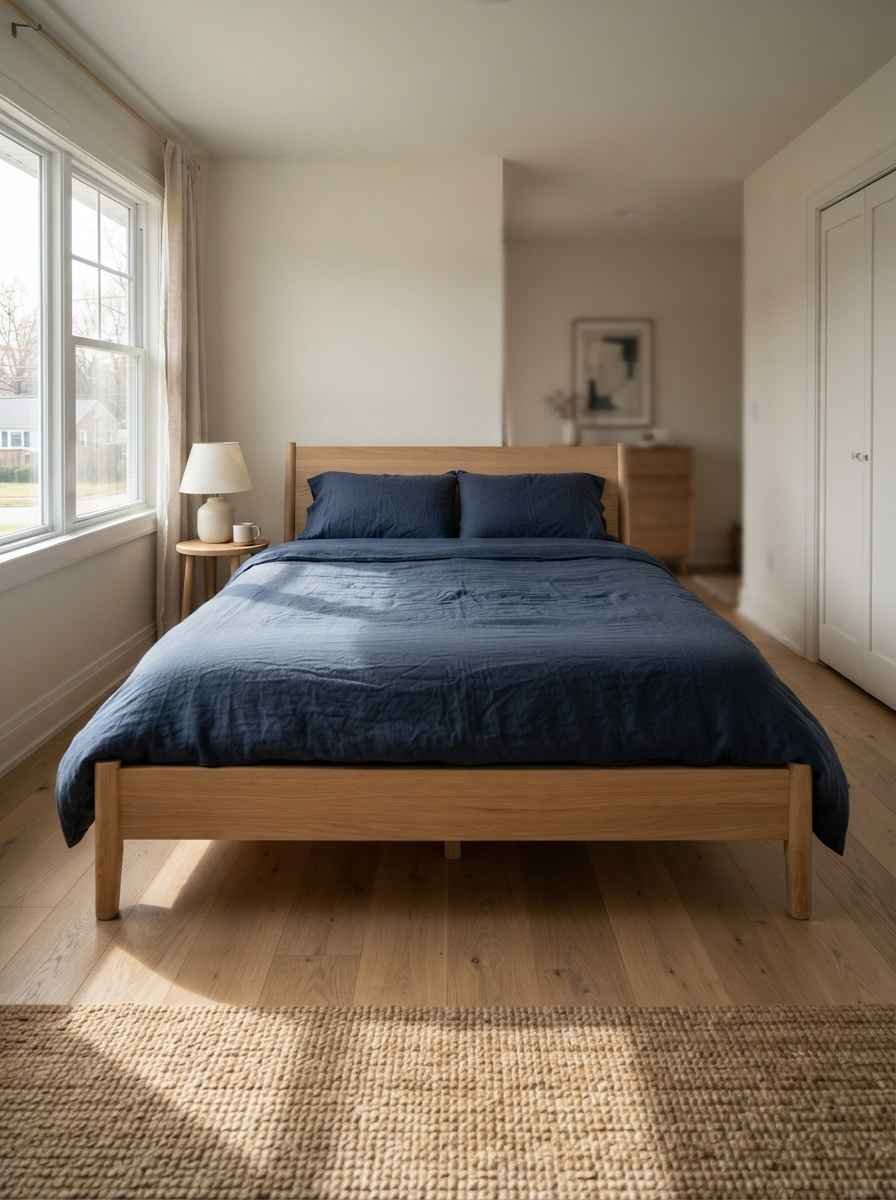
A bedroom gets used differently than a living room.
Nobody’s entertaining guests in there. It’s the one room in the house that only has to work for you.
That’s exactly why minimalist design fits so well here.
Fewer decisions in the morning, fewer things competing for your attention at night, and a room that’s genuinely easier to keep clean because there’s less in it to move around.
There’s also a practical side most articles skip. A room with less stuff in it photographs better, sells better if you’re staging a place, and takes less time to reset after a busy week.
IMO, that last point matters more than people give it credit for.
Start With the Bed, Not the Wall Art
Most people redecorate backward. They buy a poster first and figure out the rest later.
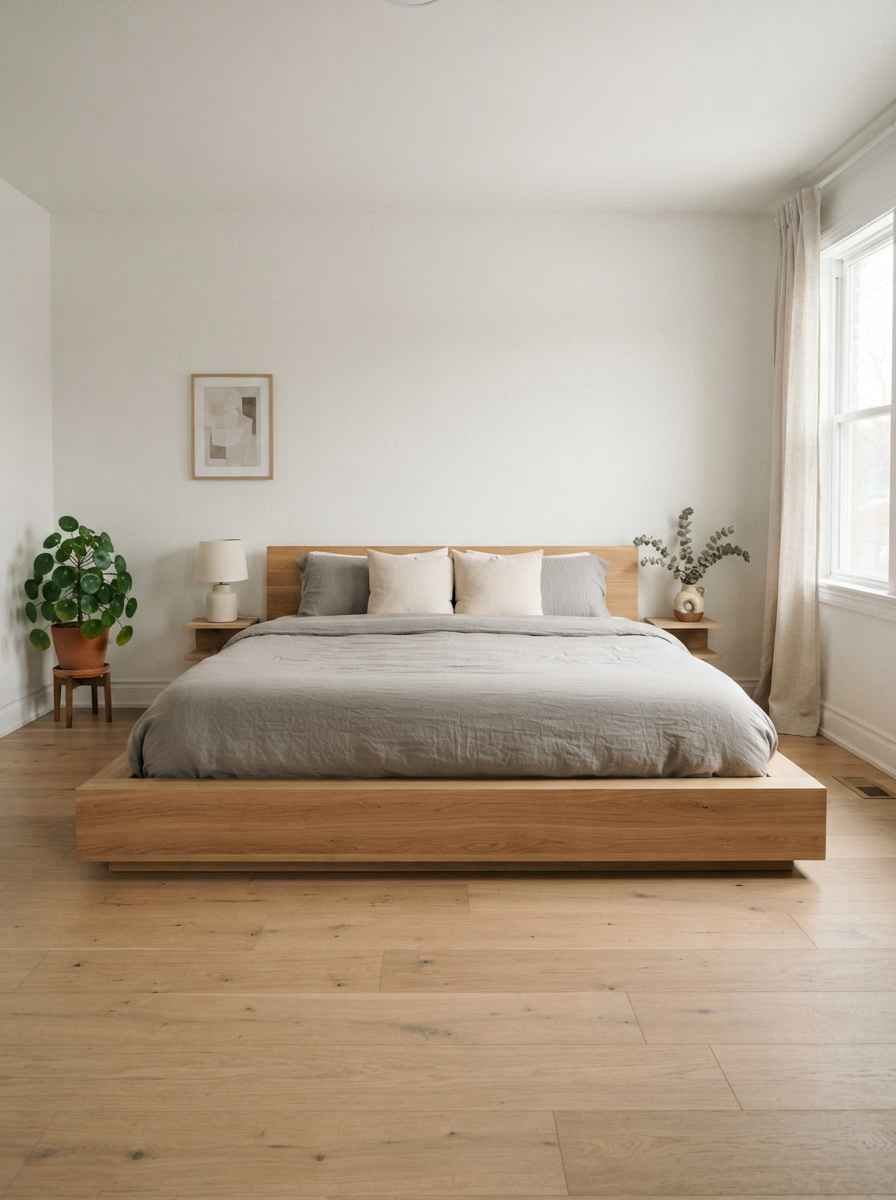
1. Choose a low-profile platform bed. No footboard, no headboard carvings, just clean horizontal lines. It instantly makes a room feel wider.
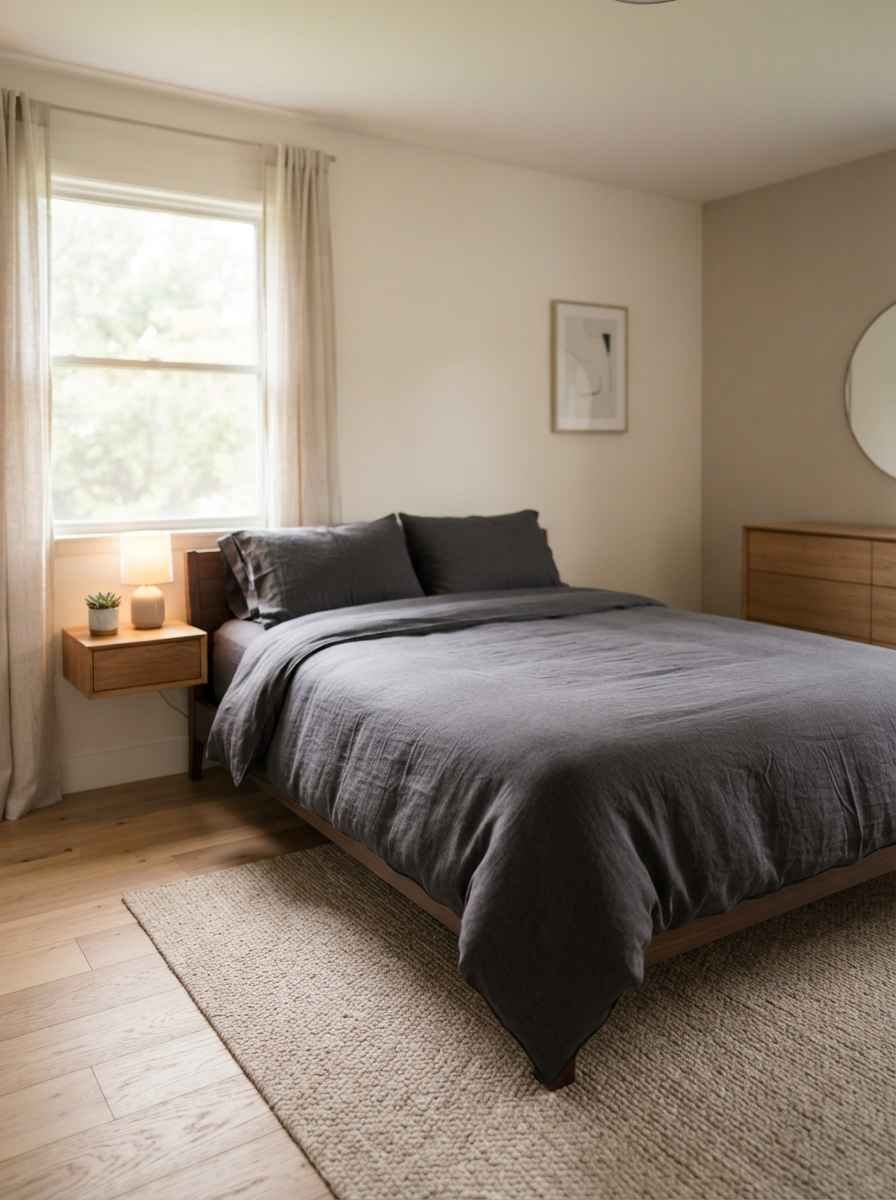
2. Stick to one duvet color, max two. Charcoal, oatmeal, or deep navy. A busy comforter fights everything else in the room for attention, and it always wins for the wrong reasons.
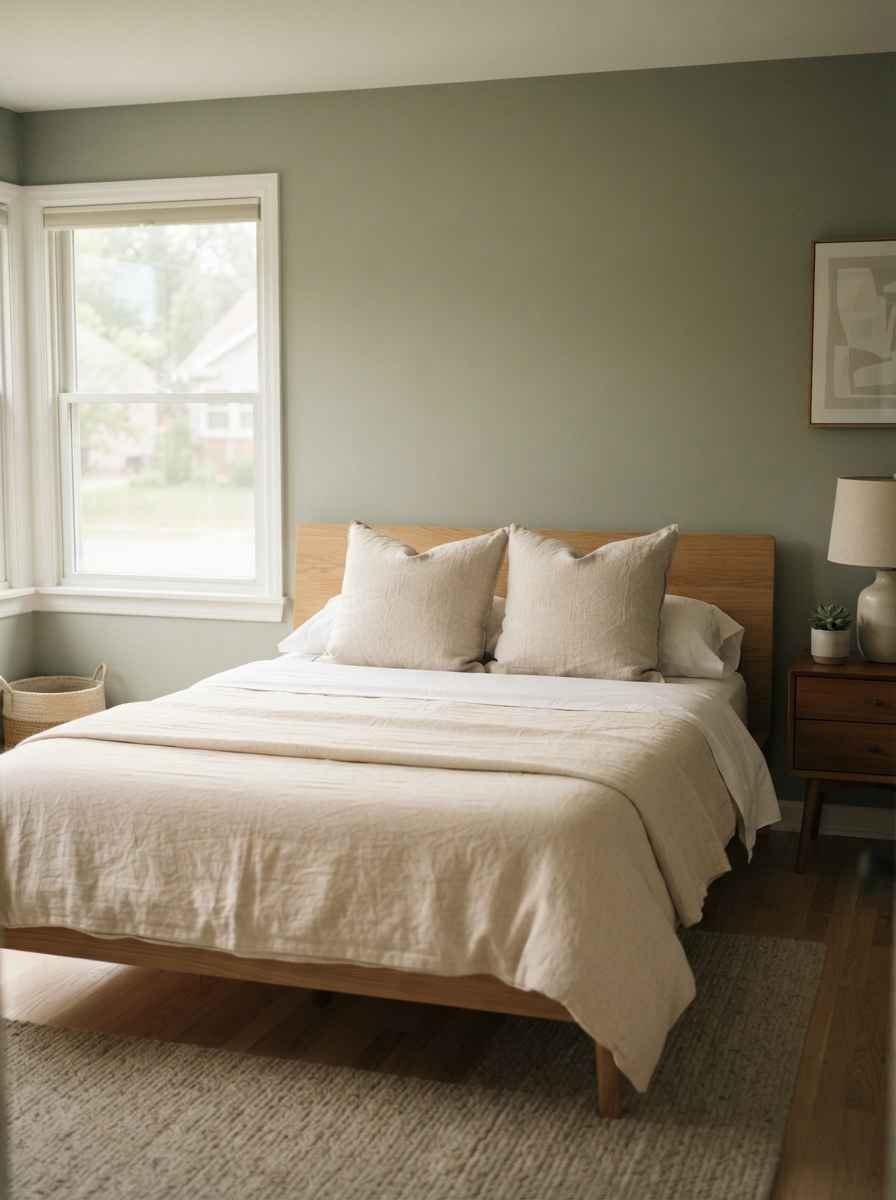
3. Swap out mismatched pillows for a matched set of two. I know, it sounds boring. It isn’t. Consistency here does more visual work than five throw pillows ever will.
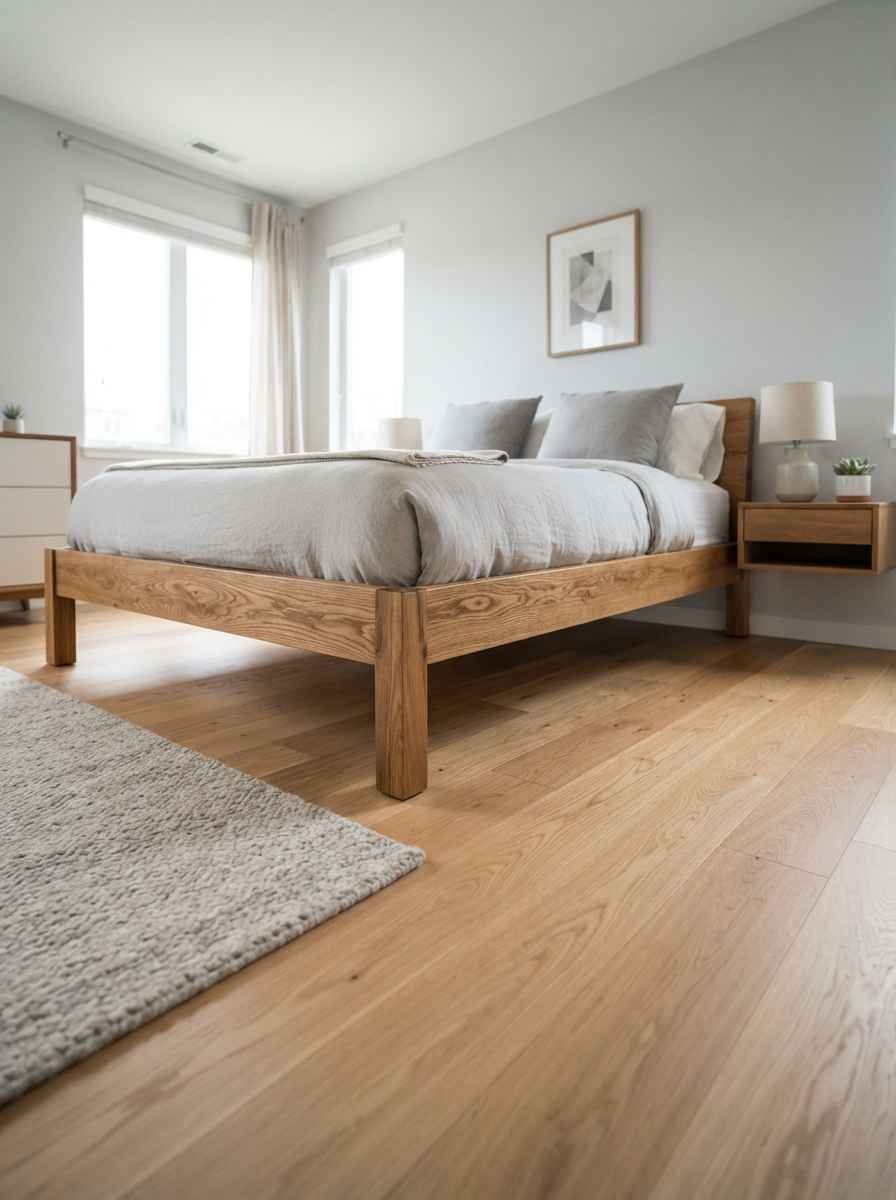
4. Skip the bed skirt. If you can see the frame legs or a clean base, let it show. Hiding the bed’s structure just adds visual clutter you don’t need.
Build a Color Palette You Can Actually Repeat
A minimalist bedroom lives or dies on restraint, and color is where most people lose the thread.
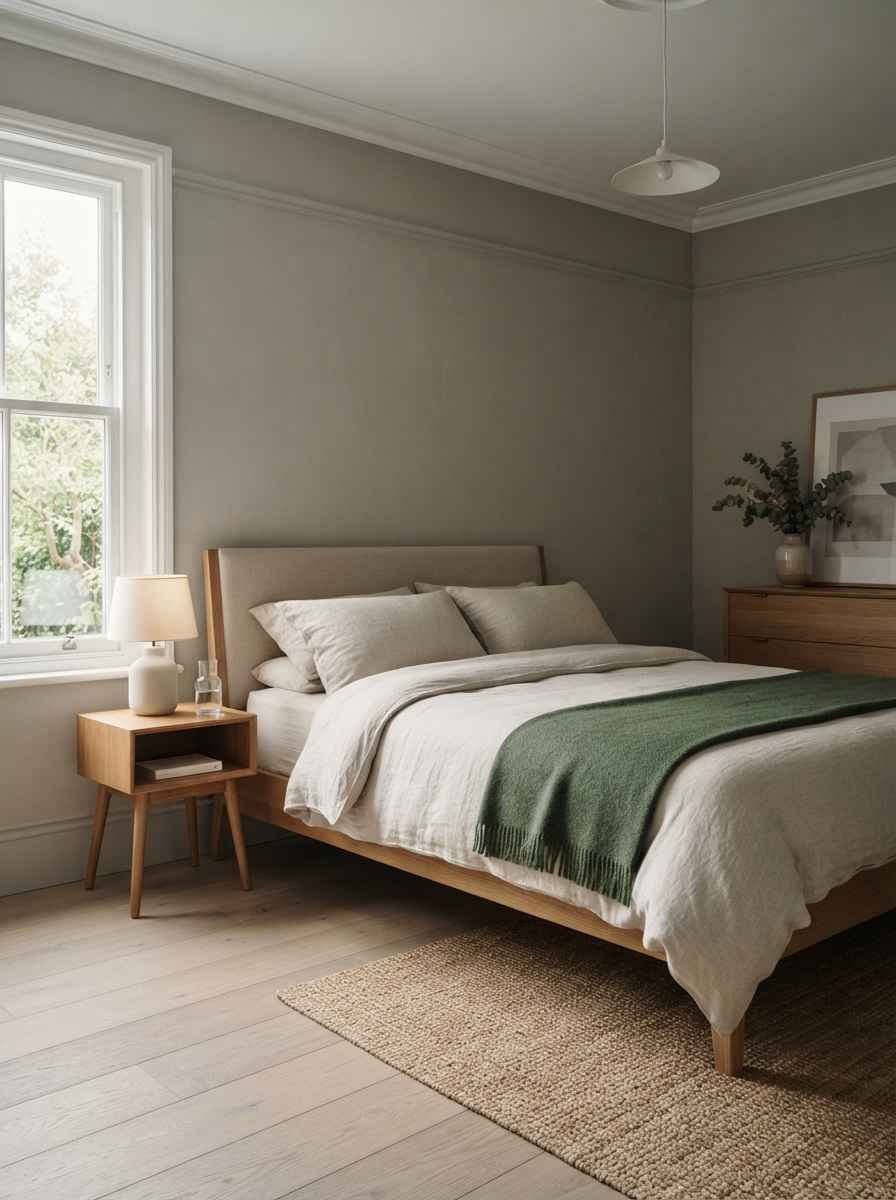
5. Pick a base of two neutrals and one accent. Something like gray, white, and forest green. Research from the Sleep Foundation on bedroom color and sleep backs this up too: cooler, muted tones are linked to better rest, which is a nice bonus on top of looking good.
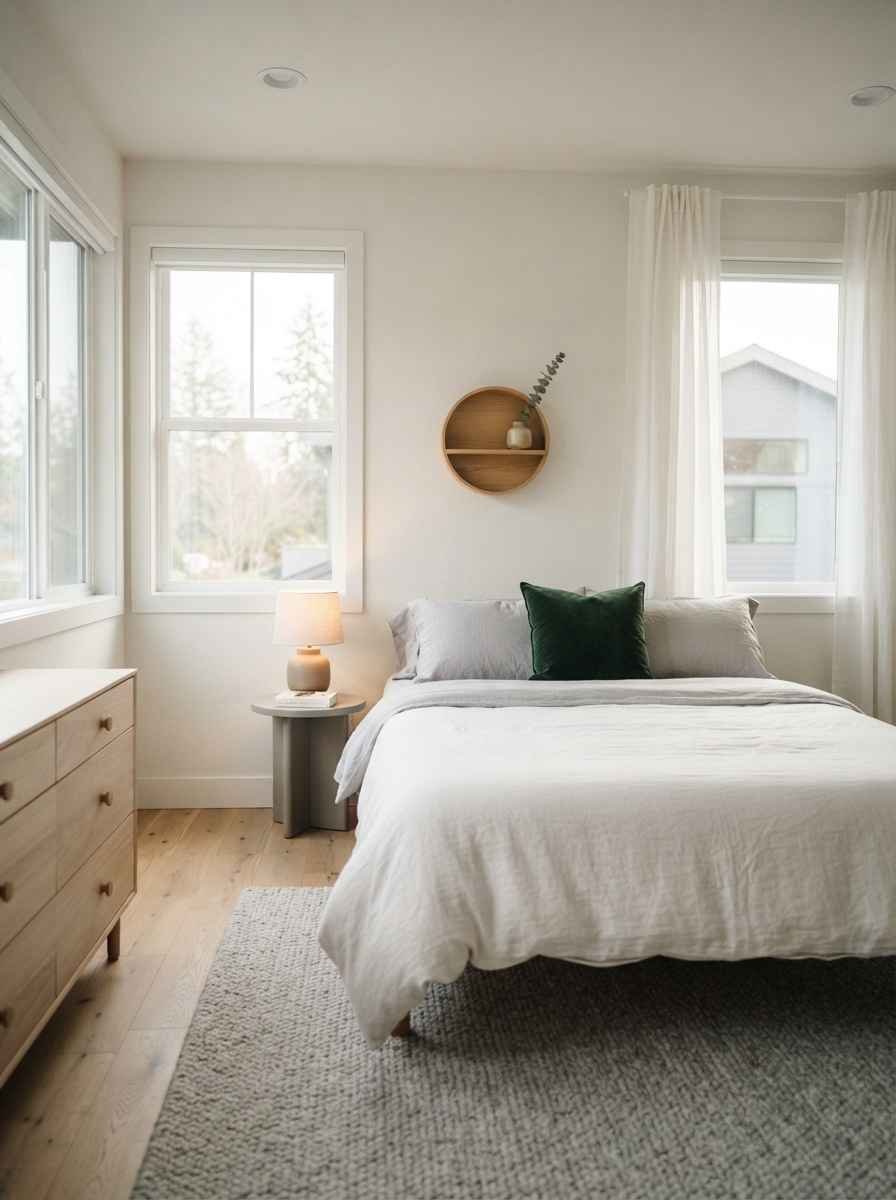
6. Paint one wall, not four. An accent wall behind the headboard gives depth without turning the room into a paint sample.
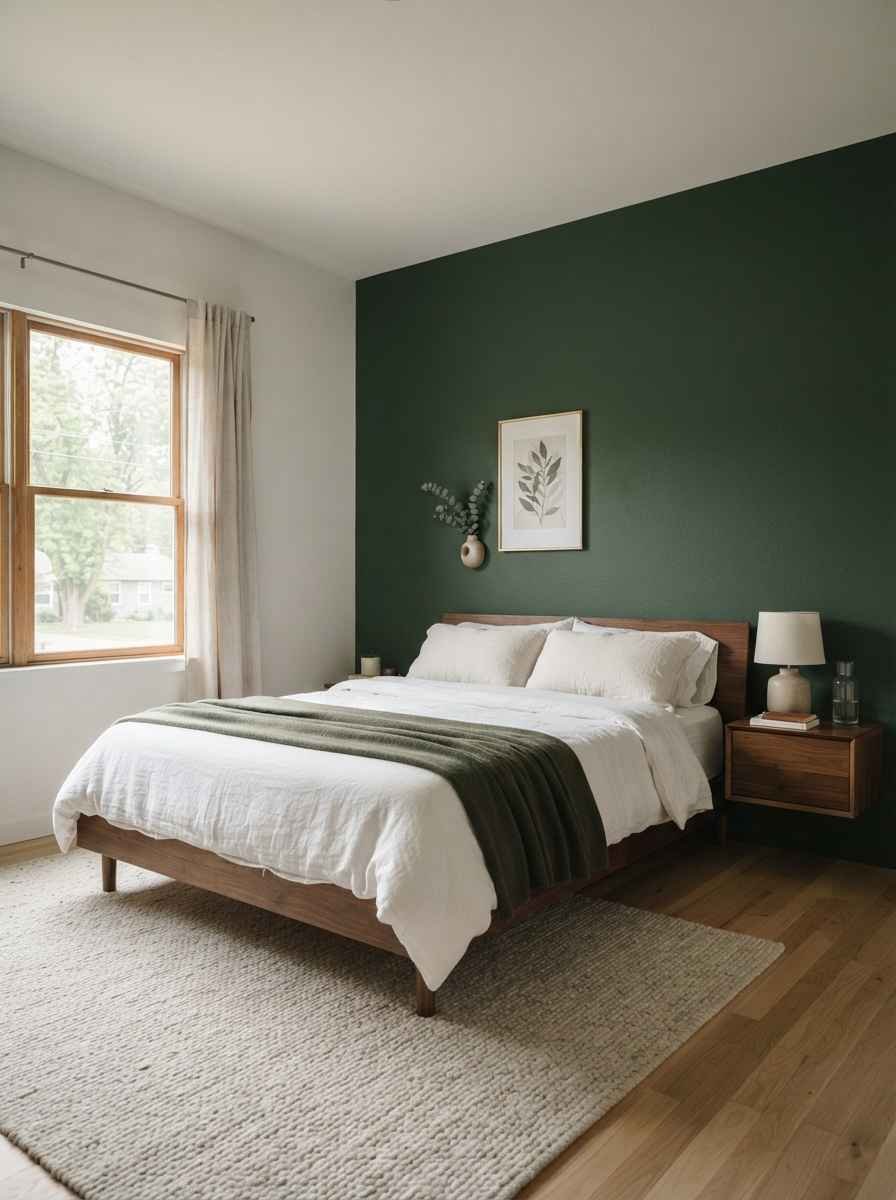
7. Use matte finishes over glossy ones. Glossy paint reflects light unevenly and can make a small room feel busier than it is.
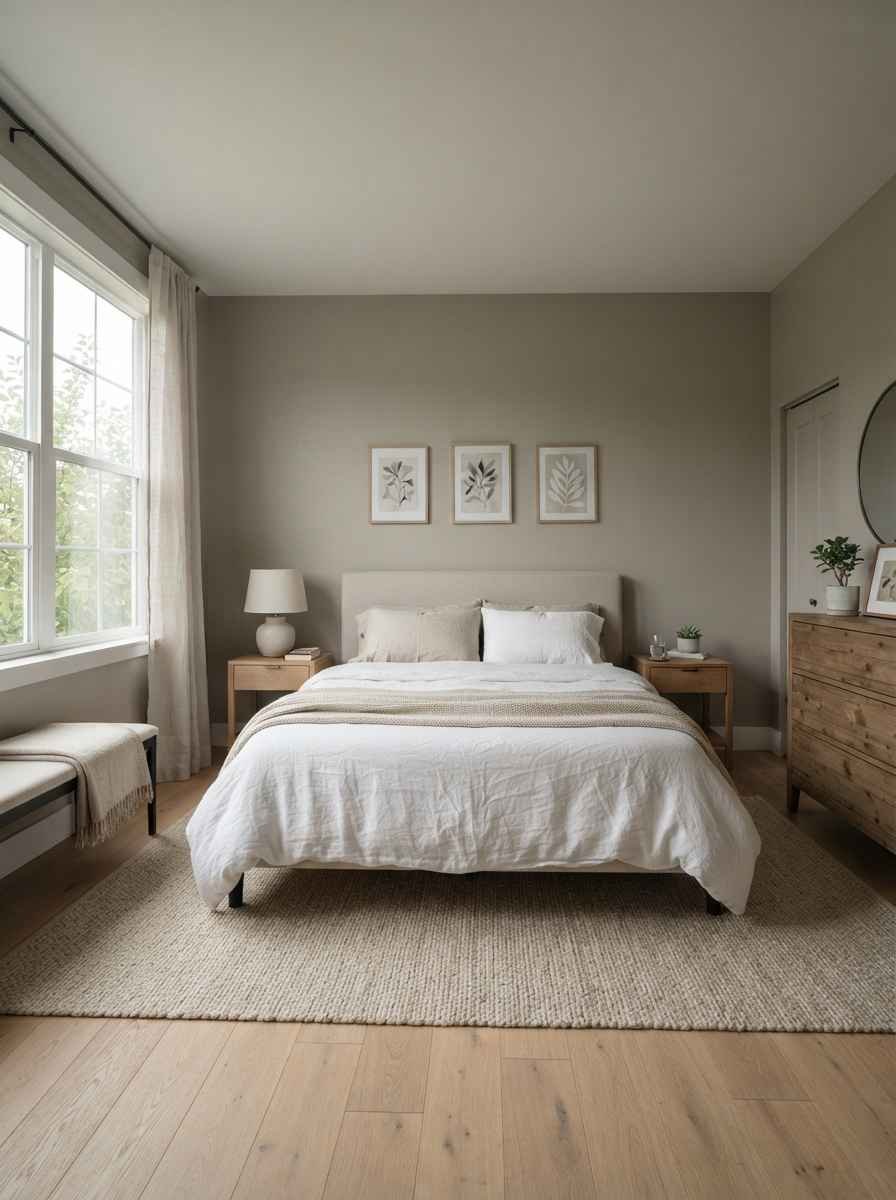
8. Repeat your accent color in exactly one other spot. A throw blanket, a lamp base, a single piece of art. One echo, not five.
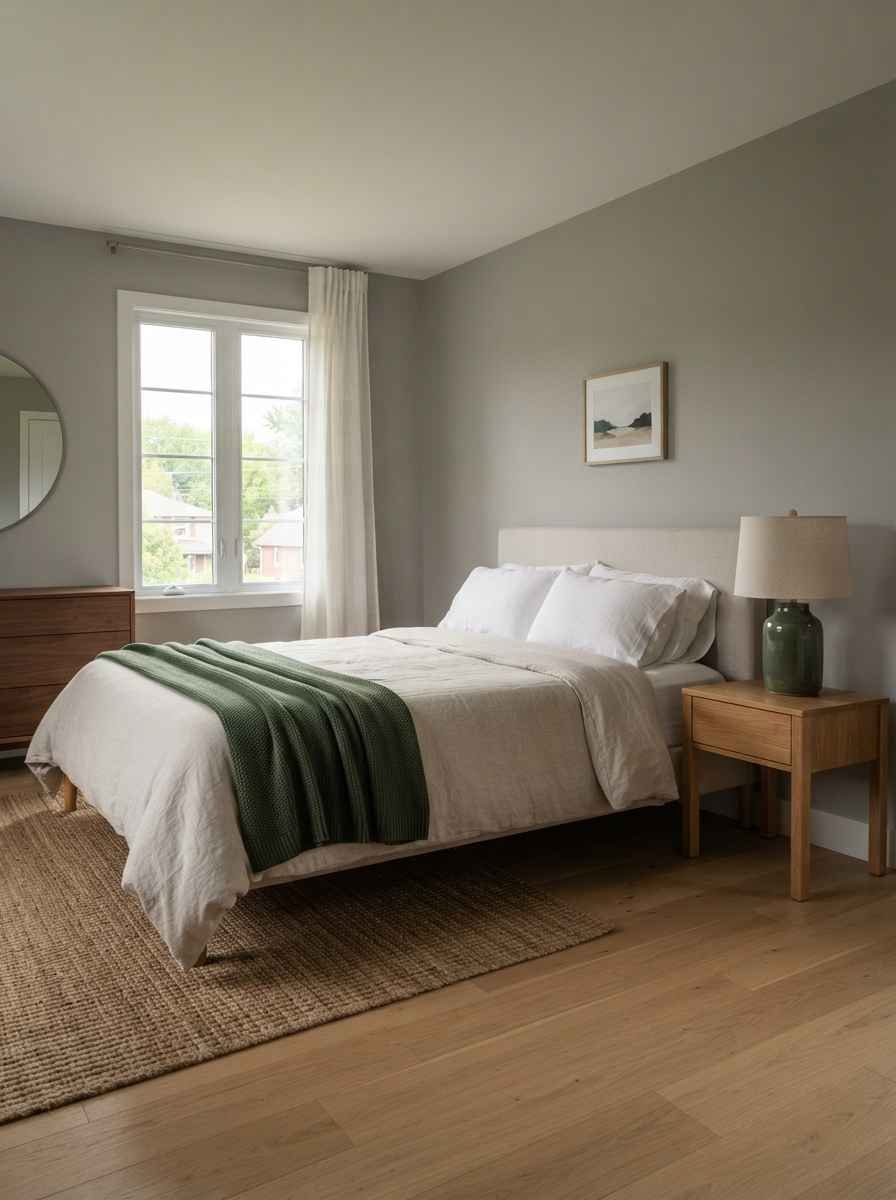
I tested this rule against my own room by counting how many colors were actually visible from the doorway. Four, once I got strict about it. Any more than that and the eye stops resting and starts working, which defeats the entire point of a calm bedroom.
Furniture: Fewer Pieces, Better Ones
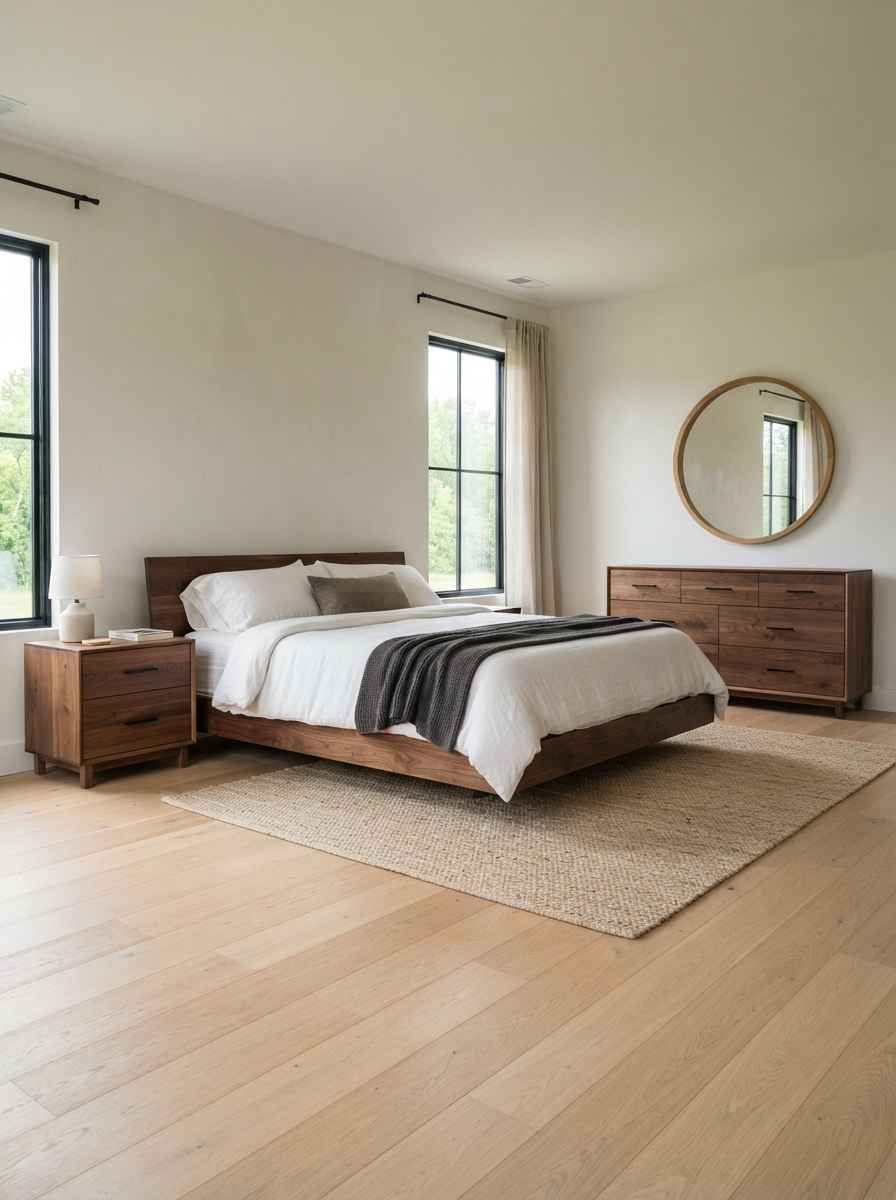
This is where I made my biggest mistake early on. I bought “starter” furniture thinking I’d upgrade later. I never did, and it showed.
Cheap furniture has a way of announcing itself. The finish chips, the drawers stick, and within a year the whole room looks tired even if you kept it spotless. Minimalist rooms depend on quality more than maximalist ones do, since there’s nothing else around to distract from a piece that’s falling apart.
My rule now: buy fewer pieces, but buy ones I’d still want in five years.
9. Invest in one solid nightstand instead of two cheap ones. A single well-made piece with a drawer beats a pair of flimsy IKEA tables that wobble every time you set a glass down.
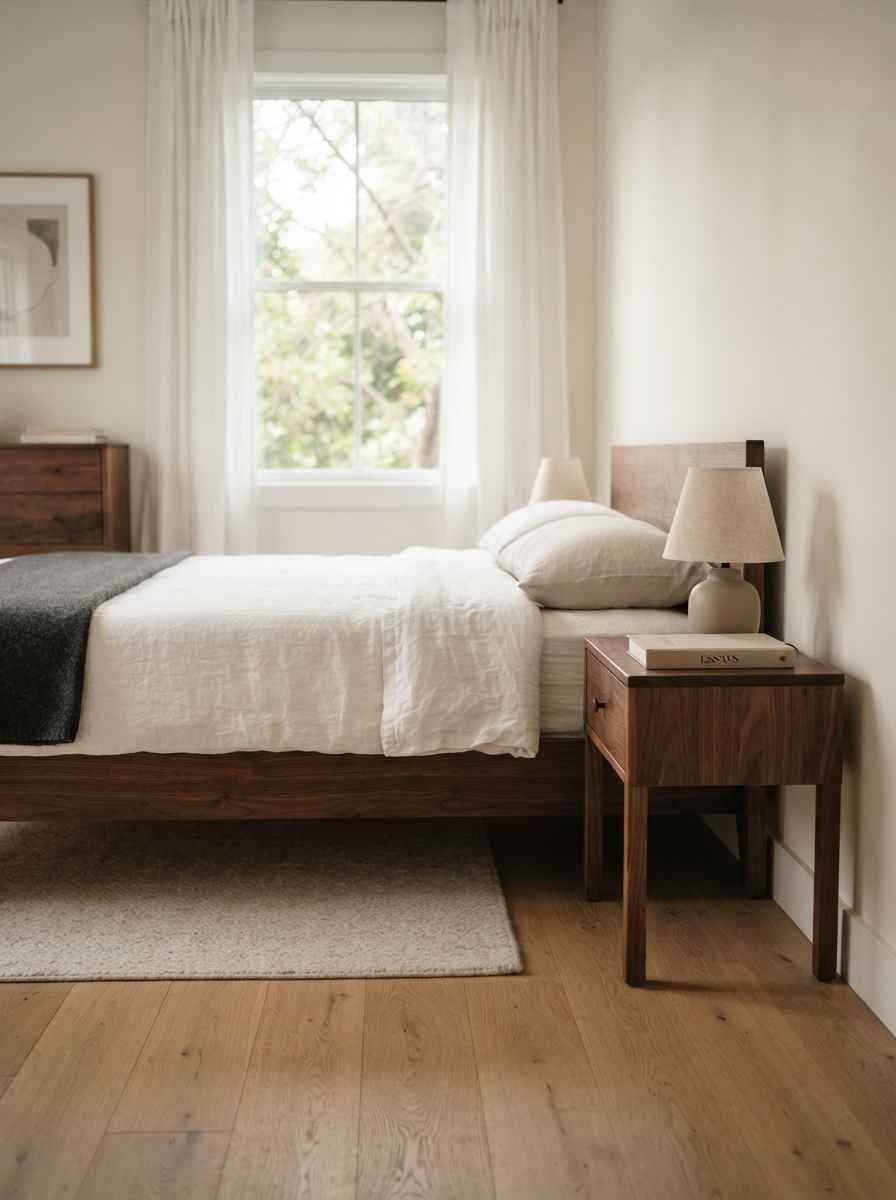
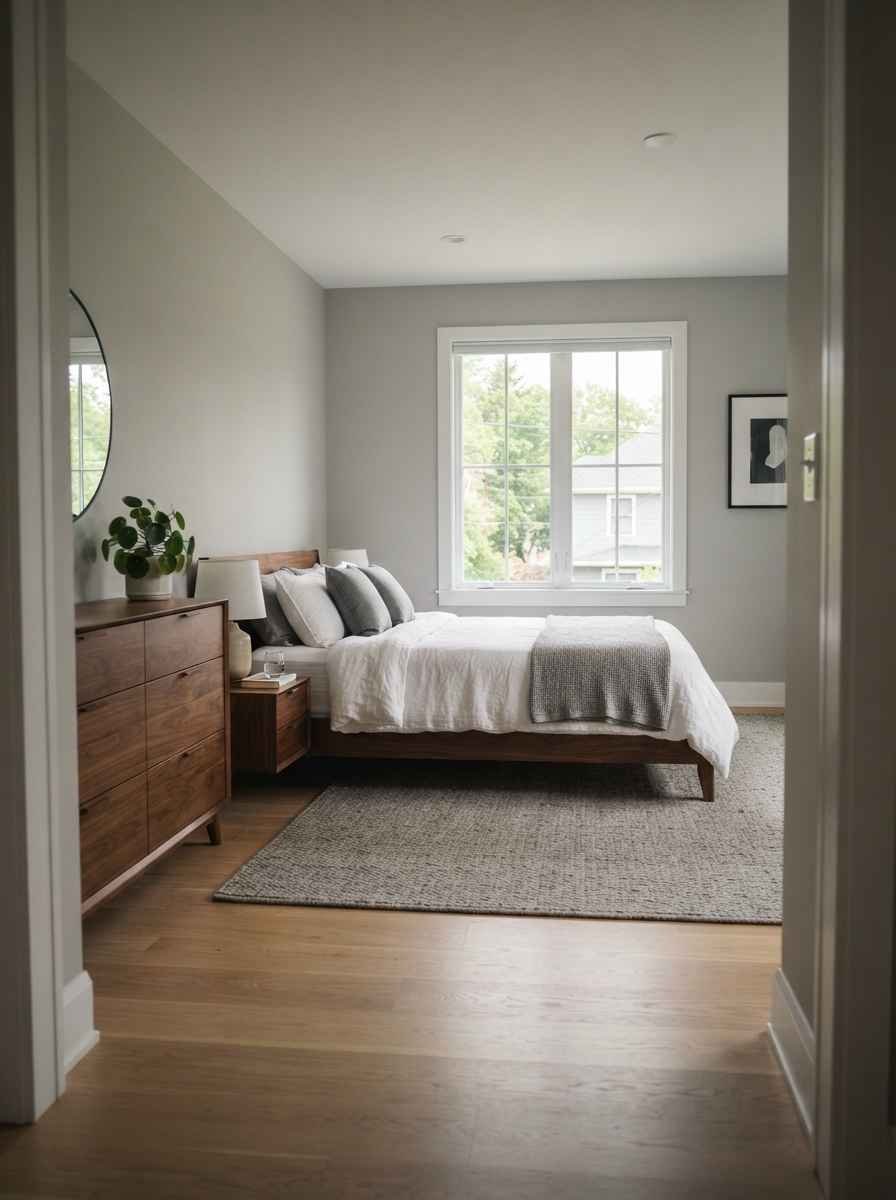
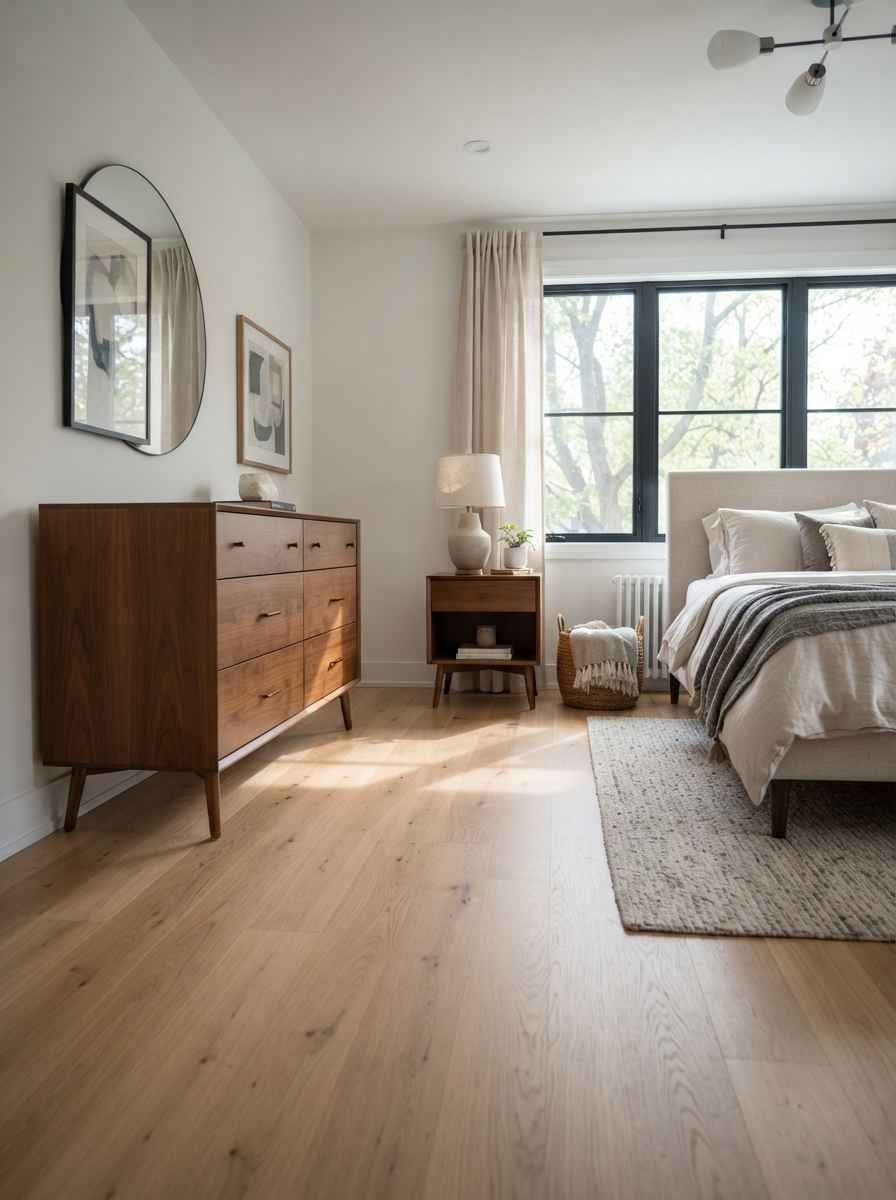
10. Choose a dresser with hidden hardware or none at all. Push-to-open drawers or recessed pulls keep the front flat and uninterrupted.
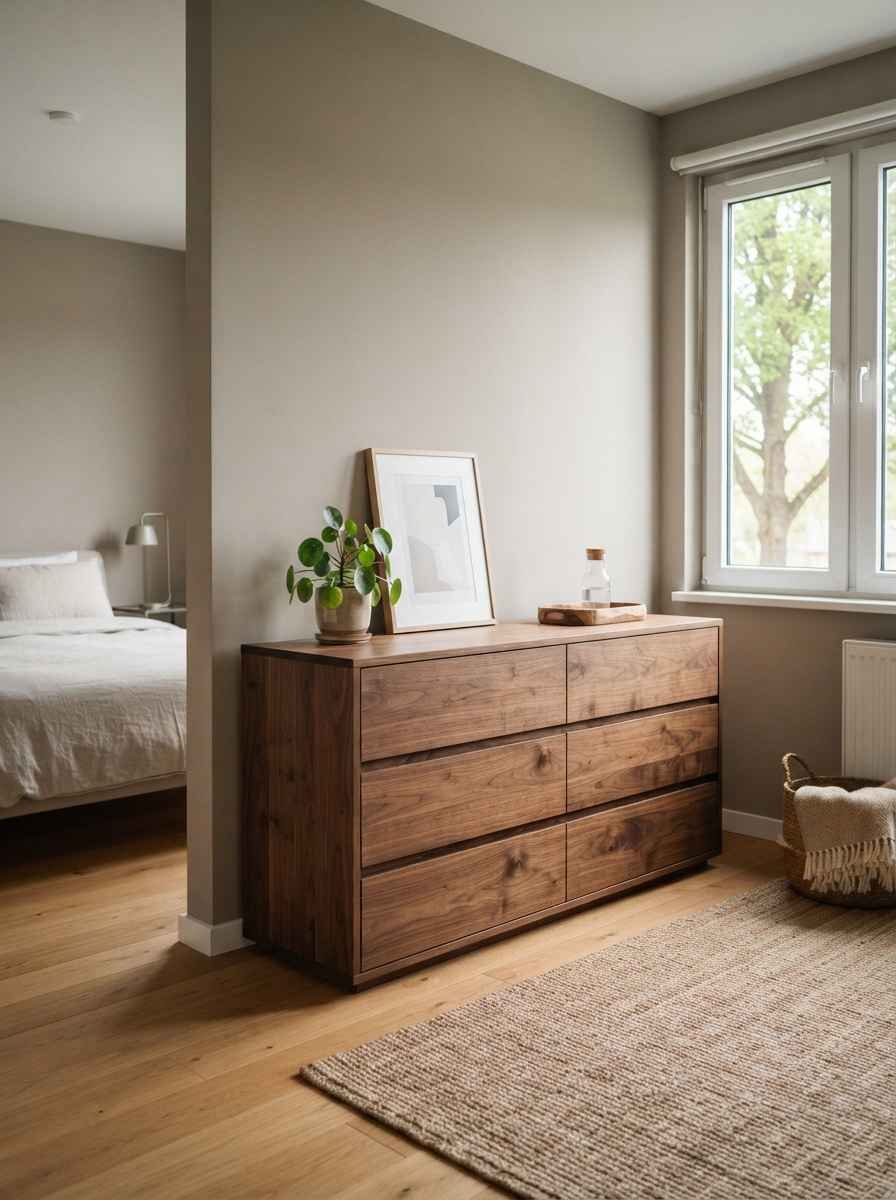
11. Go with open shelving sparingly, and only for things you’re proud to display. Books you’ve read, one plant, maybe a framed photo. Not a catch-all for random stuff.
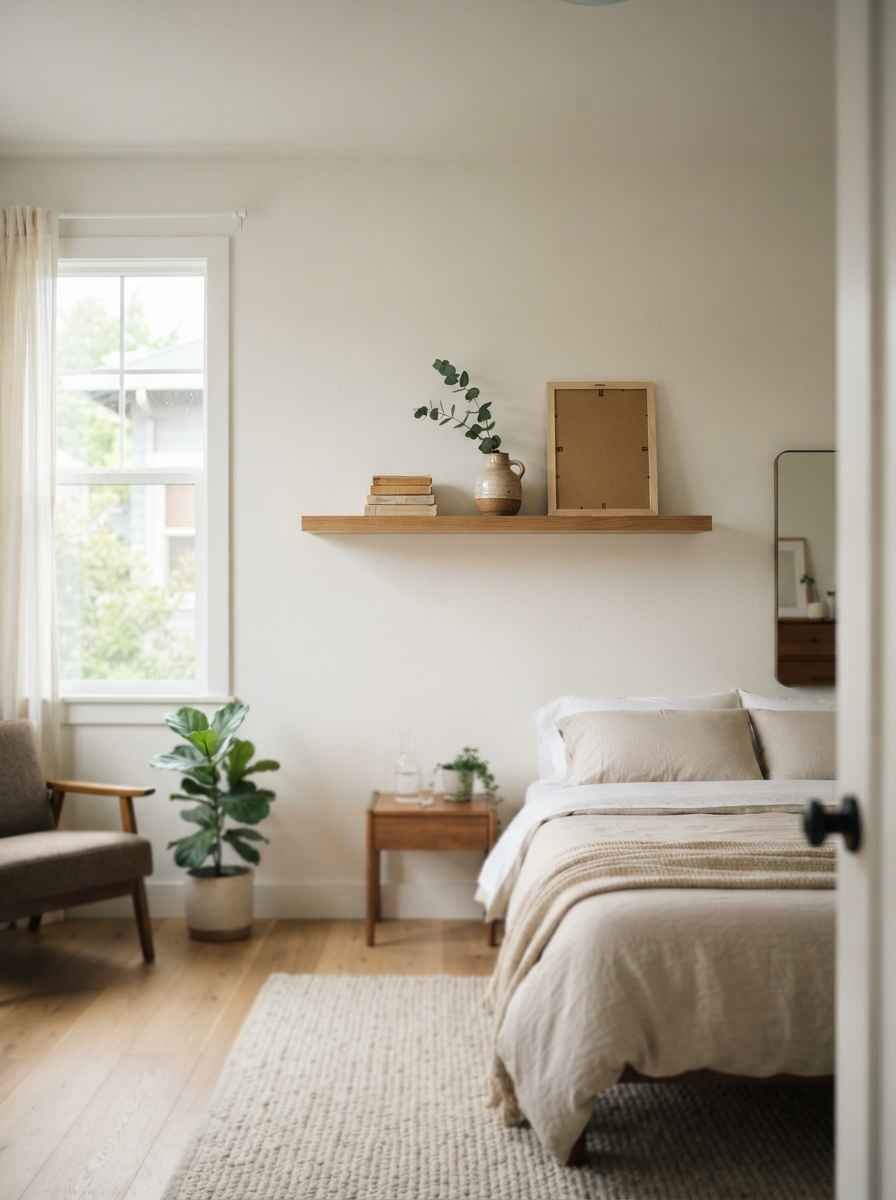
12. Pick furniture with legs, not furniture that sits flush on the floor. Visible floor space under a dresser or bed makes the whole room read as larger, according to design experts at Extra Space Storage’s minimalist bedroom guide, and honestly, my own place proved that true the second I swapped a boxy dresser for a leggy one.
Lighting That Does More Than One Job
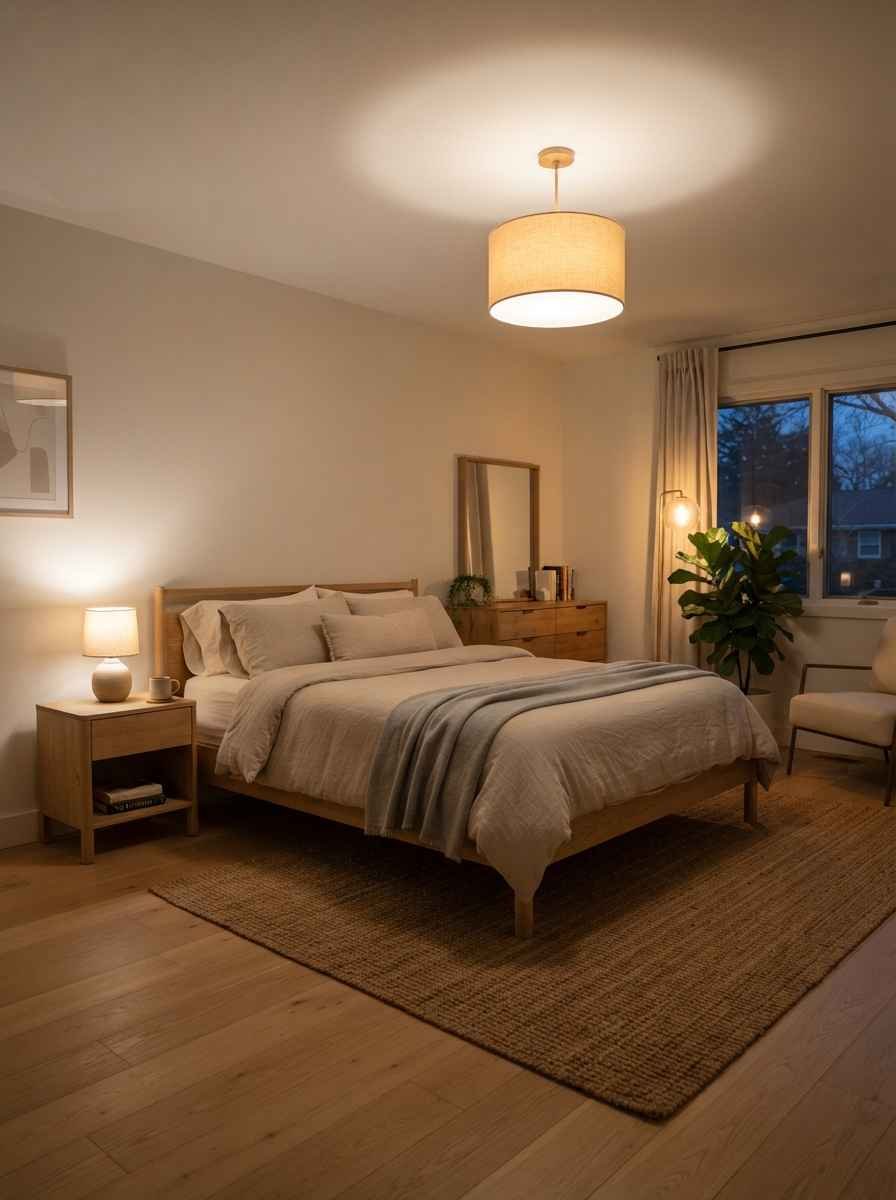
13. Layer your light sources. Overhead, a bedside lamp, and one accent light (a floor lamp in the corner works great). Flat overhead lighting alone makes any room feel like a waiting room.
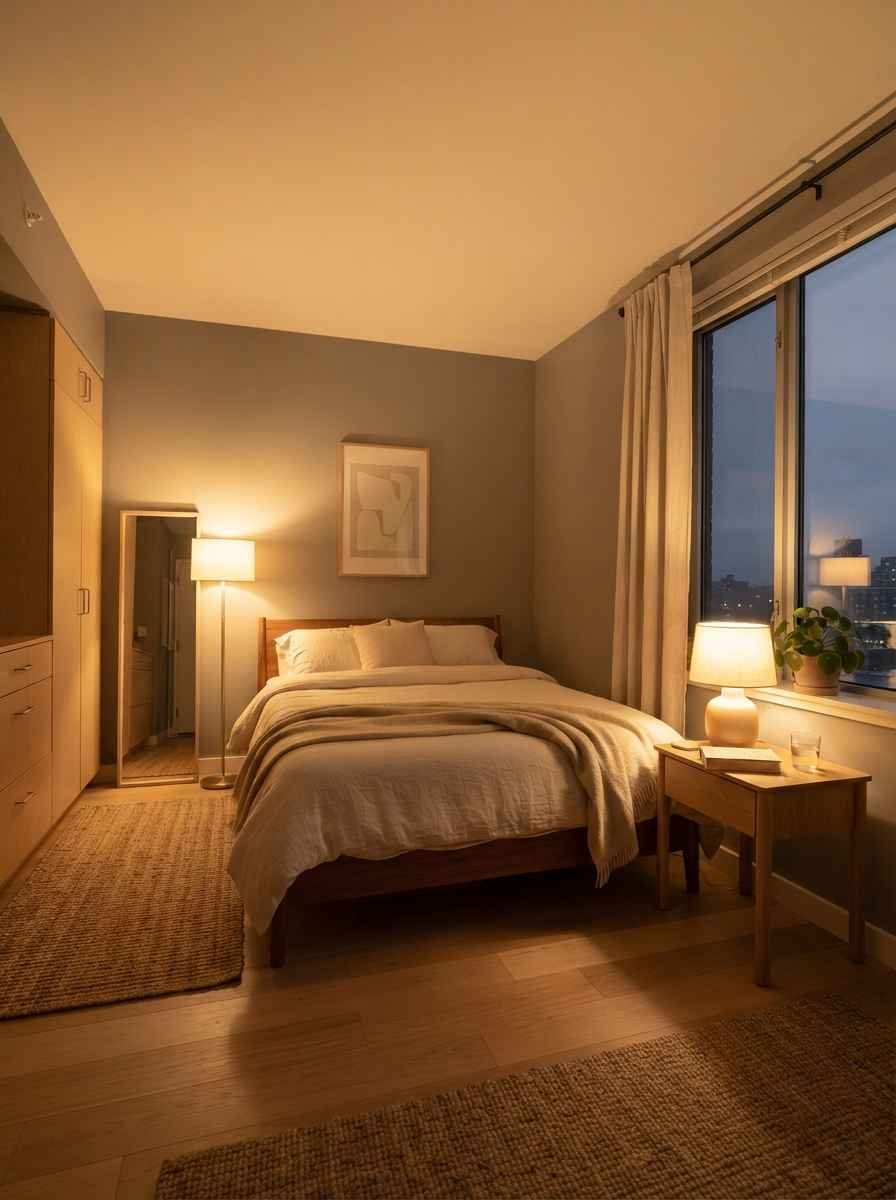
14. Go with warm bulbs, around 2700K. Cool white bulbs make a minimalist space feel clinical instead of calm. Nobody wants their bedroom to look like a dentist’s office.
15. Try a wall-mounted swing-arm lamp instead of a table lamp. It frees up nightstand space and adds an architectural line to the wall.
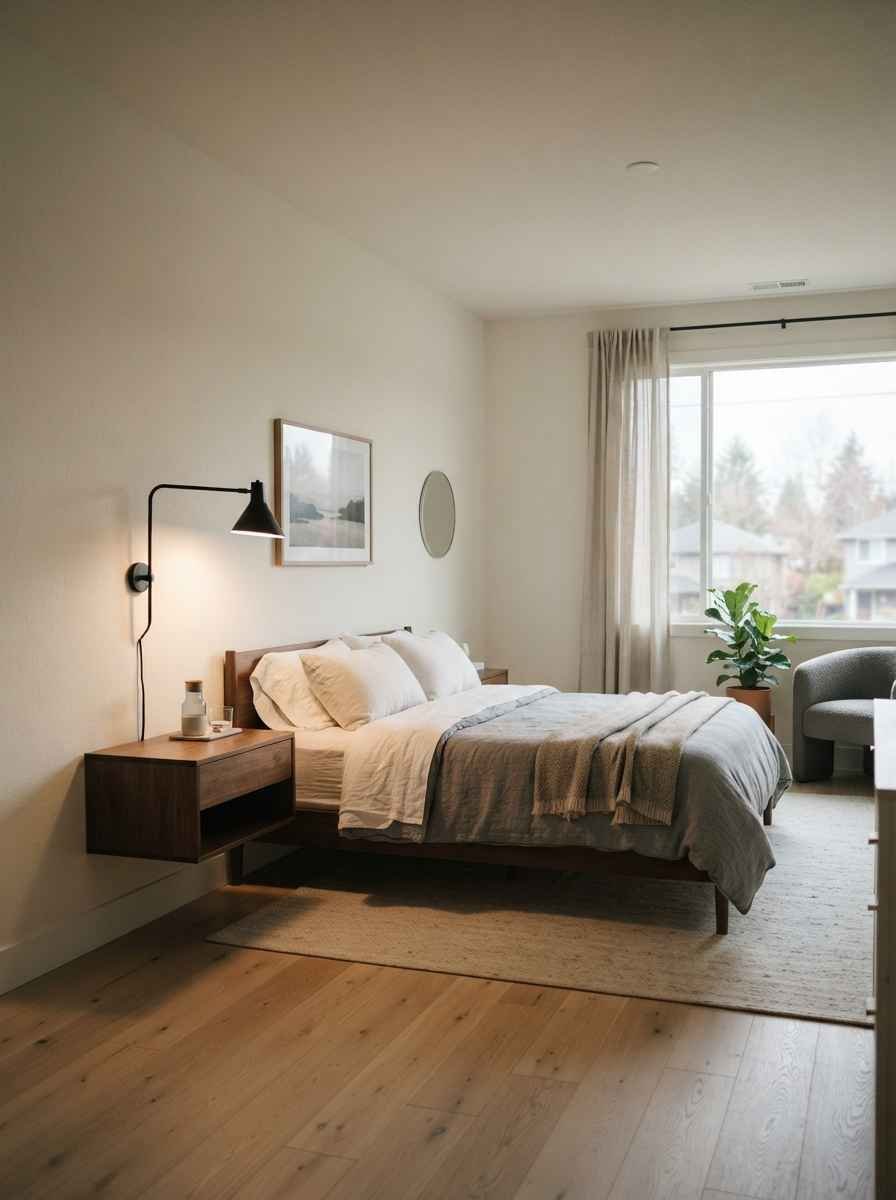
Lighting is the one category people budget for last and notice first. A $30 lamp with the wrong bulb temperature can undo an otherwise great room in about two seconds.
I learned that the hard way after buying a lamp I loved, then plugging in a bulb that made the whole space look like an operating room. Swapped the bulb, problem solved, lesson learned.
Textures Save Minimalism From Feeling Cold
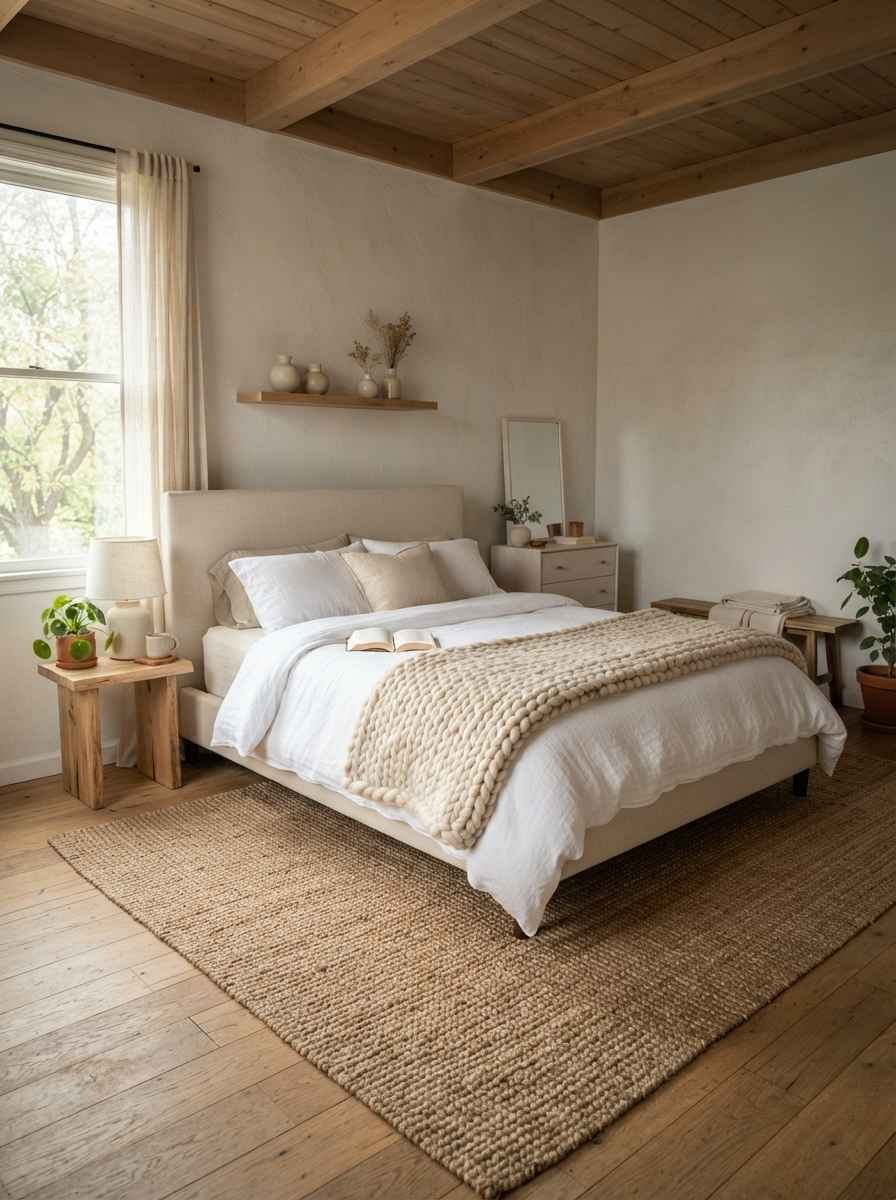
Here’s the part people mess up the most. IMO, a room with zero pattern and zero texture doesn’t look minimalist, it looks unfinished.
16. Add one heavy-texture item. A wool throw, a linen bedspread, a leather ottoman. Texture gives your eye somewhere to land without adding visual noise.
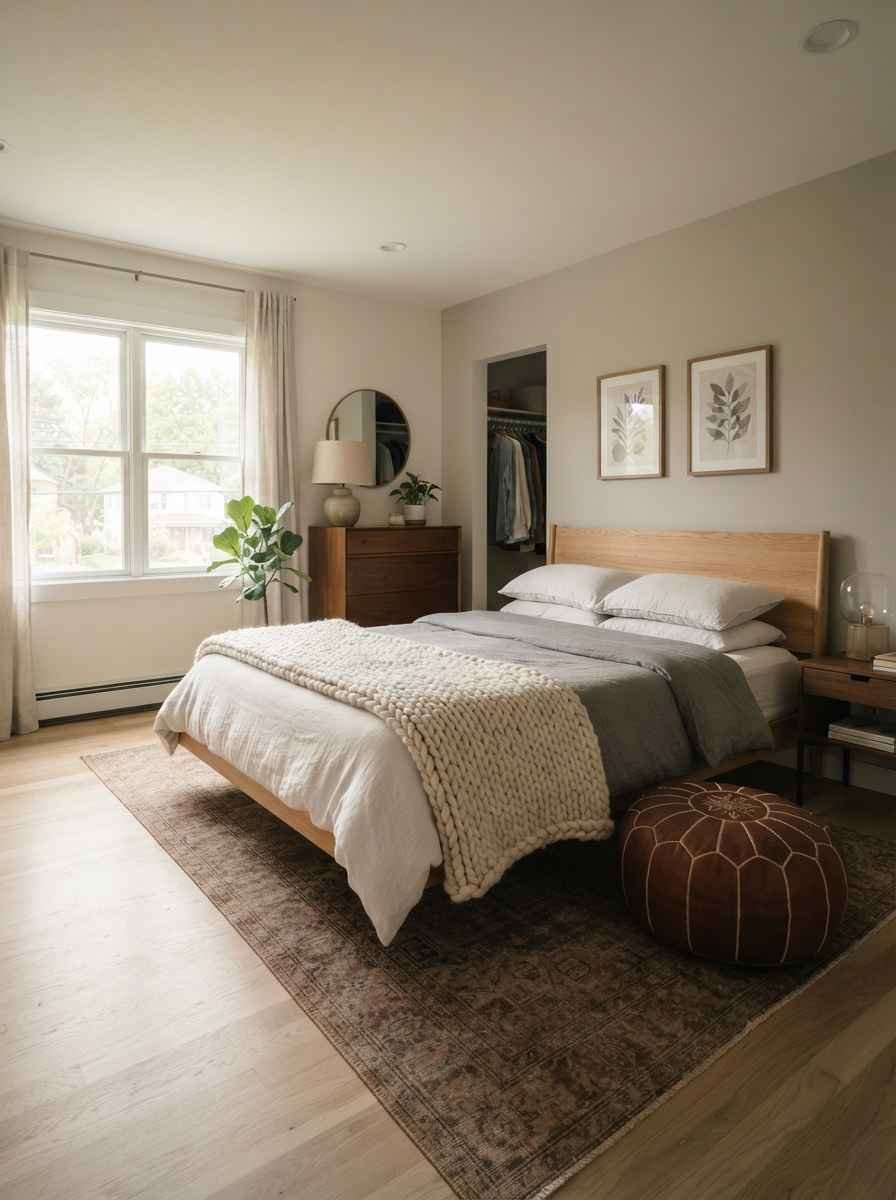
17. Layer a rug even on hardwood or carpet. A flat-weave rug in a neutral tone grounds the room and adds warmth underfoot.
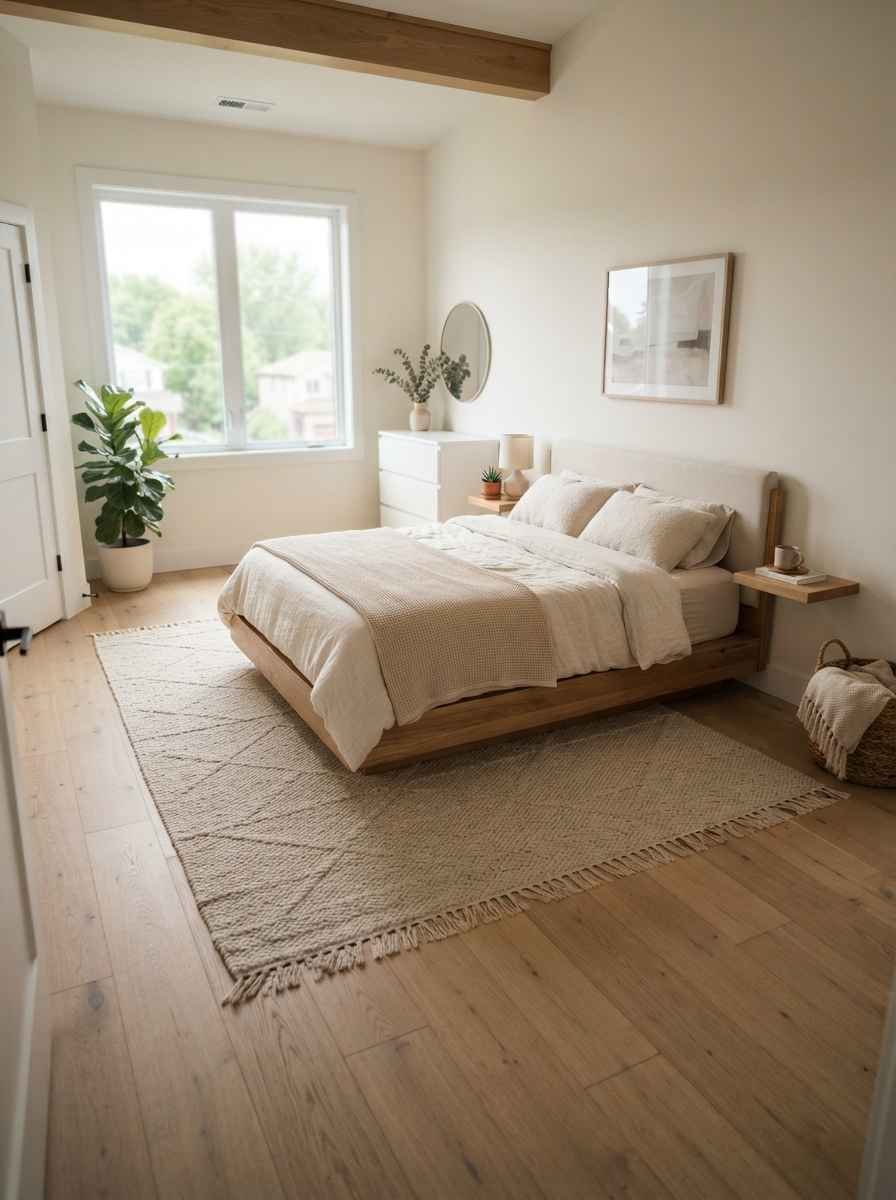
18. Bring in one plant, real or a convincing faux. A single fiddle leaf fig or snake plant in the corner softens all those straight lines everywhere else.
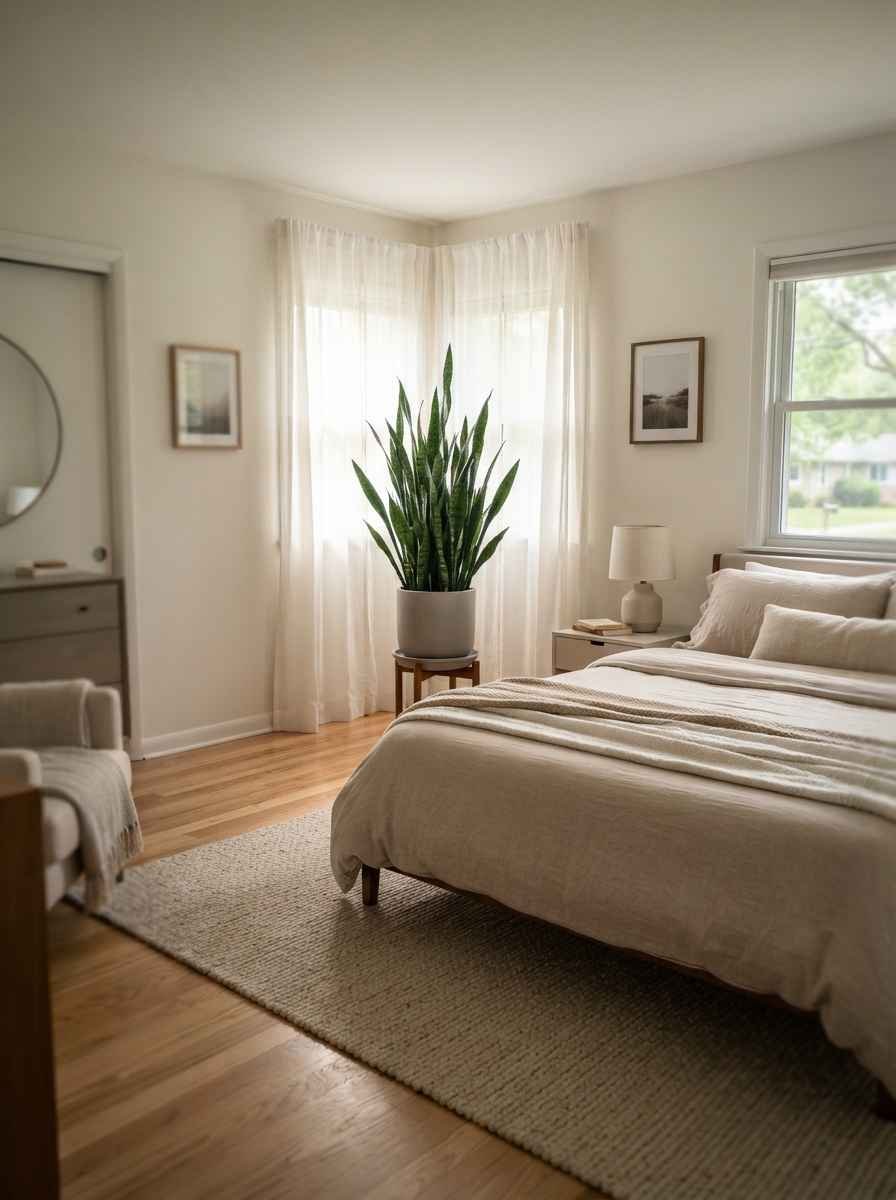
I killed two real plants before switching to a snake plant, which is apparently hard to kill even with real effort.
If your track record with houseplants is rough, start there before spending money on anything fussier.
Random thought here: I once spent 40 minutes at a garden center arguing with myself over two nearly identical snake plants before picking the uglier one because it was $6 cheaper.
No regrets. Anyway, back to the room.
Walls and Storage: Where Clutter Actually Hides
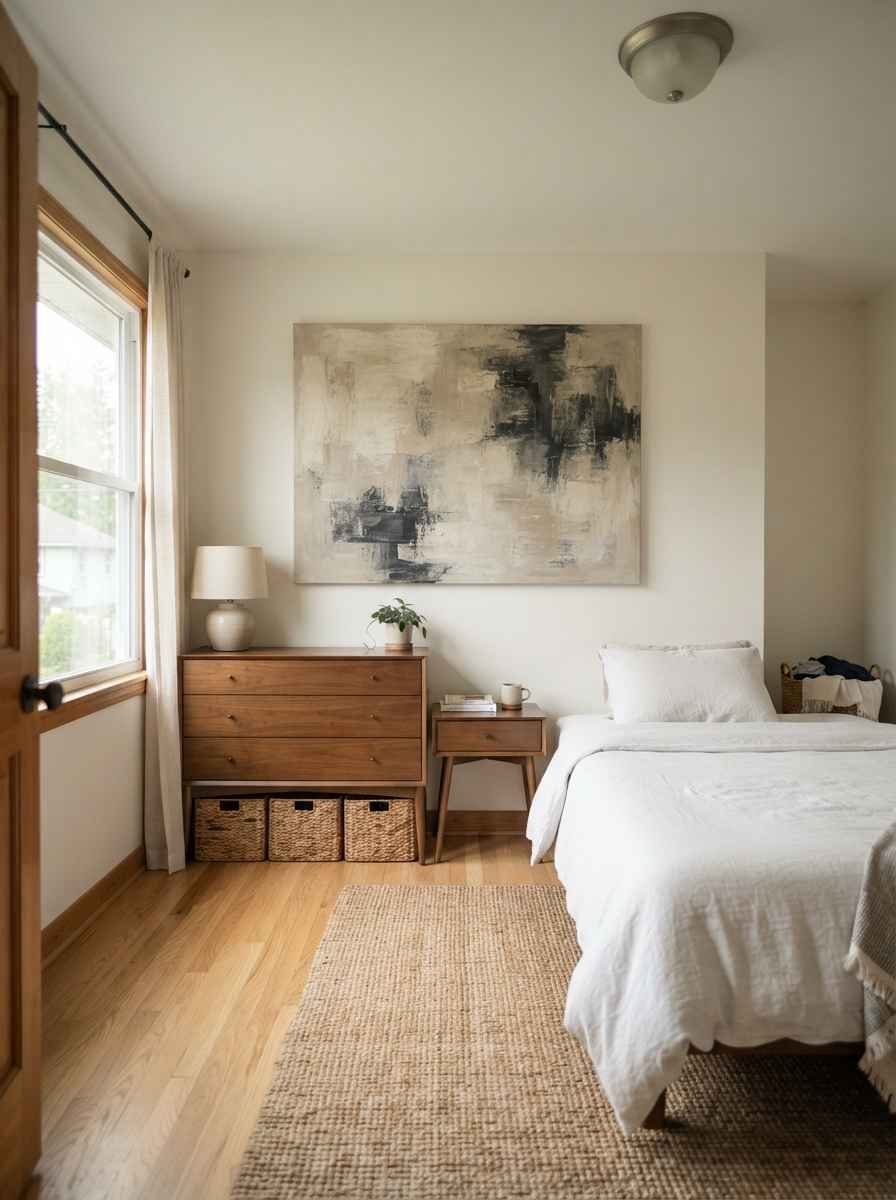
19. Hang one large piece of art instead of a gallery wall. A gallery wall can look great, but it’s a maximalist move dressed up as minimalism.
One large, meaningful piece does more for a bedroom this size.
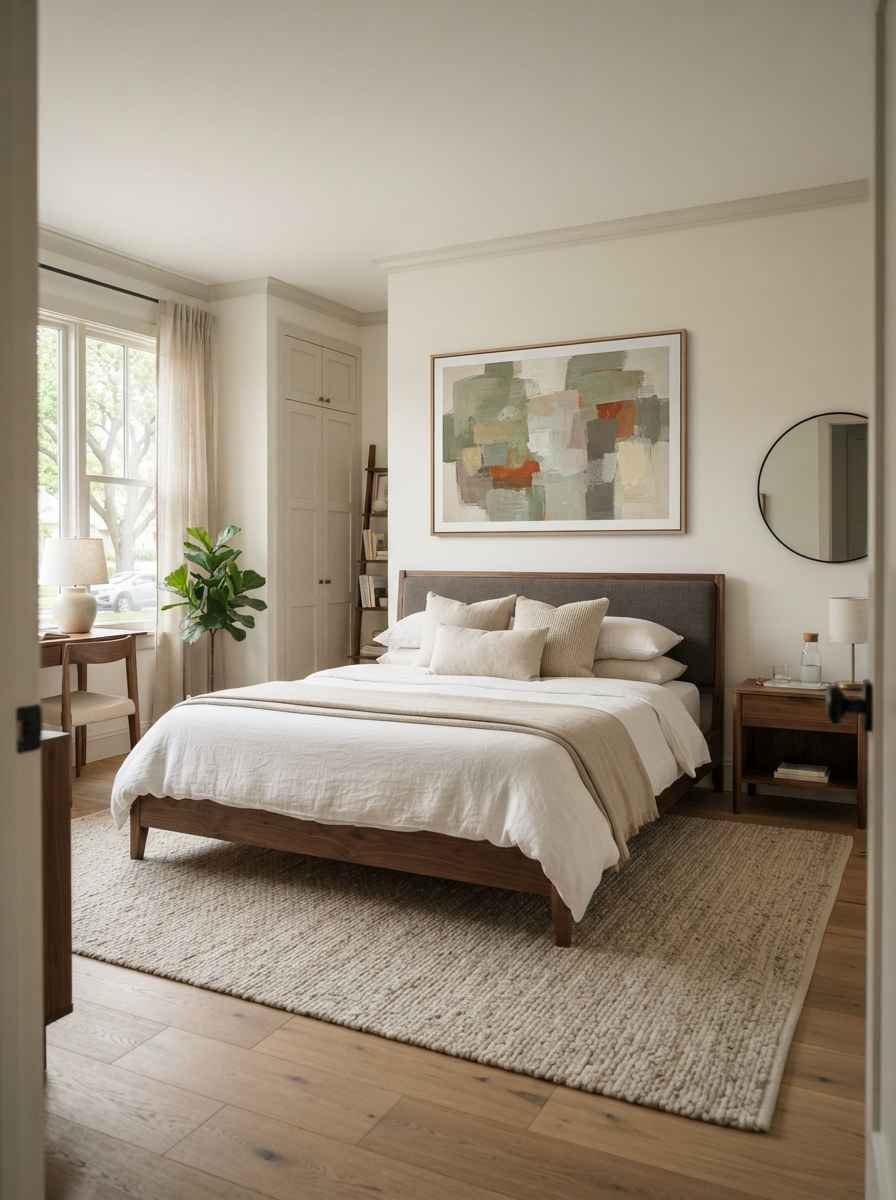
20. Use closed storage for anything you don’t want on display. Baskets, drawers, a bench with a lift-up lid.
Out of sight really is out of mind here. If you want a deeper breakdown of what to keep versus toss, Nourishing Minimalism’s bedroom essentials list is a solid starting point.
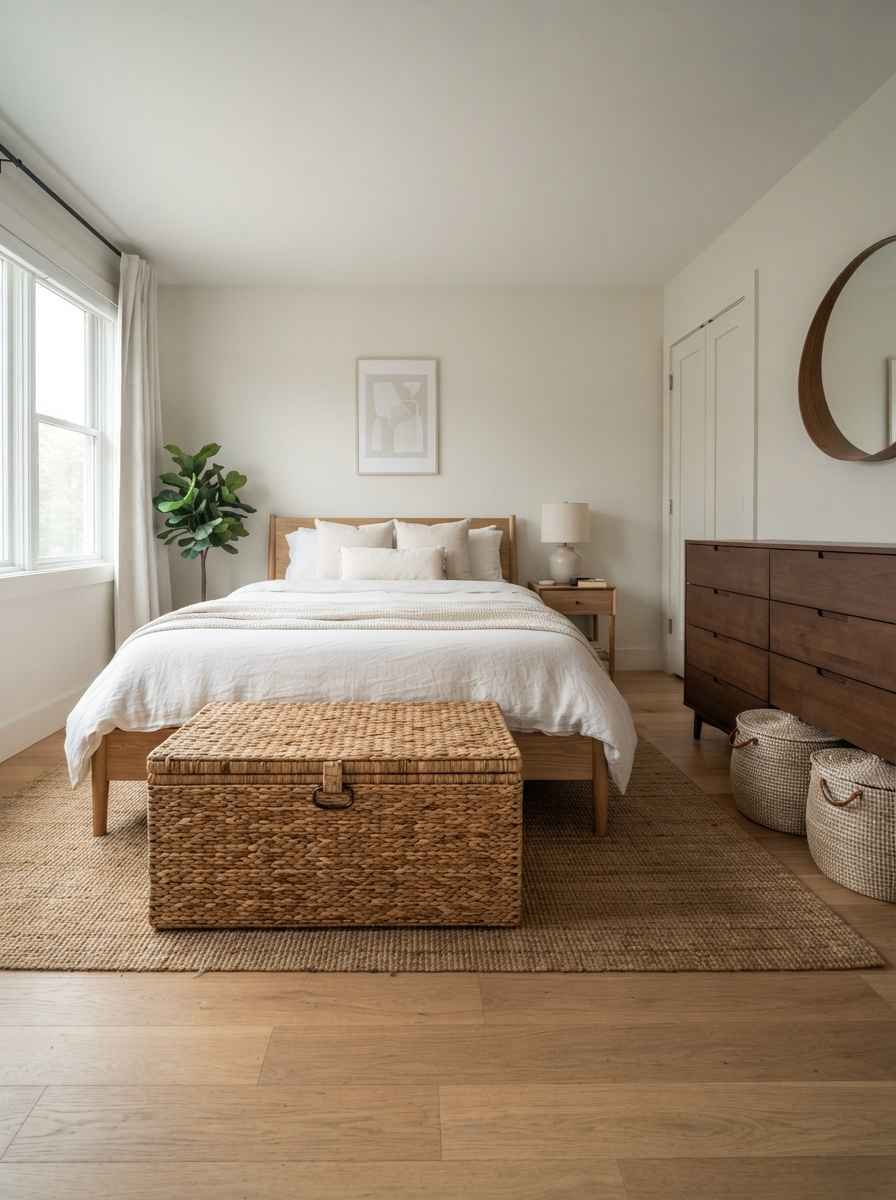
21. Keep nightstand surfaces to three items or fewer. A lamp, a book, maybe your phone charger. That’s it. This is the rule I break the least and notice the most when I follow it.
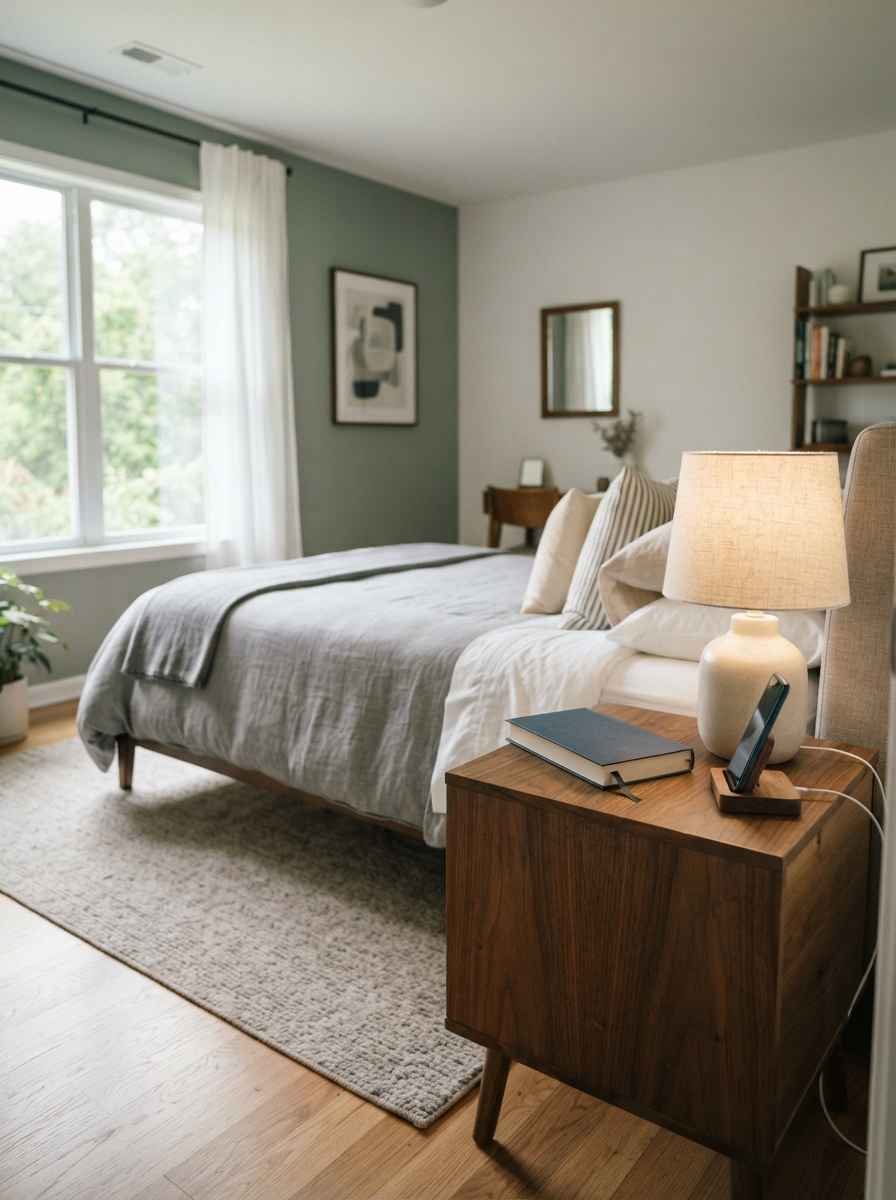
22. Hide your cords. Cord clips, a cable sleeve, or routing everything behind furniture.
This one small fix changes how “put together” a room feels more than almost anything else on this list, which honestly surprised me the first time I tried it.
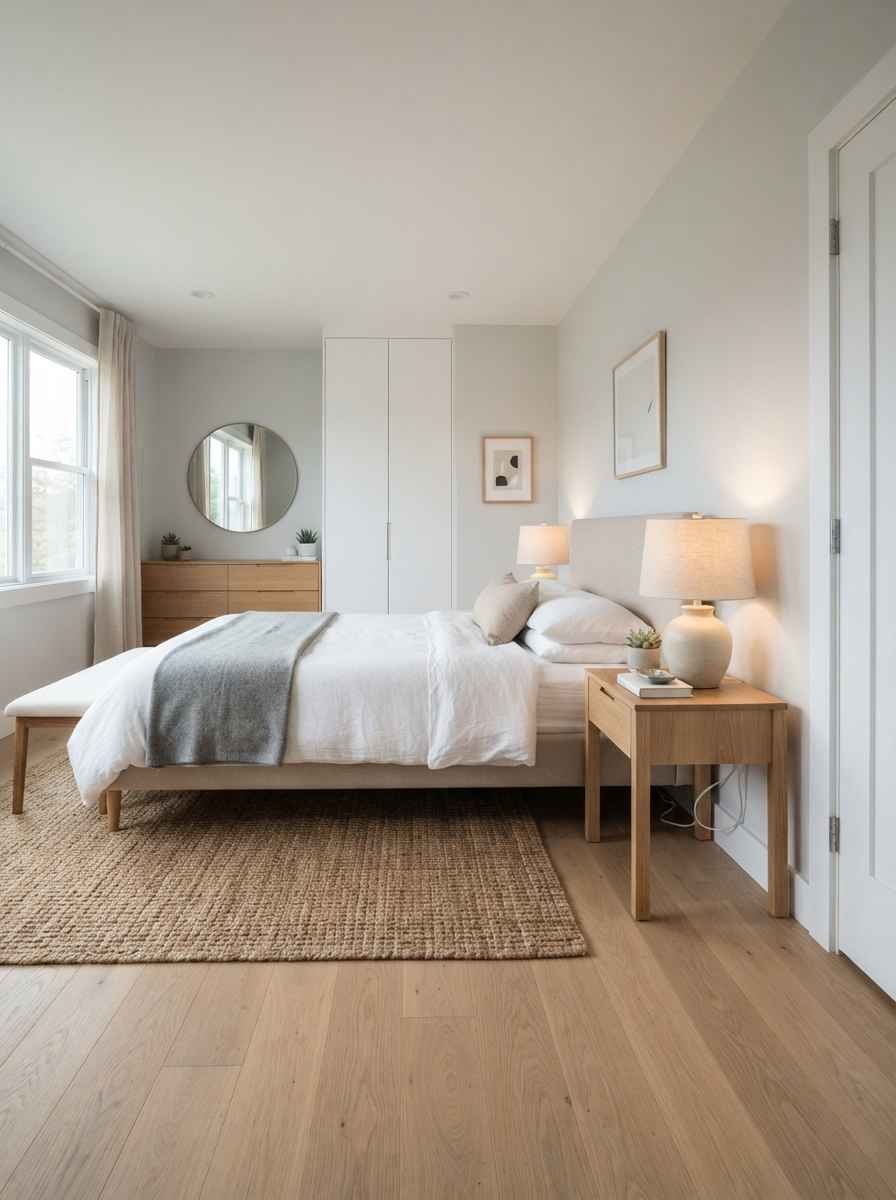
A Quick Reference Table
| Room Zone | Minimalist Move | Skip This |
|---|---|---|
| Bed | Platform frame, matched pillows | Bed skirts, mismatched throws |
| Walls | One accent wall or one large art piece | Four painted walls, gallery walls |
| Storage | Closed baskets, hidden drawers | Open bins, visible clutter |
| Lighting | Warm bulbs, layered sources | Single harsh overhead light |
A Few Things I’d Genuinely Reconsider
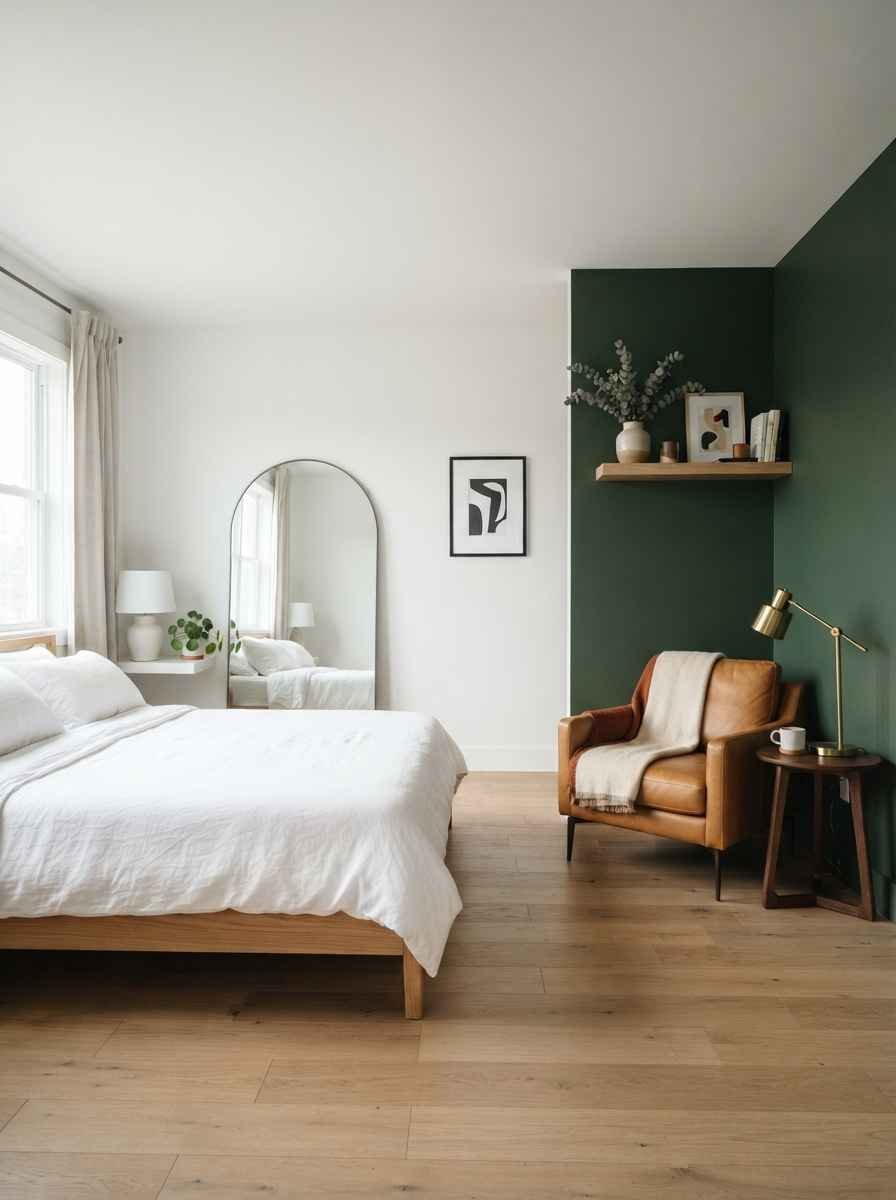
Not every minimalist trend is worth chasing. I tried an all-white bedroom for about four months and honestly, it felt sterile fast.
Adding that one green accent wall back in fixed it completely. Wow, what a difference one wall made.
I’d also skip anything marketed as “minimalist” that costs three times more than the regular version just because it’s beige. You’re paying for a color, not better design.
Frequently Asked Questions
How do I make a minimalist bedroom feel less cold or empty? Add texture. A wool throw, a linen duvet, one plant, and warm-toned lighting go a long way. The goal is simple, not sterile.
What colors work best for a men’s minimalist bedroom? Charcoal, oatmeal, navy, and forest green are reliable choices. Stick to two neutrals plus one accent color so the palette stays cohesive.
Do I need to get rid of everything to go minimalist? No. Minimalism is about keeping what earns its place, not owning as little as possible. Start with your nightstand and dresser surfaces, then work outward from there.
Final Thought
A minimalist bedroom isn’t a finished project you complete in a weekend.
It’s more of a habit: put things back where they belong, resist the urge to display everything you own, and let a few good pieces do the talking.
Three years in, my bedroom still isn’t perfect. The dresser drawer sticks a little in the summer, and I still haven’t found the right size rug for the corner by the window. That’s fine. Minimalism was never about perfect, it was about a room that finally feels like it belongs to me instead of just holding my stuff.
Which of these 22 ideas are you trying first? Save this post and start with just one this weekend, then tell me how it goes.
