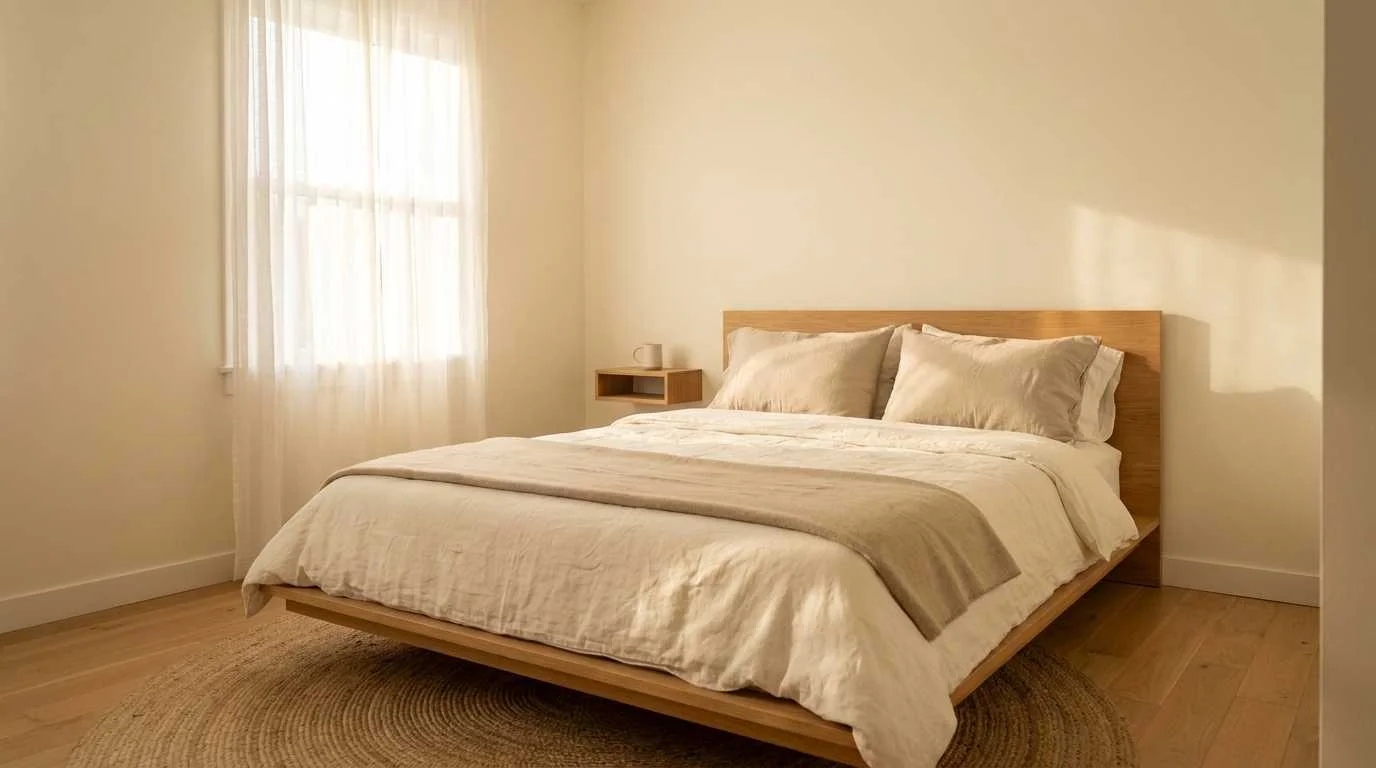
You know that feeling when you walk into a tiny bedroom and it somehow feels bigger, calmer, and more pulled together than rooms twice its size?
I’ve been obsessed with figuring out how that works.
After years of living in small apartments (my first bedroom in London was genuinely smaller than some walk-in closets I’ve seen on Pinterest), I’ve picked up a lot of tricks that actually move the needle.
These aren’t theoretical ideas from a mood board. Most of them I’ve tried personally, some worked brilliantly, a couple were disasters I won’t repeat. All 33 are worth knowing.
Why minimalism actually makes small rooms feel bigger
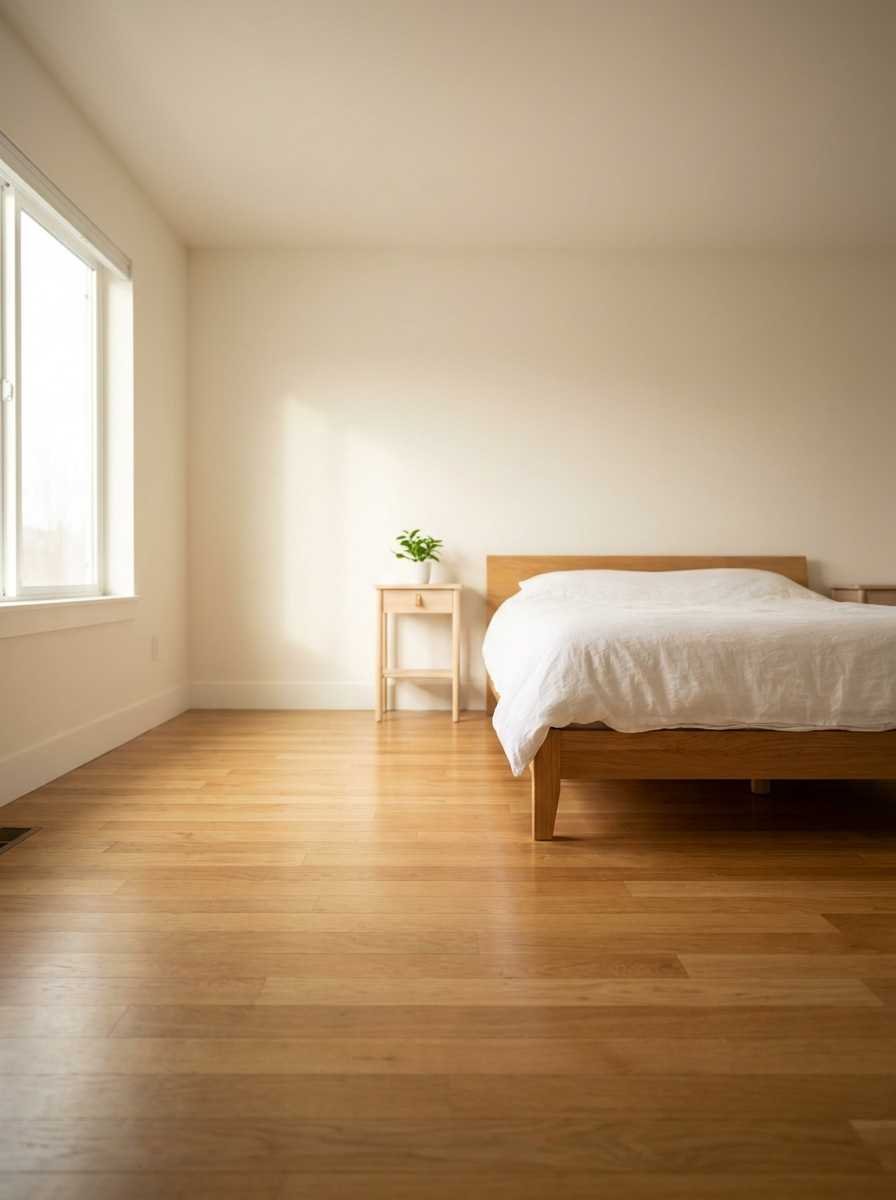
The short version: less stuff means your eye travels further. When there’s clutter on every surface, your brain registers the room as cramped because it has to “process” every object it sees.
Clear surfaces, breathing room between furniture, a restrained color palette, and your brain reads the space as generous.
IMO, minimalism isn’t about buying expensive furniture or following some rigid aesthetic. It’s a decision to own less and arrange what you do own with intention.
Color and light: the foundation of everything
1. Go light on the walls
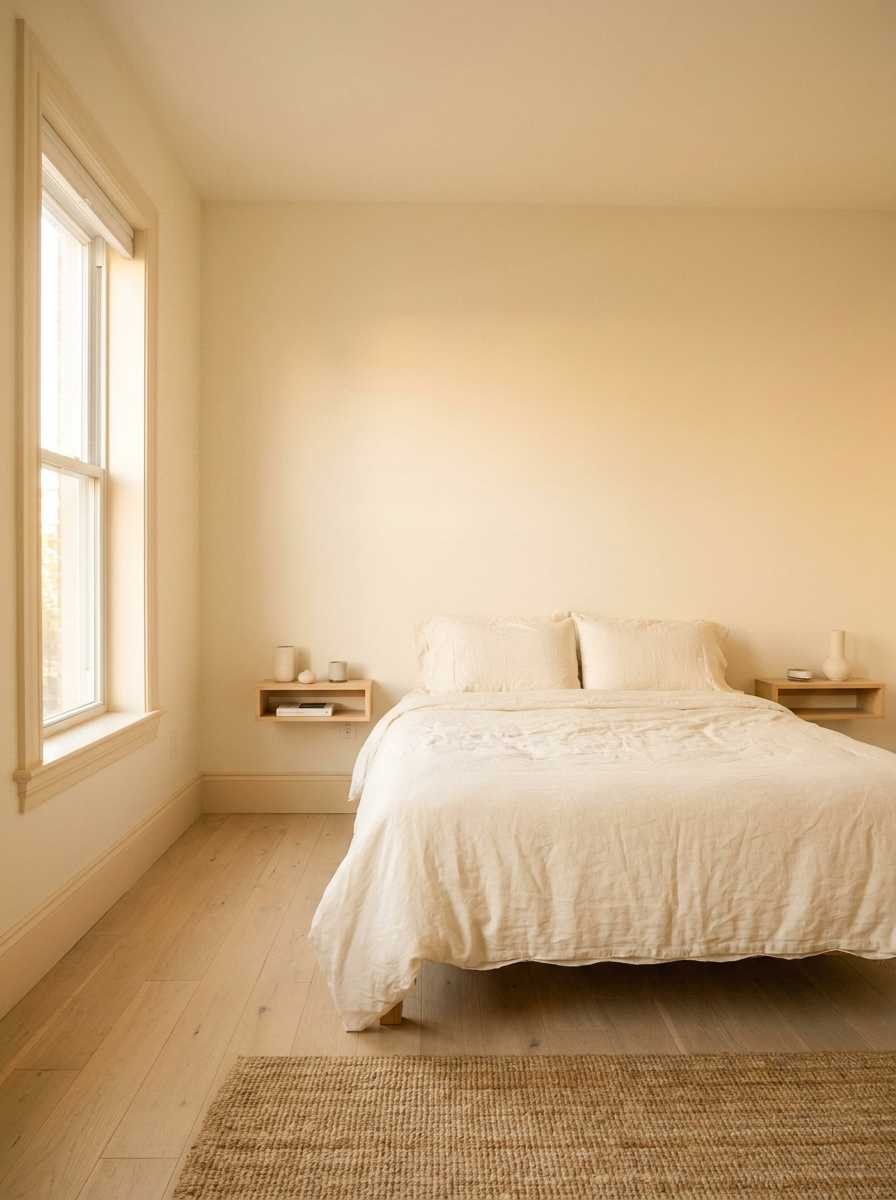
Pale walls reflect light. They make the room feel like it extends further than it does. Soft whites, warm creams, and very light grays all work well.
I’ve had good results with Farrow & Ball’s “All White” and Dulux’s “Jasmine White” in tiny rooms.
Stay away from crisp, cool whites if your room gets limited natural light. They go flat and dingy. A slightly warm undertone keeps things feeling airy even on gray days.
2. Match your walls to your trim
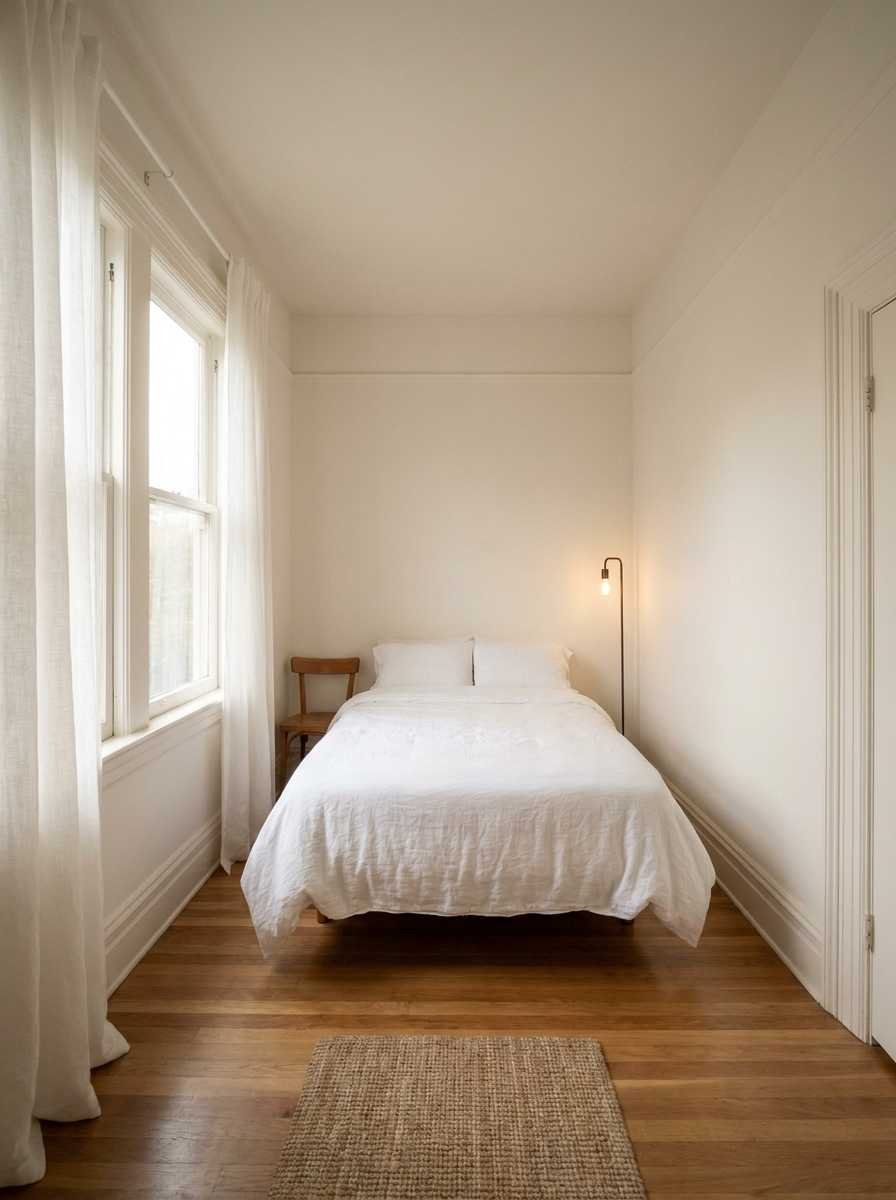
Painting trim and walls the same color is one of the oldest tricks in interior design and it still holds up.
The contrast between white walls and white trim creates a visual “edge” that makes the room feel boxed in. Remove that contrast and the eye reads the room as one continuous surface.
3. Use a single accent color
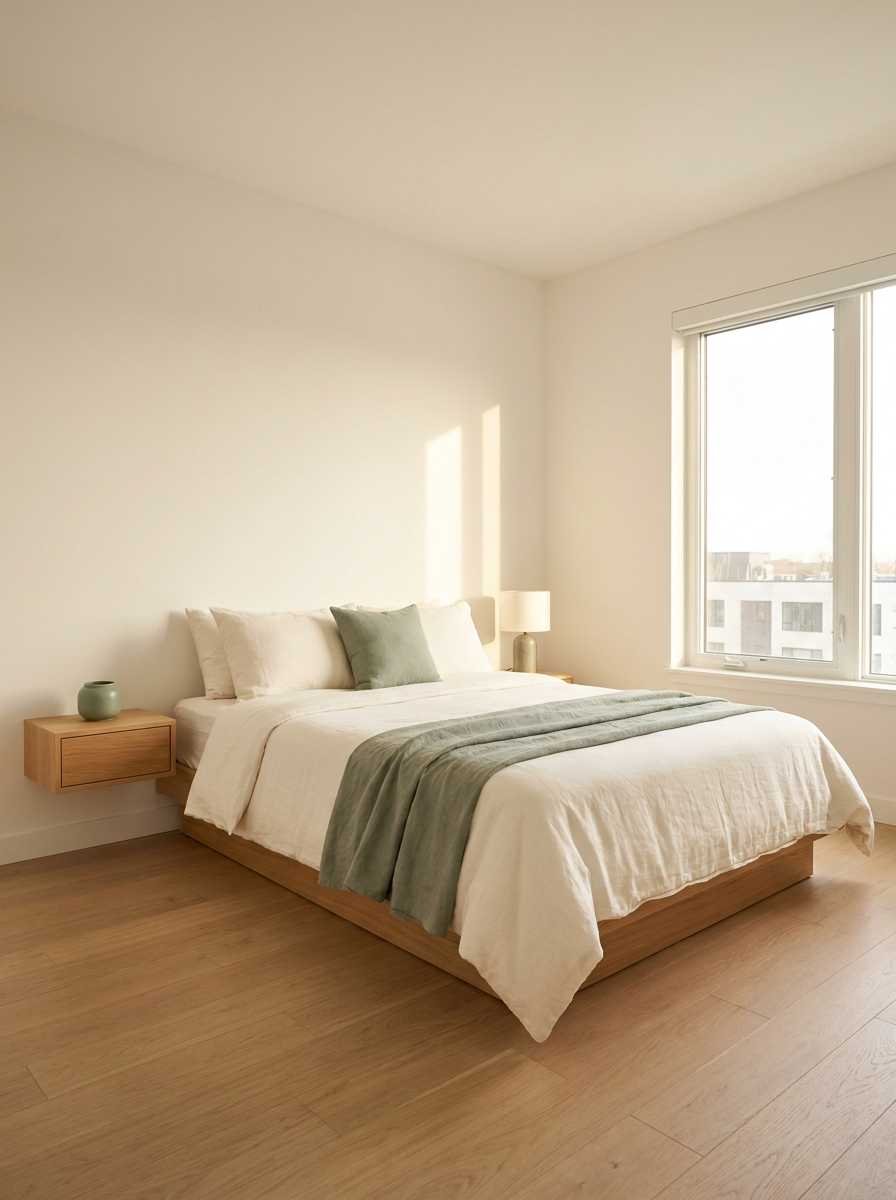
Pick one color for any accents (a throw, a cushion, a small rug) and repeat it 2 or 3 times.
That’s it. IMO this is the easiest way to make a room look decorated without it feeling busy.
4. Layer warm light sources
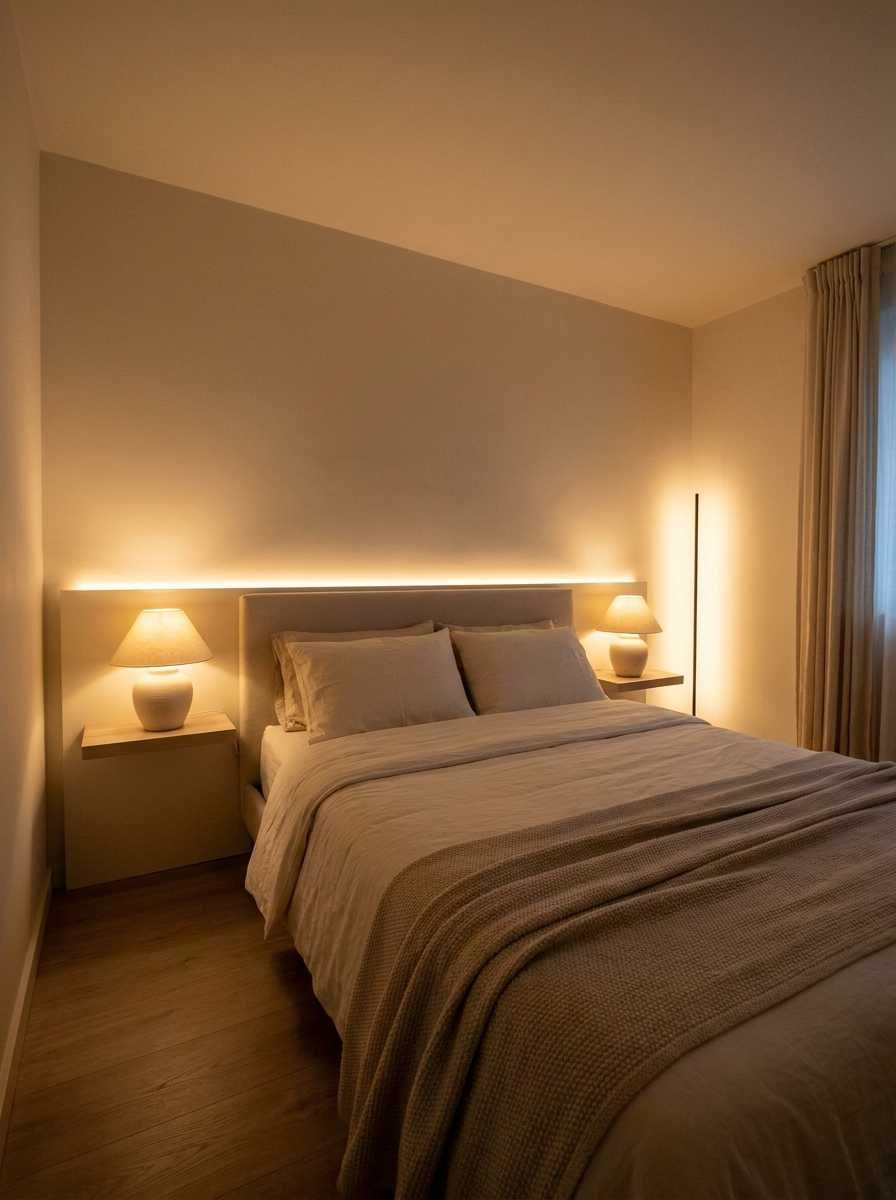
Overhead lighting is usually the enemy of a good bedroom atmosphere. A ceiling fixture washes everything in flat light and makes the room feel like an office.
Use bedside lamps, a floor lamp in the corner if you have room, maybe a small LED strip behind the headboard.
Warm bulbs (around 2700K) make a space feel cozy rather than clinical.
5. Hang mirrors strategically
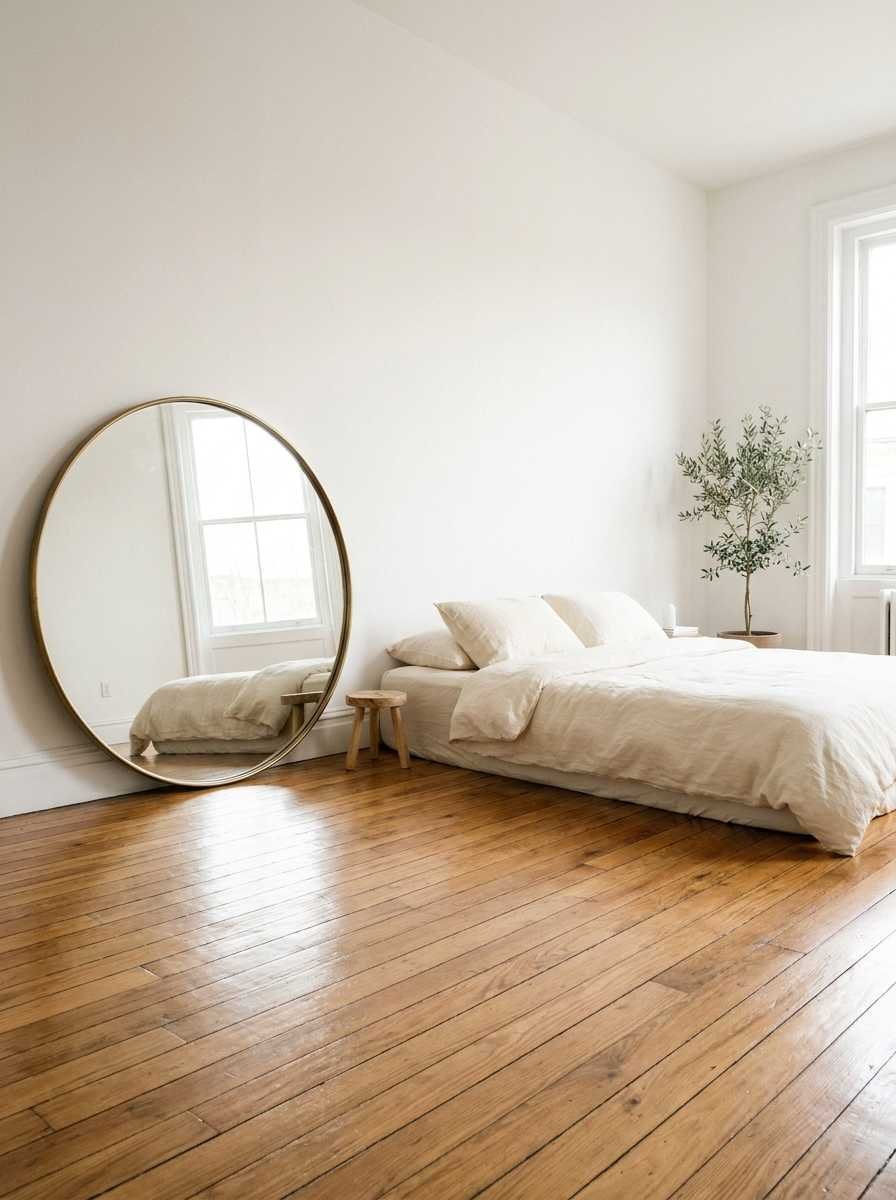
A mirror opposite a window doubles the light in the room. I put a 60cm round mirror directly across from my only window last year and the room genuinely looked different.
Lean it against the wall if you want a more relaxed feel, hang it if you want something cleaner.
Furniture choices that don’t eat your space
6. Low-profile bed frames
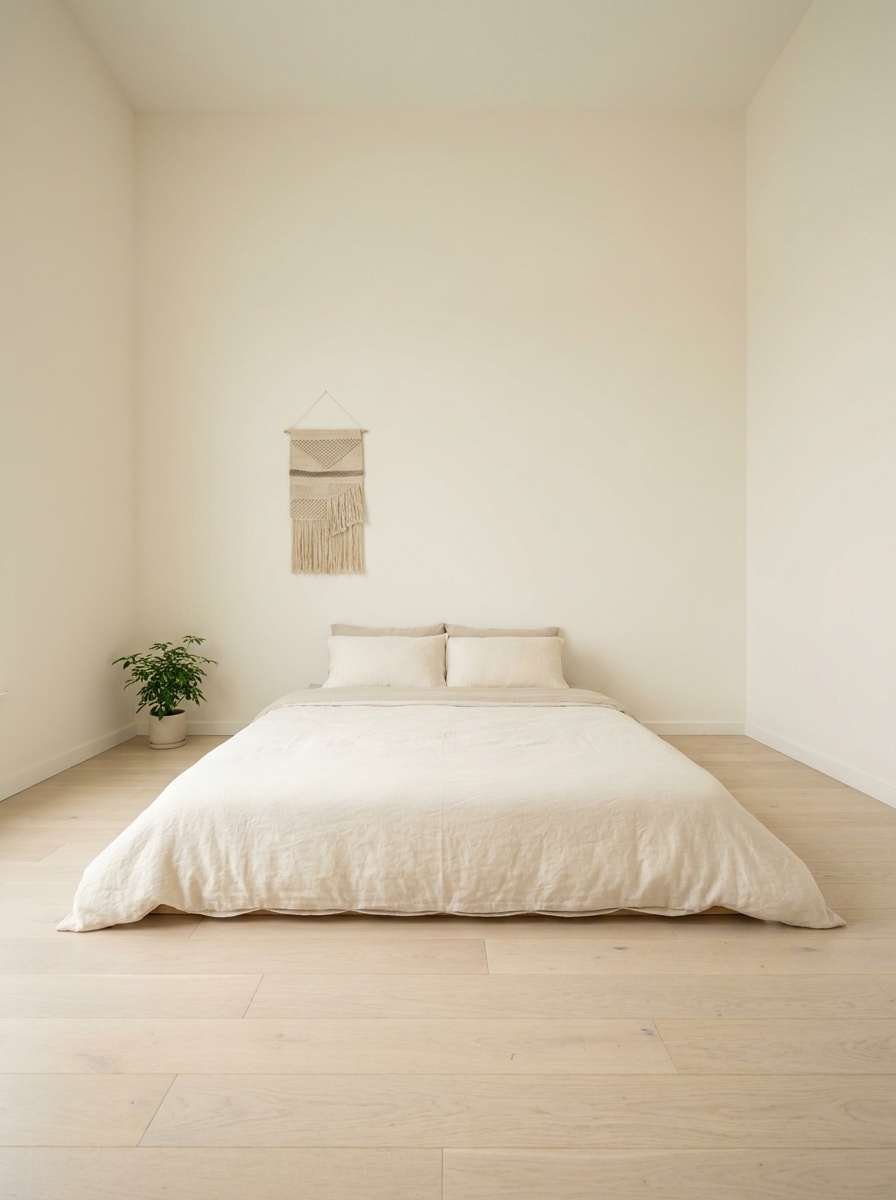
High headboards and thick platform bases take up visual height and weight.
A low-profile frame, or even a simple platform bed that sits close to the floor, makes the ceiling feel taller.
Japanese-inspired floor beds work beautifully in minimalist bedrooms if you’re comfortable getting up and down from floor level.
7. Legs on everything
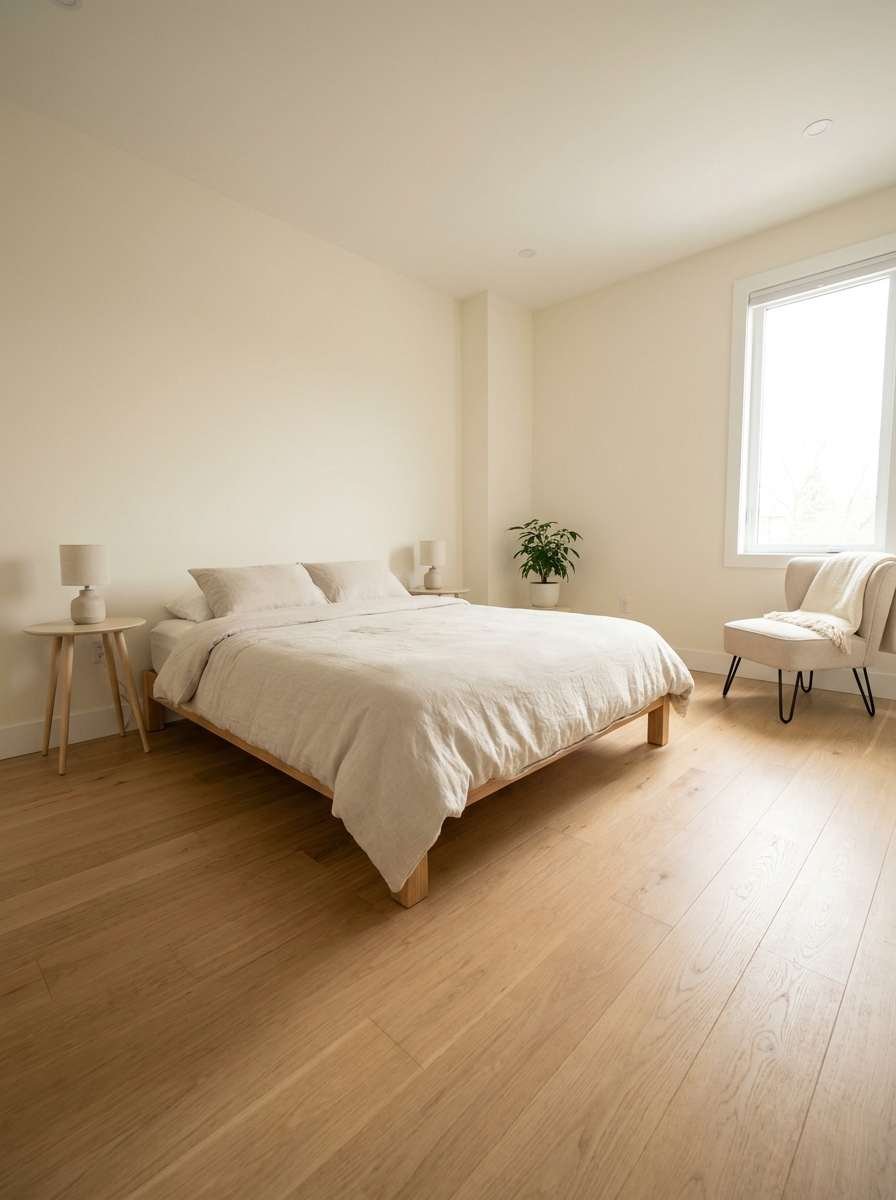
Furniture with legs (rather than solid bases that sit flush to the floor) lets you see the floor beneath them.
That uninterrupted floor line makes the room feel larger. A bed on short legs, a nightstand on tapered legs, even a small chair on hairpin legs, all read as lighter and less imposing than their solid-base equivalents.
You can find good options at IKEA (the HEMNES range comes to mind) or browse sites like Made.com for more design-forward pieces.
8. Wall-mounted nightstands
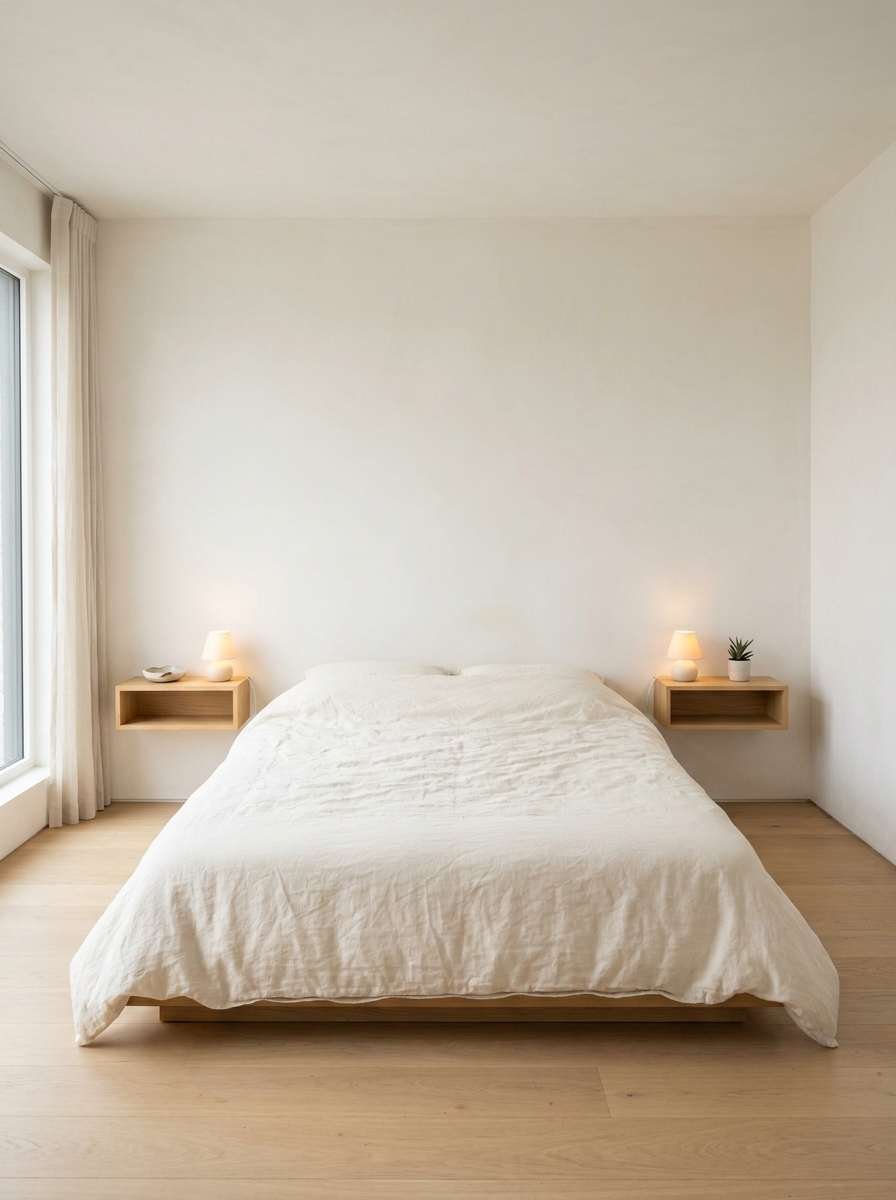
Floor space is scarce. Mounting your nightstands to the wall frees up the area around the bed and makes the floor feel more open. IKEA’s LACK shelf is honestly fine for this.
Three screws, done.
9. A bench at the foot of the bed instead of a second chair
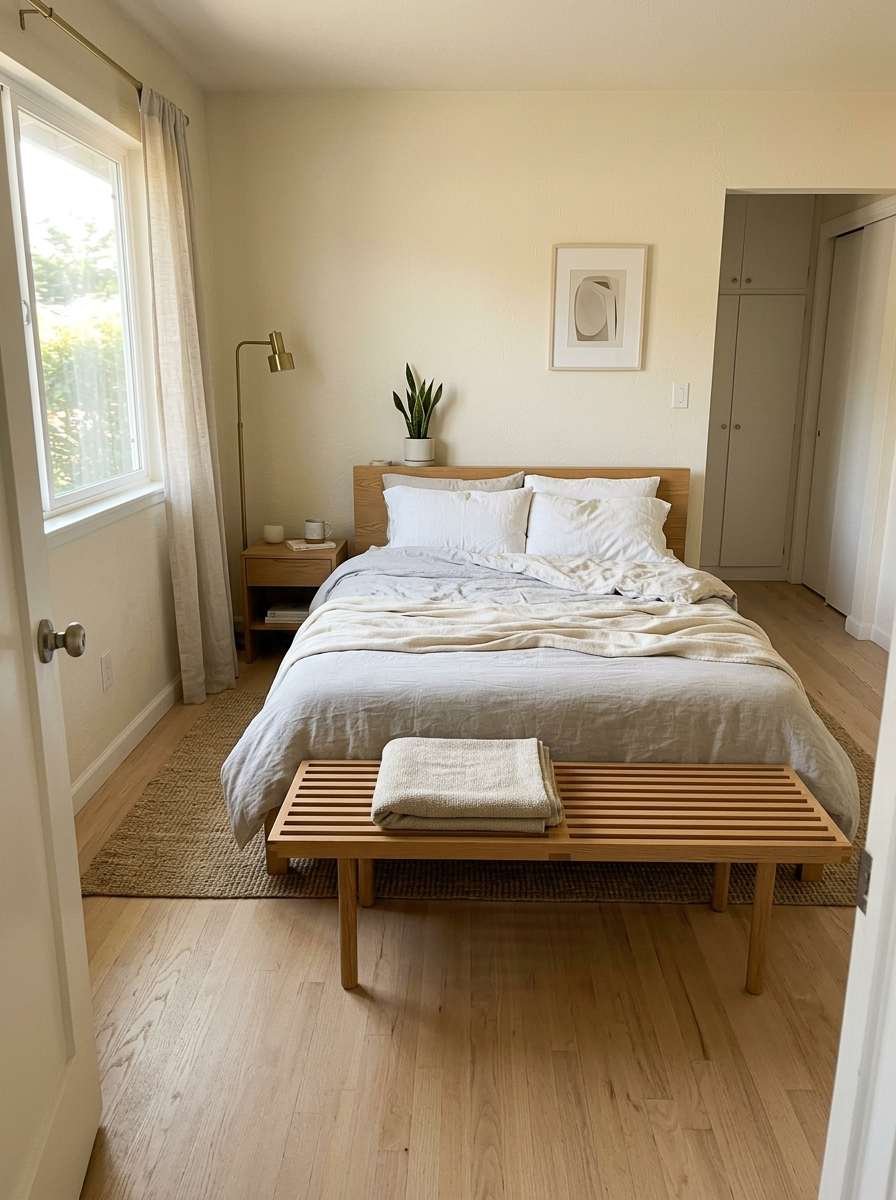
If you want seating but don’t have room for a proper chair, a narrow bench at the foot of the bed pulls double duty.
It seats a person, holds clothes you’re going to wear again (everyone does this, be honest), and doesn’t intrude into the walkway.
10. Folding or stackable furniture
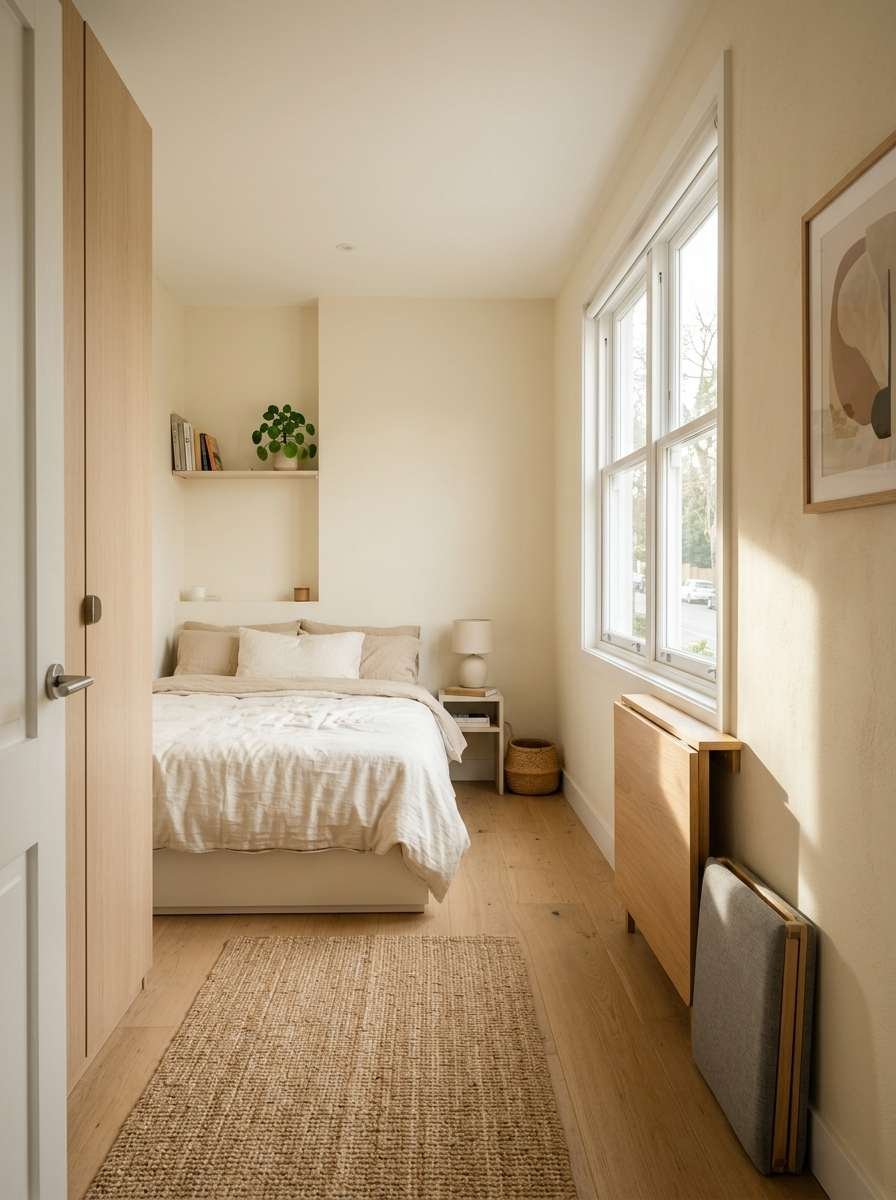
A small folding desk, a stackable stool, a chair that tucks flat against the wall when you’re done with it.
In a really tight room these are worth thinking about seriously, not just as a last resort.
11. Built-in headboard with storage
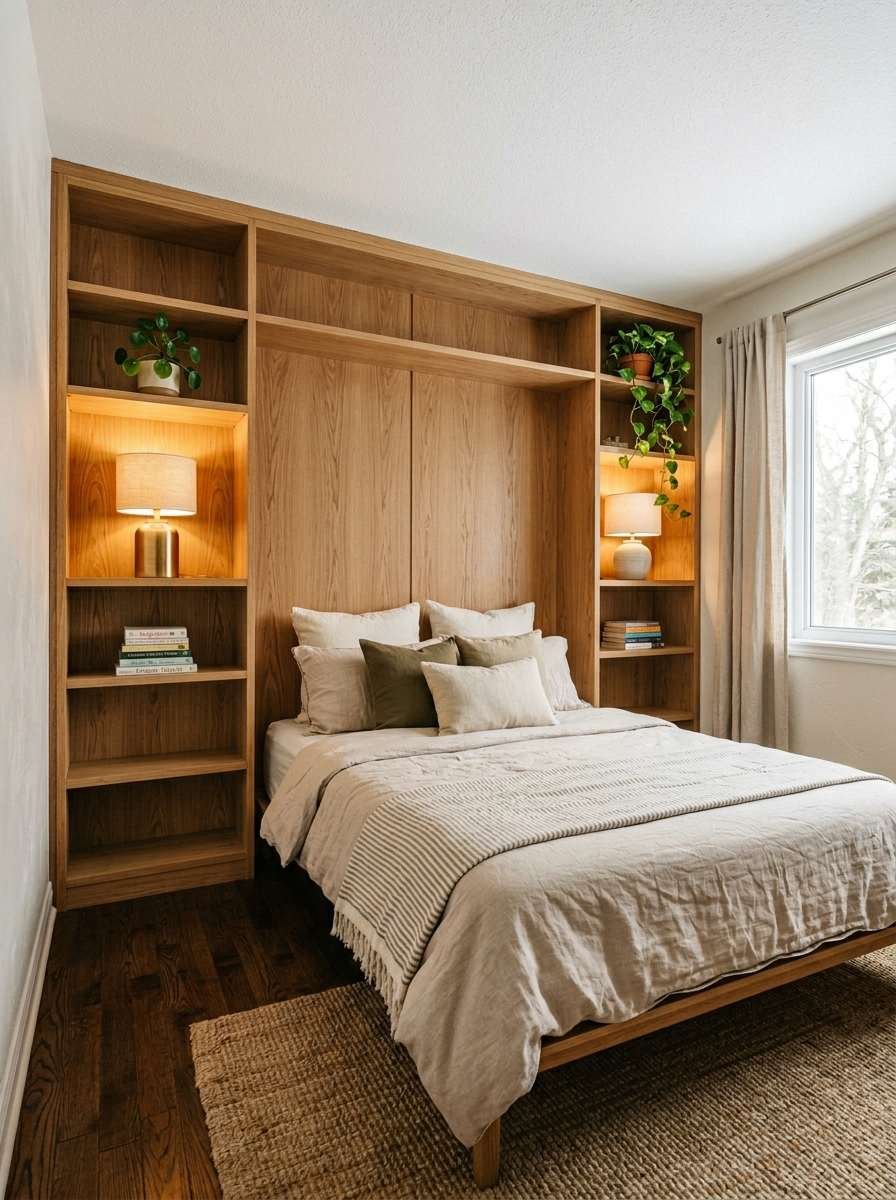
If you’re renting and can’t install built-ins, skip this one.
But if you own your home, a headboard with built-in shelving on either side gives you nightstand storage, a display area, and a focal point without adding a single piece of separate furniture.
Storage hacks that keep clutter off surfaces
12. Under-bed storage, done properly
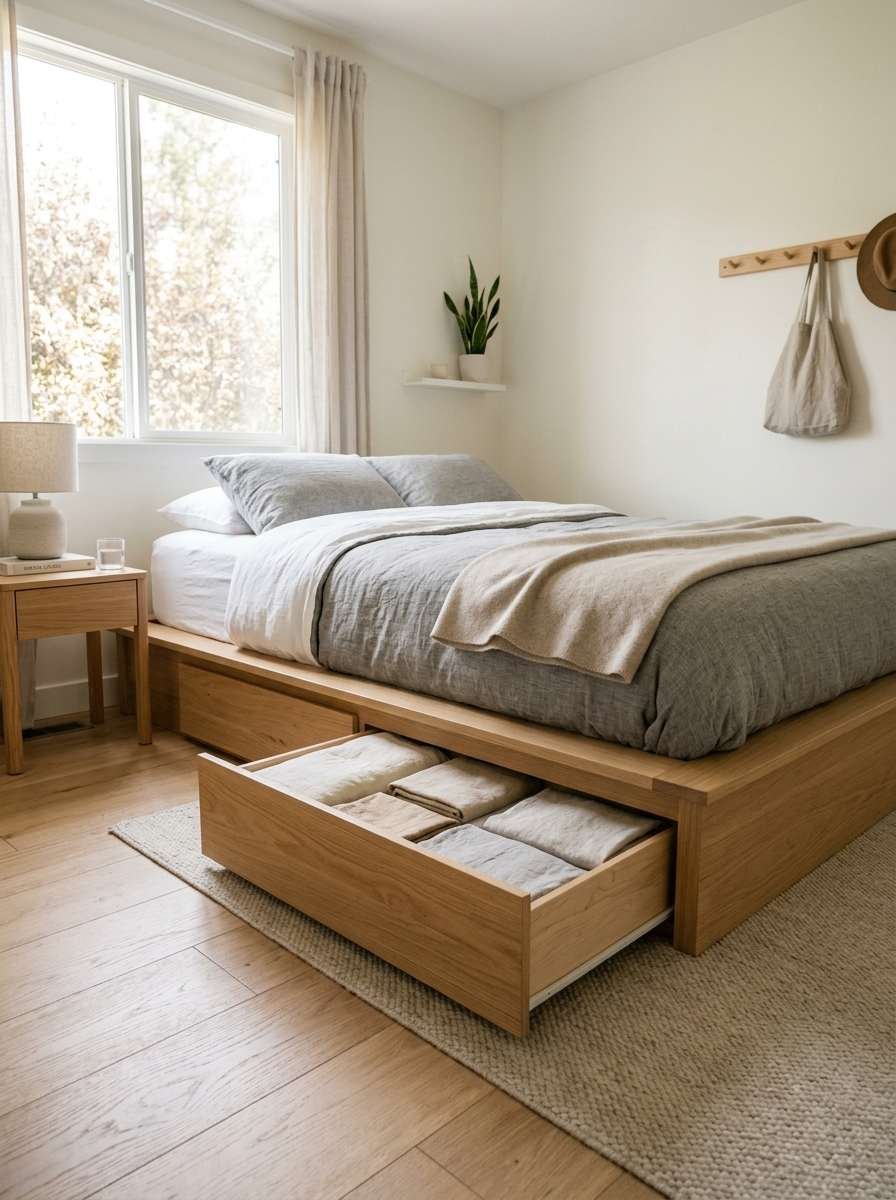
The space under your bed is probably the most underused real estate in a small bedroom.
Pull-out drawers are ideal if your frame has them. If not, low-profile storage bins on wheels slide in and out easily.
The key is keeping it organized. Random stuff shoved under there makes the room feel messy even when you can’t see it, because you know it’s there.
13. Vertical shelving
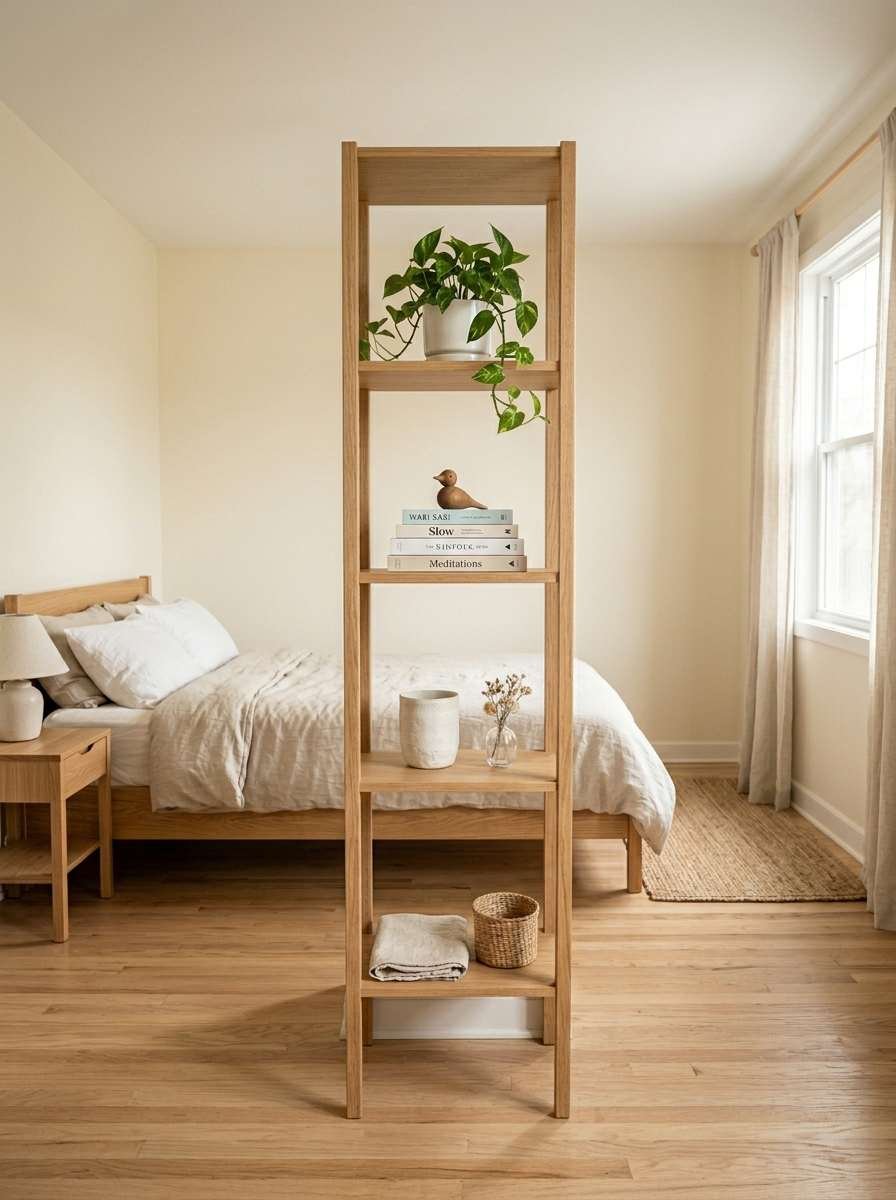
When floor space is limited, go up. A tall, narrow shelving unit (IKEA’s BILLY at its narrowest width is 40cm, which barely takes up any room) gives you serious storage without eating your floor plan.
Keep shelves minimal: books, a plant, maybe 2 or 3 small objects. Not a collection of everything you own.
14. Door-back organizers
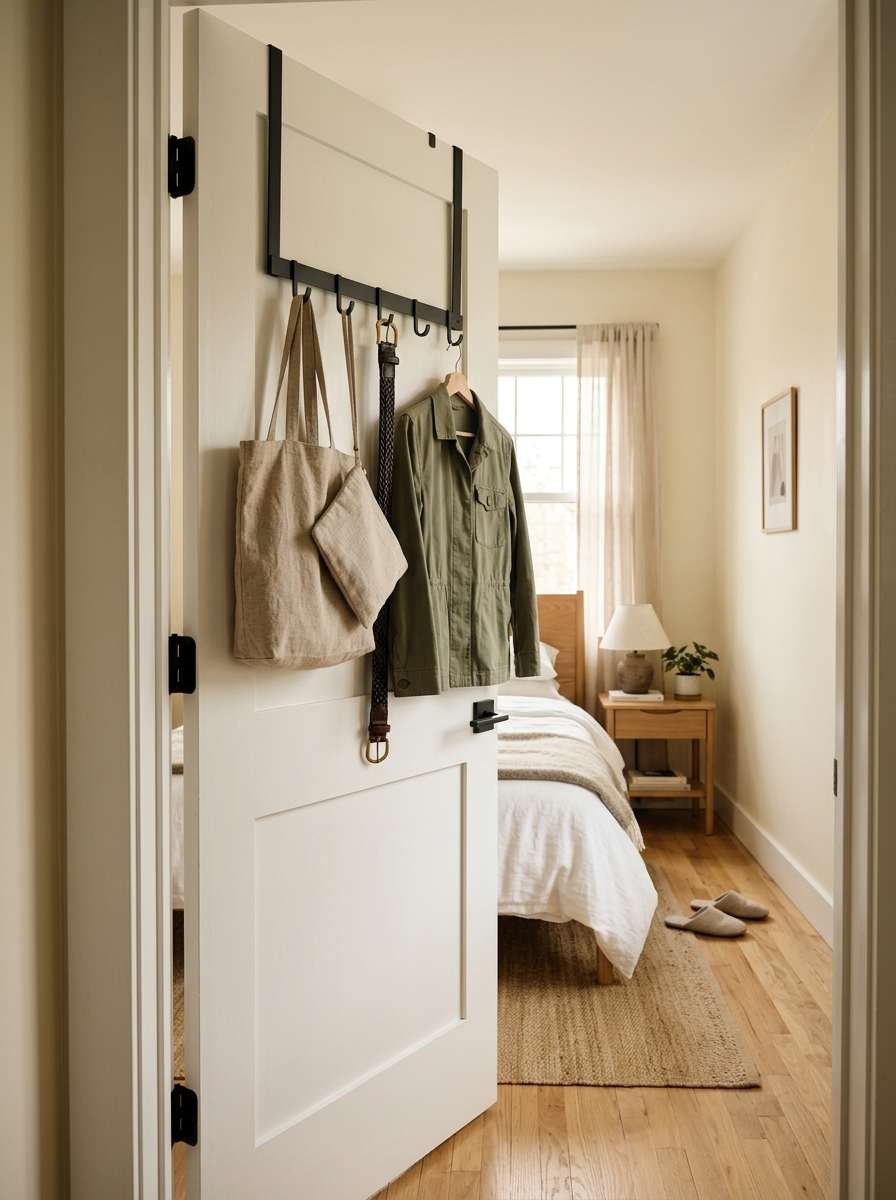
The back of a bedroom door can hold a shoe organizer, a jewelry rack, hooks for bags and belts.
It’s free storage that costs about $15 and takes up zero visual space when the door is open.
15. Hidden laundry solutions
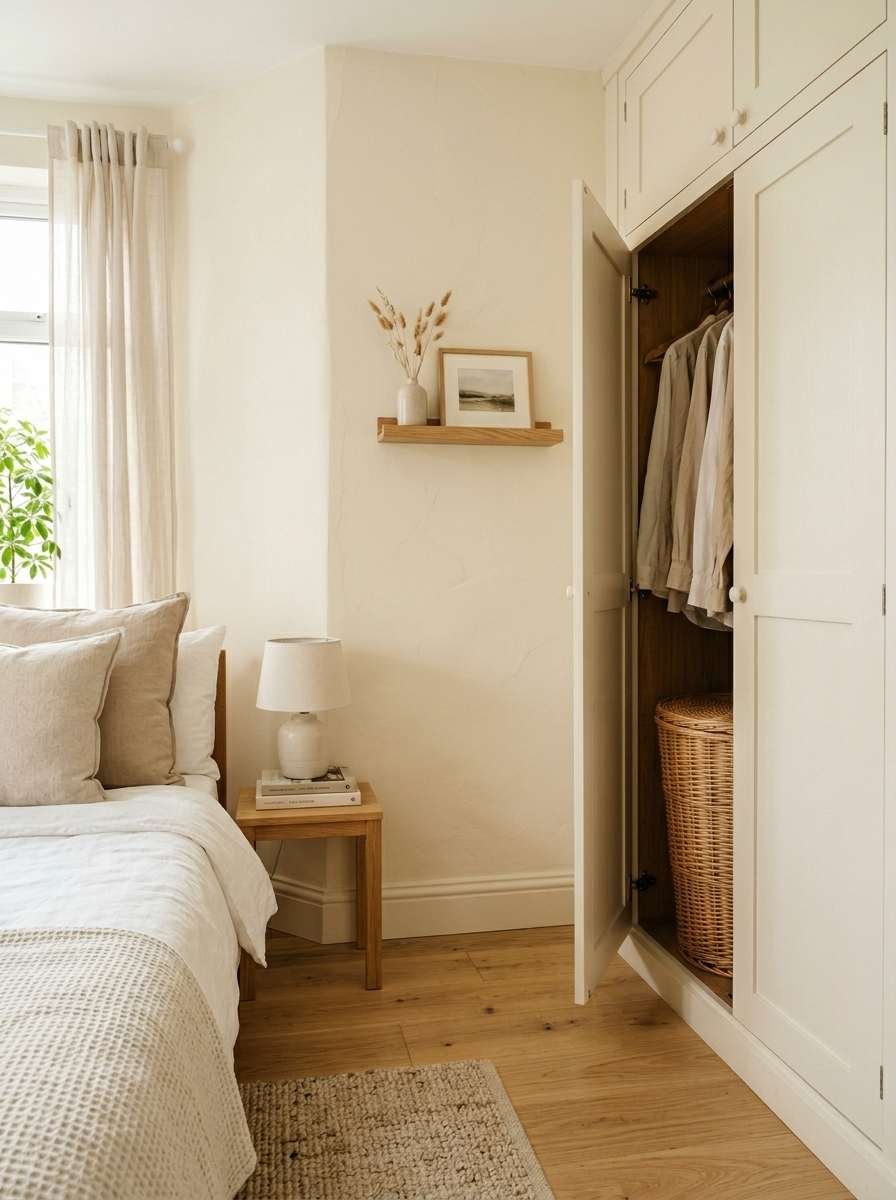
A laundry basket sitting in the corner is not doing your minimalist bedroom any favors.
A wicker basket with a lid, a built-in hamper inside the wardrobe, or a fabric bin that slides under a shelf, any of these keeps laundry out of sight without requiring any renovation.
26 Small Room Decor Minimalist Ideas That Make Any Space Look Bigger
16. Drawer dividers
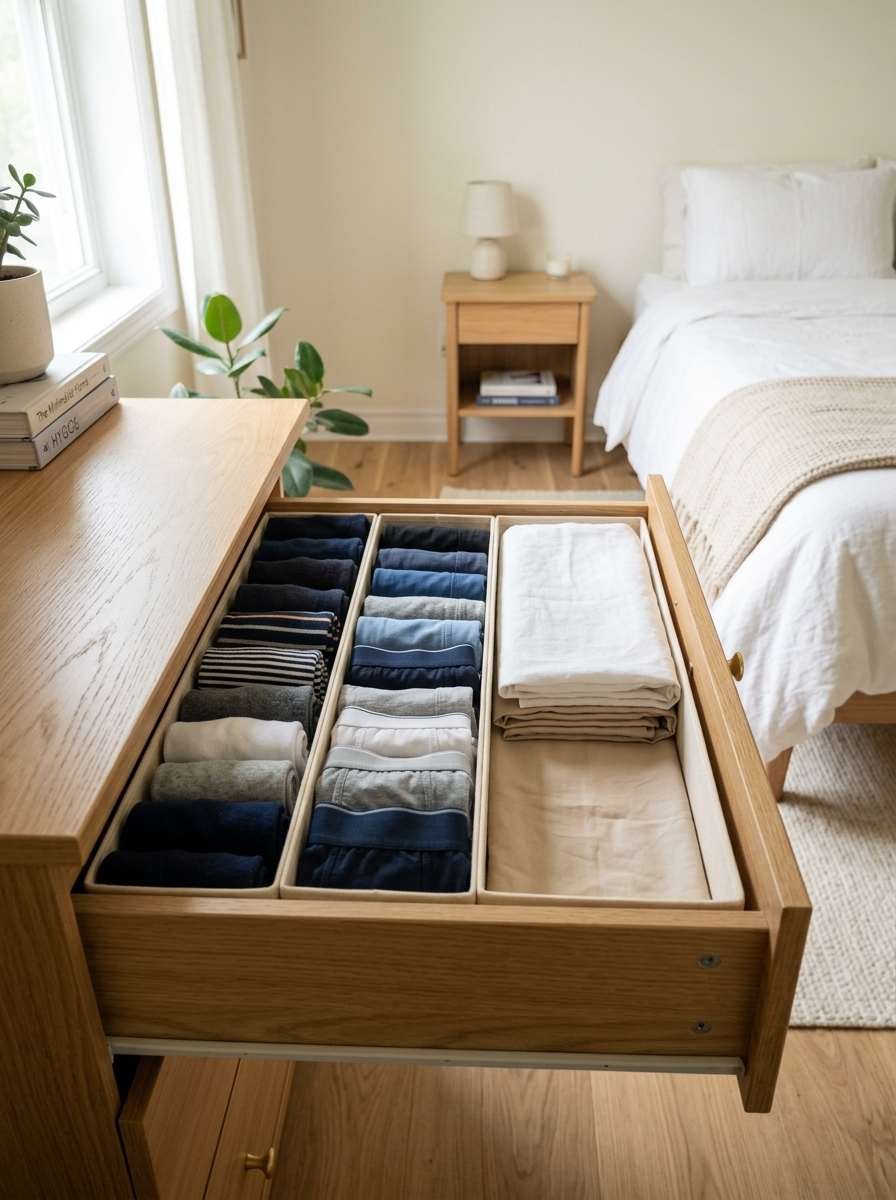
This sounds boring but it genuinely changes how a room feels. When your drawers are organized, you stop creating surface clutter looking for things.
Ikea’s SKUBB dividers cost almost nothing.
17. A pegboard or rail on one wall
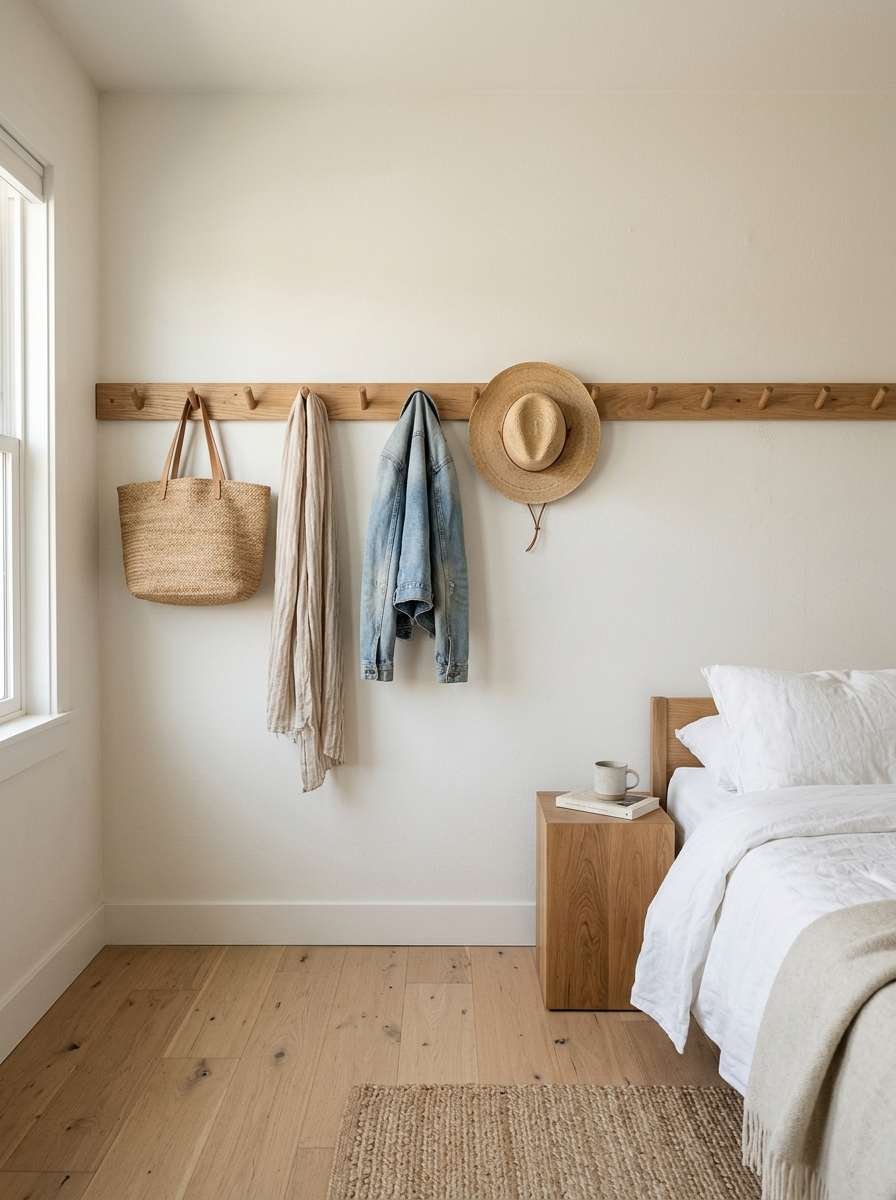
A simple Shaker-style peg rail along one wall holds bags, belts, scarves, and a jacket or two. It keeps those things visible and accessible without a wardrobe door’s worth of clutter behind it.
Bed styling that photographs well on Pinterest
18. Stick to a two-tone bedding scheme
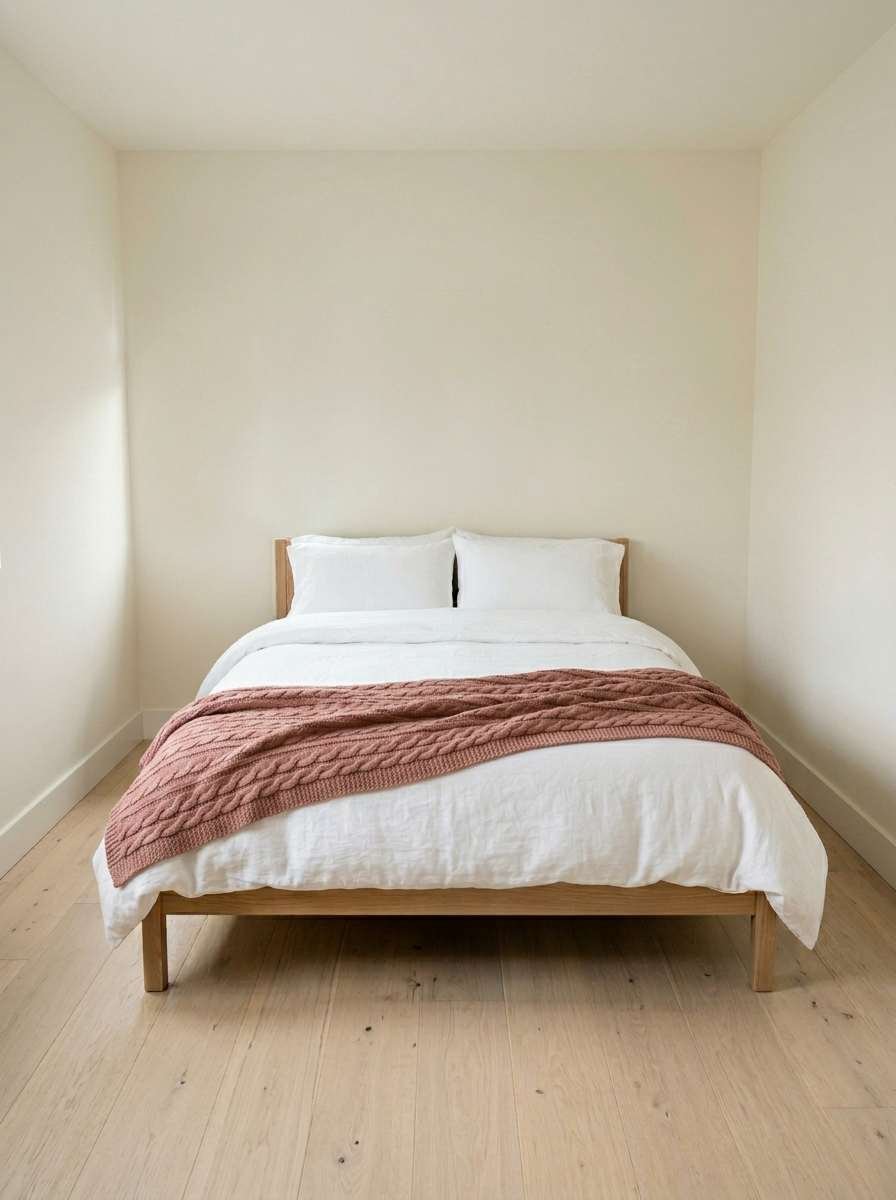
White or cream duvet cover, one colored or textured throw across the foot. That’s a formula that works almost every time.
Patterned duvet covers can be great, but in small rooms they tend to overwhelm the space visually.
19. Linen bedding
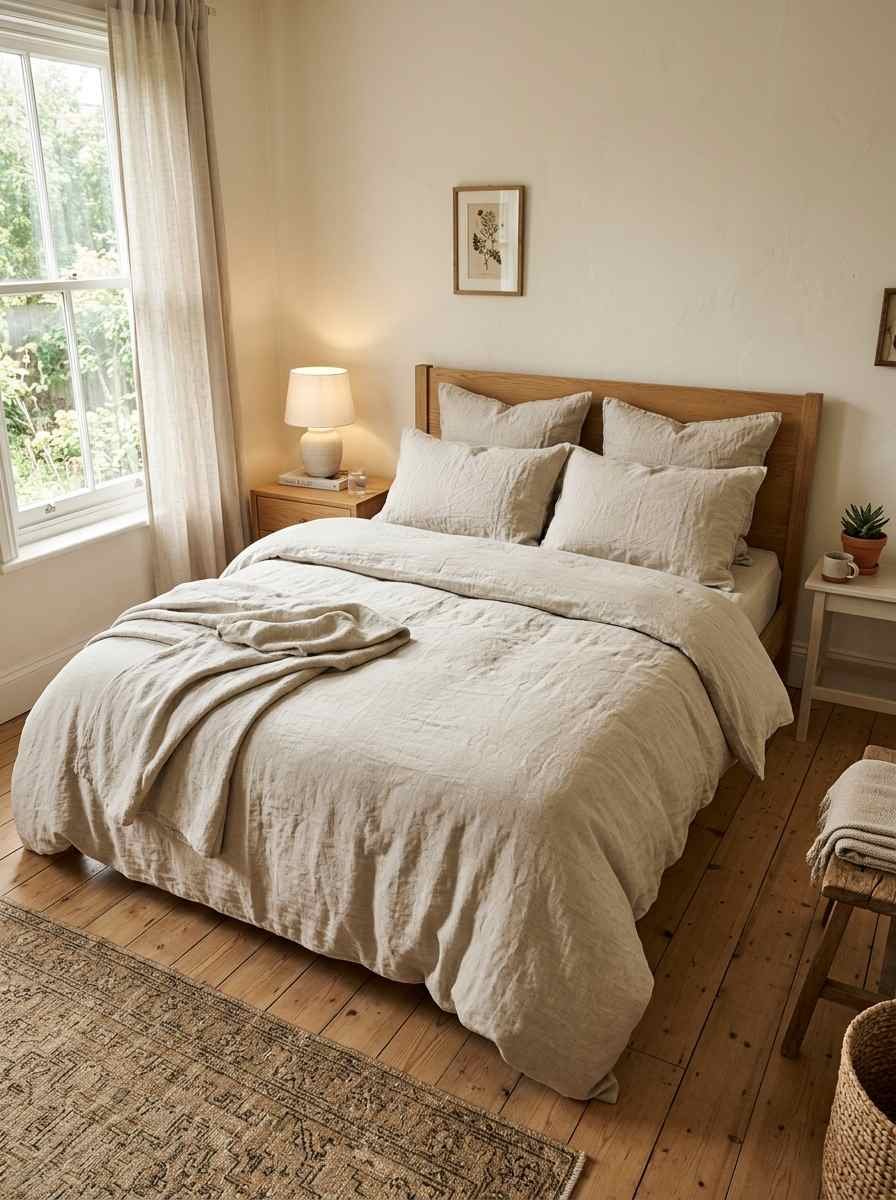
Linen looks expensive and casual at the same time, which is a hard combination to pull off with cheaper materials.
It also photographs really well, which is why it dominates Pinterest bedroom content.
Cultiver and Piglet in Bed both make great linen sets if you want to invest. IKEA’s PUDERVIVA line is a decent budget alternative.
20. Two pillows, not eight
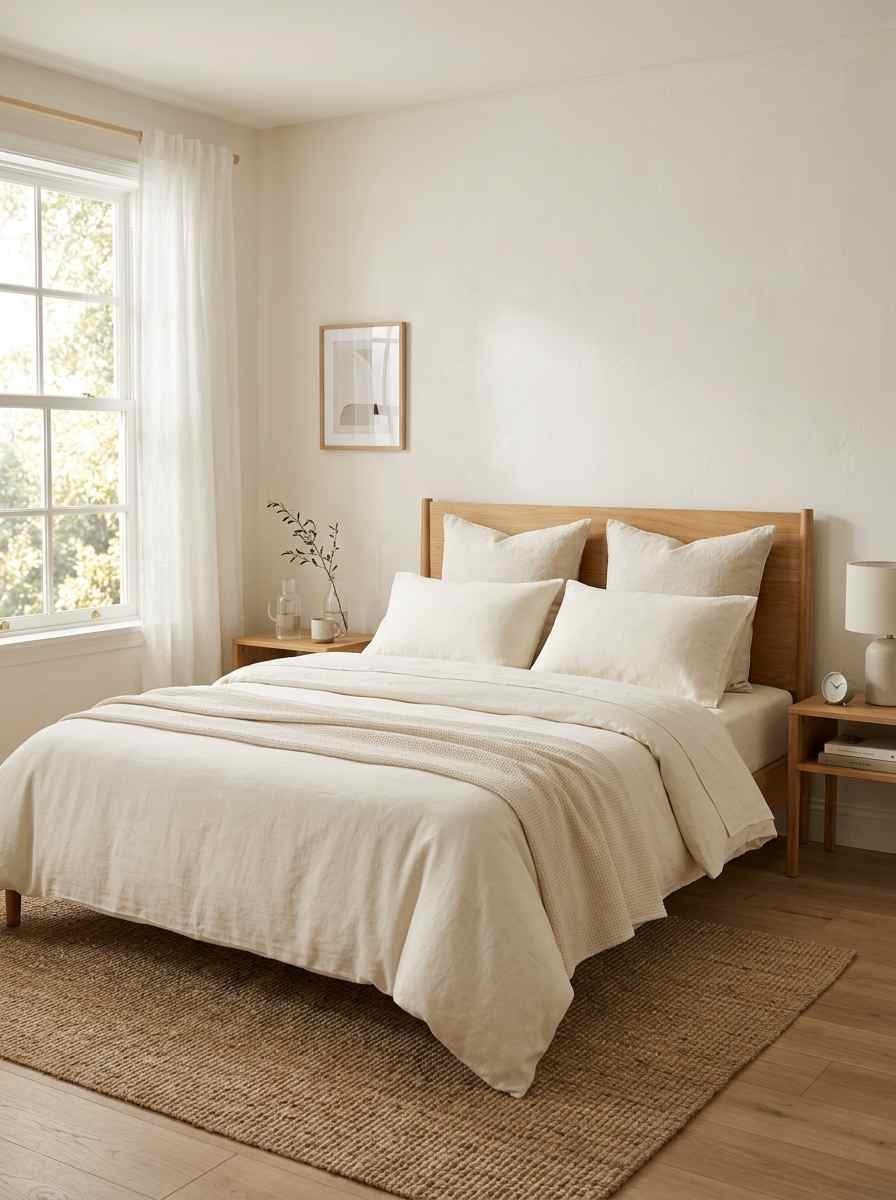
Eight pillows stacked up looks aspirational in a hotel but feels crowded in a small bedroom. 2 sleeping pillows in decent pillowcases, maybe 2 Euro pillows behind them if the headboard is low, and you’re done. Anything more than that and the bed starts eating the room.
21. Let the mattress breathe
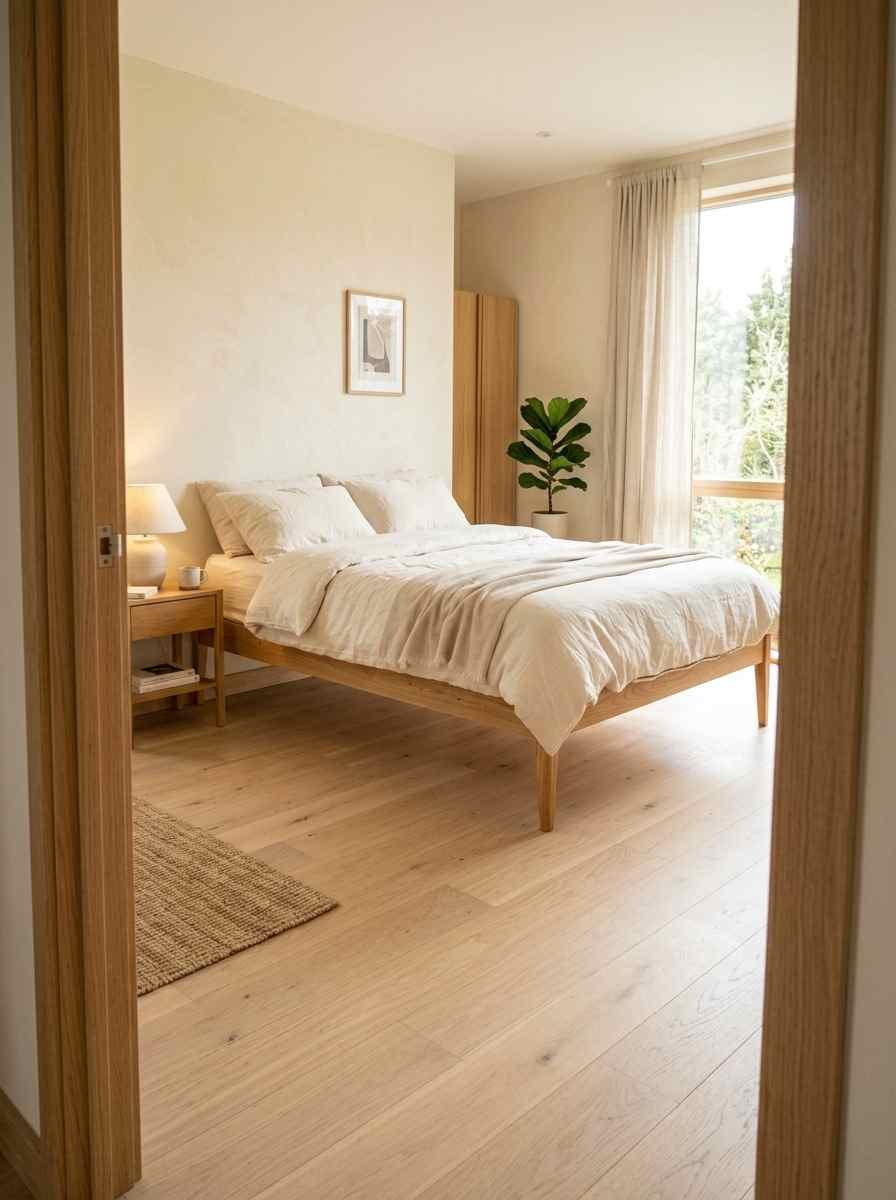
A bed that goes all the way to the floor with no bed skirt and no under-bed storage visible tends to look heavy and deliberate.
If your frame has legs and you can see the floor underneath, that bit of open space between frame and floor actually reads as part of the room. Don’t cover it up.
Wall decor without visual clutter
22. One large piece instead of a gallery wall
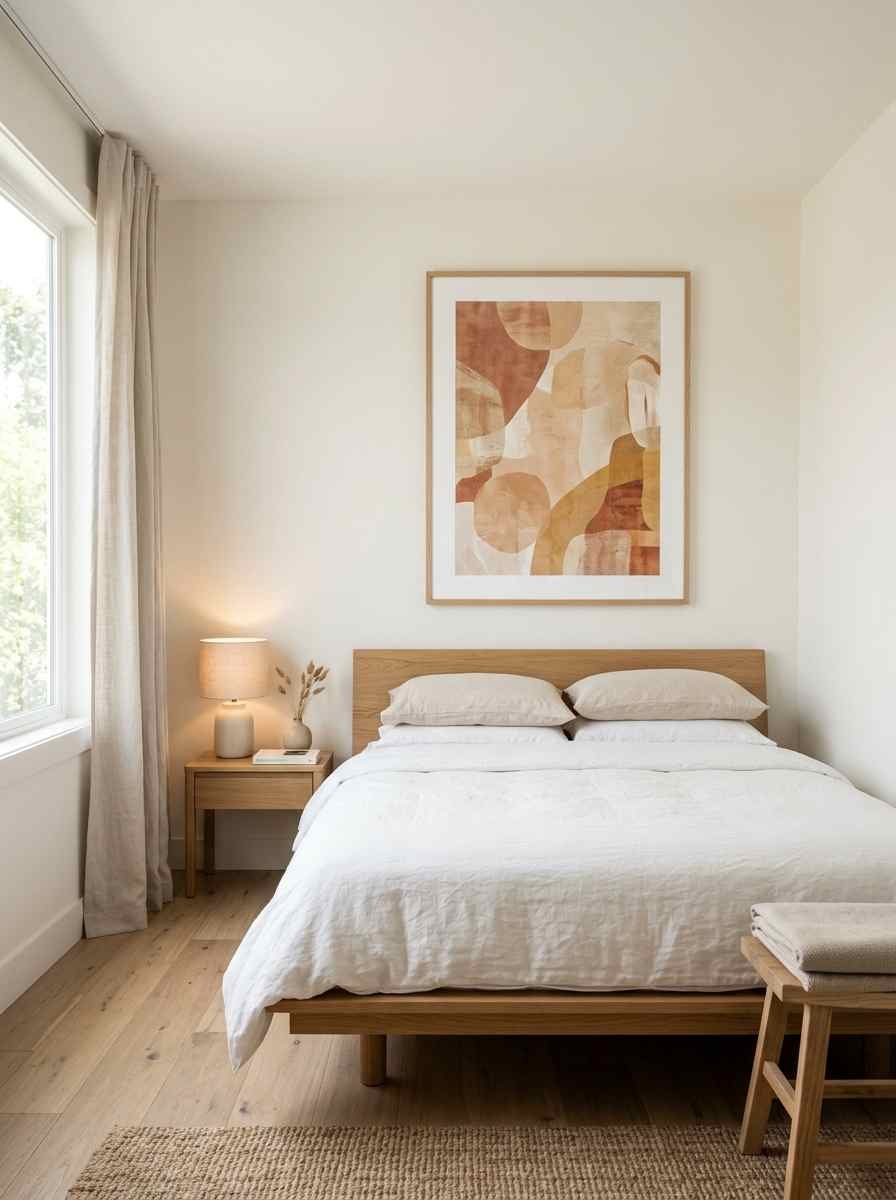
Gallery walls are everywhere right now and I get the appeal, but in a small bedroom they add a lot of visual noise.
One large print or painting above the bed reads as more considered and less busy.
It also photographs well, which matters if you’re creating Pinterest content.
23. Lean art against the wall
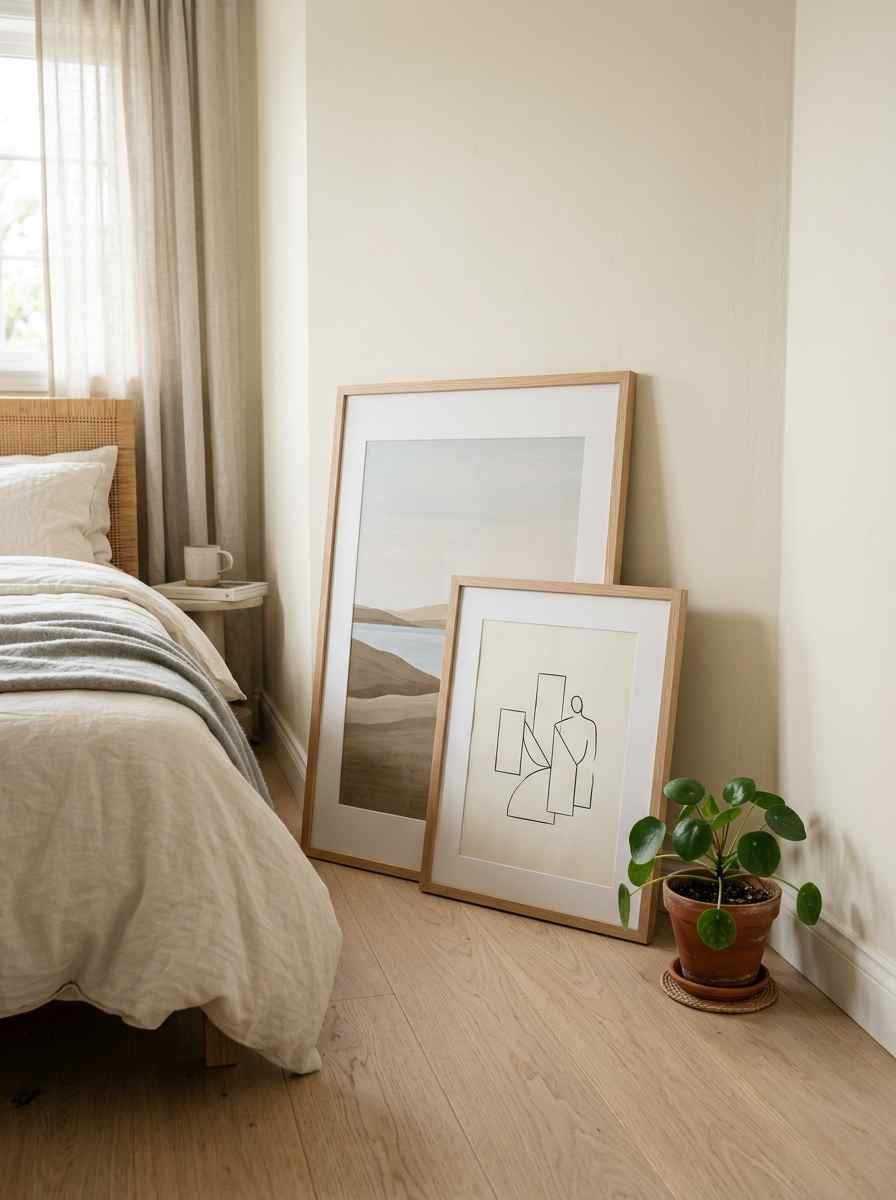
Leaning a framed print against the wall rather than hanging it gives a room a relaxed, editorial feel without committing to holes in the wall. Stack 2 frames of slightly different sizes in front of each other and you’ve got an easy, layered look.
24. Texture instead of pattern
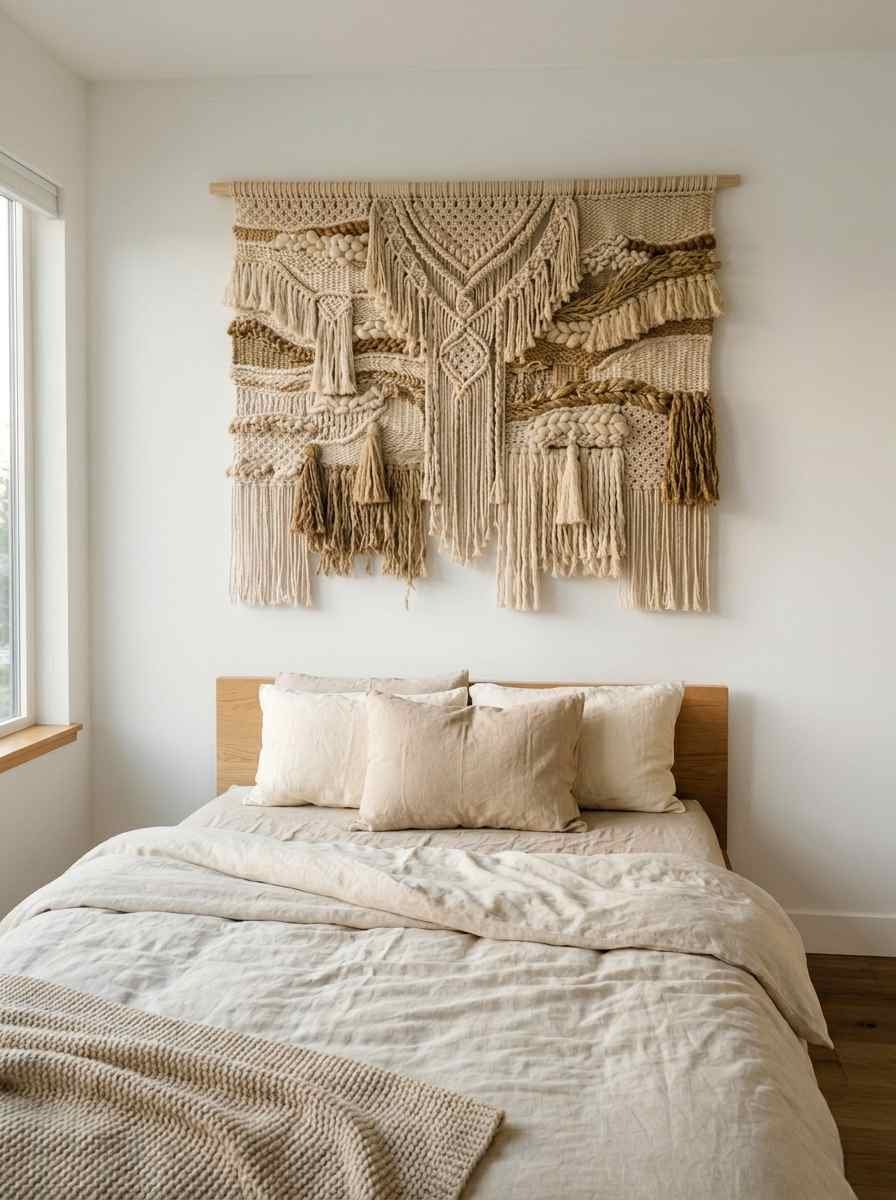
A woven wall hanging, a small piece of macrame, a basket hung flat on the wall: these add texture and warmth without pattern.
In a small minimalist room, pattern can easily overwhelm. Texture is a safer bet.
25. Keep one wall completely clear
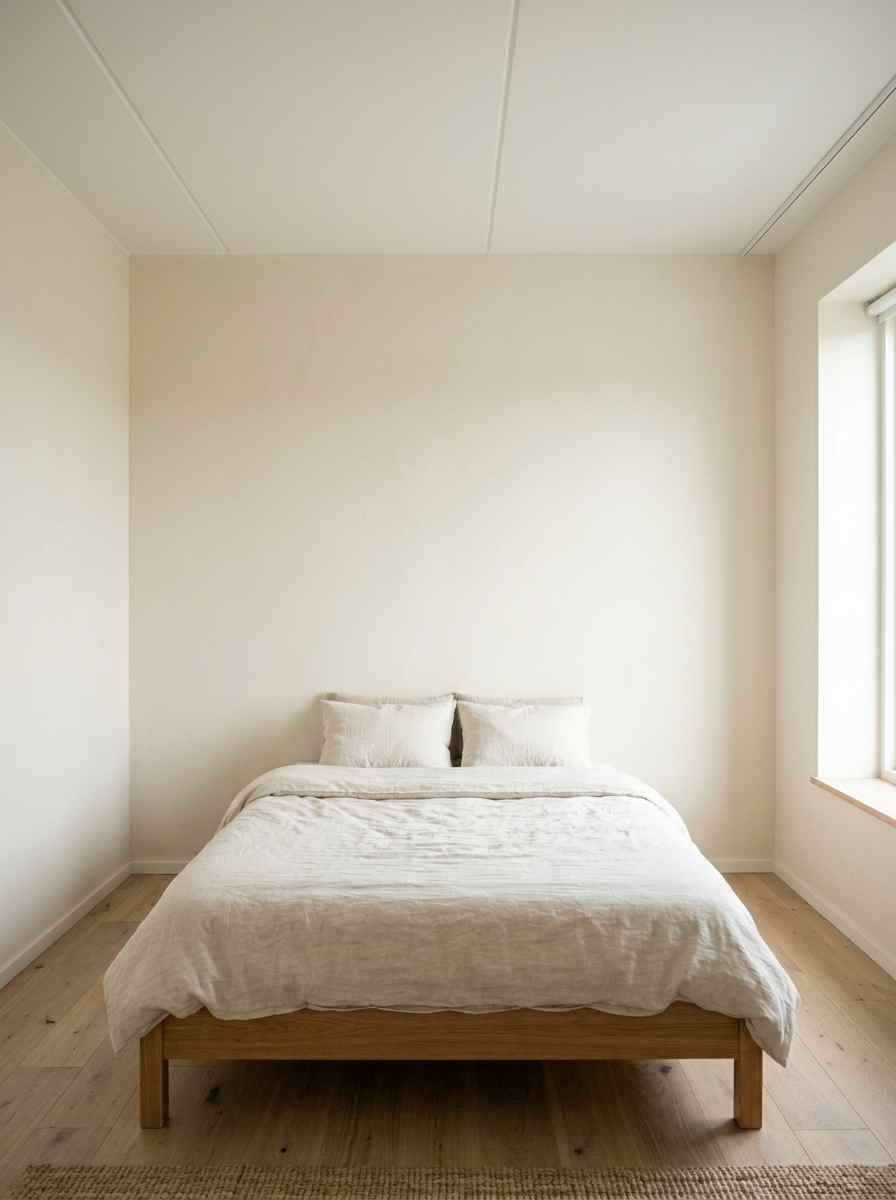
I know this sounds counterintuitive if you’re trying to make a room feel “designed,” but a completely bare wall gives the eye a place to rest.
It makes the pieces you do have on other walls feel more intentional.
Plant and natural element ideas
26. One statement plant
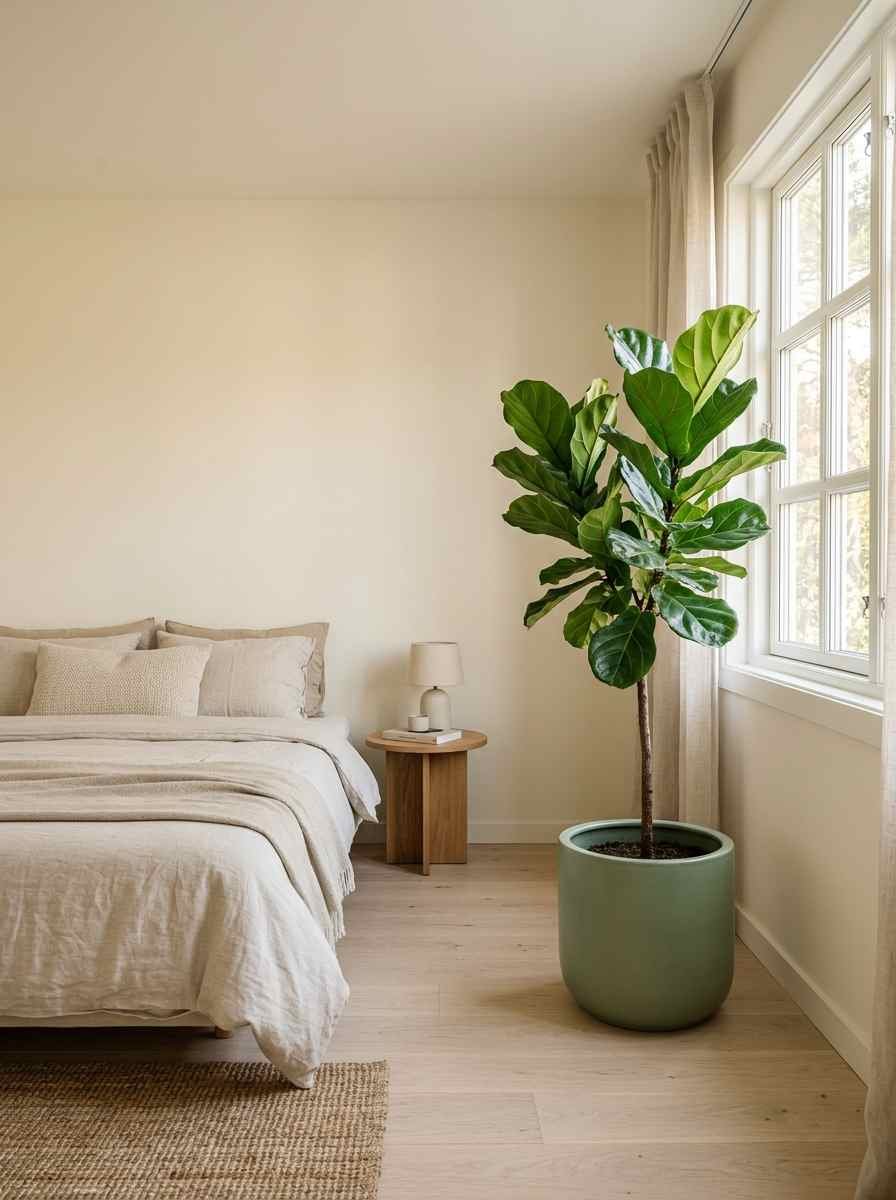
A tall fiddle-leaf fig or a trailing pothos in a decent pot does more for a room than 12 small succulents scattered across every surface.
One plant, good pot, good placement. That’s it. (The corner next to a window is almost always the right spot.)
27. Natural materials on the floor
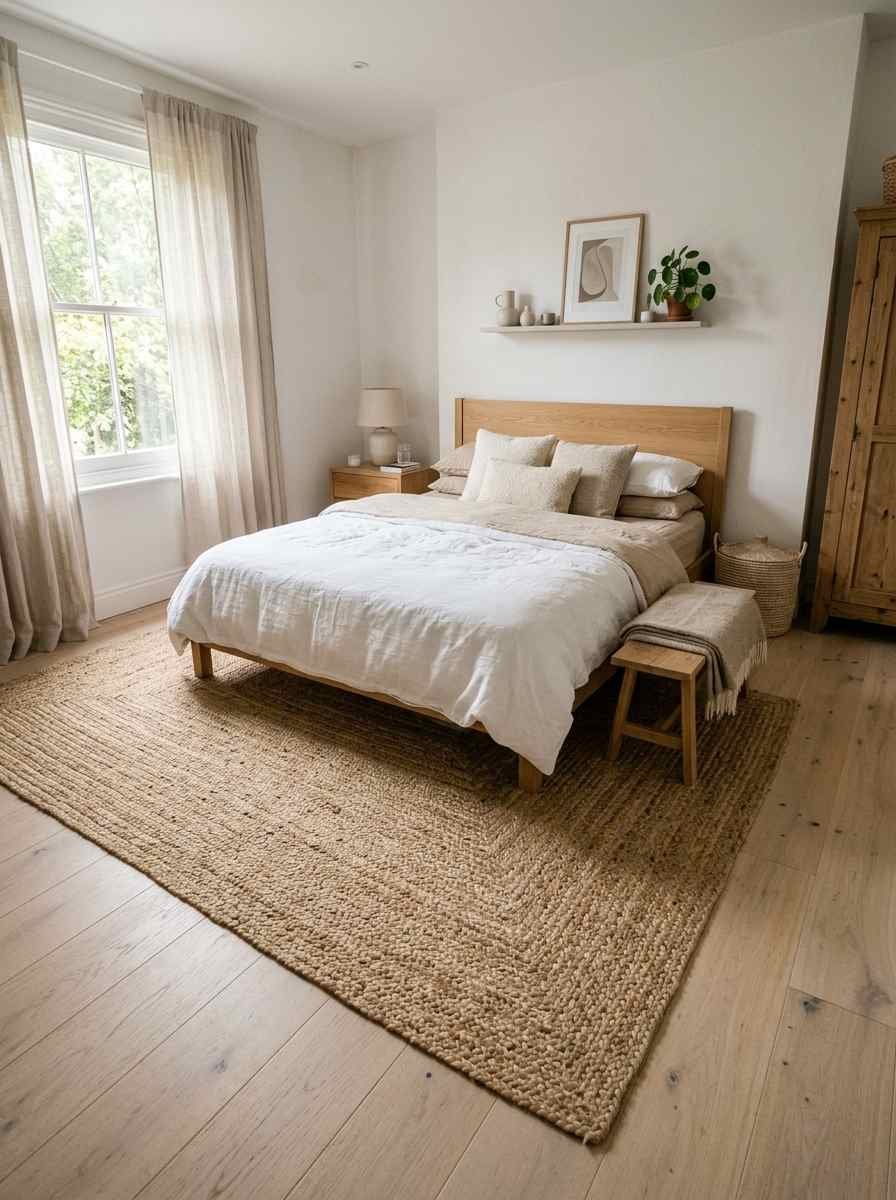
A jute or wool rug in a light natural tone adds warmth without adding color.
It grounds the room and makes the bed feel intentional rather than just floating in the middle of the space.
A rug that goes under the front 2/3 of the bed and extends about 50cm on either side is a good size for most small bedrooms. You can find solid guidance on rug sizing at sites like The Rug Company’s blog or Architectural Digest’s room planning guides.
28. Dried botanicals
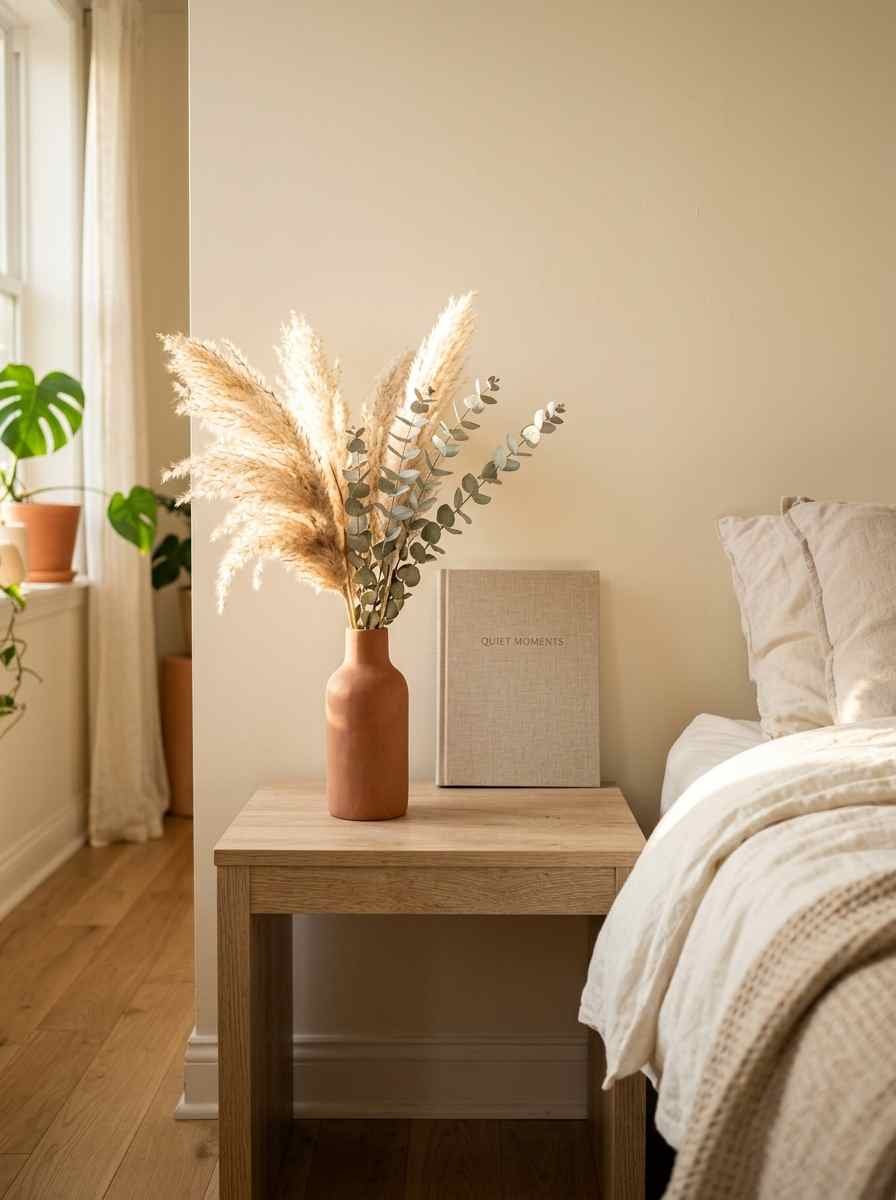
Real plants need light and water. Dried grasses and eucalyptus in a simple vase need nothing and look genuinely good.
They’re also cheaper than most decent plants. A bunch of dried pampas or bunny tail grass in a matte ceramic vase on the nightstand is one of those details that looks way more deliberate than the effort it takes.
Lighting ideas beyond the main fixture
29. Clip-on reading lights
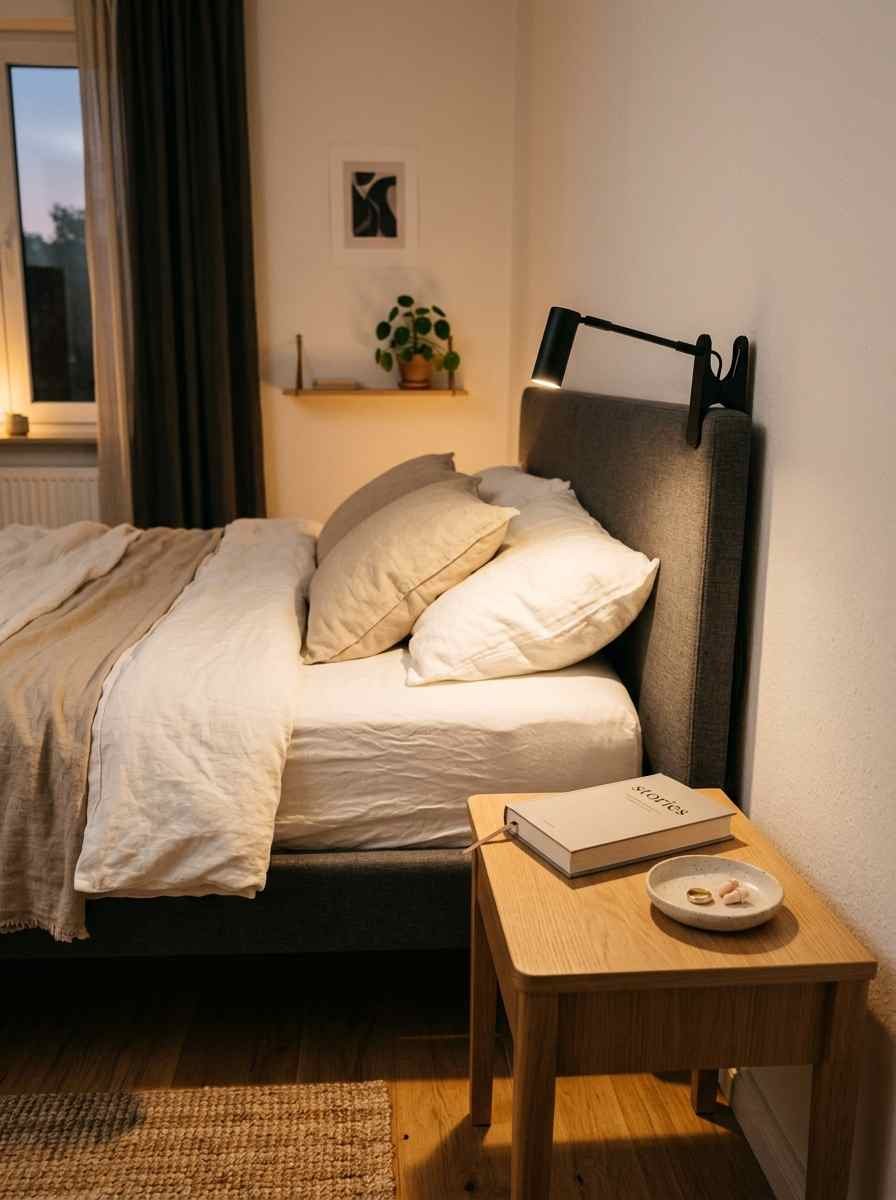
A wall-mounted bedside lamp is ideal. But if you’re renting and can’t run wiring, a clip-on reading light (the kind that attaches to a headboard or book) eliminates the table lamp entirely and frees up nightstand space.
30. LED strip lights behind the headboard
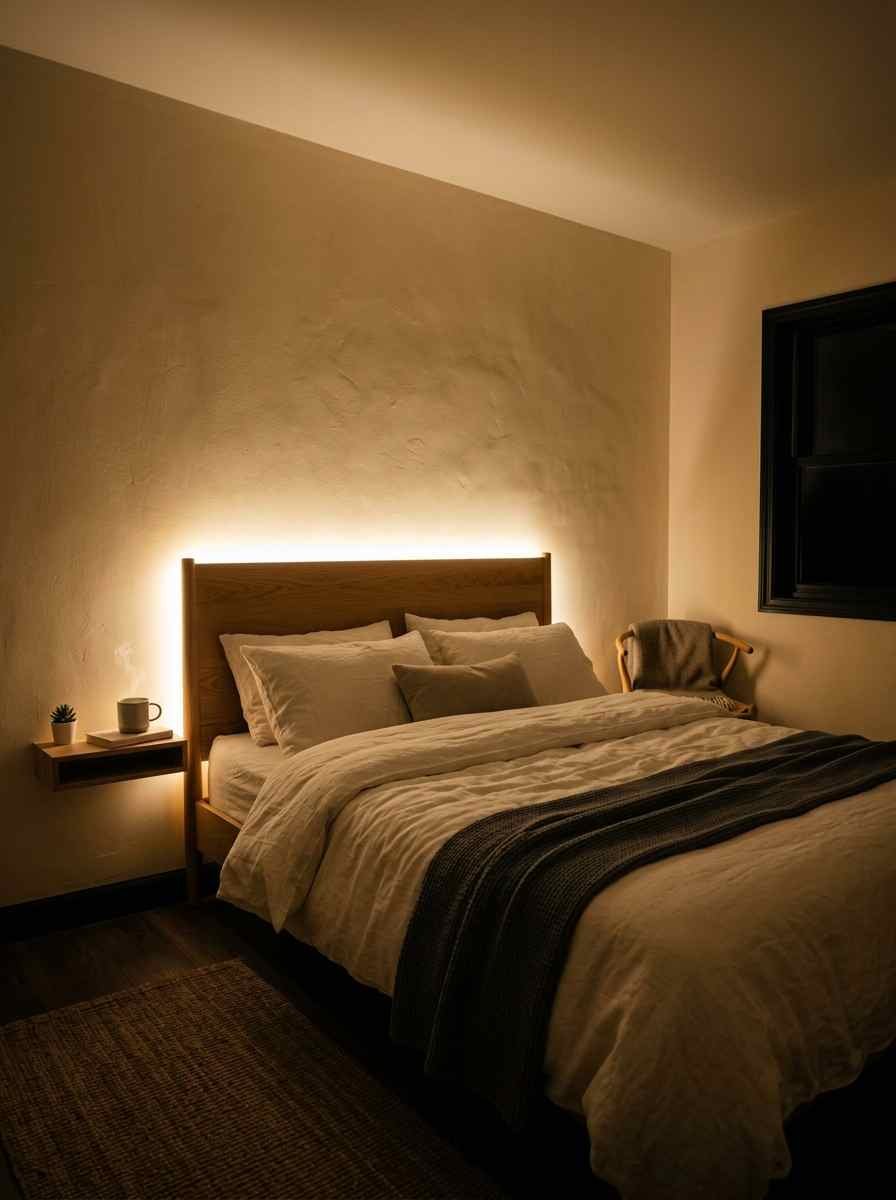
This one got wildly popular on TikTok a couple of years ago and, honestly, I was skeptical.
But done right, with a warm white strip rather than RGB rainbow nonsense, the glow behind a headboard adds depth to the wall and makes the whole room feel more atmospheric at night.
Govee and Philips both make decent strips. Warm white only. You’ve been warned.
31. A single pendant light over each side of the bed
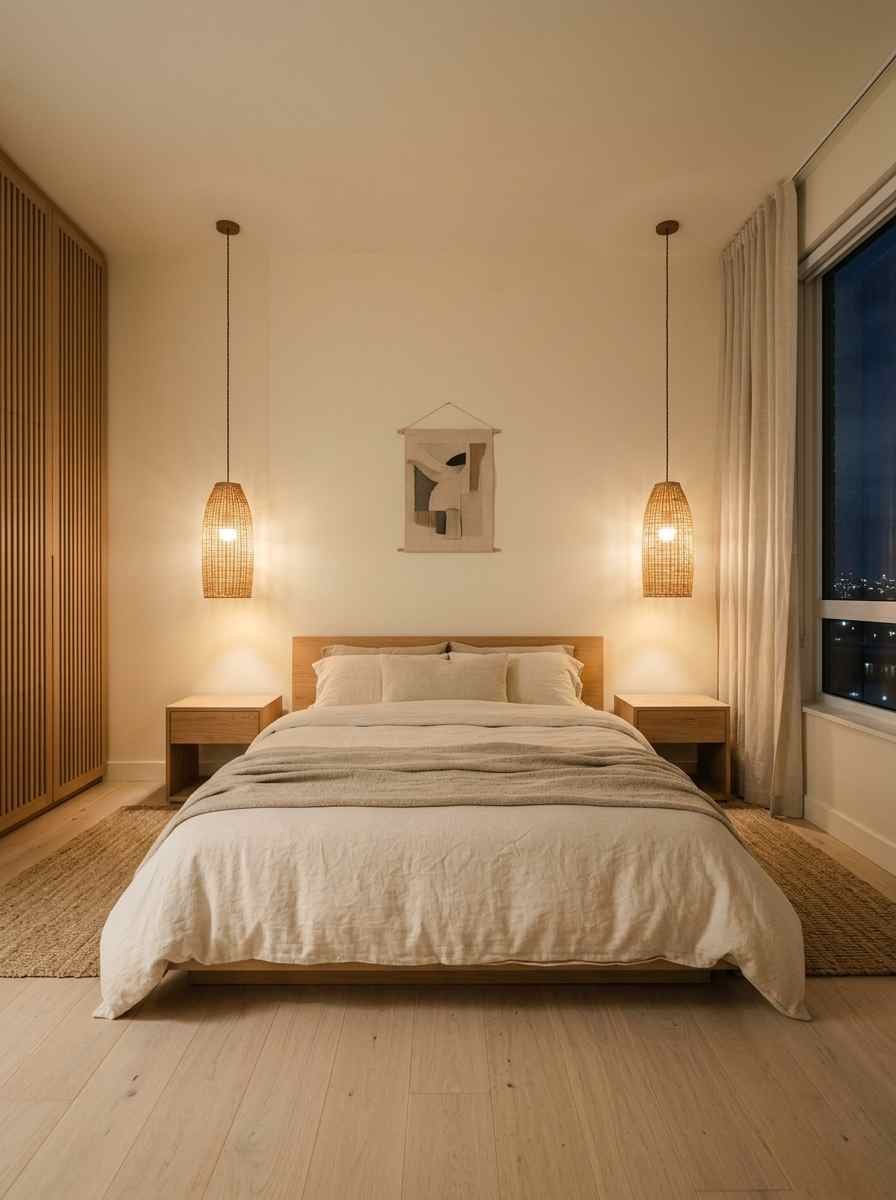
Two pendant lights hung from the ceiling on either side of the bed replace bedside lamps entirely and free up your nightstands completely.
It’s a more commitment-heavy approach (you need an electrician if you want it wired properly), but the result looks very clean.
Even plug-in pendant lights are available now if hardwiring isn’t possible.
Closet and wardrobe organization that makes a real difference
32. Matching hangers throughout
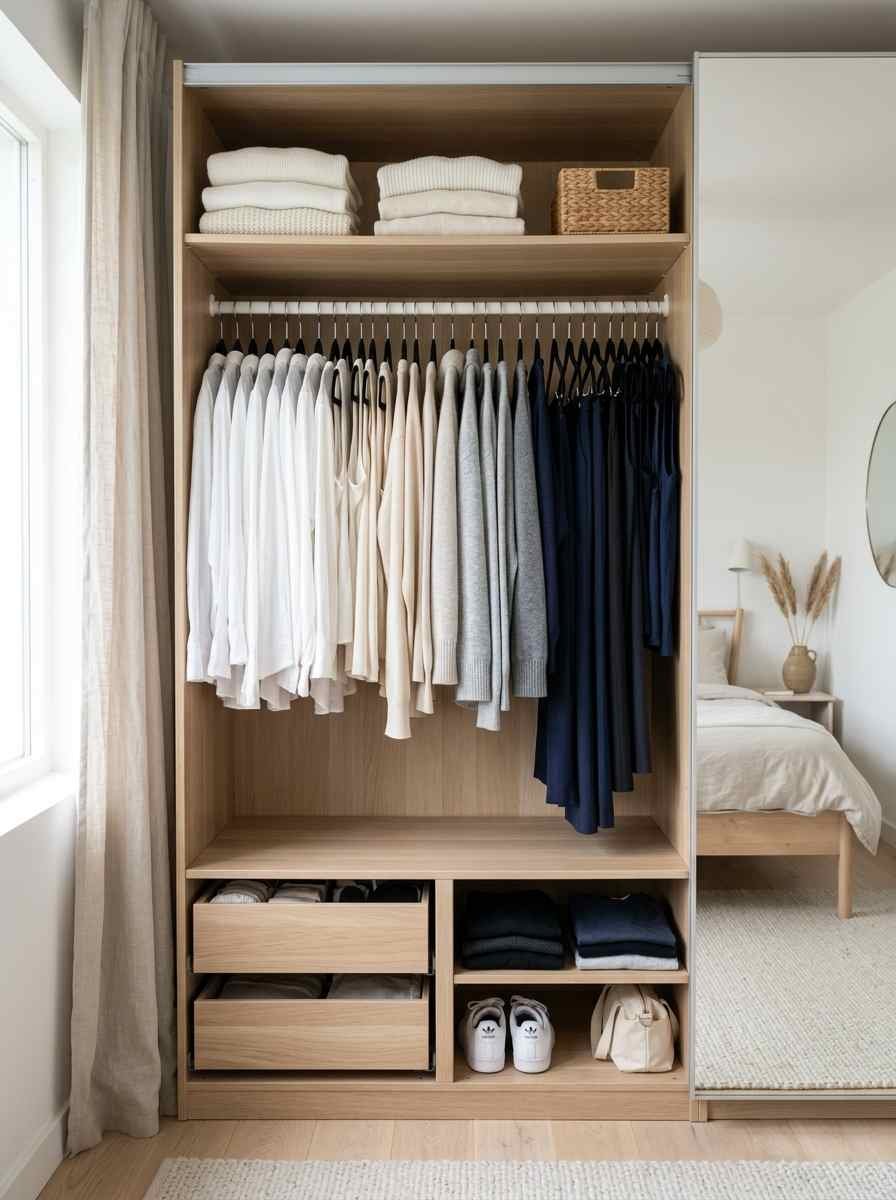
This is one of those things that sounds too small to matter and then you do it and can’t believe the difference.
Matching slim velvet hangers (the kind that don’t let clothes slip) make a wardrobe look organized even when it’s fairly full.
Mixed plastic and wire hangers make everything look chaotic.
A pack of 50 velvet hangers costs around $10 to $15.
33. A capsule wardrobe approach for the bedroom itself
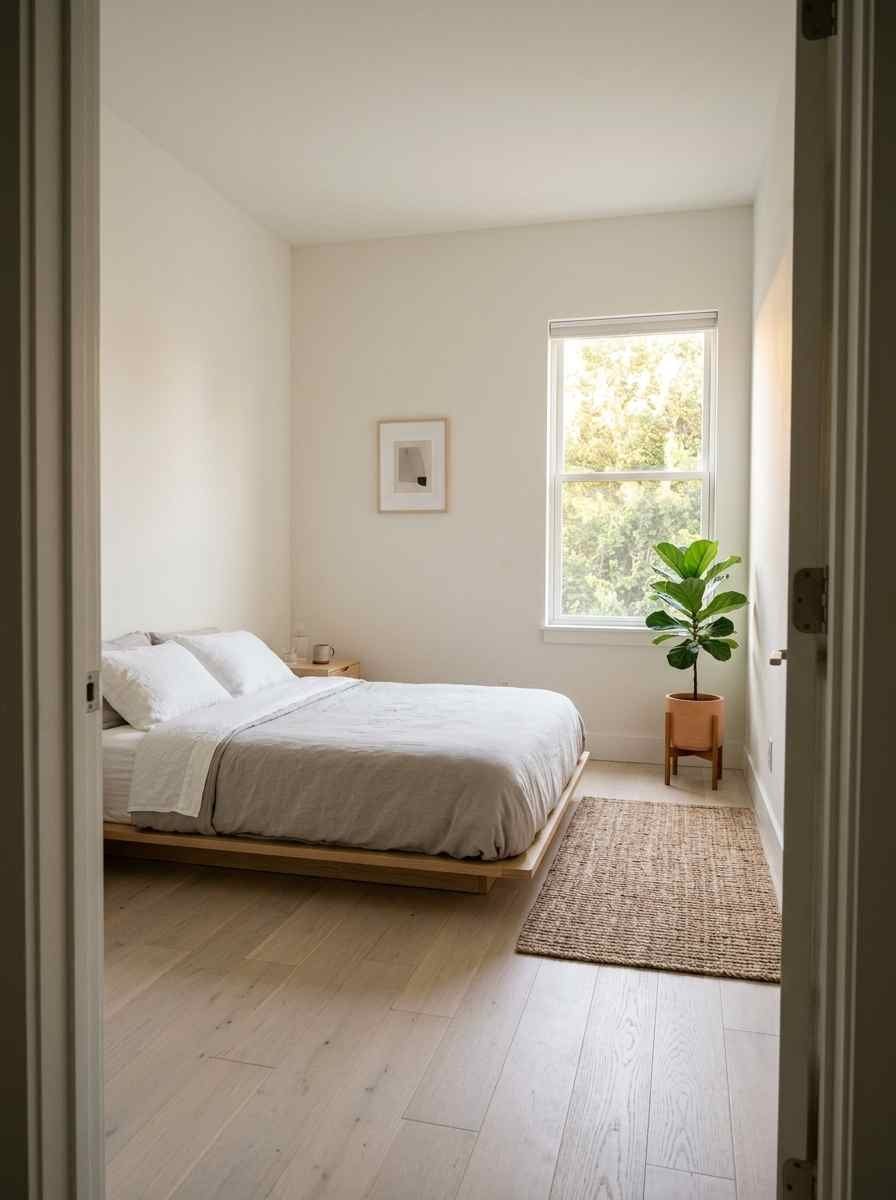
Okay, this one’s bigger than a styling hack. But if you actually own fewer clothes, your bedroom stays tidier with almost no effort.
The clothes you own most naturally get returned to the right place.
The clothes you’re unsure about stop piling up on chairs. I’ve been following the general principles at Into Mind (a great resource for capsule wardrobe thinking) for a few years now and my bedroom has genuinely stayed cleaner as a result.
Quick reference: small bedroom minimalist principles at a glance
| Area | What works | What to avoid |
|---|---|---|
| Color | Warm whites, soft neutrals | Dark walls, busy patterns |
| Furniture | Low-profile, legs-visible pieces | Bulky bases, oversized |
| Storage | Vertical, under-bed, hidden | Open surface clutter |
| Decor | One large piece, natural textures | Gallery walls, too many |
A quick note on buying new stuff
Here’s a thought that’s maybe slightly off-topic but I think about a lot: a lot of “minimalist bedroom” content on Pinterest is really just advertising for more stuff. New linen, new plants, new storage boxes.
Real minimalism means buying less. Before you order anything, spend 20 minutes moving what you already own around. A lot of the time that’s enough.
FAQs
Q: What’s the single most effective change in a small minimalist bedroom?
Clearing your surfaces. Every flat surface in the room: nightstands, dresser, windowsill. Remove everything, then put back only what genuinely belongs there and gets used daily. The room will look different in 10 minutes without spending any money.
Q: How do I make a small bedroom look bigger without painting or renovating?
Two things work fastest: move your furniture away from the walls slightly (counterintuitive, but rooms feel larger when furniture isn’t plastered to every wall), and add a large mirror opposite your main light source. You can also try removing one piece of furniture entirely. You’ll probably find you don’t miss it.
Q: Is a minimalist bedroom style hard to maintain?
Harder than setting it up, honestly. The visual look is easy to achieve in an afternoon. Keeping it that way requires a habit of returning things to their place and regularly editing what you own. A 10-minute tidy before bed makes a bigger difference than any decor choice.
Final thought
A small bedroom done well is genuinely one of my favorite things to look at on Pinterest, and even more satisfying to live in. You don’t need a lot of square footage to have a room that feels calm and personal and thought-through. You need a few good decisions and the discipline to stop there.
Which of these 33 ideas are you actually going to try first? Drop it in the comments, I’m curious what resonates most with people who have seriously small rooms.
