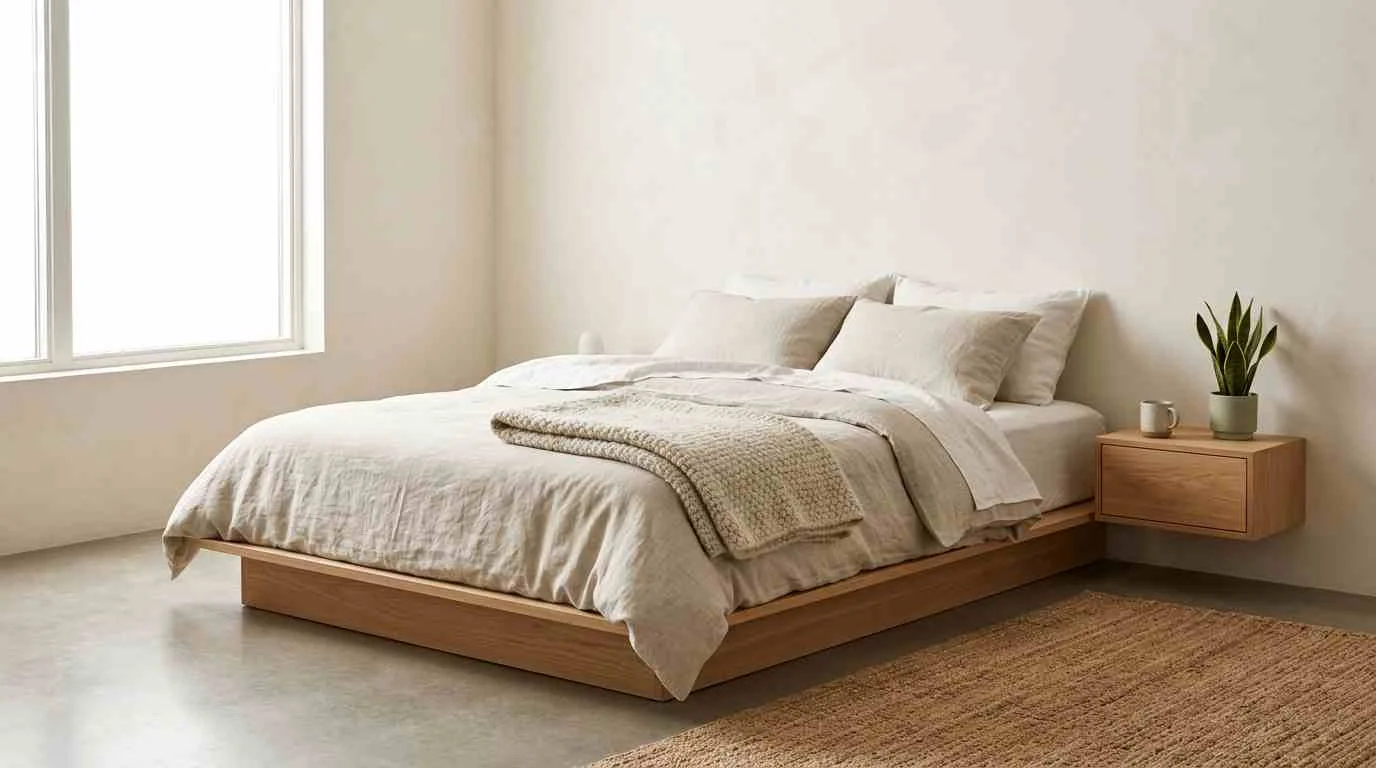
I used to think minimalist decor meant living in a museum: white walls, one chair, maybe a single sad plant if I was feeling bold.
I tried that look in my first apartment for about four months. It felt like camping indoors.
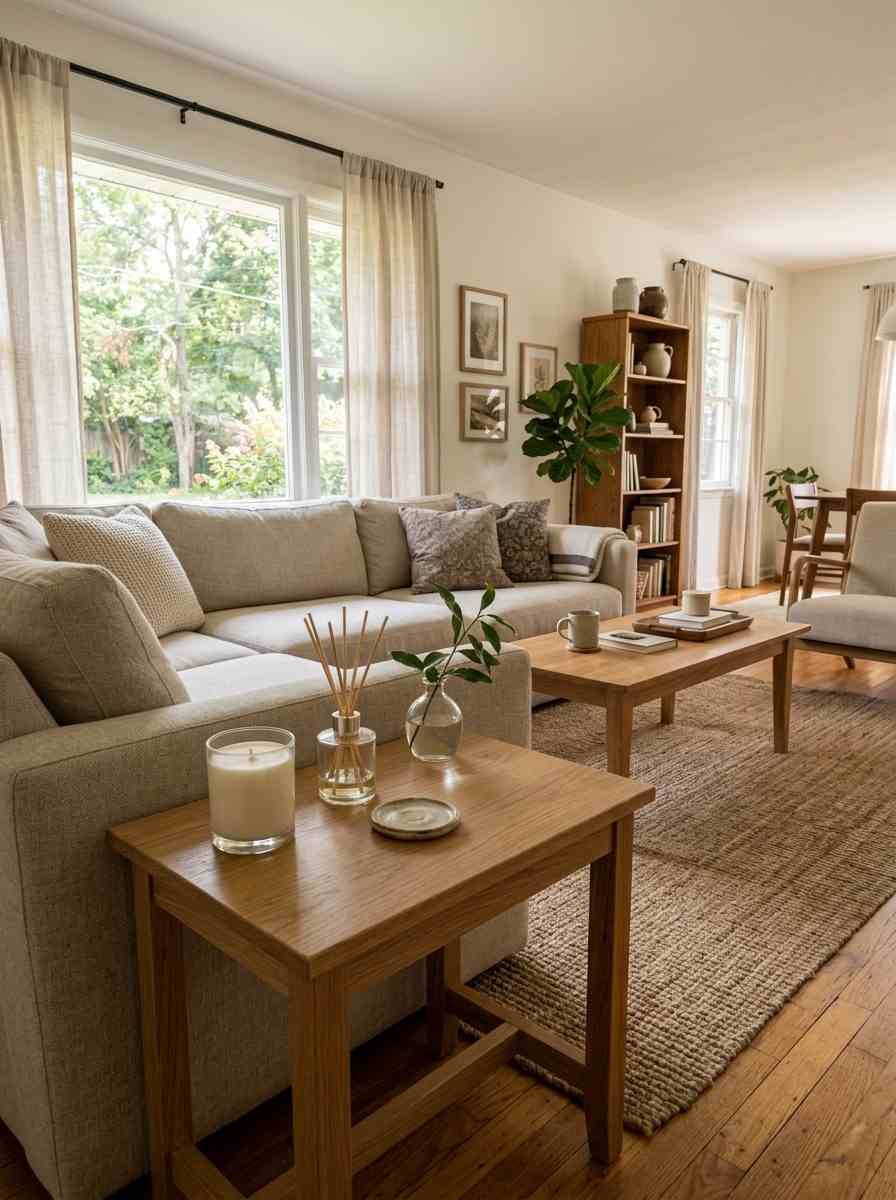
Then I started paying attention to what actually makes a minimalist room feel warm instead of empty. It comes down to better materials, layered light, and a handful of pieces that earn their spot on a shelf.
Swap “stark and sparse” for “calm and warm,” and a room finally feels like somewhere you want to sit on a Sunday morning with coffee.
That’s the idea behind this list. 27 cozy minimalist room decor ideas you can mix and match, whether you’re working with a full house or a 400 square foot rental. None of these require knocking down walls or hiring a designer. Most cost less than a dinner out, and a few cost nothing at all.
A quick note before we get into it: you don’t need to apply every single idea here, and please don’t try to do all 27 in one weekend.
I made that mistake with a different room once (long story involving wallpaper, a Saturday, and zero planning) and ended up with something busier than when I started.
Pick a few that fit your space and your budget. The rest will still be here next month.
Start with color: the warm, calm canvas
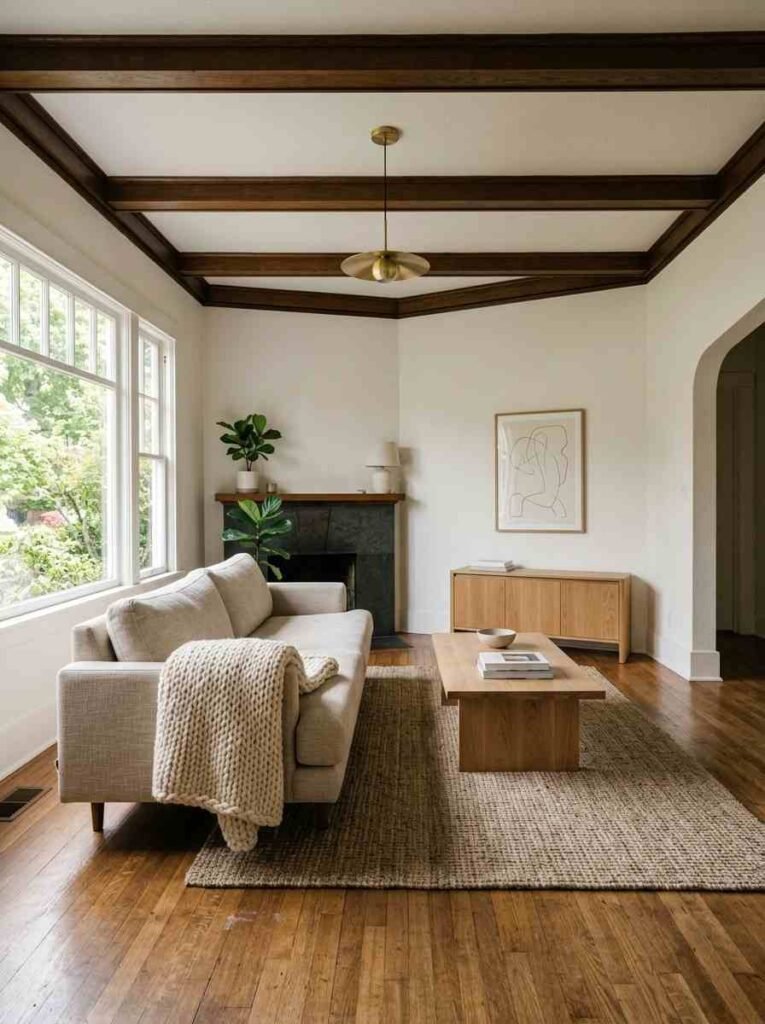
Minimalist rooms get a bad reputation because people default to bright white everywhere. Under a regular bulb, bright white reads cold and a little clinical.
Warmer shades do the same decluttered job without the chill.
1. Warm white over bright white. Look for whites with a hint of cream or beige in the undertone instead of a true, cool white.
It still reads clean. It just doesn’t feel like a hospital corridor.
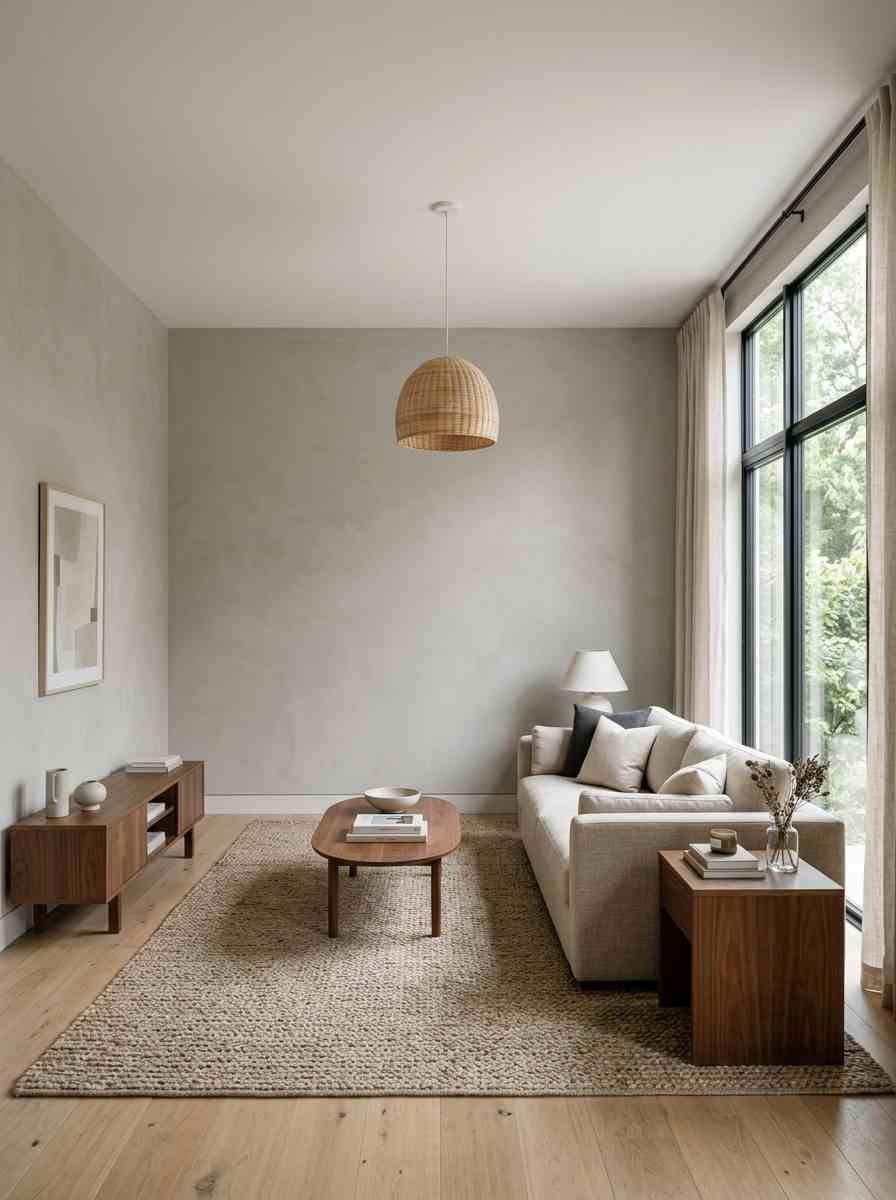
2. Greige walls. A blend of gray and beige, greige gives you a neutral base that works with both warm wood tones and cooler metal fixtures.
It’s the easiest “I can’t decide” color in the business.
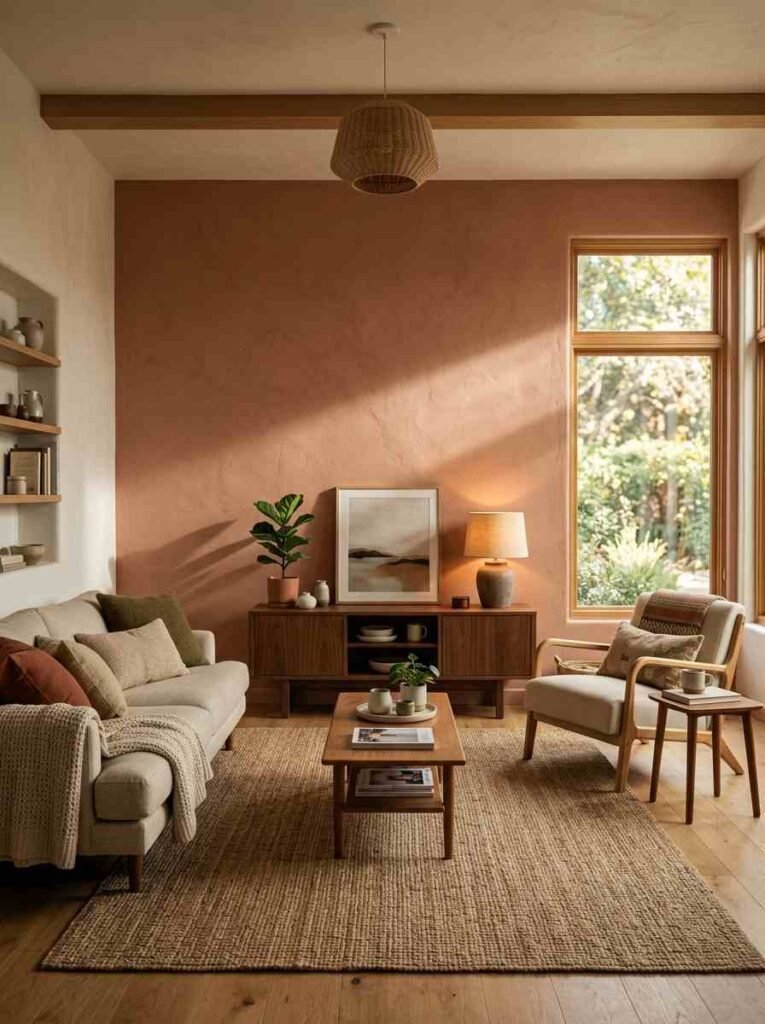
3. One terracotta or clay accent wall. You don’t need to commit a whole room to color. One wall in a muted clay tone adds warmth fast, and it still photographs as minimalist rather than maximalist.
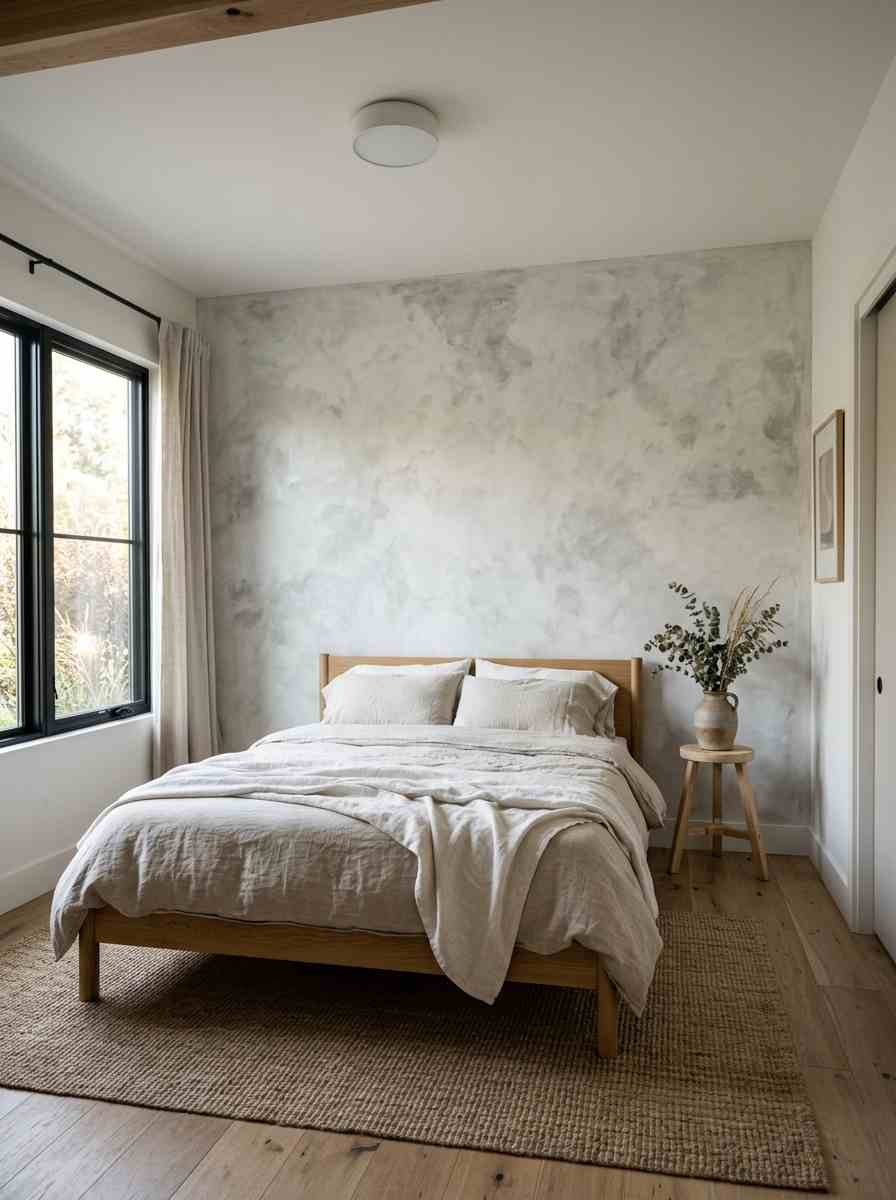
4. Limewash texture. Limewash paint has a soft, cloudy finish that adds depth to a wall without adding pattern. It follows the same logic behind the core rules of minimalist design: texture does the work that pattern usually does, so the room stays calm but never flat.
Texture does the heavy lifting
Here’s the thing nobody tells you when you start cutting clutter: once the patterns disappear, texture becomes the main character.
A minimalist room with zero texture variation looks unfinished, not calm.
5. A chunky knit throw. One oversized, textured throw over a sofa or the foot of a bed adds more warmth per square foot than almost anything else on this list.
I’m partial to wool or a wool blend over acrylic. It just drapes better and ages well.
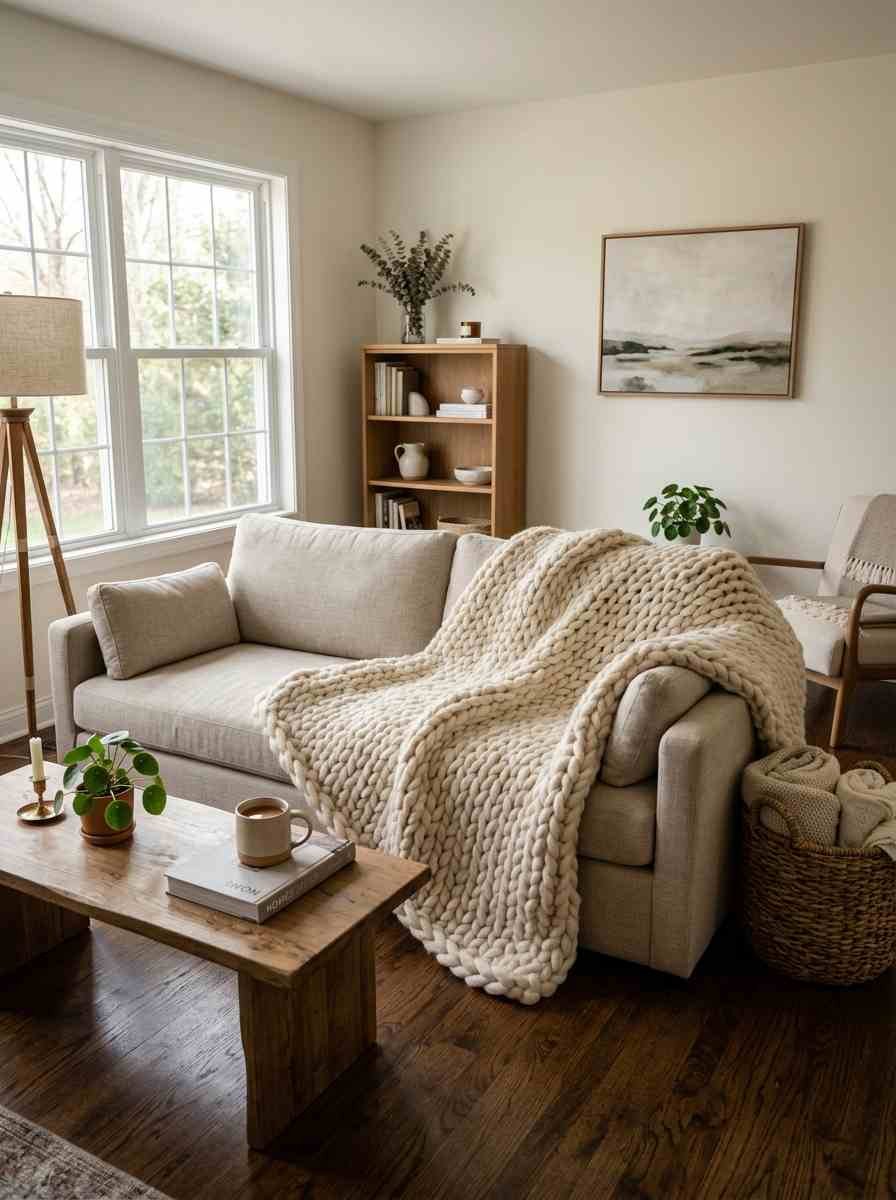
6. Bouclé or linen upholstery. Smooth leather and glossy fabrics photograph fine but feel cold to actually sit on. Bouclé and linen add visible texture and stay in the neutral, minimalist color family.
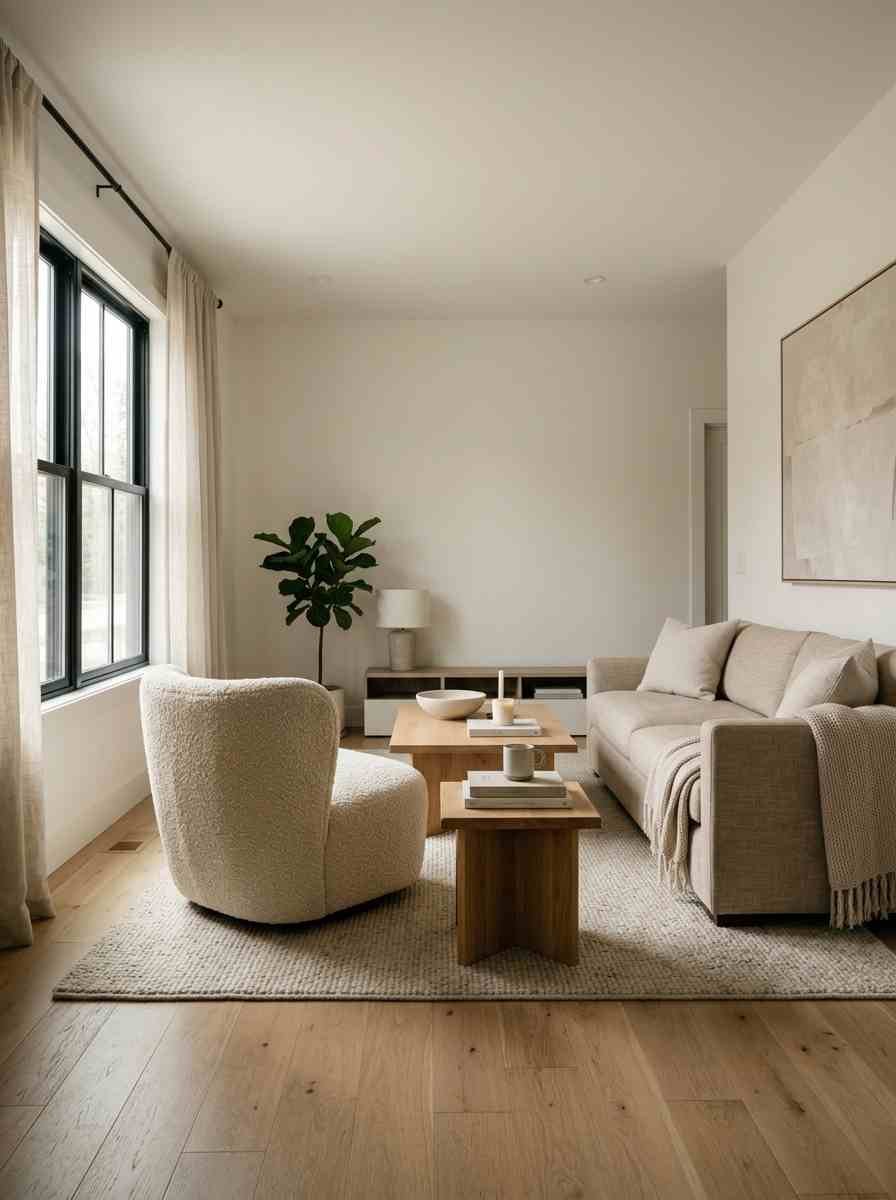
7. A natural fiber rug. Jute, sisal, or a low-pile wool rug grounds a room and adds grain underfoot.
Quick aside, totally unrelated: my cat treats every new soft textile like a personal invitation to shed directly into the fibers.
If you’ve got pets, washable or low-maintenance fabric isn’t optional. It’s survival.
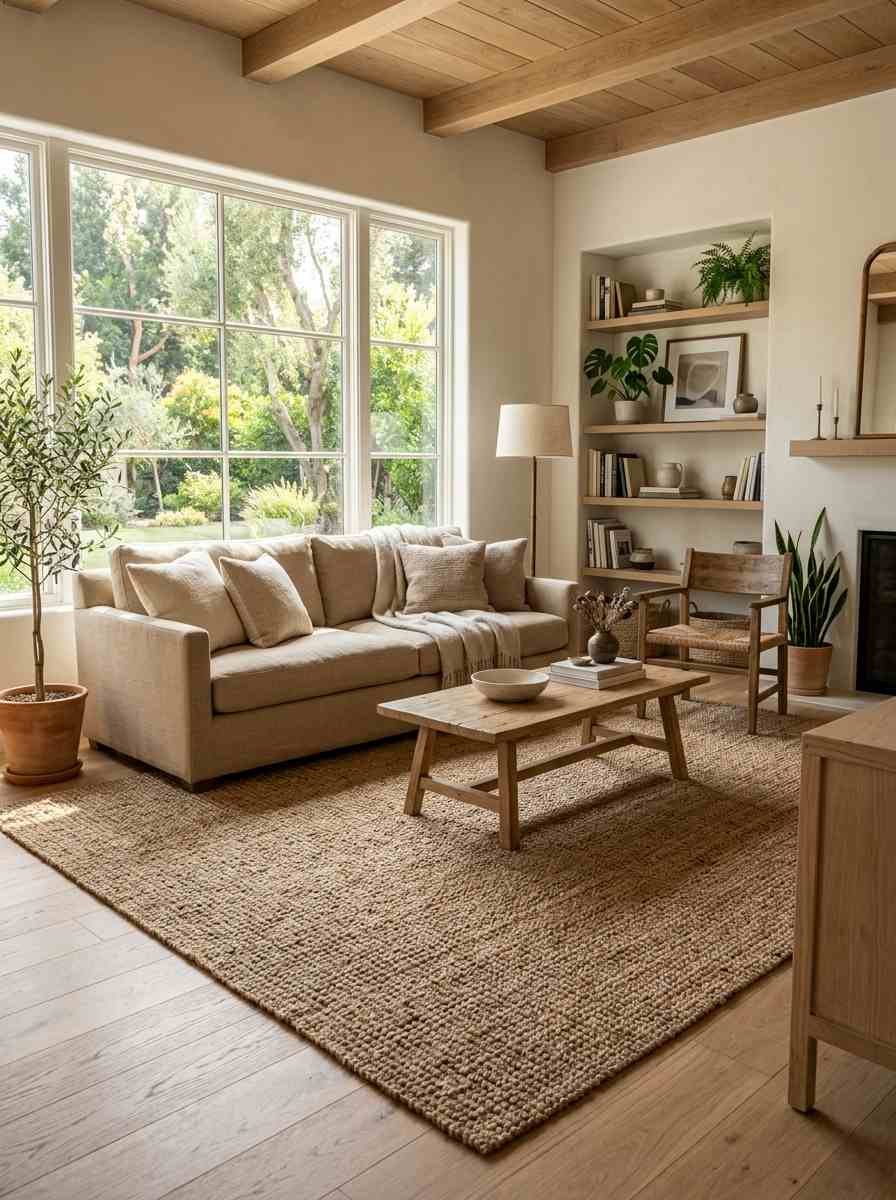
8. Raw or lightly finished wood. Furniture with visible wood grain (not painted, not laminated) adds organic texture without adding visual noise.
A single oak side table can do more than three smaller accessories combined.
Lighting that makes minimalism feel cozy, not cold
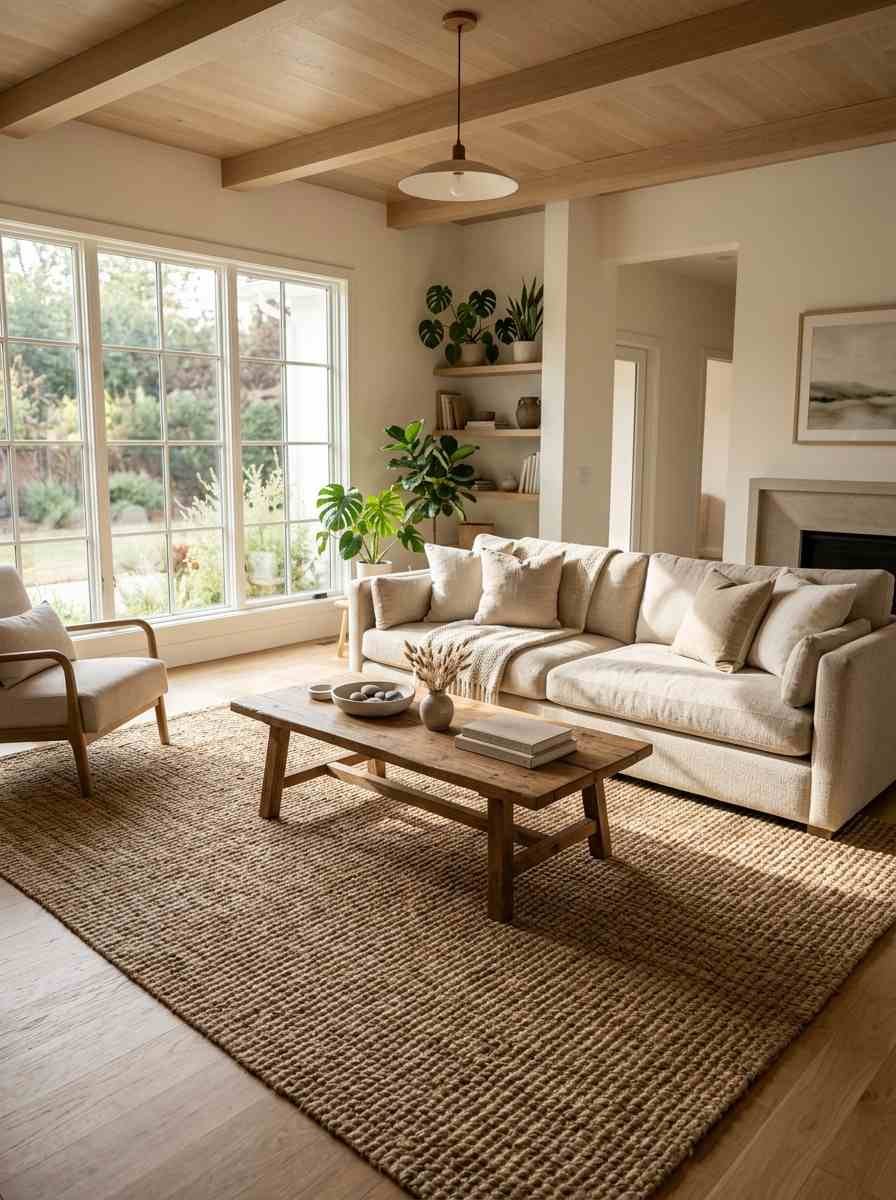
Lighting gets ignored constantly, and it’s probably the single biggest factor in whether a minimalist room feels serene or sterile.
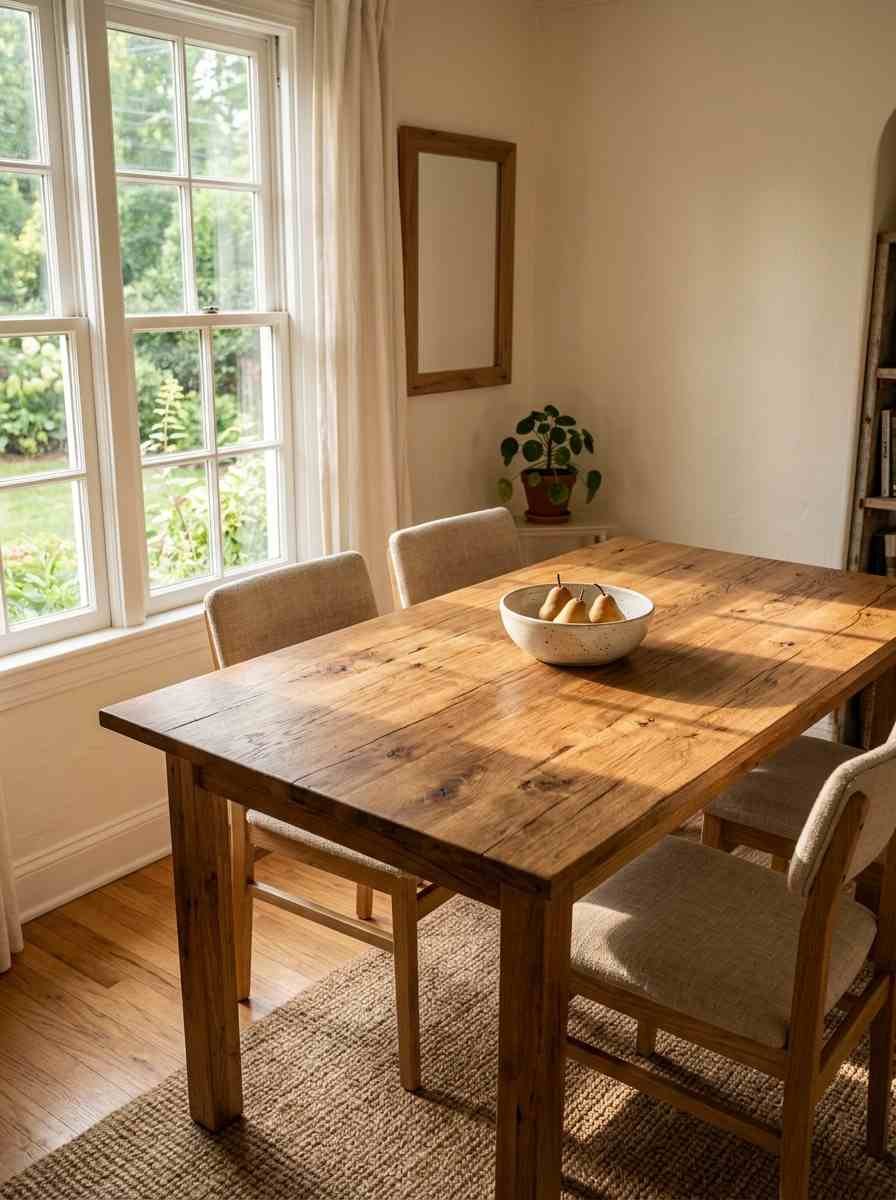
9. Switch to warm bulbs. Look for bulbs around 2700K. Wow, the difference this makes is honestly a little ridiculous. The exact same room under a 5000K “daylight” bulb looks like an office. Under 2700K, it looks like a hotel suite.
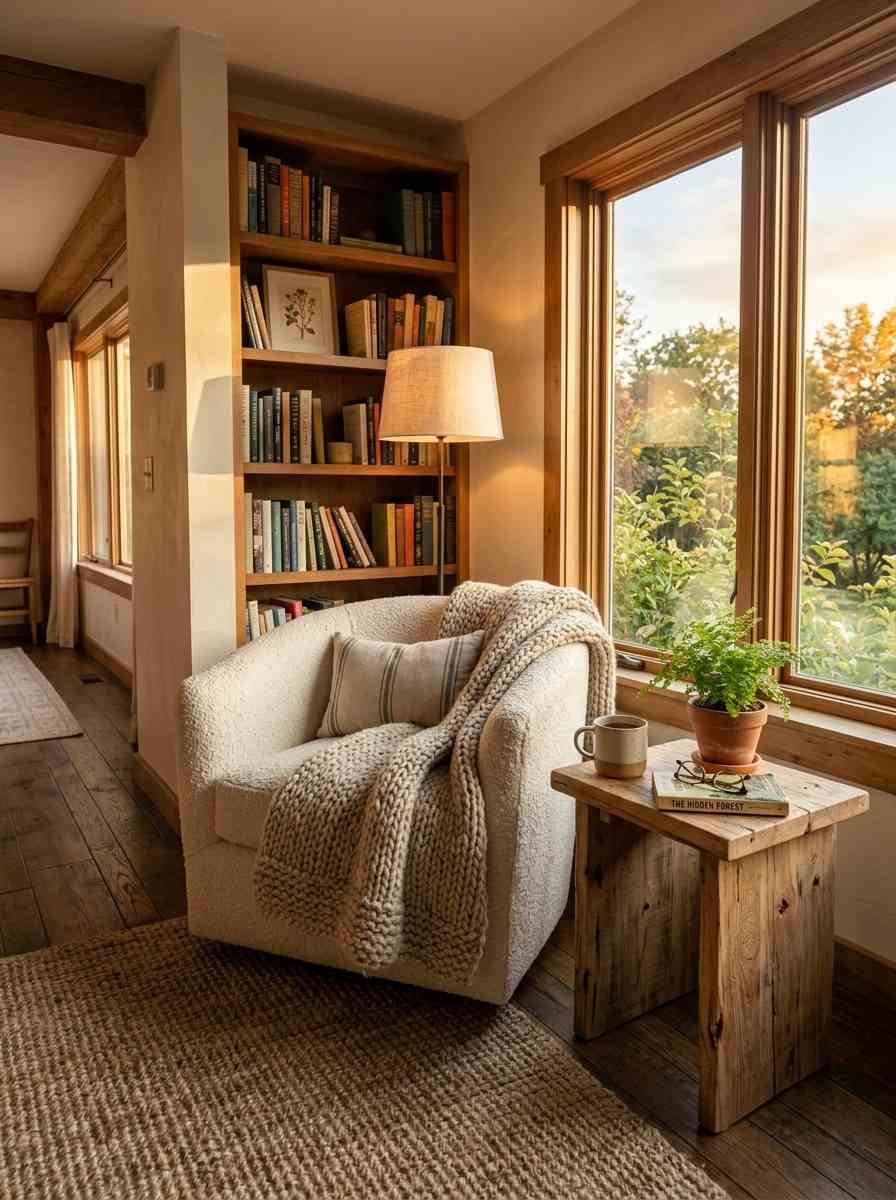
10. Layer your light sources. Don’t rely on one overhead fixture. A floor lamp, a table lamp, and a dimmable overhead give you control over the mood depending on the time of day.
Mornings call for bright and even. Evenings call for low and warm. One switch can’t do both well, so don’t ask it to.
27 Essential Aesthetic Minimalist Room Decor Ideas: The Ultimate Guide
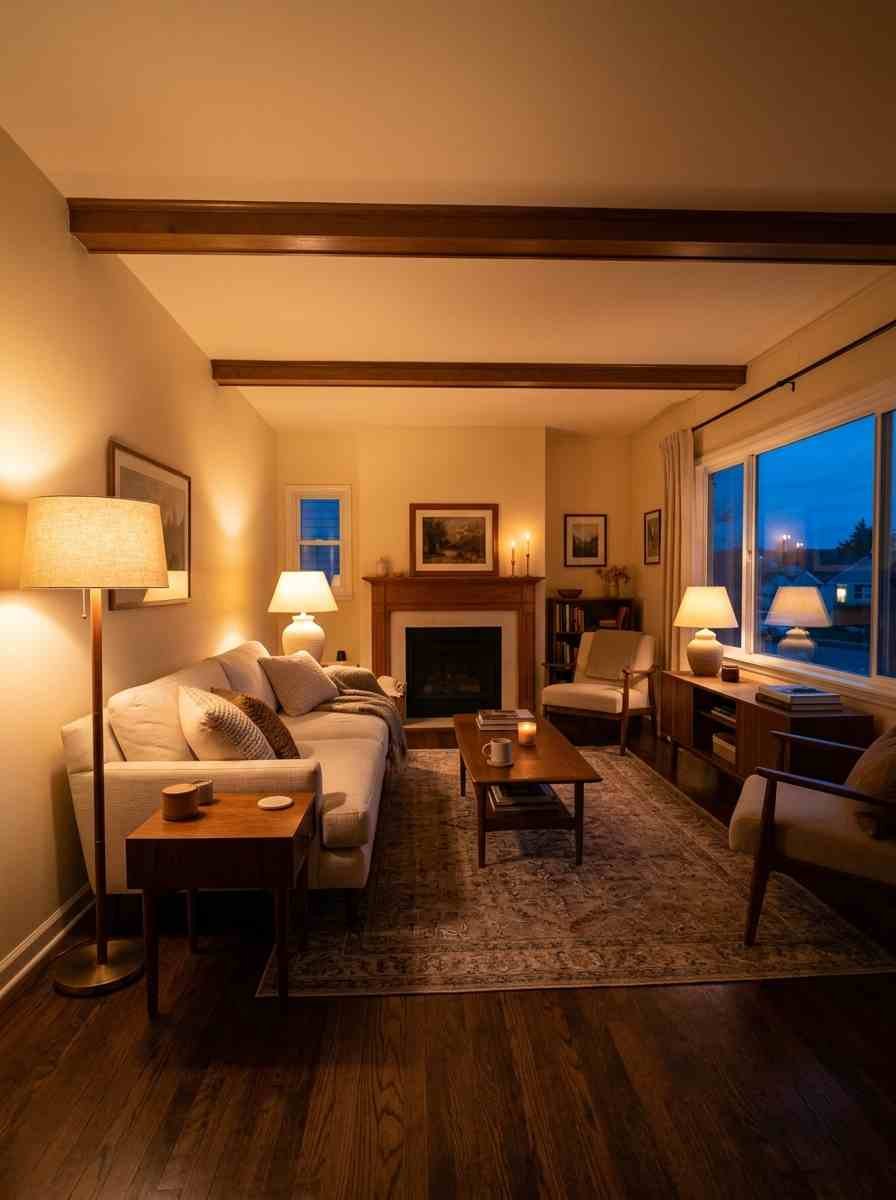
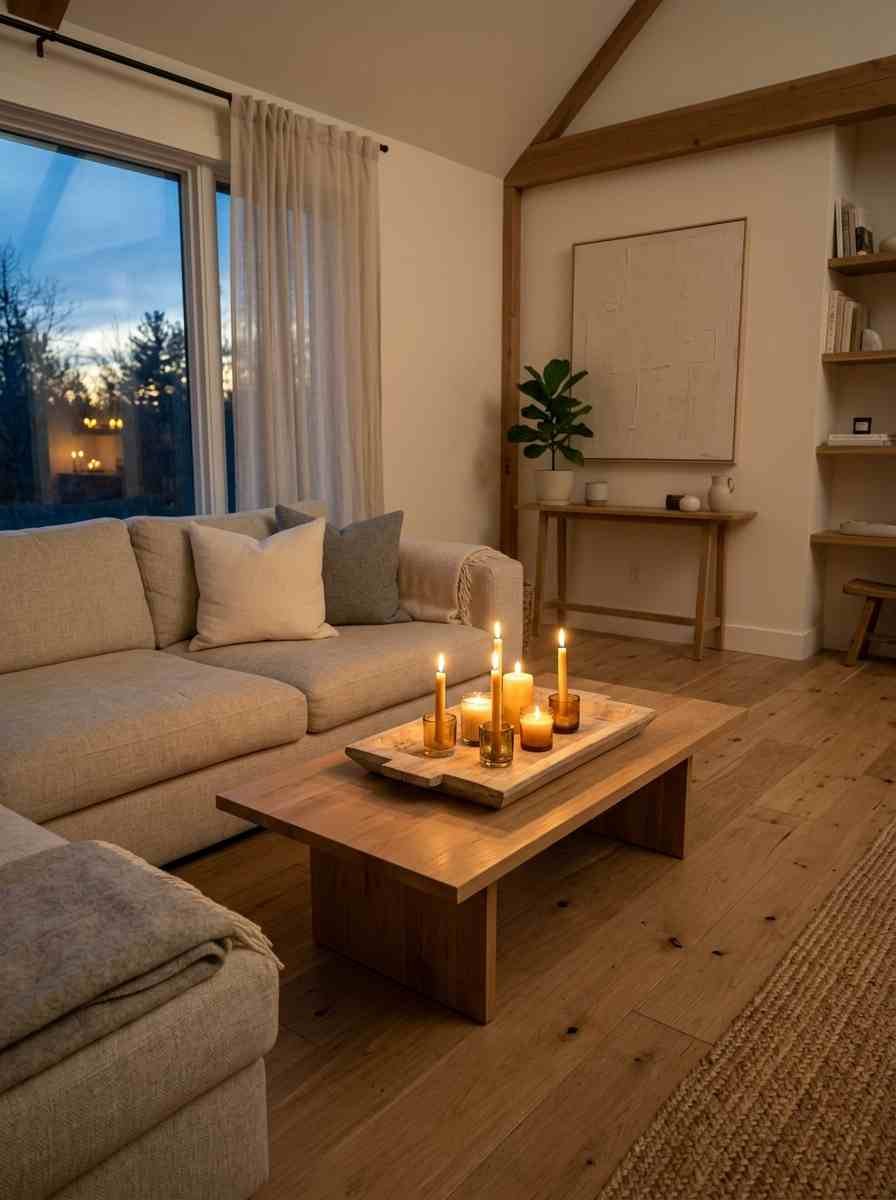
11. Bring in candles, real or flameless. A cluster of candles on a tray adds flicker and warmth that no bulb fully replicates.
Keep it to one tray, not five scattered groupings, to stay on the minimalist side of cozy.
12. Choose paper or linen lampshades over metal or glass. Light filtered through fabric or paper comes out softer and more diffuse. It’s a small swap that changes the whole feel of a corner.
Borrow from Japandi: natural materials over decoration
If you want a name for this whole aesthetic, it’s basically Japandi, the style that blends Japanese restraint with Scandinavian coziness.
It leans on quality materials instead of ornament, which is exactly the balance most cozy-minimalist rooms are reaching for.
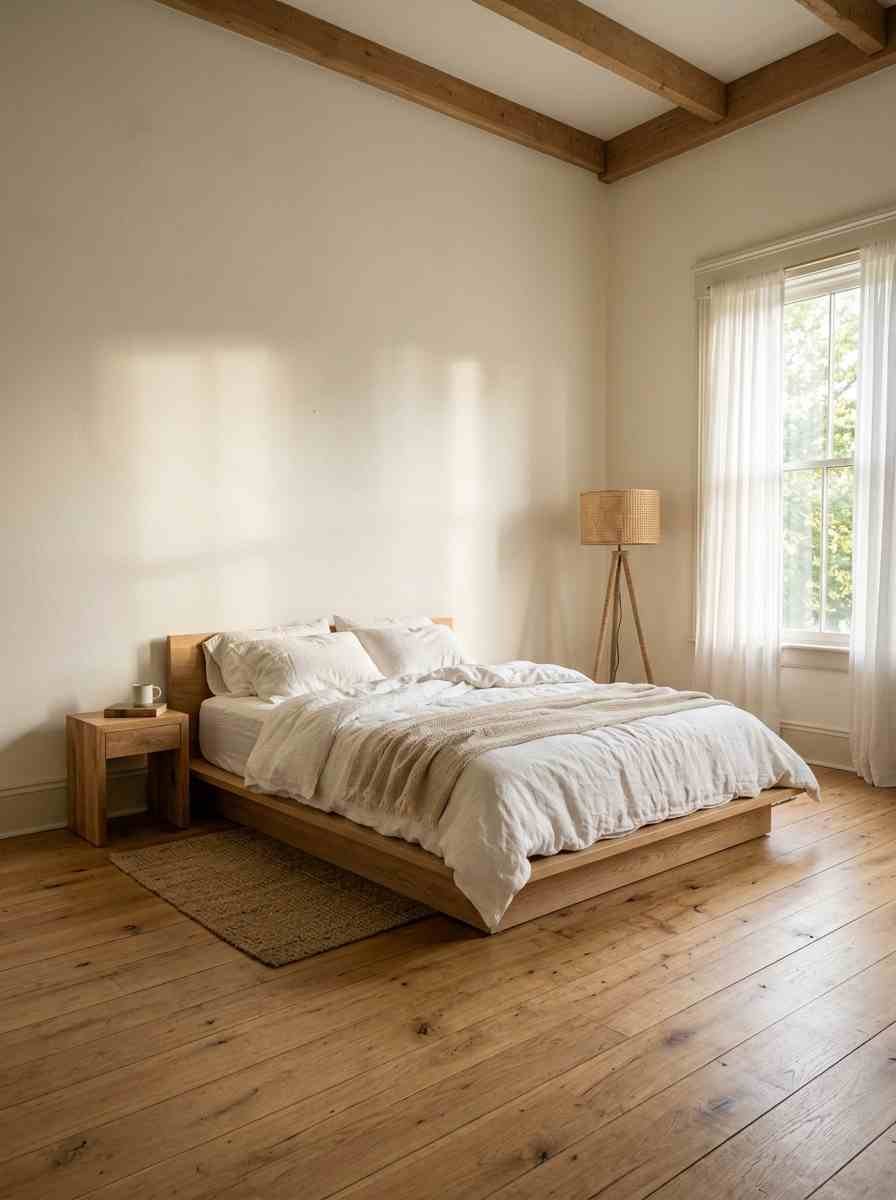
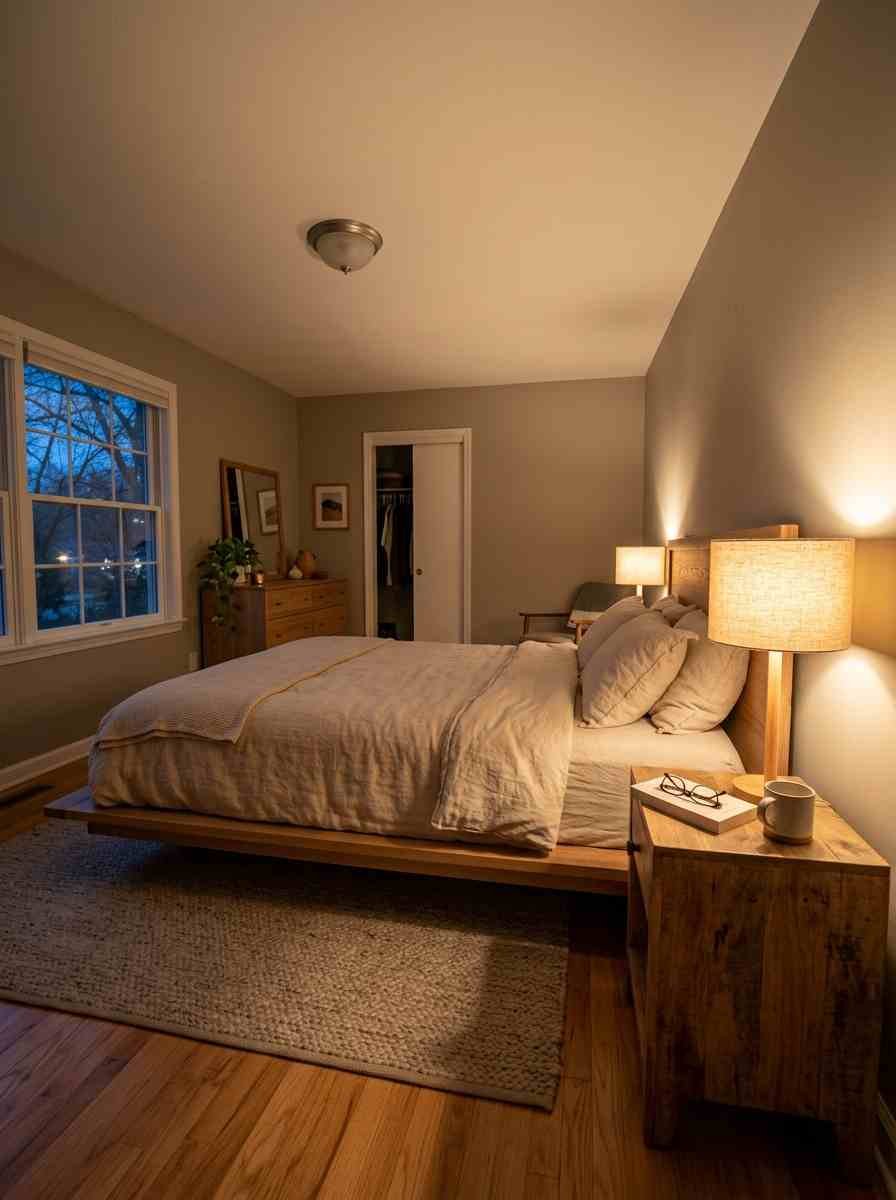
13. Lower-profile, platform-style furniture. Beds and sofas that sit closer to the ground read calmer and more intentional than tall, bulky pieces.
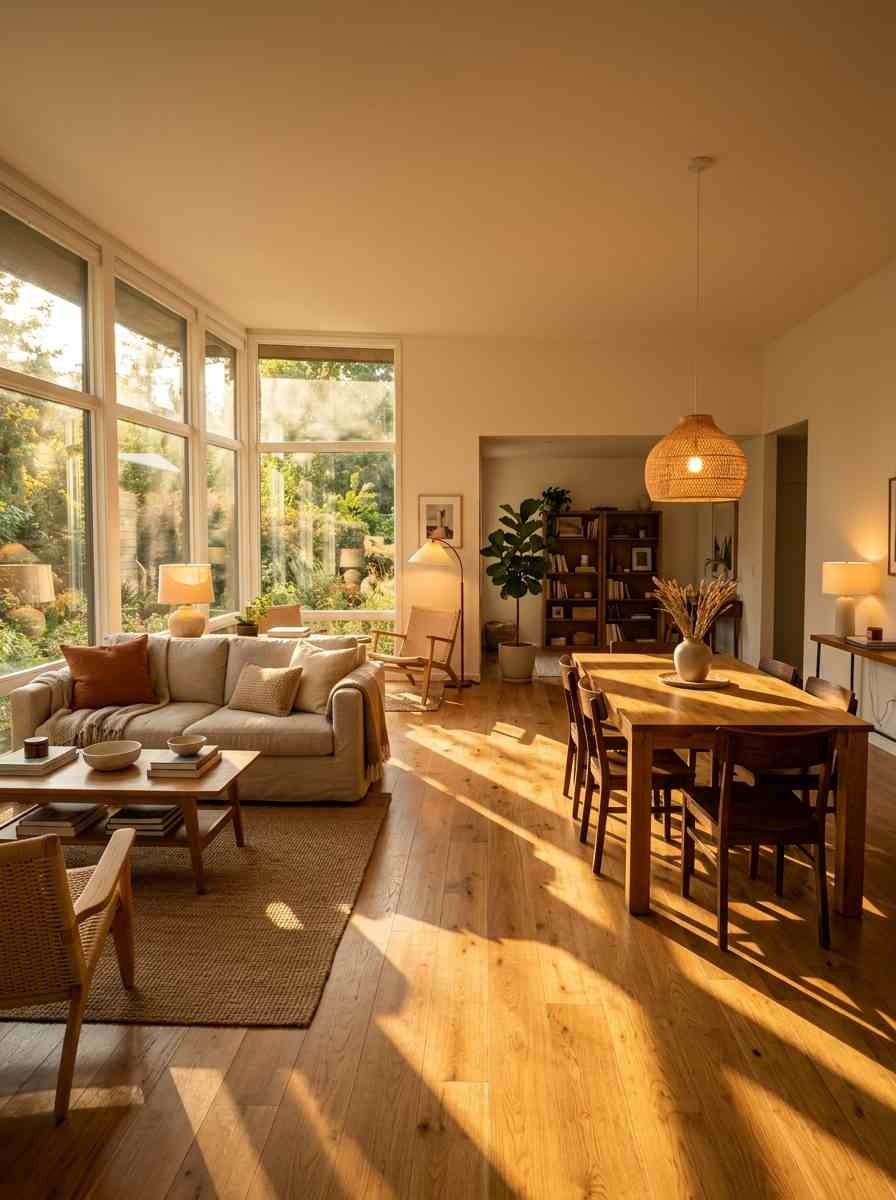
14. Rattan or cane accents. A single rattan chair, mirror frame, or pendant light adds warmth and texture without adding pattern or clutter.
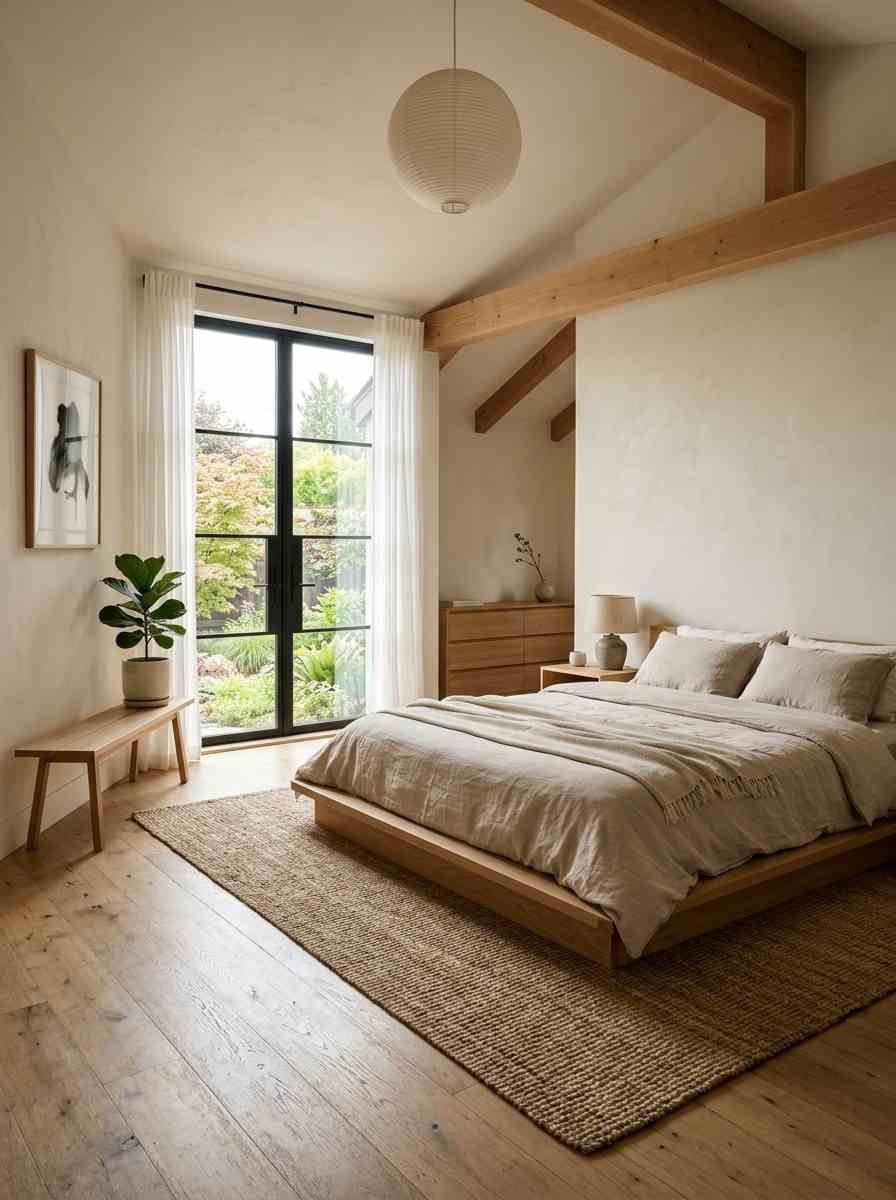
15. Ceramic vases with an imperfect glaze. This is the wabi-sabi part of the equation: slightly uneven, handmade-looking pieces feel more personal than anything mass-produced and perfectly uniform.
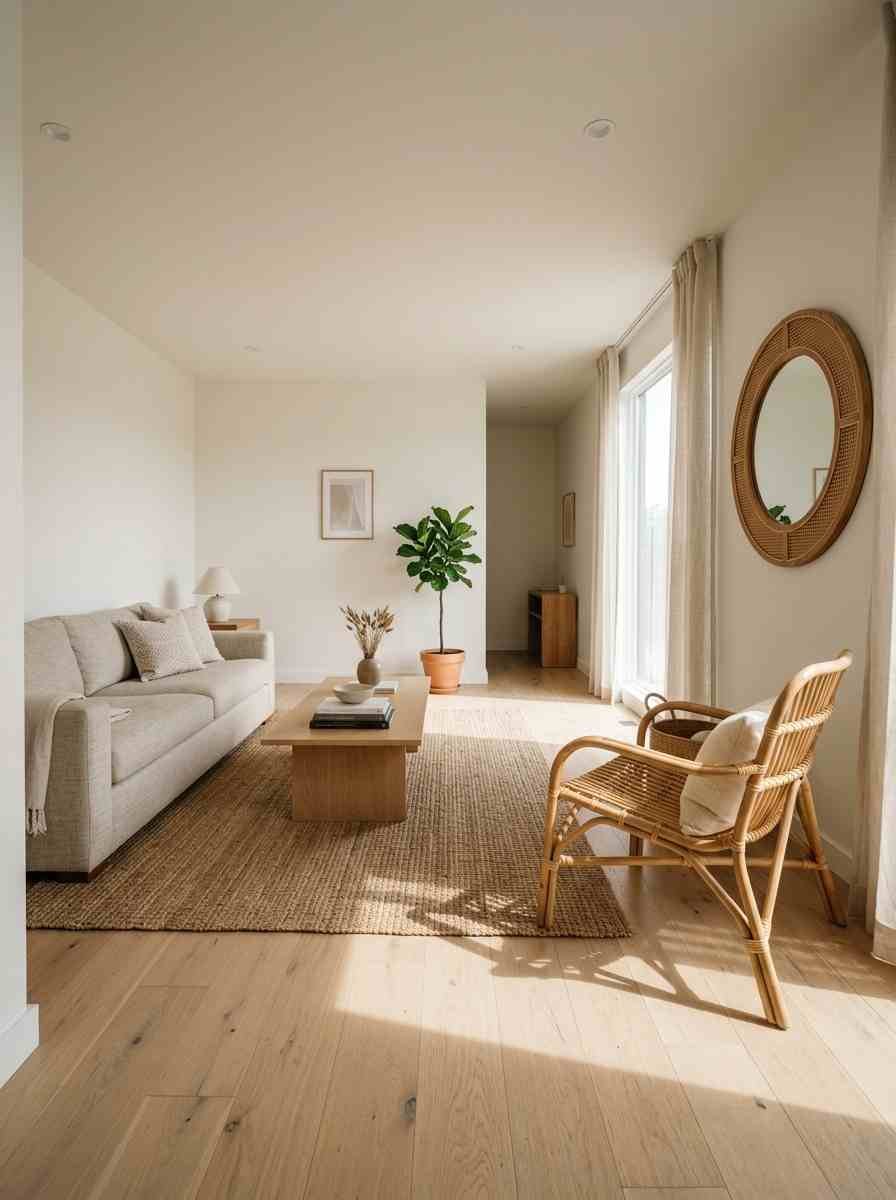
16. Wood trays and bowls for styling. Instead of scattering five small objects across a shelf, group them on one wood tray.
It looks intentional instead of accidental, and it makes dusting genuinely faster too.
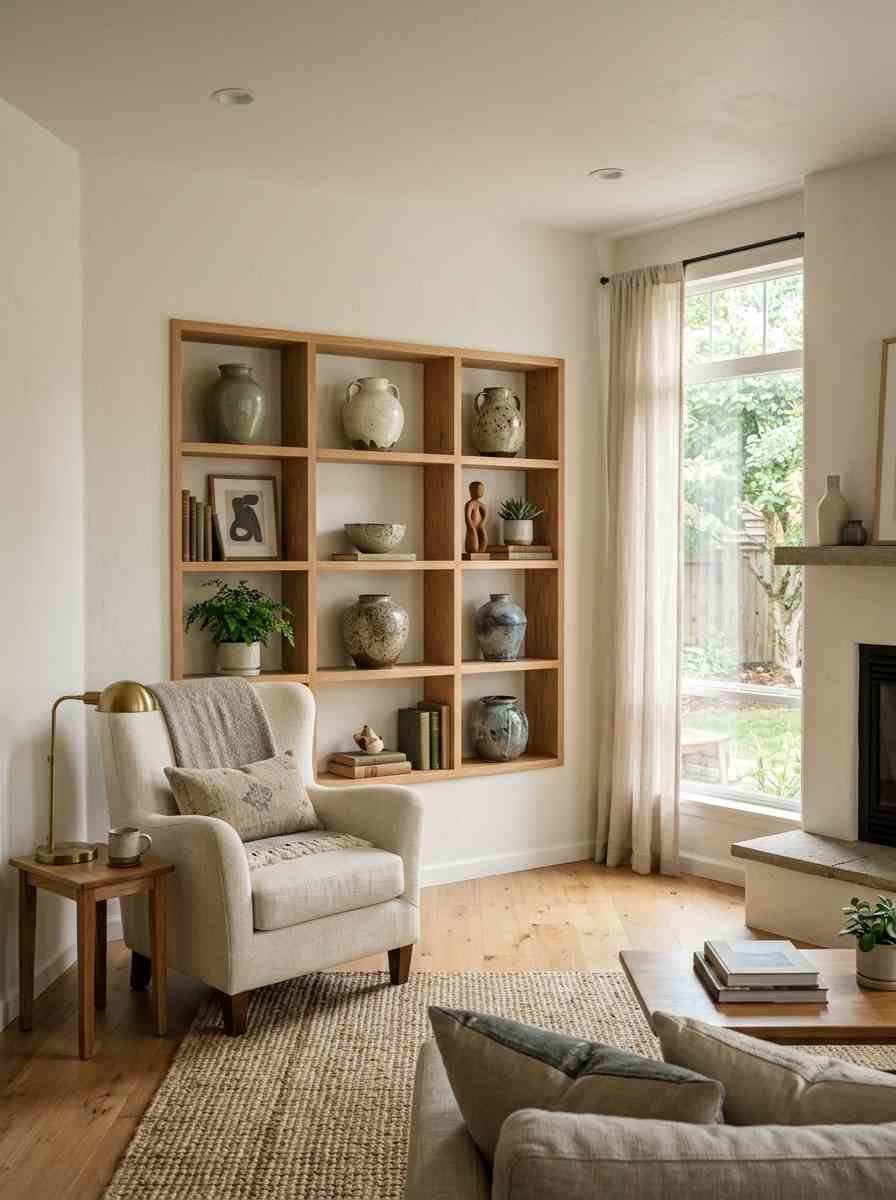
Bring in a little green
A minimalist room with zero plants can tip into feeling sterile fast. You don’t need a jungle. You need one or two well-chosen pieces.
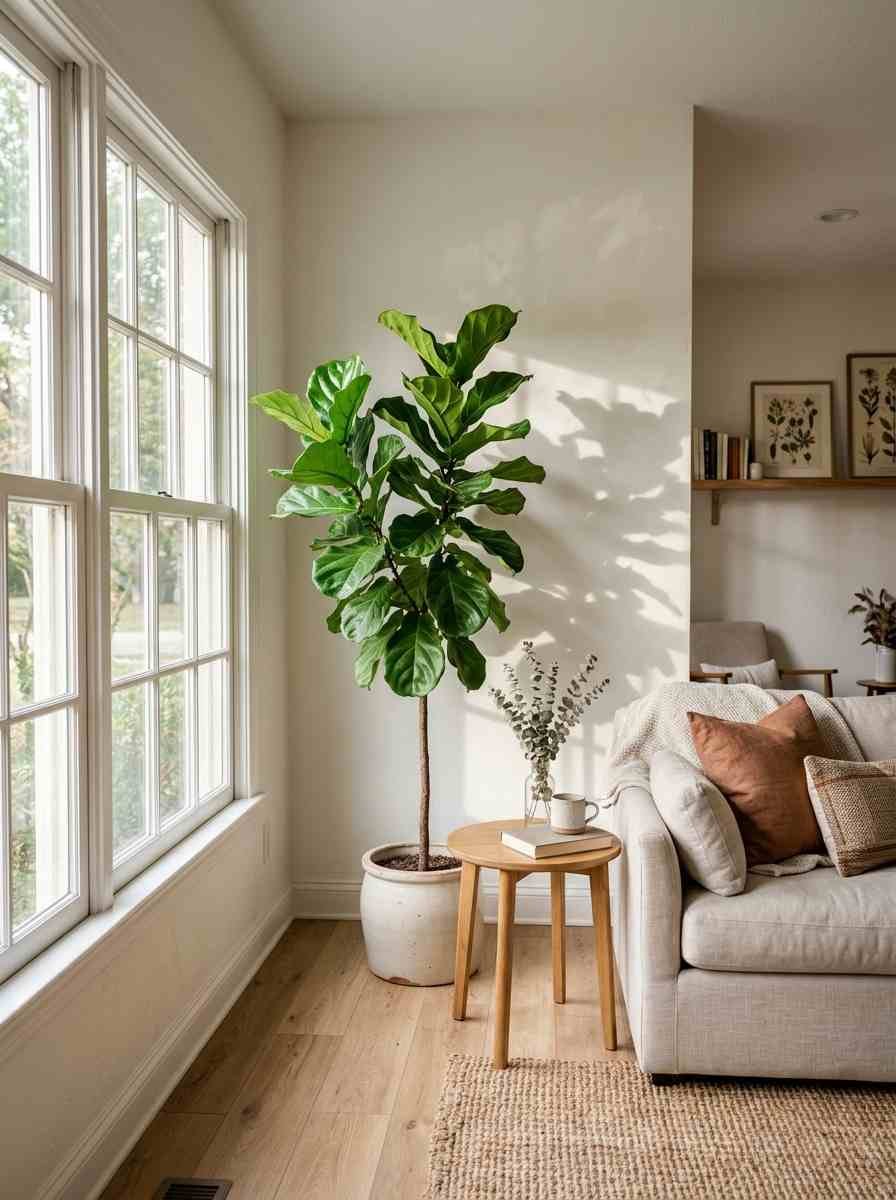
17. One statement plant. A fiddle leaf fig, snake plant, or olive tree in a simple ceramic pot adds life and a bit of height without cluttering the floor.
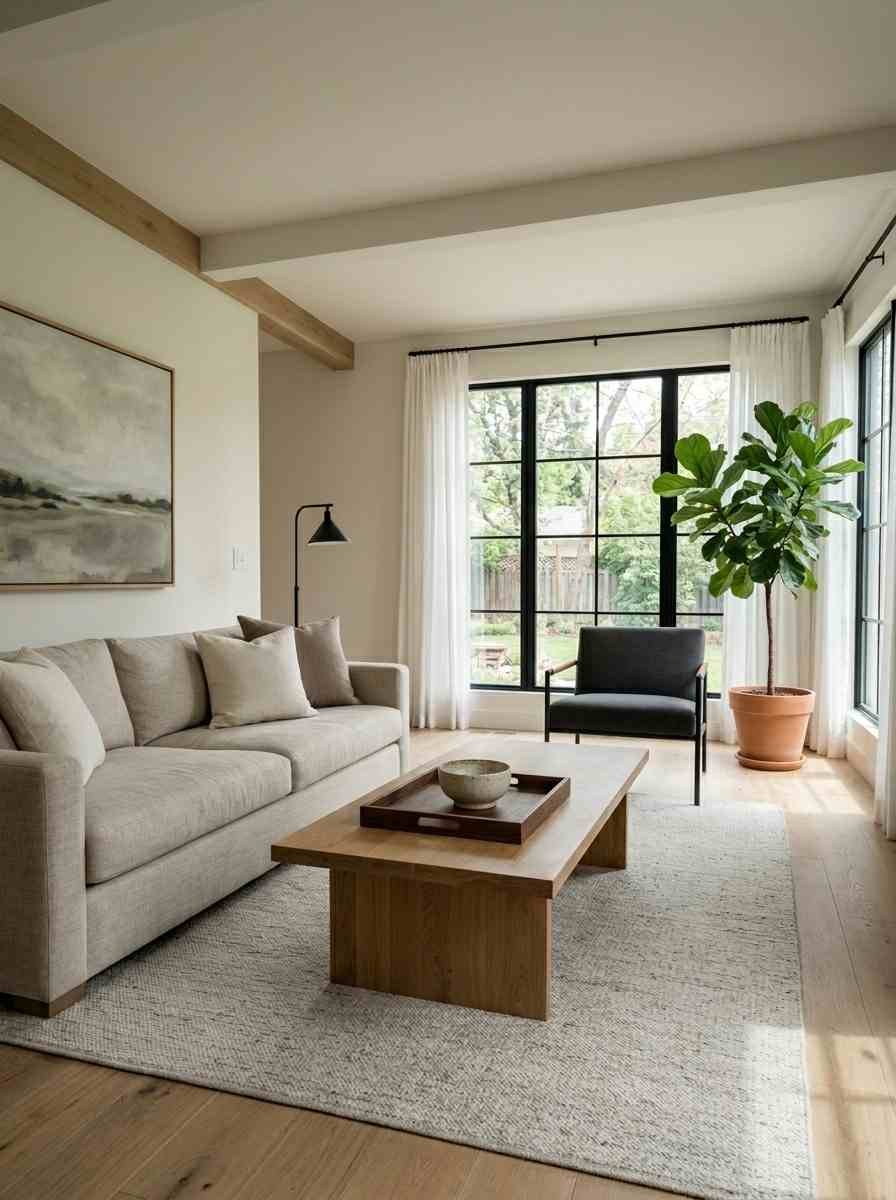
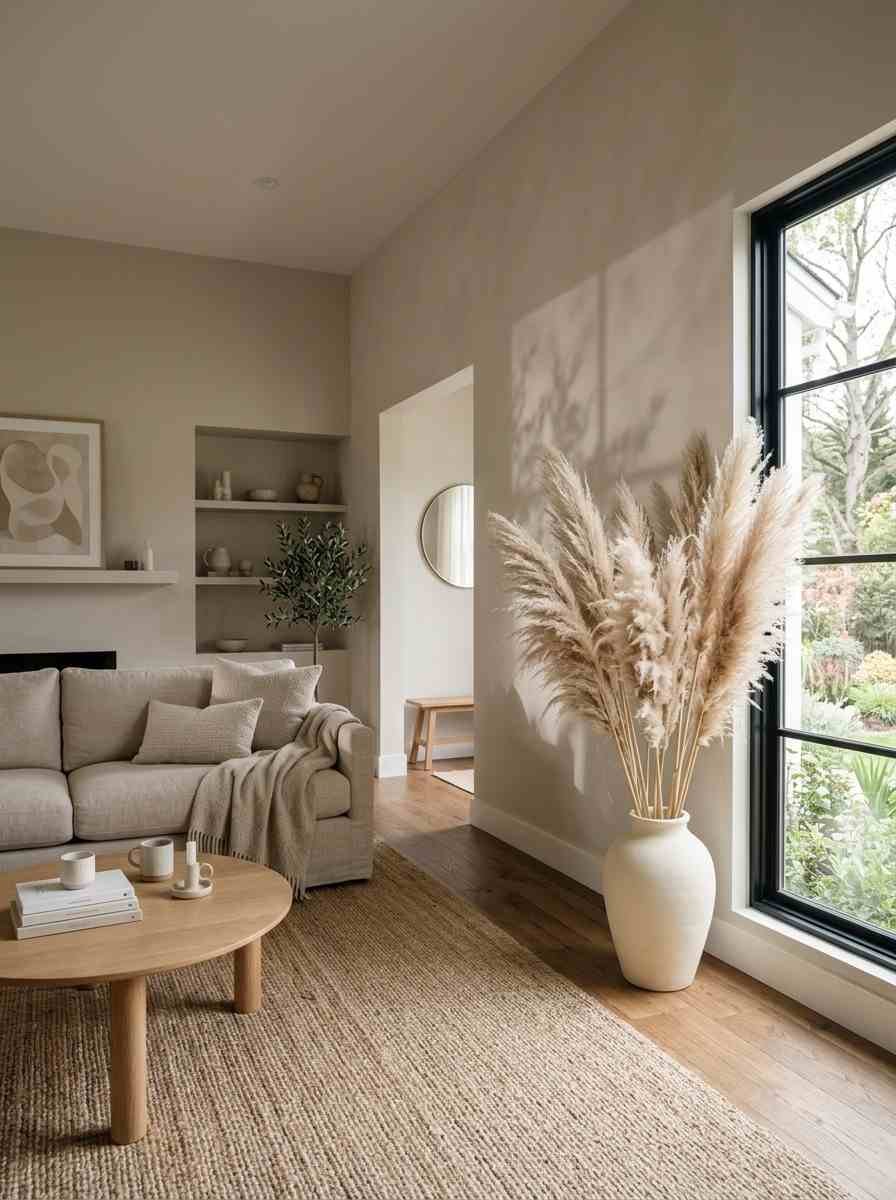
18. Dried pampas grass or eucalyptus. Zero maintenance, and the muted, neutral tones fit a minimalist palette better than bright fresh flowers do.
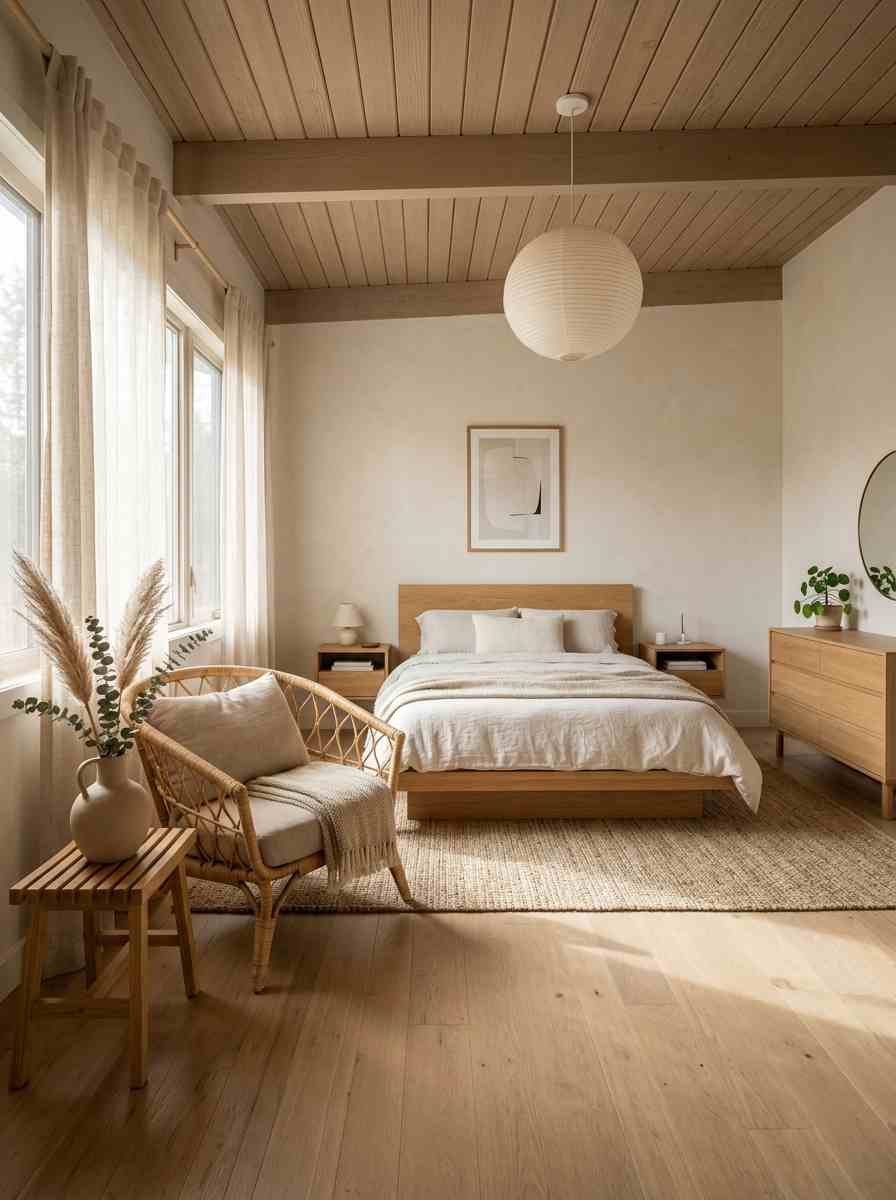
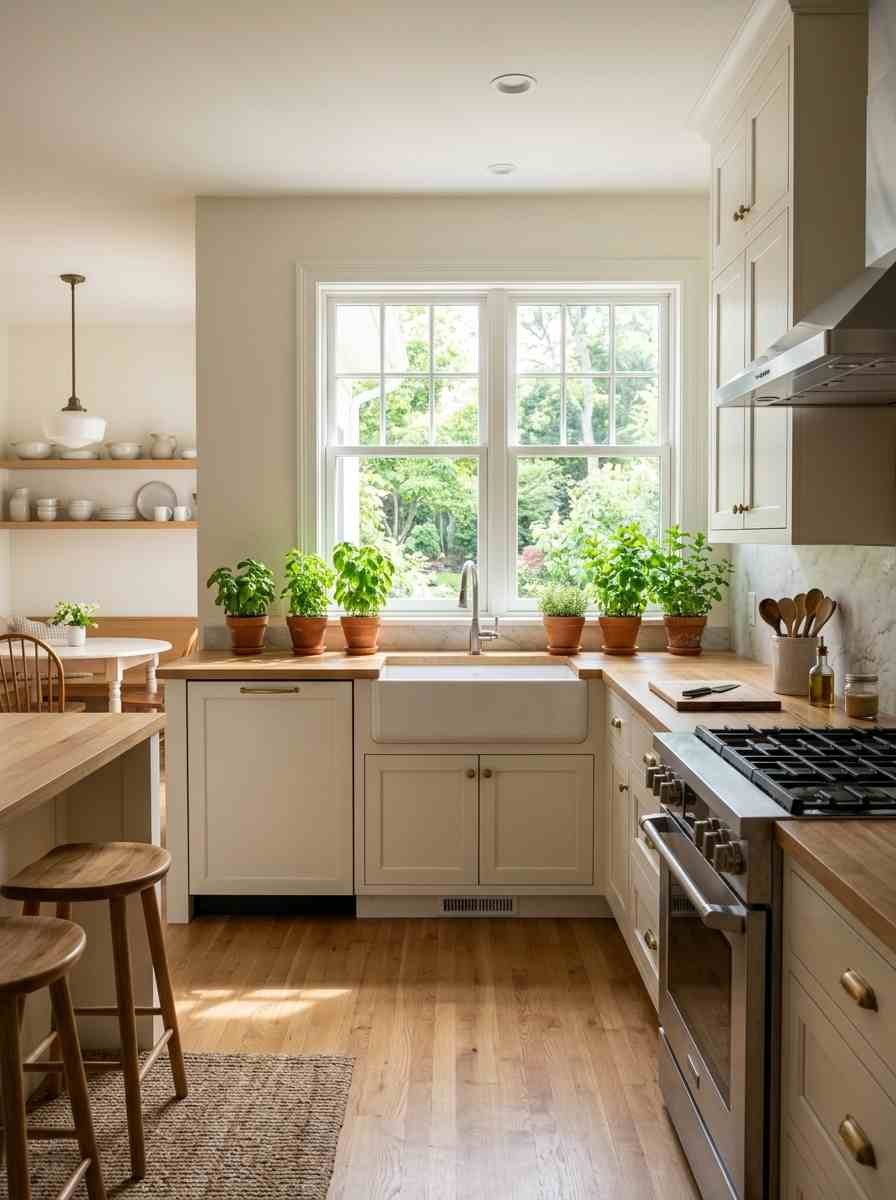
19. A small herb pot on the windowsill. Basil or mint in a plain pot is functional, smells good, and adds a touch of green without taking up real floor space. This one’s IMO the most underrated idea on the whole list.
Storage that hides the chaos
A minimalist room only works if the clutter has somewhere to go. Hidden storage is doing more work than any single decor piece on this list.
20. Closed cabinetry over open shelving. Open shelves look great in photos and chaotic in real life within about two weeks.
Closed doors keep the visual calm intact.
21. Woven baskets for the stuff that doesn’t have a home. Remotes, chargers, mail. One basket near the door catches it all without it ending up on every flat surface.
22. Multi-purpose furniture. A storage ottoman or a bed frame with built-in drawers means you get seating or sleeping space and storage in the same footprint.
This matters even more in a small space, where every piece of furniture really should be doing at least two jobs.
A coffee table with a lower shelf, a bench with a lift-up seat, that kind of thing.
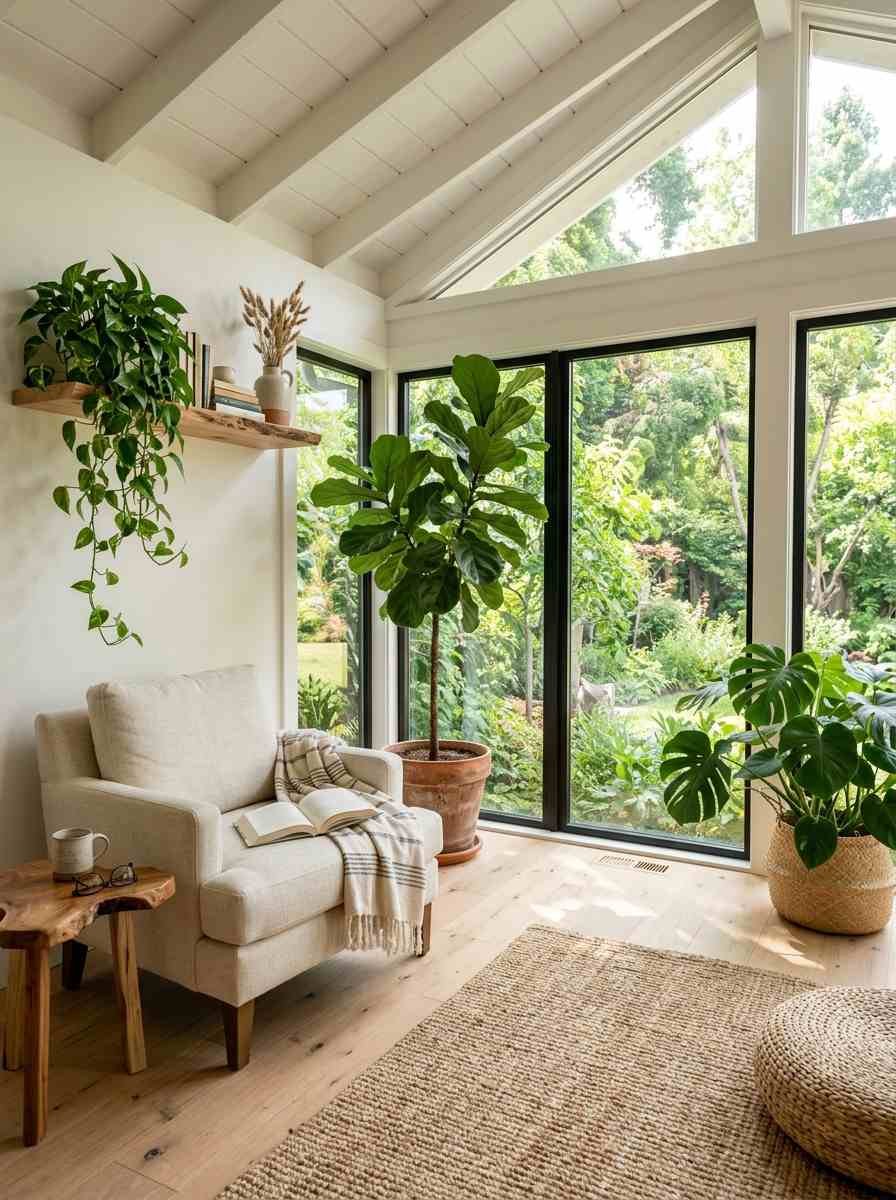
And FYI, this isn’t just about appearances. Decluttering measurably lowers stress for a lot of people, so a tidier room often just feels better to sit in, not only look at.
The small touches that keep it from feeling like a hotel room
This is the part people skip, and it’s the reason some minimalist rooms feel personal while others feel like a furniture showroom.
23. Display one sentimental object, alone. A single framed photo, a piece of pottery from a trip, whatever actually means something to you. One object given its own space reads as intentional. Ten objects crammed on a shelf reads as clutter.
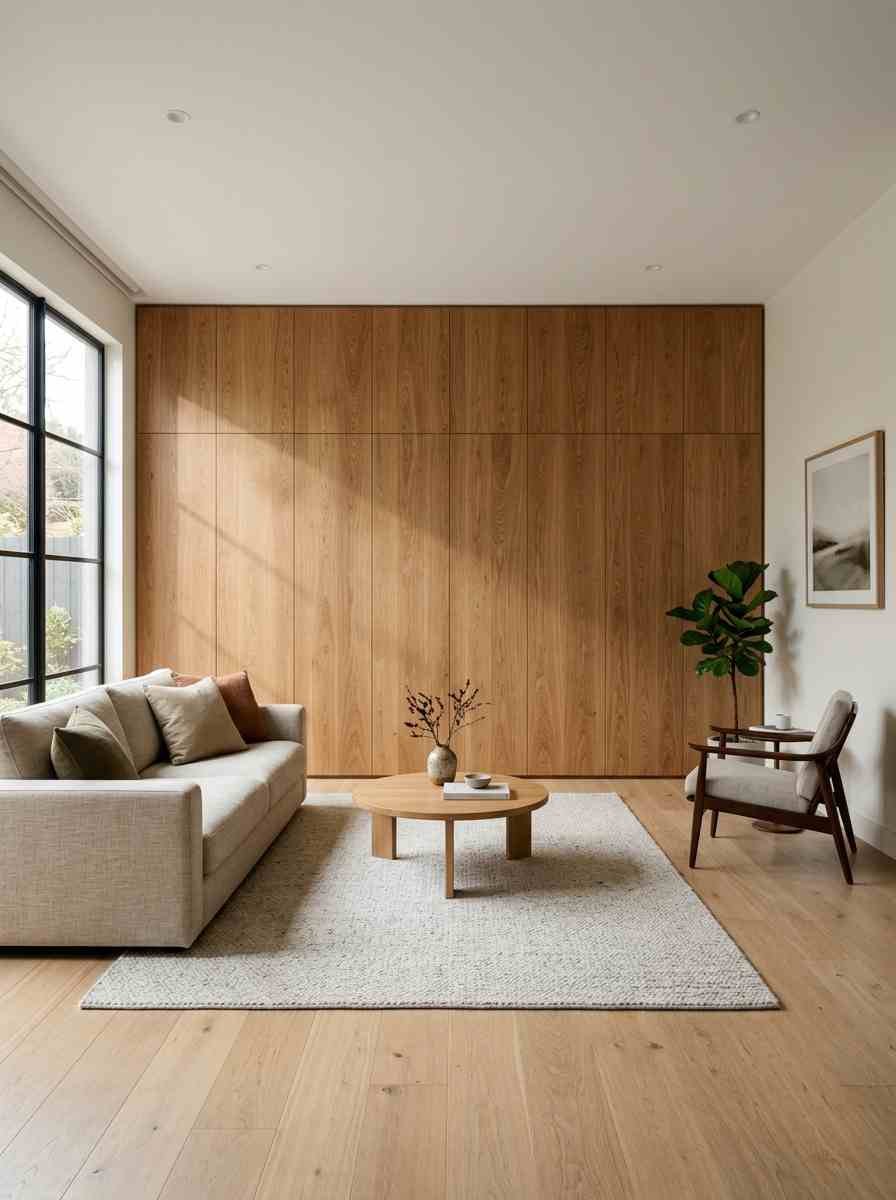
24. One or two framed prints instead of a full gallery wall. A gallery wall can look amazing, but it’s not a minimalist move.
Pick the one or two pieces you’d genuinely miss if they came down.
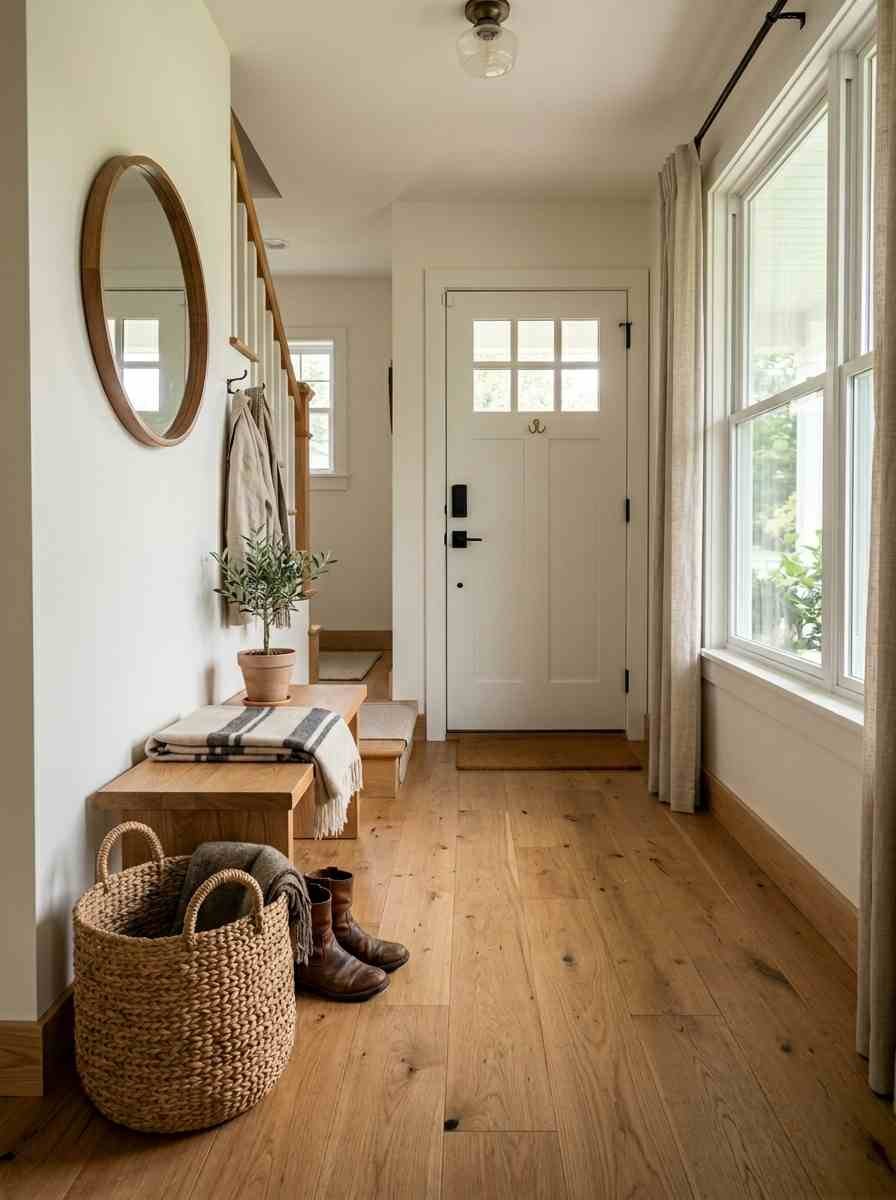
25. A small, neat stack of books as decor. Three or four books stacked on a side table, spines facing whichever way looks best, add height and personality for free.
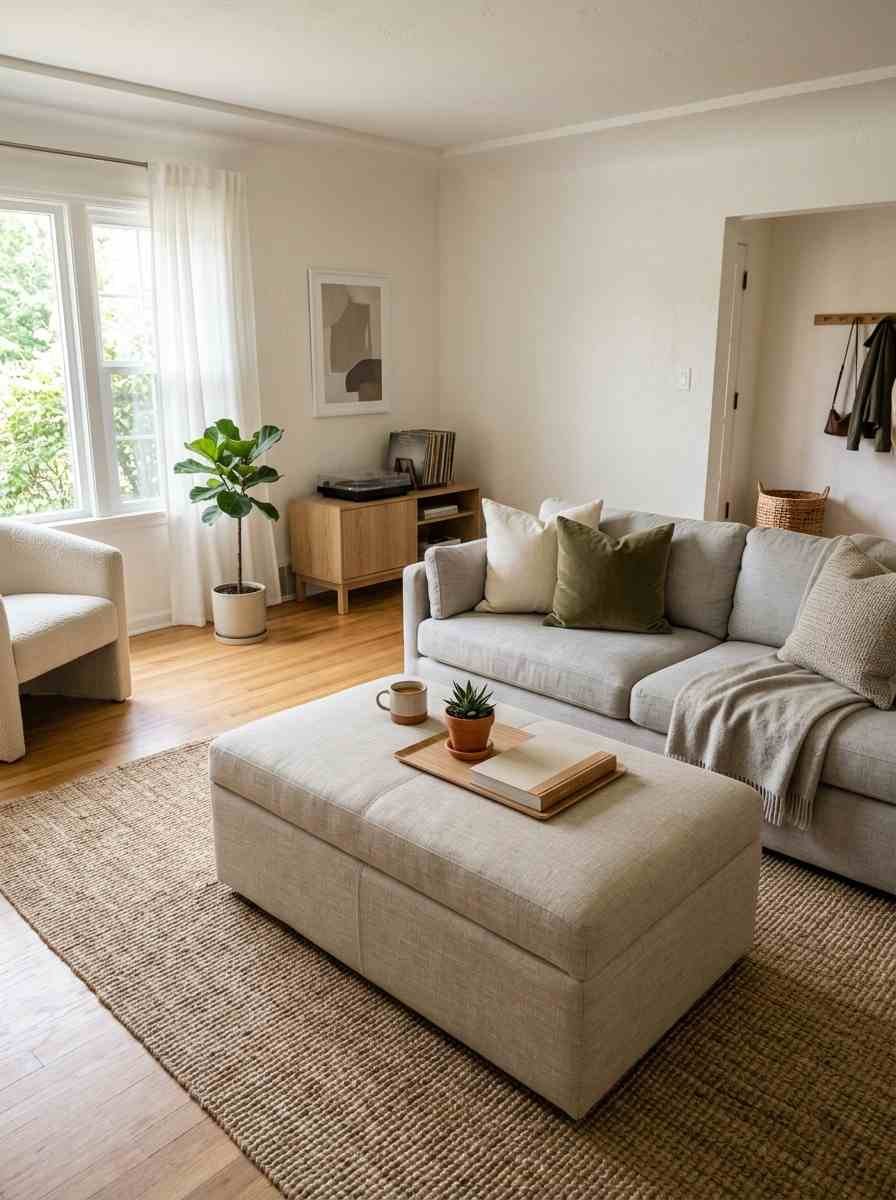
26. Layer your pillows and throws, but stop at two textures. One patterned or textured pillow plus one solid, plus a throw. Past that, it starts working against the calm you’re going for.

27. A signature scent. A candle or diffuser in one consistent scent gives the room an identity that photos can’t capture. This is genuinely the detail guests notice and ask about most, in my experience.
Quick palette cheat sheet
| Vibe you want | Wall color | Best texture pairing |
|---|---|---|
| Calm and airy | Warm white | Linen and jute |
| Earthy and grounded | Muted terracotta | Bouclé and rattan |
| Moody and intimate | Deep greige | Velvet and raw wood |
A few quick questions
Is minimalist decor too cold for a cozy bedroom? Not if you choose your materials with intention. Skip glass and chrome as the main event, and lean on linen, wood, and warm bulbs instead. A minimalist bedroom done this way usually ends up the coziest room in the house.
What’s the cheapest way to start a cozy minimalist makeover? Switch your bulbs to warm white, add one chunky throw, and clear every flat surface of anything you didn’t choose on purpose. That’s three changes, all under $50 (or roughly £40), and the room already feels different by the end of the afternoon.
Does this style work in a small apartment or a rental? It honestly works better in small spaces. Fewer pieces means more visible floor, and most rentals already come with neutral walls, so a handful of warm textiles does most of the heavy lifting without touching the paint.
Final thought
You don’t need all 27 of these to notice a difference. Pick three or four that actually match how you live and start there.
A warm bulb and one good throw blanket will do more for a room’s mood than a full Pinterest board’s worth of inspiration photos ever will.
If I had to rank them by impact for the time invested, I’d start with lighting, then texture, then storage. Color and big furniture changes can come later, once you know the room actually works for you day to day.
Which one are you trying first? Save this post for the next time your space feels a little too sparse and a little too cold, and let me know how it turns out.
