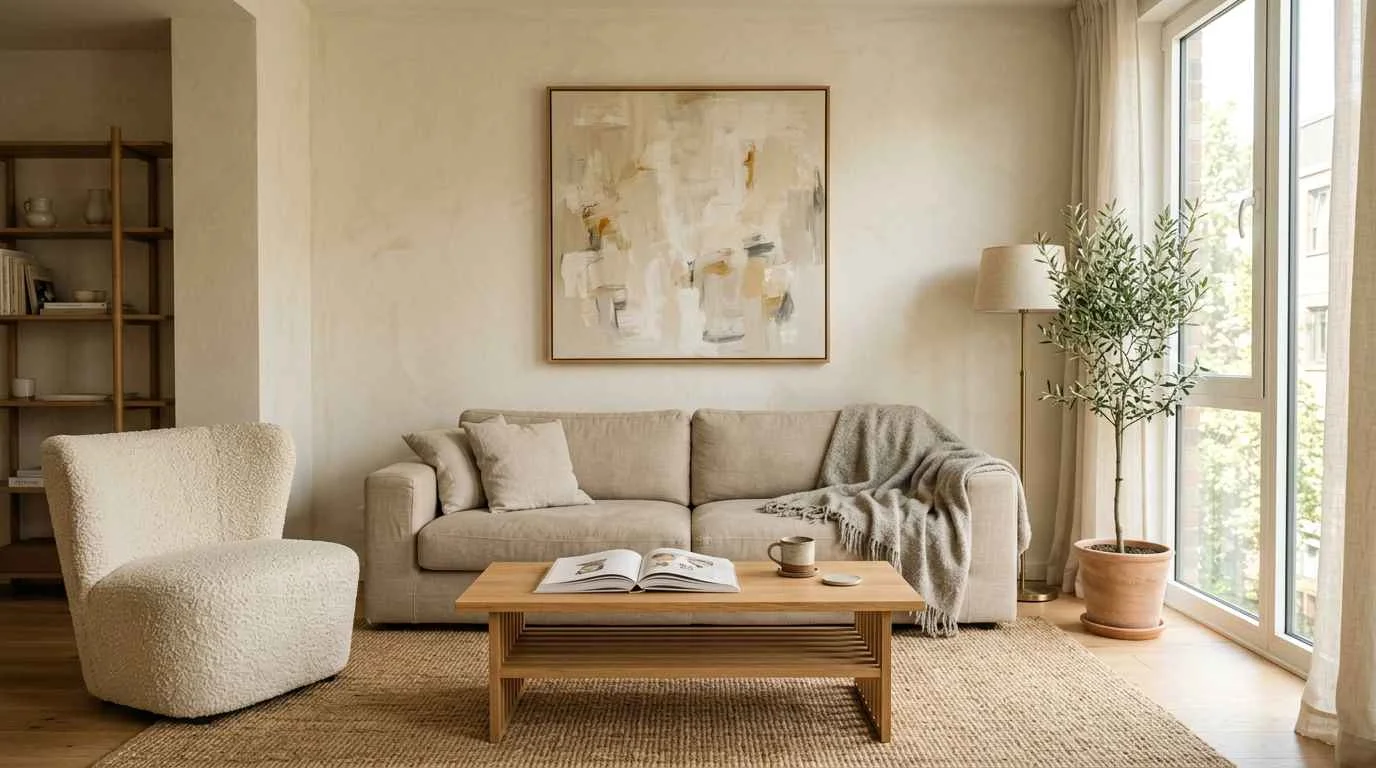
I spent four months staring at one blank wall in my living room before I touched it. Every time I scrolled Pinterest for ideas, I’d save 40 photos and act on zero of them. Sound familiar?
That wall taught me something.
Minimalist wall decor isn’t about owning less art. It’s about choosing the right art, hanging it the right way, and trusting empty space to do some of the work for you.
I’m walking you through 30 ideas that I’ve either tried myself, copied from designers I trust, or pulled from rooms that genuinely stopped me mid-scroll. Some cost almost nothing. A couple involve actual tools.
Pin what speaks to you. Skip the rest.
That’s the whole point of a list this long. If you’re building a Pinterest board for this project, save ideas across at least three or four of the sections below instead of just one.
A wall that mixes texture, one bold piece, and a little color tends to age better than a wall built entirely from a single trend.
What “minimalist” wall decor actually means
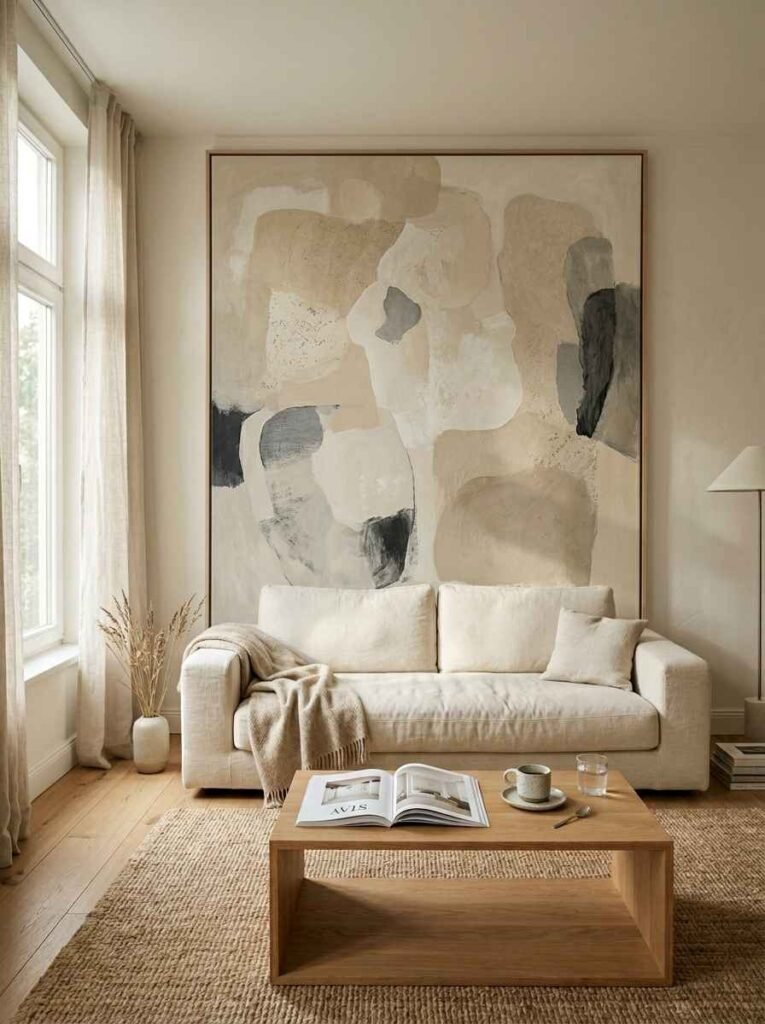
Minimalist doesn’t mean bare. A lot of people hear the word and picture a single white wall in a sad rental apartment. That’s not it.
Minimalist wall decor means every piece on your wall earns its spot.
No filler art bought because a corner looked empty. No mismatched frames from three different decades fighting for attention.
You pick fewer things, but you pick them on purpose, and you let the wall breathe around them.
This is also why minimalist living rooms photograph so well for Pinterest.
A wall with one strong focal point gives the camera somewhere obvious to land, instead of asking the eye to bounce between ten competing pieces.
Designers call this breathing room “negative space,” and it does more for a room than people give it credit for.
The unoccupied area around your art is what makes the art look intentional instead of accidental, as design site Havenly explains in their guide to negative space.
Start with restraint, not more stuff
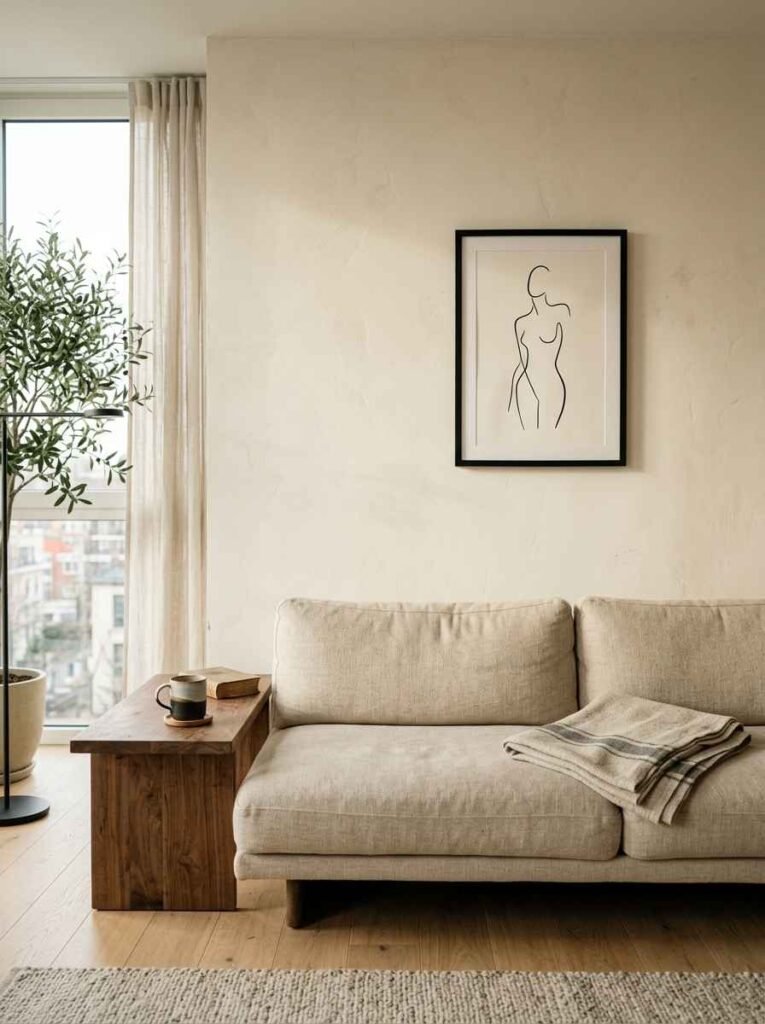
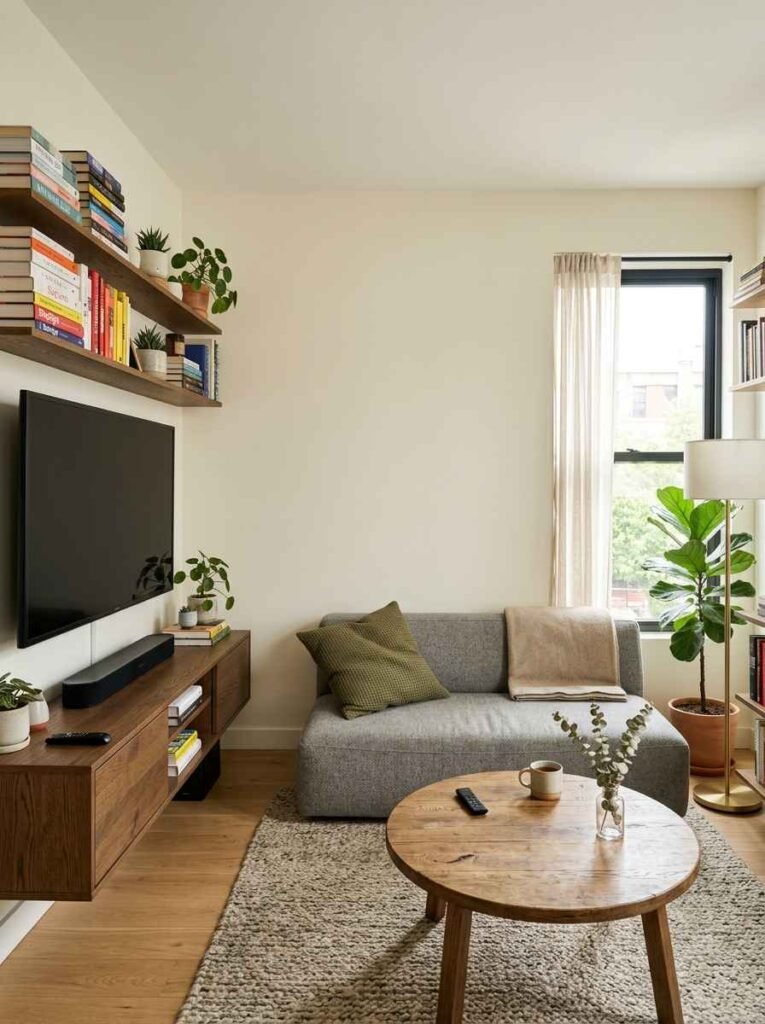
Before you buy a single frame, change how you think about the wall.Leave one wall intentionally bare.
Not every wall in your living room needs decor. Pick your busiest wall (TV, shelving, a big window) and let one other wall stay plain. It gives your eyes somewhere to rest.
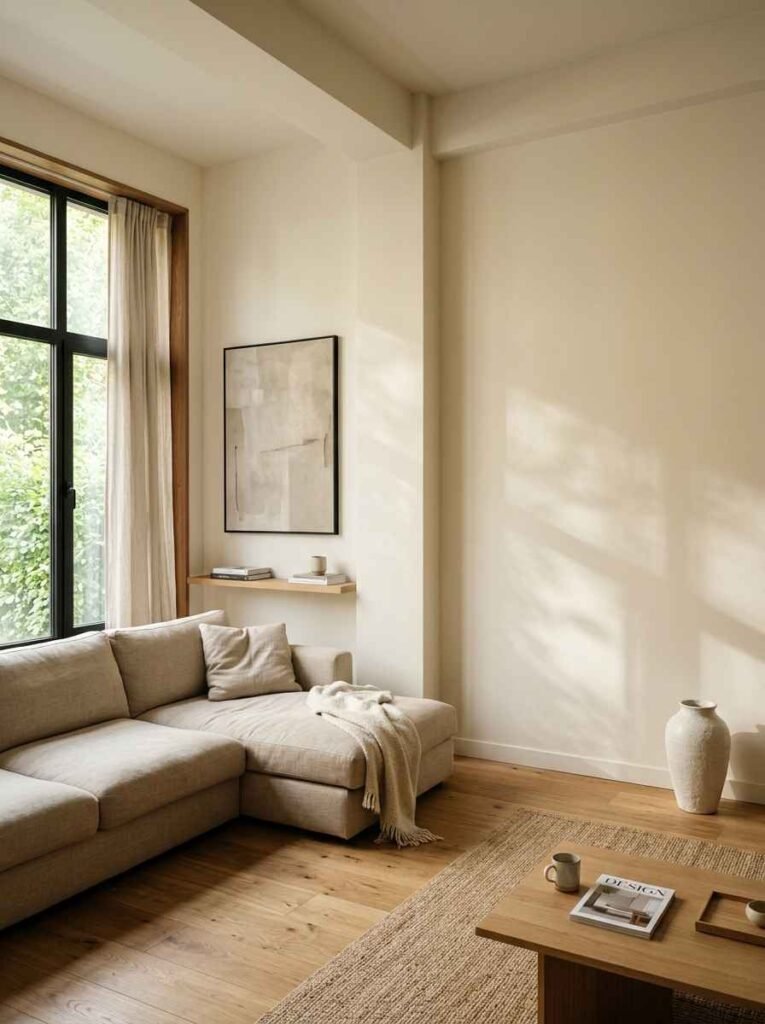
Pick one statement piece over five small ones. A single large print, 30 by 40 inches or bigger, does more visual work than a cluster of postcard-sized frames.
IMO this is the single fastest way to make a living room look pulled together.
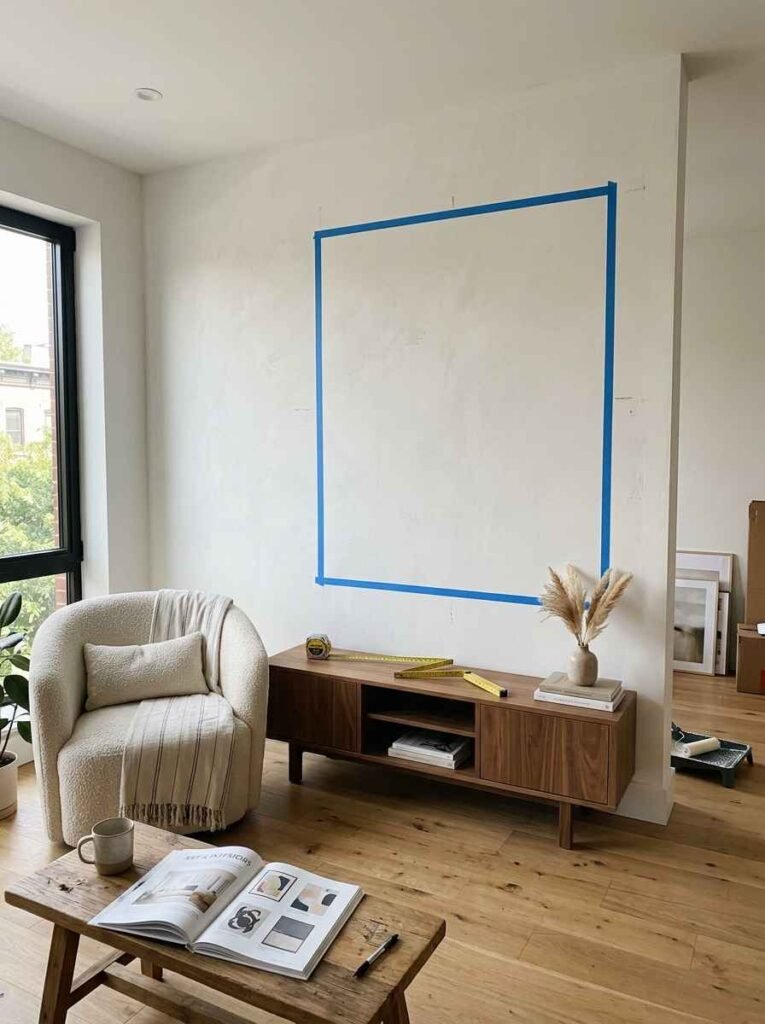
Measure before you buy anything. Painter’s tape on the wall, cut to the size of your planned art, tells you more than any online mockup.
I’ve returned two pieces of art because they looked huge on my laptop screen and tiny on my actual wall.
Gallery walls that don’t look cluttered
A gallery wall can absolutely be minimalist. The trick is spacing and restraint, not quantity.
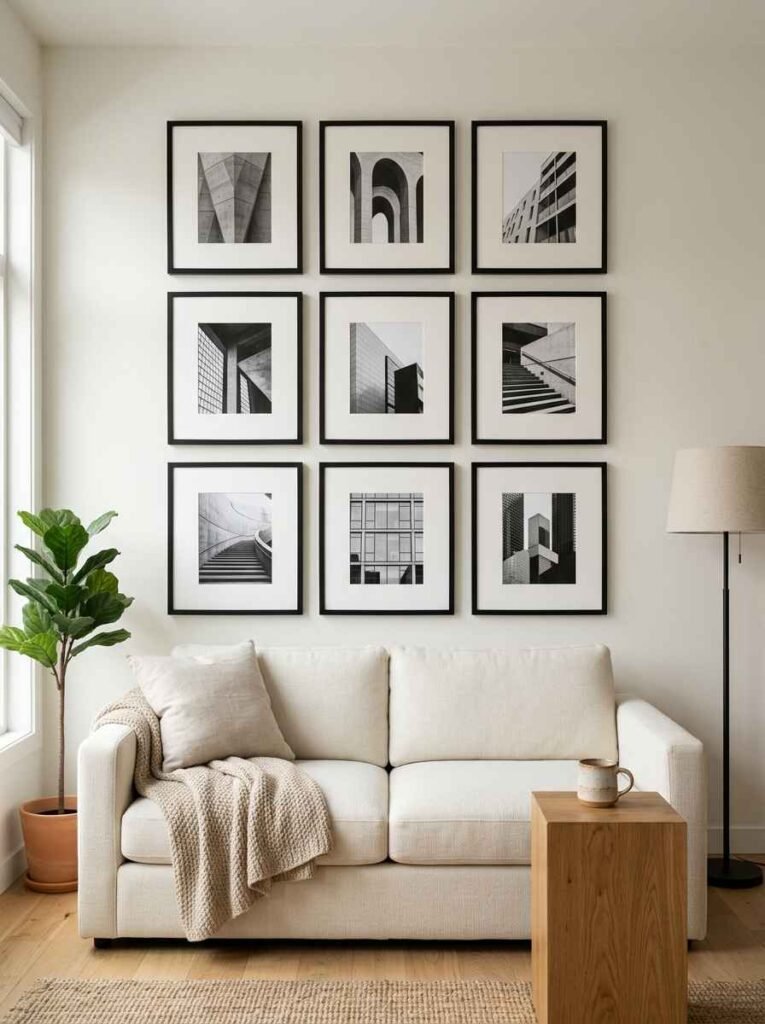
I used to think gallery walls and minimalism couldn’t coexist until I saw one done with nine identical frames and nothing else on the wall.
It looked more deliberate than half the single-print rooms I’d seen.
Use identical mats and frames. A 3×3 grid of black frames with wide white mats reads as calm and curated, even with nine separate photos inside it.
Follow the 57-inch rule. Hang the center of your arrangement 57 inches from the floor, which is roughly average eye level.
Apartment Therapy has a step-by-step guide to laying out a gallery wall that walks through exactly how to mark and space everything before you commit to nails.
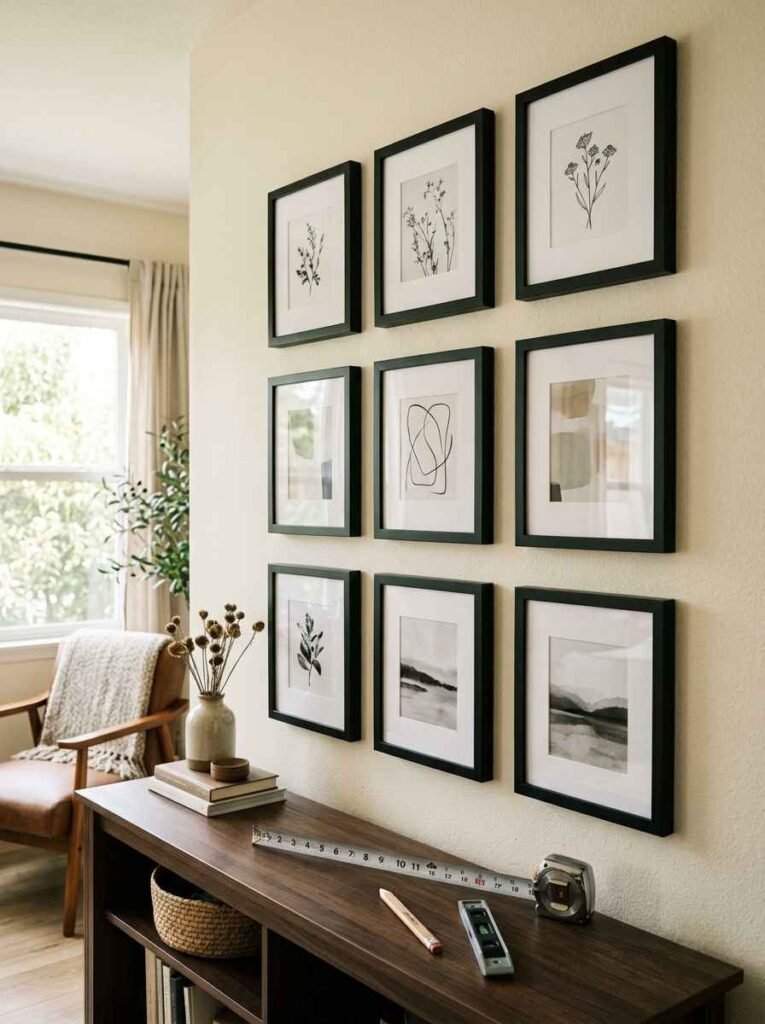
Stick to one color story. Black and white photography, or art in three closely related tones, holds together better than a rainbow of styles crammed onto one wall.
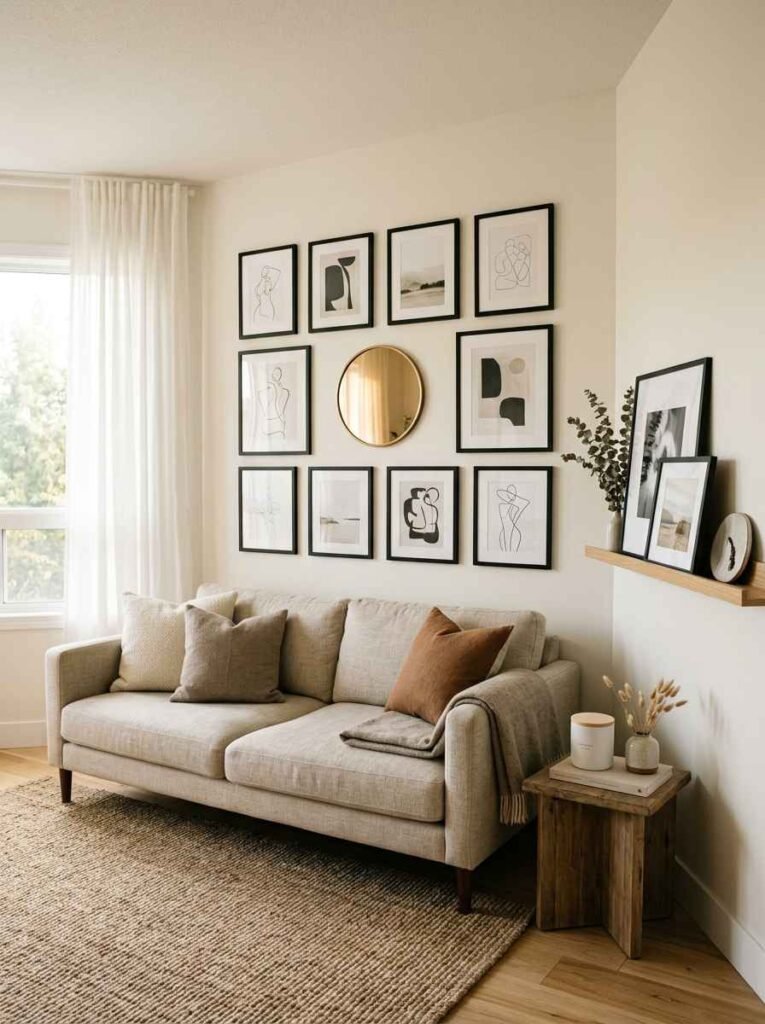
Leave 2 to 3 inches between frames. Tighter spacing looks cluttered. Looser spacing looks disconnected. That small gap is the sweet spot.
Mix in one non-art object. A small round mirror or a slim wooden tray breaks up a grid of rectangles without adding visual noise.
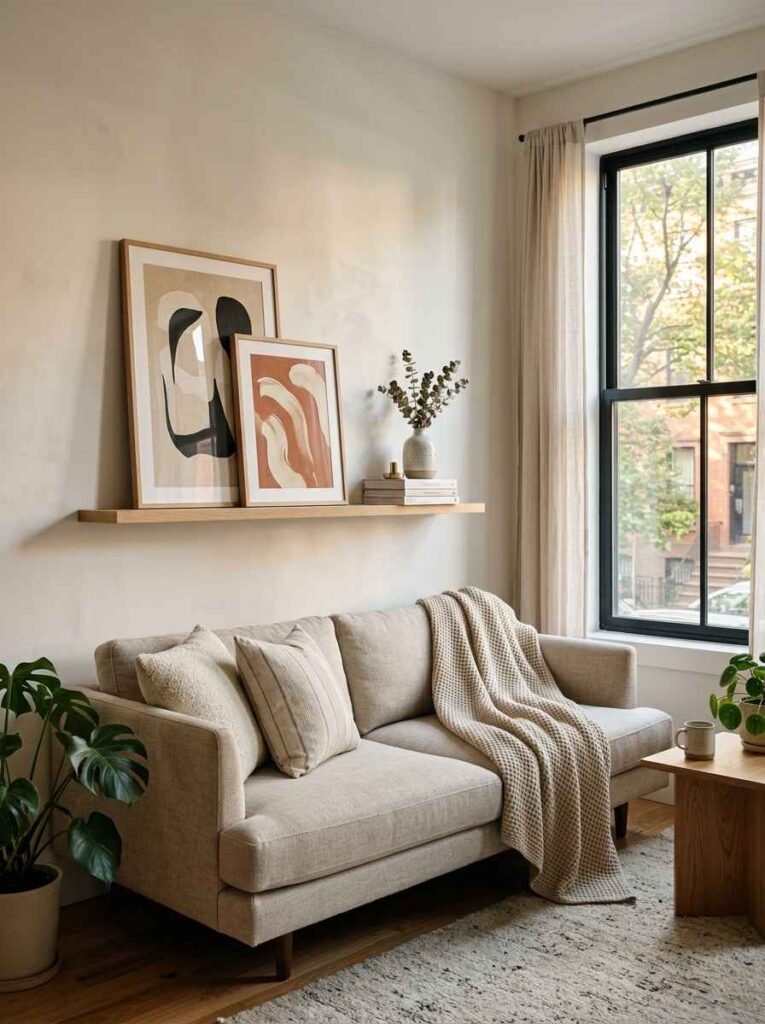
Use a picture ledge instead of individual nails. A floating ledge lets you lean and rearrange art whenever you want, no new holes required. Great for renters.
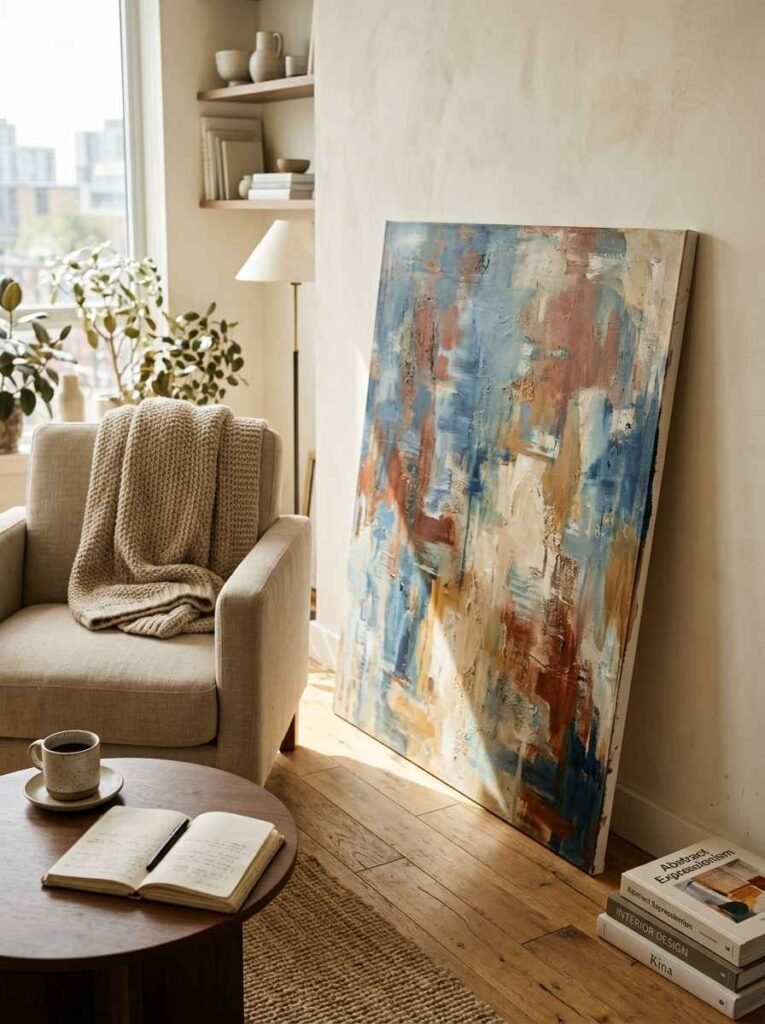
One big piece beats five mediocre ones
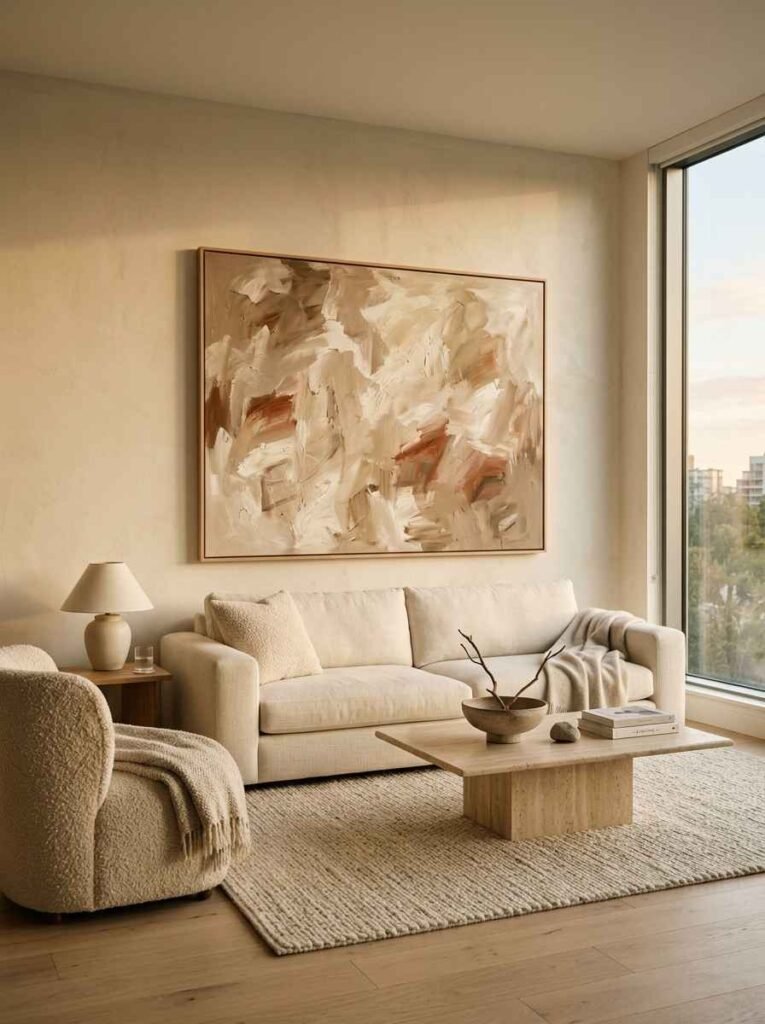
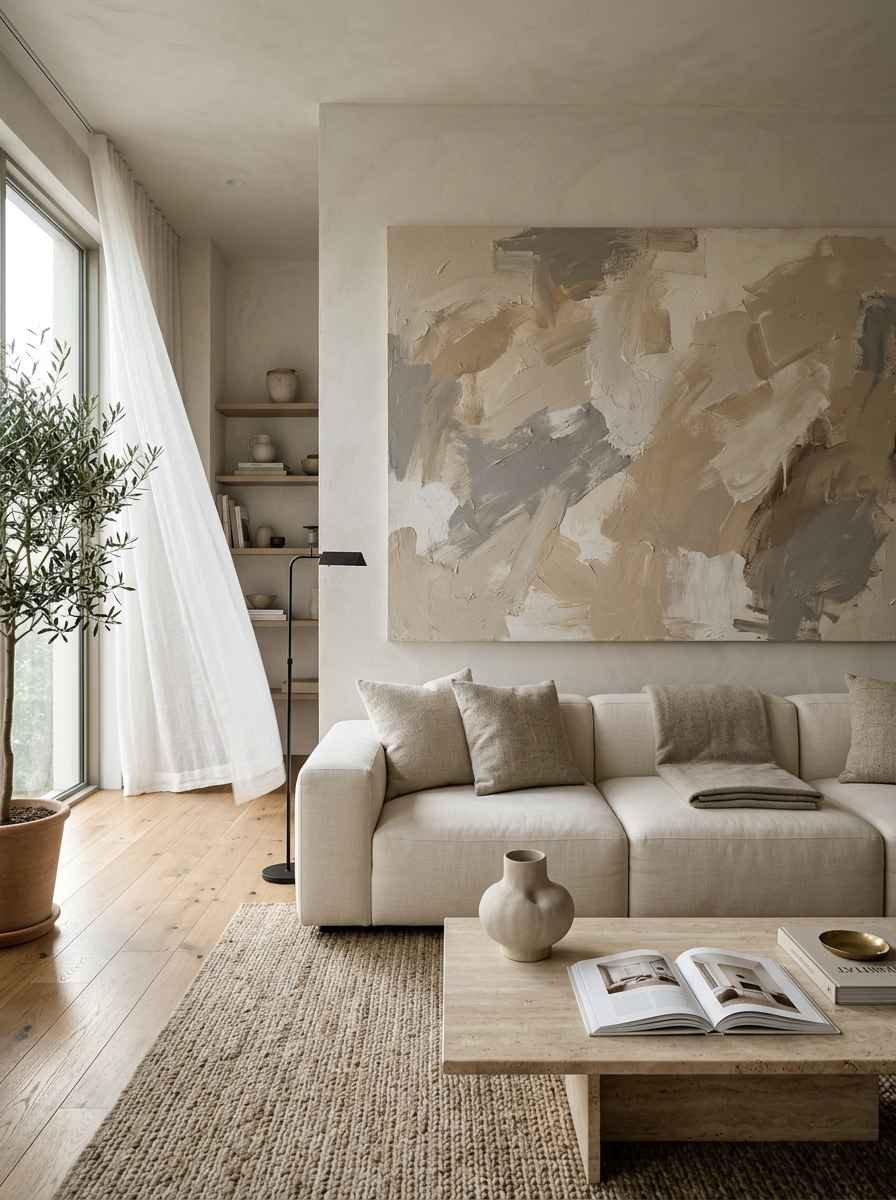
Hang an oversized abstract canvas.
Neutral tones, big brushstrokes, minimal detail. It anchors a whole room from one spot on the wall.
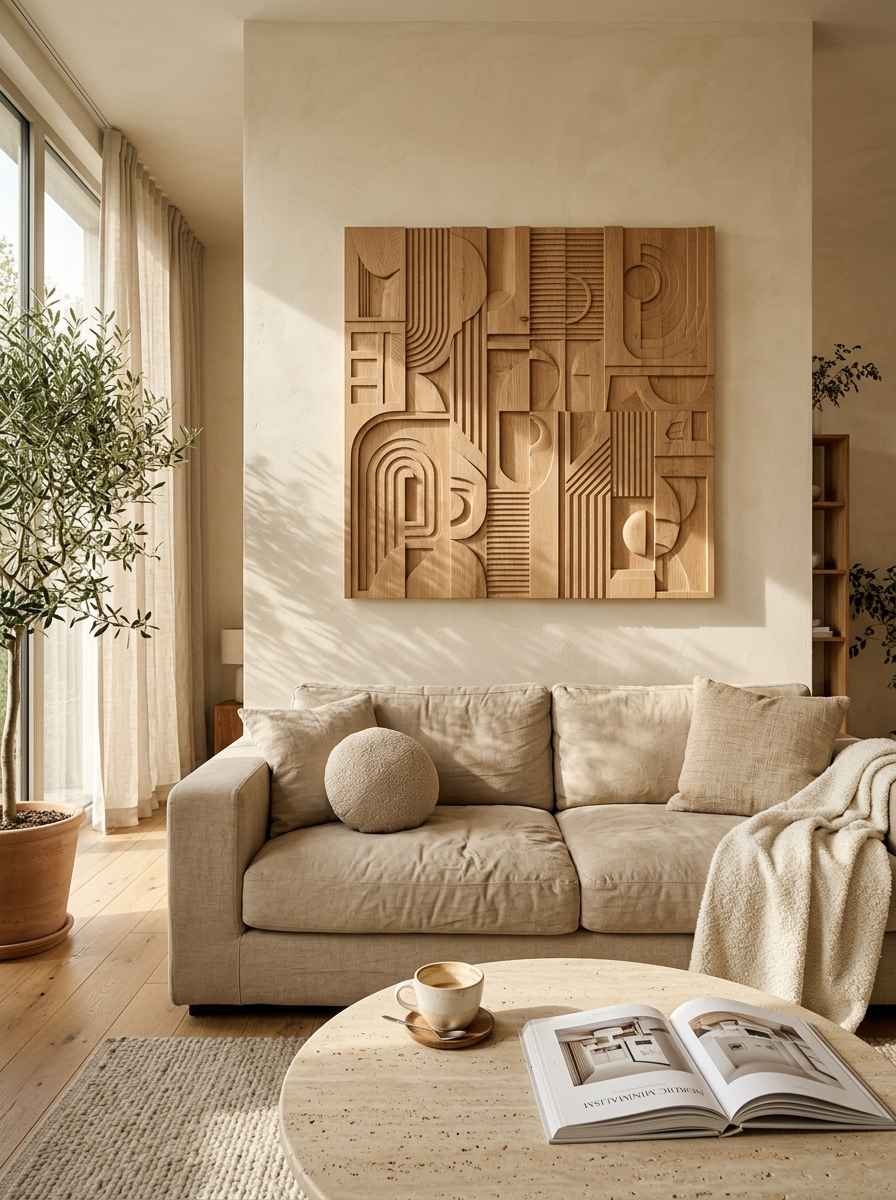
Try a sculptural relief instead of flat art. A carved wood panel or ceramic wall piece adds shadow and dimension without adding clutter.
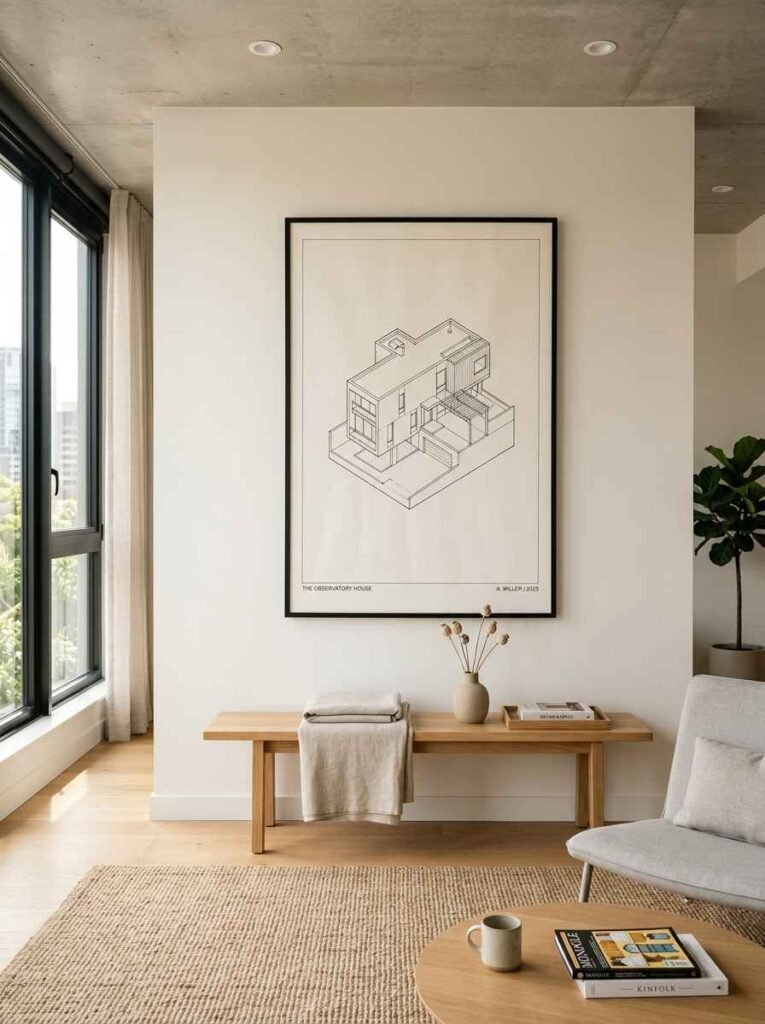
Go with architectural line art. A single-line drawing of a building or a body in clean black ink looks sharp against a plain wall and costs a fraction of original art.
Lean a floor canvas against the wall instead of hanging it. No hardware, no measuring, and you can move it the second you get bored of the layout. I do this every time I redecorate because, honestly, I never commit to anything for more than a year.
Texture is the underrated trick
This is the part people skip, and it’s the part that makes minimalist rooms feel warm instead of sterile.
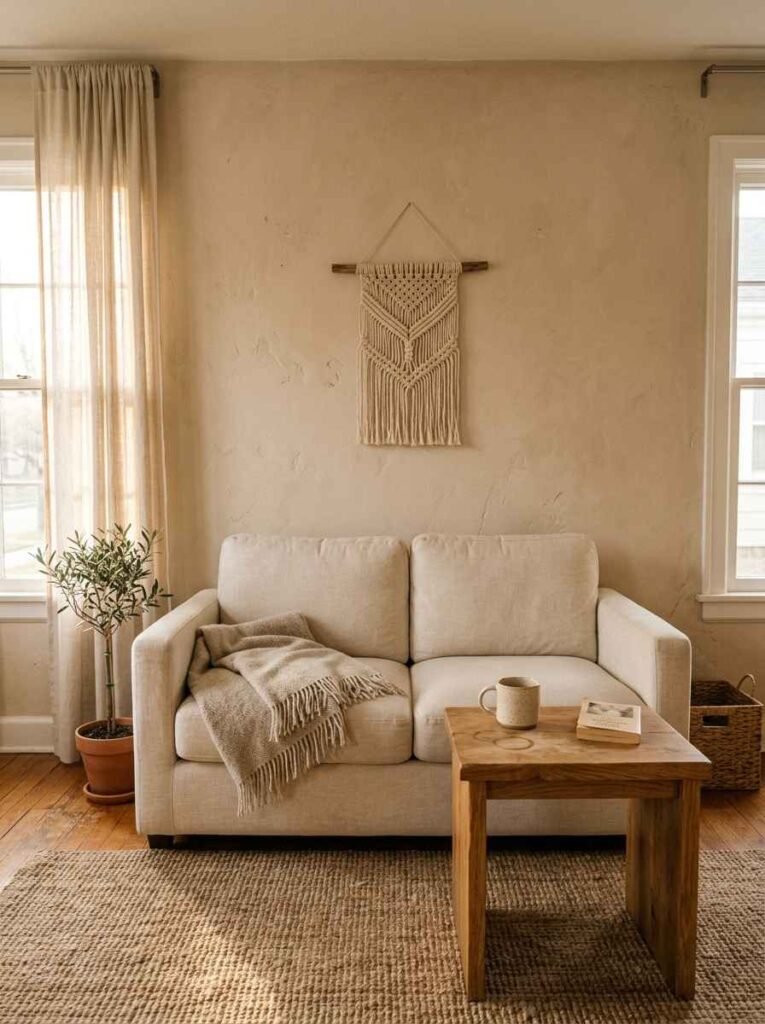
Add a small macrame hanging. Pick one in undyed cotton, not the floor-to-ceiling boho pieces from 2016. A 24-inch piece in a neutral tone fits a minimalist room just fine.
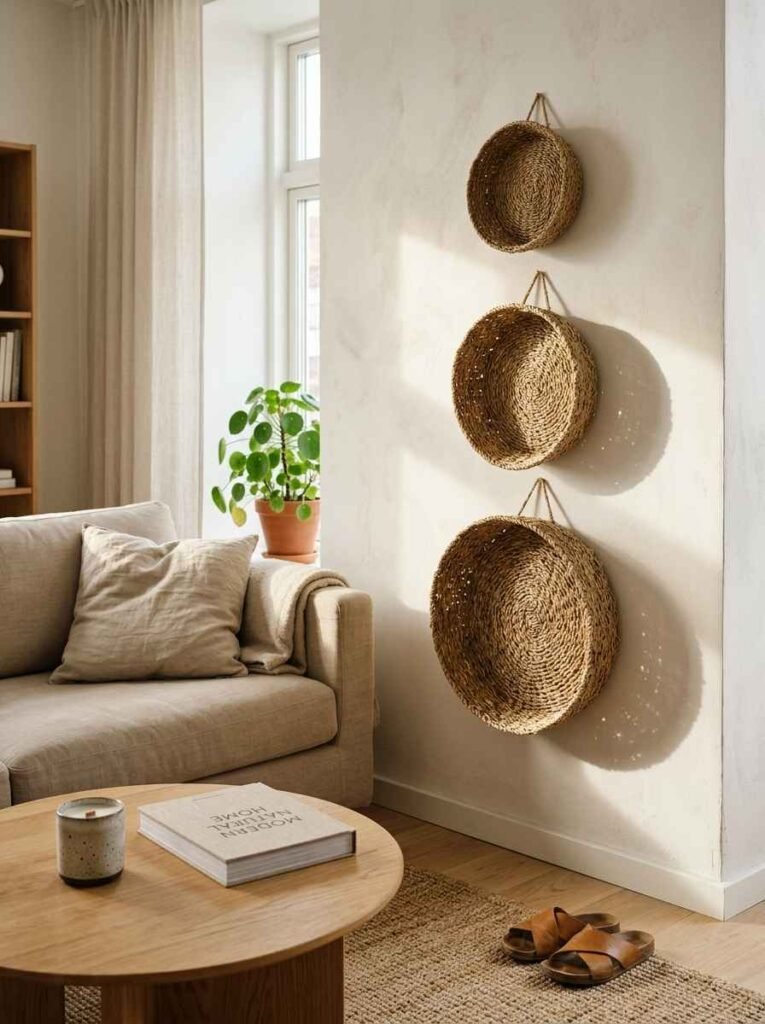
Group two or three woven baskets by size. Hung in a loose vertical line, they add shape and shadow without a single picture frame.
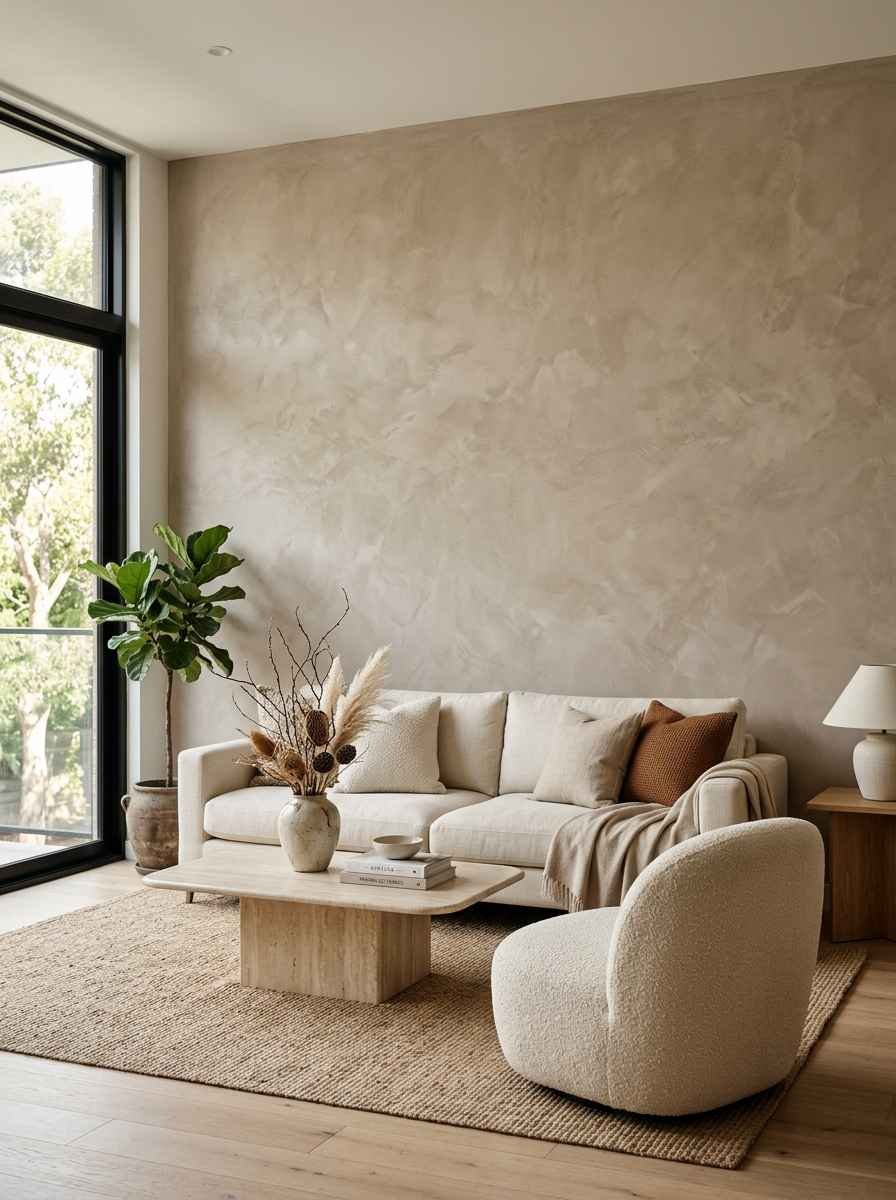
Try a limewash or plaster finish on one accent panel. It catches light differently throughout the day, which gives a plain wall more personality than paint ever could.
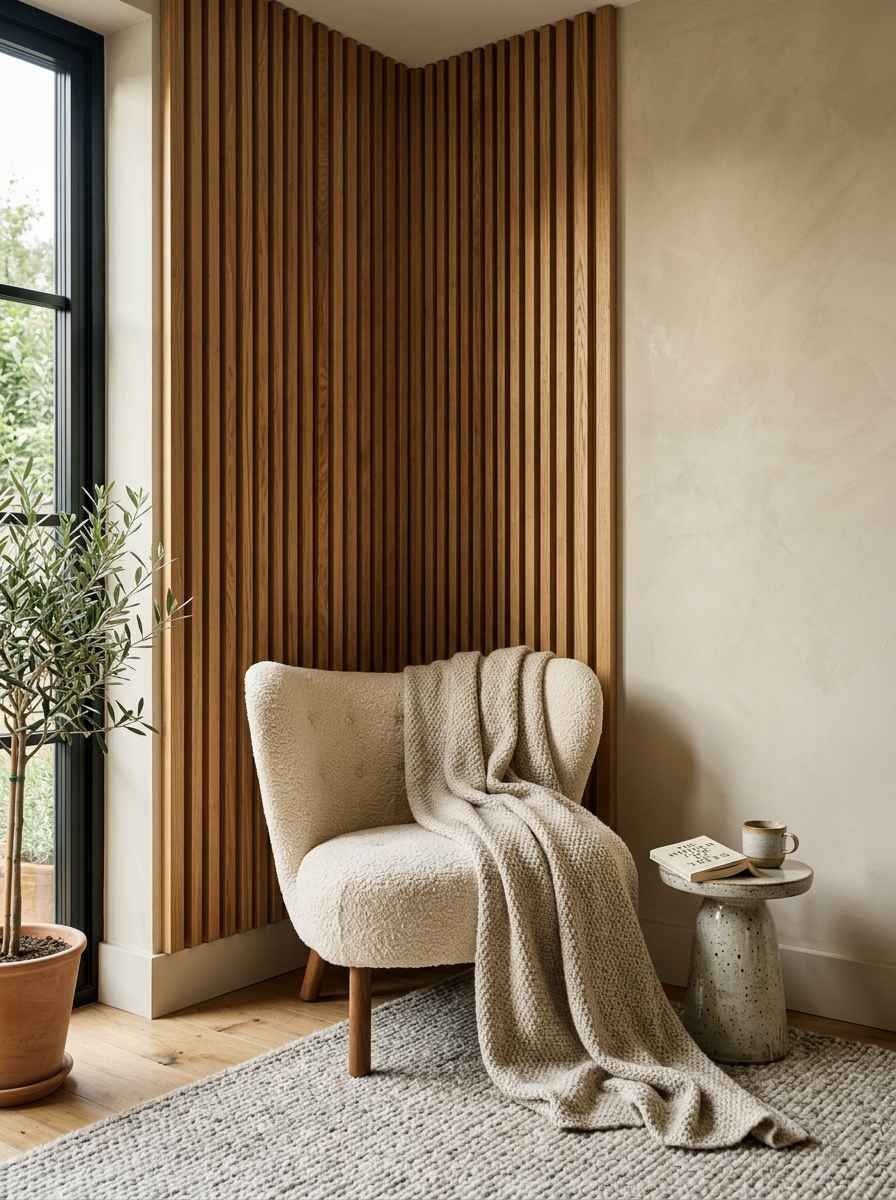
Install slim wood slats on one wall. Vertical wood paneling, spaced evenly, reads as architectural rather than decorative, which fits a minimalist room perfectly.
Random thought, but does anyone else end up spending more time picking the type of wood for a slat wall than actually installing it?
I spent two weekends comparing oak versus walnut samples for a project that took four hours to build. Worth it, but wow, that rabbit hole is real.
24 Chic Shelf Decor Living Room Minimalist Ideas for Modern Living
Function doubles as decor
This is where minimalism actually saves you money. Instead of buying decor and lighting and storage as three separate purchases, you let one object do two jobs.
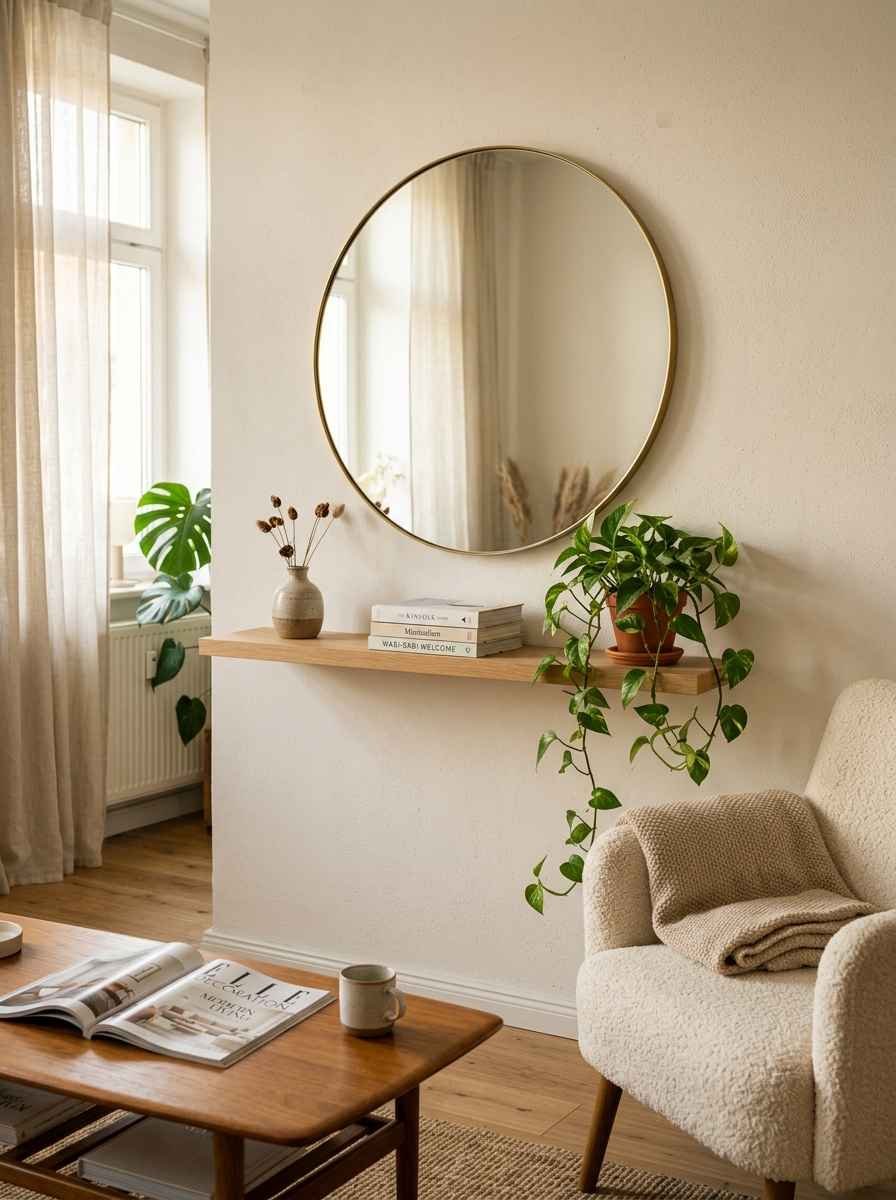
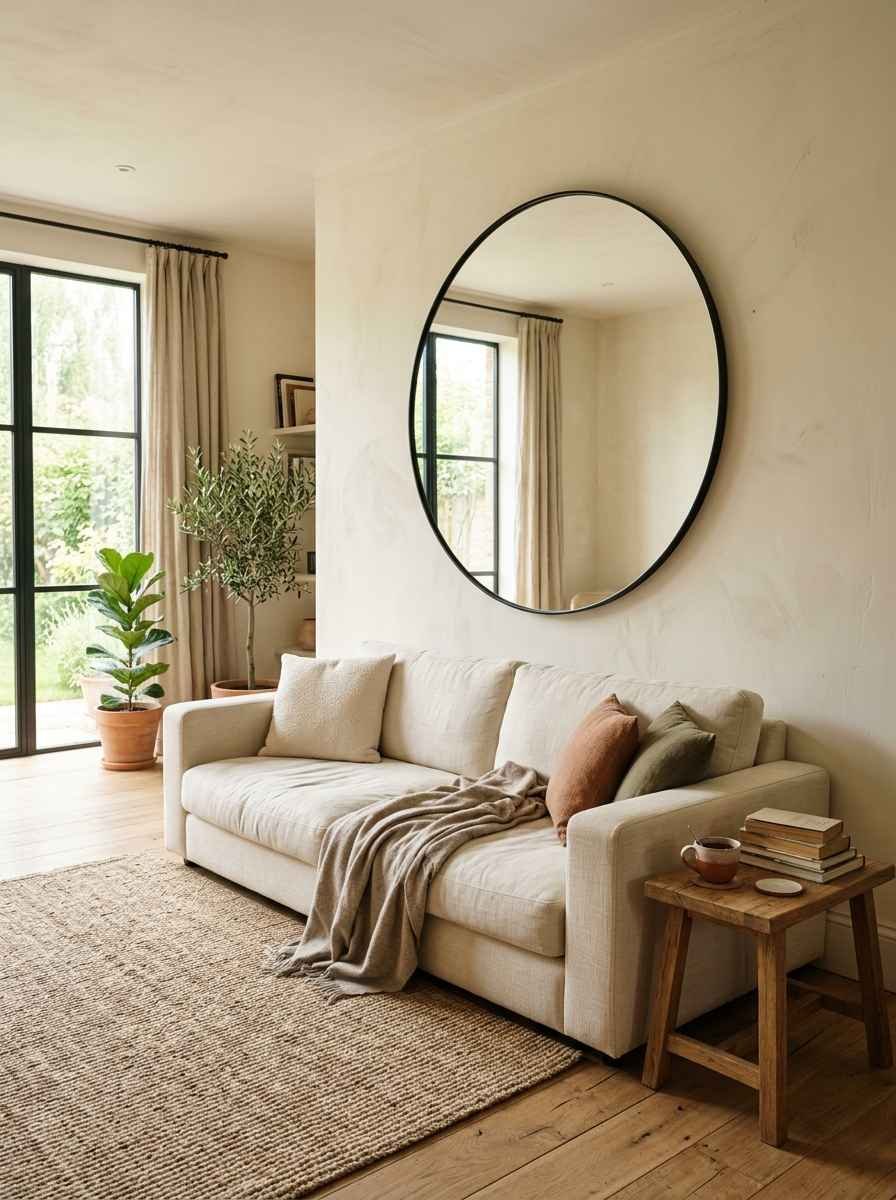
Hang a round mirror with a thin brass or black frame. Mirrors bounce light around the room and double as decor, which is the closest thing to a design cheat code I’ve found.
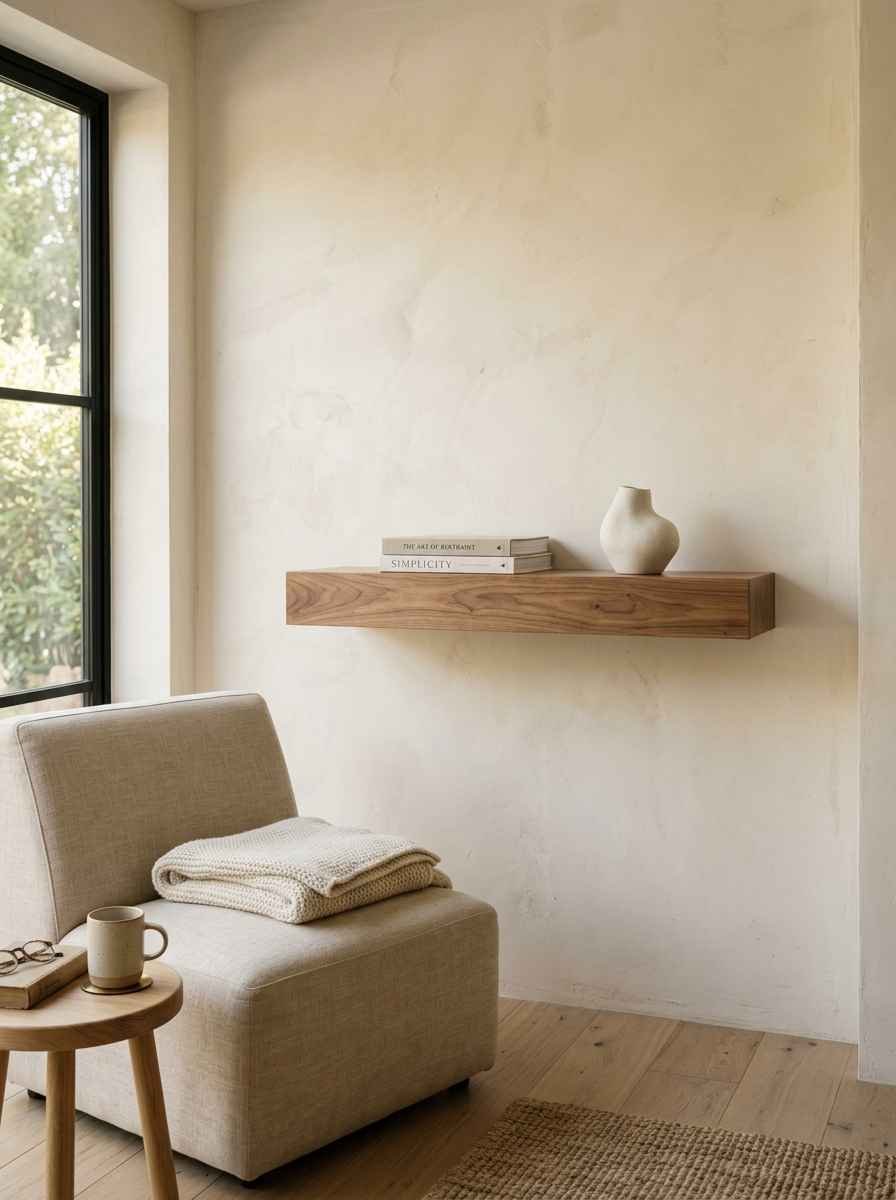
Install one floating wood shelf. Style it with two books and one small object. Not five. Two and one. Overloaded shelves stop looking minimalist fast.
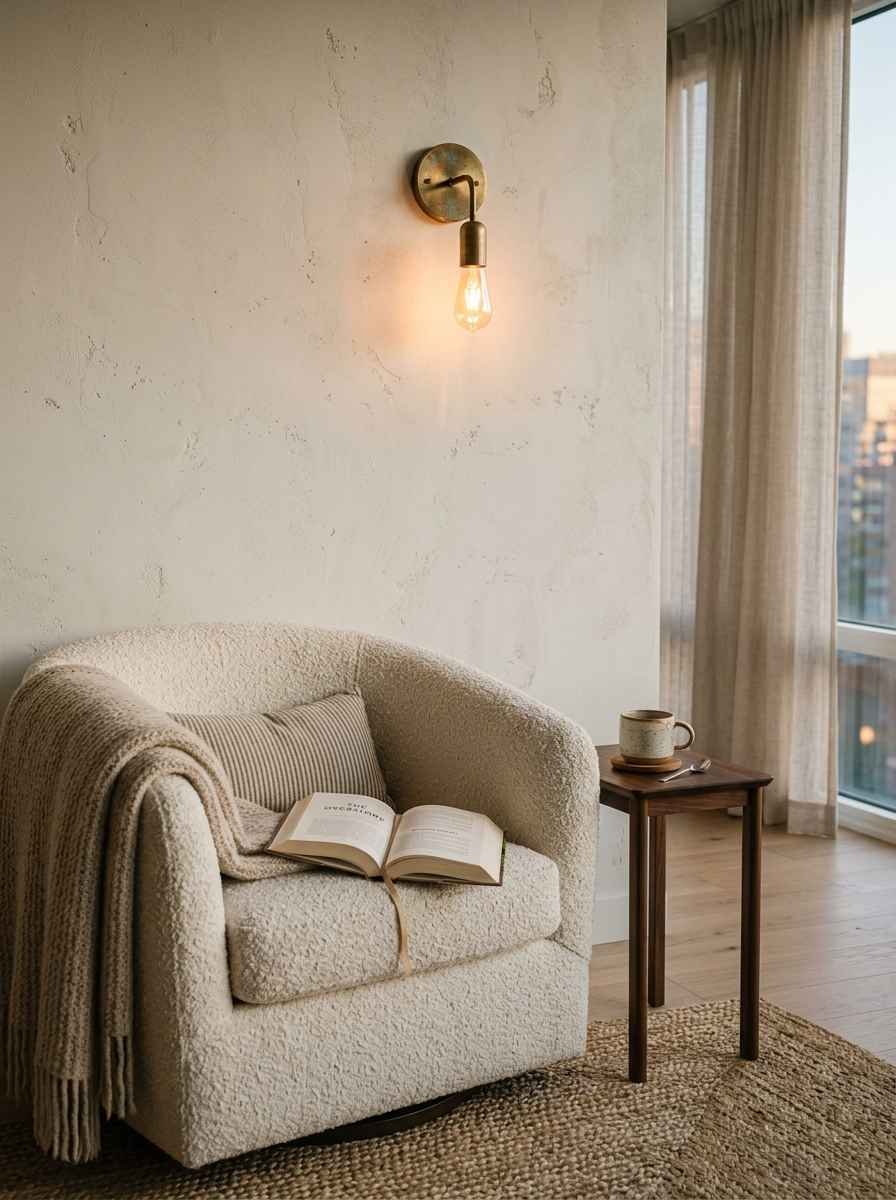
Mount a wall sconce instead of relying only on lamps. A simple brass or matte black sconce next to a reading chair does double duty as art and lighting.
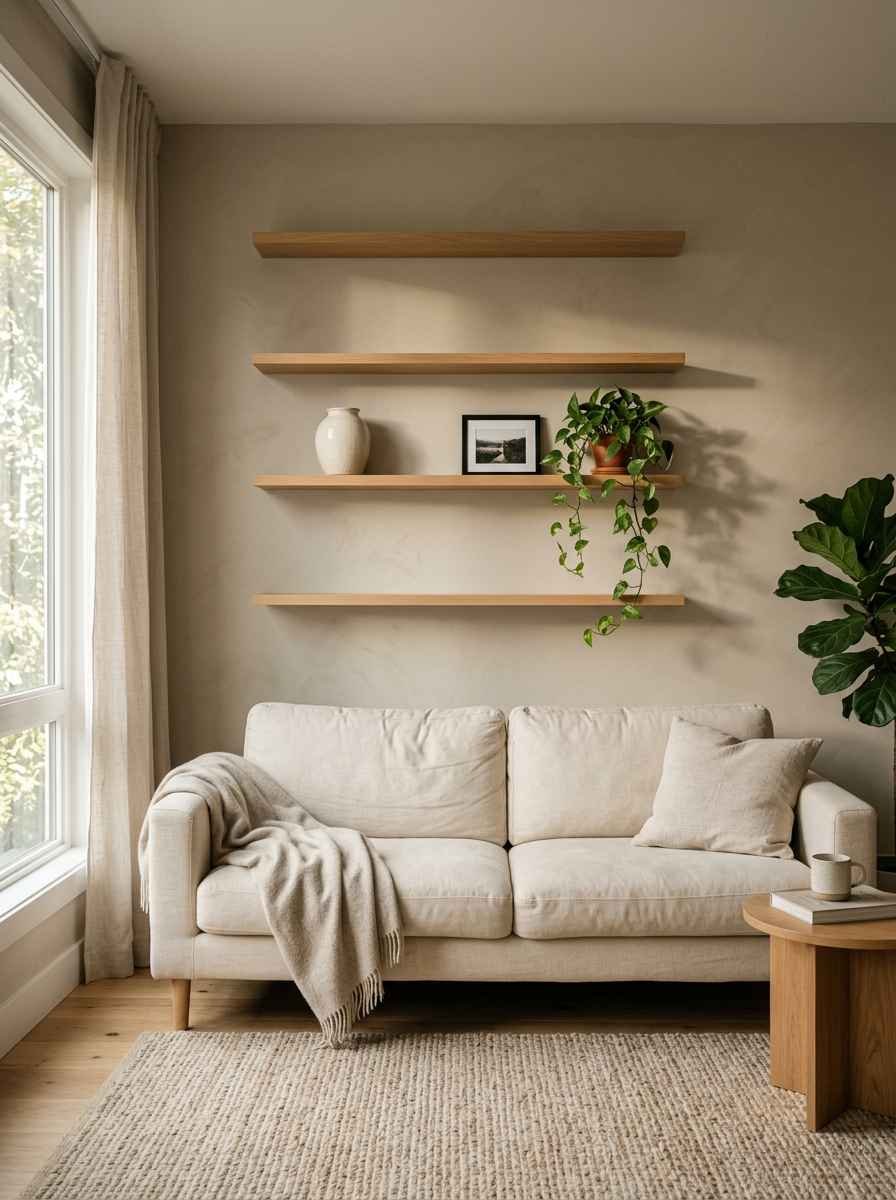
Use slim open shelving for a small, curated object collection. A single vase, one small plant, maybe a framed photo. Resist the urge to fill every inch.
Color, the minimalist way
Minimalist doesn’t have to mean white, gray, and nothing else. It means picking a small palette and sticking to it, rather than letting every accent fight for the spotlight.
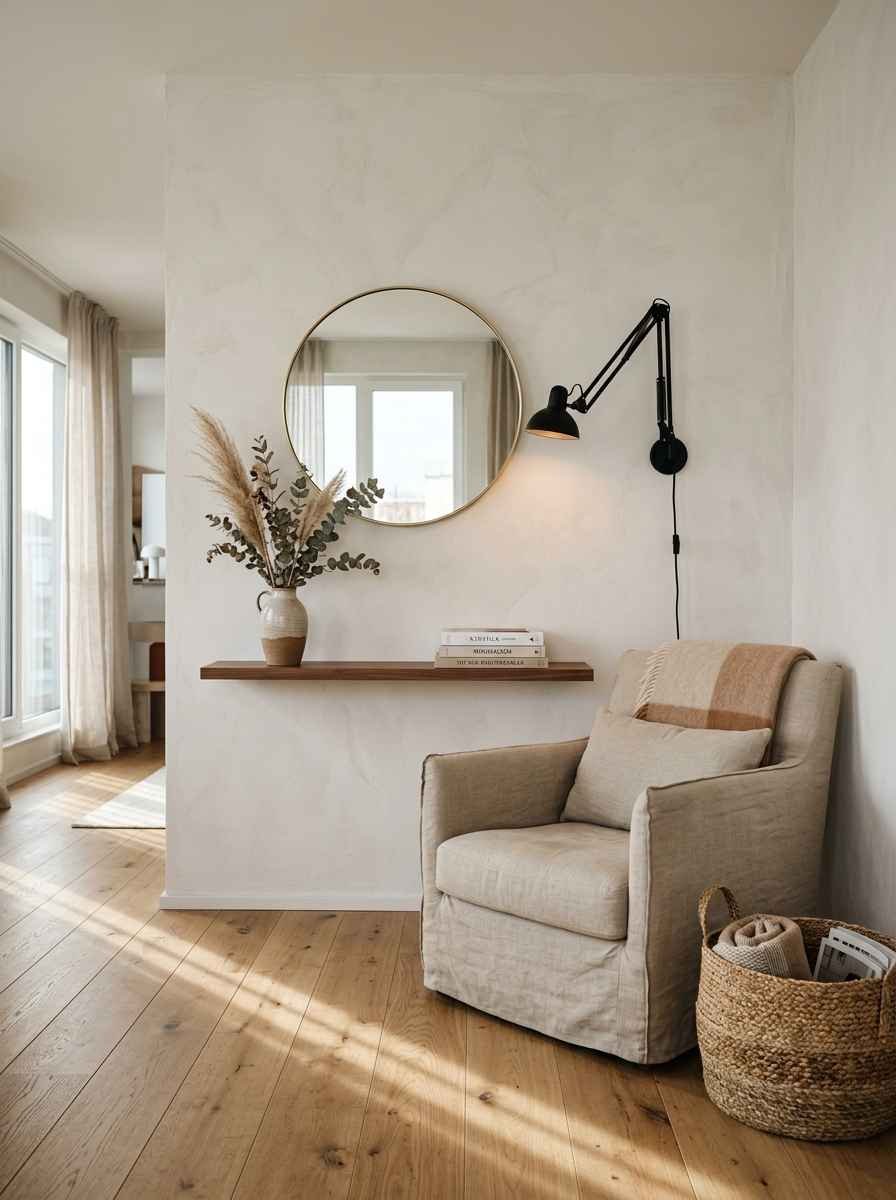
Paint one wall in a warm, muted neutral. Sherwin-Williams named Universal Khaki its 2026 Color of the Year, and it’s a solid example of the soft, livable neutrals that work well behind sparse decor.
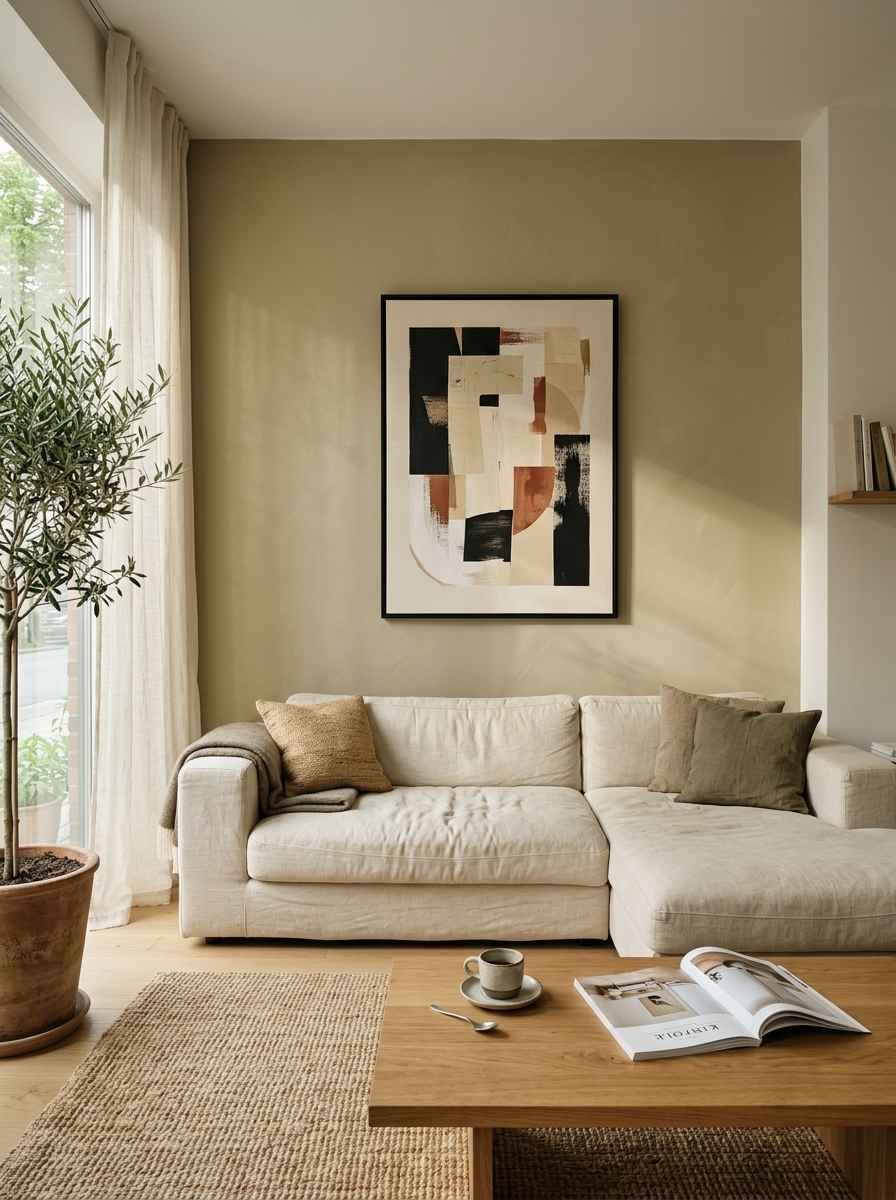
Choose decor within one tight color family. If your wall is sage, keep your frames, vases, and textiles in sage, cream, and warm wood. Skip the accent colors entirely.
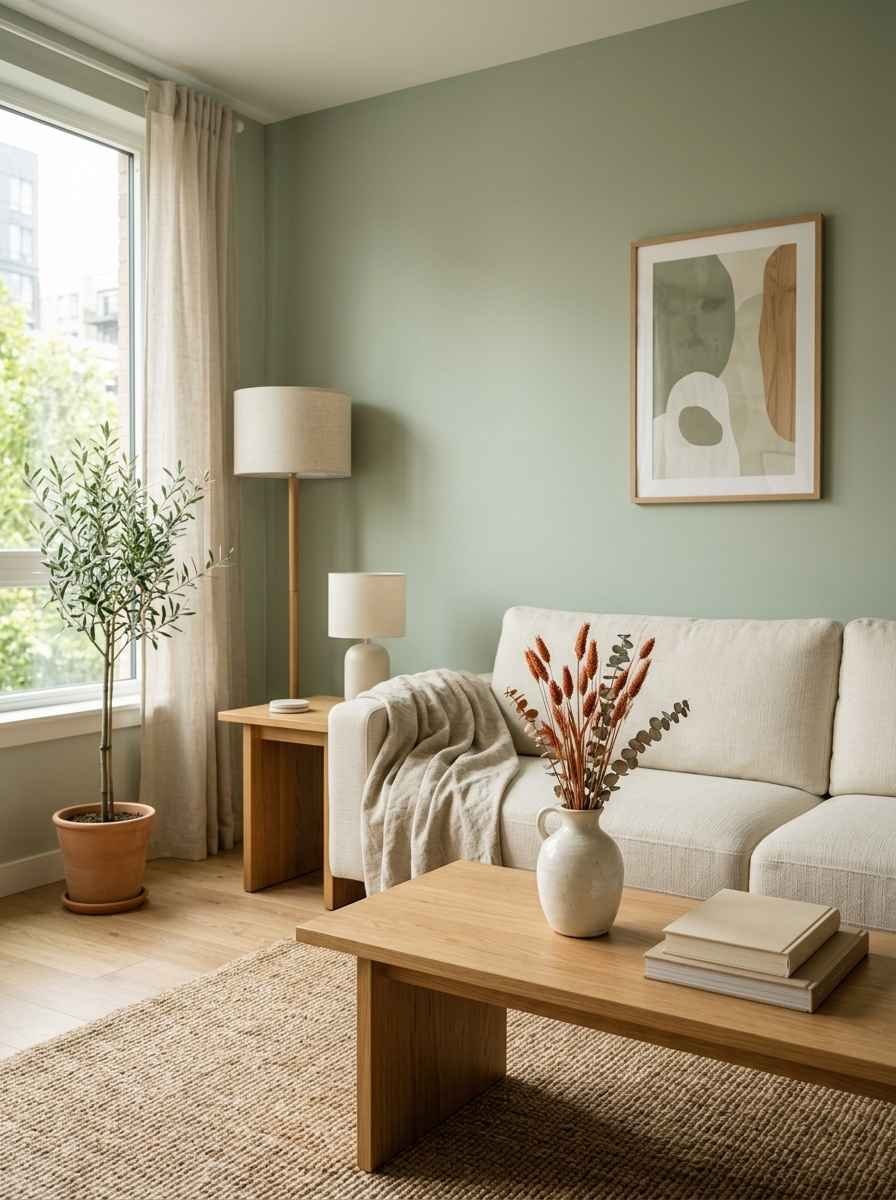
Add one black-framed piece against a light wall for contrast. A single dark frame on an off-white wall draws the eye without needing a whole gallery to do it.
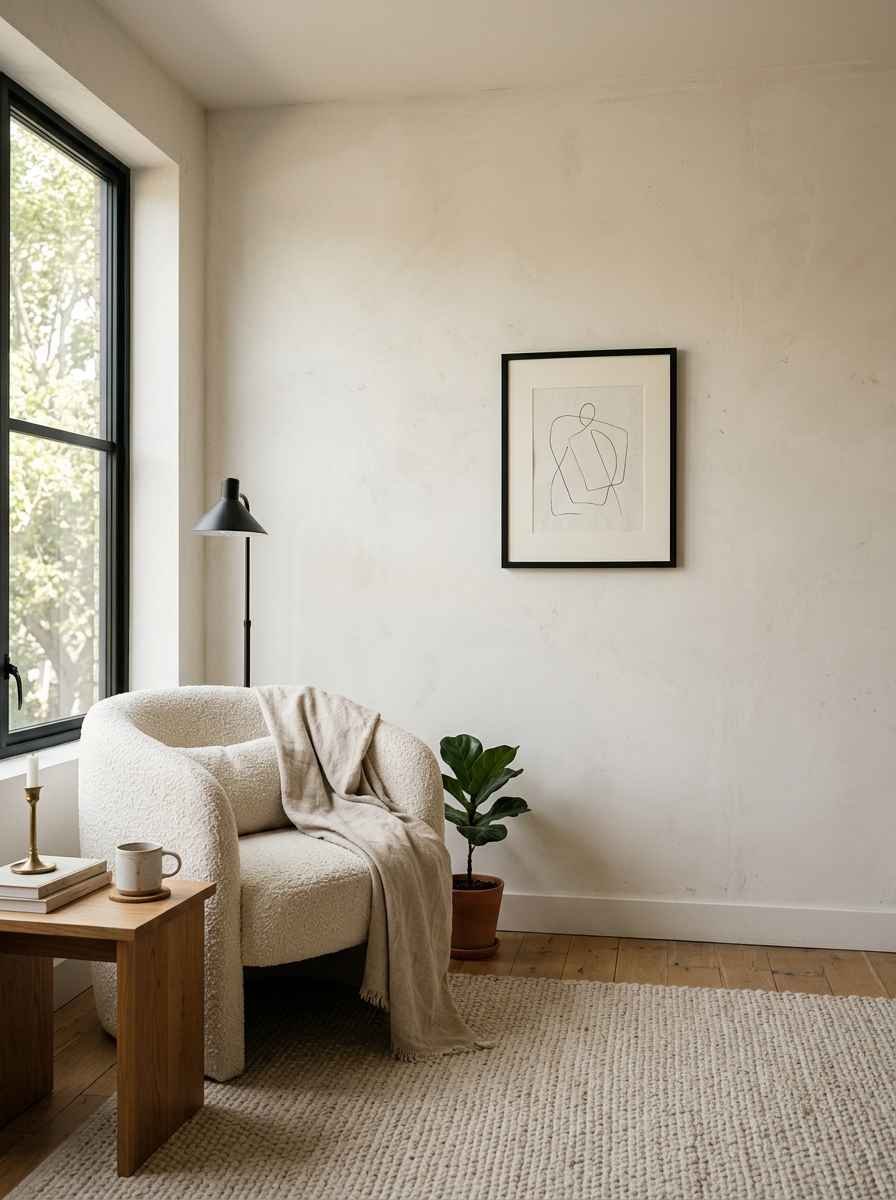
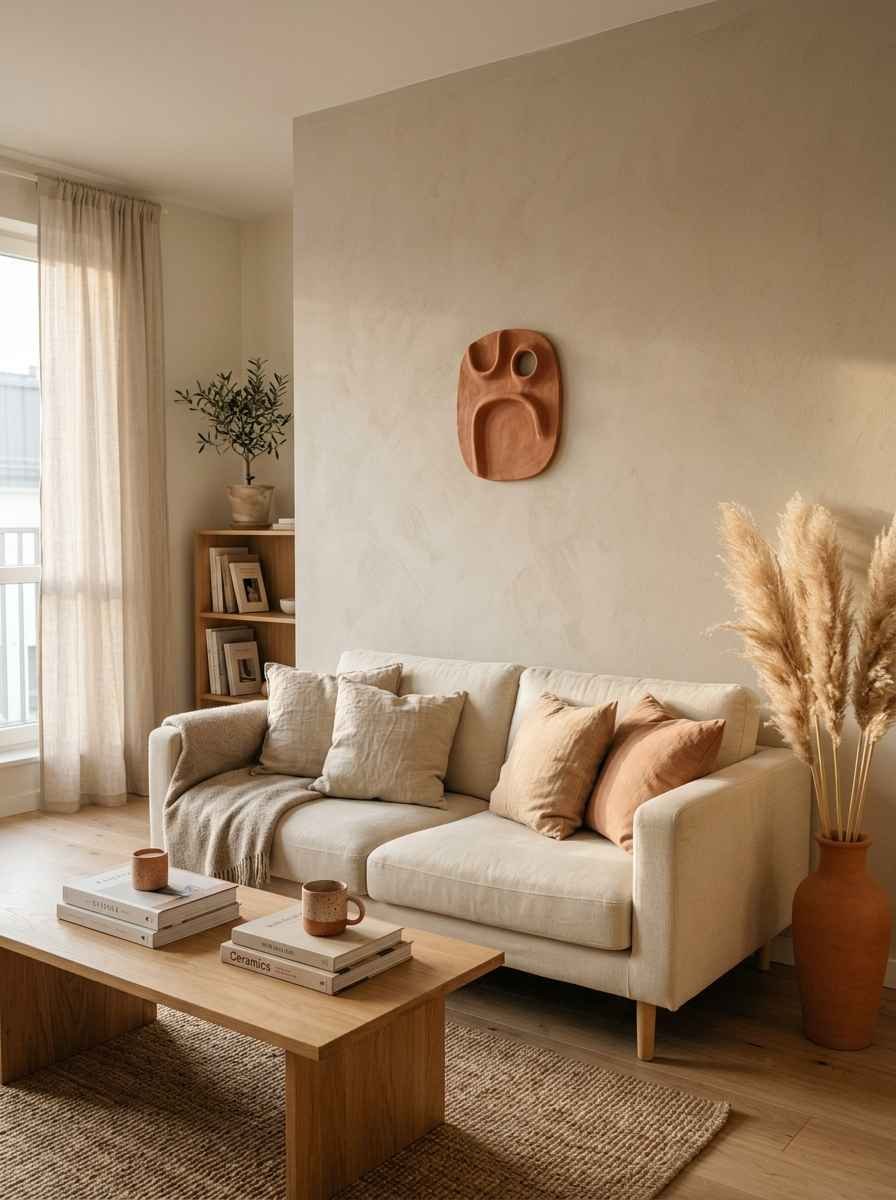
Try terracotta as an accent, not a wall color. A single terracotta vase or ceramic piece against a neutral wall gives warmth without committing to a bold paint choice.
Words, plants, and personal touches
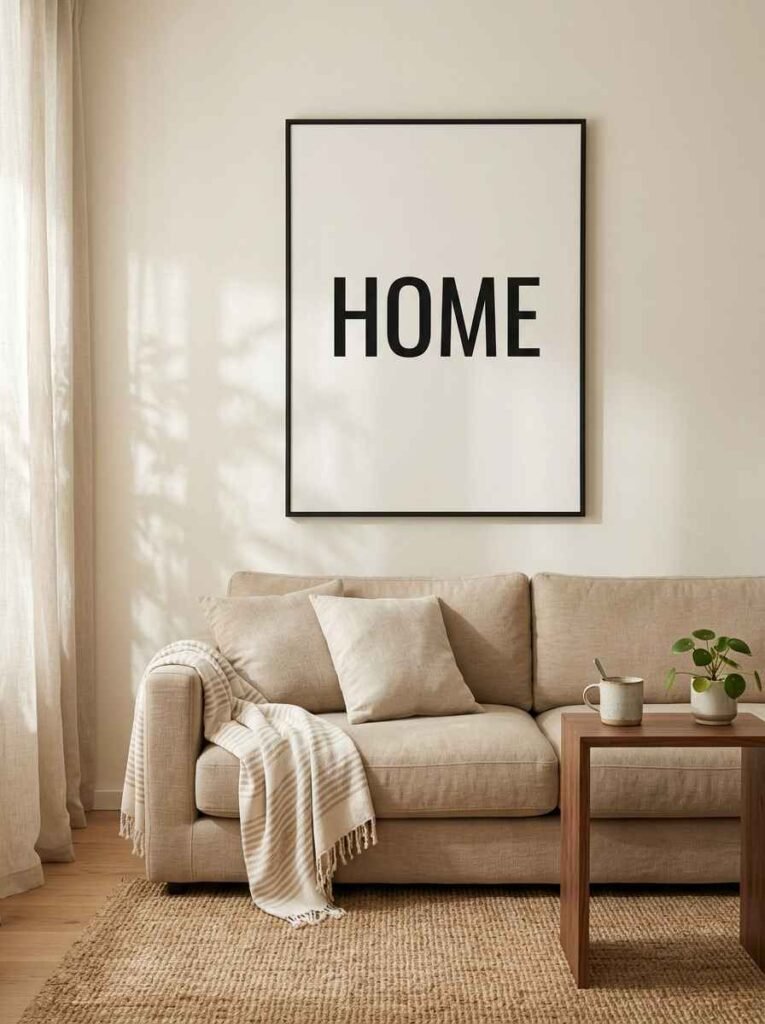
Hang one minimal typography print. A single word, clean sans-serif font, lots of white space around it. Skip anything with more than five words; it starts to read like a poster, not art.
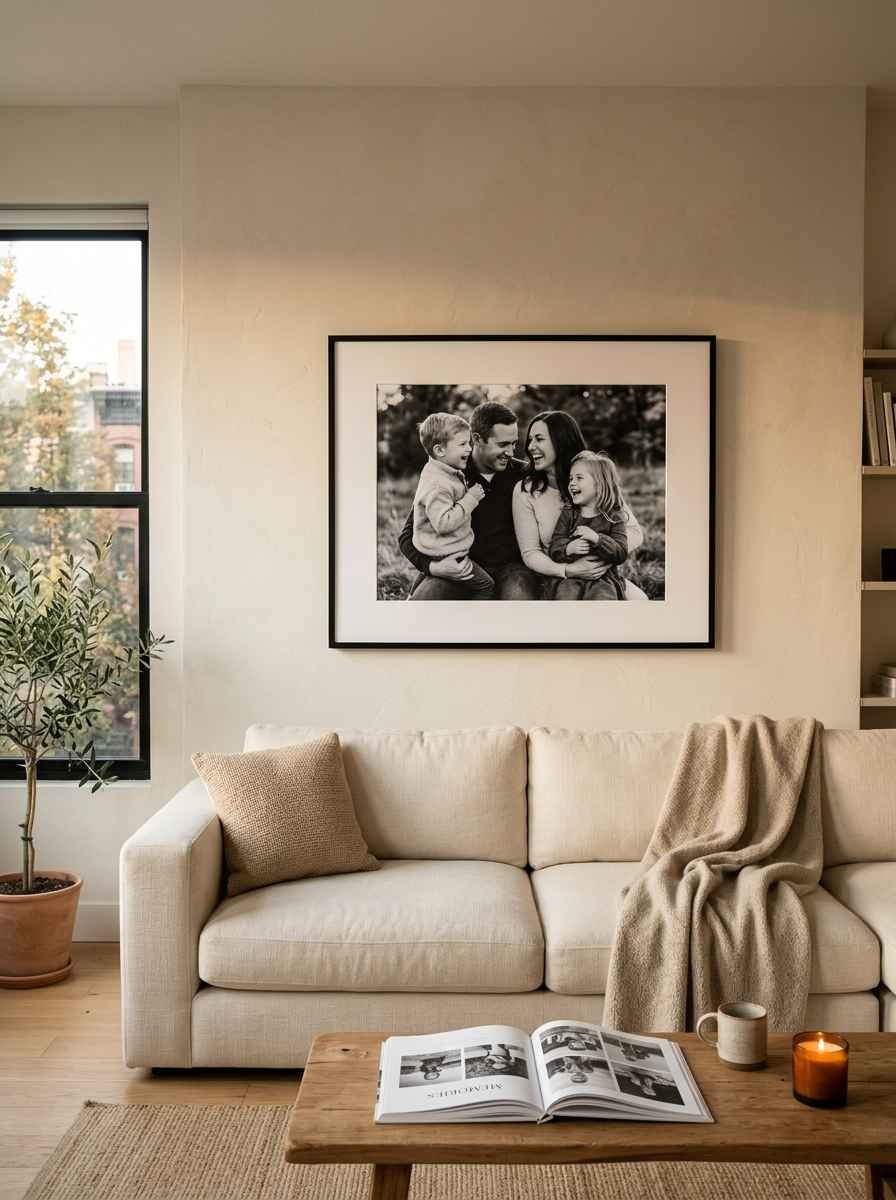
Frame one meaningful photo, large. Not a wall of 12 small photos. One photo that actually matters to you, printed big, in a simple frame.
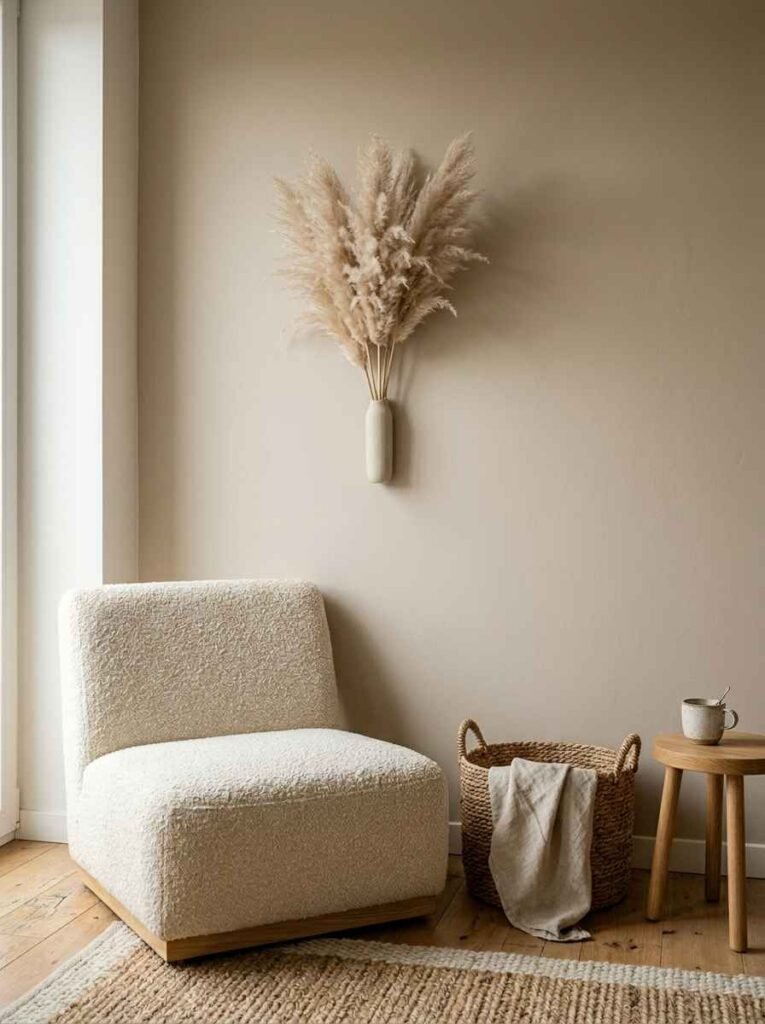
Add dried pampas grass in a wall-mounted vase. It brings texture and movement without needing water, sunlight, or maintenance.
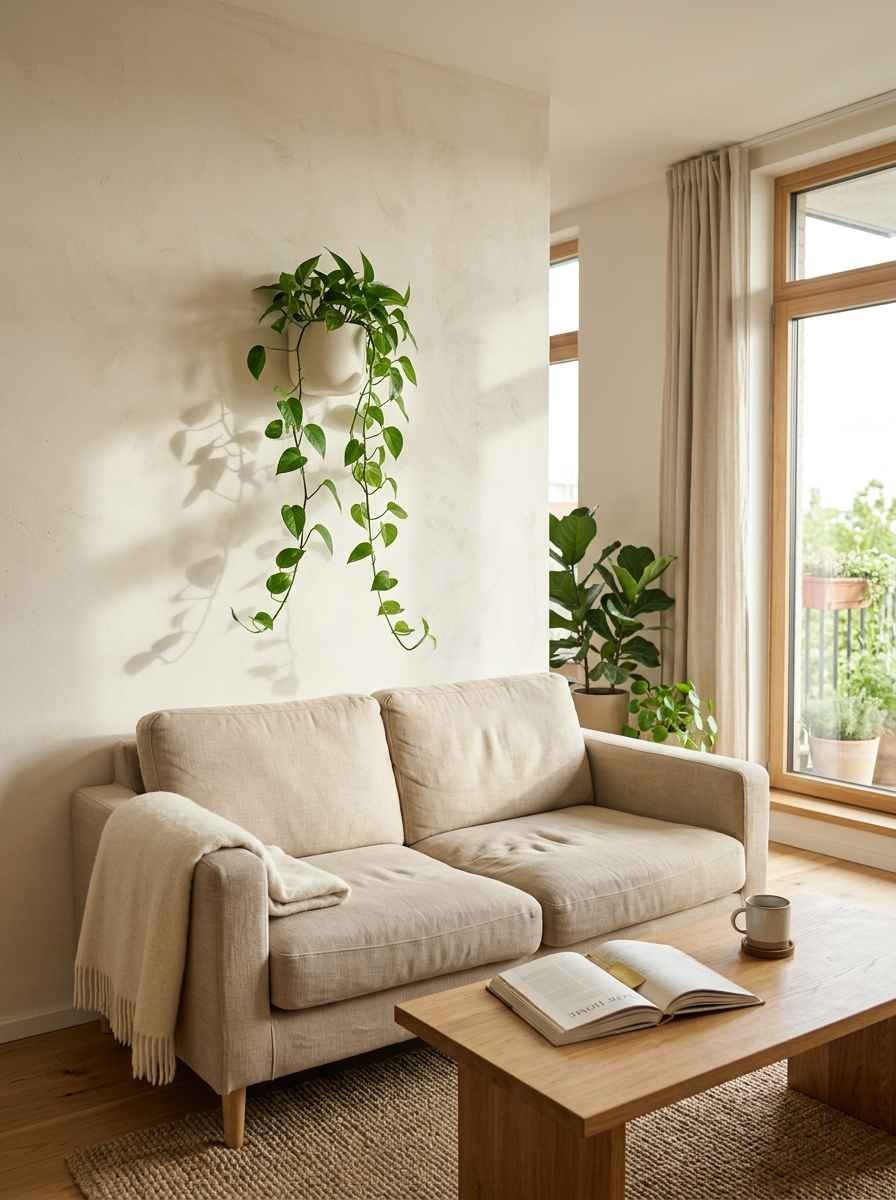
Install a small wall planter with a trailing vine. Pothos or string of pearls works well here. It softens a room full of hard edges and straight lines.
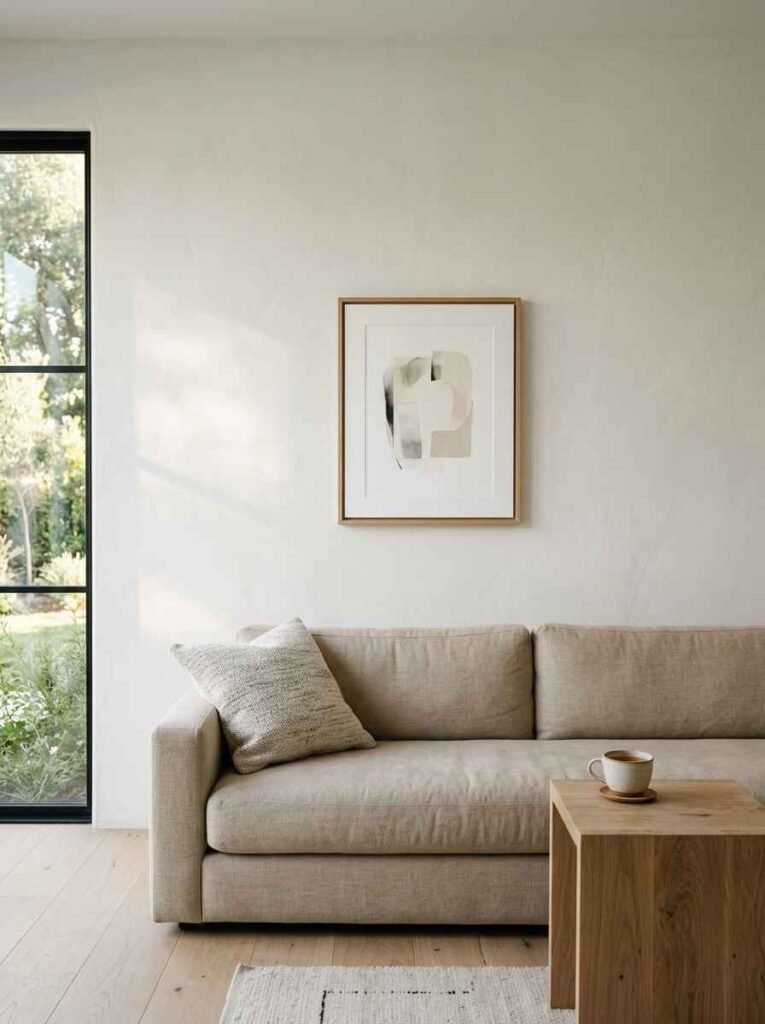
Leave deliberate space around your favorite piece. Don’t crowd it with smaller art just because the wall has room. Let it stand alone. That gap is doing more design work than you’d think.
Quick idea picker
| Decor approach | Best for | Typical cost |
|---|---|---|
| Single statement art | Renters, small walls | $50 to $300 |
| Gallery wall (grid style) | Large blank walls | $80 to $400 |
| Floating shelves | Function plus decor | $30 to $150 |
| Textured hanging (macrame, baskets) | Boho-minimalist mix | $20 to $100 |
FAQs
Do I need to spend a lot of money to get a minimalist living room wall? No. Several of the ideas above, like leaving a wall bare, rearranging existing frames into a tighter grid, or adding dried grass to a vase, cost under $30.
How many pieces of art is too many for one wall? There’s no fixed number, but if you can’t name why each piece is there, you probably have too many. A wall with 3 well-placed items usually reads calmer than a wall with 8 random ones. When in doubt, take a photo of the wall and look at it on your phone screen. Clutter shows up faster in a photo than it does standing in the room.
What’s the best color for a minimalist living room wall in 2026? Warm neutrals are leading the pack this year. Khaki, soft sand, and muted sage all pair well with the sparse, texture-forward decor styles covered above.
So, which of these 30 ideas are you actually going to try first? Save this list, pick two or three that fit your space and your budget, and give yourself permission to leave the rest of the wall alone. That empty space is part of the design, not a problem you still need to solve.
