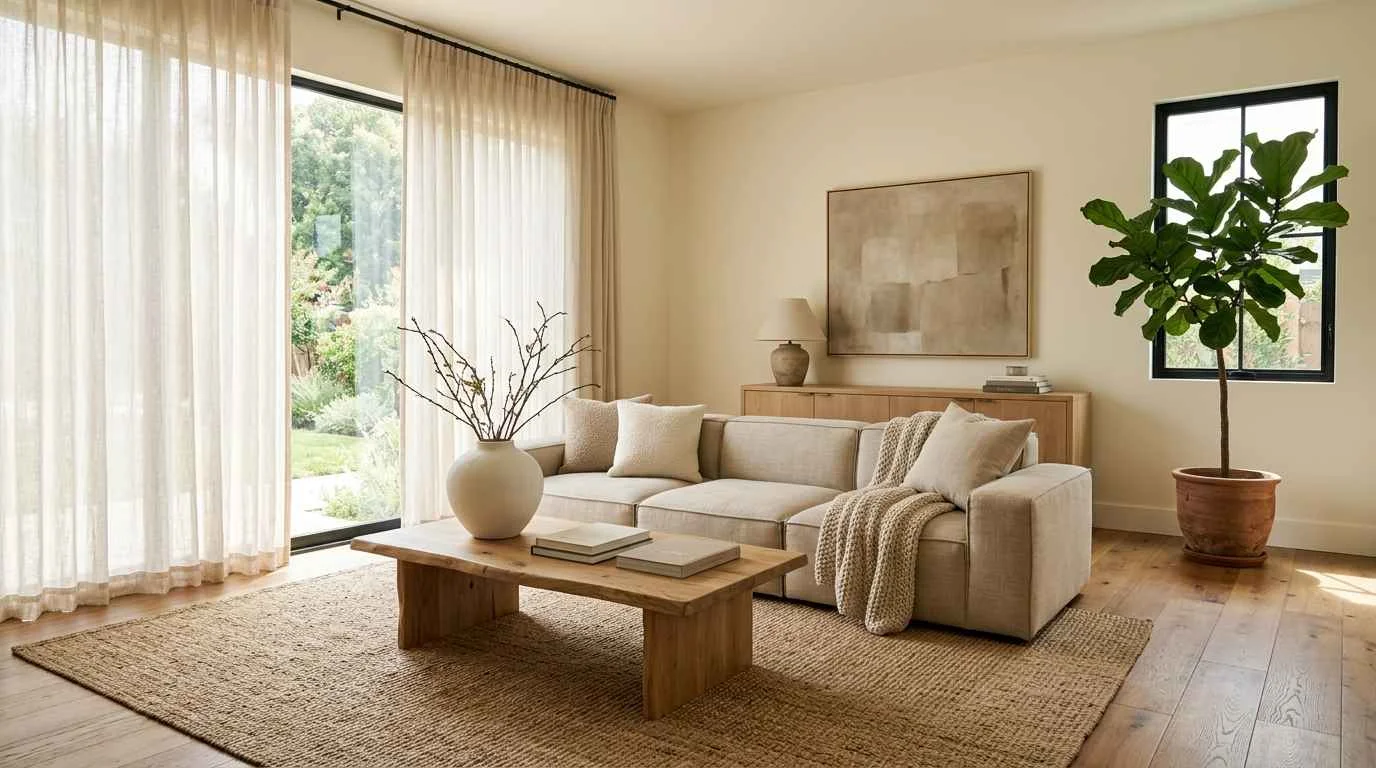
Okay, real talk — I have spent way too many hours down a Pinterest rabbit hole, saving every “clean aesthetic” photo I could find, only to look around my actual room and feel vaguely depressed. Sound familiar? 🙂
Minimalism looks effortless online. In practice, it’s a bit of a science. The good news: it’s learnable.
I pulled together the 27 ideas that actually work — no vague “declutter your soul” advice here.
What aesthetic minimalism actually means
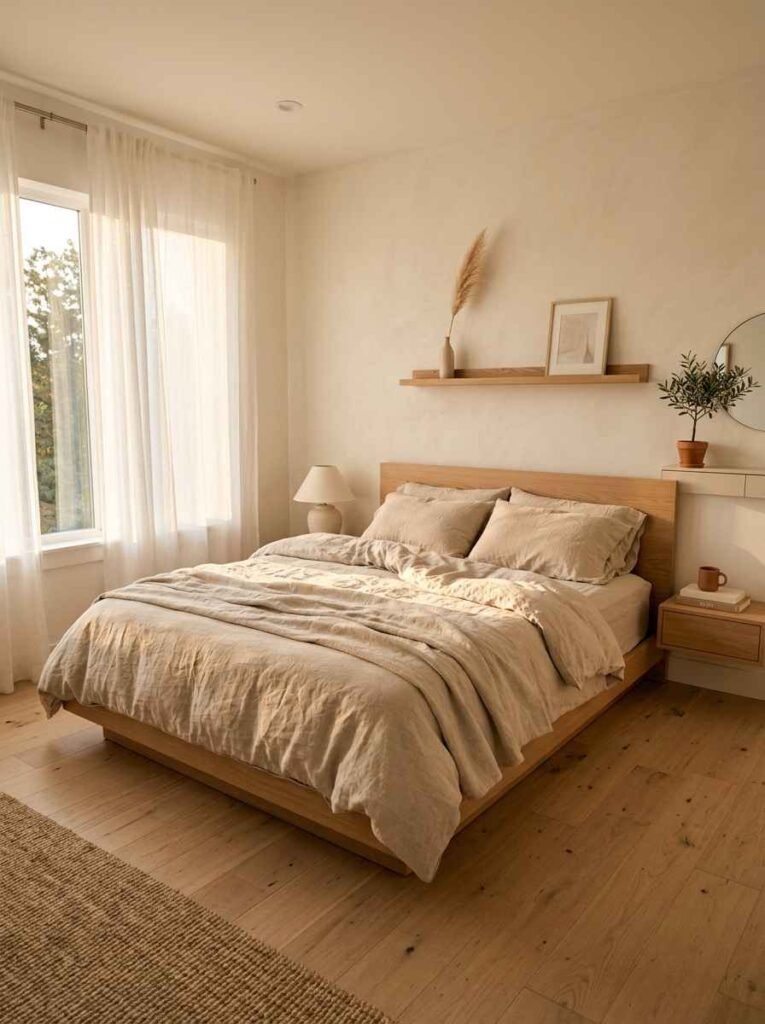
Before we get into specifics: aesthetic minimalism isn’t about owning as little as possible.
It’s about being intentional with what stays in the room. Every piece earns its spot.
Think of it like editing a photo. You’re not deleting the subject. You’re removing everything that competes with it.
The foundation: color and walls
1. Commit to a neutral base
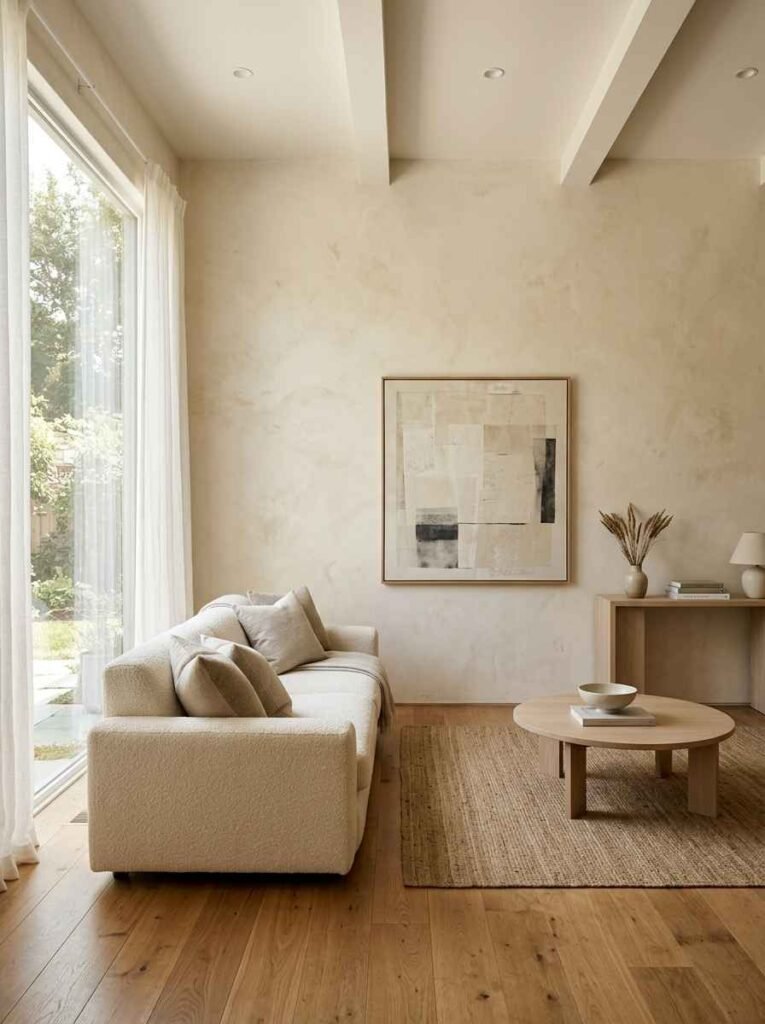
White, warm cream, soft greige, light taupe.
Pick one and stick with it for your walls, bedding, and large furniture. Everything else layers on top.
The biggest mistake I see? Mixing too many neutrals that don’t quite match. Warm whites and cool whites in the same room create this weird tension that’s hard to name but impossible to unsee.
2. Try limewash or textured paint
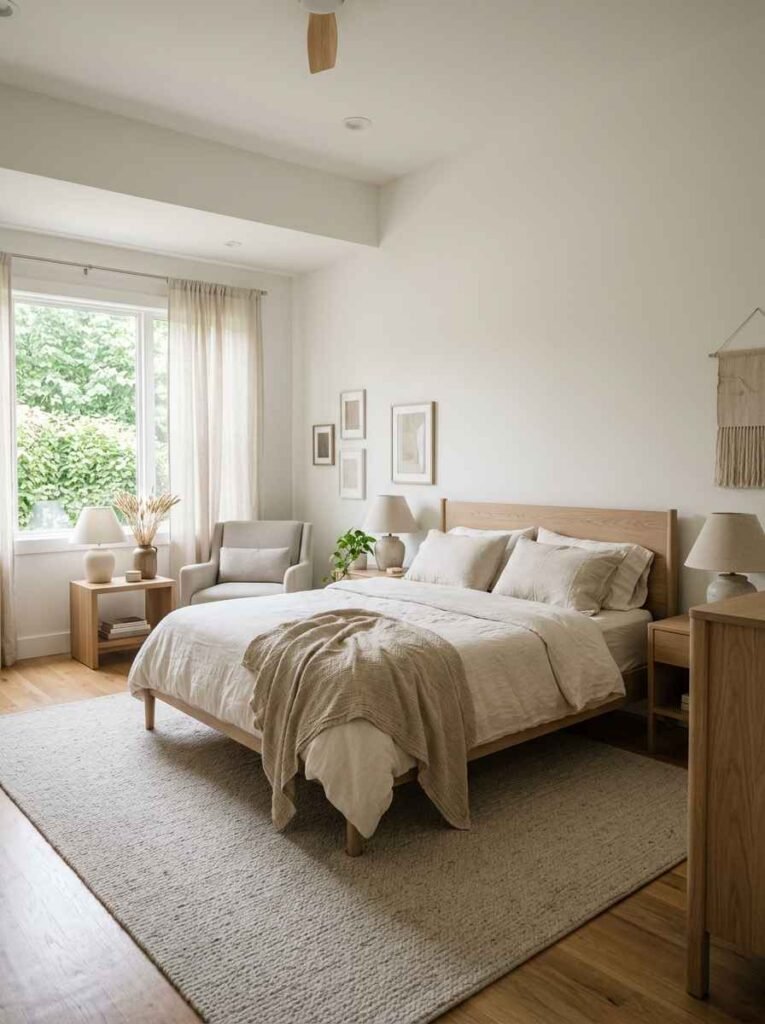
Flat white walls can read as “rental apartment,” not “intentional aesthetic.” Limewash paint adds depth without color, giving walls a soft, Old World texture that photographs beautifully.
It’s huge on Pinterest right now for good reason.
3. One accent wall, done right
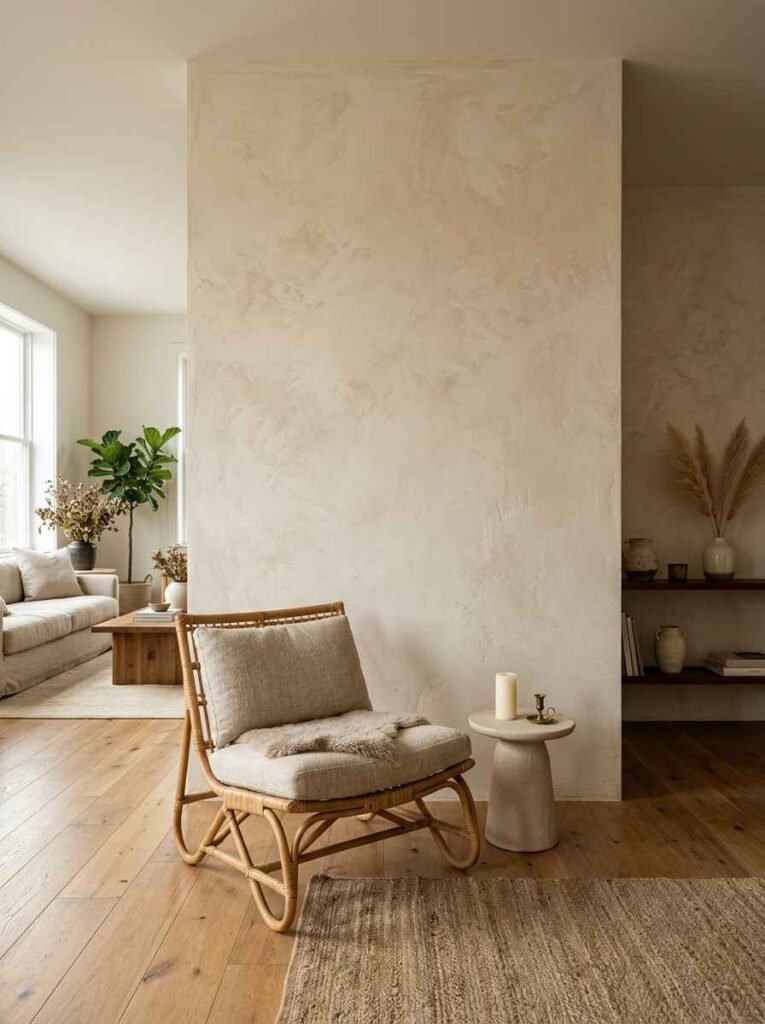
If you want a moment of contrast, do one wall in a muted earthy tone — terracotta, dusty sage, charcoal. One. The rest stays neutral.
| Accent Color | Pairs With | Mood |
|---|---|---|
| Terracotta | Cream + natural wood | Warm, organic |
| Dusty sage | White + linen | Calm, botanical |
| Charcoal | White + black metal | Modern, editorial |
| Warm taupe | Beige + rattan | Cozy, Scandinavian |
4. Leave some wall space empty
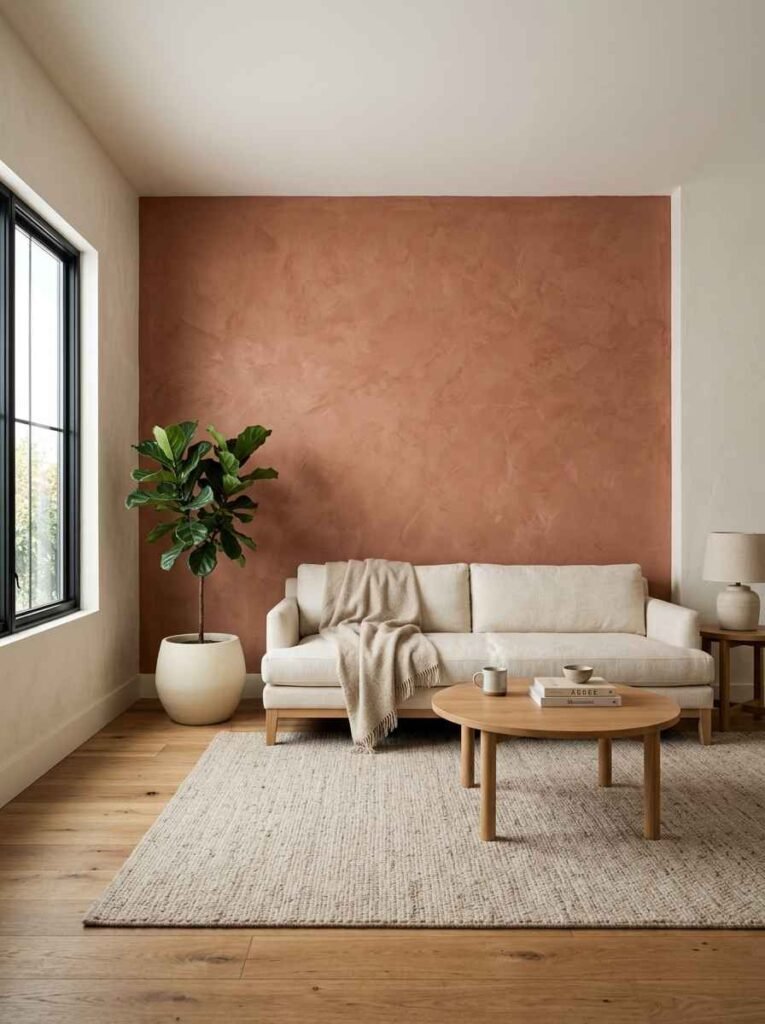
I know this feels wrong. We’re conditioned to fill walls. But empty wall space is a design choice, not an oversight. Give your art room to breathe.
Furniture choices
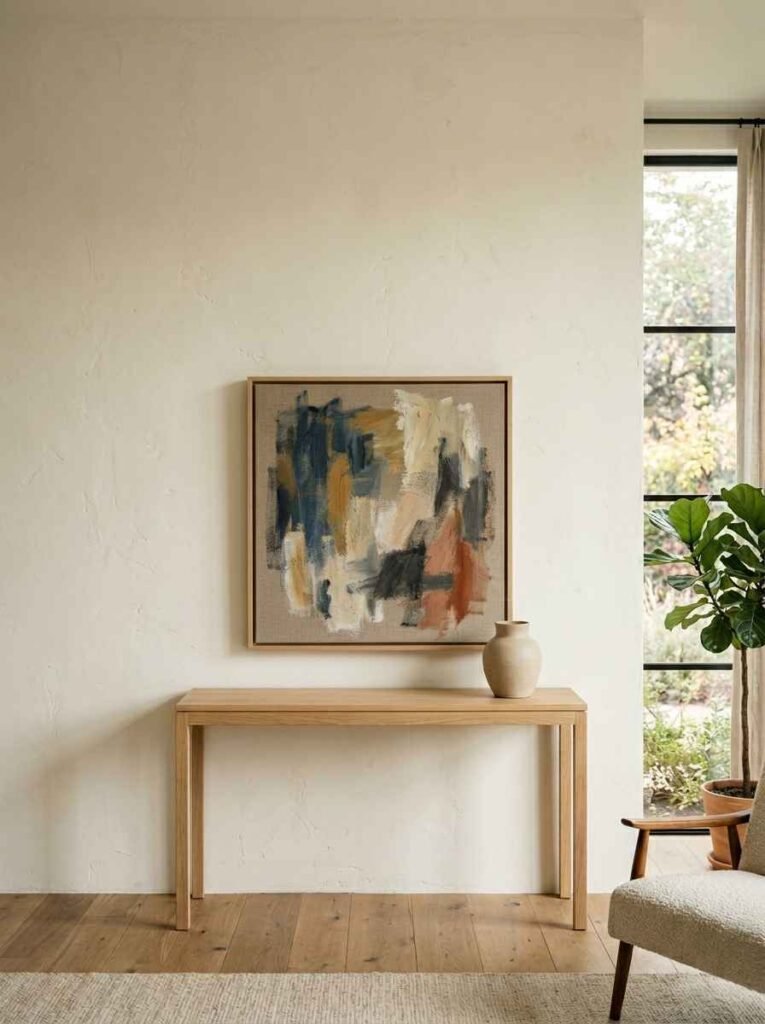
5. Low-profile furniture
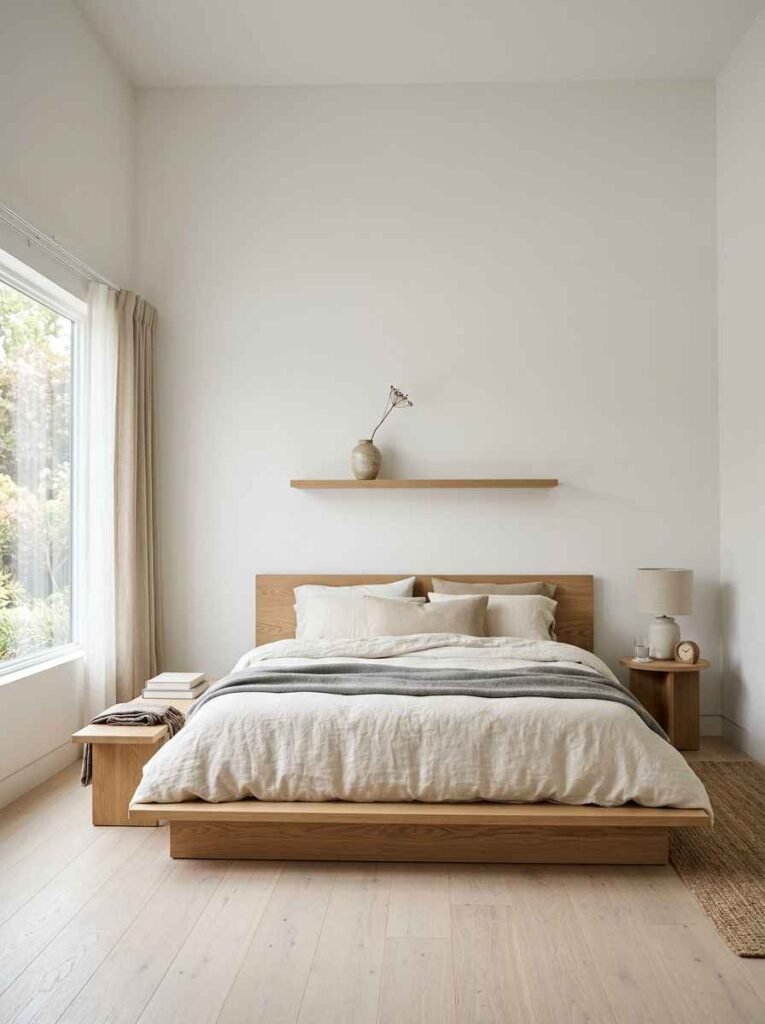
Low beds, low sofas, low coffee tables. They make ceilings feel taller and rooms feel more open. The Japanese aesthetic does this brilliantly.
6. Stick to 2–3 furniture pieces per room
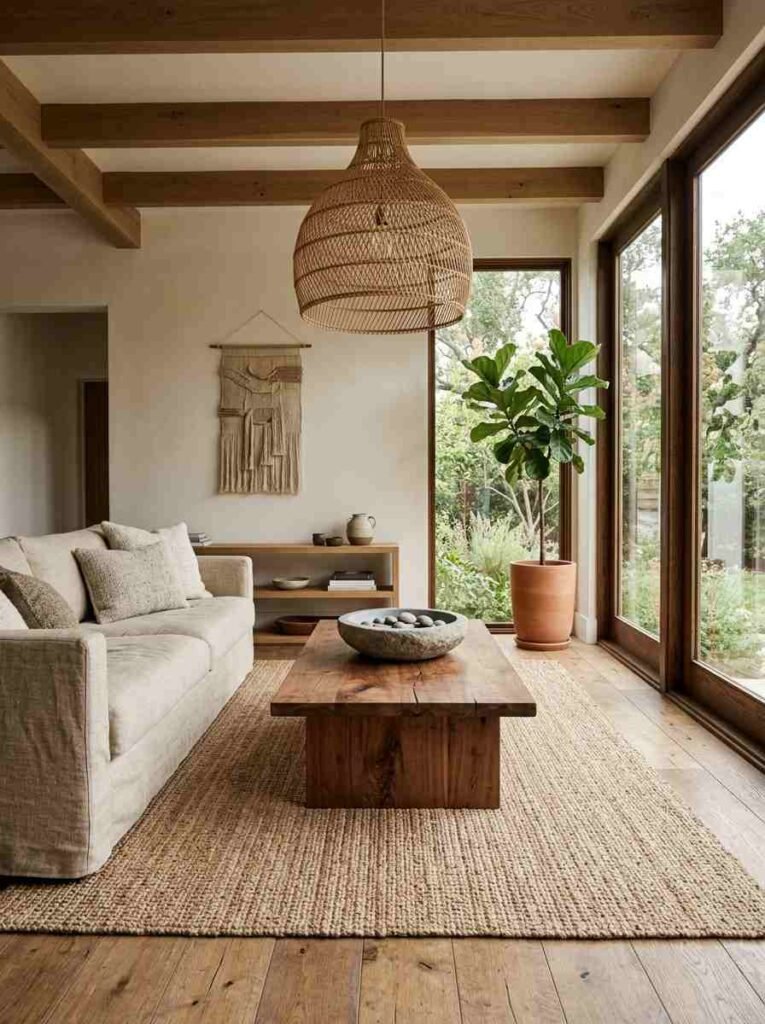
Ask yourself: does this room need a loveseat AND a sofa AND two accent chairs? Probably not. Edit down to the pieces you actually use.
7. Natural materials over everything
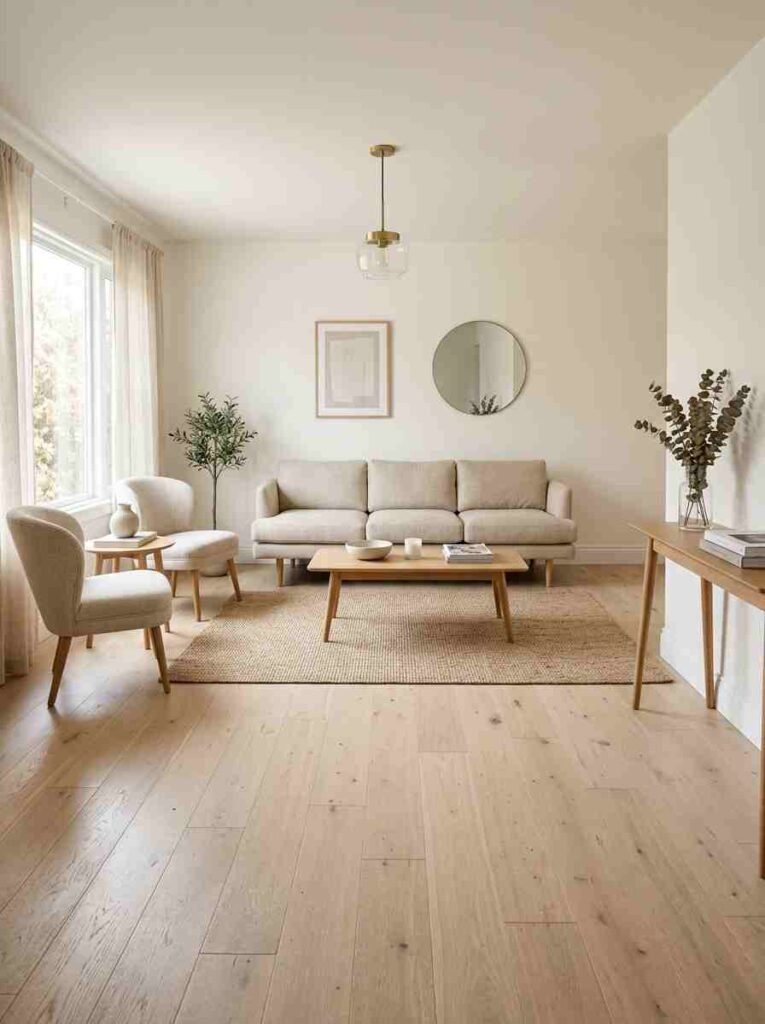
Wood, linen, cotton, rattan, stone. These materials age well, photograph beautifully, and feel grounded. Avoid shiny plastic or overly polished surfaces — they reflect clutter.
8. Furniture with legs
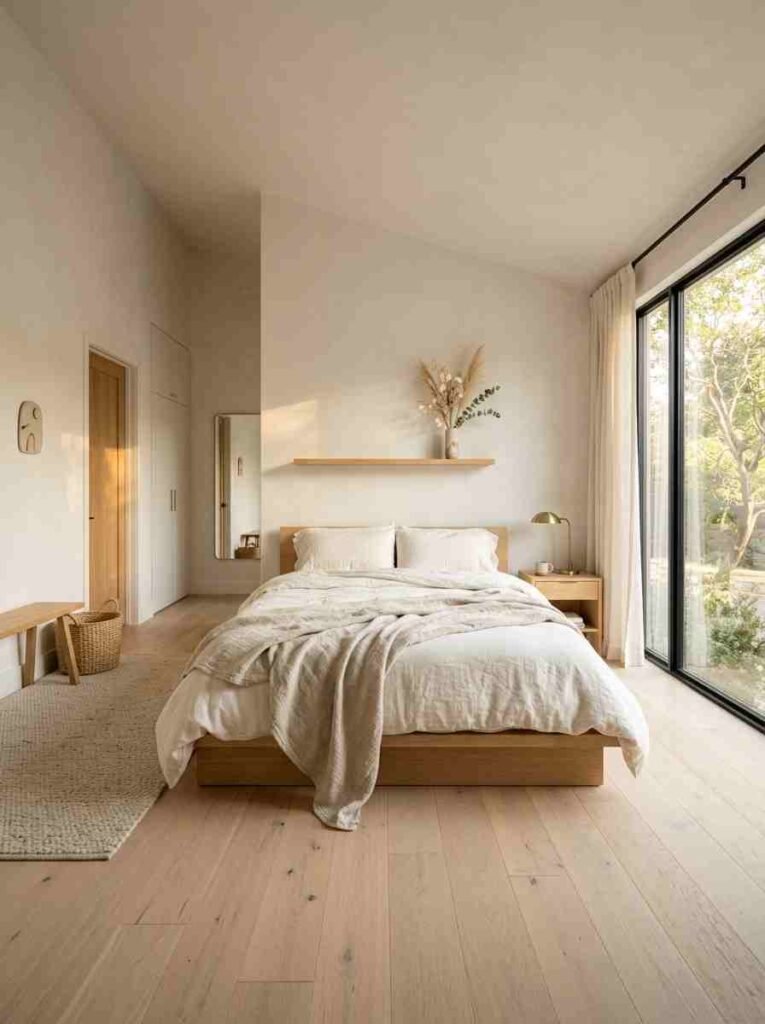
Pieces that show the floor underneath make a room feel lighter and easier to clean. This sounds boring. It looks incredible.
9. Multi-functional pieces
A storage ottoman. A bench at the foot of the bed that also holds extra blankets. A desk that doubles as a nightstand. Minimalism loves function disguised as form.
Bedrooms: where minimalism hits hardest
10. The floating shelf headboard
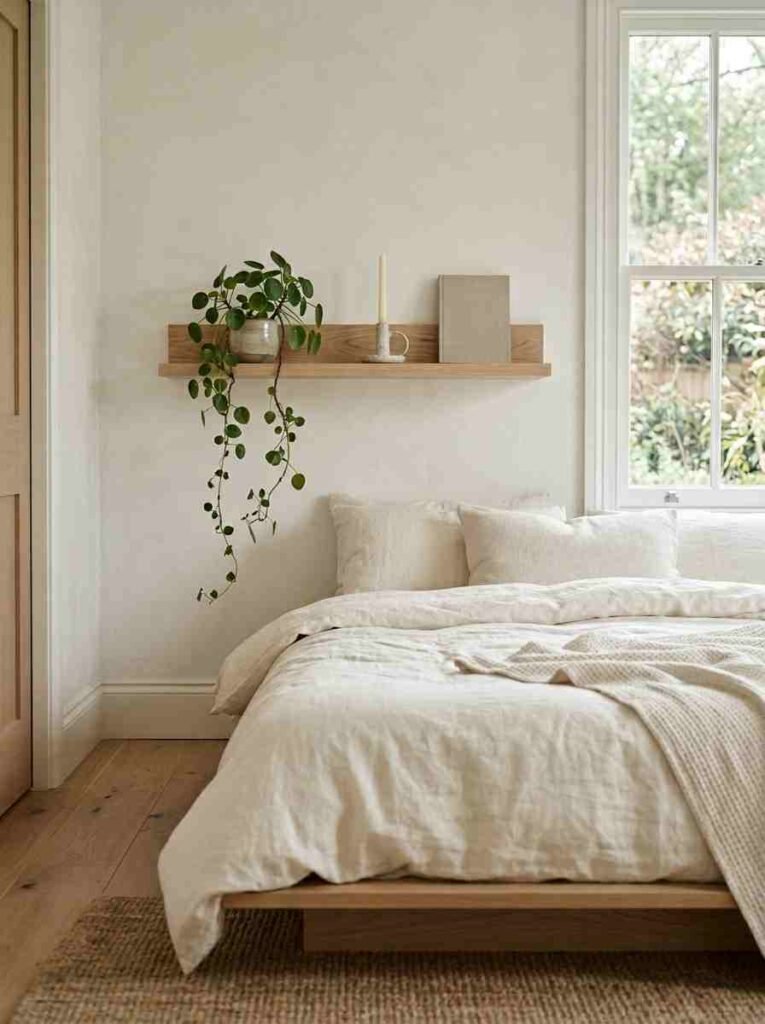
Skip the traditional headboard. Mount a simple floating shelf above your bed, add one small plant and a candle, and call it done.
Clean. Intentional. Super Pinterest-worthy.
11. Linen bedding only
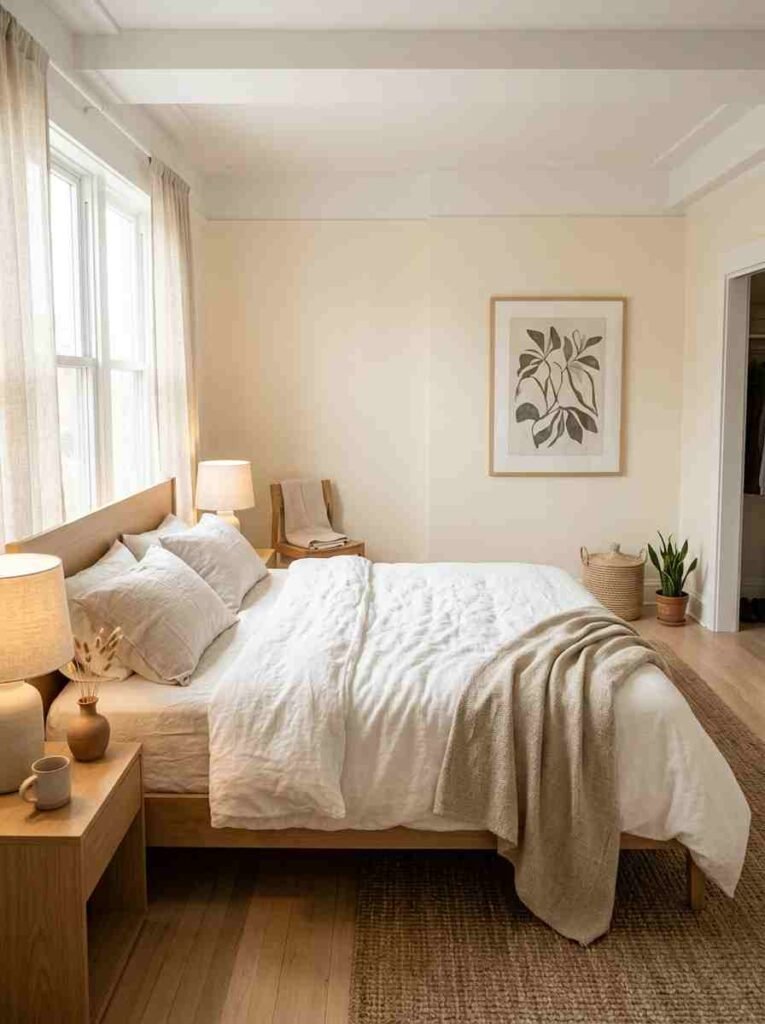
Cotton is fine. Linen is different. It wrinkles in that effortless way that makes an unmade bed look styled. IMO, it’s one of the highest-impact, lowest-effort swaps you can make.
12. One throw, placed deliberately
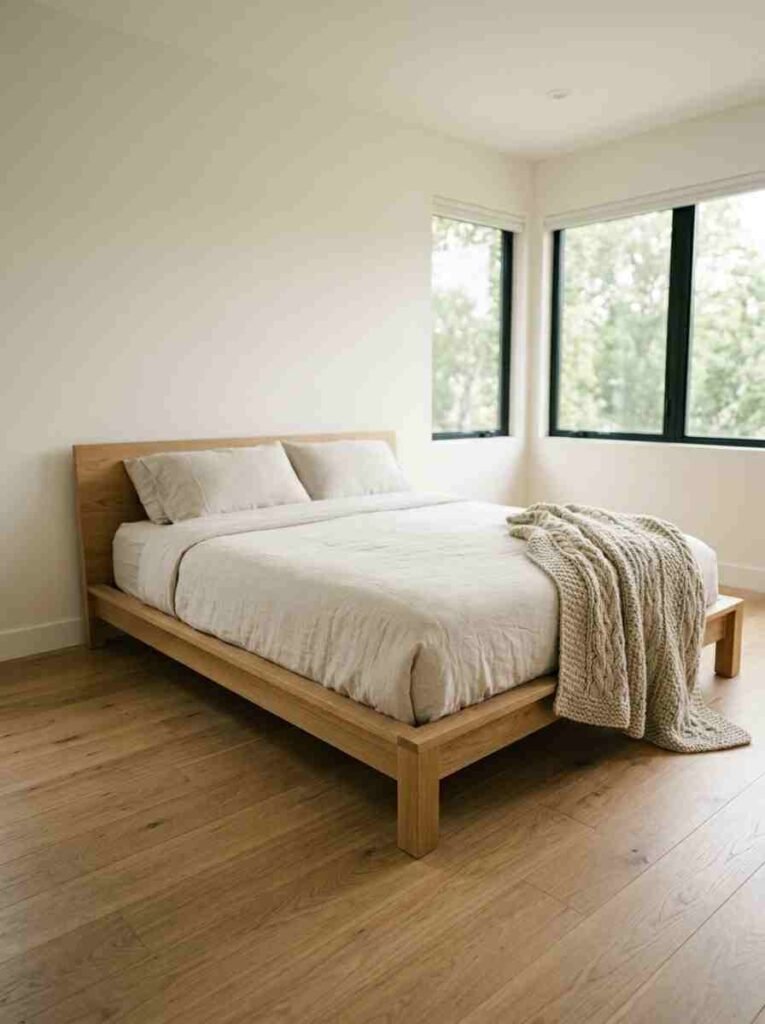
Not three pillows, two shams, a decorative throw, and a lumbar pillow. One throw blanket, draped over a corner of the bed. Let that be enough.
13. Nightstand edit
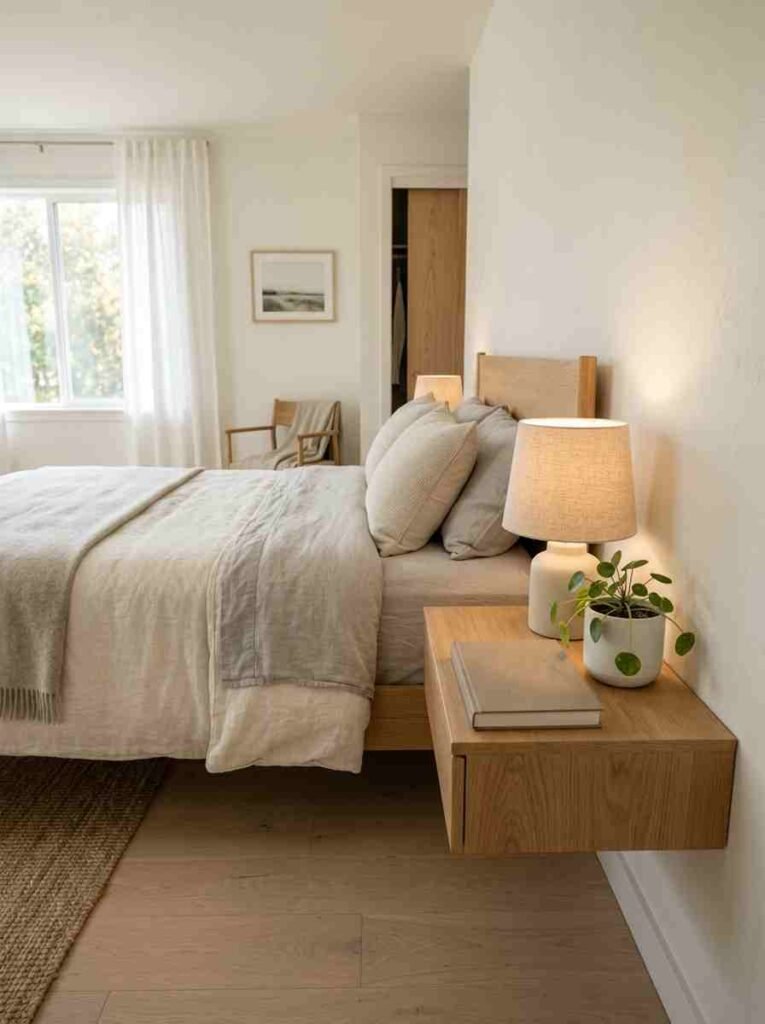
What actually needs to be on your nightstand? A lamp, maybe a book, one small plant or candle. That’s the list. Everything else finds a drawer.
27 Console Table Decorating Ideas and Easy Tips to Transform Your Home
14. Hidden storage
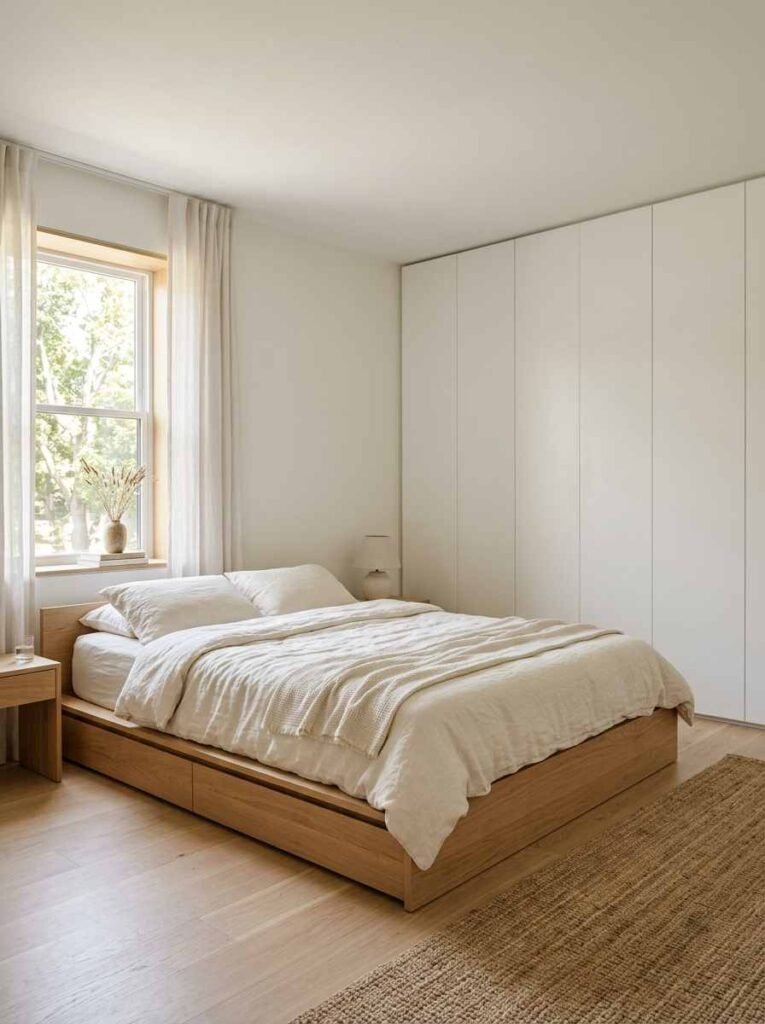
Under-bed storage boxes, built-in closet organizers, a dresser with clean lines.
The stuff that lives in your room but shouldn’t be seen — that’s what storage solves.
Living rooms
15. The single statement piece
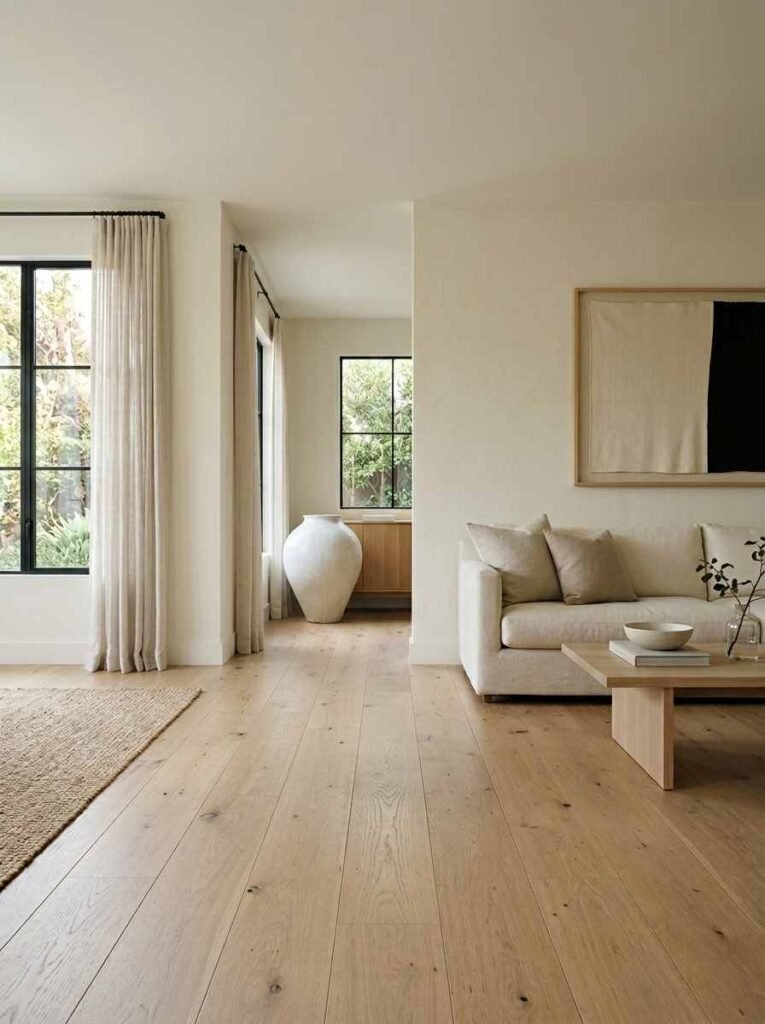
Every minimalist living room needs one thing that stops people mid-step. A sculptural lamp. A vintage ceramic vase. An interesting chair in an unexpected texture. One thing. Then everything else quiets down around it.
16. Rugs that ground the space
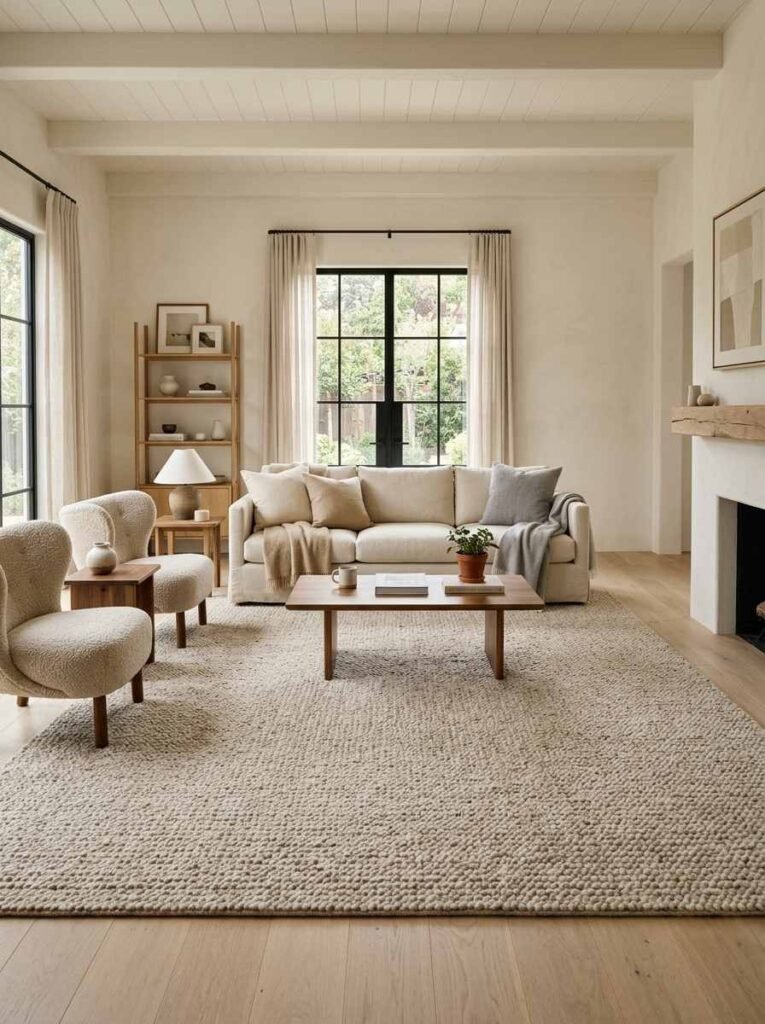
A rug in the right size (bigger than you think you need) visually anchors the furniture and makes a room feel intentional instead of assembled. Go neutral — oatmeal, ivory, warm gray.
17. Plants, but not a jungle
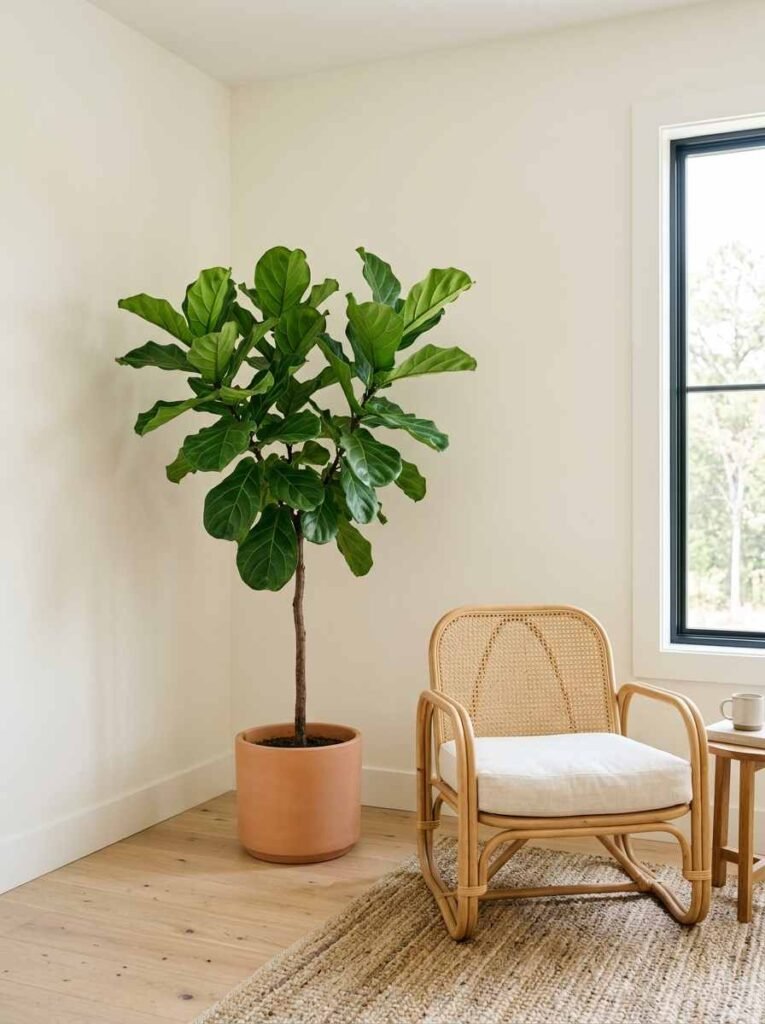
One or two well-chosen plants beat a plant shelf crowded with 12 half-dying succulents. A large fiddle leaf fig or monstera in a simple terracotta pot makes the room, not the collection.
18. Cord management
Nothing breaks a minimalist aesthetic faster than a tangle of visible cords.
Cable management clips, cord covers, or furniture positioned to hide wires — this detail matters more than people think.
19. Open shelving done right
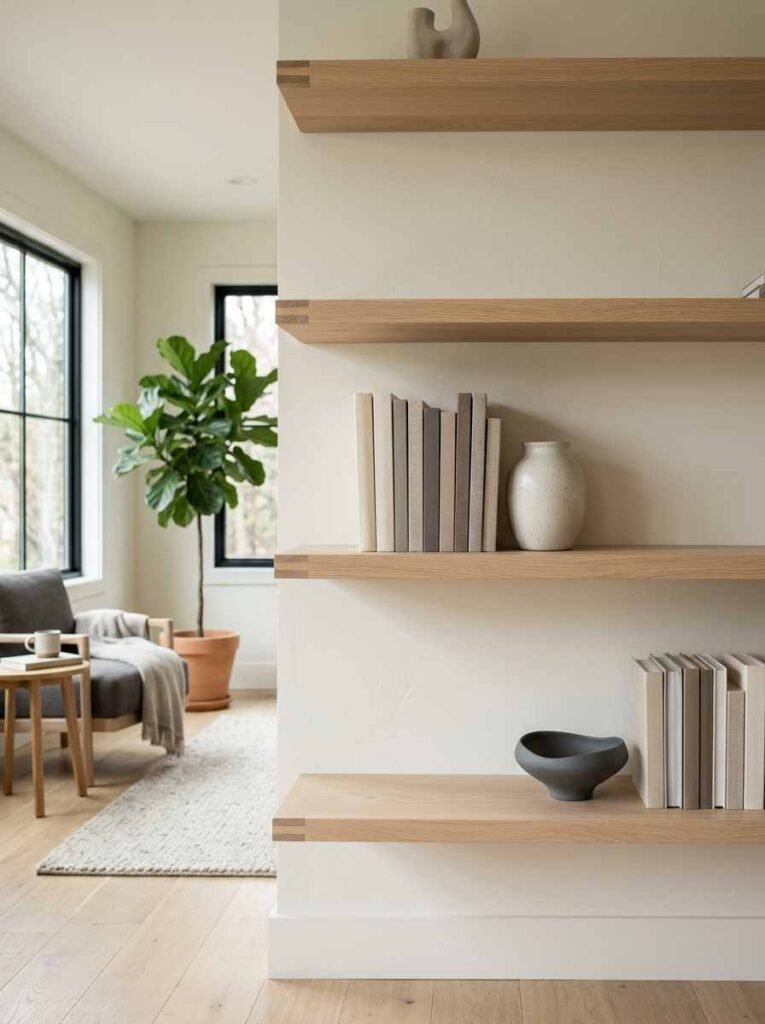
Open shelves look good when they hold fewer, better things. Books (spines turned out or color-grouped), one or two decorative objects, and empty space between them. Not a storage system masquerading as decor.
Lighting: the most underrated element
20. Warm bulbs only
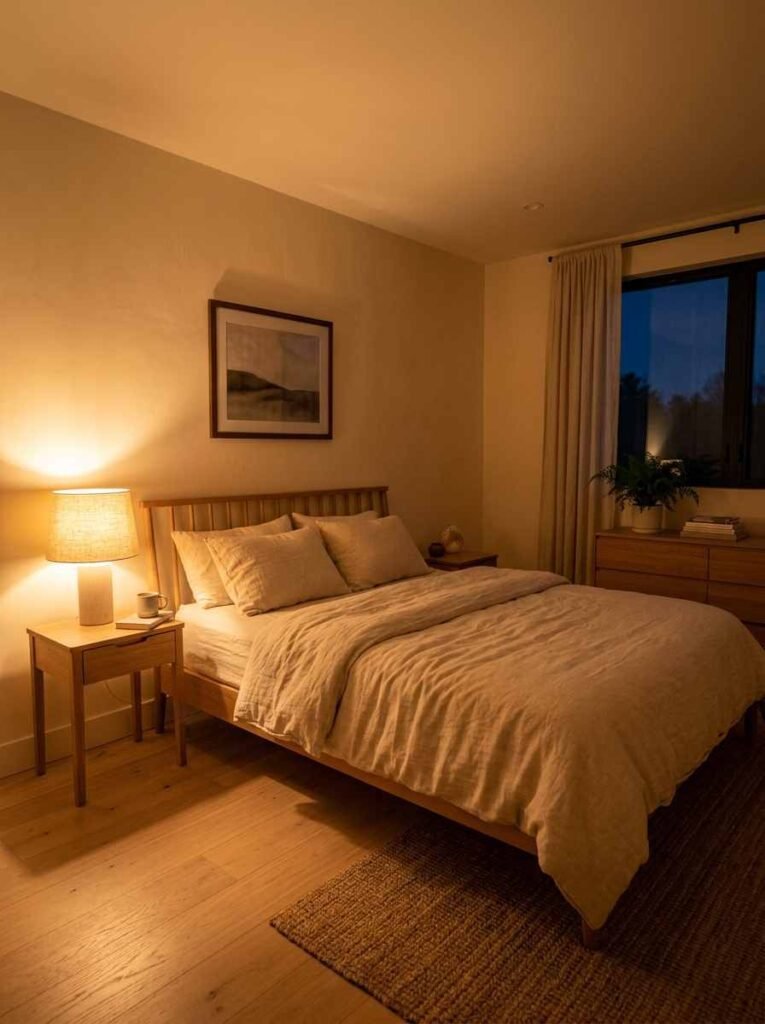
Cool white light makes everything look clinical. 2700K–3000K bulbs create that warm, cozy glow that every aspirational Pinterest photo has. This costs almost nothing to change.
21. Layer your light sources
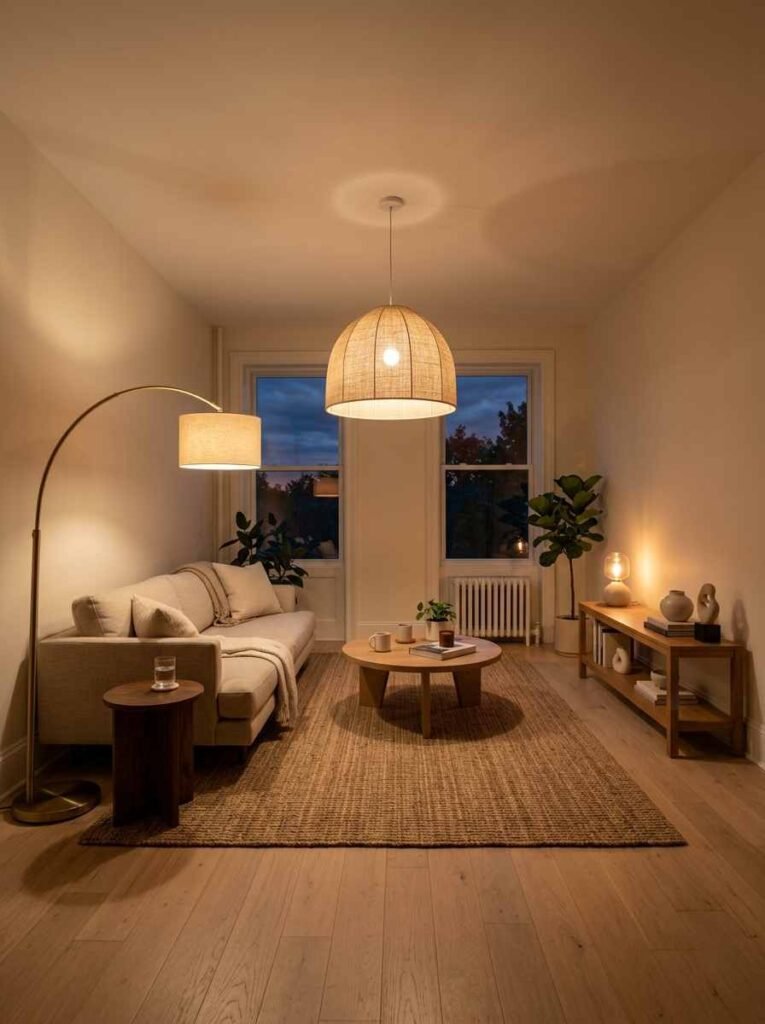
Overhead light + a floor lamp + a table lamp or two. Different heights and zones.
This creates depth and lets you control the mood of the room without resorting to a dimmer switch (though a dimmer switch is also a great idea :/).
22. Paper or linen lampshades
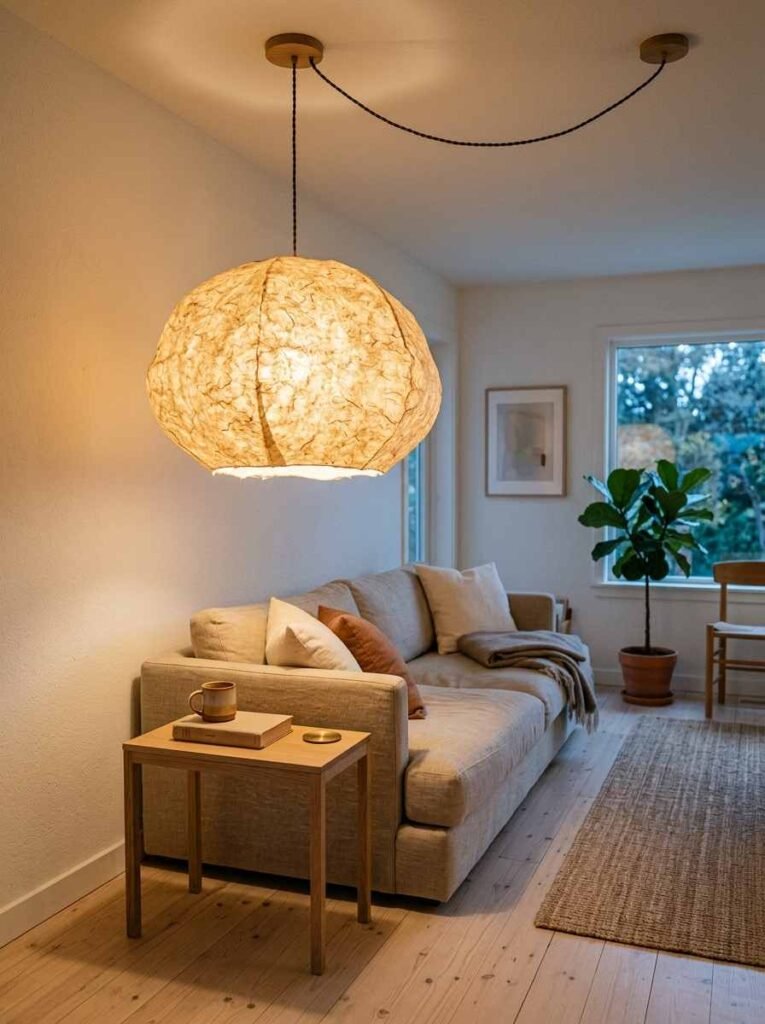
Harsh drum shades in black or white read clinical. Paper pendants and linen shades diffuse light softly and add warmth and texture without trying too hard.
23. Candles count
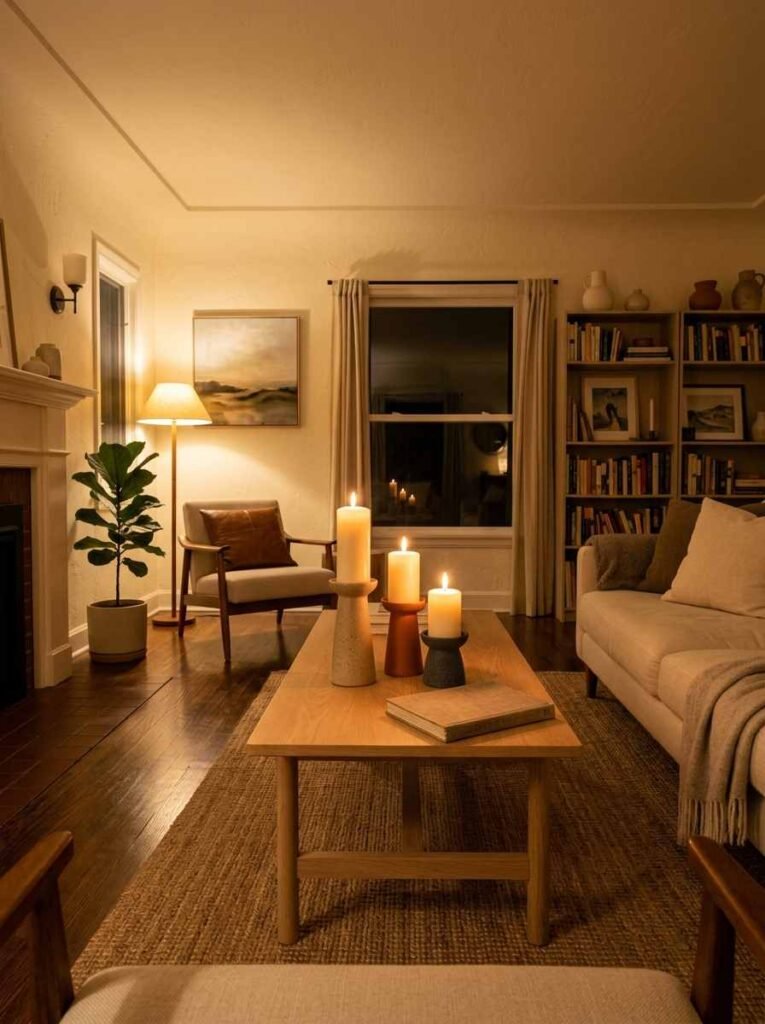
A grouping of 3 candles in similar but not matching holders is a legitimate lighting and decor choice. It adds warmth, scent, and visual interest for very little money.
Small details that tie it together
24. Ceramics and pottery
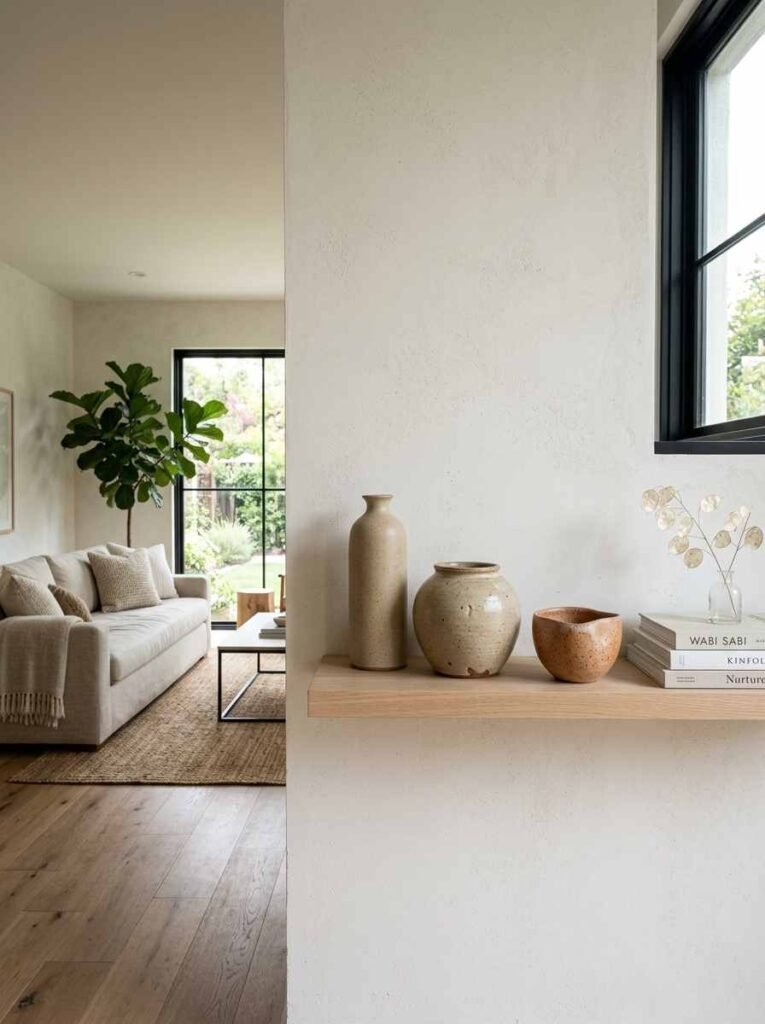
Hand-thrown ceramic vases, mugs on display, a small bowl on the coffee table. Ceramics feel made, imperfect in the right way, and they add organic texture to otherwise flat surfaces.
25. Books as decor
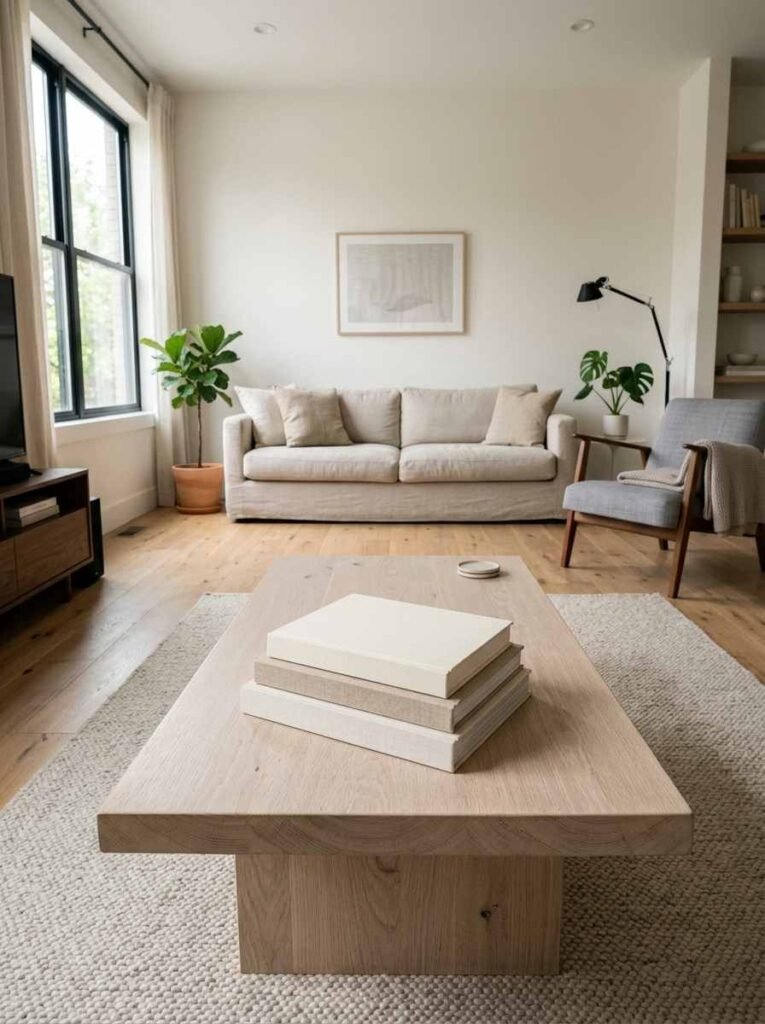
A small stack of books on the coffee table or nightstand, covers facing up. Choose them for color and texture, not just content. A muted-cover book adds more to a minimalist room than a bright yellow one.
26. Mirrors placed intentionally
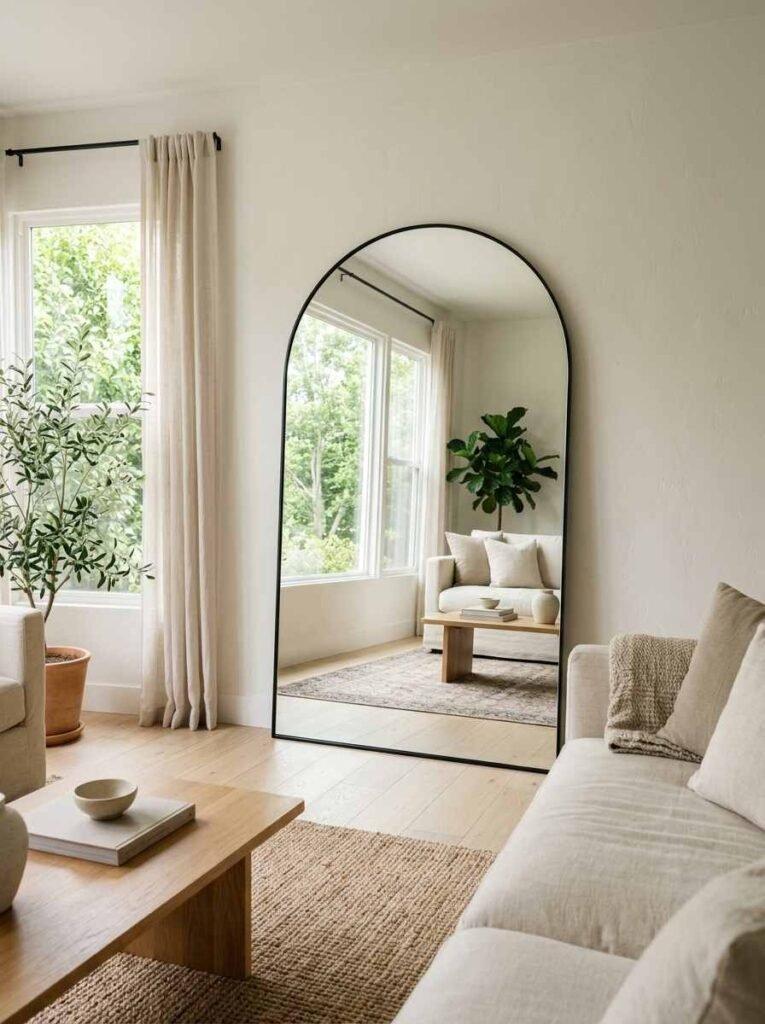
One good mirror in the right spot can double perceived natural light and make a small room feel significantly larger.
FYI: leaning a large mirror against the wall instead of hanging it reads more casual and modern.
27. Scent as the invisible layer
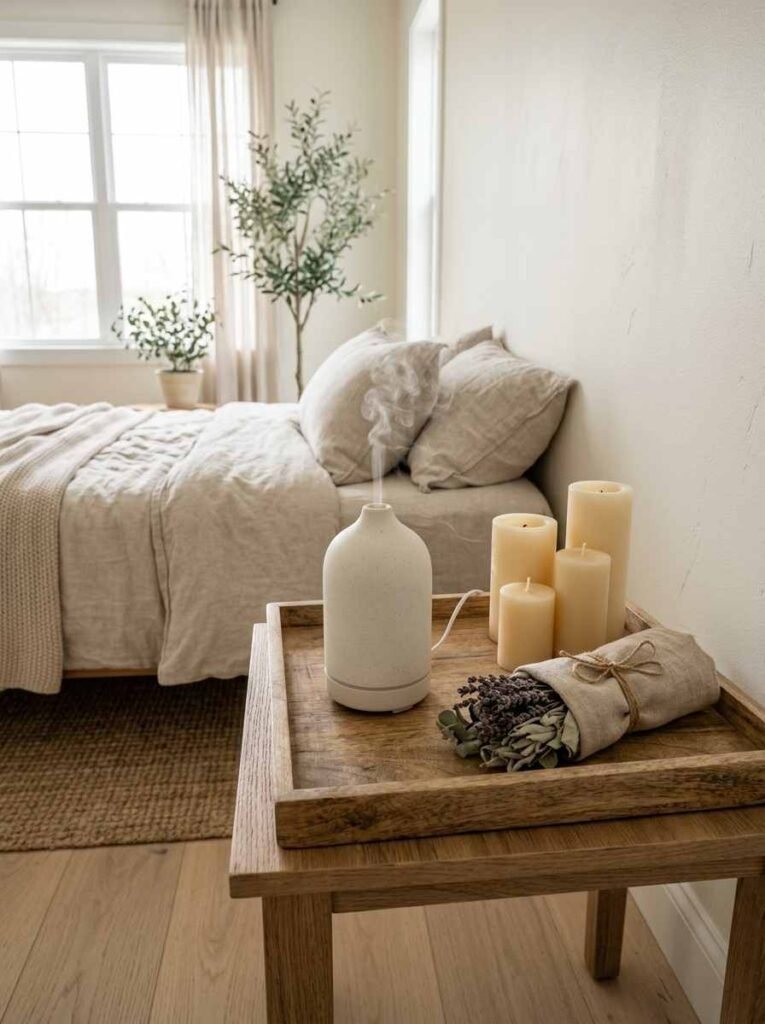
A diffuser, a good candle, a linen spray on the bedding. Scent is the part of a room you can’t photograph,
but it’s the part people remember. It makes a space feel curated without adding visual clutter.
The edit: a quick gut-check before you shop
Before you buy anything new:
- Does this replace something, or add to the pile?
- Can I see what this object looks like with nothing around it?
- Am I buying this because I need it, or because someone’s Pinterest board made me feel like I do?
That last one is a trap I fall into constantly. The goal isn’t to replicate a photo. It’s to build a space that feels genuinely yours — just with less noise.
Final thought
Minimalism is a slow edit, not a one-weekend overhaul. Start with one room, then one corner, then one shelf. Make one swap that actually matters — the linen bedding, the warm bulbs, the single plant in a good pot.
The most beautiful minimalist rooms I’ve seen weren’t designed. They were gradually cleared of everything that didn’t deserve to stay.
Your room can do that too. Start small. Be patient. It’ll get there.
