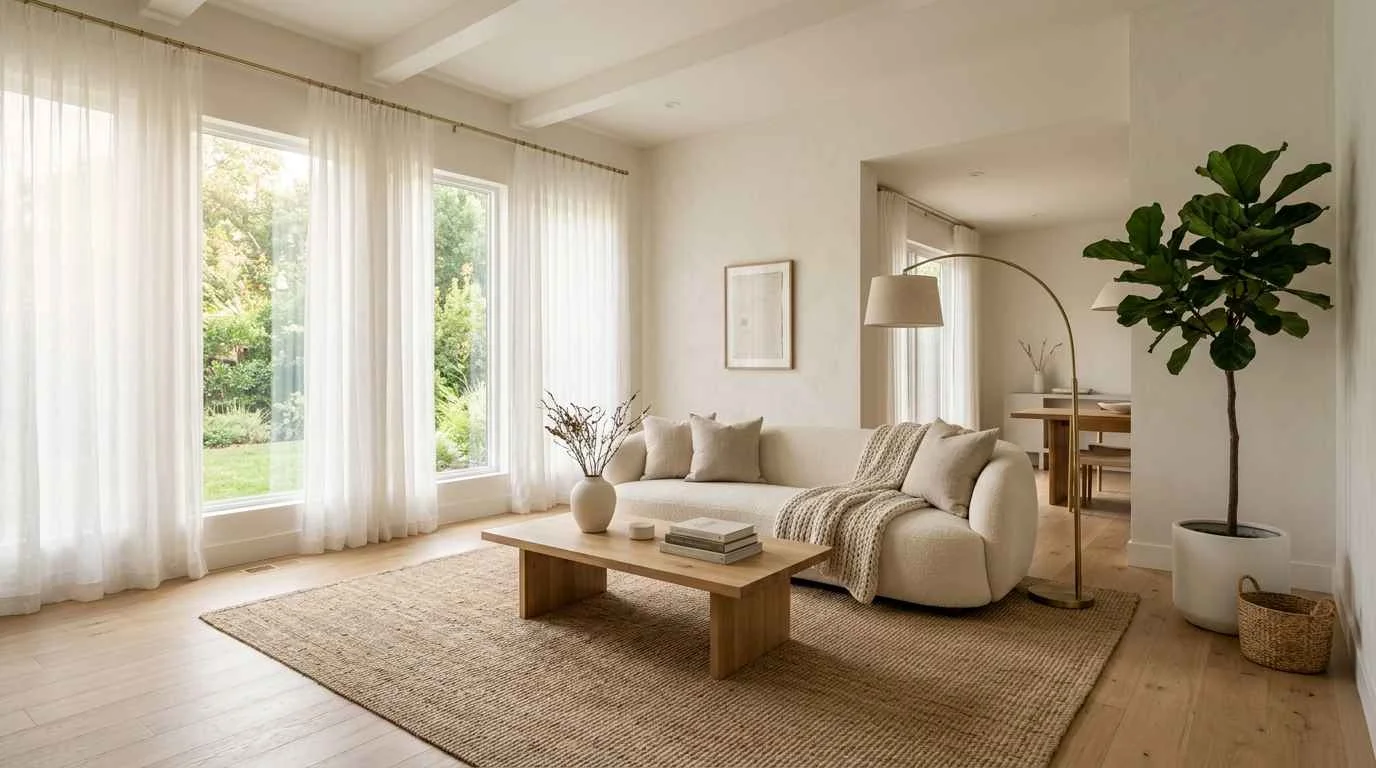
Let me guess — your living room is doing too much. Too many throw pillows. A rug that made sense in 2019.
Maybe a gallery wall that got a little out of hand. Been there.
Minimalist modern decor is the reset button most living rooms desperately need, and it’s honestly not as cold or bare as people think.
When you strip things back, you don’t lose personality. You finally get to see the good pieces you already own.
This guide walks you through 20 ideas that actually work — no vague Pinterest inspiration, just real, actionable moves.
1. Commit to a Neutral Base Palette
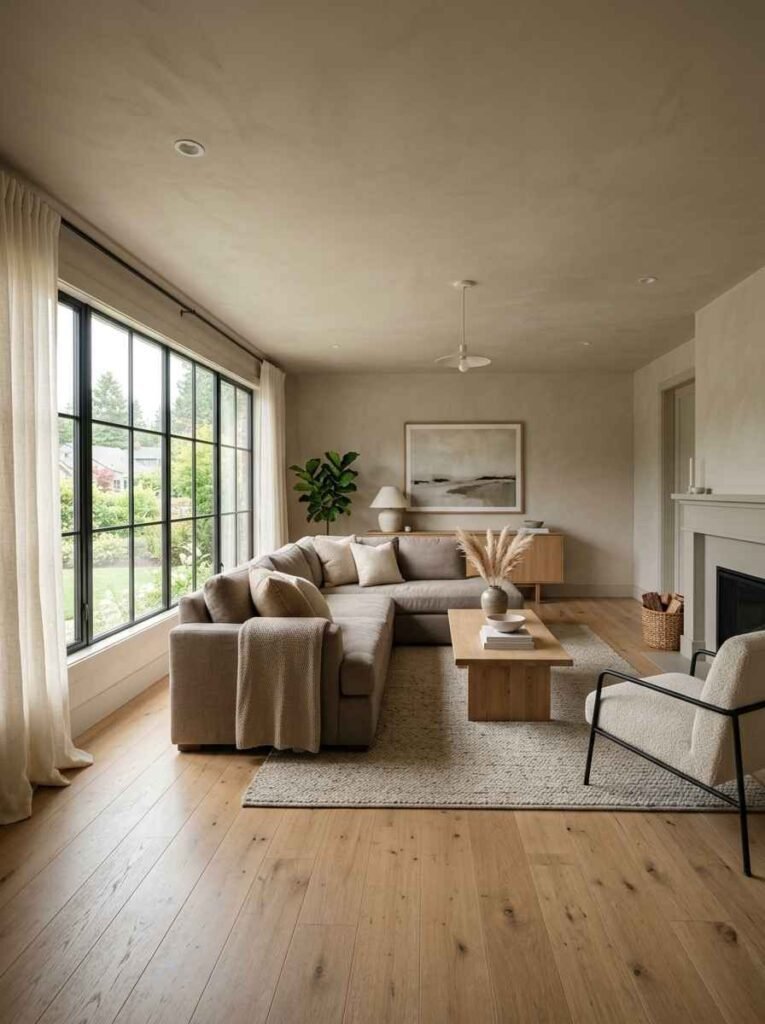
Start with the walls and floors. Warm whites, soft greiges, and muted taupes give minimalist rooms their breathing room.
If your walls are still builder beige from 2005, that’s not the same thing.
A neutral base lets every piece of furniture and art do its own work.
Pick one warm neutral and stick to it across the main surfaces — walls, trim, and ceiling can all go the same shade if you want a wrapped, cohesive feel.
2. Choose Low-Profile Furniture
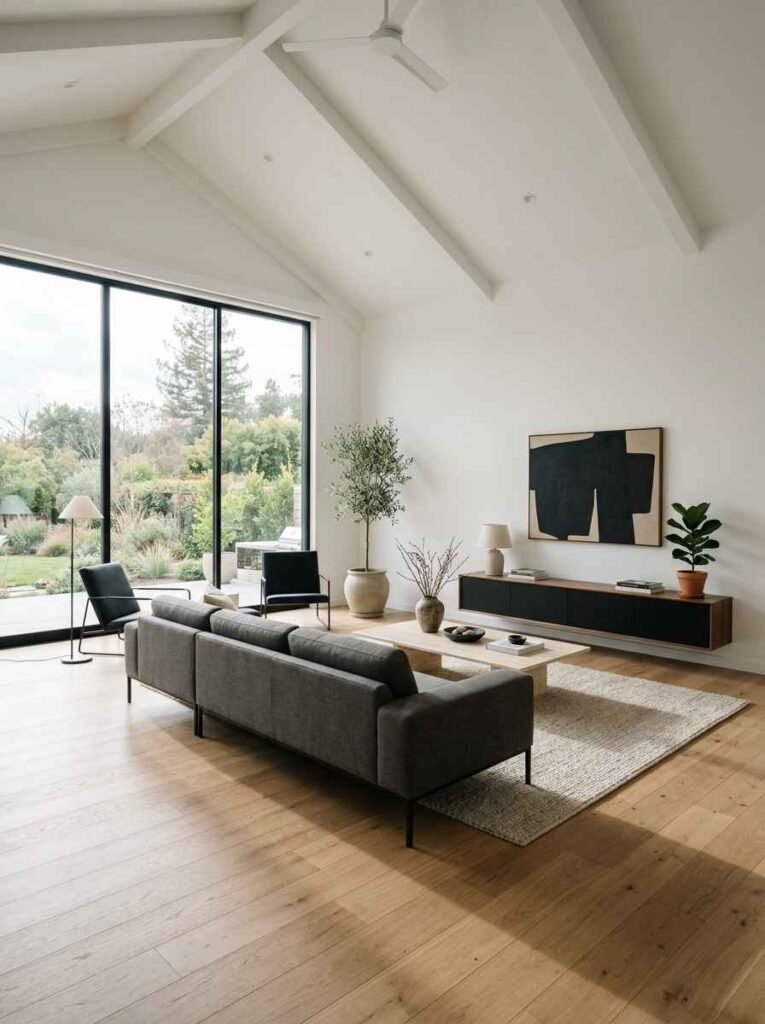
High-backed sofas and chunky sectionals are the enemy here. Low-slung furniture keeps the eye line open and makes a room feel twice its size.
Look for sofas with thin legs and clean rectangular frames — nothing with rolled arms or tufting.
FYI, the “floating” look you see in every good minimalist room comes from furniture with legs. Anything skirted to the floor traps visual weight. Lift it up.
3. Edit Your Decor Down to the Best Pieces
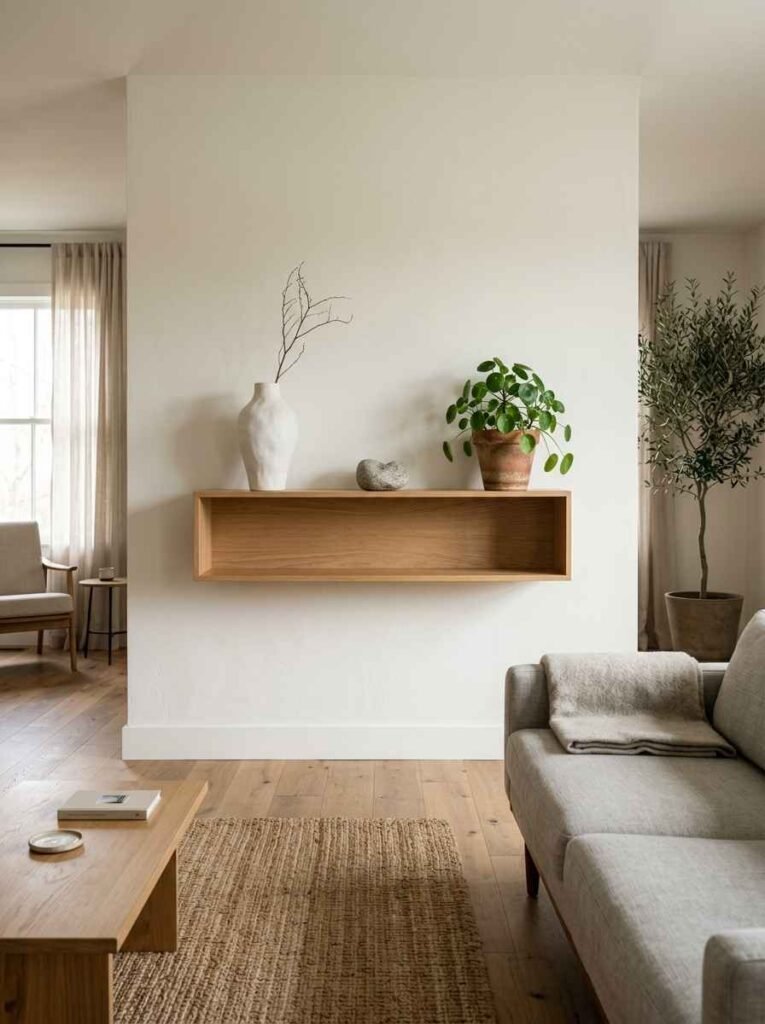
Here’s the rule I go back to constantly: if you can’t remember why you bought something, it leaves.
Minimalist rooms work because every single object is intentional. Not sparse — intentional.
Pull everything off your shelves and surfaces. Put back only what you genuinely love. One sculptural object per surface is usually the right call.
Group 2-3 pieces with height variation if you want a little more visual interest.
4. Use a Single Statement Sofa
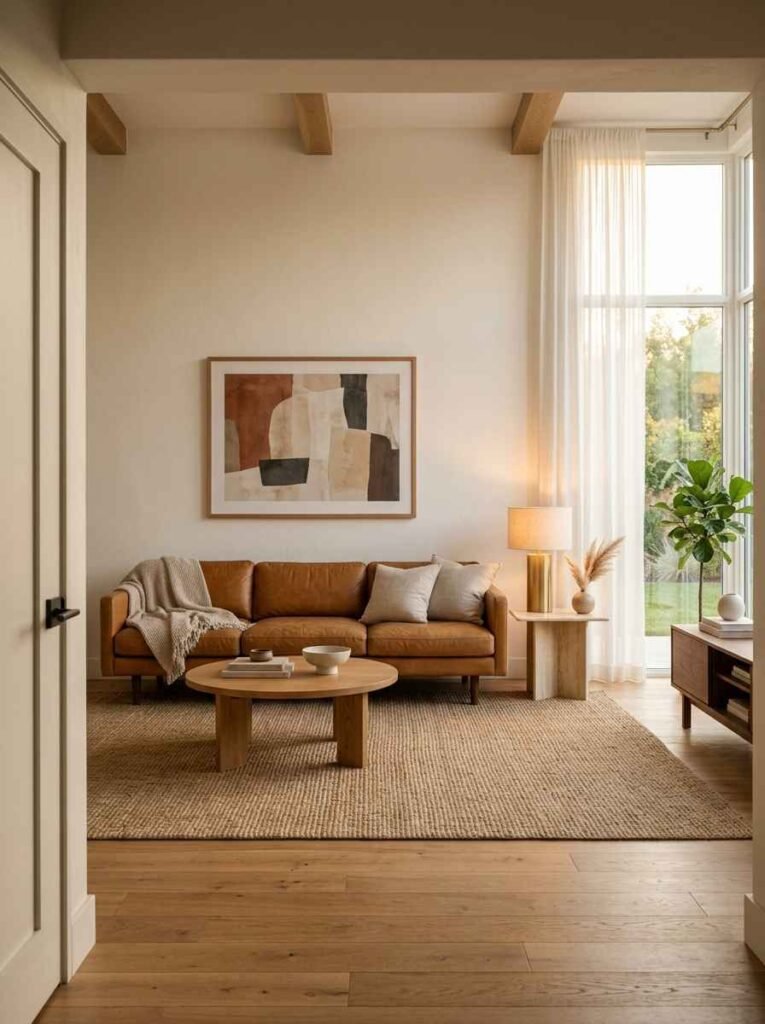
Your sofa is the anchor. In a minimalist room, it earns its place by being one great choice, not four decent ones shoved together.
Pick a color that either disappears into your neutral base or reads as a clear, deliberate accent.
Cream boucle, deep charcoal linen, camel leather — these all work. What doesn’t work is a sofa that’s “sort of gray-green” because you were playing it safe. Commit to the choice.
5. Bring in Natural Materials
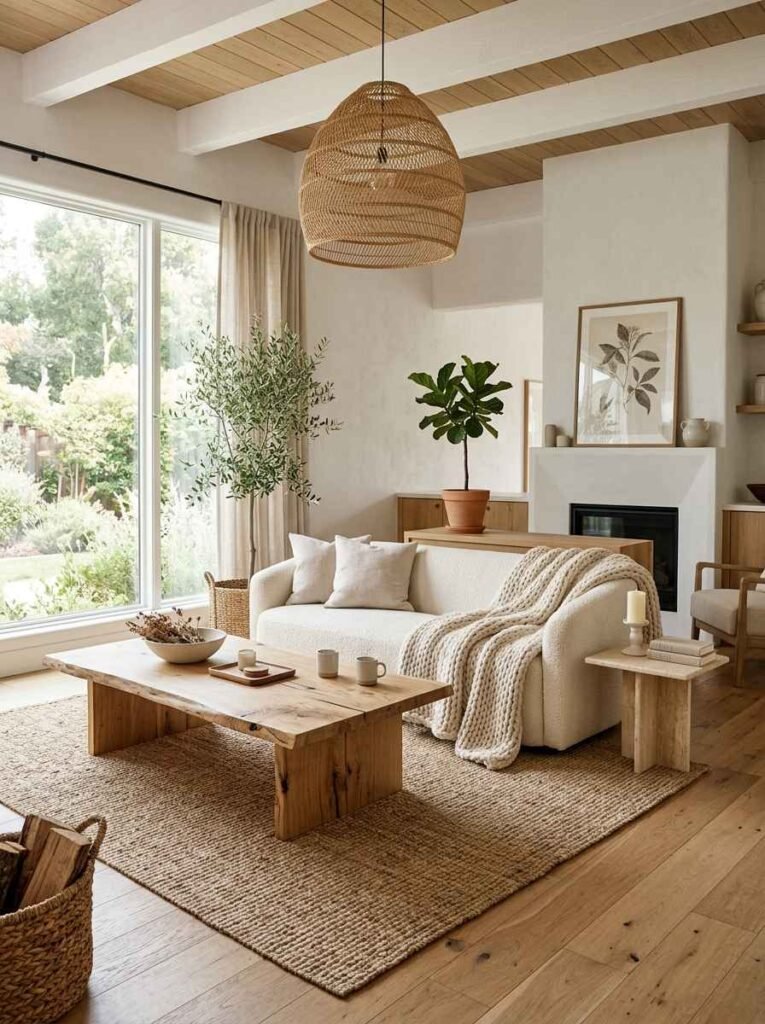
Wood, Stone, and Linen
Natural materials keep minimalist rooms from going sterile. Raw oak, marble, rattan, jute, and linen all add texture without adding clutter. The material IS the decor.
A live-edge wood coffee table, a chunky linen throw, a travertine side table — these things photograph beautifully and feel even better in person.
Pinterest is full of this look for good reason.
6. Go Monochromatic with Texture Layering
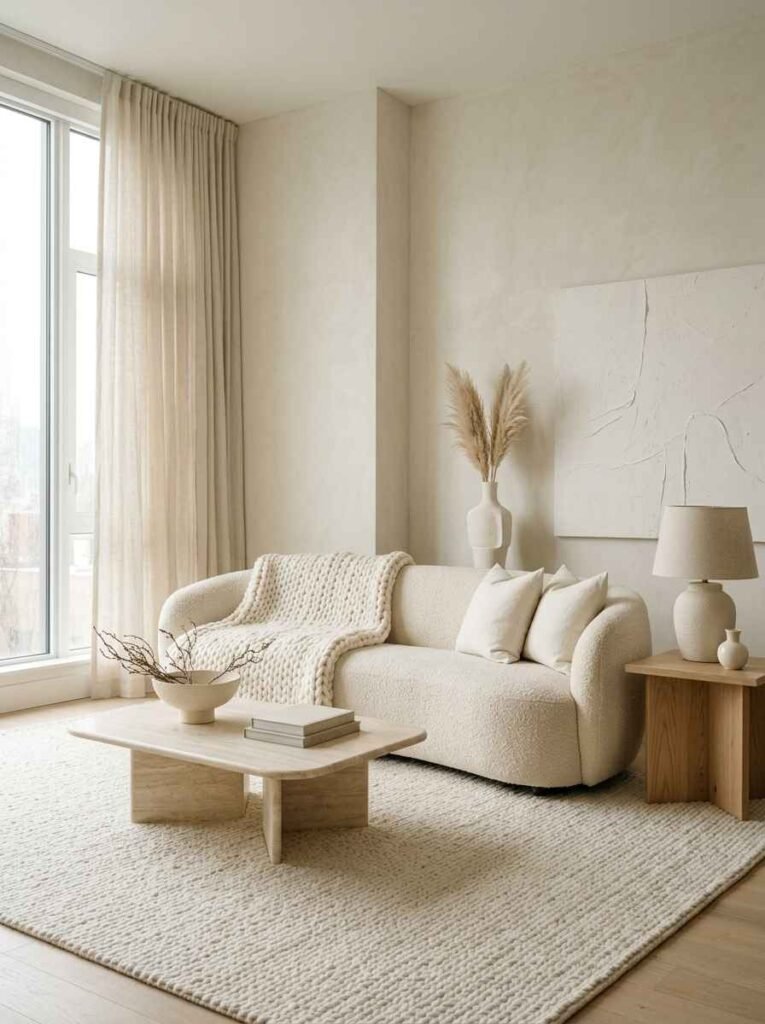
One of the most underrated minimalist moves is building an entire room in one color family, then varying the textures.
Think: ivory walls, cream sofa, off-white boucle pillow, natural linen curtains.
It sounds like it should be boring. It isn’t. The play of matte vs. sheen vs. nubby vs. smooth creates visual depth that a rainbow of throw pillows never could. This look is genuinely hard to mess up.
7. Invest in One Piece of Quality Art
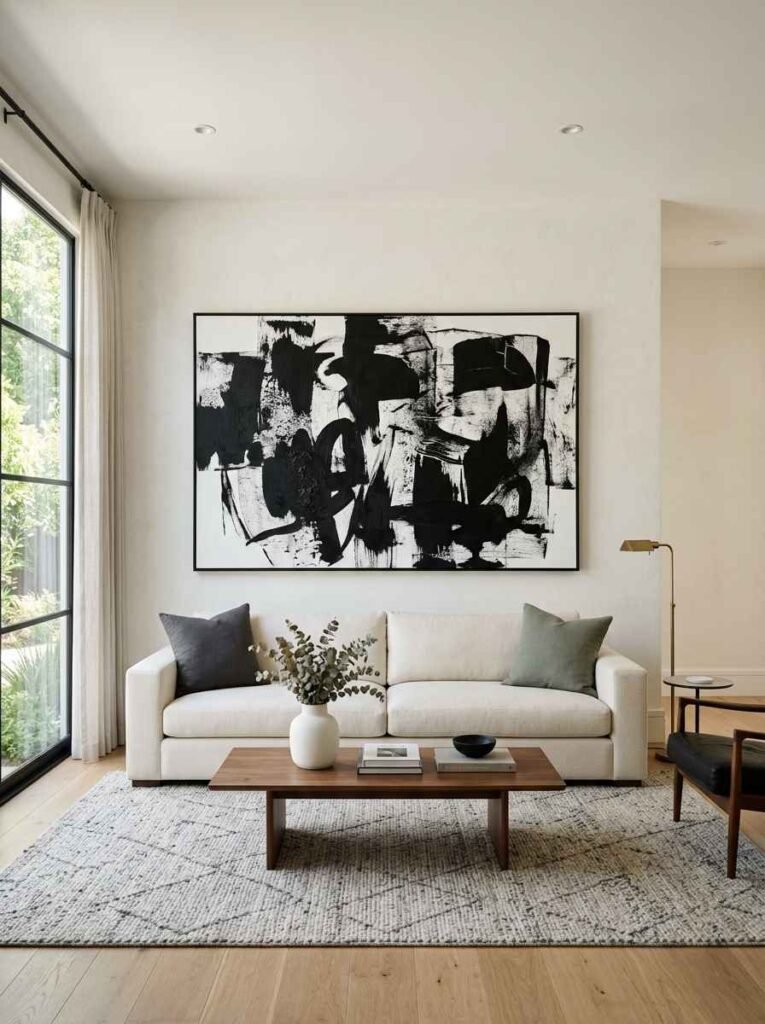
Gallery walls are a perfectly fine choice right up until they aren’t. For minimalist modern rooms, one large-scale artwork creates more impact than a grid of twelve small ones.
Abstract line art, a single oversized landscape print, a black-and-white photo printed at 40×50 — any of these hung at proper height (center at eye level, roughly 57-60 inches from floor) will anchor the room immediately.
8. Choose Curtains That Actually Reach the Ceiling
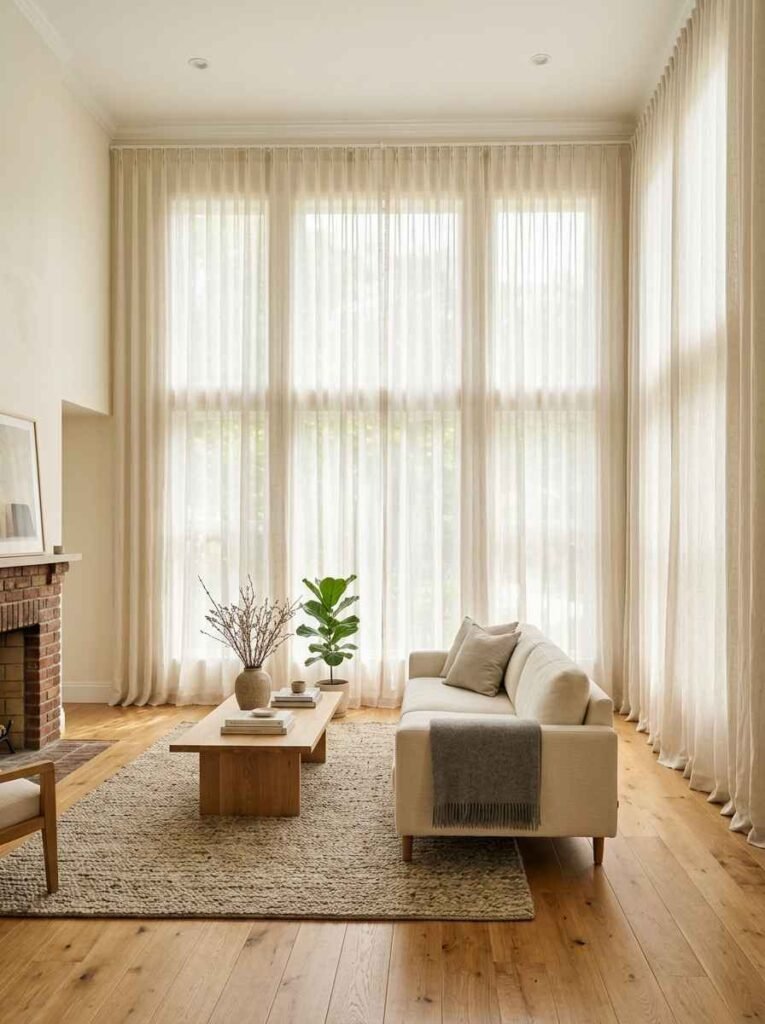
Short curtains are one of the fastest ways to make a room feel cramped. Floor-to-ceiling drapes, hung as close to the ceiling as possible, add instant height and elegance.
23 Entryway Console Table Ideas That Transform Any Small Space
Stick with simple panels in a solid neutral — linen, cotton, or a sheer if you want light. No prints, no blackout liners in a living room unless you have a specific reason. Let the light move through.
9. Pick the Right Rug Size
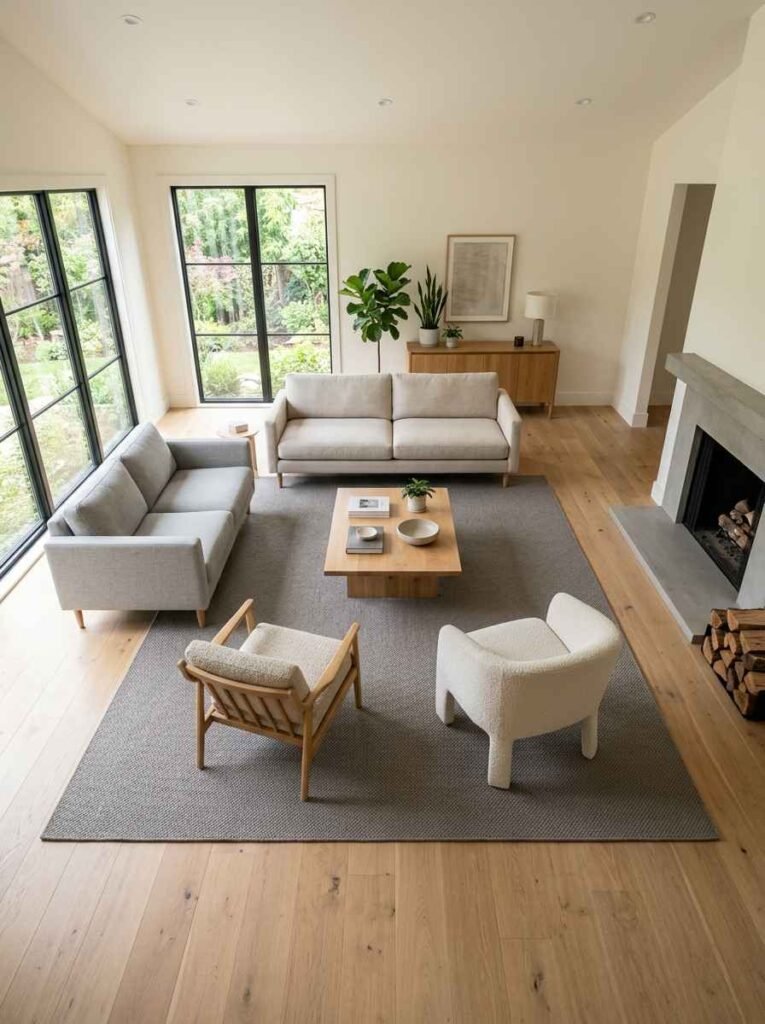
IMO, undersized rugs are the single most common decorating mistake in living rooms.
The rug should be large enough that at least the front legs of every major seating piece sit on it. Most people go too small.
In a minimalist room, a simple flat-weave or low-pile rug in a solid or subtle geometric works best. No busy Persian patterns, no high-pile shags. Clean lines on the floor, always.
| Room Size | Recommended Rug Size |
|---|---|
| Small (under 150 sq ft) | 5×8 ft minimum |
| Medium (150-250 sq ft) | 8×10 ft or 9×12 ft |
| Large (250+ sq ft) | 9×12 ft or larger |
10. Use Statement Lighting
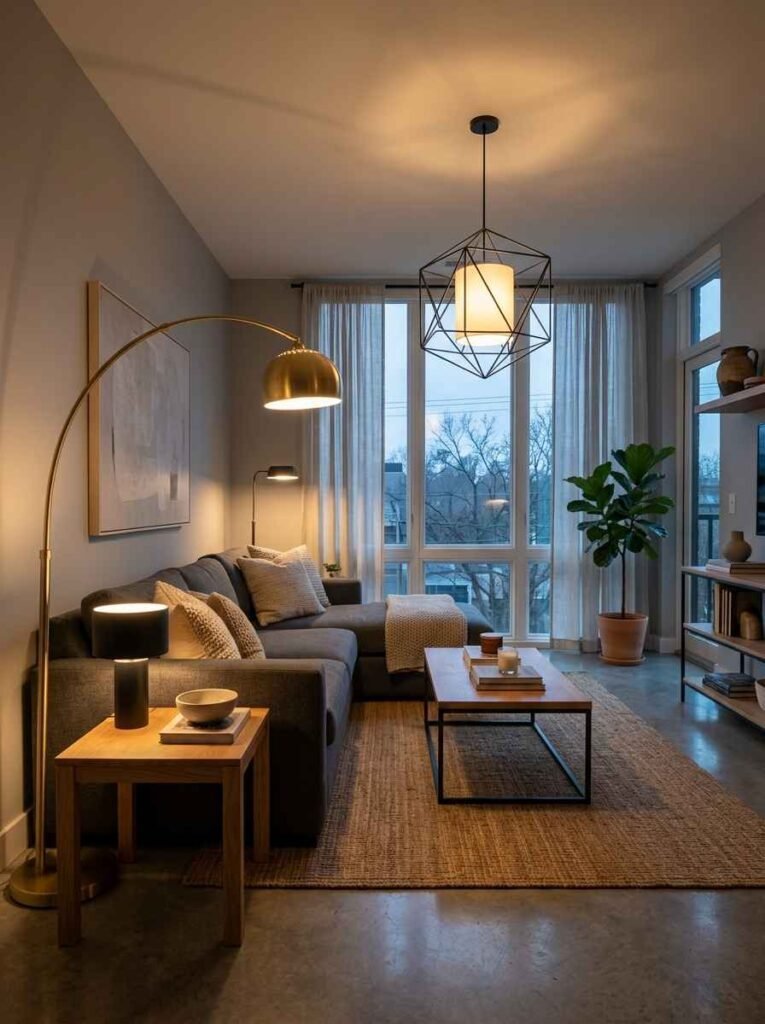
Overhead lighting in most homes is terrible. A single ceiling fixture in the center of the room casts flat, unflattering light.
Layer your lighting: a floor lamp in one corner, a table lamp on a side table, and something sculptural overhead if you have the ceiling height.
For minimalist modern rooms, geometric pendants, curved arc floor lamps, and simple cylindrical table lamps all read as intentional. Anything with a fussy shade or decorative finial does not.
11. Embrace Negative Space
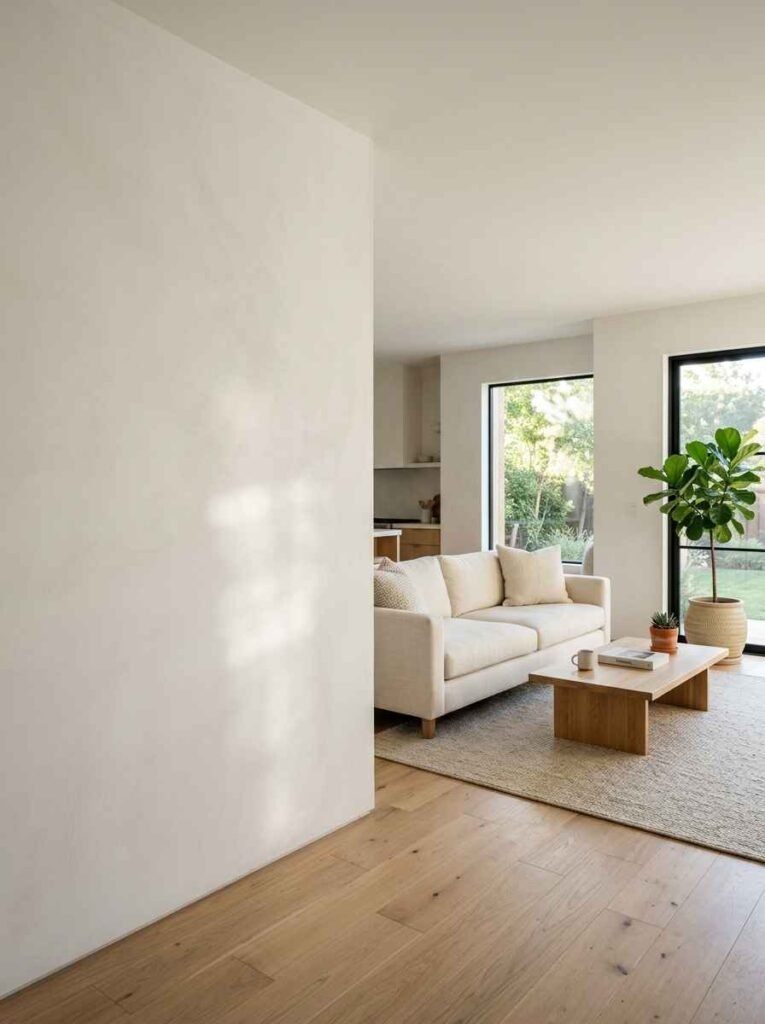
Here’s what separates a truly minimalist room from one that just has fewer things: the empty space is treated as a design element. A bare wall isn’t a failure. It’s breathing room.
Leave one wall completely empty. Resist the urge to fill it. After two weeks of living with it, you’ll either realize it’s perfect or you’ll know exactly what one thing belongs there.
12. Add Plants — But Not Too Many
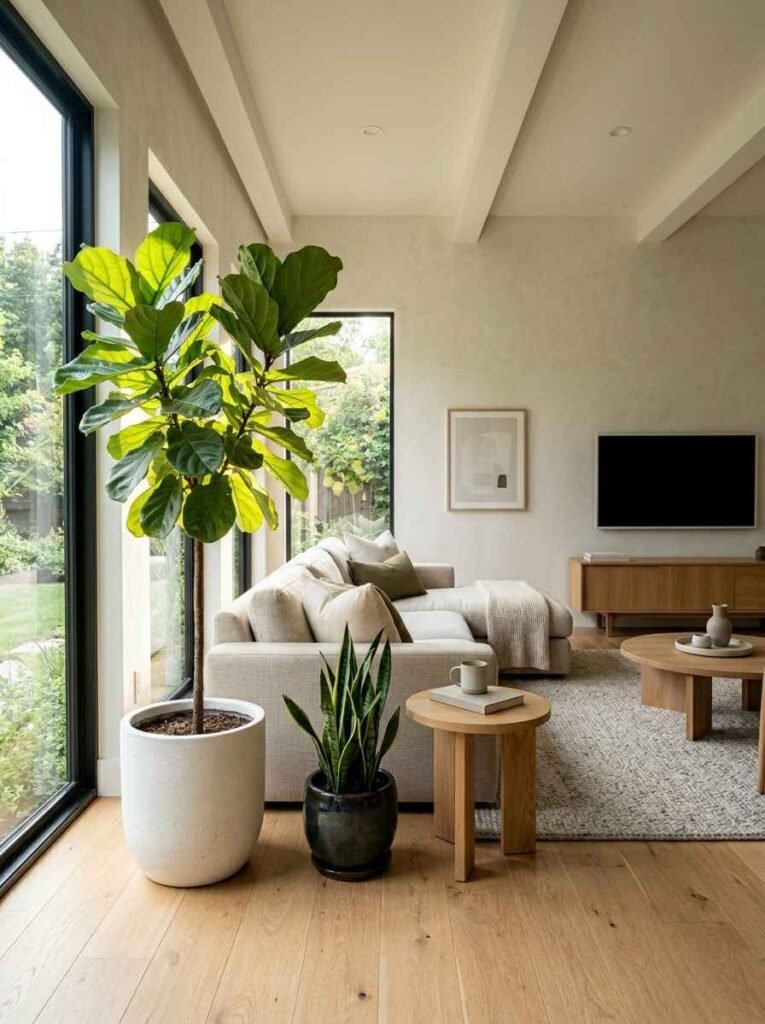
One or two well-chosen plants do more for a minimalist room than a dozen little ones scattered around.
Think a tall fiddle leaf fig, a sculptural snake plant, or a pothos in a ceramic pot. The vessel matters as much as the plant.
Terracotta, matte white, or dark glazed ceramic pots all work. Plastic nursery pots on the floor? Hard pass. This is a styled space, not a greenhouse. 🙂
13. Keep the Coffee Table Simple
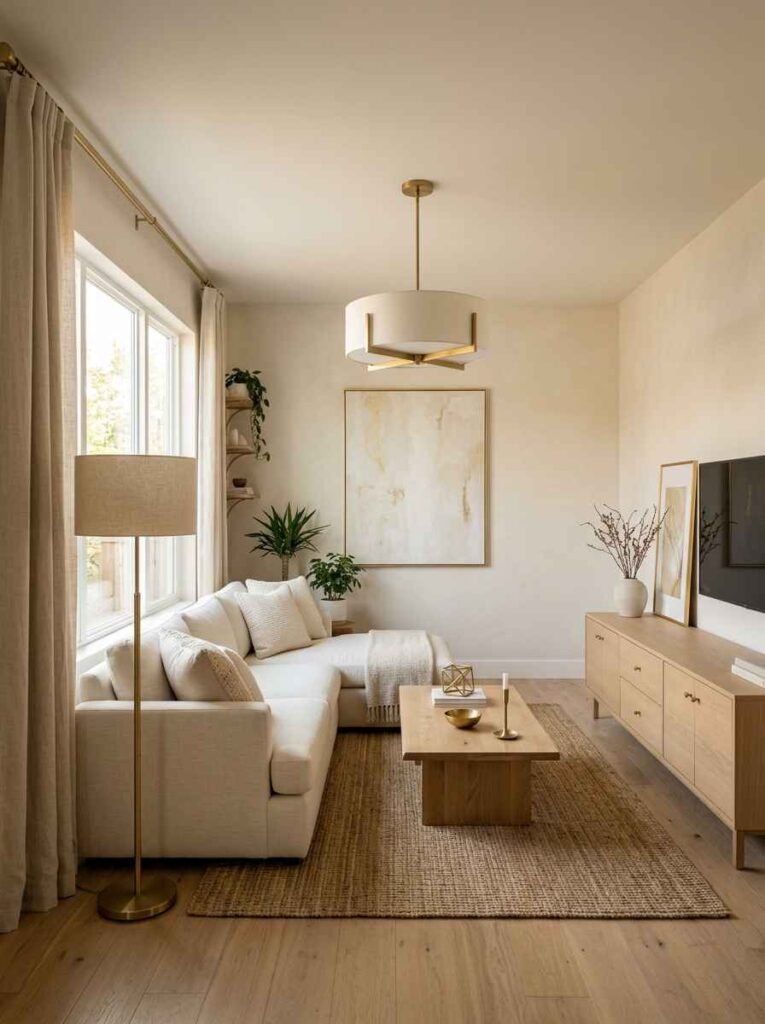
The coffee table is where styling goes wrong fastest. Three objects maximum: one tall, one flat, one natural. A stack of books, a small tray, one sculptural object. Done.
Choose a coffee table with clean geometry — a rectangular slab, a round travertine top, a simple square in matte black.
Avoid legs that compete, glass tops that show every fingerprint, or surfaces too small for the seating arrangement.
14. Create a Focal Point That Isn’t the TV
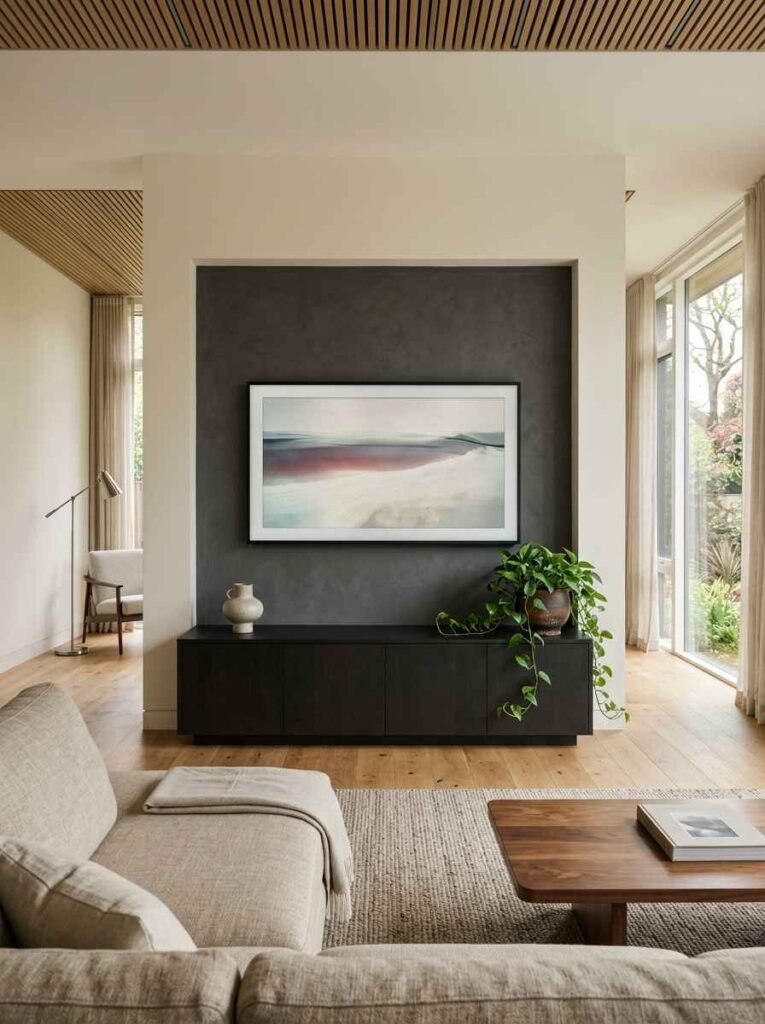
The TV is probably the biggest visual challenge in any living room. In a minimalist modern space, you either conceal it or frame it.
Large artwork alongside the TV helps it read as one composed panel rather than a black rectangle dominating everything.
Consider a TV console that extends wider than the TV itself, grounding the whole wall. A few curated objects on the console draw the eye horizontally rather than straight at the screen.
15. Choose Hardware and Fixtures in a Single Metal Finish
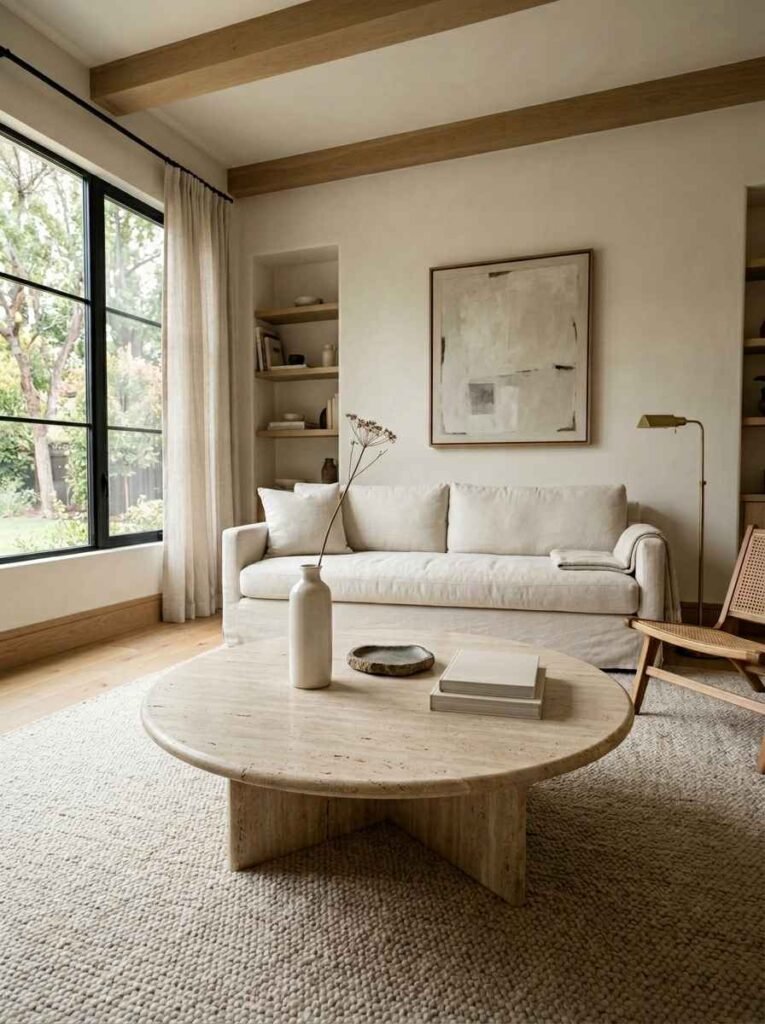
Mixing metals is fine in small doses, but in a minimalist room, committing to one finish reads as intentional.
Brushed brass, matte black, and polished nickel are the most popular right now for good reason — they photograph clean.
This means lamp bases, cabinet pulls, curtain rods, and any decorative objects should share a finish family. It’s a detail most people don’t notice consciously, but everyone responds to subconsciously.
16. Hide the Clutter (For Real This Time)
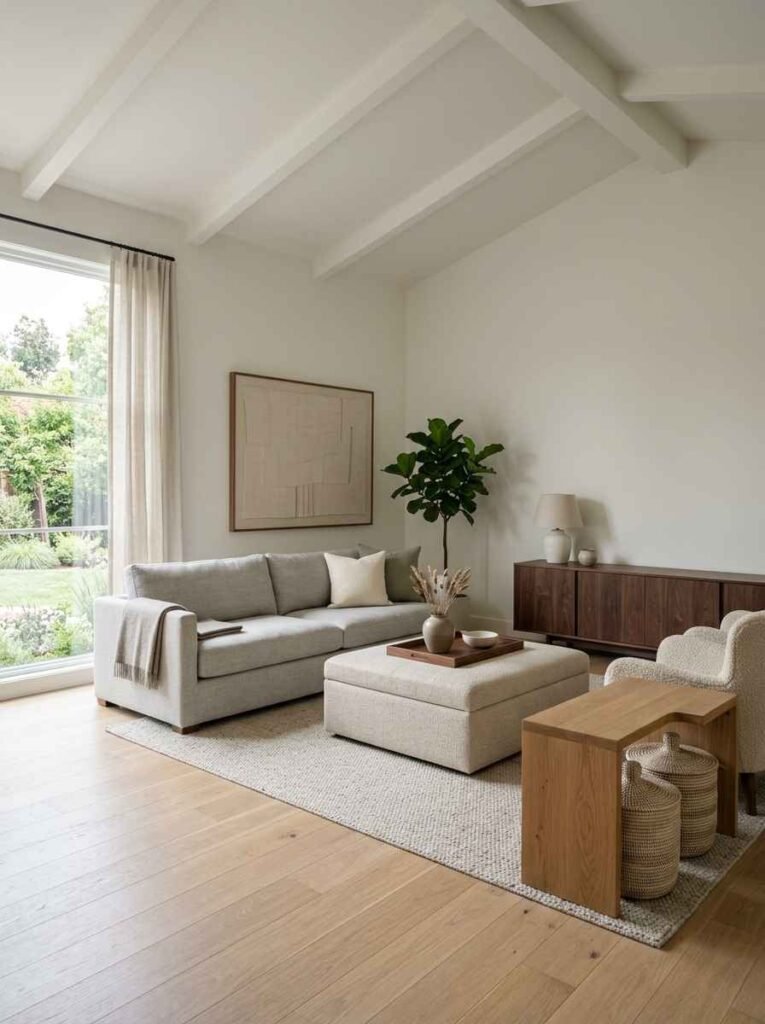
Minimalism isn’t about owning less. It’s about seeing less. Closed storage is your best friend: media consoles with doors, ottomans with interior storage, baskets with lids.
Remotes, chargers, magazines, kids’ things — all of it gets a home that closes. The living room is the room people see first. It deserves to look like someone thought about it. :/
17. Layer Throw Blankets and Pillows Intentionally
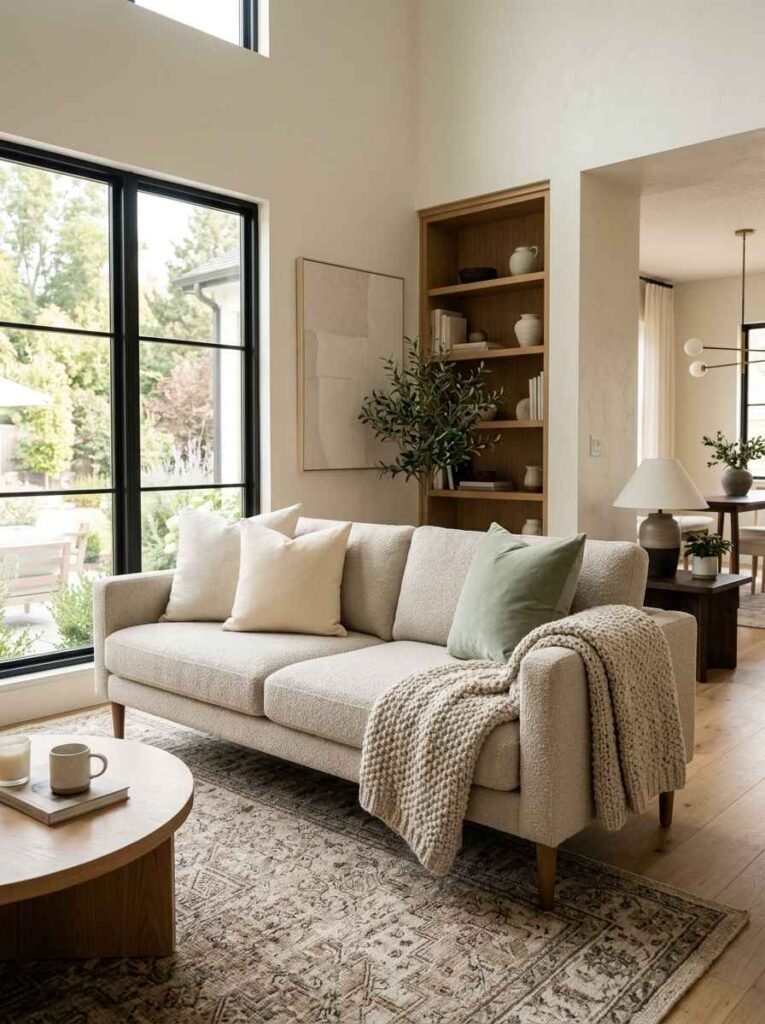
Two to four pillows on a sofa. One or two throws, folded or casually draped. That’s it. Every pillow should share a color or texture relationship with the others.
For minimalist modern rooms: solid neutrals, subtle textures, and one slightly bolder accent pillow if you want contrast.
No mixed prints, no 8-pillow arrangements that require 20 minutes to recreate after sitting down.
18. Incorporate Mirrors Strategically
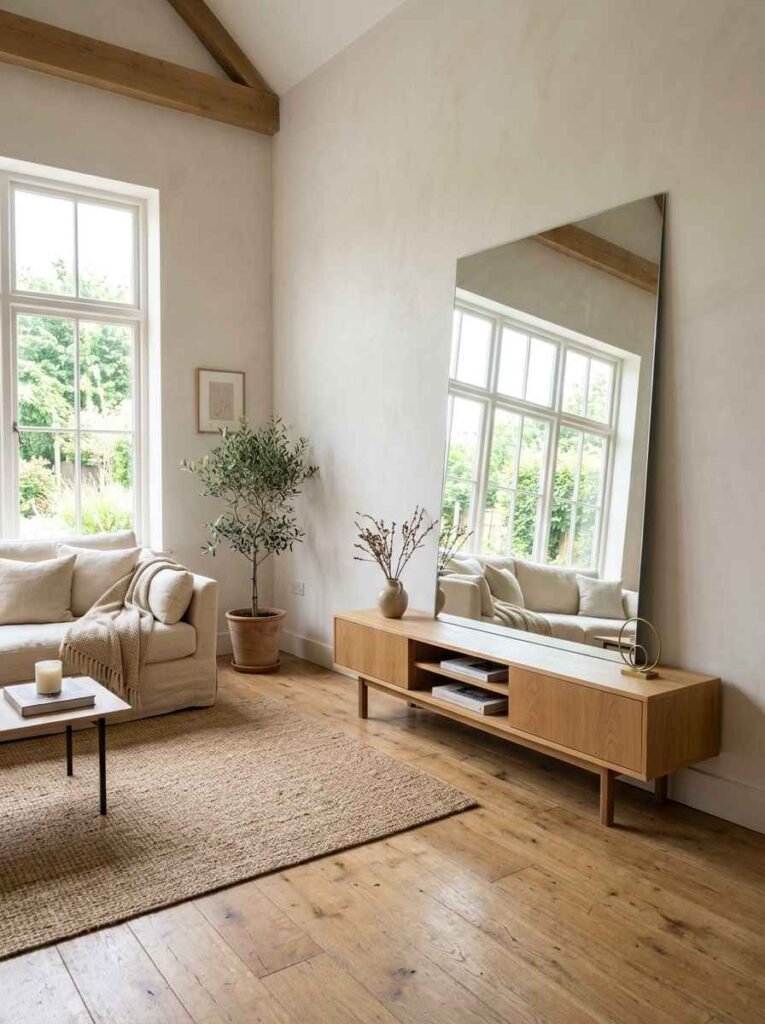
A well-placed mirror doubles your light and makes any room feel larger. In a minimalist space, one large mirror does more than a collection of smaller ones. Lean it against a wall for a casual, editorial look, or mount it above a console for something more structured.
Simple frames — thin metal, natural wood, or frameless altogether — work best. An ornate gilt mirror is a great choice in another style of room. Not this one.
19. Consider the Flow of the Room
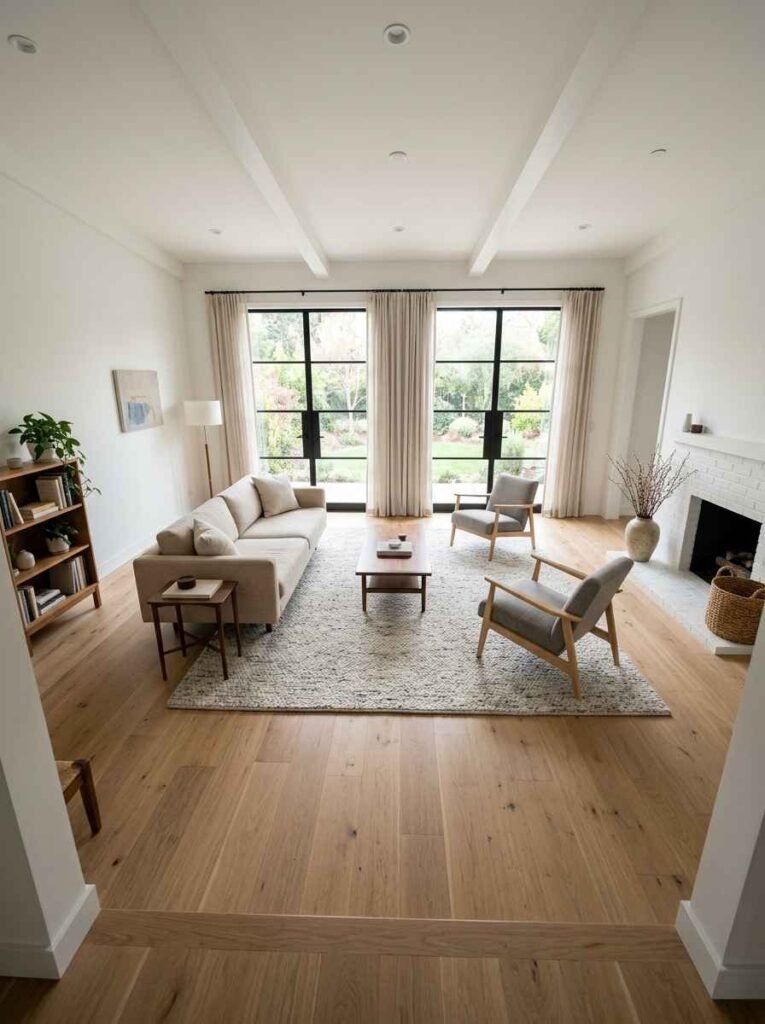
Minimalist rooms feel effortless because the furniture arrangement allows you to move through the space naturally.
Ever walked into a living room and immediately felt anxious? That’s usually a traffic flow problem.
Pull furniture away from walls slightly. Aim for 30-36 inches of walkway between pieces. Floating your sofa in the room rather than pushing it to the wall almost always improves the feel of a space dramatically.
20. Refresh Seasonally with Small Swaps
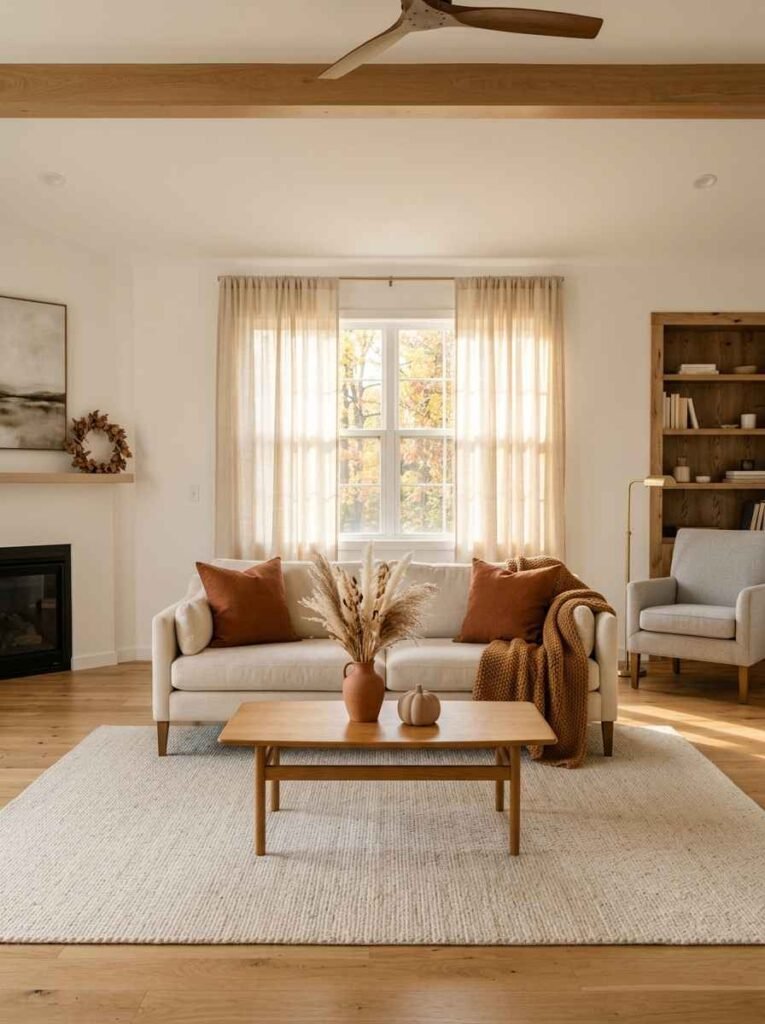
The beauty of a minimalist base is how little it takes to refresh it. Swap out two pillows and a throw in autumn, add a new plant in spring, switch the artwork in one spot for summer.
The bones of the room stay solid.
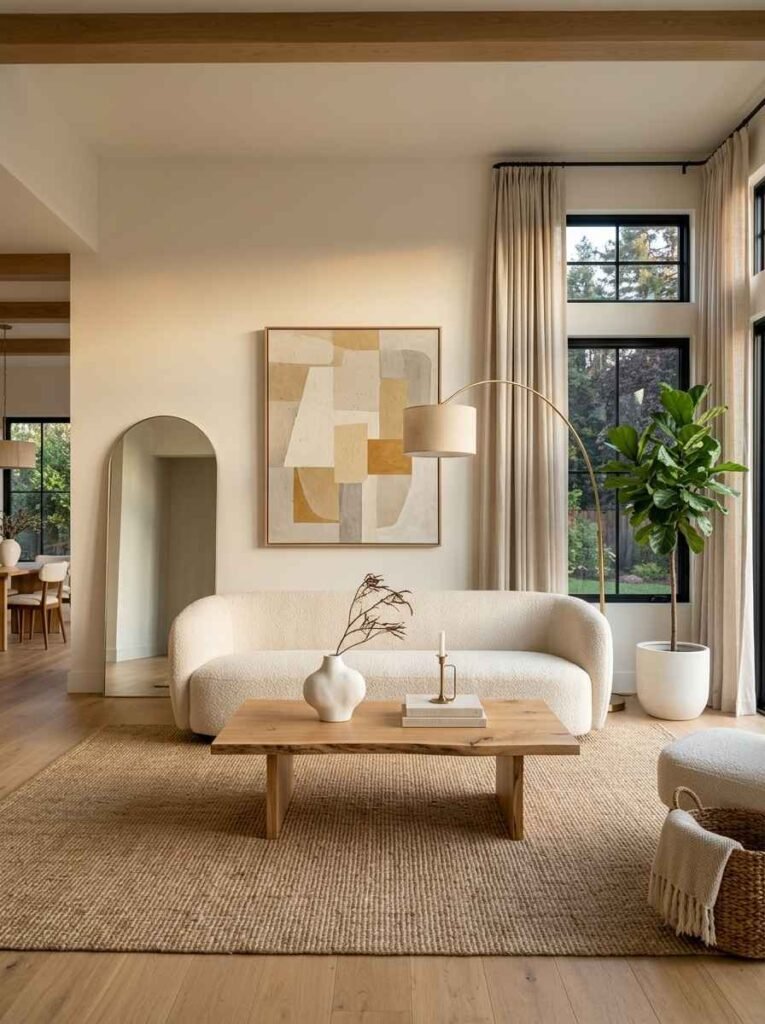
You don’t need to redecorate to feel like your space has changed. Small, intentional swaps keep it feeling current without blowing a budget or overcomplicating what’s working.
The Bottom Line
Minimalist modern living rooms aren’t about owning as little as possible. They’re about making every single thing you keep earn its place. Start with one section of your room — one surface, one wall — and apply these principles there first.
