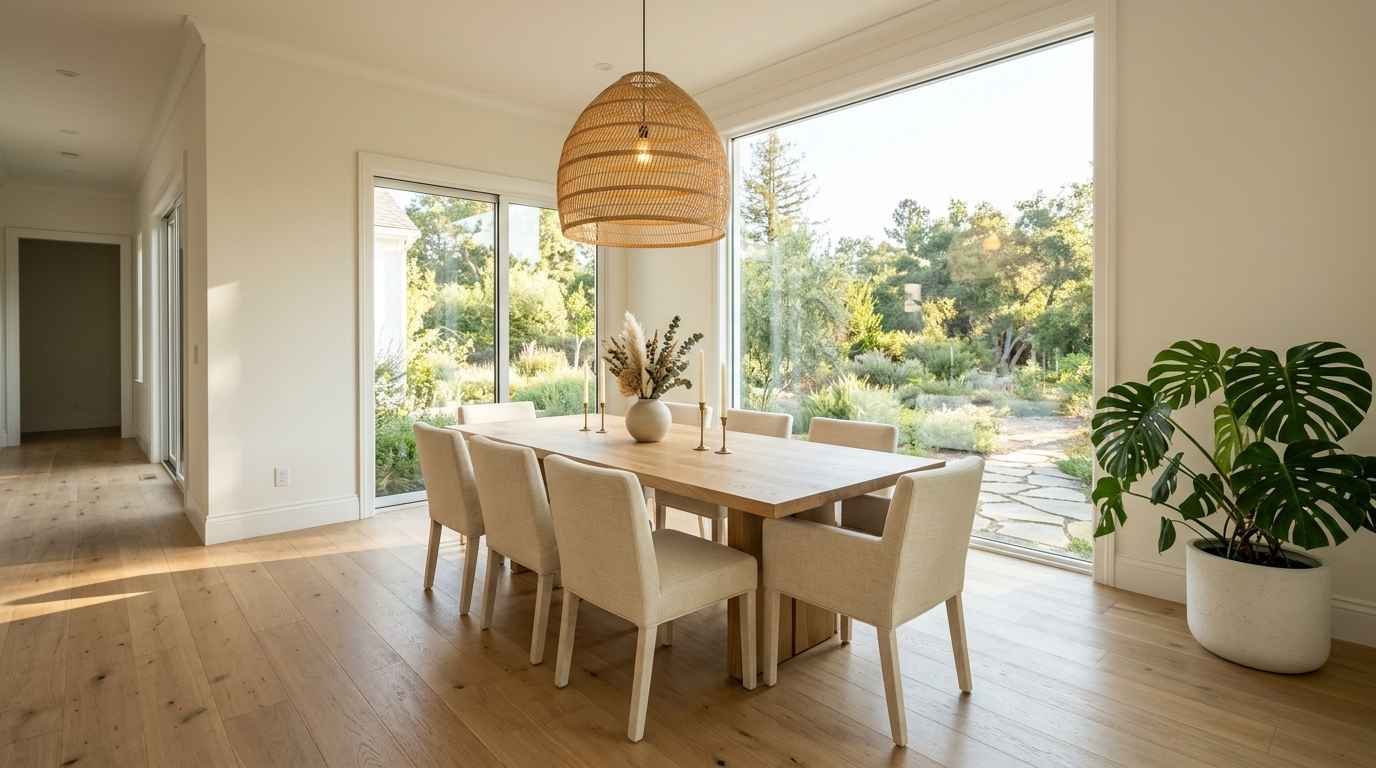
You know that moment when you walk into a dining room and just stop? Everything’s quiet but alive.
Nothing’s overdone. Your brain doesn’t scramble to process seventeen things at once. That’s minimalism done right — and honestly, it’s harder to pull off than it looks.
I’ve spent way too many weekends rearranging furniture, second-guessing pendant light choices, and deep-diving Pinterest boards at midnight (guilty :)).
Here’s what I’ve learned: a minimalist dining room doesn’t mean cold or boring. It means intentional. Every piece earns its spot.
So let’s get into it. 26 ideas, organized by theme, that’ll actually help you build a space you want to eat in every single night.
The Foundation: Getting Your Palette Right
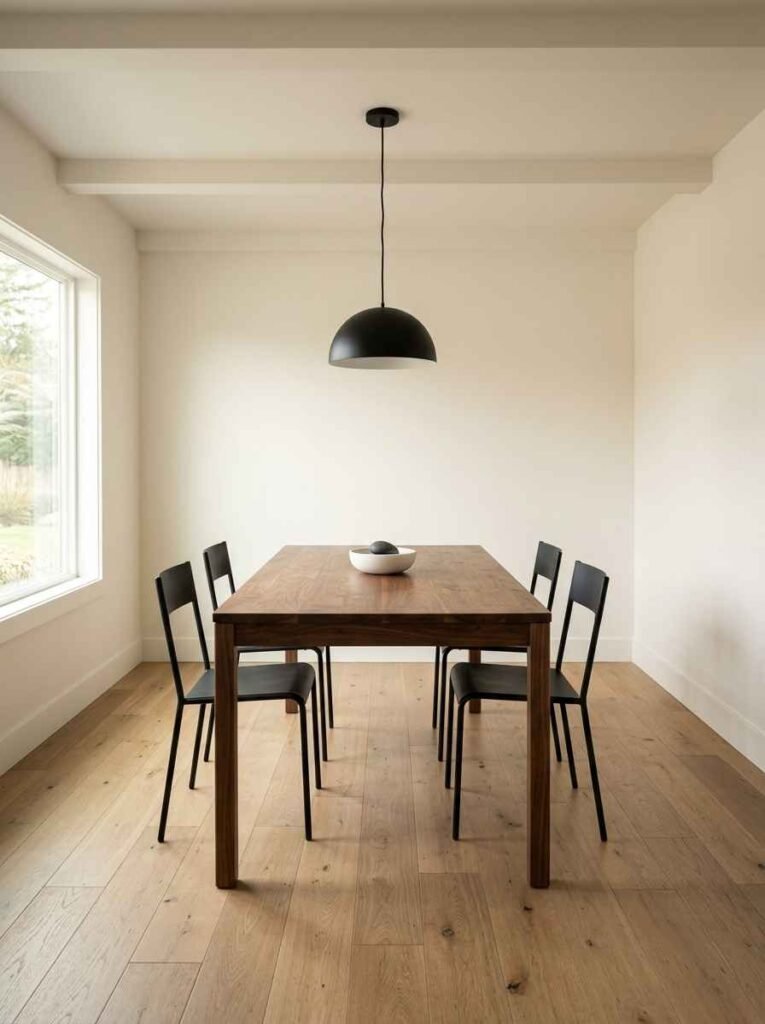
Before you buy a single chair or hang one piece of art, pick your palette. This is where most people trip up.
Stick to 3 colors max
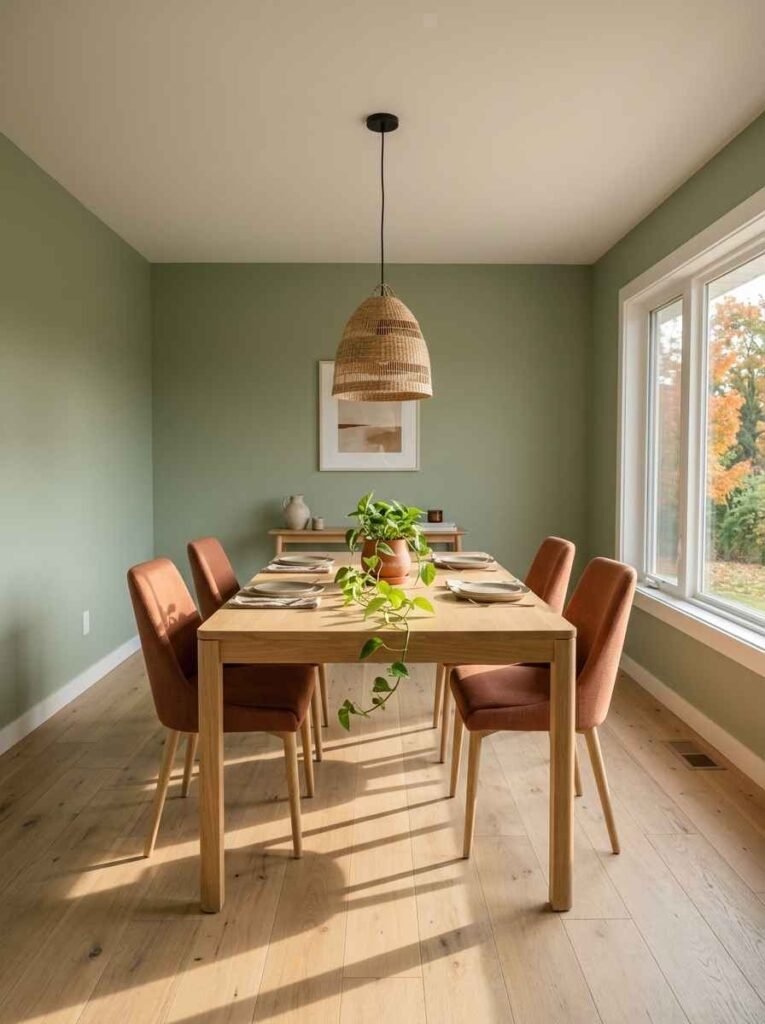
I mean it. Three. The walls, the furniture, and one accent. That’s your whole world.
The most timeless combos I keep seeing work:
- Warm white walls + natural wood + black accents
- Greige walls + cream linen + brushed brass
- Soft sage + white oak + terracotta
Pick one and commit. Mixing warm and cool tones is where “minimalist” quietly becomes “cluttered.”
Don’t fear white
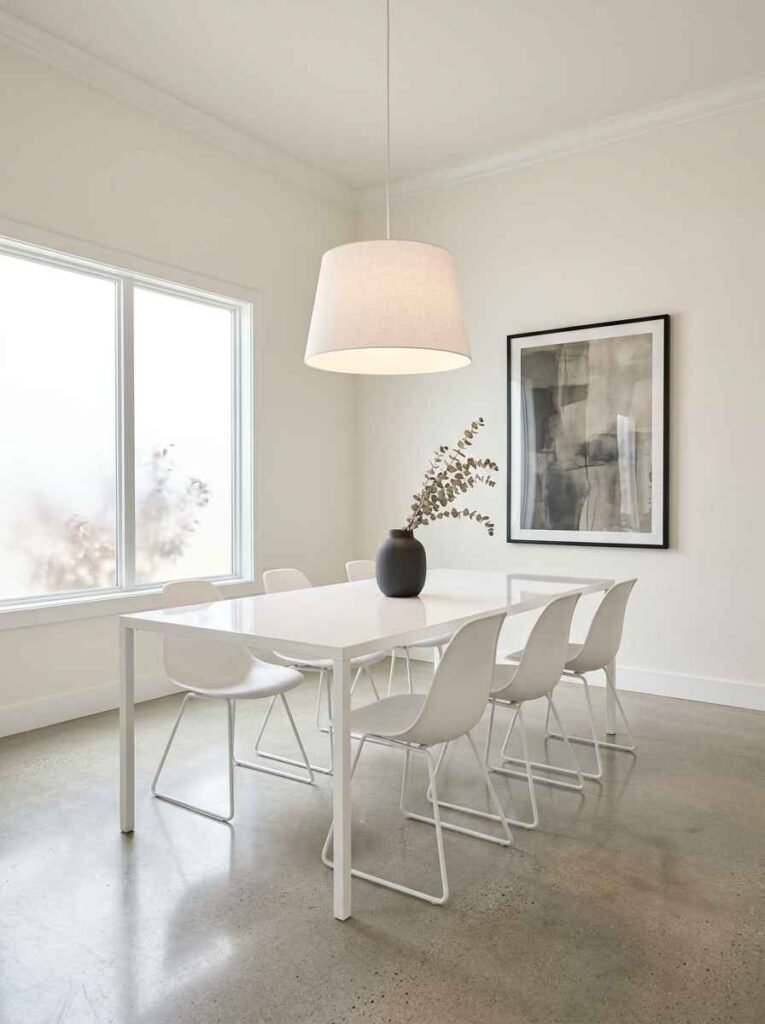
White gets a bad rap for feeling sterile, but that’s usually a furniture problem, not a color problem. Warm whites (think Benjamin Moore’s White Dove or Chantilly Lace) read livable and soft, not hospital-corridor cold.
Furniture Ideas That Do the Heavy Lifting
1. A long, bare dining table
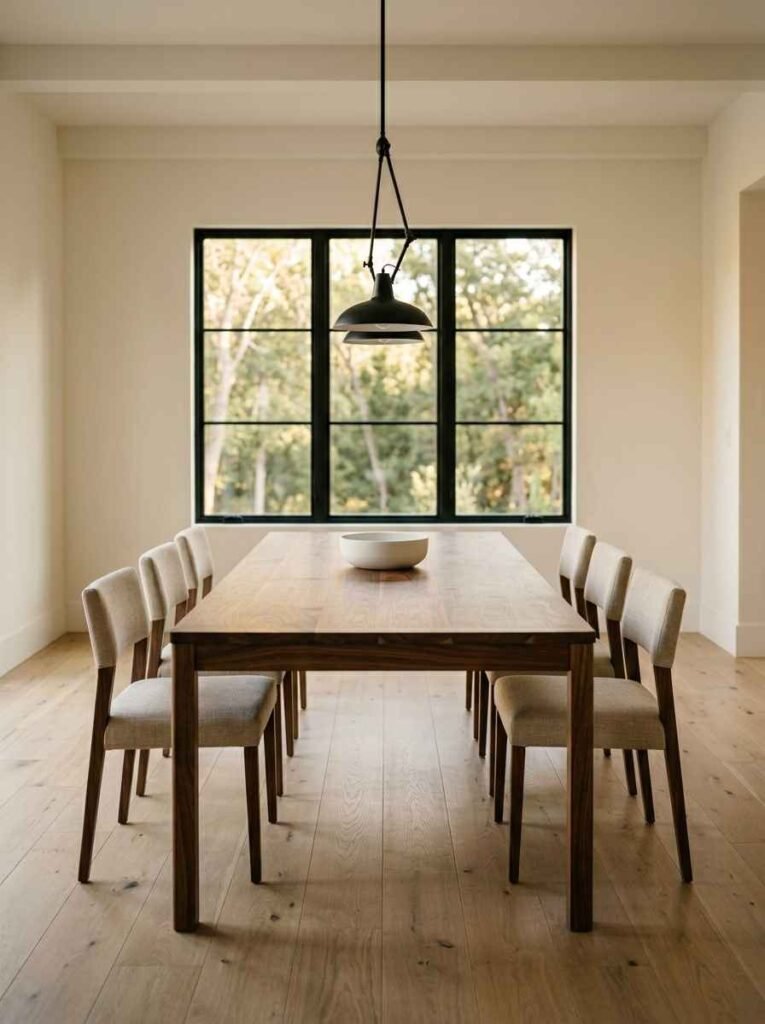
The table is the room’s anchor. For minimalist spaces, a long rectangular table with clean lines works better than anything ornate. Solid wood — walnut, ash, white oak — with no fussy detailing.
25 must-see console table decorating ideas for instant style
No carved legs. No glass tops (fingerprints will haunt you).
2. Matching chairs in a single material
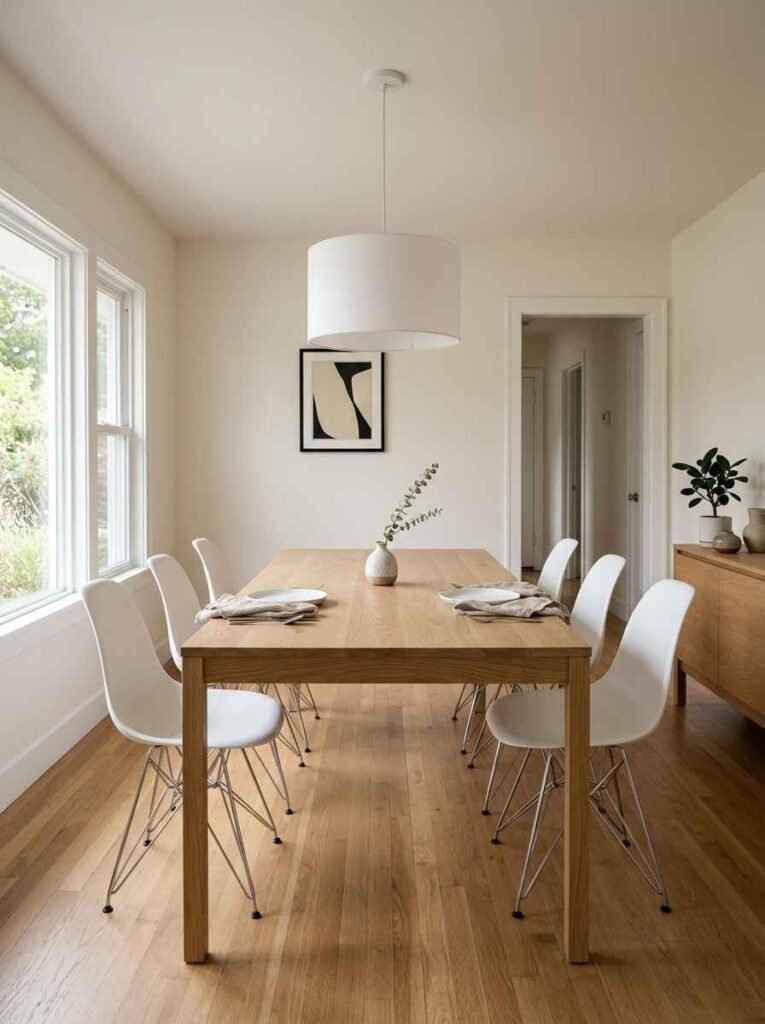
Mixing chair styles is a trend, but for true minimalism? Pick one chair and repeat it.
The Eames DSW, the Tolix, a simple linen dining chair. Repetition creates calm.
3. A bench on one side
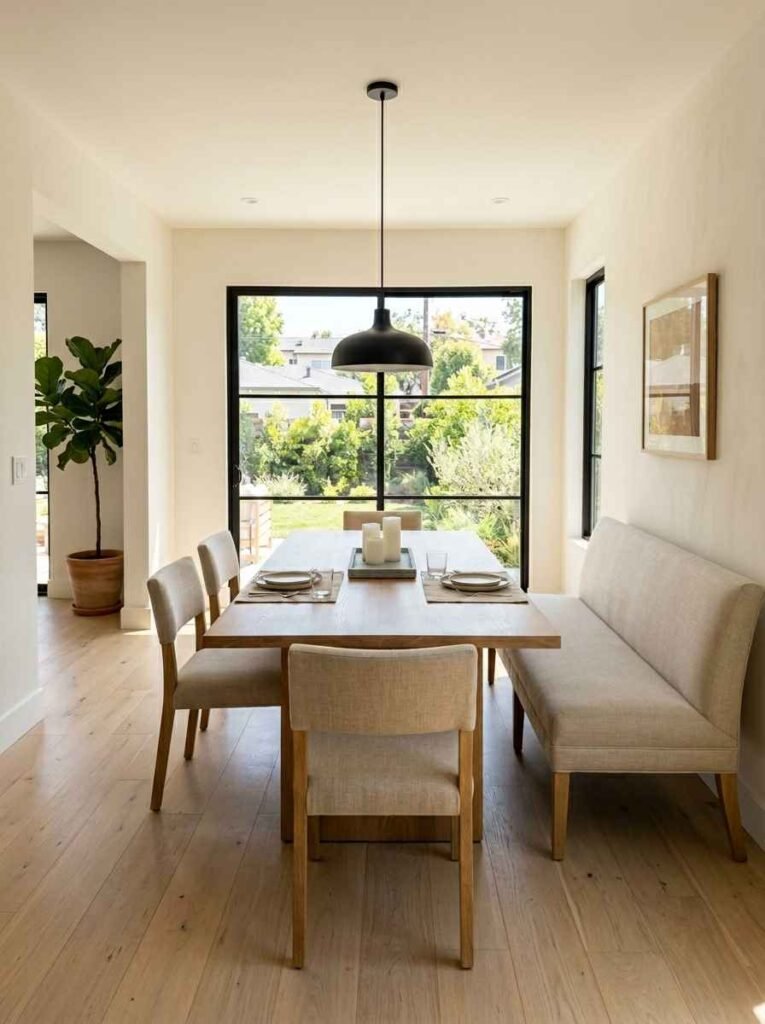
Swap 2-3 chairs on one side of the table for a long bench. It reads more relaxed, takes up less visual space, and seats more people when needed. Win on all three counts.
4. A sideboard with hidden storage
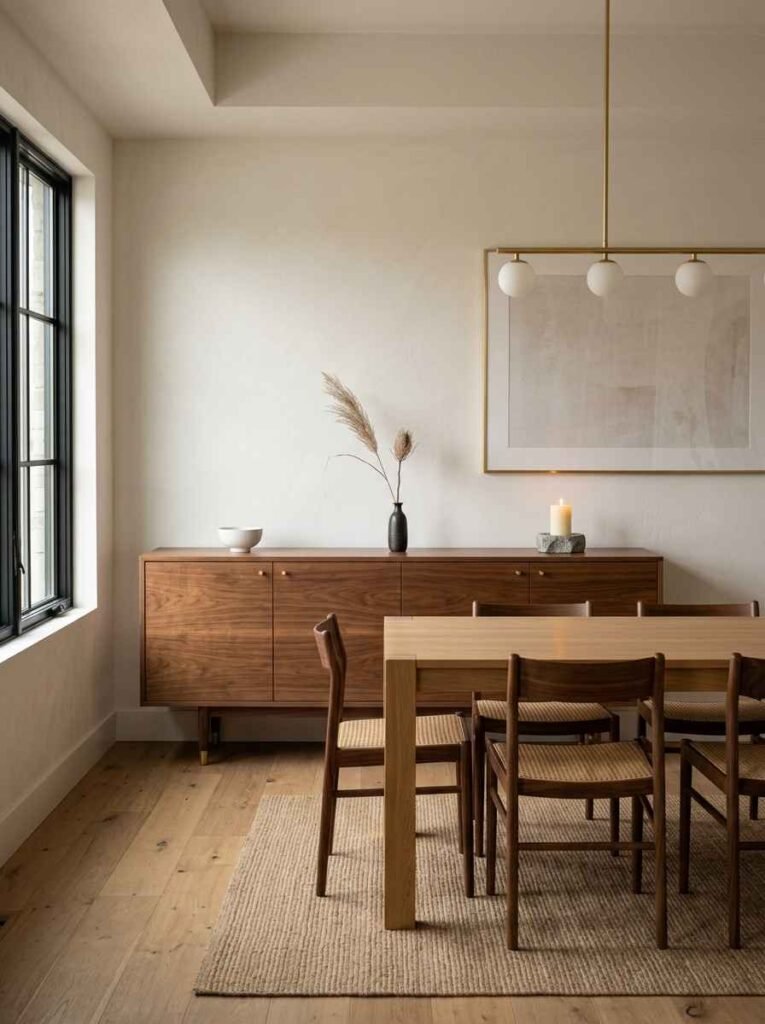
Clutter is the enemy of minimalism. A low, flat sideboard with closed doors keeps your serving dishes, candles, and extra napkins out of sight.
Clean lines on the outside; chaos contained on the inside. IMO this is the most underrated piece in any dining room.
5. A round table for smaller spaces
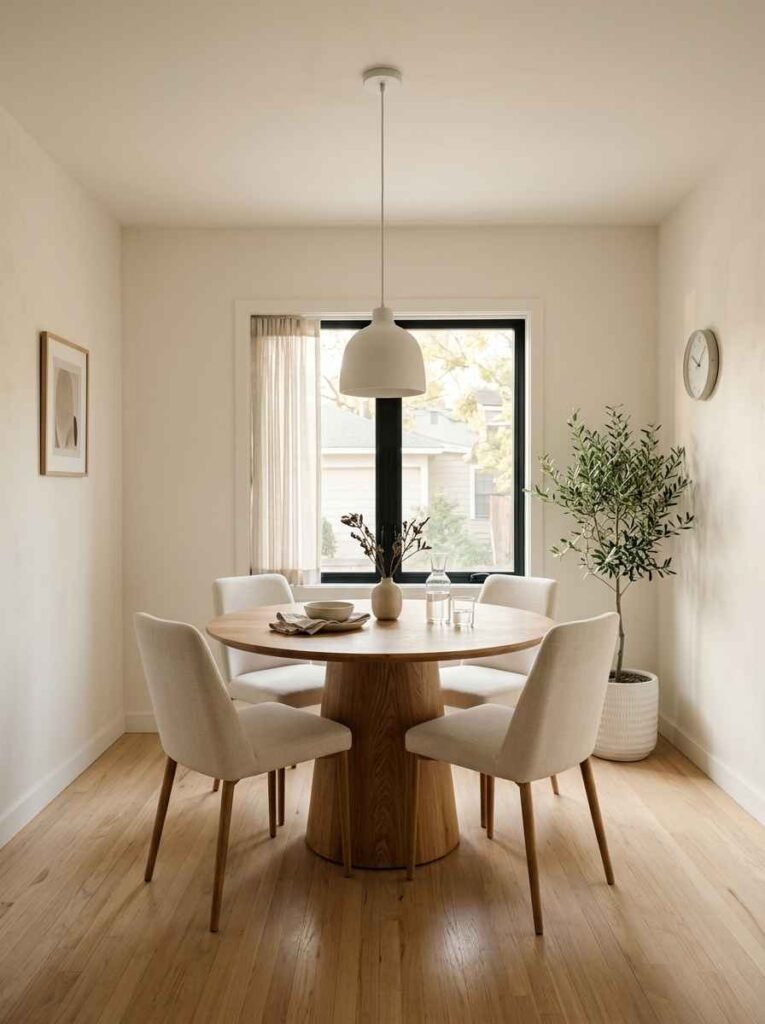
If your dining room is tight, a round table changes everything. No sharp corners eating into your walkway, and the circular shape feels inherently softer and more conversational.
Lighting: The Detail That Makes or Breaks Everything
6. One statement pendant, centered
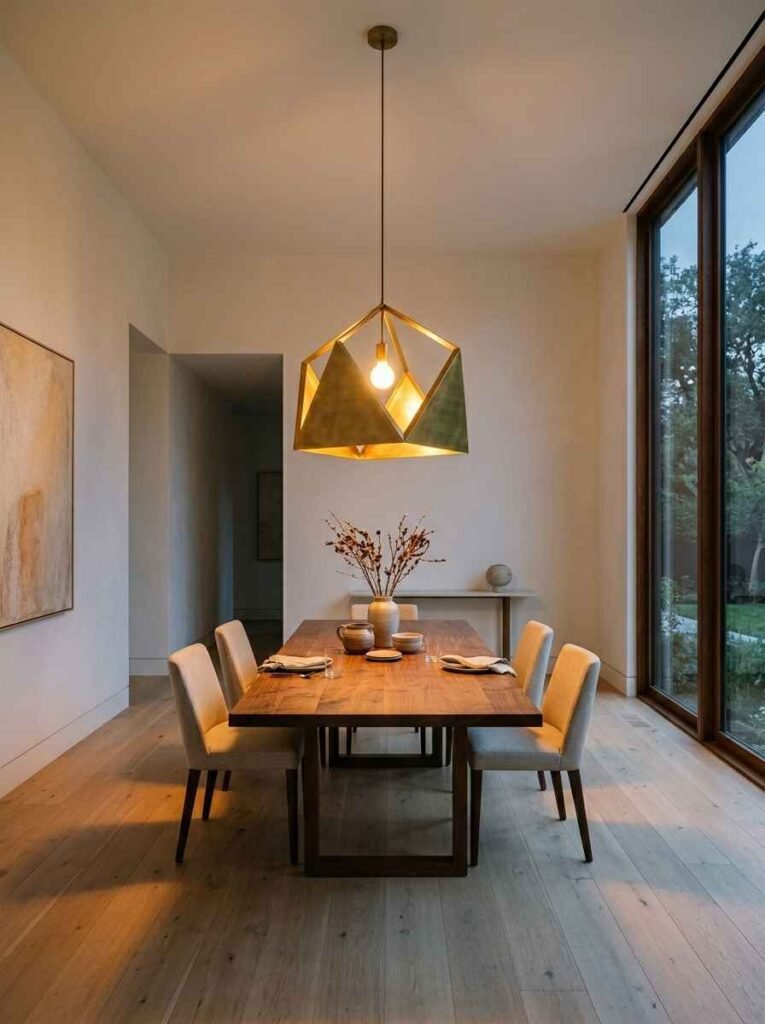
One pendant light above the table. That’s it. Not a cluster of five, not recessed lighting as your only source.
One considered pendant, hung low enough (about 30–36 inches above the table surface) to actually light the food and the people.
7. Wabi-sabi paper pendants
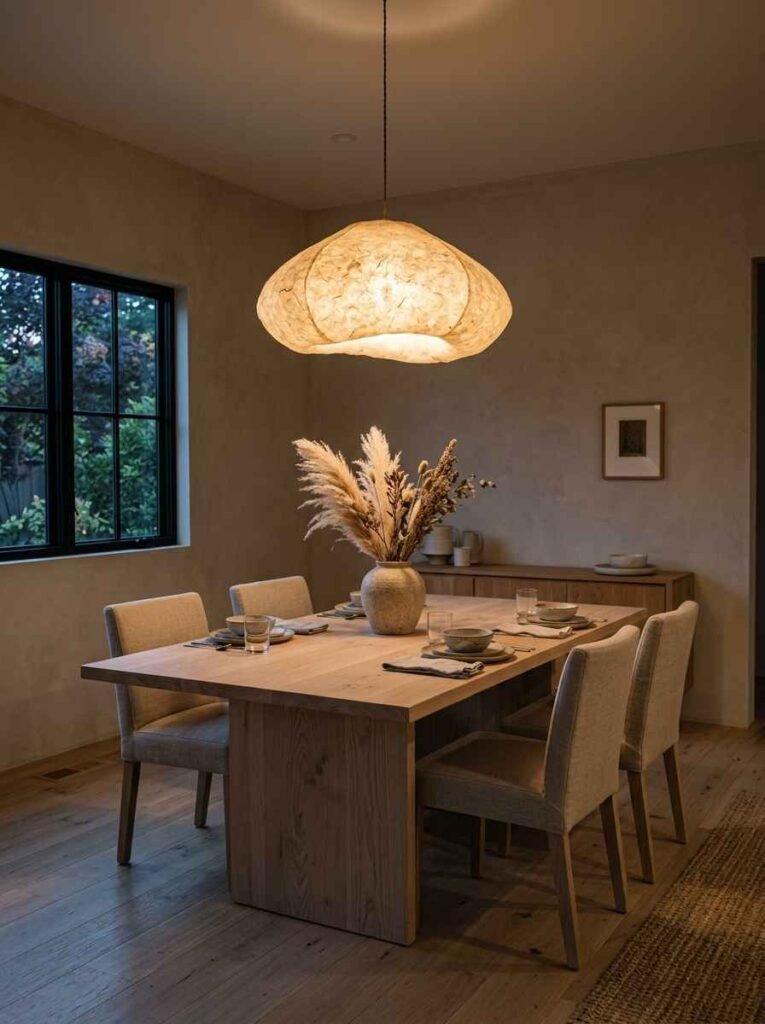
Washi paper pendants, or anything with an organic, handmade quality, bring warmth to an otherwise cool space.
They diffuse light beautifully. And they’re usually pretty affordable, which is always appreciated.
8. Exposed bulb fixtures for industrial warmth
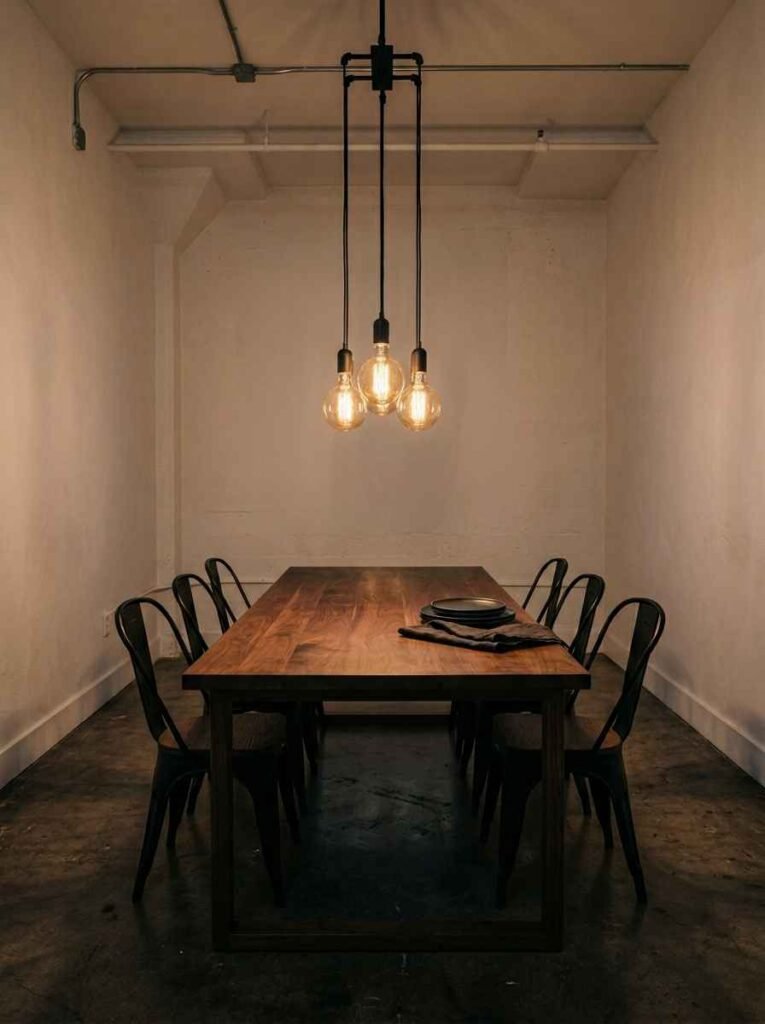
A simple black iron fixture with exposed Edison bulbs does a lot of work in a wood-heavy space.
The warm filament glow at around 2700K makes food look better, skin look better, everything look better.
9. Dimmer switches on everything
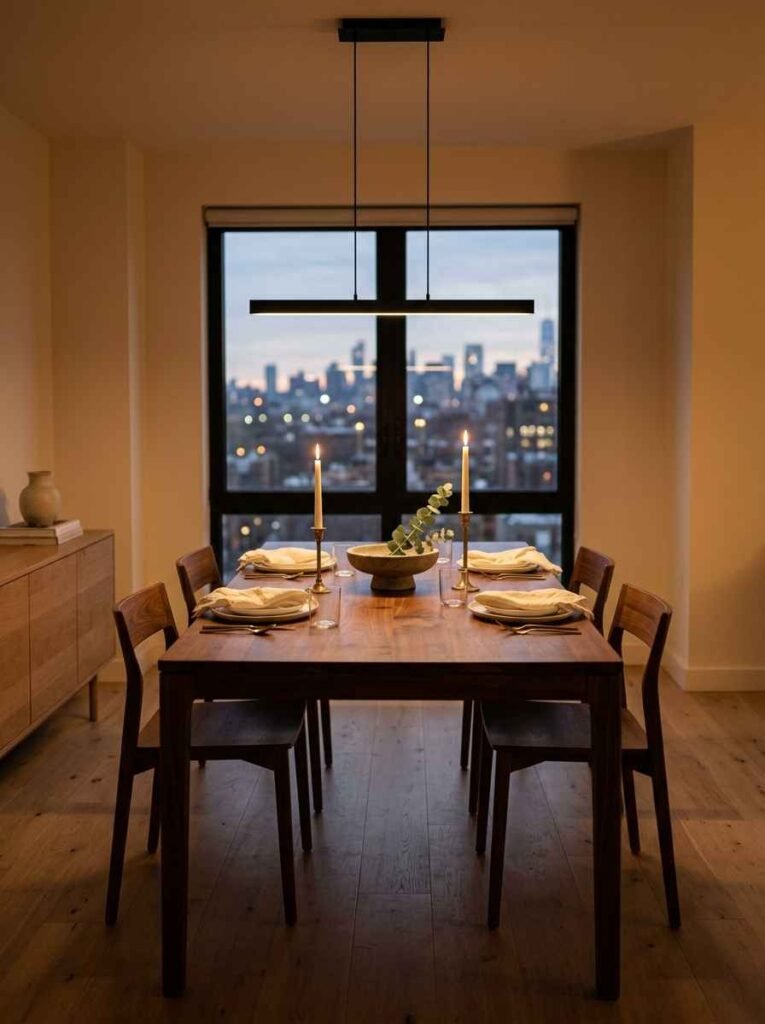
This costs almost nothing to install and completely transforms how a room feels from day to night. Bright for weekday breakfasts, low and warm for dinner parties. A dimmer is the most budget-friendly “upgrade” on this list.
| Lighting Scenario | Recommended Bulb Temp | Dimmer Setting |
|---|---|---|
| Daytime / bright | 3000K | 80–100% |
| Dinner / relaxed | 2700K | 40–60% |
| Dinner party | 2200K | 20–40% |
| Ambiance only | 2200K | 10–20% |
Wall Decor That Doesn’t Shout
10. One oversized art piece
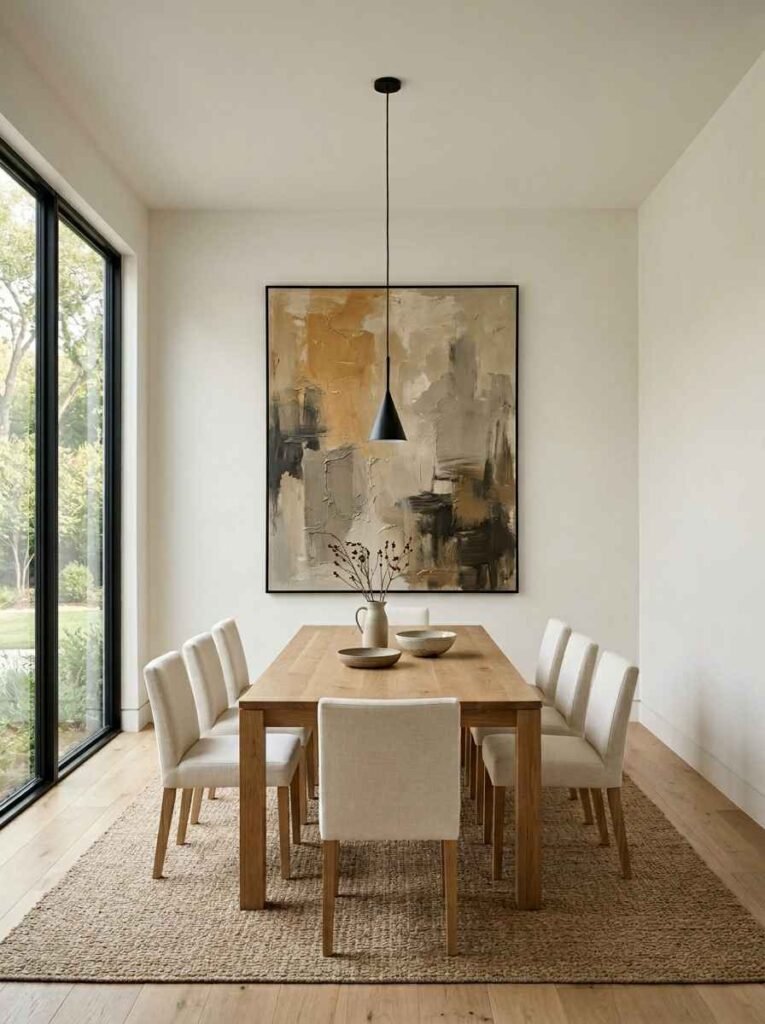
One large piece of art on the main wall, framed simply. That’s the whole strategy.
A single 40×50-inch canvas in a thin black frame does more for a room than a gallery wall of twelve smaller pieces ever could.
11. A single floating shelf
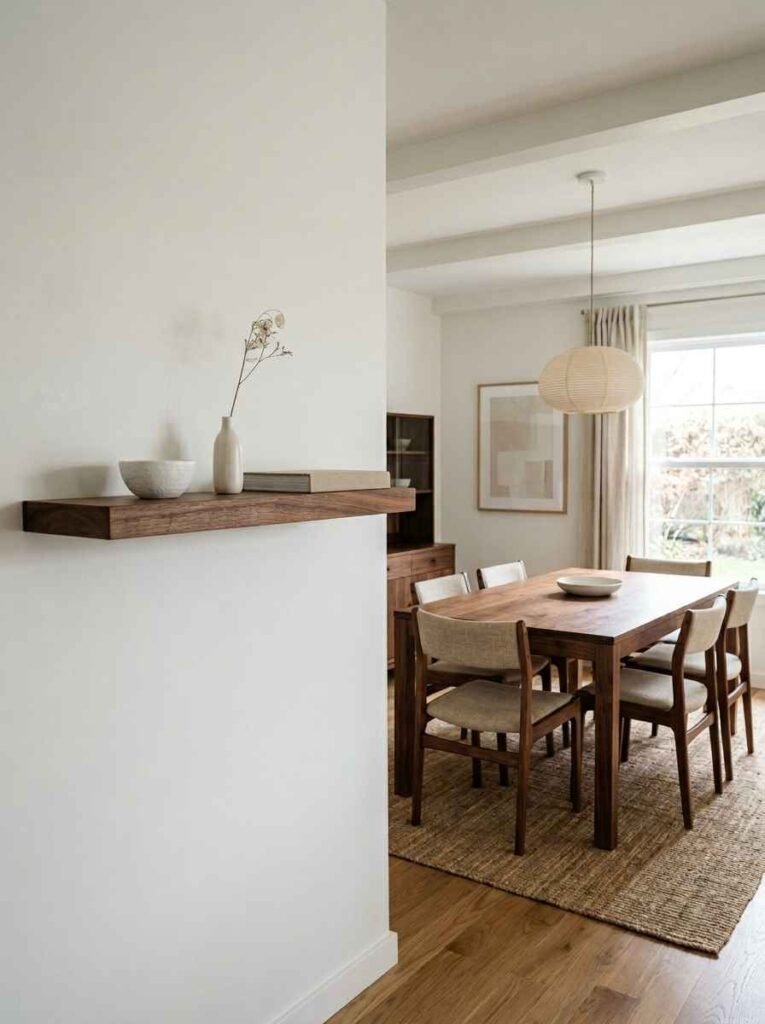
A single floating shelf in natural wood, styled with 3–4 objects max. A small plant, a ceramic bowl, one book. The rule of thumb: if it doesn’t add something,
it doesn’t belong on the shelf.
12. Textured wall panels
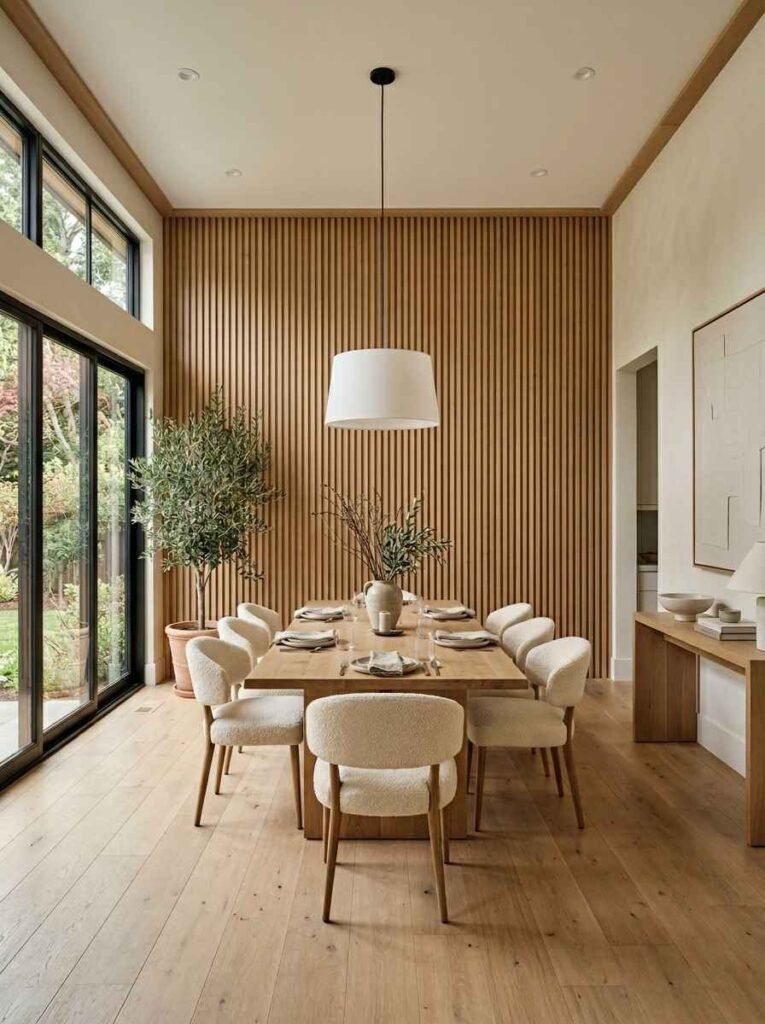
Fluted or slat wood panels on an accent wall bring texture without pattern.
They photograph beautifully (hello, Pinterest :/), and they read as elevated without being fussy.
13. A frameless mirror
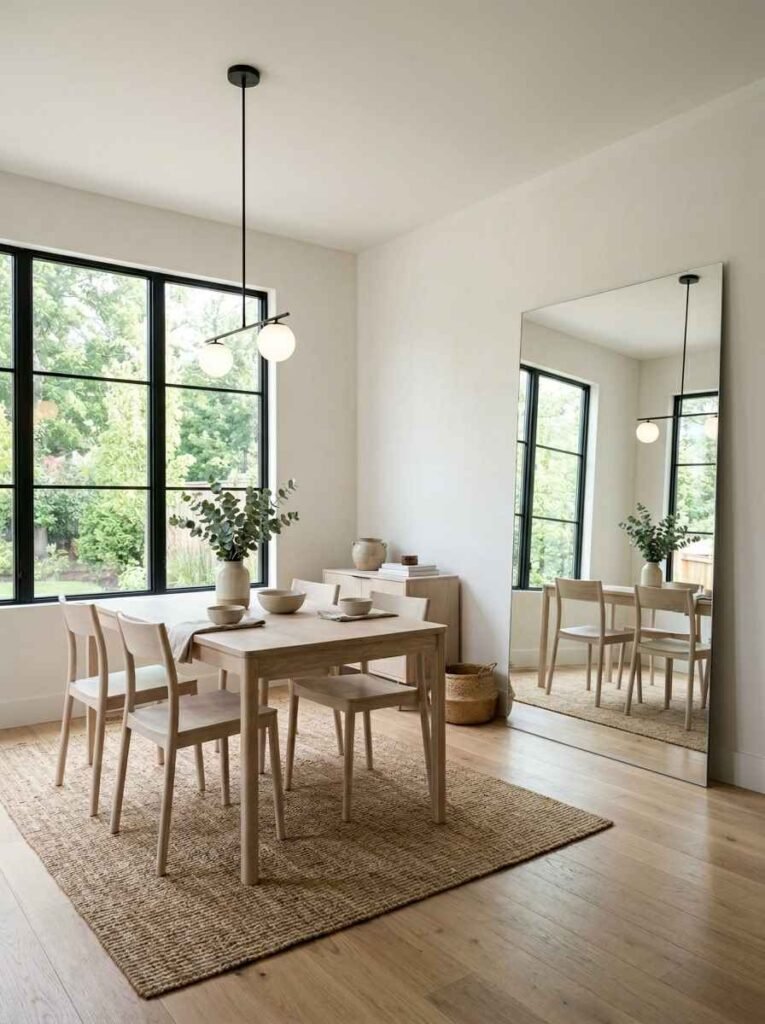
A large, frameless mirror on a side wall makes a small dining room feel twice as big and doubles the light from your pendant. It also gives the room a sculptural quality without adding any visual noise.
14. Leave a wall completely bare
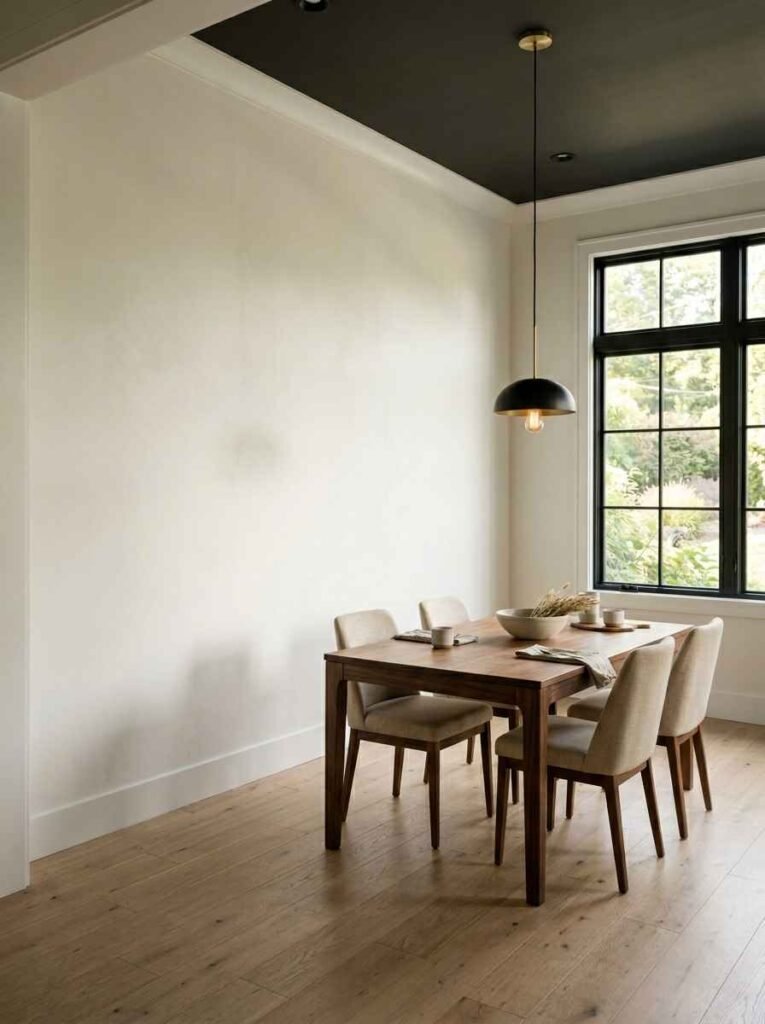
Here’s the move most people don’t have the nerve to make: leave one entire wall empty.
A smooth, freshly painted wall with nothing on it is its own design statement when the rest of the room is intentional.
Textiles: Where Warmth Actually Comes From
15. A linen tablecloth in a neutral
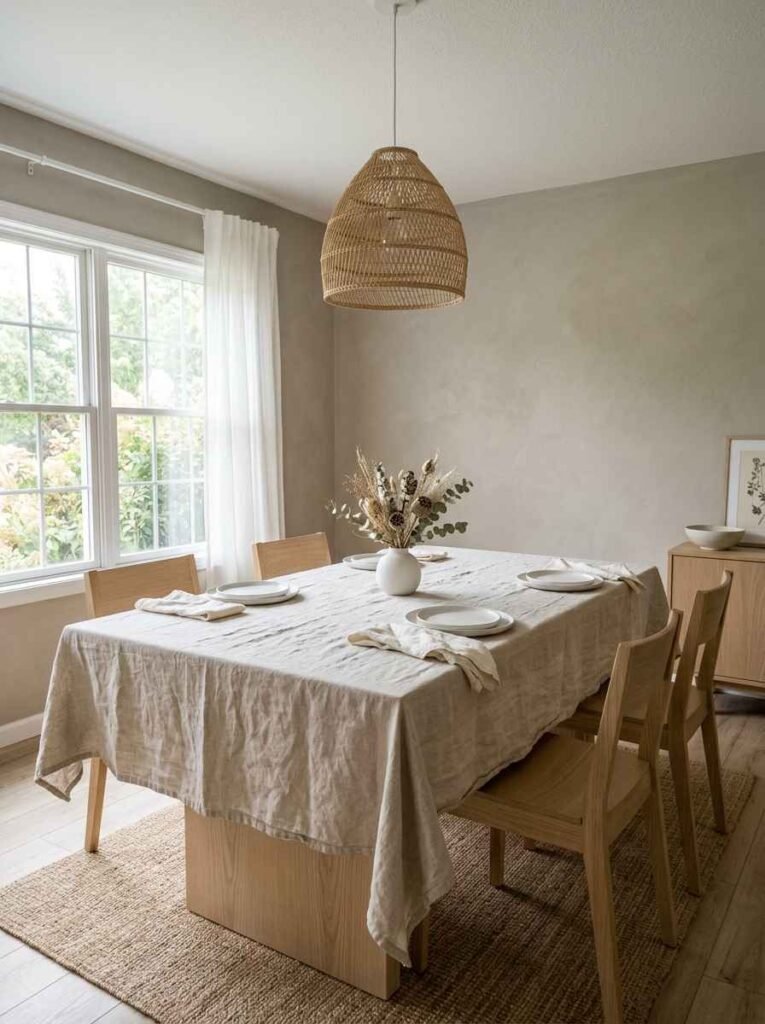
A simple linen tablecloth in oatmeal, off-white, or dusty sage grounds the table and makes it feel lived-in without looking messy. Linen wrinkles, which is actually fine. The imperfection is the point.
16. Muted-toned placemats instead of a runner
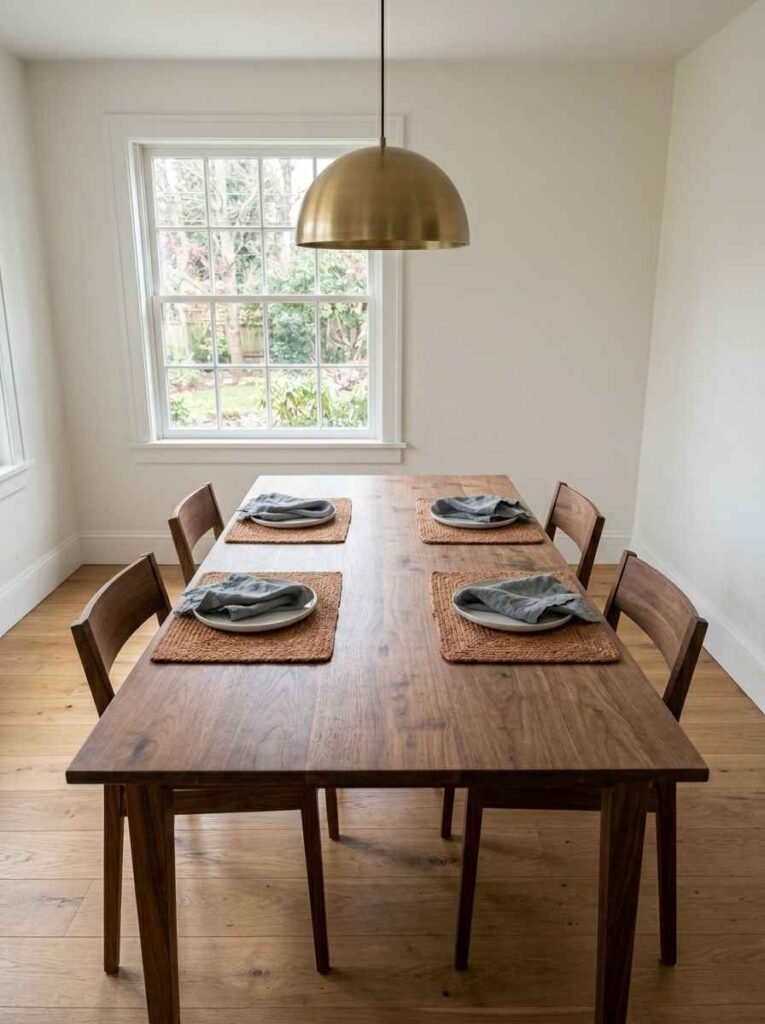
Individual placemats let the table surface breathe. Choose a muted clay, slate, or warm grey.
Avoid busy patterns — the table is for food and conversation, not visual competition.
17. A textural area rug
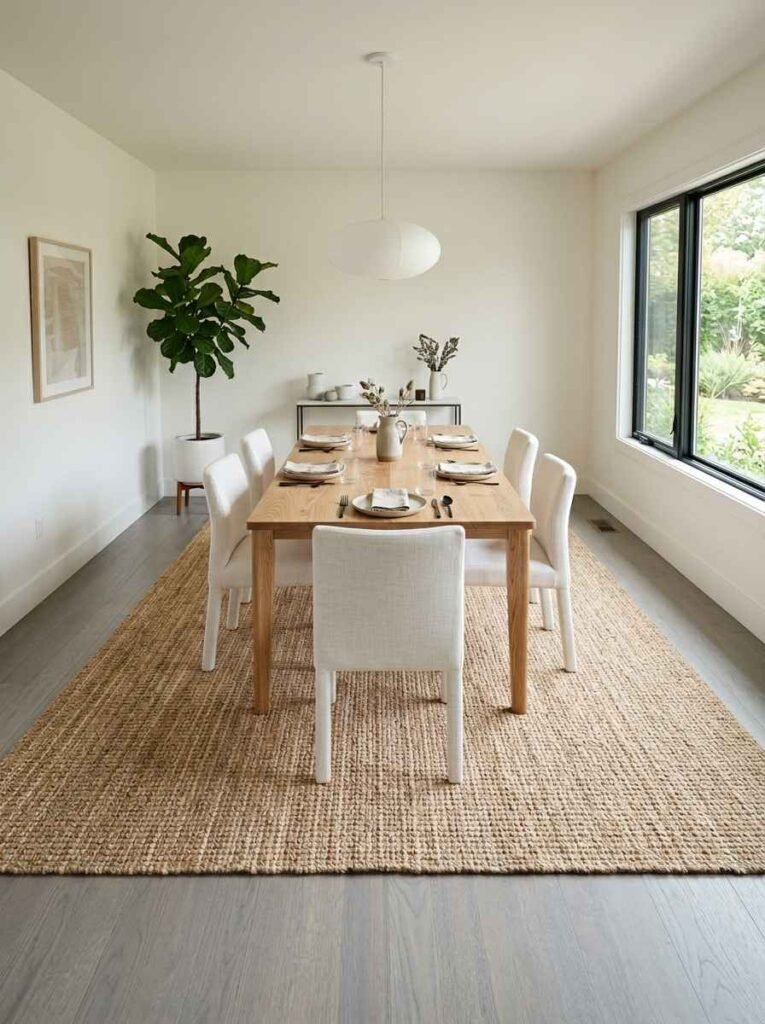
A low-pile rug under the dining table adds warmth and defines the zone.
Keep it simple: a jute rug, a flatweave kilim in muted colors, or a solid wool in a neutral. Nothing with a loud pattern or overly bright color.
18. Linen napkins, not paper
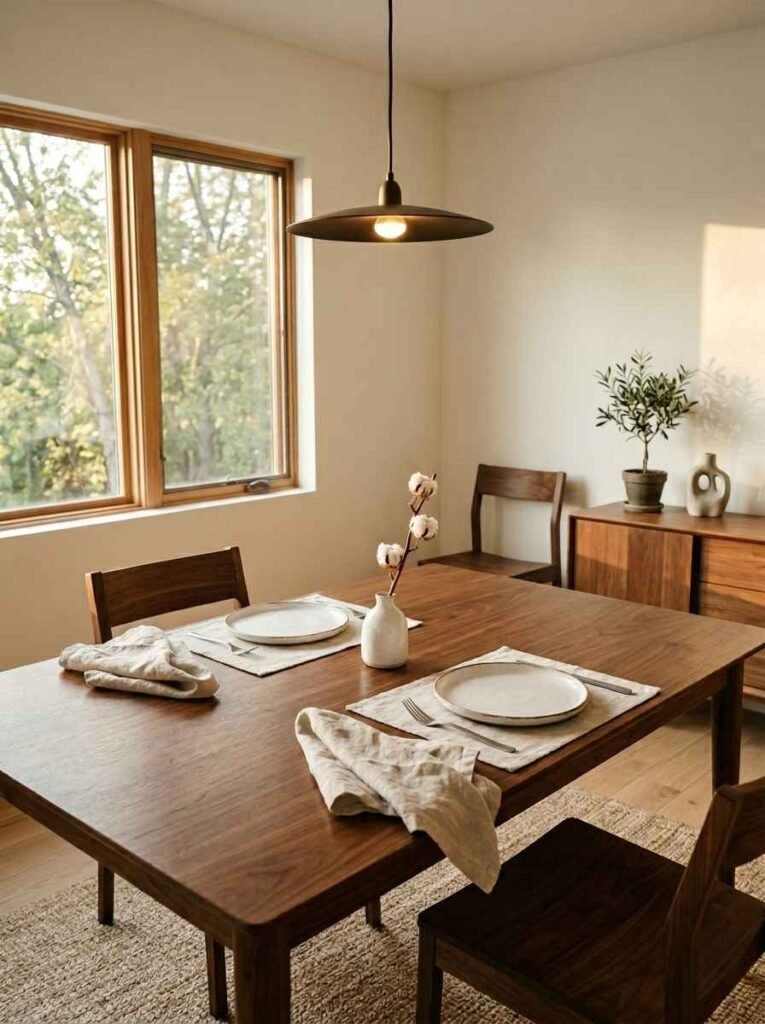
Cloth napkins on the table — folded simply, no origami swans — elevate every meal, even Tuesday’s pasta. Grab a set of 8 in natural linen and they’ll last years. FYI they also get softer every time you wash them.
Greenery and Natural Elements
19. One large plant in the corner
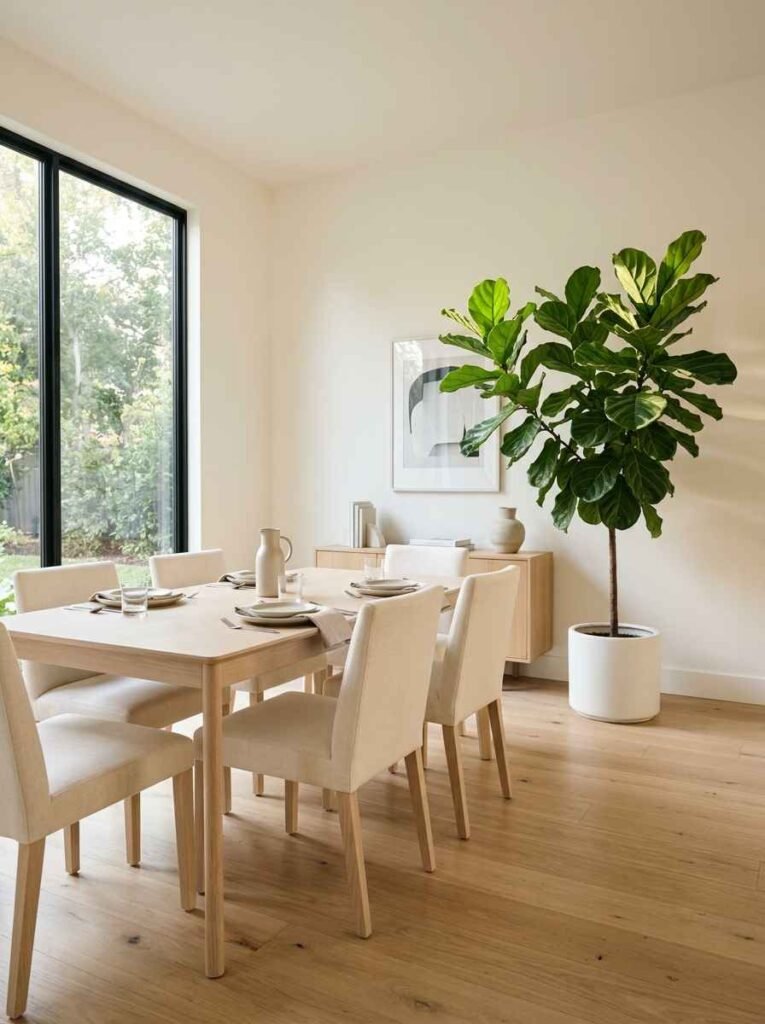
A single large fiddle-leaf fig, olive tree, or monstera in a simple ceramic pot adds life without fuss. One plant in the right corner does more than a dozen small ones scattered across the room.
20. A low centerpiece of dried botanicals
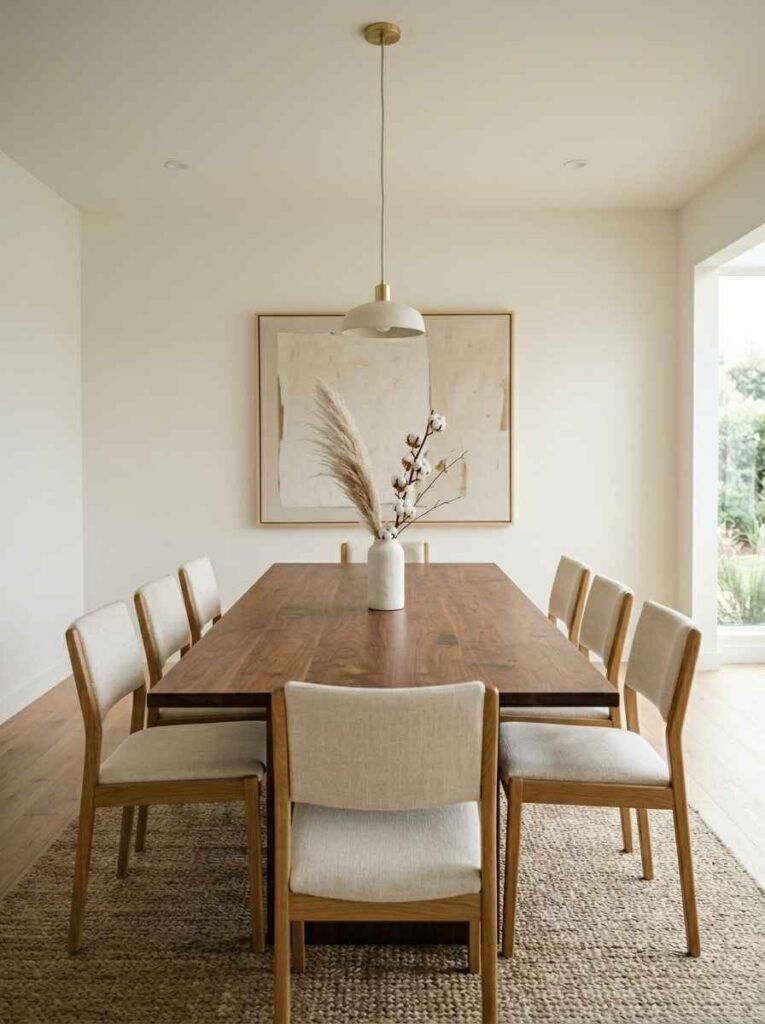
A small bundle of dried pampas, cotton stems, or eucalyptus in a bud vase on the table.
No water to change, no wilting, no drama. Just quiet organic texture.
21. A live herb cluster near a window
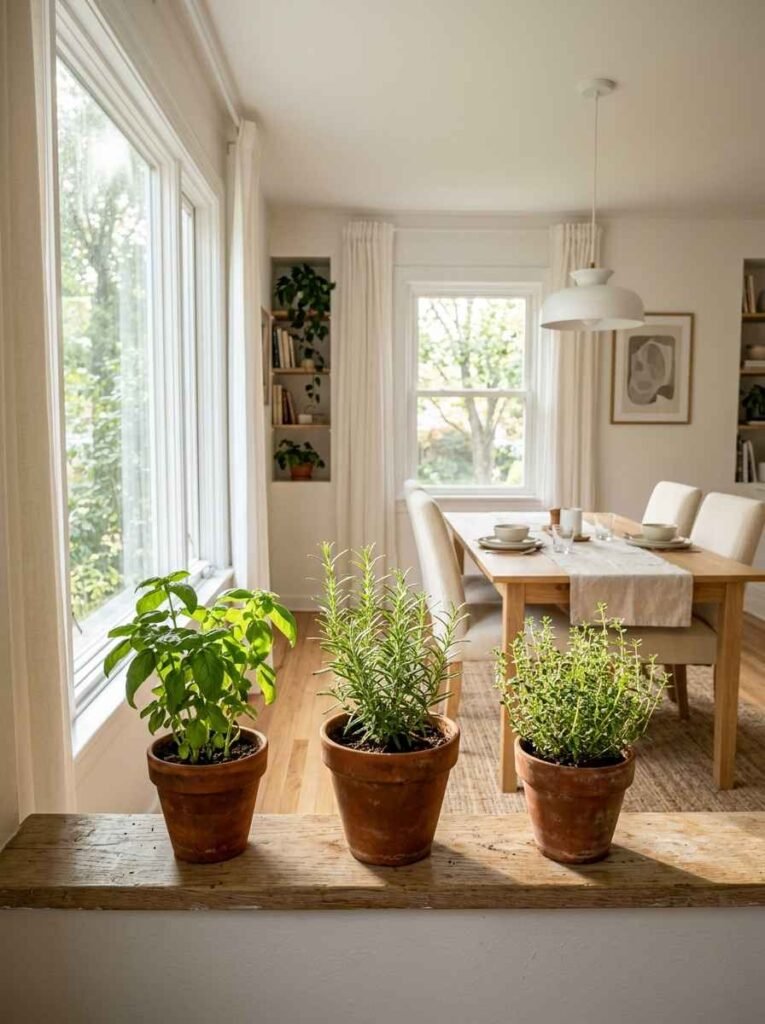
Three small terracotta pots with rosemary, thyme, and basil near the window. It’s practical, it smells amazing, and it adds a soft, lived-in quality that a purely staged room never quite achieves.
Styling Details That Pull It Together
22. Monochromatic tabletop styling
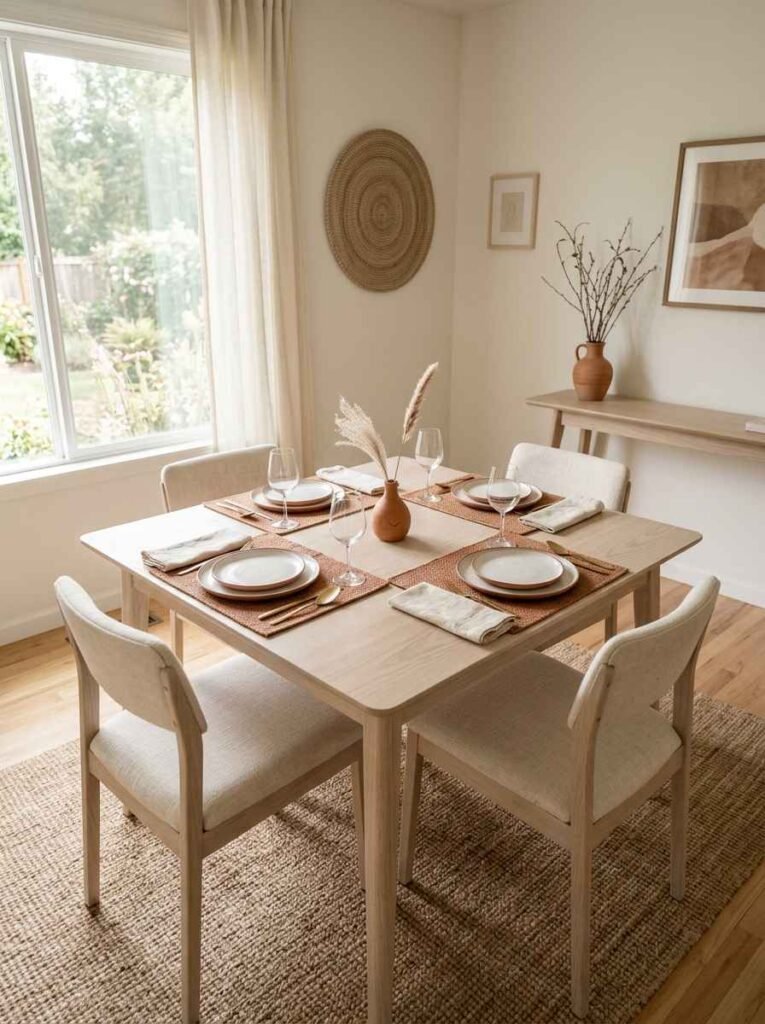
When setting the table for everyday use, keep everything in one color family. White plates, cream napkins, a terracotta pot.
Monochrome styling looks intentional without any effort.
23. Ceramic or stoneware dishes, on display
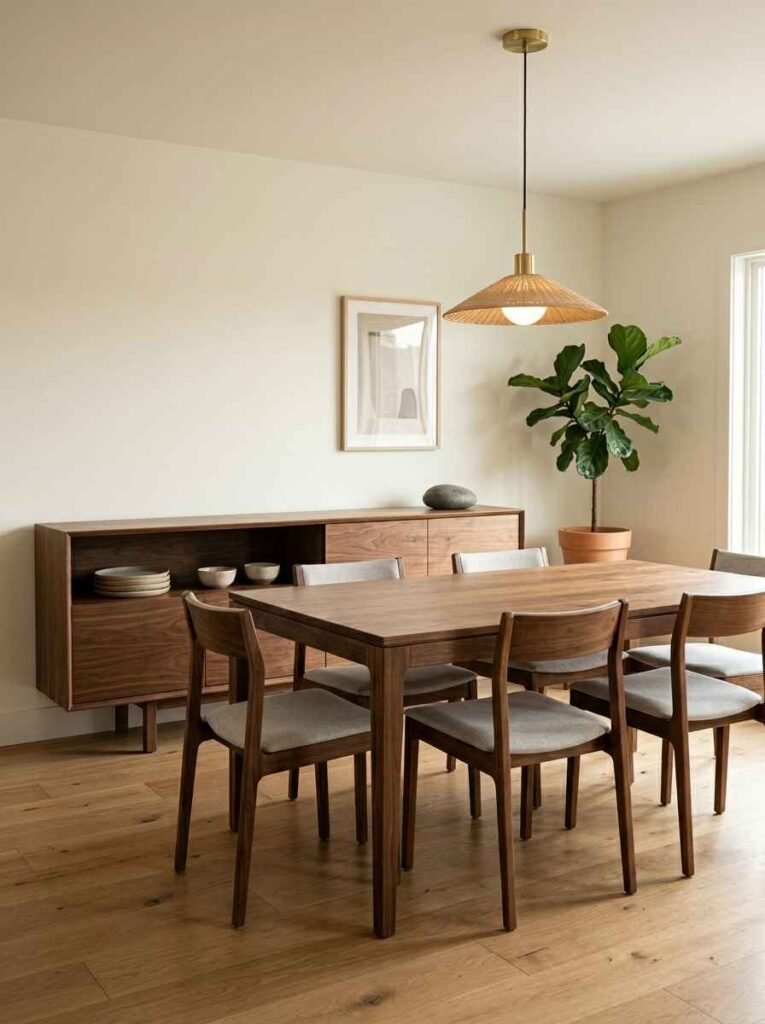
If your sideboard or shelving has any open portion, stack 3–4 beautiful ceramic plates or bowls there. Neutral stoneware is an object worth seeing.
24. Candles as primary decor
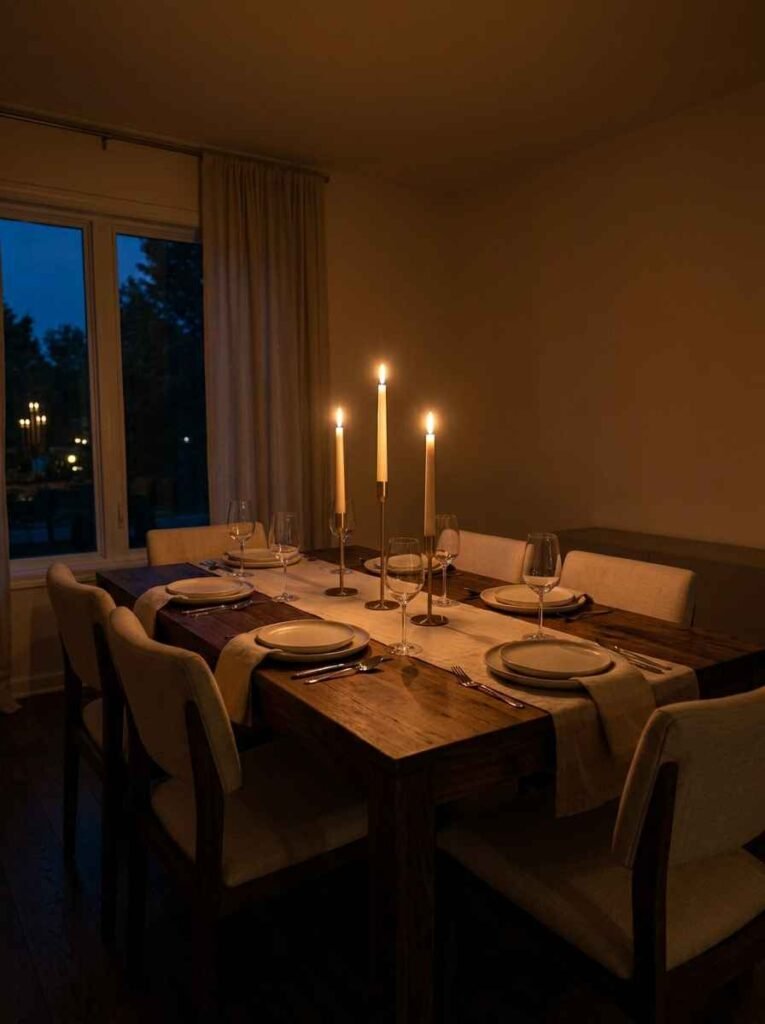
A few taper candles in simple brass or ceramic holders on the table. Lit or unlit, they add vertical interest without taking up space.
And when they’re lit at dinner? The whole room transforms.
25. Architectural objects over decorative ones
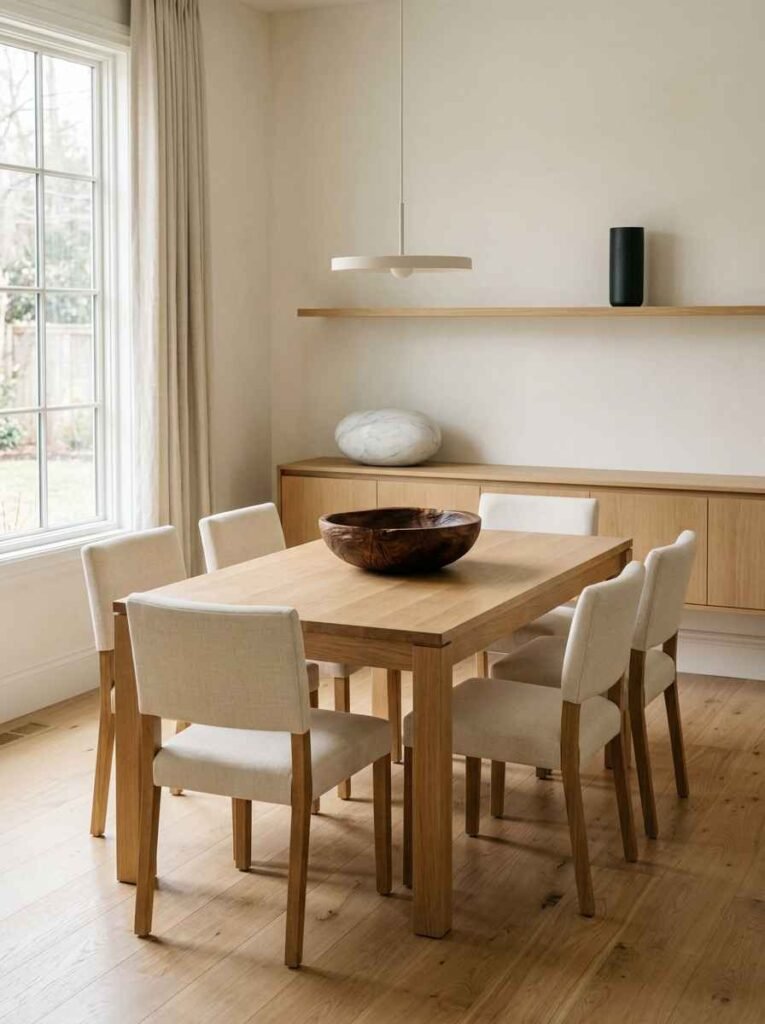
A sculptural wooden bowl. A smooth stone bookend. A simple ceramic vase with no flowers in it. Choose objects with form rather than surface decoration. They read better from a distance and age more gracefully.
26. Edit ruthlessly, then edit again
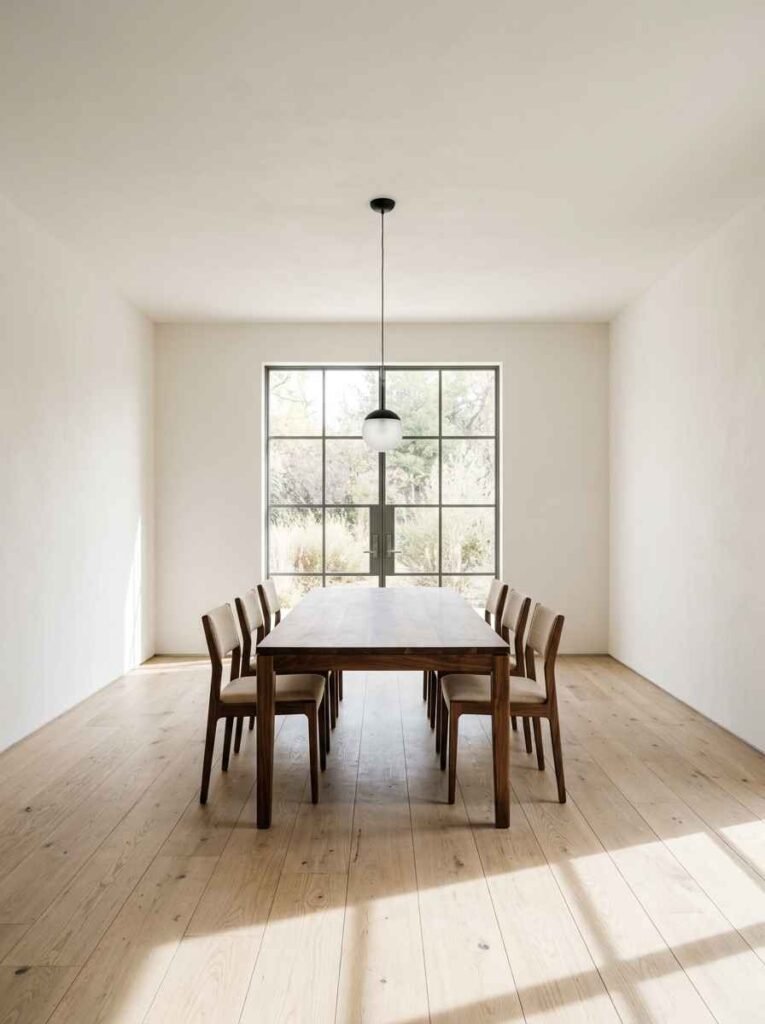
Take everything off every surface. Put back only what you’d miss if it were gone. That thing you’re holding that you “maybe” want back? Leave it out. Minimalism is editing, and editing never really stops.
The Final Word
A chic minimalist dining room isn’t a one-weekend project. It’s more of an ongoing practice in restraint.
You’ll be tempted to add things. You’ll find a beautiful object at a flea market and have nowhere to put it. That tension is healthy — it means you’re paying attention.
The rooms that stop you in your tracks on Pinterest? They usually have less in them than you think.
A great table, considered lighting, one piece of art, and the confidence to leave space empty. That’s really the formula.
Start with your palette. Pick your anchor piece. Then slow down. The best version of your dining room is probably already halfway there — it just needs a few things taken away.
