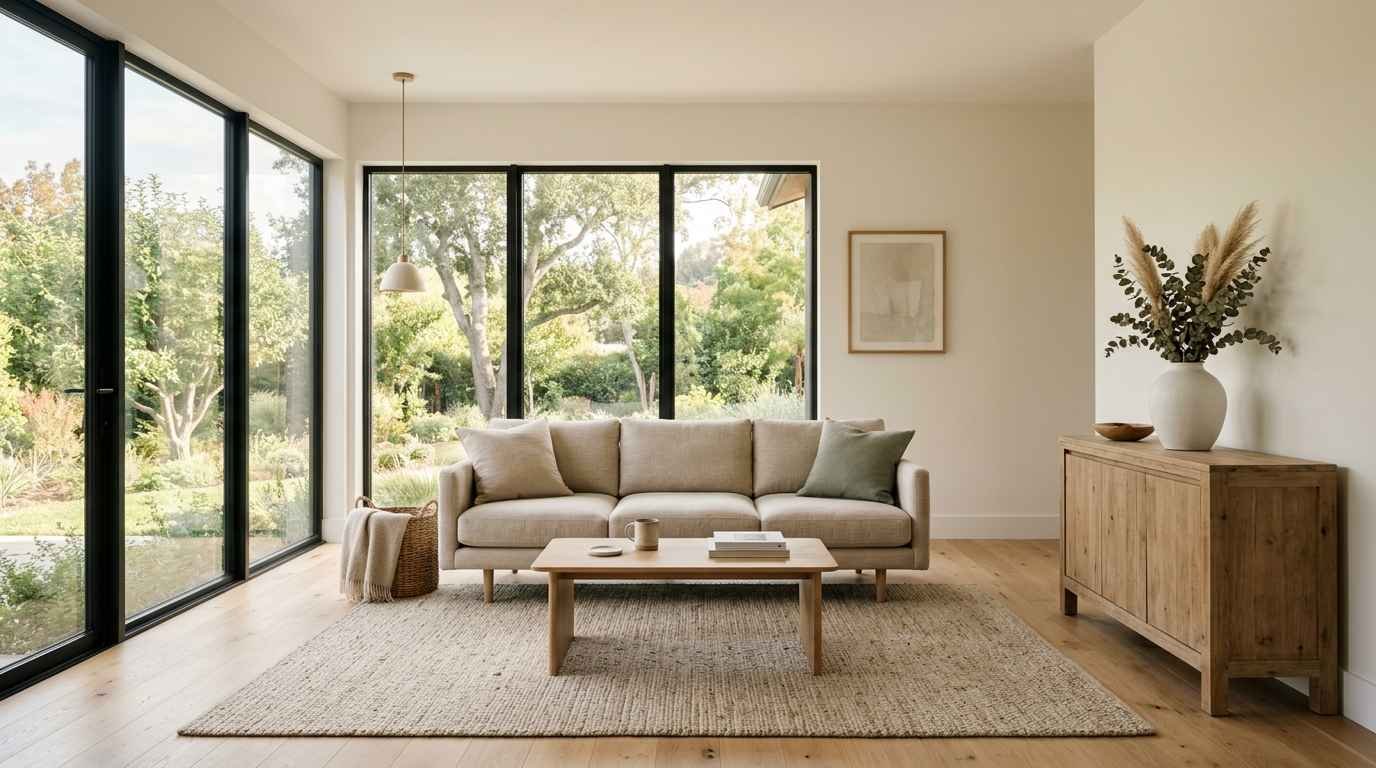
I redid my living room three times before it stopped feeling like a furniture showroom and started feeling like mine.
Turns out minimalism isn’t about spending less. It’s about choosing less, and choosing better.
Here’s what actually worked, pin-worthy or not.
Start with what you already own
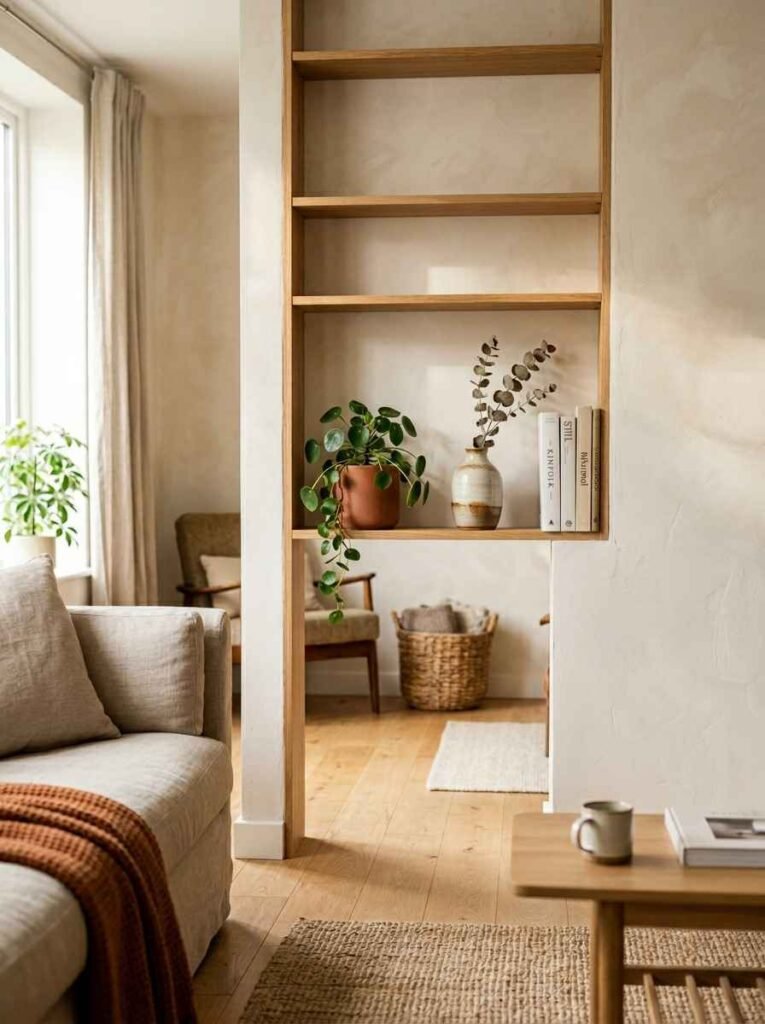
Before buying anything, walk through your space and ask: does this earn its spot?
- Pull everything off shelves and surfaces
- Put back only what you use or genuinely love
- Box the rest for 30 days. If you don’t miss it, donate it
I did this with my coffee table books. Turns out I kept 4 out of 23. The shelf looks better empty than it ever did full.
Pick one neutral base color
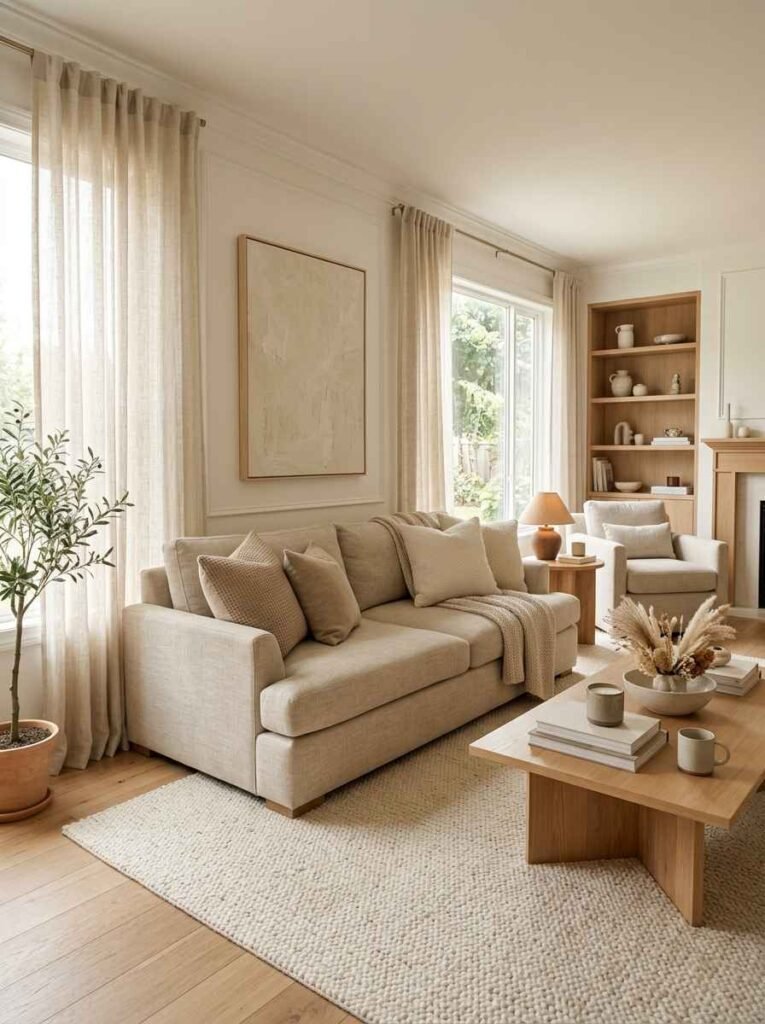
White, beige, greige, warm gray. Pick one and build around it.
I went with warm white walls and oatmeal linen curtains. Everything else, the rug, the throw pillows, the lamp, sits in that same family.
No clashing. No decision fatigue every time I buy something new.
Let furniture breathe
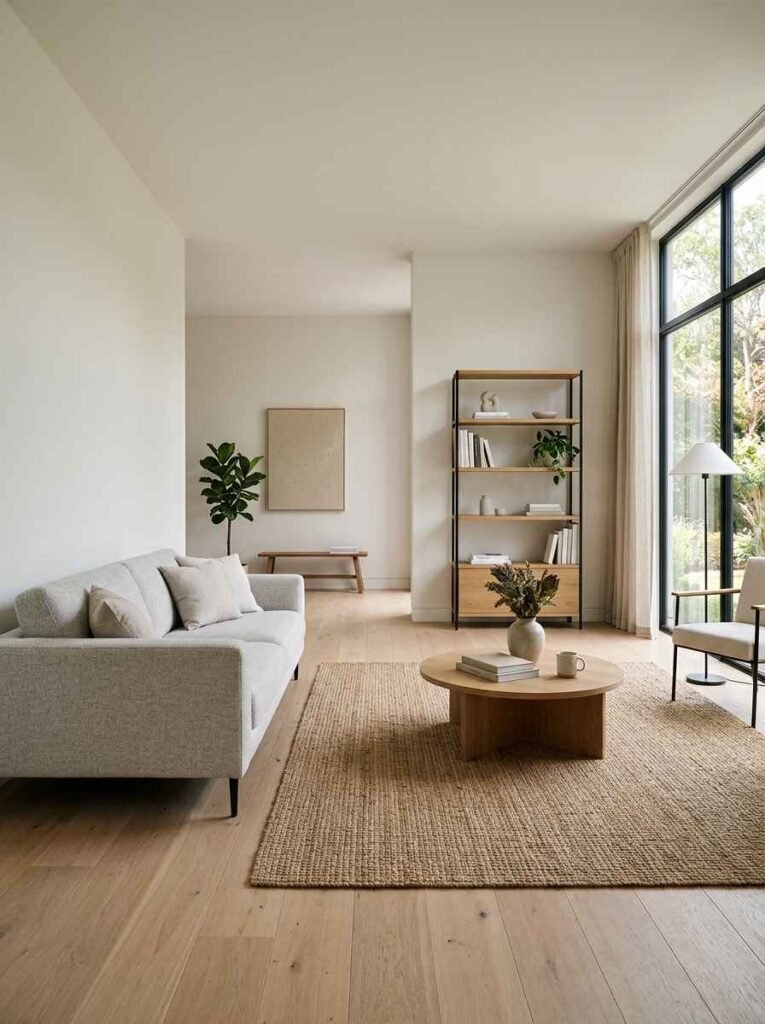
Minimalist rooms have space around objects. Push your sofa 6 inches off the wall. Leave a gap between the bookshelf and the window.
It sounds tiny. It changes the whole room.
Swap clutter for one statement piece
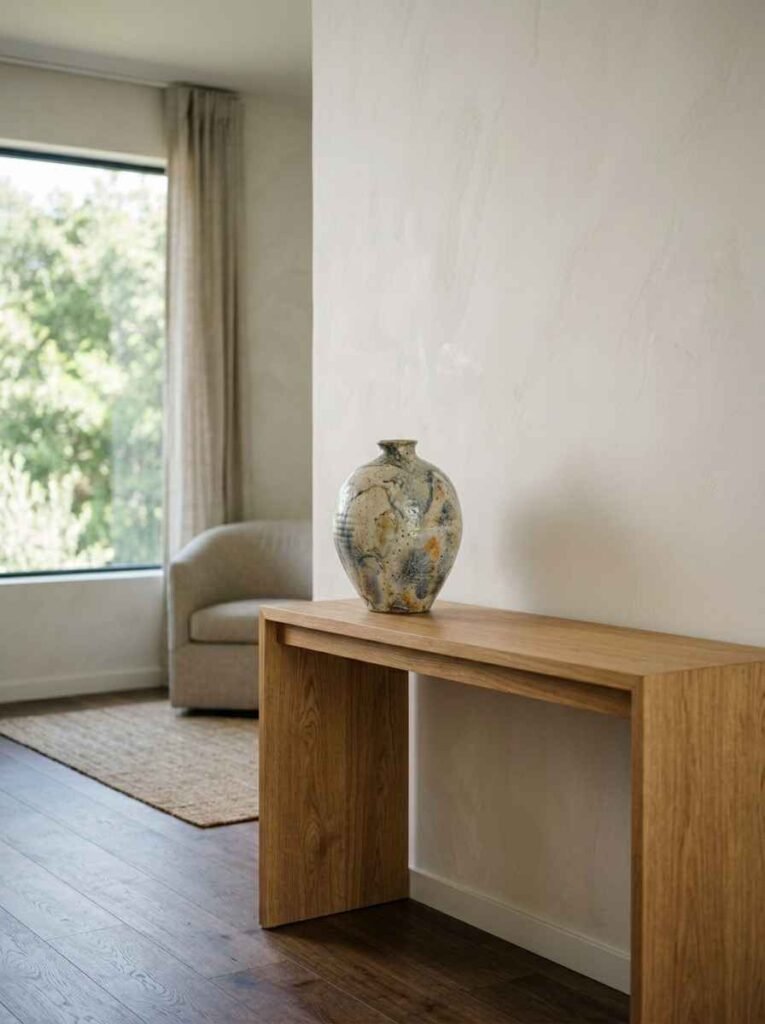
Instead of five small decorations on a shelf, pick one thing: a ceramic vase, a piece of art, a plant.
| Cluttered approach | Minimalist swap |
|---|---|
| 5 small trinkets on a shelf | 1 large ceramic vase |
| 3 framed photos in mismatched frames | 1 large print, matching frame |
| Stack of magazines on coffee table | 1 stack of 2-3 hardcover books |
| Multiple small candles | 1 large pillar candle |
Use a single light source per zone
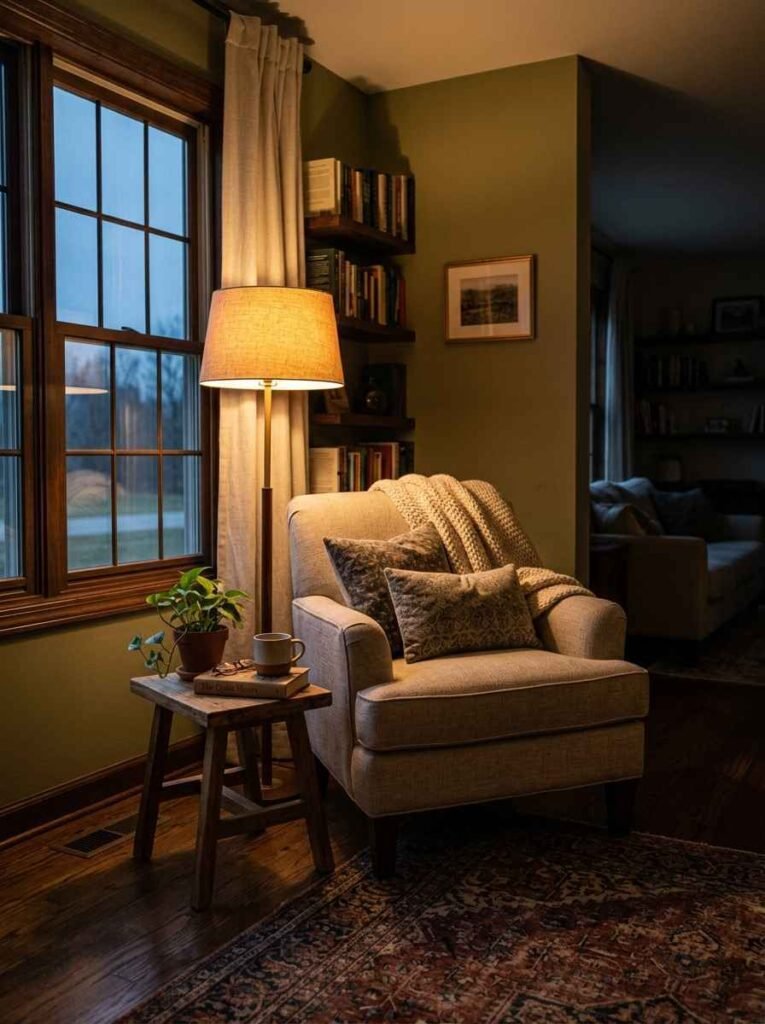
One overhead light, one floor lamp, done. Layer them with dimmers if you can.
I added a $25 floor lamp from a secondhand shop and it did more for the room than any wall art I’ve bought.
Hide your cables
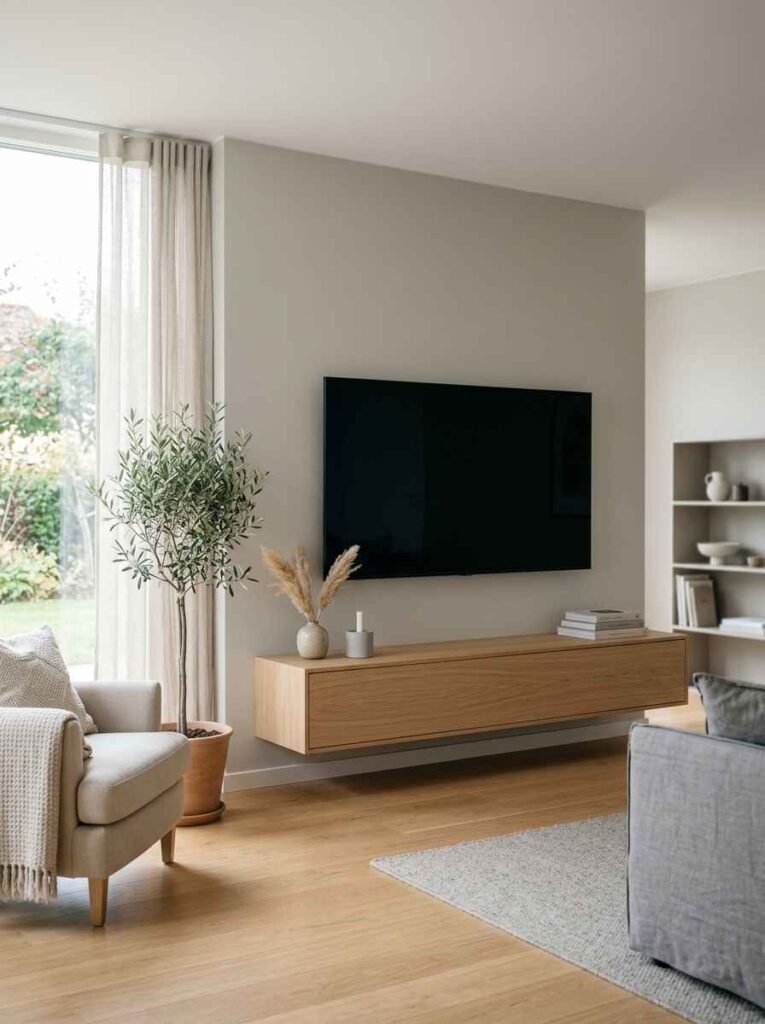
Nothing kills a clean look faster than a tangle of cords behind the TV. Cable clips, a cord box, or even binder clips on the back of furniture fix this in 10 minutes.
Choose furniture with legs, not bulk
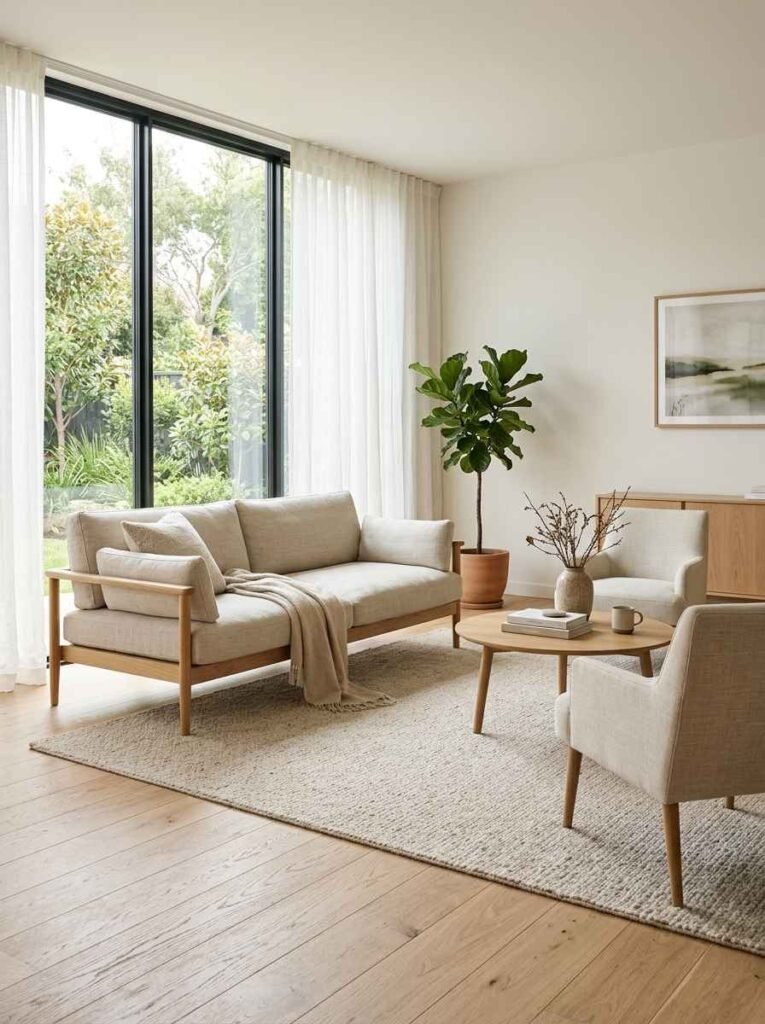
Sofas and chairs that sit on visible legs feel lighter than ones that touch the floor edge to edge.
More floor visible, more open the room feels.
Add texture instead of color
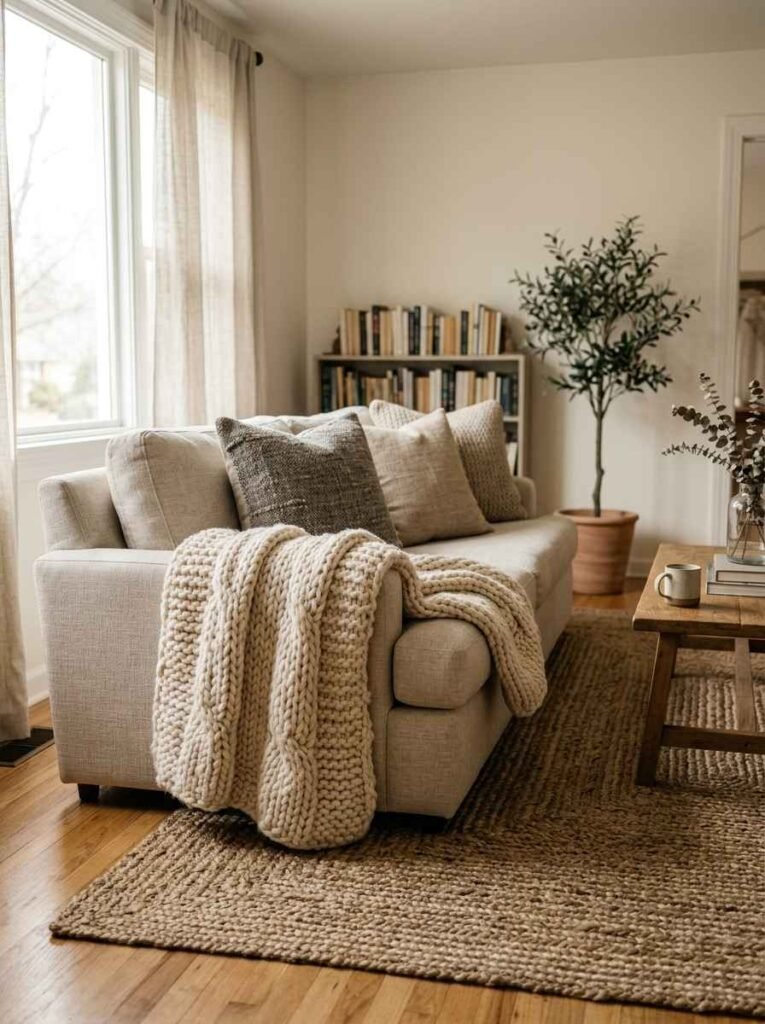
A chunky knit throw. A linen cushion. A jute rug. Texture gives a neutral room depth without adding visual noise.
Edit your wall art
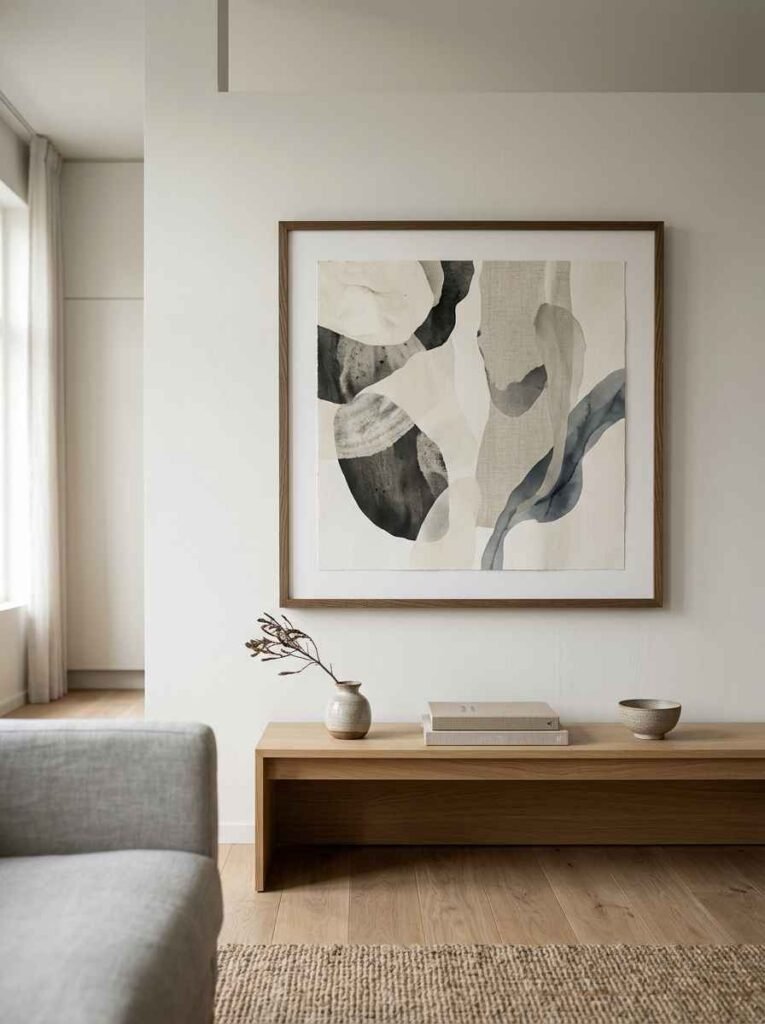
One large piece beats a gallery wall, especially in small rooms.
If you love a gallery wall, keep the frames identical and the spacing tight.
Use a tray to corral small items
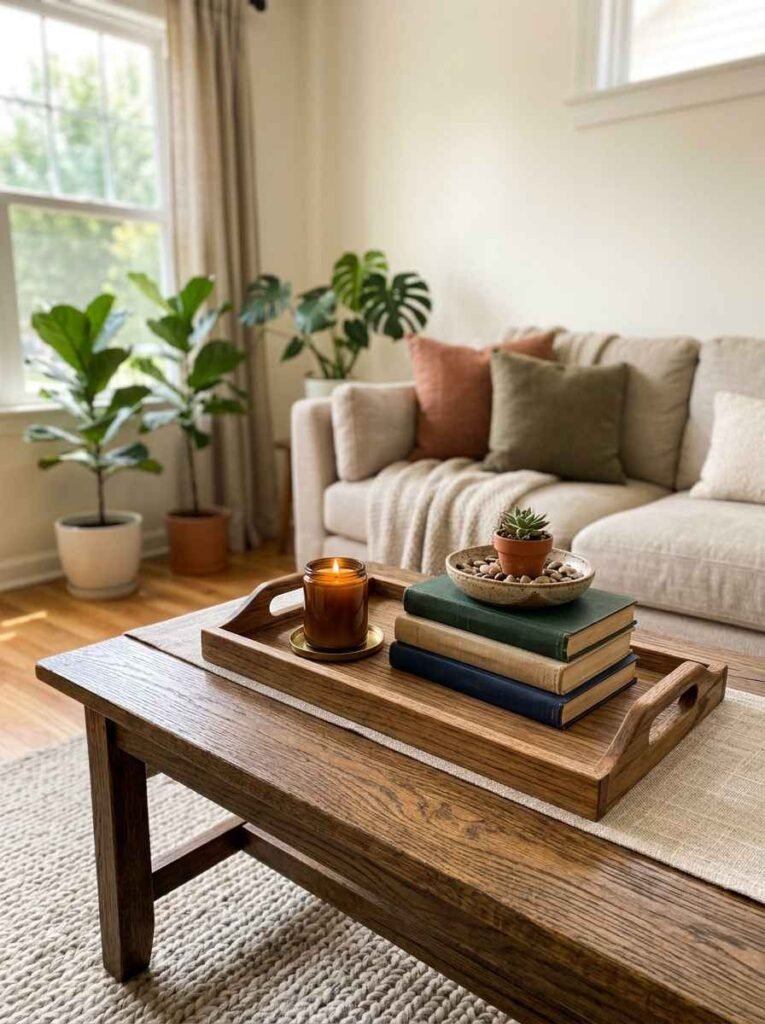
Remote controls, coasters, candles: group them on a single tray. Instant order, zero cost if you already own one.
Go thrift for your statement pieces
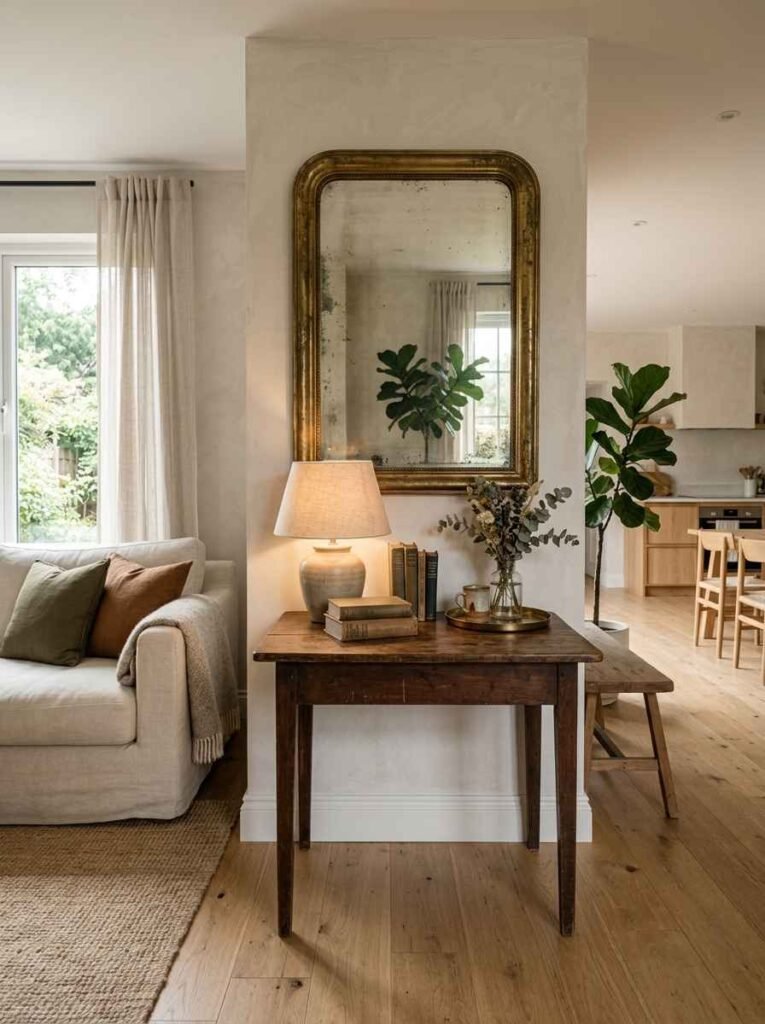
Some of my favorite items, a vintage mirror, a wooden side table, came from secondhand shops for under $20 each.
Minimalism doesn’t mean expensive. It means intentional.
Keep your color palette to three tones max
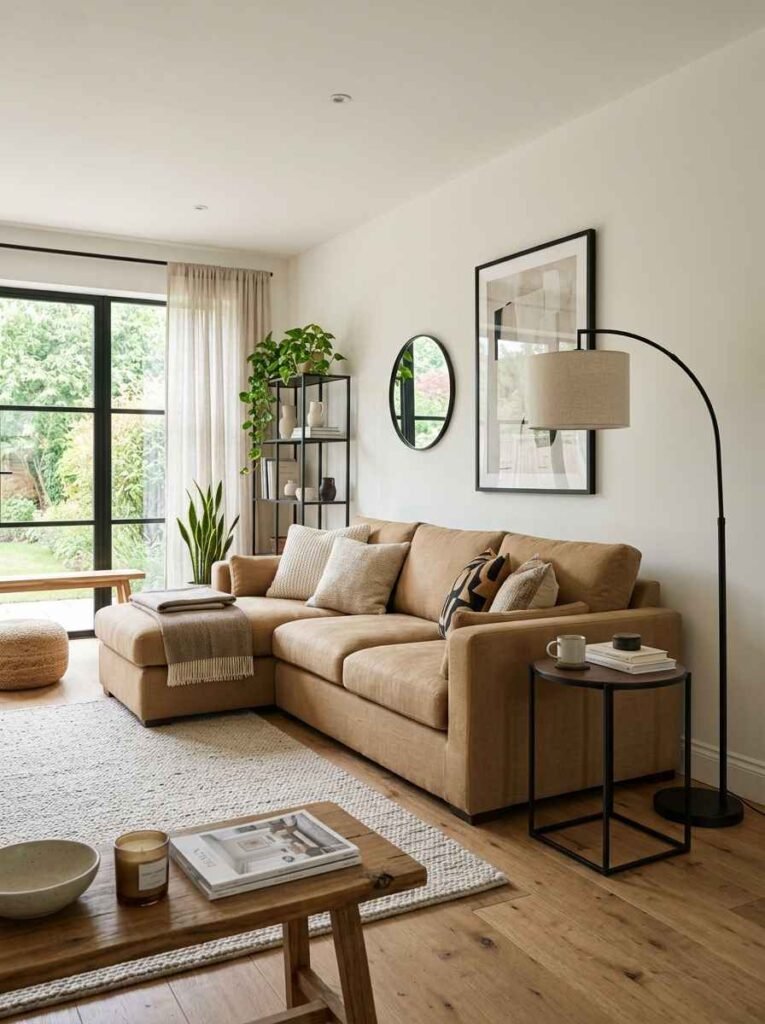
Base neutral, one accent, one metal or wood tone.
That’s it. Adding a fourth almost always tips a room from “calm” toward “busy.”
Declutter your bookshelf by category, not quantity
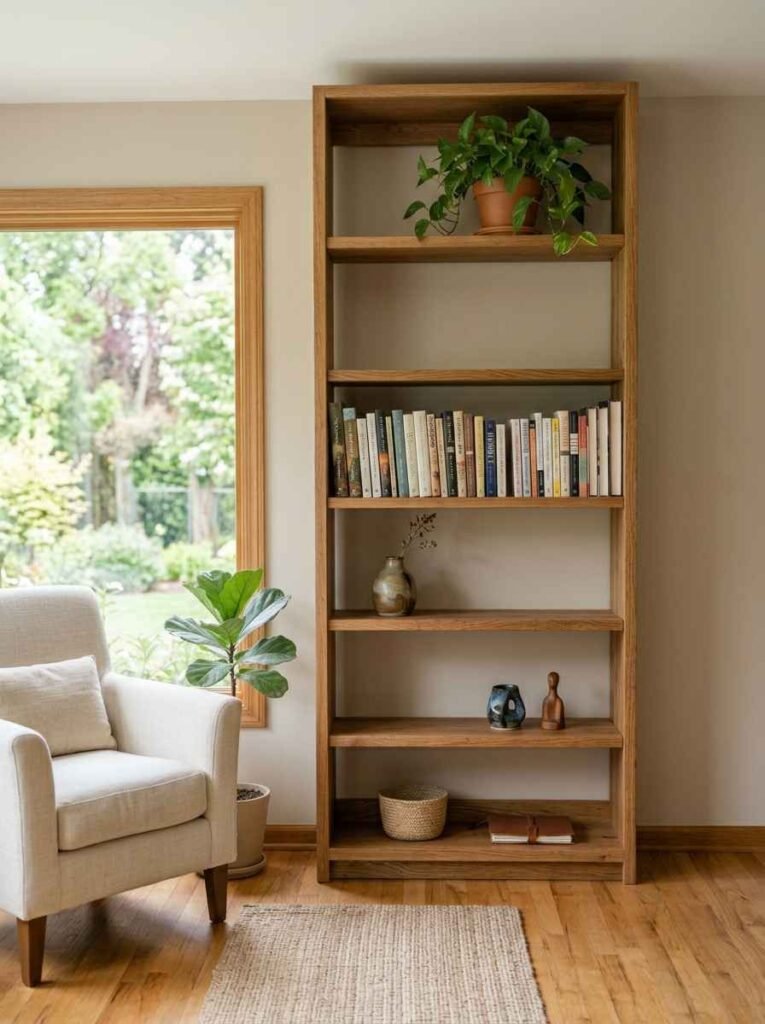
Books, plants, objects. Pick one category per shelf instead of mixing all three on every shelf.
Use mirrors to expand small spaces
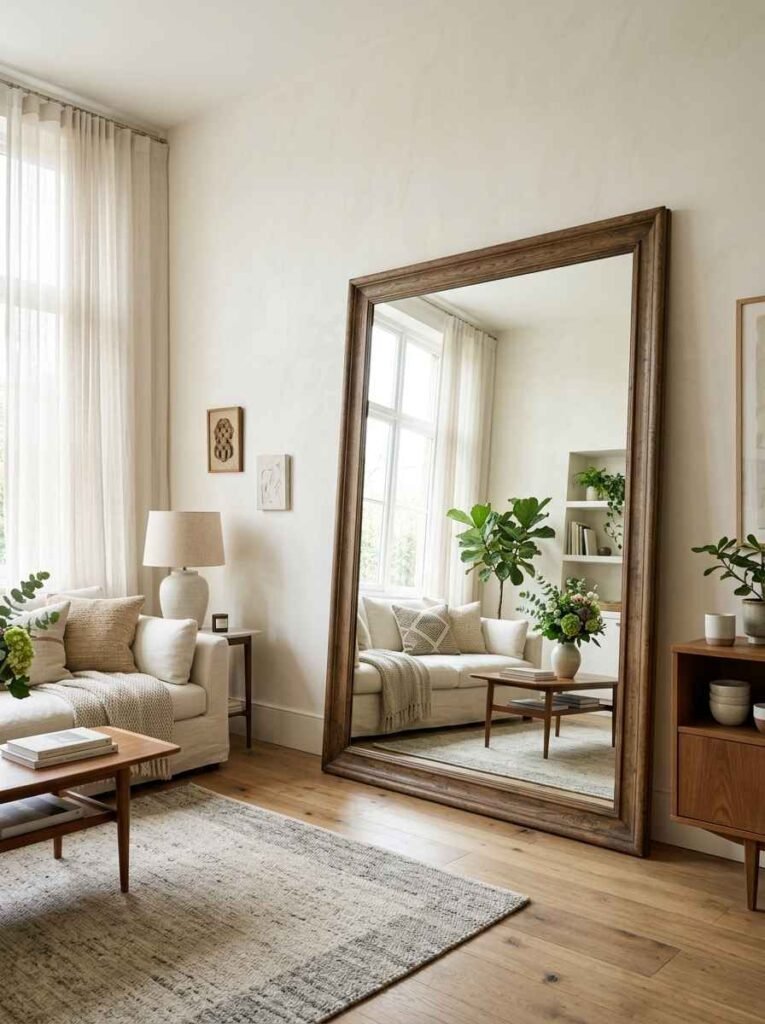
A single large mirror reflects light and makes a room feel bigger. Skip the mirrored furniture set, though. One mirror, well placed, does the job.
Choose curtains that pool slightly on the floor
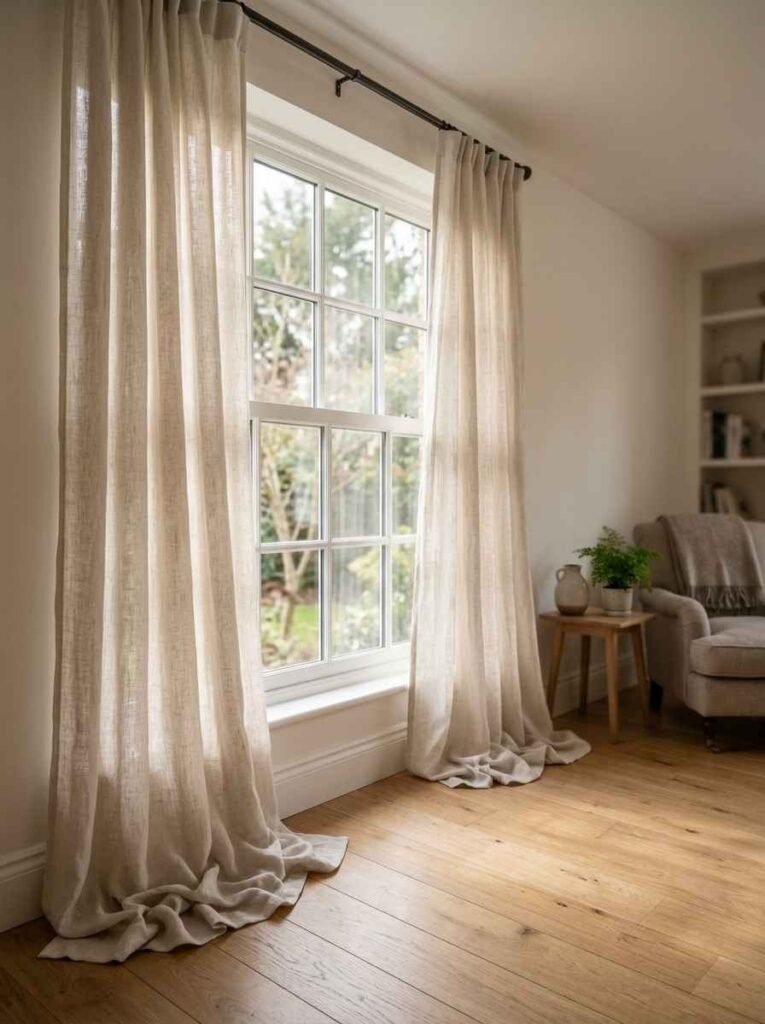
It’s a small detail, but curtains that just barely touch the floor (or pool an inch) read as intentional.
Curtains that hover above the floor read as “wrong size.”
Add one plant, not five
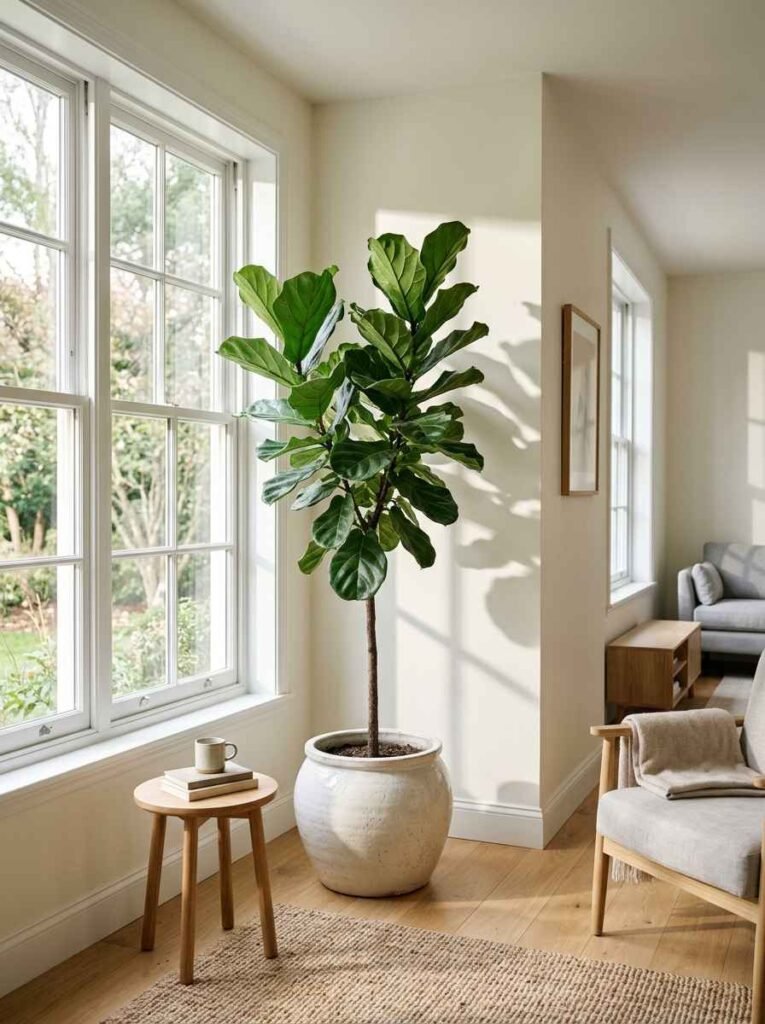
A single large plant, like a fiddle leaf fig or snake plant, has more impact than five small ones scattered around.
Keep your TV wall simple
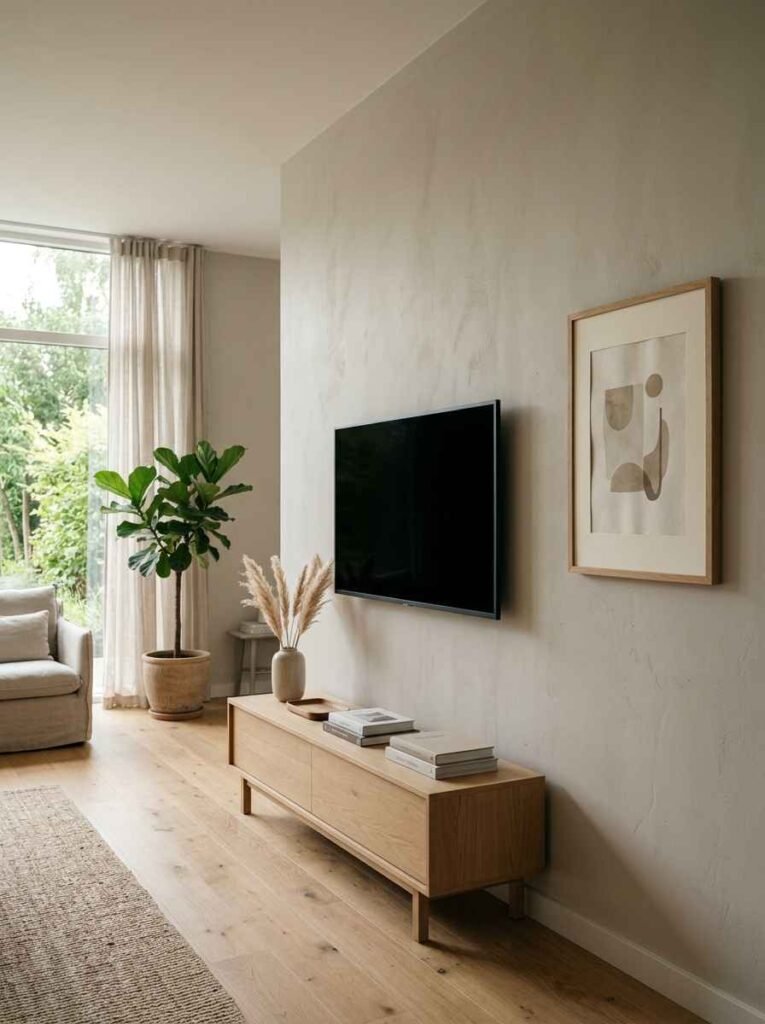
Mount the TV, skip the surrounding shelving units packed with decor. A clean wall with one piece of art beside the TV looks intentional.
Use baskets for storage you can’t hide
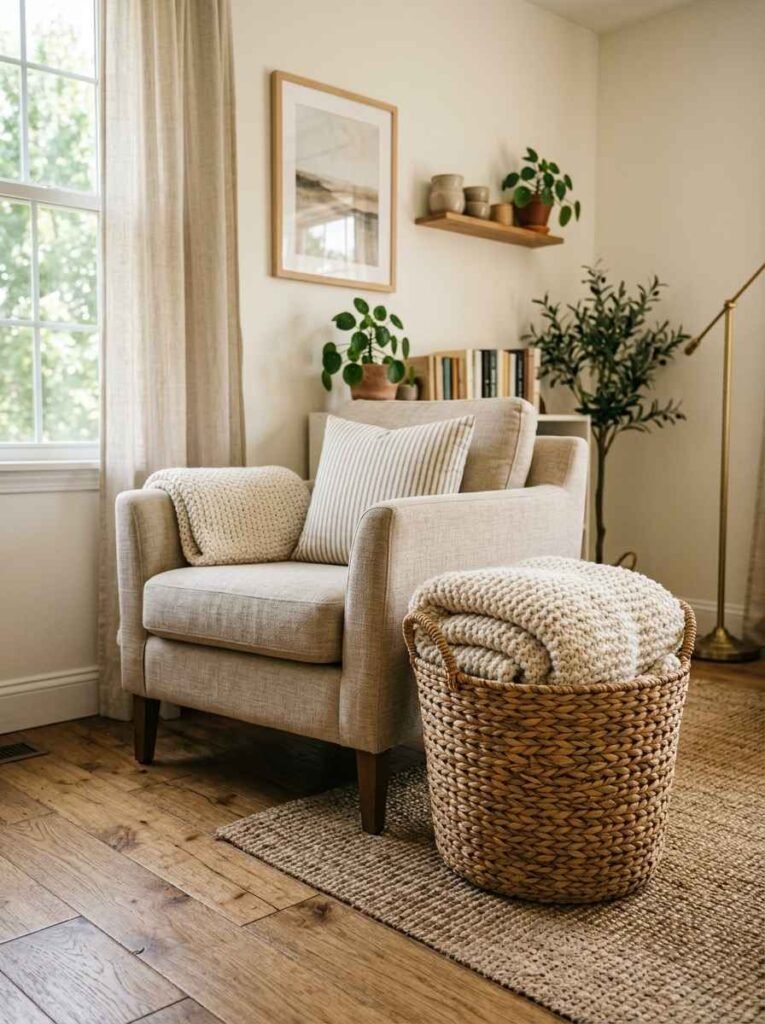
Blankets, kids’ toys, magazines: a woven basket holds them and looks like decor instead of mess.
Match your hardware finishes
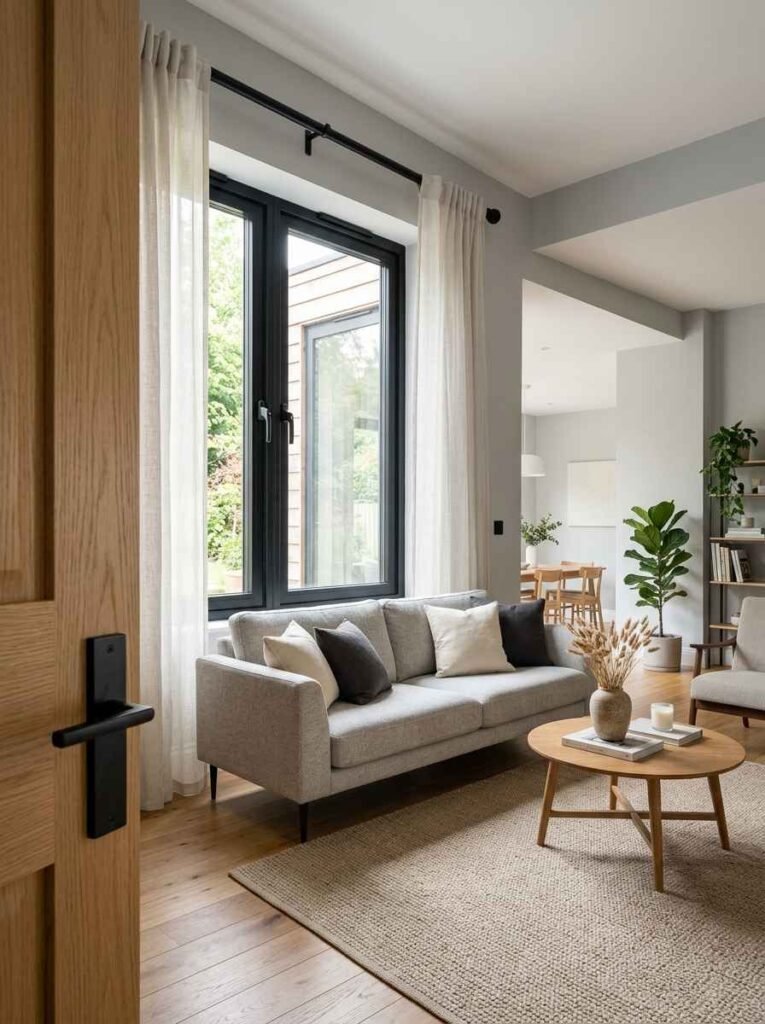
Door handles, light switches, curtain rods: pick one metal finish (brass, black, or chrome) and stick with it throughout the room.
Layer your rug sizes
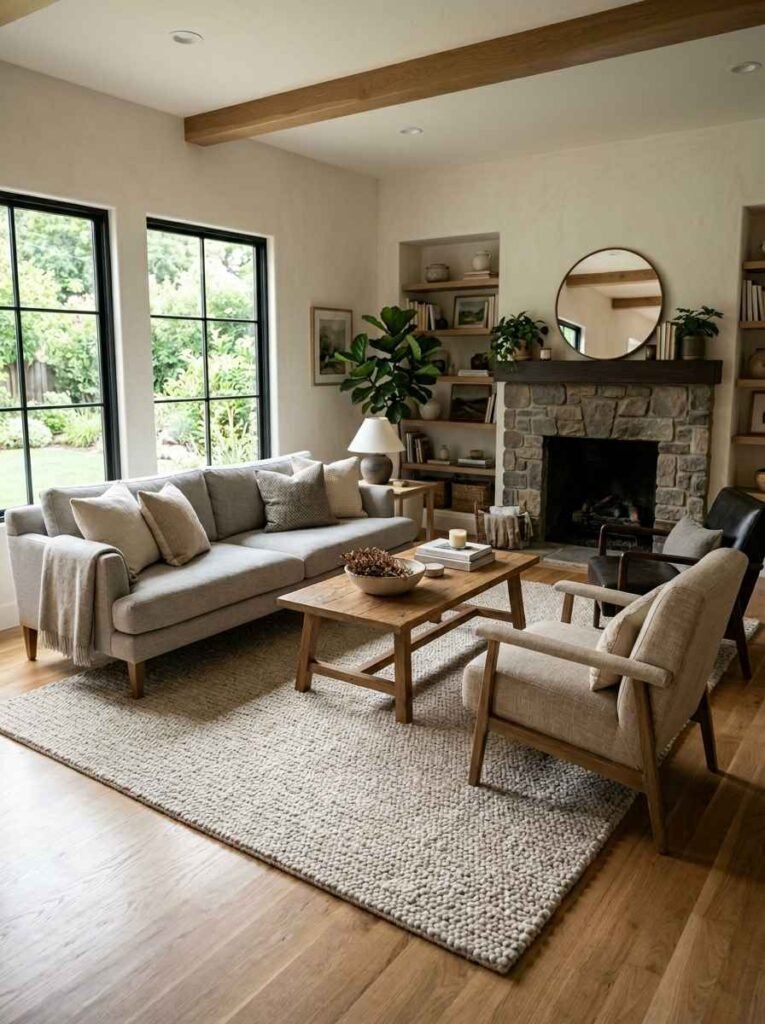
A large neutral rug as the base, with furniture sitting on it (not floating off the edges). Rugs that are too small make a room look unfinished.
Paint your trim the same color as your walls
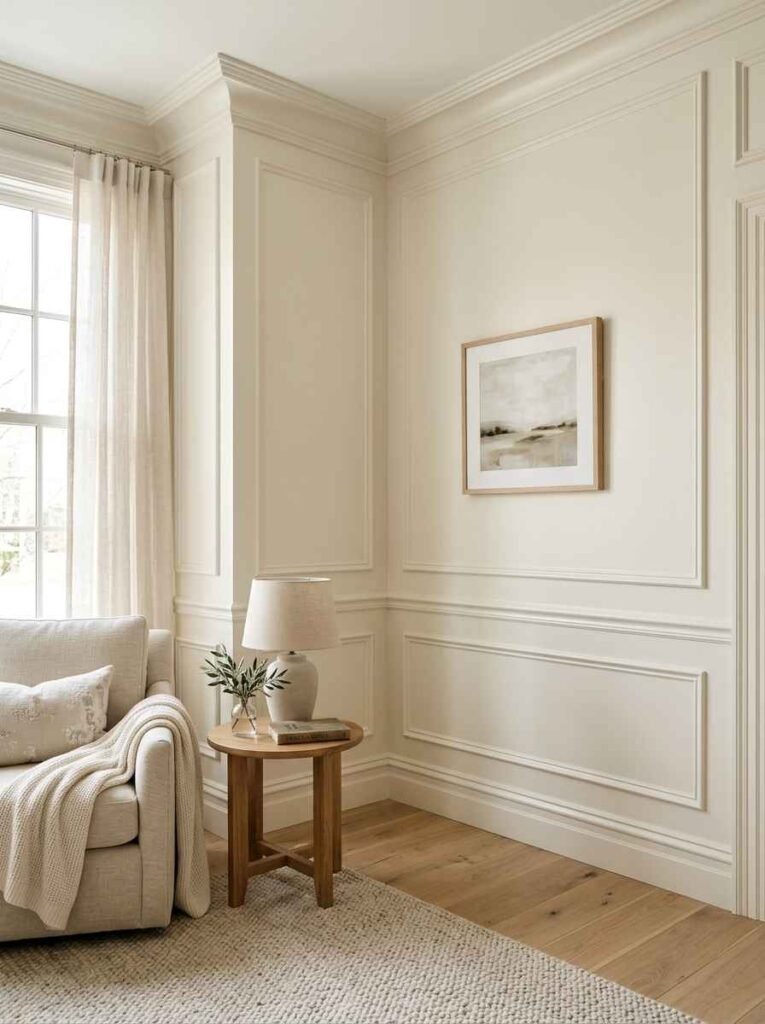
This one’s controversial in some decor circles, but it works. Same-color trim makes a room feel taller and removes visual clutter from edges.
Use open shelving sparingly
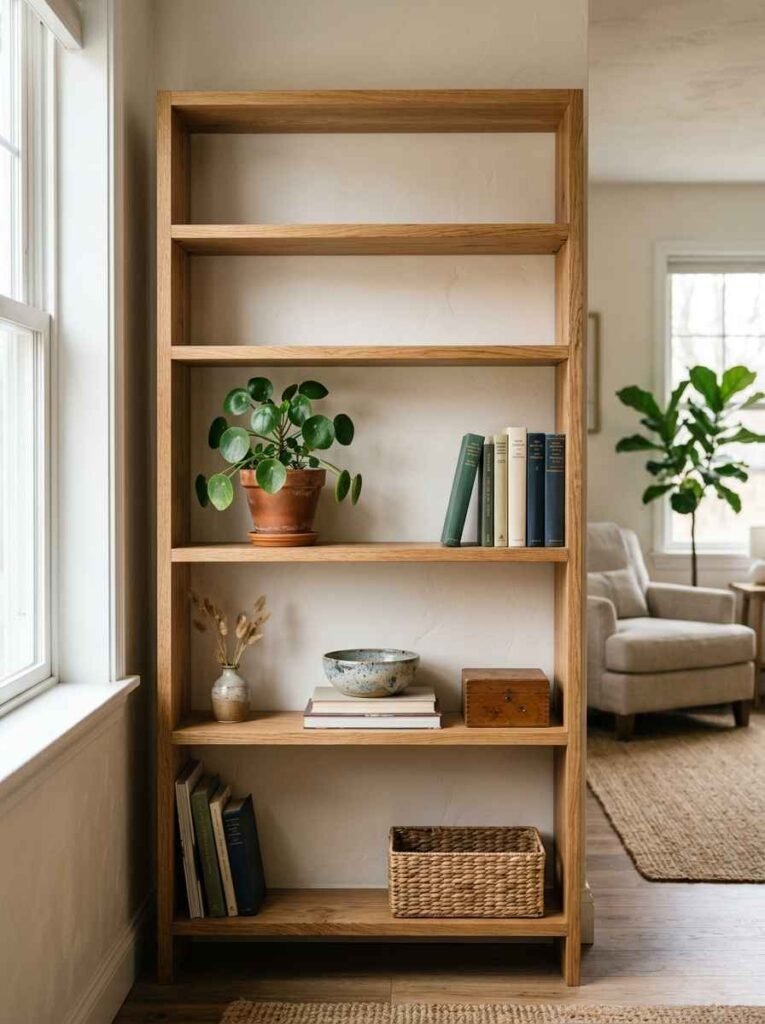
If you have open shelves, leave at least a third of the space empty. Fully packed shelves read as storage, not display.
Add warmth with wood tones
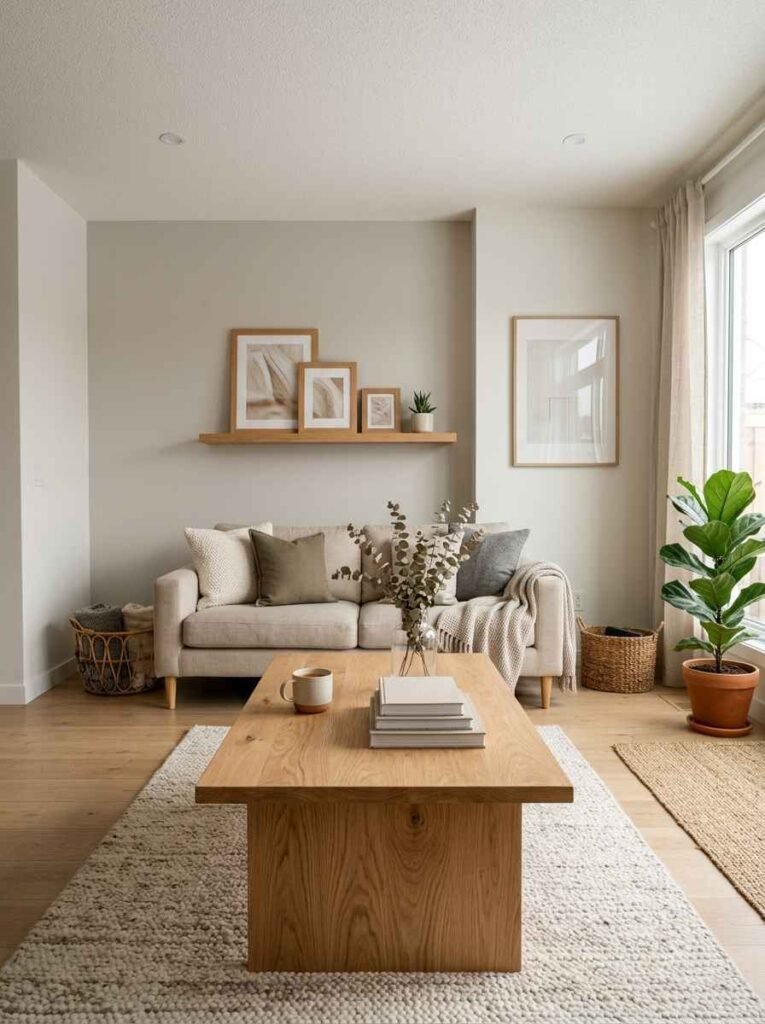
A wood coffee table, picture frame, or shelf brings warmth to an all-neutral room without adding color or pattern.
Keep cords and remotes out of sight with furniture that has storage
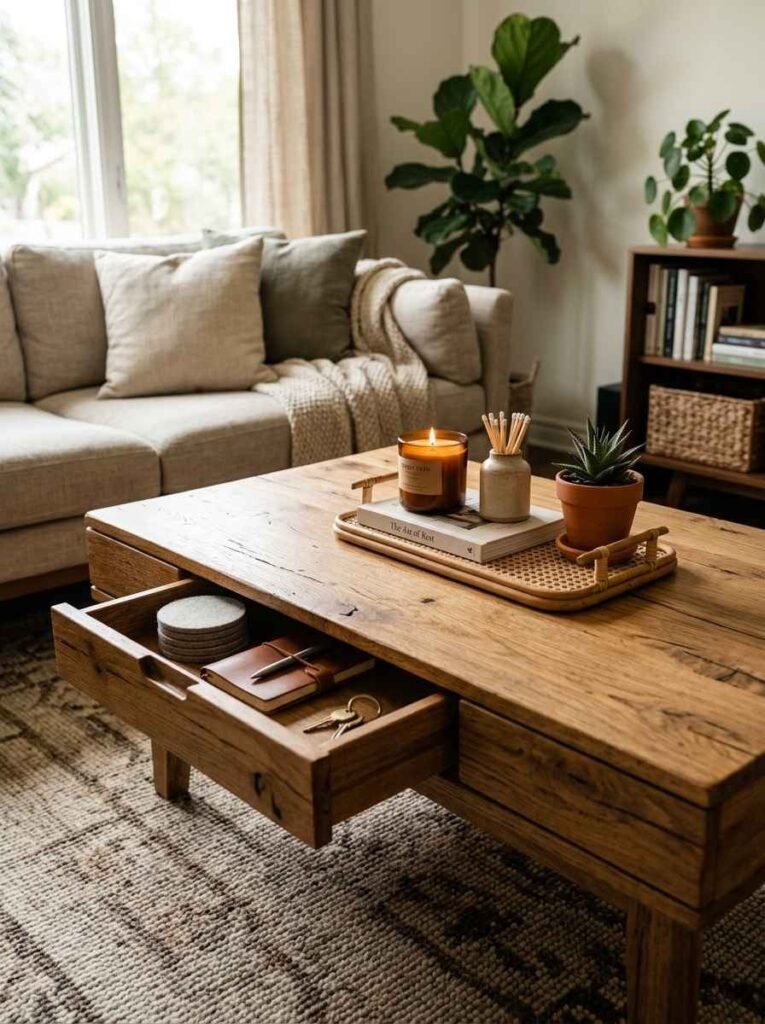
A coffee table with a drawer or shelf underneath does double duty: surface for display, storage for clutter.
Repeat one shape throughout the room
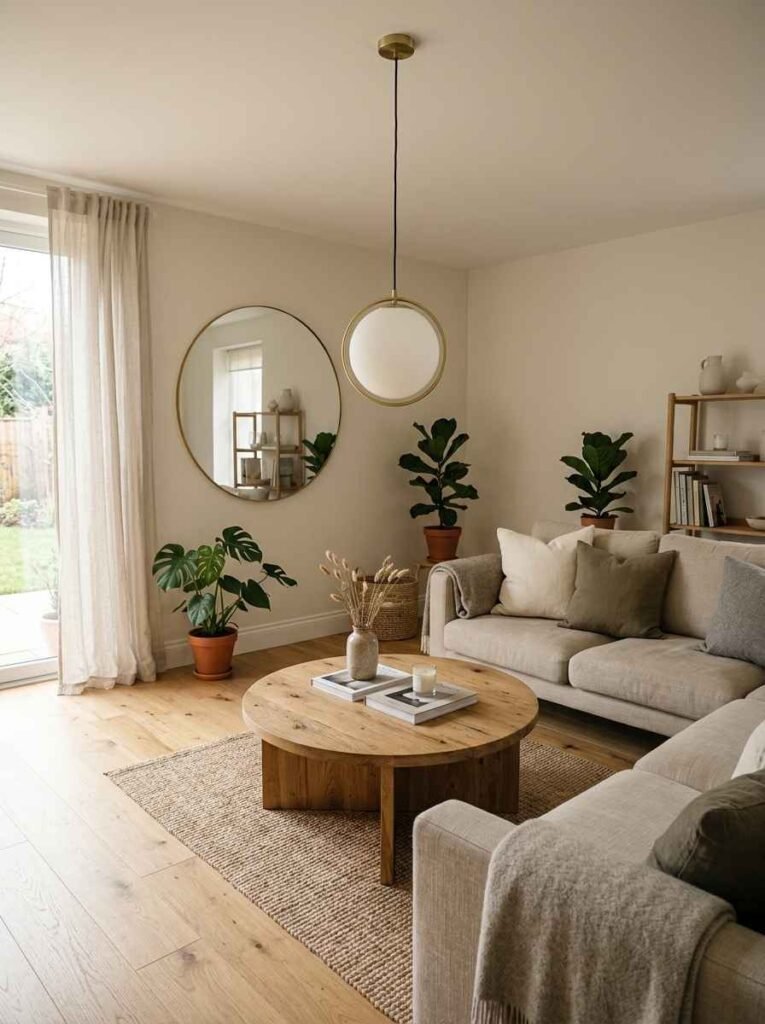
Round mirror, round coffee table, round pendant light. Repetition of a single shape (round, square, or organic) ties a room together without anyone noticing why it feels cohesive.
Edit again in 3 months
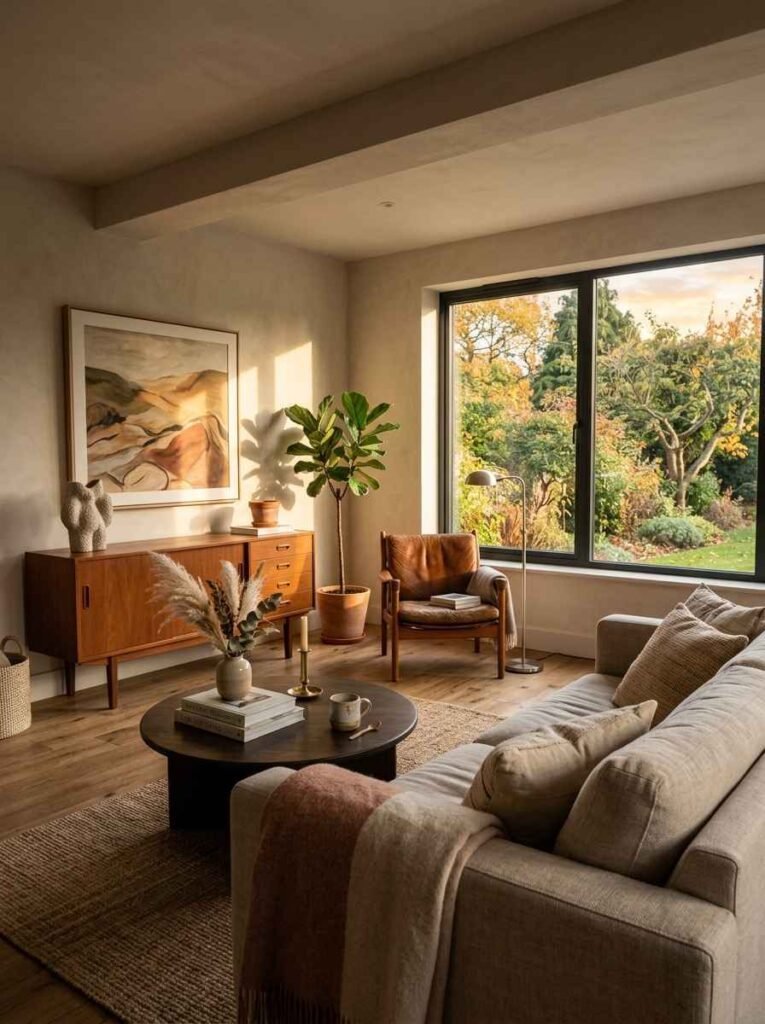
The first edit isn’t the last one. Live with the room for a few months, then look again. You’ll spot things you stopped seeing the first time.
My living room still isn’t “done.” I’m not sure minimalist rooms ever are; they just keep getting edited.
Start with one or two of these, live with the change for a week, then decide what’s next.
