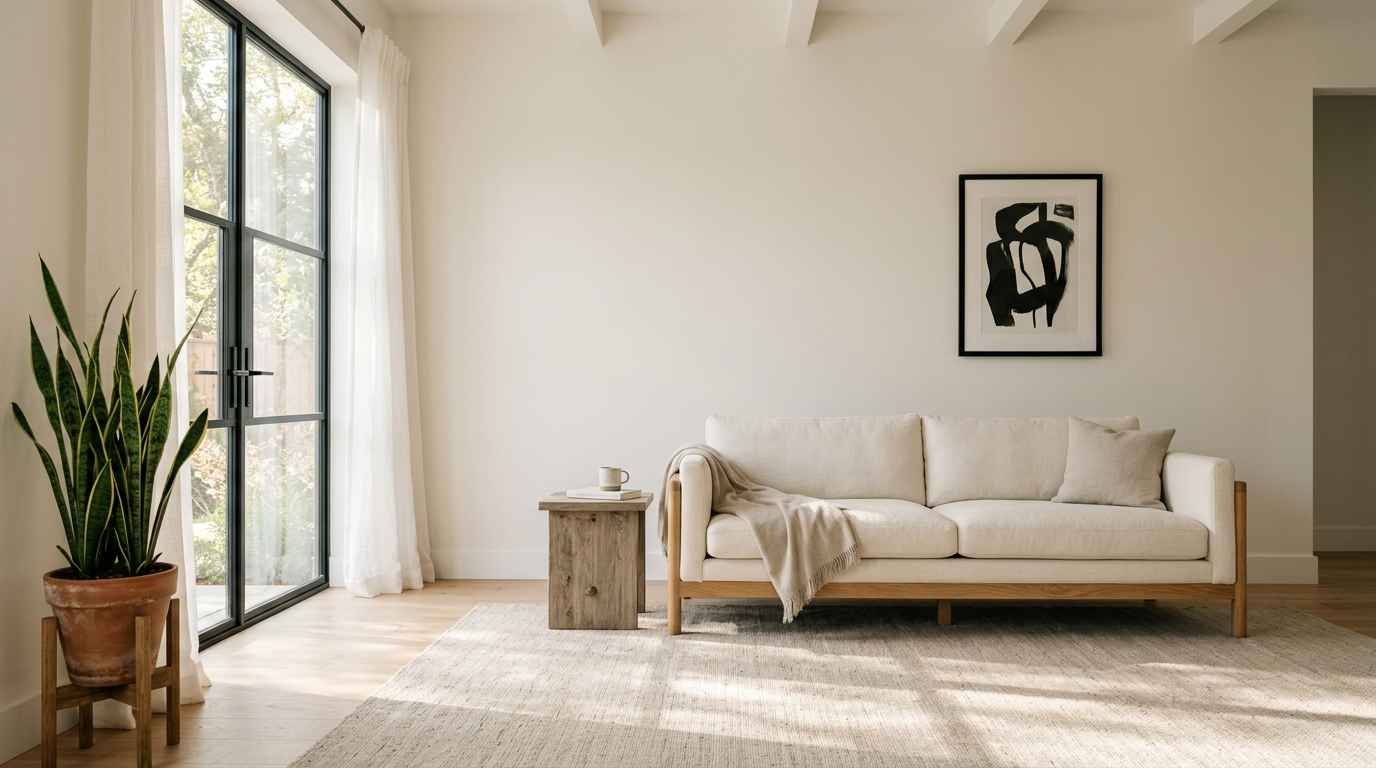
If you’ve spent the last year scrolling through Pinterest at midnight, you’ve probably noticed something.
Scandi bohemian design is everywhere. And honestly? It deserves to be. It’s the sweet spot between minimalist restraint and maximalist comfort—the design equivalent of a really good conversation.
I fell into this aesthetic by accident. I wanted clean lines. I also wanted texture. Warmth. Color. Turns out, you don’t have to pick.
Scandi bohemian lets you have all of it.
Here’s what makes this style work: Scandinavian design brings the structure (light wood, functionality, breathing room).
Bohemian adds the soul (layered textures, unexpected colors, collected-over-time feeling). Combine them and you get spaces that actually feel like home.
Let me walk you through 22 concrete ideas you can steal for your own space.
1. Natural Light as Your Secret Weapon
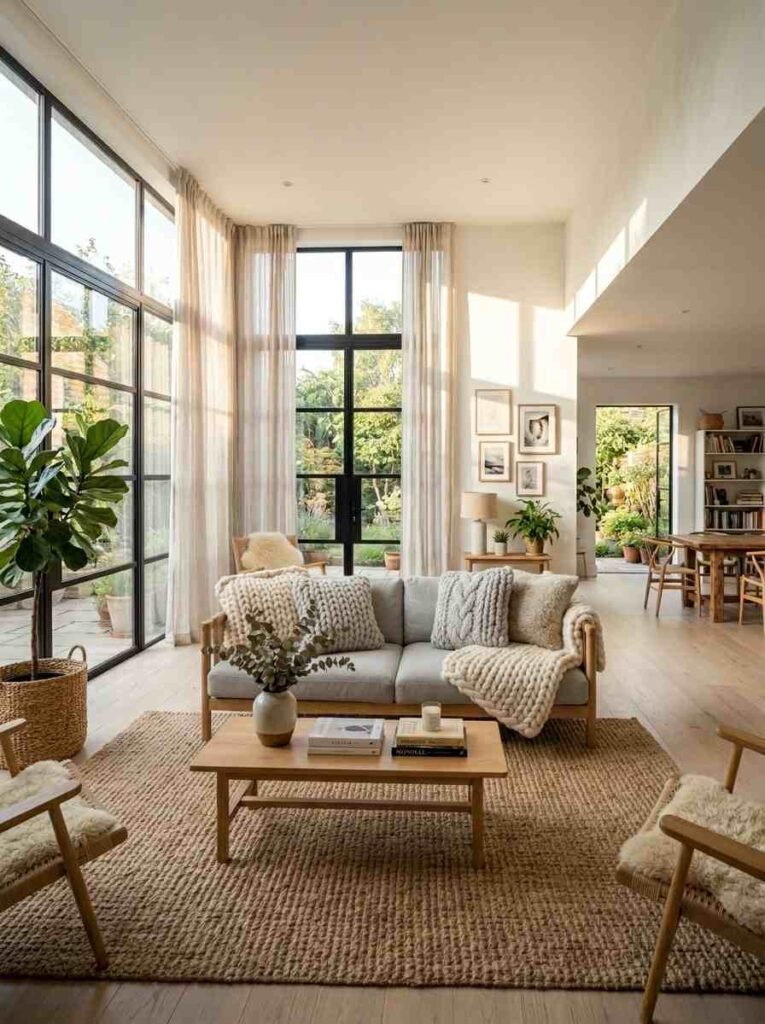
Start here. Seriously.
Scandi bohemian lives on natural light. If your windows don’t get sun, this style fights you.
The whole point is light hitting raw wood, illuminating woven textures, making those white walls glow. Without it, the space reads as cold instead of calm.
What this means practically:
- Sheer curtains (linen, cotton, undyed) let light filter through while softening harsh edges
- Skip heavy drapes unless you need blackout capability
- White or cream walls amplify light and make smaller spaces feel bigger
- Position your seating to face windows when possible
The moment I switched to linen curtains in my living room, everything changed. Suddenly the space had rhythm. Light and shadow moved through the room as the day progressed.
2. Warm Wood Tones (Light, Not Dark)
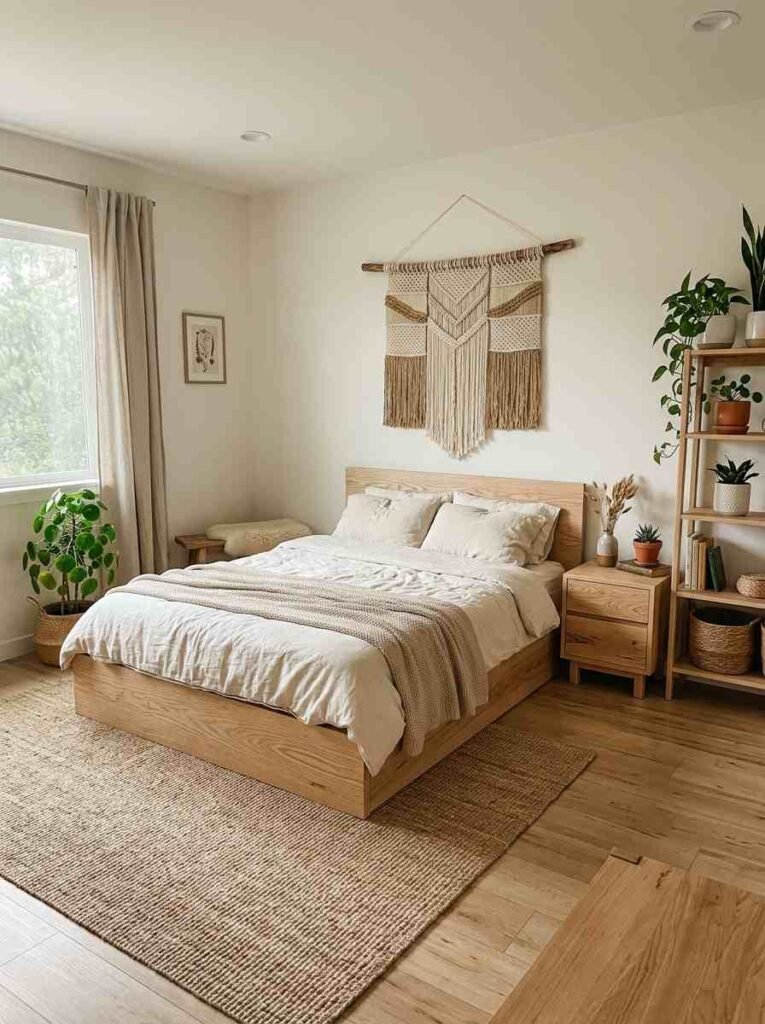
This is non-negotiable for the aesthetic.
Scandi bohemian doesn’t do dark walnut or espresso finishes. You need lighter woods: ash, birch, oak, elm.
These woods read as natural and organic. They pair beautifully with botanical elements (which we’ll get to).
Your floor, furniture, shelving—at least 60% of your wood elements should fall in that light-to-medium range.
Dark wood accents are fine. But the foundation should feel like forest floors after rain, not old libraries.
3. Layered Textiles Without Visual Chaos
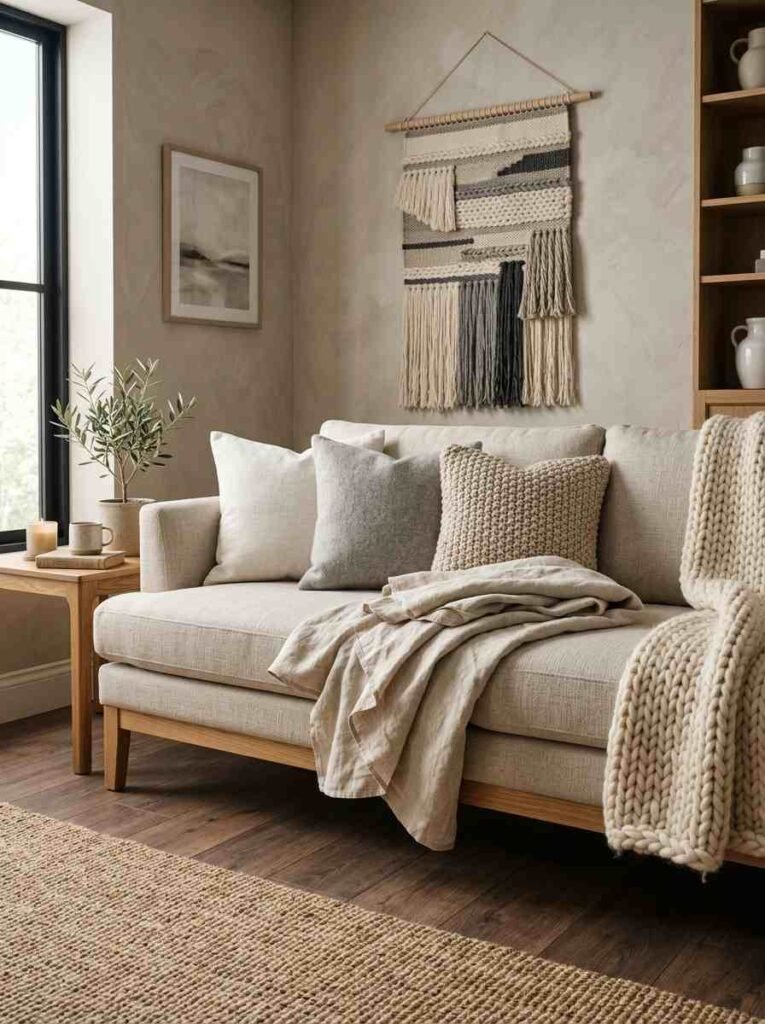
Here’s where most people mess up. They add three throws, four pillows, two rugs, and suddenly their sofa looks like a textile store exploded on it.
The trick? Stick to a texture palette. Pick 3-4 dominant textures that repeat:
- Chunky knit
- Linen
- Wool
- Jute or sisal
Then layer these across your space. Your throw is chunky knit. Your pillows mix linen and wool. Your rug is jute. Your wall hanging uses all three. Repetition creates coherence instead of chaos.
I use warm neutrals as my base (cream, oatmeal, soft gray, warm white) and then add depth through texture rather than color.
One throw pillow might be mustard or terracotta, but it’s surrounded by neutrals that let it breathe.
4. The Importance of Empty Space
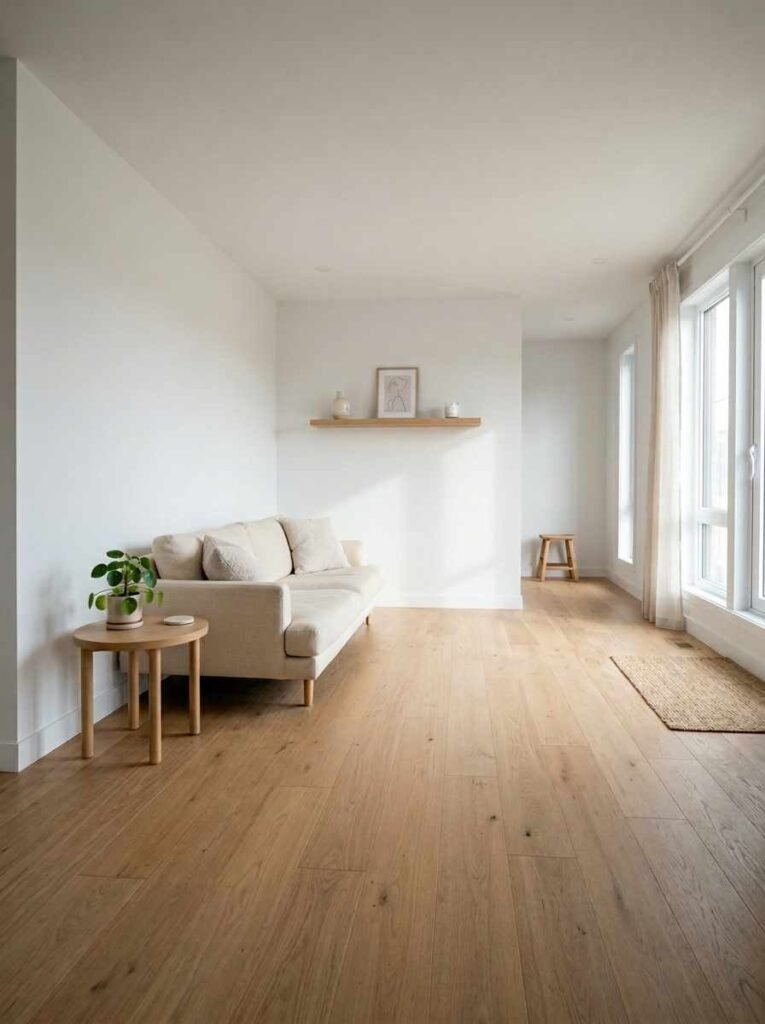
Bohemian doesn’t mean cluttered. Scandi absolutely means breathing room.
This is the constraint that keeps the style from feeling like a thrift store explosion. You need blank wall space.
Open shelves with actual gaps. Furniture that floats (doesn’t hug walls). Visible floor.
Quick test: Can you see your floor? Not just under furniture—actual visible floor? If not, you’ve added too much.
5. White or Soft Neutral Walls (The Foundation)
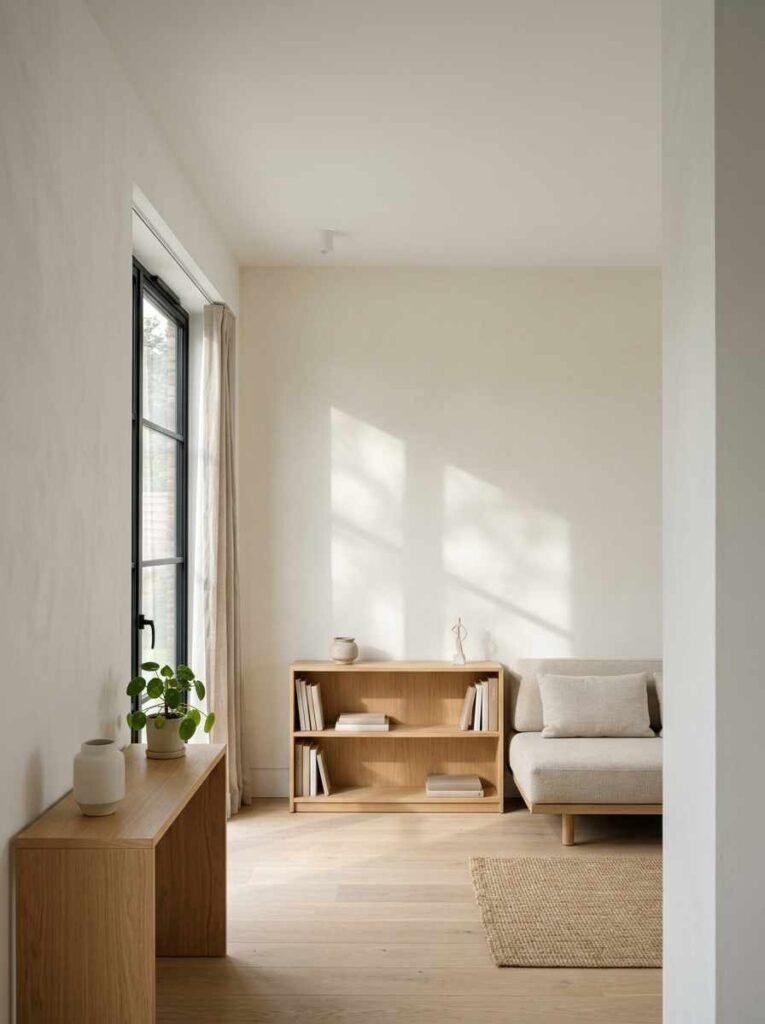
Your walls are your baseline. Scandi bohemian needs them calm.
Go with white, off-white, cream, or very soft greige (that warm gray-beige hybrid). Paint finish matters too—matte or eggshell, never high-gloss. Gloss feels plastic. Matte feels intentional.
The wall color should make your wood warmer and your textiles richer. It’s not about color. It’s about making everything else pop without competing.
6. One Feature Wall (Optional, But Powerful)
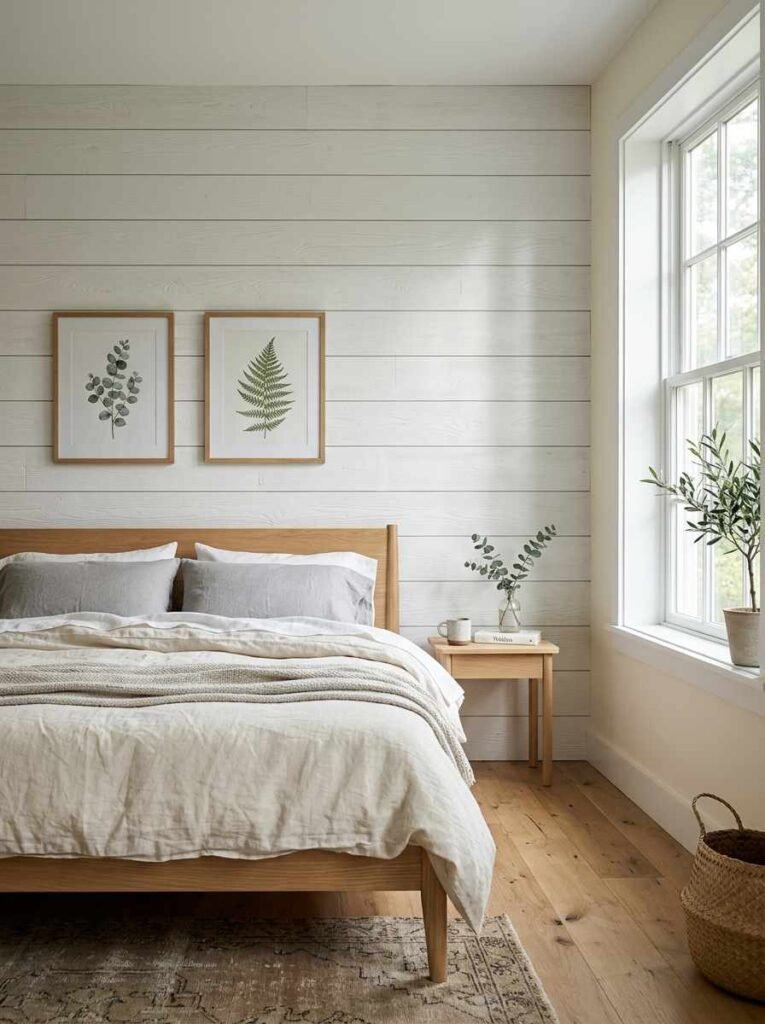
If you want pattern, do one wall. Not four.
That feature wall might be:
- Wallpaper (geometric, botanical, or textural)
- Shiplap (white or soft natural)
- Wood paneling (light wood, don’t paint it)
- A painted accent (warm sage, dusty blue, terracotta)
I have shiplap on one wall in my bedroom. It grounds the space without overwhelming it. But I kept the other three walls soft white. The shiplap does all the heavy lifting.
7. Plants Everywhere (But Make It Intentional)
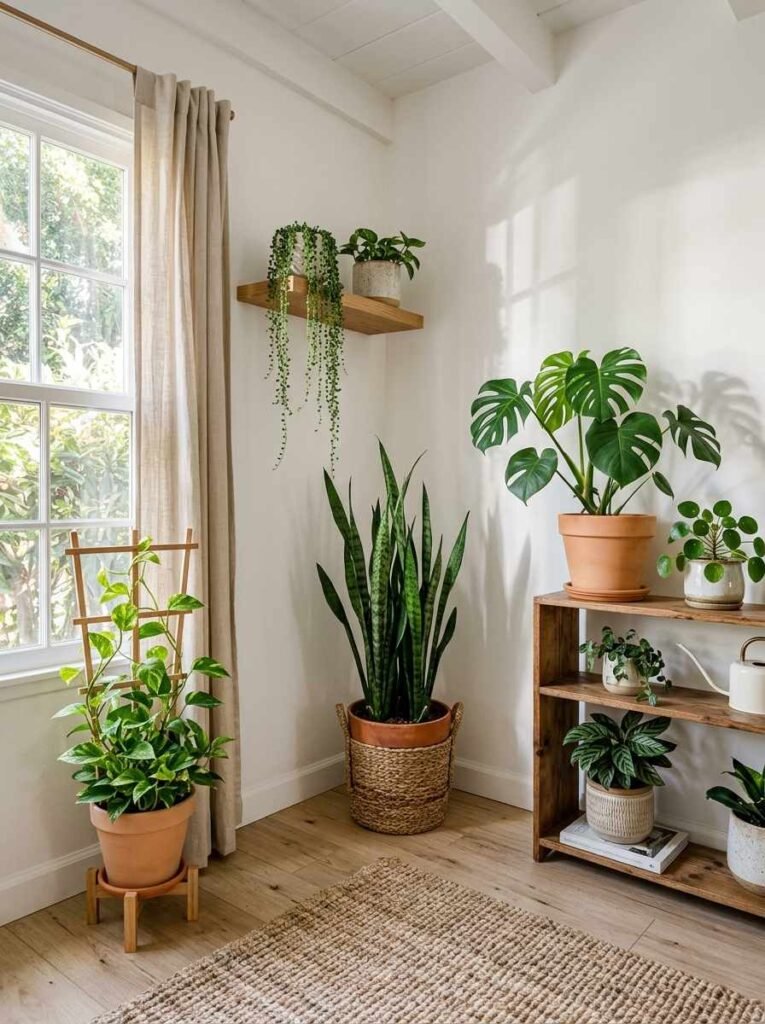
Bohemian without plants isn’t bohemian. It’s just minimalism.
You need greenery. But scatter it with purpose, not random placement.
Good spots:
- Tall plants (snake plant, bird of paradise) in corners to soften architecture
- Medium plants (pothos, monstera) on shelves mixed between books
- Hanging plants near windows (string of pearls, panda plant)
- Trailing plants on high shelves to soften edges
Group plants in odd numbers (three or five in a corner) rather than singular specimens. It feels more collected, less staged.
Keep plant pots in natural materials: terracotta, ceramic, woven baskets, macramé hangers. Plastic reads as temporary. These spaces feel permanent.
8. Wooden Shelving (Open, Not Closed)
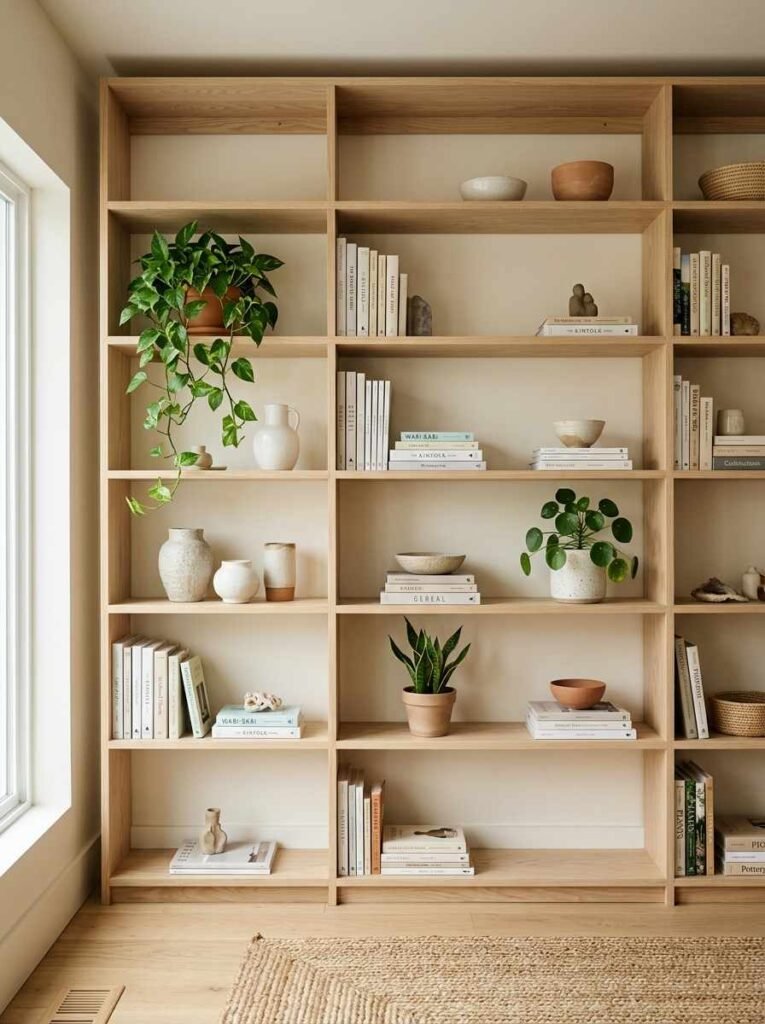
Skip the media console with closed cabinets. Scandi bohemian needs you to see what you own.
Open shelving shows your intentionality. You’re saying “I chose this, I use this, I like how this looks.” It’s vulnerable and honest.
How to style open shelves:
- Mix vertical and horizontal book stacks
- Cluster plants (see above)
- Vary heights with boxes or small crates underneath
- Group ceramics by color or material
- Leave gaps—don’t fill every inch
One shelf might hold three stacked books, two plants, and a ceramic vessel. The next shelf is mostly empty with a single framed photo. Rhythm beats uniformity.
9. Natural Fiber Rugs (Jute, Sisal, Wool)
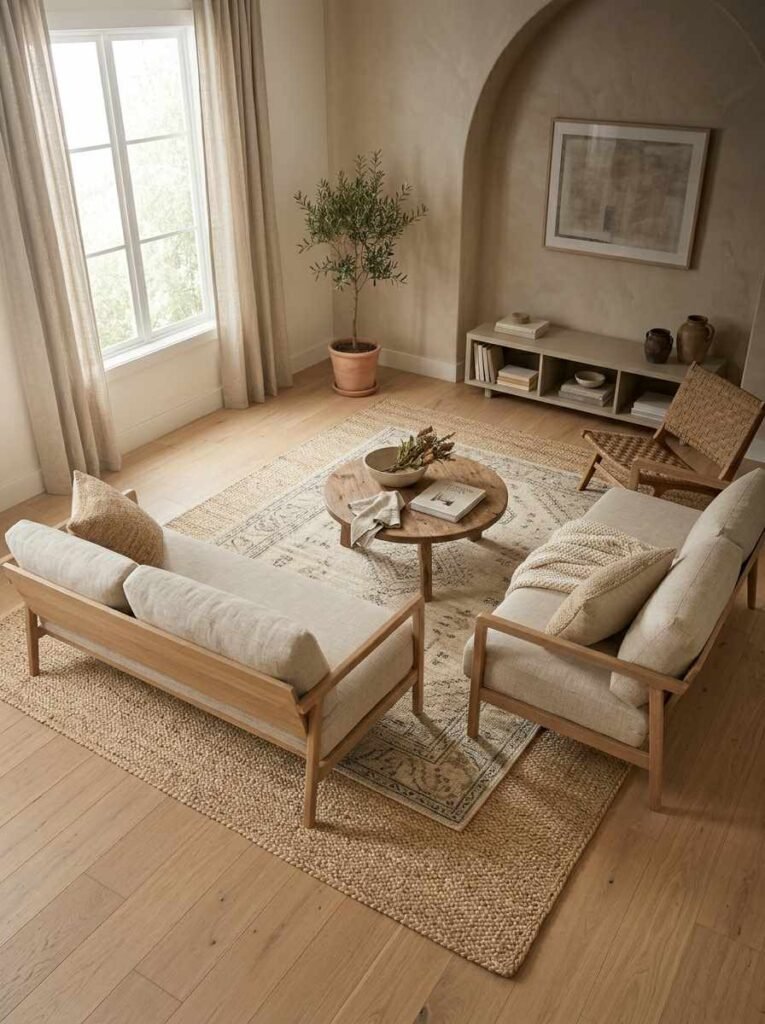
Your rug grounds the space. Scandi bohemian abhors synthetic.
Natural fibers feel right in this aesthetic. They age beautifully, develop patina, soften over time.
A jute rug after five years looks better than it did new. A synthetic rug after five years looks tired.
Size matters: Rug should be large enough that furniture sits partially on it (not balanced on the edge). This anchors the seating arrangement and makes the space feel intentional.
Layering rugs also works beautifully here. A large neutral jute base with a smaller patterned wool rug on top creates depth and visual interest without chaos.
10. Pottery and Ceramics (Handmade Aesthetic)
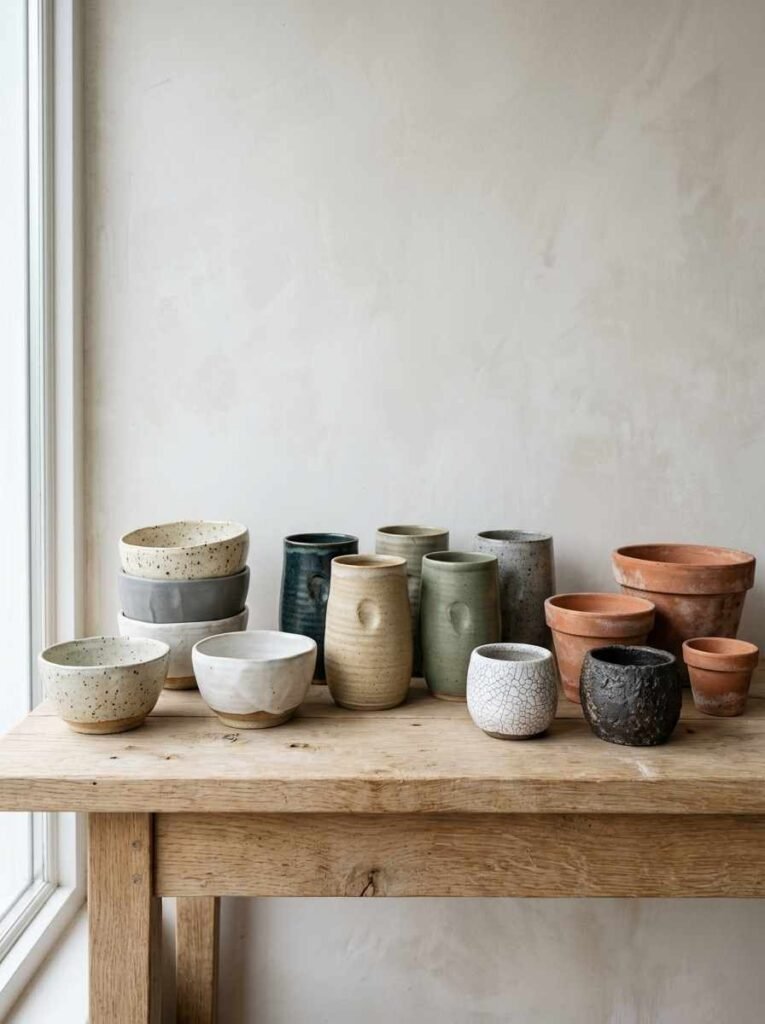
Collect ceramic pieces that look made by actual humans.
Look for:
- Wonky glazed bowls
- Hand-thrown vessels
- Unglazed terracotta pots
- Textured ceramics with thumbprints visible
- Crackle or sgraffito finishes
These shouldn’t match. That’s the point. You found them over time, in different places. They’re part of your story.
Display them on shelves, windowsills, side tables. Group by size or glaze color. They’re not just decorative—they’re evidence of what you love.
11. Warm Lighting (Avoid Harsh Overhead)
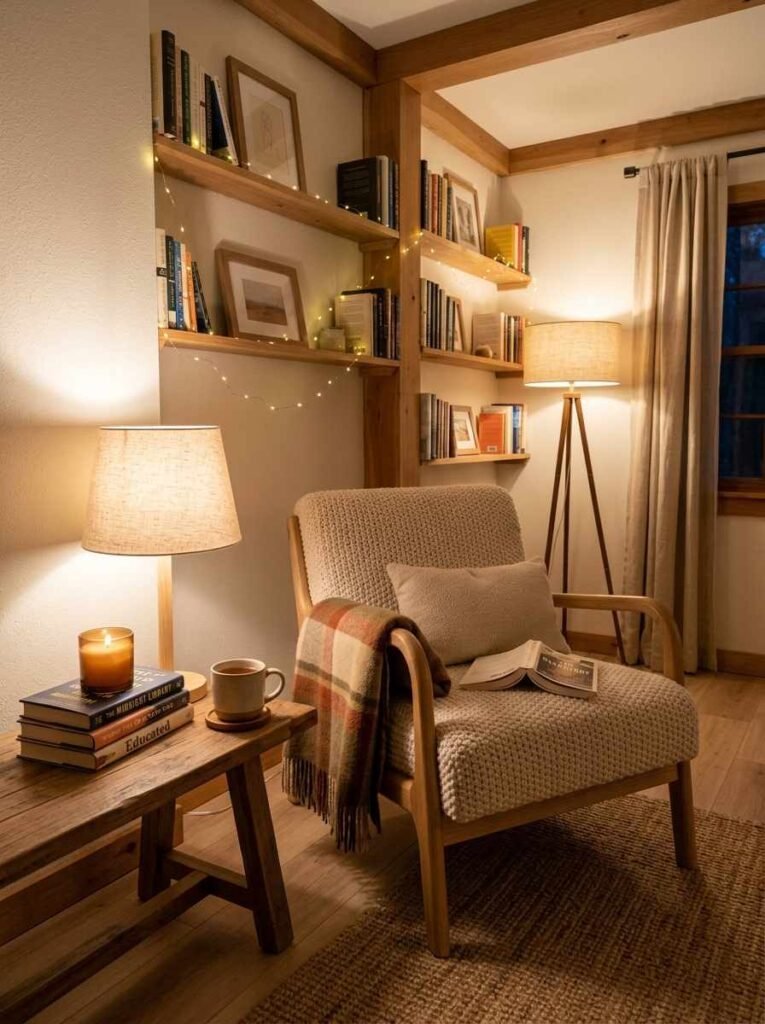
Scandi bohemian needs soft, warm light.
Skip the bright overhead fixture. Layer your lighting instead:
- Table lamps with linen shades
- Floor lamps with dimmable bulbs
- Pendant lights over work areas
- String lights or candles for ambiance
Bulb temperature matters. Use 2700K (warm white) instead of 4000K (cool white). The difference is subtle but enormous.
In my home office, I have three light sources: a desk lamp, a floor lamp in the corner, and a hanging pendant.
I can adjust based on time of day and task. It never feels harsh.
31 Home Interior Design Bohemian Tips: The Ultimate Guide
12. Woven Wall Hangings (Macramé, Tapestry, Fiber Art
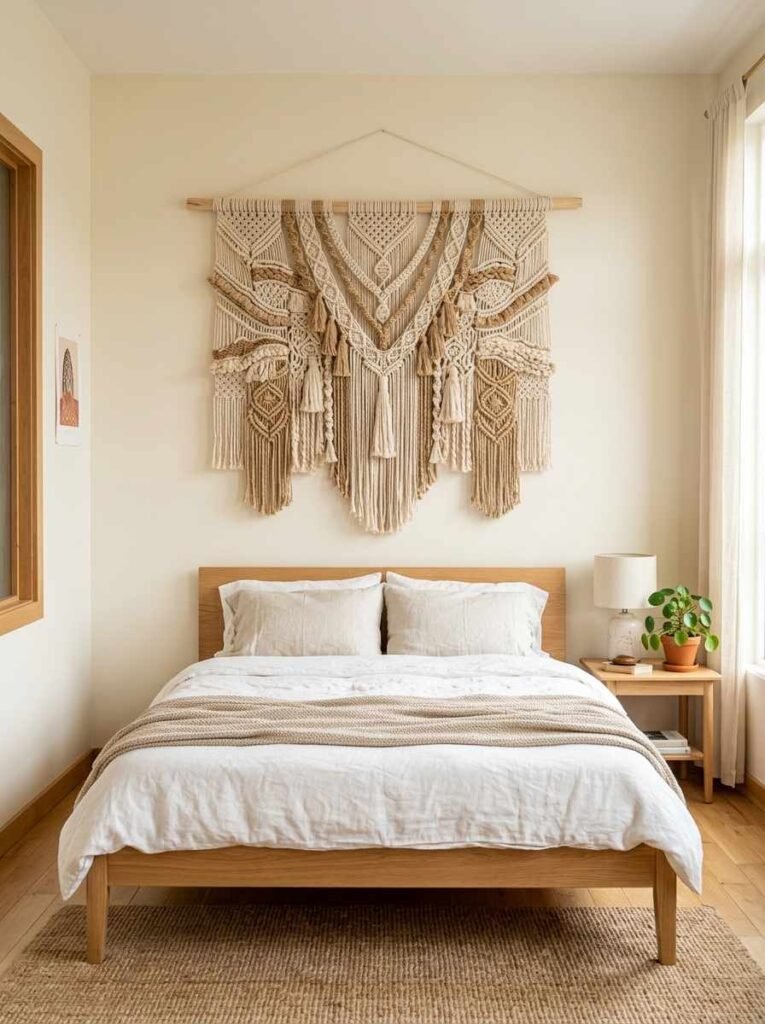
This is the bohemian half of your equation.
Hang a large woven wall hanging (macramé, jute rope weaving, or textile tapestry) as a focal point.
One statement piece beats a gallery wall of tiny items in this aesthetic.
Position it behind a sofa, on a bedroom wall, or above a console.
It should be large enough to command attention but not so busy that it fights with other patterns.
Alternatively, lean a woven piece against a wall temporarily. It’s less formal, more collected-over-time feeling.
13. Natural Fiber Curtains (Linen, Hemp, Wool)
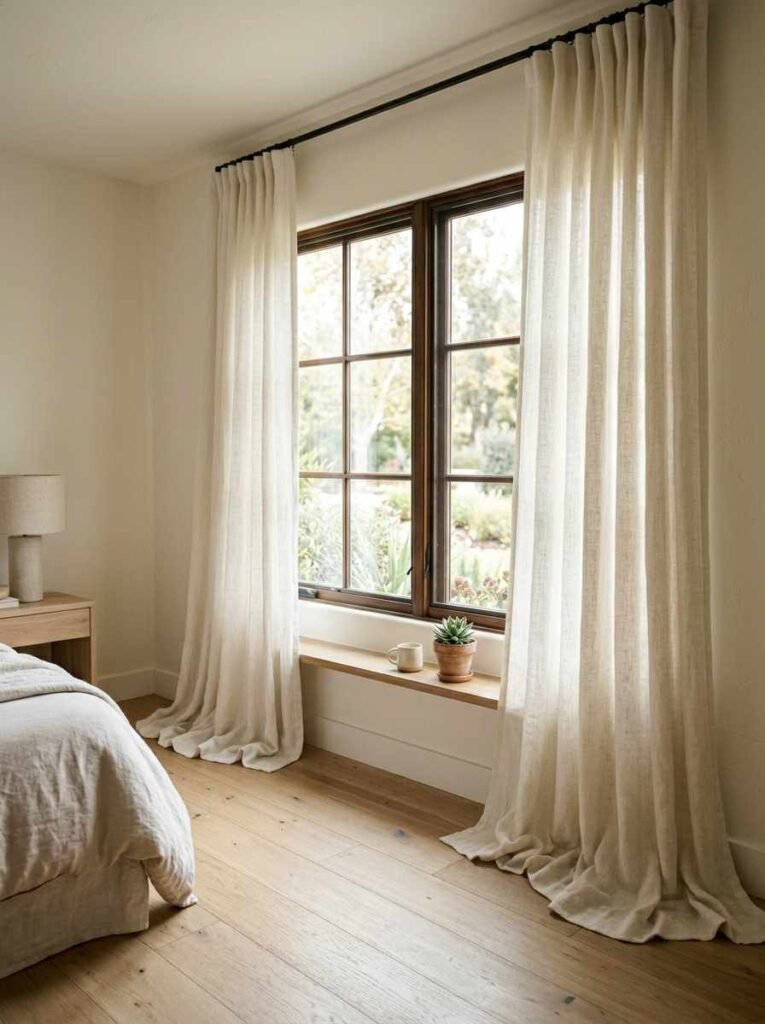
Your window treatments should feel natural, not finished.
Linen curtains hang beautifully—they drape in a way that feels organic. Hemp is similar but slightly stiffer.
Both have visible texture. Avoid poly blends that feel slick or plastic.
Let them puddle slightly on the floor (an inch or two of fabric pooling). It’s soft, collected, intentional.
No heavy velvet. No dramatic swags. Simple panels that let light through during the day and provide privacy at night. Function and beauty together.
14. Low, Grounded Furniture
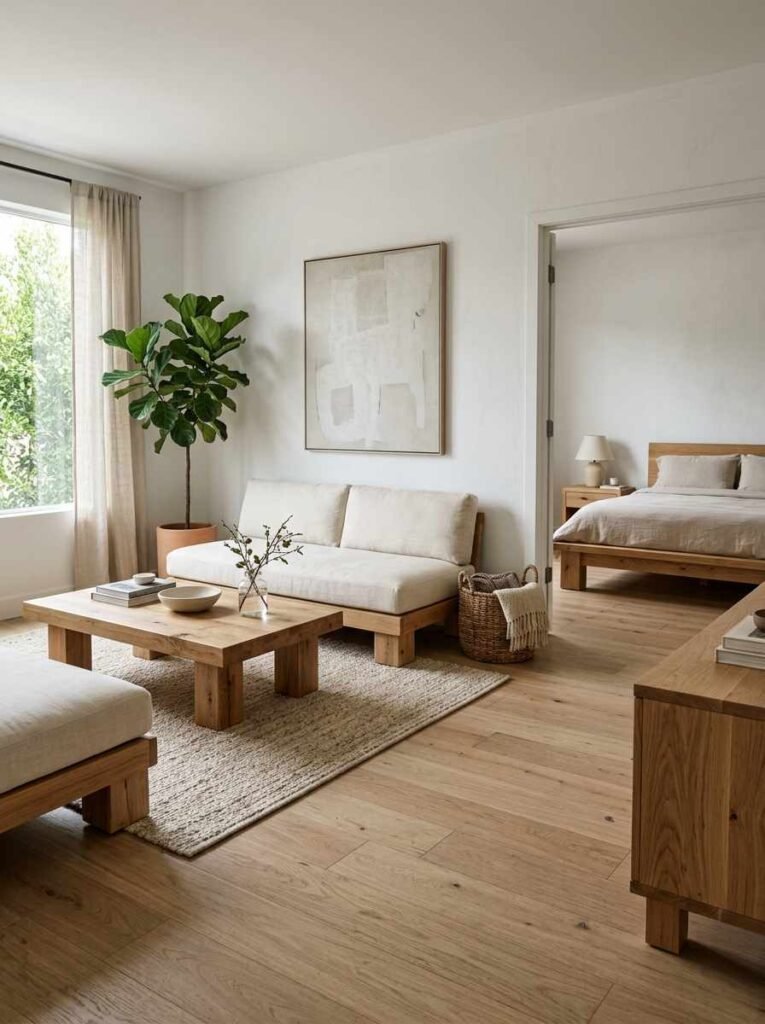
Avoid tall, spindly legs. Scandi bohemian favors chunky, grounded pieces.
Look for:
- Low-profile sofas or sectionals with exposed wooden bases
- Coffee tables with thick, chunky legs
- Bed frames that sit close to the ground (platforms or low-profile frames)
- Side tables with solid bases
The furniture should look like it’s anchoring the space, not floating.
Stick with wood legs in light tones, not thin metal legs (too contemporary minimal) or ornate carved legs (too traditional).
15. Color Accents Through Textiles, Not Paint
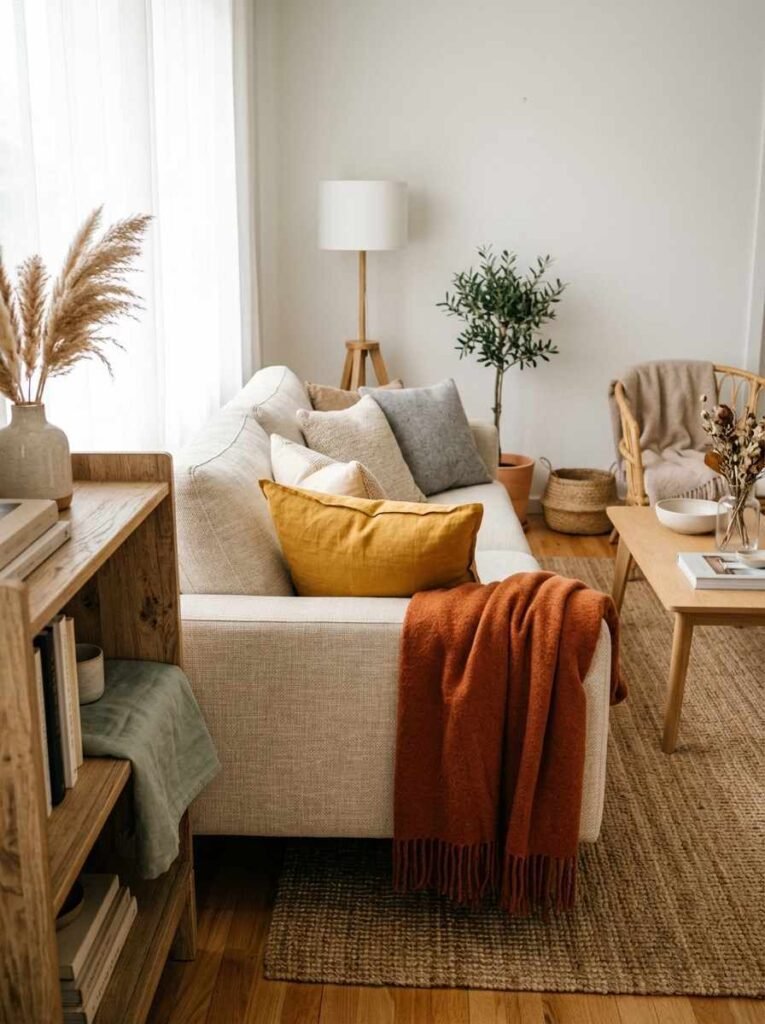
Here’s where you inject warmth and personality without overwhelming the space.
Your accent colors should come from:
- Throw pillows
- Blankets
- Small area rugs
- Artwork
That terracotta, mustard, sage green, or dusty blue should appear in multiple places but always softened by surrounding neutrals.
A single mustard pillow on a beige sofa reads as intentional. A mustard wall reads as a design choice you’ll regret in two years.
I have about 20% of my textiles in warm accent tones, 80% in neutrals. It creates visual interest without sensory overload.
16. Handmade or Vintage Art (Skip Mass-Produced Prints)
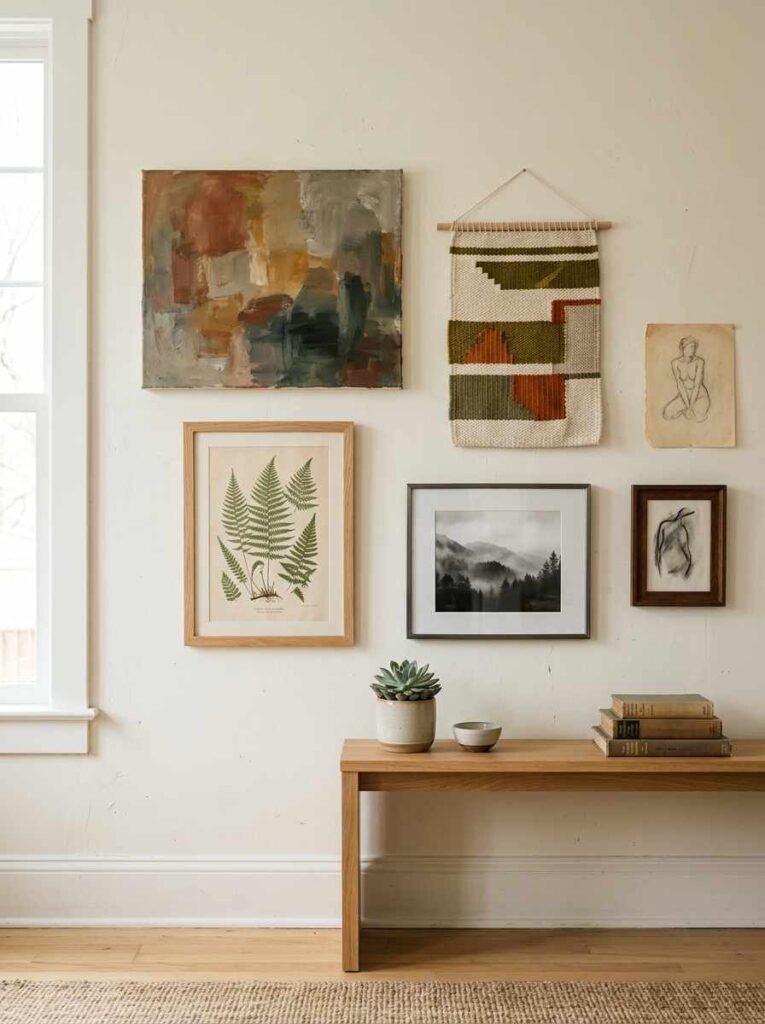
Your artwork should have a story or a maker’s hand visible in it.
Hang:
- Original paintings or drawings (even amateur, especially amateur—it’s more human)
- Vintage botanical prints (frame them simply)
- Textile art or woven pieces
- Photography you’ve taken yourself
- Prints from independent artists
Skip the mass-produced abstract print from a big-box retailer. Scandi bohemian is about authenticity and personal choice.
Your art should reflect what actually moves you, not what matches your paint color.
17. Functional, Beautiful Kitchen Details
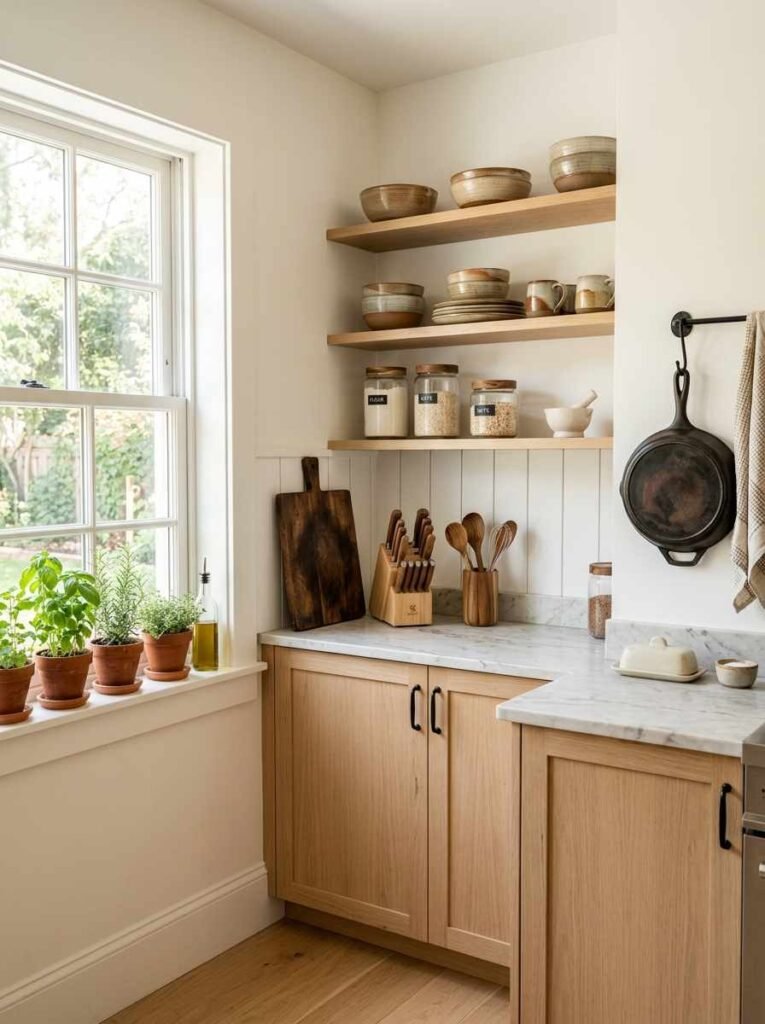
This style lives in everyday objects, not just decor.
In your kitchen, display:
- Beautiful cutting boards (wood, marble, ceramic)
- Wooden utensils in a stone or ceramic holder
- Open shelving with everyday ceramics
- Vintage enamelware or cast iron hanging on hooks
- Fresh herbs in terracotta pots on the windowsill
Your mixing bowls, apron, dish towels—they’re part of the aesthetic. Choose natural materials and neutral colors. Function becomes decoration when you choose it intentionally.
18. Bedding Layering (Comfort as Aesthetic)
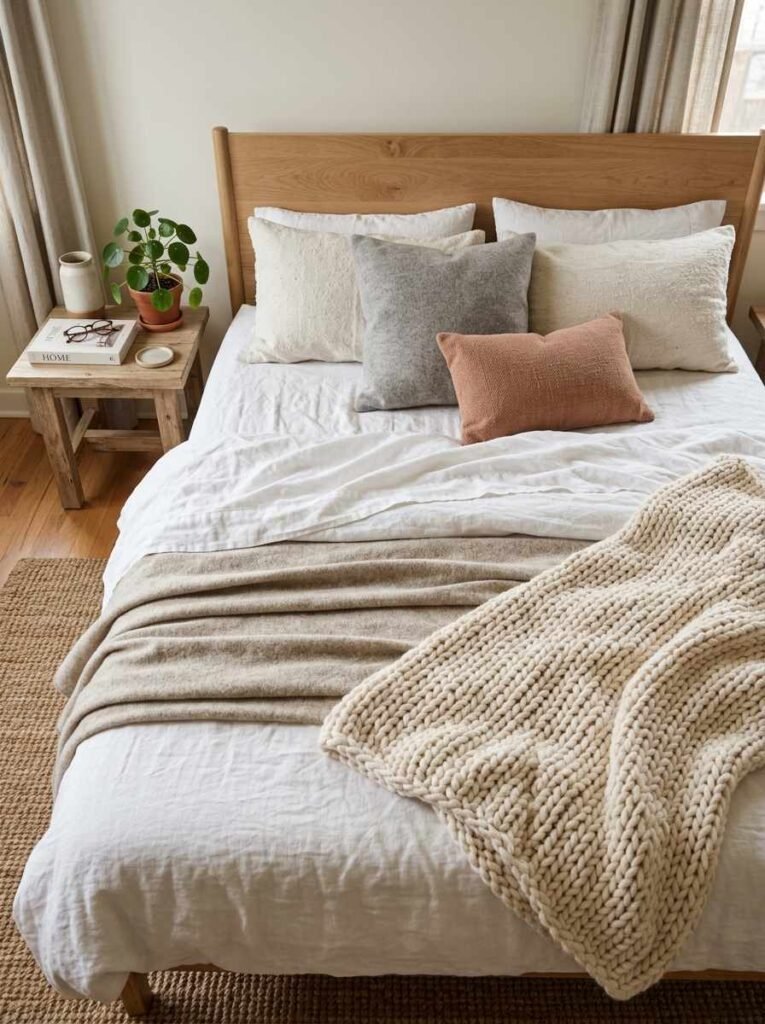
Your bed should invite napping.
Layer it like this:
- Base: high-quality cotton or linen sheets
- Middle: a wool blanket or cotton quilt
- Top: a chunky knit throw or second quilt
- Pillows: mix of linen, cotton, and wool in neutral tones, with one or two in a subtle accent color
The bed should look lived-in and comfortable, not overdone or styled within an inch of its life. Make it rumpled. That’s the aesthetic.
19. Vintage and Thrifted Finds (Not Fast Furniture)
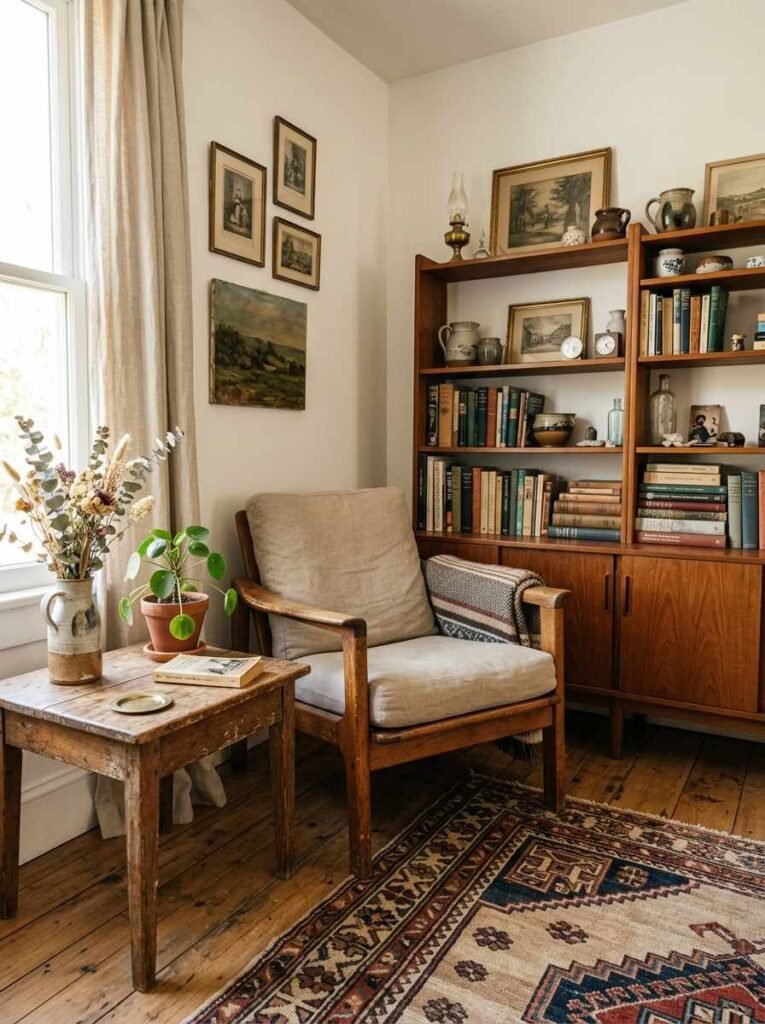
Real bohemian style has history baked in.
Shop thrift stores, estate sales, and antique markets. Look for:
- Wooden chairs (refinish if needed, or leave the patina)
- Vintage textiles (rugs, blankets, tapestries)
- Old books and wooden shelves
- Ceramic pieces and vessels
- Mirrors with character (not perfect frames)
Each piece has a story. Over time, your space becomes a map of your collecting life.
That’s the opposite of the flat, characterless aesthetic of mass-produced furniture.
I have a wooden chair from my grandmother, a rug I found at a market in Istanbul, and shelves made from reclaimed wood. They don’t match. They’re perfect.
20. Mirrors (Wood-Framed, Vintage Feel)
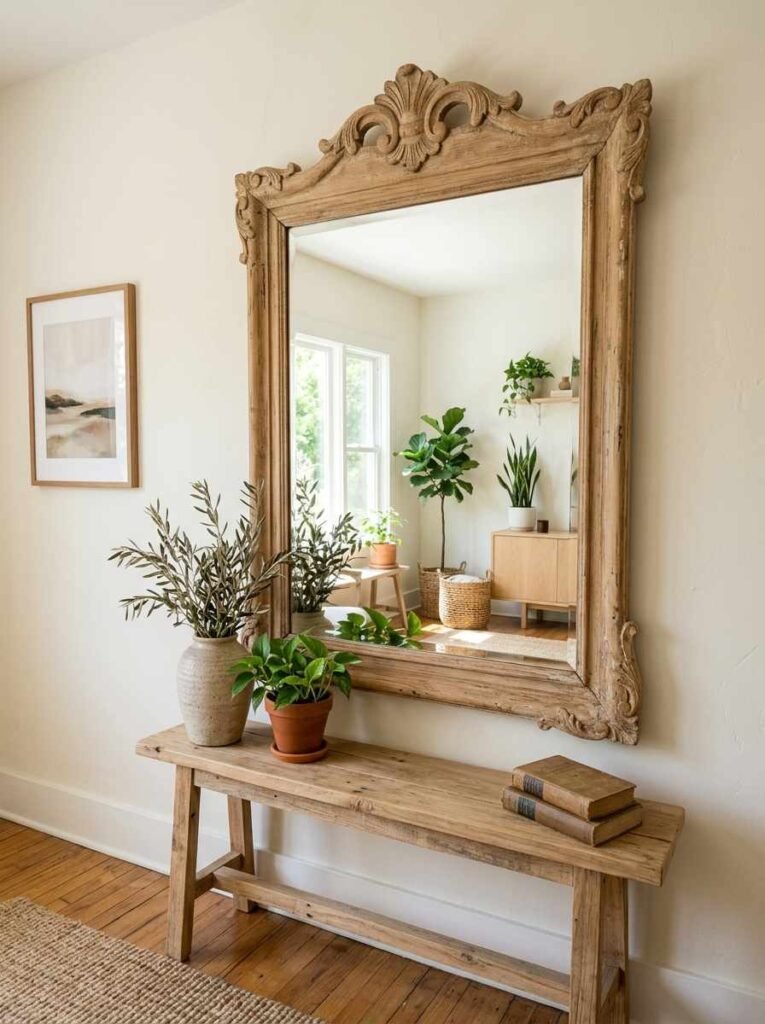
Mirrors bounce light and expand space. Choose frames carefully.
Go for:
- Wood frames in natural finishes
- Vintage or vintage-looking frames (ornate is okay here, as long as it feels collected)
- Round or organic shapes
- Slightly imperfect or aged frames (not pristine)
Lean a large mirror against a wall instead of hanging it. Position it where it reflects light from a window or lamp.
This creates depth and brightness without any effort.
21. Corners as Focal Points
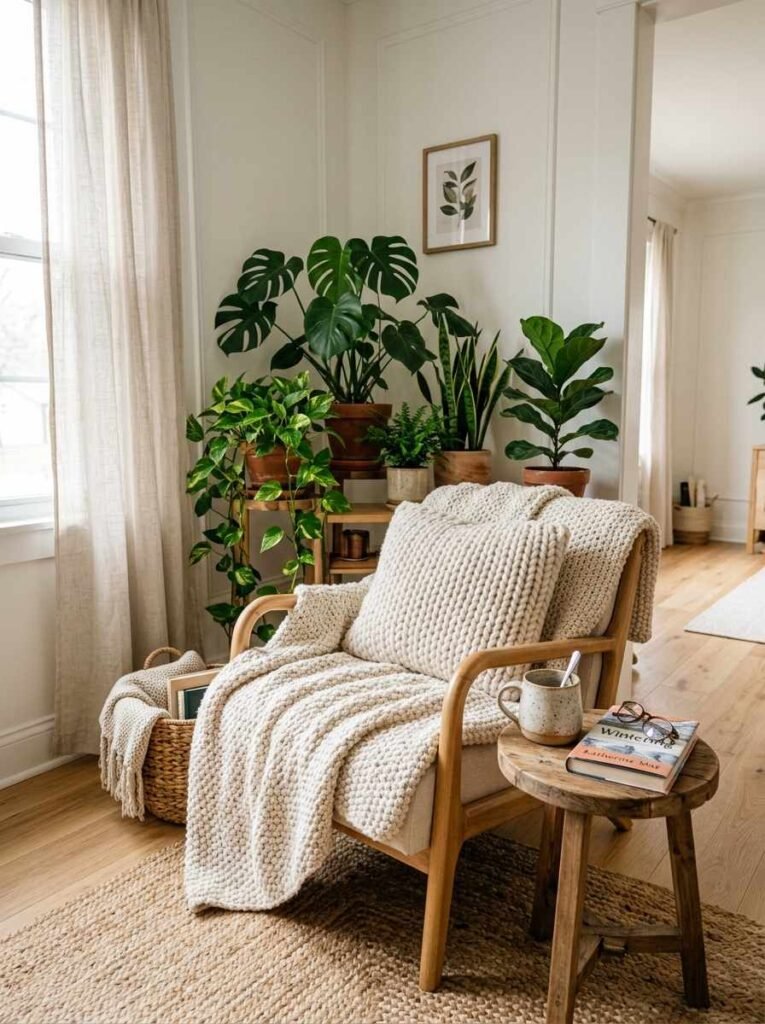
Most people ignore corners. Stop doing that.
A corner works beautifully for:
- A reading nook (chair, side table, lamp, plant)
- A plant cluster (three to five plants at varying heights)
- A wall hanging behind a small console
- A decorative ladder with blankets and plants draped over it
Corners shouldn’t be empty. They’re free real estate for creating intimate moments within your larger space.
22. Collections That Tell a Story
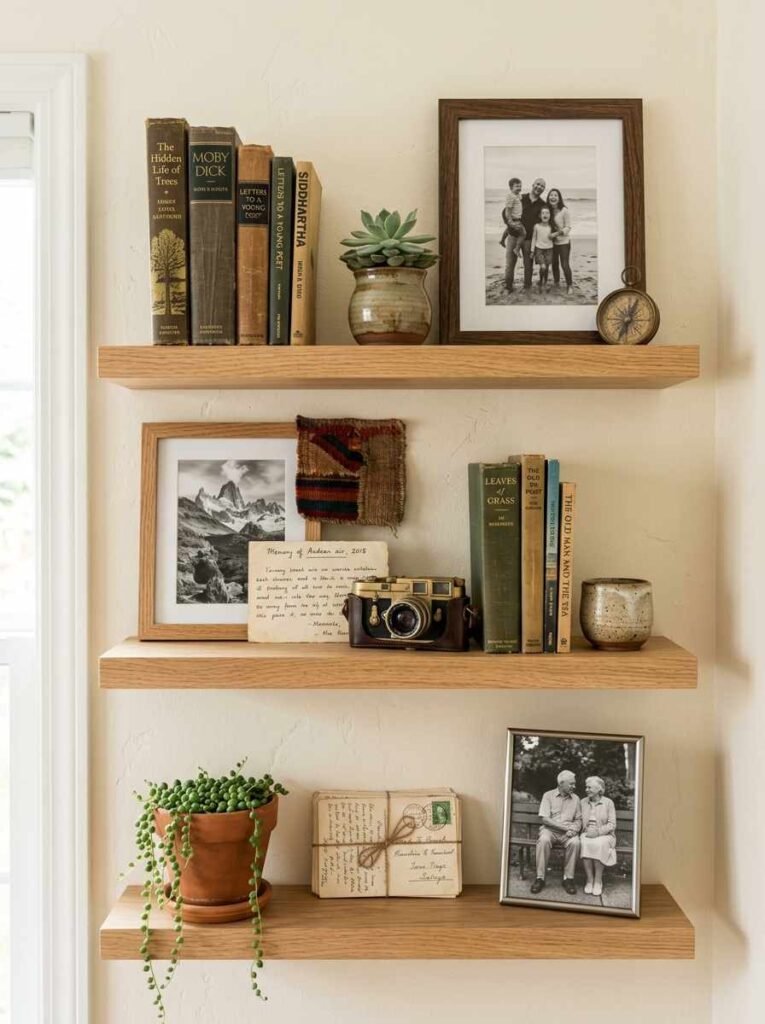
This is the throughline that ties everything together.
Your space should reflect what you actually love and use:
- A collection of vintage books
- Ceramics you’ve collected over years
- Plants you’ve propagated and nurtured
- Photographs from travels
- Objects with sentimental value
These aren’t styled. They’re lived with. They’re evidence of your taste and interests.
When someone walks into a Scandi bohemian space that works, they don’t think “this is well-designed.” They think “this person has really good taste.” That’s the goal.
How to Bring It Together
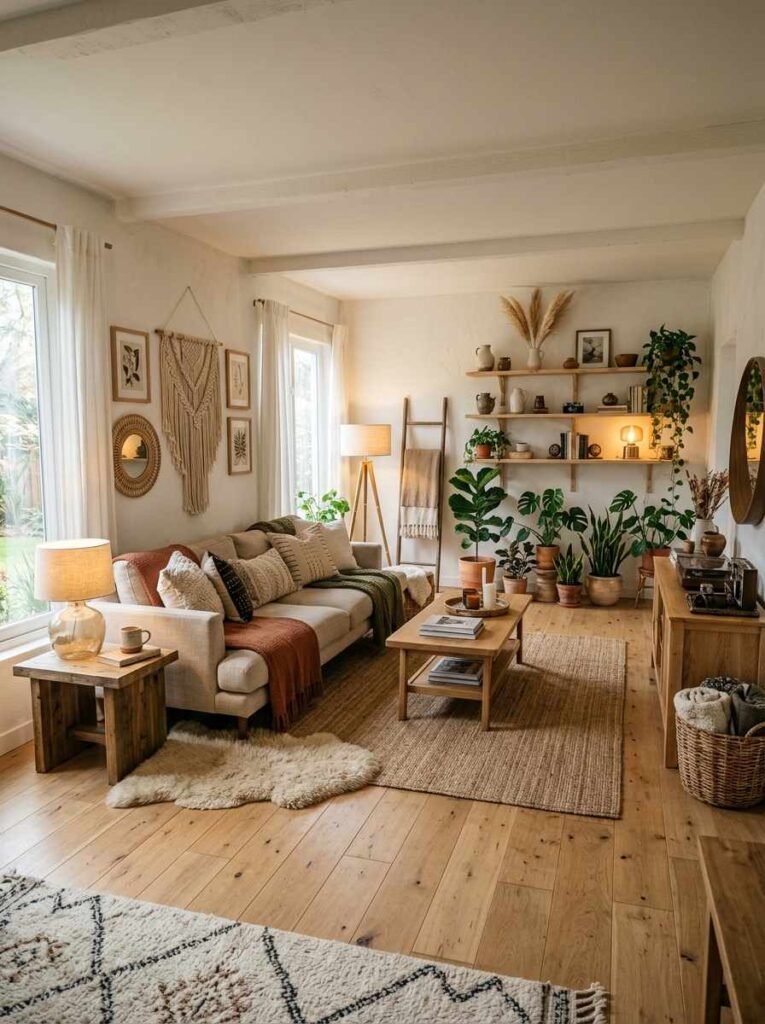
The magic isn’t in any single idea. It’s in how they talk to each other.
Start with light wood, white walls, and natural light. Add plants and textiles. Layer in ceramics and vintage finds. Let empty space breathe.
Build slowly. Change things. Live with it.
Real Scandi bohemian spaces feel comfortable and lived-in, not precious or hard to maintain. You should want to spend time there. You should feel calm.
And honestly? The best part is you don’t need to buy anything expensive.
You need to be intentional. Thrift stores, plant swaps, patience, and time will do the work that money can’t buy.
Start with what you have. Add slowly. Let your space evolve.
That’s the whole aesthetic.
| Element | Why It Matters | Your Action |
|---|---|---|
| Natural Light | Makes wood glow, textiles come alive | Check windows first; invest in sheer curtains |
| Light Wood | Creates warmth and organic feel | Prioritize furniture with ash, birch, or oak |
| Breathing Room | Prevents chaos; keeps clarity of vision | Remove 20% of what’s on shelves and surfaces |
| Natural Textiles | Age beautifully; feel authentic | Replace synthetic with linen, wool, jute |
