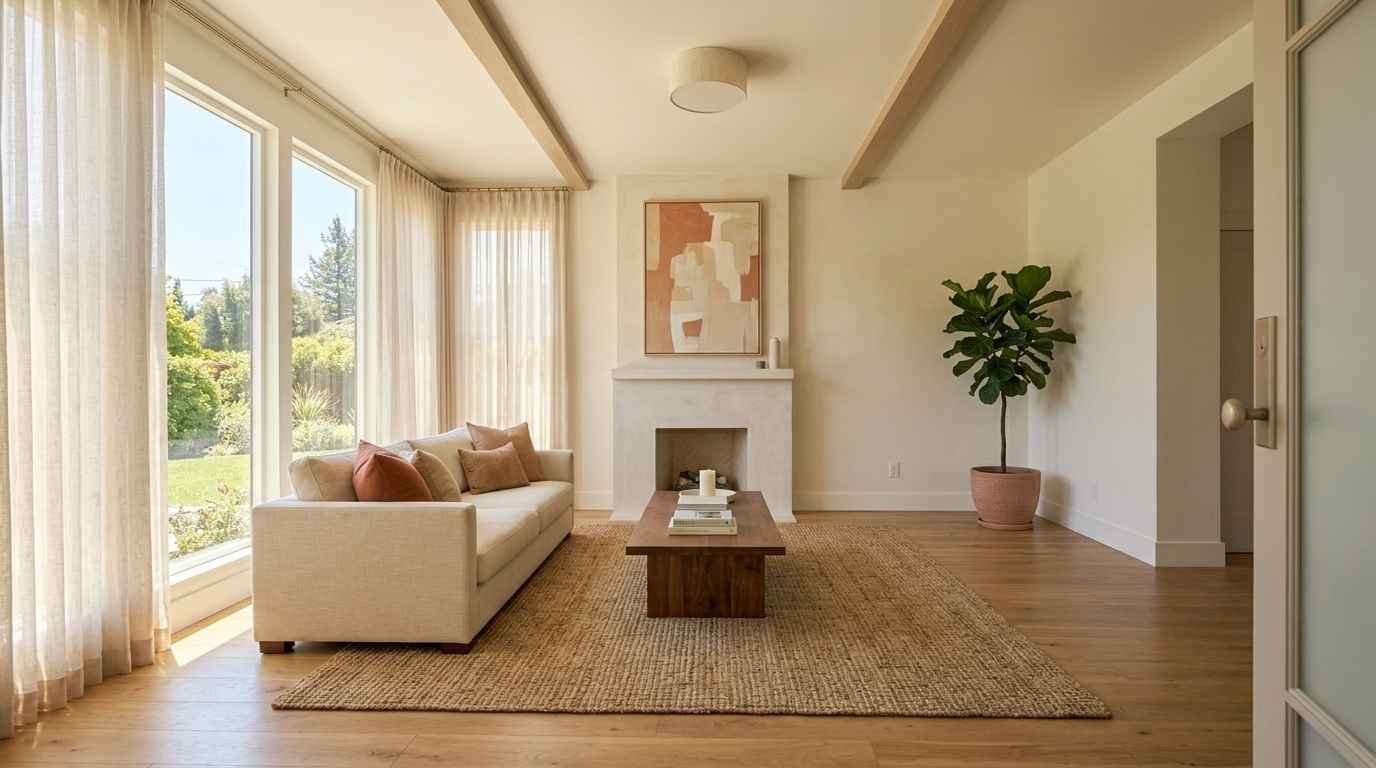
Your living room has one job: make you want to stay. And somehow, adding less stuff is the fastest way to get there.
I know that sounds backwards. But if you’ve ever walked into a room that felt instantly calm and warm — no clutter, no chaos, just good textures and breathing room — you already get it. T
hat’s the whole game with cozy minimalism.
So here are 30 ideas that actually work. No filler, no vague “add greenery” advice. Just specific, Pinterest-worthy setups you can steal.
Neutral Color Palettes That Actually Feel Warm
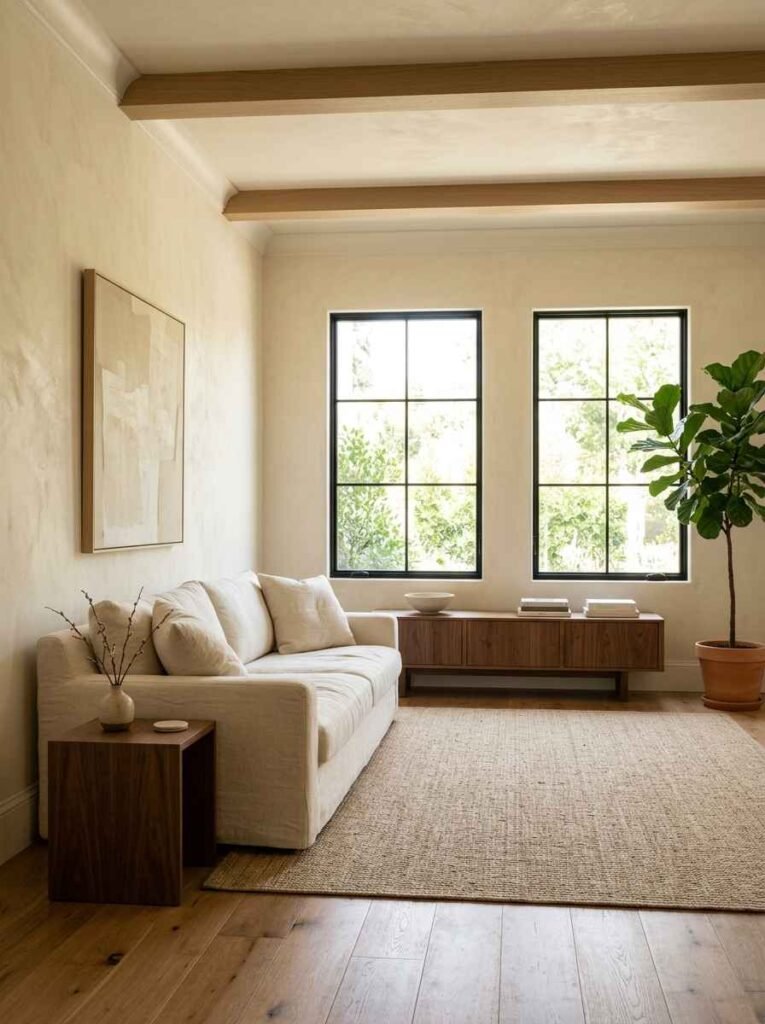
Start with warm whites, not cold ones
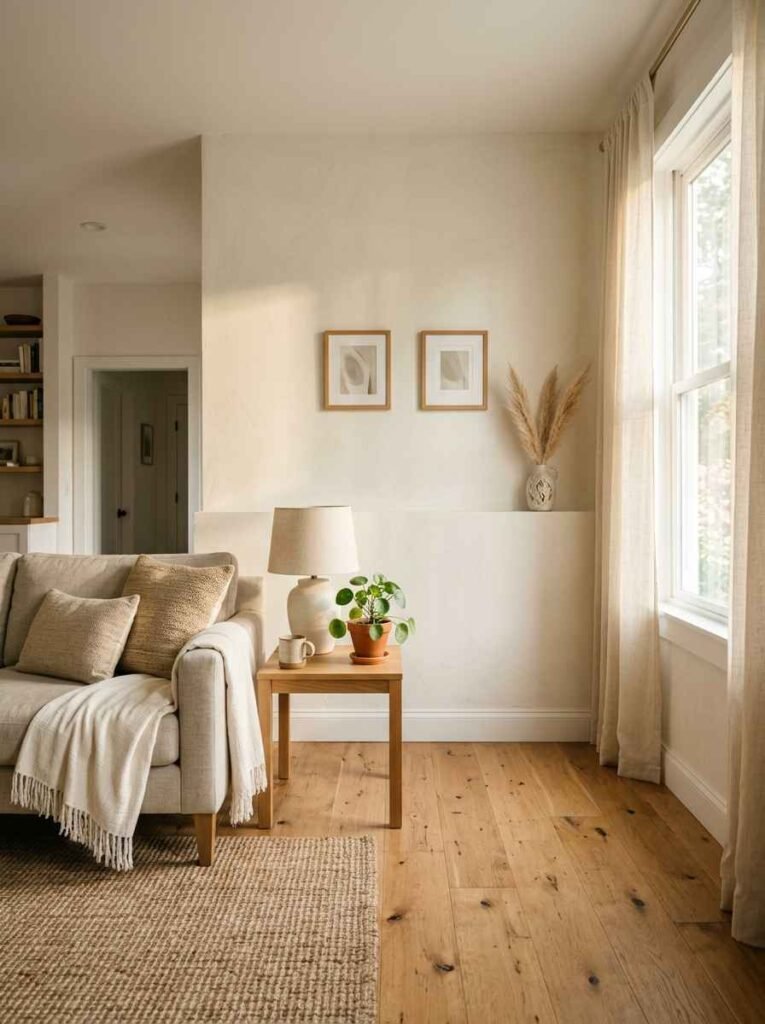
There’s a reason so many minimalist rooms feel sterile and uninviting — they’re using the wrong whites.
Cool, blue-toned whites make a room feel like a dentist’s office.
Warm whites with a yellow or pink undertone (think Sherwin-Williams “Alabaster” or Benjamin Moore “White Dove”) make a room feel like a cashmere sweater.
Pair warm white walls with cream or off-white textiles. The slight tonal variation adds depth without adding visual noise.
Layer earth tones in the same family
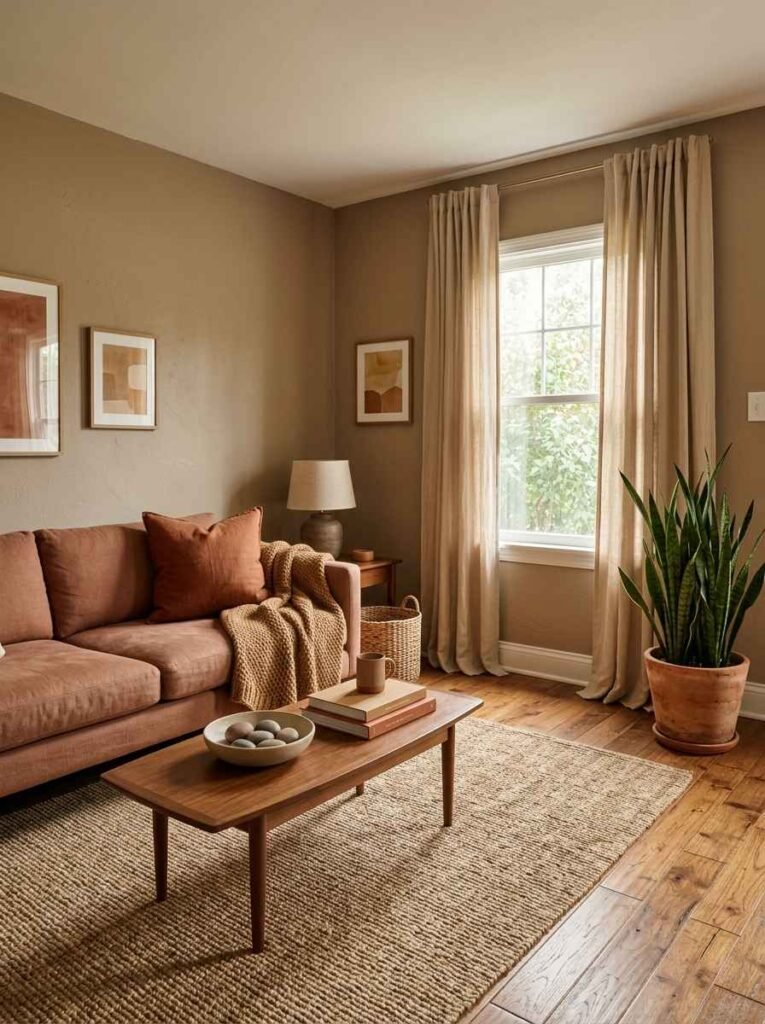
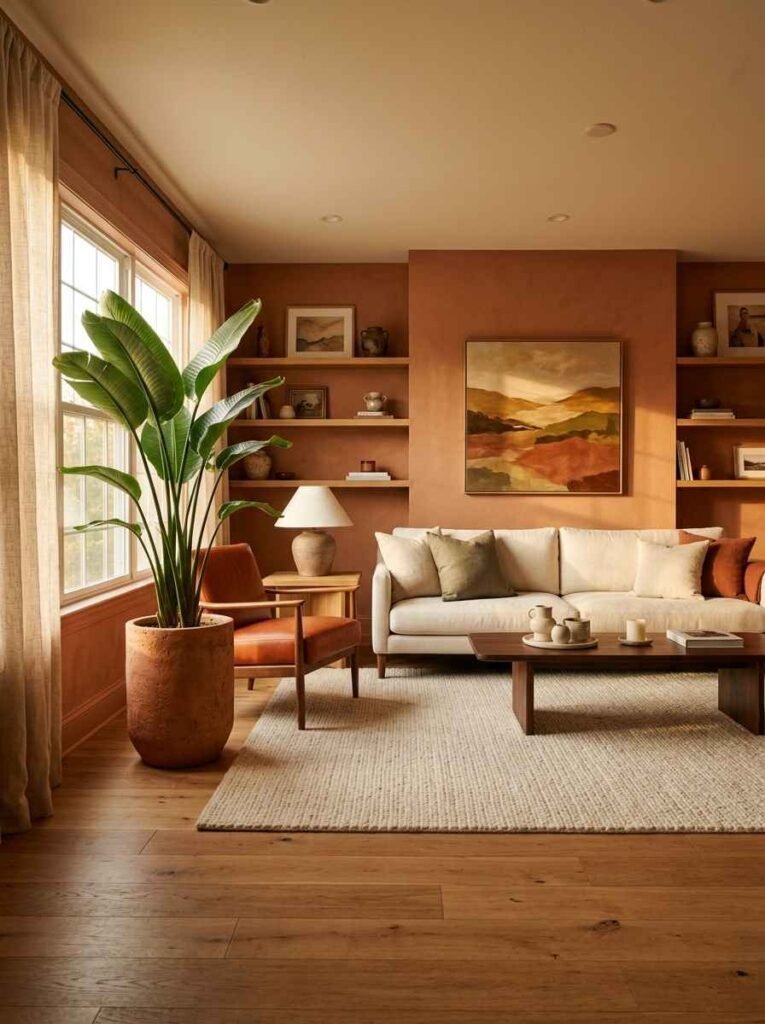
Pick one warm neutral as your anchor — a terracotta, a warm taupe, a dusty sage — and then layer 3–4 shades around it.
Same family, different depths. This creates richness without pattern overload.
The trick: keep your largest surfaces (walls, sofa) in the lightest shade. Go darker on smaller items like pillows and throws.
The greige formula
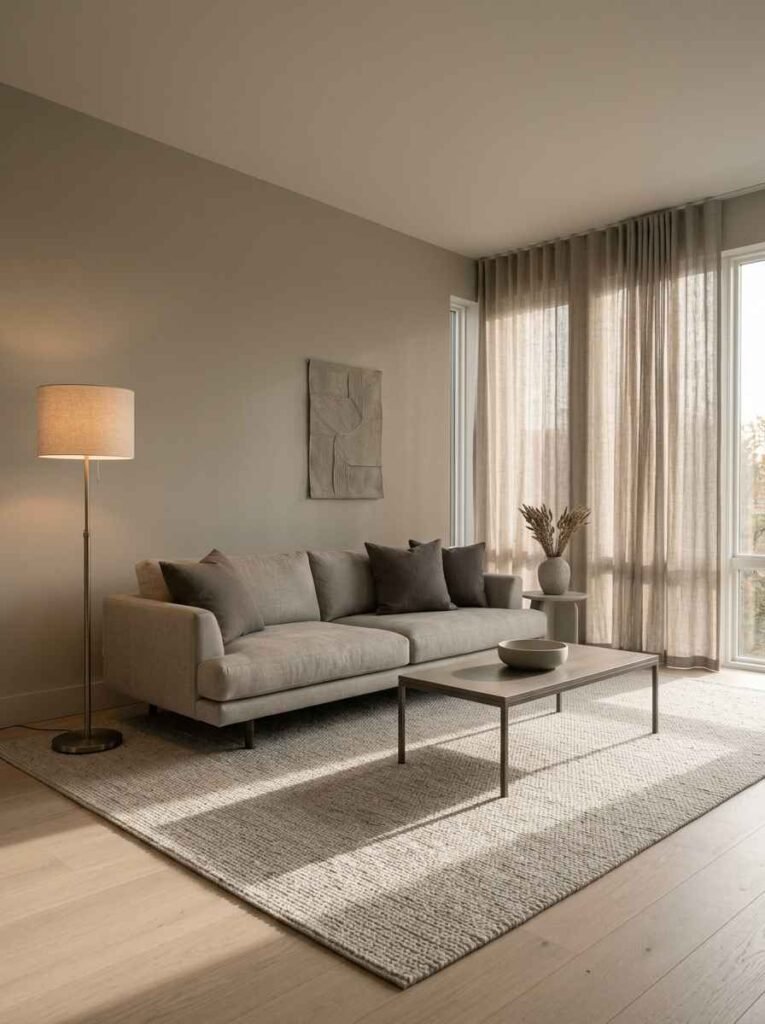
Greige (grey + beige, for the uninitiated) is the workhorse of minimalist living rooms. It works in north-facing and south-facing rooms.
It photographs well. It makes everything else in the room look intentional.
A quick reference for warm neutral pairings:
| Base Color | Accent 1 | Accent 2 | Texture to Add |
|---|---|---|---|
| Warm white | Linen | Soft camel | Boucle throw |
| Warm greige | Rust | Warm charcoal | Chunky knit pillow |
| Dusty sage | Cream | Warm tan | Rattan accent |
| Terracotta | Ivory | Muted olive | Linen curtains |
Furniture That Does More With Less
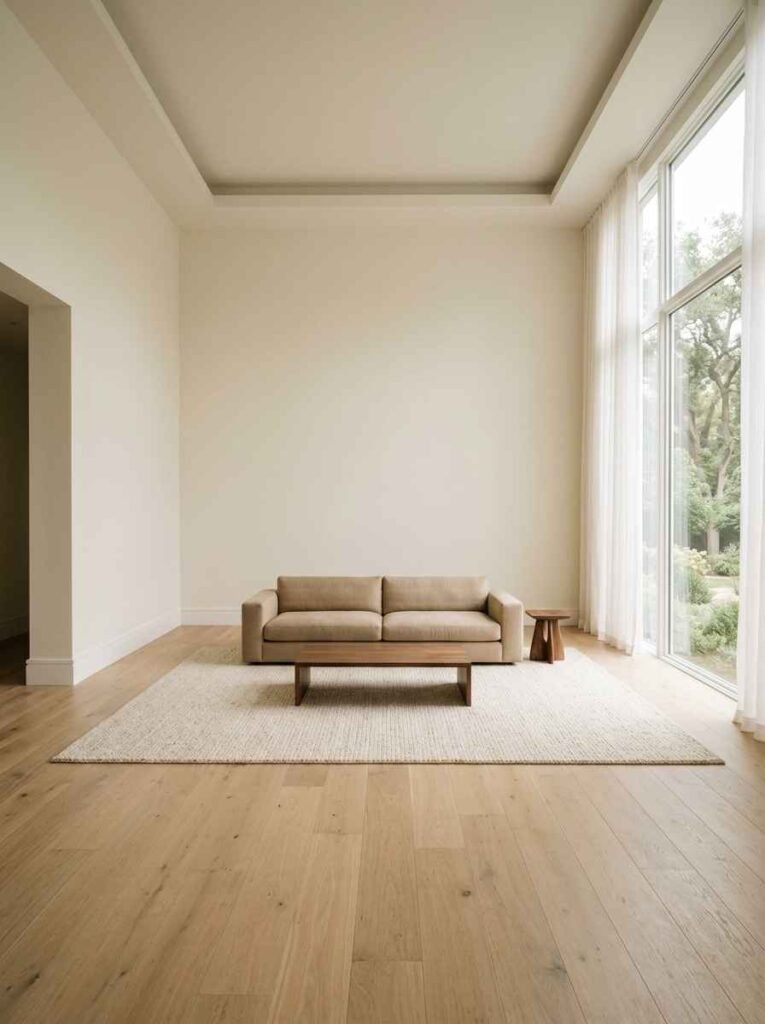
The one sofa rule
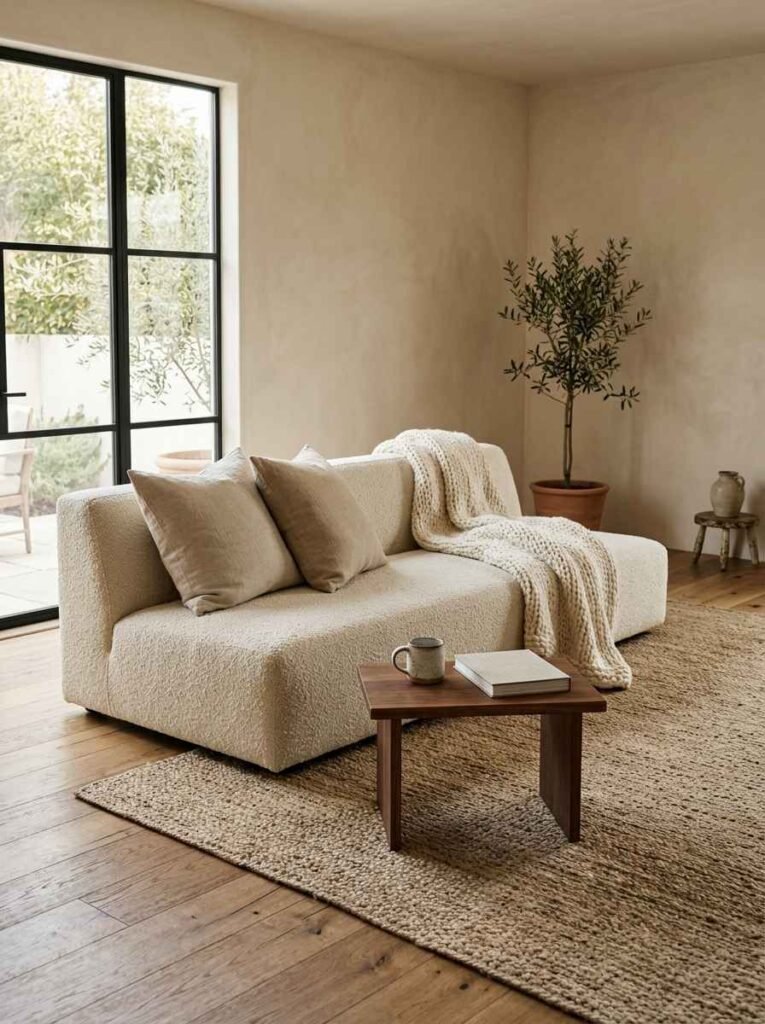
In a minimalist living room, your sofa carries the whole room. One great sofa beats three mediocre ones every time.
Look for clean lines, low profiles, and upholstery in a natural fabric — linen, cotton, or bouclé.
A low-profile sofa makes ceilings feel taller. That alone changes how spacious any room feels.
Leave negative space on purpose
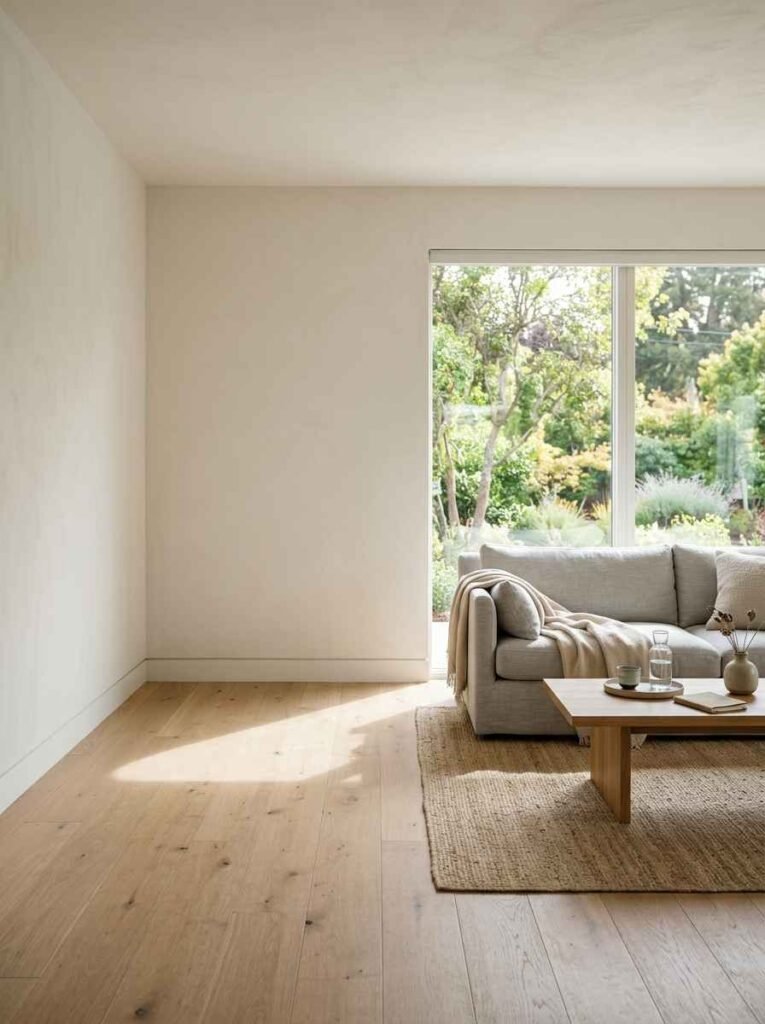
Most people fill every corner. Do the opposite. Leave at least one corner completely empty, and resist the urge to put a floor lamp there.
That empty space is doing work — it gives your eye somewhere to rest.
IMO, this is the hardest part of minimalist decorating. The emptiness feels wrong at first. Then you live with it for a week and realize it’s the best decision you made.
Multifunctional coffee tables
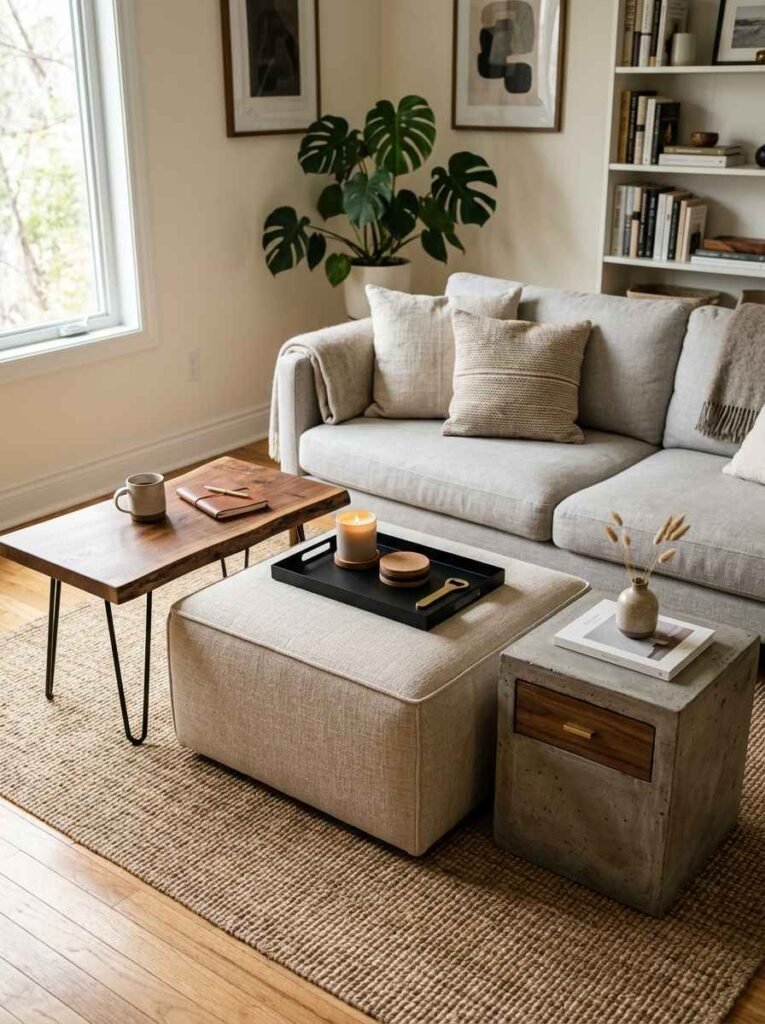
A simple wood slab on hairpin legs. A large, firm ottoman with a tray on top. A concrete cube with built-in storage.
The coffee table is a workhorse — it should be beautiful AND useful. Skip anything too ornate or too fragile to actually use.
Built-ins over freestanding storage
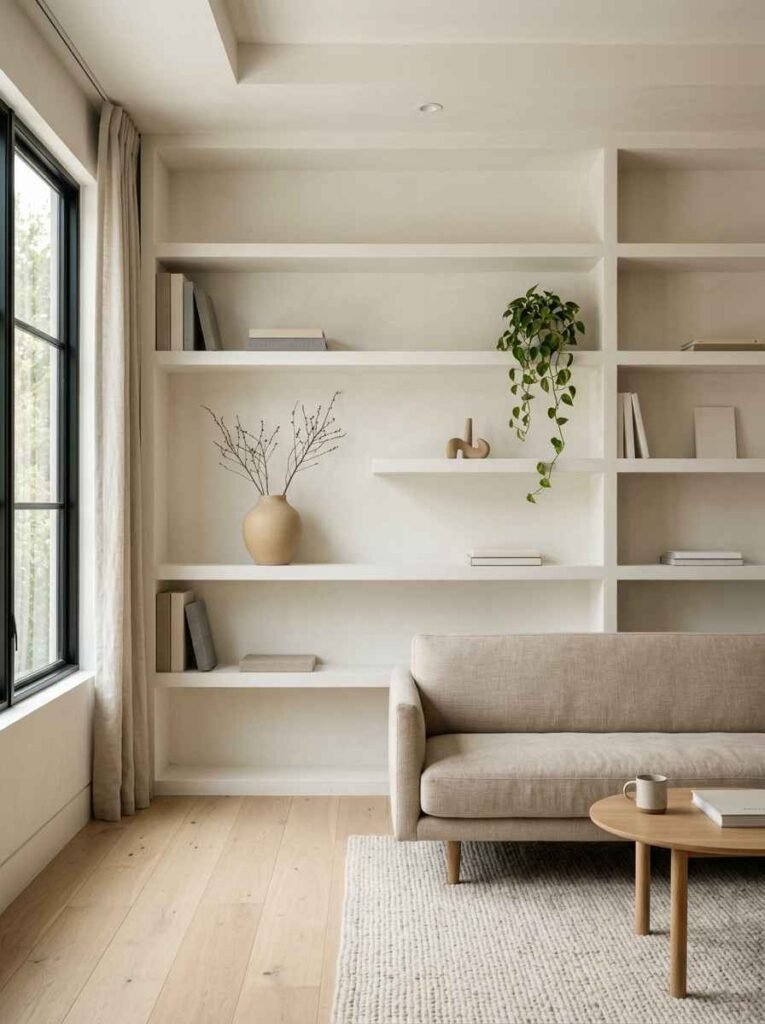
If your budget allows, built-in shelving reads as architecture rather than furniture. It’s the fastest way to make a rental look intentional.
Paint them the same color as the wall and they disappear — which is exactly the point.
Texture and Softness Without the Clutter
The three-texture rule
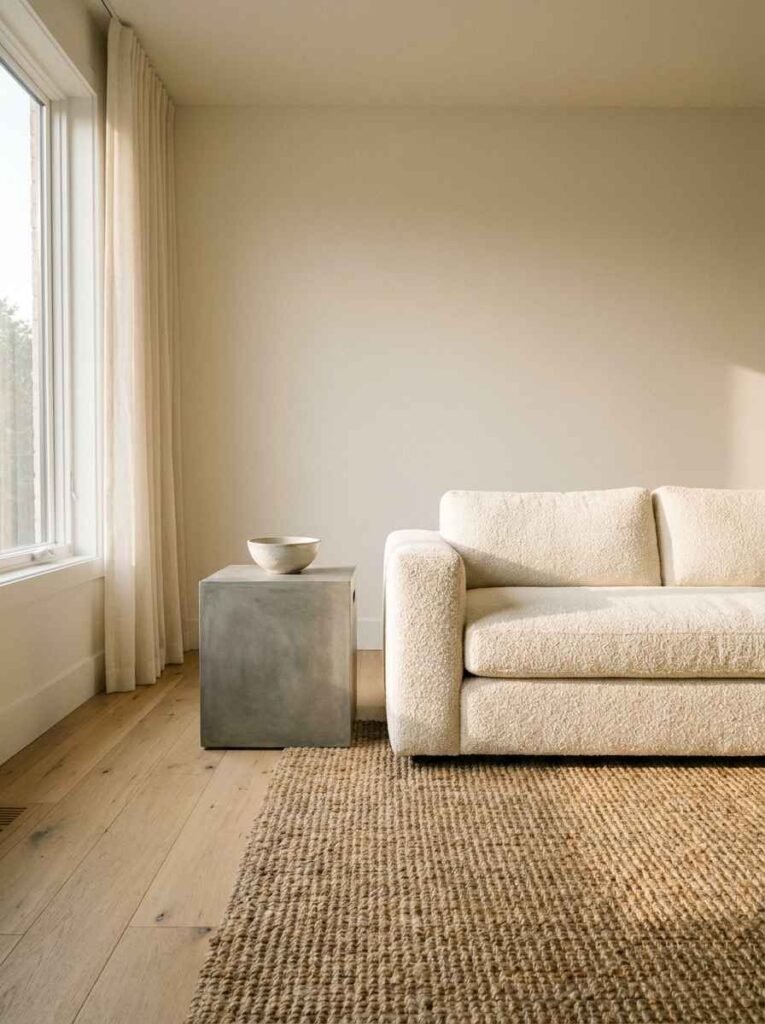
Pick three textures and commit: something smooth (wood, stone, ceramic), something soft (linen, cotton, boucle), something rough (rattan, jute, raw wood). Three is enough. More than that and the room starts competing with itself.
This isn’t a rigid formula — it’s a gut check. Before adding a new object, ask: does this add a new texture or repeat one I already have?
Throw blankets as art
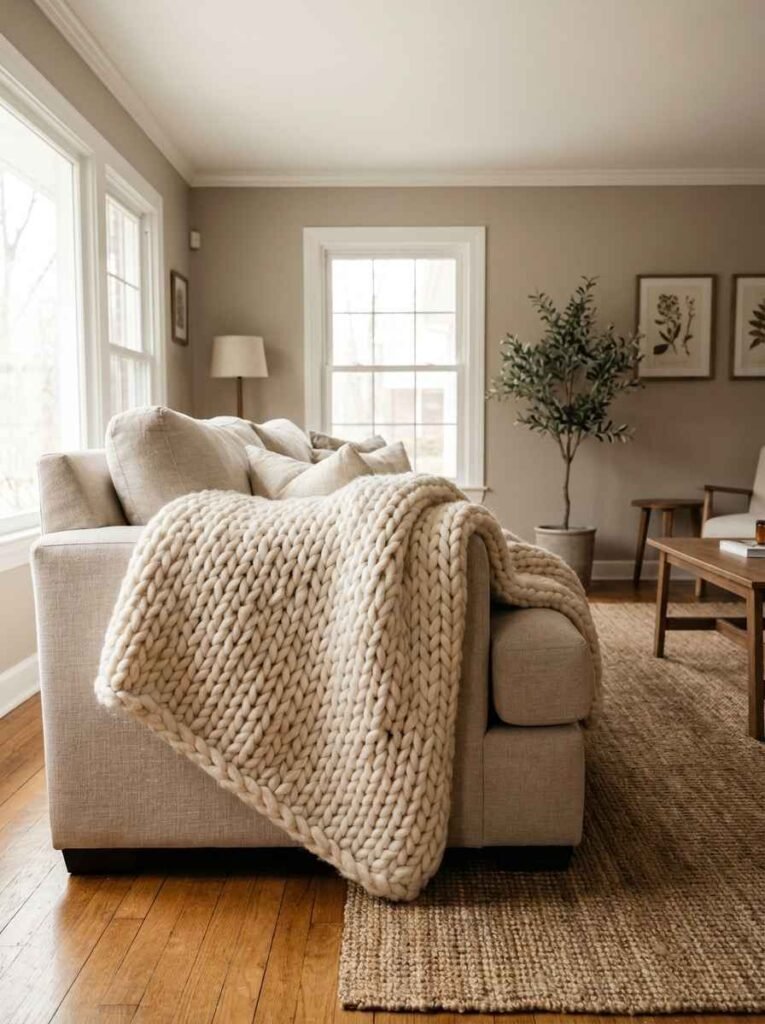
A chunky knit throw draped over the arm of a sofa isn’t just functional — it’s visual weight. It tells the room that someone lives there.
Choose one good throw and drape it loosely. The messiness of it is the point. 🙂
Pillows: fewer, bigger, better
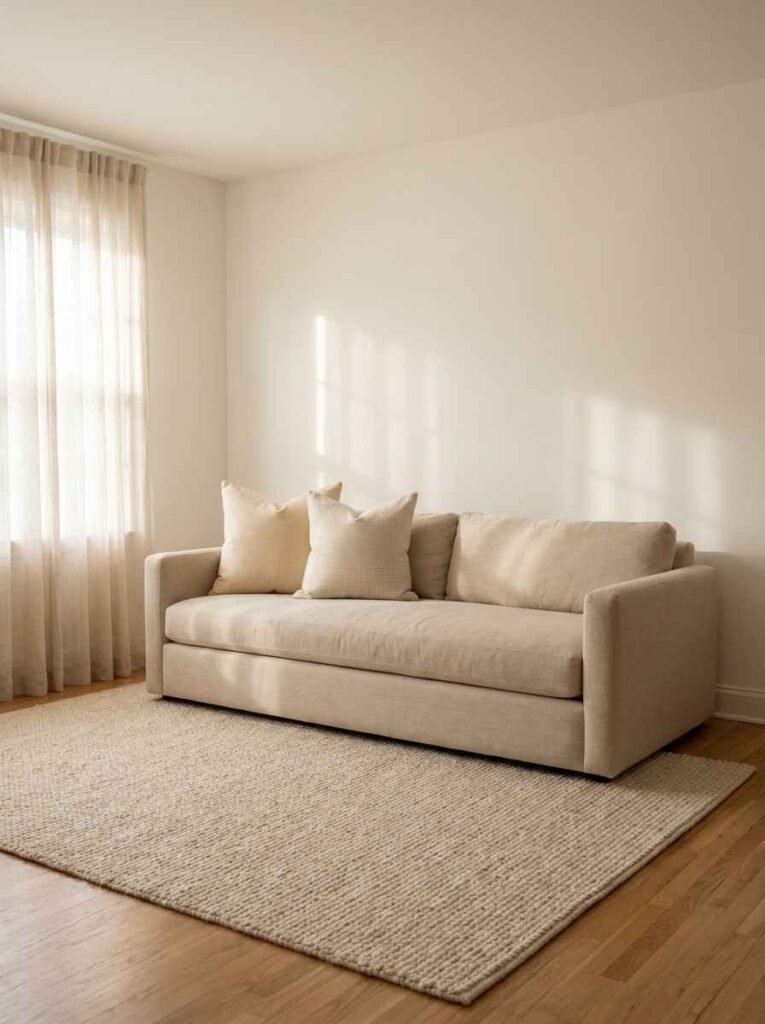
The number one mistake in living rooms is too many small pillows. Two or three large, quality pillows do more for a sofa than eight decorative ones.
Go for 20″–22″ inserts — they look full and plush rather than flat and sad.
Stick to two patterns maximum, and make sure one of them is a solid.
Rugs as the anchor
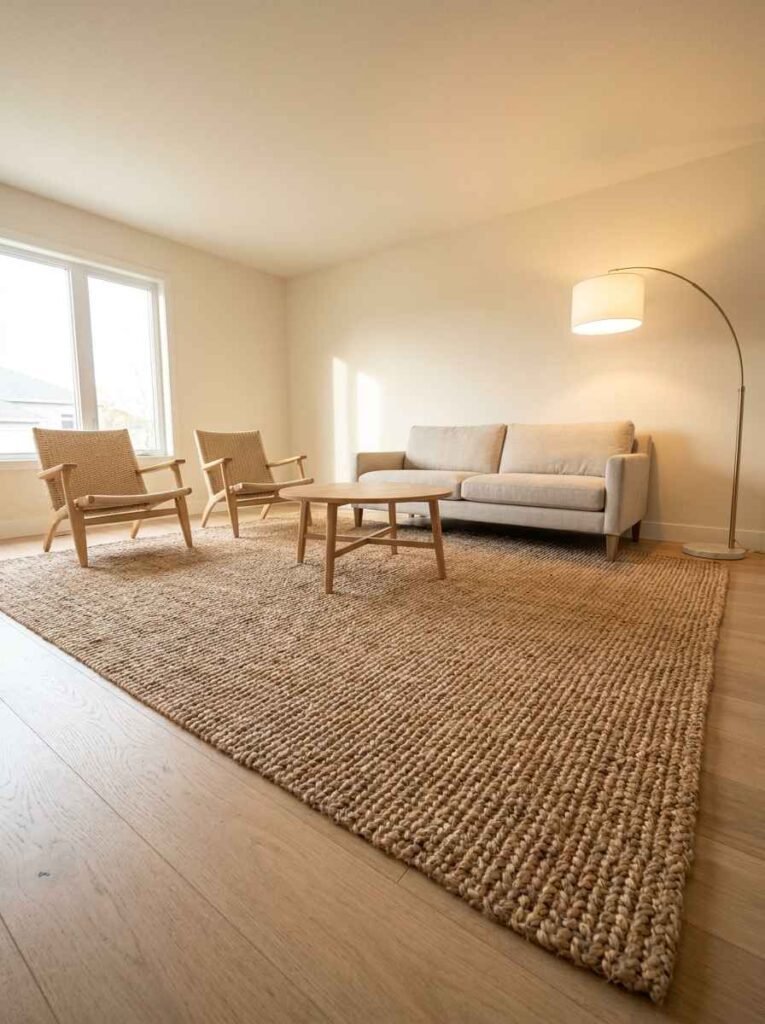
In minimalist rooms, the rug is usually the most complex thing in the space. That’s fine — it earns its complexity by grounding everything else.
A natural fiber rug (jute, sisal, wool) in a neutral tone works in almost any minimalist living room.
Size matters more than most people realize. Go bigger than feels right. The rug should sit under the front legs of all the seating, at minimum.
Lighting That Makes a Room Feel Like an Evening Out
Warm bulbs, always
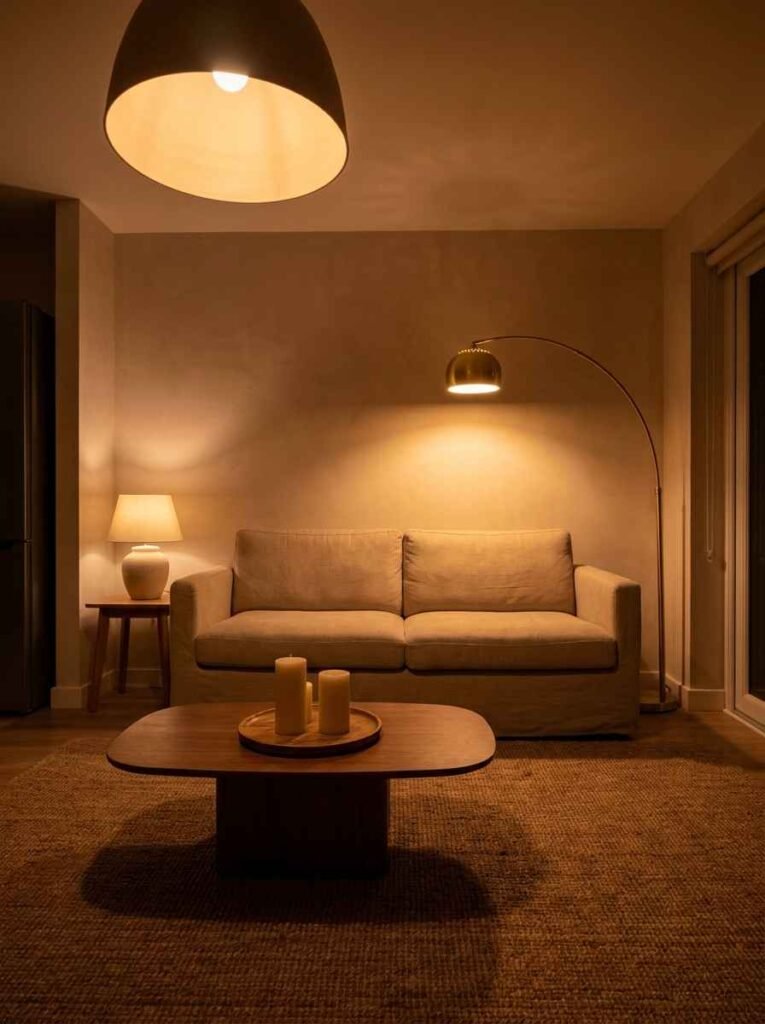
2700K–3000K color temperature. This is non-negotiable. Cool white bulbs (4000K+) will sabotage every cozy room decision you’ve made.
Warm bulbs make skin look good, textures pop, and rooms feel like somewhere you want to stay.
FYI, smart bulbs let you dim to around 30% in the evenings, and that alone transforms how a room feels after sunset.
Layer your light sources
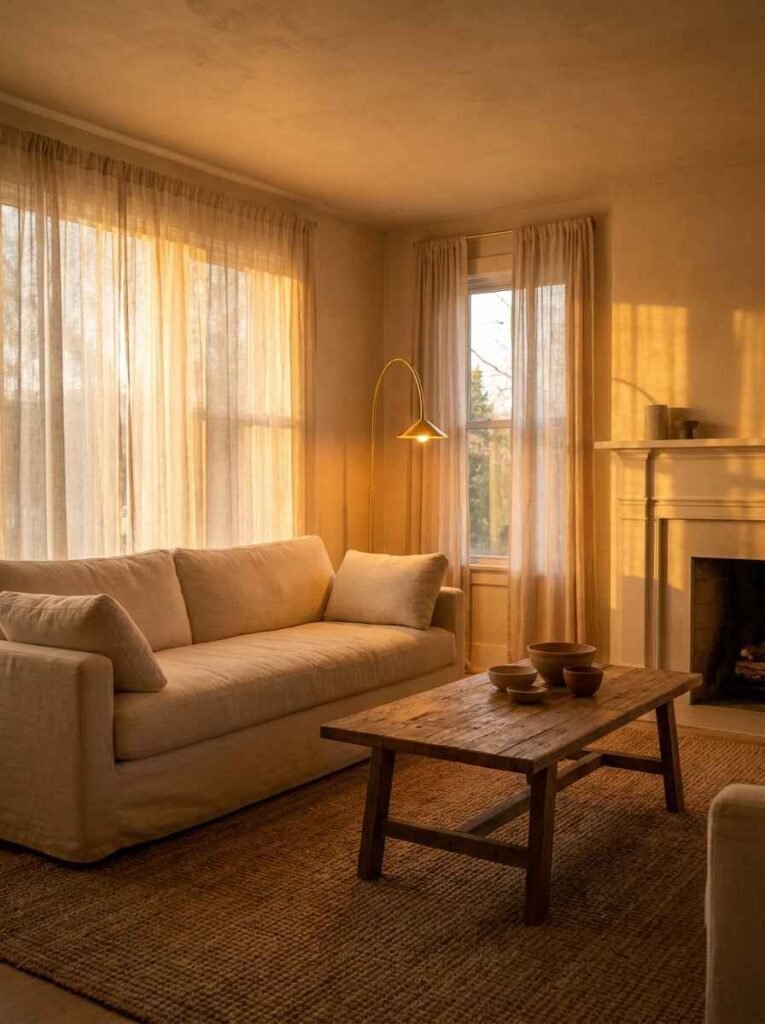
One overhead fixture isn’t enough. Layer at least three types: ambient (overhead), task (reading lamp), and accent (a small table lamp, a candle, a lit shelf). The more light sources, the more control you have over mood.
A room that only has overhead lighting feels like a waiting room.
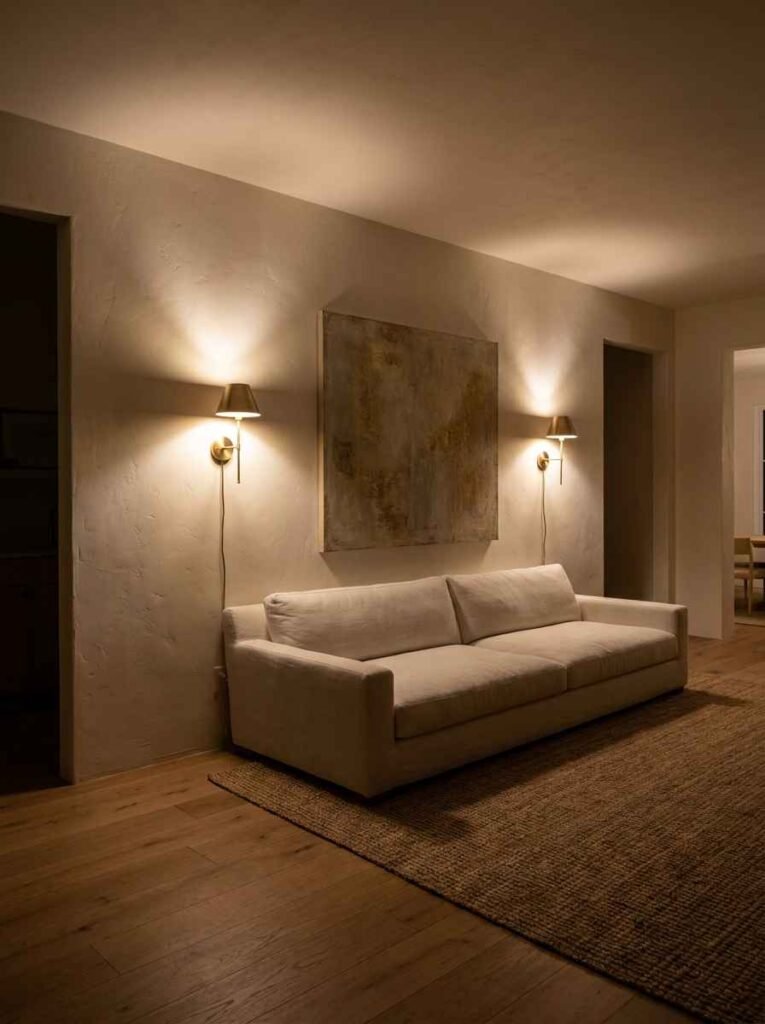
Sconces instead of floor lamps
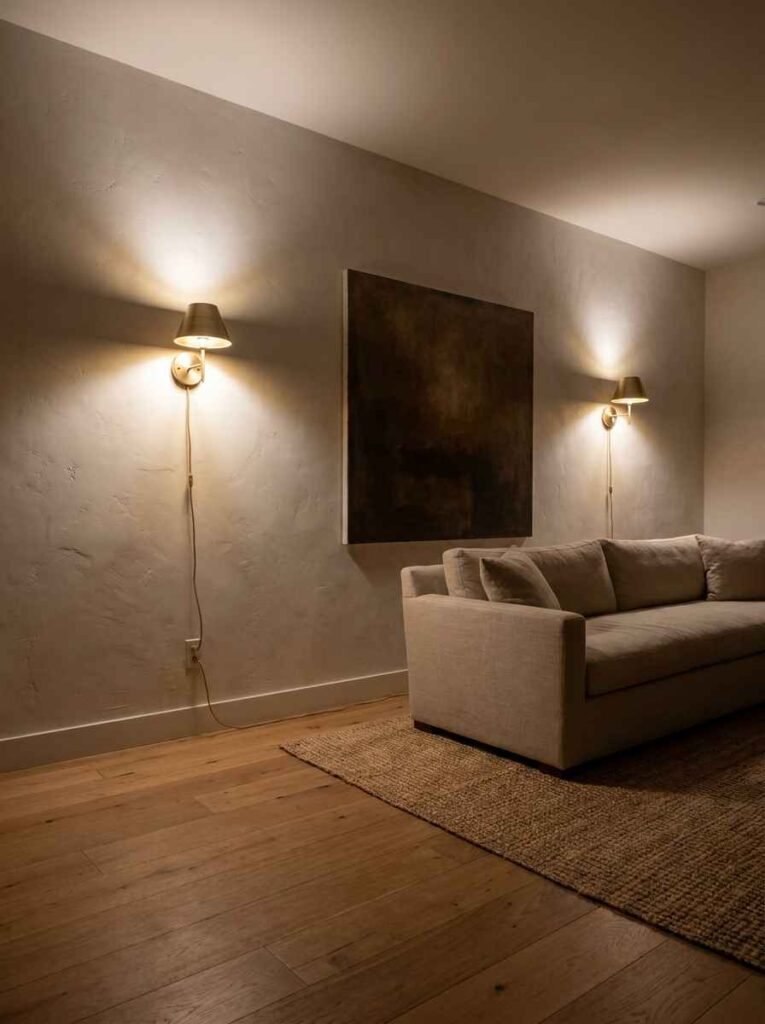
If you’re renovating or have some flexibility, wall sconces are worth the effort. They free up floor space, feel architectural, and create the warmest, most flattering light in a room. Even plug-in sconces (no hardwiring needed) can work.
Candles count
A cluster of pillar candles on a tray, or a single large candle on the coffee table — actual candlelight is something no bulb has fully replicated.
29 Cozy Living Room Minimalist Ideas for a Timeless and Elegant Home
Even one candle changes the feel of an evening. Unscented, if you’re sensitive to fragrance. The ambiance is the point, not the smell.
Plants That Don’t Overwhelm
One large plant beats five small ones
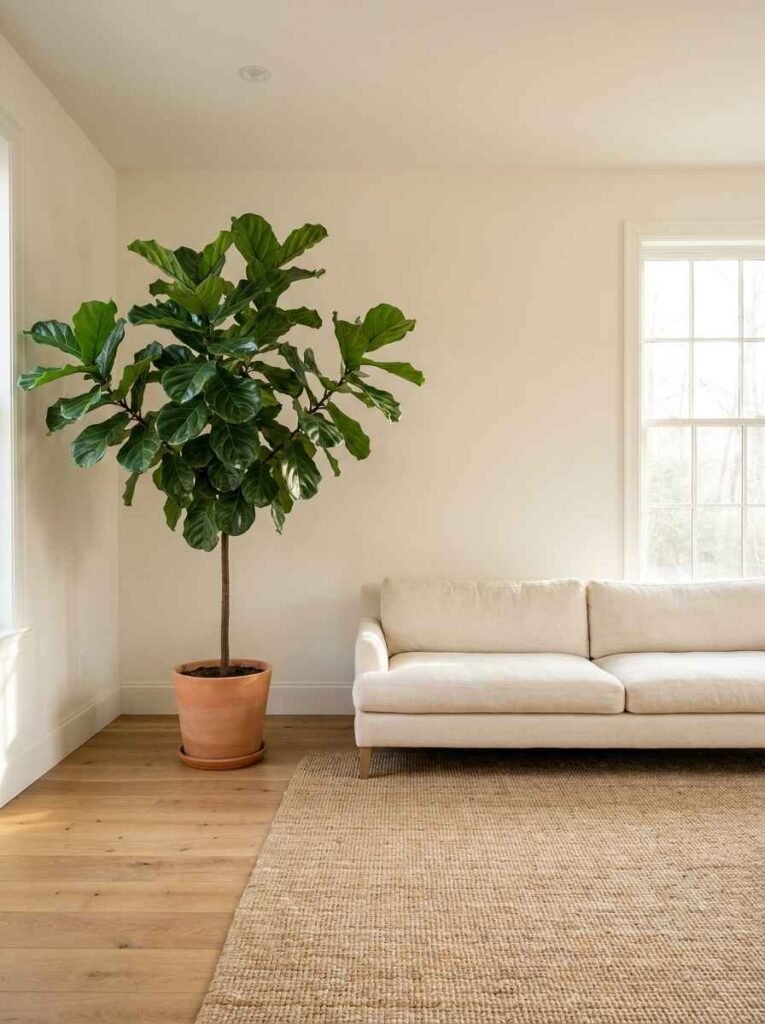
A single fiddle leaf fig, olive tree, or large monstera makes a statement without cluttering a room.
Scale matters. A 6-foot plant in the corner of a living room looks architectural. Six small succulents on a shelf look like a hobby.
Architectural plants only
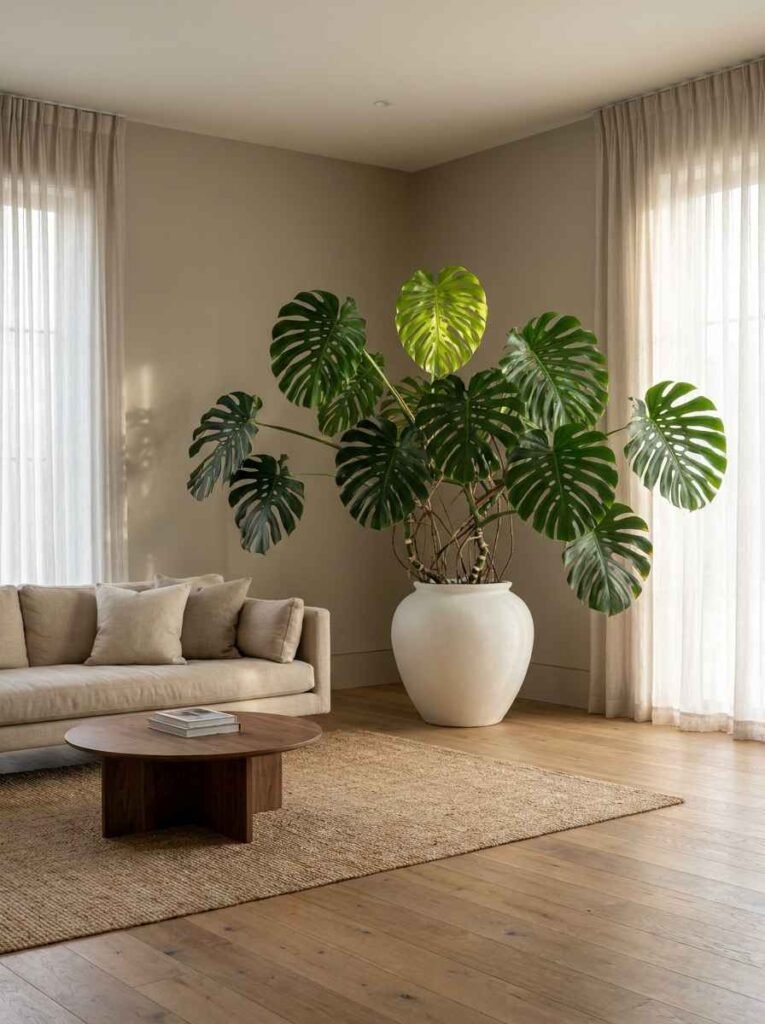
In minimalist rooms, stick to plants with interesting structure and clean lines: snake plants, rubber trees, birds of paradise, cacti. Bushy, sprawling plants (looking at you, pothos on every shelf) add visual complexity that works against the calm you’re building.
The empty planter trick
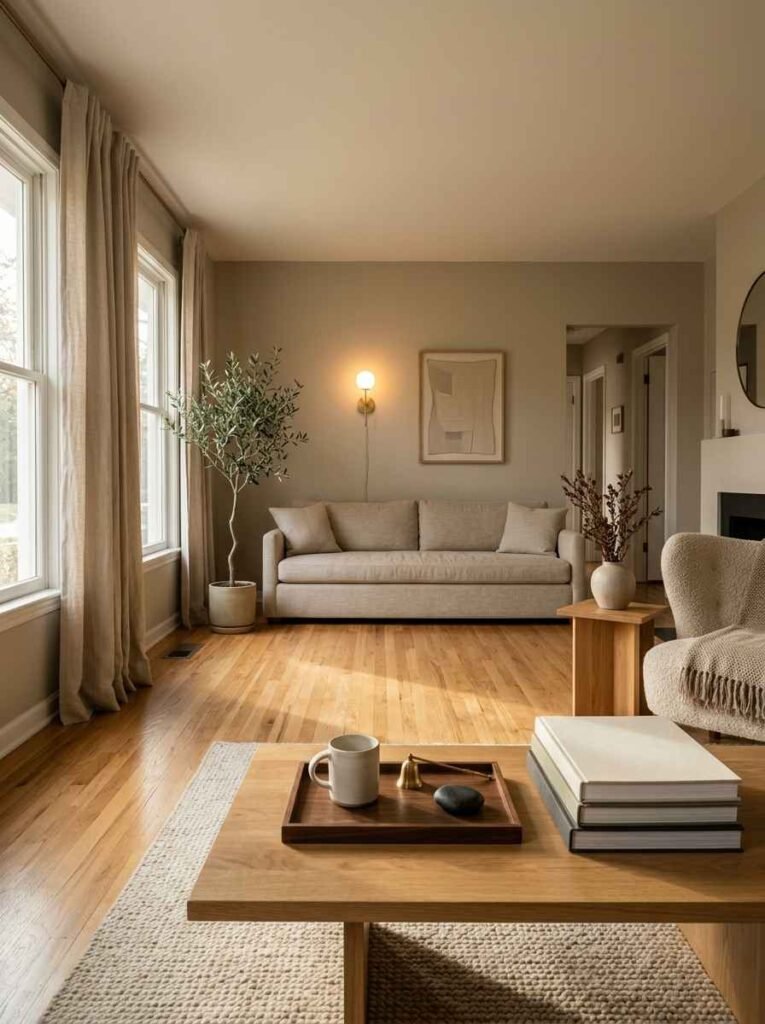
A beautiful planter — terracotta, wabi-sabi ceramic, raw concrete — is itself an object of beauty.
You don’t always need a plant in it. An empty statement planter can be just as effective as a filled one, with zero maintenance. :/
Small Details That Tie It All Together
Books as decor, not storage
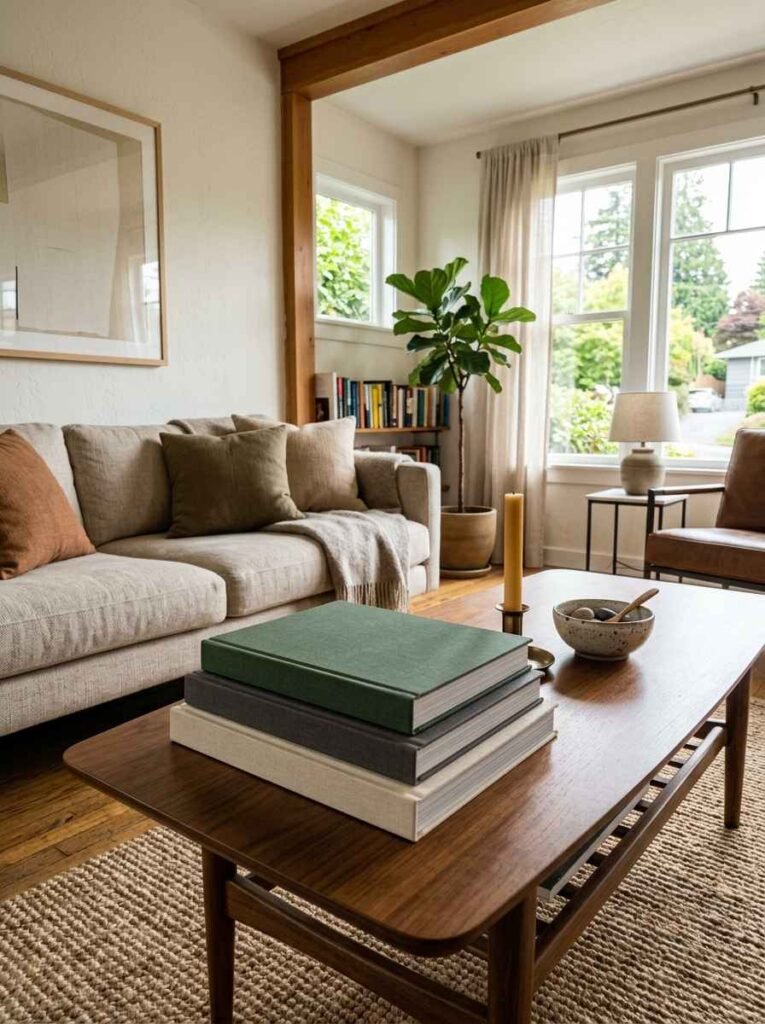
A small stack of 3–4 art books on the coffee table. A handful of books on a shelf, spines facing out, grouped by color. Books add warmth and personality without effort. Just edit ruthlessly — a few well-chosen ones beat a full shelf of paperbacks.
Tray styling
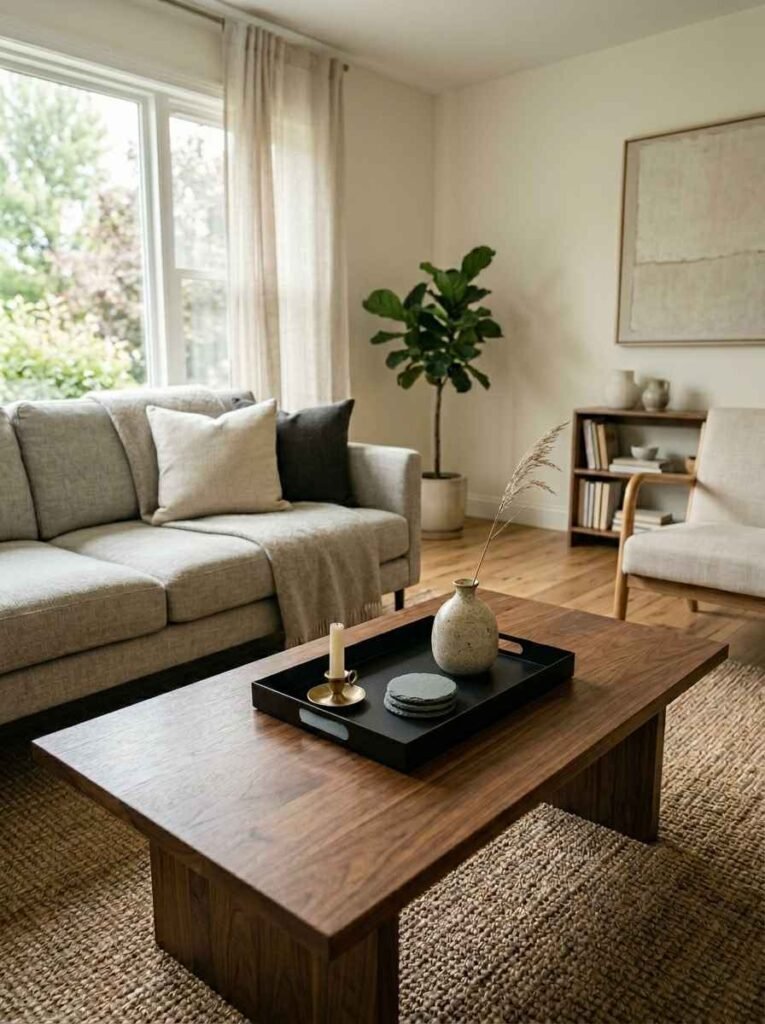
A tray on the coffee table or ottoman does two things: it corrals small items (remote, coasters, a candle) and creates a defined “zone” that looks intentional. One tray, 3–5 objects max. The constraint is the point.
Hardware and handles
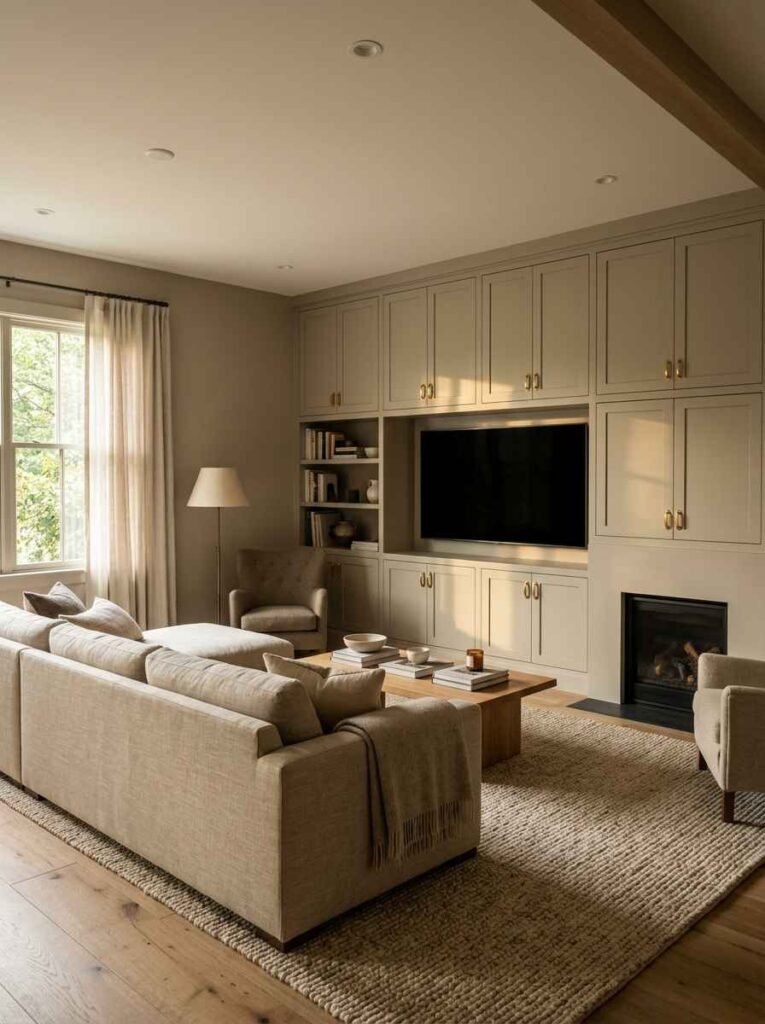
In minimalist spaces, the details carry outsized weight. Swap brass or chrome hardware for something warmer — brushed bronze, unlacquered brass, or matte black depending on your palette. You’ll notice it in every photo you take of the room.
Linen curtains, floor-to-ceiling
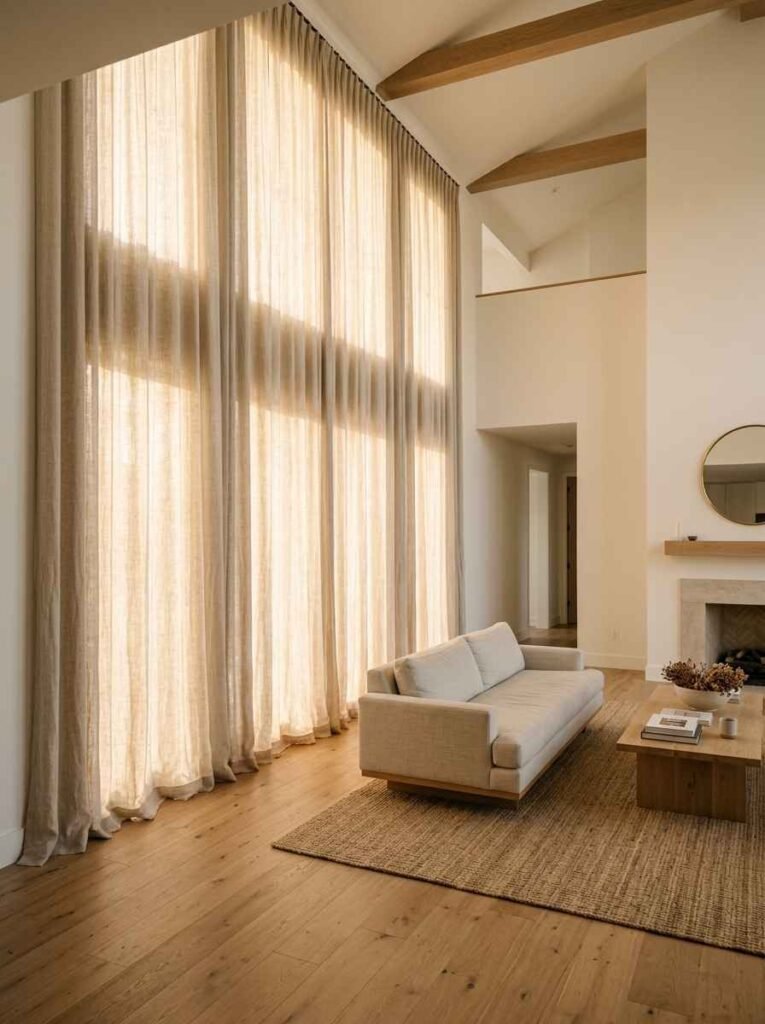
Even if your windows are small, hanging curtains as high as possible (ideally ceiling height) and as wide as possible makes windows look larger and rooms feel taller.
Natural linen in a warm white or oat color works in almost every minimalist palette.
The art rule
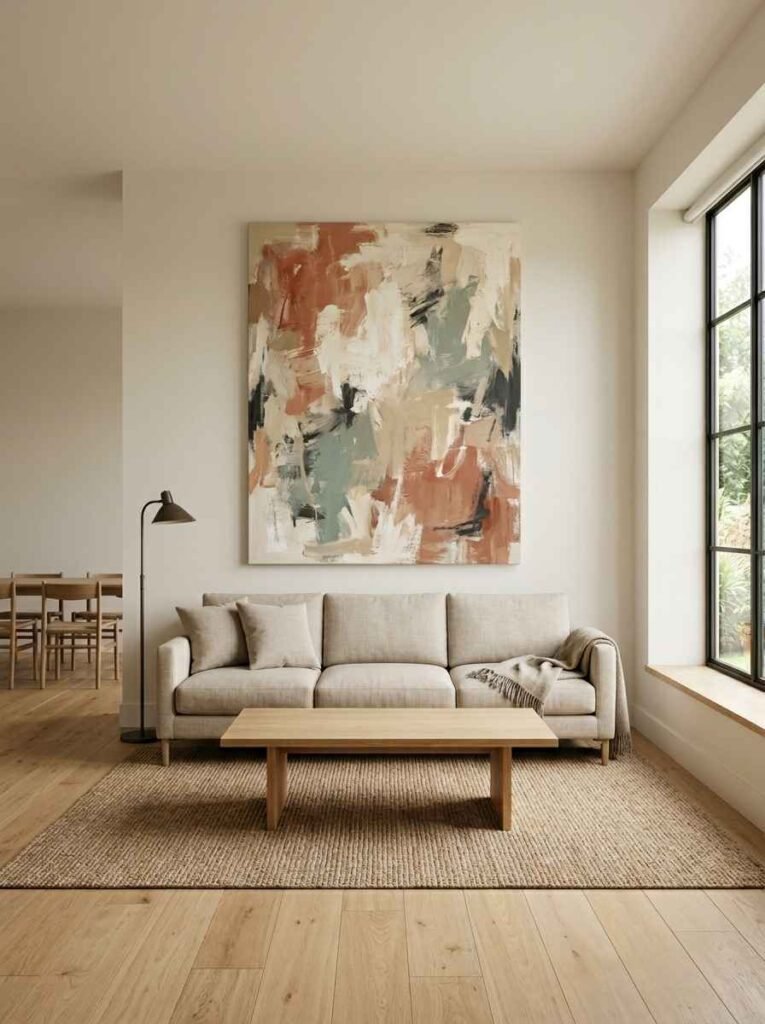
In minimalist rooms, one large piece of art beats a gallery wall. Every time. A single oversized piece — even a simple abstract in earthy tones — is confident and deliberate. A gallery wall, done wrong, reads as anxious filling of space.
If you love gallery walls, they can work — but they require real curation, consistent framing, and enough white space between pieces to breathe.
Scent as the invisible layer
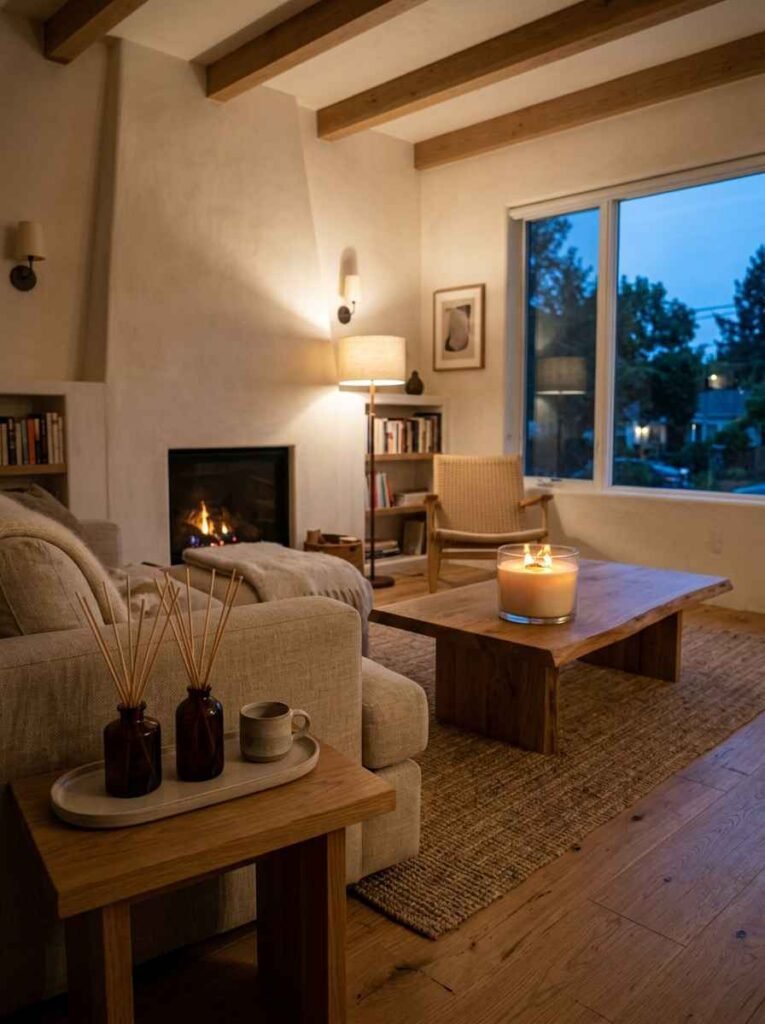
A clean, simple scent (cedar, sandalwood, linen, fig) completes the sensory experience of a cozy room in a way no decor item can.
A good reed diffuser or a wood-wick candle. Scent is the most underrated element of a well-designed room.
The Mindset Behind Cozy Minimalism
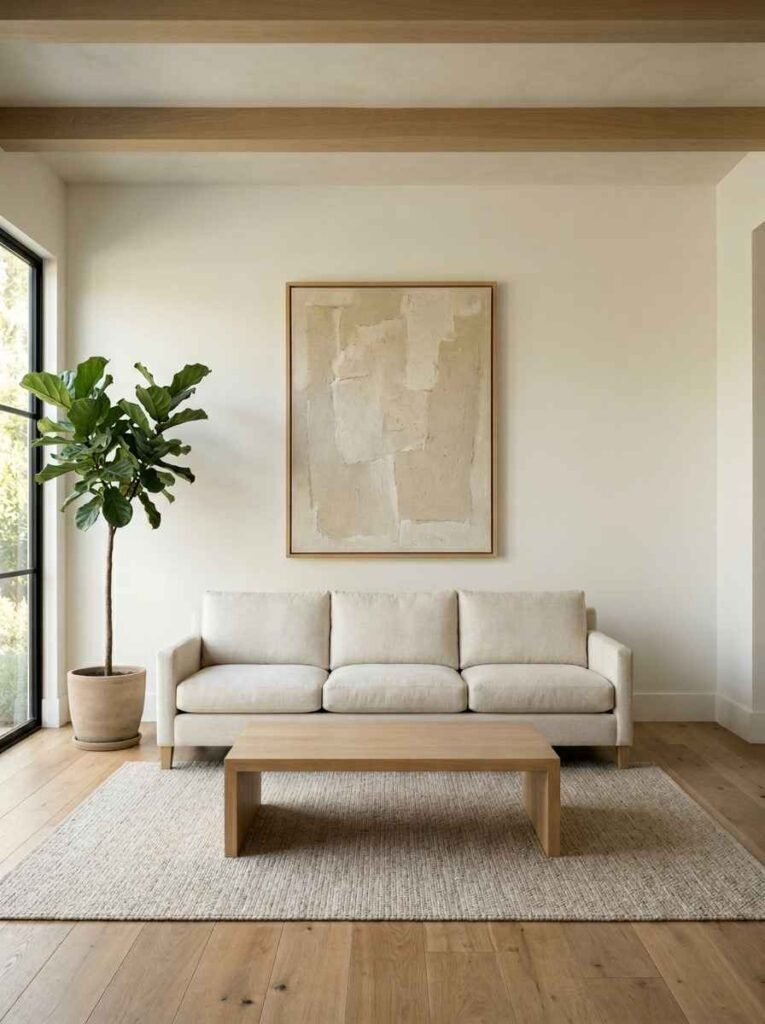
Here’s the thing most decorating content skips: cozy minimalism is a practice, not a purchase list.
Every object you bring in is a decision about what deserves space in your home. The constraint is what makes it work.
Buy less, choose better, and let the room breathe. That’s the whole philosophy in one sentence.
Go through your living room right now and pull out three things that aren’t earning their place. Live without them for a week. You’ll probably never put them back.
That’s where the cozy comes from — not from adding more, but from making room for what actually matters.
