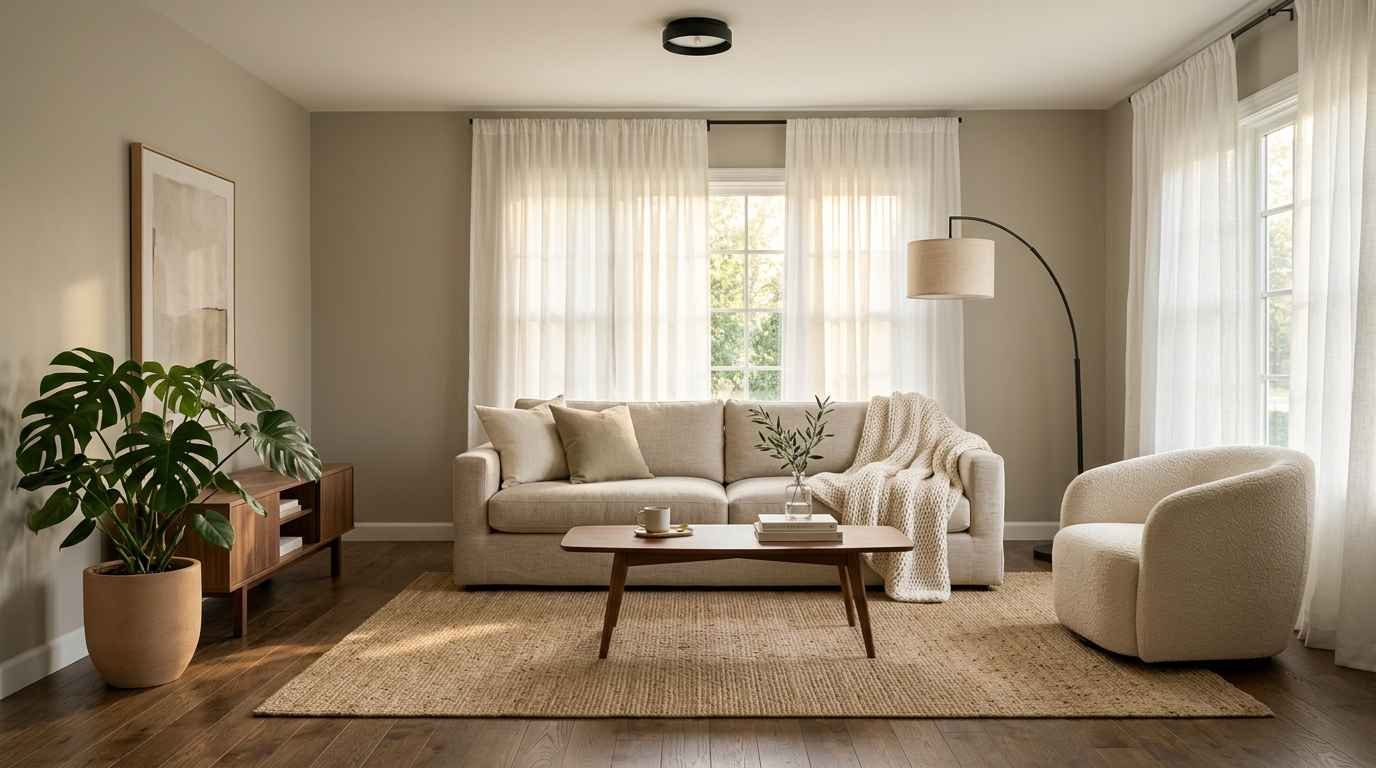
Your living room has too much stuff. You know it. That throw pillow collection alone deserves its own zip code.
But here’s the thing — minimalism doesn’t mean cold. It doesn’t mean a white box with one sad succulent and a floor lamp from IKEA circa 2009.
Cozy minimalism is its own thing. Warm textures, intentional furniture, soft light, and zero visual noise.
Once you nail it, your living room becomes the place you actually want to sit in.
Let me walk you through 28 ideas that do exactly that.
Start With the Walls: Warm Neutrals Over Stark White
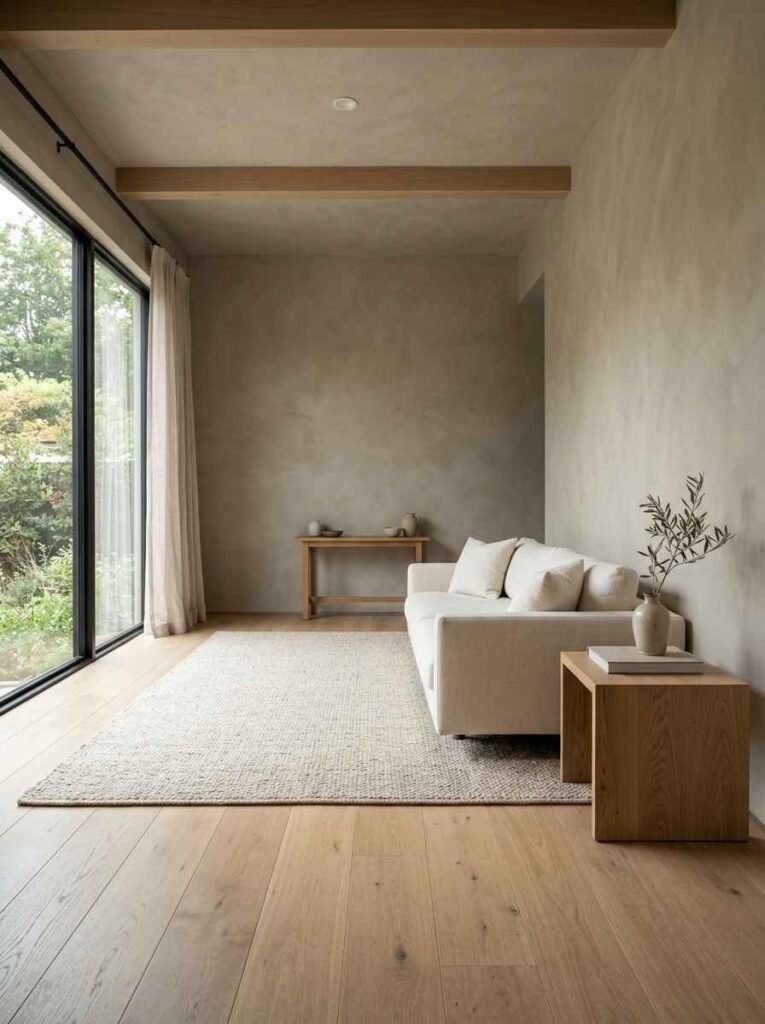
Bright white walls read as clinical. Go warm instead.
Greige, warm beige, dusty clay, or even a muted sage — these shades give you the clean slate minimalism needs without making the room feel like a dental office.
Sherwin-Williams’ “Accessible Beige” and Benjamin Moore’s “White Dove” are crowd favorites for a reason.
Try an Accent Wall in a Deeper Tone
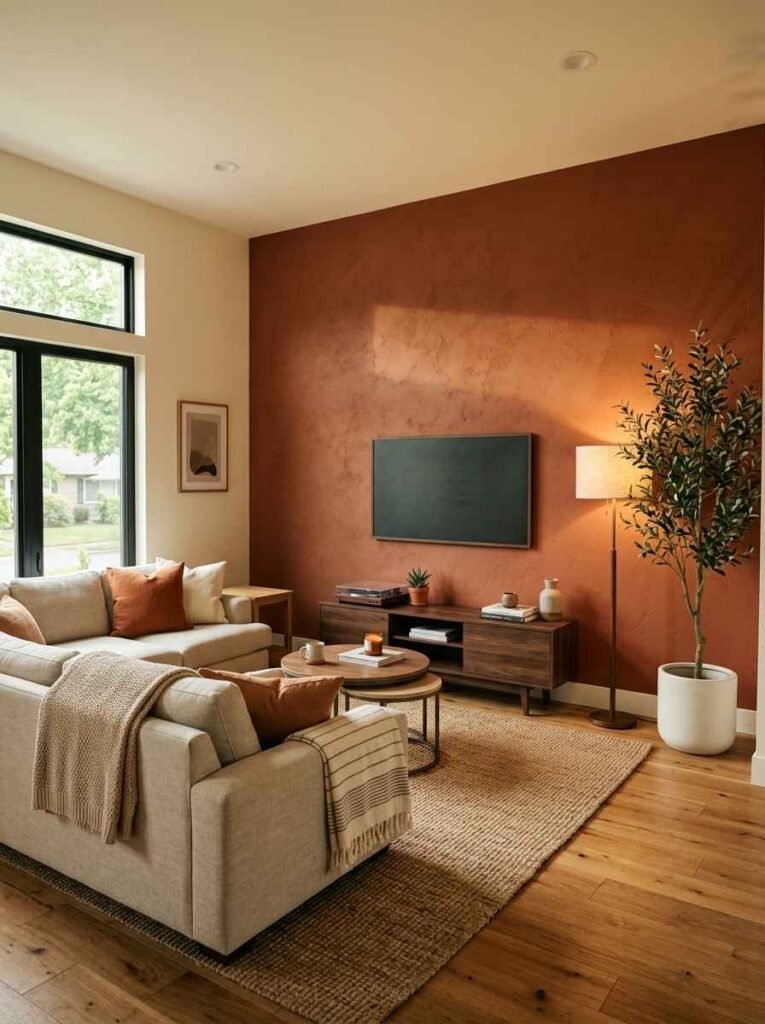
One wall in a deeper terracotta or camel brown adds depth without clutter. You get visual interest without adding a single object to the room.
Furniture: Less Pieces, More Intention
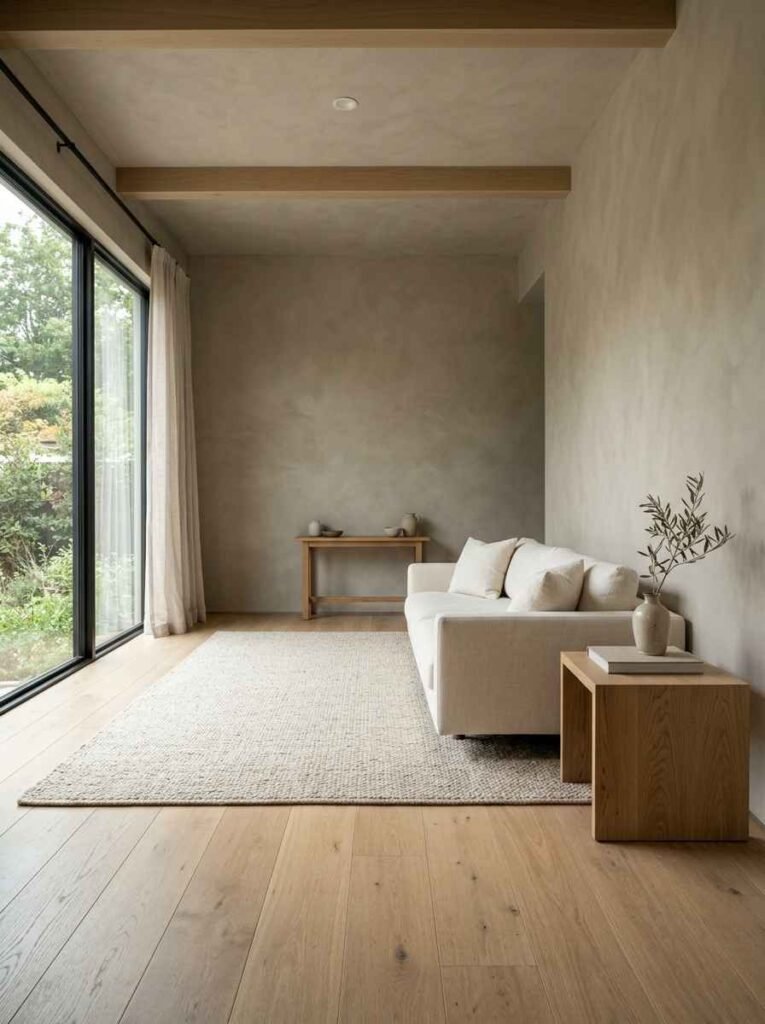
The golden rule of cozy minimalism: buy fewer pieces, but buy them well.
A oversized linen sofa in a natural tone beats three mismatched accent chairs every single time.
Think about what you actually use. What stays, earns its spot.
The Low-Profile Sofa
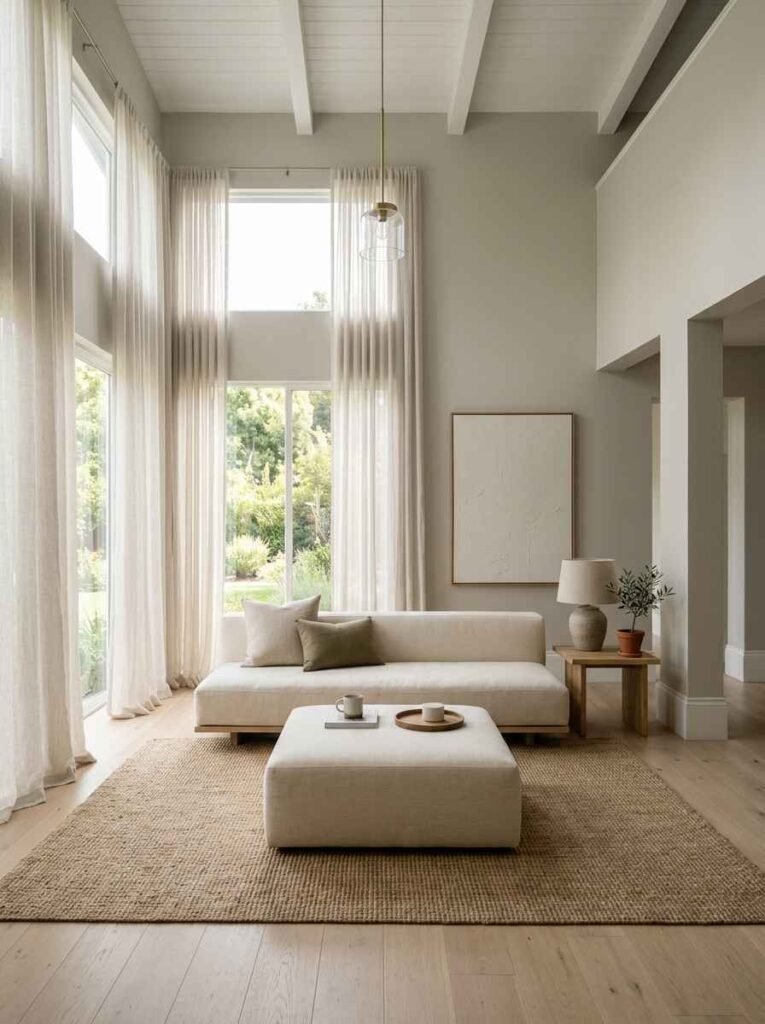
Low furniture makes ceilings feel taller. A platform-style sofa in oatmeal, ivory, or warm gray anchors the room without dominating it.
Pair it with a single ottoman instead of a full coffee table if you’re working with a smaller space.
One Statement Chair
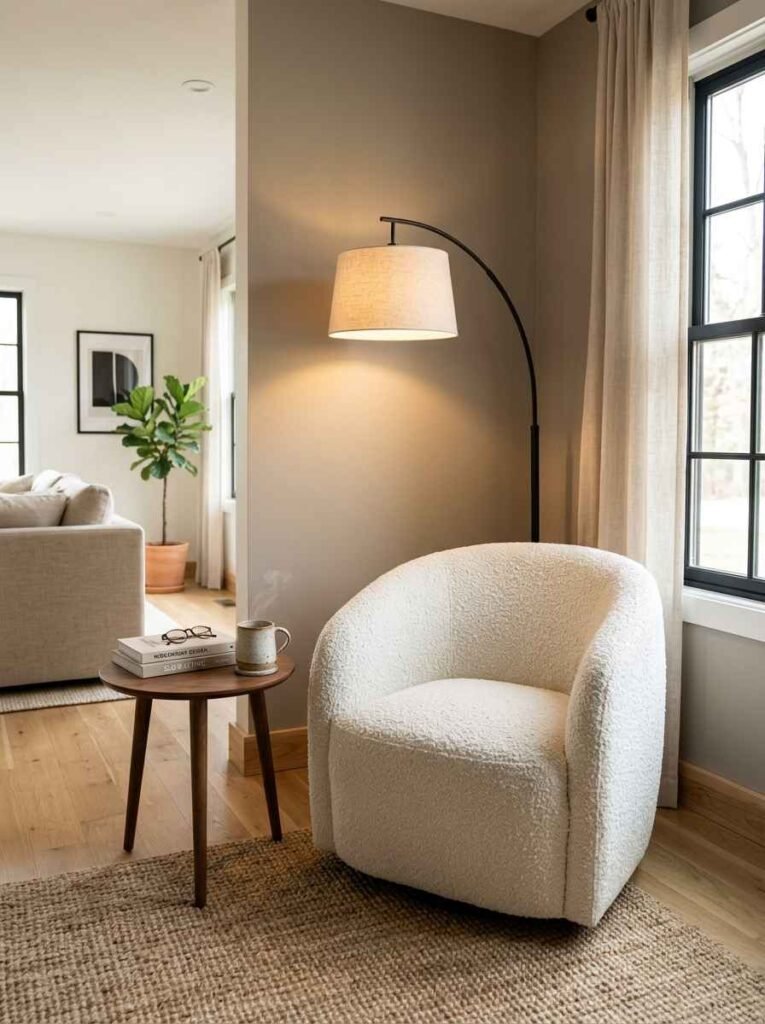
Every cozy minimalist living room needs one chair you’d fight someone for. A boucle armchair, a worn leather reading chair, a curved accent seat — pick one.
FYI, boucle is having a serious moment right now and honestly it deserves it.
A Wood Coffee Table (With Legs You Can See Through)
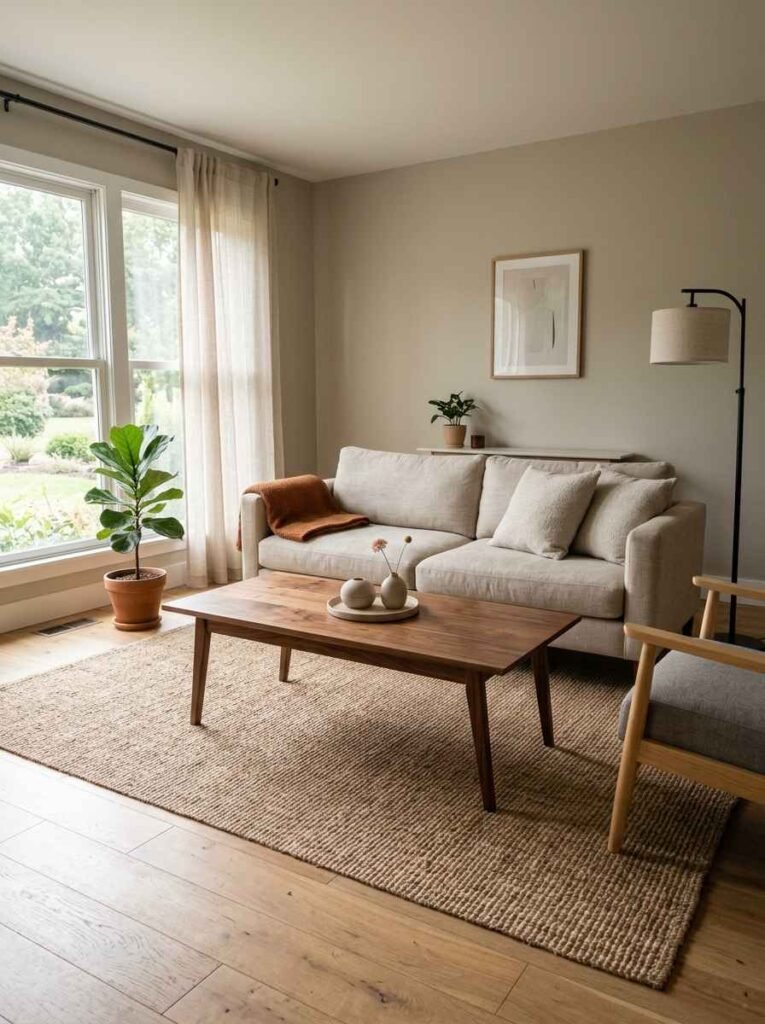
Heavy, solid coffee tables make small rooms feel stuffed. Go for something with visible legs — a light oak or walnut piece that lets the floor breathe underneath it.
Textiles: Where the “Cozy” Actually Comes From
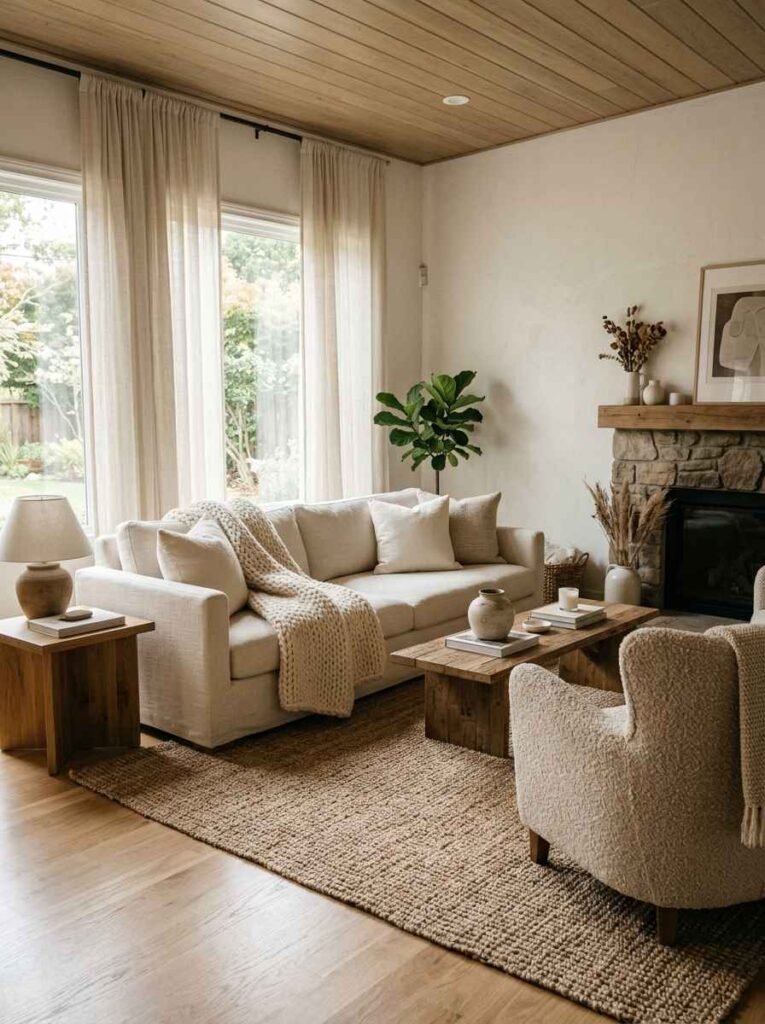
This is where minimalism gets to loosen up a little.
Layered textures in a tight color palette do all the heavy lifting. Chunky knit throws, linen pillow covers, a jute or wool area rug — these are your tools.
The Area Rug Rule
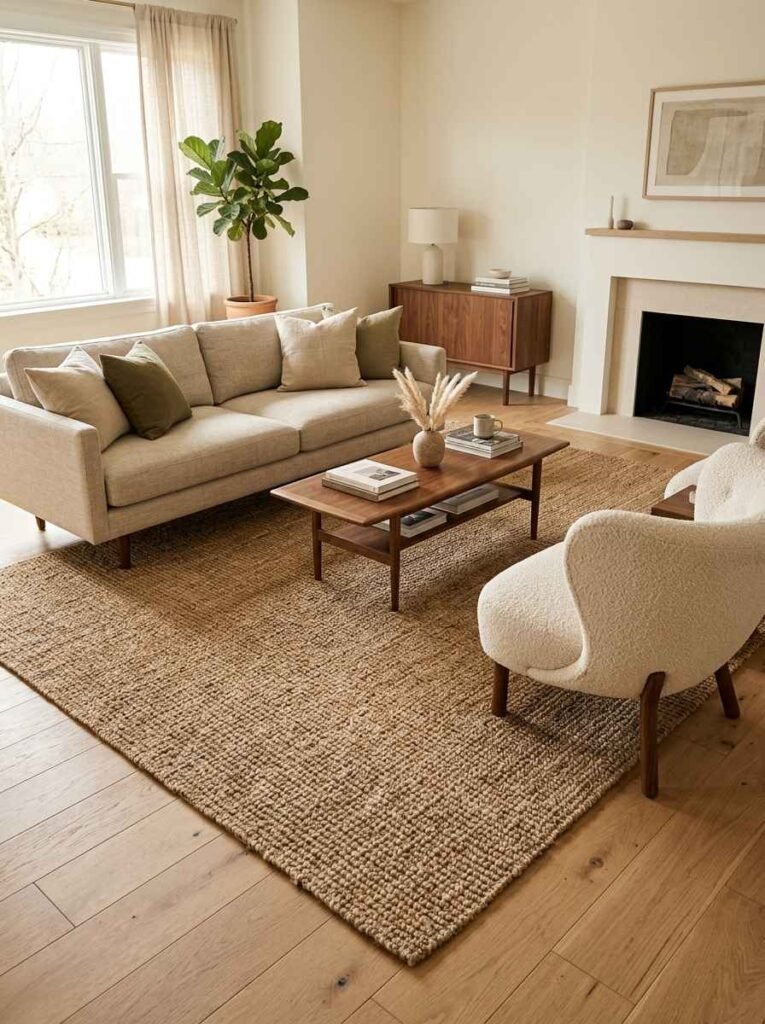
Size up. Most people buy rugs too small. Your rug should anchor all the furniture, with at least the front legs of every piece sitting on it.
A too-small rug floats in the middle of the room like a confused island.
| Textile | Best Material | Why It Works |
|---|---|---|
| Throw blanket | Chunky knit or waffle weave | Adds warmth without visual clutter |
| Pillow covers | Linen or cotton | Breathable, natural texture |
| Area rug | Jute, wool, or flatweave | Grounds the room, adds warmth |
| Curtains | Sheer linen | Filters light softly |
Limit Your Pillow Count
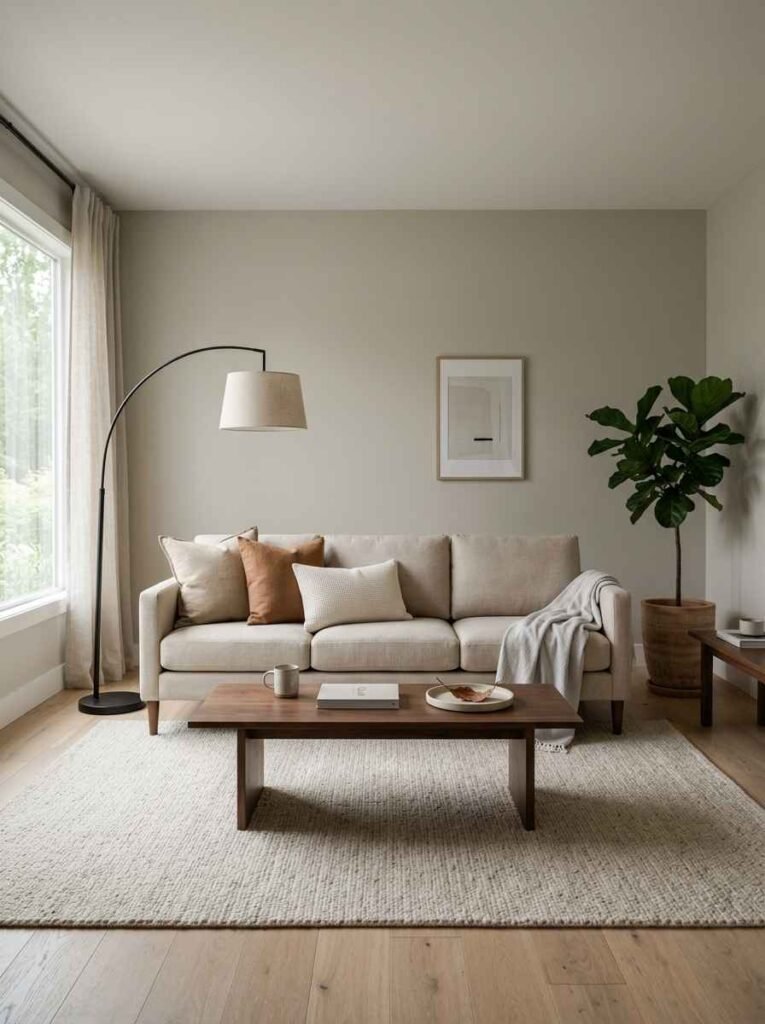
Two to four pillows max on a sofa. Mixing one solid with one subtle texture is enough. Any more and you’re back in maximalist territory. :/
Lighting: The Single Biggest Upgrade You’re Probably Ignoring
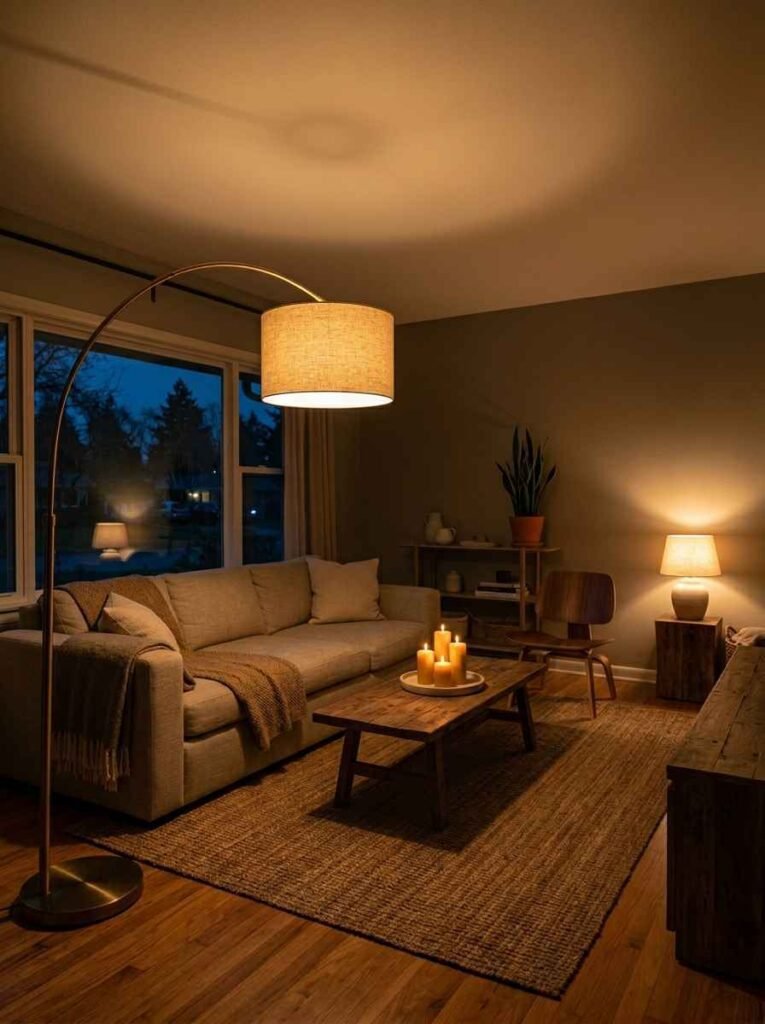
Overhead lighting ruins rooms. Recessed lights blasting from the ceiling at full brightness make even the most beautiful space feel like a big box store.
Layer your lighting. Floor lamps, table lamps, and candles. Warm bulbs only — 2700K is your target. Turn off the overhead lights at night entirely and watch the room transform.
A Statement Floor Lamp
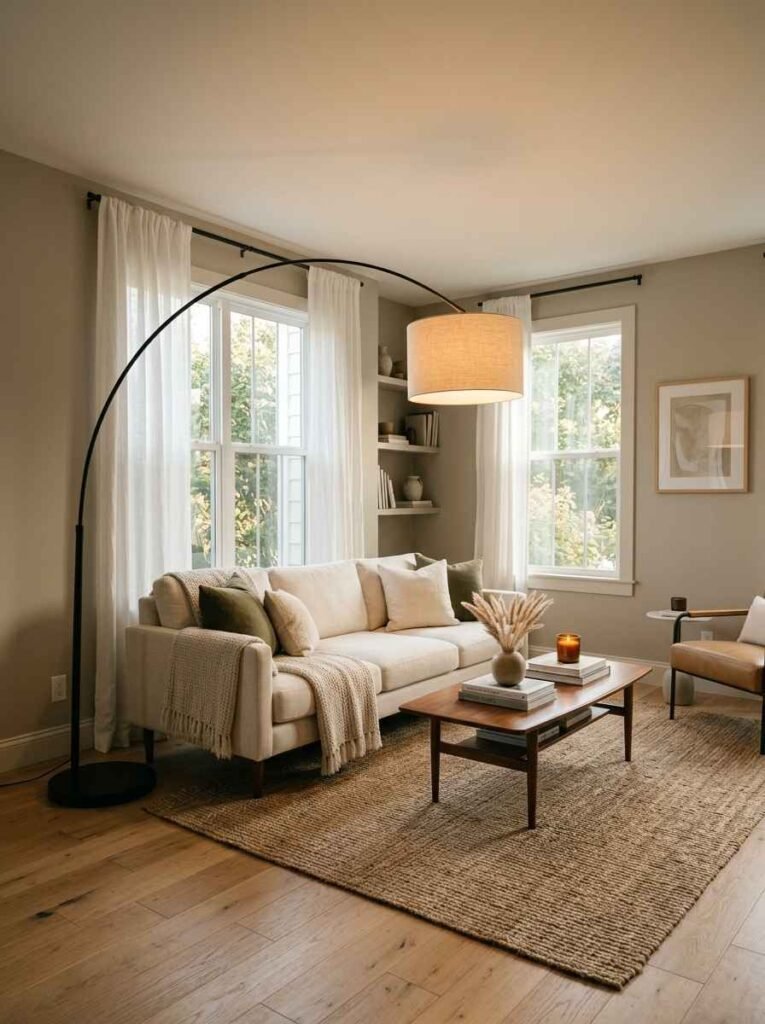
One tall arc lamp or a simple sculptural floor lamp does double duty: it provides light and counts as decor.
You kill two birds with one lamp. Figuratively.
Candles Are Underrated
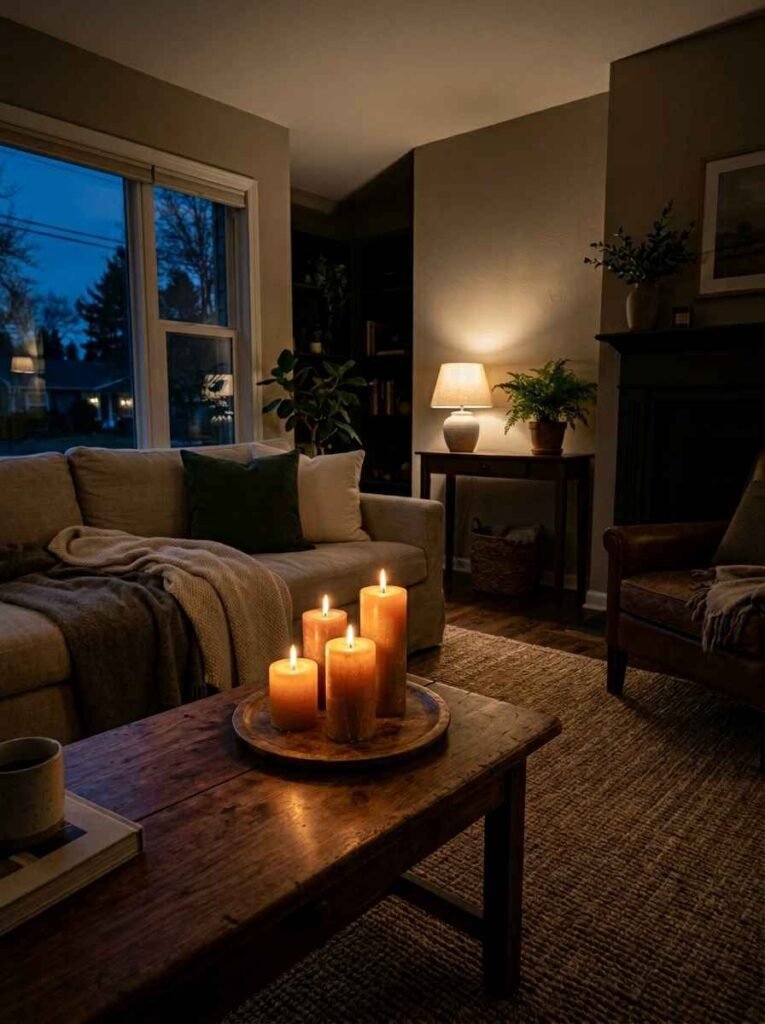
Real candles, not battery-operated tea lights. A few pillar candles or a cluster of votives on a tray add warmth that no lightbulb can replicate.
Storage: Hide Everything That Doesn’t Spark Conversation
Visual clutter kills cozy minimalism faster than anything else.
Closed storage is your best friend. A minimal media console with doors, a storage ottoman, built-in shelving — whatever hides the stuff that needs to exist but doesn’t need to be seen.
The One Open Shelf Rule
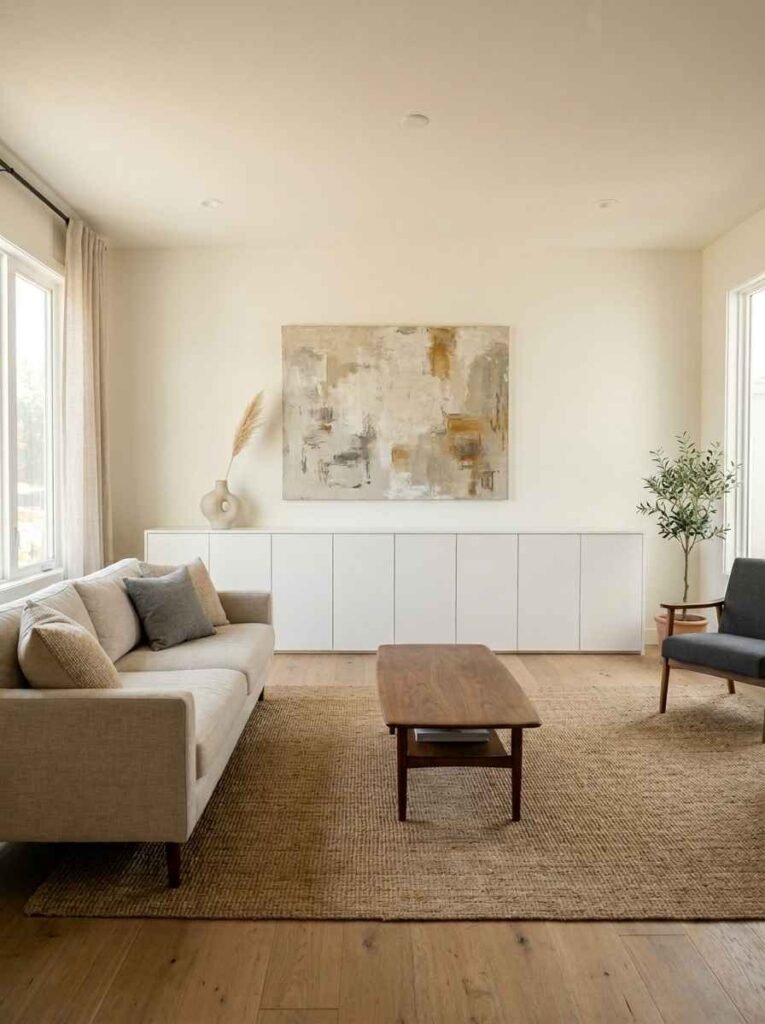
If you do open shelving, keep it disciplined. Three to five objects max per shelf. A plant, a small stack of books, one ceramic piece.
That’s it. IMO, the moment you add “just one more thing” to a shelf, the whole composition falls apart.
Plants: One or Two, Strategically Placed
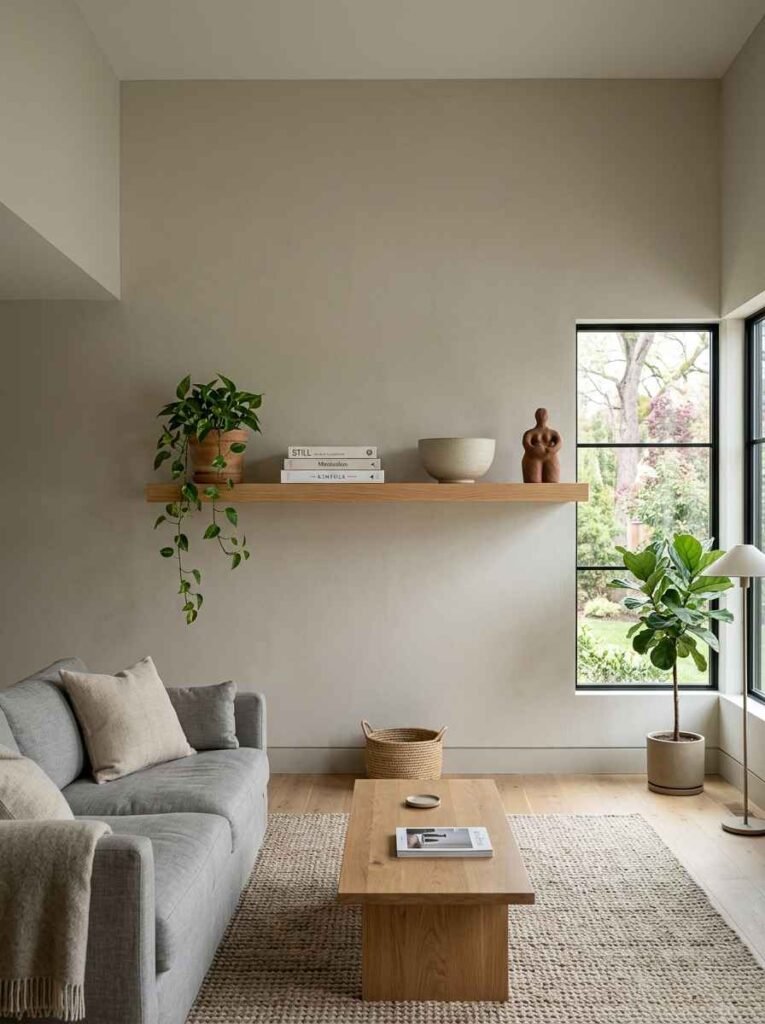
Plants bring life without adding clutter — but only if you’re deliberate about placement.
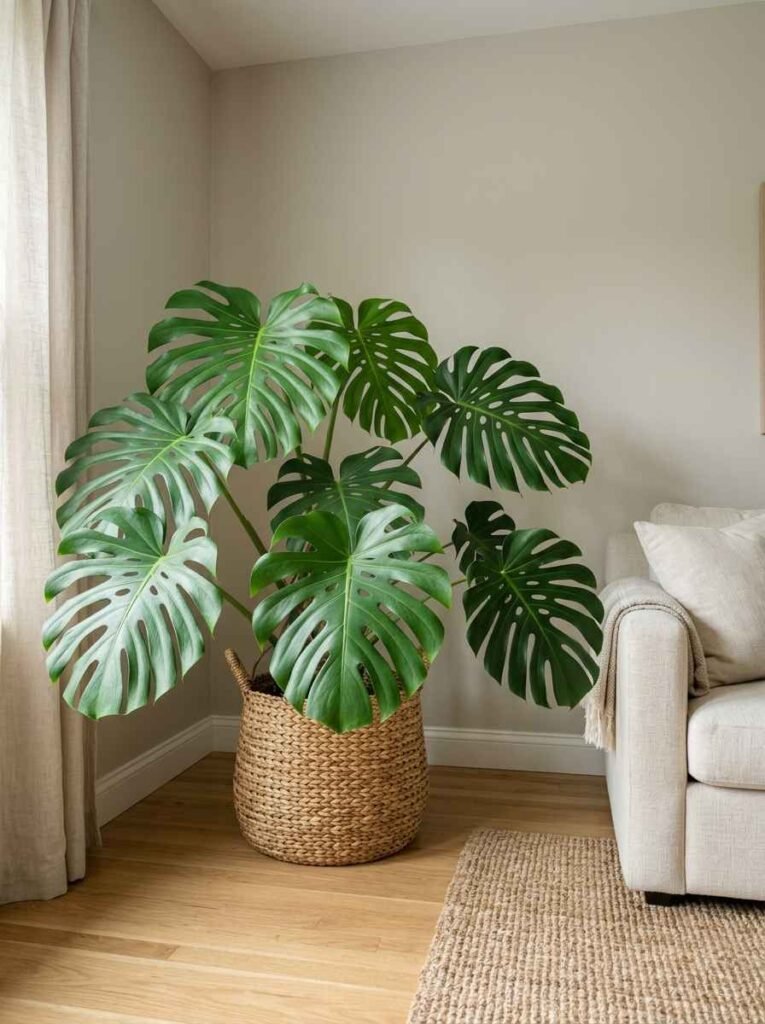
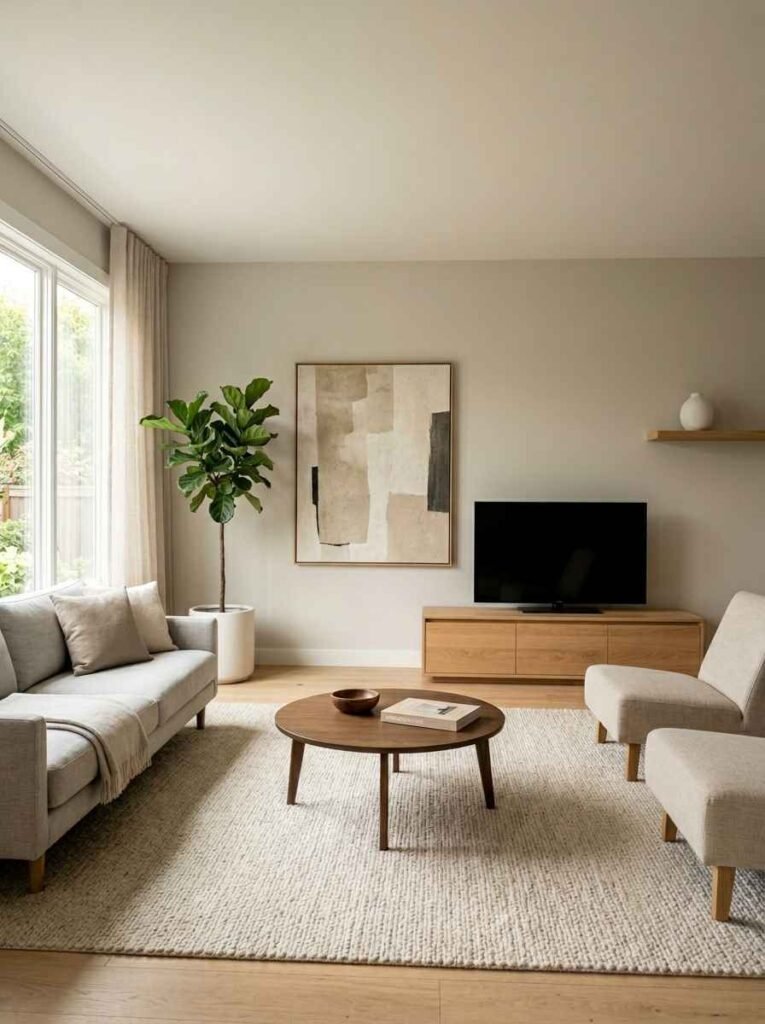
One large plant in a corner (a fiddle leaf fig, a monstera, an olive tree) does more for a room than six small ones scattered around.
It draws the eye up, adds organic shape, and fills space without filling space, if that makes sense.
Choose a Pot That Disappears
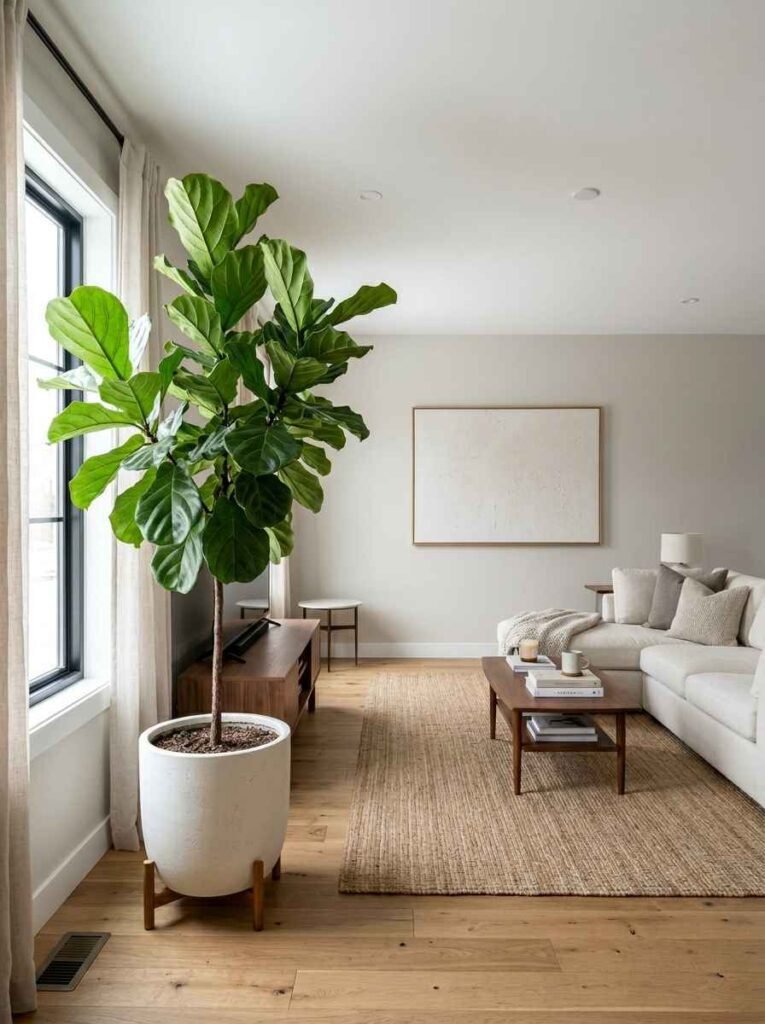
Terracotta, matte white, or a woven basket planter. Nothing glossy or patterned. The plant is the star, the pot is just the vessel.
Color Palette: Stay in a 3-Color Family
The fastest way to make a room look busy is too many competing colors.
Pick three: one base neutral, one warm accent, one natural texture tone. Something like warm white + camel + natural wood. Or greige + sage + cream. Let those three do everything.
What About a Pop of Color?
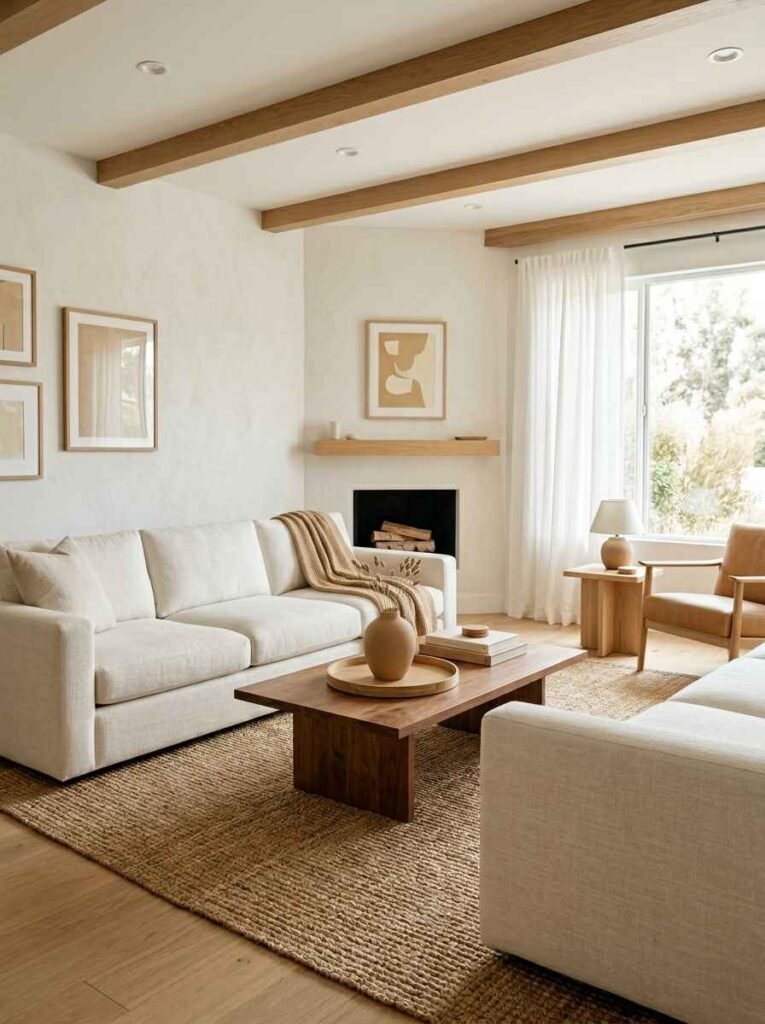
One moment of deeper color — a terracotta vase, a rust-toned throw — is enough. You don’t need more. One deliberate color choice reads as intentional. Three reads as indecision.
Decor: Edit Ruthlessly
This is where most people fall apart.
Every object on display should earn its spot. If you wouldn’t miss it for 30 days, it doesn’t need to be there.
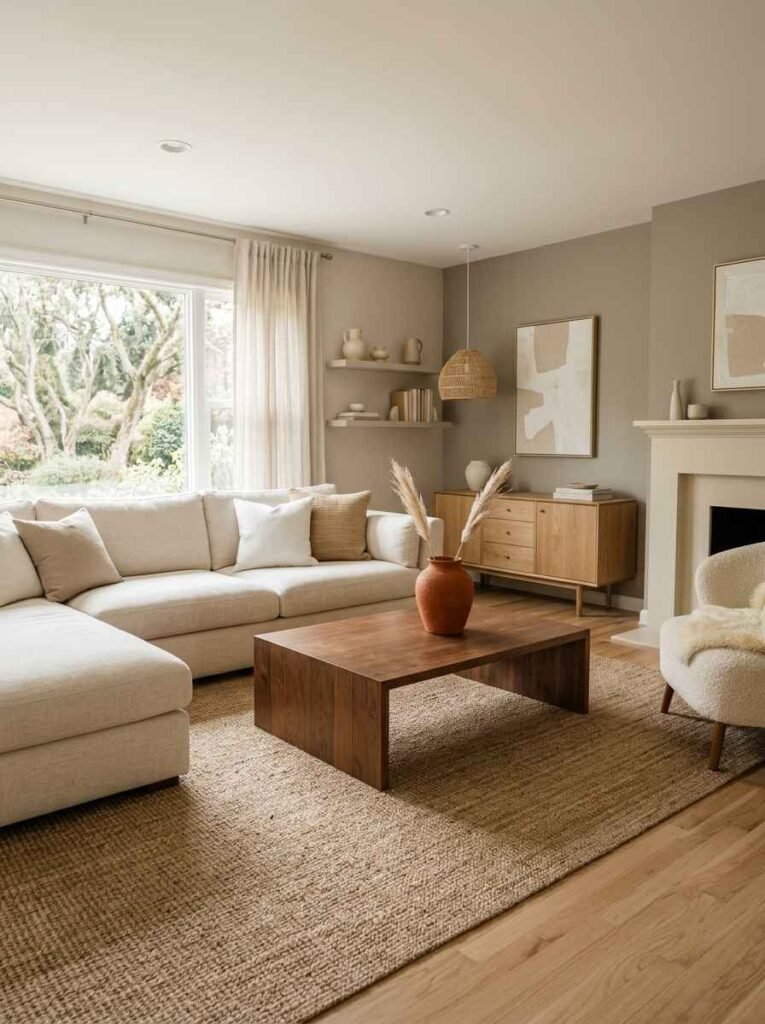
A small wooden bowl, a stack of three art books, a single ceramic sculpture — these work. Seventeen decorative objects collected from various travels do not.
The Tray Trick
Group small items on a tray. It corrals visual chaos, makes cleaning easier, and turns a collection of random objects into a deliberate vignette. One tray on the coffee table. Done.
Art: One Large Piece Over a Gallery Wall
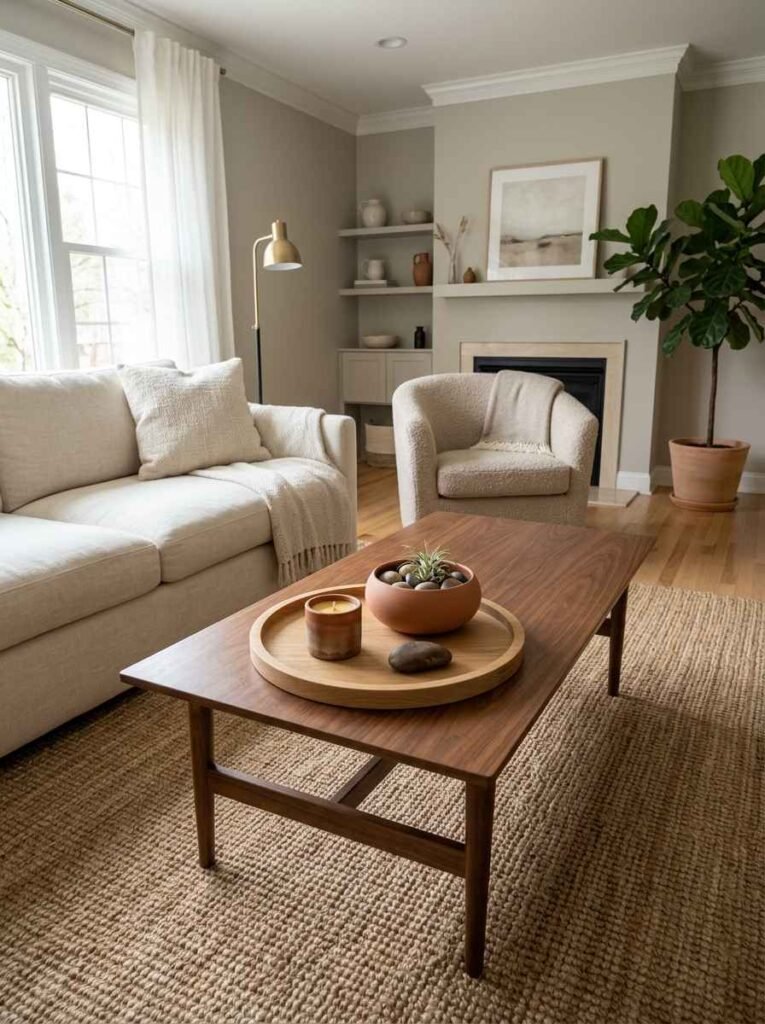
Gallery walls require constant editing to look right, and most people never pull it off.
A single large-scale artwork — abstract, landscape, black and white photography — makes a stronger statement with none of the fuss.
Hang it lower than you think. Eye level, not ceiling level.
Natural Materials: Wood, Linen, Jute, Clay
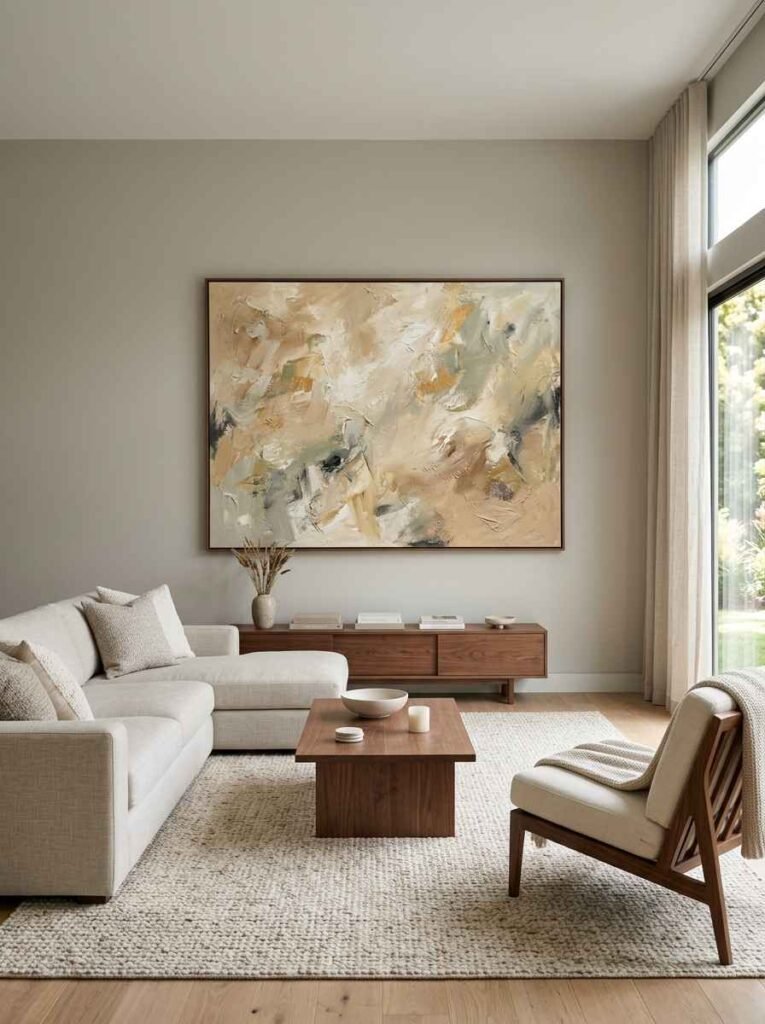
Cozy minimalism runs on natural materials. Synthetic finishes and shiny surfaces undercut the warmth you’re going for.
Wood for furniture, linen for textiles, jute or wool for rugs, ceramic or clay for decor.
These materials age well, photograph beautifully (hello, Pinterest :)), and create a consistent, grounded aesthetic.
28 Covered Patio Layout Ideas for a Beautiful Outdoor Setup
The Layout: Create One Clear Focal Point
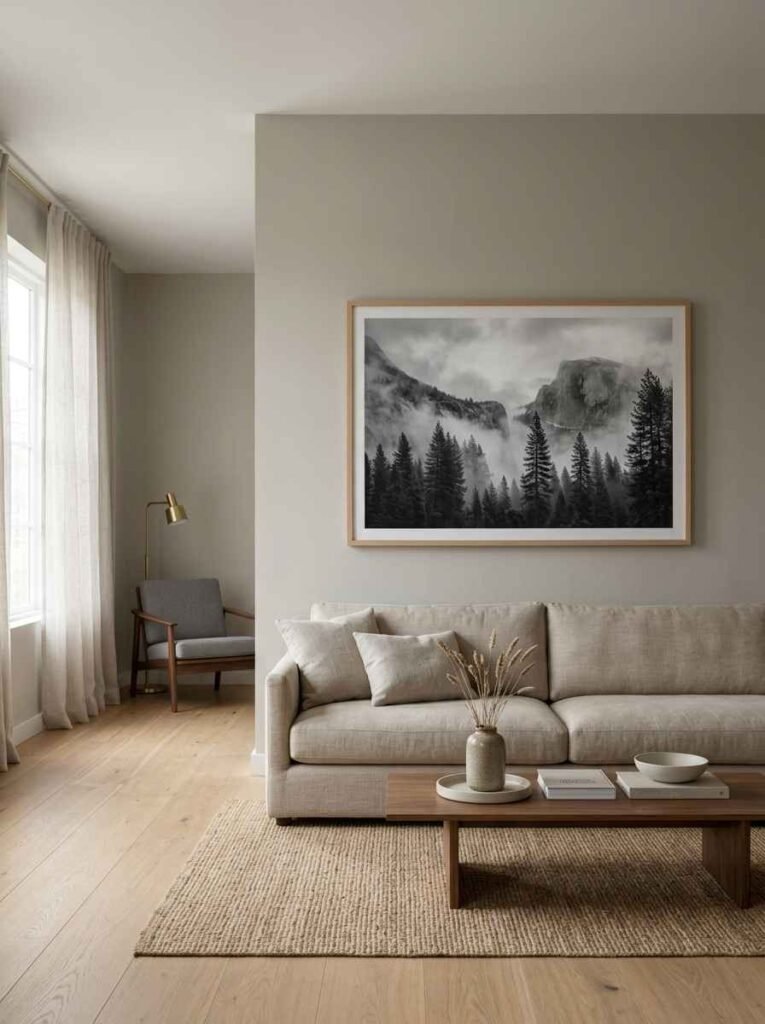
Pull everything toward one focal point — a fireplace, a large window, a TV console, or a statement wall. Every piece of furniture should orient toward it.
Floating furniture away from walls makes the room feel more intentional and conversational. Even six inches off the wall makes a difference.
Quick Checklist Before You’re Done
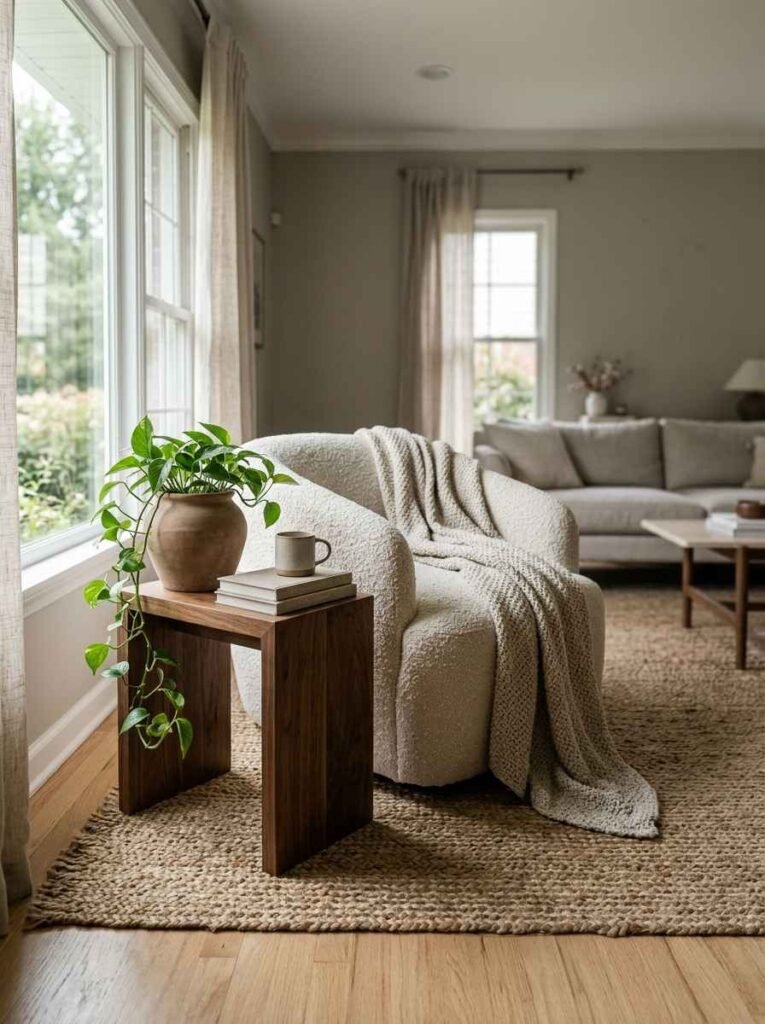
- Walls in a warm neutral
- 1-2 large plants (not a collection of small ones)
- Textiles in 2-3 textures, all in the same color family
- Lighting layered: floor lamp + table lamp + candles
- Closed storage for anything functional
- 3-color palette, maximum
- One piece of art, hung at eye level
- Every decor item intentional, edited ruthlessly
Final Thought
Cozy minimalism isn’t about owning less for the sake of it. It’s about owning the right things and giving them room to breathe.
Start with one corner. Get it right. Then let that standard spread through the rest of the space. Your living room will thank you — and so will anyone who walks into it.
Now go move that throw pillow collection somewhere it can’t be seen.
