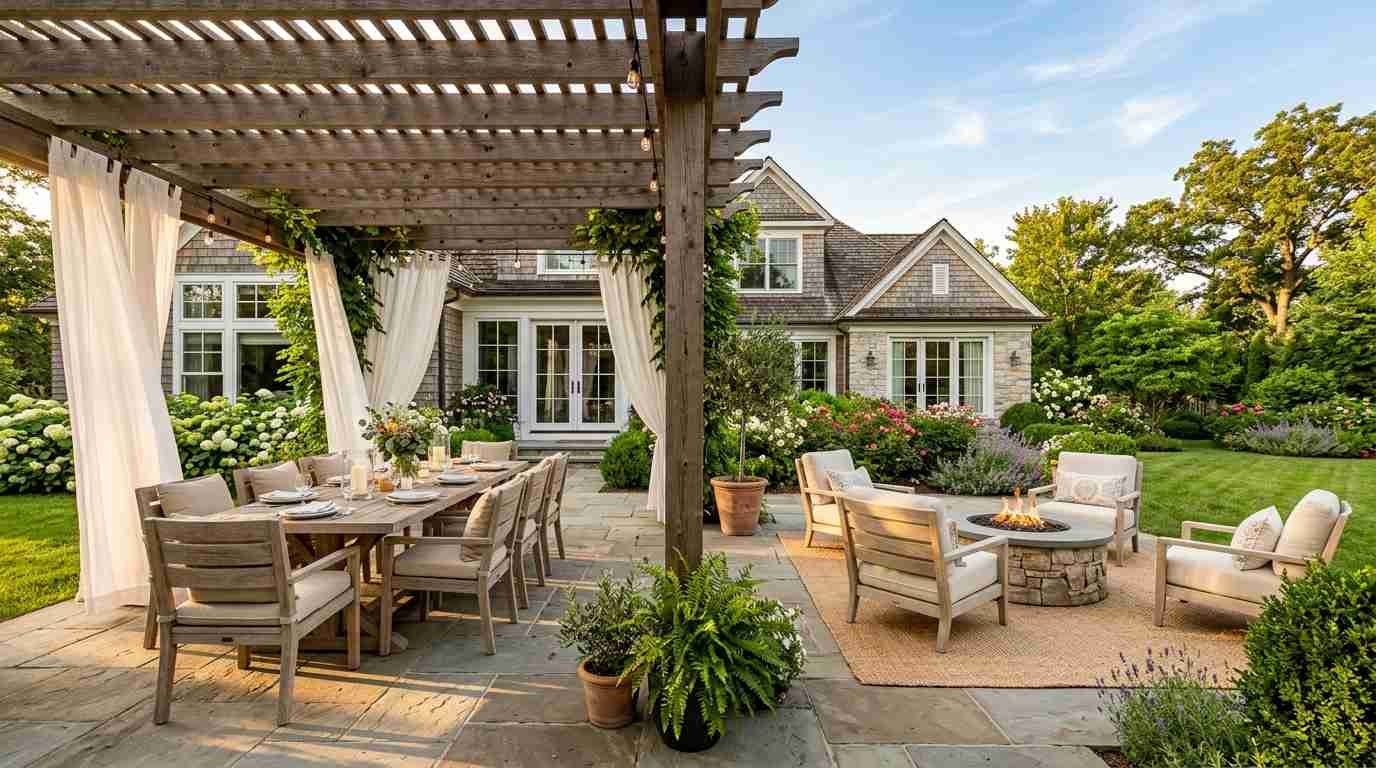
Your patio has potential. Like, a lot of it. But right now it’s either a full sun trap by noon or you’ve gone so heavy on coverage that it feels like a cave. The sweet spot?
Partial coverage. Shade where you want it, open sky where you don’t.
Here are 25 ideas to help you get there — from budget-friendly DIY fixes to full-on outdoor room transformations.
Pergola-Based Ideas
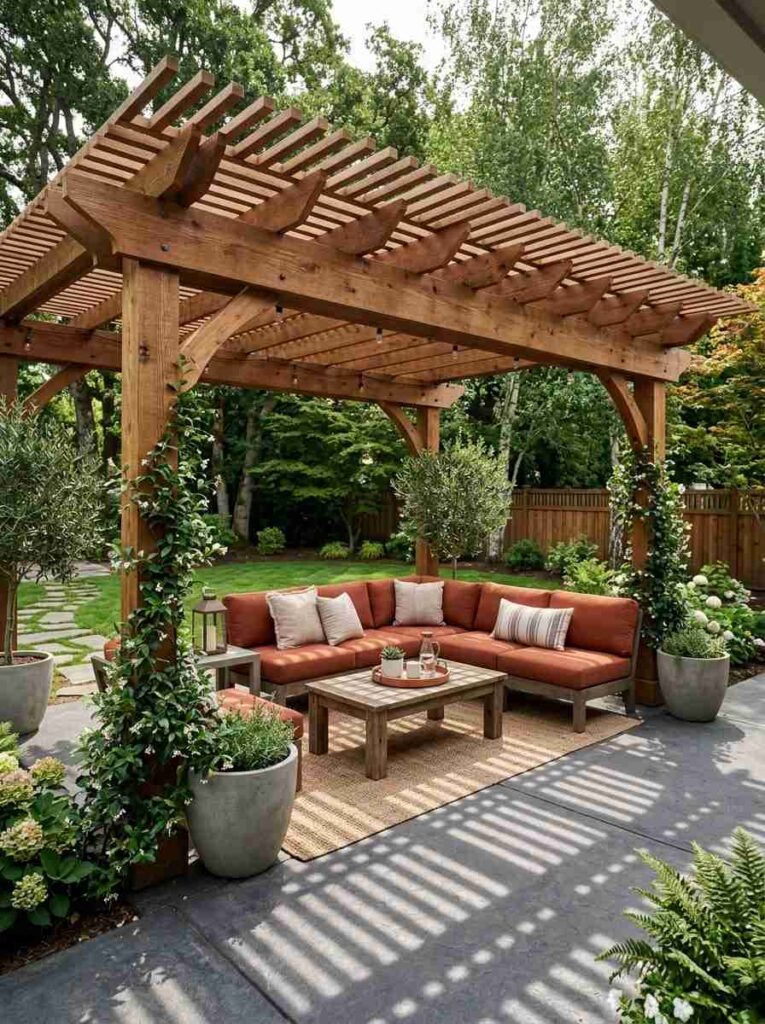
Pergolas are the workhorses of partial patio coverage. They give you structure without going full roof, and they look incredible in photos.
FYI, they’re also one of the most searched patio ideas on Pinterest for a reason.
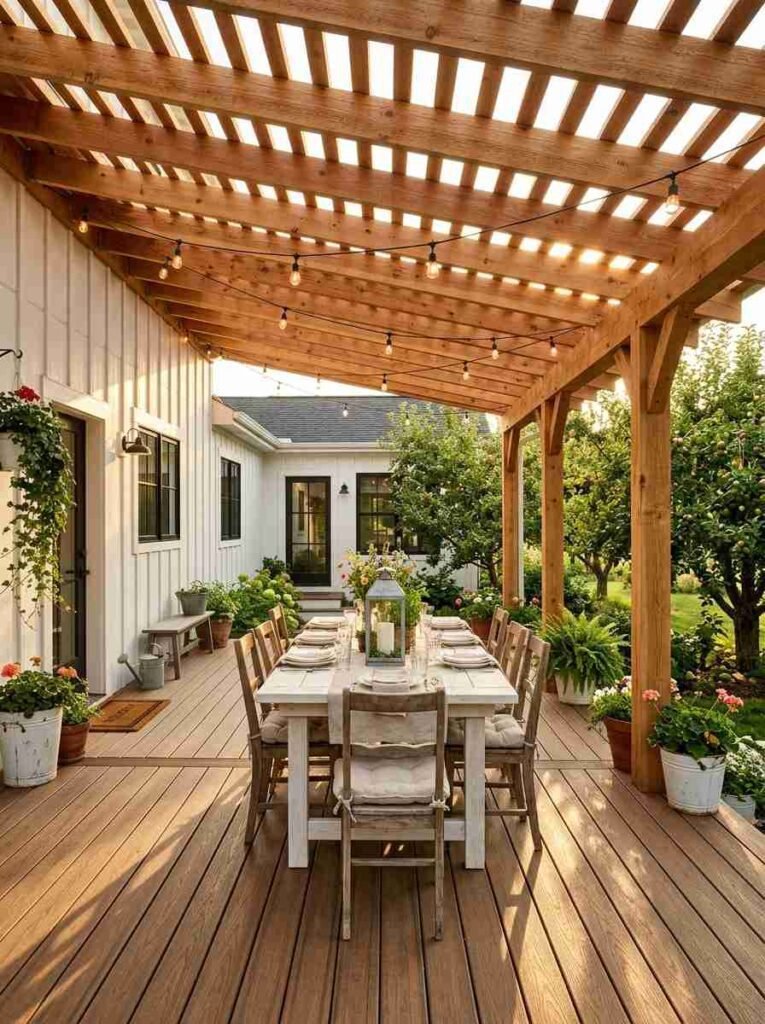
Classic wood pergola with climbing vines
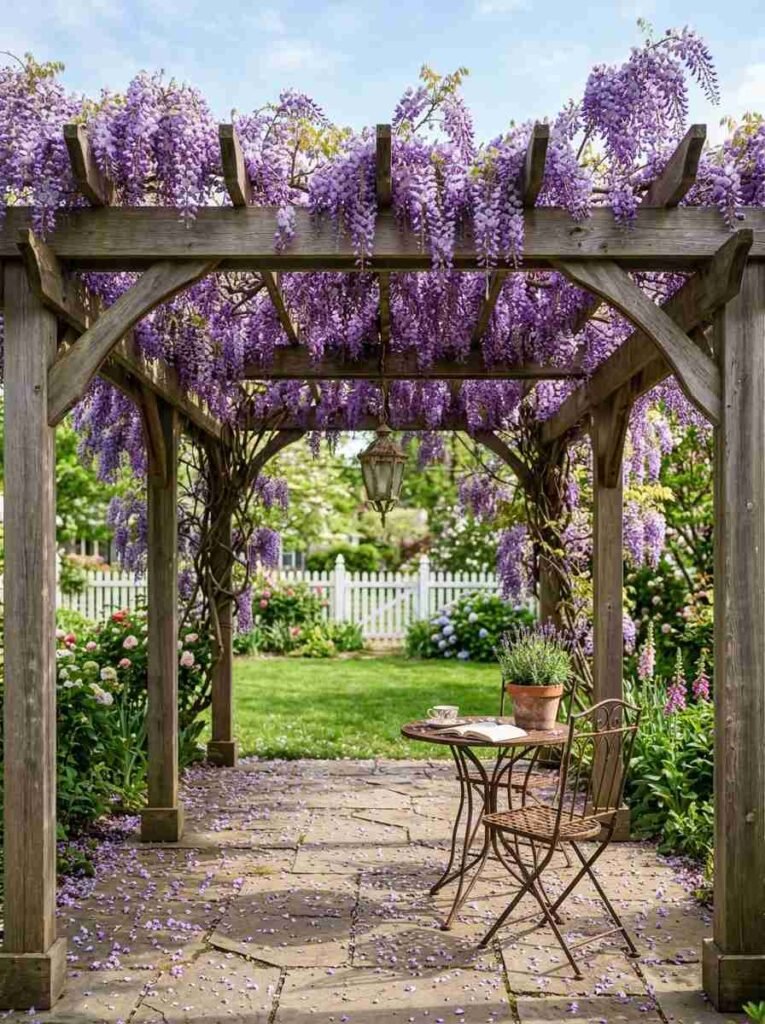
Build or buy a cedar or redwood pergola and let wisteria, jasmine, or bougainvillea do the decorating.
The vines fill in naturally over a season or two, creating dappled shade that moves with the breeze. The result looks like it belongs in a Tuscany garden, not a suburban backyard.
Pergola with retractable canopy
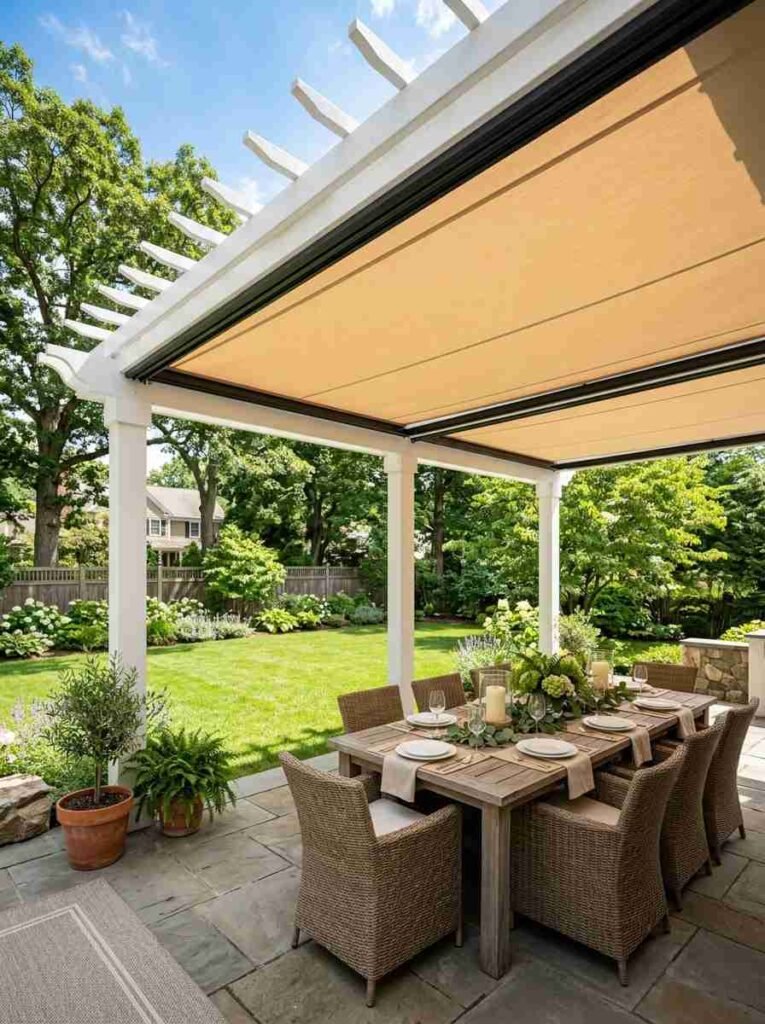
This one gives you control. Full sun in the morning, pull the canopy across by afternoon. Look for waterproof polyester canopies in neutral tones like sand, terracotta, or slate grey — they photograph beautifully and don’t fade as fast as bright colors.
Modern steel pergola with shade sail inserts
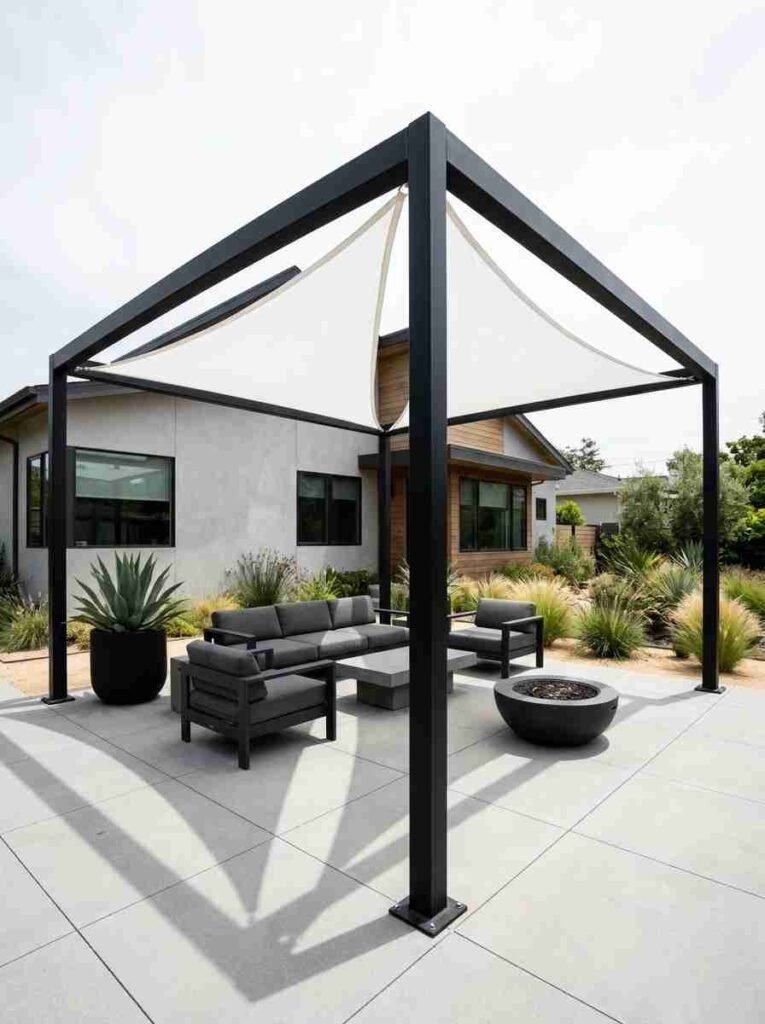
Powder-coated black steel beams with white or charcoal shade sail panels stretched between them.
Clean, architectural, and honestly one of the most Pinterest-worthy combos out there. Works especially well with modern or industrial-style homes.
Pergola with louvered roof panels
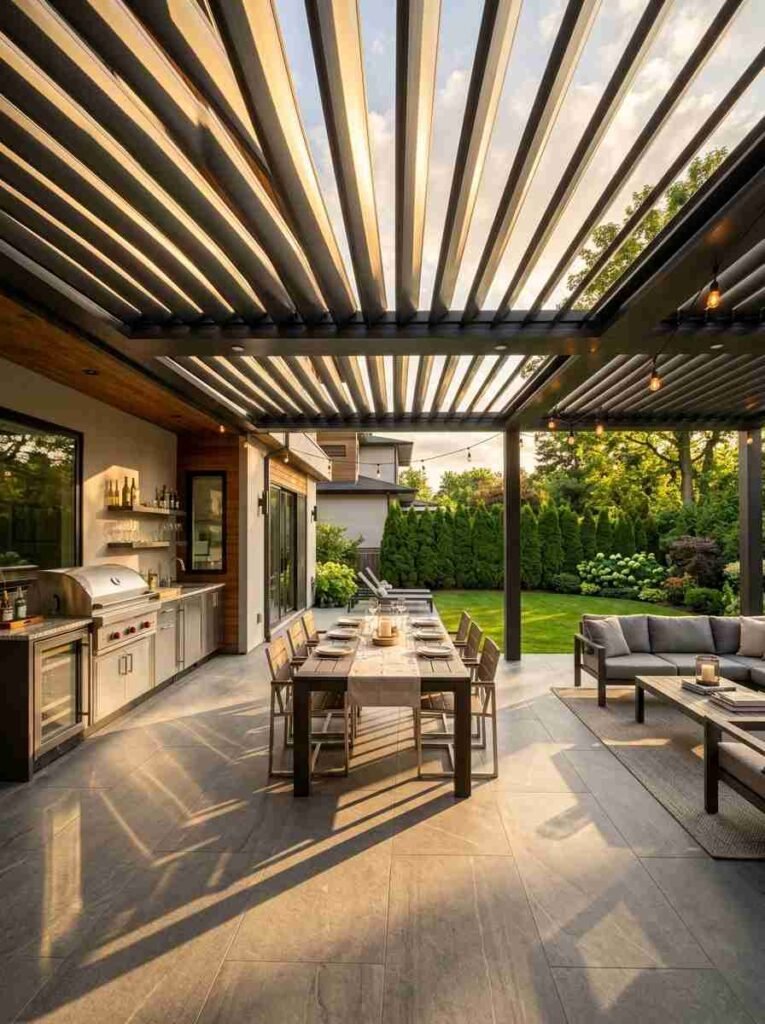
Adjustable aluminum louvers let you dial in exactly how much sun you want. Tilt them open for breeze, close them for shade or light rain protection.
More expensive upfront, but worth it if you use your patio year-round.
Shade Sail Setups
Shade sails are low-cost, high-impact, and wildly versatile. You can layer them, angle them, mix colors — and they’re genuinely easy to install yourself on a weekend.
Single large triangle sail
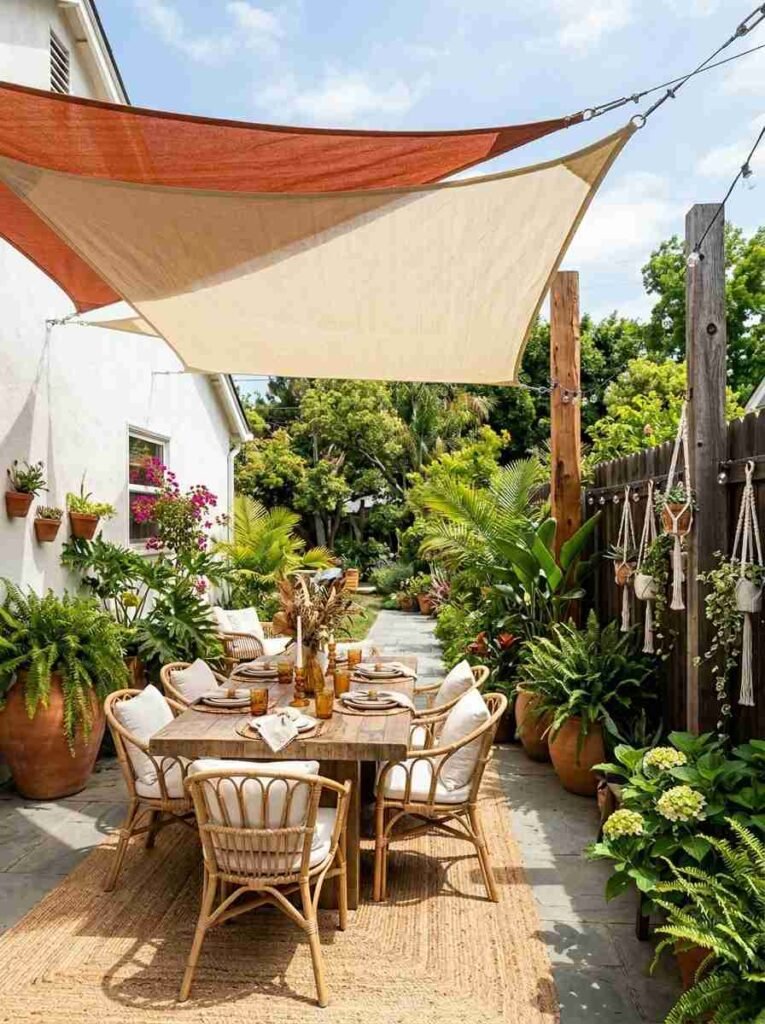
One oversized triangle sail anchored between a corner of the house, a tall post, and a fence or tree.
Keep the attachment points at different heights so it angles and sheds rain. 16–20 foot sails cover a dining table and chairs with room to spare.
Layered overlapping sails
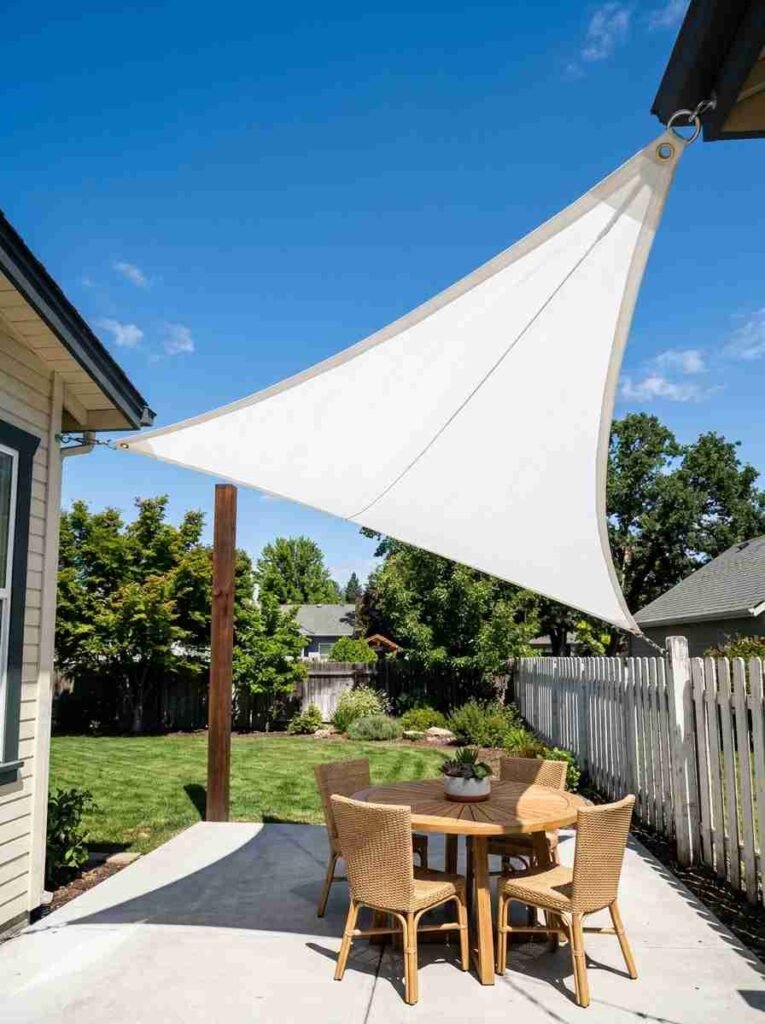
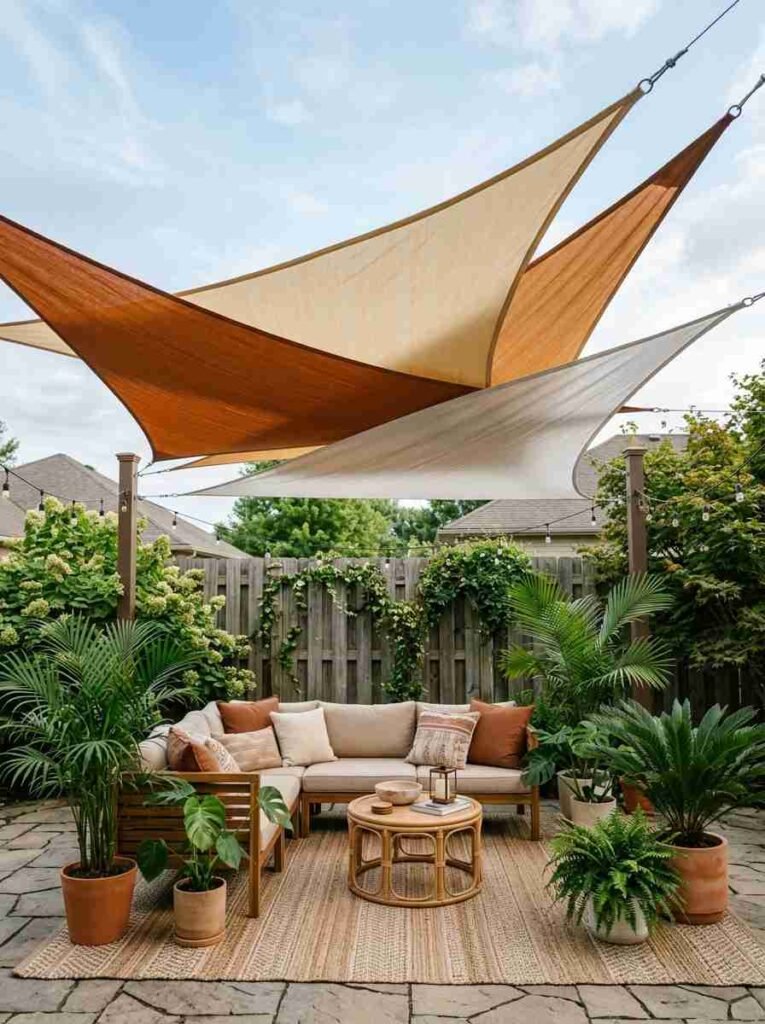
Two or three sails in different sizes and complementary colors, overlapping at the edges. The layered look adds visual interest and more complete coverage than a single sail.
Rust, cream, and white is a classic warm-weather combo.
Sail canopy over a hot tub or lounge area
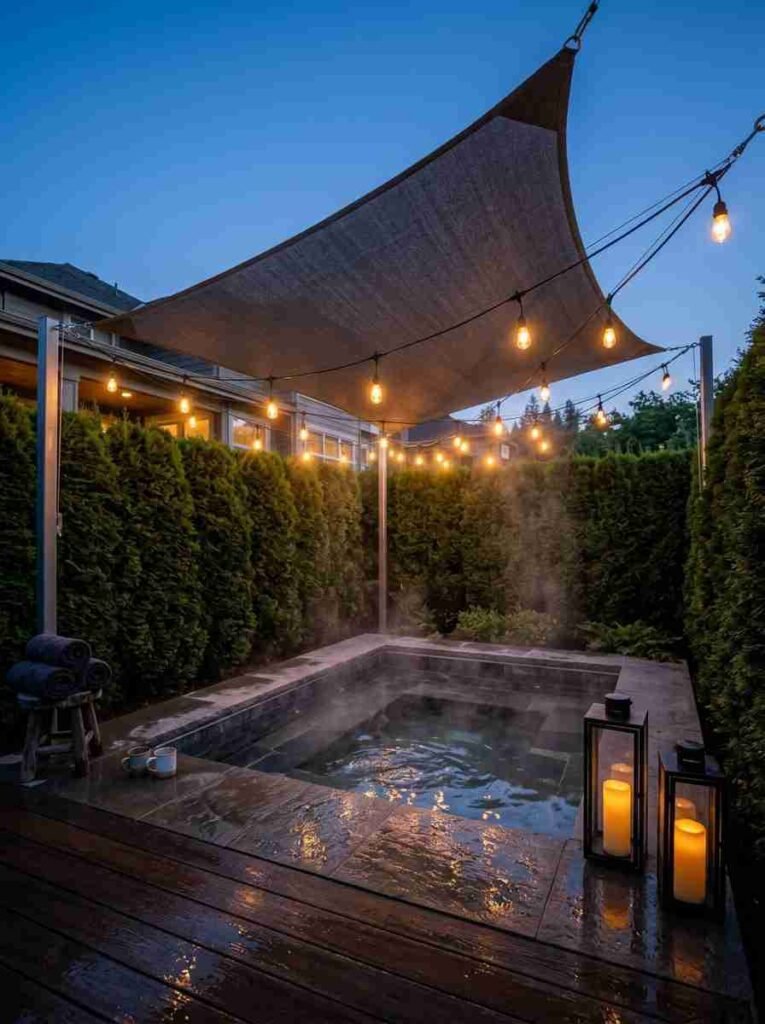
A 12-foot square sail pulled taut over a hot tub or outdoor lounge creates a defined “room” without walls. Add string lights underneath and you’ve got a nighttime setup that looks like a boutique hotel.
| Shade Sail Type | Best For | Approx. Cost | DIY-Friendly? |
|---|---|---|---|
| Triangle sail | Small to mid patios | $80–$250 | Yes |
| Square sail | Larger coverage areas | $150–$400 | Yes |
| Layered sails | Visual interest + full coverage | $200–$700 | Yes |
| Commercial-grade sail | Heavy use, high wind areas | $400–$1,200 | Sometimes |
Structural Overhangs & Extensions
If you want something that looks built-in, an extended overhang or structural addition is the move. These take more planning but add serious curb appeal and real estate value.
Extended roofline overhang
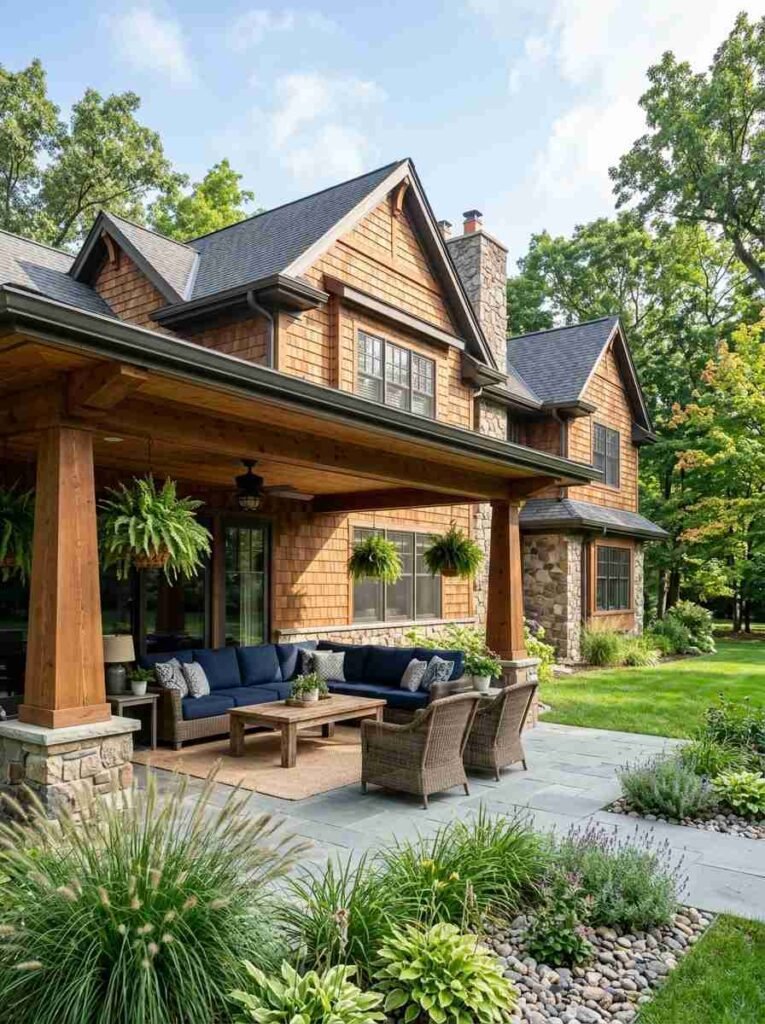
Work with a contractor to extend your home’s roofline out over the patio by 4–6 feet. It ties the outdoor space directly to the house architecture and provides solid rain coverage without any freestanding posts. Looks custom, because it is.
24 Small Covered Back Patio Ideas That Feel Bigger Instantly
Attached covered patio with open rafters
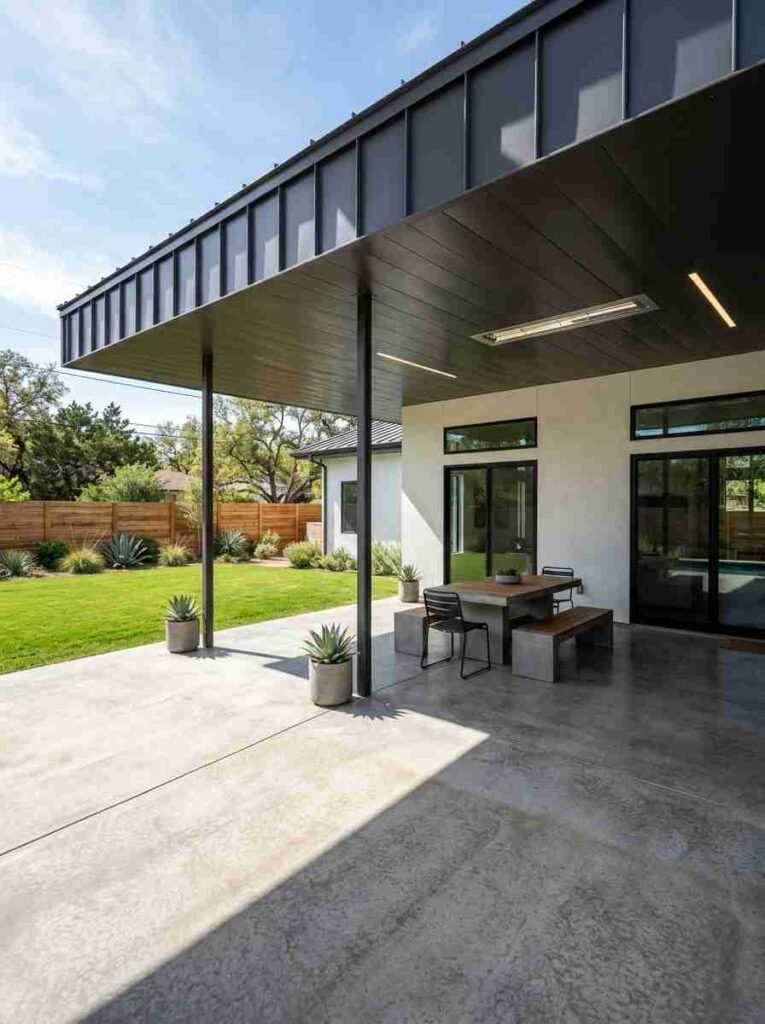
A lean-to structure attached to the house with open-spaced rafters — no solid roof, just structural beams.
The gaps let in light and air while the beams define the space and give you something to hang lights or plants from.
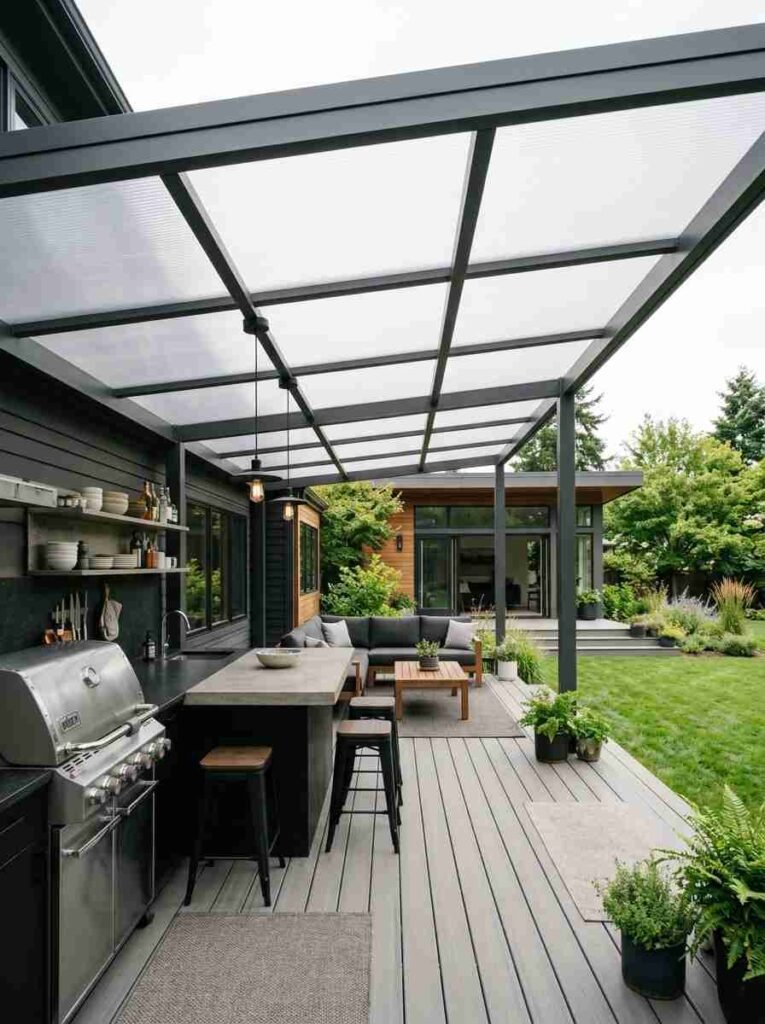
Corrugated polycarbonate roof panels
Clear or frosted polycarbonate panels over a simple frame let light through while blocking rain and cutting UV.
They’re lighter than glass, cheaper, and still look polished. Great for climates where you want brightness even on overcast days.
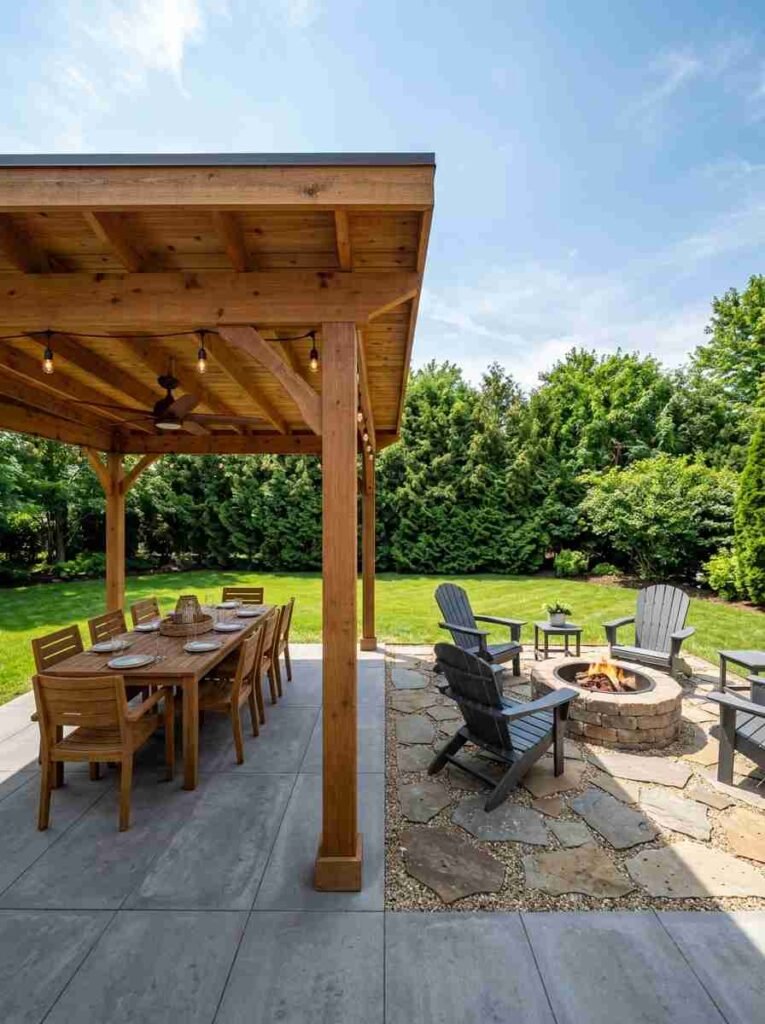
Combo covered + open patio
Half the patio has a solid or semi-solid roof, half stays completely open.
The covered section handles dining and cooking; the open section is for sunbathing, fire pits, or whatever needs sky access. Defined zones make patios feel intentional.
Curtain & Fabric Ideas
Fabric adds warmth, color, and that breezy, editorial look that performs incredibly well on Pinterest. Most of these are easy weekend projects.
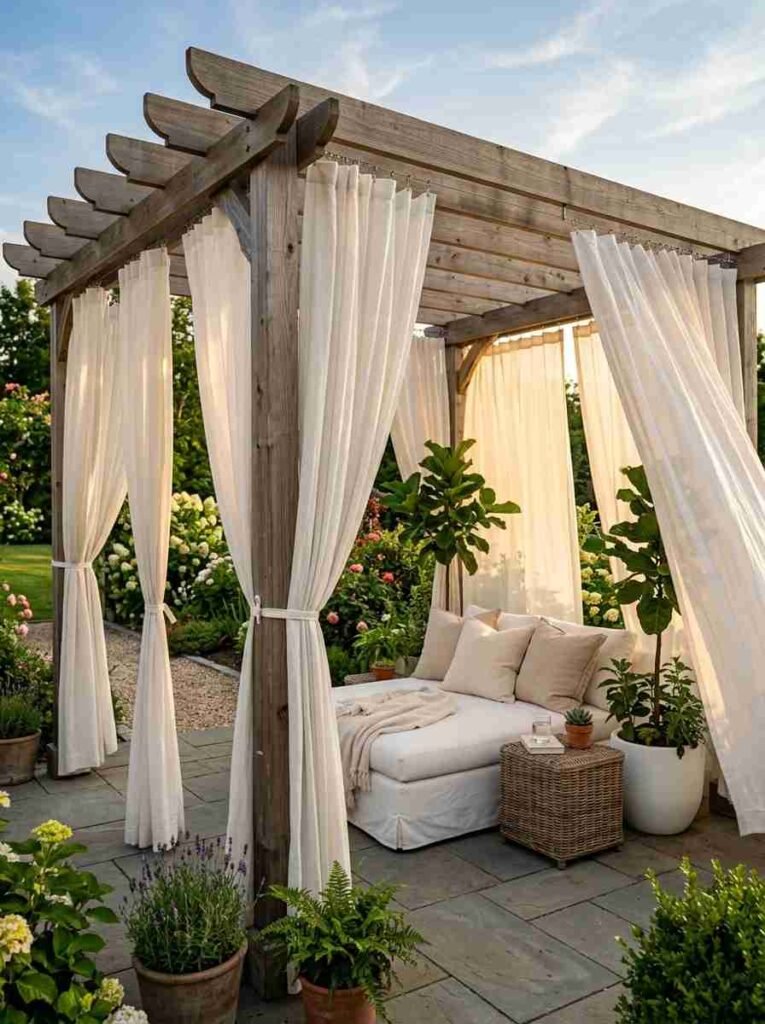
Outdoor curtain panels hung from pergola beams
Floor-length outdoor curtains hung on stainless cables or curtain rods between pergola posts.
White linen curtains in full sun look dreamy. They also pull closed for privacy or wind blocking — way more functional than they look.
Draped fabric ceiling
Yards of outdoor-rated fabric (think canvas, polyester, or even lightweight drop cloth) gathered and draped from a central point to the corners of a pergola or patio frame.
Creates a tent-like ceiling effect that’s genuinely stunning in photos. Rustic and romantic 🙂
Bamboo roll-up shades
Mounted to an overhead beam or pergola crossbar, bamboo shades roll down on the sunniest side of the patio.
They block glare without blocking air, and the natural texture adds warmth to any patio style.
Freestanding Structures
No pergola, no existing overhang? These options work without attaching to your house at all.
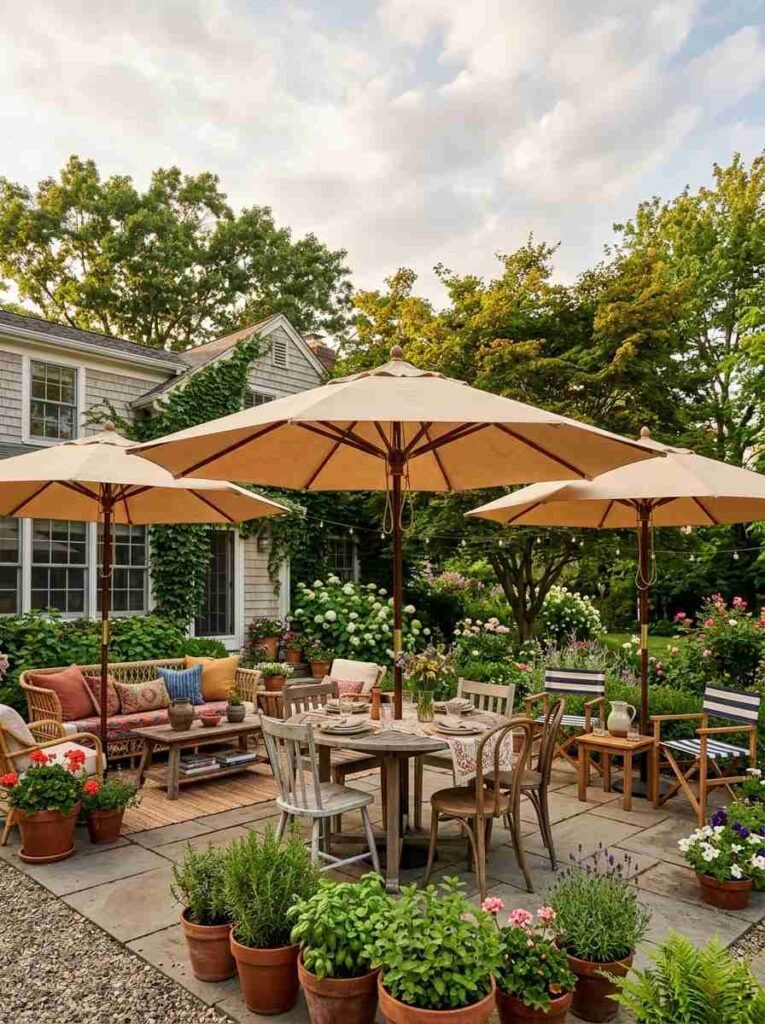
Freestanding patio umbrella (offset base)
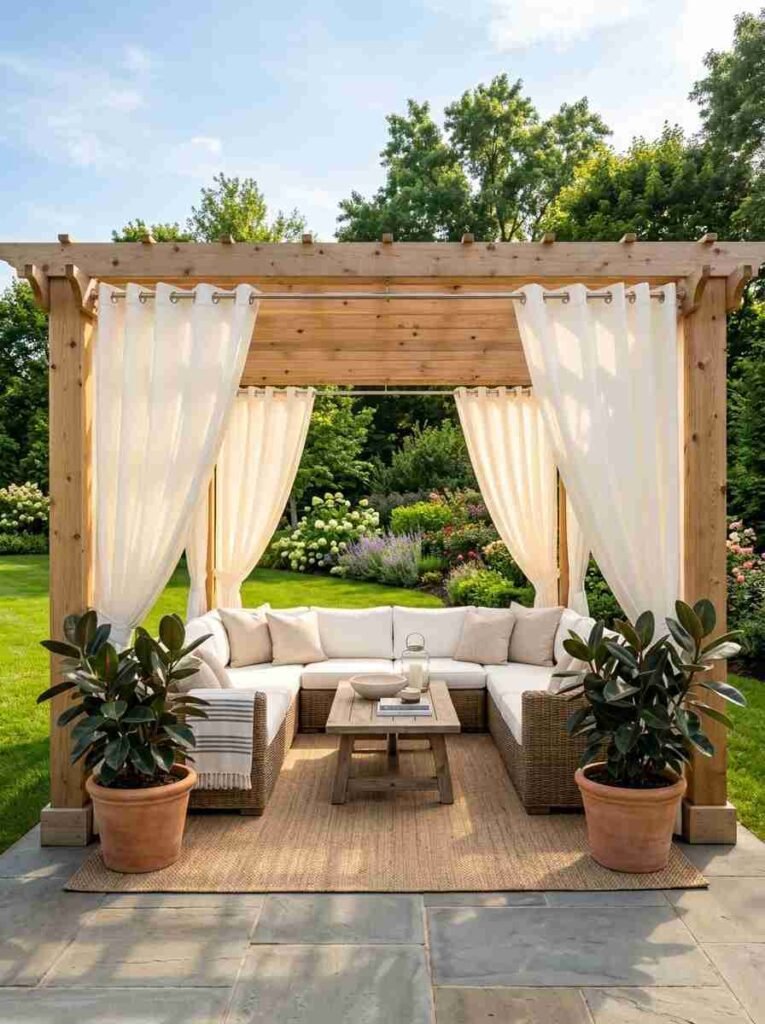
A large offset umbrella — 11 to 13 feet — on a weighted base covers a full dining table.
Offset style means the pole is out of the way and you can position shade exactly where you want it. Get a crank-tilt model so you can follow the sun without moving furniture.
Gazebo with open sides
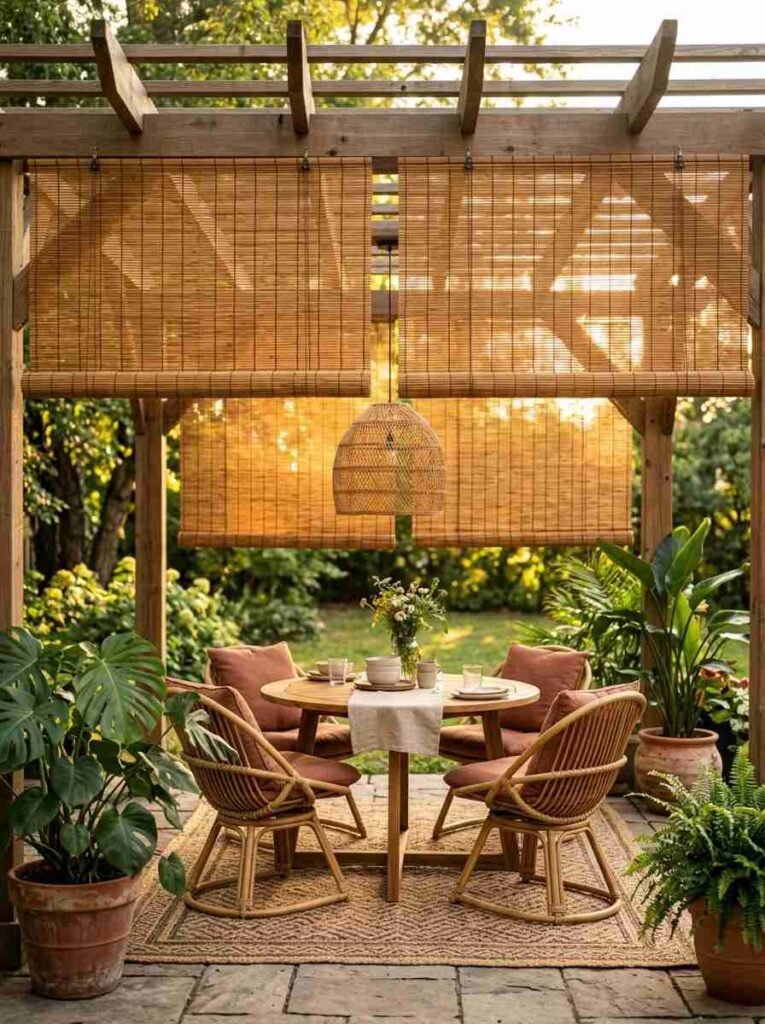
A hard-top gazebo with open or screened sides creates a true outdoor room without full enclosure.
Pergola-style tops with open slats let in air; solid tops keep off rain. Many come as pre-engineered kits you can assemble in a weekend.
Market umbrella cluster
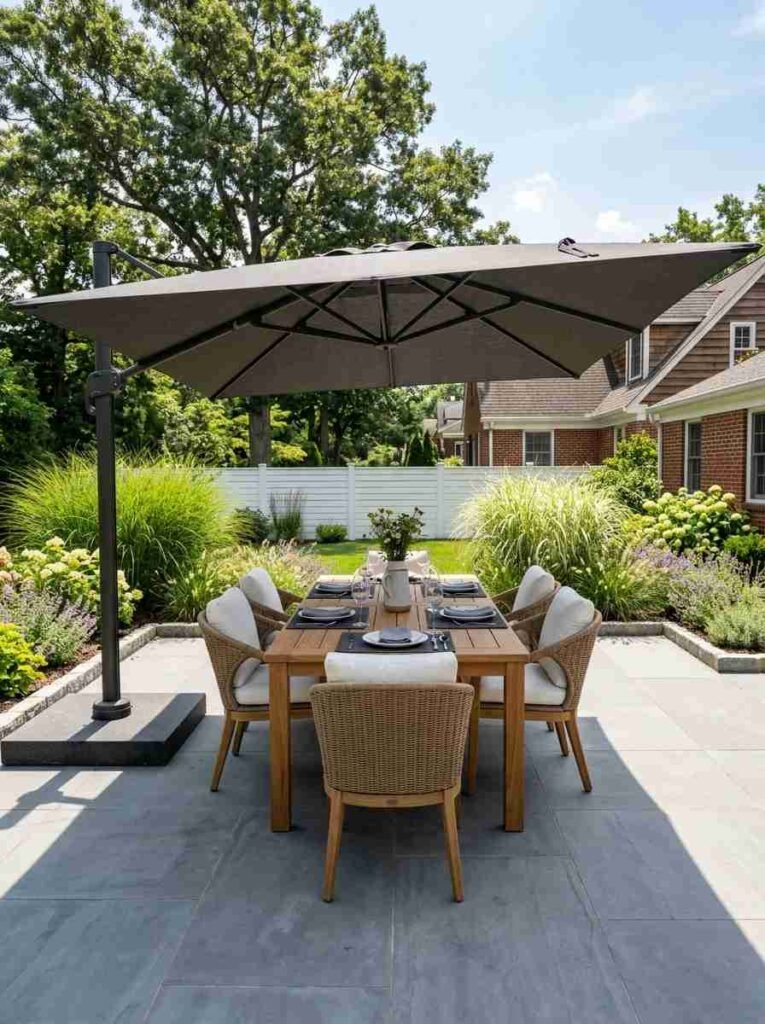
Two or three large market umbrellas clustered at different heights. Each covers a different zone — one over the lounge, one over the dining table.
Eclectic and practical. Works especially well with mismatched outdoor furniture for that curated boho look.
Natural Shade Solutions
Plants do it better than anything, honestly. They’re living, breathing, and they improve over time.
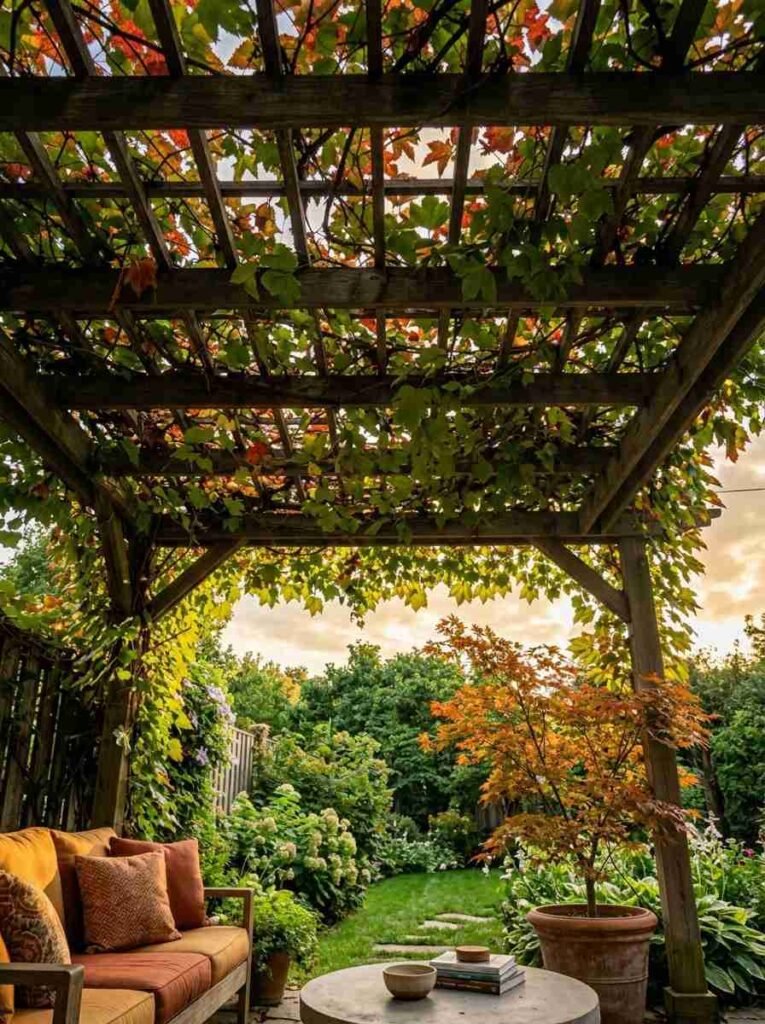
Trained overhead trellis with deciduous vines
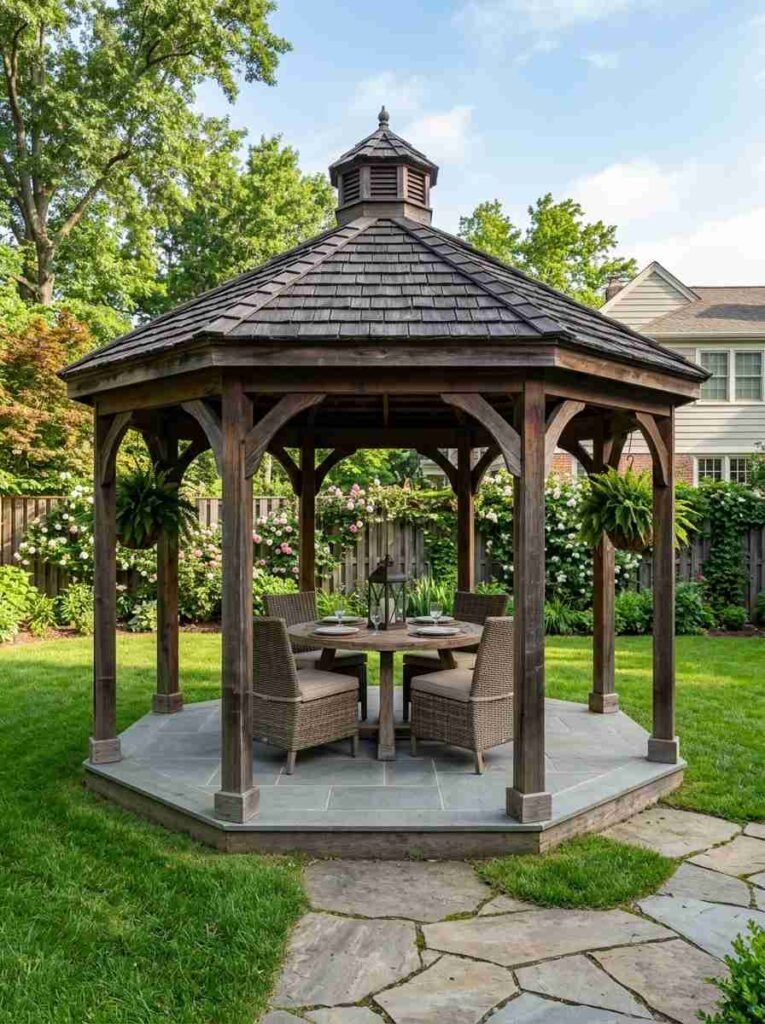
A trellis overhead with grape vines, Virginia creeper, or hops. Deciduous vines are smart — they give full leafy shade in summer and drop their leaves in fall, letting in winter sun exactly when you need it.
Nature figured out the retractable canopy thing long before we did.
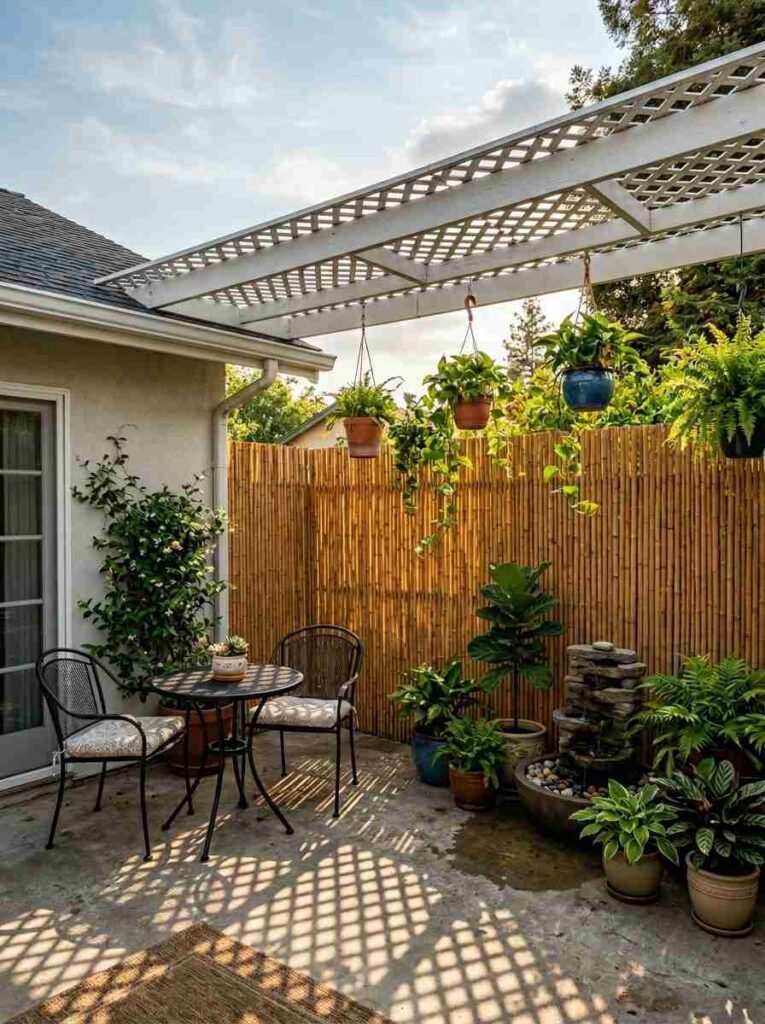
Bamboo or reed privacy screen with overhead lattice
Bamboo fencing panels on the west side block late afternoon sun while an overhead lattice allows morning light. Fast, cheap, and looks genuinely intentional when you add string lights and a few hanging planters.
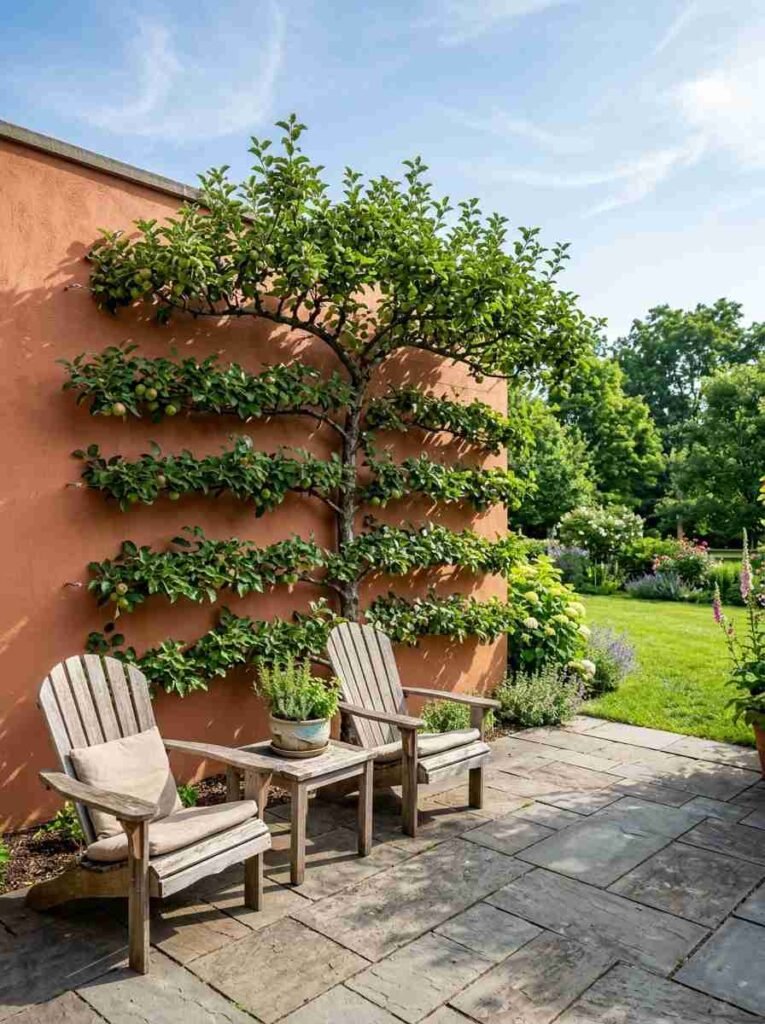
Espaliered trees along a sunny wall
Train fruit trees or ornamental trees flat against a south- or west-facing fence or wall.
Over a few years, the canopy extends outward and creates natural dappled shade for the patio below. Very cottage garden, very Pinteresty. :/
Modern & Minimalist Approaches
If your aesthetic runs clean and minimal, these won’t clutter the look you’ve built.
Concrete and steel shade structure
Poured concrete posts with a steel frame and stretched tensile fabric or metal mesh overhead. The look is sculptural and honestly gorgeous if the house supports it. No wood, no fuss, basically zero maintenance.
Motorized retractable awning
A wall-mounted motorized awning extends 10–14 feet over the patio at the press of a button.
Many models have wind sensors that auto-retract in gusts. Sleek, invisible when retracted, completely practical.
Horizontal wood slat pergola
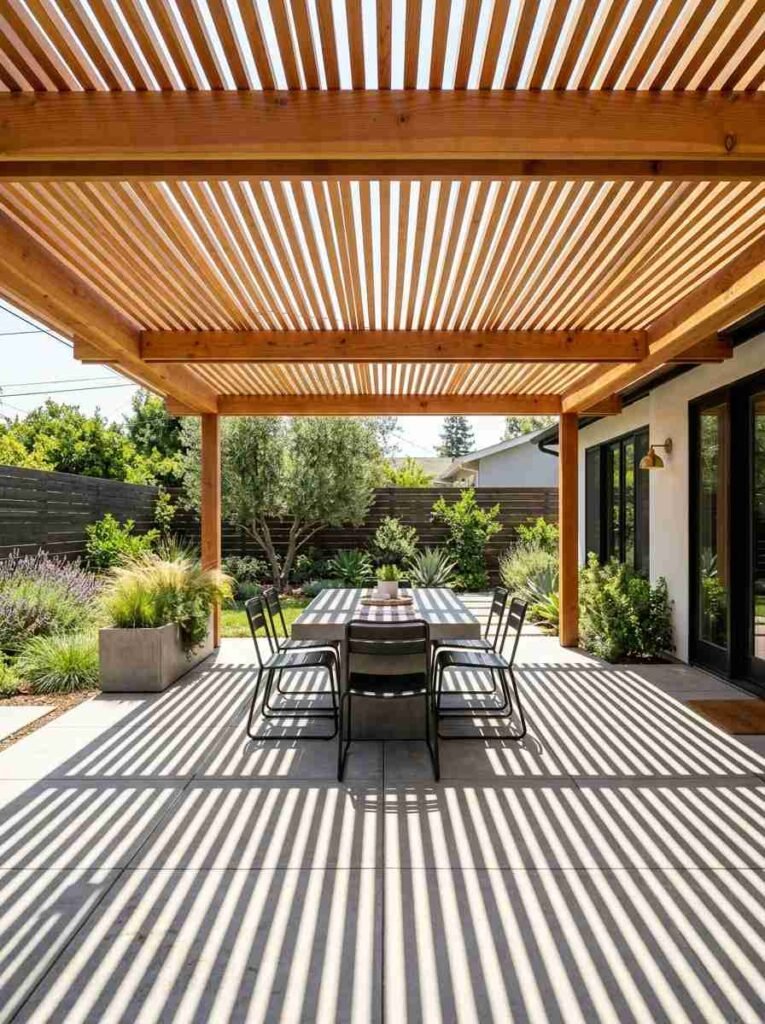
Closely spaced horizontal cedar or ipe slats create a louvered effect without moving parts.
The sun passes through at different angles throughout the day, so you get some shade at every hour without total coverage. IMO one of the cleanest looks in modern outdoor design.
Budget-Friendly Hacks
Not everyone has a contractor budget. These deliver real results for real money.
PVC pipe and shade cloth frame
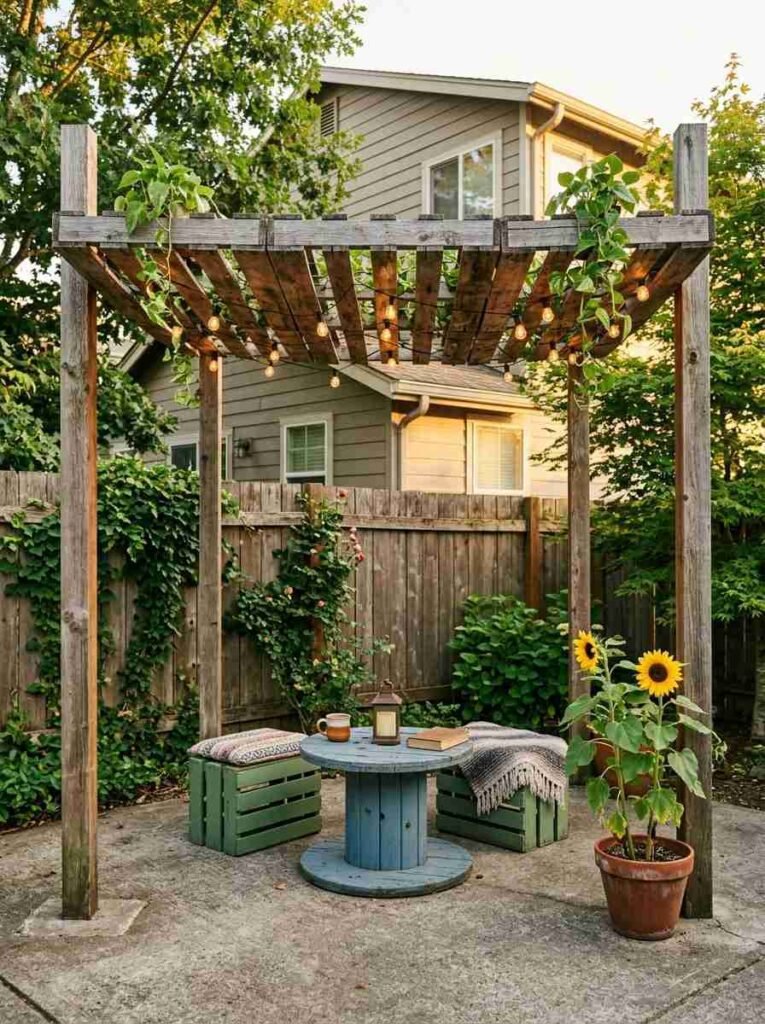
DIY a freestanding frame from schedule 40 PVC pipe and stretch 50% shade cloth over it.
Total cost: under $100 for a 10×10 foot shade structure. Looks surprisingly good spray-painted black or dark brown.
Repurposed wood pallet overhead shade
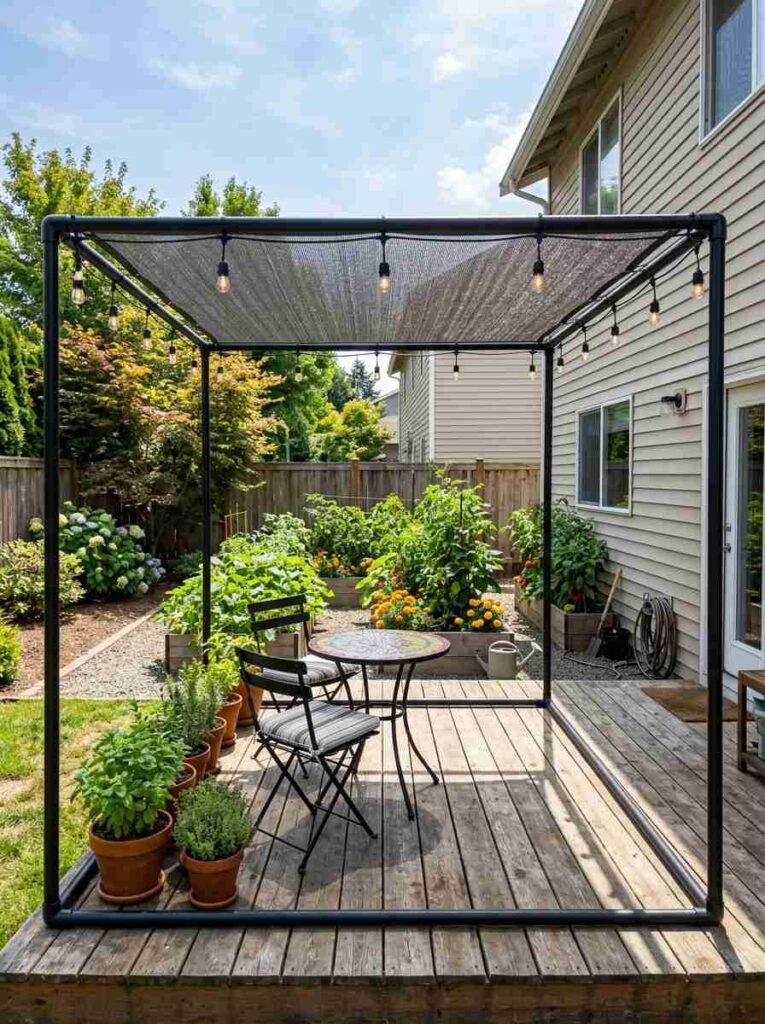
Stack and secure pallets horizontally overhead as a rustic shade ceiling. Fill the gaps with potted trailing plants or string lights.
Zero cost if you source free pallets, and the weathered wood look is genuinely charming.
Getting the Most Out of Your Partially Covered Patio
Coverage is only part of the equation. A few things that make a real difference:
- Ceiling fans mounted to pergola beams or covered sections cut perceived temperature by 10 degrees
- Misting systems clipped to overhead beams work best in dry climates
- Outdoor rugs define zones and make the space feel finished faster than almost anything else
- Vertical greenery on exposed walls adds shade, privacy, and visual softness simultaneously
Which Idea Fits Your Patio?
The best partially covered patio is the one that matches how you actually use the space. Morning coffee crowd? East-side coverage. Afternoon entertainers? West or overhead. Rainy climate? Go structural. Sunny and dry? Shade sails and vines do the job without the expense.
Pick one idea, start there, and let it grow. The best outdoor spaces rarely happen all at once — they evolve over a few seasons into something genuinely personal.
Your patio’s got the bones. Now give it some shade.
