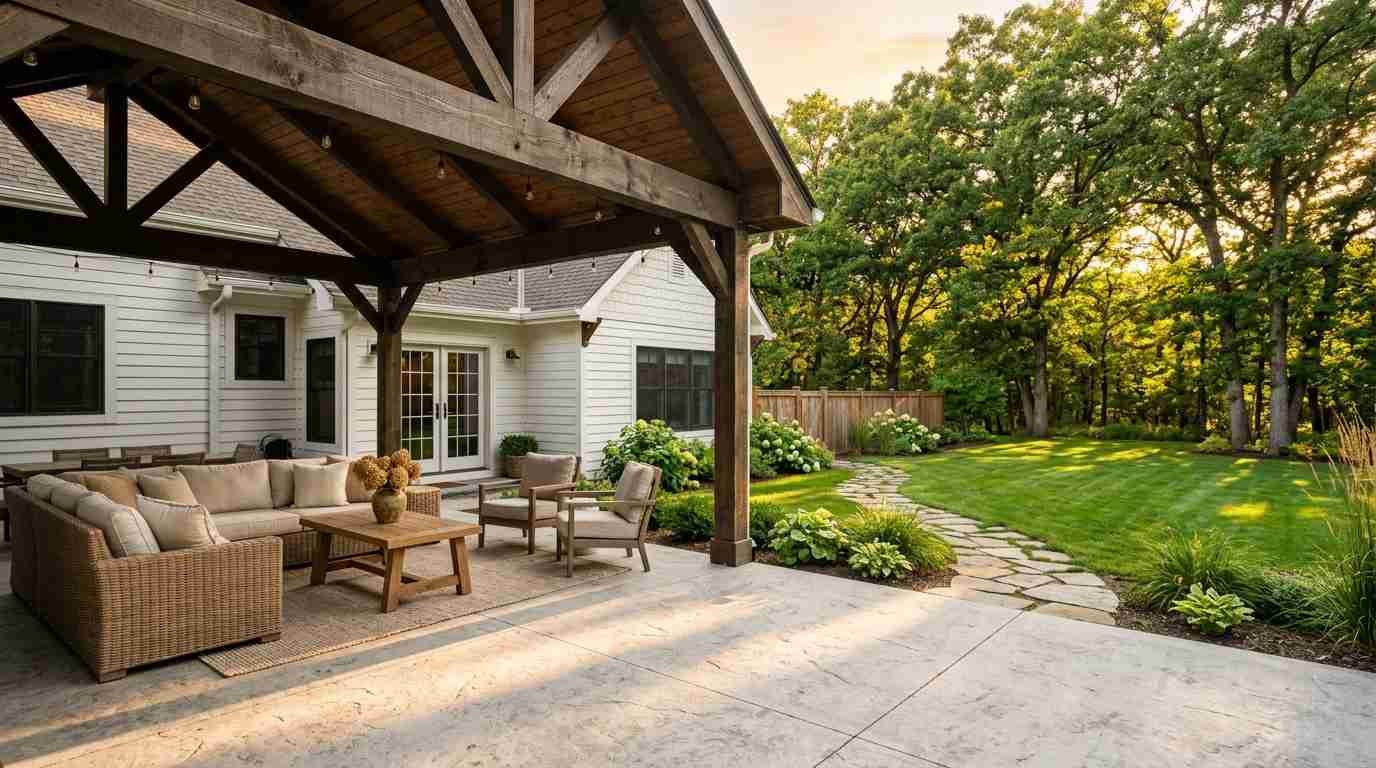
Your backyard is begging for a shady spot. You know it.
You’ve squinted through one too many summer afternoons wishing there was somewhere to sit that wasn’t directly under a fireball. So let’s fix that.
Covered patios are one of the best investments you can make in your outdoor space — they extend your living area, boost resale value, and honestly just make the whole backyard feel like it actually belongs to you.
The tricky part is picking the right roof style. There are a lot of options, and each one hits differently depending on your home’s architecture, your climate, and how much you want to spend.
Here are 15 ideas, from classic to totally unexpected.
Gable Roof Patio Cover
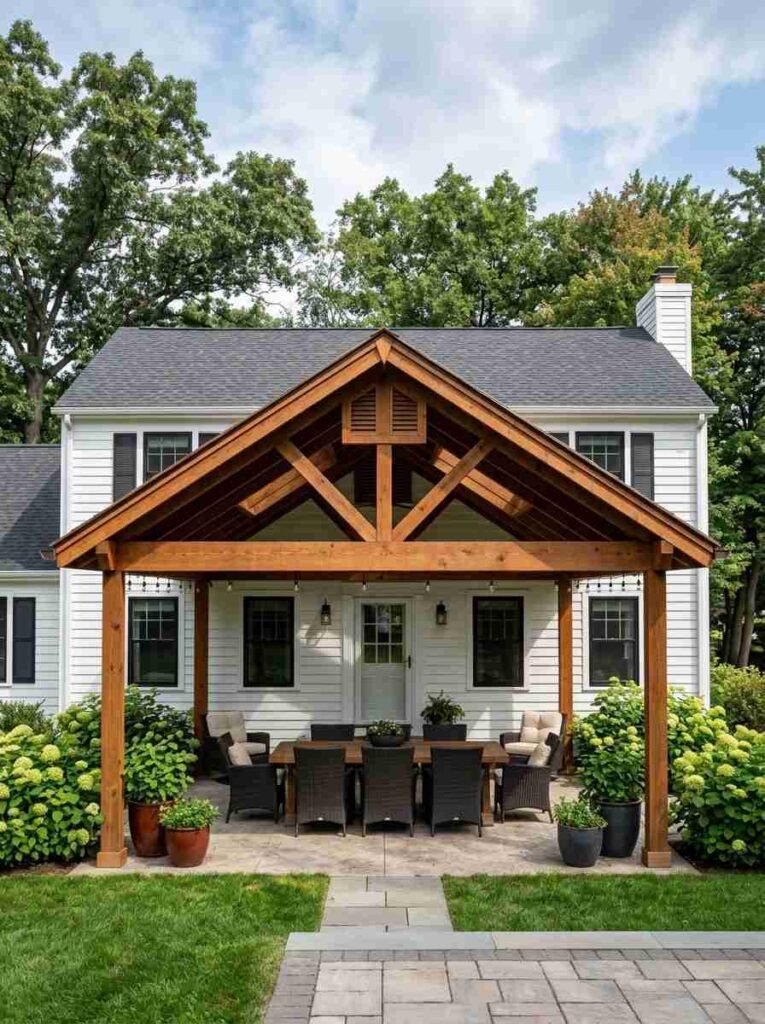
A gable roof has two sloped sides that meet at a ridge in the middle. It’s the classic house-shaped look — clean, familiar, and almost universally flattering on a home.
Why people love it:
- Excellent rain and snow runoff
- Taller center allows better air circulation
- Easy to match to most home styles
IMO, this is the safest pick if you want something that looks intentional and permanent rather than tacked on. The ridge height also gives the covered area a more spacious feel than flat alternatives.
Hip Roof Extension
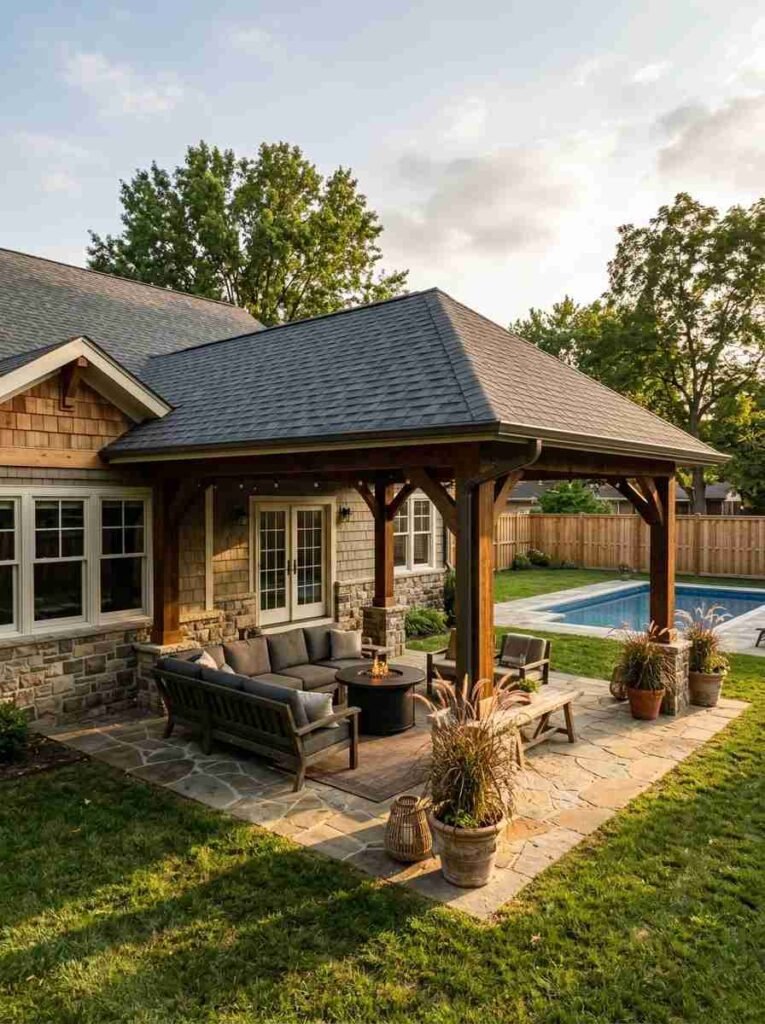
A hip roof slopes down on all four sides. It looks more complex than a gable roof and tends to feel a bit more polished, especially on ranch-style or craftsman homes.
It’s windier-weather friendly too. The angled sides don’t catch gusts the same way a flat or gable roof can. If you live somewhere stormy, this is worth serious consideration.
| Style | Best For | Weather Performance | Relative Cost |
|---|---|---|---|
| Gable | Most home styles | Good | Moderate |
| Hip | Ranch/craftsman homes | Excellent | Higher |
| Shed | Modern/contemporary | Moderate | Lower |
| Flat | Urban/minimalist | Fair | Lowest |
Shed Roof (Single Slope)
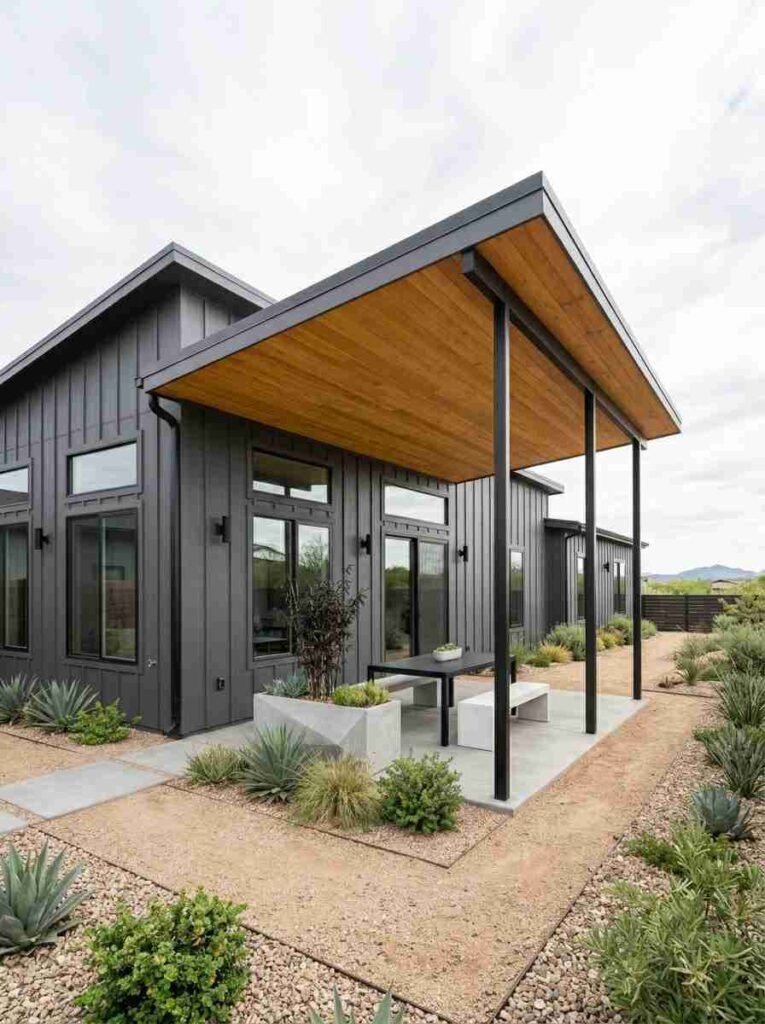
A shed roof is one single slope that runs from a higher attachment point on the house down to a lower outer edge. Simple. Clean. Modern.
It works beautifully on contemporary homes and is one of the easier and less expensive structures to build.
The slope direction matters a lot here — you want water draining away from your house and seating area, not toward them. Worth a conversation with your contractor before finalizing.
Flat Roof Patio Cover
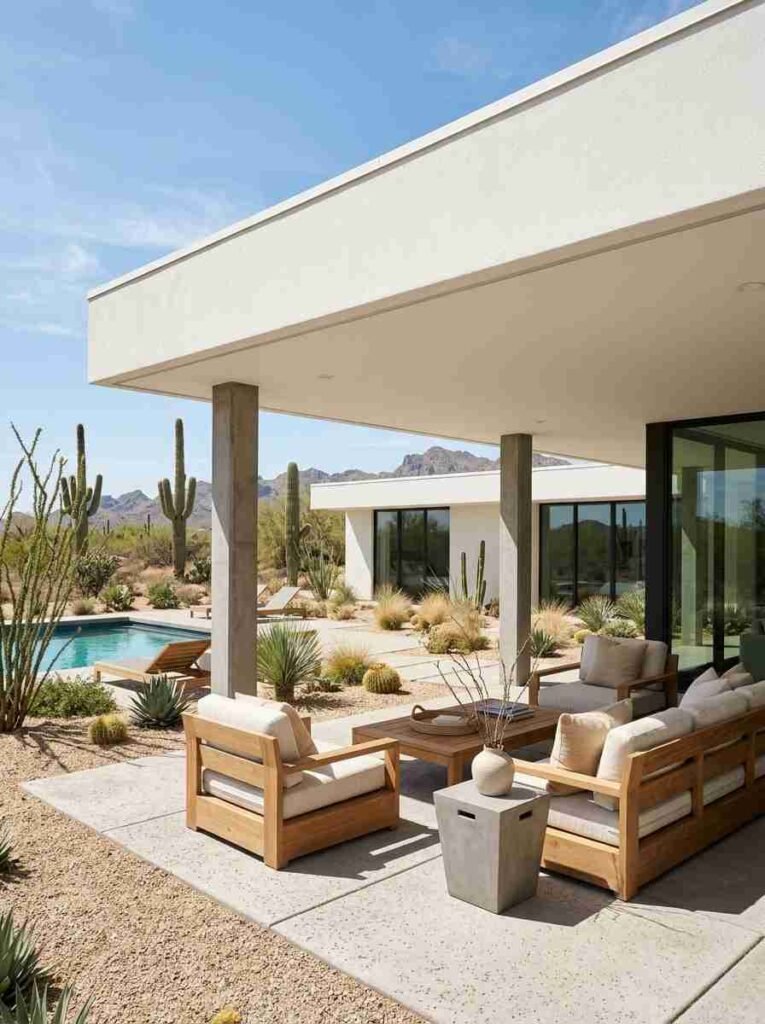
Flat roofs have a slightly bad reputation (waterproofing nightmares, anyone? :/), but when done right with proper drainage and materials, they look sleek and work well in dry climates.
Best in: low-rainfall areas, desert climates, modern or mid-century home styles.
They’re also practical if you want to eventually add a rooftop garden or put lighting and fans up top.
Just don’t go flat if you’re somewhere it rains consistently — standing water becomes a real problem fast.
Pergola With Retractable Canopy
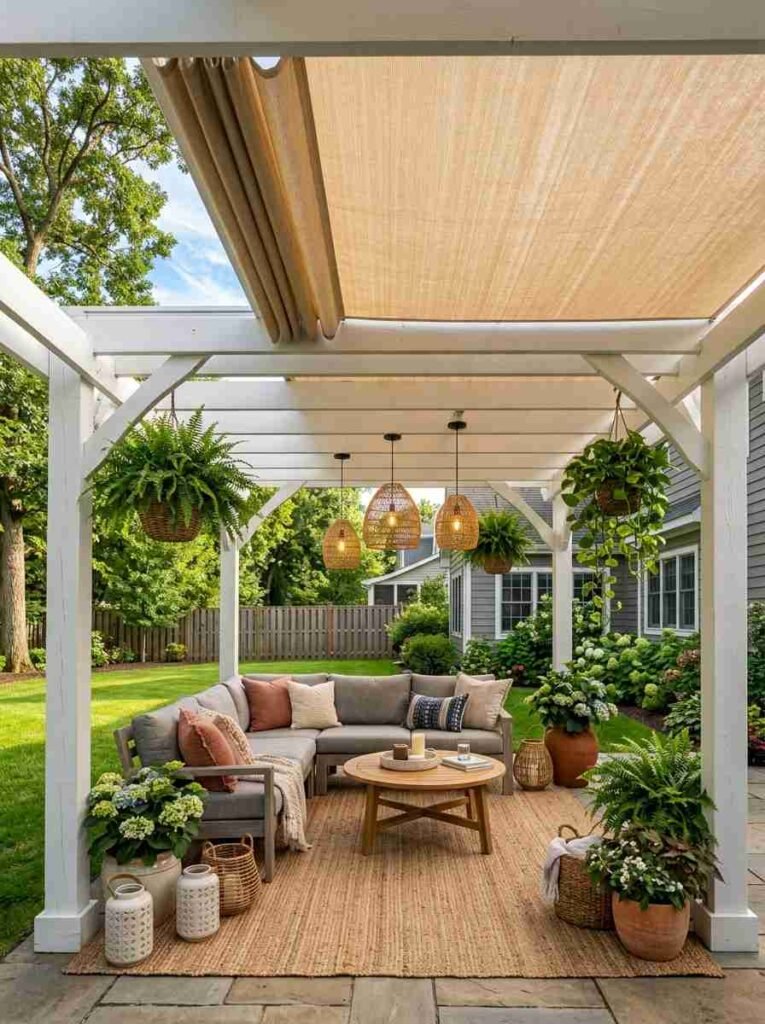
Technically a pergola is an open structure, but add a retractable canopy and you’ve got one of the most flexible covered patio options out there.
Full sun when you want it. Full shade when you need it.
These come in manual and motorized versions. The motorized ones are genuinely satisfying to use (worth every penny, ask me how I know).
Look for UV-resistant, weather-treated fabric — cheap canopies fade and sag within a year.
Polycarbonate Panel Roof
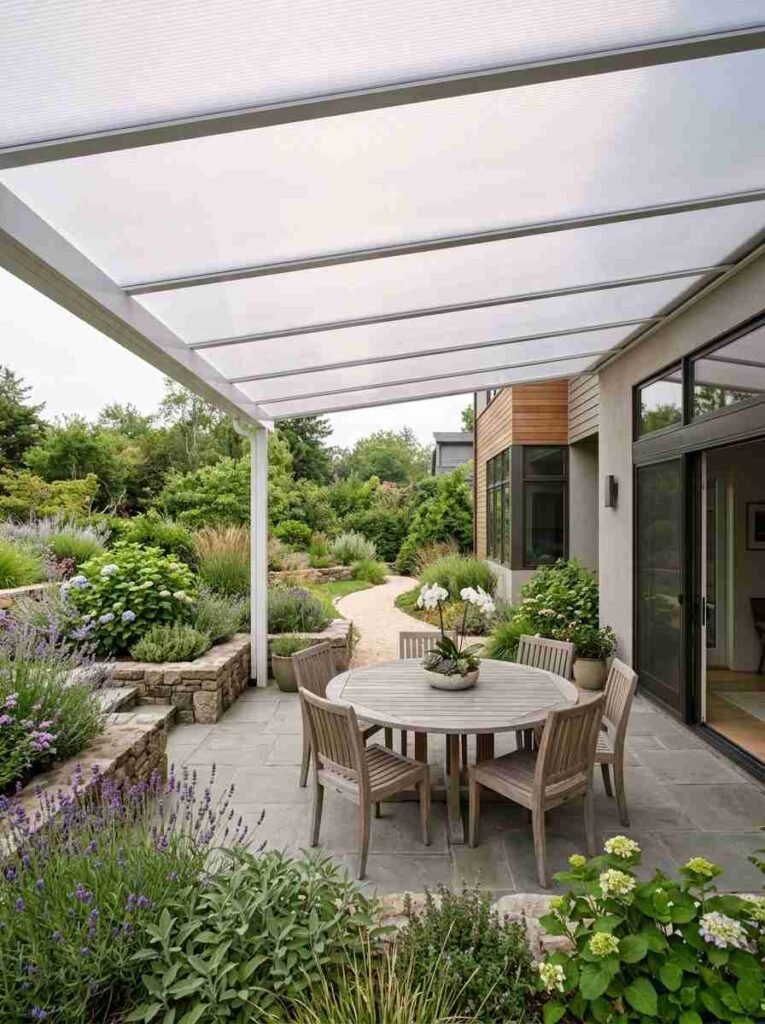
Polycarbonate panels are the underrated option. They’re translucent, so you get natural light without direct sun exposure.
They’re lightweight, relatively affordable, and hold up well against impact.
Key things to know:
- Available in clear, frosted, and tinted versions
- Tinted panels cut heat better than clear ones
- Expansion gaps matter — panels expand in heat; skip proper gapping and they’ll buckle
This is a great middle-ground option if you want daylight but not a sauna.
Aluminum Patio Cover
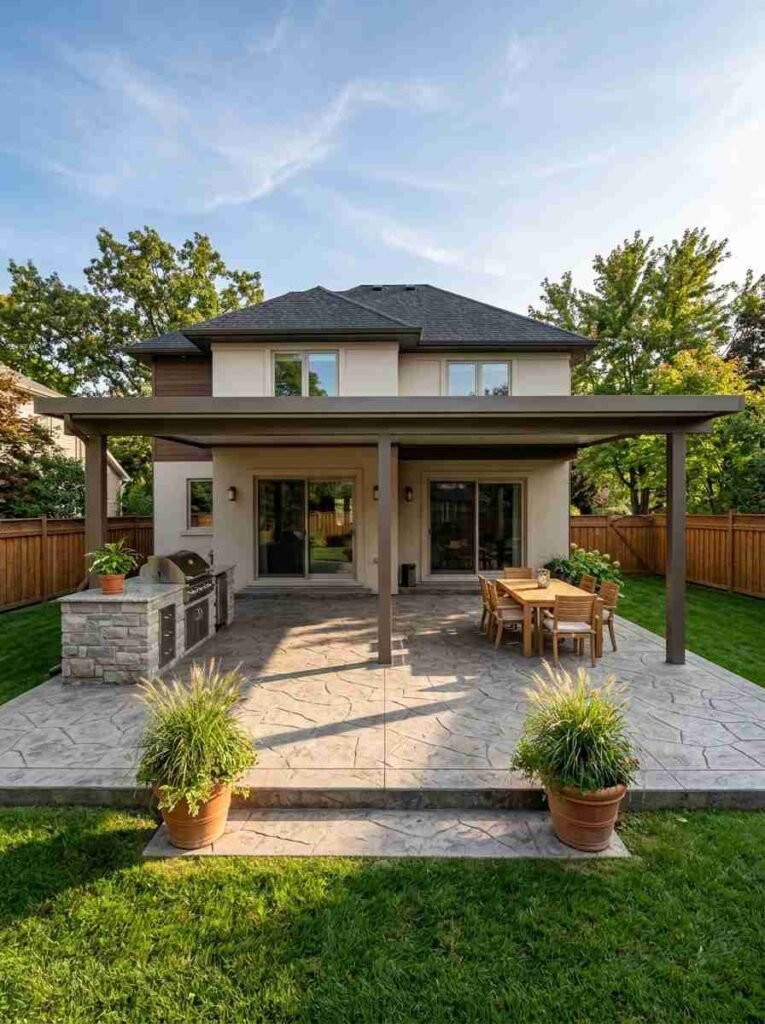
Aluminum is the workhorse of patio covers. Low maintenance, rust-resistant, and available in solid or louvered styles.
Solid aluminum gives full shade; louvered versions let you adjust light and airflow.
They’re not always the most visually inspiring option, but if durability and zero-maintenance are your priorities, it’s hard to argue with aluminum.
Many systems come as DIY kits too, which cuts installation costs significantly.
Louvered Roof System
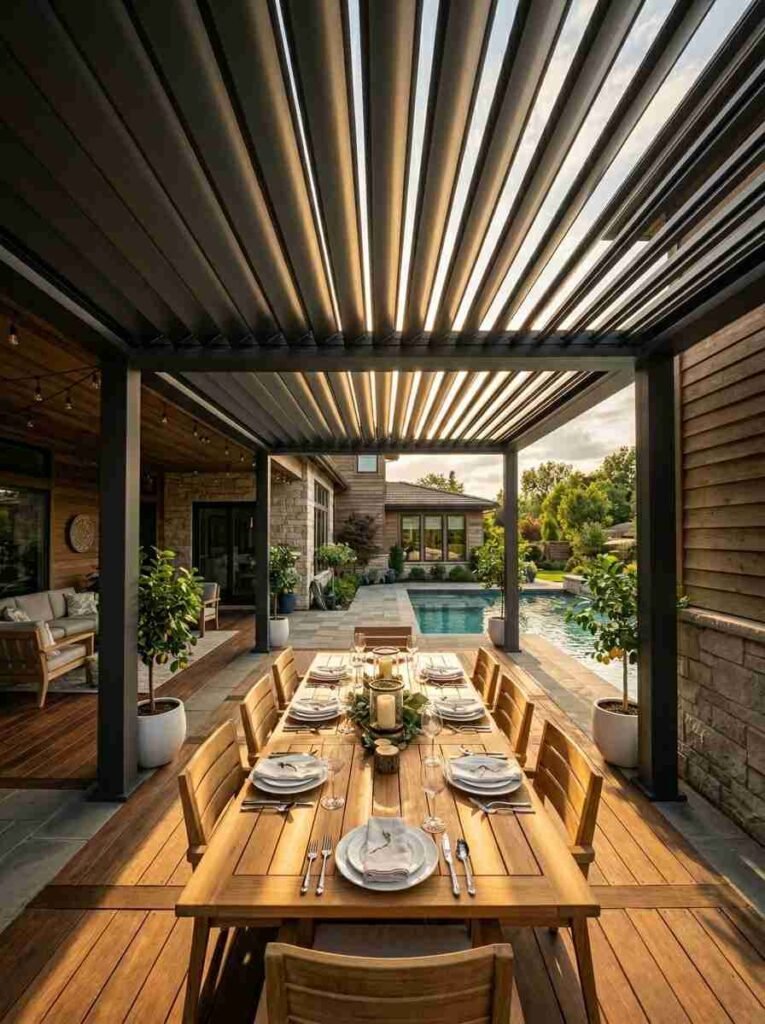
A louvered roof takes the aluminum concept and adds motorized or manual louvers you can rotate open or closed. It’s essentially a roof that breathes on command.
Open louvers = airflow + partial shade. Closed louvers = full weather protection.
These systems have come down in price but still sit at the higher end. They’re popular in outdoor dining areas and patios that double as entertainment spaces.
Worth the investment if the patio sees heavy use year-round.
Solid Wood Patio Roof
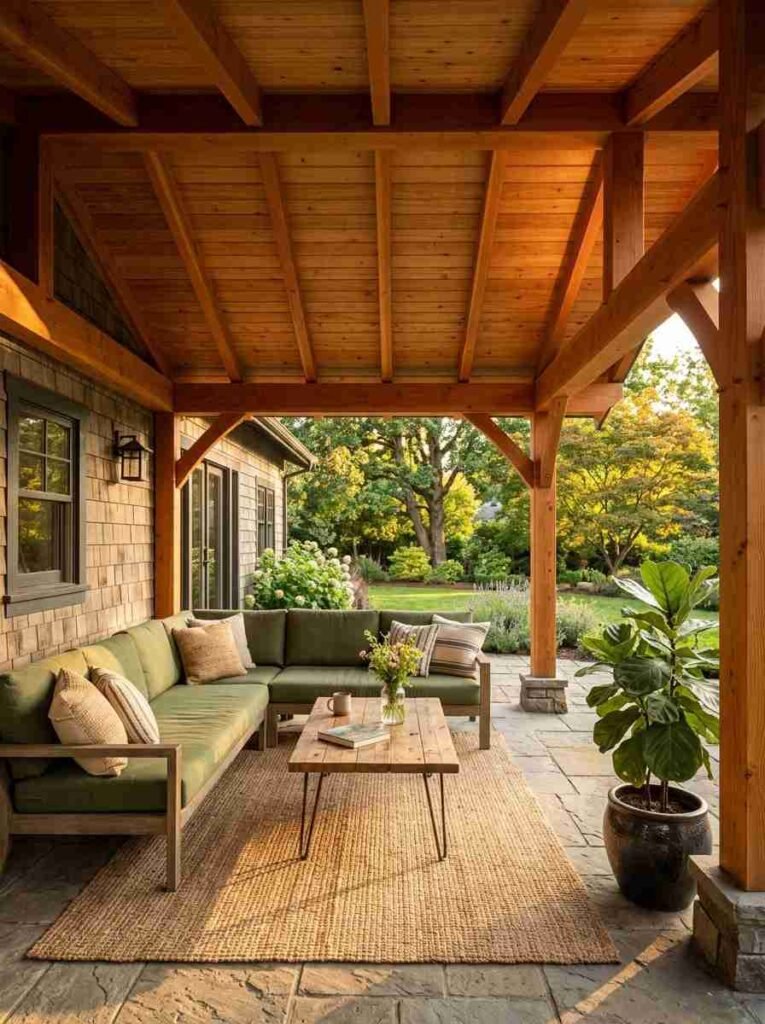
There’s something a timber-framed roof does for an outdoor space that no aluminum or polycarbonate option replicates. It feels substantial.
Warm. Like the space was built to last.
Cedar and redwood are the most common choices — both have natural oils that resist rot and insects without heavy chemical treatment.
Douglas fir is a budget-friendly alternative that still looks great with the right stain.
Maintenance is the honest downside. Expect to re-seal or re-stain every 2–4 years depending on your climate.
Corrugated Metal Roof
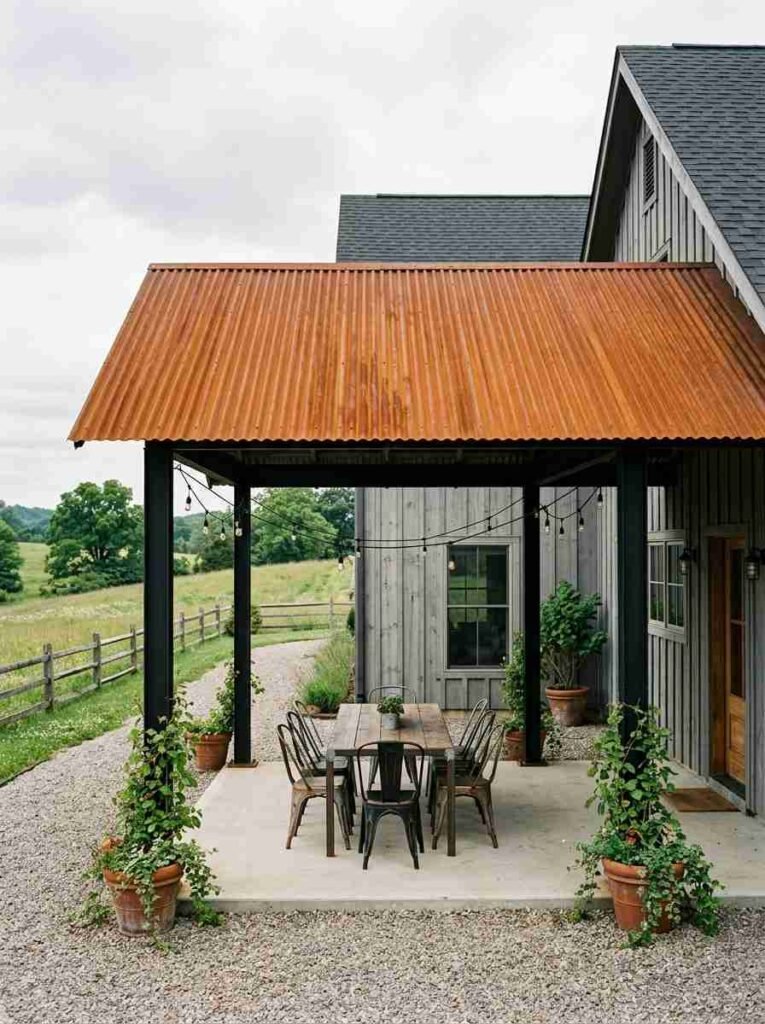
Corrugated metal has made a big aesthetic comeback. On a farmhouse, industrial-style, or modern rustic home it looks intentional and cool. On a colonial? Maybe less so.
Galvanized steel and Corten weathering steel are the most popular options. Corten develops a rust-like patina on purpose — it actually seals itself and stops corroding after the initial surface layer forms.
Visually striking and genuinely low maintenance once it weathers.
One fair warning: rain on corrugated metal is loud. Like, surprisingly loud. Not a problem if that’s your vibe. Worth knowing upfront.
Glass Roof Patio Cover
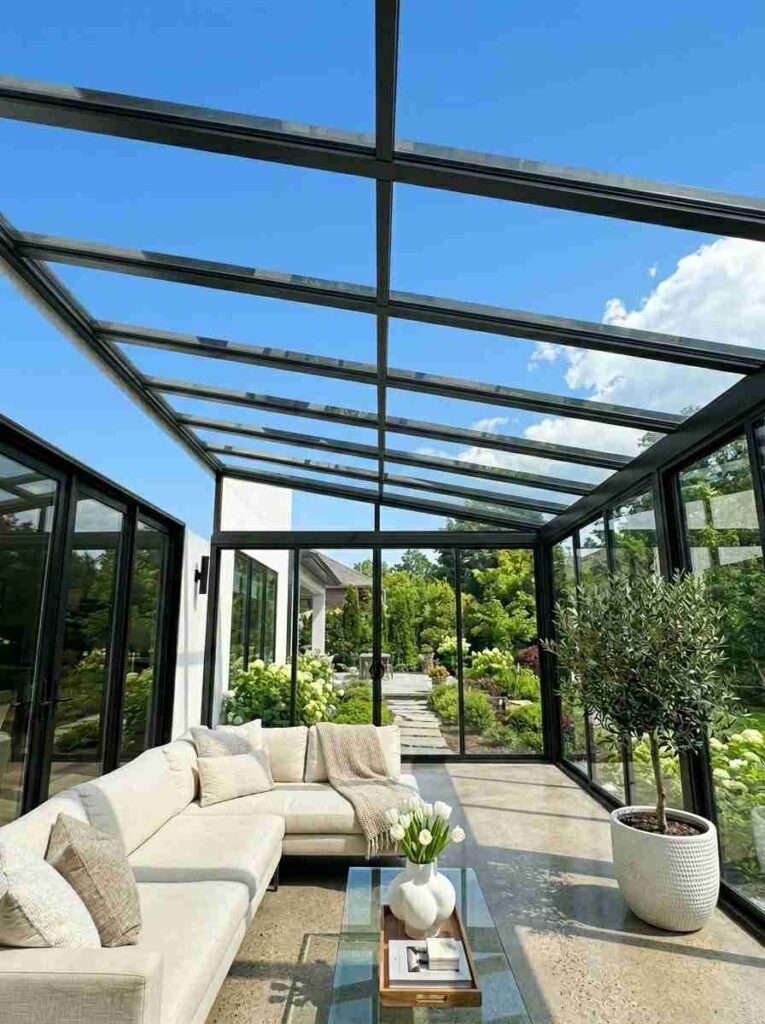
A glass roof brings indoor/outdoor living to its logical conclusion. Full light, weather protection, unobstructed sky views.
Tempered safety glass is standard — it’s strong, and if it does break it shatters into small blunt pieces rather than dangerous shards.
Low-E glass coatings help manage heat gain, which matters a lot if you’re in a sunny climate.
The cost is real. Glass structures with proper framing sit at the higher end of patio cover budgets.
But if you’re covering a year-round outdoor room or a conservatory-style space, it’s a hard aesthetic to beat.
Sail Shade Canopy
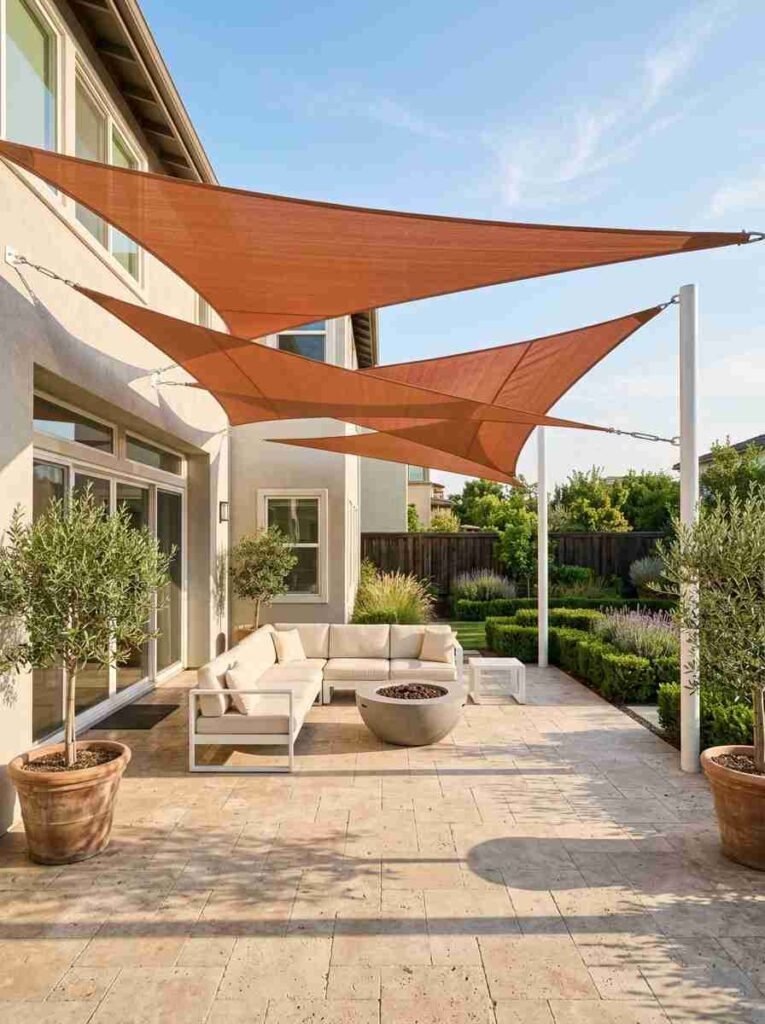
Sail shades aren’t a permanent roof structure — they’re tensioned fabric panels anchored to posts, walls, or existing structures.
They’re flexible, affordable, and genuinely look good when sized and placed properly.
FYI: the positioning angle matters more than people expect. A flat sail shade collects water and sags.
Angling one corner higher allows rain runoff and the whole thing performs better. Most manufacturers include guidance on this.
Great for renters, or anyone who wants adjustable shade without a building permit.
Living Roof (Green Roof)
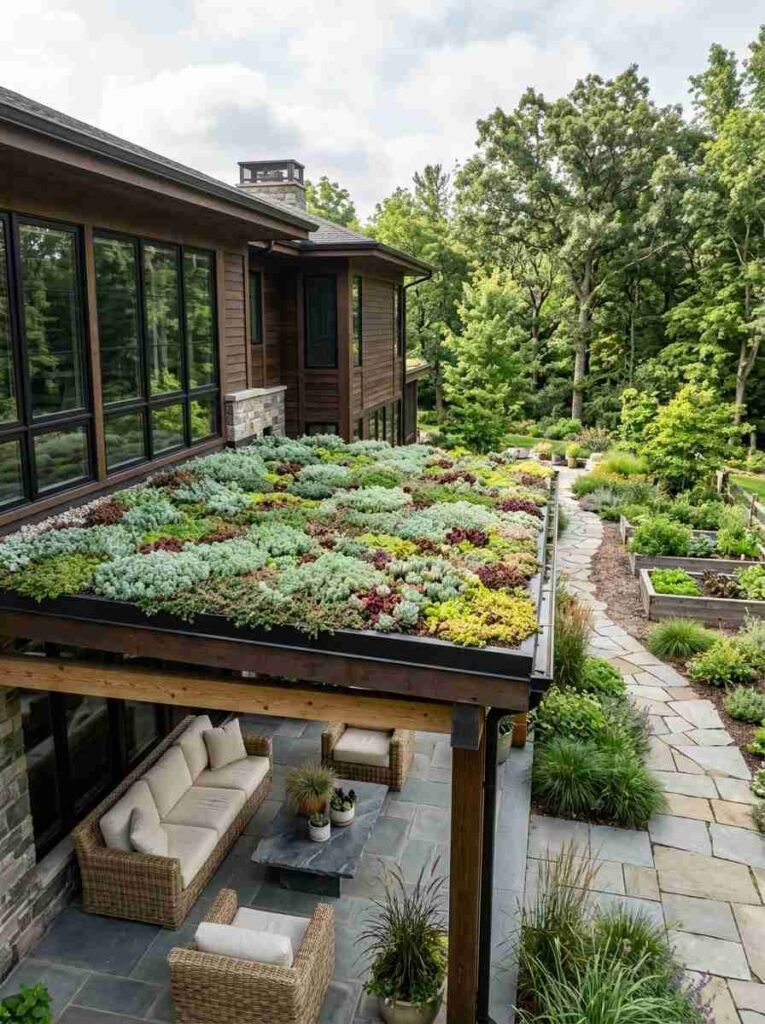
A living roof uses layers of growing medium and drought-tolerant plants to create actual vegetation on top of your patio cover.
Sedums and succulents are the usual choice — low water needs, hardy, and they look genuinely beautiful.
The benefits go beyond aesthetics:
- Natural insulation — keeps the space below cooler
- Absorbs rainwater, reducing runoff
- Genuinely unique — you will be the only one on your block with one
The structure beneath needs to be engineered for the weight. This isn’t a DIY weekend project.
But for someone building a permanent patio addition with a serious budget, it’s a conversation worth having with your contractor.
Attached Sunroom or Four-Season Room
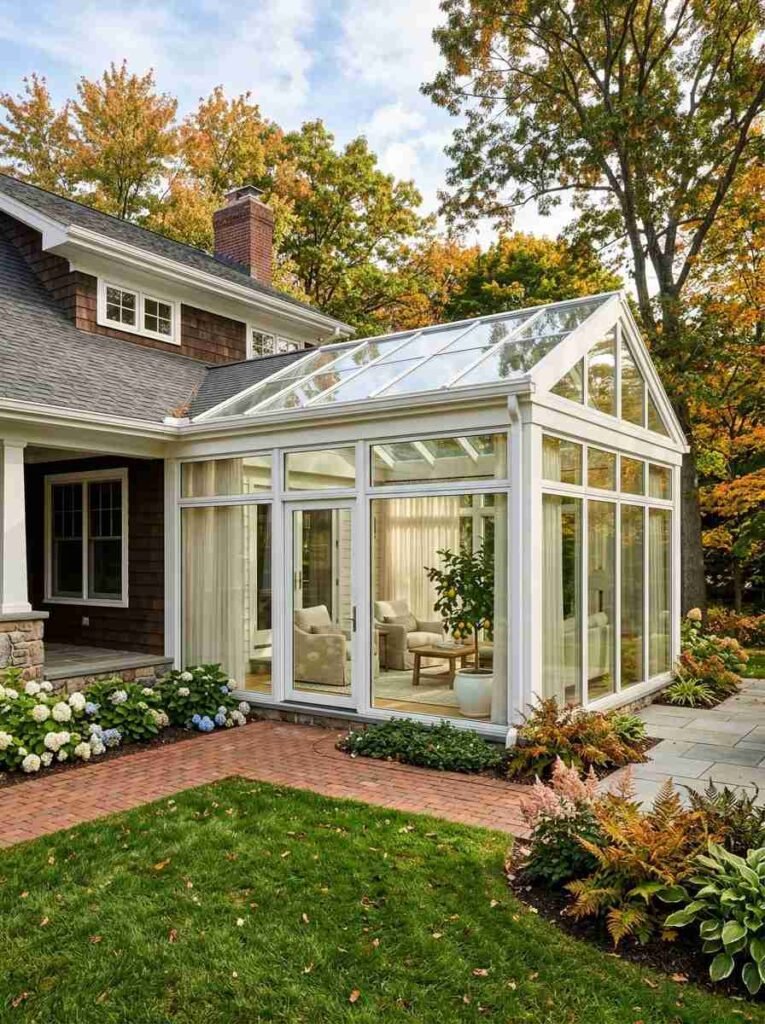
An attached sunroom is the most substantial version of a covered patio — fully enclosed with glass walls and roof, often climate-controlled.
It blurs the line between inside and outside entirely.
Three-season rooms use screen or single-pane glass and aren’t temperature-controlled. Four-season rooms include insulation and HVAC, making them usable year-round.
The difference in cost is significant, but so is the difference in usability.
If you’re seriously considering adding living square footage to your home, this option delivers the highest return.
Pergola With Shade Cloth
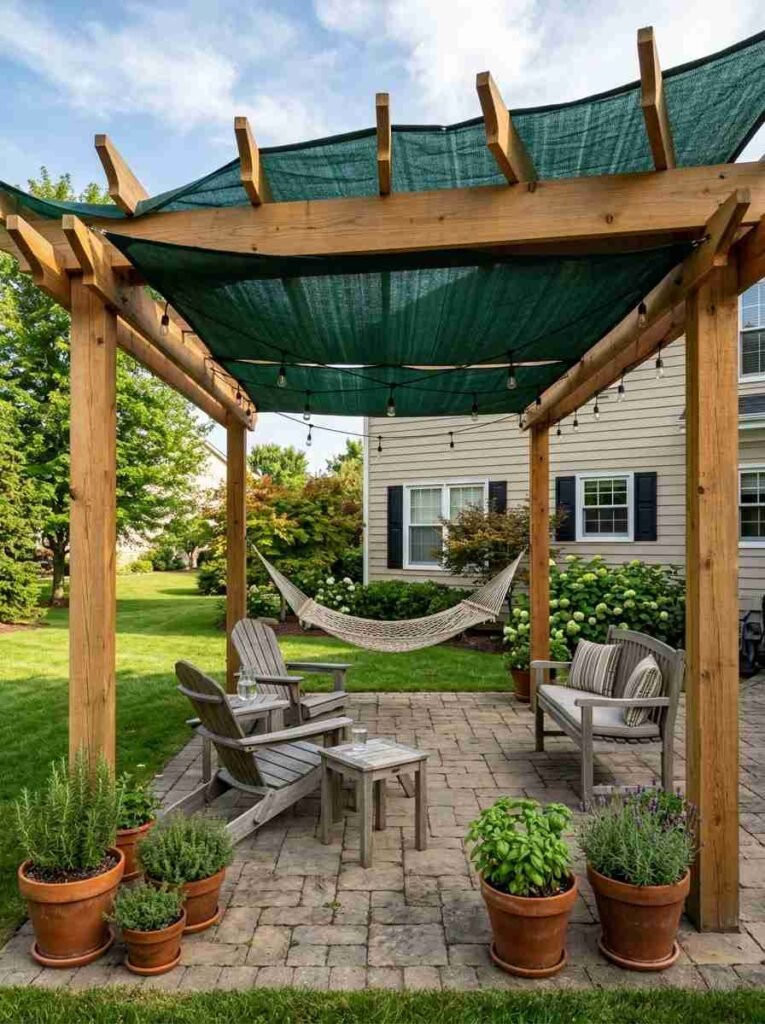
The most accessible entry point on this whole list. A basic wood or metal pergola with shade cloth stretched across the top gives you meaningful sun protection at a fraction of the cost of any roofed structure.
Shade cloth comes in varying percentages — 30% to 90% blockage. 50–70% is the sweet spot for most outdoor seating areas.
Heavy enough to actually shade, open enough to allow airflow and some natural light.
It’s not the most architecturally dramatic option, but it works. And you can always upgrade later. Starting simple is a perfectly reasonable strategy. 🙂
Choosing the Right Covered Patio Roof
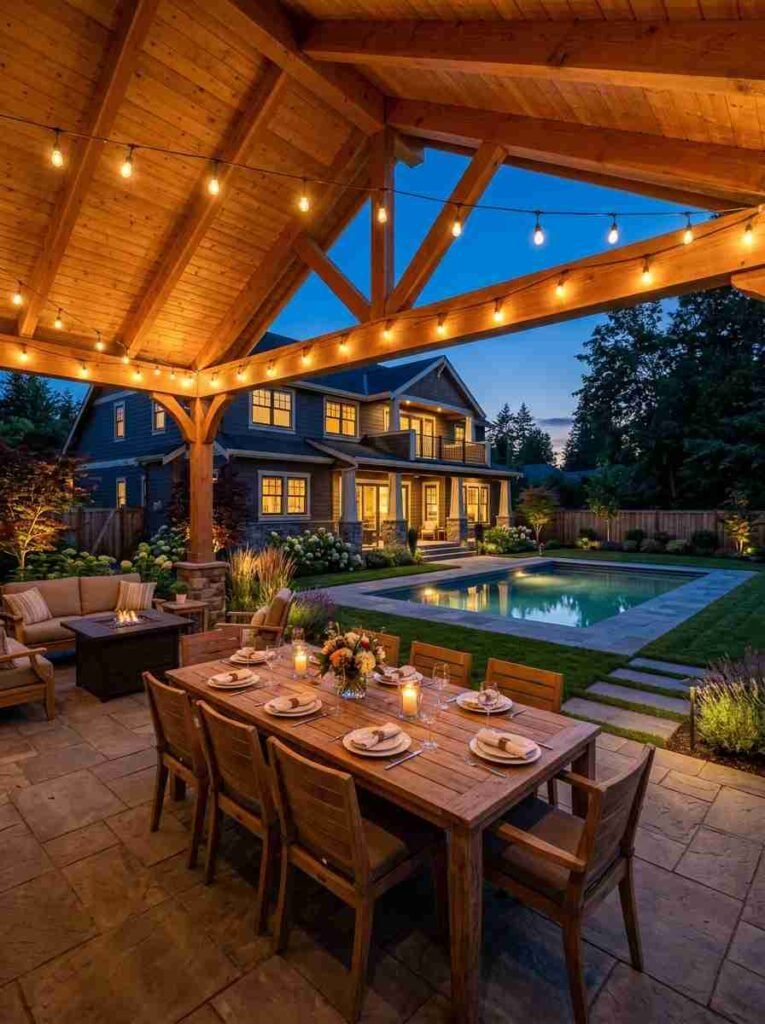
The “best” option is the one that fits your actual situation — your climate, your home’s style, your budget, and how you realistically use your outdoor space.
A few questions worth thinking through before you commit:
- How much rain or snow do you get? Flat and sail-shade options struggle in high-precipitation areas.
- Is this permanent or flexible? Retractable canopies and sail shades give you options; timber and glass structures are commitments.
- Does it need to match your home? Gable and hip roofs that match your existing roofline almost always look better than generic patio kit covers.
- What’s your maintenance tolerance? Wood is beautiful and high-maintenance. Aluminum is forgettable and bulletproof. Know yourself.
Whatever direction you go, the covered patio addition will change how you use your yard. Get the roof right and you’ll be out there far more than you expect.
