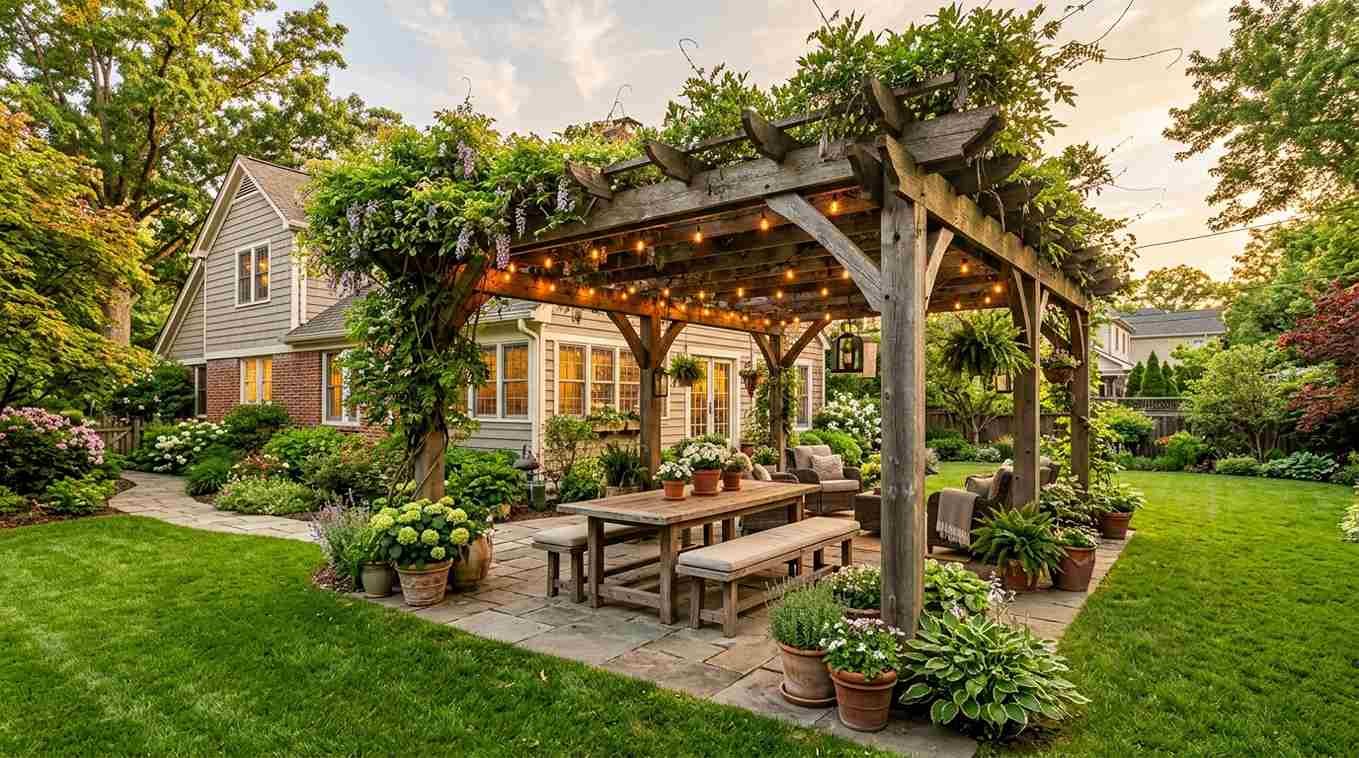
Your backyard deserves better than a sad plastic chair and a dying potted fern. A covered patio done right?
It becomes the spot everyone gravitates toward — morning coffee, summer dinners, the kind of space you actually use.
Here are 20 ideas that’ll take yours from “meh” to genuinely beautiful.
Start With What You’ve Got
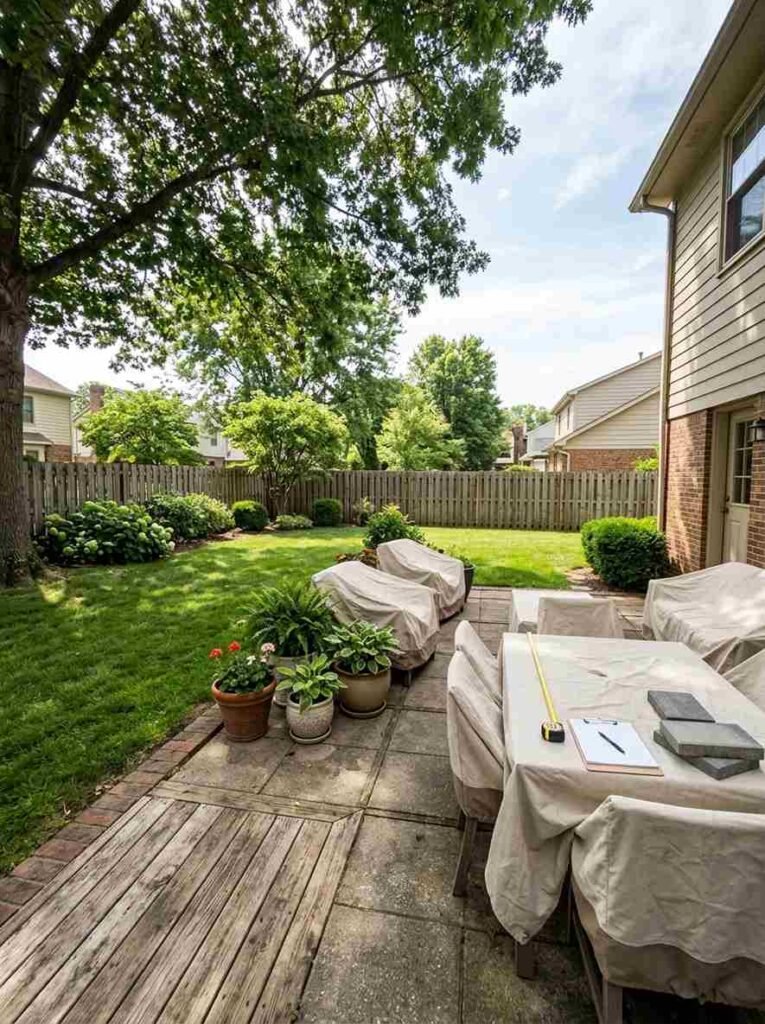
Before pinning every gorgeous patio you see, take a hard look at your space. How much square footage are you working with?
Which direction does it face? Is it shaded already, or does the afternoon sun turn it into an oven?
These answers dictate everything — from which plants survive, to whether you need a pergola, a solid roof, or just a good shade sail.
Know Your Sun Exposure
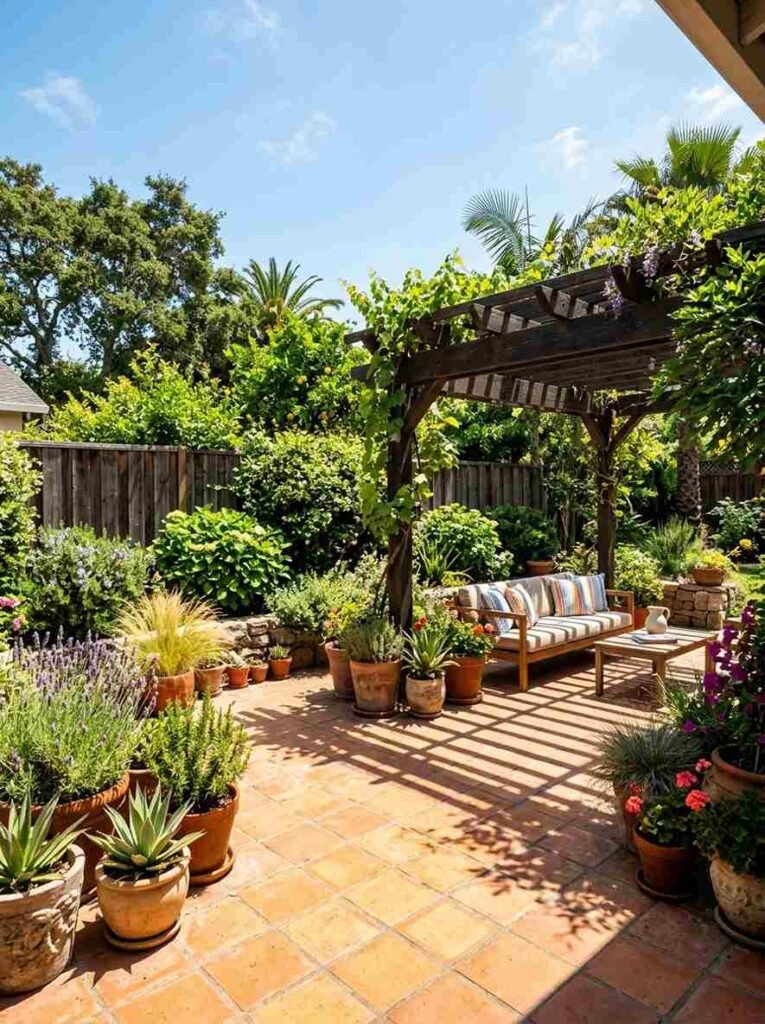
- South-facing patios get the most sun. Great for sun-loving plants, tough on humans in summer.
- North-facing patios stay cool and shady. Perfect for ferns, hostas, and anyone who burns easily.
- East or west-facing gives you partial sun — the most forgiving setup for a mix of plants and people.
1. Build a Pergola With Climbing Vines
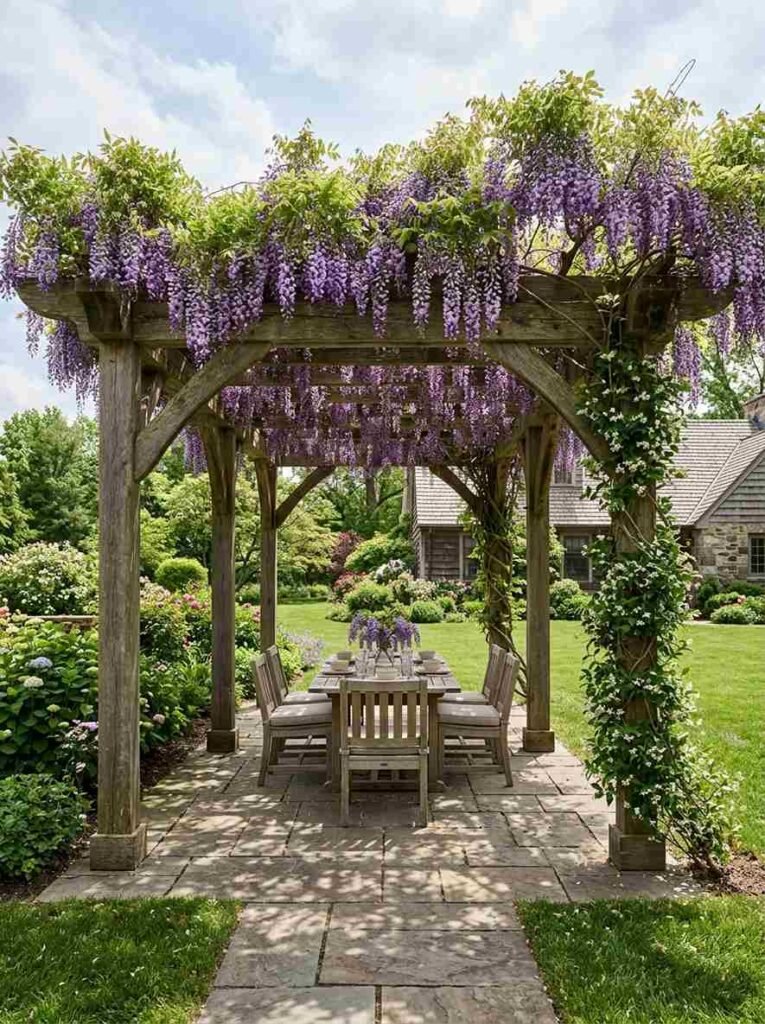
A pergola frames the space without closing it off.
Add a climbing plant like wisteria, jasmine, or climbing roses, and within one or two seasons you’ve got a living canopy that smells incredible.
Best climbing plants for covered patios:
- Wisteria (fast-growing, fragrant, heavy — needs a sturdy structure)
- Star jasmine (white flowers, gorgeous scent)
- Bougainvillea (if you’re in a warm climate, this is unbeatable)
- Virginia creeper (great for shade, turns red in fall)
Fair warning: wisteria will absolutely take over if you don’t trim it. Ask me how I know. :/
2. Use Container Gardens to Add Color
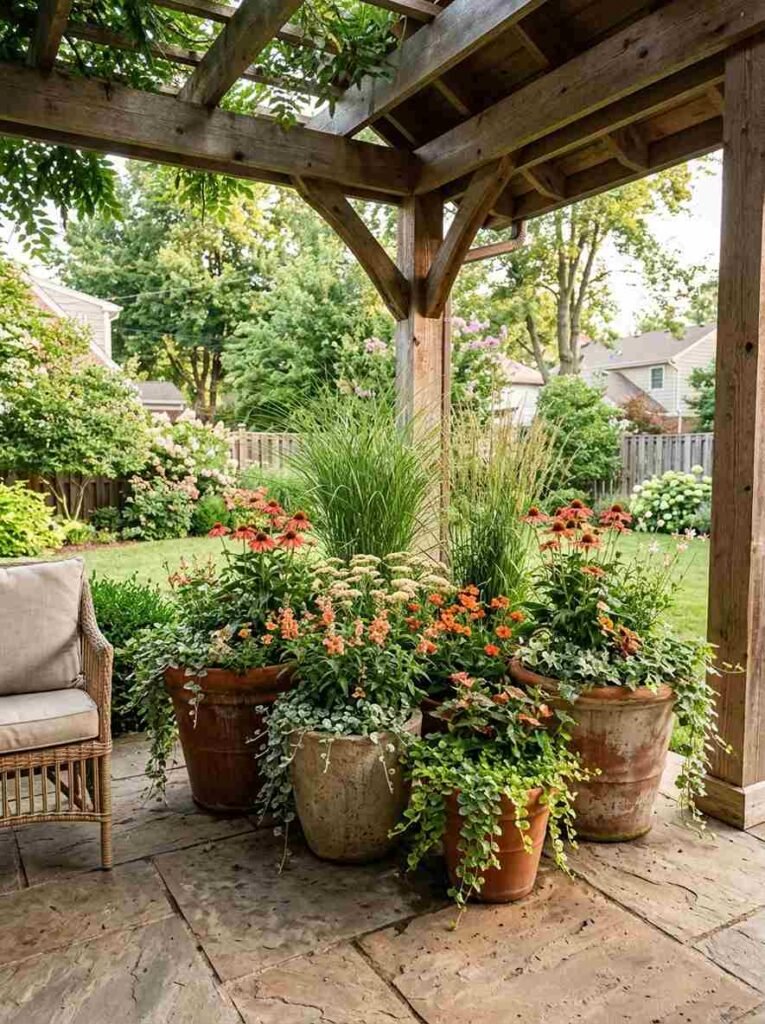
Container gardens are your best friend in a covered patio. You can move them around, swap them out seasonally, and control the soil quality exactly. No digging, no guessing.
Cluster pots in odd numbers — 3 or 5 looks more natural than an even pair. Mix heights: tall grasses in back, trailing plants spilling over the edges, compact flowering plants in the middle.
3. Add a Vertical Garden Wall
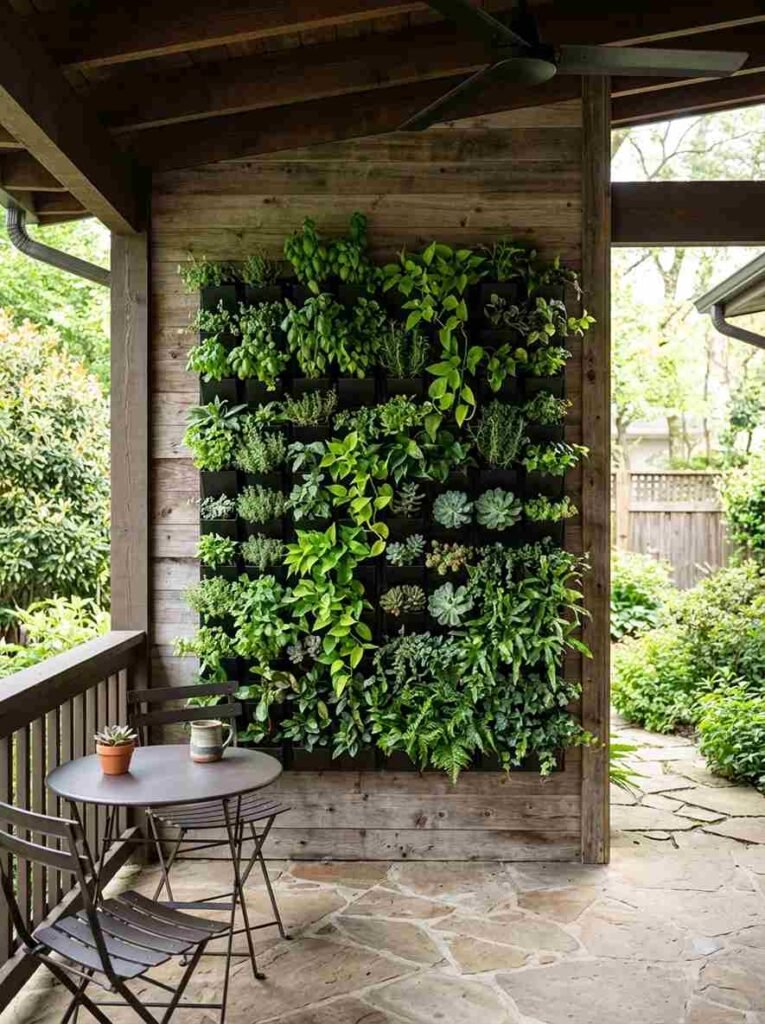
If floor space is tight, go vertical. A wall-mounted planter system turns a blank fence or exterior wall into a living installation. Great for herbs, succulents, or a mix of trailing greenery.
FYI — vertical gardens near a kitchen door are incredibly practical. Snipping fresh basil and rosemary steps from the stove never gets old.
4. Create a Stone Pathway Through Your Patio Garden
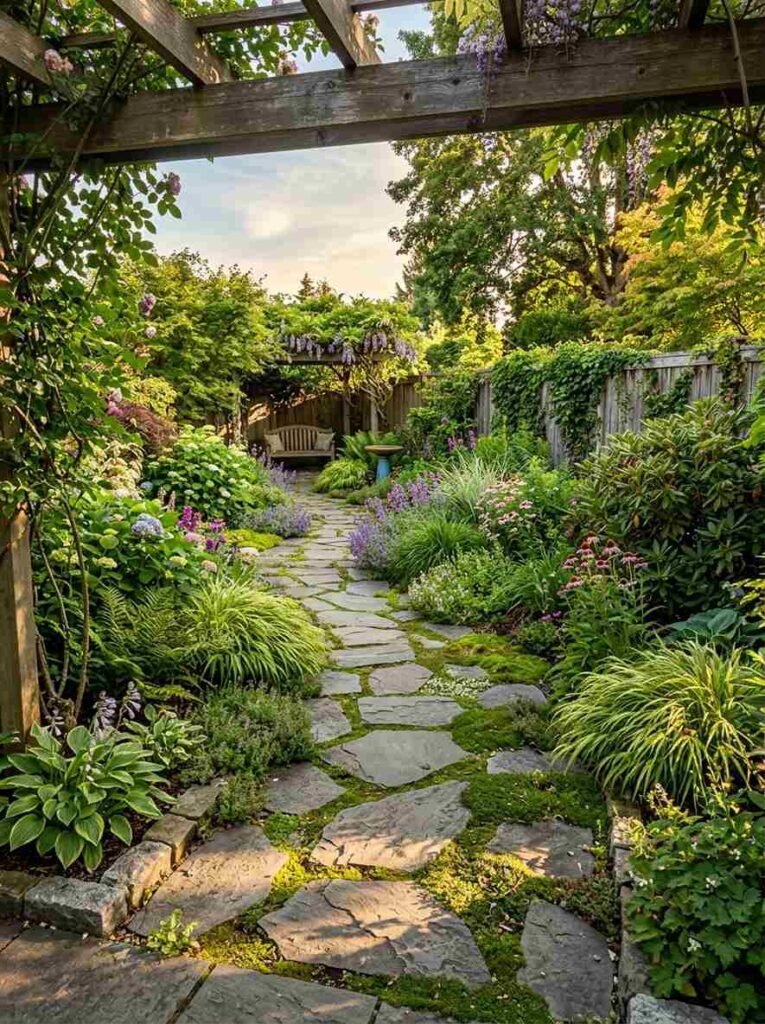
Even a small covered patio benefits from a defined pathway. Stepping stones through low-growing plants give the eye somewhere to travel and make the space feel intentional.
Use flagstone, slate, or irregular natural stone. Avoid perfectly symmetrical concrete pavers unless you’re going for a very modern aesthetic — they tend to look stiff in organic garden settings.
5. Layer Plants by Height
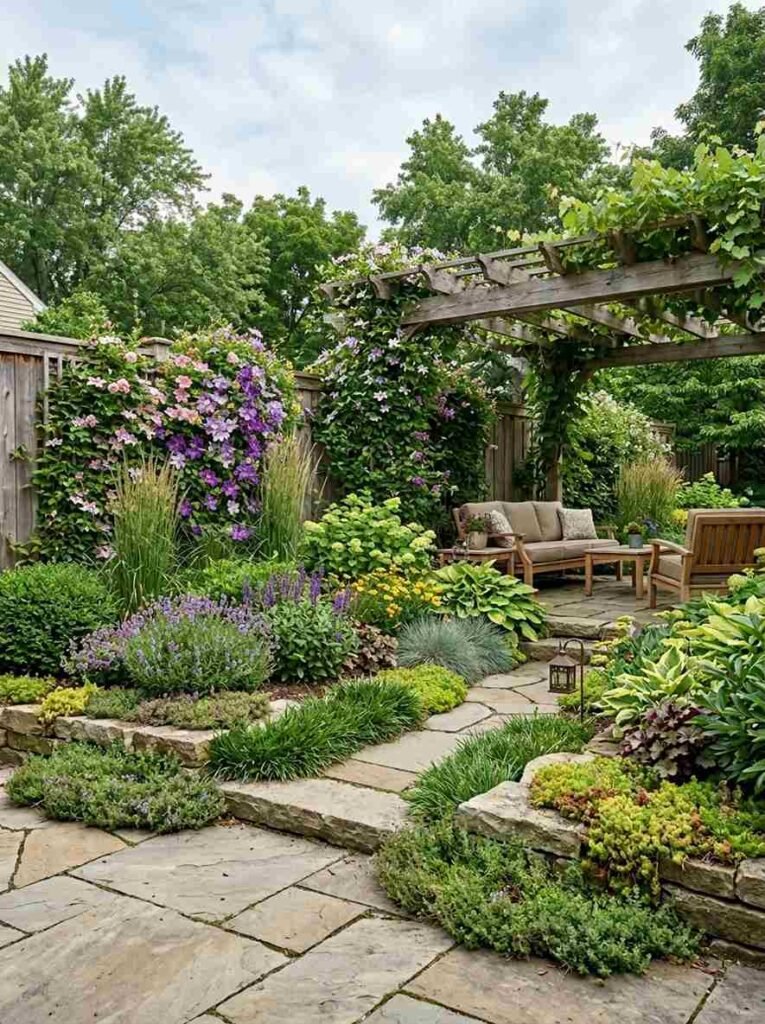
The single biggest mistake people make with patio landscaping: everything sits at the same height. It looks flat and uninspired.
Layer it:
- Ground level — creeping thyme, mondo grass, low ground covers
- Mid level — shrubs, ornamental grasses, larger perennials
- Eye level and above — tall grasses, tree-form plants, trellised climbers
6. Install String Lights Woven Through Greenery
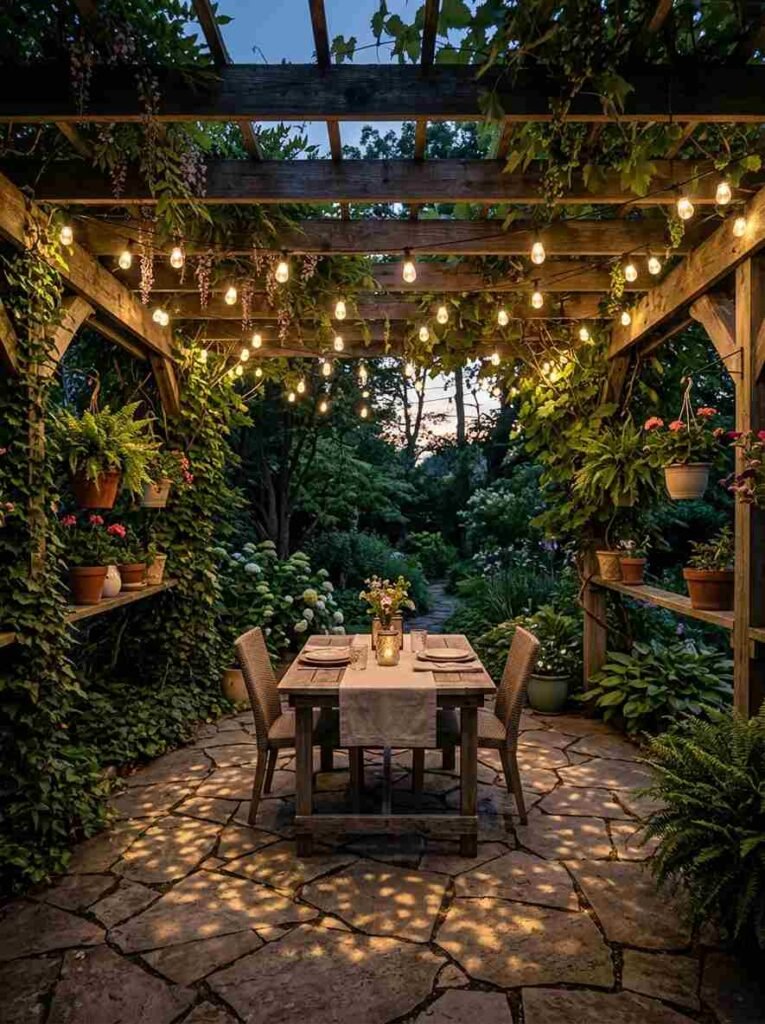
String lights work in any covered patio — but weaving them through plants instead of just stringing them along a beam makes a huge difference.
The light filtering through leaves at night creates something genuinely magical.
Warm white bulbs (2700K–3000K) feel cozy and flattering. Cool white reads more like a car dealership. Choose accordingly.
7. Build a Small Water Feature
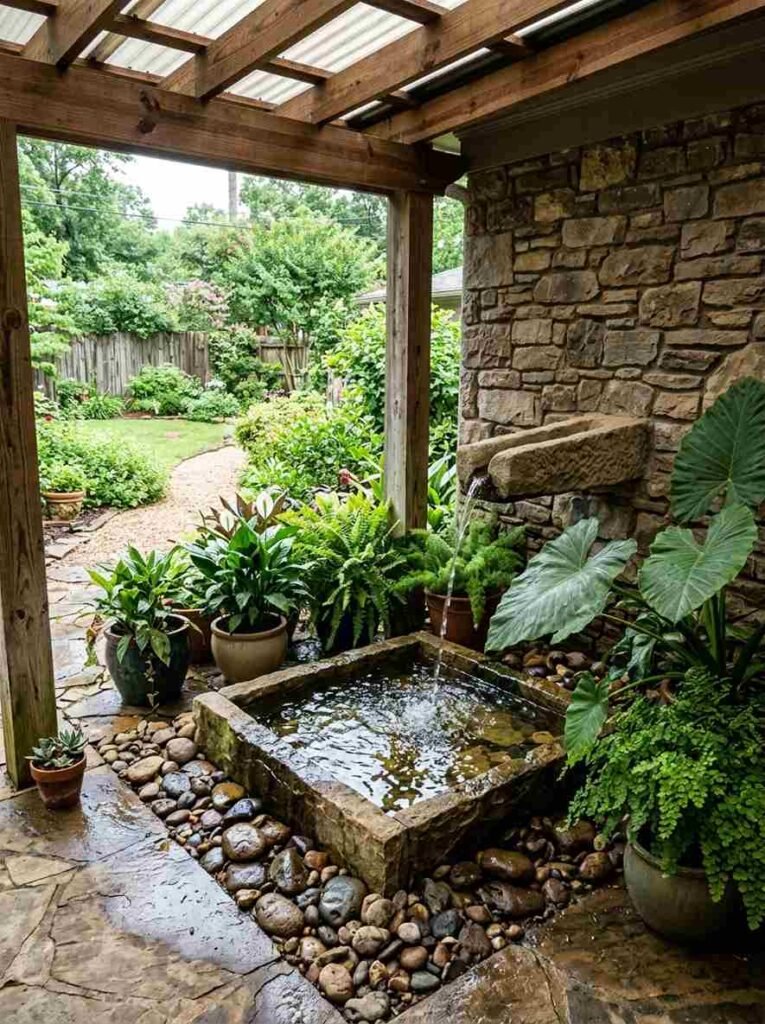
Moving water changes the feel of an outdoor space in a way nothing else does.
A small fountain, a wall-mounted water spout, or even a simple bowl fountain adds ambient sound and draws birds.
You don’t need a koi pond. A 12-inch tabletop fountain costs under $80 and does most of the same work acoustically.
8. Plant a Privacy Hedge Along One Side
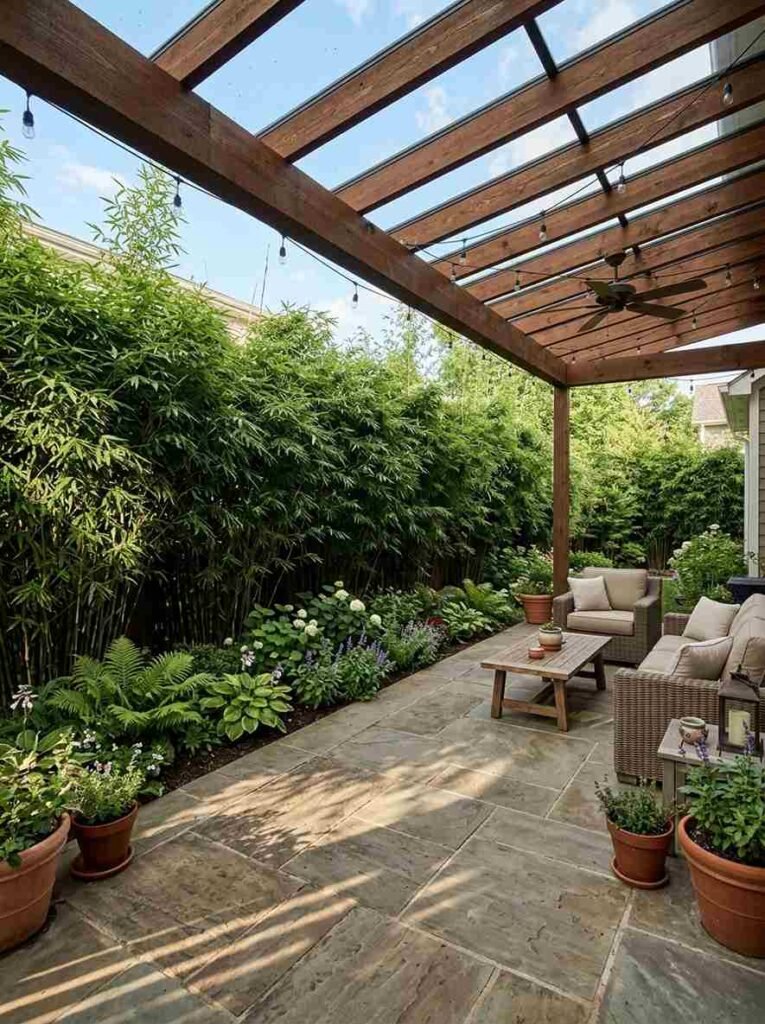
If your covered patio faces neighbors, a well-placed hedge solves the problem naturally.
Bamboo (the clumping variety — not running bamboo, which will colonize your entire yard) can reach 10–15 feet in a few years.
Other good options: arborvitae, privet, or a row of ornamental grasses like feather reed grass.
9. Use a Color Palette and Commit to It
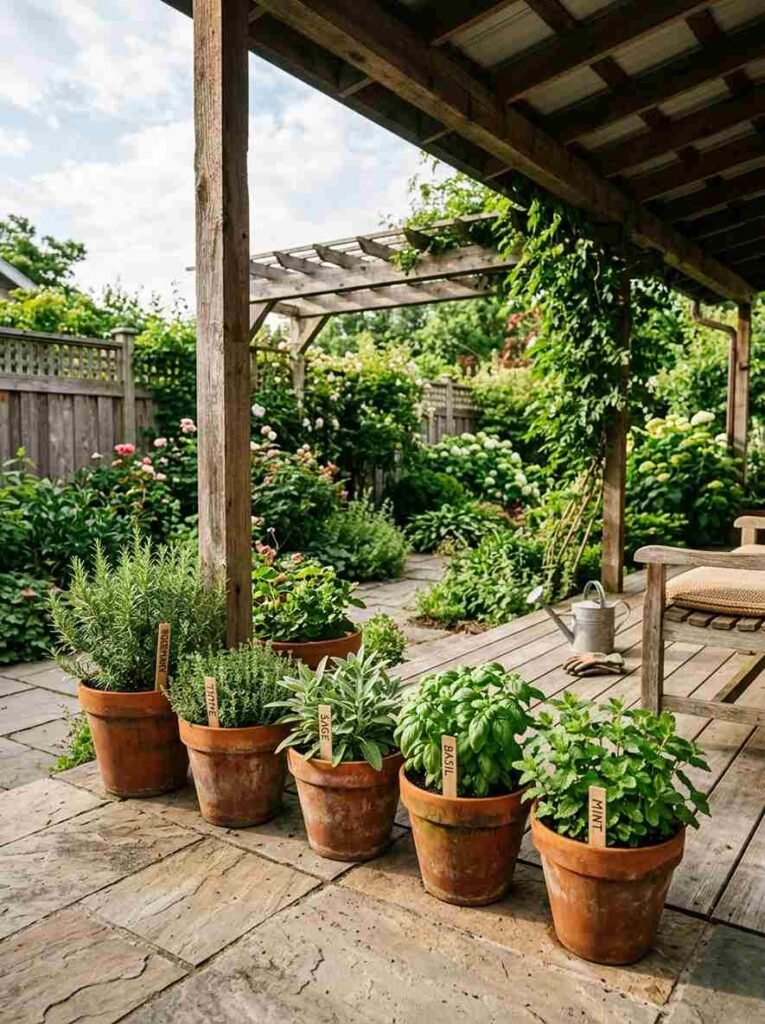
The patios that look professionally designed usually share one thing: a consistent color story. Pick 2–3 colors for your plantings and stick with them.
10. Add an Herb Garden Along the Edge
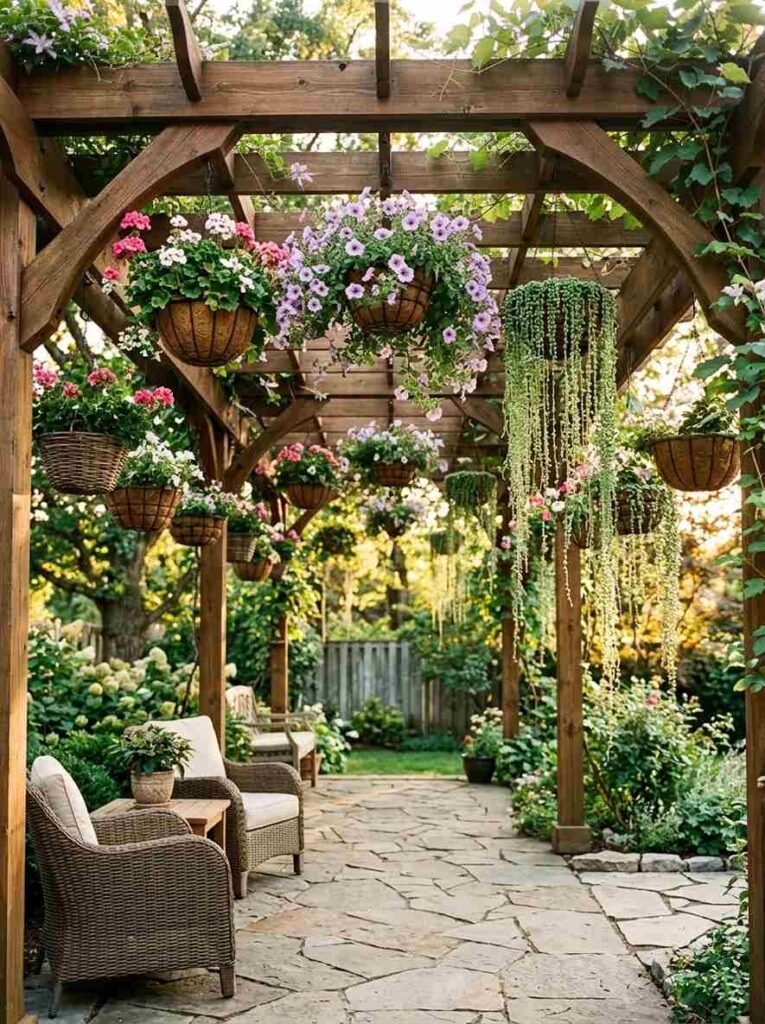
A dedicated herb section along one edge of your covered patio looks beautiful and earns its keep. Rosemary, thyme, sage, and mint all look great in a row of matching terracotta pots.
Keep mint in its own container. It spreads aggressively through shared soil and will crowd out everything else within a season.
11. Hang Trailing Plants From the Overhead Structure
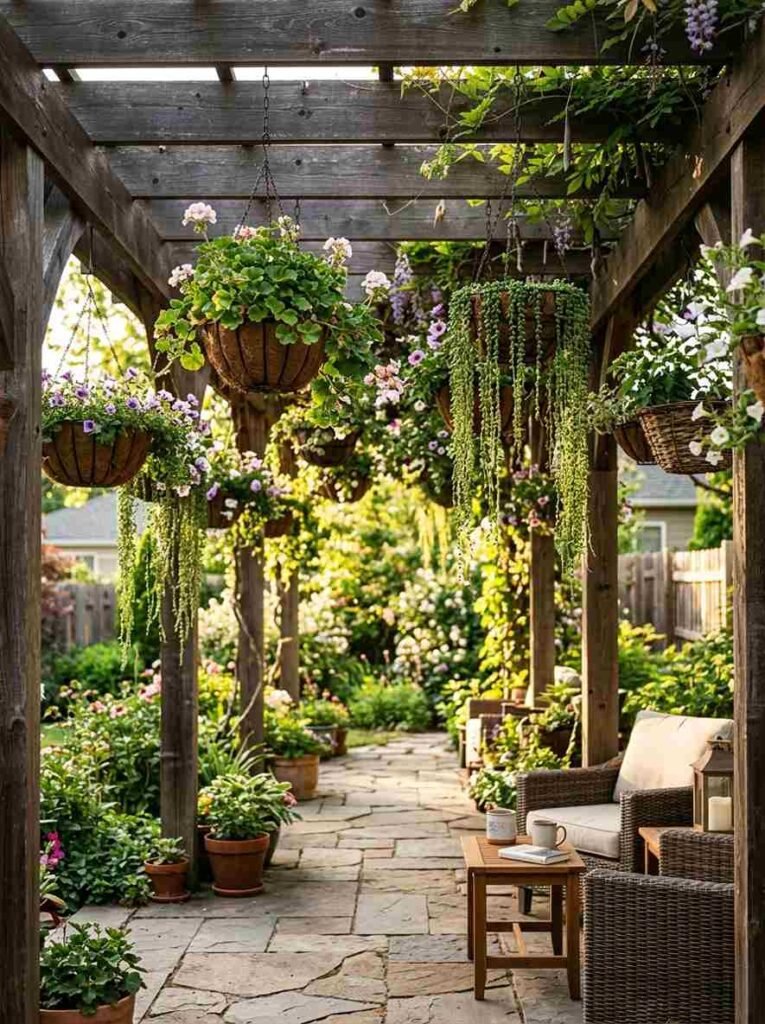
If your covered patio has a pergola or overhead beams, hang baskets of trailing plants from them. String of pearls, ivy geraniums, or trailing petunias create a curtain of greenery that softens the structure.
This works especially well to define the “walls” of an open-sided covered patio without actually building walls.
12. Use Decorative Gravel or Mulch as Ground Cover
Bare soil between plants looks unfinished. Decorative gravel, river rocks, or good-quality mulch fills those gaps and keeps weeds down.
IMO, dark brown mulch looks best with bright flowering plants. Light gravel works better with succulents and drought-tolerant Mediterranean plantings.
13. Incorporate a Fire Pit or Fire Bowl
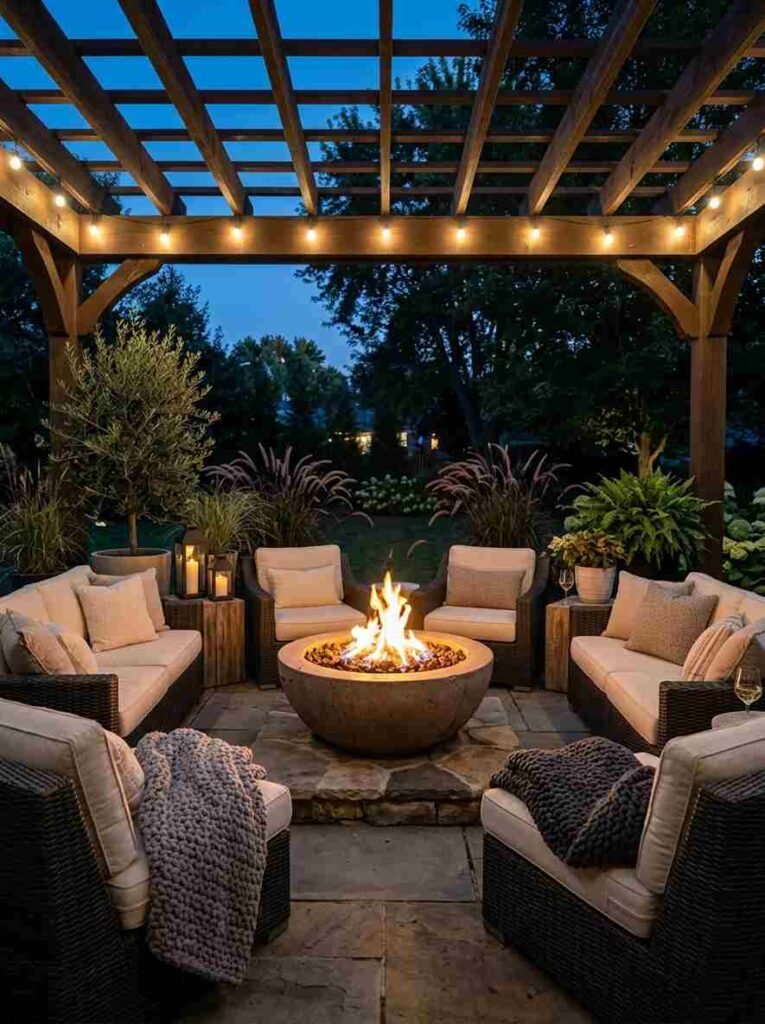
A fire feature extends the usability of your covered patio well into cooler months.
A tabletop propane fire bowl fits even on a small patio and creates instant ambiance.
Check your local codes before installing any fire feature under a covered structure. Some areas restrict open flames under a roof or pergola — gas inserts with proper clearance are usually fine.
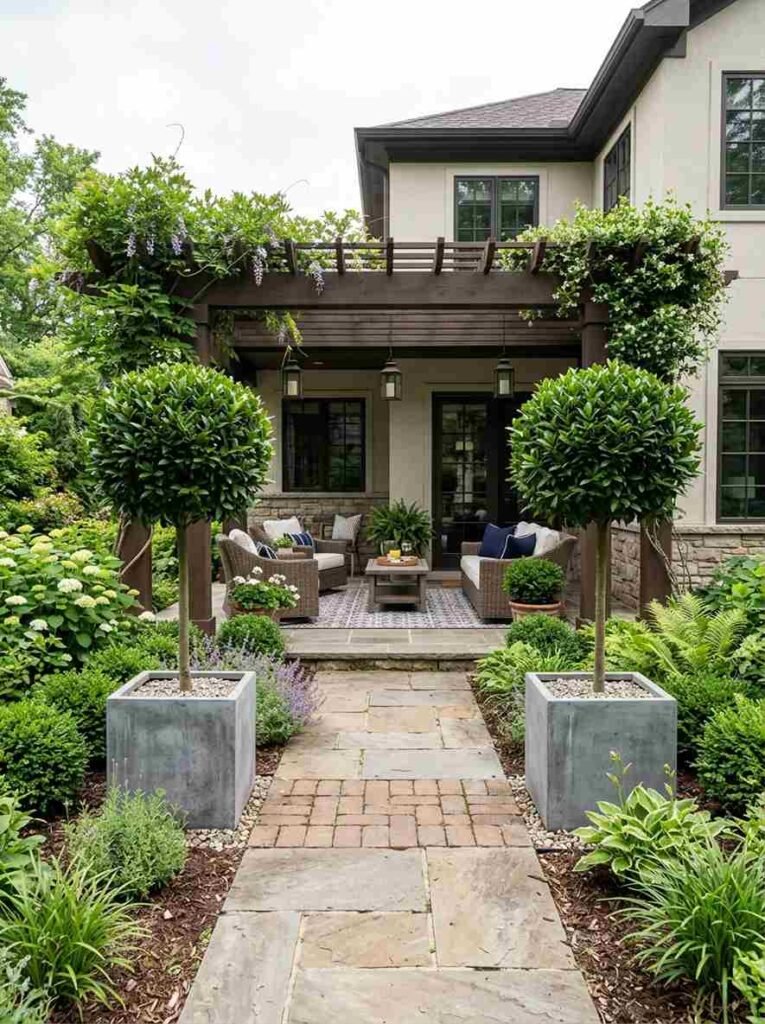
14. Frame the Entry With Topiaries or Tall Planters
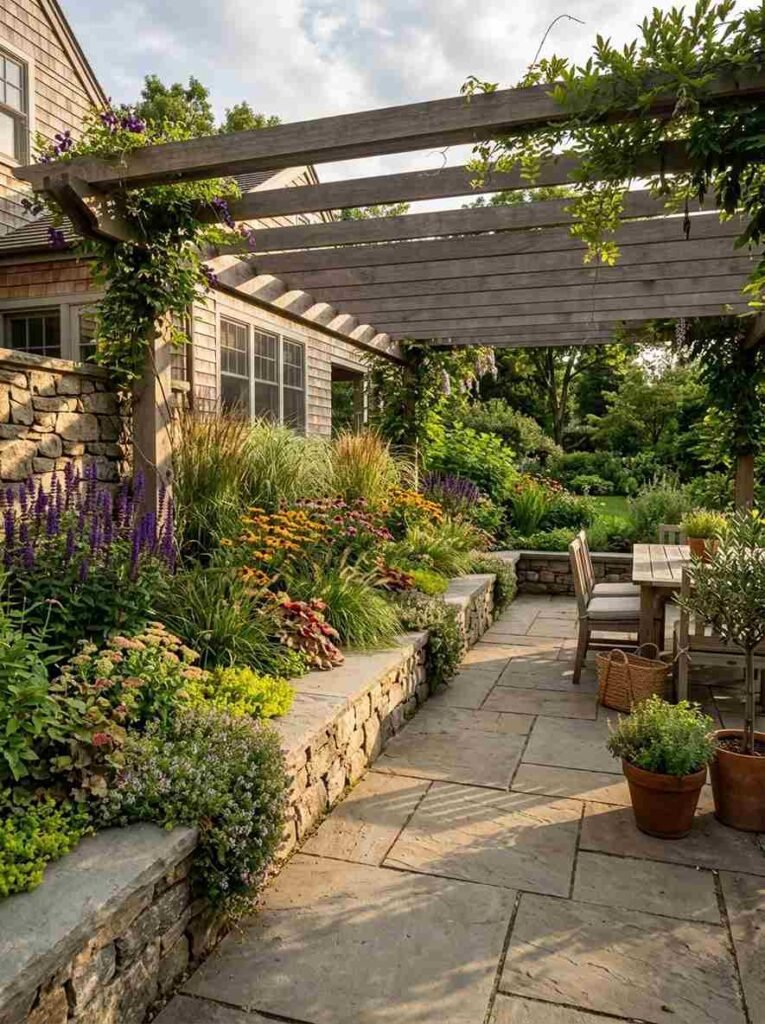
The entrance to your covered patio sets the tone.
Two matching topiaries, bay laurel standards, or tall planters with architectural plants (ornamental grasses, cordyline) flank the entry and make it feel like you’re stepping into somewhere considered.
Symmetry at the entry, variety inside — that’s the formula.
15. Add a Built-In Planting Bed Around the Perimeter
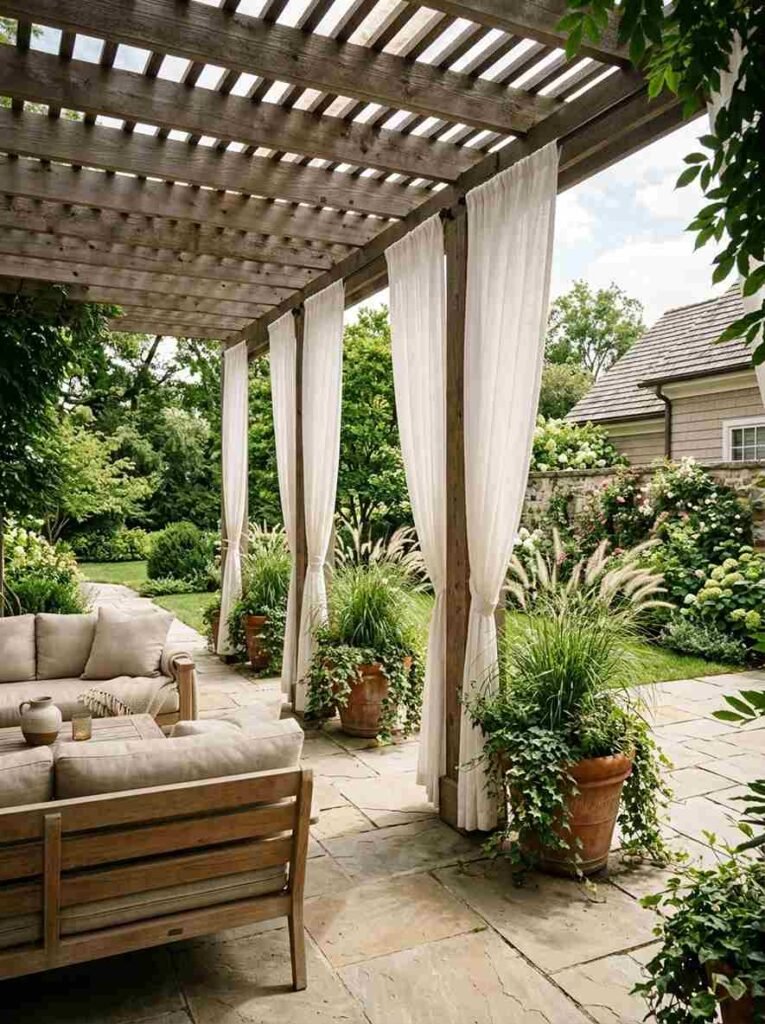
If you’re doing any construction or hardscaping, build a low planting bed around the edges of the patio.
Even 18 inches wide gives you enough room for layered perennials that bloom all season.
Built-in beds look more permanent and polished than an arrangement of individual pots, and they require less frequent watering once established.
16. Use a Tree Fern or Large Statement Plant as a Focal Point
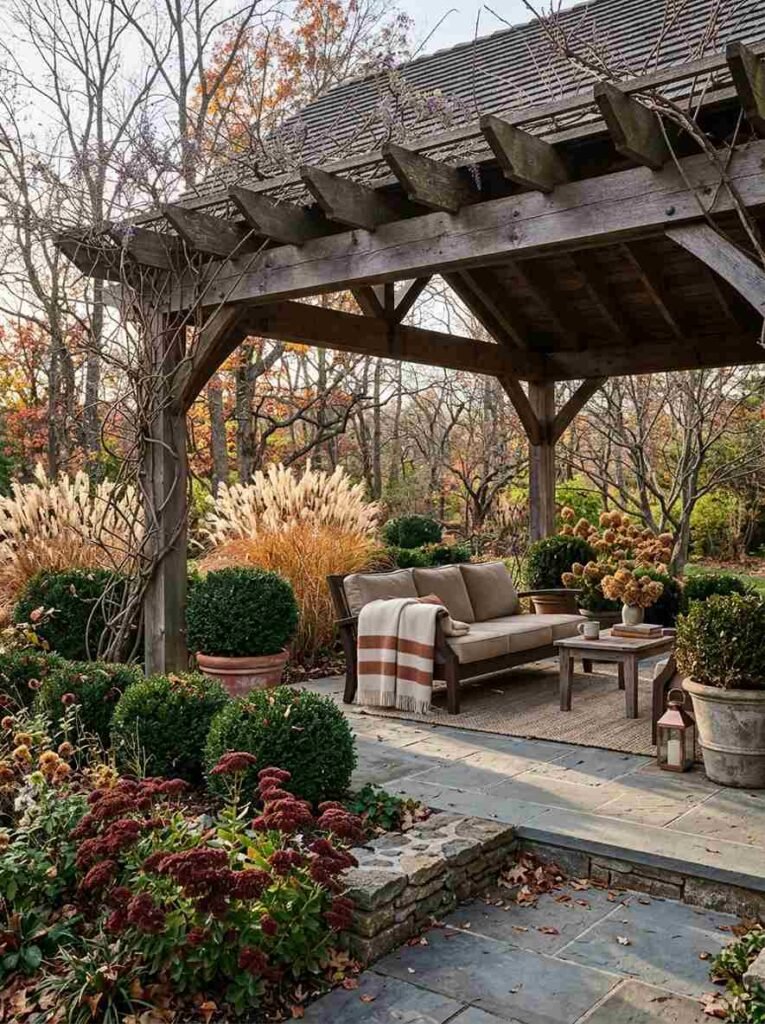
Every covered patio needs one thing that makes you stop and look. A tree fern, a large fiddle-leaf fig (in warmer climates), a Japanese maple in a massive container, or even a well-chosen olive tree does the job.
Put it where sight lines from seating converge. That’s usually the far corner or center back.
17. Install Outdoor Curtains Between Plantings
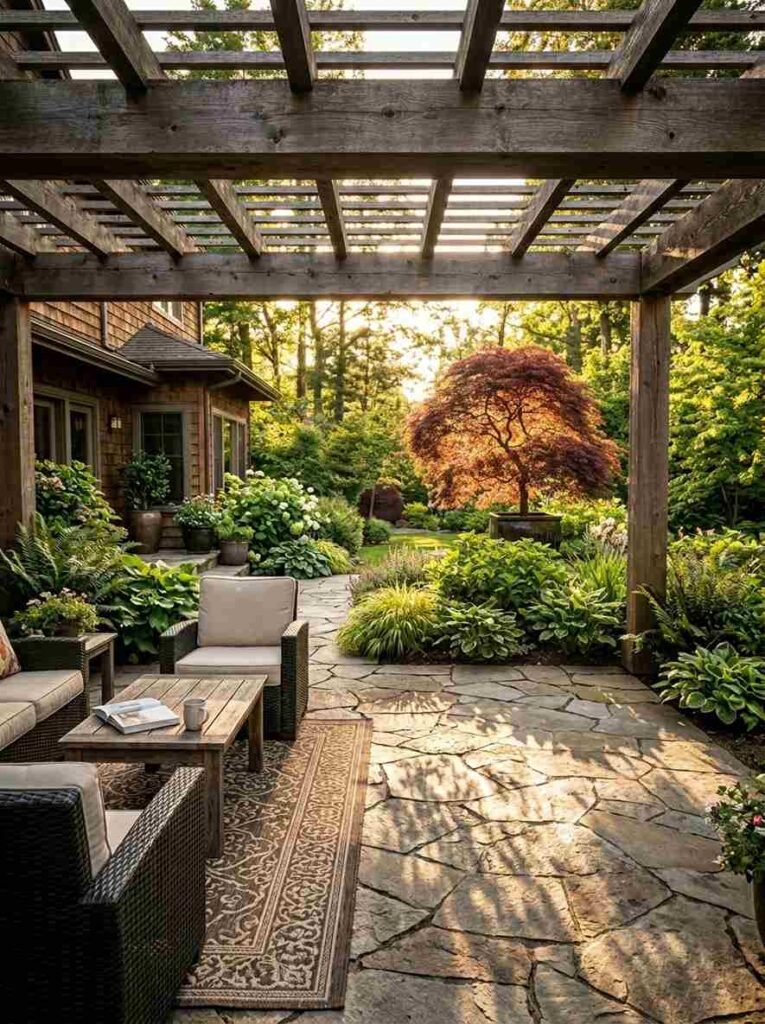
Outdoor curtains on a covered patio add privacy and filter light — but they also play well with plants.
Position curtains between larger planted containers and they frame the greenery the same way a gallery wall frames art.
Use weather-resistant outdoor fabric. Regular curtains turn to mold within one wet season. 🙂
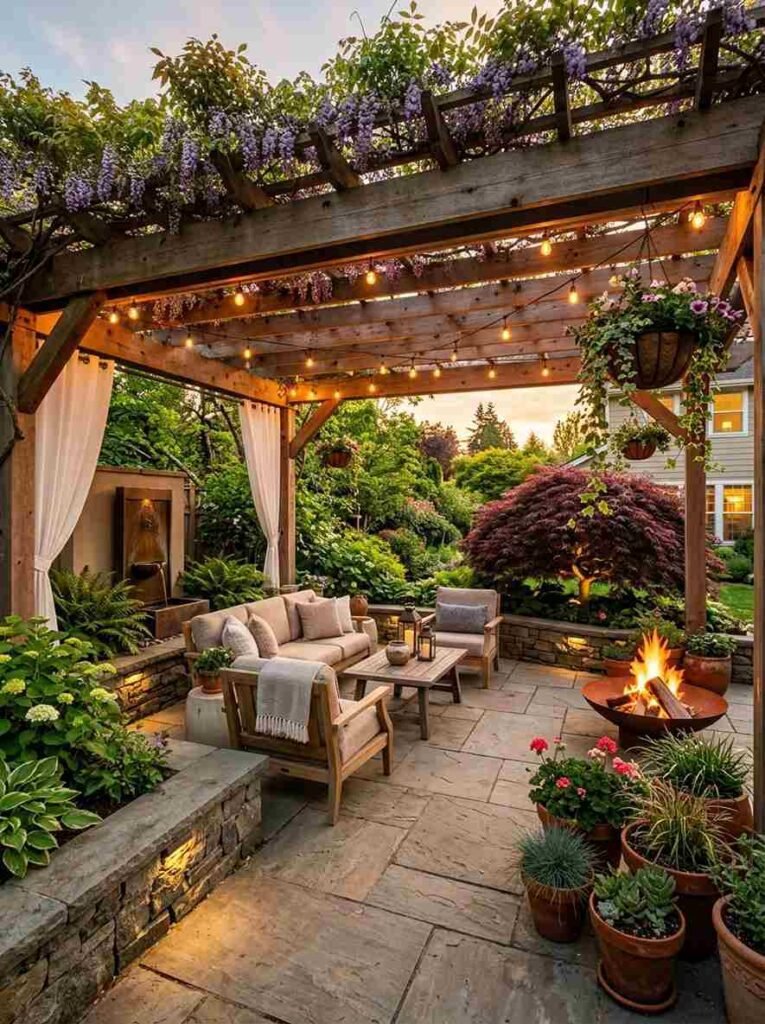
18. Design for All Seasons
The best covered patio gardens look good in February, not just July. That means including:
- Evergreen plants that hold structure year-round (boxwood, ornamental grasses, yew)
- Late bloomers for fall interest (sedums, asters, rudbeckia)
- Plants with interesting bark or seed heads for winter visual texture
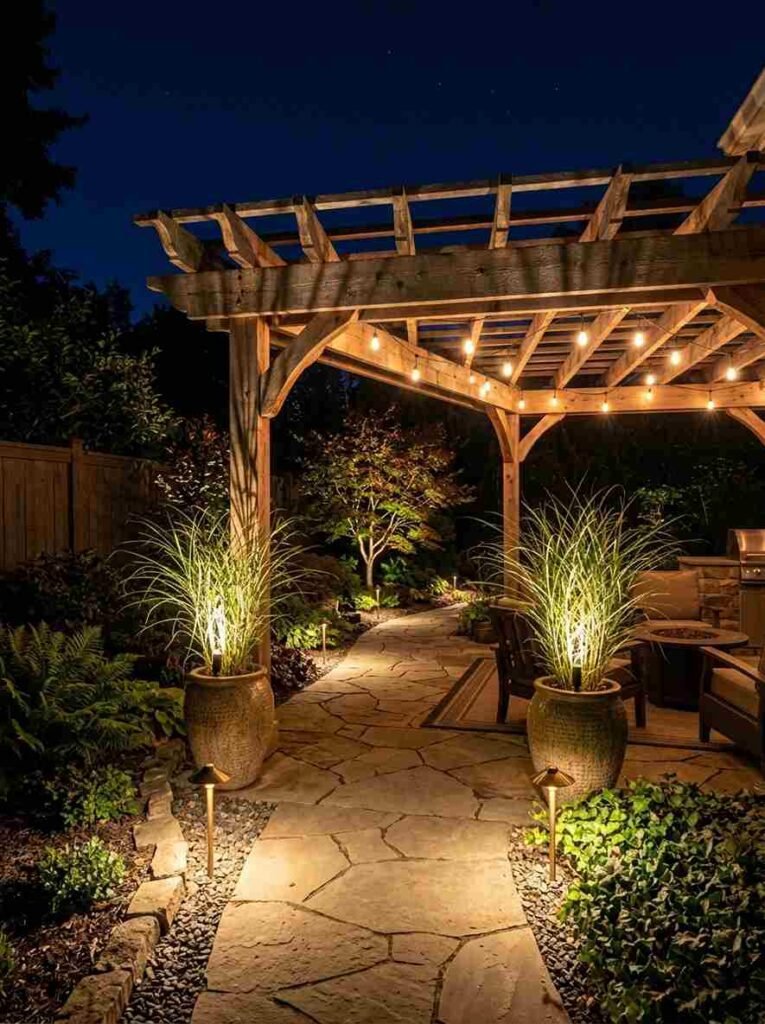
19. Add Ambient Landscape Lighting at Ground Level
Uplighting trees or shrubs from below creates dramatic nighttime shadows.
Small solar stake lights along a pathway look low-budget though — go for low-voltage hardwired LED lights if you want it to look polished.
A landscape electrician can typically run a simple outdoor lighting circuit for a few hundred dollars. It’s worth it.
20. Layer Texture, Not Just Color
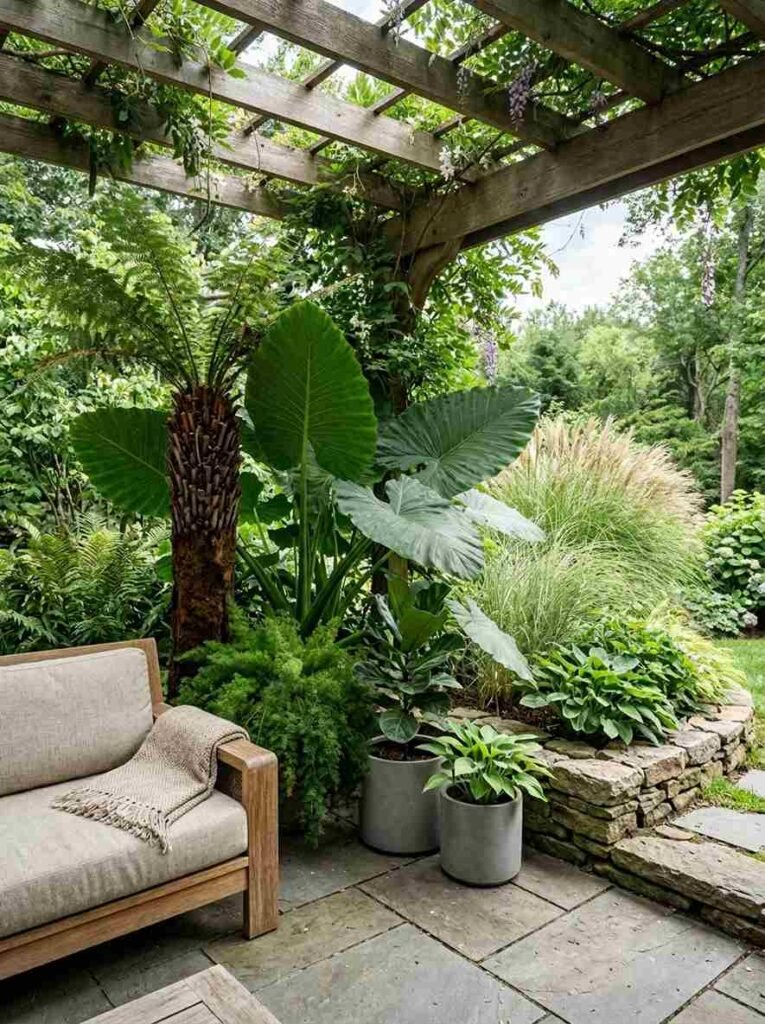
This is the one most people skip: texture.
Plants with big bold leaves (elephant ear, hosta, fatsia) next to fine-textured plants (feather grass, asparagus fern, baby’s breath) create depth and visual interest even when nothing is in bloom.
Color gets the attention. Texture is what makes a garden feel rich.
Putting It All Together
You don’t have to do all 20 of these. Pick 5 or 6 ideas that fit your space, your budget, and how much upkeep you’re actually going to do honestly — and do those really well.
A covered patio with 4 things executed beautifully beats one crammed with 20 underdeveloped ideas every time.
Start with the structure (pergola, overhead cover, flooring), add the anchor plants, then layer in the details. Give it a season to grow in, and adjust from there. The best outdoor spaces are never really finished — they evolve.
Now go buy some plants. Your patio’s waiting.
