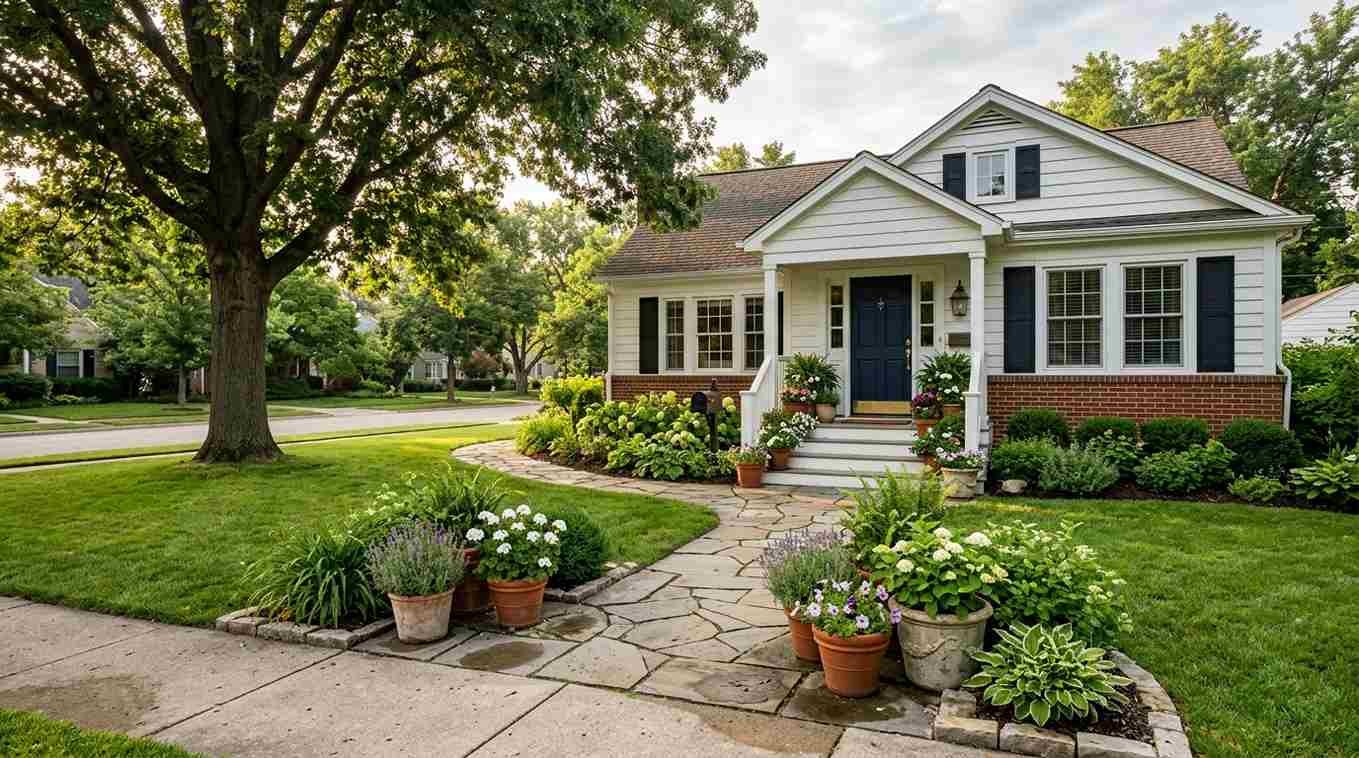
Your front yard is the first thing anyone sees — and right now, it might be doing your home zero favors.
A few well-placed pots and planters can flip that completely. We’re talking curb appeal that actually makes people slow down.
I’ve spent way too many weekend hours staring at front stoops trying to figure out why some look magazine-worthy and others just look… sad.
After a lot of trial and error (and one truly tragic terracotta disaster involving a frost I did not plan for), I’ve landed on ideas that actually work — especially for smaller front yards where every inch counts.
Here are 25 ideas to steal.
Symmetry at the Front Door
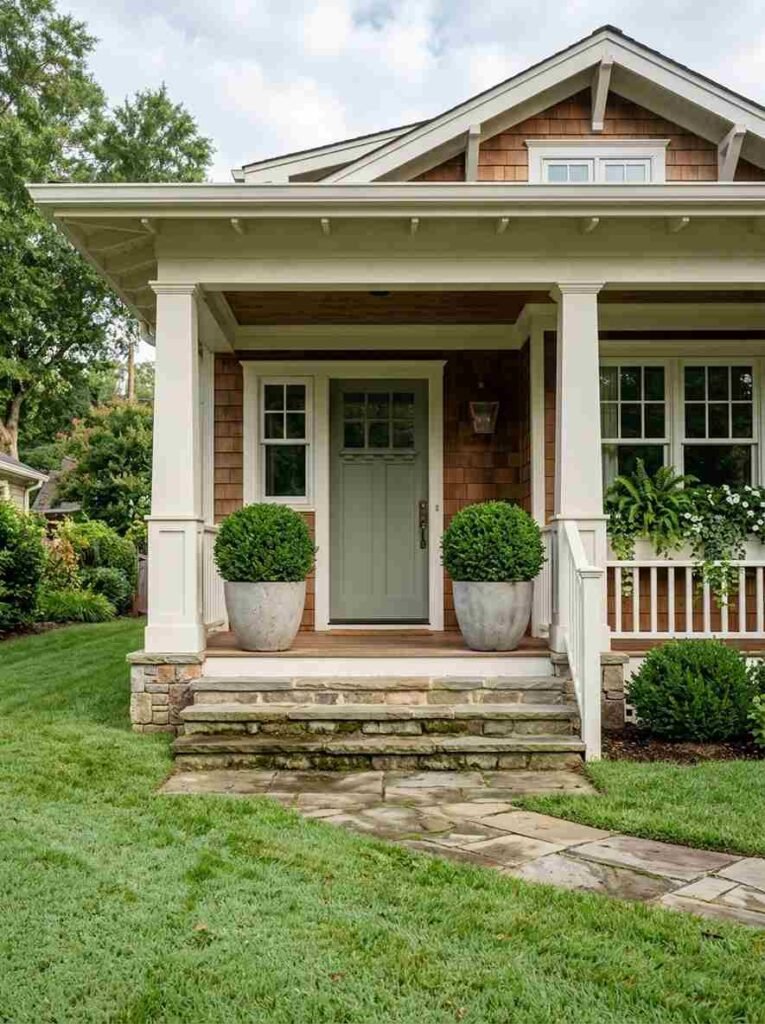
Matching planters on either side of your entryway is the single highest-impact move you can make. Full stop.
Two identical pots — same size, same plant, same height — frame your door like punctuation.
Use tall ornamental grasses or boxwood topiaries for a clean, structured look. Or, IMO, a pair of olive trees in modern concrete planters is chef’s kiss for a Mediterranean vibe.
What to plant for symmetry
- Boxwood balls — evergreen, year-round structure
- Dwarf Alberta Spruce — naturally conical, zero trimming needed
- Ornamental Grasses — movement and texture
- Lavender — fragrant and forgiving
Layered Height on Steps
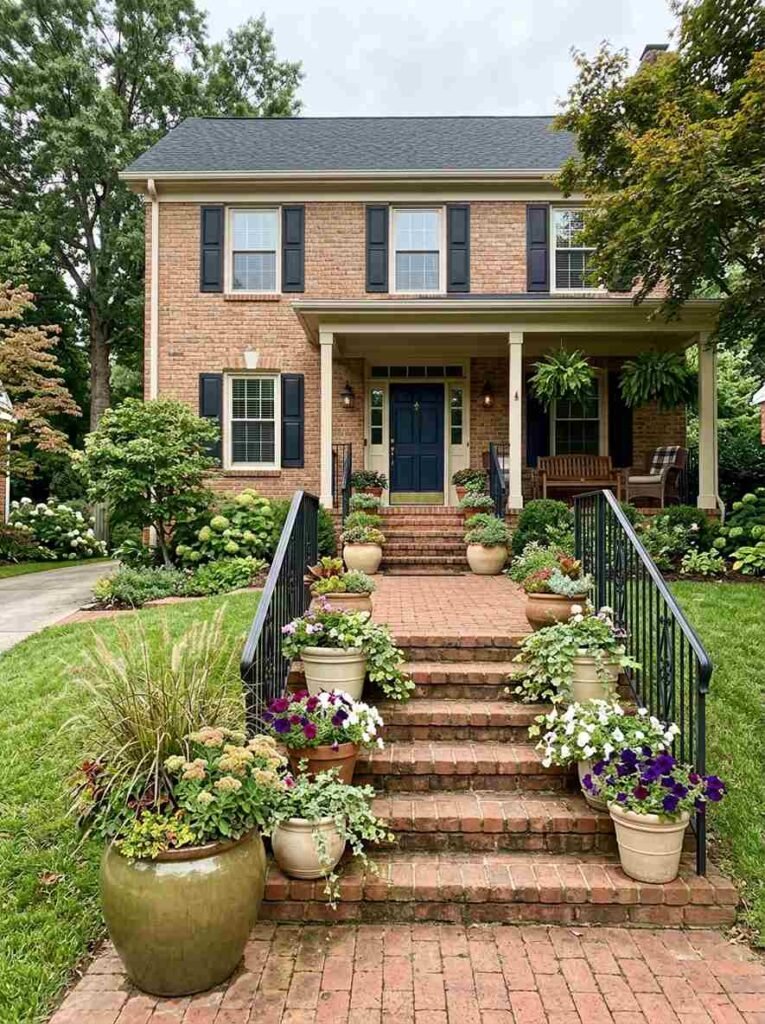
Got steps leading to your front door? They’re basically a free display shelf.
Place planters at staggered heights going up each step. Taller pots at the bottom, shorter ones climbing up.
This creates a visual “welcome path” that draws the eye straight to your door. Use a consistent color palette across all the pots so it feels intentional, not chaotic.
The Statement Urn
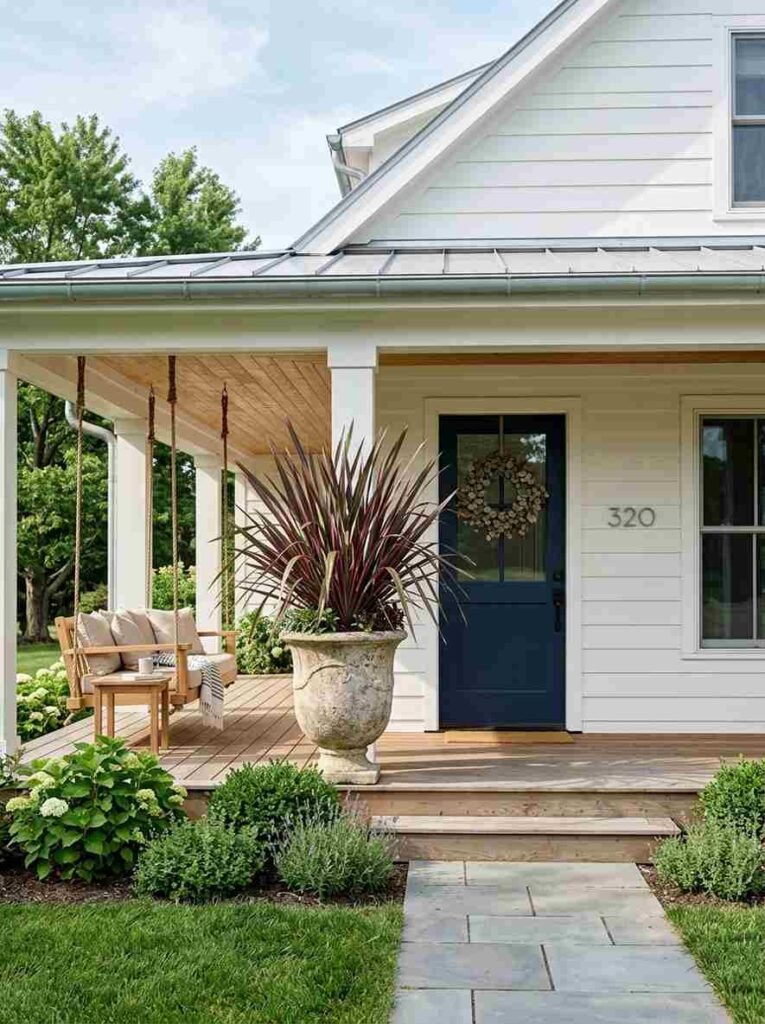
One oversized urn — and I mean big — planted with something dramatic changes everything.
A single agave, a phormium, or a tall ornamental grass in a generously sized urn (think 24 inches and up) reads as confident and designed.
It works especially well in small yards where you physically don’t have room for multiple containers. Go bold with one thing instead of timid with five.
Window Box Planters
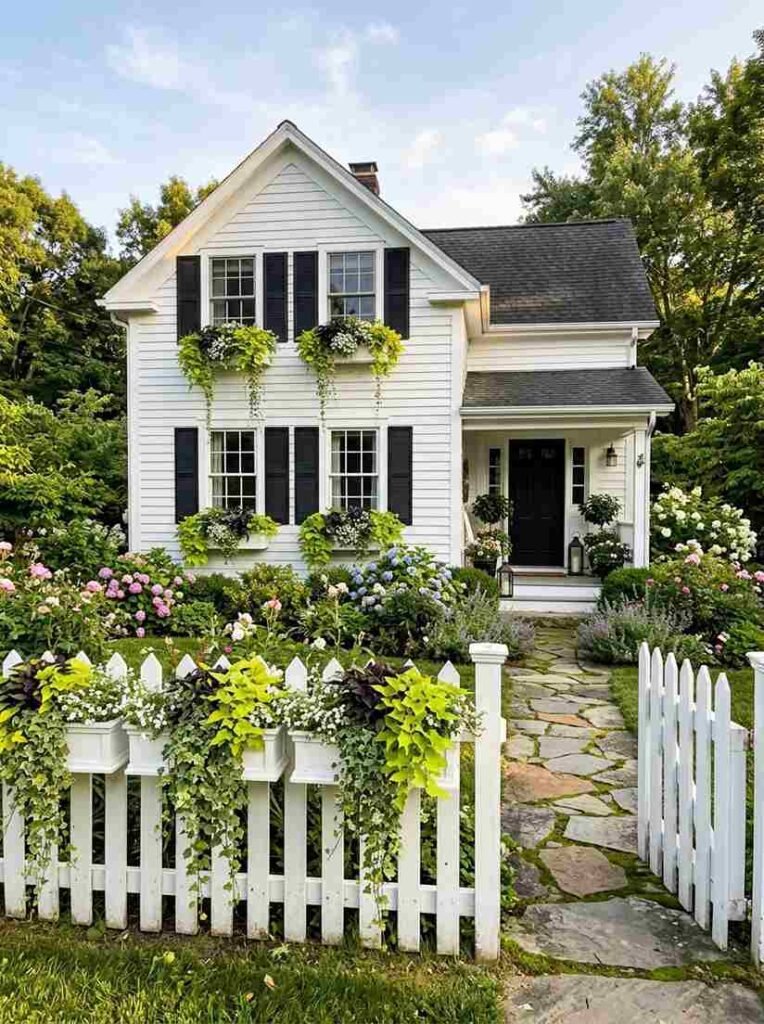
Window boxes aren’t just for windows.
Mount them along low front walls, fences, or even along the base of your porch railing.
Fill them with trailing plants — sweet potato vine, ivy, or bacopa — and watch them spill beautifully downward. The horizontal line also makes narrow yards feel wider.
Quick window box plant picks
- Trailing Lobelia — cascade of color
- Sweet Potato Vine — dramatic chartreuse or deep purple
- Bacopa — delicate white flowers all season
- Trailing Rosemary — fragrant and edible bonus
A Pot Cluster, Not a Lineup
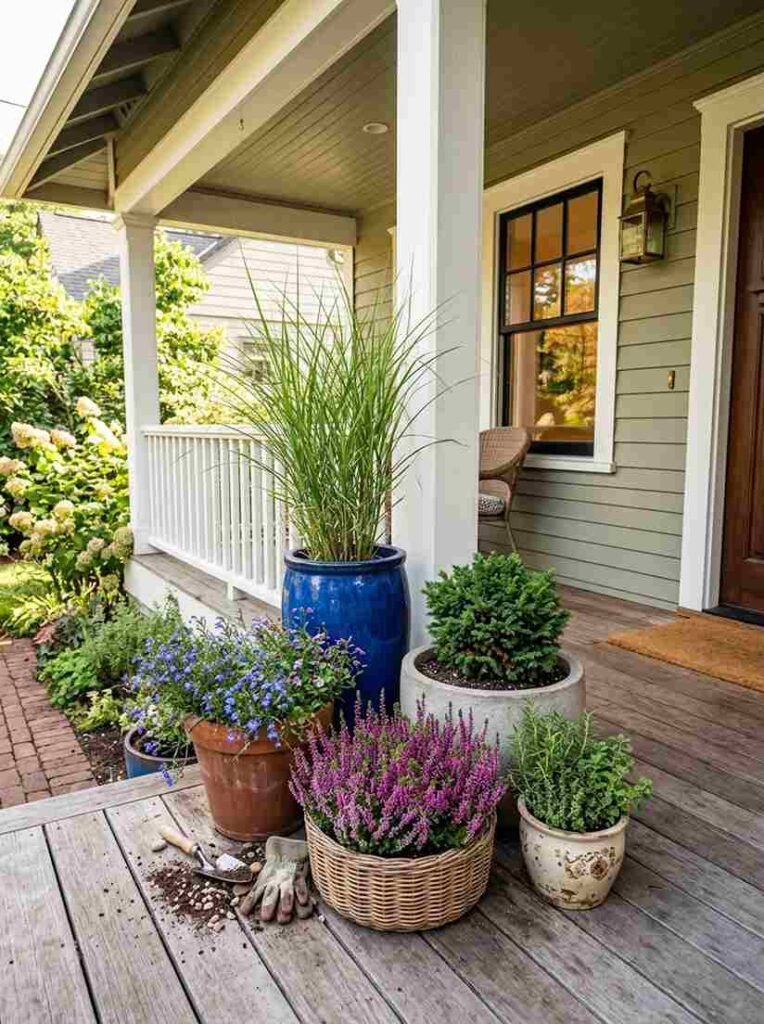
Most people line their pots up like they’re waiting for a bus. Don’t do that.
Group pots in odd numbers — 3 or 5 — at varying heights and sizes. One tall, one medium, one low.
This creates a natural vignette that looks collected, not purchased. Use a mix of textures: smooth ceramic next to rough terracotta next to woven basket-style planters.
Tall Planters to Frame a Pathway
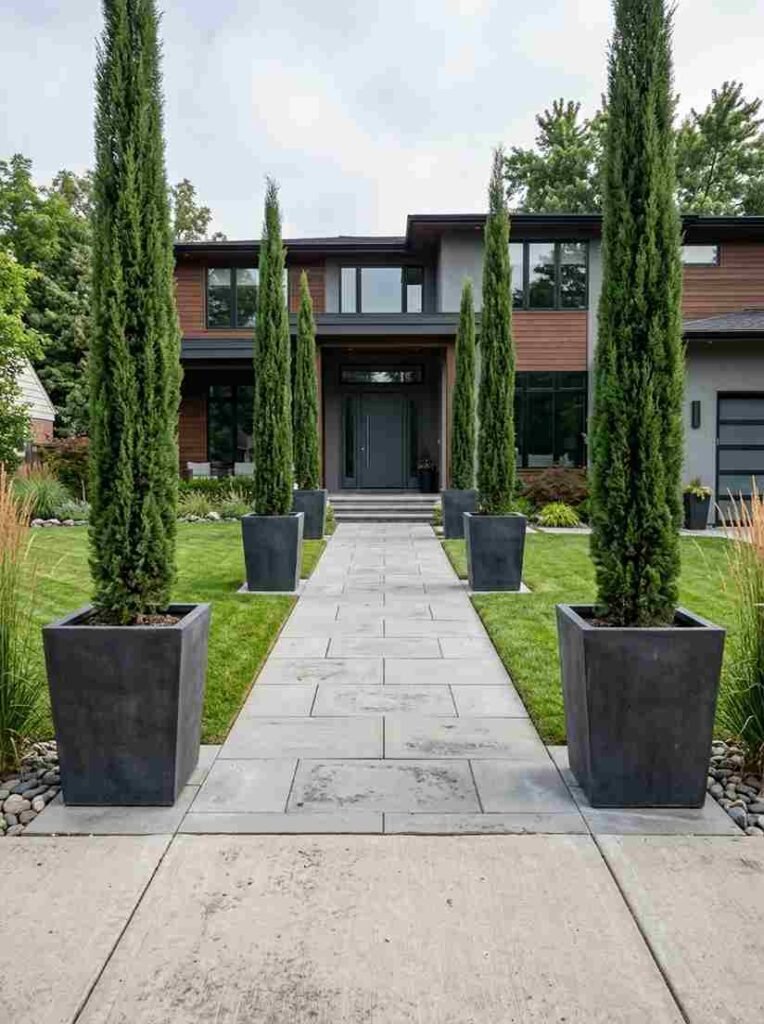
A narrow front path can feel like a hallway rather than a welcome. Tall planters fix that fast.
Place 18–24 inch planters at the start of the path on both sides, then maybe one or two pairs along the way.
Columnar plants — Italian cypresses, tall grasses, bamboo in contained pots — emphasize the vertical and make a short path feel intentional and structured.
Monochromatic Color Story
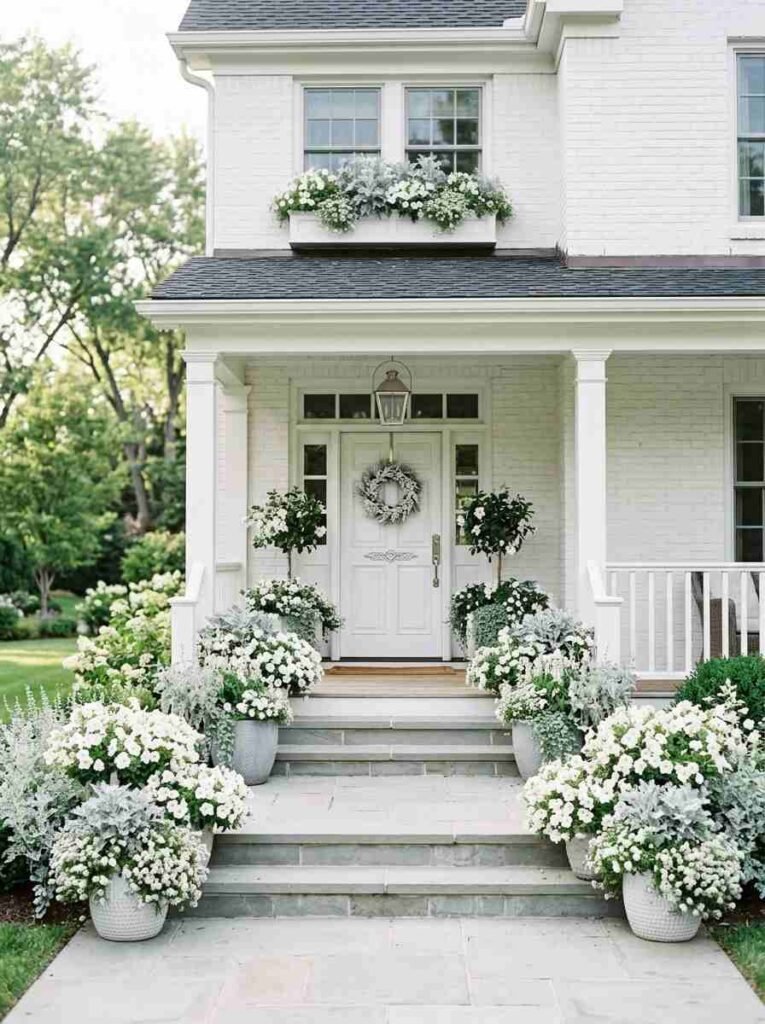
Pick one color. Go deep on it.
A front entrance done entirely in shades of white and silver — white petunias, dusty miller, white alyssum, silver artemisia — looks genuinely sophisticated.
So does an all-orange scheme with marigolds, ornamental peppers, and rust-toned zinnias.
A tight color story always reads better than a rainbow jumble, no matter how cheerful the jumble feels in the garden center.
Low, Wide Planters for a Modern Look
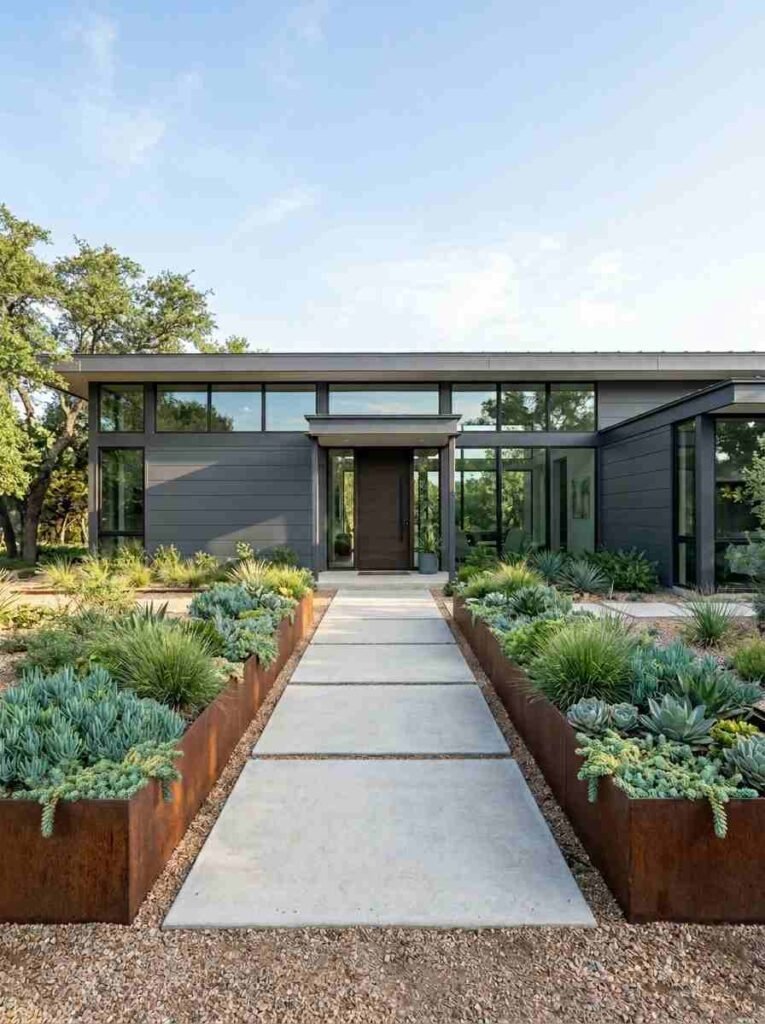
If your home leans contemporary, ditch the tall urns.
Low, wide rectangular planters — think 6–8 inches tall and 24–36 inches wide — planted with low-growing succulents, sedums, or ornamental grasses give a clean horizontal line.
They sit flush with walkways and steps beautifully. Concrete, corten steel, or matte black finish keeps things looking sharp.
Tiered Plant Stands
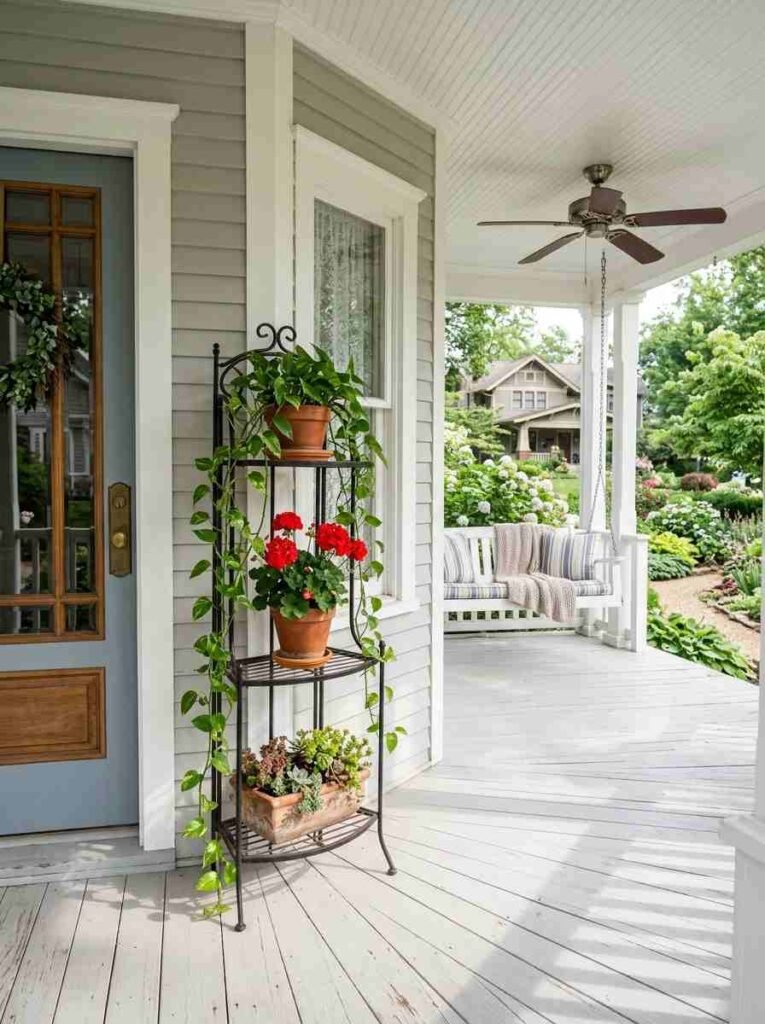
A tiered plant stand earns serious square footage efficiency points.
One stand, 3–4 levels, takes up maybe 18 inches of floor space and holds a whole display of pots.
Use it beside a front door, at the corner of a porch, or at the end of a short wall. Mix trailing plants on top levels with more upright plants below so everything gets light.
Hanging Planters on Porch Overhang
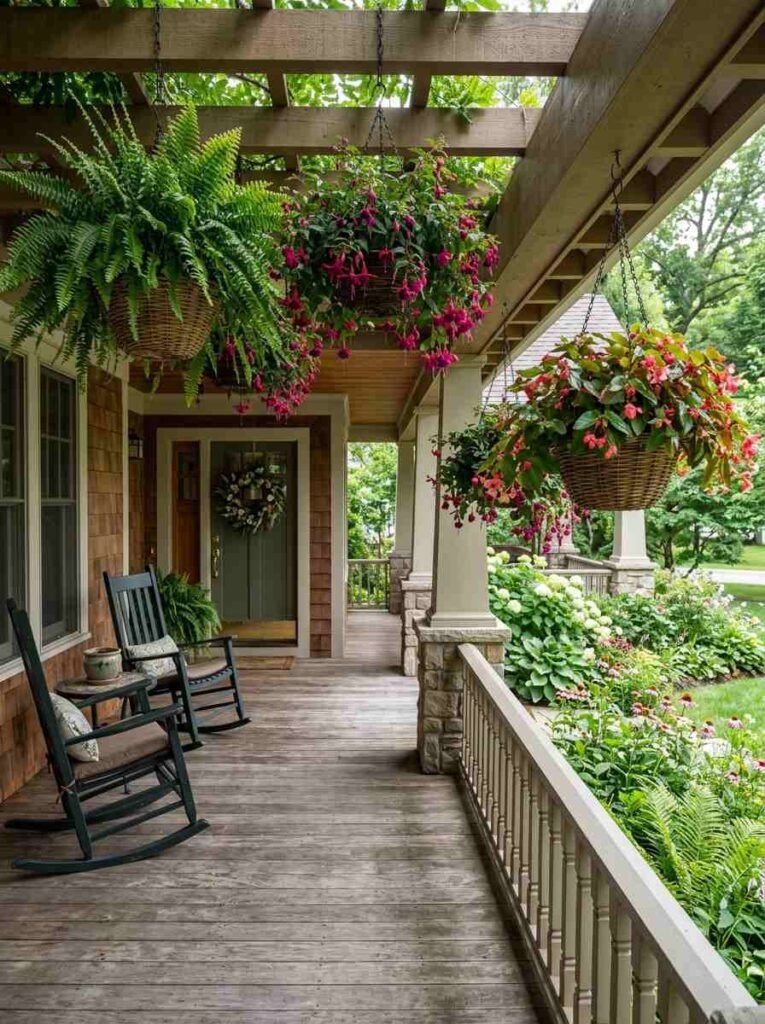
Eye-level and above — that’s the zone most people completely ignore.
Hang 3–4 planters from a porch overhang or pergola beams at slightly different heights. Ferns, petunias, fuschia, and trailing begonias all do well in hanging containers.
They fill the visual space between your porch ceiling and your standing-height plants, making everything feel lush and layered.
Repurposed Vintage Containers
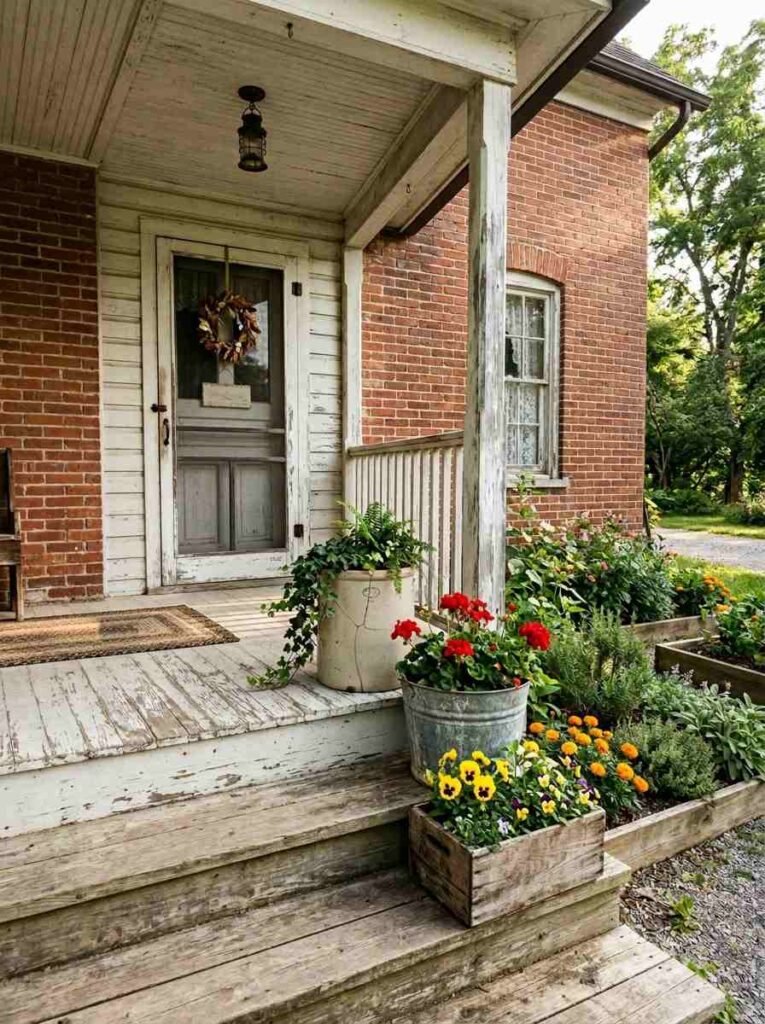
This one is FYI for anyone who loves a bit of personality in their outdoor spaces.
Old zinc buckets, worn wooden crates, antique ceramic crocks — repurposed as planters, they add warmth and history that no brand-new pot can buy.
Drill drainage holes in the bottom, line with landscape fabric if needed, and plant away. The weathered surfaces pair especially well with cottage-style plantings like geraniums, pansies, and herbs.
Succulent Troughs
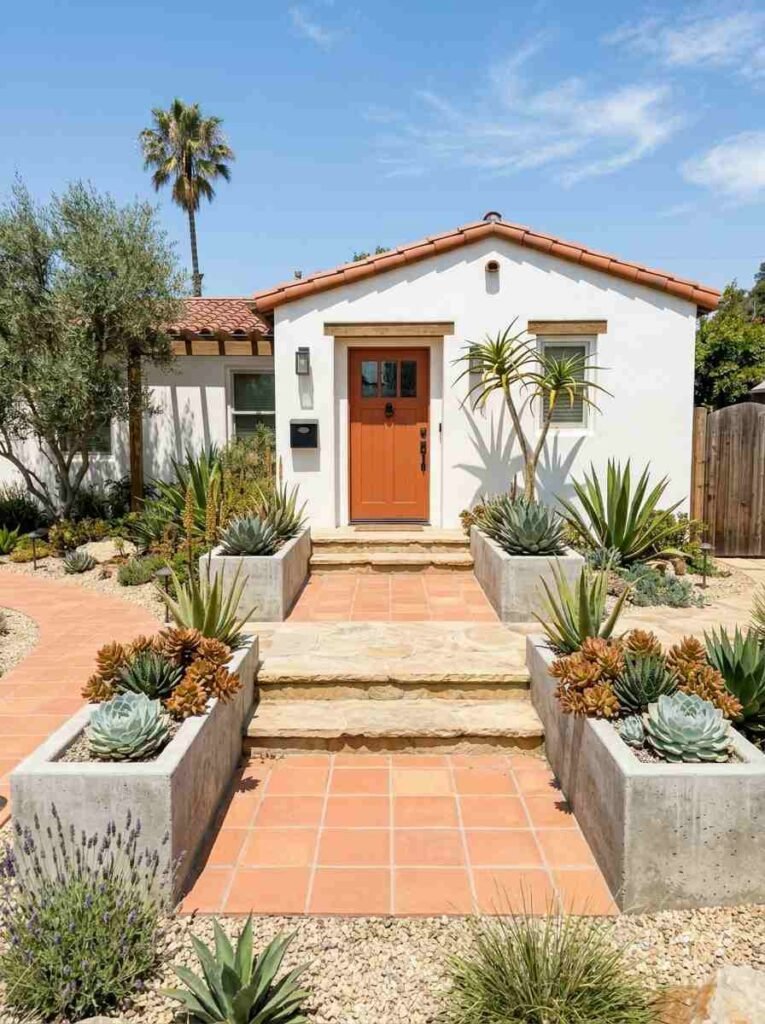
Succulents in shallow troughs are low-maintenance front entrance gold.
A long, shallow trough planted with a mix of echeverias, sedums, and aloes looks striking and basically takes care of itself once established.
In hot, dry climates, they’re practically indestructible. Place them flanking steps or along a low wall where they get full sun.
Seasonal Swap Strategy
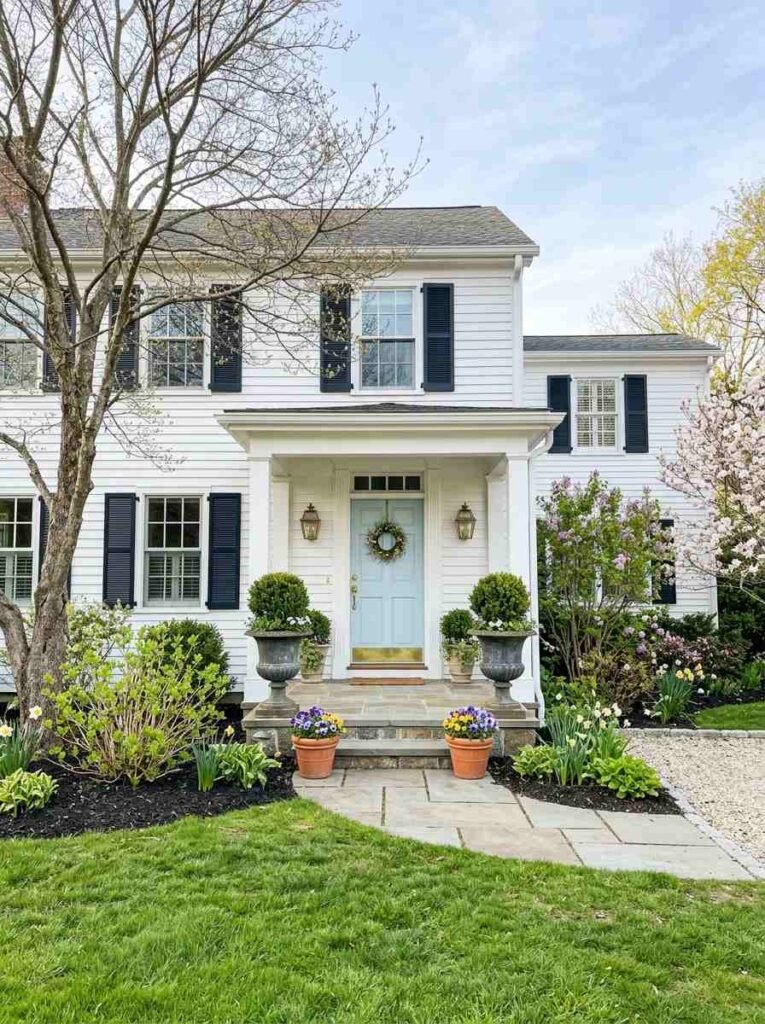
The smartest front yard container gardeners work in seasons, not years.
Keep 2–3 permanent structural pots with evergreens or slow-growing shrubs as anchors.
Then have 1–2 “swap” pots where you change plants seasonally: pansies in spring, bright annuals in summer, ornamental kale and mums in fall, evergreen cuttings and berries in winter.
This approach keeps your entrance looking current year-round without a full replant every time.
Tall Grass Pots for Privacy
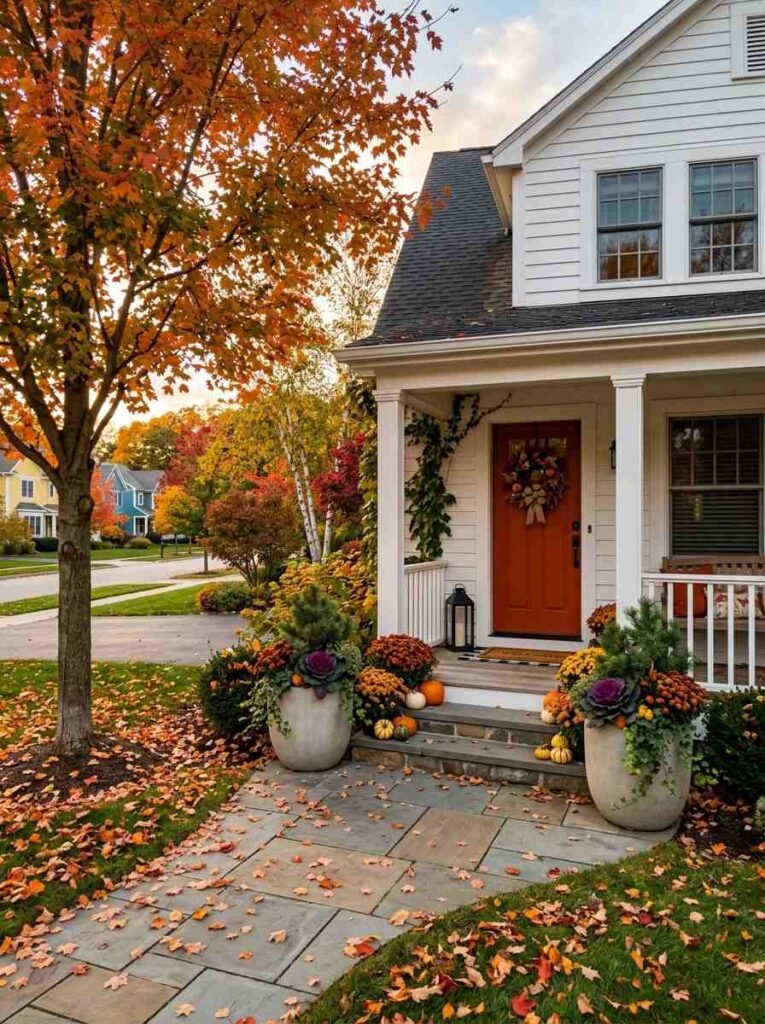
A few large planters with tall ornamental grasses can create a soft privacy screen at a small front porch or seating area.
Pennisetum, Miscanthus, or Calamagrostis in large pots reach 3–4 feet easily and move beautifully in the breeze.
They don’t block your view entirely — just soften the exposure. And unlike fence panels, they’re warm and natural-looking.
Herb Pots Near the Front Door
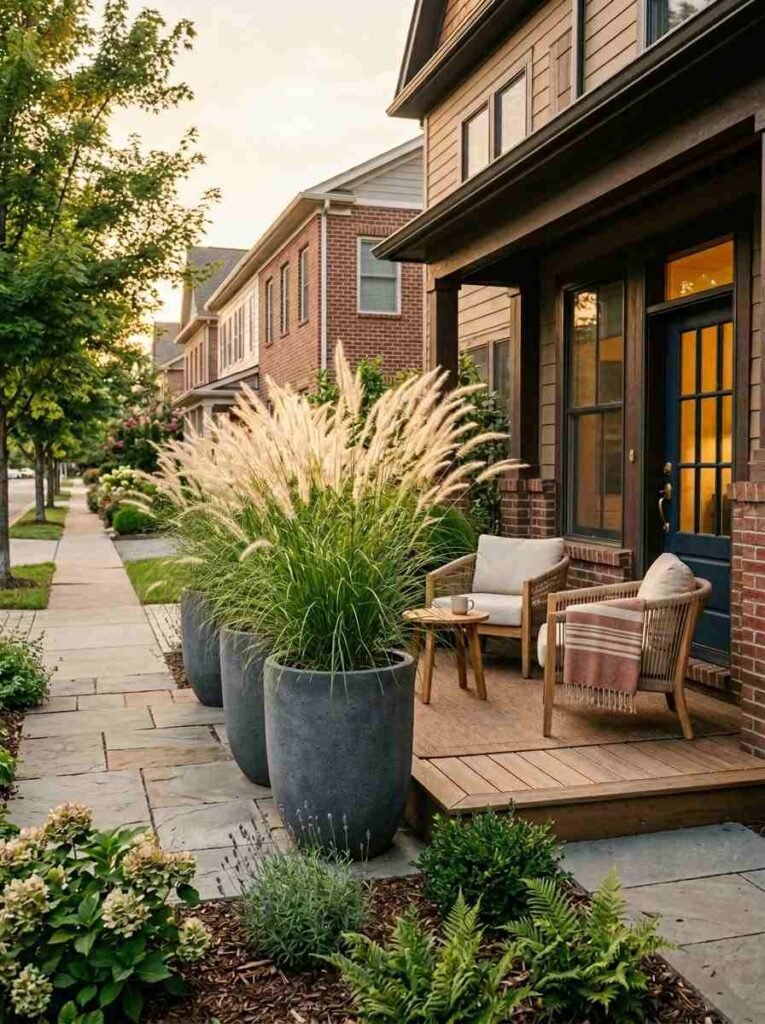
Functional and beautiful. Who said no to that? 🙂
A small cluster of herb pots — rosemary, thyme, mint, basil — near the front door smells incredible when you brush against them and adds a kitchen-garden charm that works with a lot of home styles. Keep them in matching terracotta pots for a cohesive look.
Black Planters Against White Walls
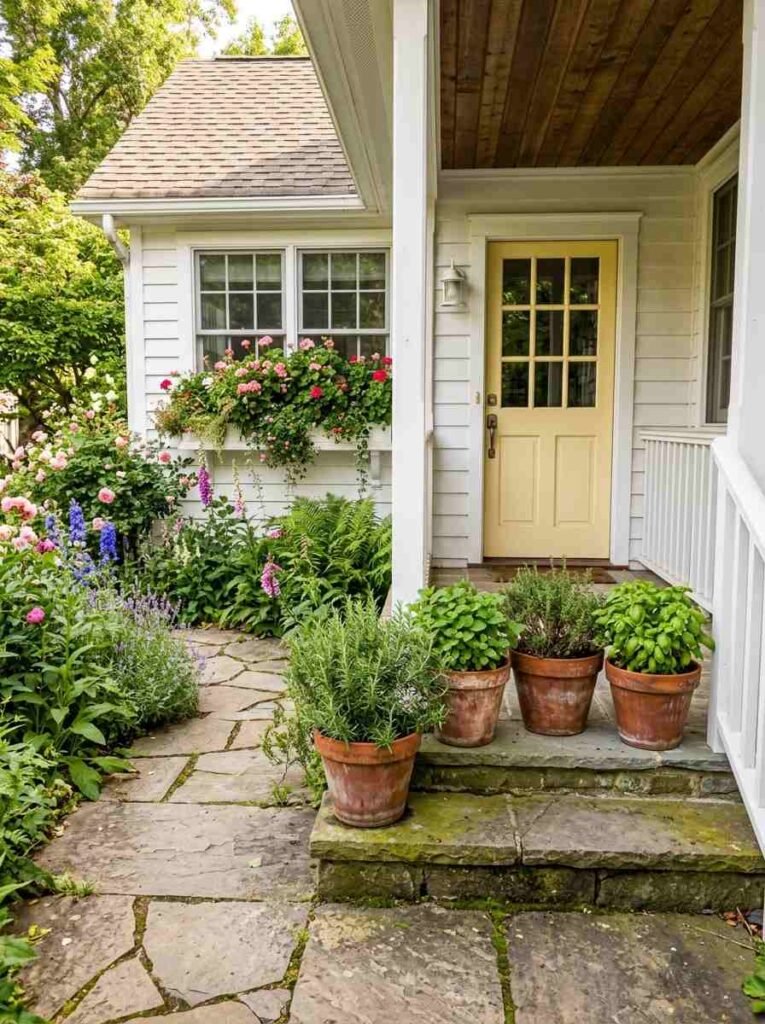
High contrast is having a real moment.
Matte black planters against a white or light-colored wall or fence look genuinely striking. Plant with something green and lush — ferns, hostas, boxwood — and the combo reads clean, modern, and deliberately styled.
The black container becomes the design element; the plant is almost secondary.
Spiral Topiary in a Classic Urn
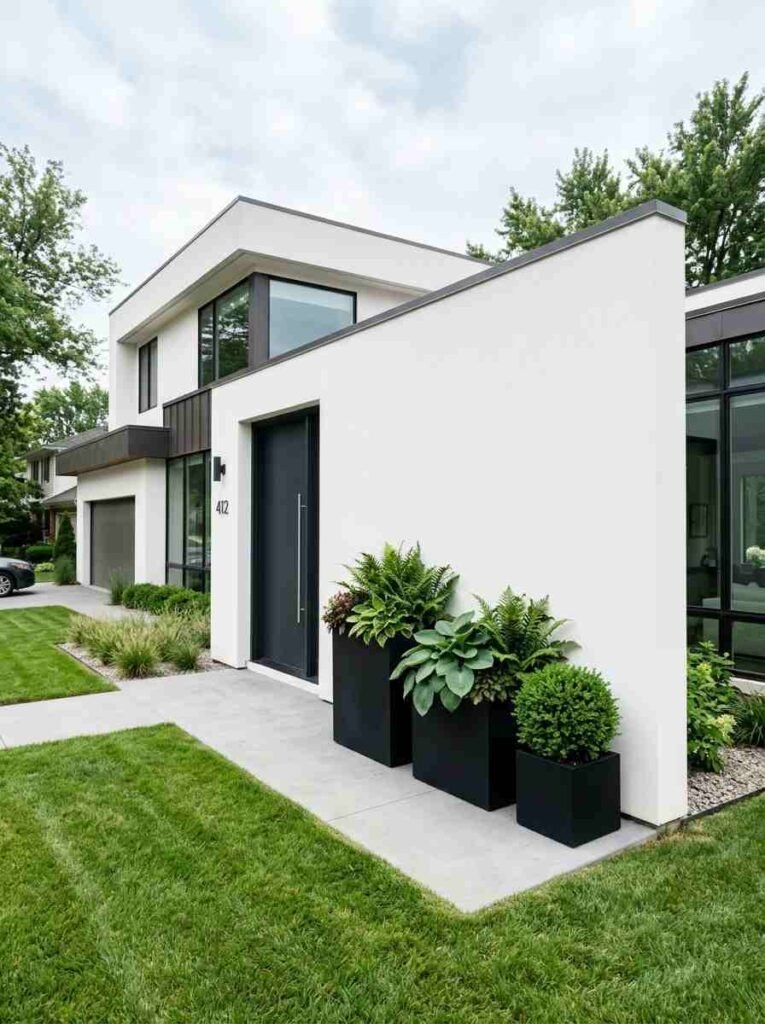
Formal, yes — but in the best way.
A spiral topiary (boxwood or privet) in a classic urn is a timeless front entrance statement. It telegraphs care and attention from the street.
These aren’t difficult to maintain — just a light trim twice a year. Keep the urn color neutral: white, stone, or aged terracotta.
Color-Coordinated Pot + Front Doo
Here’s a trick designers use all the time.
Match your planter color — or the dominant bloom color — to your front door. Cobalt blue pots against a cobalt blue door.
Terracotta pots against a burnt orange or red door. This creates a coordinated look that feels intentional and polished even if you just have two pots and a window box.
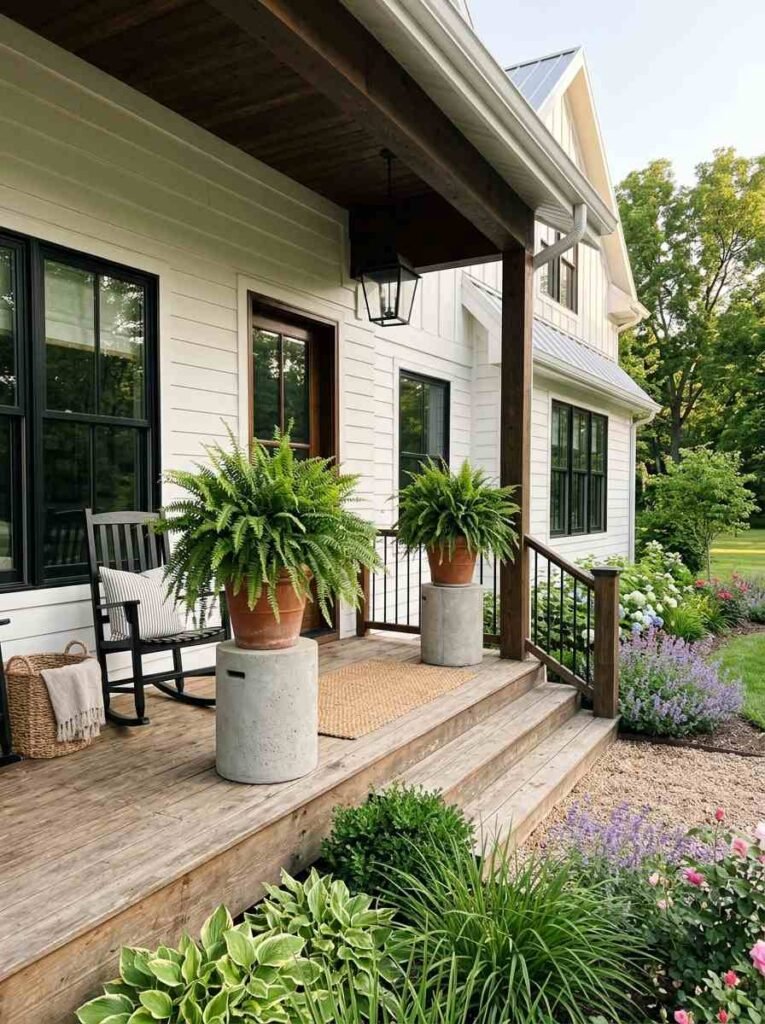
Elevated Planters on Pedestals
Raise your containers up and they immediately look more considered.
Simple plant pedestals — stone, concrete, or painted wood — lift your pots off the ground and add visual height without requiring you to buy bigger containers.
A medium-sized fern on an 18-inch pedestal reads just as dramatically as a massive floor pot, at a fraction of the cost.
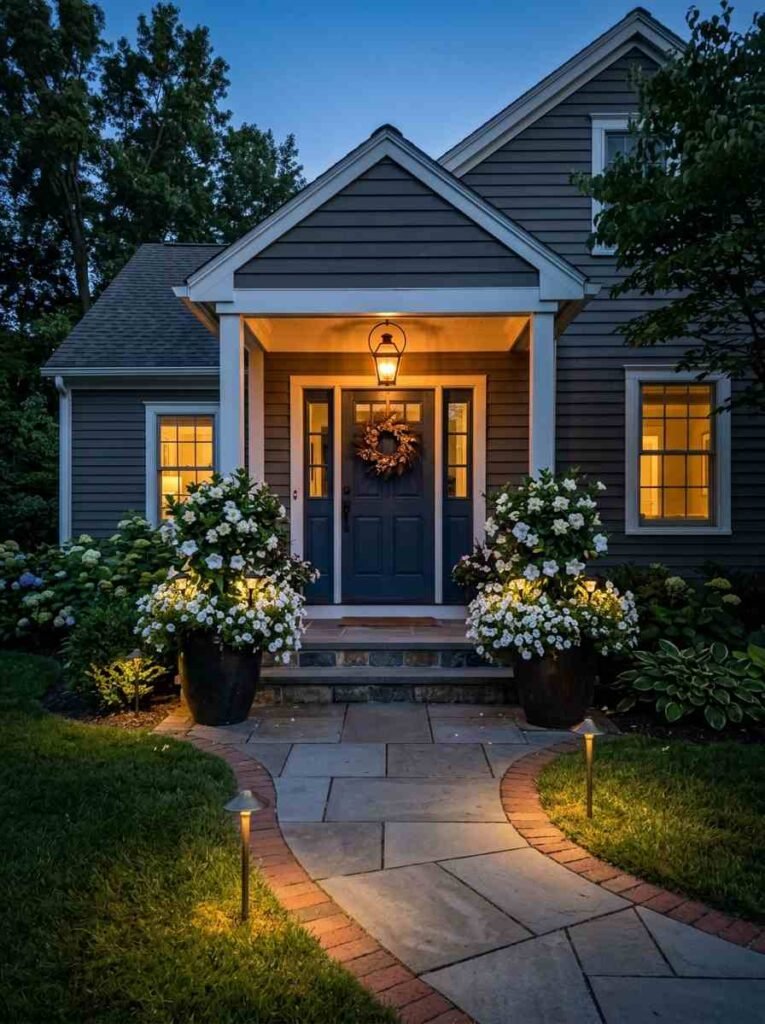
Night-Bloomers and White Flowers for Evening Curb Appeal
Most people design their front yard for daytime. A small tweak makes it work at night, too.
White flowers — white petunias, white impatiens, gardenias, moonflowers — glow in low evening light and under porch lamps. Pair them with solar stake lights in your pots and your front entrance looks as good at 9 PM as it does at noon. Good for real estate photos, too. Just saying.
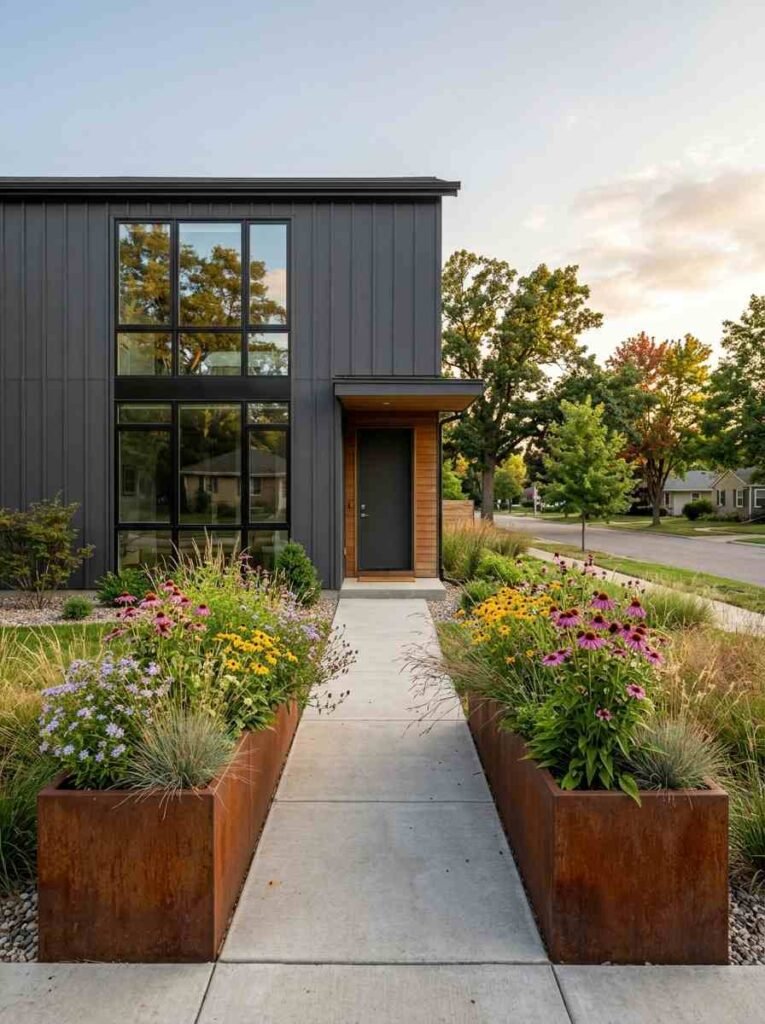
Native Plants in Modern Containers
Native plants are the under-appreciated heroes of low-maintenance landscaping.
Native grasses, wildflowers, and perennials thrive in your climate with minimal watering and zero fussing. Put them in a modern concrete or corten steel container and they look intentional and contemporary rather than wild. It’s a smart pairing: plants that want to be there + containers that look like you planned it.
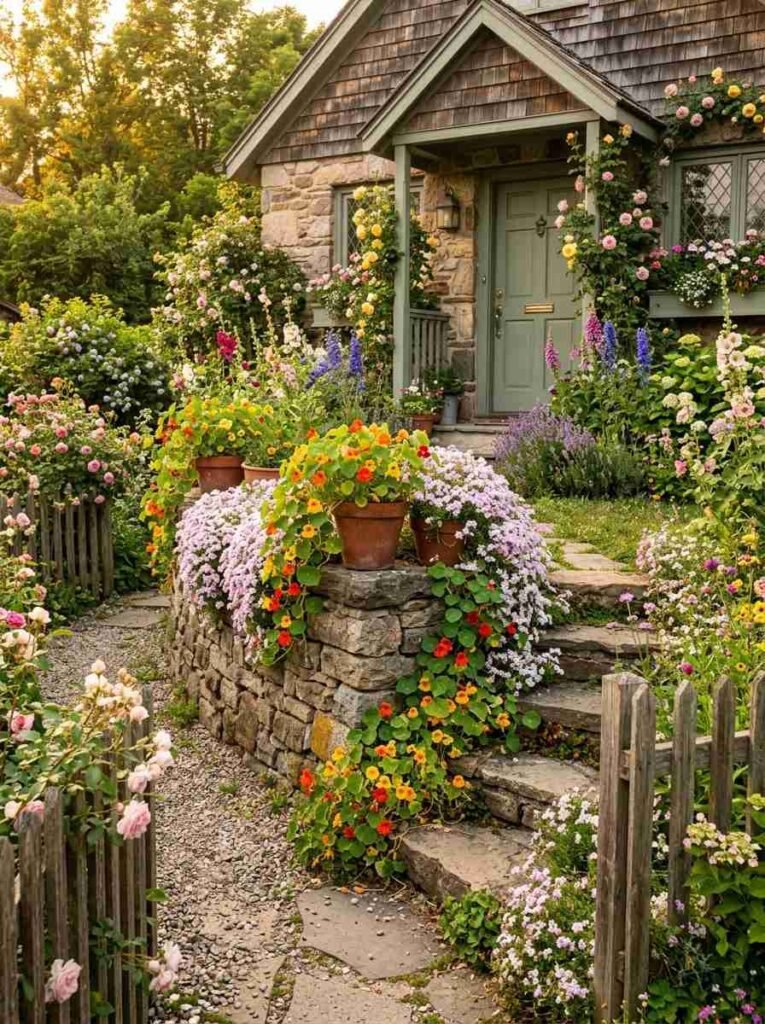
Trailing Plants Over Walls and Steps
Let your plants spill.
Trailing varieties — creeping phlox, trailing lobelia, or nasturtiums — planted in pots on top of low walls or steps and left to tumble over the edges create a romantic, organic quality. It softens hard surfaces and makes even new construction feel established and lived-in.
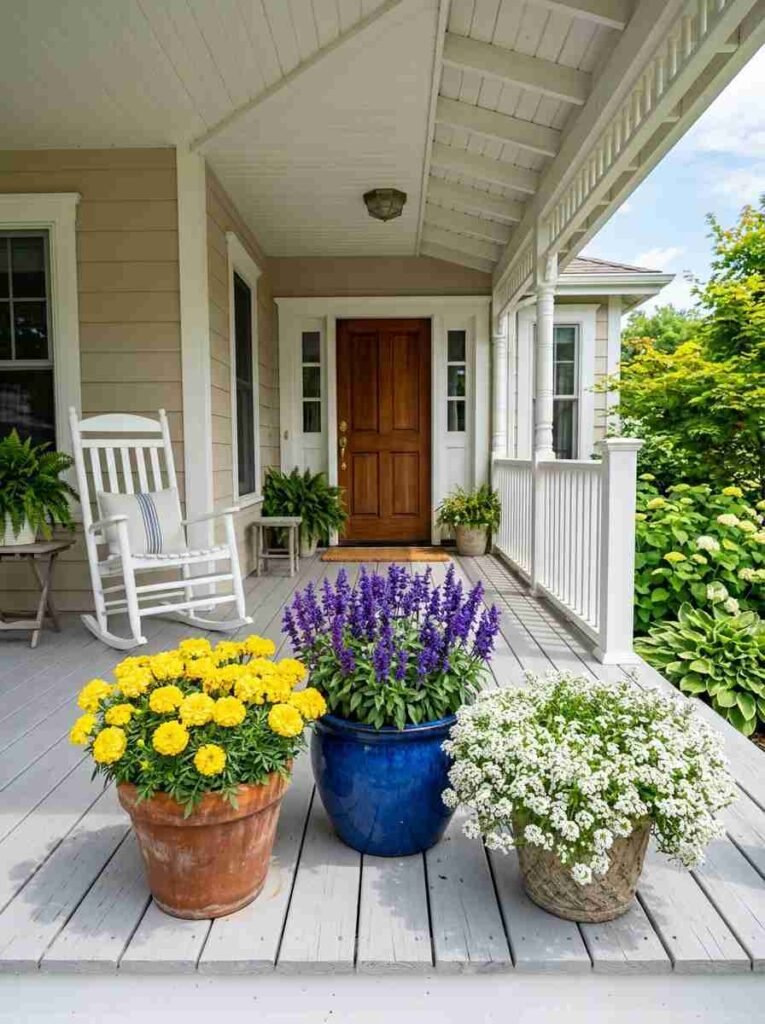
Color-Blocked Plant Groups
Arrange pots in clear color blocks rather than mixing everything together.
A pot of all-yellow marigolds next to a pot of all-purple salvia next to a pot of all-white alyssum reads as a deliberate color-blocked composition. It looks more intentional than mixing colors within each pot. Think of it like color-blocking an outfit — each zone gets one strong color.
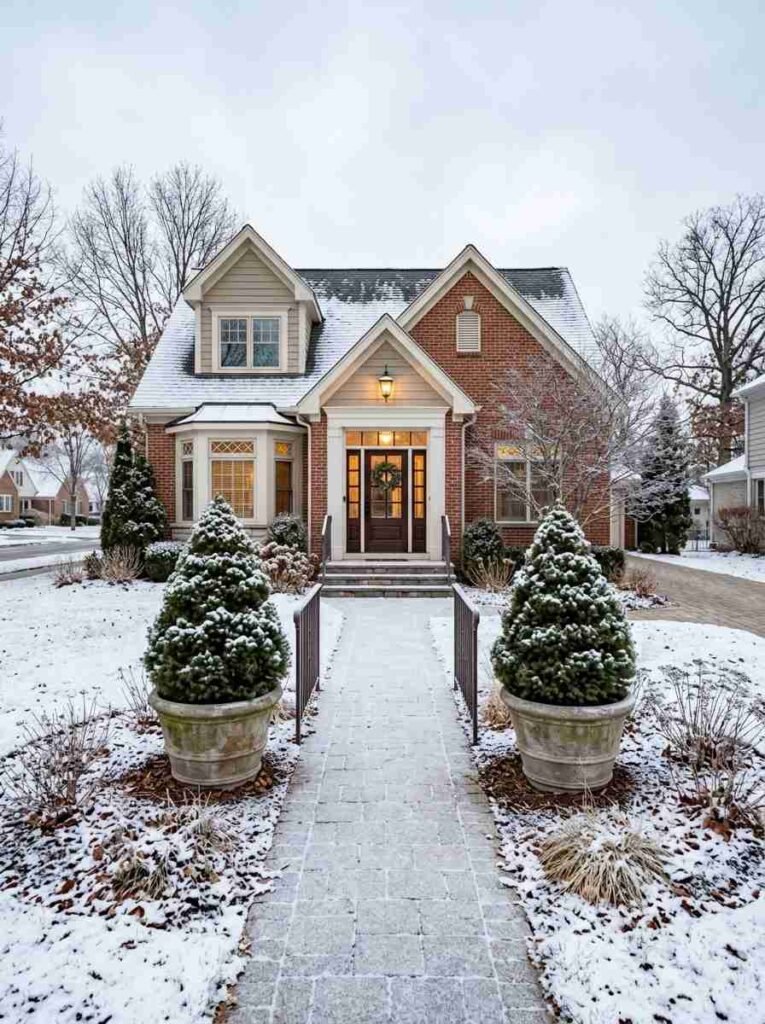
Dwarf Conifers for Year-Round Structure
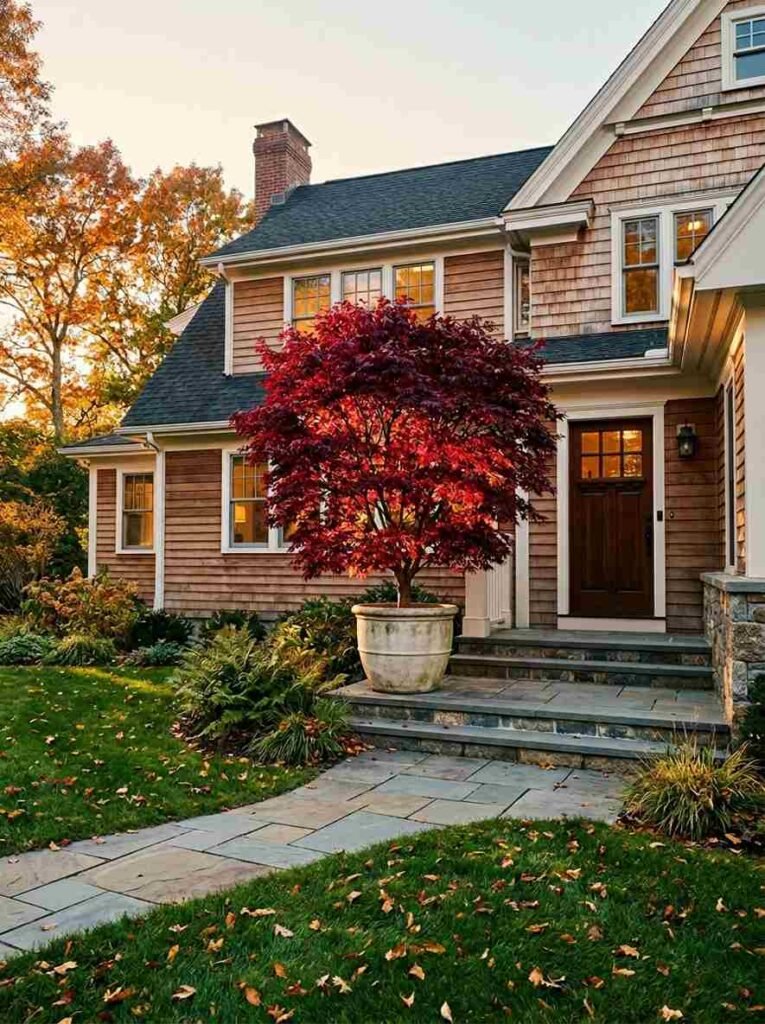
Annuals are fun but they’re high-maintenance. Dwarf conifers are the opposite.
Dwarf Alberta Spruce, dwarf Blue Spruce, or Hinoki Cypress in containers give you structure, year-round greenery, and slow growth that won’t outgrow its pot for years. They look great all twelve months and need almost no attention beyond occasional watering.
The Single Specimen Statement
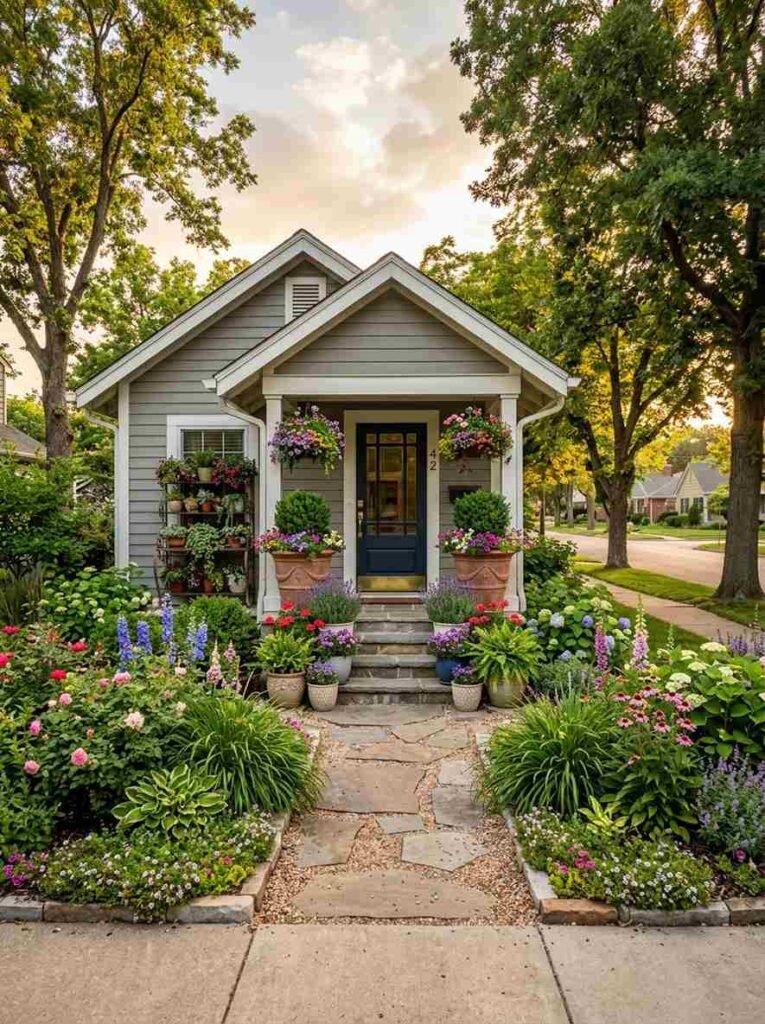
Sometimes the best idea is also the simplest one.
One perfect plant in one perfect pot, placed exactly where it has maximum impact — beside a gate, at the top of steps, flanking a garage — does more than a cluttered collection of mismatched containers ever could. A beautiful Japanese Maple in a round stone pot. A standard rose in a classic urn. One well-chosen specimen says you know what you’re doing.
Wrapping It Up
You don’t need a big yard to make a big impression at your front entrance. You need intention. The right pot in the right place with the right plant does more than a hundred mismatched ones scattered around hoping for the best.
Start with one or two ideas from this list — maybe the symmetrical pair flanking your door, or a cluster of three pots at varying heights — and build from there. Your front yard will thank you. So will everyone who drives by :/.
The best front entrance container garden is the one you’ll actually maintain, so pick plants and pot styles that fit your real life, your real climate, and the amount of time you genuinely want to spend on this.
Now go find some good pots.
