Your front yard is basically your home’s handshake. And if yours is looking a little… limp? Pots and planters are the fastest fix you’ll ever make.
I’ve spent way too many weekends obsessing over curb appeal, and I can tell you from personal experience: the right planter arrangement transforms even the tiniest, most awkward front yard into something that stops people mid-walk. You don’t need a landscaper. You don’t need a big budget. You just need the right ideas.
Here are 25 of my favorites.
Layered Height Arrangements
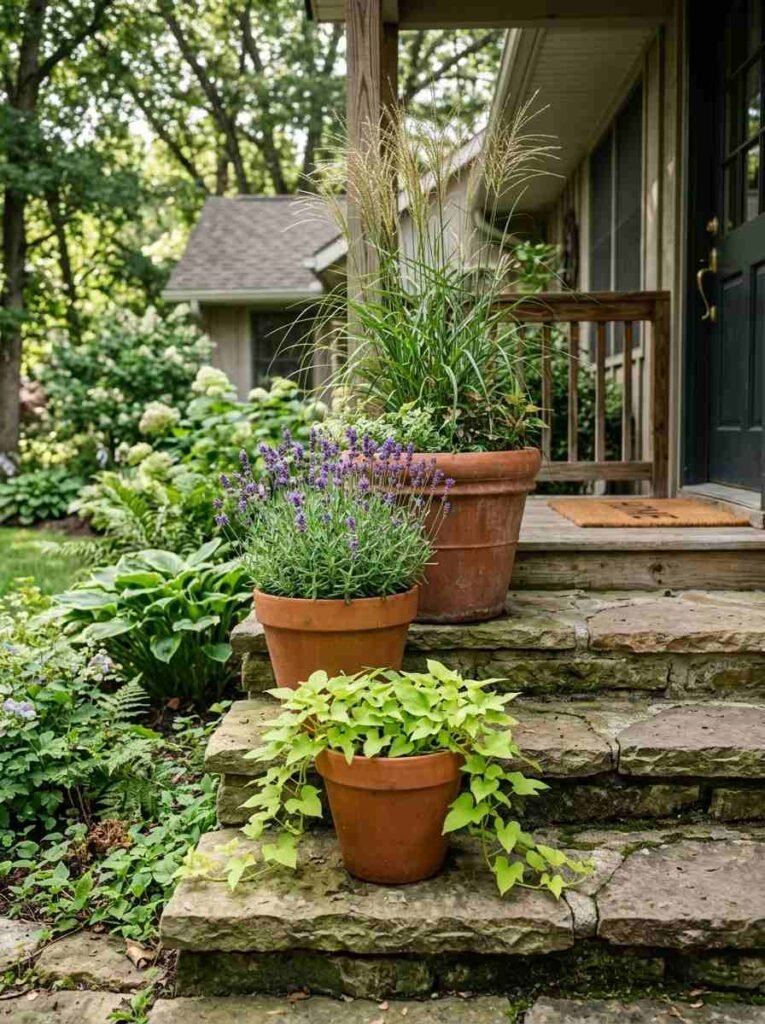
Stack your pots like a pro
Height variation is the single biggest mistake people skip. One flat row of same-size pots looks like a parking lot. Instead, use 3 containers in graduating sizes — tall in the back, medium in the middle, low in the front.
A terracotta pot with a trailing plant like sweet potato vine in the front, a mid-height lavender in the middle, and a tall ornamental grass behind it? That’s a moment. Cost me about $40 total. Worth every penny.
Symmetrical Entryway Planters
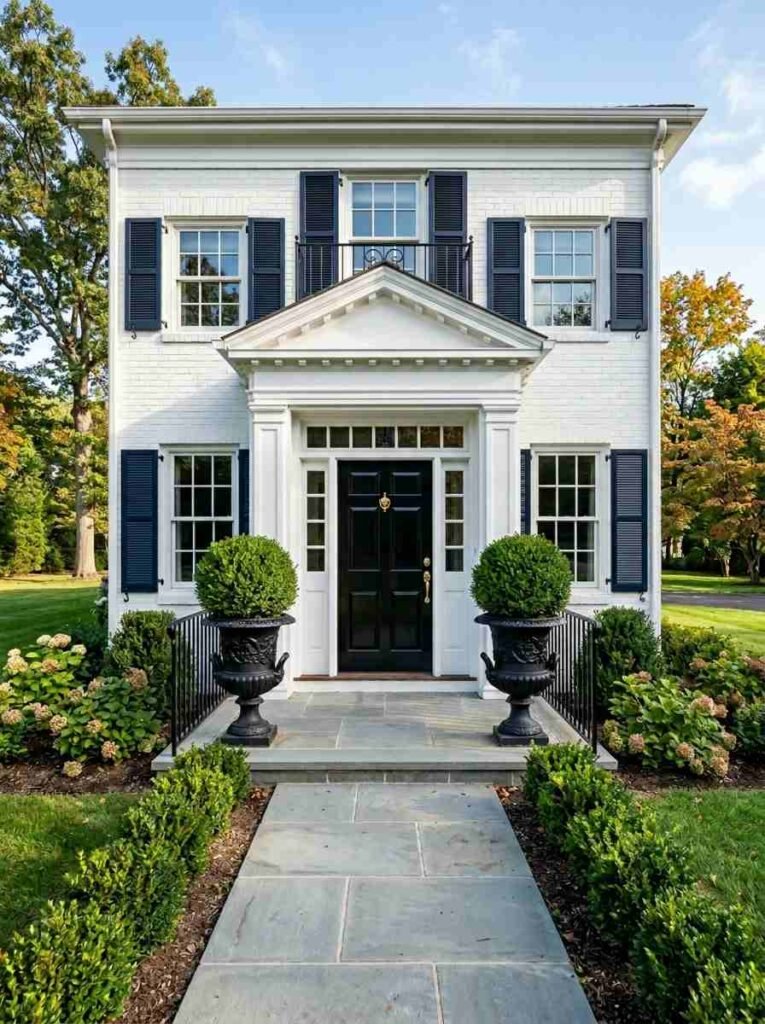
The classic front door pair
Two matching planters flanking your front door work on every architectural style. Colonial, craftsman, modern farmhouse — doesn’t matter. Symmetry reads as intentional.
Go with identical containers (color, material, size) and mirror your planting. Boxwood balls are the traditional choice, but I love columnar junipers for something with a little more drama. If you’re in a cold climate, choose evergreens that won’t abandon you in October.
| Style | Container | Plant |
|---|---|---|
| Traditional | Black iron urns | Boxwood spheres |
| Modern | Concrete cylinders | Ornamental grass |
| Cottage | Terracotta | Lavender + trailing rosemary |
| Farmhouse | Galvanized metal | Dusty miller + white petunias |
Window Box Additions
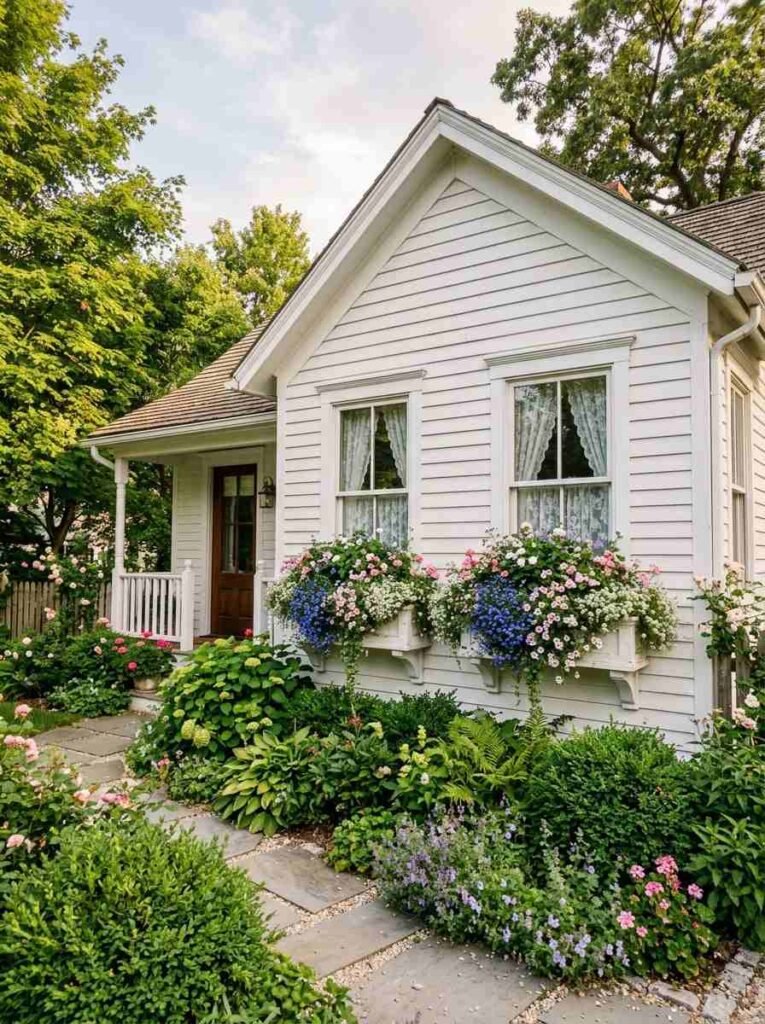
Frame your windows with flowers
Window boxes add dimension to flat facades without taking up an inch of ground space. That’s a big deal when your front yard is the size of a postage stamp.
Pick a box that’s at least 8 inches deep — anything shallower and you’ll be watering twice a day. I learned that the hard way with a sad little 4-inch box and some very dead geraniums. FYI, trailing plants like lobelia and bacopa spill beautifully over the edges and make the whole thing look lush fast.
Statement Urn at the Walkway
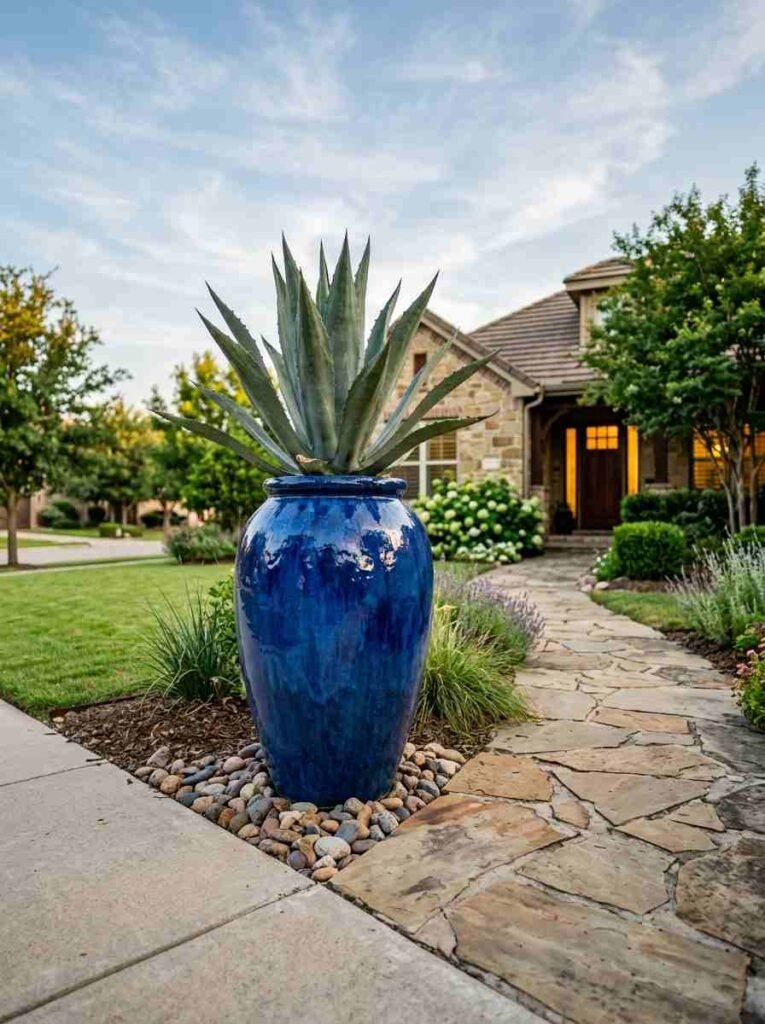
One bold pot beats ten mediocre ones
If you want impact without clutter, place a single oversized urn right where the path meets the street. Go big. Like, uncomfortably big. A 24-inch glazed ceramic urn planted with a tall, spiky agave or a dramatic bird of paradise reads from the street immediately.
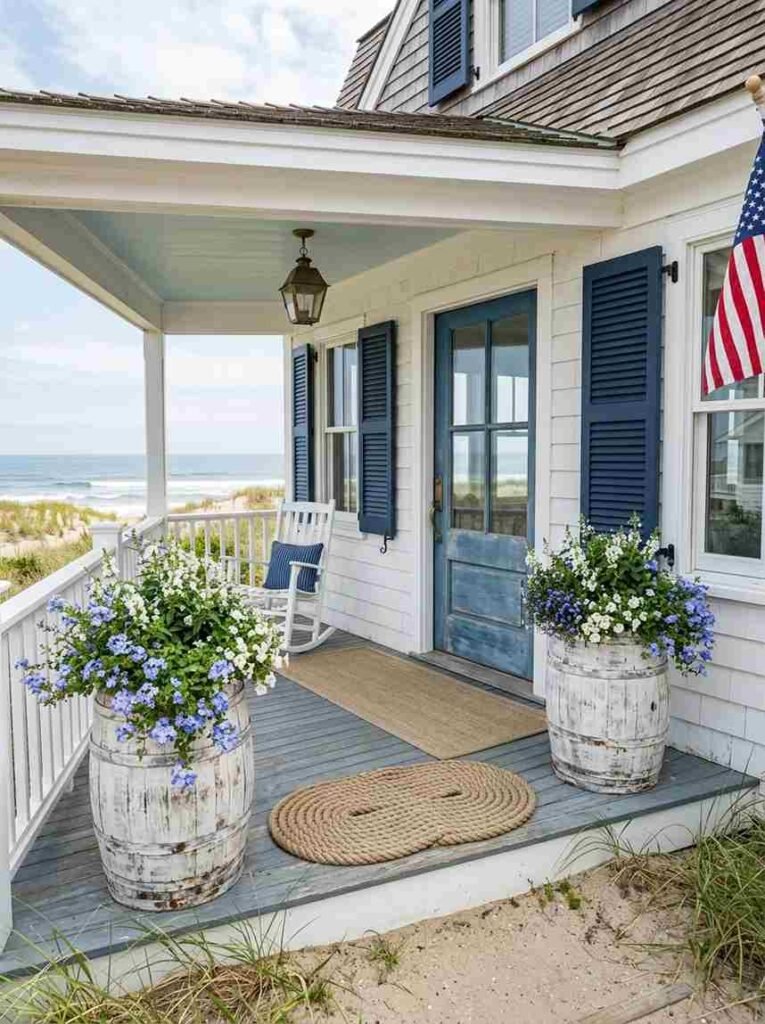
Bold materials work best here — glazed ceramic, stone, cast iron. Cheap plastic looks exactly like what it is.
Grouped Odd Numbers
Three is better than two
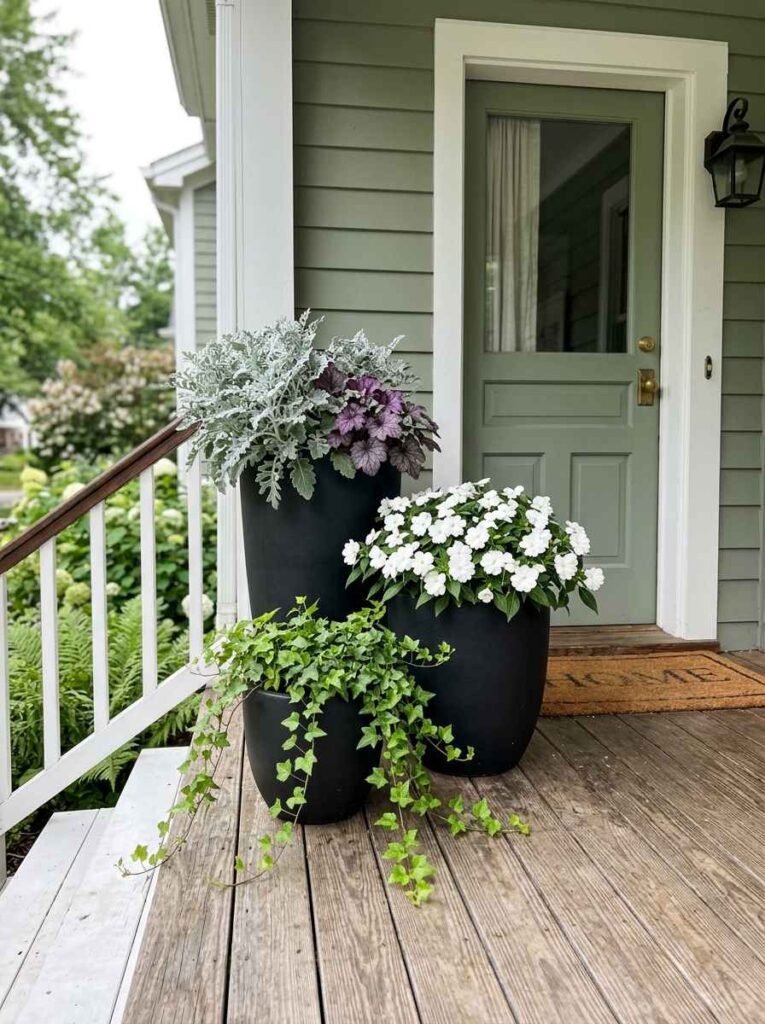
Interior designers always say odd numbers look more natural than even, and I think they’re right. Three pots grouped near your front steps — varying sizes, same color family — look curated without being fussy.
Try a cluster of matte black pots planted with white impatiens, dusty miller, and a trailing green ivy. Monochromatic planting in varied containers always punches above its weight.
Painted Terracotta Pots
DIY that actually looks good
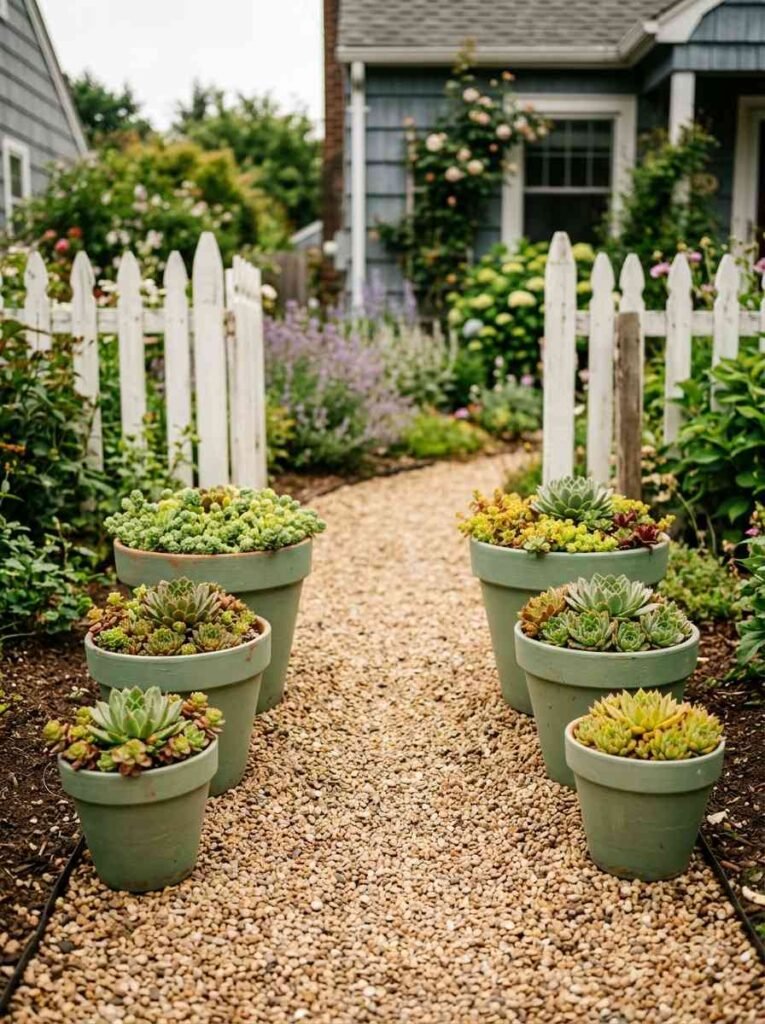
Plain terracotta is fine. Painted terracotta is a personality. A quick coat of exterior paint transforms a $3 nursery pot into something worth pinning.
I painted six terracotta pots in earthy sage green last spring, planted them with drought-tolerant sedums, and lined them up along my front path. Total cost: $18. My neighbor asked if I hired someone.
Pick colors that work with your home’s exterior — muted tones age better than bright ones.
Concrete Planters for Modern Homes
Heavy, handsome, zero fuss
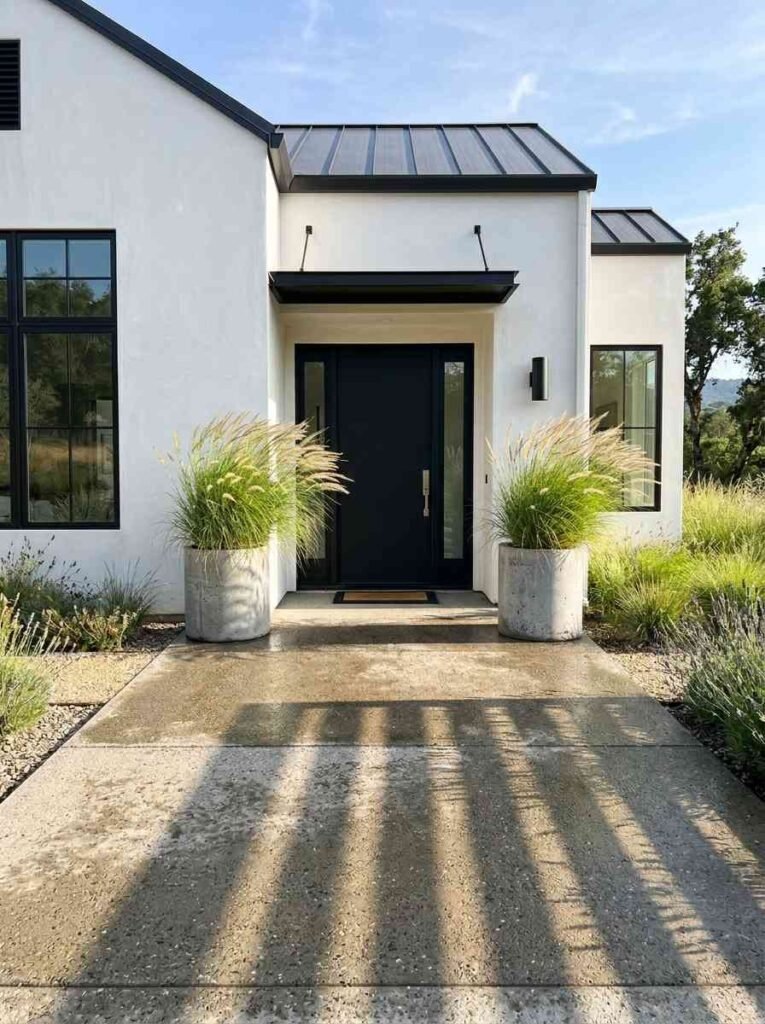
Concrete planters suit modern and minimalist homes perfectly. They’re heavy (thieves leave them alone, which is a real concern with nice planters), they age beautifully, and they require almost zero maintenance.
Plant them with structural, low-water plants: agave, pennisetum grass, or a compact yucca. The architectural quality of the plant matches the weight of the container. It’s a whole vibe.
Hanging Basket Clusters
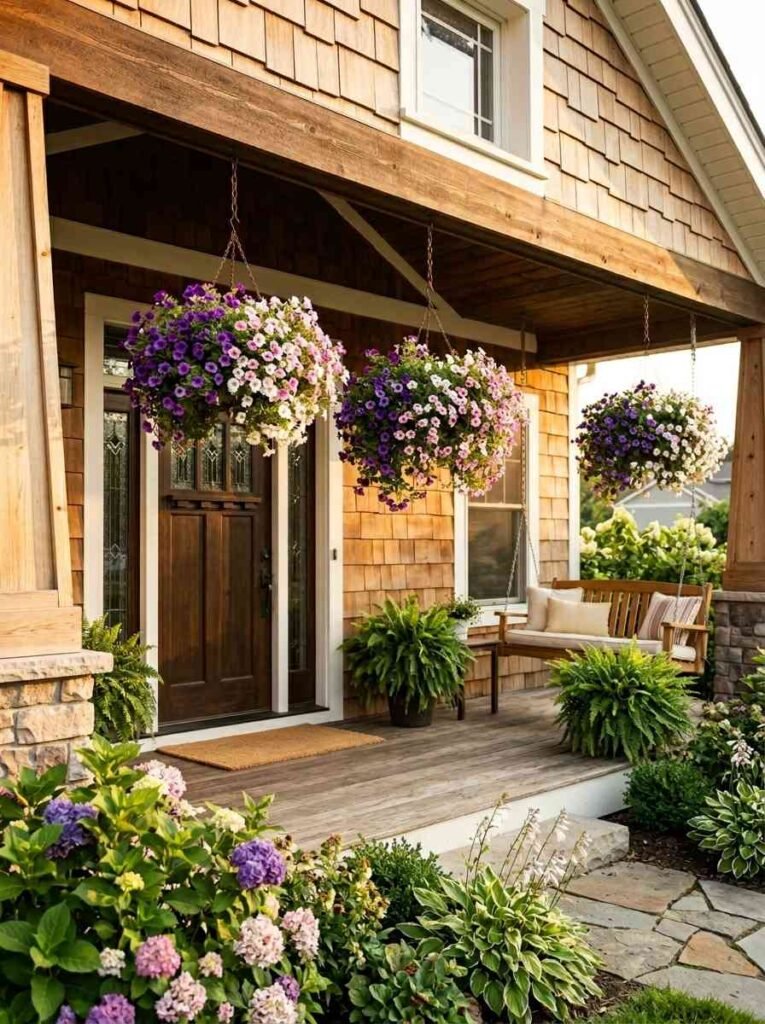
Use vertical space you’re ignoring
Most small front yards have vertical real estate going completely to waste. Porch overhangs, brackets on the facade, fence posts — all of these can hold hanging baskets.
Cluster 3 hanging baskets at slightly different heights for a lush, cascading effect. Calibrachoa and trailing verbena are my go-to choices — they bloom all season and fill out fast.
Repeating Colors Along the Path
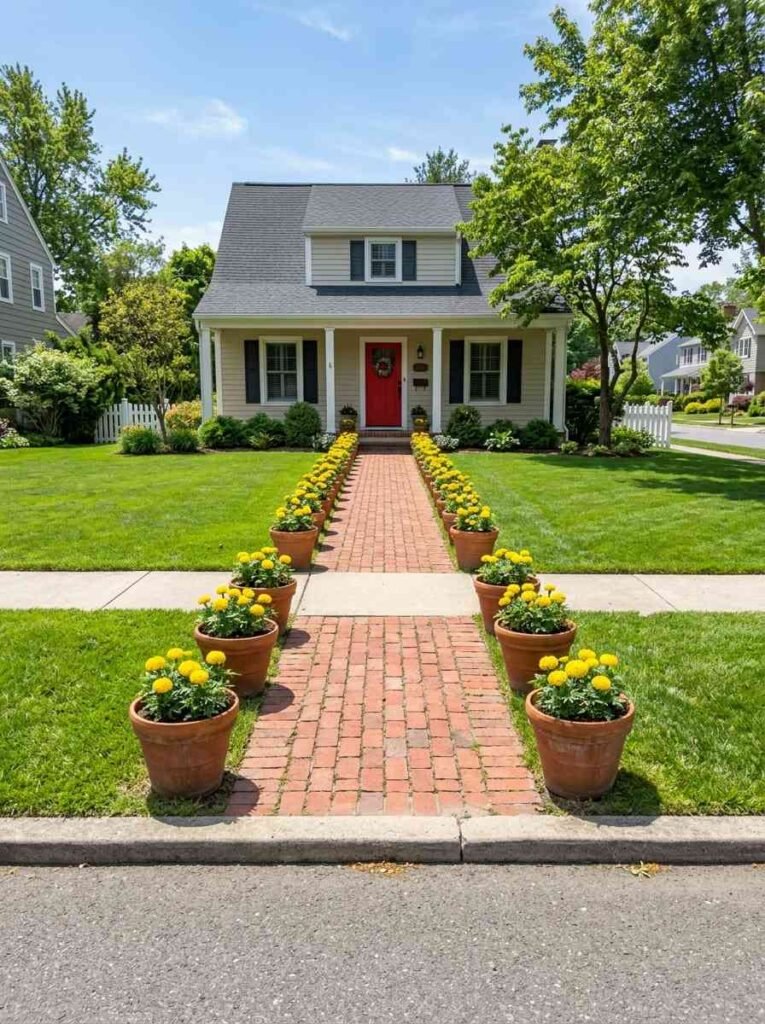
Visual rhythm pulls people in
Pick one accent color and repeat it in pots all the way down your front path. Yellow marigolds in terracotta every 3 feet, for example. It creates rhythm and draws the eye toward your front door, which is exactly what you want.
Keep the containers consistent and let the plants be the star. This works in even the narrowest front yards.
Self-Watering Planters
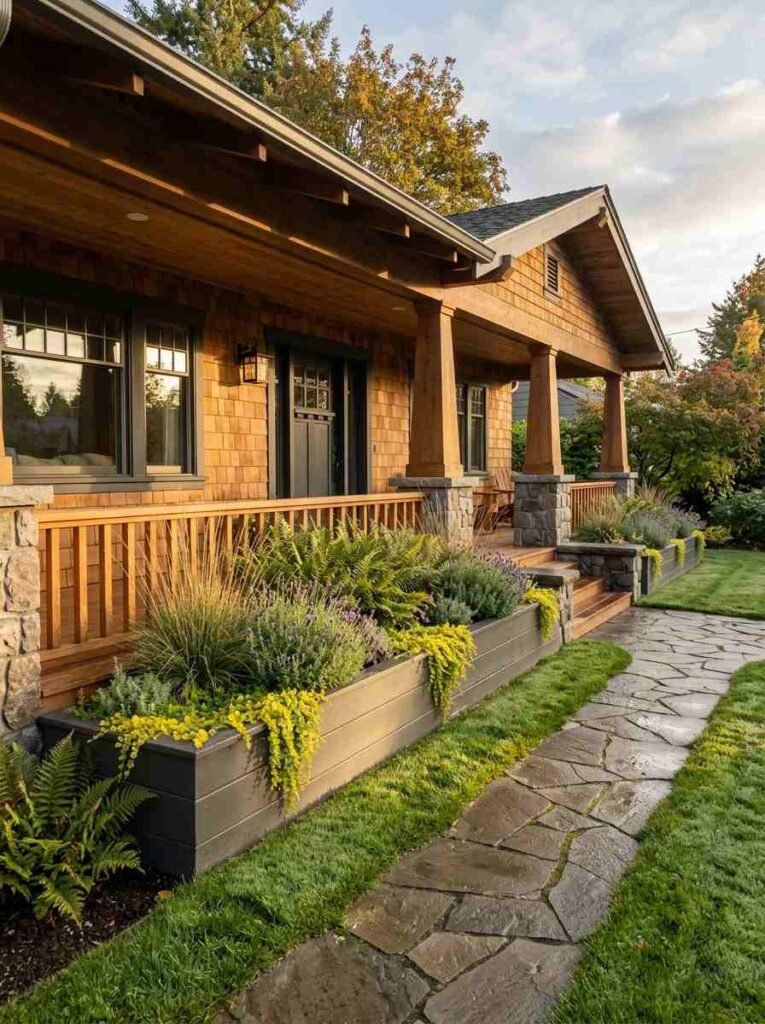
For people who forget to water (me)
Self-watering planters have a reservoir at the bottom that wicks moisture up to the roots. They’re genuinely life-changing if you travel or just have a lot going on. Plants stay healthier, you water less often, and the whole thing looks better longer.
They cost a bit more upfront, but you’ll stop replacing dead plants every few weeks. Worth it.
Raised Planter Boxes
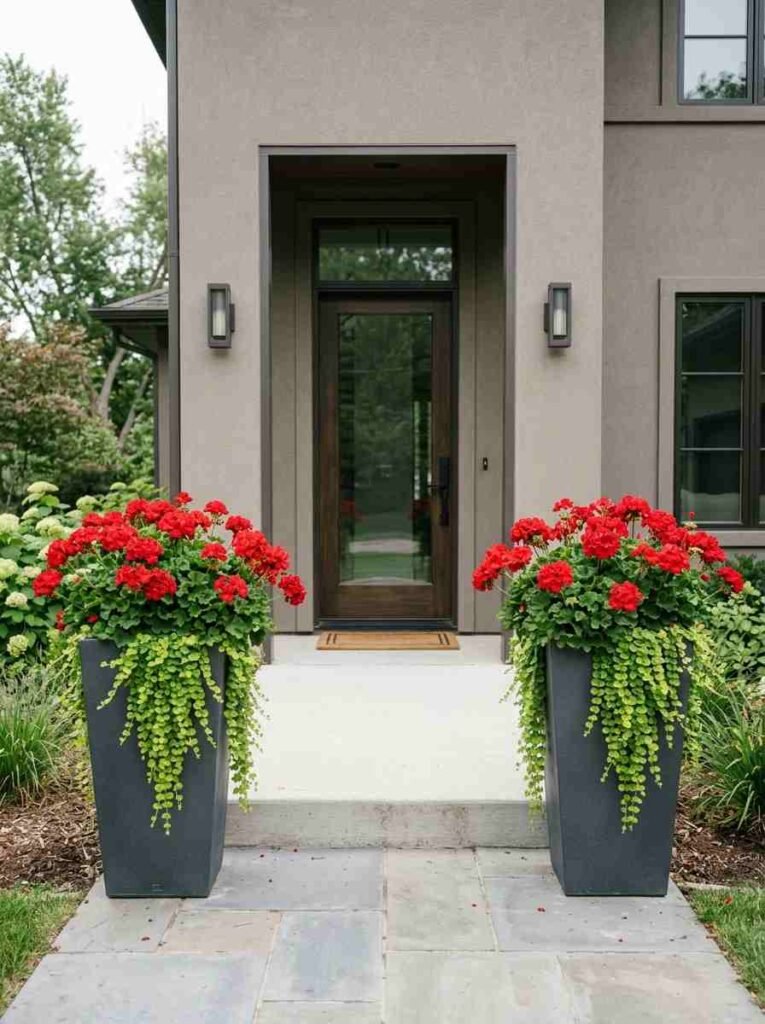
Structure meets greenery
A low raised planter box along the front of your home — say, 12 inches tall — adds structure that typical pots can’t. It reads as a landscaping feature, not just decoration.
Fill it with a mix of textures: ornamental grasses, dwarf evergreen shrubs, seasonal annuals in the gaps. The permanent plants give it backbone and the annuals keep it fresh season to season.
Bright Annual Rotations
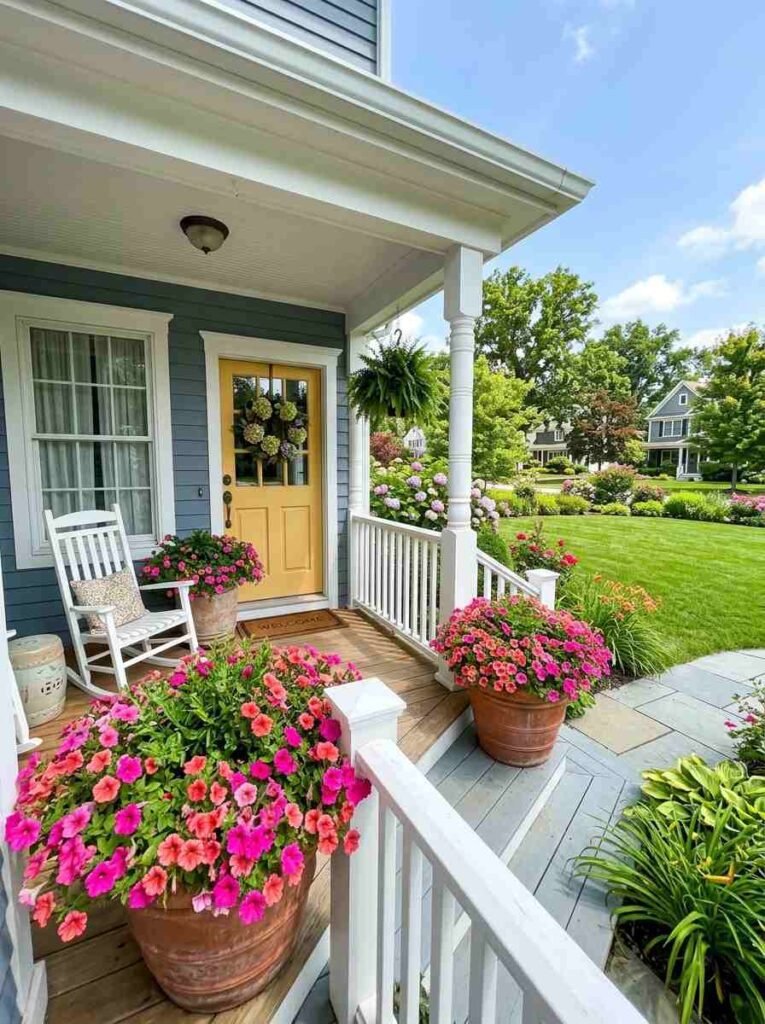
Swap the color with the seasons
Here’s the thing about planters most people miss: you can change them. Plant petunias in summer, ornamental kale in fall, pansies in spring. Same containers, totally different look four times a year for the cost of a few flats of annuals.
This is especially useful for Pinterest-worthy curb appeal because your front yard always looks current and cared for.
Tiered Plant Stands
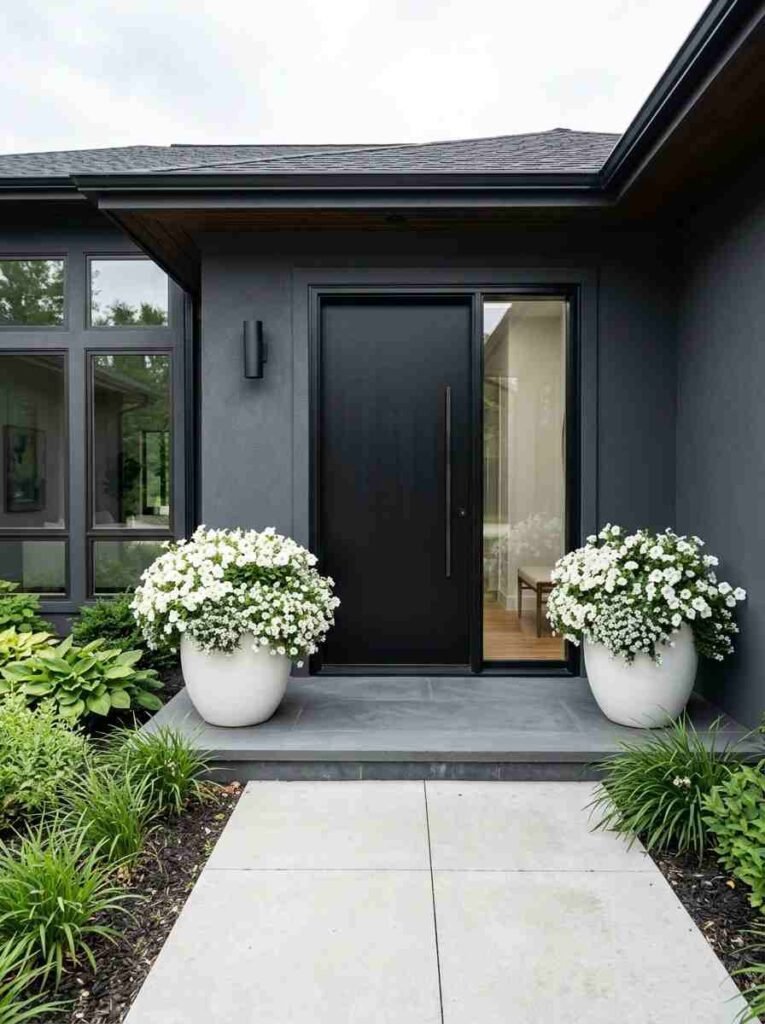
Maximize a small porch or step
A tiered metal or wood plant stand on your front porch or landing lets you display 6-8 pots in the footprint of 2. Every level gets sun, everything stays visible, and it looks intentional rather than just crowded.
Choose a stand that matches your home’s metal tones — bronze, black, or brushed nickel. Matchy-matchy between your hardware and your plant stand is a small detail that reads as very put-together.
Herb Planters by the Door
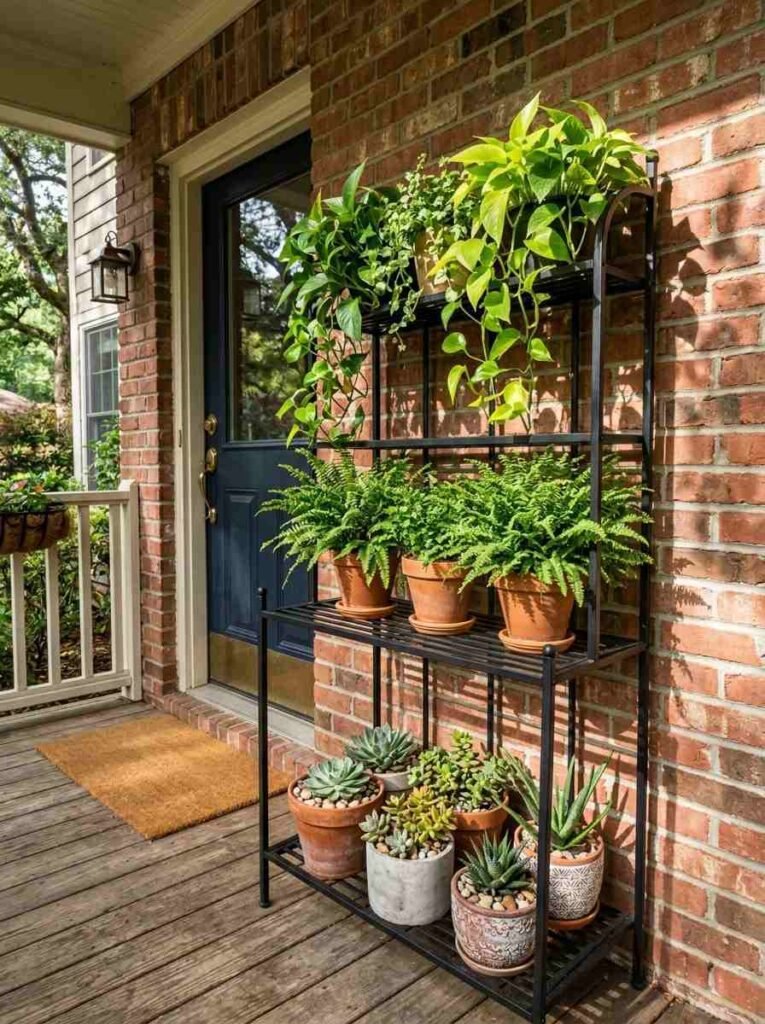
Pretty and actually useful
Herbs planted near the front door look great and smell incredible. Rosemary, thyme, and basil work well in pots, handle being brushed against, and release fragrance every time someone walks past.
Terracotta or stone containers suit herbs perfectly. They drain well, dry out between waterings (which most herbs prefer), and look right at home with Mediterranean plants.
Monochromatic All-White Planters
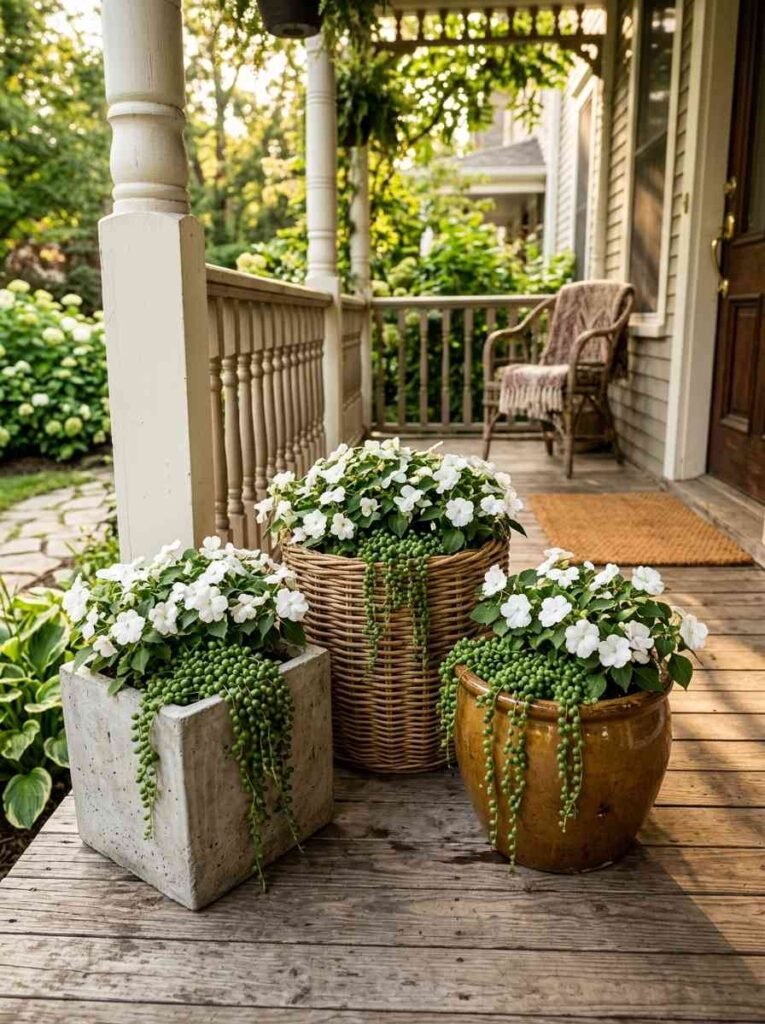
Clean, modern, always works
All-white everything — white containers, white flowers — looks expensive and calm. White petunias, white calibrachoa, white impatiens in matte white pots against a dark front door or siding? Striking. 🙂
This works especially well on homes with dark or bold exterior colors. The contrast does the heavy lifting.
Mixed Material Planters
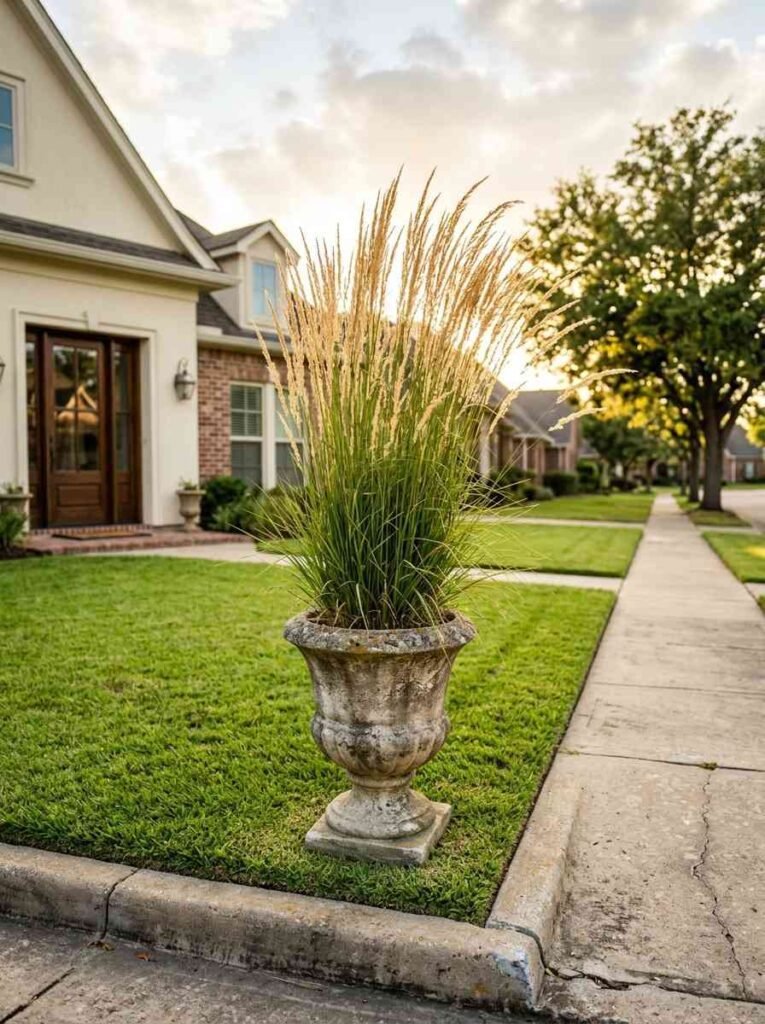
Combine textures for visual interest
You don’t have to stay in one material family. A concrete pot next to a woven rattan planter next to a glazed ceramic actually works, as long as you tie them together with consistent plant color or foliage type.
Mix materials, match plants. Or mix plants, match materials. Pick one through-line and the variety takes care of itself.
Corner Anchor Planters
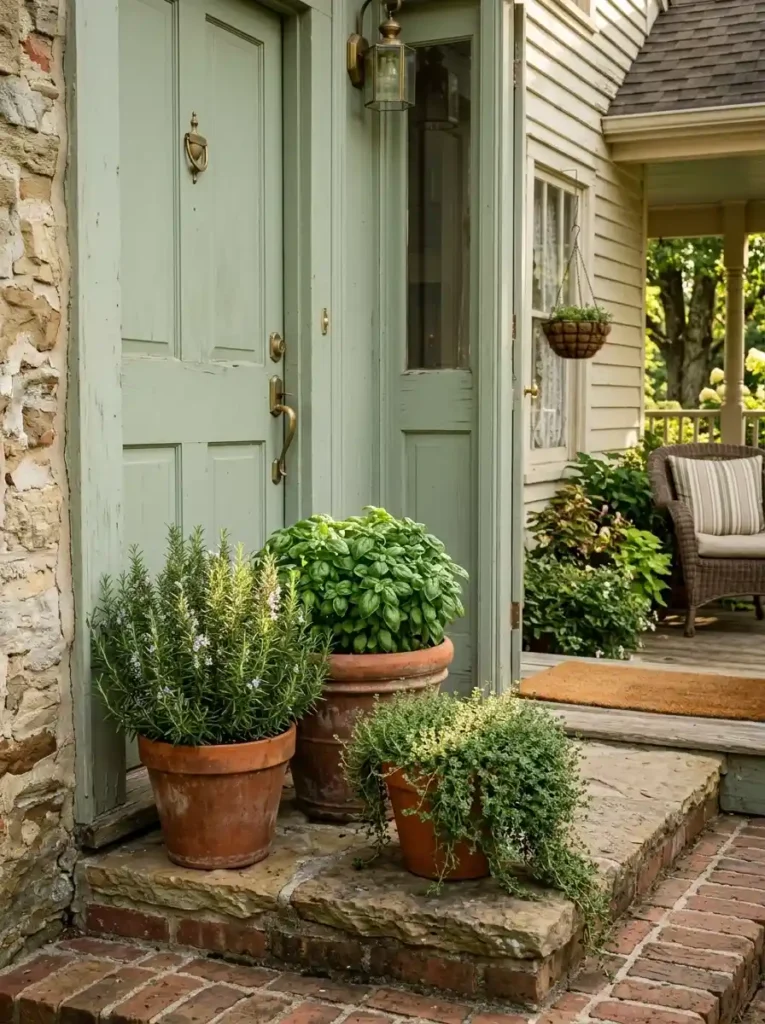
Fill the awkward spots
Does your front yard have an awkward corner? A dead zone where nothing grows? Drop a large planter there. A single oversized container planted boldly anchors a corner and makes it look like that was always the plan.
Ornamental grasses, large-leafed tropicals (in warm climates), or a columnar shrub all work well as corner anchors.
Stacked Stone Planters
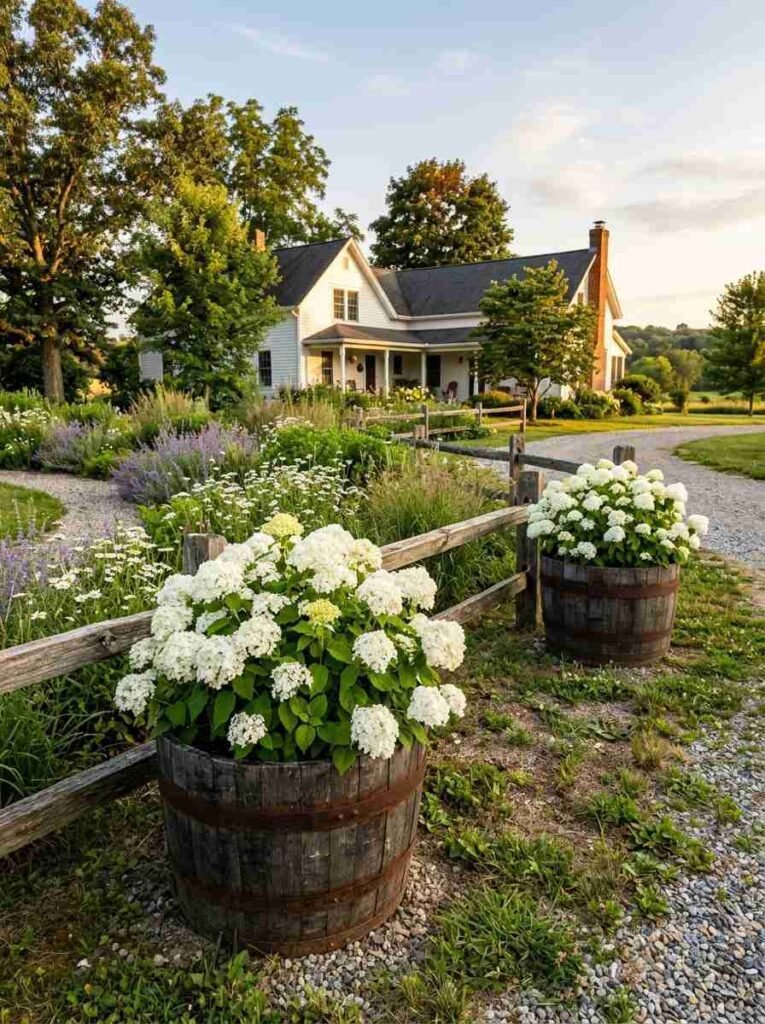
Permanent and beautiful
If you want something that looks like it’s been there forever, stacked stone planters are the move. They’re a project — not a weekend afternoon, but a solid day — and the result looks like landscape architecture.
Plant with creeping plants that spill over the edges: creeping phlox, trailing lantana, or sedums. Over time the plants soften the stone and the whole thing looks ancient and intentional.
Repurposed Container Ideas
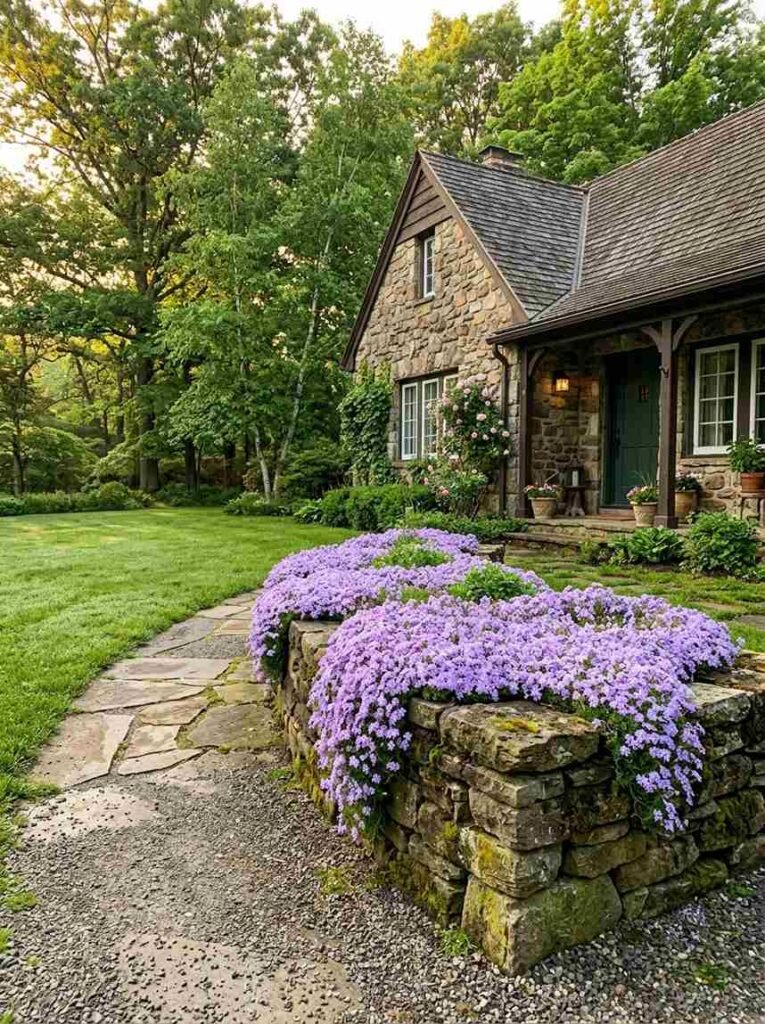
Unexpected vessels that actually work
Old wooden crates, wine barrels, vintage colanders, even boots (yes, really) can become planters. The key is drainage and sealing wood so it doesn’t rot.
Wine barrel halves are my personal favorite repurposed container — they’re large, they drain well, they look great, and they’re cheap at garden centers. Plant with a dwarf hydrangea or a compact rose and you’ve got a focal point that costs $30.
Night-Blooming or Fragrant Planters
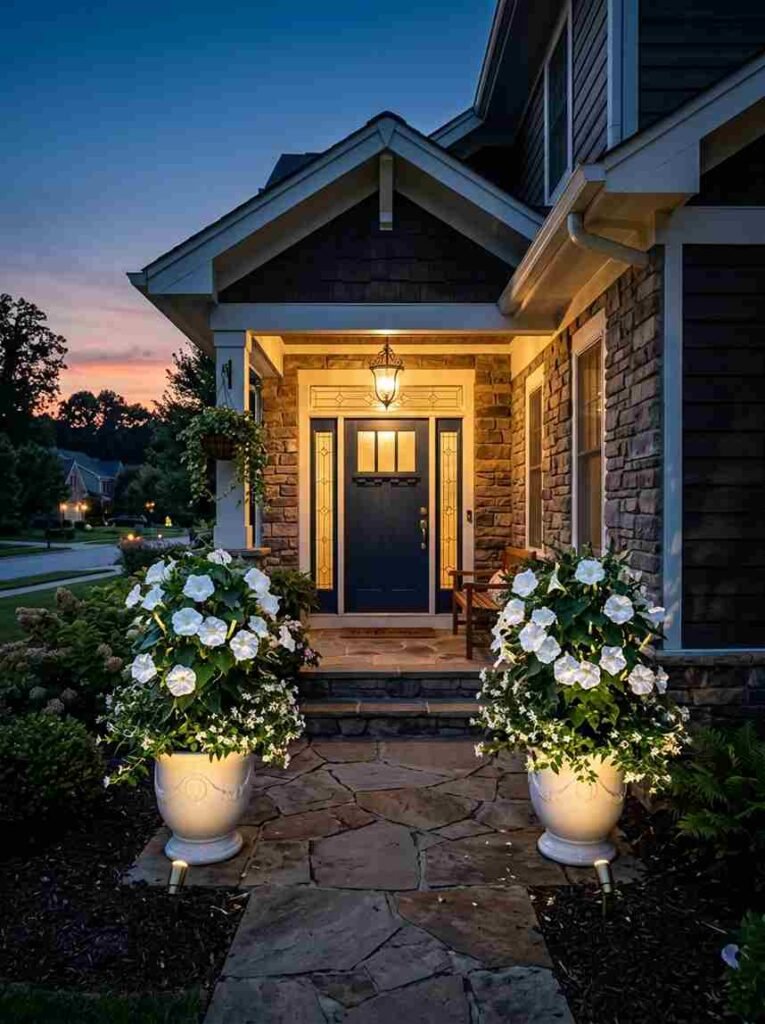
Curb appeal after dark
Most people think about how their front yard looks during the day. Smart move: think about evenings too. Night-blooming jasmine, moonflowers, and white impatiens show up beautifully after dark.
Add a small solar spotlight aimed at your statement planter and your curb appeal works around the clock. That’s IMO one of the most underused tricks in front yard design.
Drought-Tolerant Planter Combos
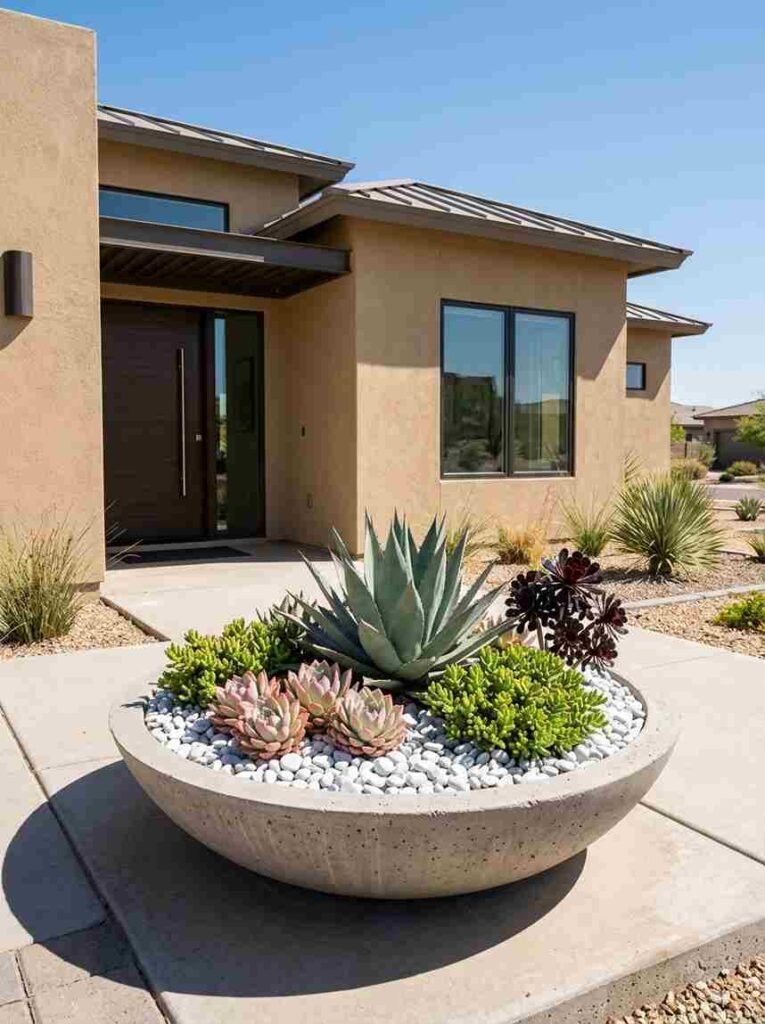
Low water, high style
Succulents and drought-tolerant plants in containers are having a very long moment, and for good reason. They look sculptural, they survive neglect, and they work in every climate zone if you bring them in before frost.
Combine agave, echeveria, and sedum in a wide, shallow dish planter. Top-dress with gravel. It looks like something from a high-end nursery and needs water maybe once a week.
Seasonal Doorstep Vignettes
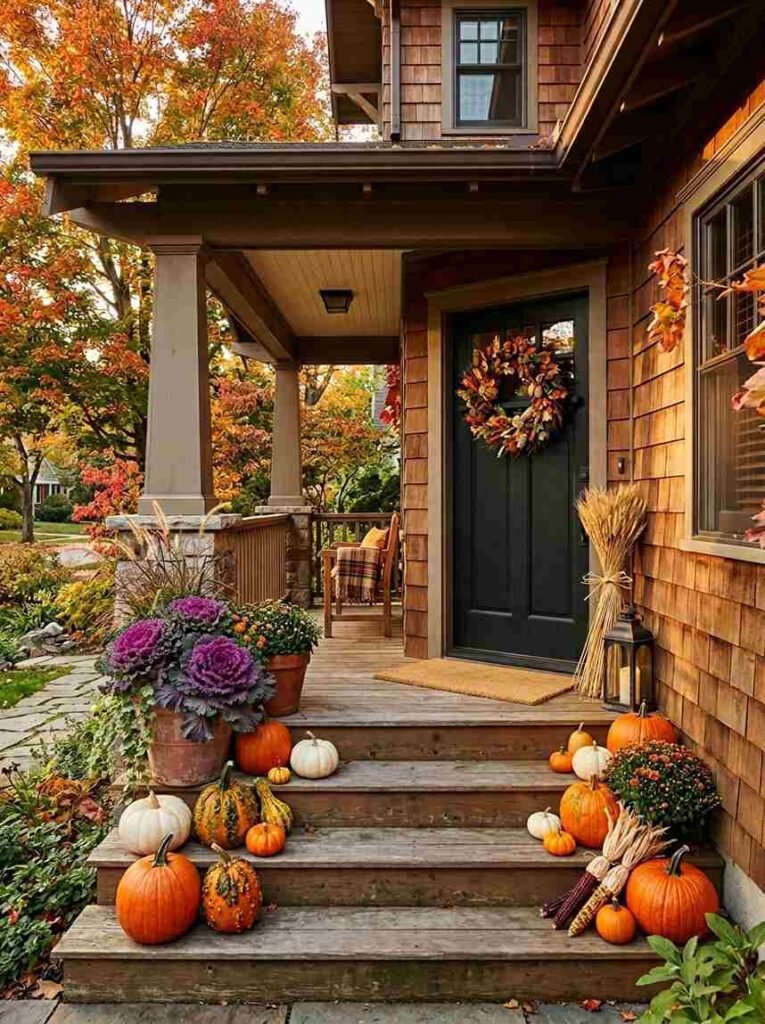
Think beyond just plants
Great planter arrangements include more than pots. In fall, surround your planters with small pumpkins, gourds, and a bundle of dried grasses. In winter, fill them with evergreen branches, pinecones, and red berry stems.
The planter becomes a frame for a seasonal moment rather than just a container. Pinterest loves this approach for good reason — it photographs beautifully.
Vertical Pocket Planters
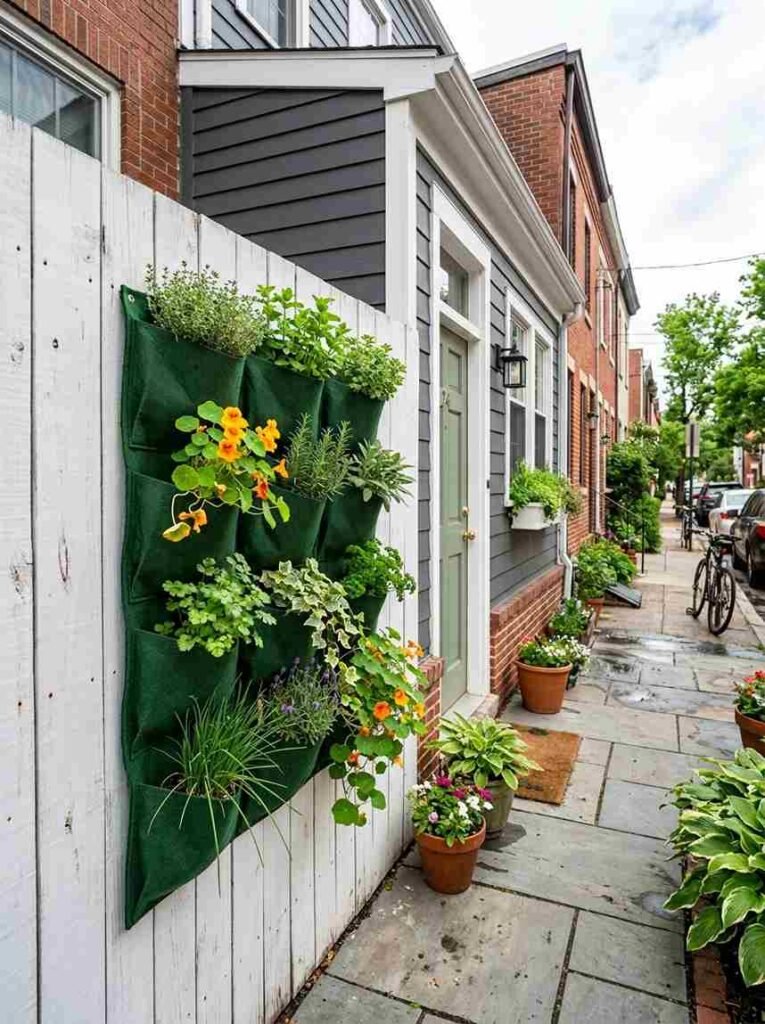
For the truly tiny front yard
If your front yard is more of a front strip, vertical pocket planters mounted on the fence or wall give you garden space without needing any ground at all.
Felt pocket planters work best for herbs and trailing annuals. They’re lightweight, drain well, and you can plant them densely for an immediate lush look. Mount them in a grid pattern for something graphic and modern.
Colorful Glazed Ceramic Pots
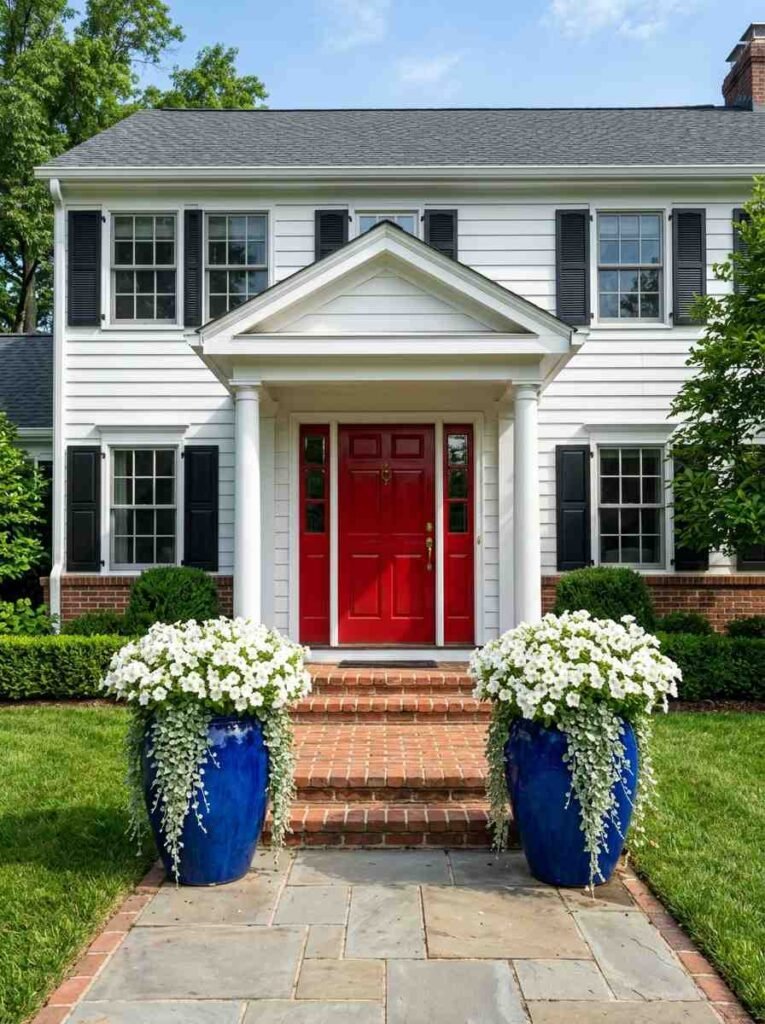
Go bold or go home
If your home’s exterior is neutral — white, gray, beige — a pair of jewel-toned glazed ceramic pots near the front door adds the kind of color that makes the whole thing pop. Deep cobalt blue, rich terracotta orange, forest green.
Choose colors that already appear somewhere on the exterior — a door color, a shutter color, even the color of your brick — and the bold pot suddenly looks coordinated rather than random.
Low-Maintenance Evergreen Planters
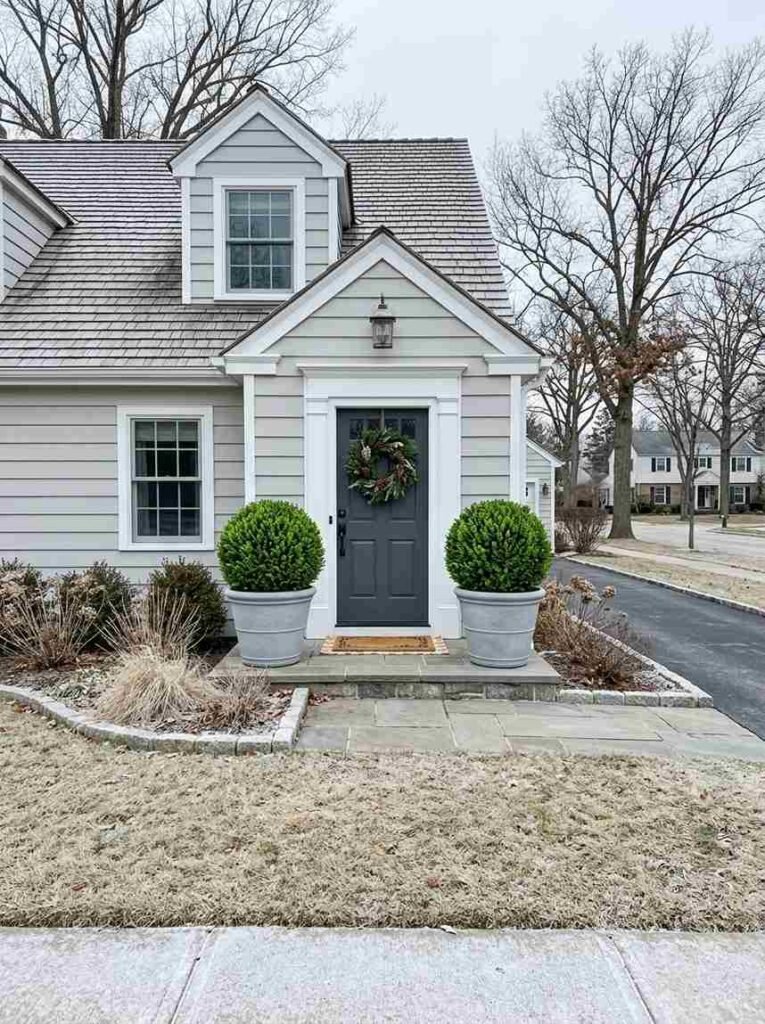
Set it and forget it (mostly)
For anyone who wants great-looking containers without constant replanting, dwarf evergreen shrubs in large containers are the answer. Compact boxwood, dwarf mugo pine, dwarf Alberta spruce — these plants look great all year, grow slowly, and only need watering during dry spells.
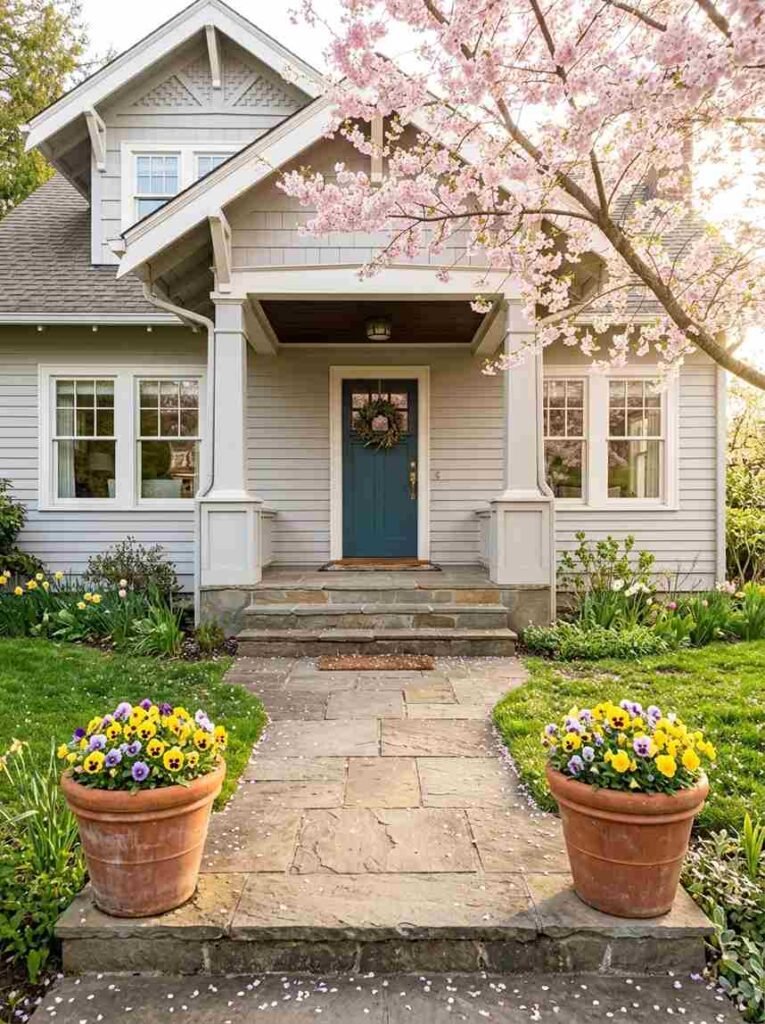
Yes, they cost more upfront than annuals. But you plant once and enjoy for years. That math works for me.
Wrapping It Up
Small front yards don’t have to feel small. The right pots, the right plants, and a little intentionality go a long way. Whether you’ve got a grand front porch or just a narrow strip of sidewalk between you and the street, there’s a planter arrangement on this list that works for your space.
Start with one idea. See how it feels. Then layer in another. Curb appeal isn’t a one-weekend project anyway — it’s an ongoing relationship with your space. :/
Now go find the pot that speaks to you. Your front yard is waiting.
