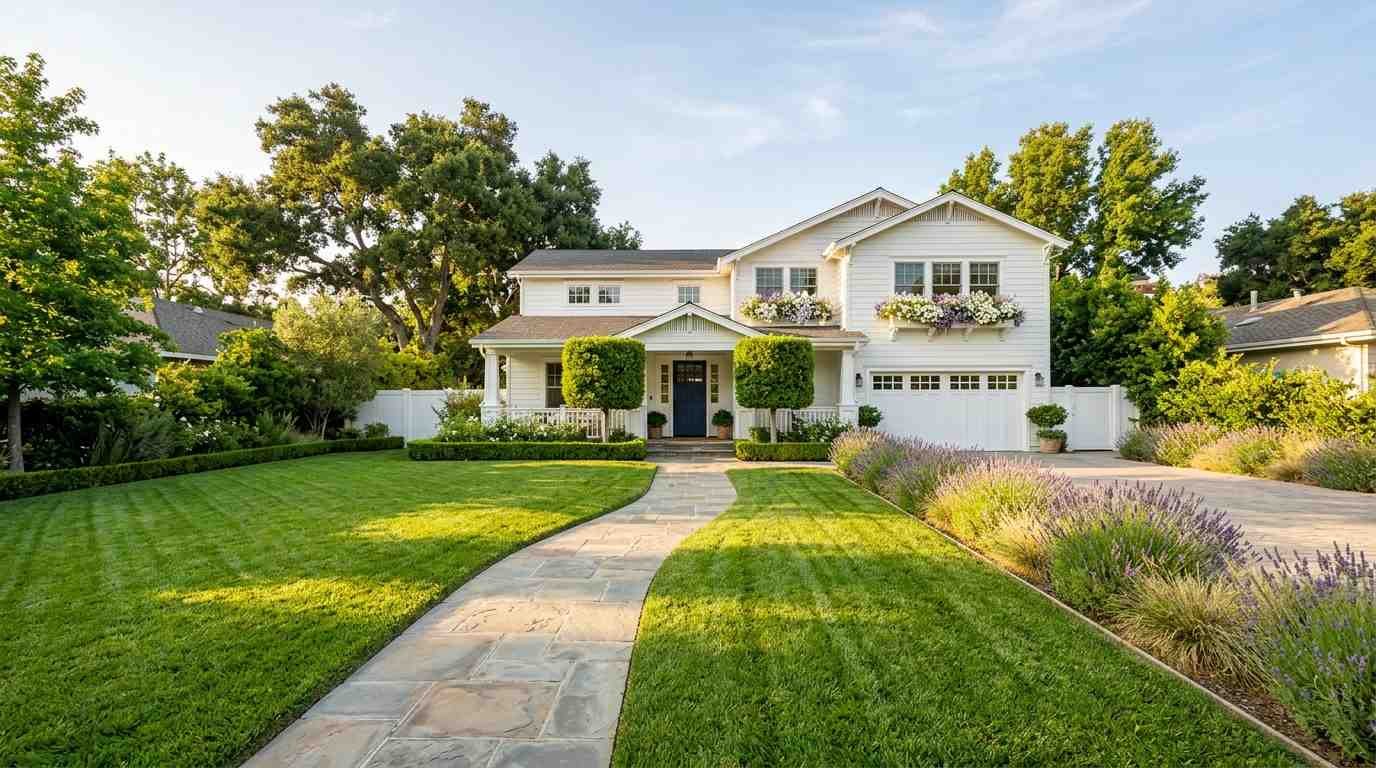
Your front yard is the first thing anyone sees. And honestly? A patchy lawn with a sad shrub next to the driveway isn’t doing you any favors.
The good news: you don’t need a landscape architect or a contractor’s budget to fix it.
I’ve pulled together 30 genuinely doable ideas — stuff that photographs well, holds up through the seasons, and won’t have you regretting every decision by August.
Start With What You’re Working With
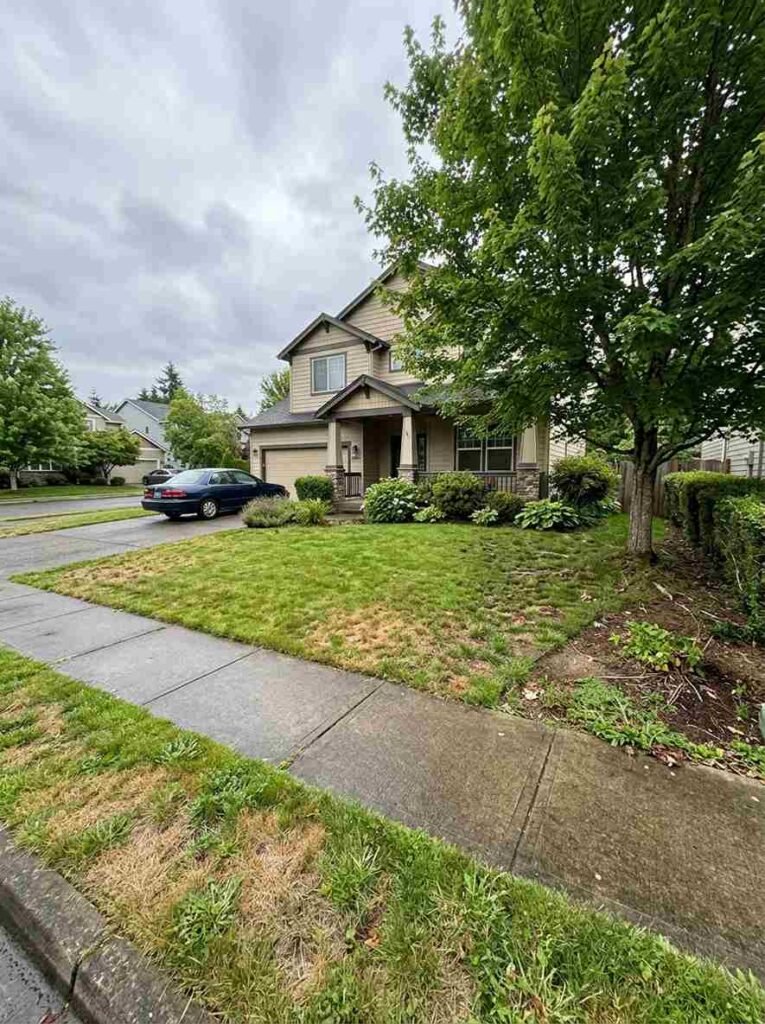
Before you pin a single idea, walk your yard with fresh eyes. Note sun exposure, soil drainage, and any existing plants worth keeping.
Skipping this step is how people end up with lavender in a shady swamp. FYI, most front yard fails trace back to this exact moment.
Know your zone
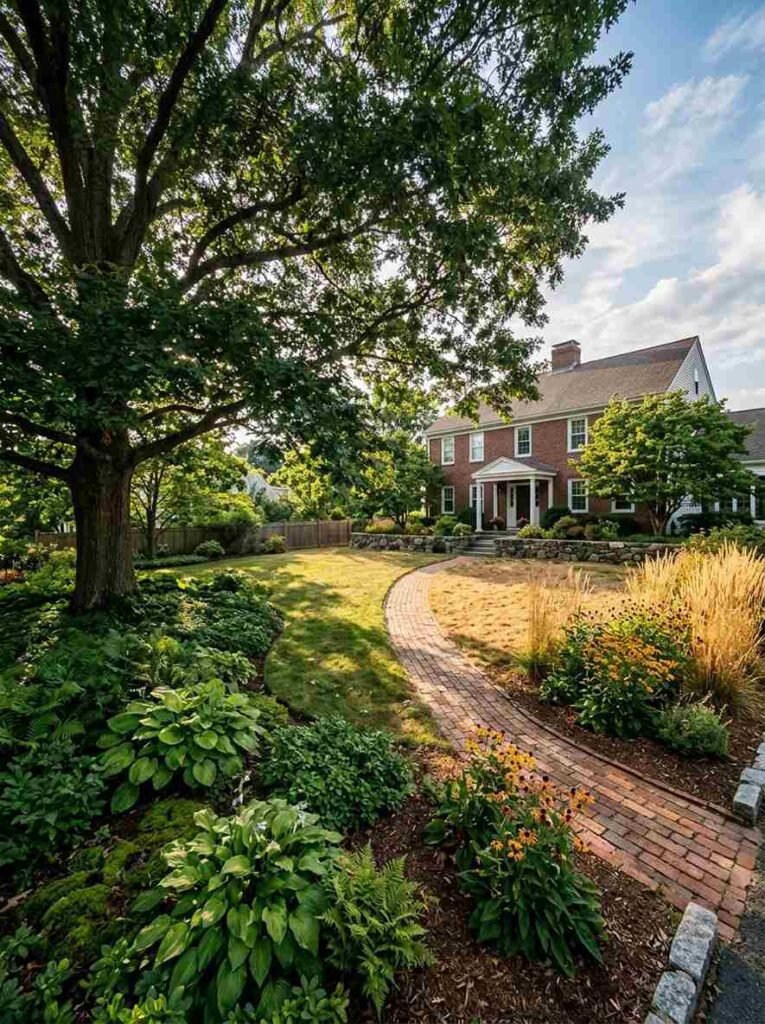
Your USDA hardiness zone determines which plants will thrive vs. die dramatically. Google your zip code + “hardiness zone” and write it down. You’ll reference it constantly.
Map your problem areas
- Dry, sun-blasted strips along driveways
- Shady patches under trees
- Slopes that wash out in rain
- Awkward corners the eye always catches
Curb Appeal Upgrades That Actually Matter
1. Define your pathway
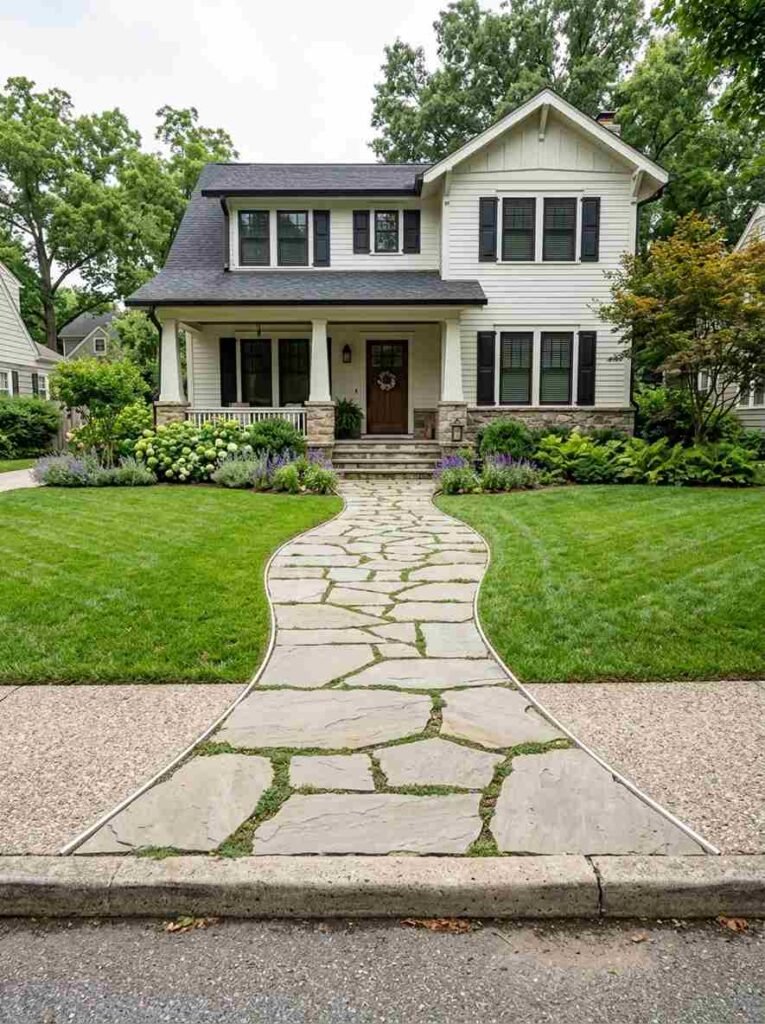
A clear, well-edged path from the street to your front door does more work than almost anything else.
Gravel, flagstone, or brick pavers all read beautifully on Pinterest and hold up in real life.
Edge it cleanly with steel or aluminum edging and suddenly your whole yard looks intentional.
2. Add a focal point near the entrance
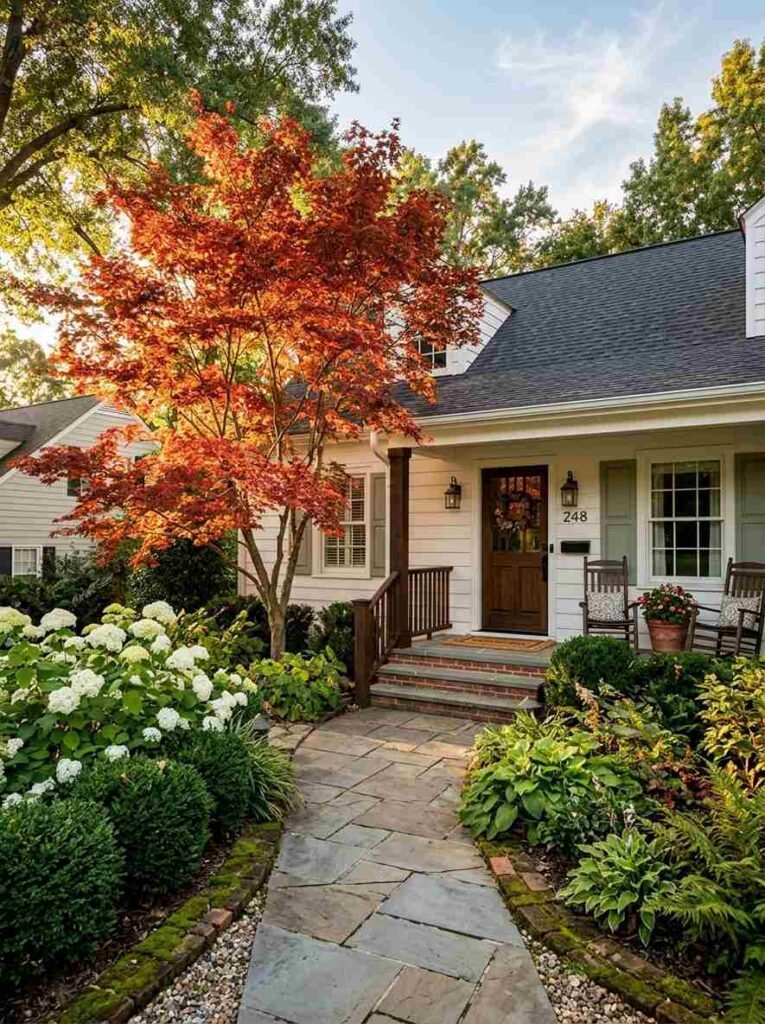
One statement plant or planter near the front door anchors the whole design.
A clipped boxwood, a small Japanese maple, or even an oversized terra cotta pot with seasonal flowers — pick one and commit.
3. Replace turf strips with ground cover
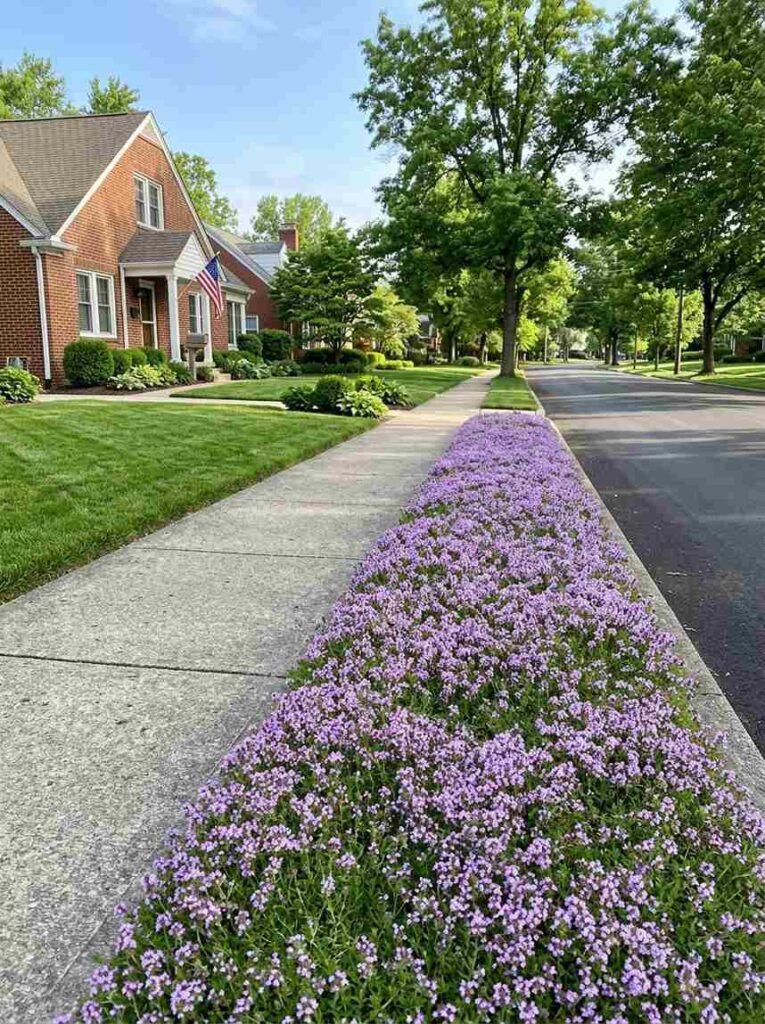
Those narrow strips between the sidewalk and the street are lawn-mowing nightmares. Swap them for low-growing ground covers like creeping thyme, dymondia, or buffalo grass.
They look polished and you’ll never fight a mower in there again.
4. Frame your driveway with plants
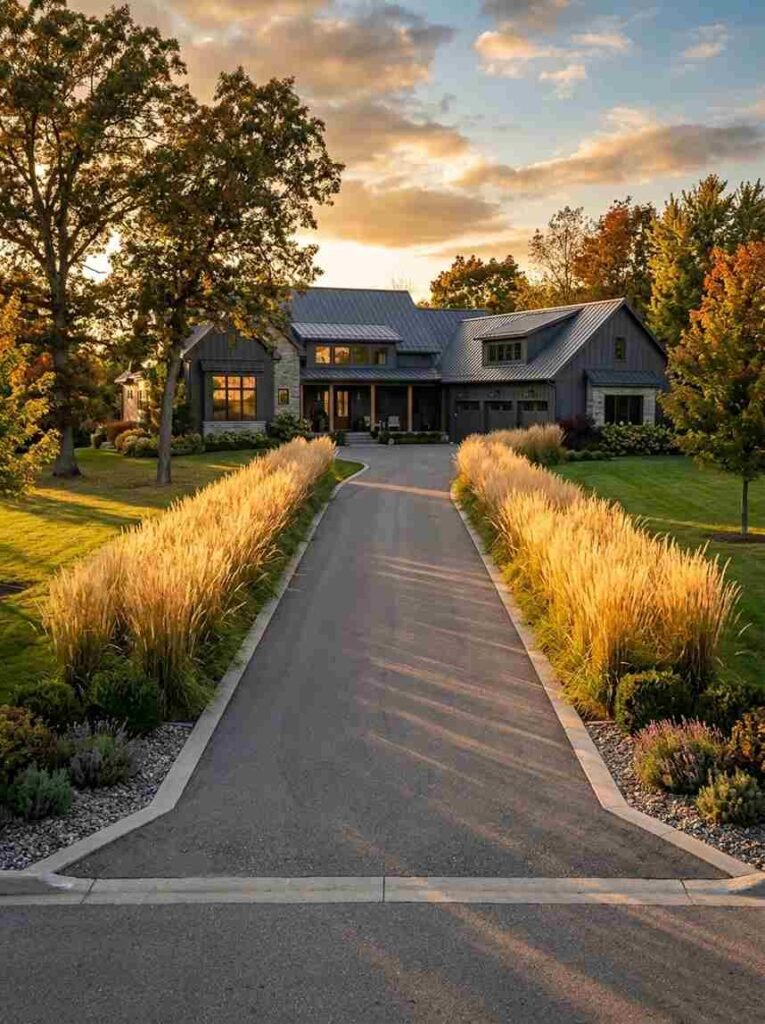
Lining the driveway with ornamental grasses or dwarf shrubs creates visual structure fast.
Karl Foerster grass is a personal favorite — it moves in the breeze, turns golden in fall, and costs maybe $12 a pot.
5. Edge everything
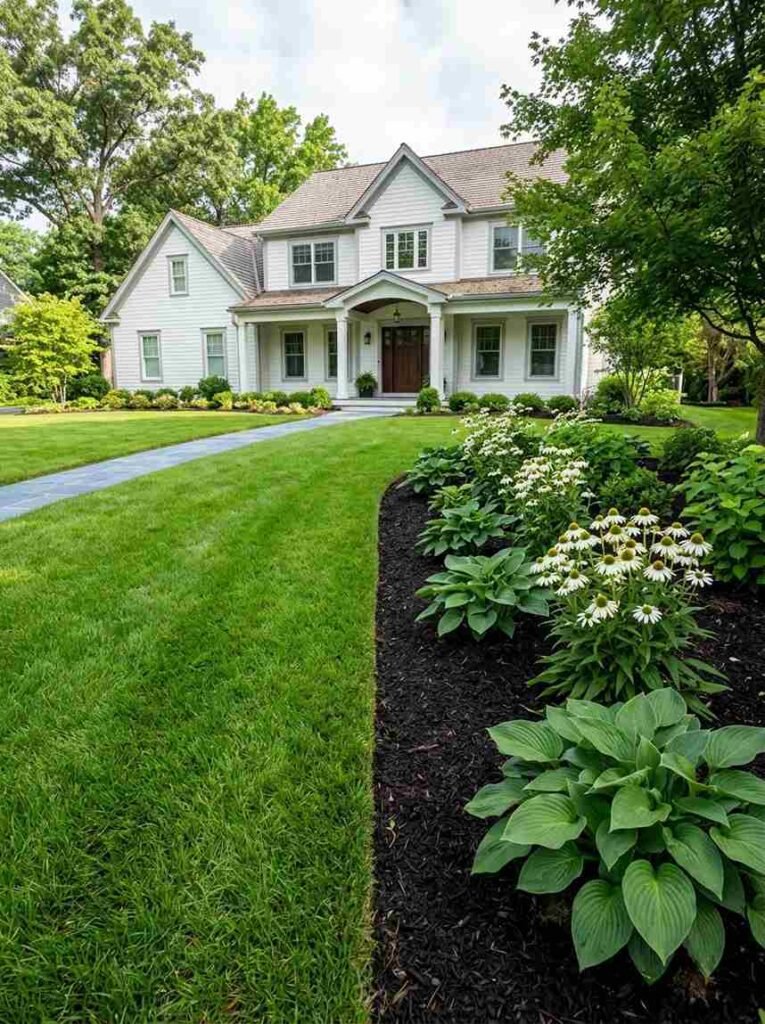
Crisp edges between lawn and beds are the single highest-ROI task in landscaping. Takes 20 minutes with a spade. Makes everything look $10,000 nicer. Do this before anything else.
Simple Planting Ideas With Big Visual Impact
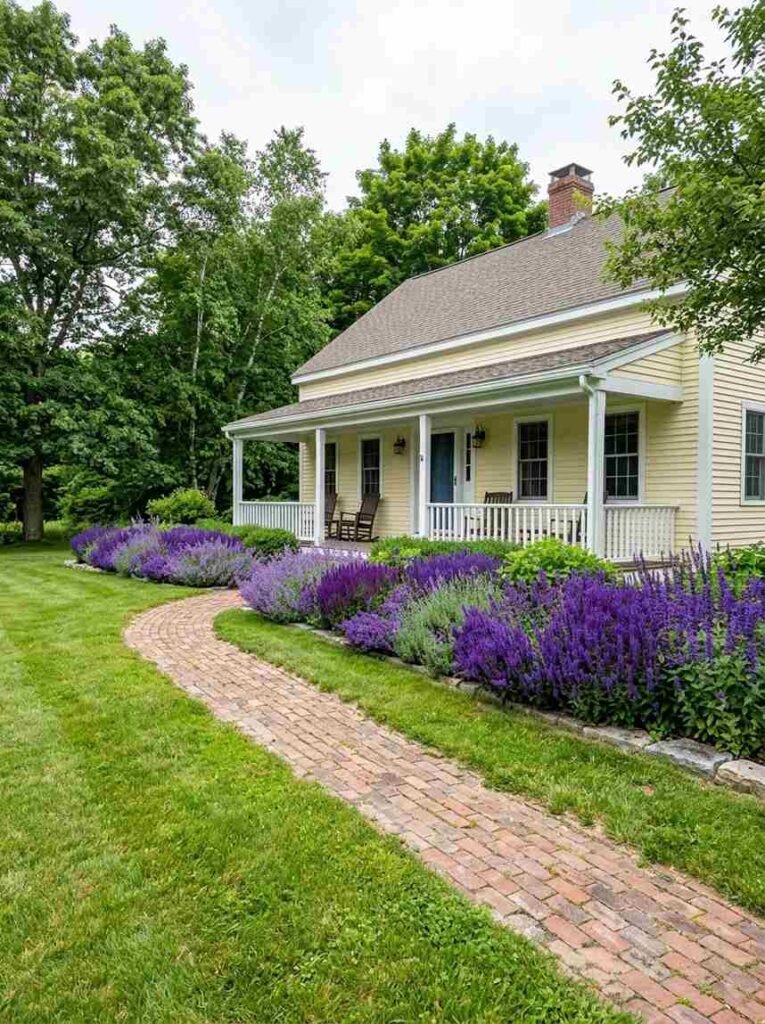
6. Go monochromatic with one flower color
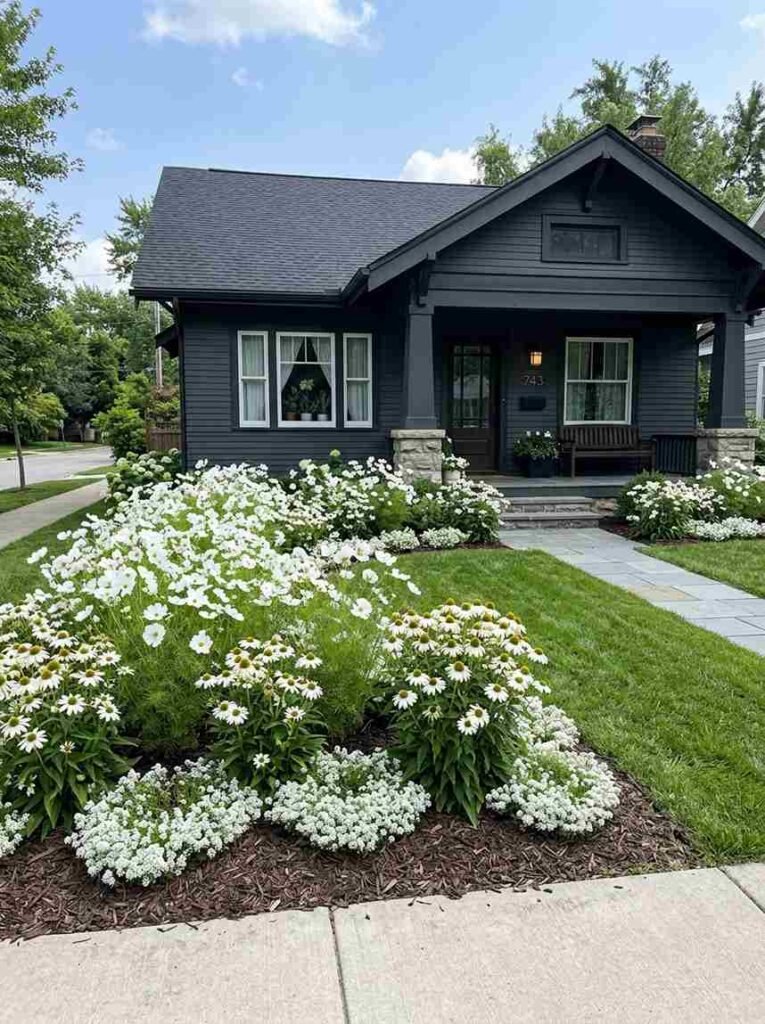
Pick one color and plant multiples. A mass of white alyssum, purple salvia, or yellow black-eyed Susans reads dramatically better than a random rainbow of every annual at the garden center.
7. Layer plants by height
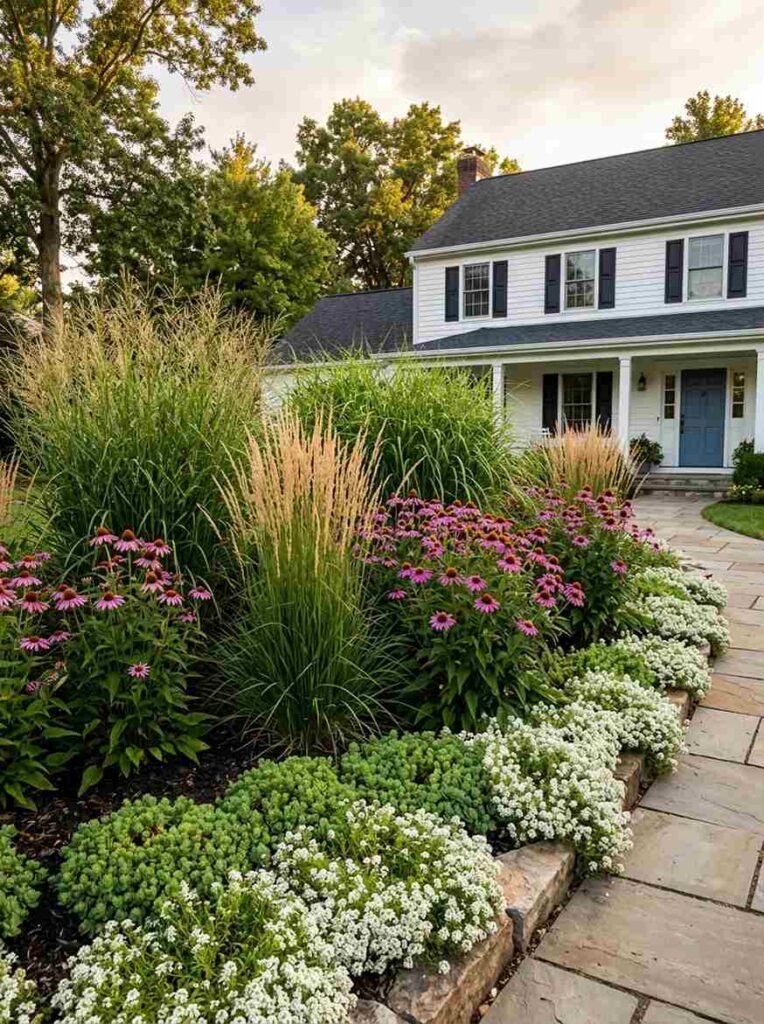
Tall in back, medium in middle, low in front. This sounds obvious but most people skip it. Three layers make a bed look full and designed, even when half the plants are $4 annuals.
8. Use repeating plants to create rhythm
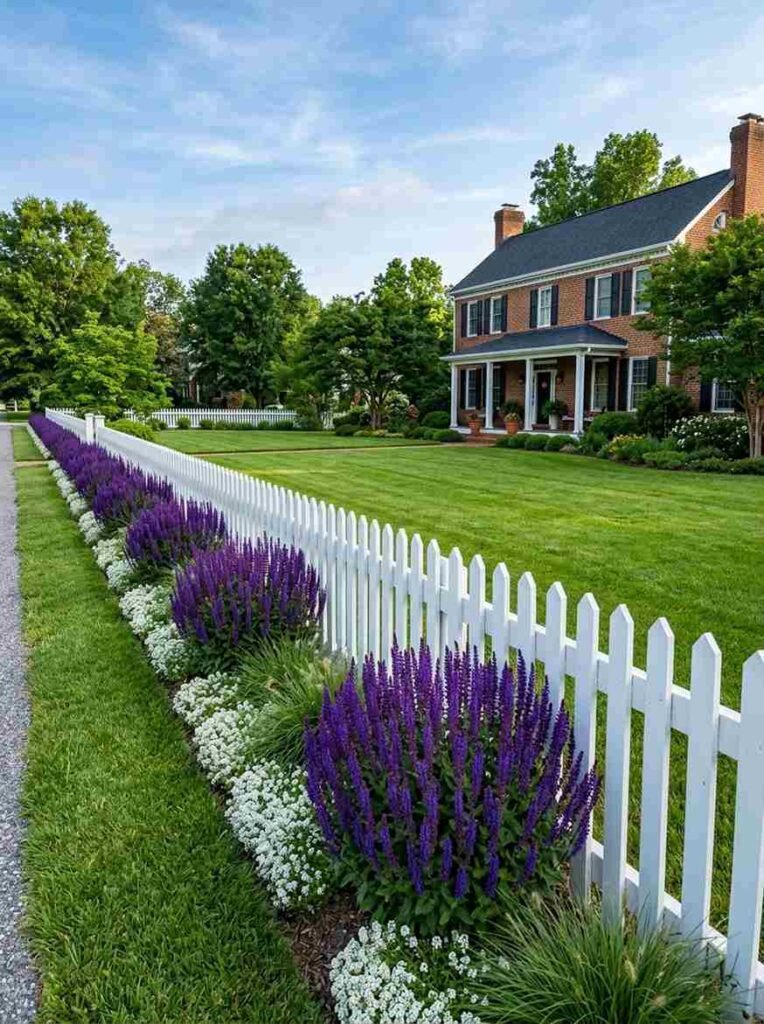
Plant the same species every few feet along a border. Repetition creates flow and makes a random yard look like a plan happened.
9. Add a ornamental tree for vertical interest
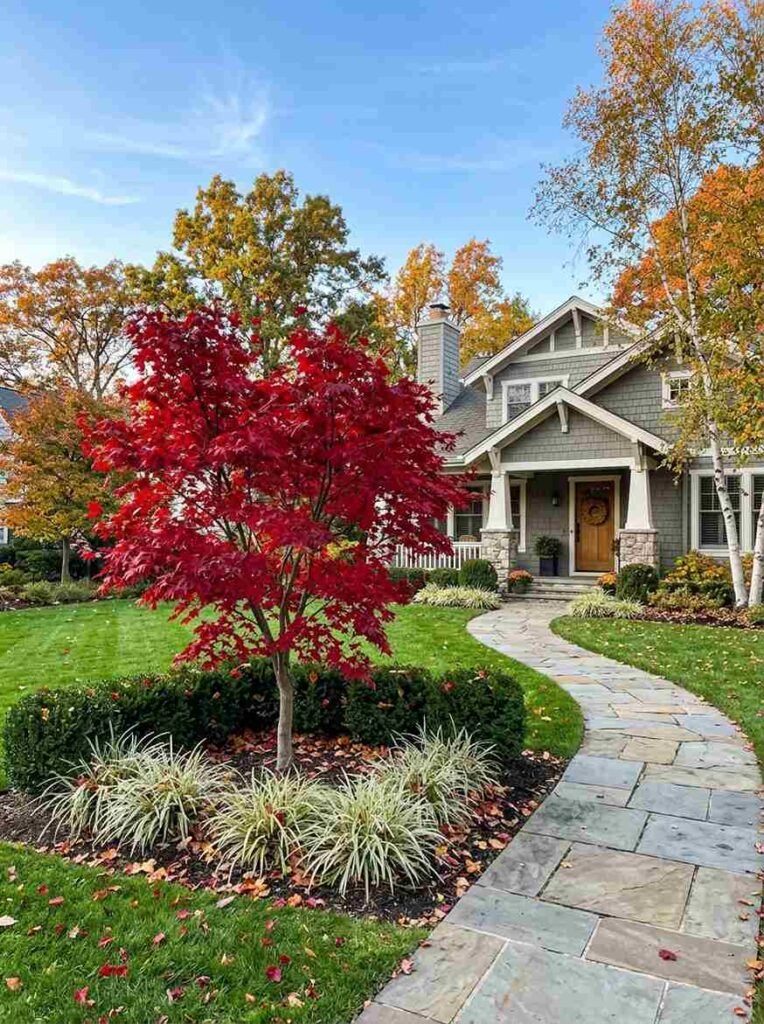
A serviceberry, crape myrtle, or dwarf magnolia gives the yard a vertical anchor. Plant it off-center — centered trees look like a parking lot.
10. Try a pollinator garden section
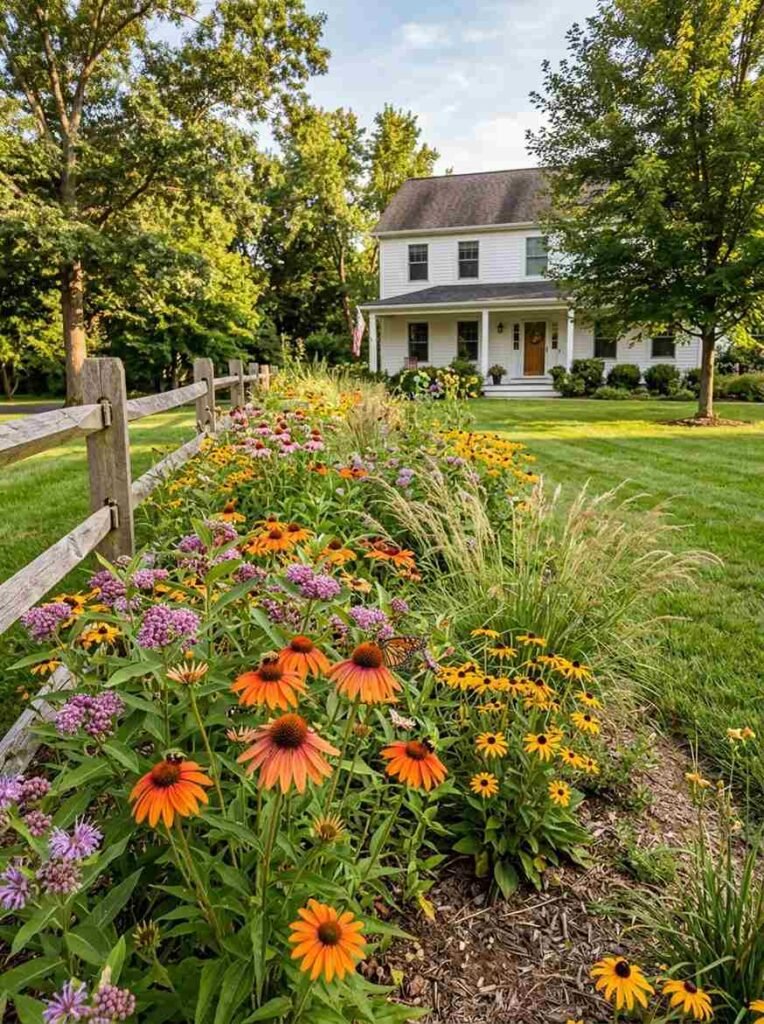
A small patch of native wildflowers (coneflowers, black-eyed Susans, milkweed) takes almost zero maintenance once established and looks gorgeous in photos.
It’s also genuinely good for the environment, which — bonus.
Low-Maintenance Landscaping Strategies
11. Mulch deeply and often
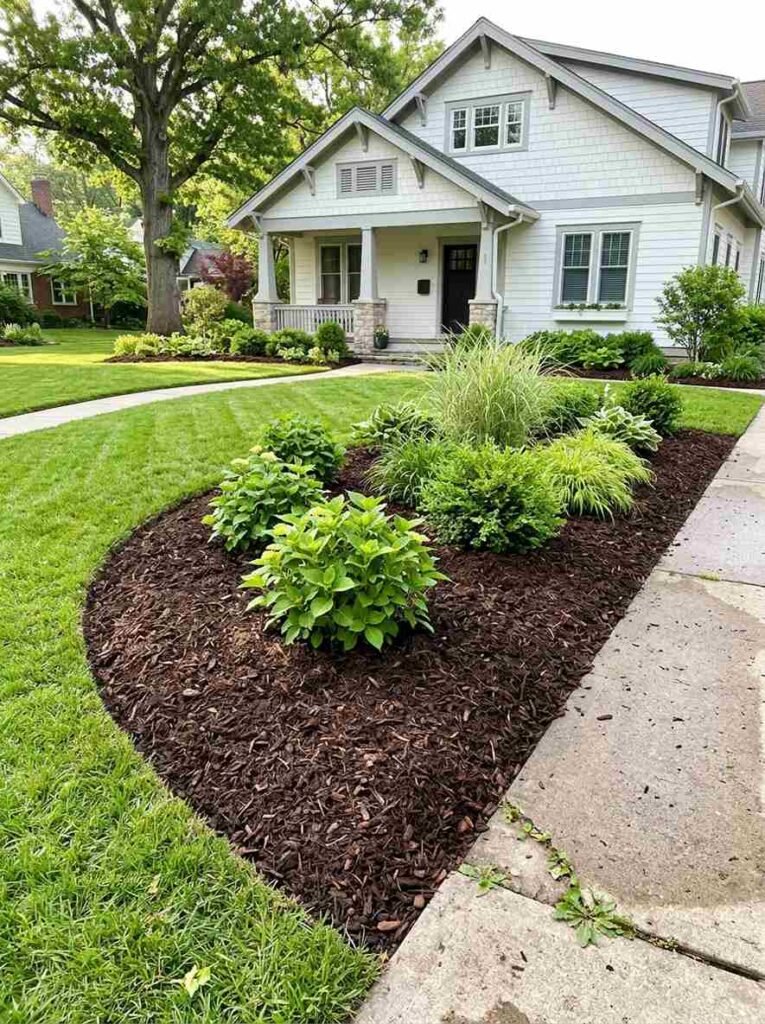
3 inches of mulch suppresses weeds, holds moisture, and makes every bed look finished. This is the one thing I’d tell every new homeowner to do immediately. Fresh mulch in spring transforms a yard overnight.
12. Plant natives whenever possible
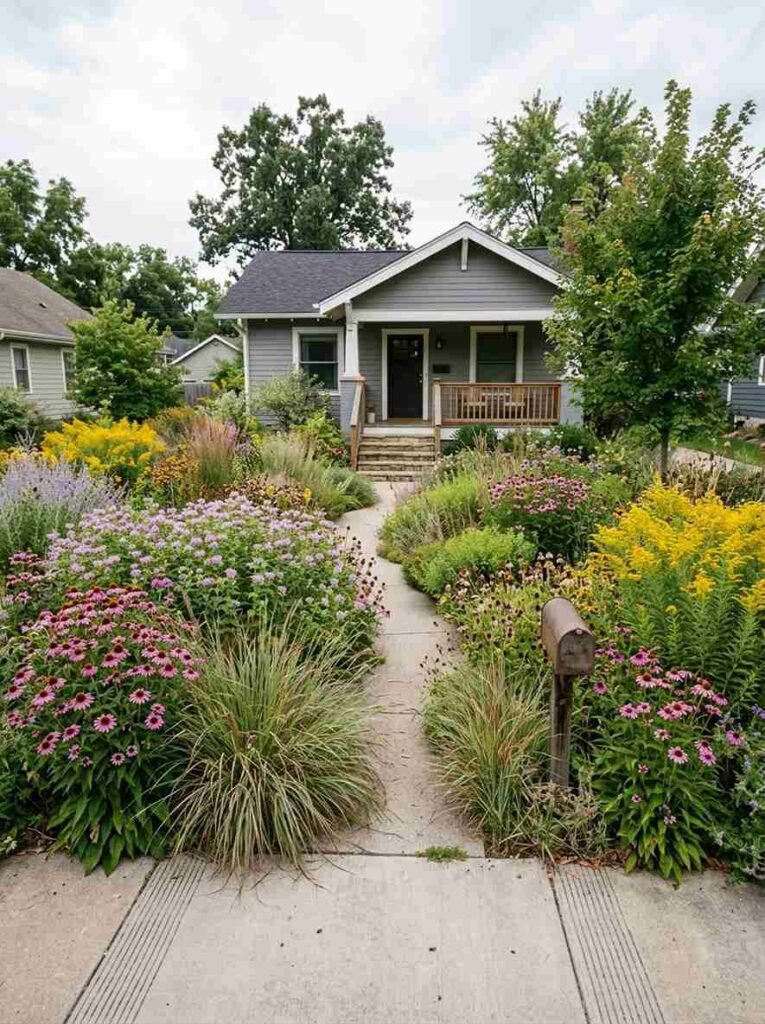
Native plants evolved for your local climate. They need less water, less fertilizer, and fewer interventions. Research your region’s native plant society for recommendations.
13. Use drought-tolerant plants in sunny spots
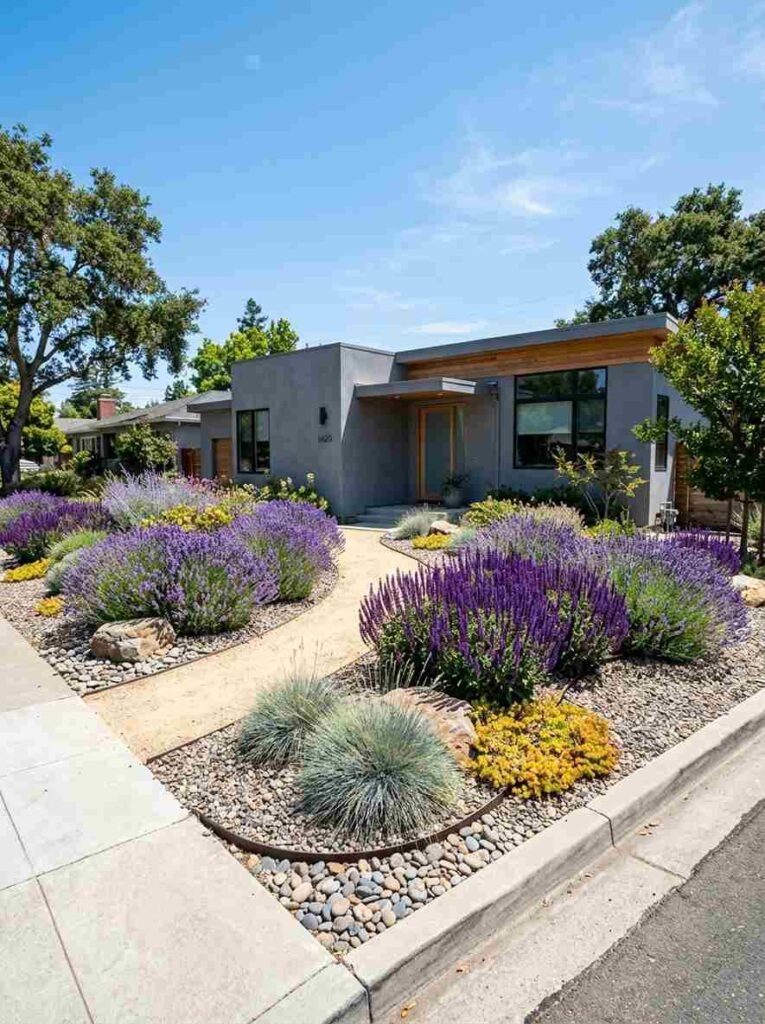
Lavender, sedum, agave, ornamental sage — these plants genuinely prefer to be ignored. Perfect for those south-facing beds that turn into death zones every July.
14. Group plants with similar water needs
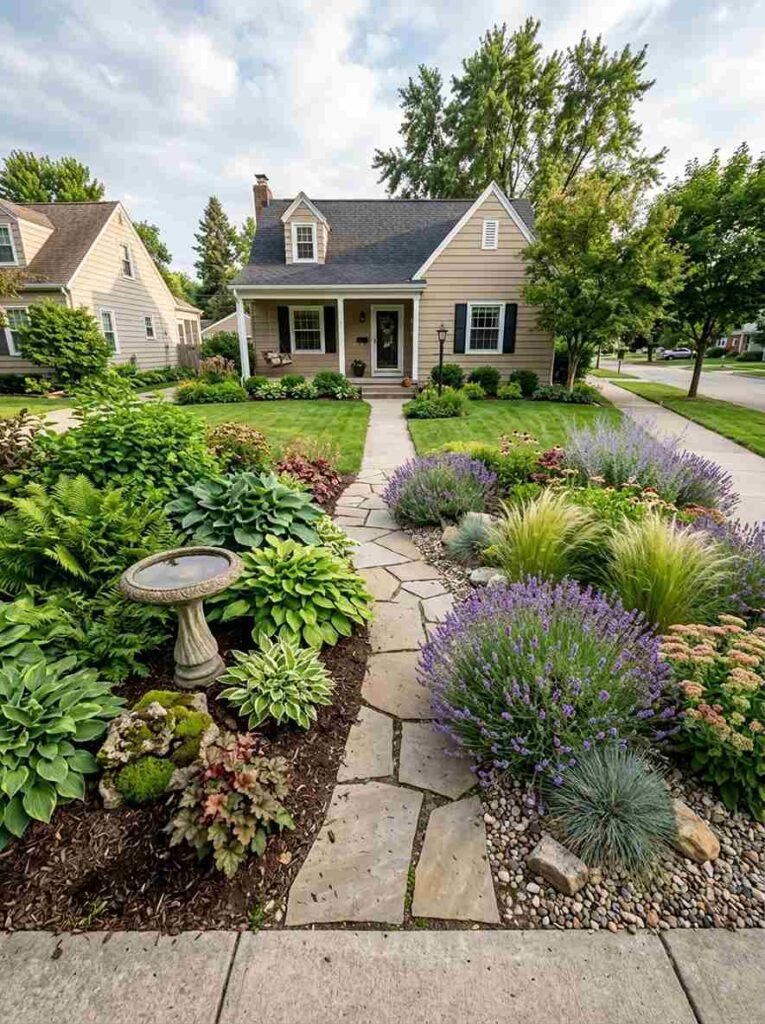
Clustering thirsty plants together and drought-tolerant ones together saves time and prevents accidental drowning or desiccation of the wrong plant.
15. Install drip irrigation in your main beds
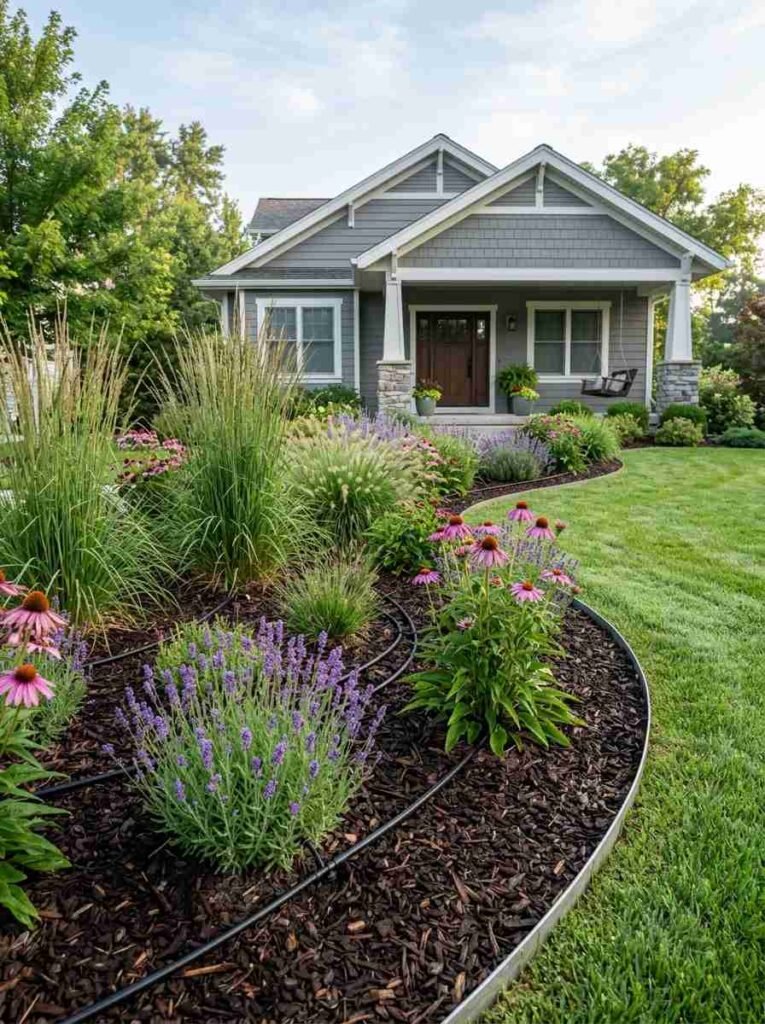
Even a basic drip system saves hours of hand-watering and keeps plants happier. Kits at the hardware store run $40-80 and you can set them up in an afternoon.
Budget-Friendly Ideas That Look Expensive
| Idea | Approximate Cost | Visual Impact |
|---|---|---|
| Fresh mulch (2 cubic yards) | $50-80 | Very High |
| Crisp lawn edging | $0 (labor only) | High |
| One statement planter at entry | $30-60 | High |
| Ornamental grasses along fence | $60-120 | Medium-High |
16. Divide and multiply your existing plants
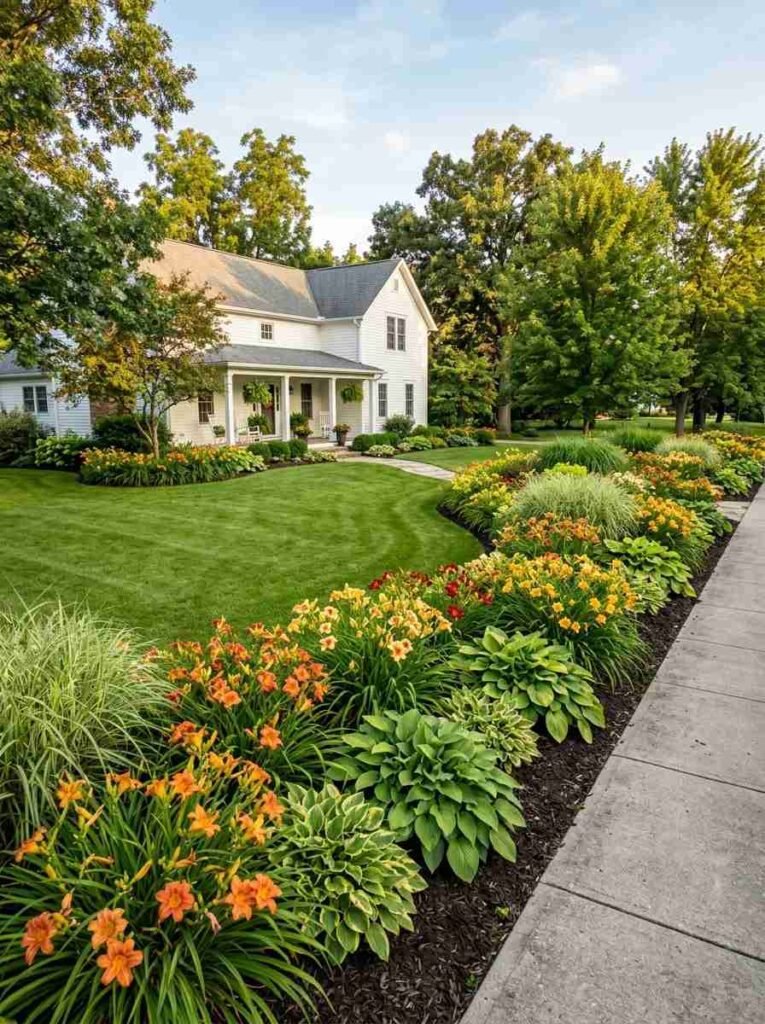
Hostas, daylilies, ornamental grasses — they all divide easily in spring or fall. Free plants, bigger beds. IMO this is the most underrated landscaping move.
17. Grow from seed where possible
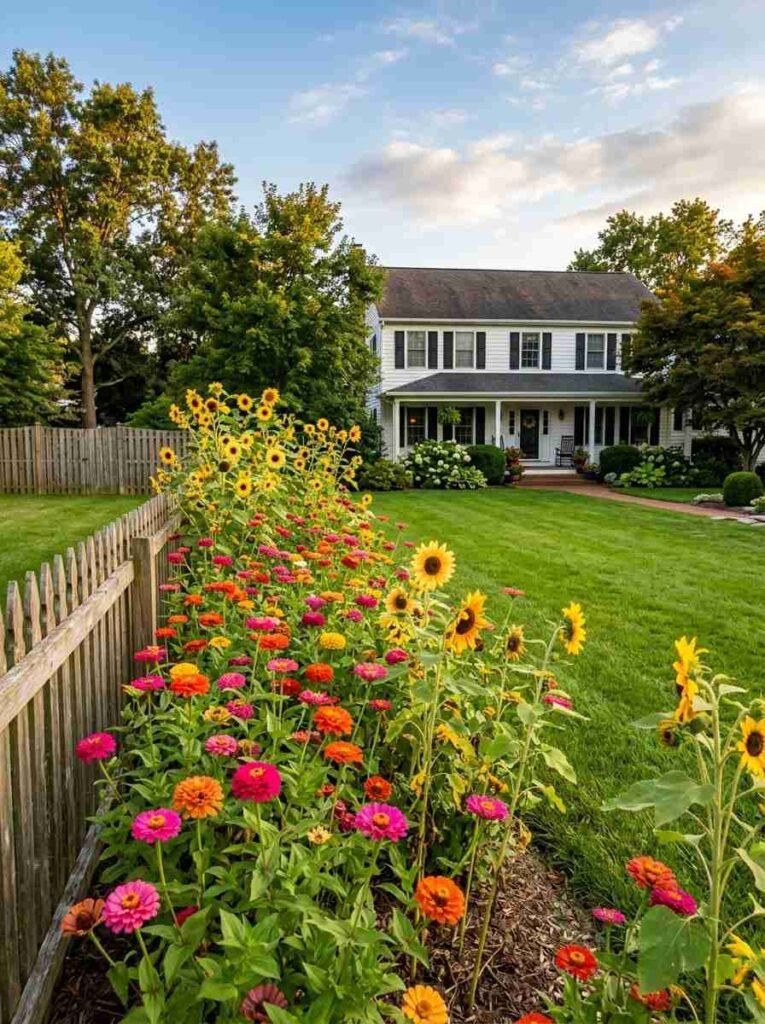
Annual flowers like zinnias, cosmos, and sunflowers grow fast from seed sown directly in the ground. A $3 seed packet covers 20 square feet.
18. Shop nurseries in late summer
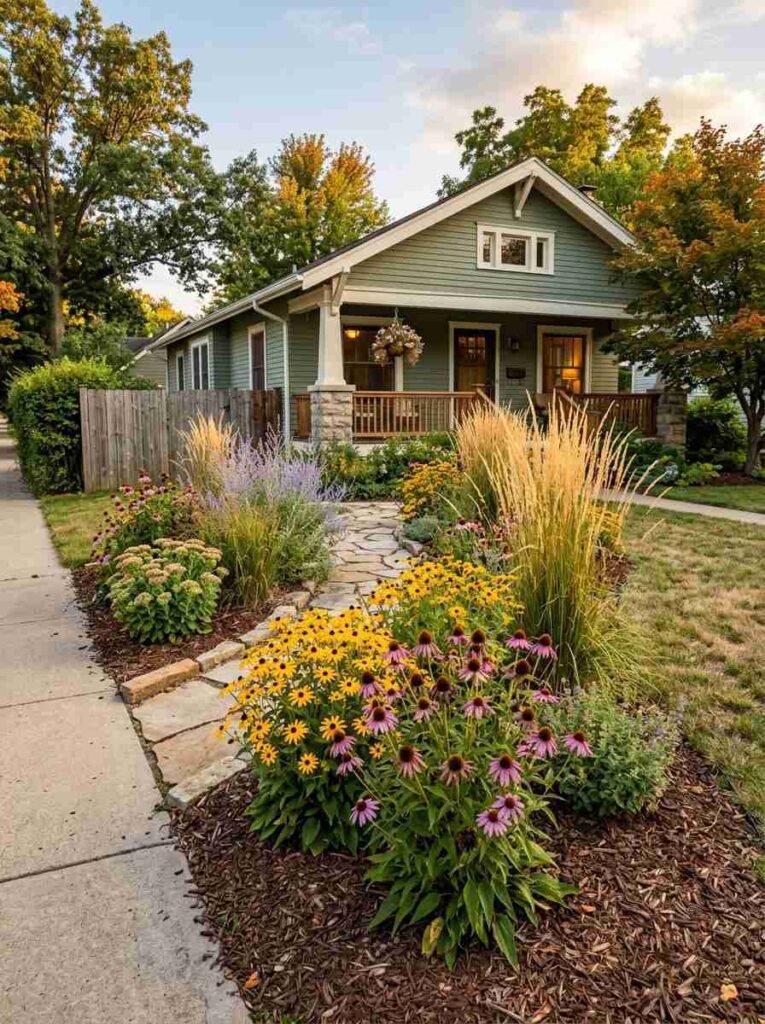
End-of-season clearance sales often mean 50-75% off healthy perennials. They’ll come back next year just fine.
19. Use rocks and boulders strategically
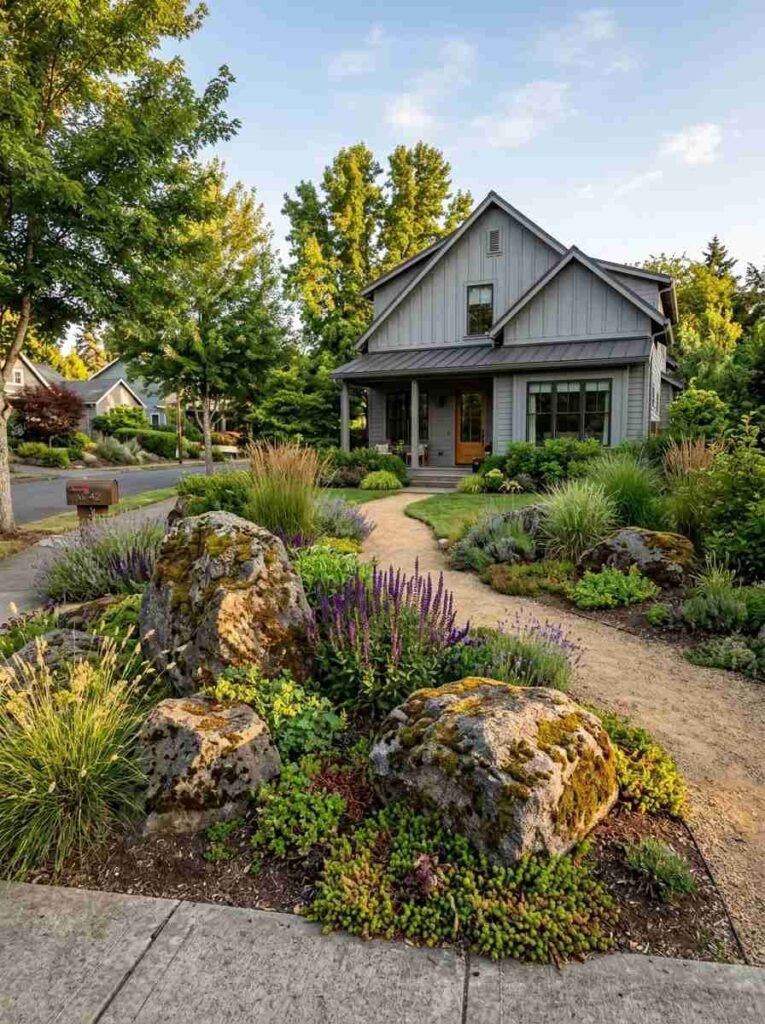
A few well-placed boulders look architectural and cost nothing if you source them locally. They anchor plant beds and add year-round structure.
20. Repurpose what you already have
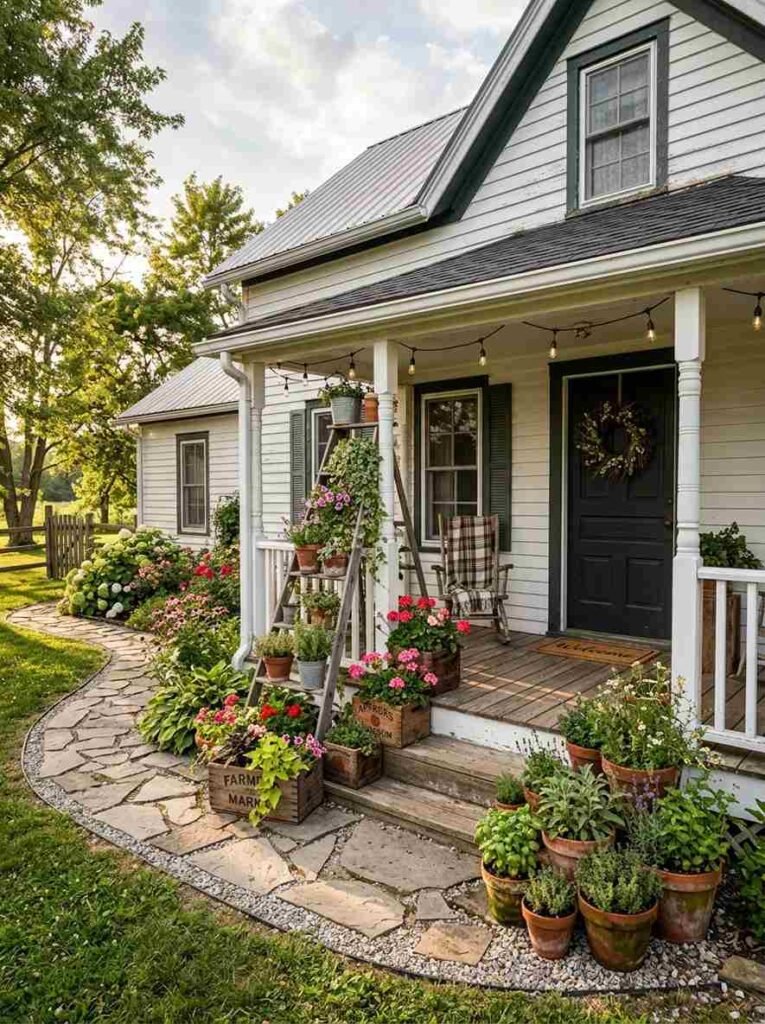
Old terracotta pots, wooden crates, vintage watering cans — styled with trailing plants, these photograph beautifully and cost nothing.
Front Yard Design Principles Worth Knowing
21. Keep lawn areas simple shapes
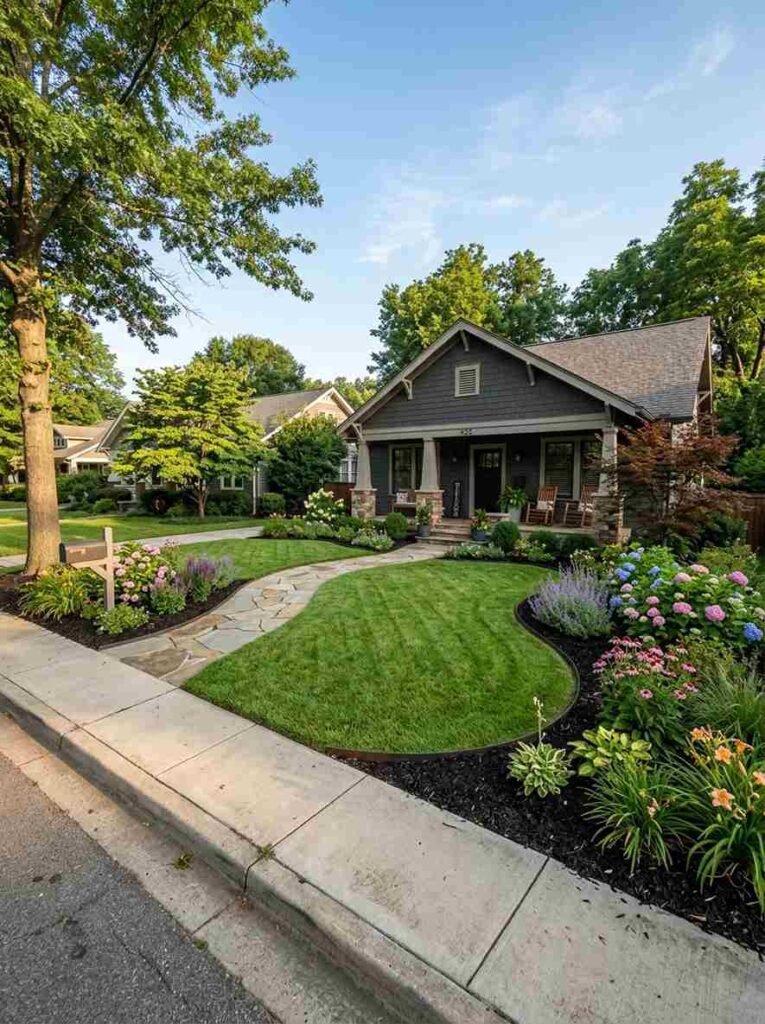
Curved, organic lawn shapes with smooth edges photograph better than awkward rectangles. If you’re regrading or reseeding, reshape while you’re at it.
22. Paint the front door a real color
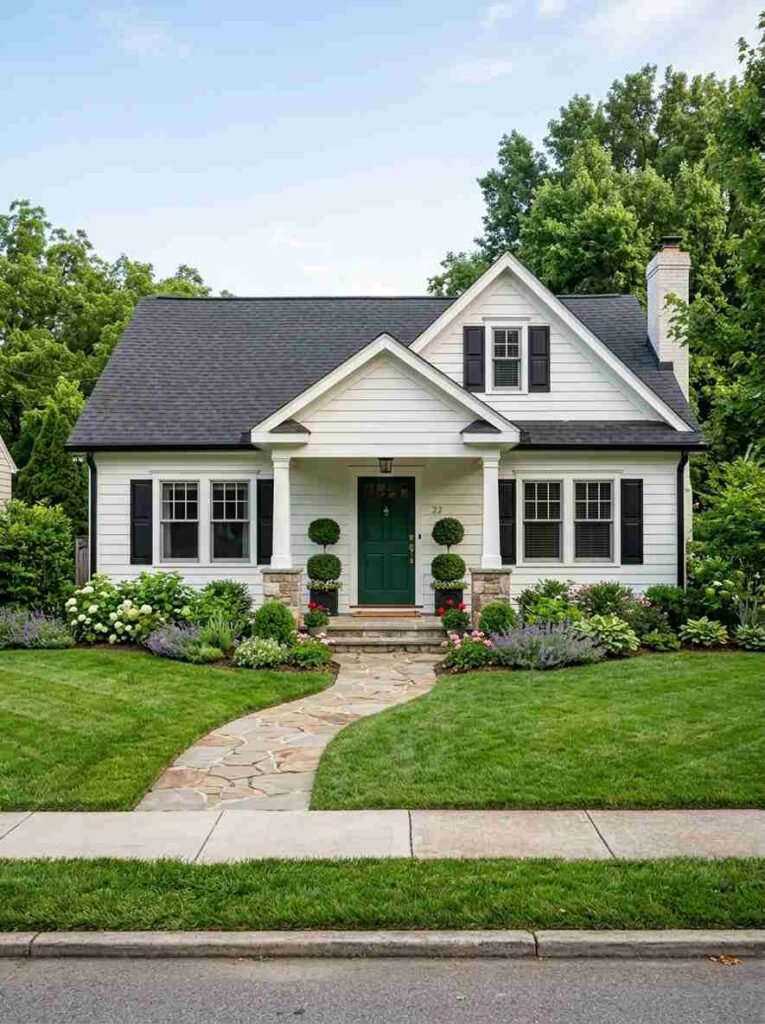
This isn’t landscaping per se, but a painted front door — deep navy, forest green, brick red — does as much for curb appeal as six new plants. It’s also reversible.
23. Add outdoor lighting
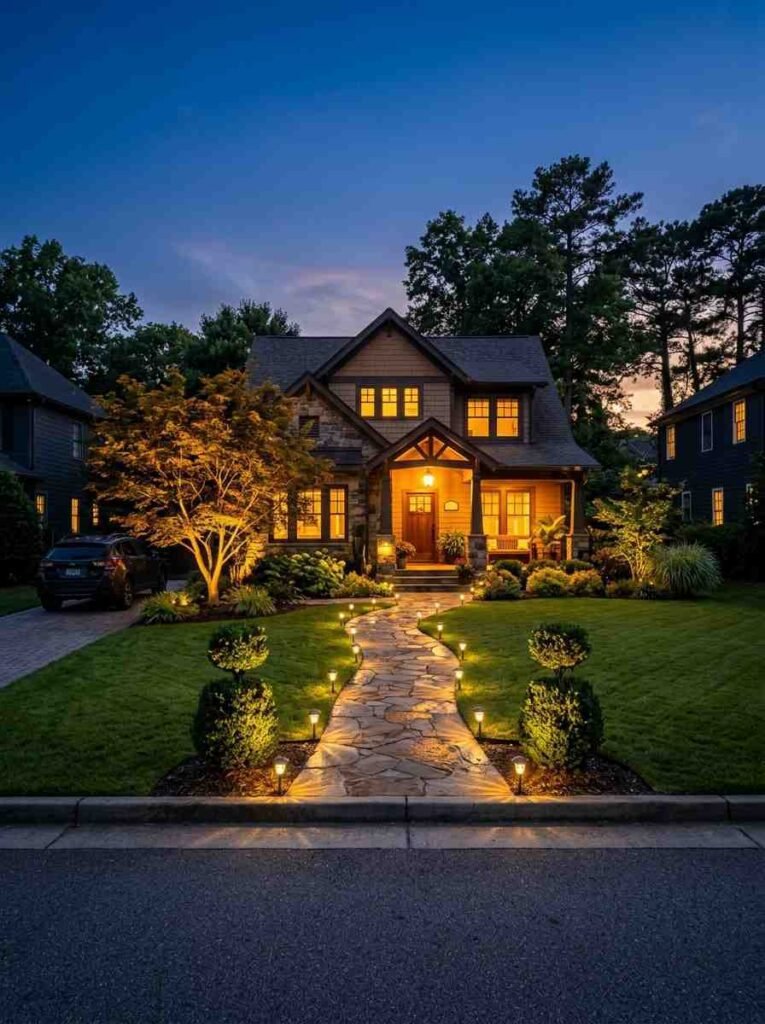
Solar path lights along a walkway and uplighting on a feature tree create a completely different yard after dark. And they’re not expensive. Under $100 total for a solid setup.
24. Use symmetry at the entrance, asymmetry elsewhere
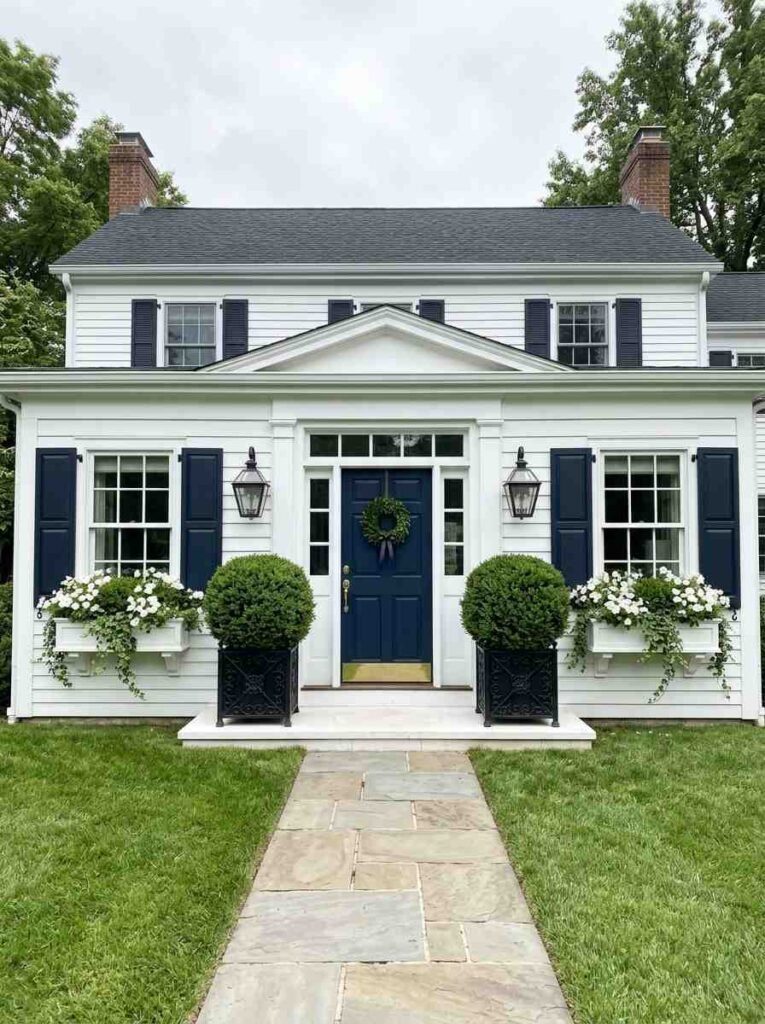
Matching planters or shrubs flanking the front door feel formal and intentional. Everywhere else, asymmetry reads more natural and relaxed.
25. Think about the view from inside too
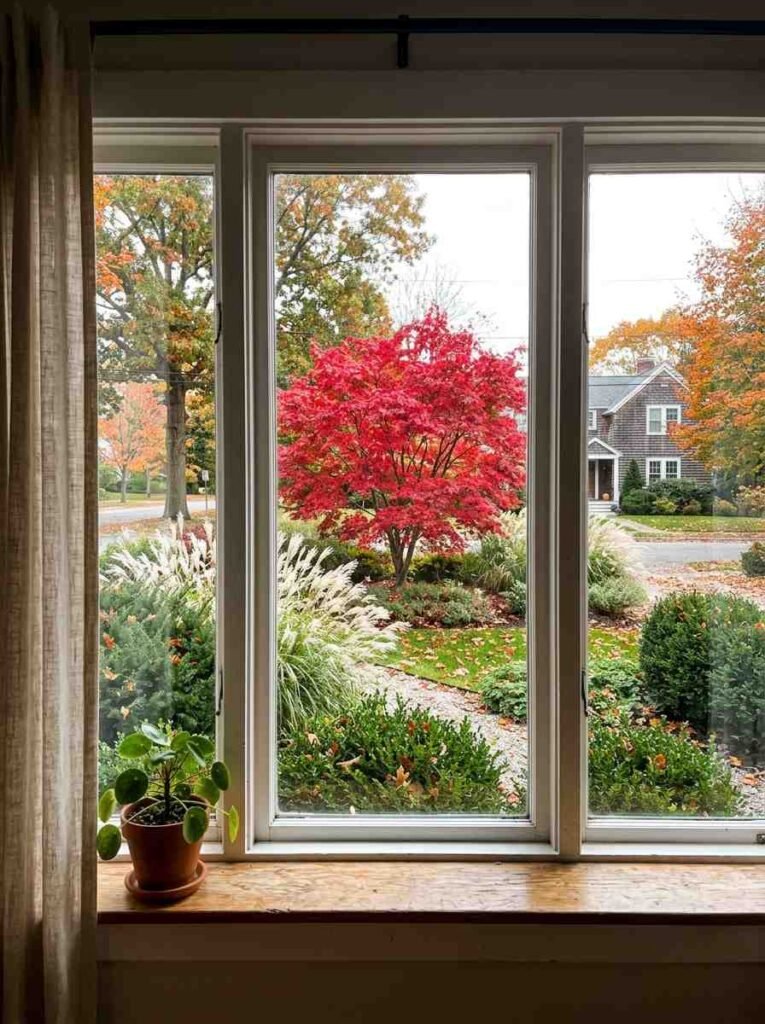
Where do you look out the windows most? Plant something beautiful there. A yard you never see from inside doesn’t improve your daily life.
Seasonal Interest: Making It Look Good Year-Round
26. Plant for four-season interest
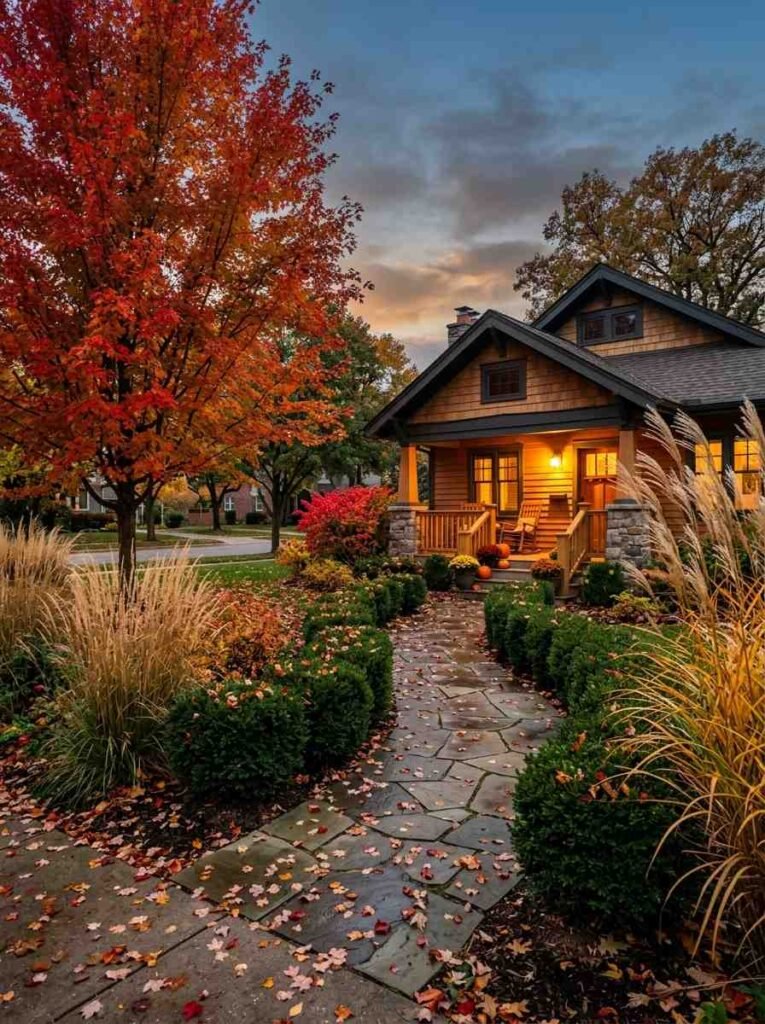
At least one plant that looks good in each season. Ornamental grasses for fall and winter. Spring bulbs for March color. Summer perennials. Fall asters.
27. Add spring bulbs in fall
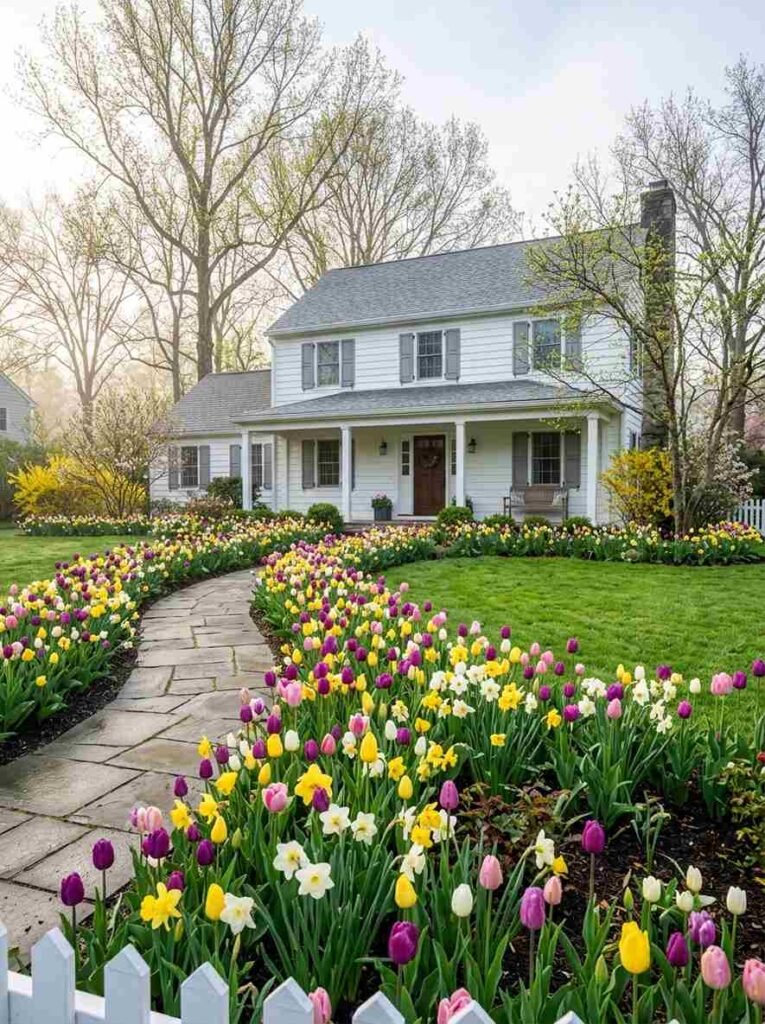
Tulips, daffodils, alliums — plant them in October and forget about them. They’re the easiest wow moment in spring gardening. 🙂
28. Keep structure in winter
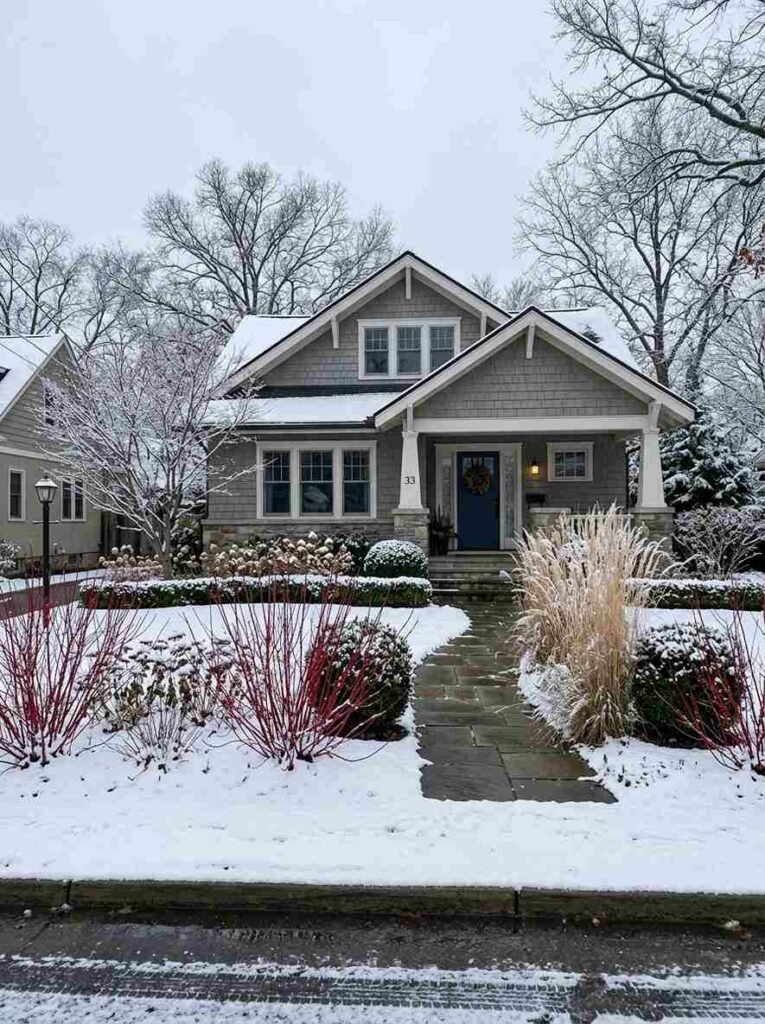
Evergreen shrubs, ornamental grasses left standing, and interesting branch structure (like a contorted hazel or red-twig dogwood) carry a yard through the gray months.
29. Rotate annuals seasonally
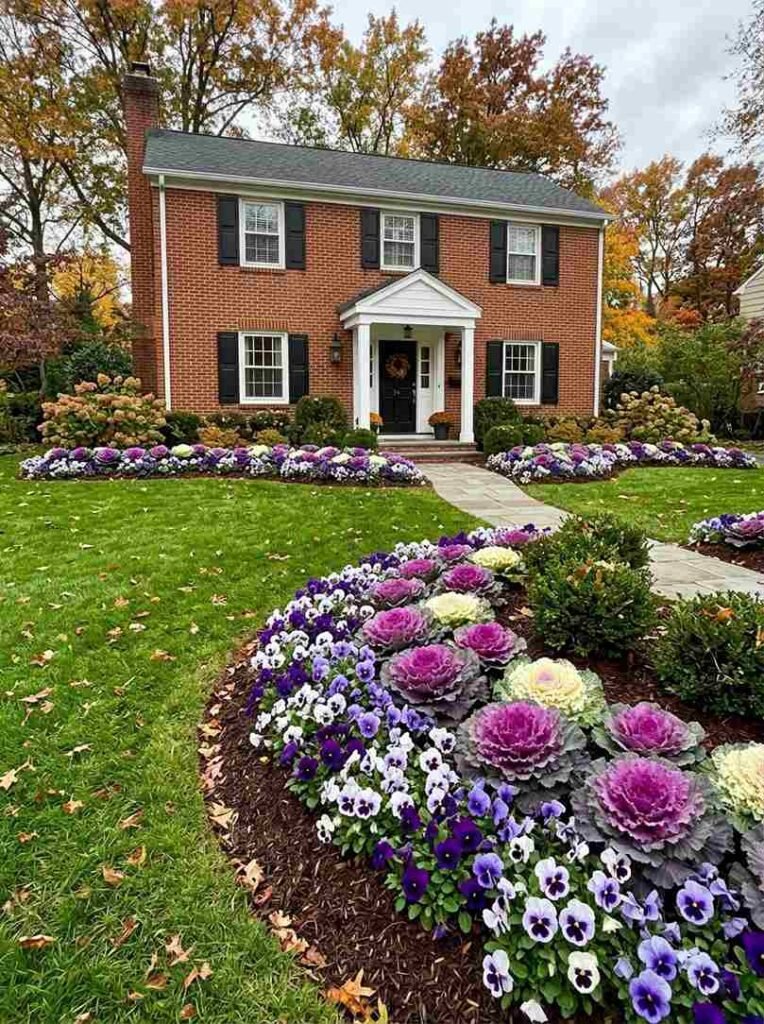
Pansies in cool weather, impatiens in shade through summer, ornamental kale in fall. Swapping annuals 2-3 times a year keeps the yard looking intentional with minimal effort.
30. Photograph your yard every season
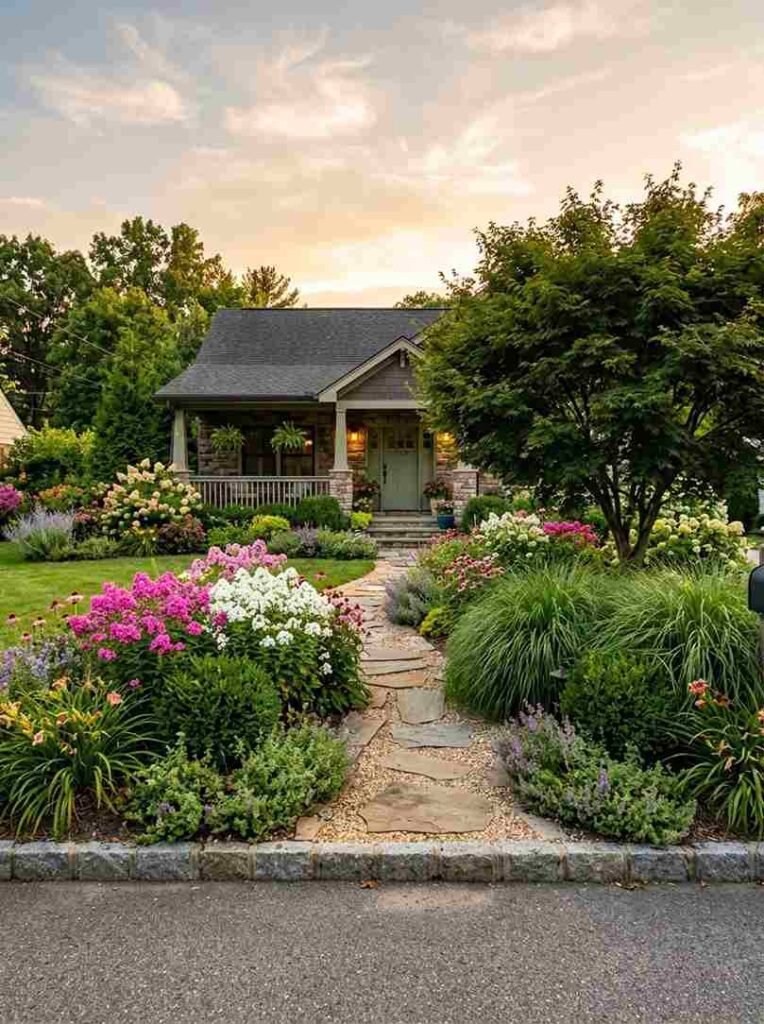
This one surprises people, but it’s genuinely useful. Seasonal photos show you exactly what’s working, what’s empty, and where you need more interest. It’s also really satisfying to track progress.
Step-by-Step: How to Actually Start
Week 1: Walk the yard. Map sun, shade, drainage problems. Write down your hardiness zone.
Week 2: Edge all existing beds. Apply fresh mulch. Clean up any dead material.
Week 3: Visit one nursery with a list of 3-5 plants appropriate for your conditions. Buy those. Plant them.
Week 4: Add one focal point near the entrance — a planter, a small tree, or a statement shrub.
After that, layer in more ideas one at a time. Yards built slowly over a few seasons almost always look better than ones done all at once. You learn what works, what you love, what the space actually needs.
Wrap Up
A great-looking front yard doesn’t require a huge budget or a landscape degree. It requires paying attention to what the space needs, making decisions one at a time, and maintaining what you plant.
Start with the basics: edge your beds, mulch deeply, define your path, and add one thing near the front door that you genuinely love. Everything else builds from there.
The best front yard is one you actually enjoy looking at — from the street and from your window. Go make that happen. 🙂
