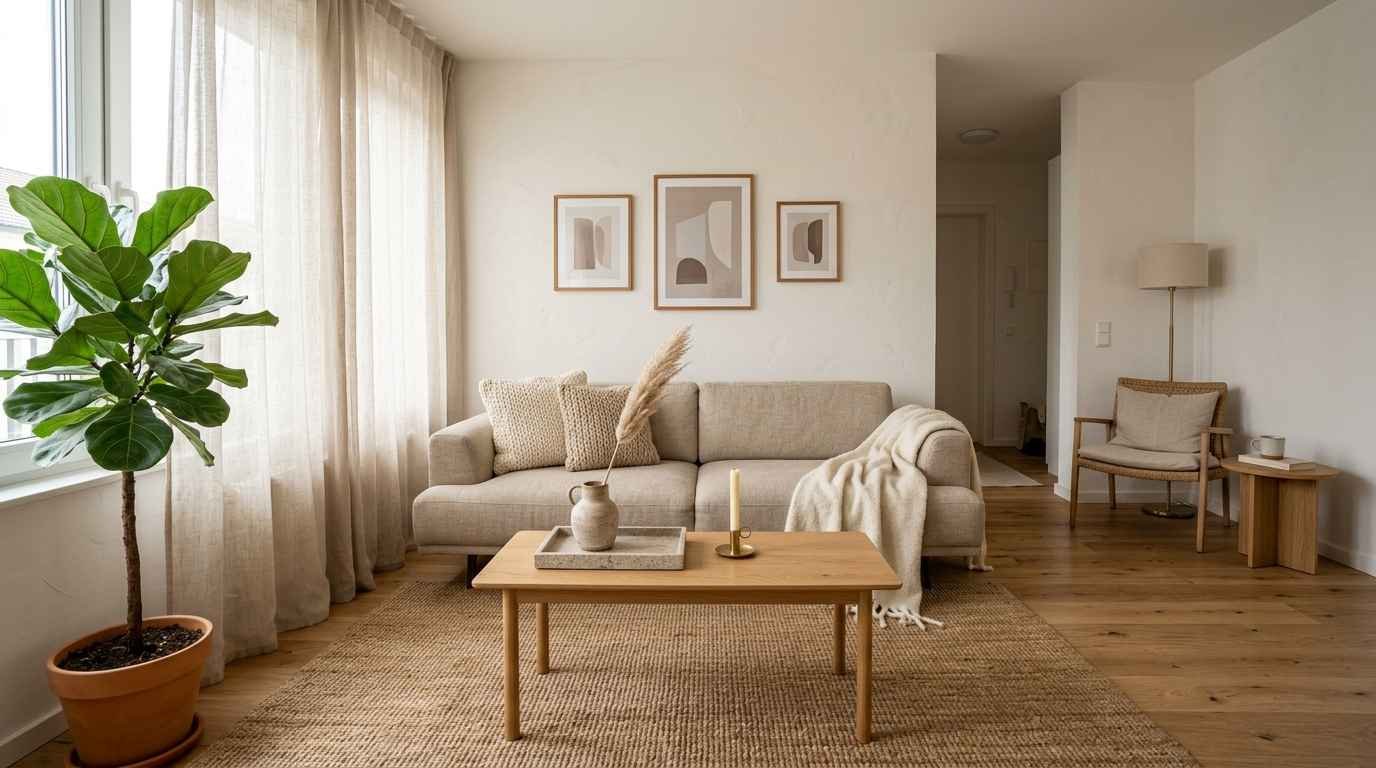
There’s something genuinely painful about a small living room that refuses to cooperate.
You’ve got the throw pillow ambitions of a Pinterest board and the square footage of a walk-in closet. Sound familiar?
I’ve been there. My first apartment had a living room so small I had to open the front door in shifts.
But here’s the thing — minimalist cozy (yes, that’s a real category, and yes, it works) completely changed how I thought about small spaces.
You can have a room that feels warm, intentional, and effortlessly stylish without needing square footage you don’t have.
Let’s get into it.
What “Minimalist Cozy” Actually Means
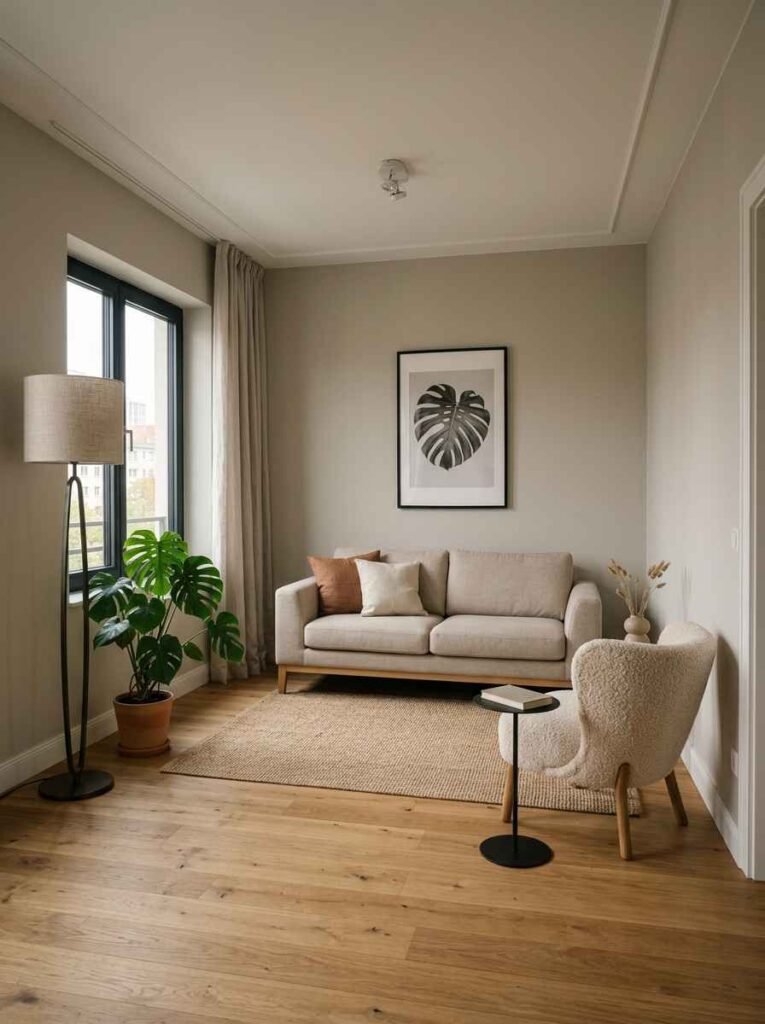
People often mix this up. Minimalism and cozy feel like opposites — one is cold and sparse, the other is warm and layered. But the overlap is where the magic lives.
Minimalist cozy means you’re selective about what goes in the room, but everything that stays earns its place through warmth, texture, or function.
You’re not stripping the room bare. You’re editing out the noise so the good stuff can breathe.
Think of it like this: a cashmere sweater hanging on one good hook hits differently than 12 sweaters stuffed on a rack. Same idea. Fewer things, more feeling.
The Foundation: Colors That Do the Heavy Lifting
Warm Neutrals Over Cold Grays
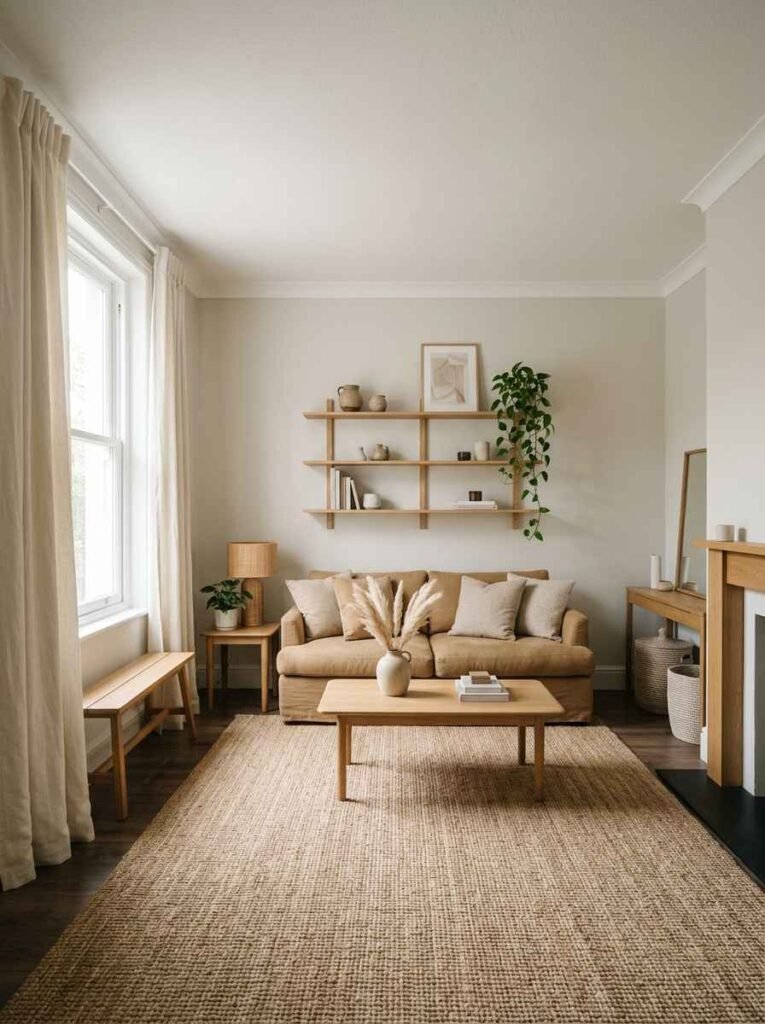
Cold gray was having a moment about five years ago. That moment has passed.
If you’re working with a small space and want it to feel cozy, warm neutrals are your best friend — think greige, warm white, soft sand, oat, and muted terracotta.
These tones bounce light in a way that makes a room feel larger without sacrificing warmth. A room painted in Benjamin Moore’s “White Dove” or Sherwin-Williams’ “Accessible Beige” reads immediately as both airy and inviting.
You can read more about choosing the right warm neutrals for small spaces at Apartment Therapy’s color guide (apartmenttherapy.com).
One Accent Color, Done Right
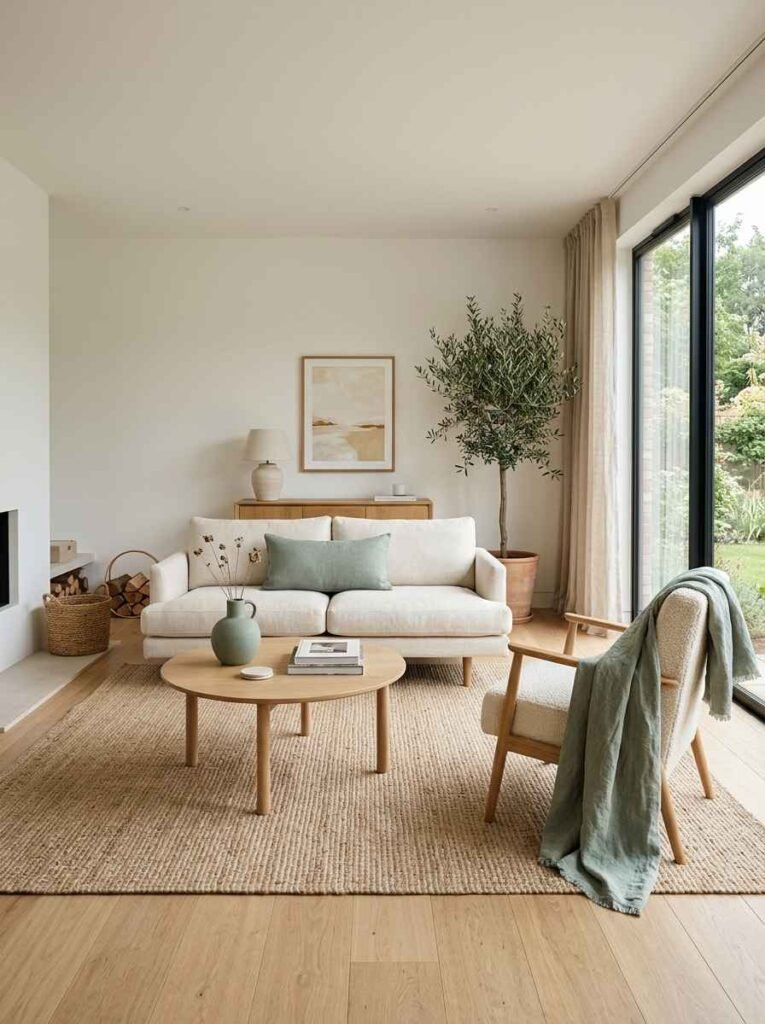
Pick one. Seriously, just one. Whether it’s a dusty sage, a muted rust, or a deep forest green, a single accent color pulled through the space — in a cushion, a vase, a throw — creates cohesion without visual clutter.
IMO, the biggest mistake people make in small living rooms is treating every surface as an opportunity to introduce a new color. Restraint is the move.
Furniture: The 6 Rules for Small Spaces
1. Legs Are Everything
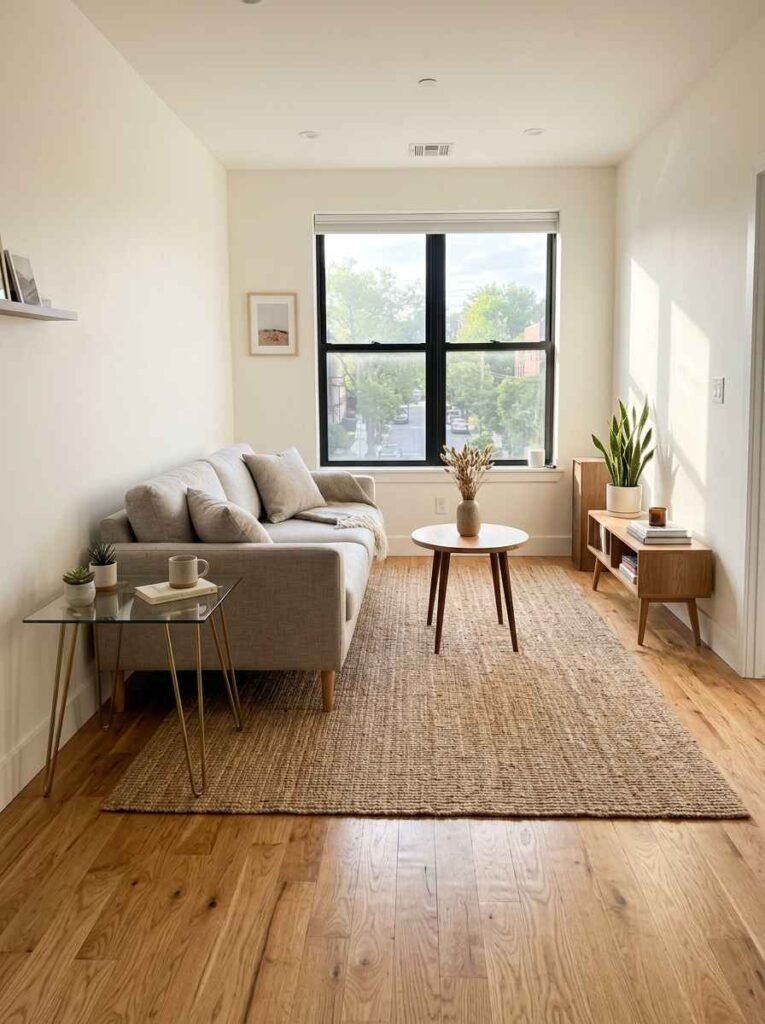
Furniture with visible legs creates the illusion of more floor space.
A sofa that sits on legs rather than flush to the ground makes the room feel more open even if the footprint is identical.
This is one of those things you don’t notice until you notice it. Then you can’t un-see it.
2. Scale Down Without Sacrificing Comfort
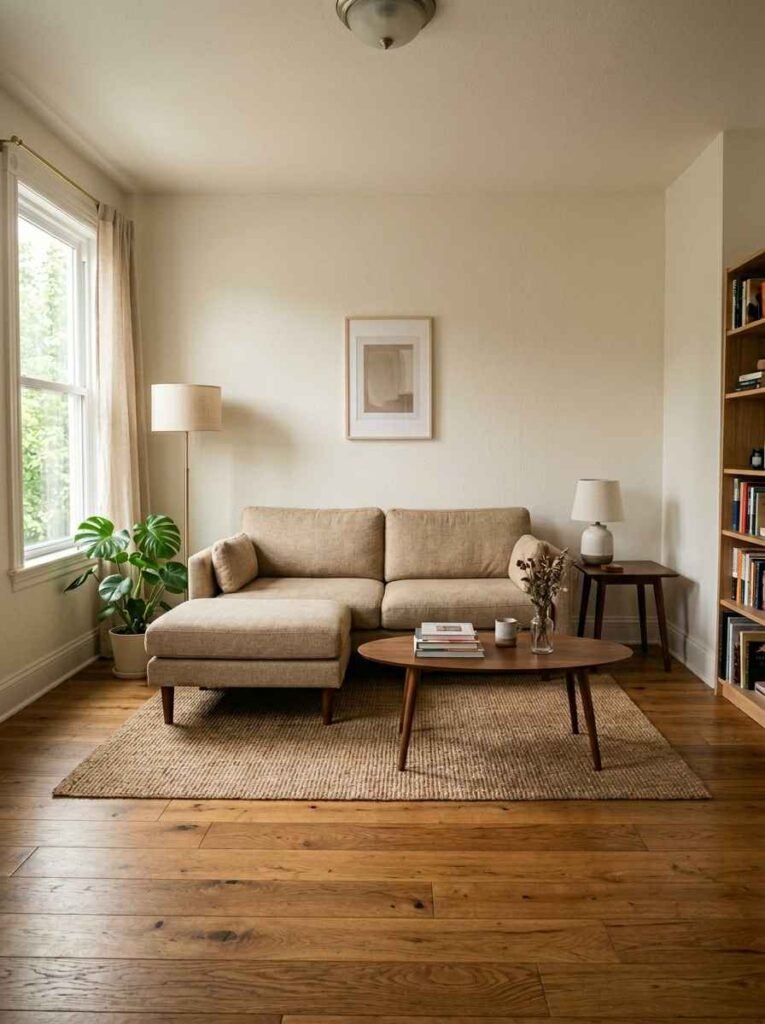
A sectional in a studio apartment is, respectfully, a cry for help. A well-proportioned two-seater or a loveseat with a chaise keeps things human-sized and leaves room for actual life.
Key rule: the sofa should leave at least 18 inches of clearance on either side whenever possible.
3. Multi-Function Is Non-Negotiable
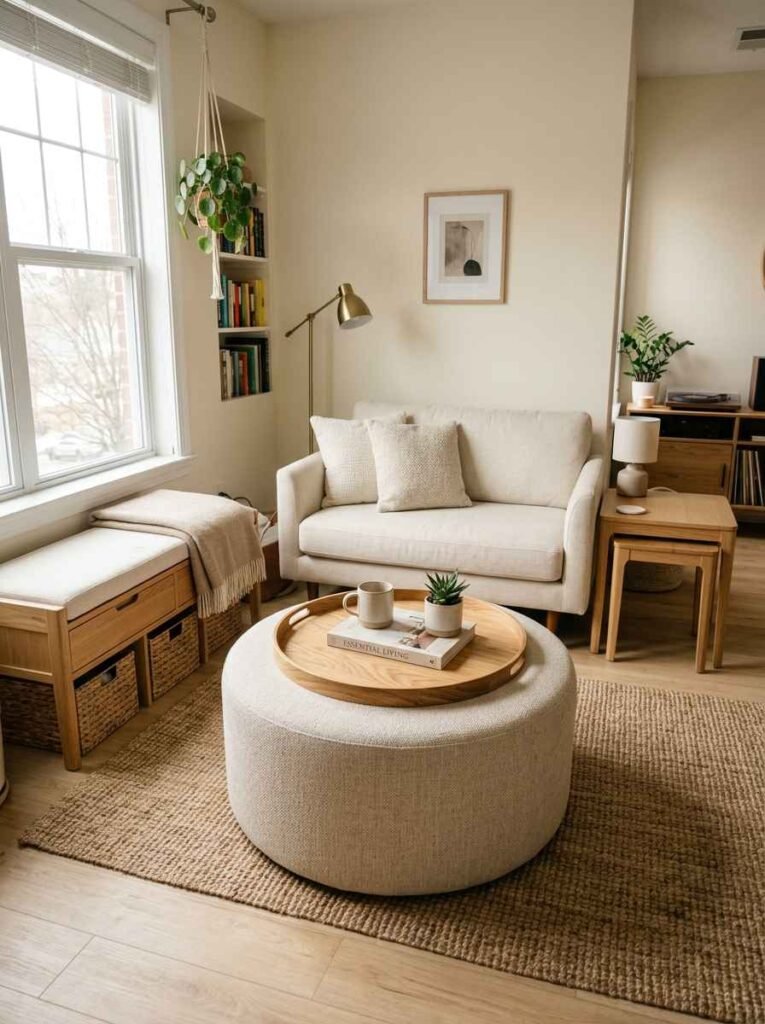
Here are pieces worth investing in:
- Ottoman with hidden storage (replaces a coffee table and adds seating)
- Nesting tables (stack away when not in use, deploy when needed)
- Storage bench under a window
- Sofa bed or daybed for double-duty use
- Lift-top coffee table for working from the couch
Every piece should pull double duty. If it can’t, it’s a harder sell in a small space.
4. Go Vertical
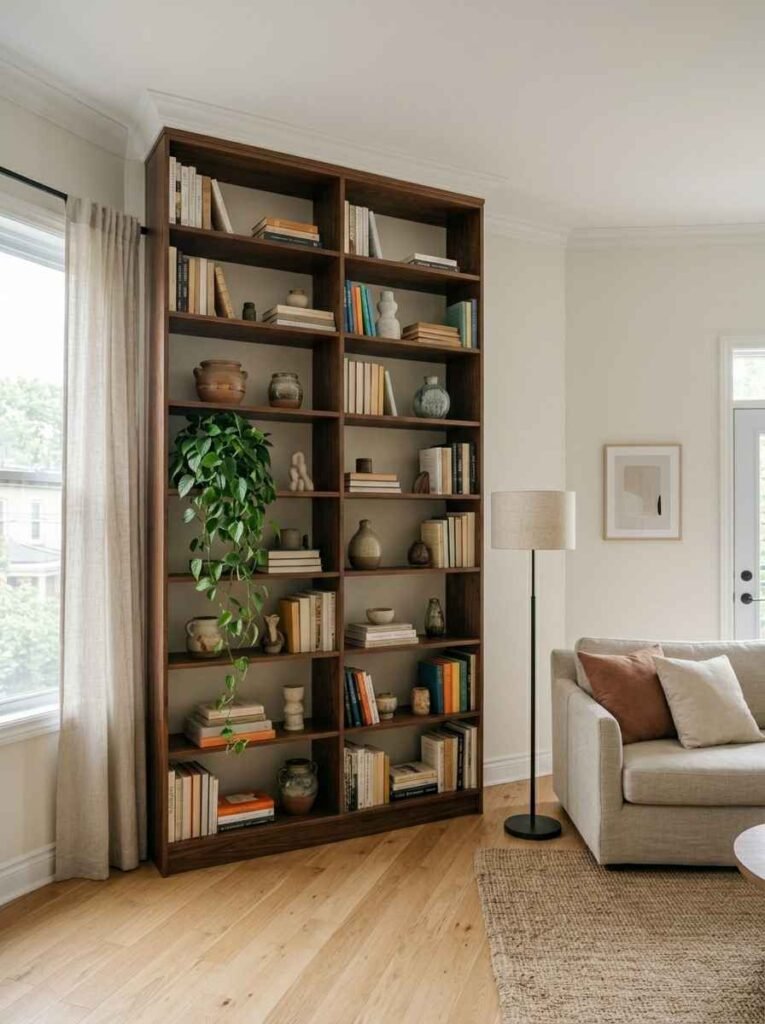
When floor space is limited, think height. Tall, slim bookshelves draw the eye upward and give the perception of higher ceilings.
A floating shelf arrangement — staggered and intentional — can replace a bulky media console entirely.
The trick: leave some shelves breathing room. Don’t pack every inch. White space on a shelf is a design choice, not wasted space.
5. Transparent and Light-Toned Pieces
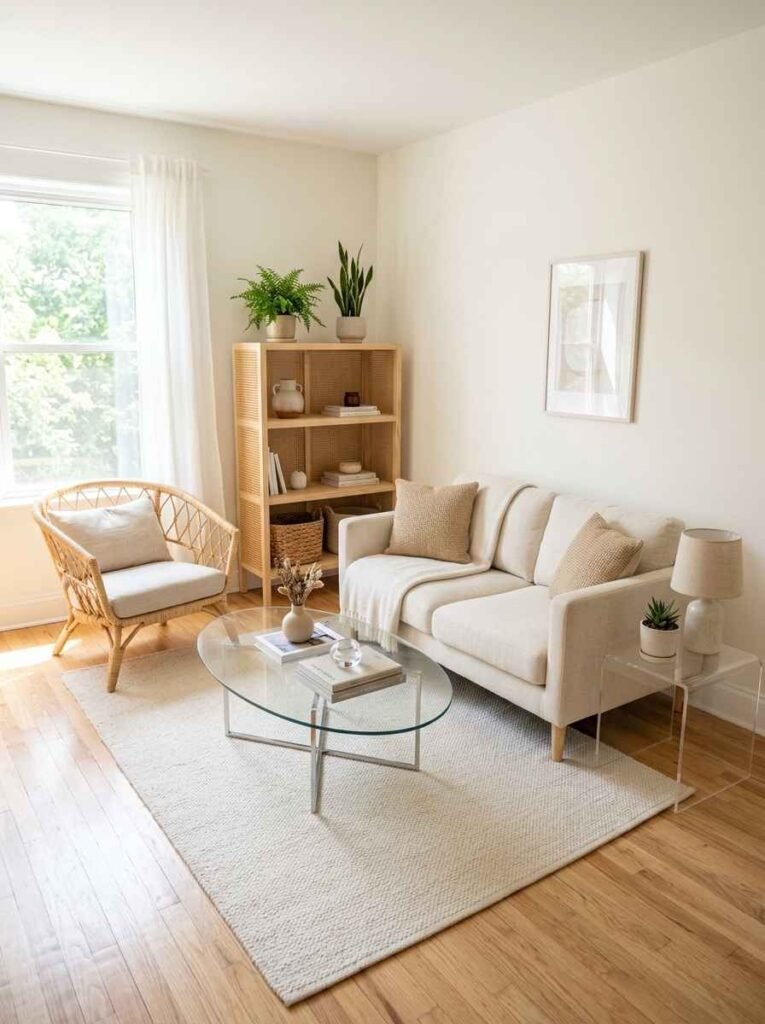
Acrylic or glass side tables. Light oak over dark walnut. Rattan and natural cane over heavy upholstered pieces. These materials keep the visual weight low, which reads as more space.
This isn’t about being matchy-matchy. A mix of light wood tones and transparent elements keeps things eclectic and interesting without crowding the eye.
6. The Sofa Matters More Than You Think
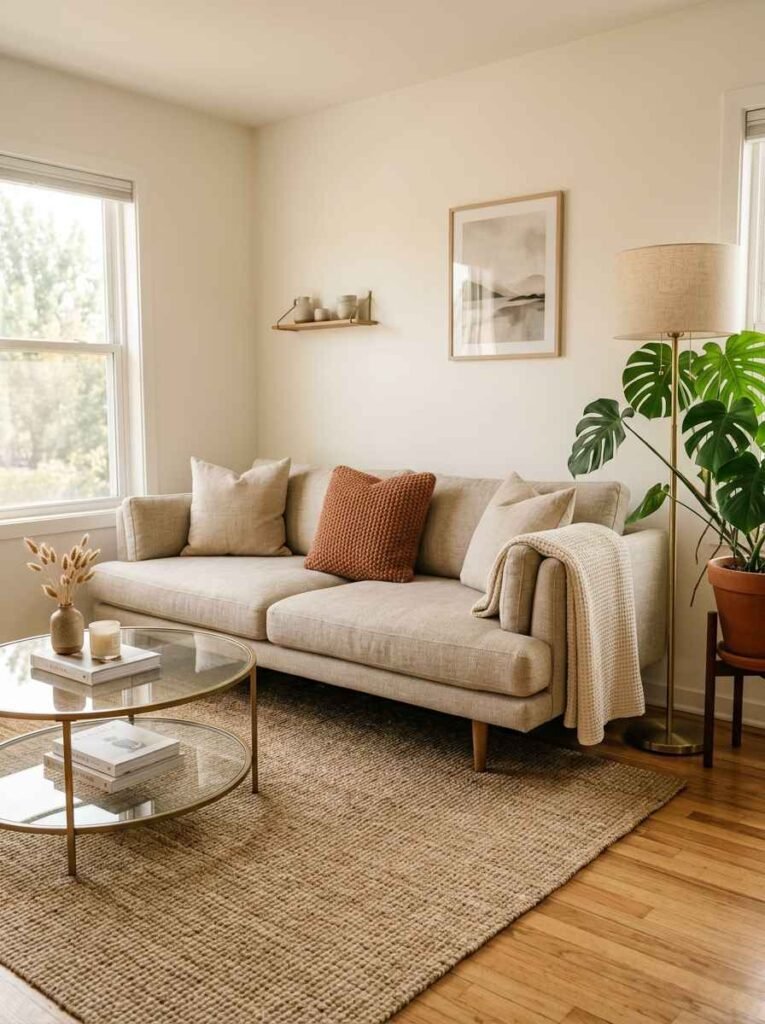
In a small living room, the sofa is the room. Get this one wrong and everything fights against it. Get it right and half the work is done.
A low-profile sofa in a muted linen or performance fabric — something in the oat, stone, or warm white family — will carry almost any small room without dominating it.
33 Minimalist Cozy Living Room Ideas
Ideas 1-8: Texture and Layering
1. Layer two throw blankets, not one. One folded over the armrest, one loosely draped across the back cushions. Suddenly the sofa looks lived-in and intentional.
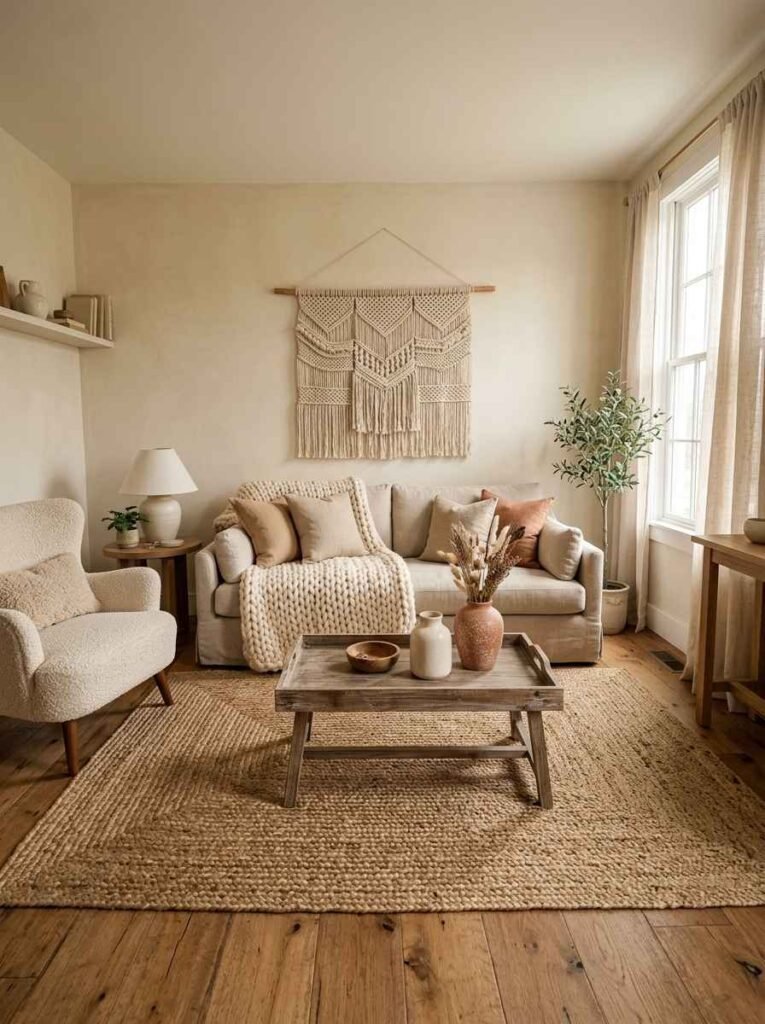
2. A chunky knit pillow cover. One is enough. You don’t need eight. Just one, in a neutral tone, adds tactile interest without visual noise.
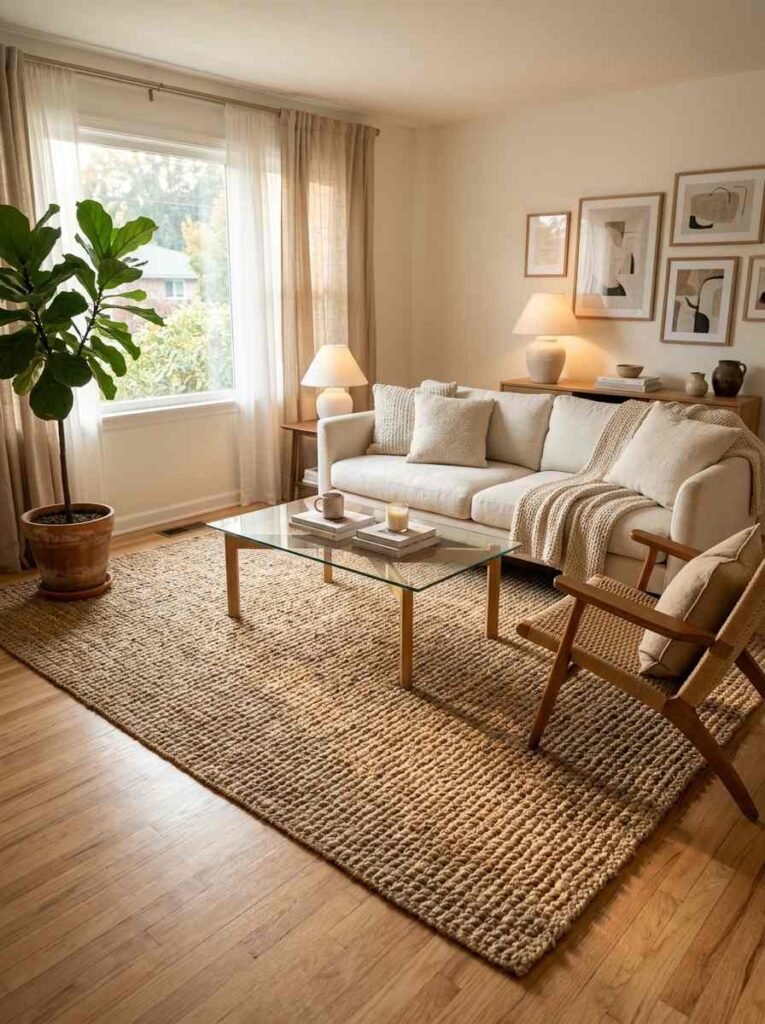
3. A jute or wool area rug. Natural fiber rugs ground a space and add warmth underfoot.
They also age incredibly well. Go bigger than you think you need — an undersized rug is one of the most common small-room mistakes.
4. Linen curtains, floor-length. Even on a small window. Hanging curtains high (close to the ceiling) and wide (past the window frame on both sides) makes windows feel bigger and ceilings feel taller.
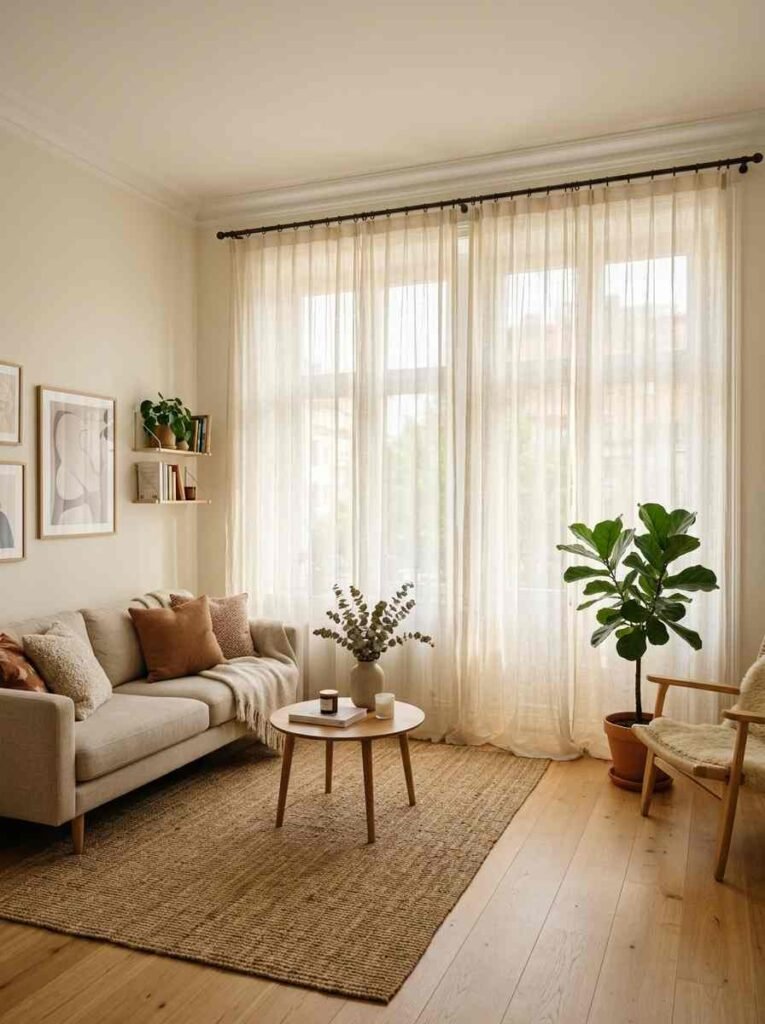
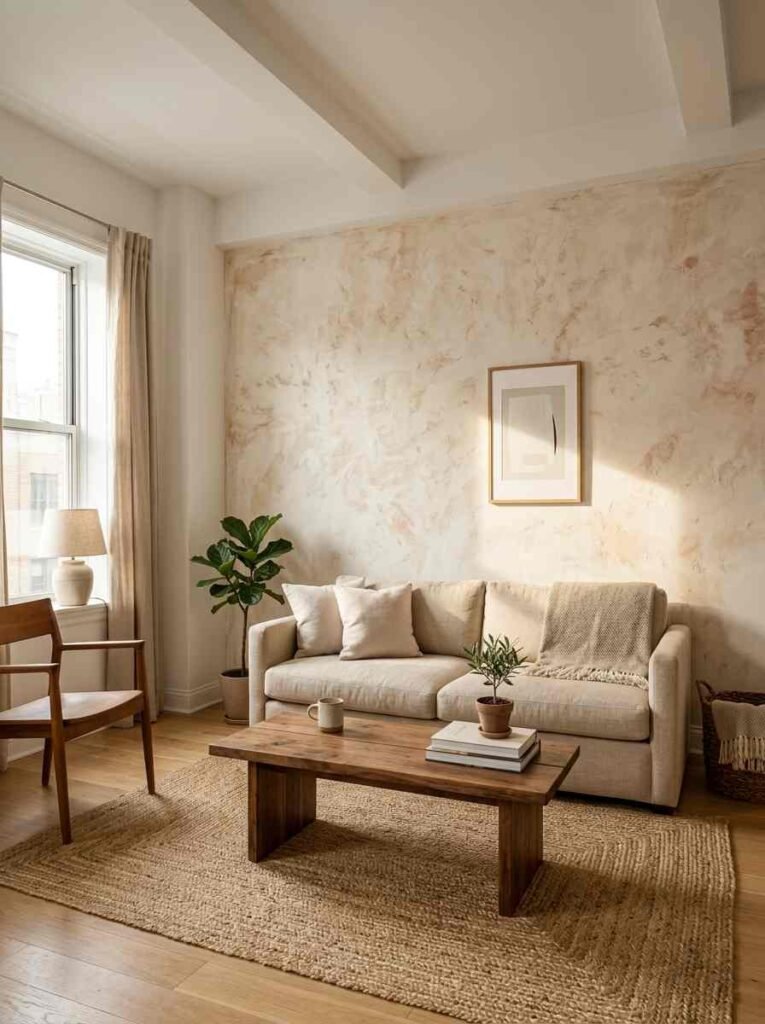
5. A textured wall treatment on one wall. Limewash paint, a simple plaster effect, or even a carefully applied Roman clay technique adds depth that flat paint can’t touch.
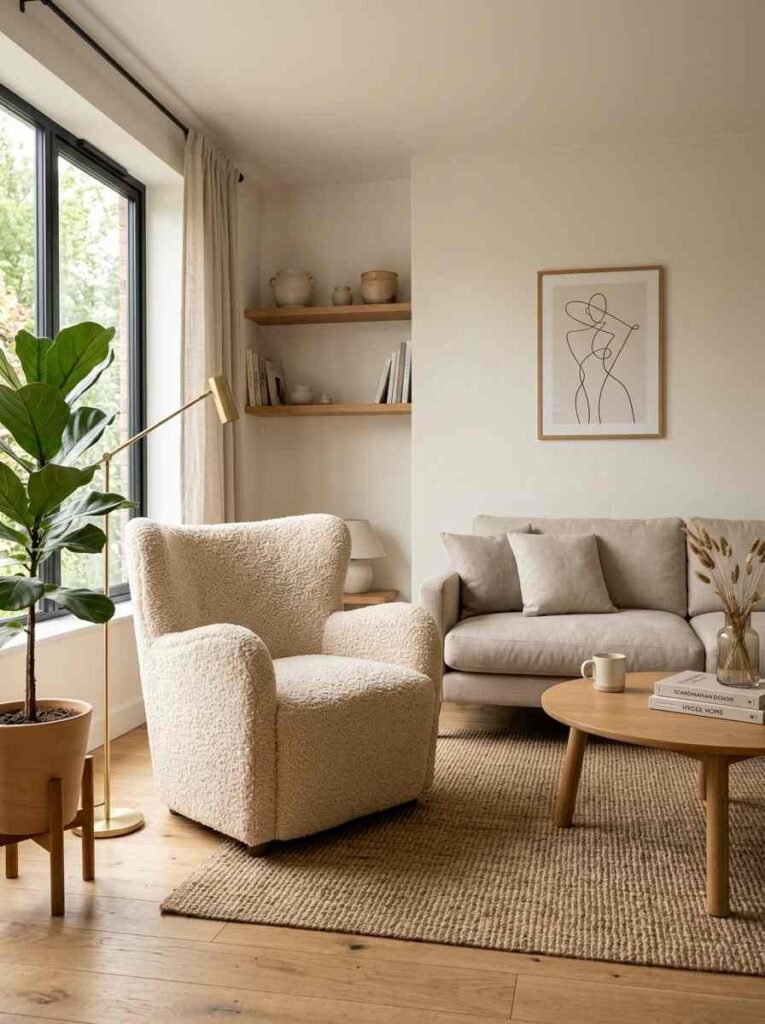
6. Boucle or sherpa on one accent chair. You don’t need a full boucle sofa. One small accent chair in a textured fabric adds the cozy factor without going overboard.
7. A woven wall hanging. The modern macrame conversation has evolved. A simple, tightly woven textile in muted tones reads as art without feeling kitschy.
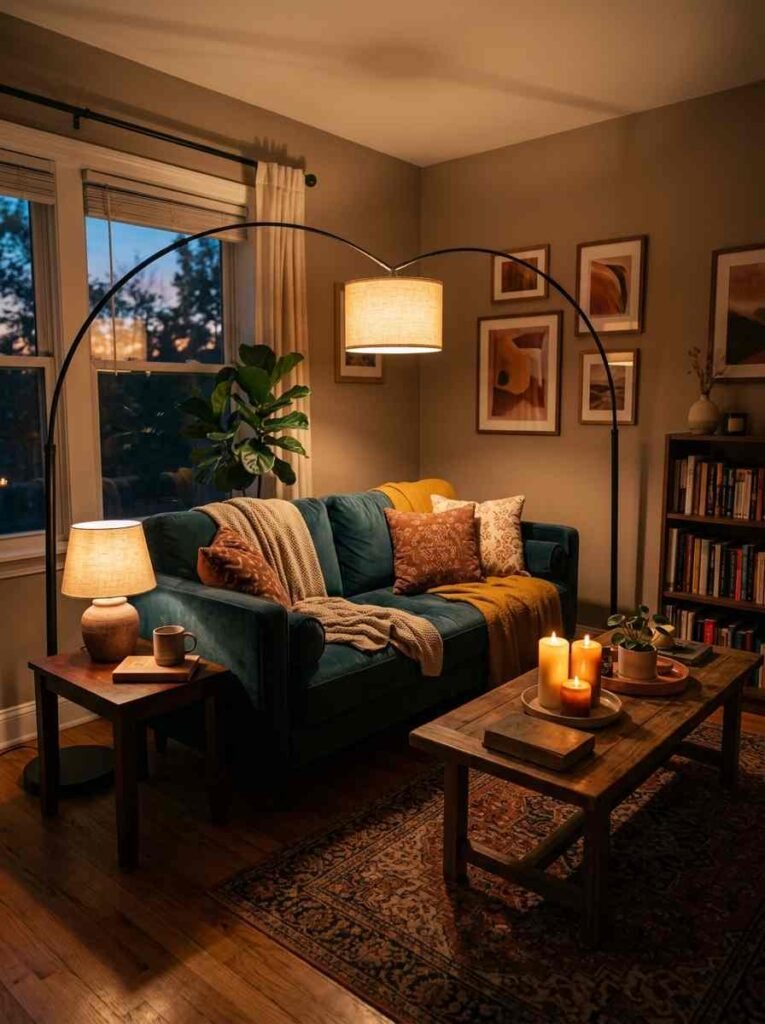
8. A knitted or crochet pouf. Footrest, extra seating, or side table (with a tray on top). Gets the job done in multiple categories.
Ideas 9-16: Lighting That Changes Everything
9. Ditch the overhead light as your primary source.
A lamp at eye level makes a room feel intimate and warm. A bare overhead fixture makes a room feel like a waiting room. Layer your lighting: floor lamp, table lamp, candles.
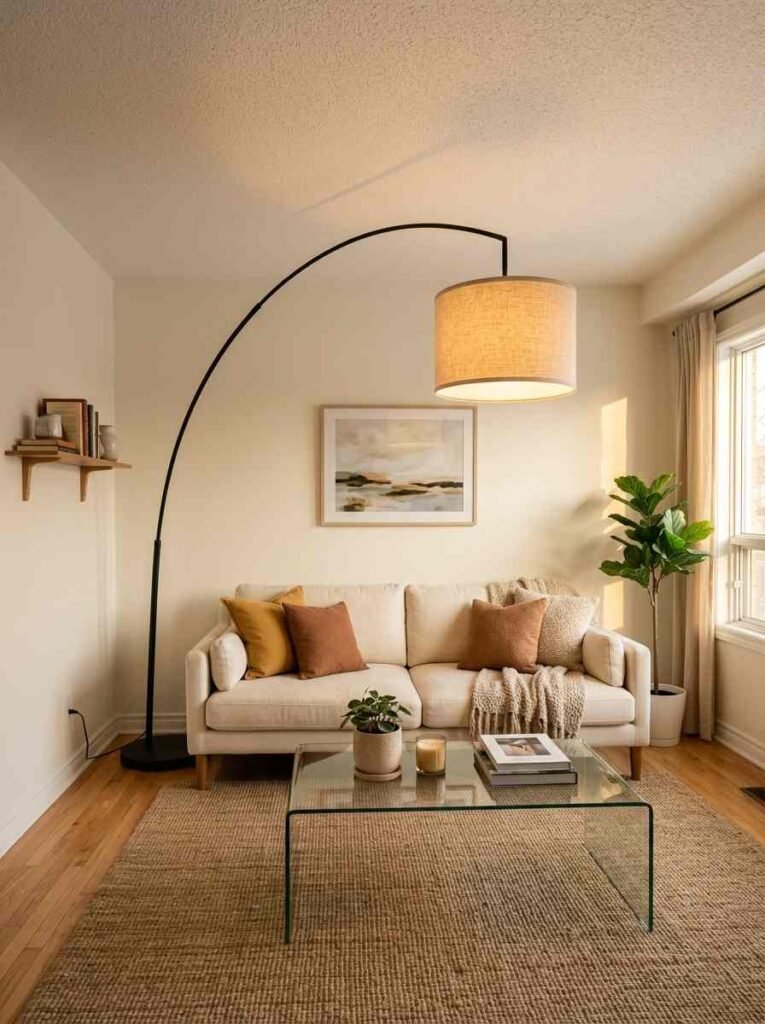
10. Warm bulbs only. 2700K color temperature. Non-negotiable for a cozy feel. Cool-white bulbs in a living room are a crime.
11. A tall arc floor lamp. Saves table surface space while providing overhead-style light. IKEA’s Hektar and similar styles give serious atmosphere for under $100.
12. Candles grouped in odd numbers. Three pillar candles in varying heights, clustered together, do more for ambiance than most people expect. (Unscented if you’re sensitive, scented if you love it.)
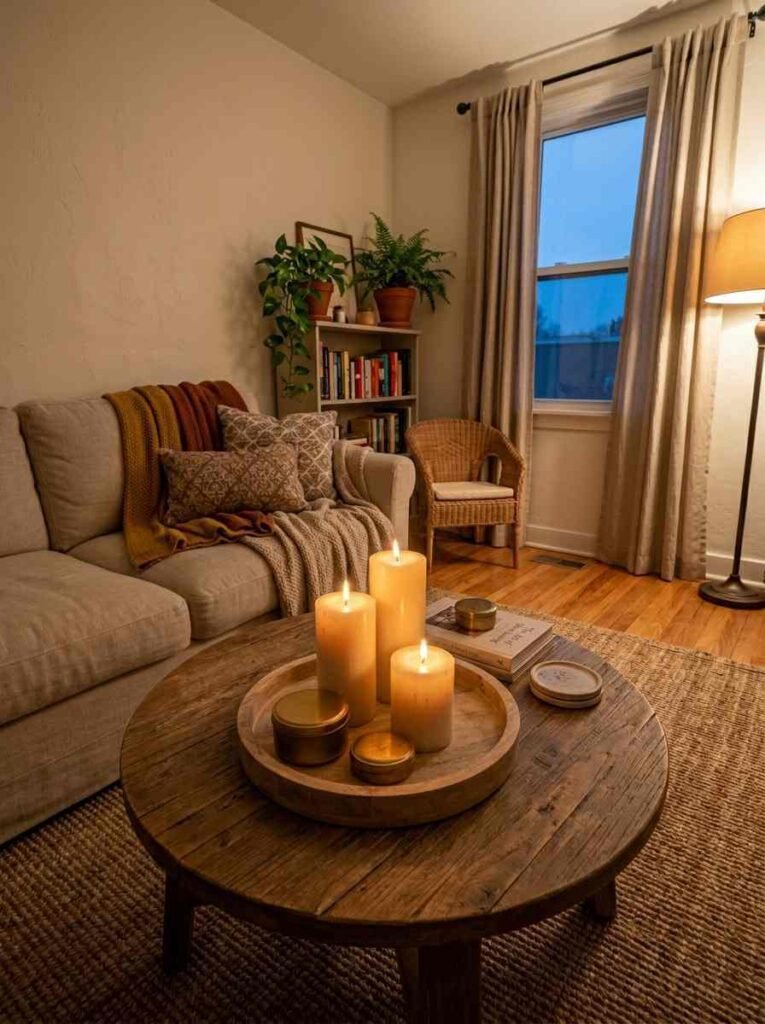
13. String lights used intentionally. Not draped haphazardly around a window. Think a small cluster in a glass vase or woven through a bookshelf for a specific, deliberate glow.
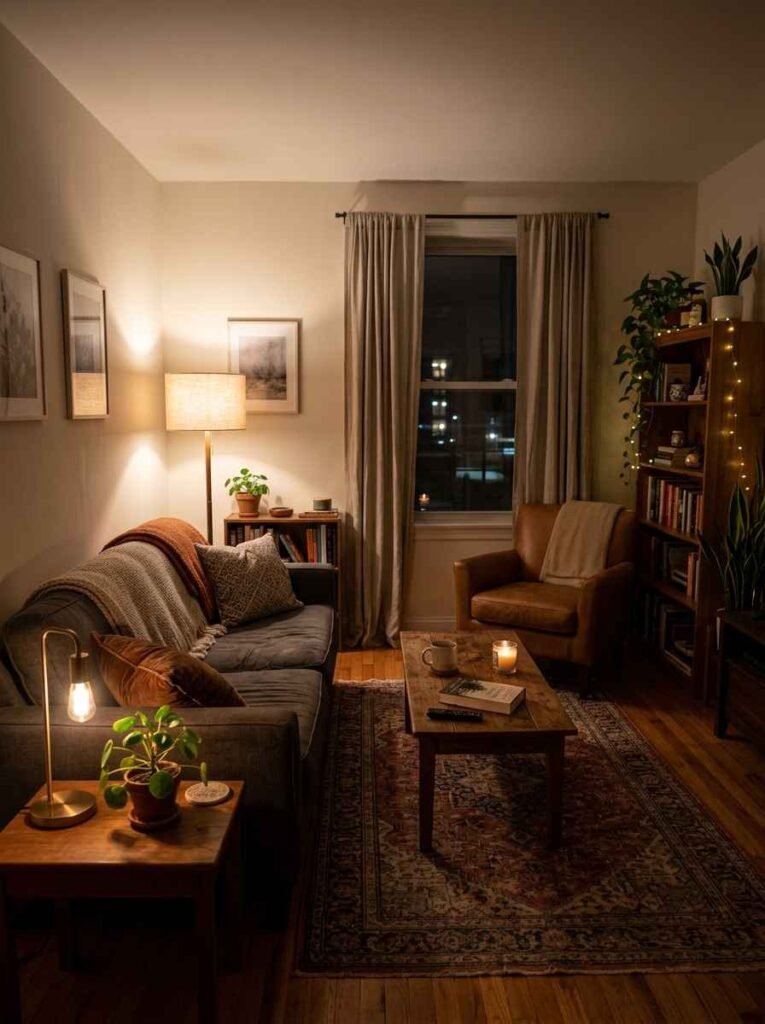
14. A dimmer switch. Honestly, this might be the single highest ROI upgrade in a living room. The ability to dial the mood up or down changes everything.
15. Wall sconces as bedside-table alternatives. If your living room doubles as a bedroom (hello, studio life), plug-in wall sconces free up surface space and look considered.
16. A lit candle lantern on the floor. Floor-level light sources add layers and depth. A single lantern in the corner costs almost nothing and changes the entire atmosphere at night.
Ideas 17-24: Plants and Natural Elements
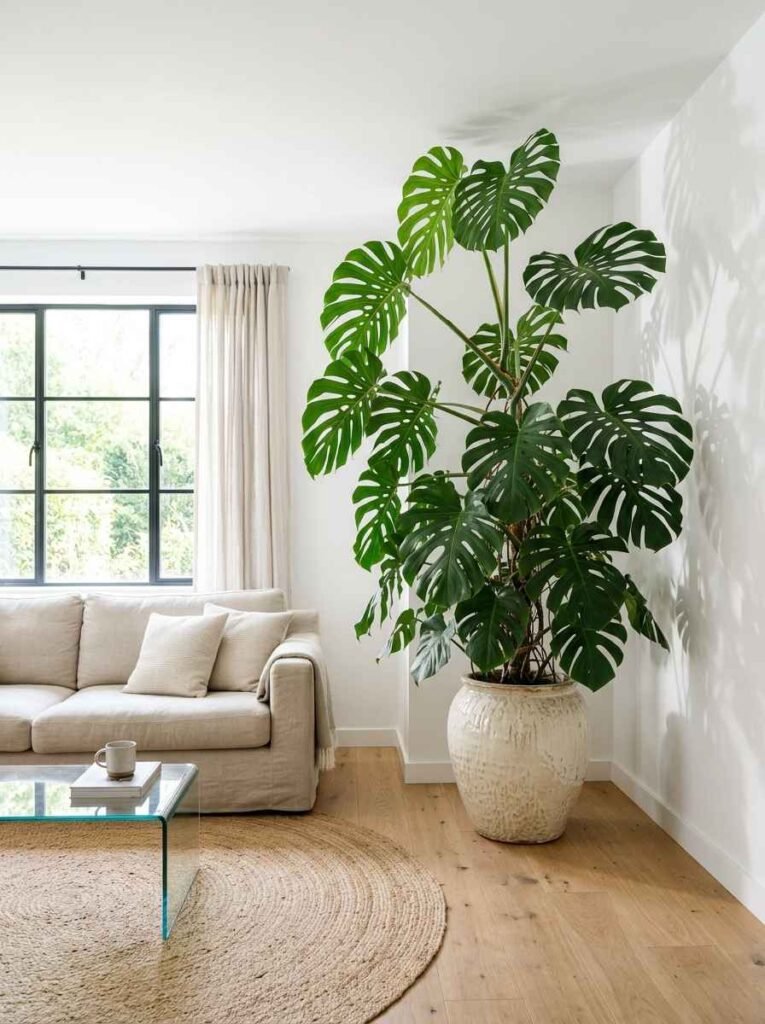
17. One large-format plant over several small ones. A fiddle-leaf fig, a monstera, or a tall snake plant makes a statement.
Seven small succulents on a shelf looks like a garden center. Pick your aesthetic accordingly.
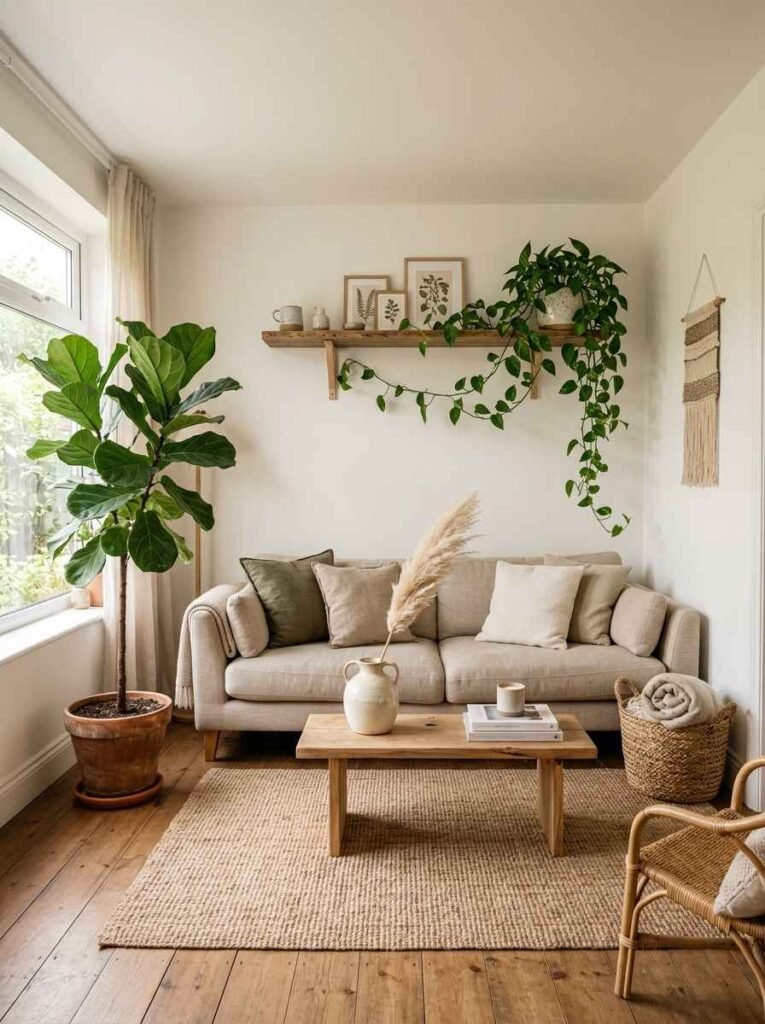
18. A simple trailing plant on a high shelf. Pothos, string of pearls, or heartleaf philodendron cascade downward and soften vertical surfaces beautifully.
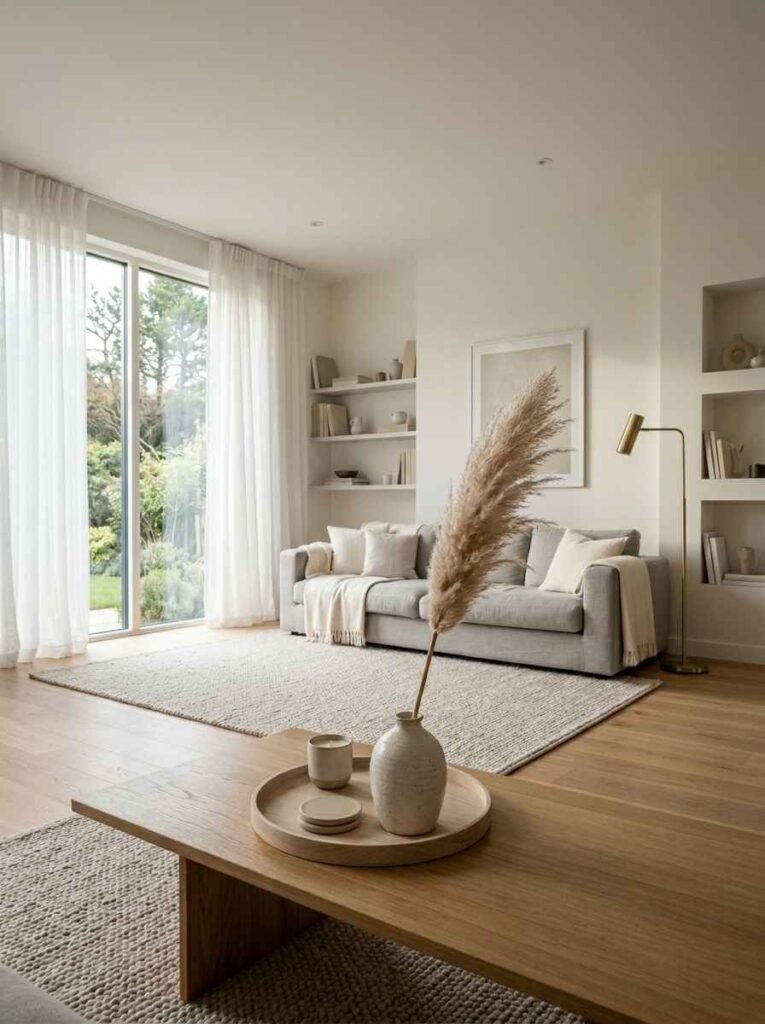
19. A single stem in a bud vase. You don’t need a full arrangement. One dried pampas stem or a single branch of eucalyptus in a slim ceramic vase is quietly perfect.
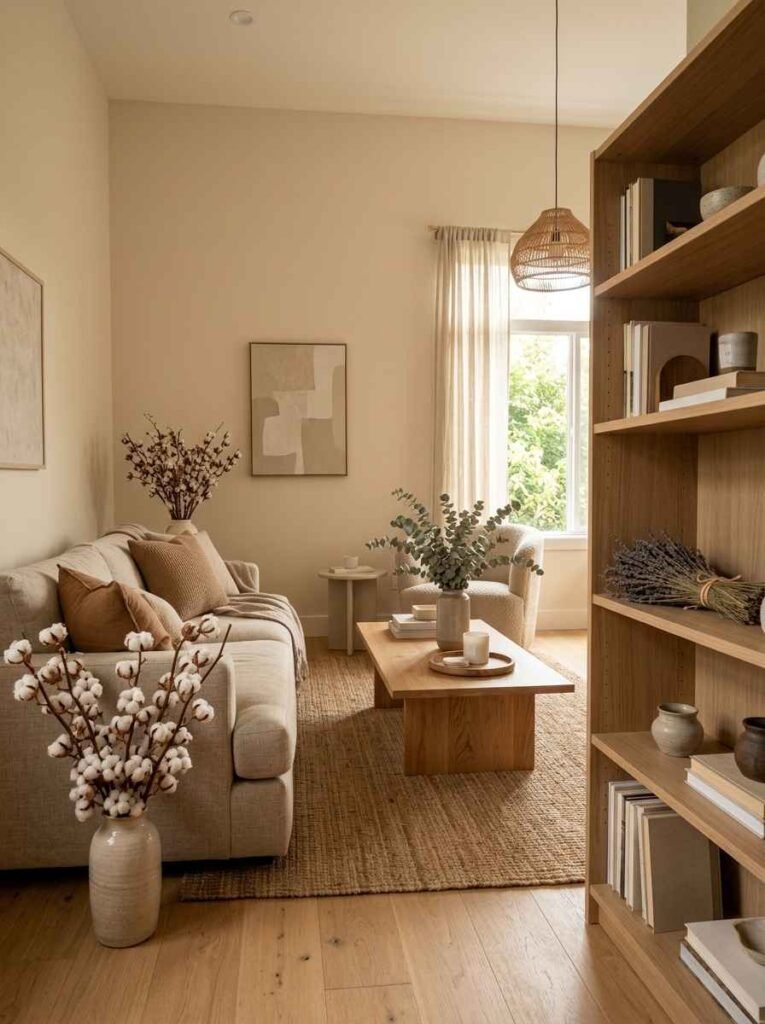
20. Dried botanicals over fresh flowers. Lower maintenance, longer lasting, and honestly they look incredible. Dried cotton stems, dried lavender, preserved leaves. Less upkeep, same warmth.
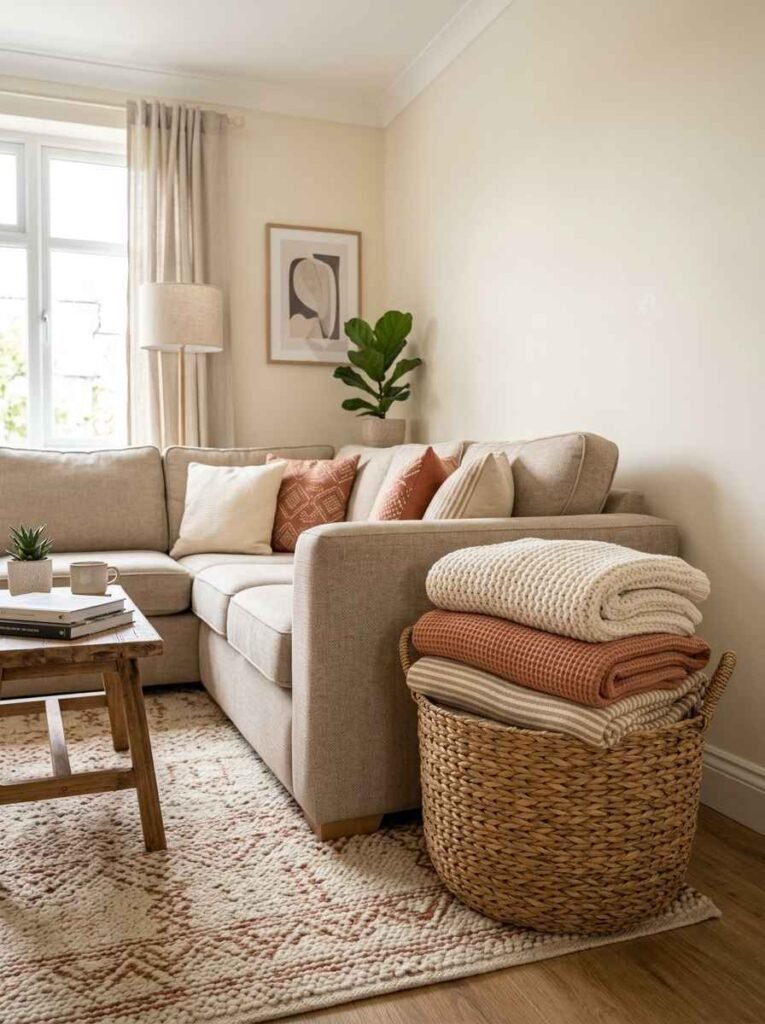
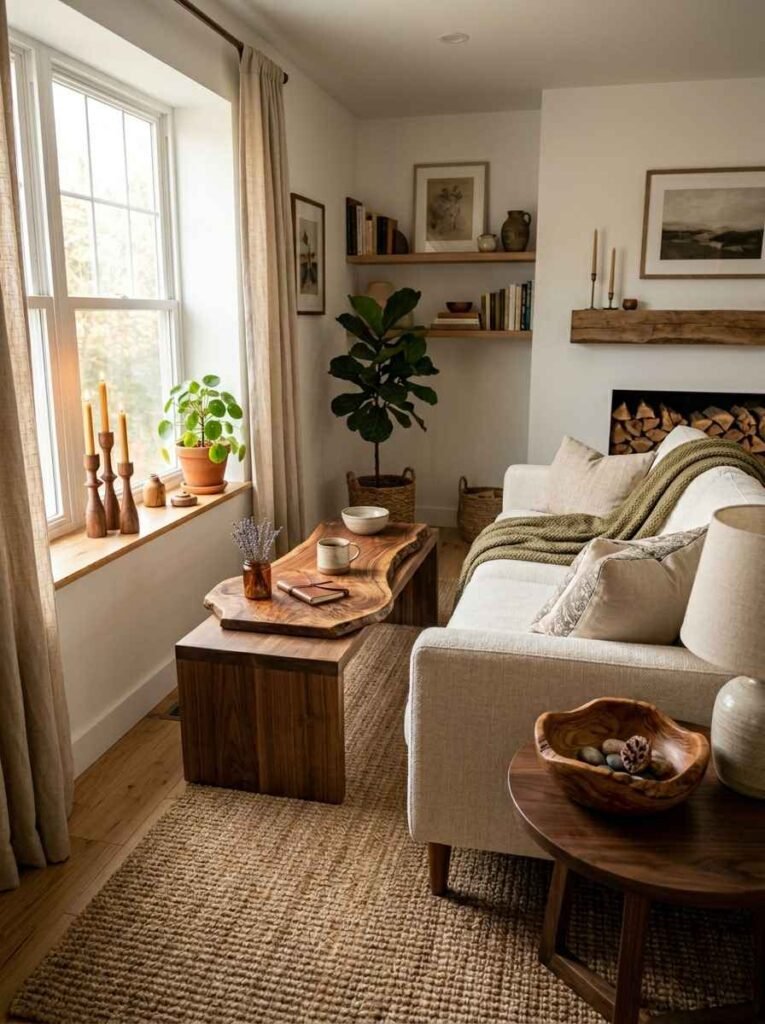
21. Natural wood elements. A simple live-edge wood tray on your coffee table, a wooden candle holder, a carved wooden bowl.
These ground a space and add organic warmth without competing with anything else.
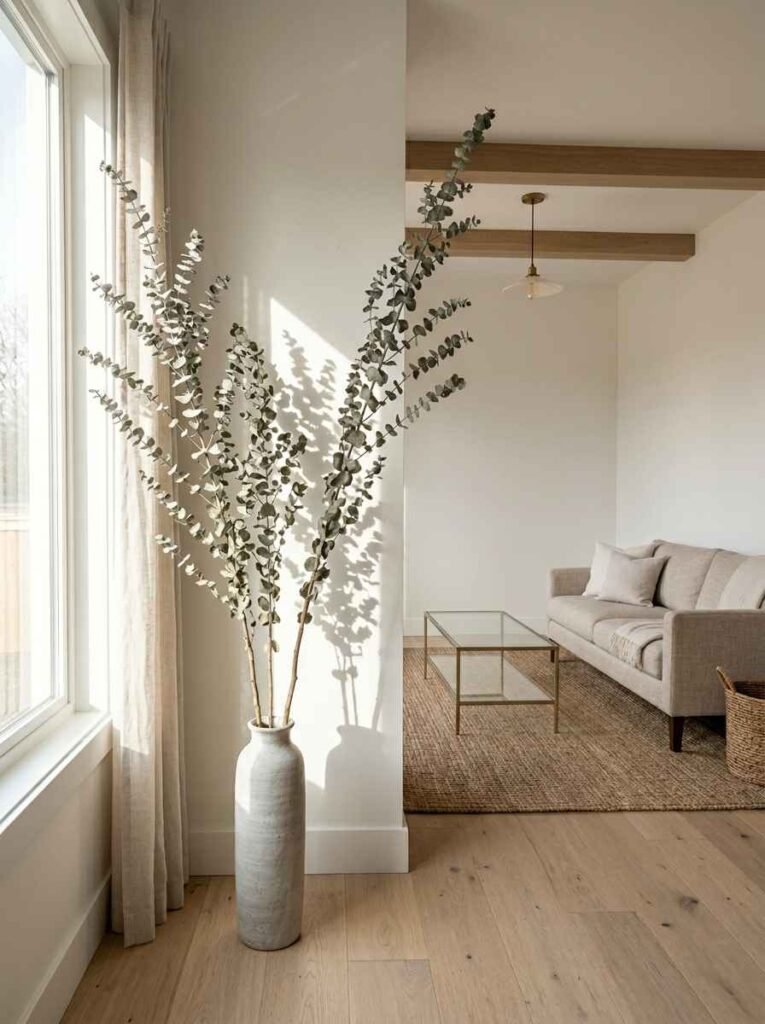
22. Stone or marble accessories. A small marble coaster set, a travertine bookend, a stone soap dish repurposed as a ring holder on a side table. These small touches add a quiet luxury.
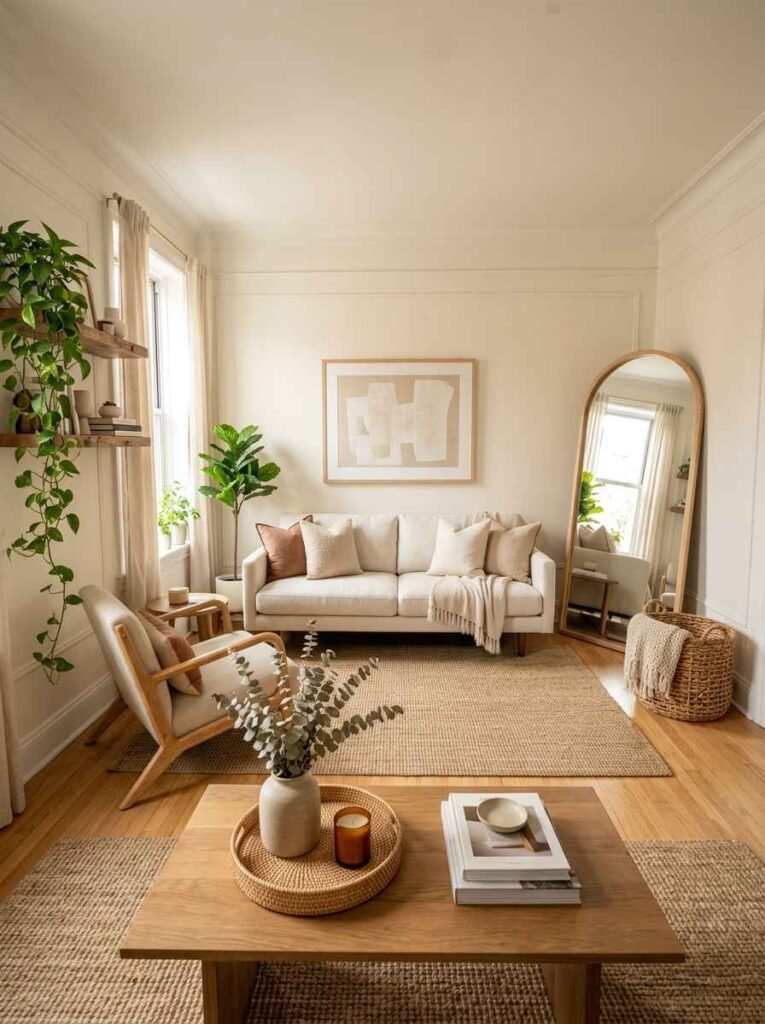
23. A woven basket for blanket storage. Both decorative and functional. A seagrass basket in the corner says “I am an organized person who also likes throws” and that’s a vibe.
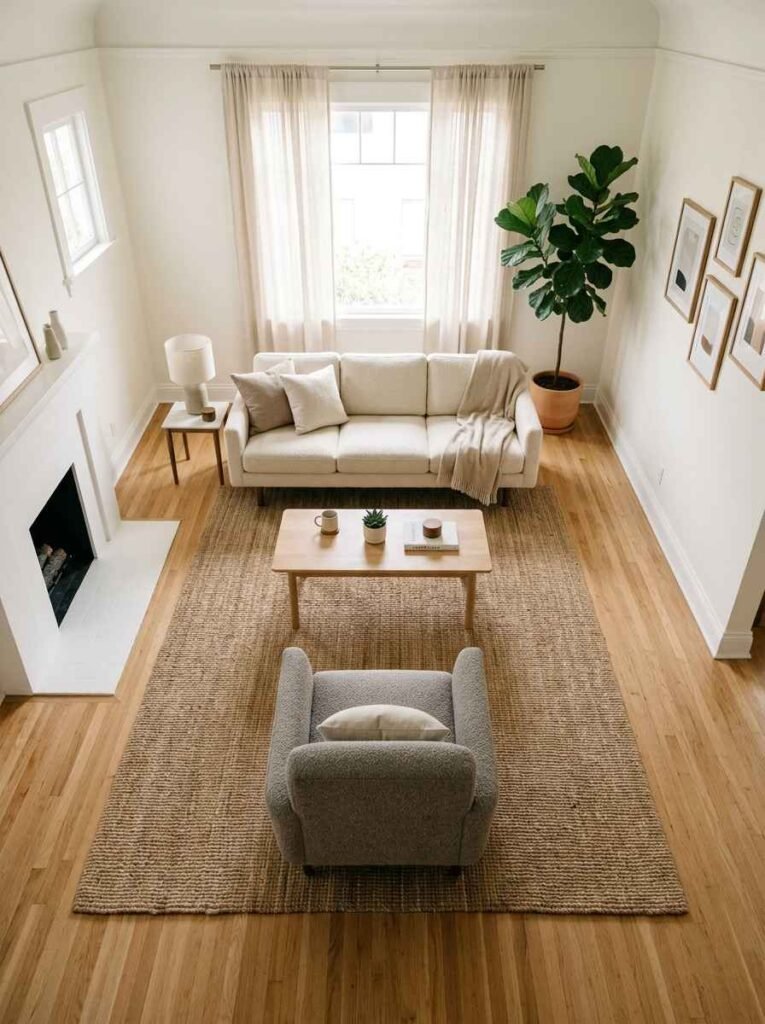
24. Branches in a tall vase. Dried or real, branches add height and drama for almost no cost. Eucalyptus branches, birch branches, dried magnolia — all of them work.
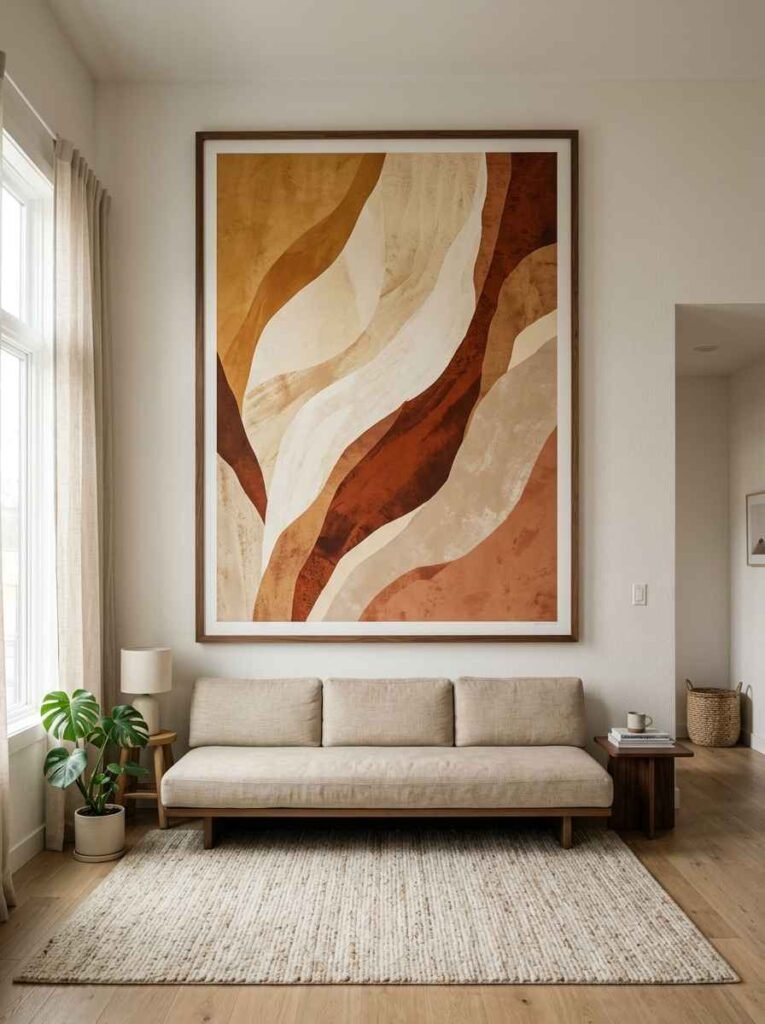
Ideas 25-33: Layout, Styling, and the Final Touches
25. Float your furniture off the walls. I know this feels counterintuitive in a small space. But furniture pushed tight against every wall actually makes a room feel smaller.
Floating the sofa slightly creates depth and makes the space feel more intentional.
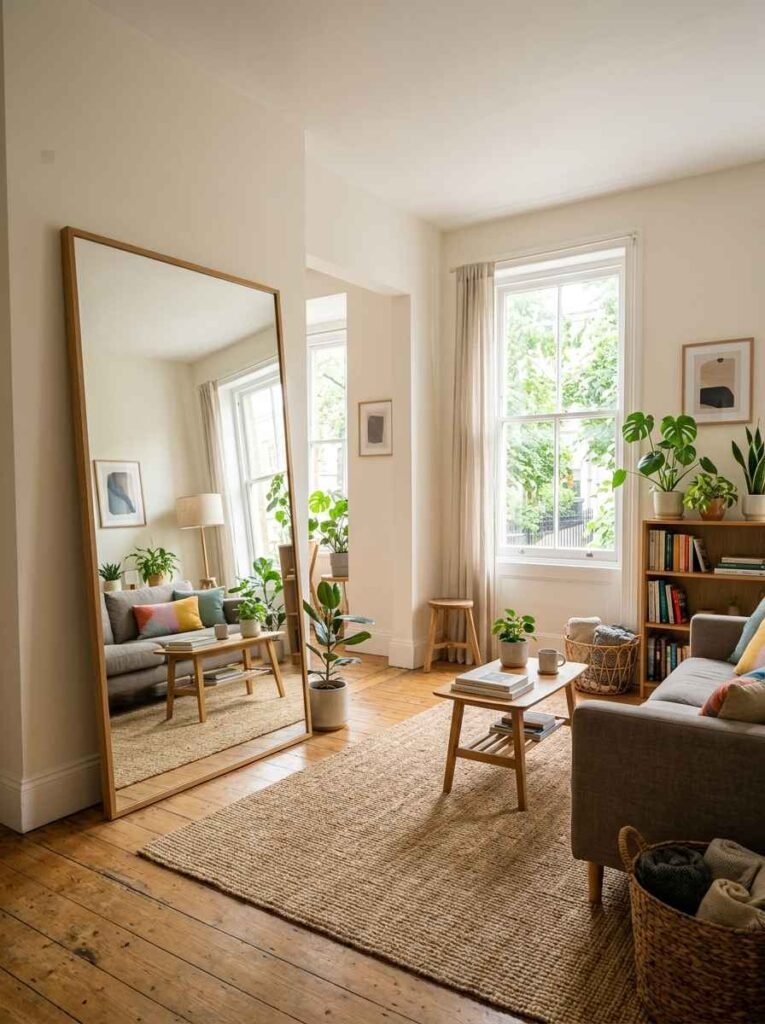
26. A gallery wall done with restraint. Three to five frames, similar tones, varied sizes. Leave space between frames. A tightly packed gallery wall in a small room is overwhelming. Edited is better.
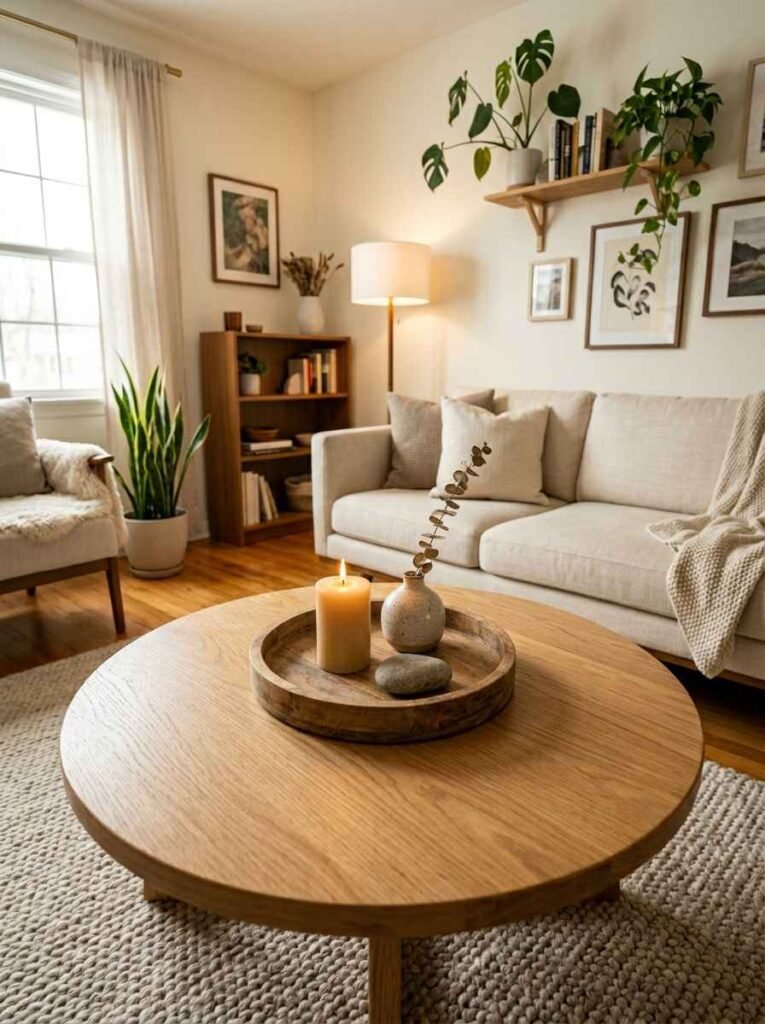
27. A single large art piece instead of a gallery wall. Honestly, sometimes one good piece — something bold and oversized — is more effective than a collection. One large print hung properly can anchor an entire wall.
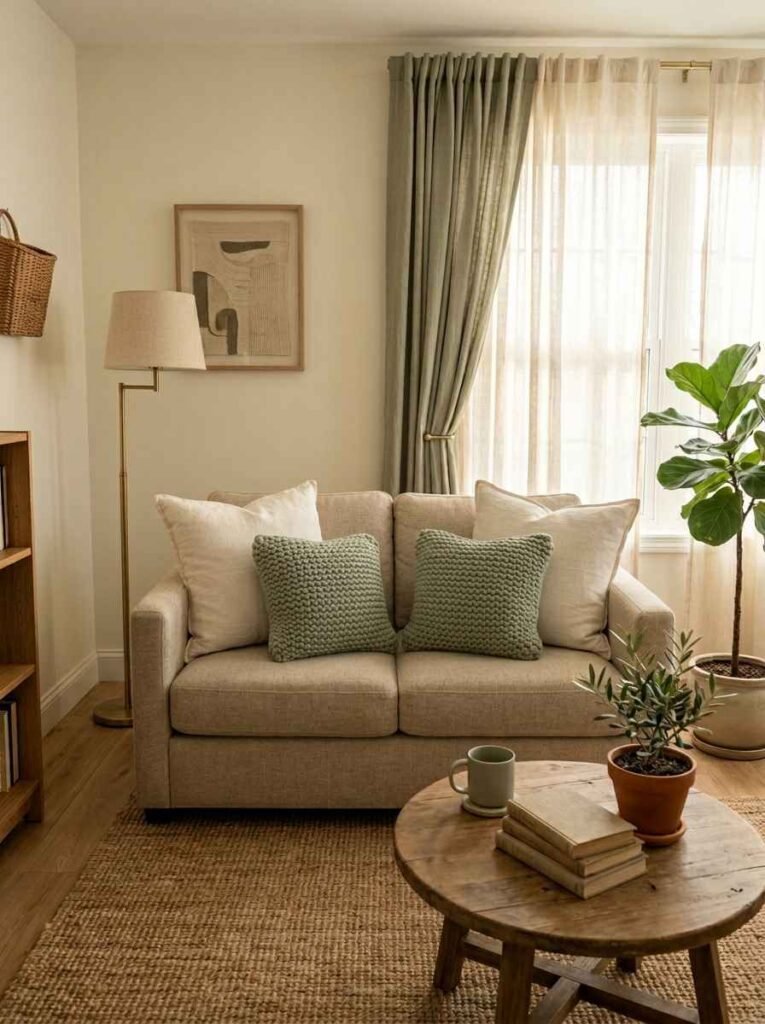
28. Mirrors placed deliberately. A large mirror on the wall opposite a window doubles the light. A leaning floor mirror in a corner adds dimension. Mirrors in small spaces are practically mandatory.
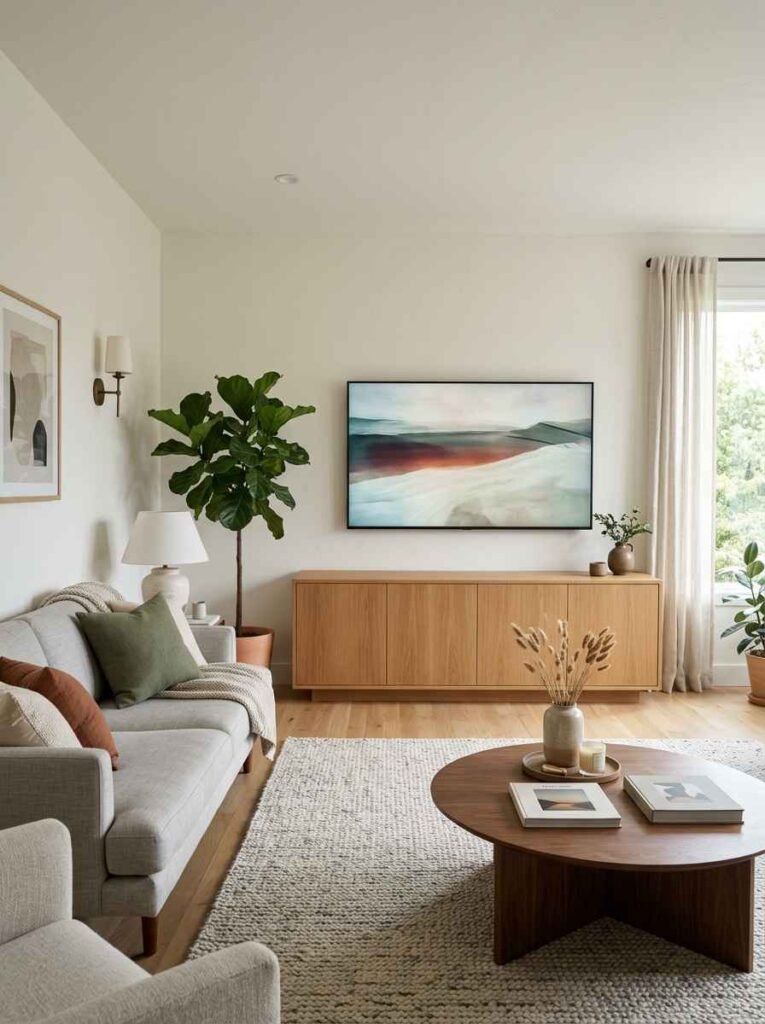
29. A tray to corral your coffee table items. A wooden or stone tray holding a candle, a small plant, and a book reads as intentional styling. The same items scattered around look like clutter. The tray is the difference.
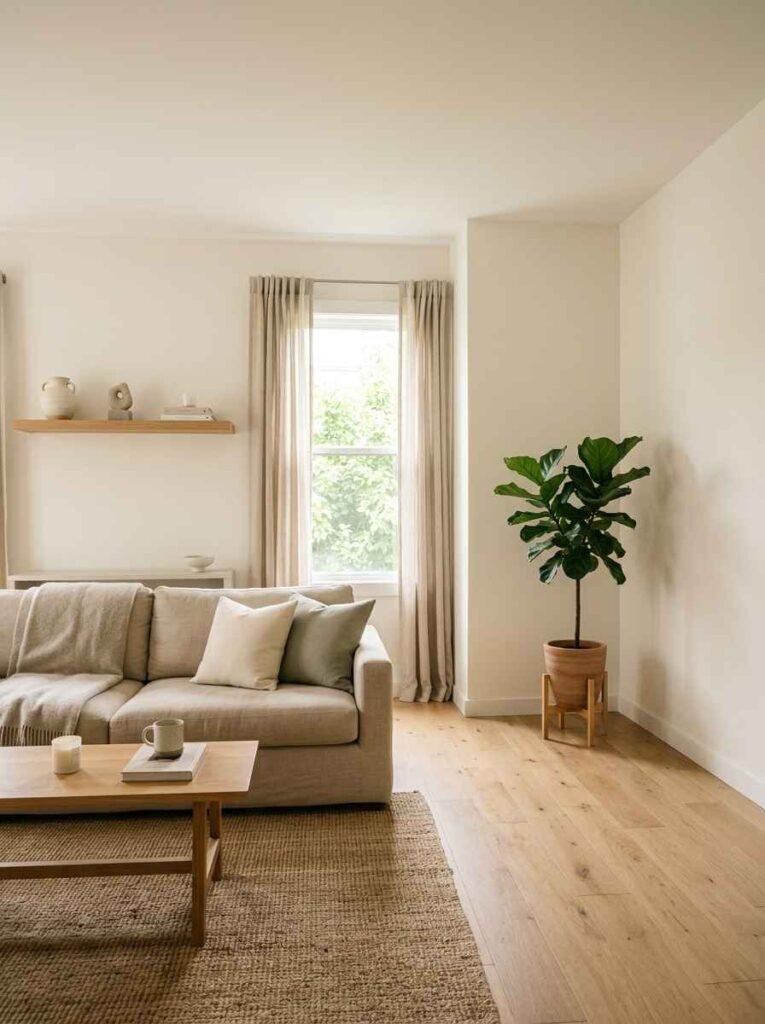
30. Consistent throw pillow strategy. Pick two sizes and two textures. Keep the colors within your palette. Done. This sounds simple but it takes discipline when you’re standing in a home goods store surrounded by every pillow known to humanity.
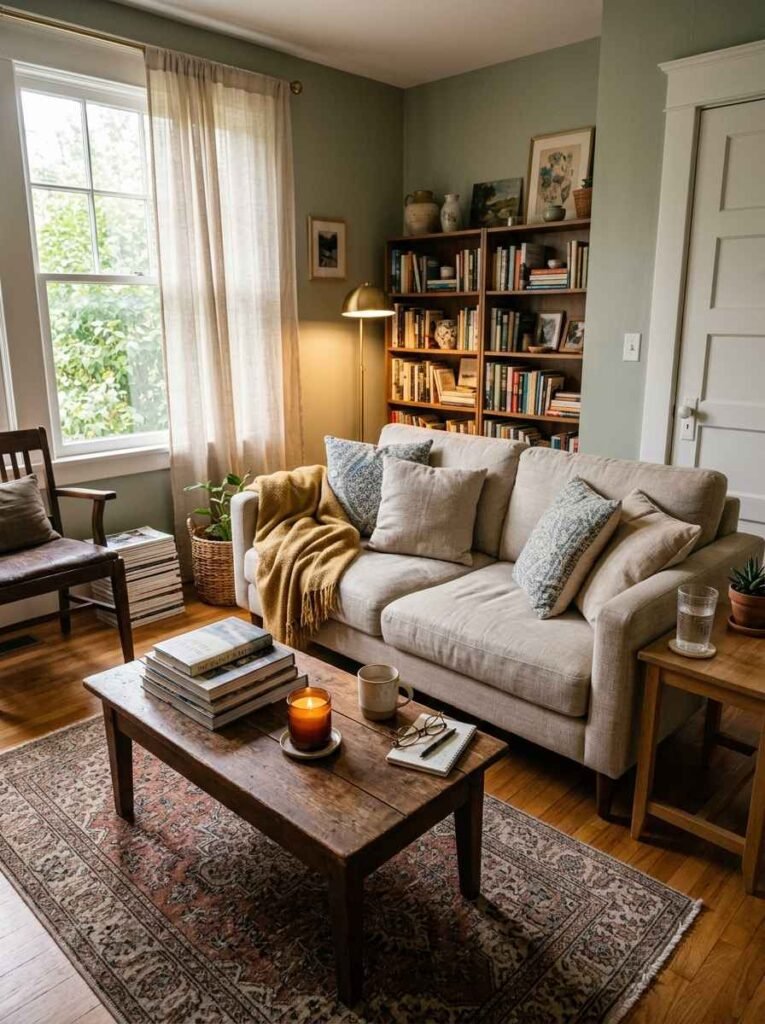
31. Books as decor. A short stack of books (spines facing out or facing in for a more editorial look) on a side table or shelf isn’t just storage — it’s personality.
32. Hide the tech. Cable management, TV console with doors, a router tucked inside a basket. The visual noise of exposed cables and tech gear is massively underestimated as a source of room clutter.
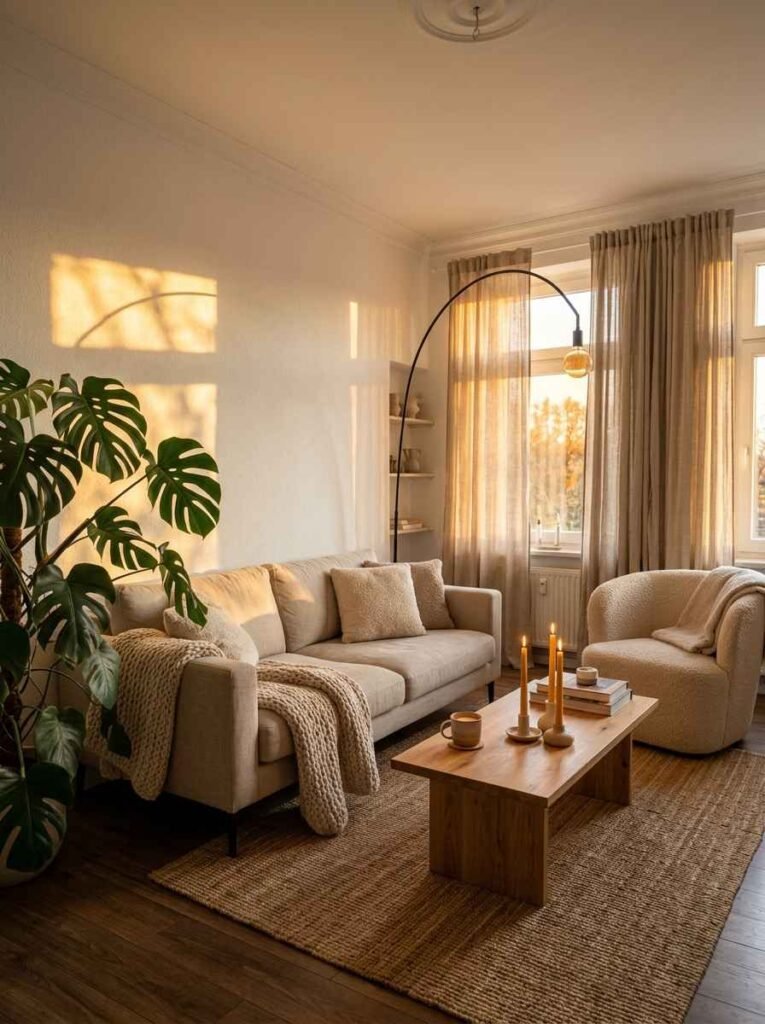
33. Leave some negative space. A corner with only a plant. A shelf with three items and open space. A wall with nothing on it. This is the hardest thing to do and the most important. Negative space isn’t wasted space. It’s where the room gets to breathe.
A Quick Reference: Minimalist Cozy Essentials
| Category | Best Choice | Avoid | Budget Range |
|---|---|---|---|
| Sofa fabric | Linen, performance weave | Velvet in dark colors | $400 – $1,500 |
| Rug type | Jute, wool, flatweave | Synthetic shag | $80 – $400 |
| Lighting | Warm 2700K, layered | Single overhead fixture | $30 – $200 |
| Accent plant | One large statement | Many small cluttered | $20 – $80 |
How to Style a Small Living Room for Pinterest (Without It Looking Staged)
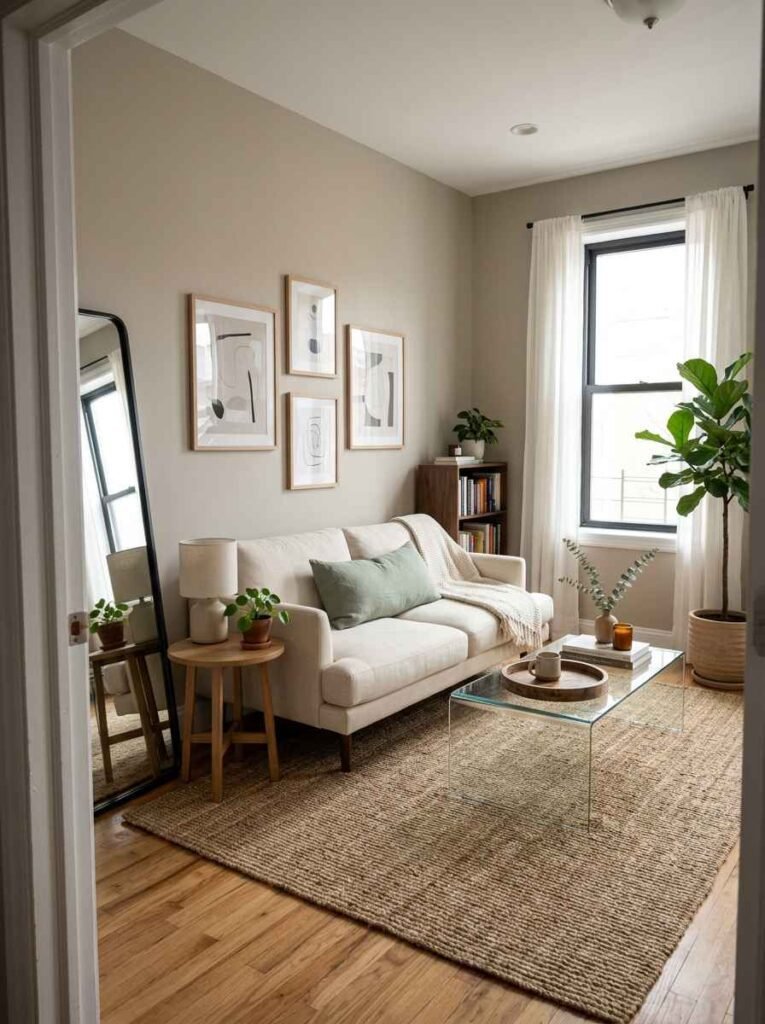
Okay, sidebar moment — I genuinely think about this because I run a home decor board and the worst thing a room can look is “trying too hard.” There’s a difference between a styled room and a beautiful room.
The former looks like a Pottery Barn showroom. The latter looks like a real person with great taste lives there.
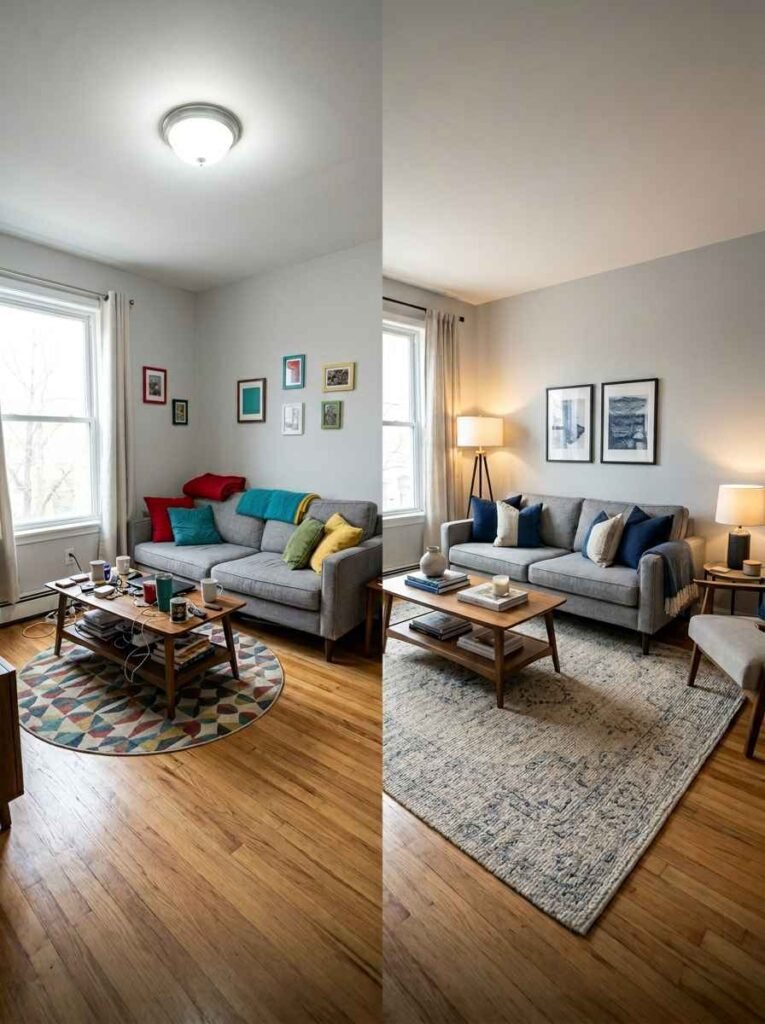
The secret is intentional imperfection. Leave one book slightly askew. Let the throw be casually draped, not folded in a perfect triangle. A half-burned candle is more interesting than a pristine one.
Wow, the difference between these two approaches really is insane when you see them side-by-side.
Real warmth comes from lived-in details, not from a perfectly curated still life. Pinterest actually rewards authenticity more than most people realize — save-worthy images often have a specific, genuine point of view rather than generic prettiness.
You can explore more styling approaches for small spaces at Domino’s small living room guide (domino.com) and House Beautiful’s minimalist decor resources (housebeautiful.com) — both worth bookmarking if this is your thing.
Common Mistakes to Fix Right Now
- Buying furniture that’s too large. Measure first. Then measure again.
- Skipping the rug (or getting one that’s too small). The rug should be large enough that at least the front legs of your sofa sit on it.
- Relying on overhead lighting alone. Layer it.
- Adding too many accent colors. Pick one and commit.
- Ignoring vertical space. Go up when you can’t go out.
- Overcrowding shelves. Edit ruthlessly.
FAQ
Q: Can a minimalist living room actually feel cozy, or does it just look cold?
Absolutely it can — and this is where most people get tripped up. Minimalism doesn’t mean empty. It means intentional. When you replace visual clutter with warm textures (boucle, linen, jute), warm lighting (2700K bulbs, candles, layered lamps), and organic elements (plants, wood, natural fiber), the room feels incredibly warm. The key is that every element you keep is doing work. Cold minimalism happens when people strip texture and warmth along with clutter. Keep the warmth, edit the noise.
Q: What’s the best sofa color for a small living room?
Warm neutrals consistently perform best: oat, stone, warm white, soft camel, or a muted sage. These tones don’t absorb visual space the way dark colors do. They also give you flexibility — almost any accent color works against them. If you love a darker sofa, a charcoal or deep olive can work if you balance it with lighter walls, rugs, and plenty of natural light.
Q: How do I make my living room feel bigger without spending much?
Three quick wins: hang curtains high and wide (above and beyond the window frame), add a large mirror across from your main light source, and float your furniture slightly off the walls. These three changes cost almost nothing and have a significant visual impact. A fresh coat of warm white paint is another high-return move if you’re renting a space with dingy or cold-gray walls.
Final Thought
Small spaces aren’t a design problem. They’re a design constraint — and constraints make you more creative, not less. The best minimalist cozy living rooms I’ve seen aren’t beautiful despite being small. They’re beautiful because someone made deliberate choices instead of default ones.
Start with one change from this list. Maybe it’s swapping your bulbs to 2700K. Maybe it’s finally buying that jute rug you’ve been eyeing. Maybe it’s just clearing one shelf and leaving the space empty for a week to see how it feels.
Which of these ideas are you most excited to try — and what’s the one thing in your living room you know needs to go?
