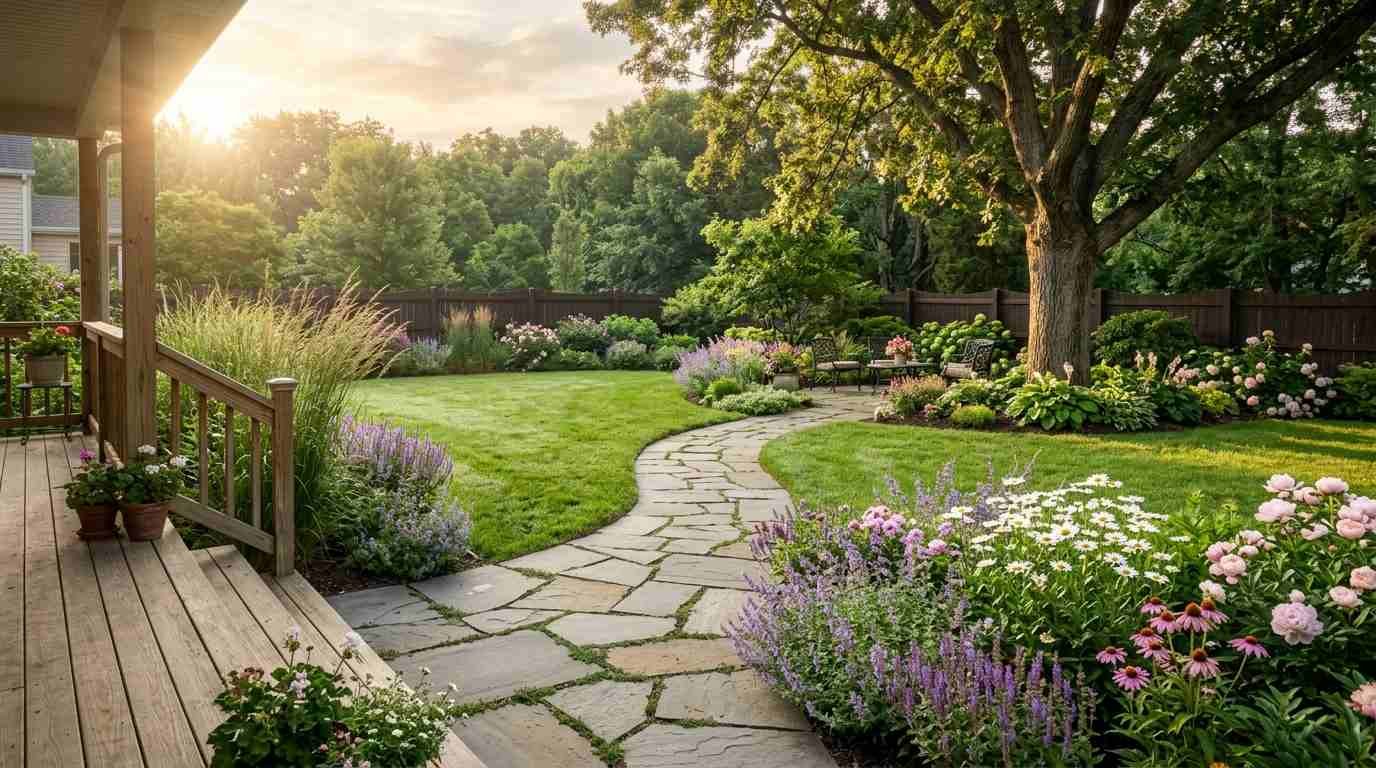
Your backyard looks fine. The lawn is decent, the plants are alive, and the patio furniture hasn’t collapsed yet. But something’s missing, right? That something is almost always a walkway.
A well-designed garden path does two things at once.
It gives people somewhere to walk without trampling your flower beds, and it turns a yard that’s “meh” into one that people actually stop and look at.
I’ve spent way too many weekends obsessing over my own outdoor space, and honestly, the walkway was the single upgrade that changed everything.
So here are 29 backyard garden walkway ideas that range from dirt-cheap weekend projects to “okay, I might need to call someone for this one.” Something in here will work for your space, your budget, and your level of weekend ambition.
Why Your Backyard Needs a Walkway (More Than You Think)
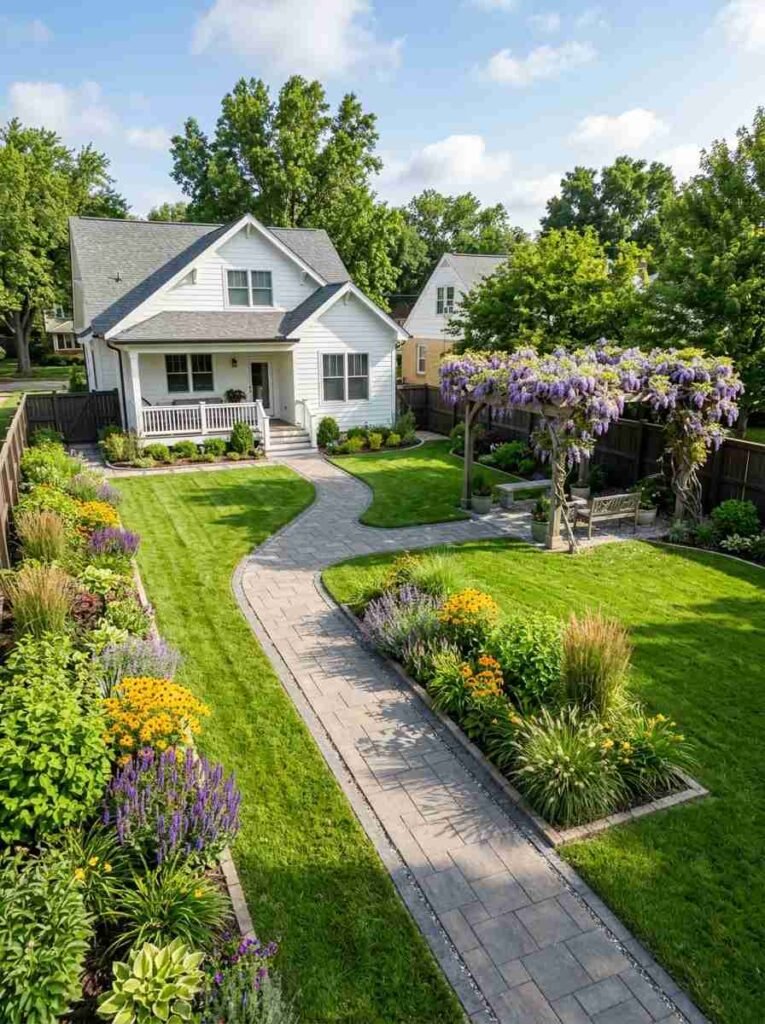
Before we get into the ideas, let’s talk about why this matters for more than just looks. A walkway protects your lawn.
It gives your yard a visual structure that makes even a small space feel designed.
And if you’re thinking about resale value, a defined garden path is one of those small touches that buyers notice without knowing why.
IMO, it’s one of the highest-return DIY projects you can do in a weekend with a limited budget.
Natural Stone and Flagstone Walkway Ideas
Irregular Flagstone Paths
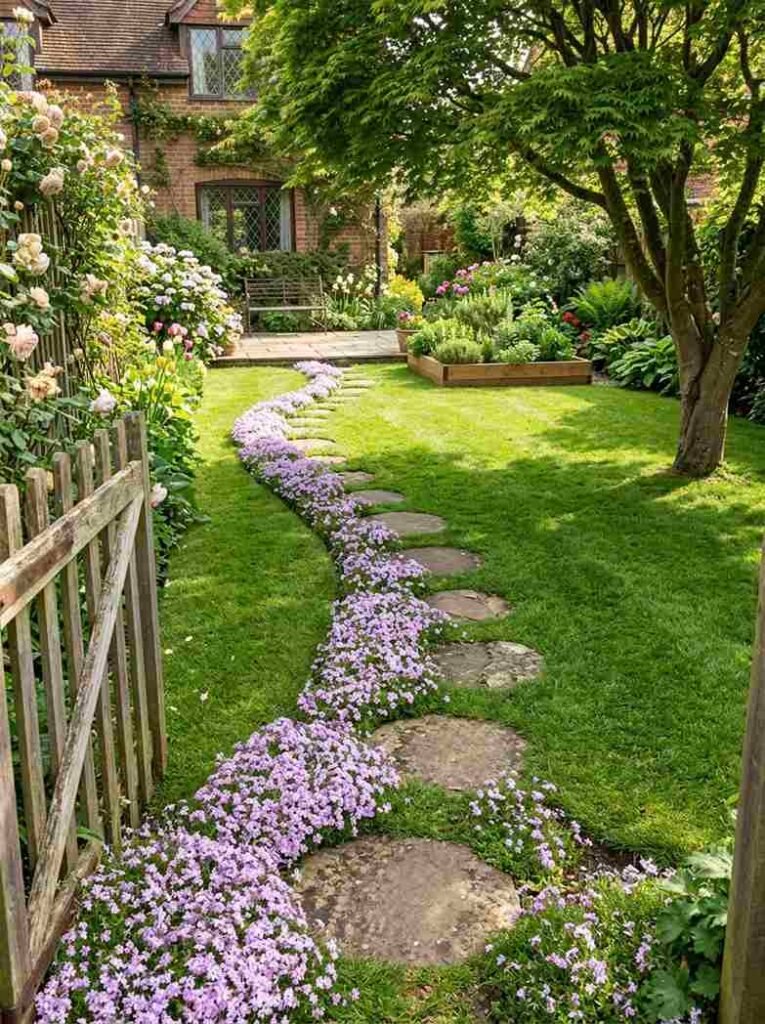
Flagstone is a classic for a reason. Irregular-shaped stones laid with small gaps between them feel natural and organic, especially when you let creeping thyme or moss grow between the joints.
The imperfection is the point. You’re not building a sidewalk; you’re building something that looks like it grew there.
You can source flagstone at most local landscape supply yards for a lot less than you’d pay at a big-box store.
Ask for “irregular Pennsylvania bluestone” or “Tennessee crab orchard” if you want something with real character. The color variation in those stones is wild.
Best for: Cottage gardens, naturalistic landscapes, anyone who hates things that look too perfect.
Stepping Stone Paths With Ground Cover
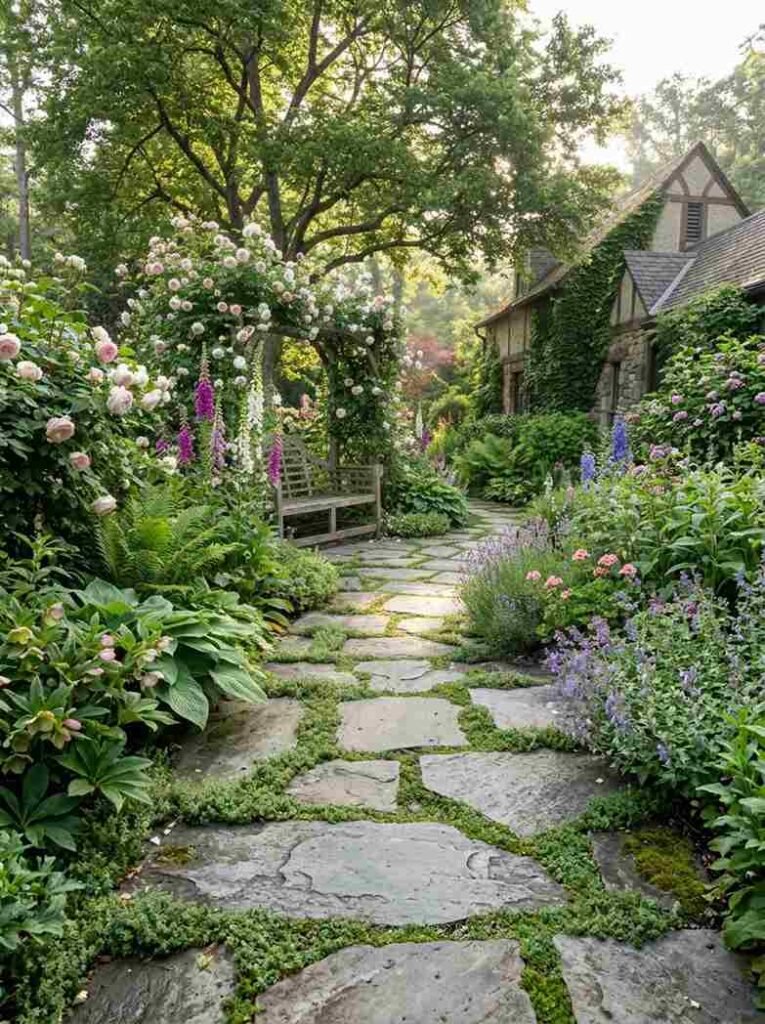
Single stepping stones spaced about 18 to 24 inches apart, set slightly below grade so a mower can pass over them cleanly. Fill the gaps with creeping phlox, corsican mint, or dwarf mondo grass.
This is probably the simplest walkway you can build, and it looks genuinely great when the ground cover fills in.
The key is getting the spacing right before you set the stones. Walk across the path naturally, look down at where your feet land,
and place the stones there. People always space them too close together when they’re guessing.
Dry-Stack Stone Edged Gravel Path
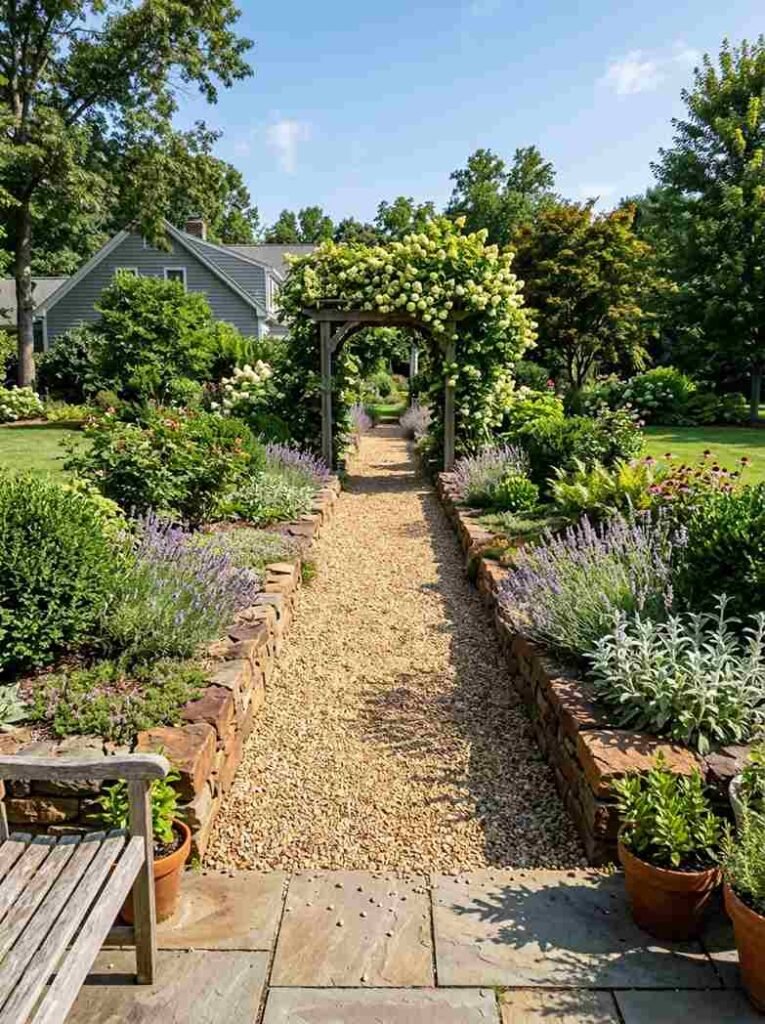
A gravel path edged with dry-stacked fieldstone gives you a semi-formal look without requiring any mortar or special skills.
The stone edge keeps the gravel contained and adds a texture contrast that looks expensive. Pea gravel or crushed granite compacts better than river rock and stays in place when you actually walk on it.
For ideas on sourcing and combining materials, resources like Houzz’s landscaping guides are genuinely useful.
Brick and Paver Walkway Ideas
Classic Herringbone Brick
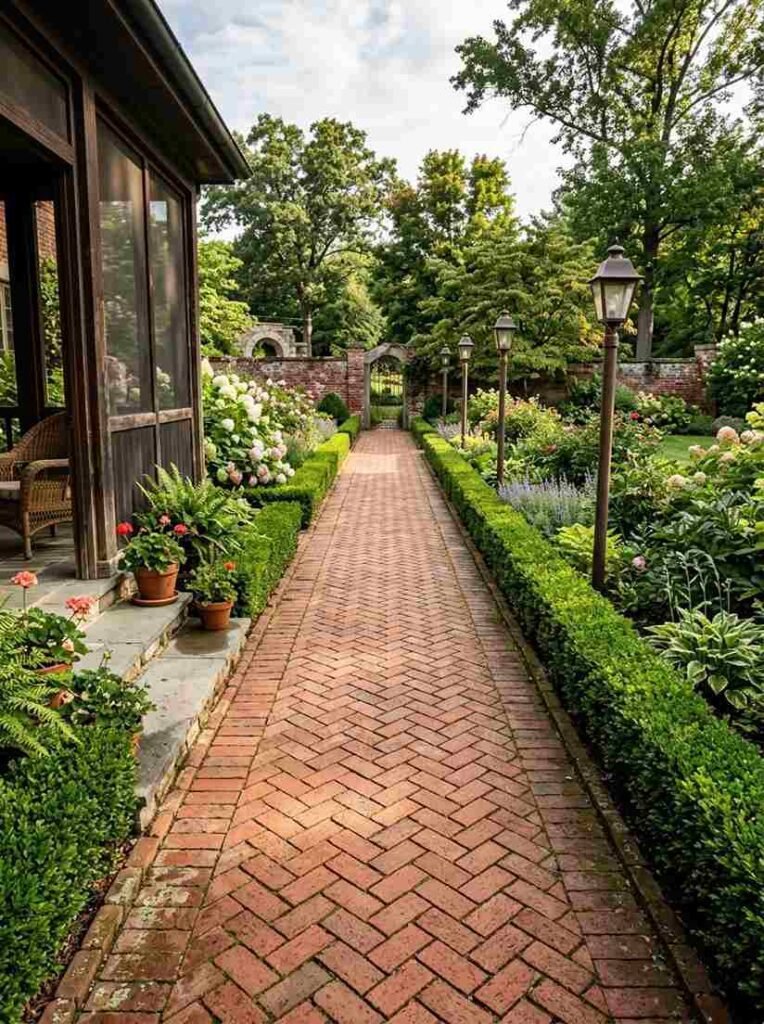
There’s a reason herringbone is still everywhere. The interlocking pattern locks bricks together without mortar, making it more stable over time than running bond. It also looks sharp.
Red clay brick gives you a traditional cottage feel; charcoal or buff brick reads more contemporary.
Rent a plate compactor for this one. Trying to do it with a hand tamper will make your life miserable.
Mixed Paver Patterns
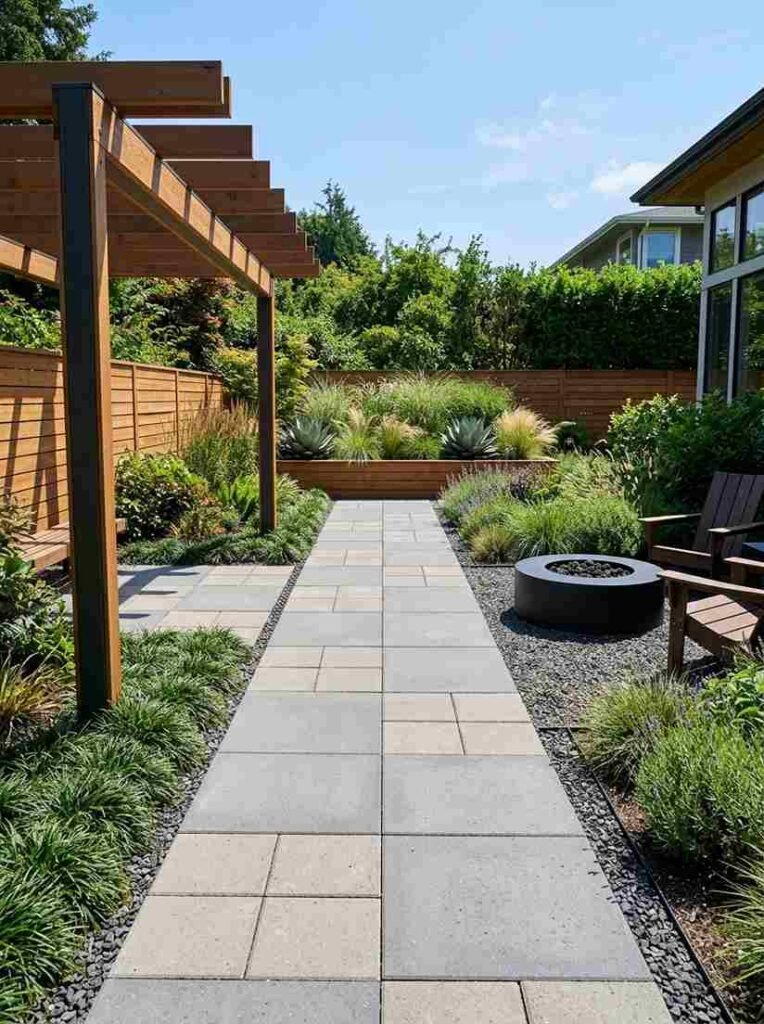
Combining two sizes of concrete pavers, say a large square alternating with a smaller square, creates visual interest without requiring you to cut a single stone. Many paver manufacturers sell combo sets designed for exactly this. It’s genuinely one of the smartest ways to make a simple material look custom.
Tumbled Brick Pathway
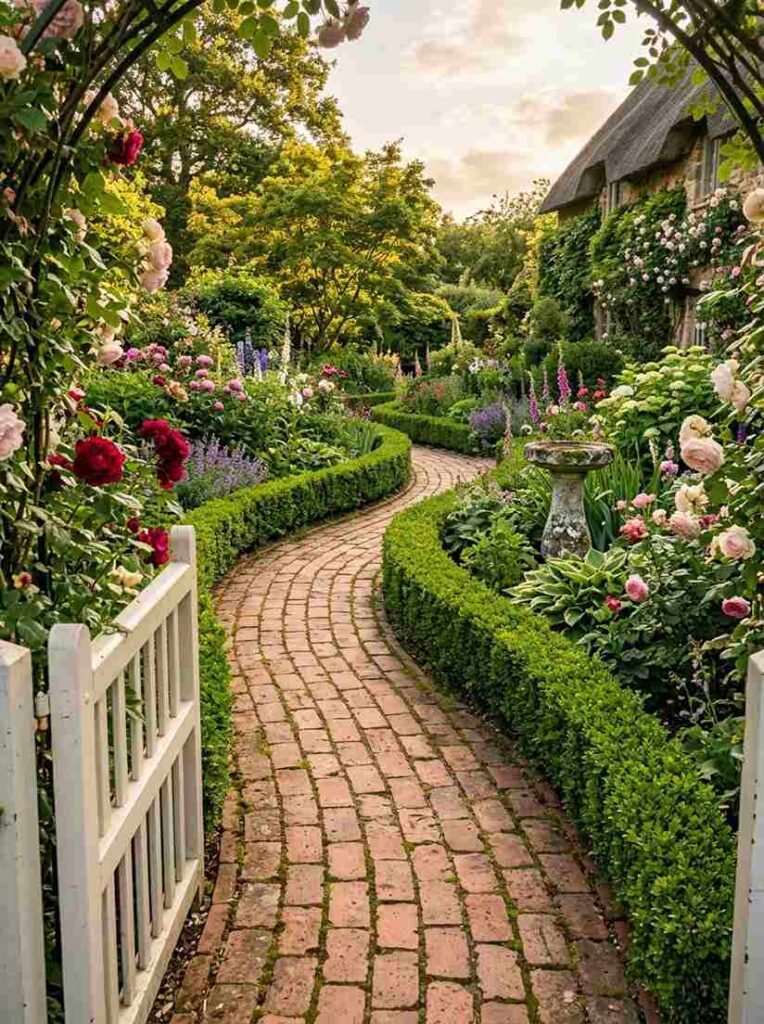
Tumbled brick has softened edges that make it look like it’s been there for a century. It works beautifully in older home landscapes or anywhere you want that settled-in, established look.
Pair it with boxwood hedging on the sides and you’ll feel like you’re walking through an English kitchen garden every morning. Honestly, this is one of my personal favorites.
Concrete and Modern Walkway Ideas
| Material | Cost Level | Skill Level | Best For |
|---|---|---|---|
| Stepping stones | Low | Beginner | Casual garden paths |
| Gravel + edging | Low-Medium | Beginner | Informal garden areas |
| Concrete pavers | Medium | Intermediate | Clean, modern yards |
| Flagstone | Medium-High | Intermediate | Naturalistic or cottage styles |
Exposed Aggregate Concrete
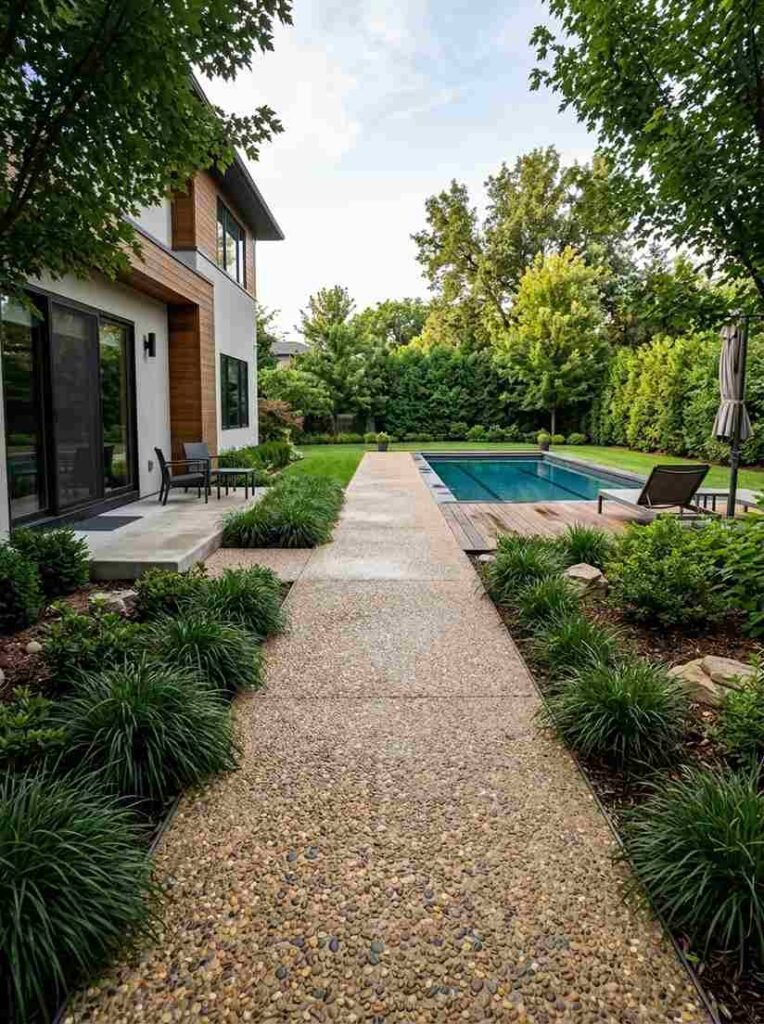
Poured concrete paths don’t have to look industrial. Exposed aggregate finishes,
where the surface is washed before curing to reveal the pebbles inside, add texture and visual warmth.
It’s slip-resistant too, which matters if your path goes through a shaded area that stays damp.
This one requires hiring someone or really committing to learning the technique. Timing the wash is critical.
Concrete Stepping Pads with Pea Gravel Infill
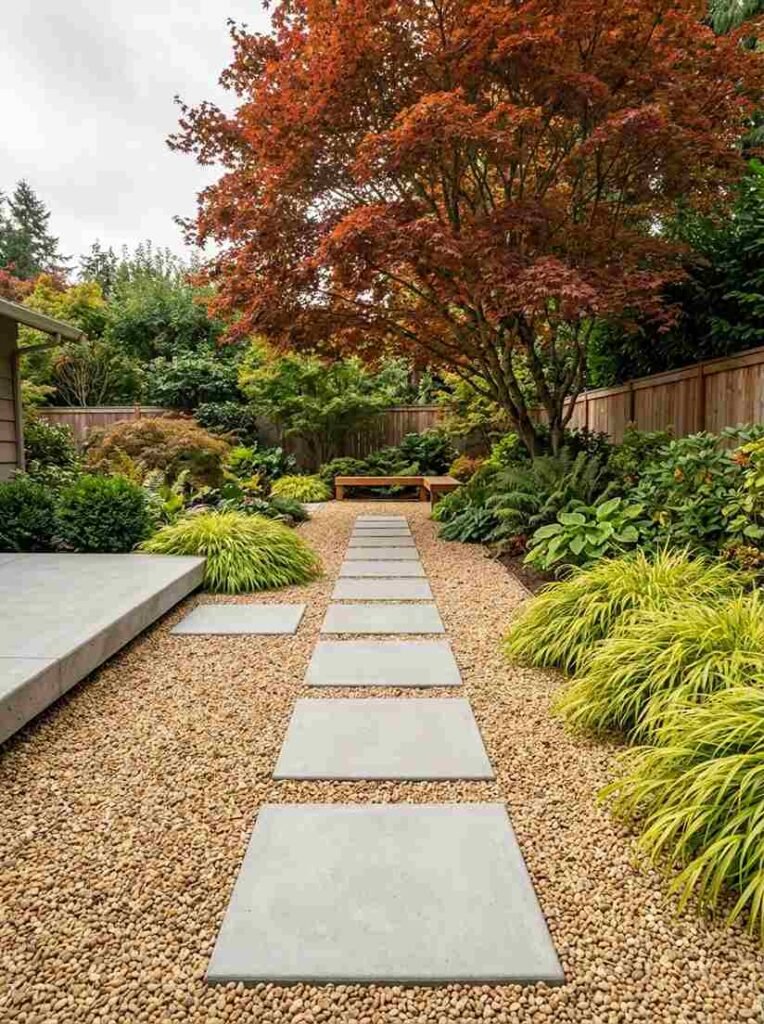
Cast concrete pads (you can buy molds) set into a bed of pea gravel. The contrast between the smooth concrete and the loose gravel looks clean and modern. This works especially well in mid-century or Japanese-influenced garden styles.
Wow, the visual impact you can get from a $200 project here is genuinely surprising.
Stamped Concrete Pathways
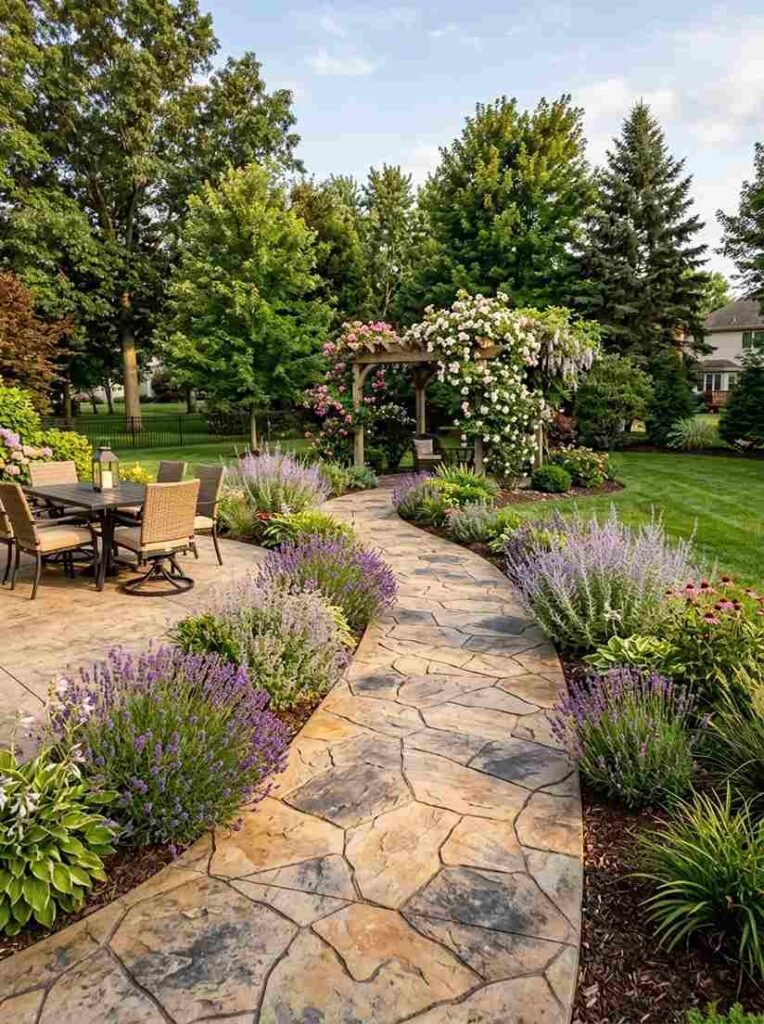
Stamped concrete mimics the look of flagstone, brick, or even wood at a fraction of the cost of the real thing.
The trick is in the color. Go too uniform and it looks fake. Ask for a release color that adds variation, and have them use an antiquing wash if possible.
Wood and Natural Material Walkway Ideas
Timber Sleeper Path
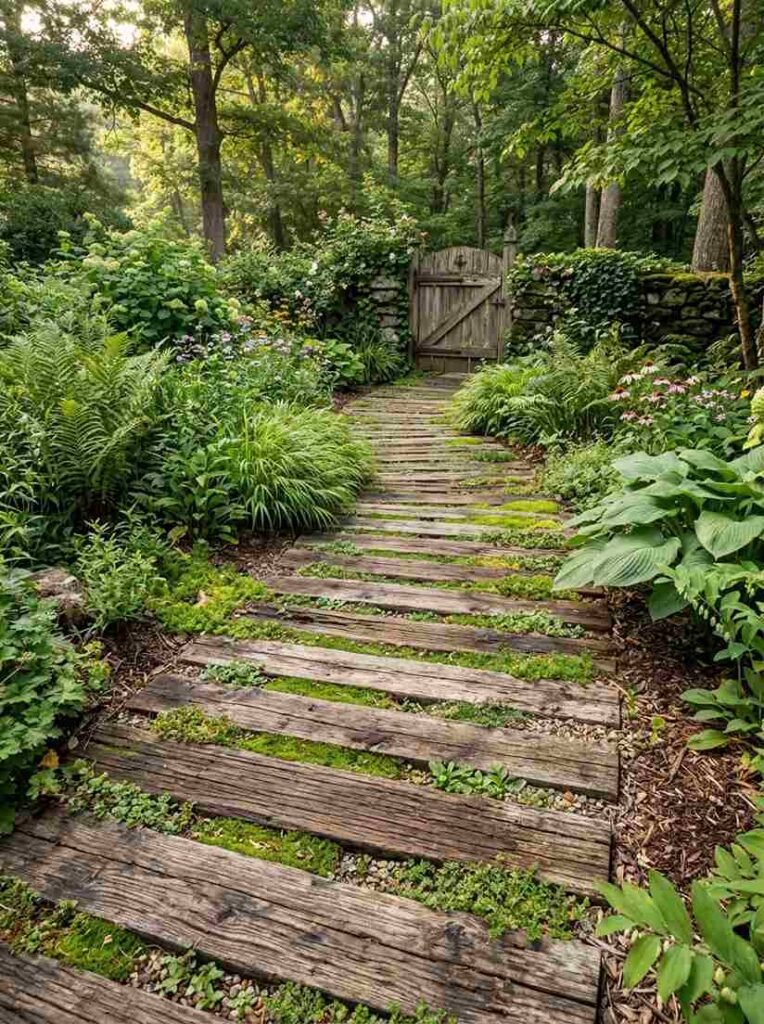
Thick landscape timbers or reclaimed railway sleepers laid perpendicular to the path direction create a bold, sculptural look. Use cedar or pressure-treated pine if you’re starting fresh.
Let moss grow on the edges for a naturalistic effect, or keep them clean-cut for something more architectural.
Gap them slightly (about an inch) so water drains through rather than pooling on the surface.
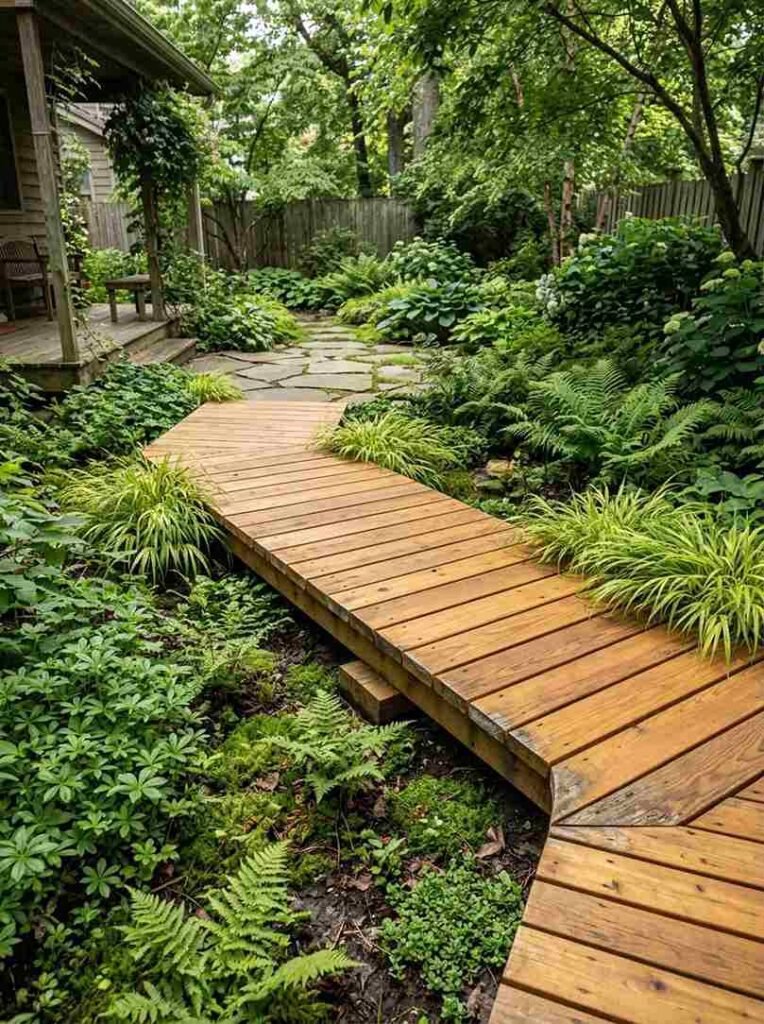
Cedar Plank Deck-Style Walkway
A raised cedar plank walkway, essentially a low boardwalk, elevates a path both literally and visually.
This is perfect for areas that collect water or have uneven terrain.
It also lifts the path off the ground enough that you can underplant with low shade-tolerant ground covers beneath the boards.
Cedar naturally resists rot, but applying a penetrating oil finish every couple of years keeps it looking good longer.
Reclaimed Wood Rounds
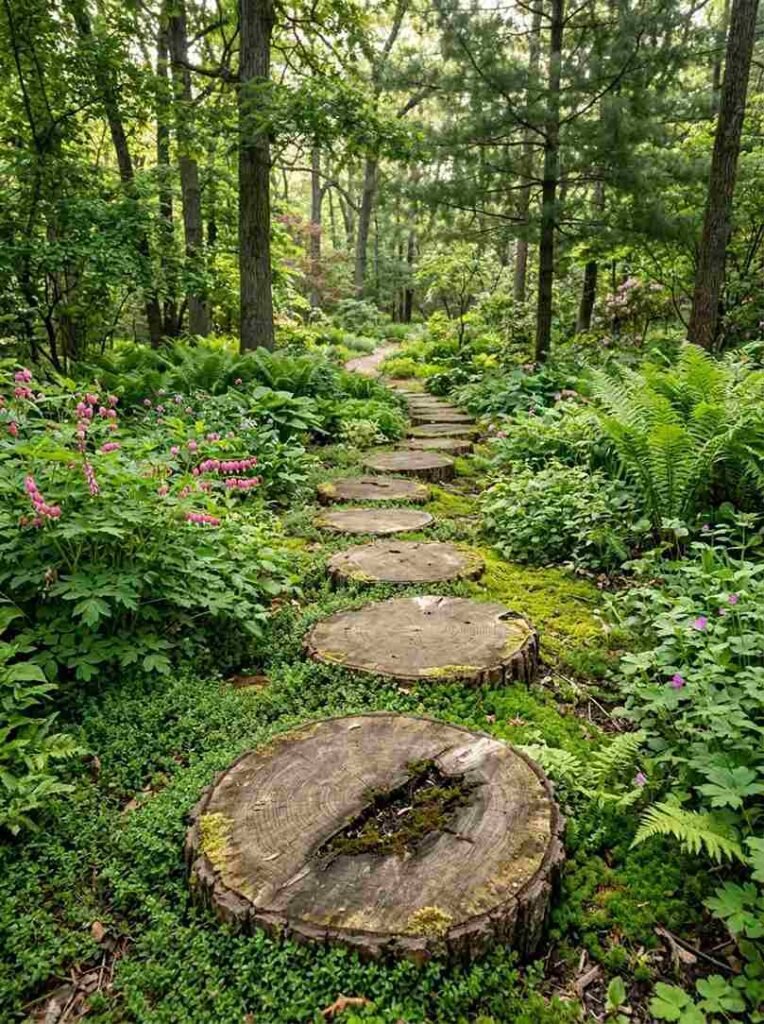
Sliced cross-sections of tree trunks set into the ground like stepping stones are one of those ideas that looks incredible in theory and requires some maintenance in practice. They will eventually crack.
Treating them with a wood preservative before setting them helps, but expect to replace a few over the years.
Worth it? For the right garden, absolutely yes.
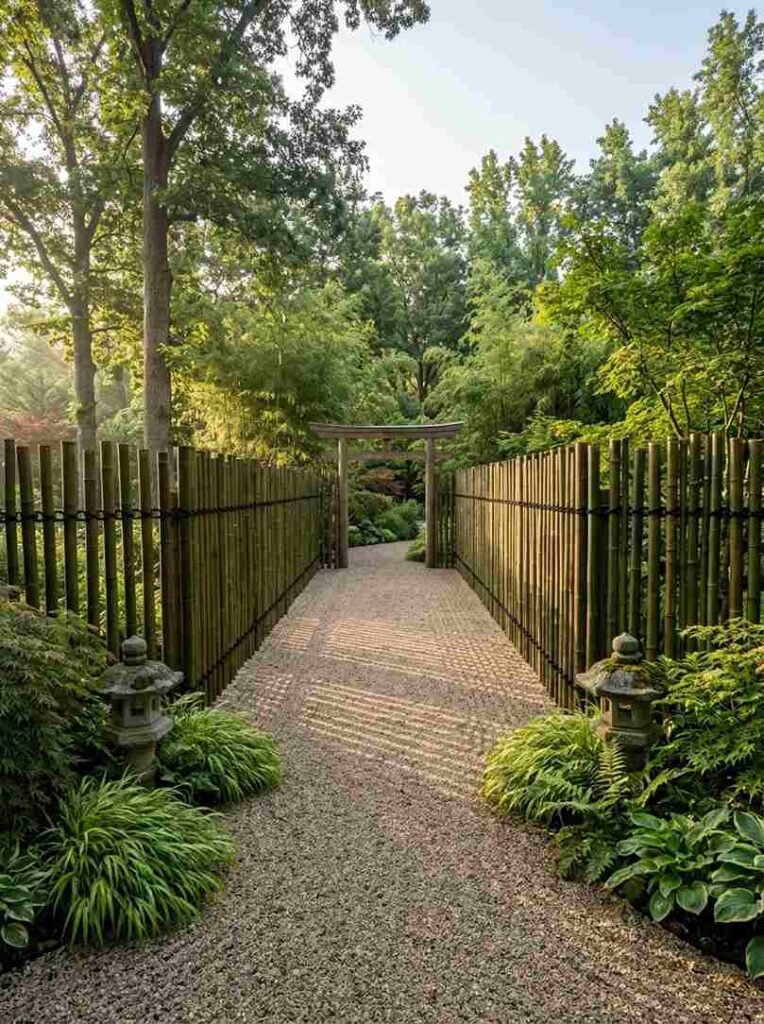
Bamboo Bordered Gravel Path
Bamboo poles hammered into the ground along both sides of a gravel path create a Japanese garden aesthetic on a very small budget. Use a running bamboo barrier underground though, or that “border” will become your entire yard in about three seasons. This is not a joke.
Gravel, Mulch, and Low-Cost Walkway Ideas
Decomposed Granite Paths
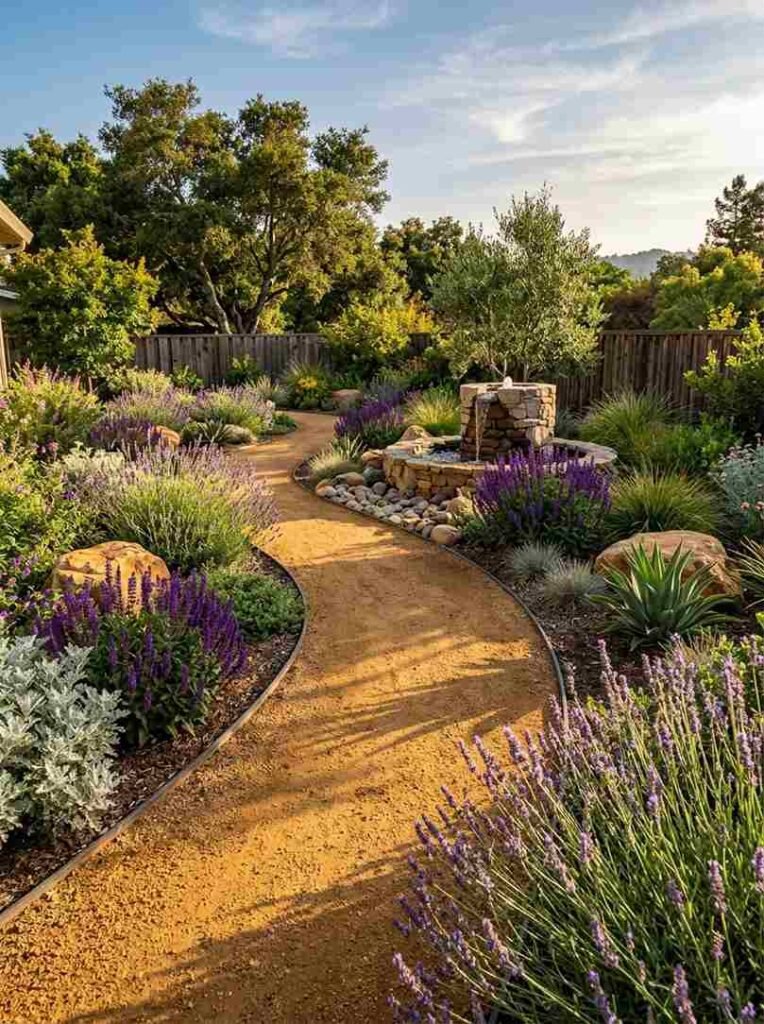
Decomposed granite (DG) compacts into a firm, stable surface that drains well and looks natural. It’s one of the best low-cost options for longer, meandering paths through a landscape. Stabilized DG (mixed with a binder) stays firmer underfoot and tracks less onto adjacent surfaces.
Color options range from gold to gray to rust, so you can match it to your home’s exterior palette.
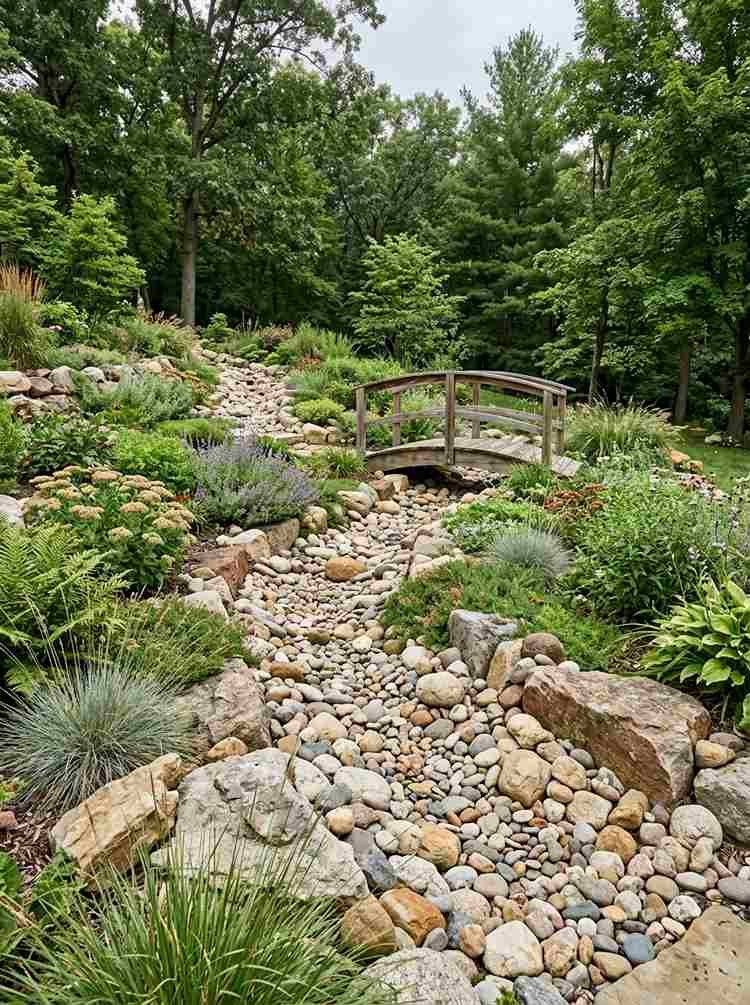
River Rock Dry Creek Bed Path
A dry creek bed that doubles as a walkway is one of those design moves that solves two problems at once. It manages water runoff from a slope and creates a natural-looking path. Smooth river rocks in varying sizes look more convincing than uniform pebbles.
Wood Chip Mulch Paths
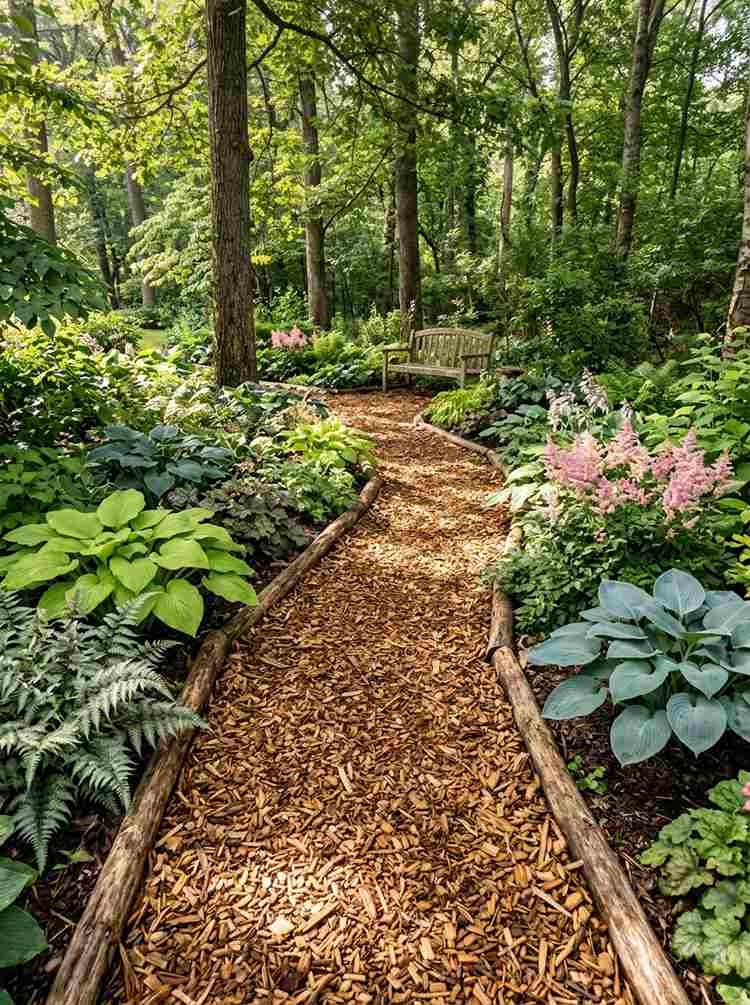
The most affordable option on this list, full stop. Edge it with steel landscape edging or natural log borders, and a wood chip path looks intentional rather than “we ran out of ideas.” It decomposes over time, so plan to top it off every couple of years.
FYI, free wood chip mulch is often available from local arborists who need to dump trimmings after a job. Call around.
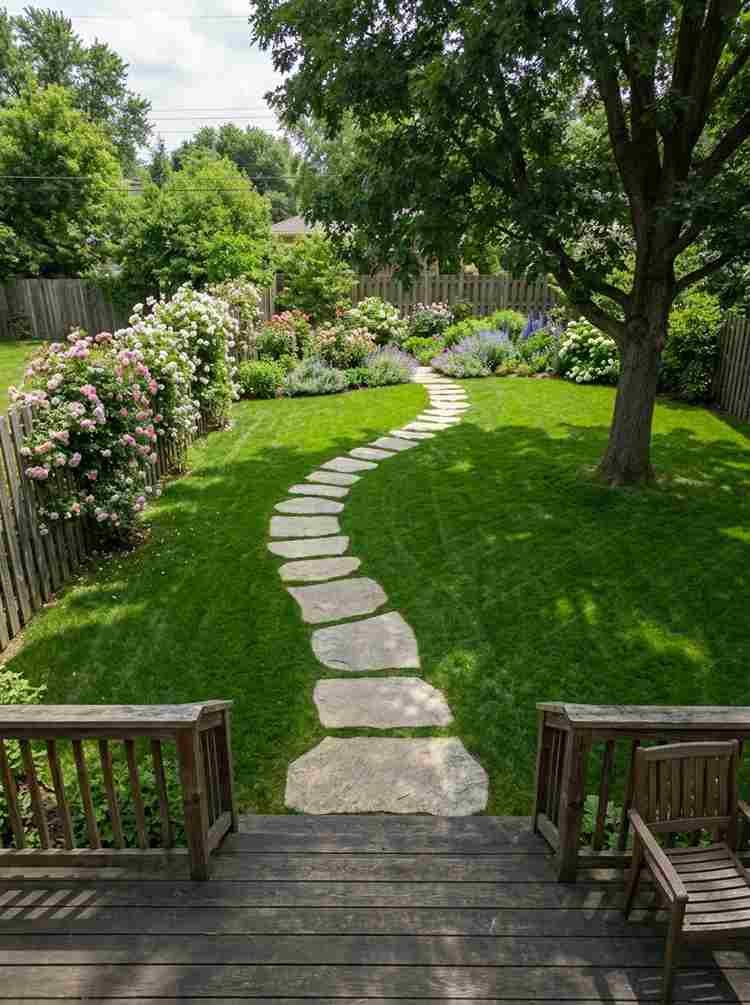
Stepping Stones Through a Lawn
Already mentioned above but worth reemphasizing because it’s that good. A single line of stepping stones winding through an otherwise plain lawn turns that lawn into a garden. The stones create a destination. The path creates a reason to walk through the space rather than just looking at it from the patio.
Creative and Decorative Walkway Ideas
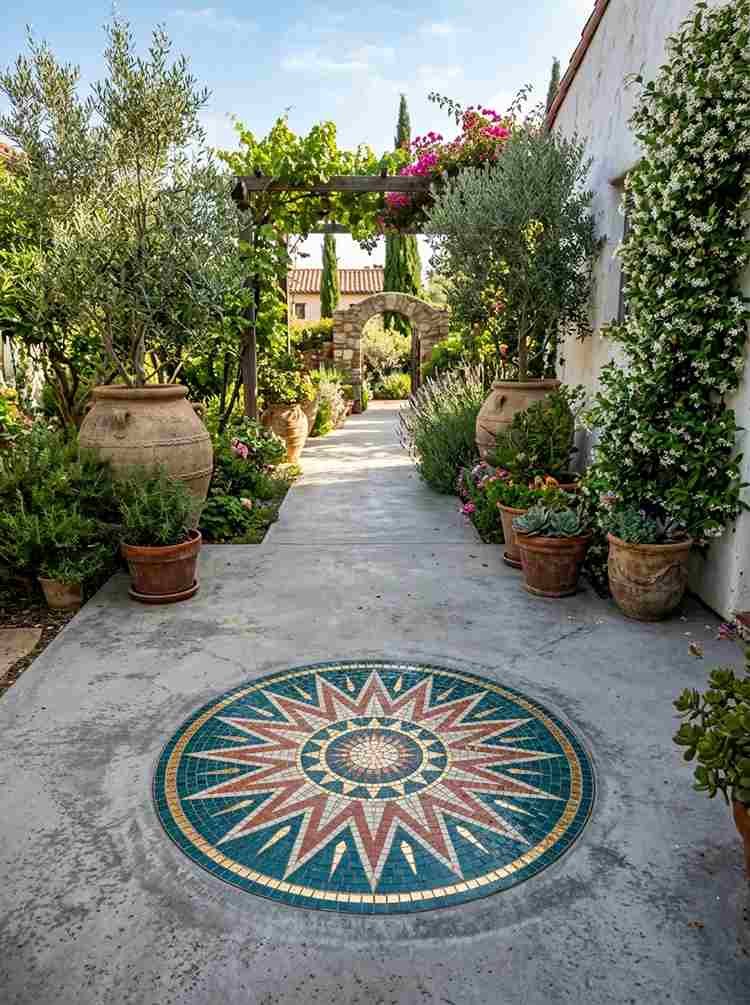
Mosaic Tile Accents in Concrete
If you’re pouring concrete anyway, embedding tile or glass mosaic pieces into the surface creates something one-of-a-kind. This isn’t a whole-path treatment; it’s an accent. A medallion at the start of the path, or a decorative strip running down the center, adds an artistic element that no catalog can replicate.
Pebble Mosaic Ground Art
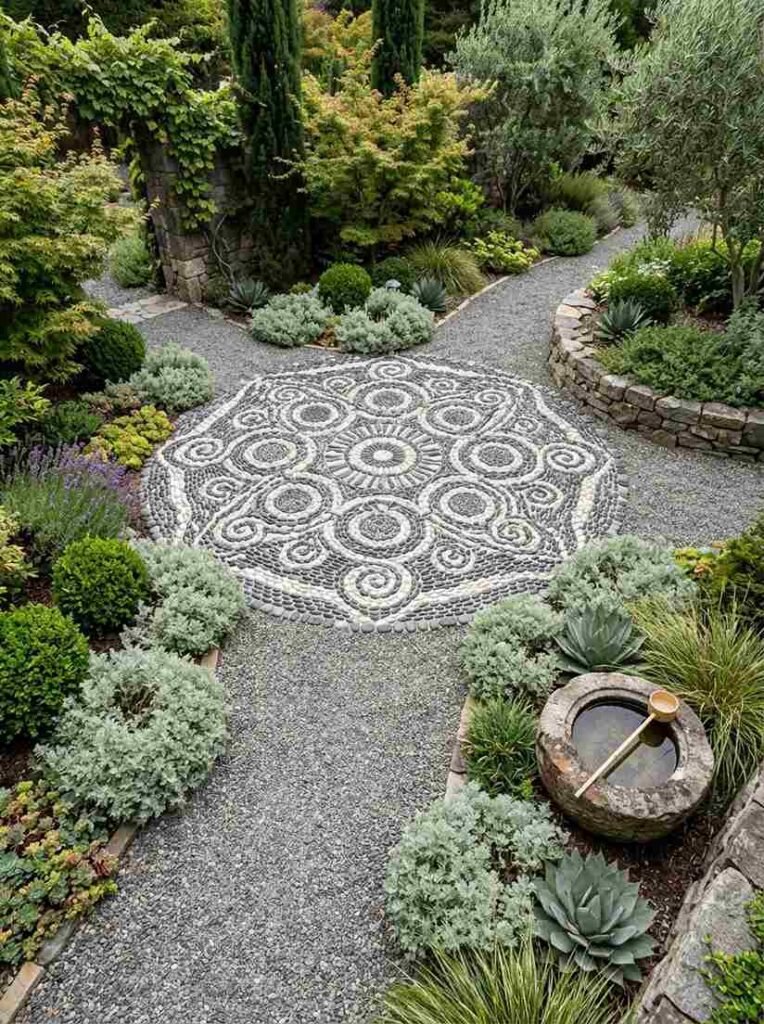
Japanese and Mediterranean gardens have used pebble mosaics for centuries. Small, smooth pebbles set vertically into mortar in geometric or organic patterns create incredibly detailed ground-level artwork. The effort is substantial, but the result is genuinely unlike anything you can buy ready-made. Gardenista’s design archives have some stunning examples of this done well.
Glow-in-the-Dark Aggregate Paths
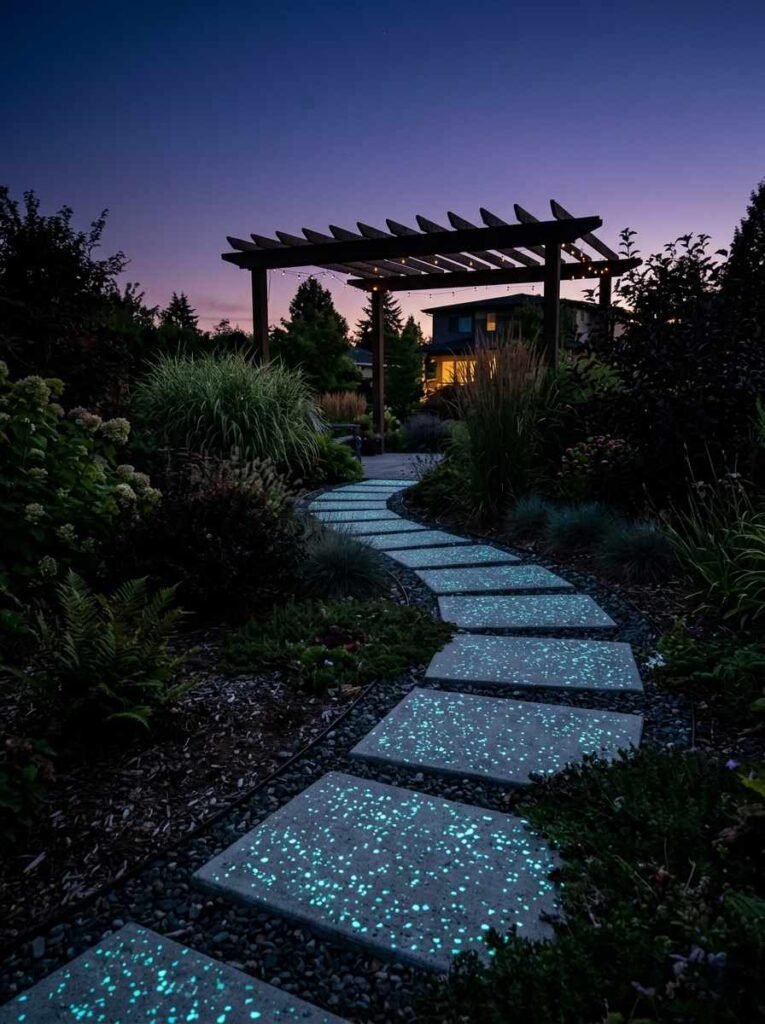
Photoluminescent aggregates mixed into concrete or set into stepping stones absorb daylight and glow for several hours after dark. It’s subtle, not neon. From a practical standpoint, it makes navigating the yard at night easier without requiring any wiring. From an aesthetic standpoint, it’s quietly magical.
Meandering Informal Path vs. Straight Formal Path
This deserves its own moment. A straight path says “efficiency.” A curving path says “stay a while.” Both are right in the right garden. A formal parterre garden looks wrong with a meandering path. A naturalistic cottage garden looks wrong with a dead-straight one. Match the path geometry to the garden style, not just the material.
Walkway Ideas With Plants and Borders
Lavender-Lined Gravel Path
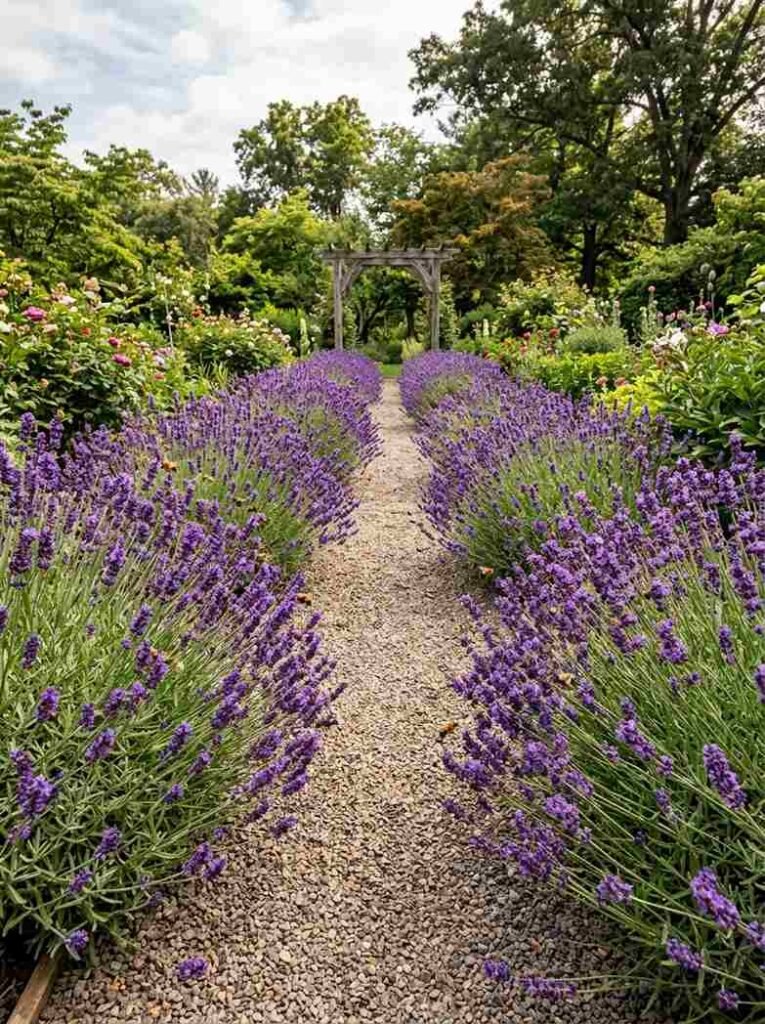
A gravel path with lavender planted thickly on both sides is one of the great garden combinations. You get the scent, the silvery foliage, the purple flowers, and the hum of pollinators all summer. It also happens to be drought-tolerant once established, which matters more than ever.
Clip the lavender hard after flowering to keep it from getting woody and leggy. This is the one maintenance task people skip and then wonder why their lavender looks terrible after three years.
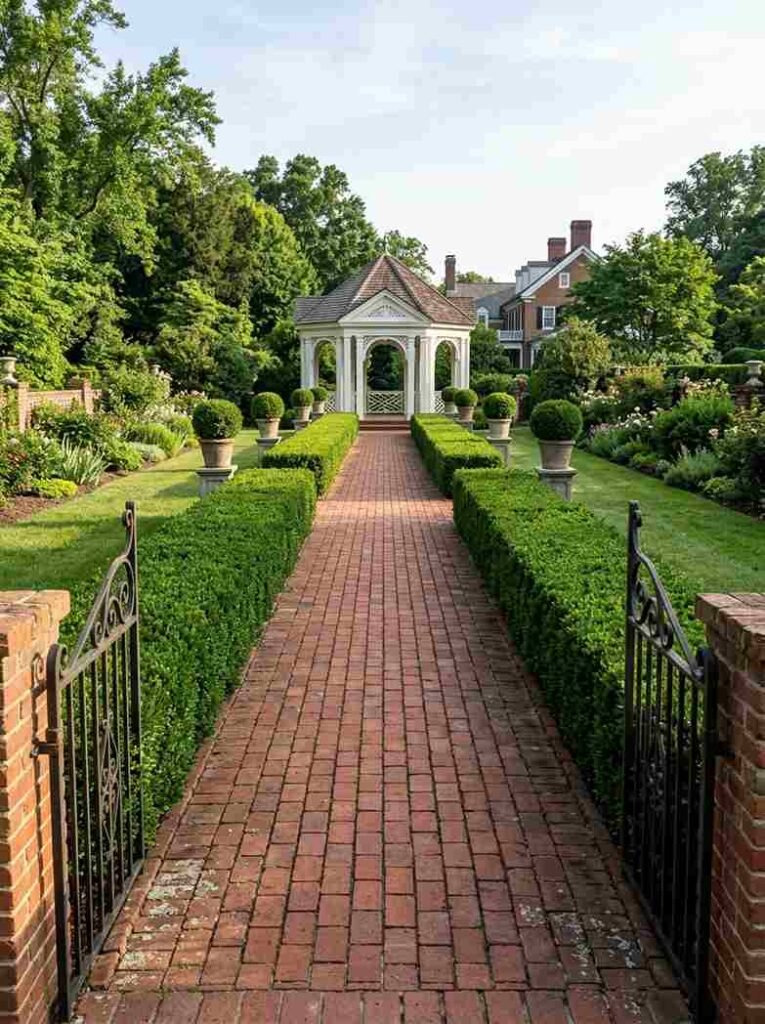
Boxwood-Edged Brick Path
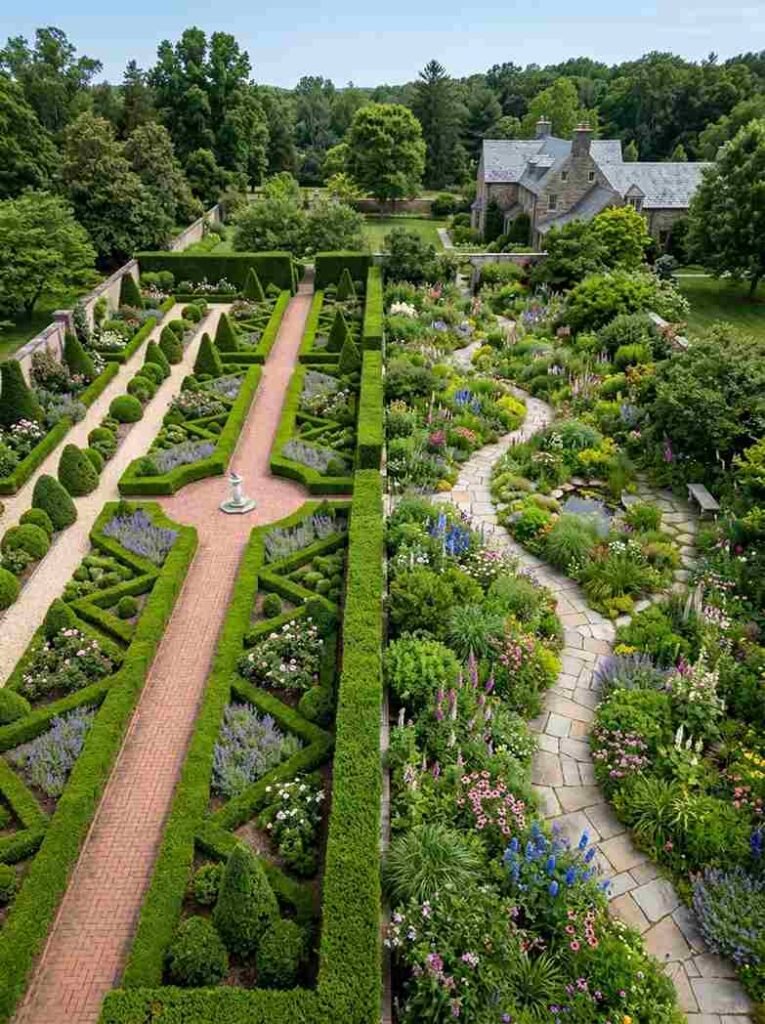
Dwarf boxwood clipped into low hedges on either side of a brick path is probably the most formal look on this list. It suits colonial-style homes, traditional English gardens, and anyone who enjoys a bit of horticultural precision. It does require regular trimming, but the structure it provides in winter when everything else has died back is worth it.
Tall Ornamental Grass Borders
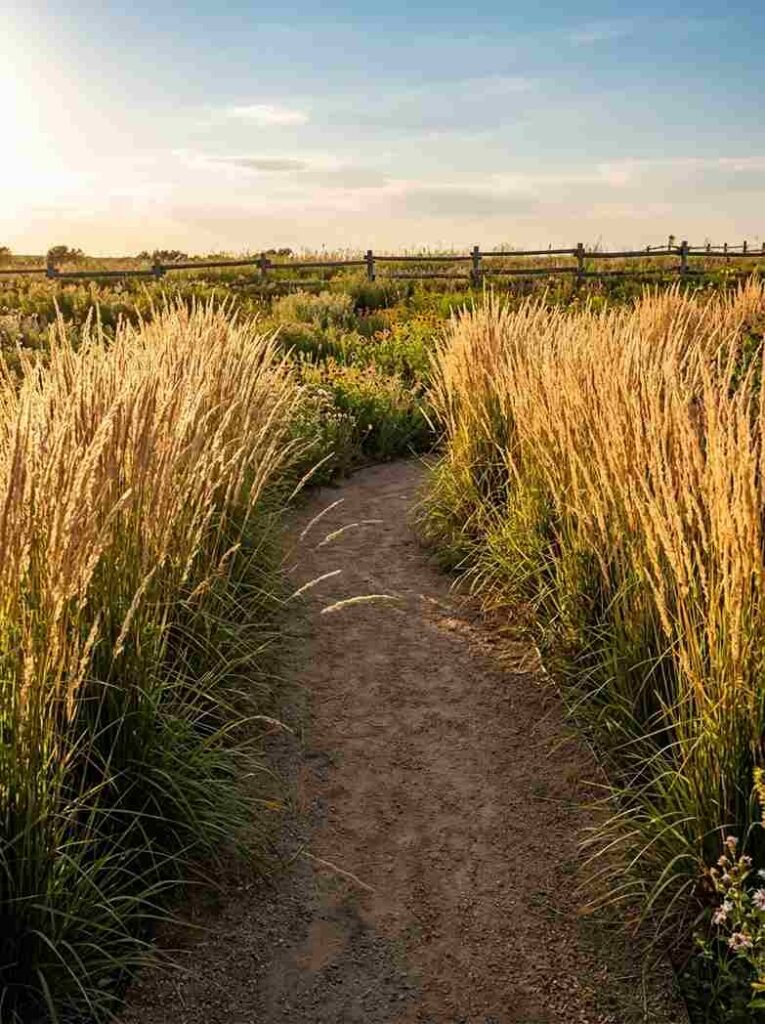
Ornamental grasses like Karl Foerster feather reed grass or Blue Oat grass planted along a path create a naturalistic, prairie-style feel. They move in the breeze, they catch morning light in a way that’s almost cinematic, and they require almost no maintenance beyond cutting them back in late winter.
This is insane how much visual impact a simple grass planting can add for almost no effort.
Cottage Flower Border Path
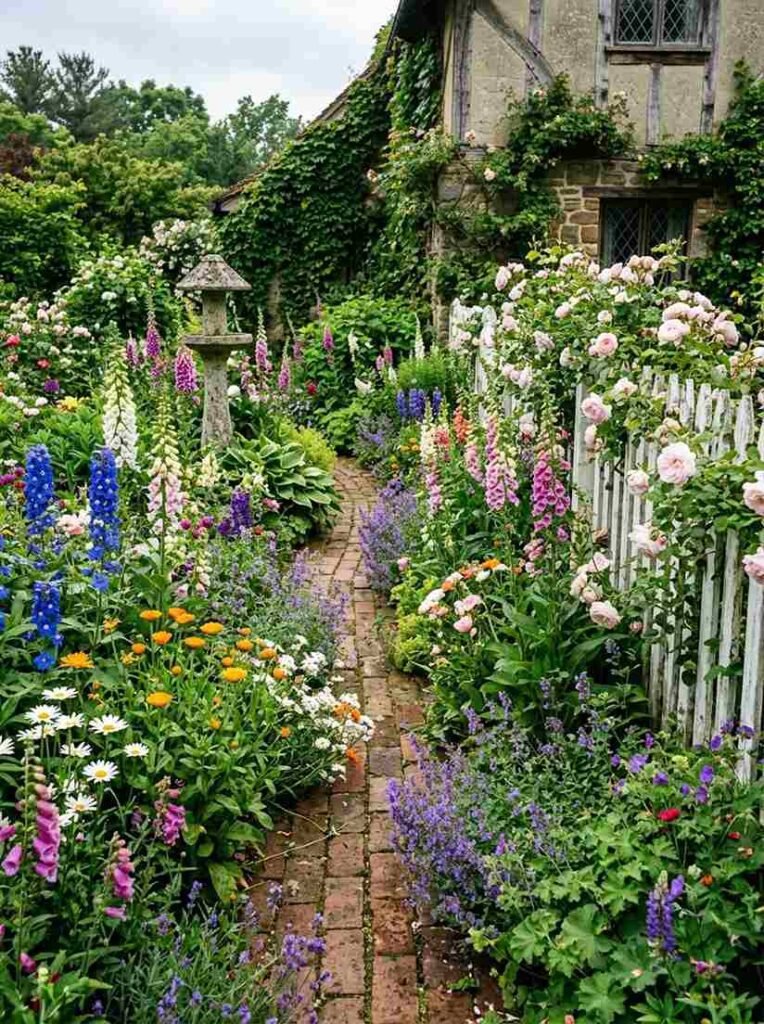
An informal mix of perennials, biennials, and self-seeding annuals spilling over both sides of a path is the definition of cottage garden style. You’re not going for control; you’re going for abundance. The path becomes a corridor through something lush and slightly chaotic. It looks effortless precisely because it isn’t trying to be precise.
Practical Considerations Before You Start
Getting the Grade Right
Every walkway needs a slight cross-slope (about 2%) to shed water to one side. A path that sits flat or slopes toward the house is going to cause drainage problems. This is the detail most DIYers skip because it requires a level and a little math, and it’s also the detail that separates a path that lasts 20 years from one that heaves and floods after two winters.
Edging Keeps Everything Together
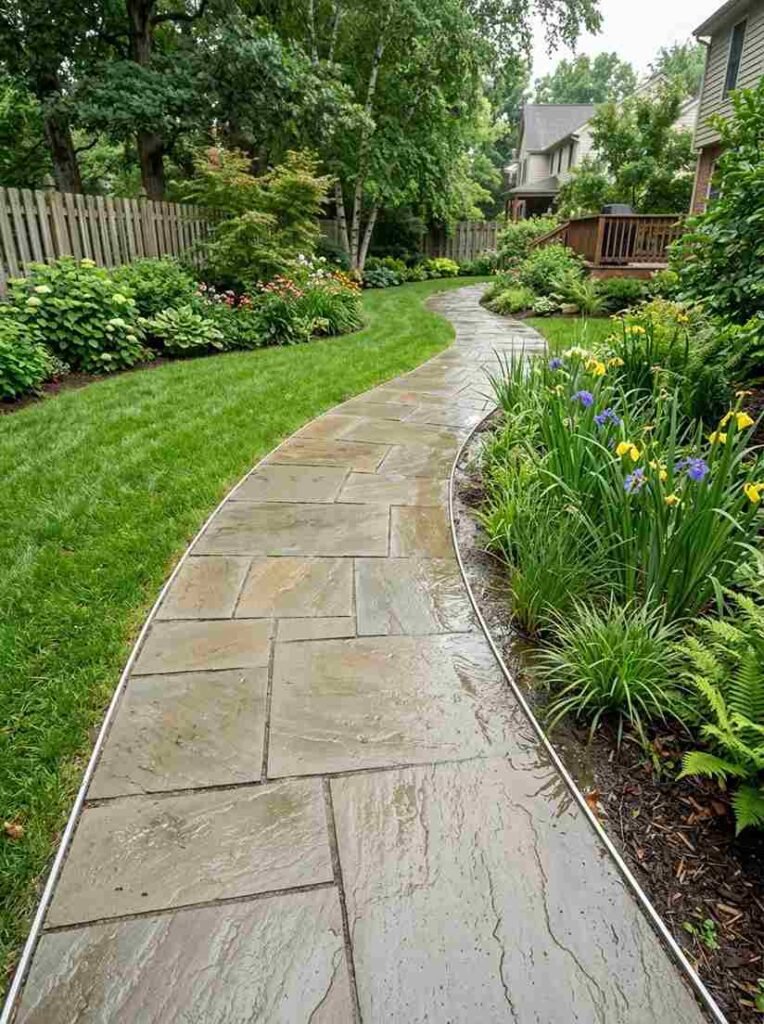
Whatever material you choose, a proper edge keeps it from migrating into the lawn or garden beds. Steel landscape edging, aluminum bender board, plastic edging, natural stone, wood, concrete curbs. All of them work. The key is setting the edging deep enough that foot traffic doesn’t pop it out over time.
Base Preparation Is Everything
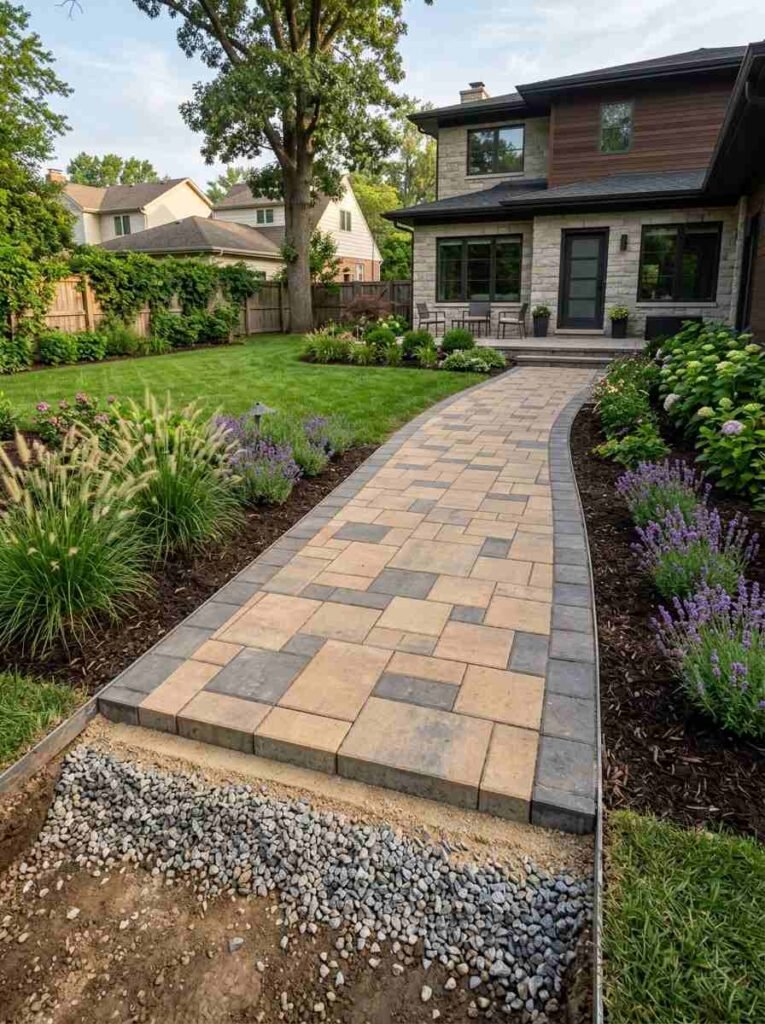
For any hard-surface path (stone, brick, pavers, concrete), a properly prepared base prevents settling and shifting. Four inches of compacted crushed stone base, topped with 1 inch of coarse sand, is the standard for residential paths. Skipping this step is how you get a path that looks perfect in September and is completely uneven by the following spring.
For more detailed installation guidance, This Old House’s landscaping section walks through base preparation thoroughly.
Small Table: Walkway Material Quick Reference
| Material | Approx. Cost per Sq Ft | Lifespan | Maintenance |
|---|---|---|---|
| Pea gravel | $1-$3 | Ongoing | Top off annually |
| Concrete pavers | $8-$20 | 25+ years | Minimal |
| Natural flagstone | $15-$30 | 30+ years | Low to moderate |
| Pressure-treated wood | $10-$18 | 10-15 years | Seal every 2-3 years |
Putting It All Together: Finding Your Path
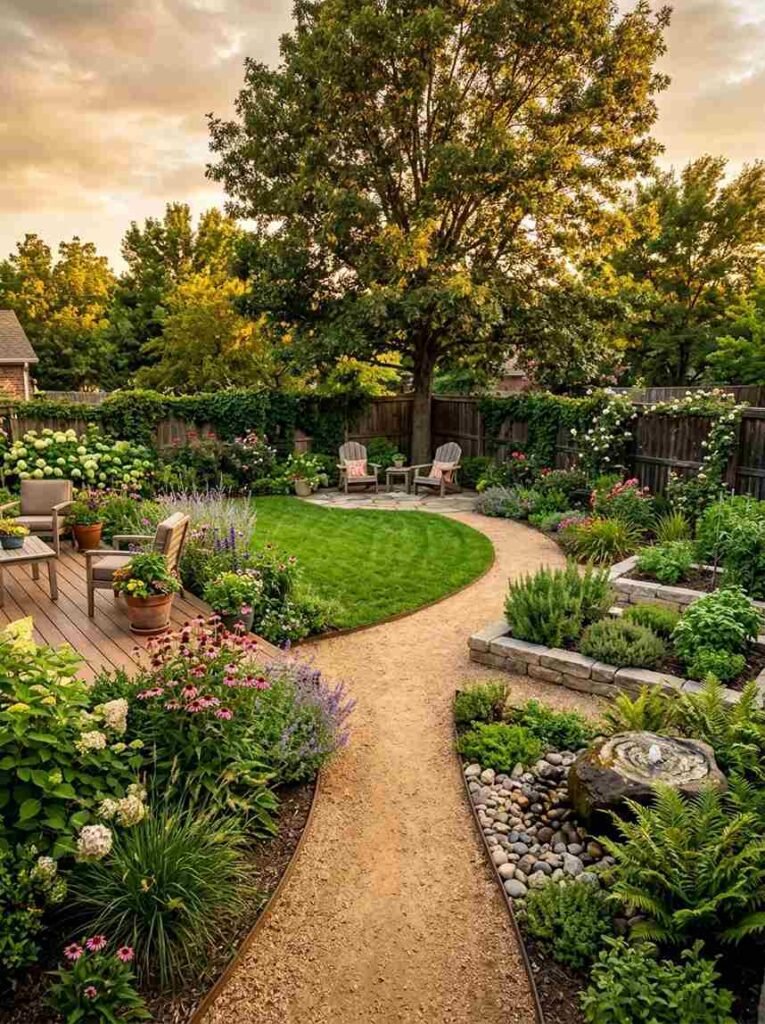
The best walkway for your yard is the one that fits your garden’s personality, your maintenance tolerance, and your budget. You don’t need to spend a fortune. Some of the best paths I’ve seen were decomposed granite with steel edging and a few well-placed stepping stones. Simple, intentional, and perfectly suited to the garden around them.
Start with one section. Even 10 feet of well-built path will show you immediately whether the material and style works for your space. Then extend it. Gardens are patient; your path can grow with them.
Which of these 29 ideas actually works for your yard? Drop a comment below or save this to your Pinterest board for your next outdoor project. Have you already built a garden path and wish you’d done something differently? I’d genuinely love to know what you learned.
FAQ
Q: What is the cheapest walkway material for a backyard garden? A: Wood chip mulch or pea gravel are the most affordable options. Both can be installed for $1 to $3 per square foot with basic edging. Decomposed granite is a step up but still very affordable and looks more polished.
Q: How wide should a garden walkway be? A: For a single-person path, 24 to 36 inches works. For two people to walk side by side comfortably, you want at least 48 inches. Main pathways that connect key areas of the yard benefit from the wider dimension.
Q: Do I need planning permission for a garden walkway? A: In most US and UK jurisdictions, a simple garden path doesn’t require permits. If you’re adding a raised structure or it’s within a certain distance of a boundary or drainage easement, check with your local authority. When in doubt, a quick call to your municipal planning office takes about five minutes and saves potential headaches later.
