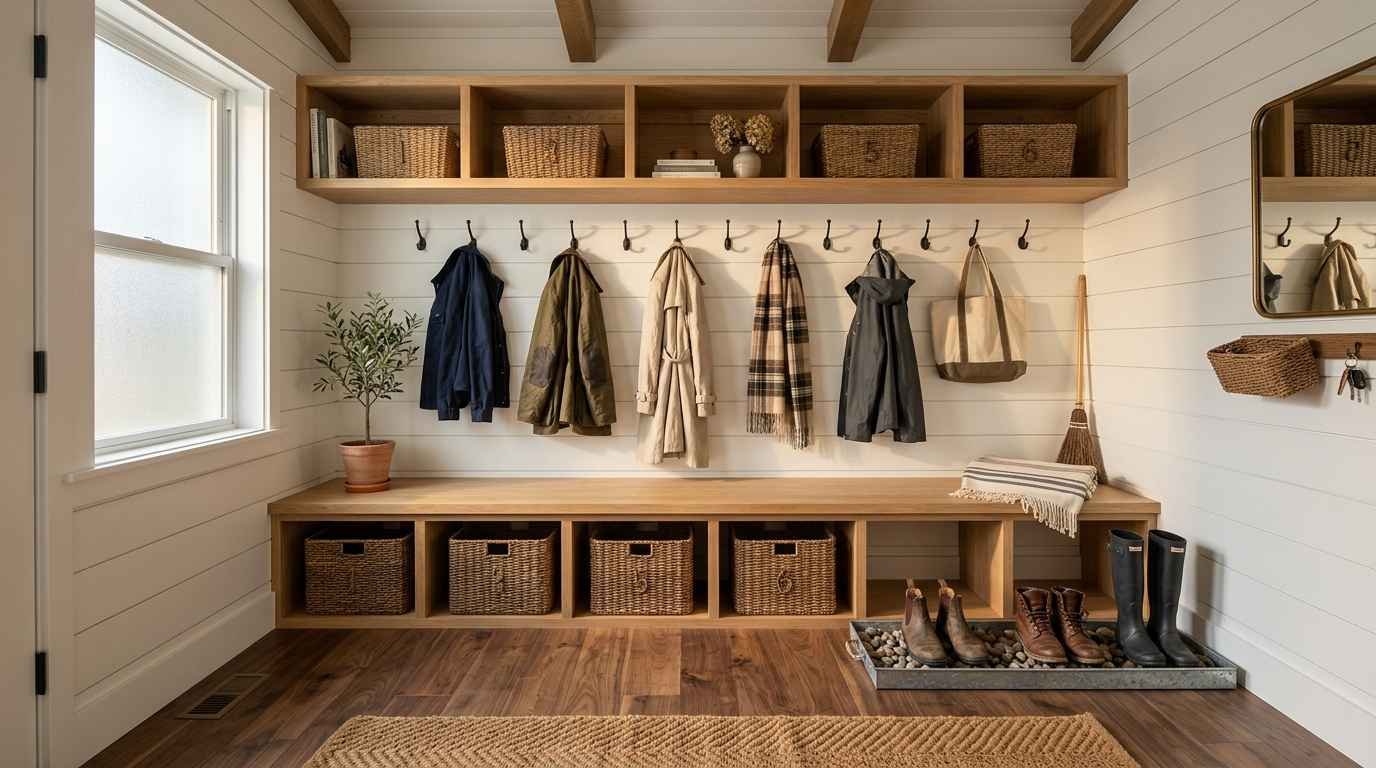
Your entryway is doing a lot of heavy lifting. Boots, bags, umbrellas, random mail that somehow ends up on the floor — it all lands here first.
And yet, most of us treat the mud room like an afterthought, a corridor to the “real” house. That’s a mistake.
A well-designed mud room can genuinely change how your mornings feel. Less chaos, more intention.
And honestly, it doesn’t take a full renovation to get there. Some of these ideas cost almost nothing. Others are weekend projects. A few are bigger commitments, but worth every penny.
Here are 27 mud room makeover ideas that actually work, pulled from real homes, real Pinterest inspiration boards, and a few hard-learned lessons from my own entryway disasters.
The Foundation: Storage That Makes Sense
1. Built-In Cubbies With Baskets
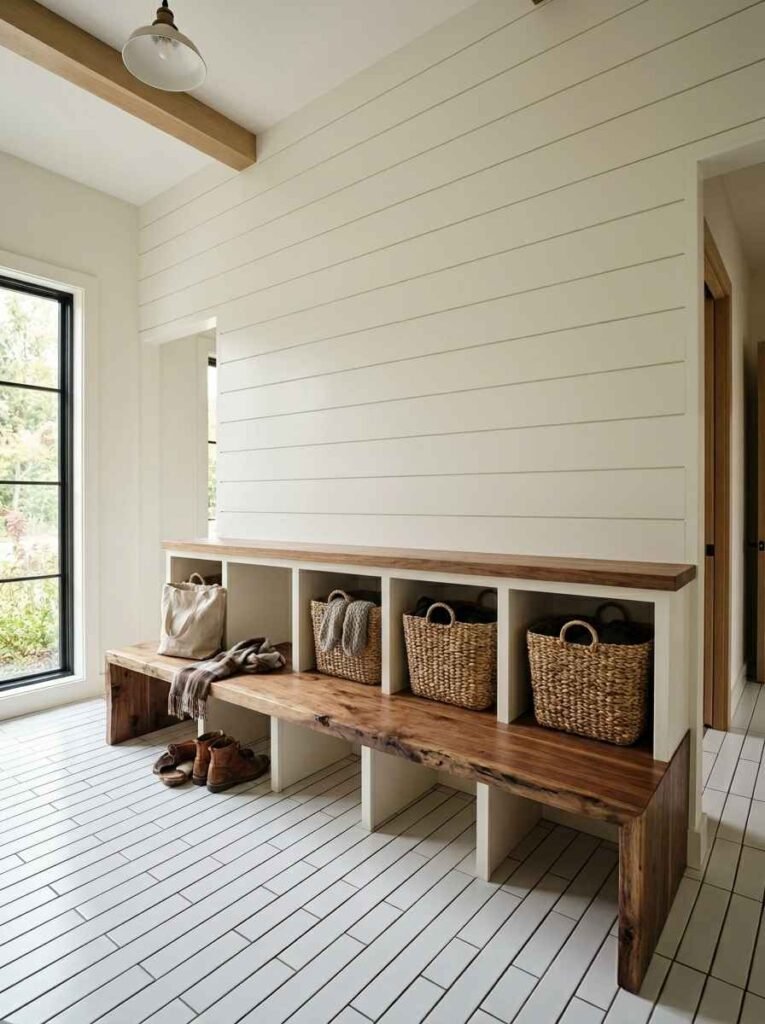
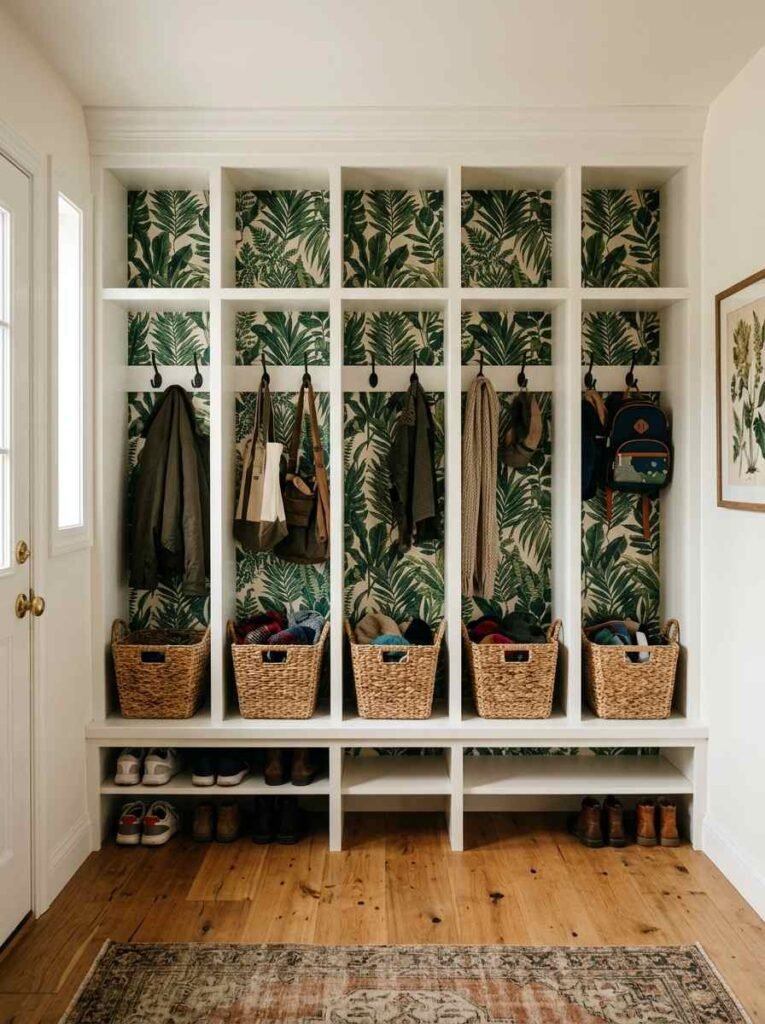
This is the classic for a reason. Open cubbies at waist height, one per family member, each with a labeled basket inside.
The basket hides the mess. The cubby organizes it by person. Everyone knows where to look for their stuff, and nobody has an excuse.
The key is getting the cubby depth right — at least 14 inches so actual bags fit without sticking out. Shallower than that and you’ve built a shelf, not storage.
2. Floor-to-Ceiling Lockers
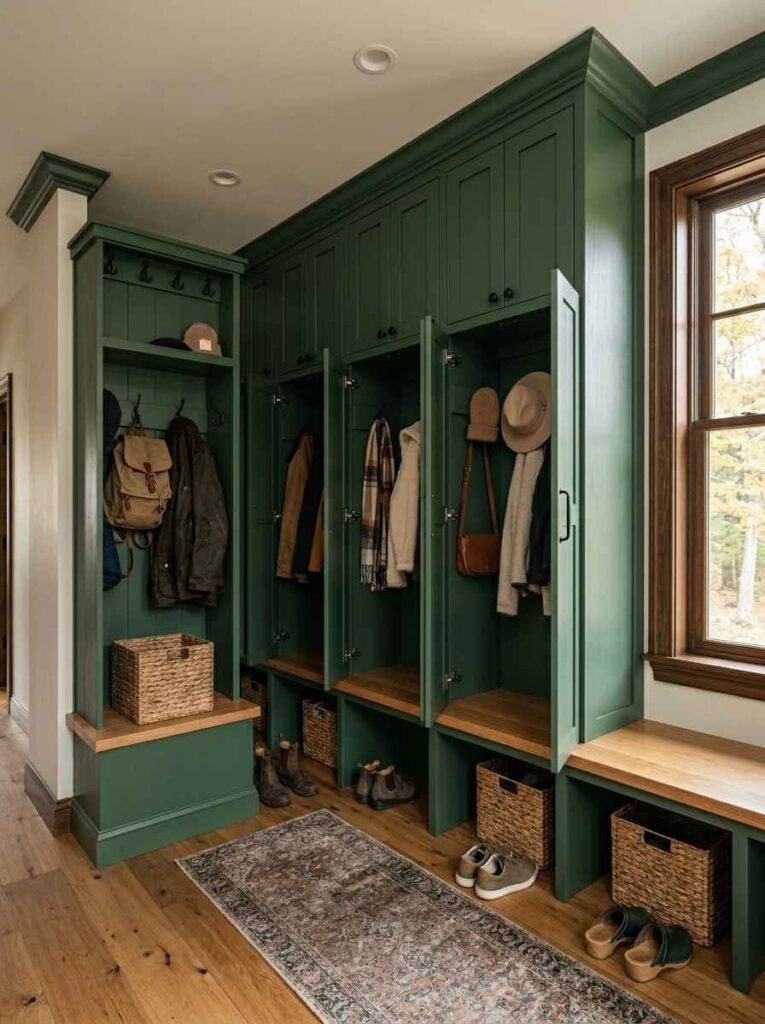
Think school locker, but make it look intentional. Floor-to-ceiling lockers with a hook at the top, a shelf in the middle, and a bench cutout at the bottom are probably the most efficient use of vertical wall space you can do in a mud room.
Painted in a deep navy or forest green, these look genuinely expensive. White ones look clean but show scuffs fast — just something to keep in mind if you have kids.
3. A Shoe Cubby That Actually Holds Shoes
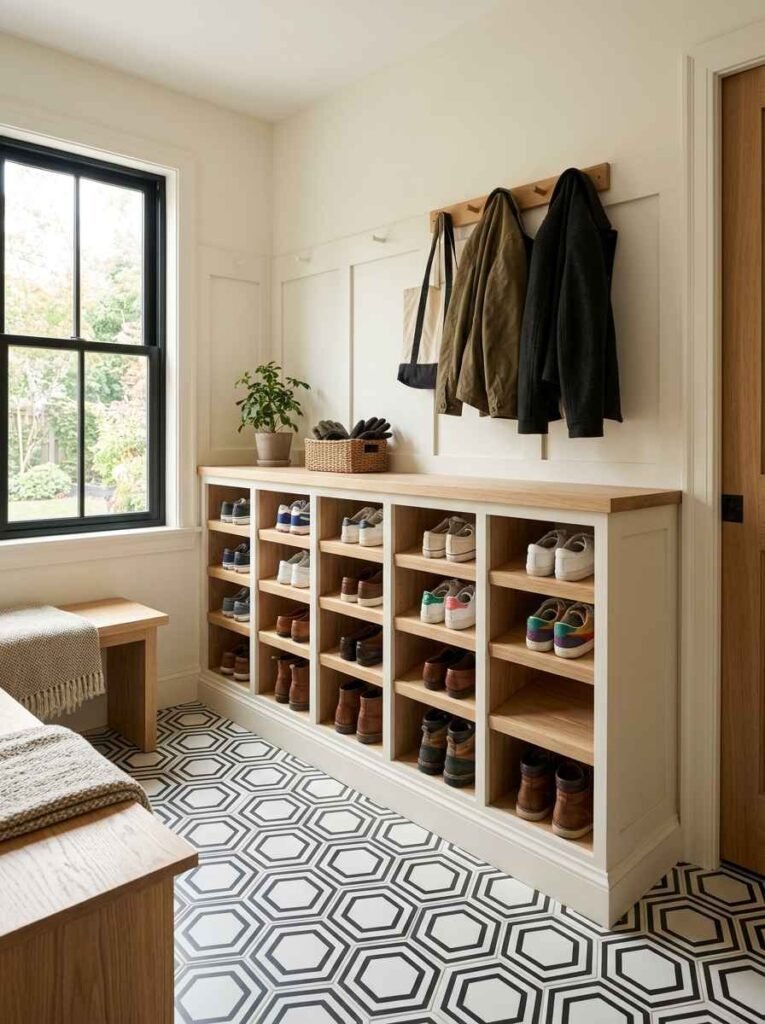
Not a rack. Not a tray by the door. An actual dedicated shoe cubby with angled shelves so you can see each pair. When you can see them, you use them.
When they’re jumbled in a pile, you give up and buy another pair because “I can never find anything.”
Two pairs per cubby slot is realistic. More than that and it tips into chaos again.
4. Drawer Storage Under the Bench
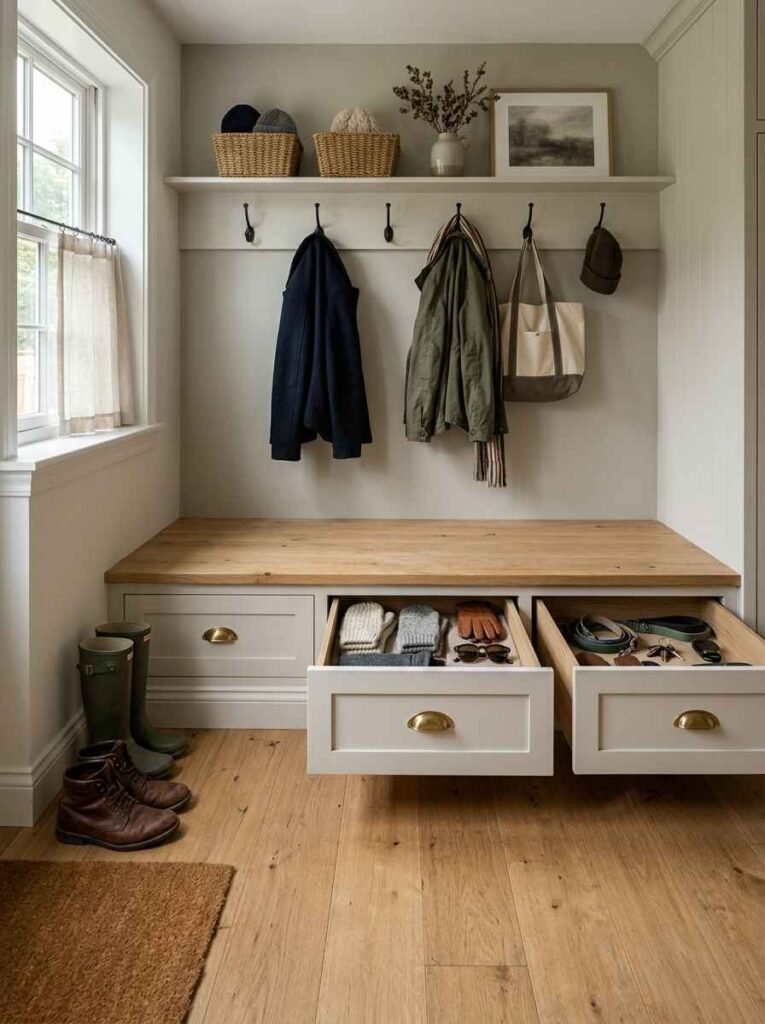
Bench seating in a mud room is non-negotiable if you have kids. But a bench with drawers underneath?
That’s the move. Mittens, sunglasses, dog leashes, spare keys — all the small stuff that usually ends up on the counter can live in those drawers instead.
Hooks, Hanging, and the Art of Getting It Off the Floor
5. Double-Height Hook Rows
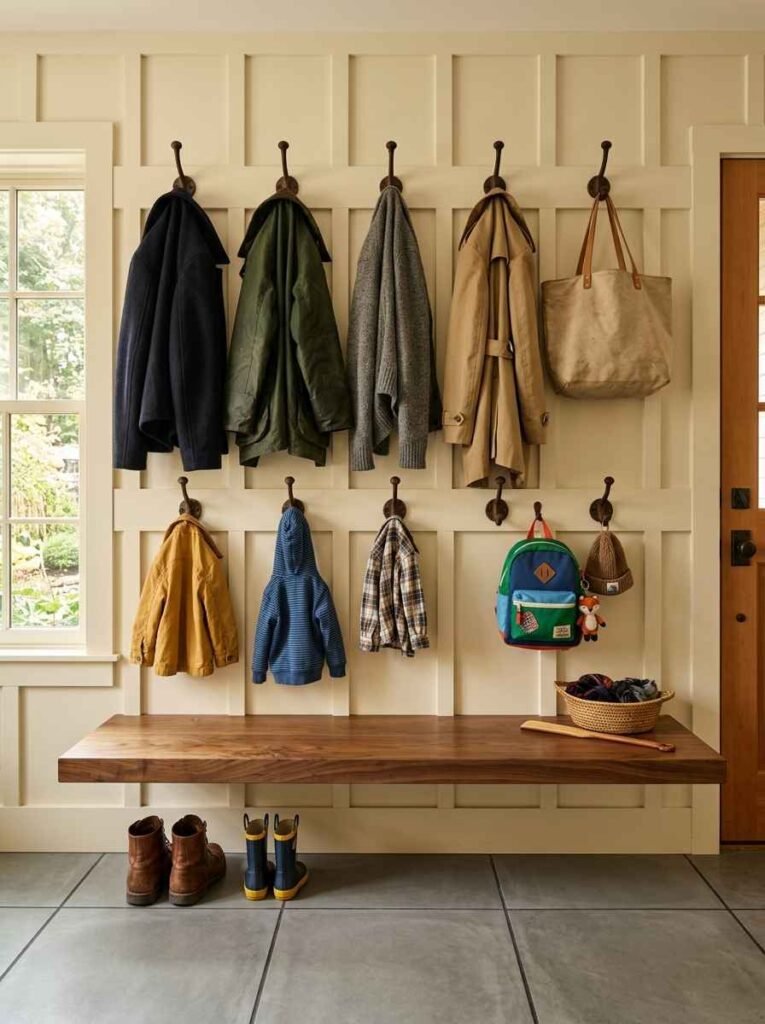
One row of hooks isn’t enough for a family. Put two rows at different heights — top row for adults’ coats, bottom row for kids’ bags and lighter jackets.
The difference this makes is immediate. Everyone stops piling their stuff on the same three hooks.
A nice touch: use vintage coat hooks from architectural salvage shops. They cost a bit more but they look like they’ve always belonged there.
6. A Dedicated Bag Hook Per Person
Bags are the biggest mud room offenders. They’re bulky, they migrate, and everyone just drops them wherever.
Give each person one dedicated hook — their name or initial above it if you want to be very clear about it — and suddenly the floor stays clear.
I’ve seen this change household dynamics more than any other single organizational tweak. Seriously.
7. Peg Rail Along the Full Wall
A Shaker-style peg rail running the full length of one wall gives you maximum flexibility. You can hang anything — bags, hats, dog leashes, a small mirror, seasonal wreaths.
It’s adjustable, it’s cheap, and it looks genuinely charming done in painted wood.
The mistake most people make is installing it too high. Eye level or slightly below works best for everyday use.
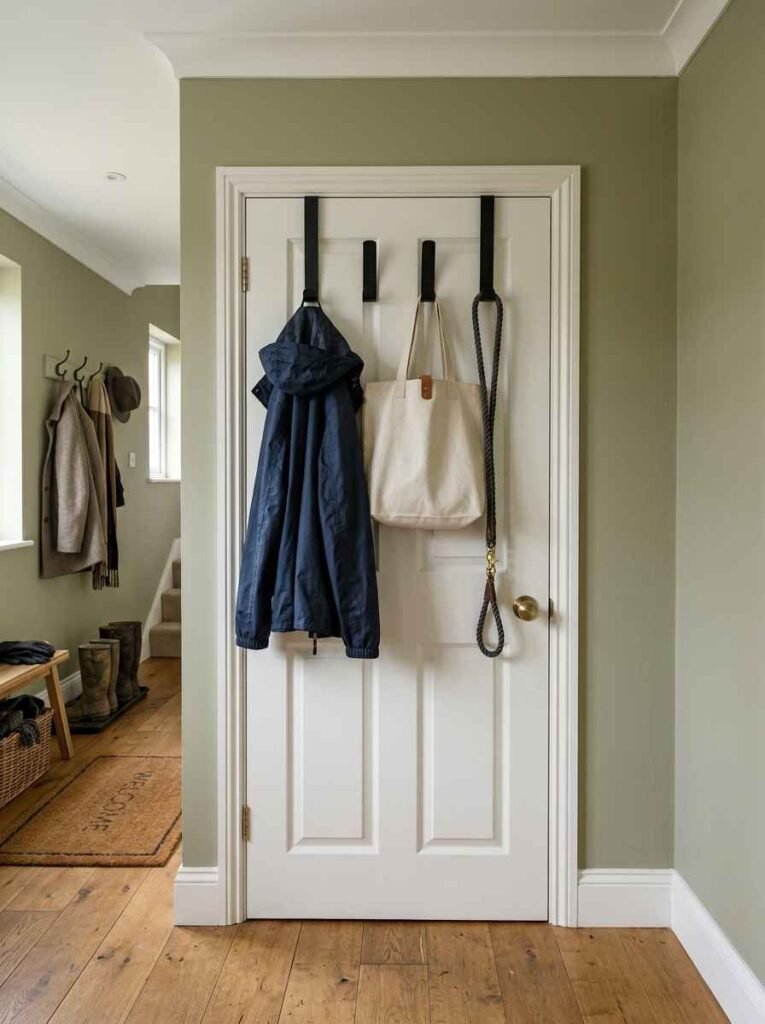
8. Over-Door Hooks
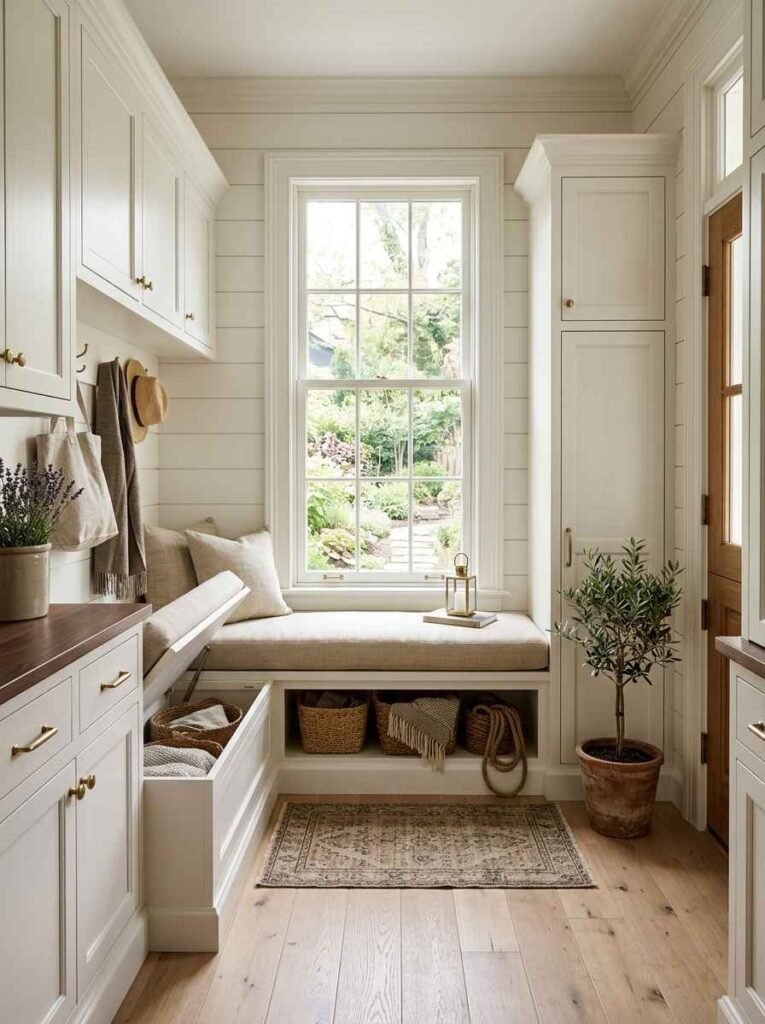
No wall space? Use the back of the door. A few well-placed over-door hooks can handle the overflow on heavy coat days. Not a permanent fix, but a smart supplement.
Seating That Does Double Duty
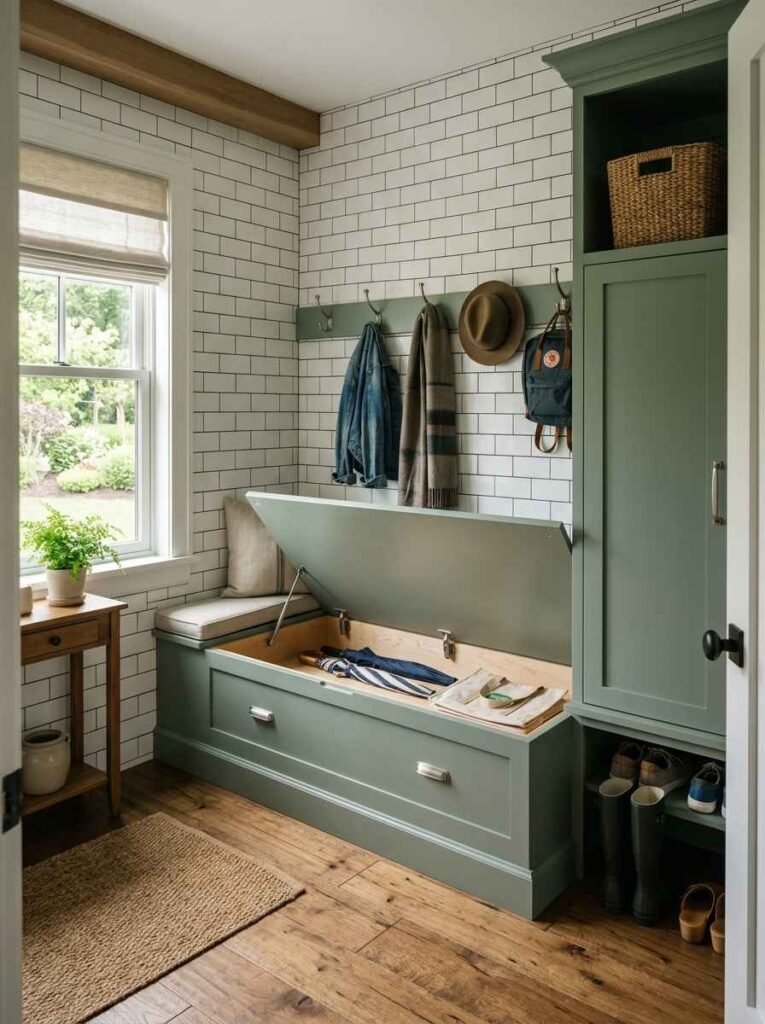
9. A Bench With a Lift-Top
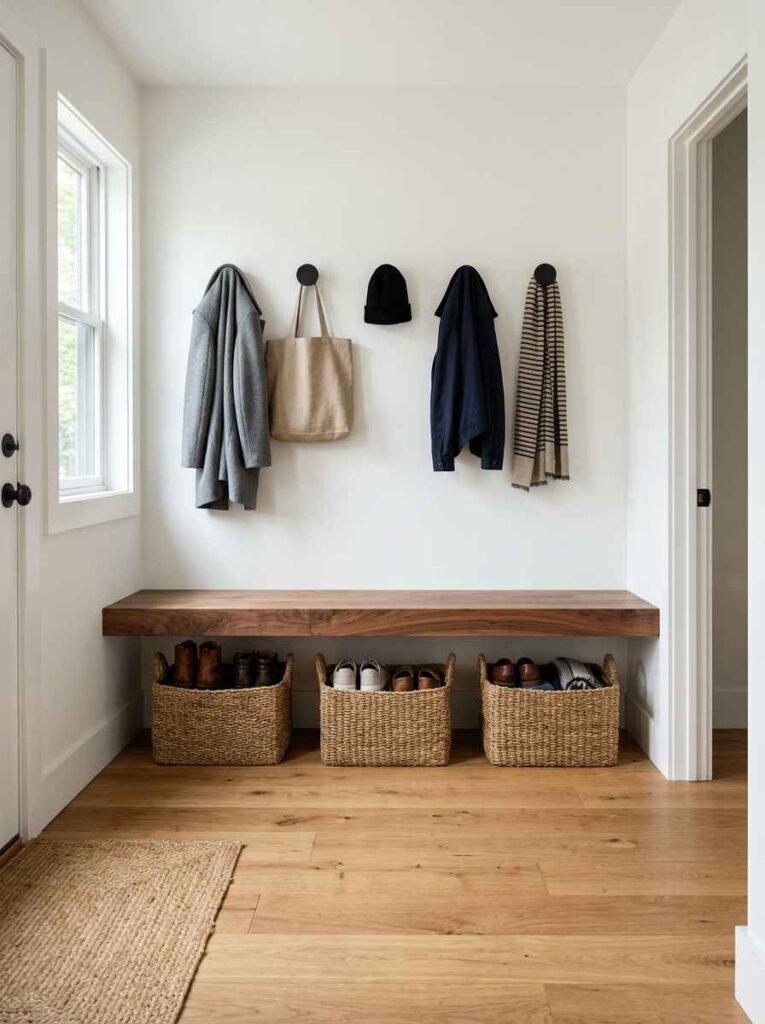
Lift-top bench storage is one of those ideas that feels obvious once you see it. The whole seat lifts to reveal a bin underneath, perfect for sports equipment, umbrellas, reusable shopping bags. When the lid is down it’s just a bench. Deceptively clean.
10. Built-In Window Seat With Storage
If your mud room has a window (lucky you), build a window seat under it with hinged storage beneath.
This is a bigger project but transforms the feel of the space completely. Suddenly it’s not just a utility room — it’s a place people actually want to sit.
Add a cushion in a durable outdoor fabric. It’ll hold up to wet coats and muddy kids infinitely better than anything decorative.
11. A Simple Floating Bench
No room for built-ins? A floating bench — just a thick slab of wood mounted to the wall at seat height, maybe 8-10 inches deep — is clean, easy to install, and leaves the floor beneath it open for shoes or baskets. It’s the minimal option that still works.
Flooring That Handles Real Life
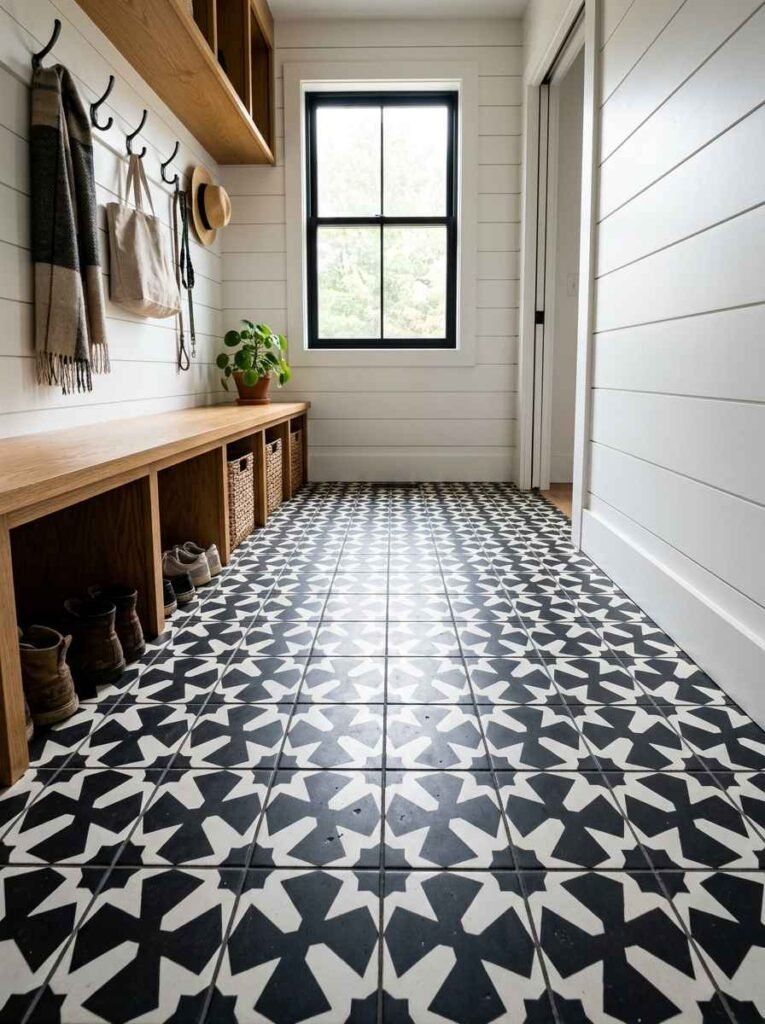
12. Cement Tile in a Bold Pattern
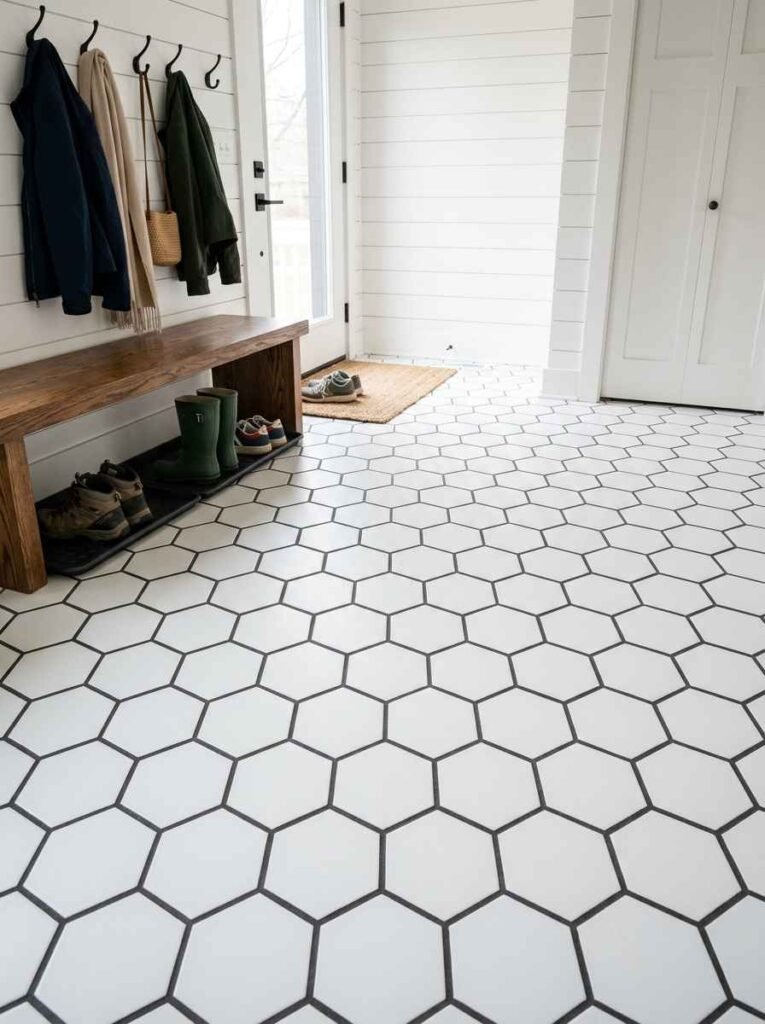
Cement tile is durable, cleanable, and looks genuinely beautiful. A bold geometric pattern — black and white hex, a Moroccan star, anything with contrast — turns the floor into the feature of the room.
It also hides dirt better than a plain light tile does, which is the whole point.
The downside: it needs sealing and occasional maintenance. If that sounds like a lot, read the next one.
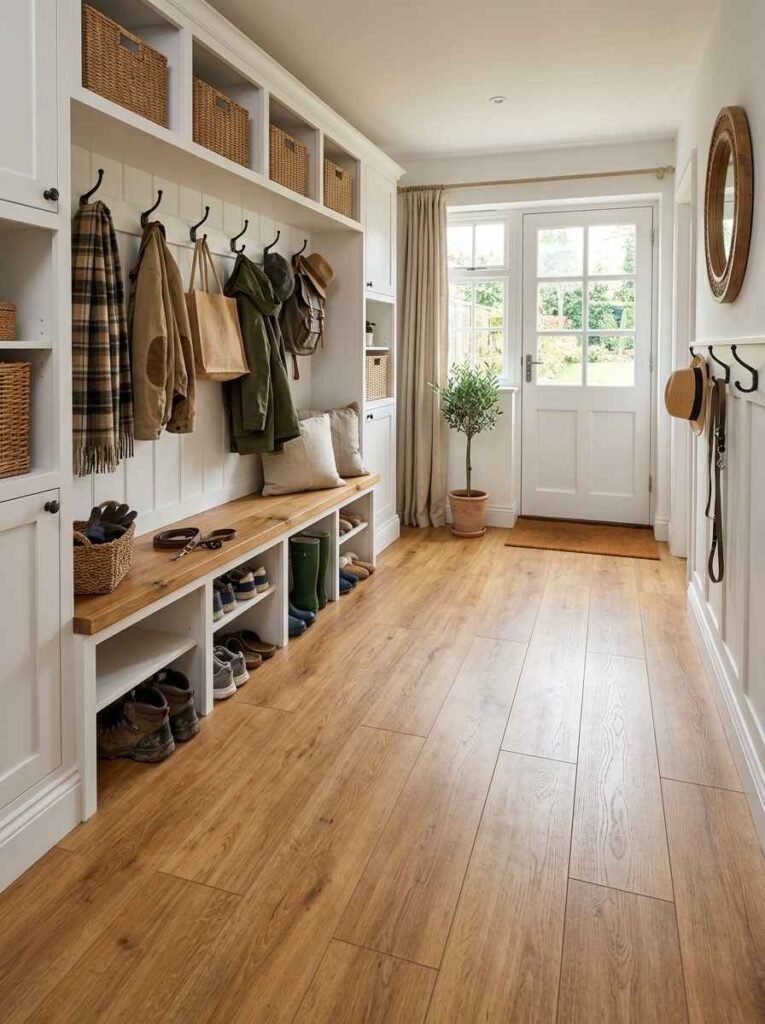
13. Luxury Vinyl Plank (the good kind)
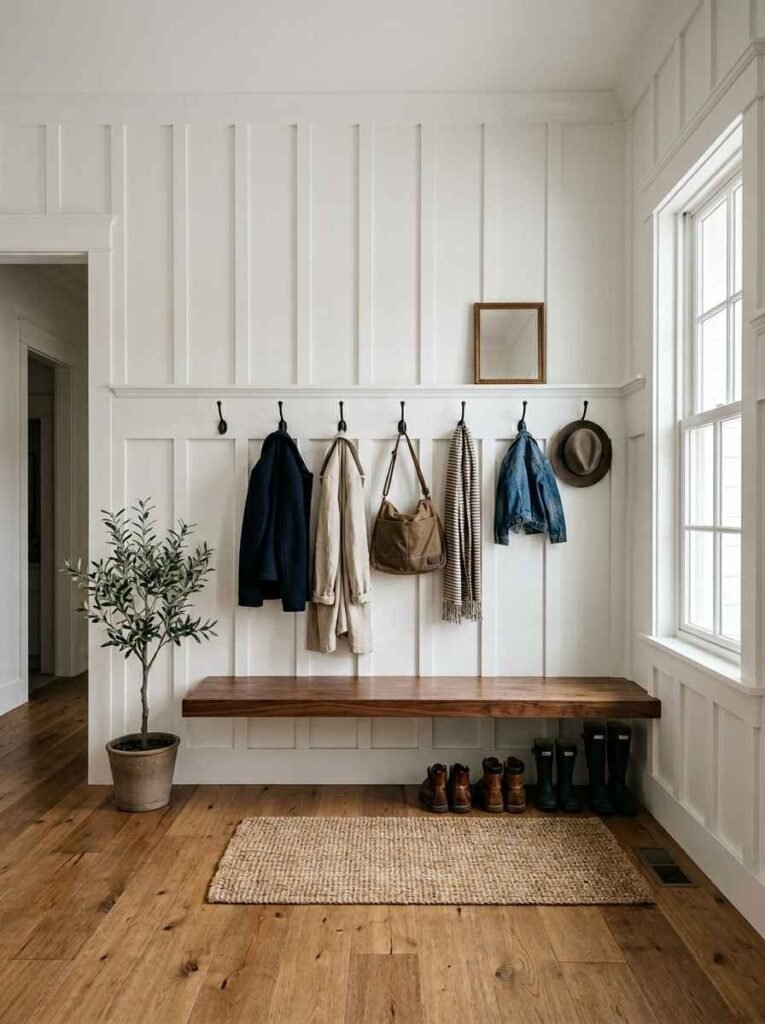
Wow, the LVP market has genuinely changed in the past few years. The quality now is nothing like what it was.
A good luxury vinyl plank in a warm wood tone gives you the look of hardwood with the durability of… vinyl. It’s waterproof. It’s scratch-resistant. It handles boots, puddles, and pet paws without complaint.
For a mud room specifically, this is probably the most practical choice most homeowners can make.
14. Dark Grout, Always
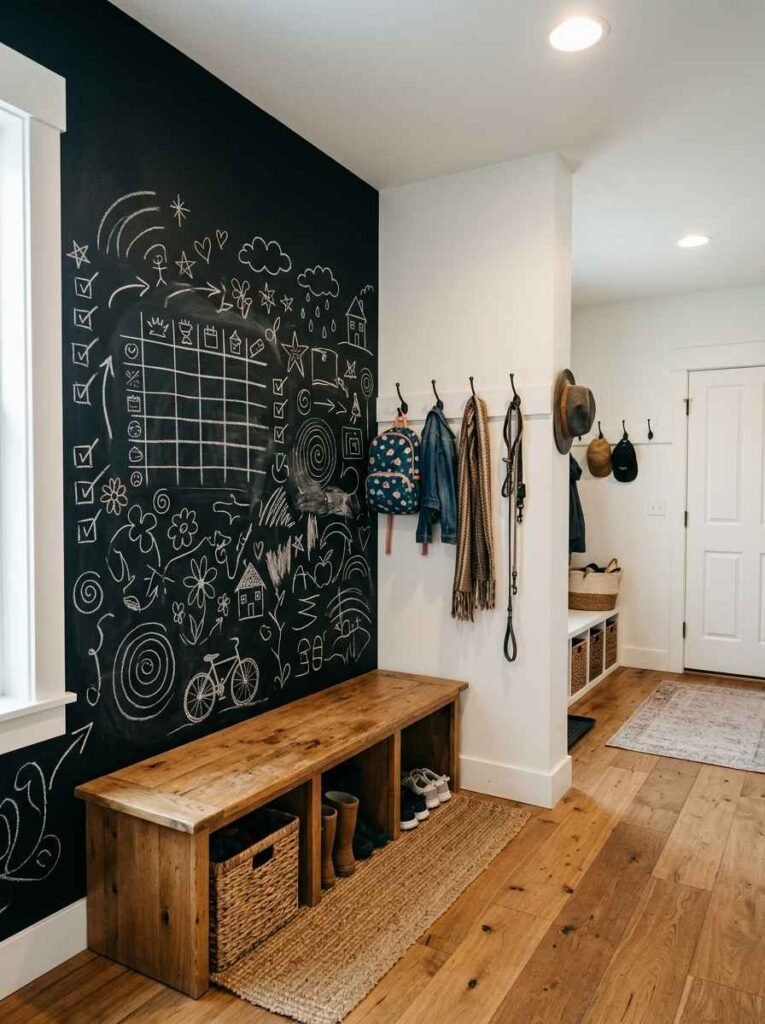
Whatever tile you choose, use dark grout. Gray, charcoal, even black. Light grout in a mud room turns dingy within months.
Dark grout hides everything and still looks intentional. This is a small decision with a big long-term payoff.
Wall Ideas That Actually Add Character
15. Shiplap or Board-and-Batten
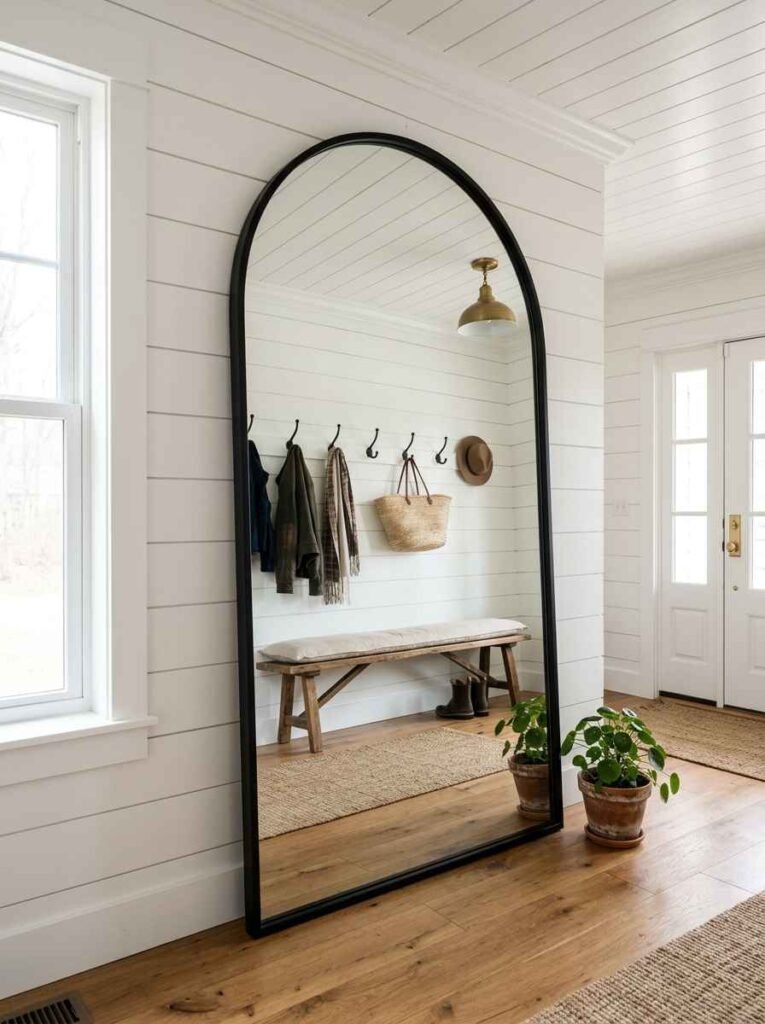
Shiplap on the lower half of the walls with board-and-batten paneling is a classic farmhouse mud room treatment, but it works in almost any style depending on the paint color you choose. In a dark charcoal it reads as modern. In warm white it’s traditional. The texture adds something that flat drywall just doesn’t.
It’s also a great DIY project if you’re even slightly handy with a miter saw.
16. Chalkboard Paint on One Wall
A chalkboard wall in the mud room is way more practical than it sounds. Daily notes, school schedule, grocery list, “remember your lunch” messages — all on one surface that wipes clean.
It keeps paper off the counters and gives you a real communications hub for the household.
Use proper chalkboard paint, not chalk paint (they’re different). Season it before first use or you’ll never fully erase the first thing you write.
17. A Large Framed Mirror
A mirror in the mud room is the one finishing touch most people skip, and it makes a massive difference.
Practically: one last look before you leave the house. Visually: it makes the space feel twice as large and much more considered.
Go big. A small mirror in a large space looks lost.
18. Wallpaper on the Back Wall of Cubbies
This is a detail-oriented one and a personal favorite. A bold, patterned wallpaper applied only to the back wall of open cubbies looks incredible and is very low commitment — just a small amount of paper, easily changed later. It adds color and personality without overwhelming the room.
Lighting, Because Everyone Forgets It
19. A Pendant or Flush Mount With Real Presence
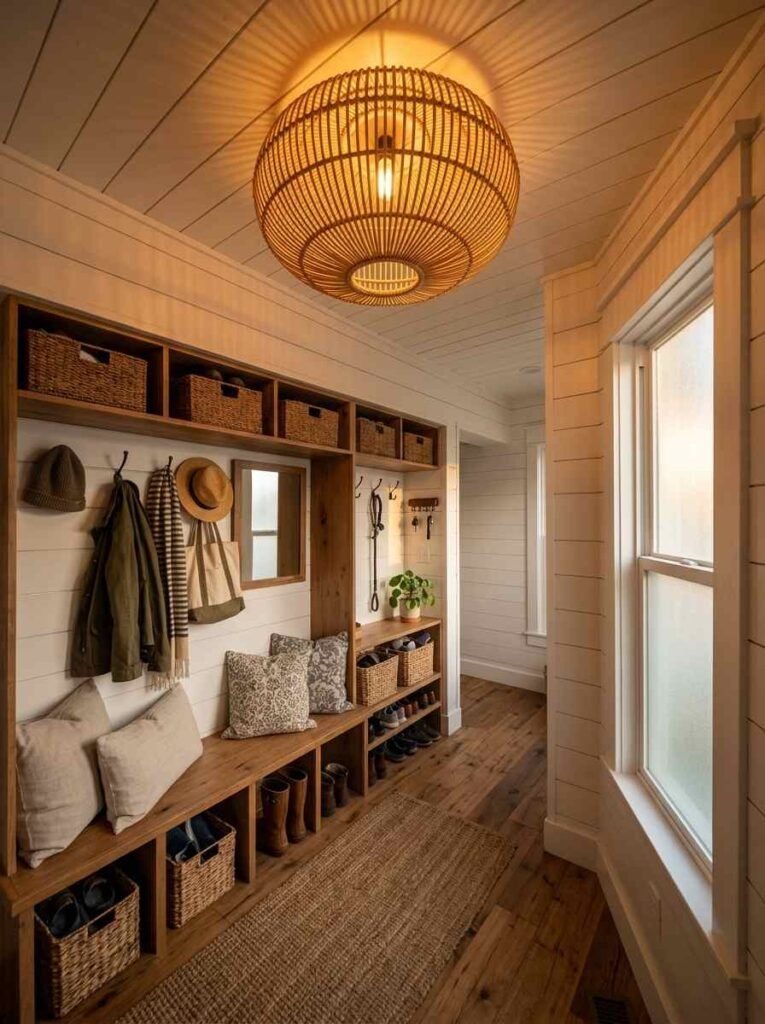
Most mud rooms have a builder-grade ceiling fixture that does the bare minimum. Swap it for something with personality — an industrial cage pendant, a rattan flush mount, a schoolhouse globe. It costs maybe $80-200 and the difference in how the room feels is instant.
20. Under-Cabinet Lighting in the Cubby Area
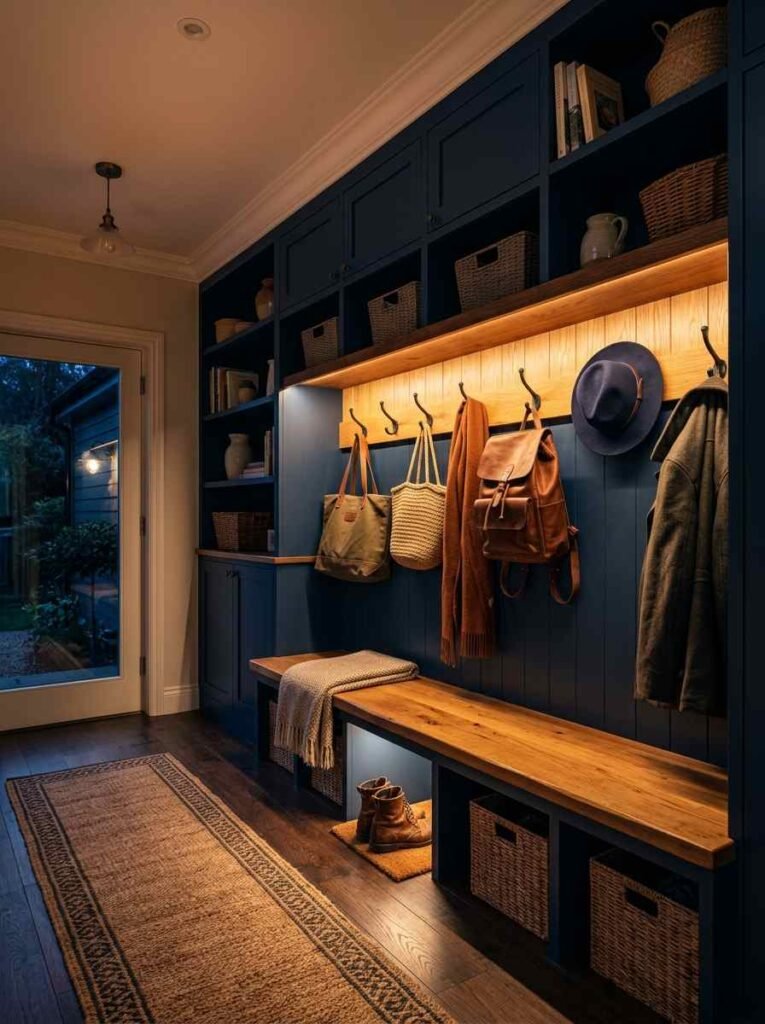
A small strip light under the upper cabinets above the locker area is one of those touches that looks designed even though it’s incredibly simple to install. It illuminates the hooks and hooks underneath so you’re not fishing for your bag in the dark at 7am.
Practical Extras That Make a Big Difference
21. A Charging Station Built Into the Bench Area
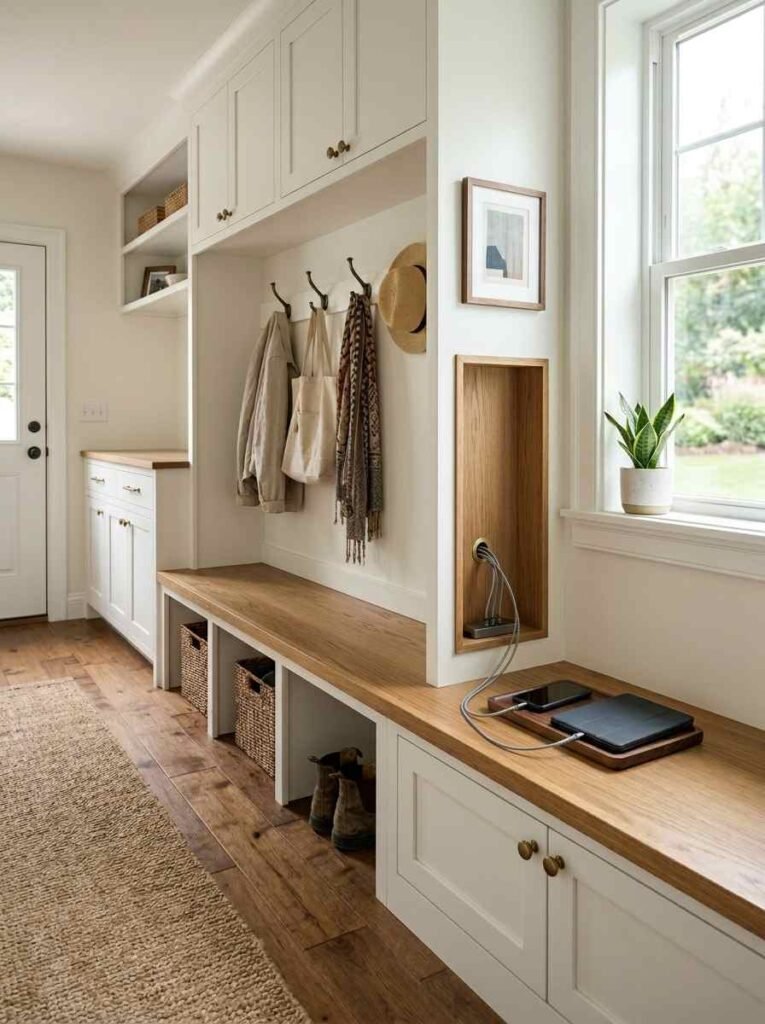
Cords everywhere is its own form of clutter. A built-in charging station — just a recessed shelf with a power outlet and cable management — keeps phones and tablets off the main surfaces and always where you can find them on the way out.
22. A Mail and Keys Drop Zone
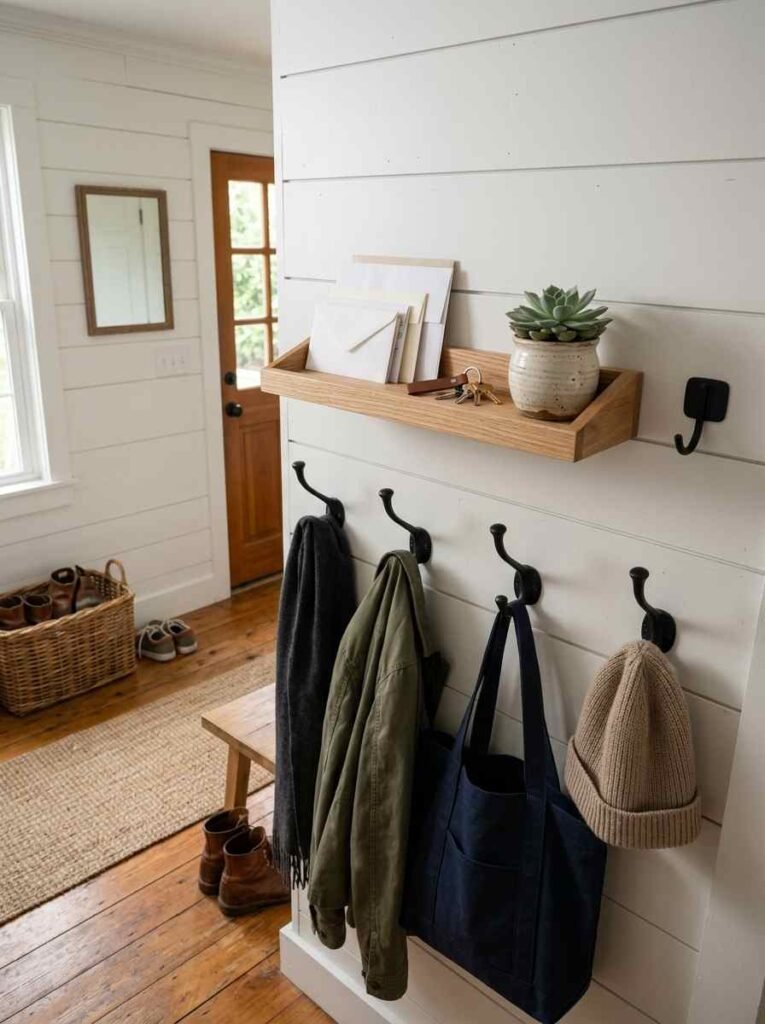
A small wall-mounted tray or shelf at eye level specifically for keys and incoming mail stops both from migrating to random surfaces around the house. Sounds obvious. Almost nobody does it consistently without a dedicated spot.
Add a small hook just for keys. Just one. One hook, one spot, every time.
23. A Pet Station in the Corner
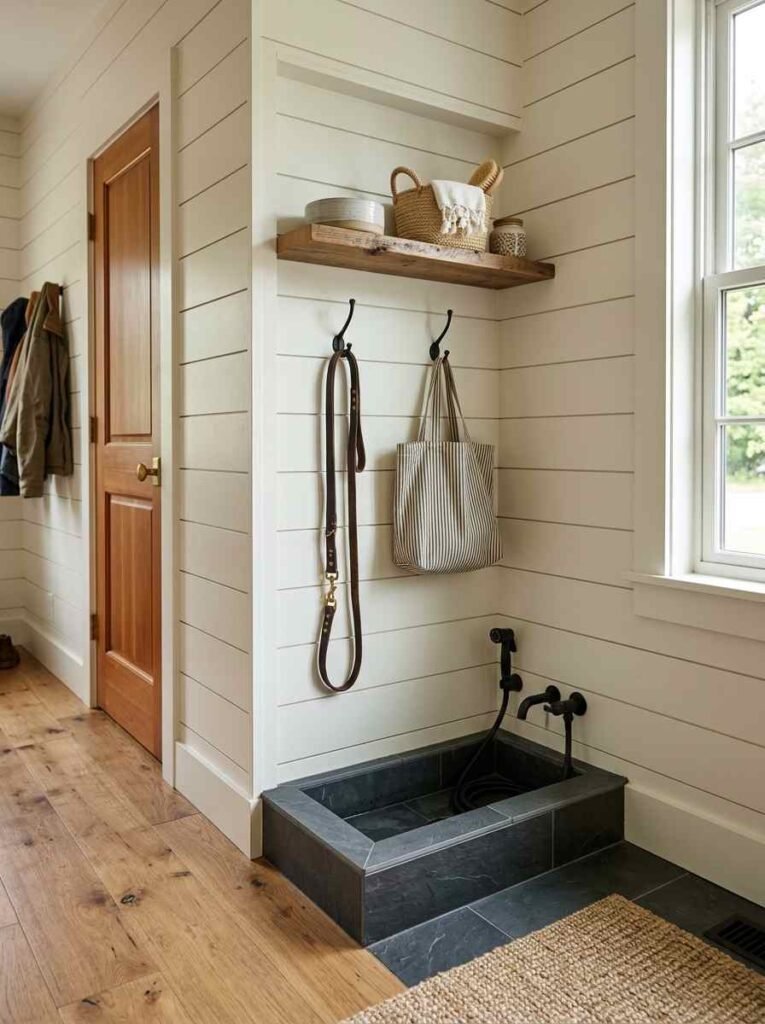
If you have a dog, you know. A small corner station with hooks for leashes, a bin for toys, a spot for the brush and poop bags — all contained in one corner — is genuinely life-changing. Some people add a low-mounted dog wash station if they have the plumbing.
That’s next-level, but worth knowing it exists.
24. A Boot Tray That Isn’t Ugly
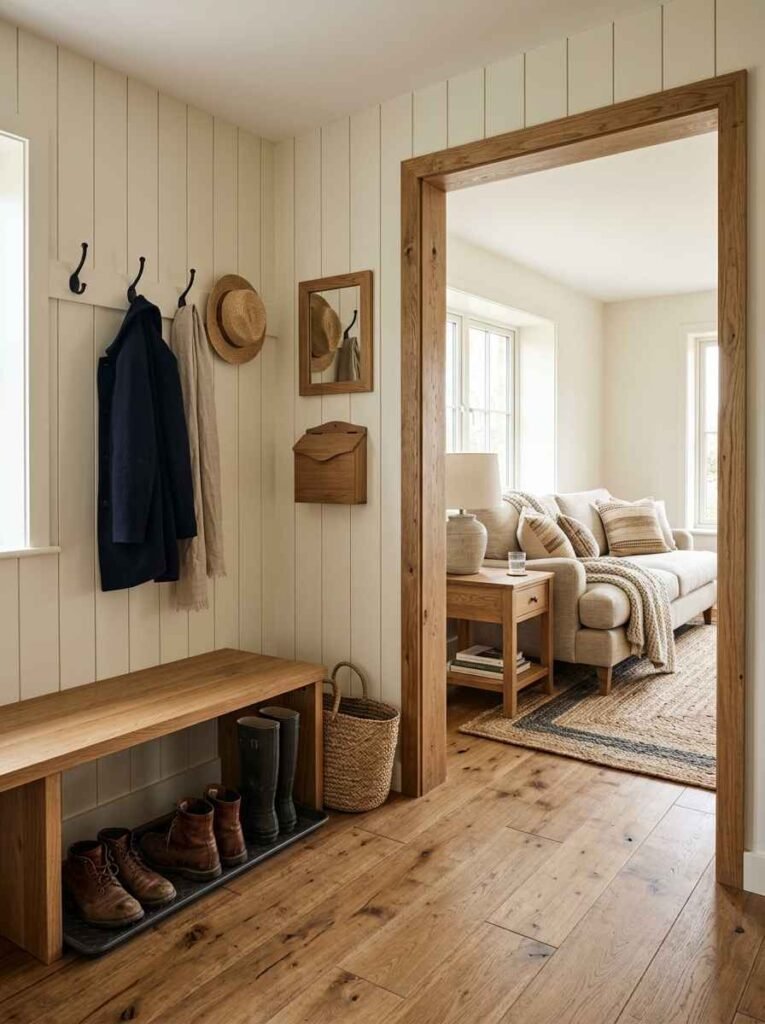
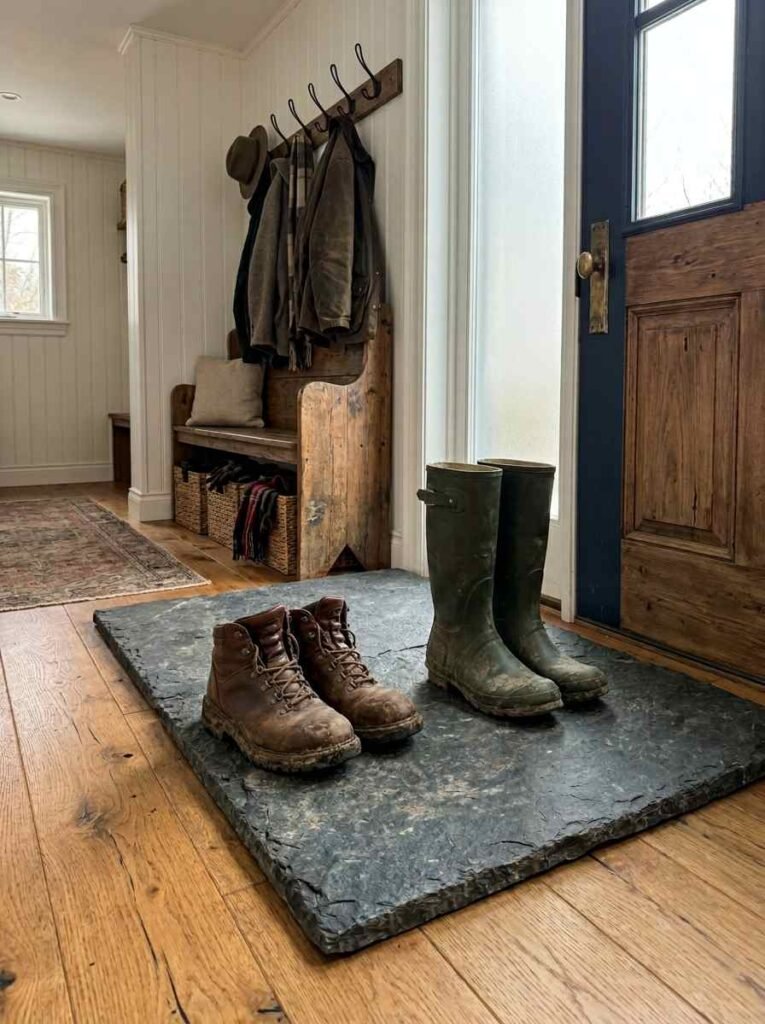
Most boot trays are industrial gray plastic. They work but they look terrible. Galvanized steel trays look much better and hold up for years. Cedar trays absorb moisture and smell good. A stone or slate tray is elegant and nearly indestructible. The function is the same; the look is totally different.
Color and Style Ideas
25. Go Dark on the Walls
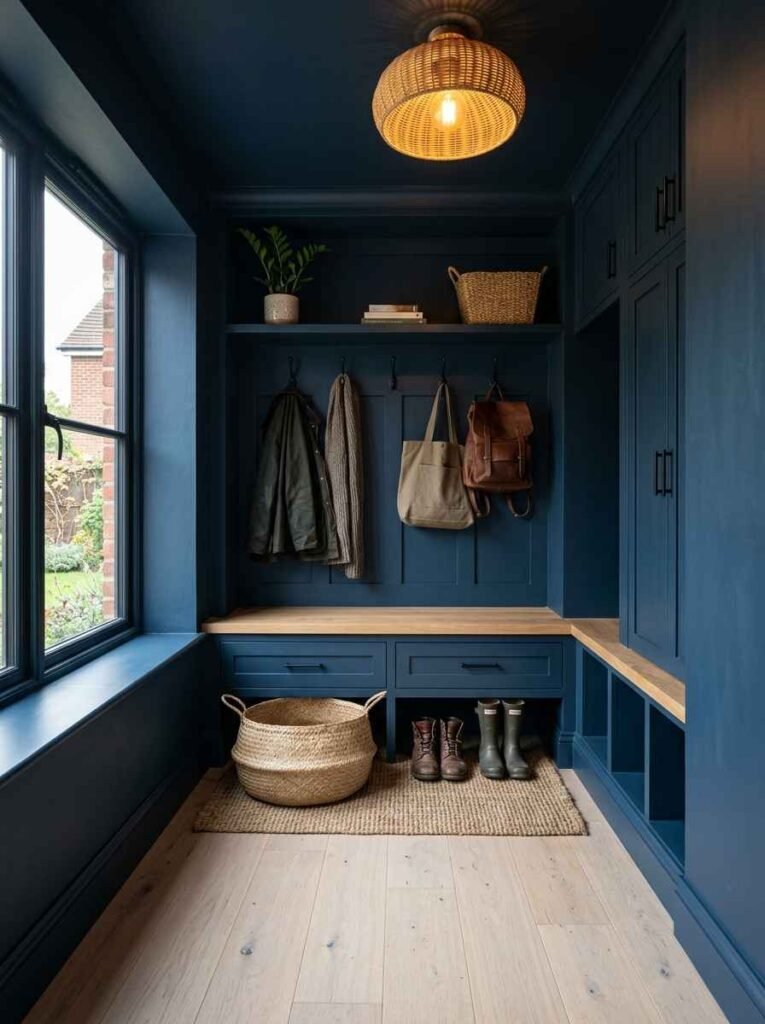
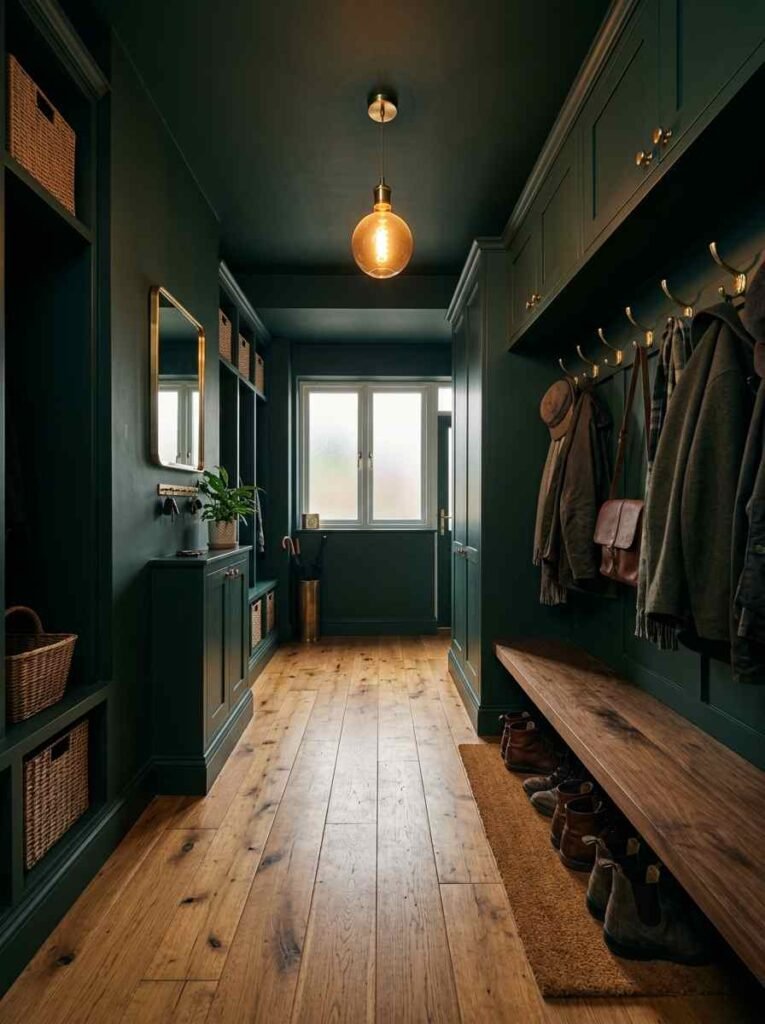
A mud room is one of the best places in a home to commit to a dramatic, dark wall color. Deep teal, charcoal, navy, forest green — all of these make the space feel intentional and designed rather than utilitarian. Dark walls hide scuffs better than light ones, which is a nice bonus.
Benjamin Moore’s “Black Forest Green” and Farrow and Ball’s “Hague Blue” are both beautiful in this context if you want a starting point.
26. Match the Mudroom to the Rest of the House
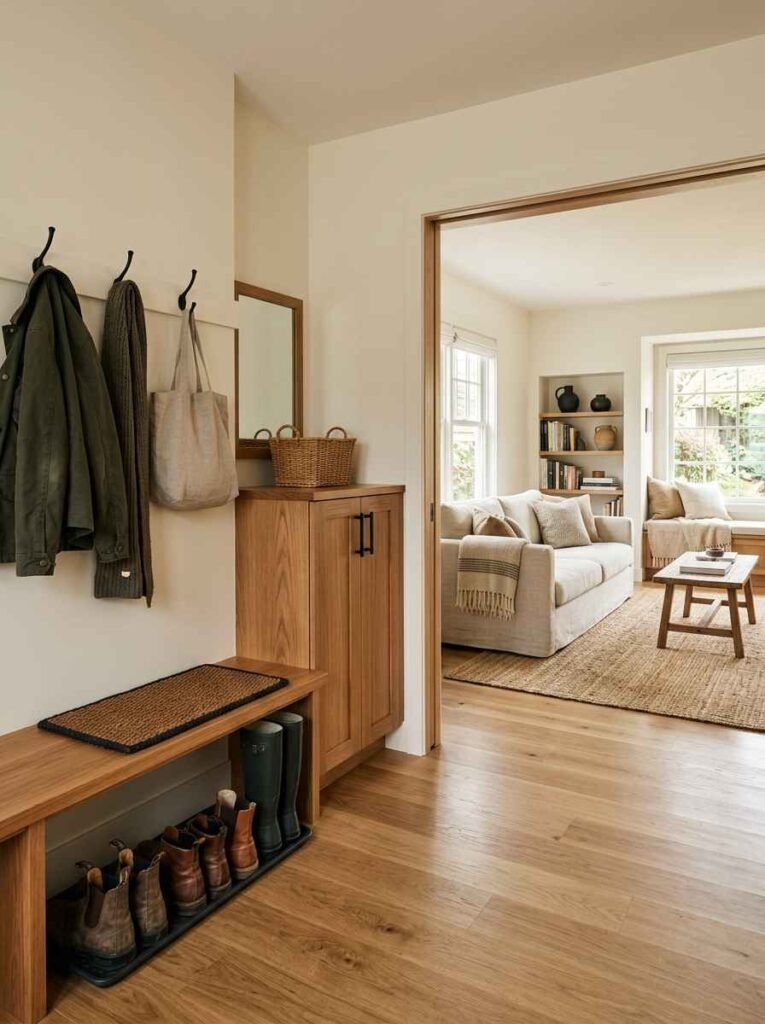
Here’s the thing most design advice skips: a mud room that looks completely different from the rest of your home feels disconnected and a bit weird. Bring in the same wood tones, the same hardware finish (brushed brass, matte black, whatever you’re using elsewhere), the same trim color. It should feel like it belongs, just a more rugged version of the aesthetic you’ve built throughout.
27. Add One Plant
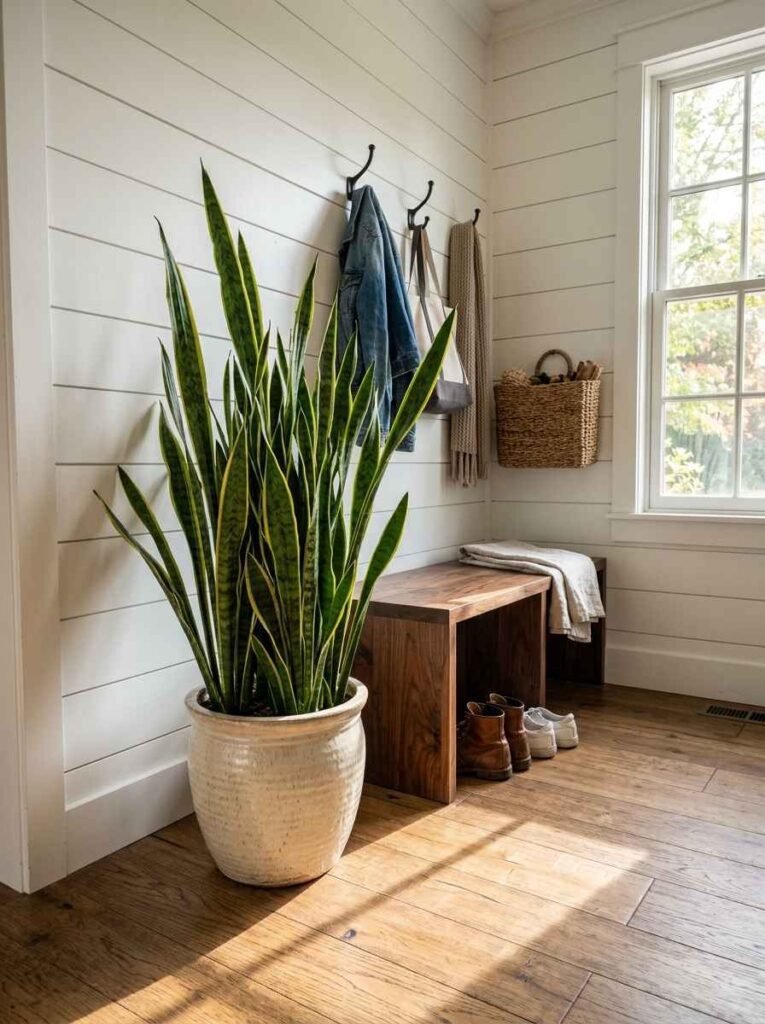
One. Not a collection, not a shelf of succulents. One real plant in a good pot. Something hardy — a pothos, a snake plant, a small olive tree if you get light. It does more for the warmth of the space than any styling trick. Living things change the energy of a room.
Quick Reference: Mud Room Elements by Budget
Putting It All Together
You don’t need to do all 27 of these. Pick the ones that solve your actual problems first — shoes on the floor, coats piled on one hook, keys disappearing — and work from there.
The mud room makeovers that work long-term aren’t the ones that look best on Pinterest. They’re the ones built around how that specific household actually moves through the space. A family of five with three kids in sports has completely different needs than two adults with a dog.
Start with your friction points. Build storage around your actual stuff. And then, once the function is sorted, make it look good. That’s the order that works.
For more inspiration on entryway storage systems, the team at Apartment Therapy (apartmenttherapy.com/mudroom-ideas) has a solid archive of real-home examples. And if you’re going the DIY route on built-ins, Ana White (ana-white.com) has free plans for mud room lockers that are genuinely buildable by an intermediate DIYer.
FAQ
How much does a mud room makeover typically cost?
It varies wildly. A refresh with new hooks, a peg rail, baskets, and a boot tray can run $200-500. A mid-range project with new flooring, built-in cubbies, and updated lighting is typically $2,000-6,000. A full custom built-in with premium materials can run $10,000 or more. The good news: the low-end refresh often delivers 80% of the organizational benefit at a fraction of the cost.
What’s the most important thing to get right in a mud room?
Hooks at the right height and enough of them. Everything else is secondary. If coats don’t have a logical, accessible place to land, they won’t land there. Get the hook count and height right for your household and the rest of the room functions better almost automatically.
Can I add a mud room if I don’t have one?
Yes. A dedicated mud room isn’t strictly necessary — you can create a “mud room zone” in any entryway, garage area, or even a section of a hallway. A peg rail, a small bench, a boot tray, and a basket or two create the function even without a dedicated room. Many of the most effective setups I’ve seen are in a 4-foot stretch of hallway, not a dedicated space at all.
What does your entryway need most right now — more storage, better organization, or just a style upgrade? Drop your biggest mud room frustration in the comments and let’s figure it out together.
