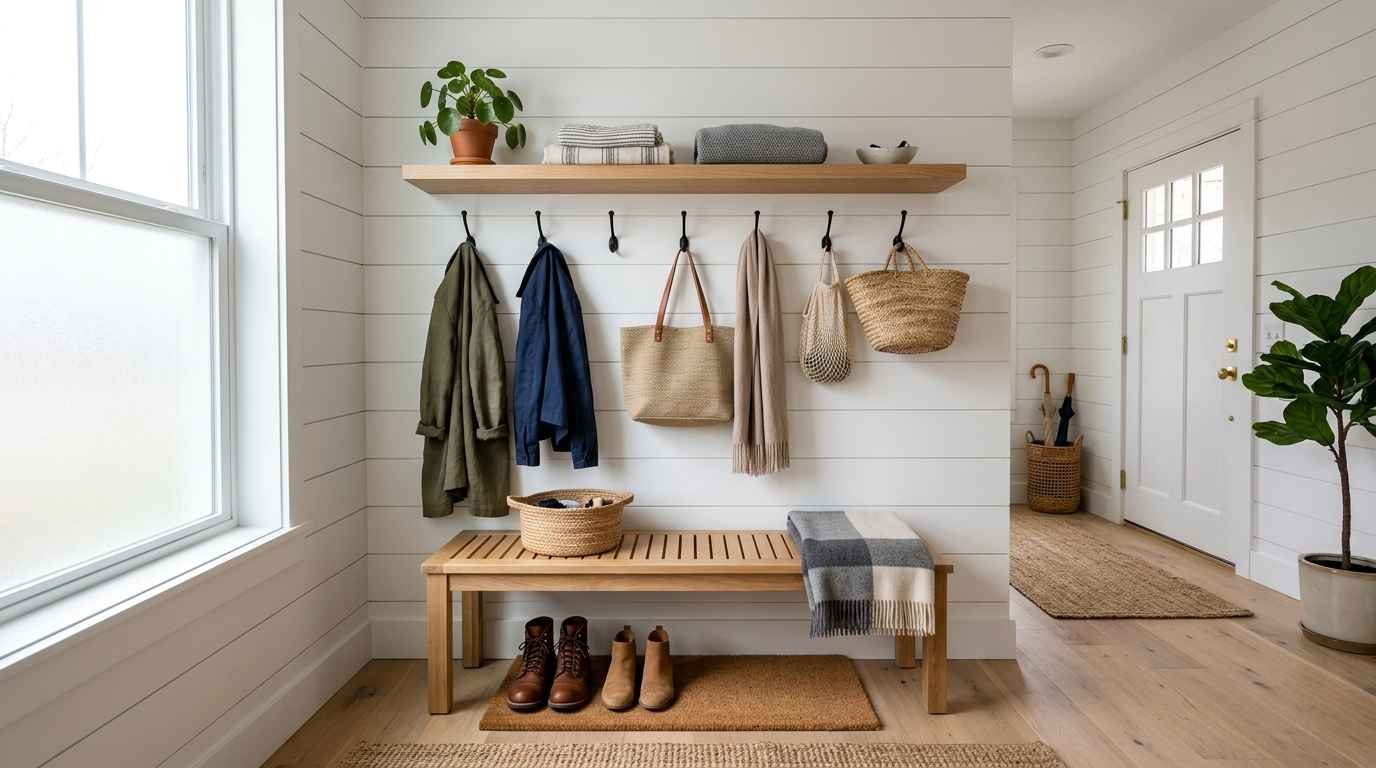
Your entryway is basically the first thing anyone sees when they walk into your home.
And if yours looks like a coat explosion happened at 7 AM every single morning, trust me, you’re not alone.
I’ve been there. Jackets on the floor, backpacks piled up against the wall, keys missing for the 4th time this week. It’s chaos.
The good news? You can fix all of that with a few hooks and a shelf. Seriously, that’s it.
Pinterest is packed with killer mudroom ideas that look like they came out of a $200K home renovation, but honestly, a lot of them are pretty easy to pull off yourself.
I’ve tried a bunch of these at home, so I’ll tell you what actually worked and what flopped hard.
Wall hooks: the backbone of any mudroom
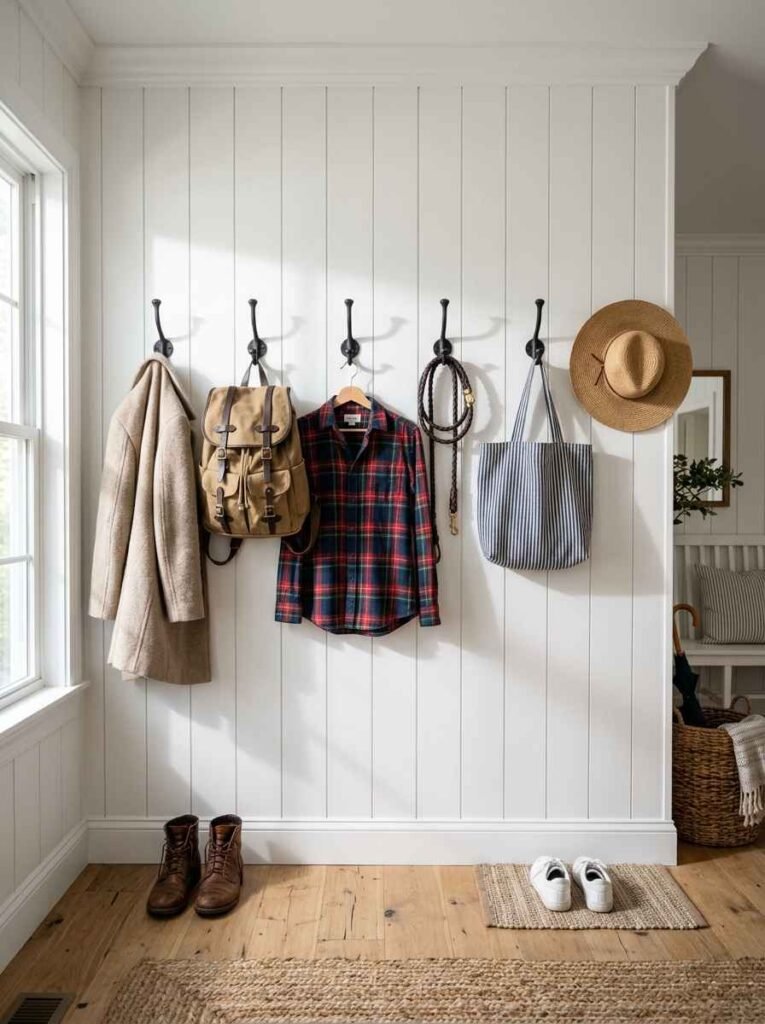
If your mudroom has nothing else, it needs wall hooks. Period. Everything hangs here: coats, bags, dog leashes, umbrellas, the random tote bag you forgot you owned.
Shaker-style peg rail
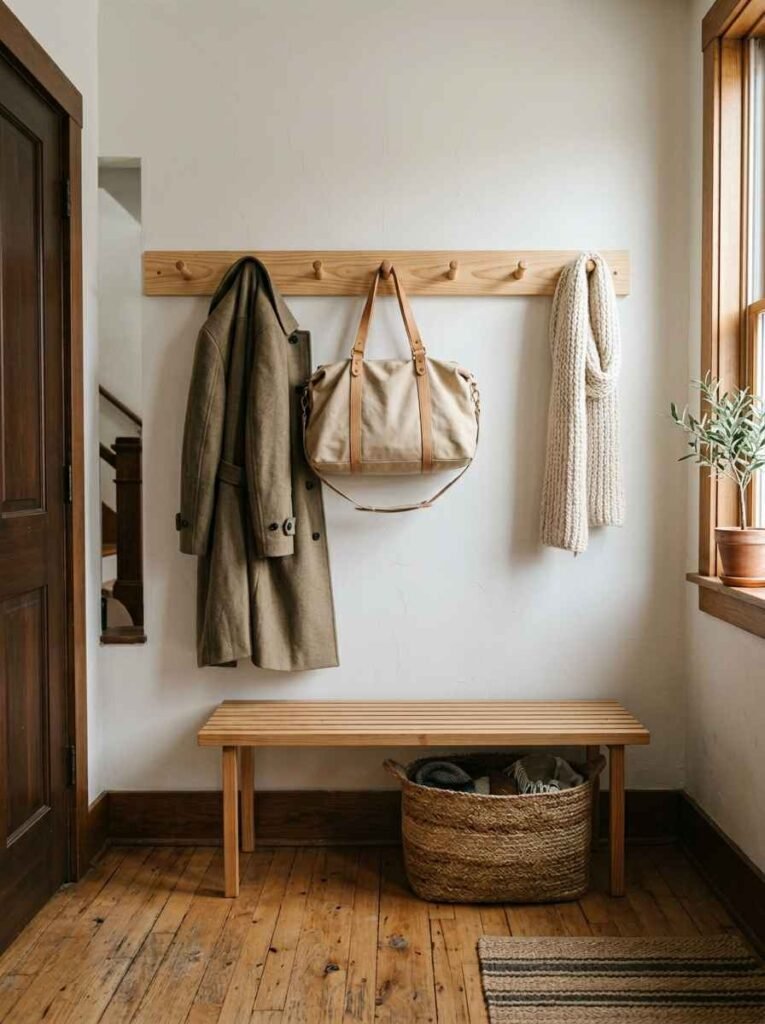
This is probably my #1 recommendation for anyone starting from scratch. A shaker peg rail is just a flat board with wooden pegs running across it, usually spaced about 6–8 inches apart.
You can buy a pre-made one on Amazon for around $30–$60, or build your own from a pine board and some turned wood pegs (Home Depot has them in packs).
I installed a 48-inch version in my own entryway last spring and I’m still obsessed with it. It holds 2 adult coats, 2 backpacks, and still has room for a few hooks at the end for scarves.
Heavy-duty double hooks
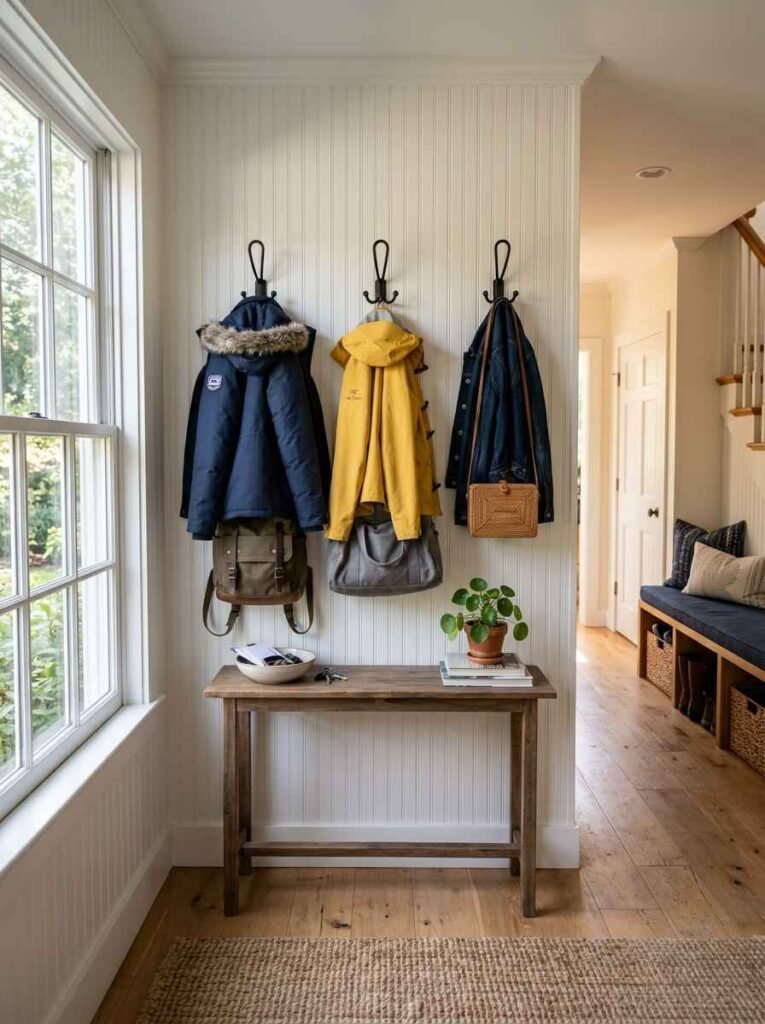
If you’ve got a family of 4+, single hooks are basically useless. You need double hooks, the kind where 2 items stack on top of each other.
Cast iron double hooks are solid, they don’t wiggle loose after 6 months like some of the cheaper chrome ones do.
FYI, if you’re mounting directly into drywall, please use wall anchors. I skipped them once. Whole hook came out of the wall with a winter coat still on it. Lesson learned the hard way.
Over-the-door hooks
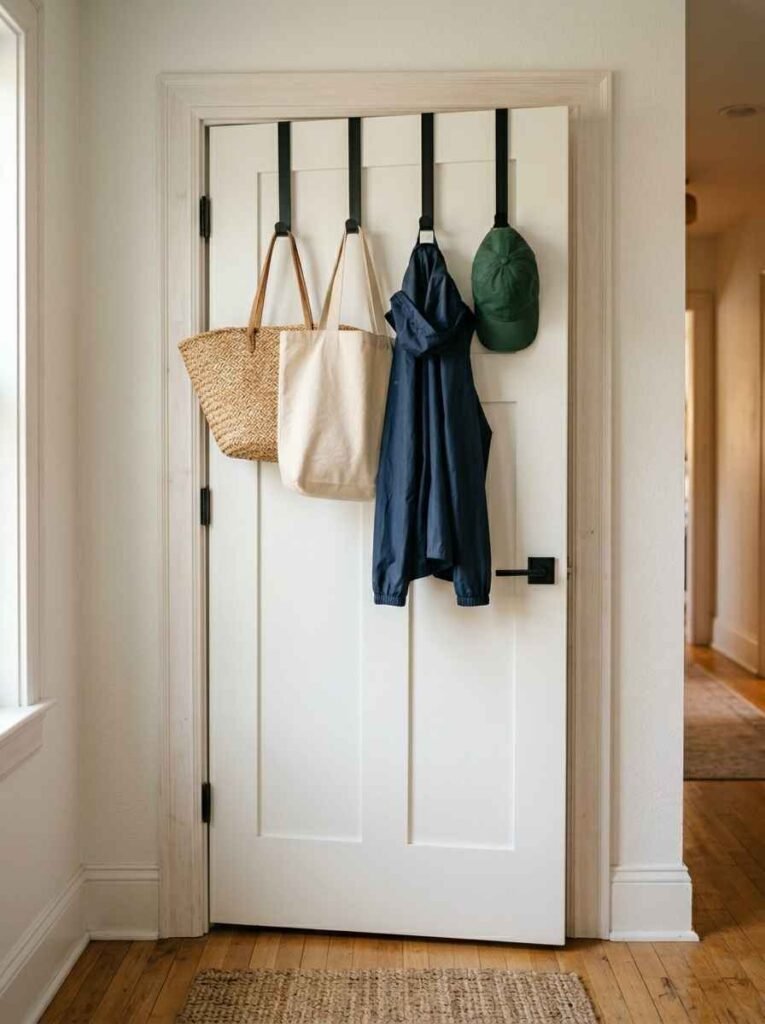
Renting and can’t put holes in the wall? Over-the-door hooks are genuinely one of the best no-damage solutions out there.
They hold a surprising amount of weight if you get the right ones (look for ones rated to at least 20 lbs per hook).
I think Command hooks are fine for lightweight stuff, but for actual coats and bags, go for the metal over-door kind.
Shelf ideas that actually do something
A shelf in the mudroom isn’t just decorative. It needs to work hard. Baskets, bins, keys, mail, sunglasses, the stuff you grab on your way out every morning. Here’s what works.
Floating shelf with cubbies underneath
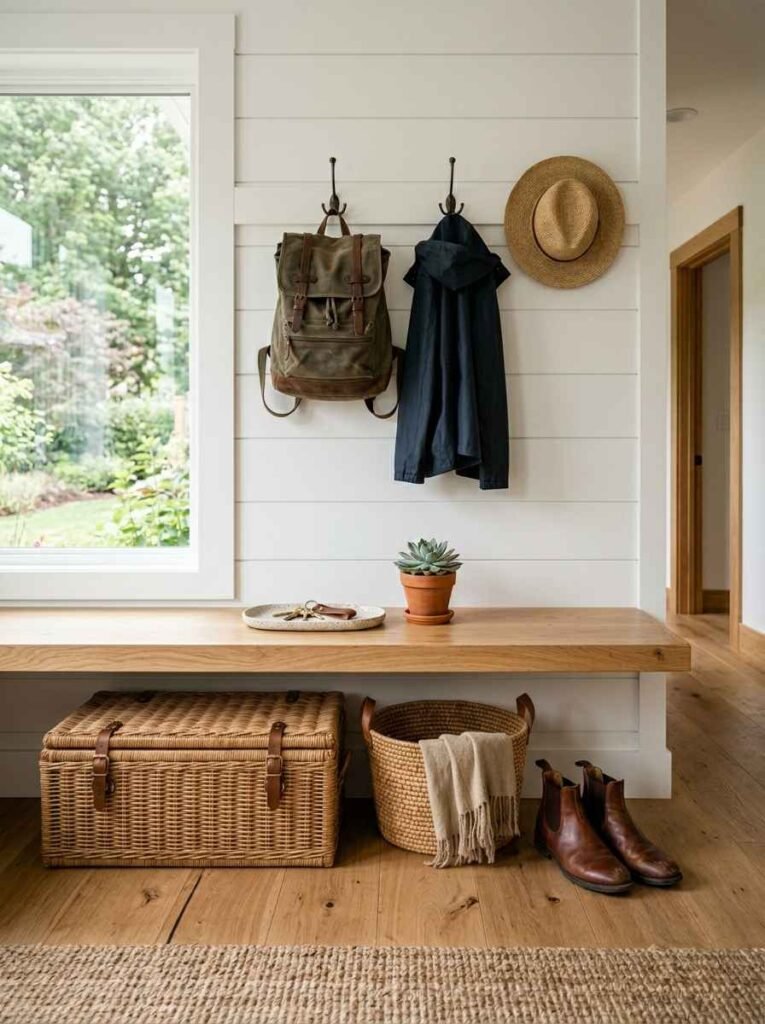
This combo is probably the most popular mudroom setup on Pinterest right now, and honestly, it earns that attention.
You mount a floating shelf at about chest height, then add cubby storage below it. Shoes go in the cubbies, everyday items sit on the shelf.
IKEA’s KALLAX unit works great as the cubby base if you want something modular and affordable.
Around $60–$100 depending on size. I’ve seen this setup in so many home tours and it genuinely looks put-together without costing a fortune.
Ladder shelf leaning against the wall
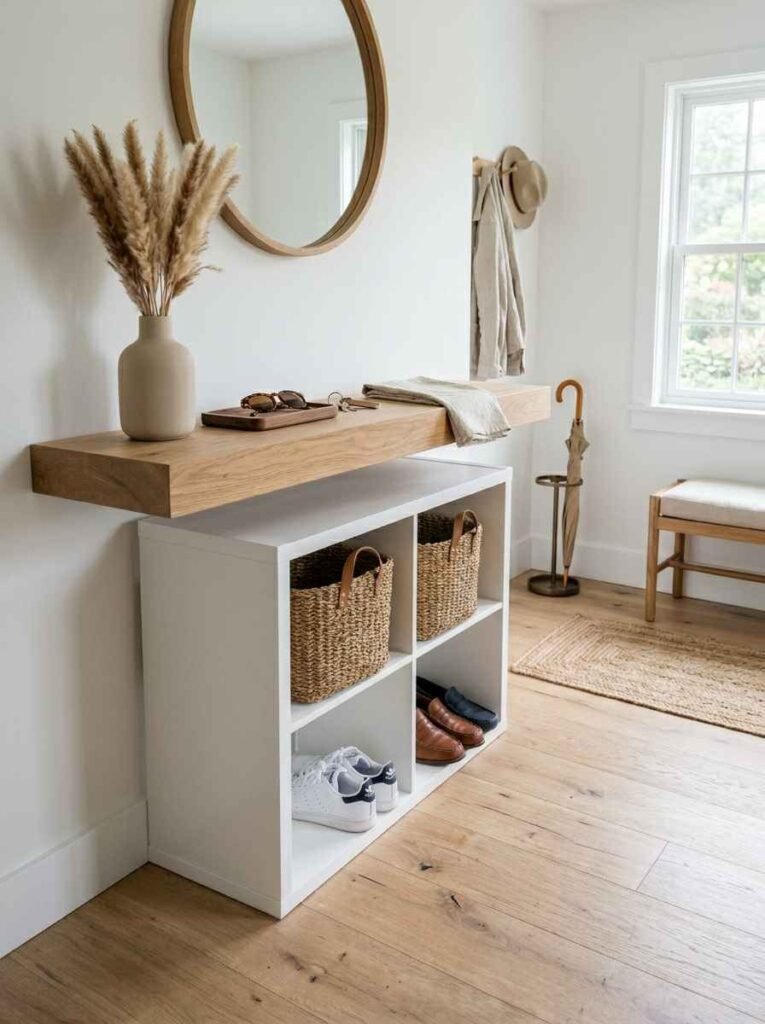
Okay, I’ll be honest, this trend is starting to feel a little 2018 to me. But it still works in certain spaces, especially narrow entryways where you can’t mount anything to the wall.
A leaning ladder shelf gives you 4–5 tiers of storage without a single screw going into drywall.
The catch: it’s not super stable if you’ve got kids who’ll grab onto it. IMO, screw it to the wall through the top rung if kids are involved. Two minutes of work, way safer.
Open cube wall shelves
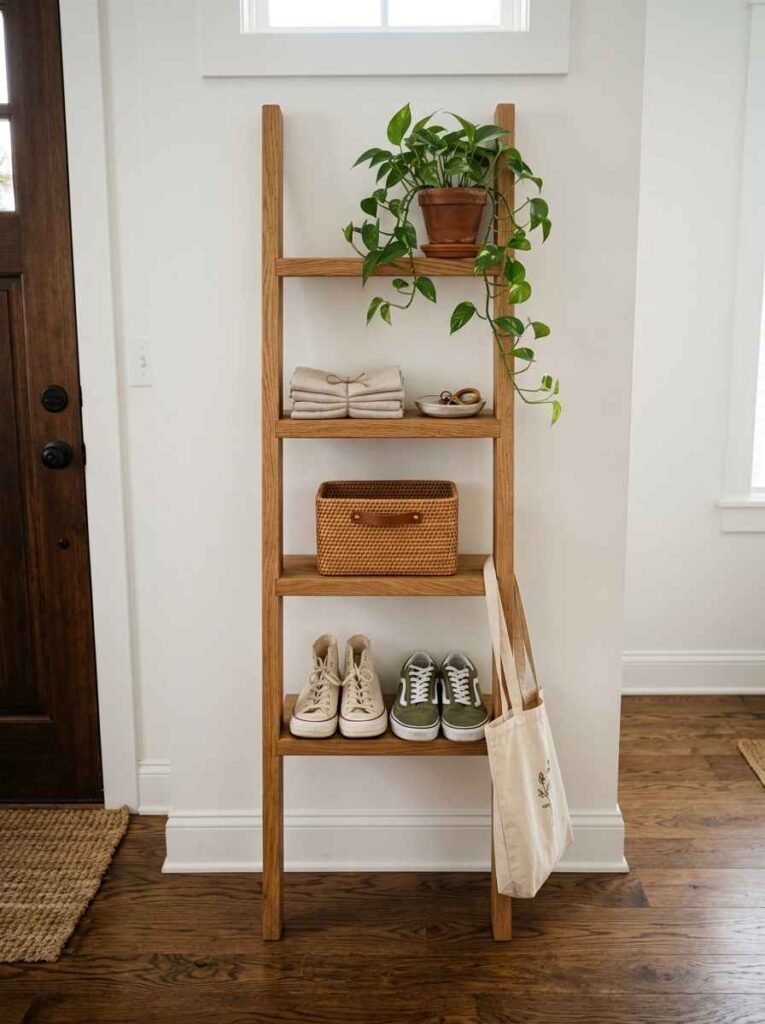
3 or 4 open cubes mounted in a row at shoulder height looks really clean. Add a small basket inside each cube and suddenly you’ve got organized storage for each family member.
Label the baskets, one per person. Game over, clutter solved.
Quick reference: hook and shelf options
| Type | Best for | Approx. cost | DIY friendly? |
|---|---|---|---|
| Shaker peg rail | Coats, bags, scarves | $30–$80 | Yes |
| Double wall hooks | Large families | $15–$40 | Yes |
| Floating shelf + cubbies | Full mudroom setup | $80–$200 | Medium |
| Over-door hooks | Renters | $10–$25 | Yes |
Built-in bench with hooks above
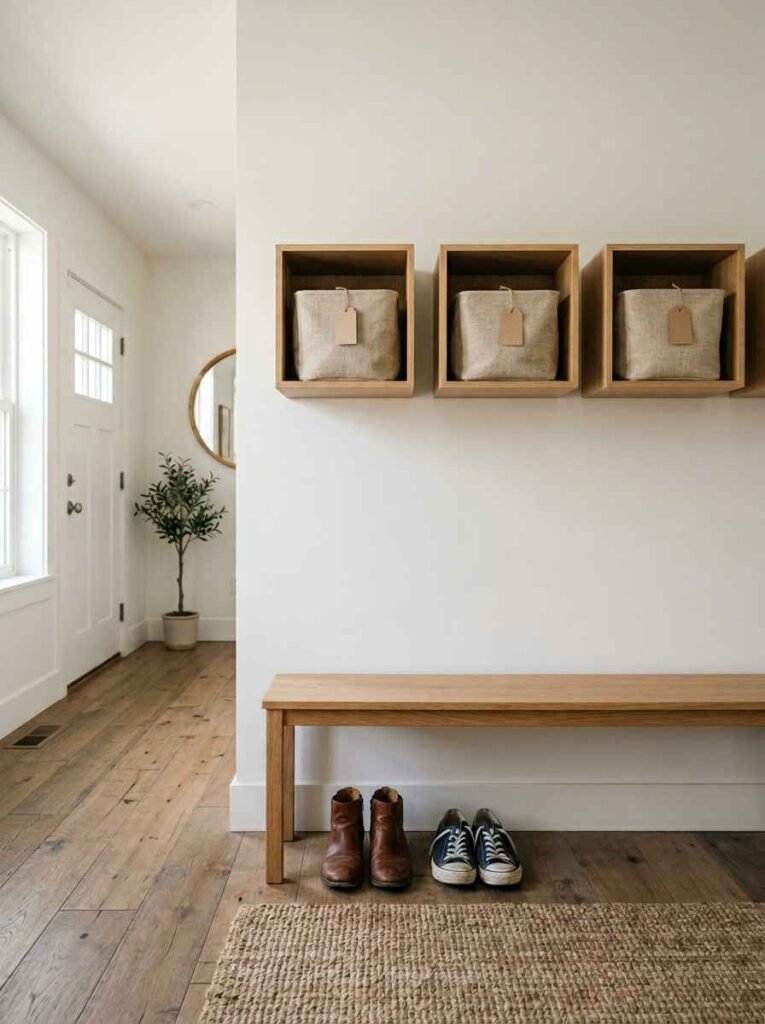
If you have the space (even 3 feet of wall), a bench with hooks above it is the classic mudroom look for a reason. You sit down, put your shoes on, stand up, grab your coat. It just flows.
You can buy bench kits at places like The Home Depot or IKEA and DIY the whole thing in a weekend.
I’d say this setup takes about a Saturday morning if you’re comfortable with a drill. Maybe a full day if you’re adding a shoe shelf underneath the bench too.
Mudroom lockers (the proper built-in look)
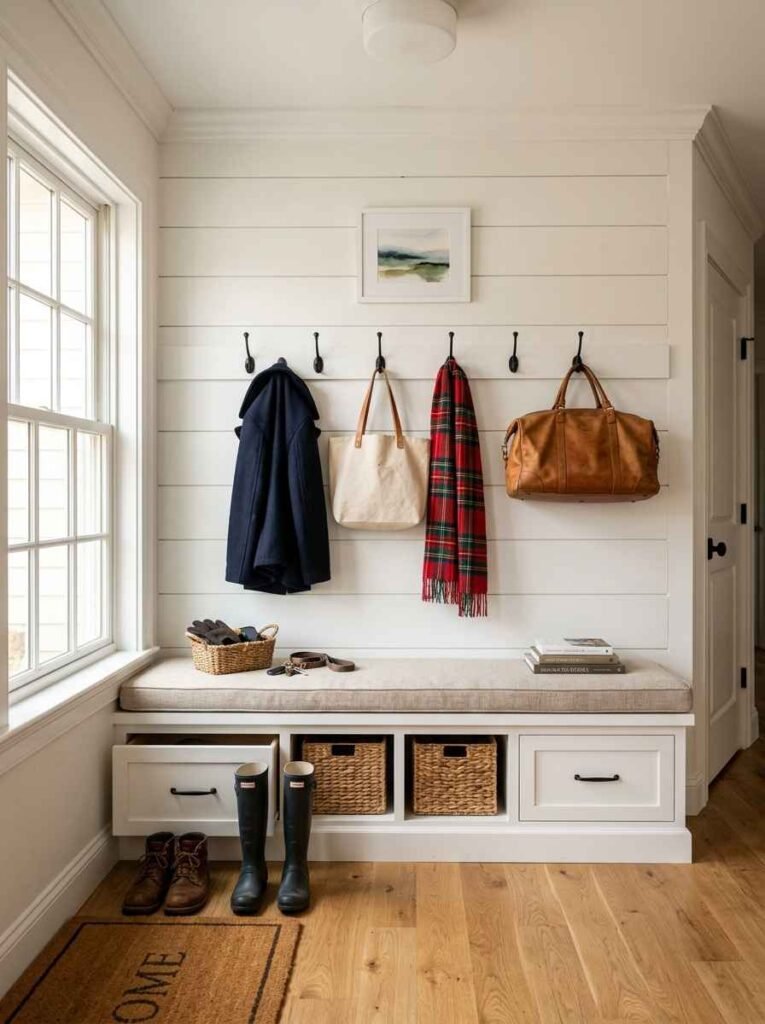
Mudroom lockers are basically individual cubbies with a hook, a small shelf, and sometimes a door.
Each family member gets one. It’s the most organized setup you can have, and it looks incredible on Pinterest.
The downside? Cost. Pre-made locker units run $150–$400 per section depending on where you buy them.
But if your entryway is a daily disaster zone, honestly the investment makes sense. Companies like Prepac make some solid pre-built versions that don’t require any carpentry skills.
Coat rack with a built-in shelf on top
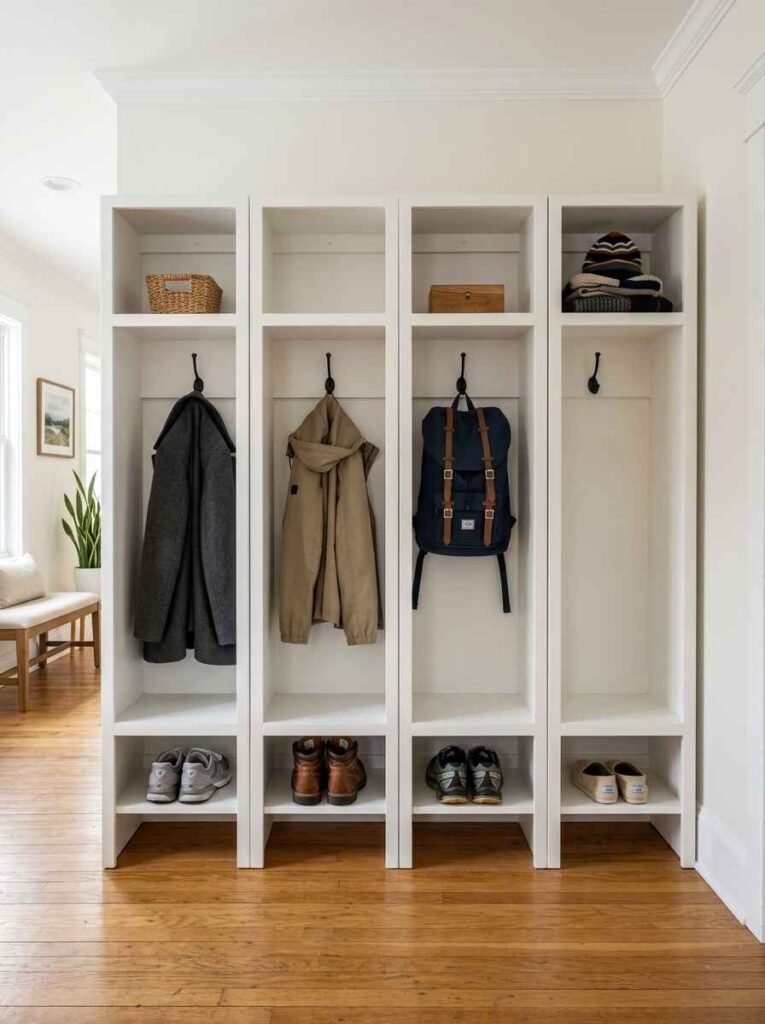
This is a single unit that does both jobs. Hooks along the middle, a shelf on top for hats or keys, sometimes a small bin at the bottom for shoes.
I’ve seen really good ones at Target and Wayfair in the $80–$150 range.
One thing: measure your ceiling height before you buy. Some of these units run 72 inches tall and if your entryway has a low ceiling (looking at you, older homes), it’ll look cramped.
Creative ideas you probably haven’t pinned yet
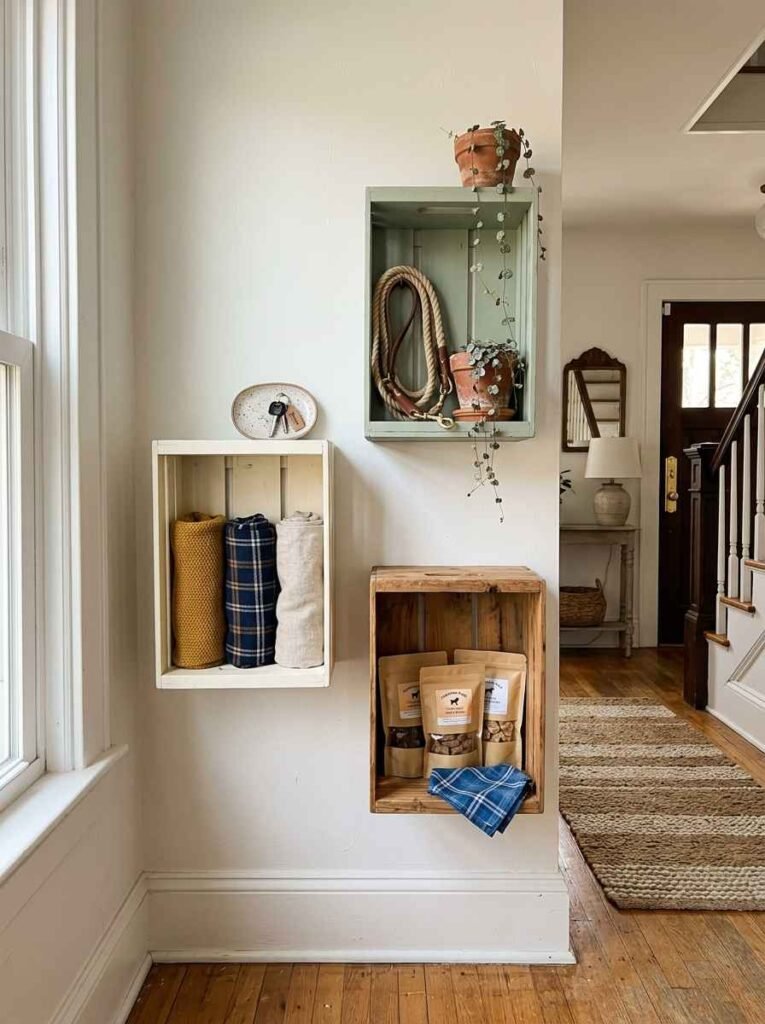
Repurposed wooden crates as wall shelves
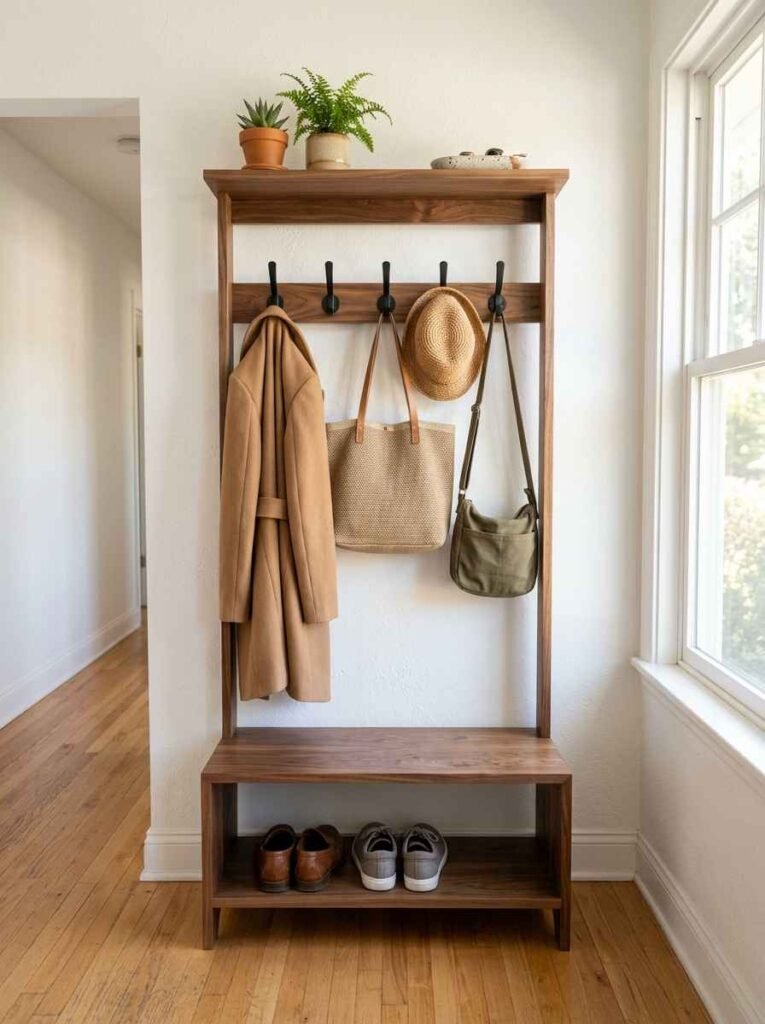
Grab 3 wooden crates from a craft store or a flea market, sand them down, paint or stain them, and mount them to the wall in a staggered pattern.
Each crate becomes a small cubby. Honestly this is one of the most affordable options here, maybe $15–$25 total if you catch a sale.
I tried this in a small apartment entryway a few years back. It worked really well for holding dog supplies: leash, poop bags, treats. Not the most polished look, but it had personality.
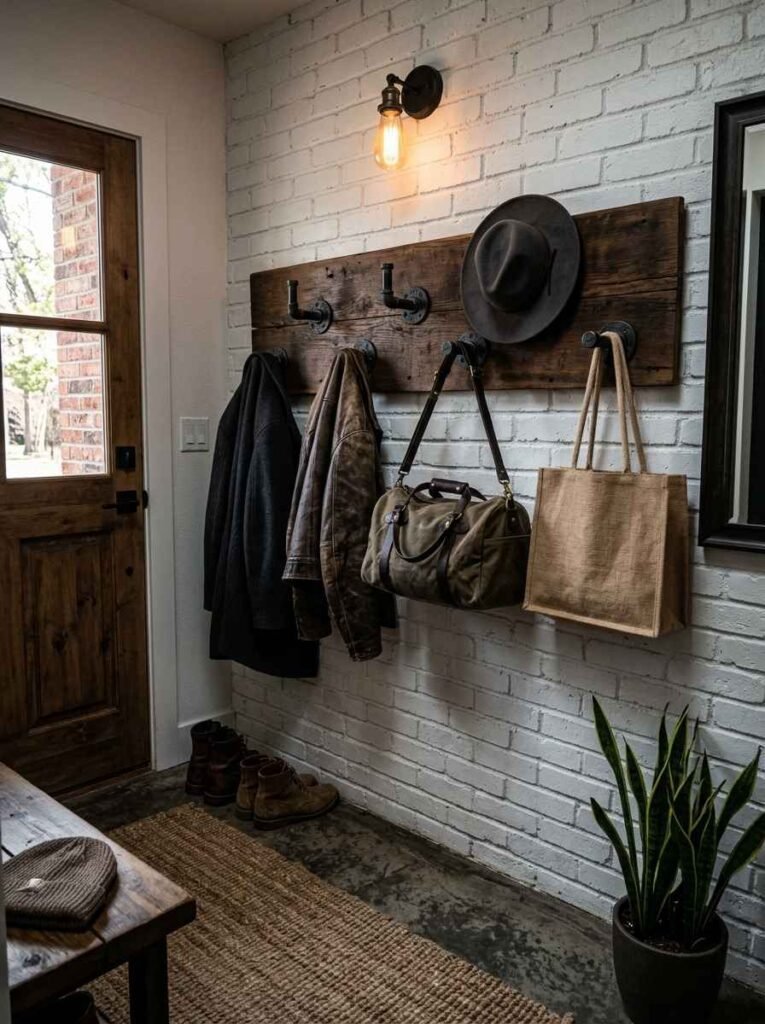
Pipe and wood industrial hooks
If you’re into that raw, industrial vibe, black iron pipe with reclaimed wood is a killer combo.
You mount a wood plank to the wall, then bolt iron pipe flanges into it at intervals, each flange holds a short pipe section that becomes your hook. It sounds more complicated than it is.
There are step-by-step tutorials on Family Handyman that walk through the whole build.
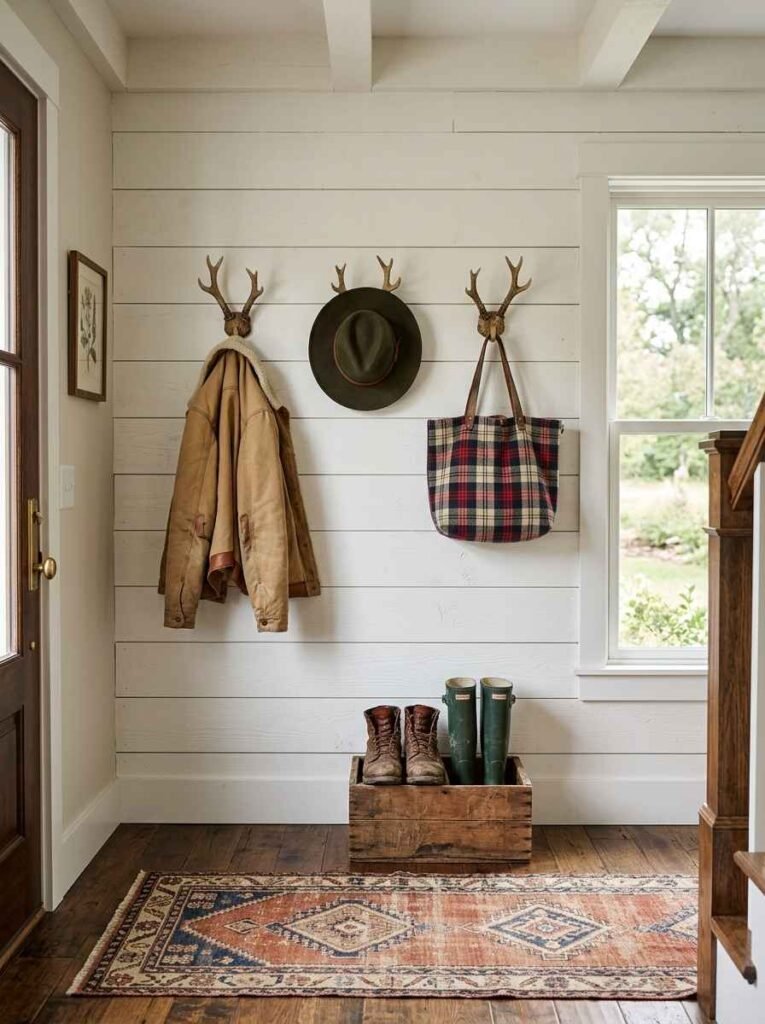
Antler hooks (faux, obviously)
Okay stay with me here. Faux antler hooks look amazing in certain homes, especially if your style runs toward rustic or farmhouse.
They’re usually resin or plastic, but they’re molded really well and look realistic at a glance. You’d be surprised how many people ask about them.
I wouldn’t put them in a modern minimalist space. But in a cozy, wood-heavy entryway? They fit perfectly.
Vintage coat rack upcycle
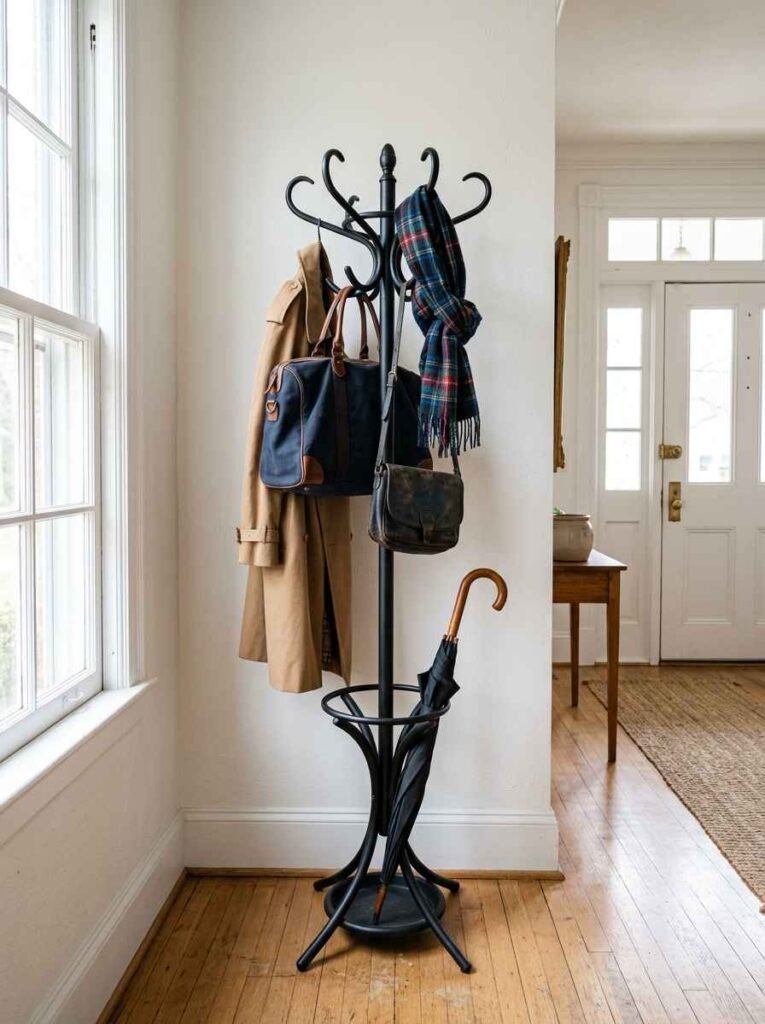
Hit an estate sale or thrift store and find an old standalone coat rack, the tall kind with the hooks at the top and sometimes an umbrella stand at the bottom.
Sand it, paint it matte black, done. You just turned a $10 find into something that’d cost $80 new.
This flopped for me once when I bought one that had a wobbly base and couldn’t really fix it properly. So check the stability before you buy, give it a good shake in the store.
Small entryway? Here’s how to work with tight spaces
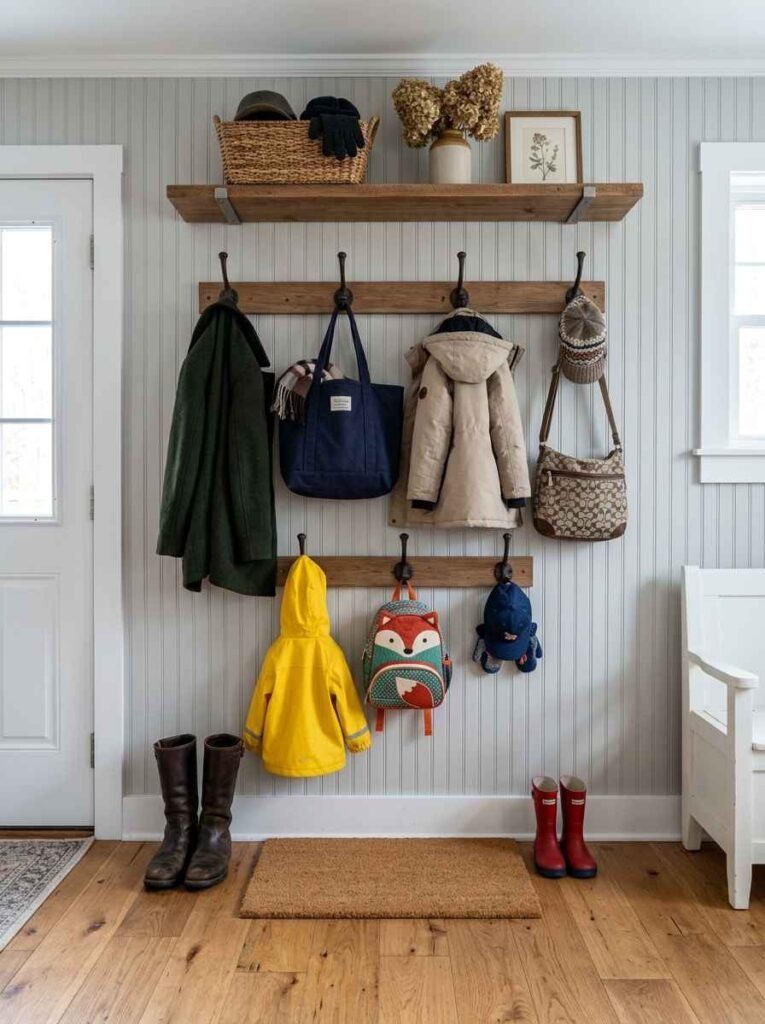
Not everyone has a dedicated mudroom. Some of us are working with a 3-foot strip of wall next to the front door and calling it an “entryway.” These ideas are specifically for you.
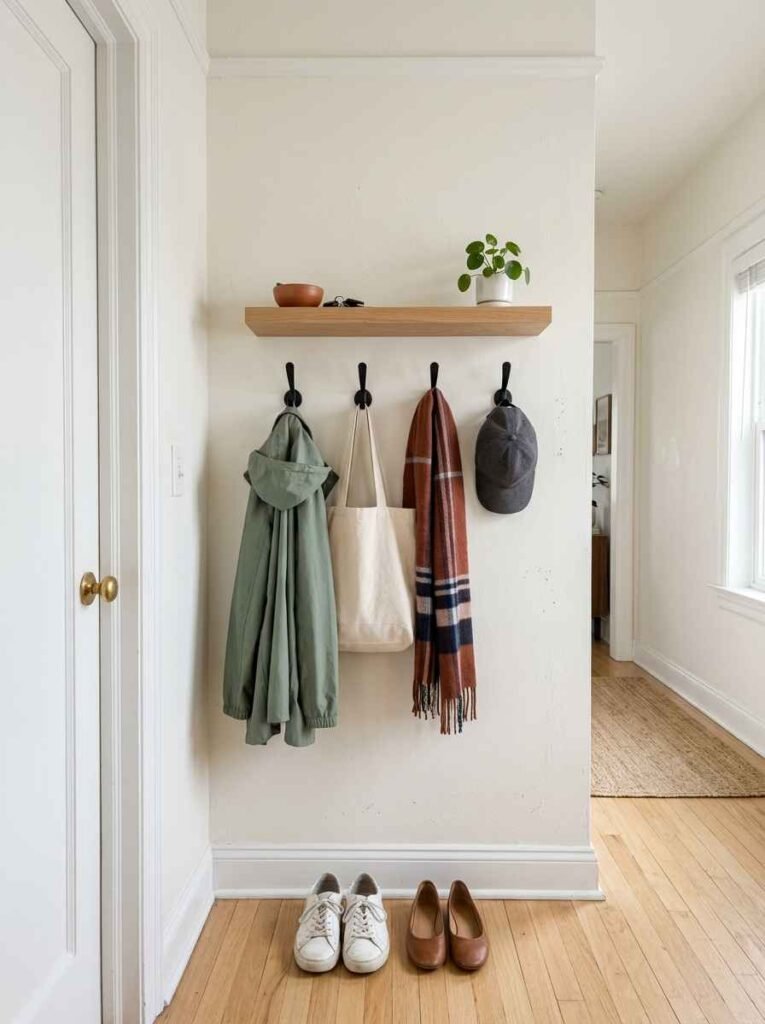
A single row of hooks with a narrow shelf above
Just 1 row of hooks and 1 shelf above it. That’s the whole setup. Keep the shelf at about 65–68 inches from the floor so it’s accessible but doesn’t feel low.
A shelf that’s only 8 inches deep doesn’t eat into your walking space at all.
Vertical storage with tall, narrow units
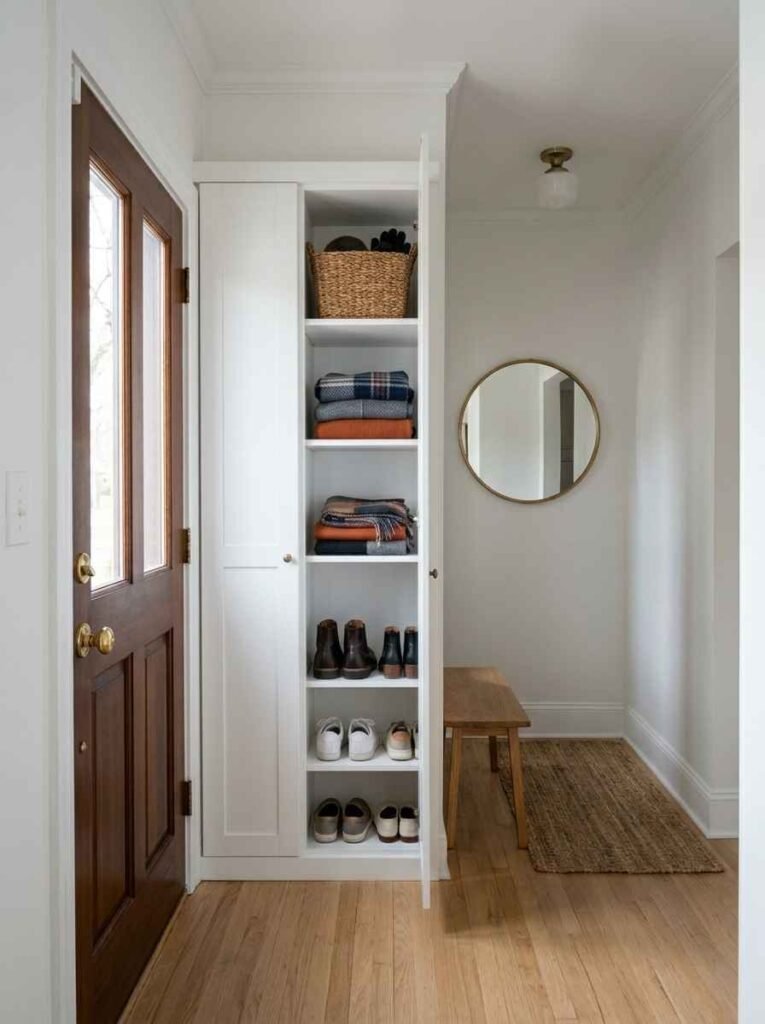
Go up, not out. A tall, narrow storage unit (think 12 inches wide, 70 inches tall) gives you multiple shelves without taking up floor space.
IKEA’s HEMNES shoe cabinet is one example: it looks like a regular cabinet but holds a ridiculous number of shoes inside.
A simple hook rail at kid height
If you’ve got little ones, add a second hook rail lower on the wall, around 36–40 inches from the floor, so kids can actually reach their own stuff.
This one thing cuts down on “Mom where’s my backpack” conversations by about 80%, IMO.
Styling your mudroom so it actually looks good
Function first, always. But there’s no reason it can’t look cool too. Here’s what makes the difference between a mudroom that looks organized and one that looks like a Pinterest board come to life.
Consistent finishes
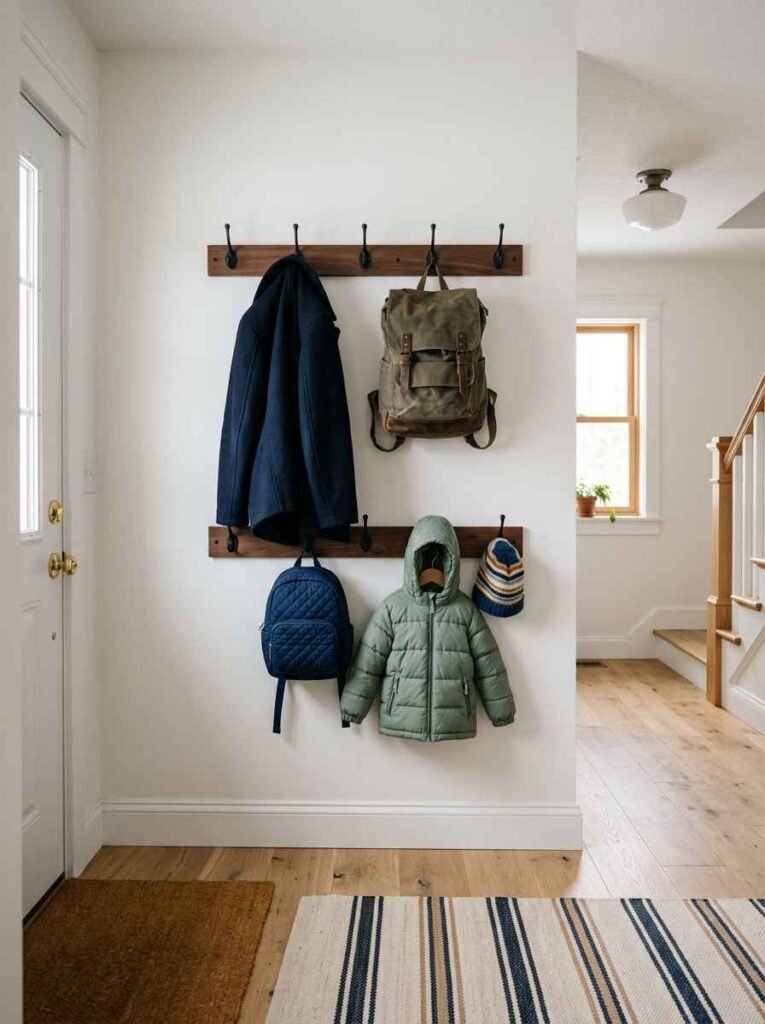
Pick 1 metal finish and stick to it throughout: all black hooks, all black baskets, all black bin handles. Mixing brass, chrome, and black in one small sp
ace looks busy. I’ve made this mistake. It bothers me every time I walk in.
Baskets and bins for hidden storage
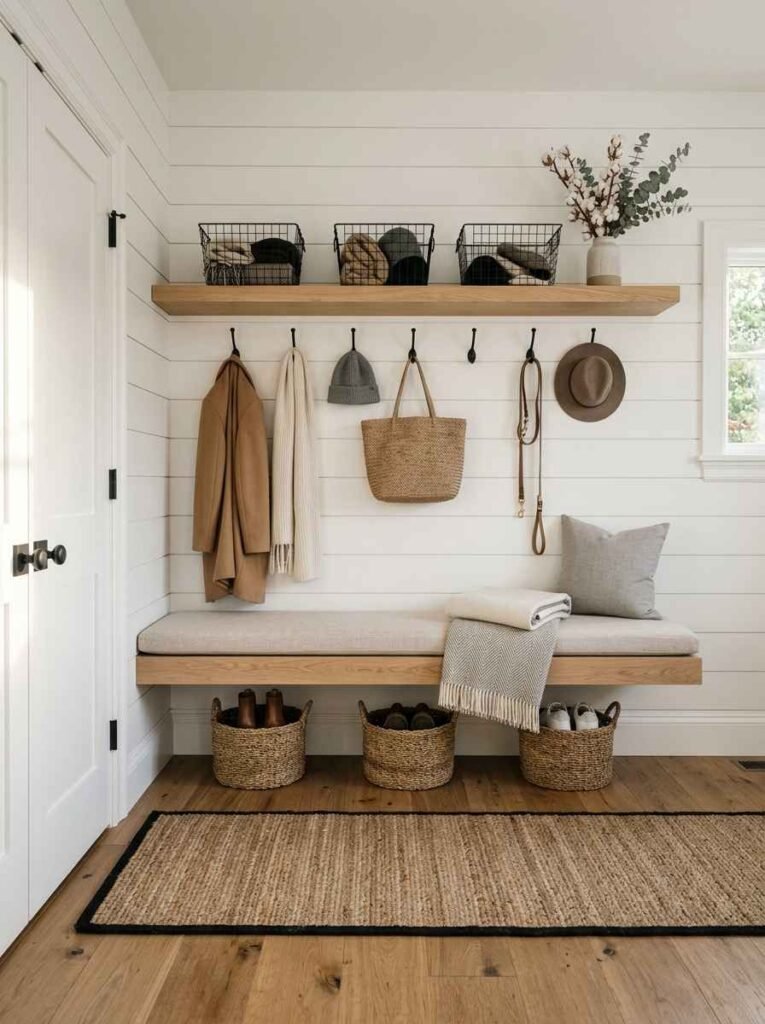
Open shelves look great when they’re styled, and terrible when they’re just filled with random stuff. Wicker baskets or linen bins hide the chaos while keeping things accessible. Label the baskets if you want a really put-together look.
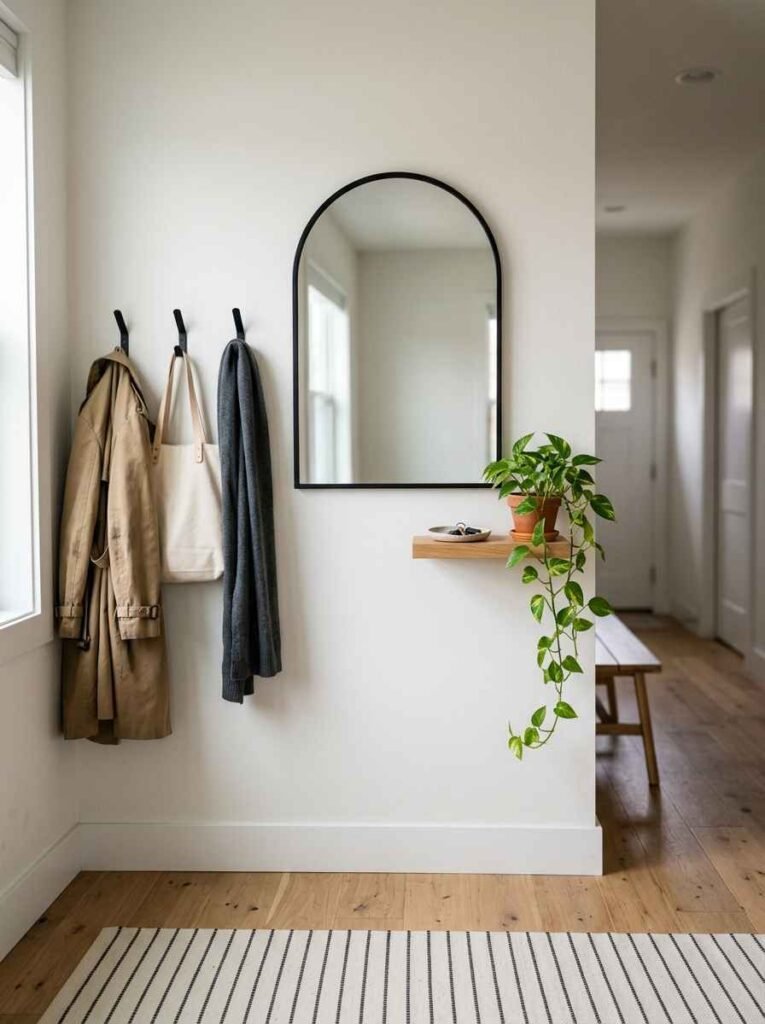
A small mirror
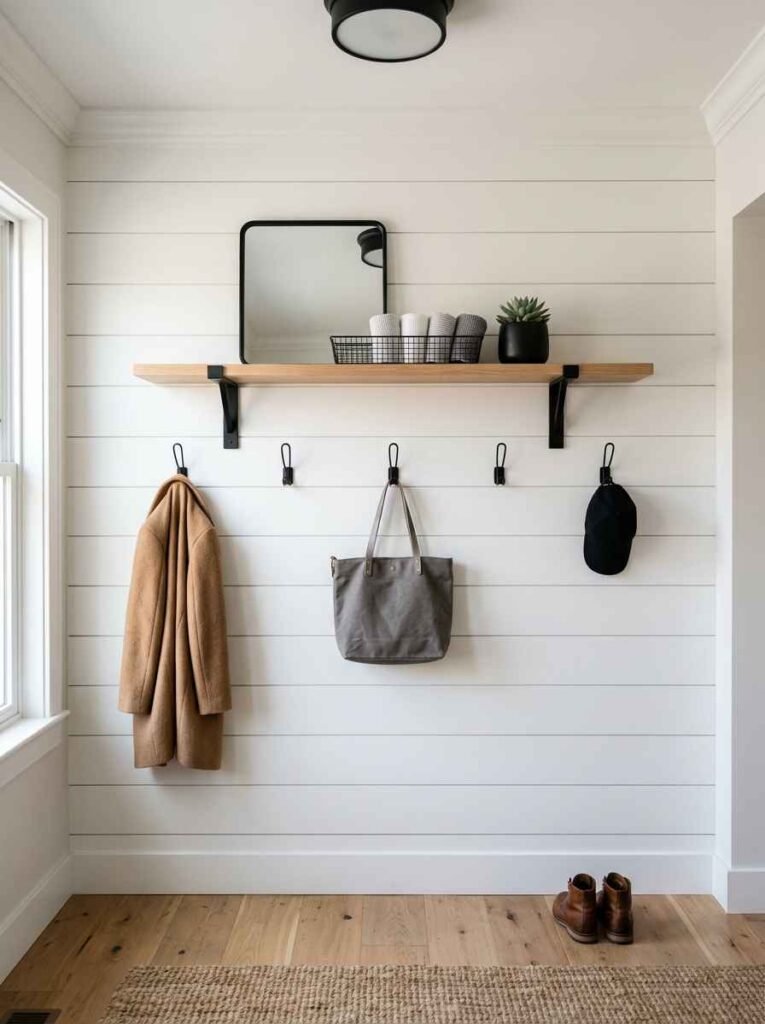
This sounds random but hang a small mirror near the hooks. Last look before you leave the house. It also makes a small entryway feel less cramped. It’s one of those things that sounds minor but makes a real difference in how the space feels day to day.
Hook placement: the numbers that actually matter
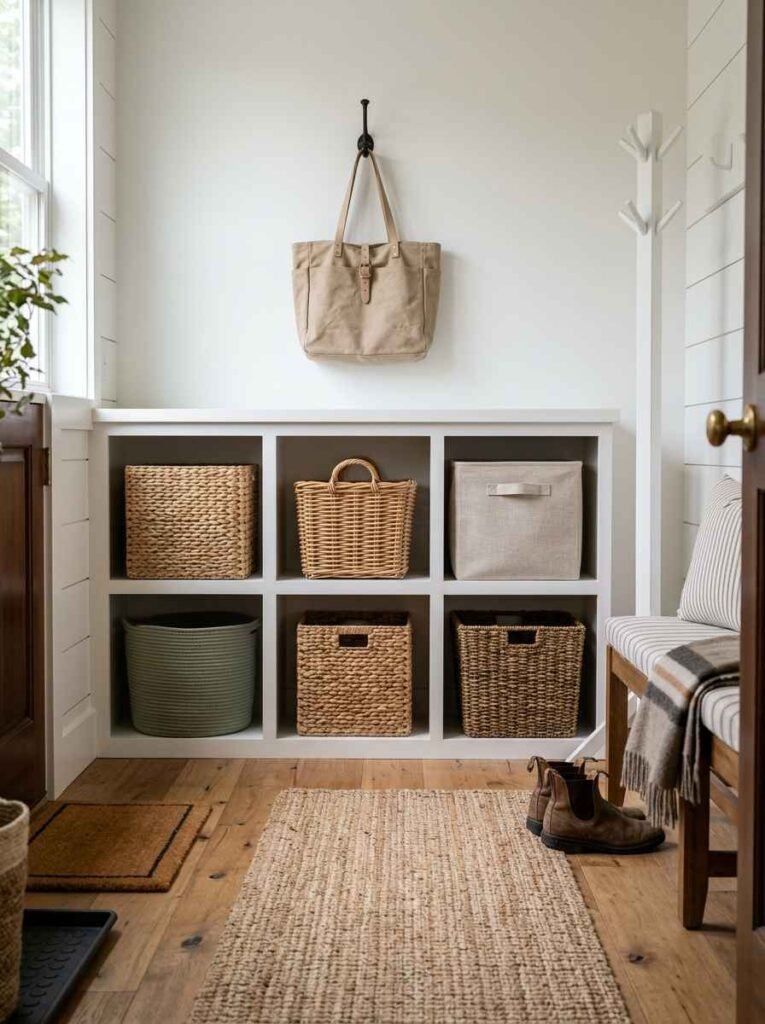
Getting the height right on your hooks matters more than most people think. Too high and kids can’t reach, too low and coats drag on the floor.
- Adult coat hooks: 60–68 inches from the floor
- Kids’ hooks: 36–42 inches from the floor
- Shelf above hooks: 72–80 inches from the floor (keeps it out of head-bump range)
- Bench seat height: 17–19 inches from the floor (standard comfortable sitting height)
Use these as your starting points, then adjust based on how tall your family actually is.
What to skip (so you don’t waste money)
A few things I’d avoid based on experience:
- Cheap plastic hooks that come in those multi-packs for $8. They crack under real coat weight, especially in winter.
- Command strips for heavy items. They’re great for lightweight stuff, but a wet winter coat on a Command hook is asking for it to fall off the wall at 6 AM.
- Matching-everything sets from big box stores. They often look generic and the hardware quality is inconsistent.
- No bench in a high-traffic entryway. If you’ve got the space for even a small bench, add it. Standing on one foot trying to put your shoes on every morning is genuinely its own kind of misery.
FAQ
How many hooks do I need in a mudroom? A good starting point is 2 hooks per person in your household, one for a coat and one for a bag. So a family of 4 wants at least 8 hooks. If you have room, add a few extras for guests and seasonal gear.
What’s the best wood for a DIY mudroom shelf? Pine is affordable and easy to work with for most DIY builds. If you want something that handles moisture better (entryways can get damp in wet climates), go with poplar or even a primed MDF board with a sealed finish. I’ve used pine for most of my own projects and it holds up fine with a good coat of polyurethane on top.
Can I build a mudroom in a small apartment entryway? Absolutely. A single hook rail, one narrow floating shelf, and a small bin on the floor is technically a mudroom setup. You don’t need a full room. You just need a dedicated spot for the stuff you grab and drop every day.
Mudrooms don’t need to be fancy. They just need to work. Pick 3–4 ideas from this list that fit your space and budget, start there, and adjust as you go. Half the fun is in figuring out what your household actually needs vs. what just looks good on a Pinterest board.
Have you tried any of these setups at home? Which one’s your favourite? Drop it in the comments, I genuinely want to know what’s worked for you.
