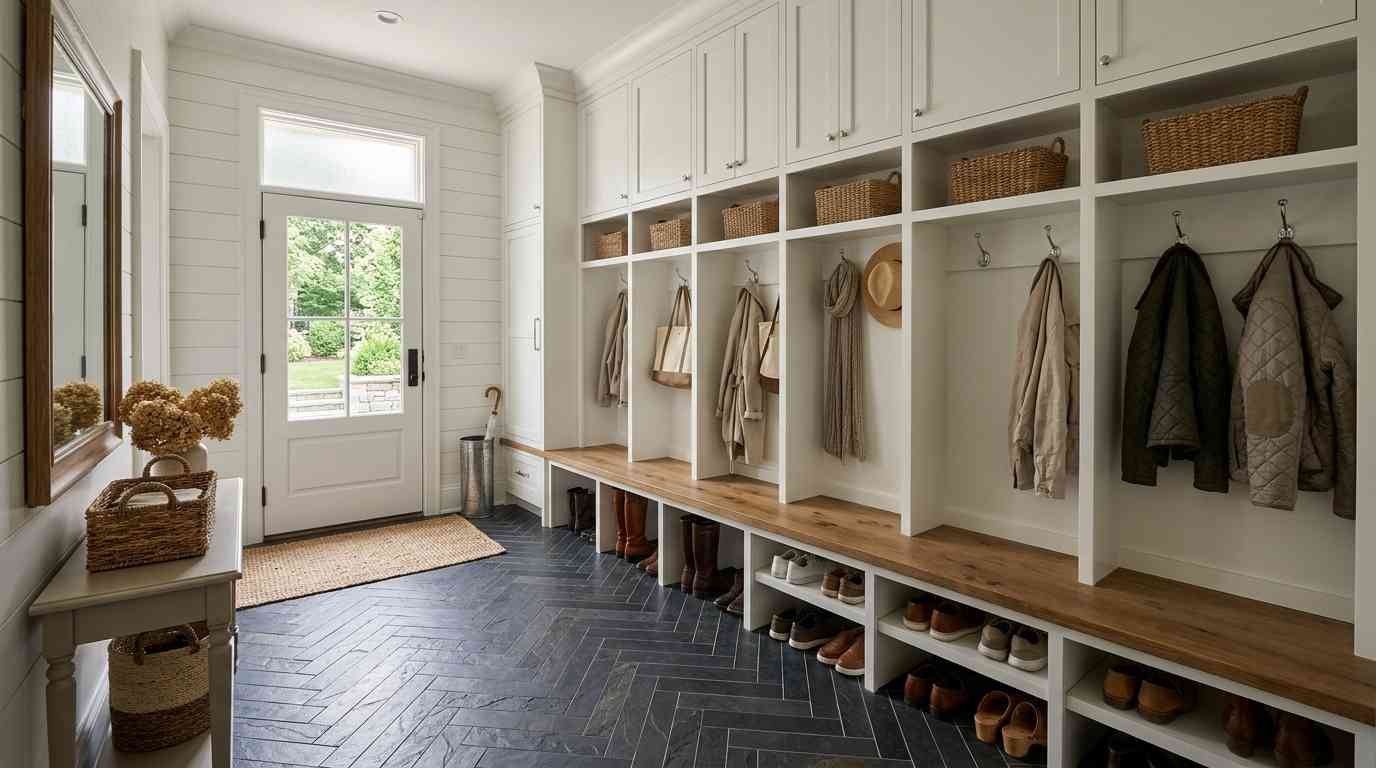
My entryway used to be a total disaster zone. Shoes everywhere, bags dumped on the floor, jackets hanging off door handles.
Sound familiar? Once I started looking into actual mud room layouts, I realized the problem wasn’t the stuff.
It was that I had zero system for it. And the right floor plan fixes that before you even buy a single hook.
Why your mud room layout matters more than your decor
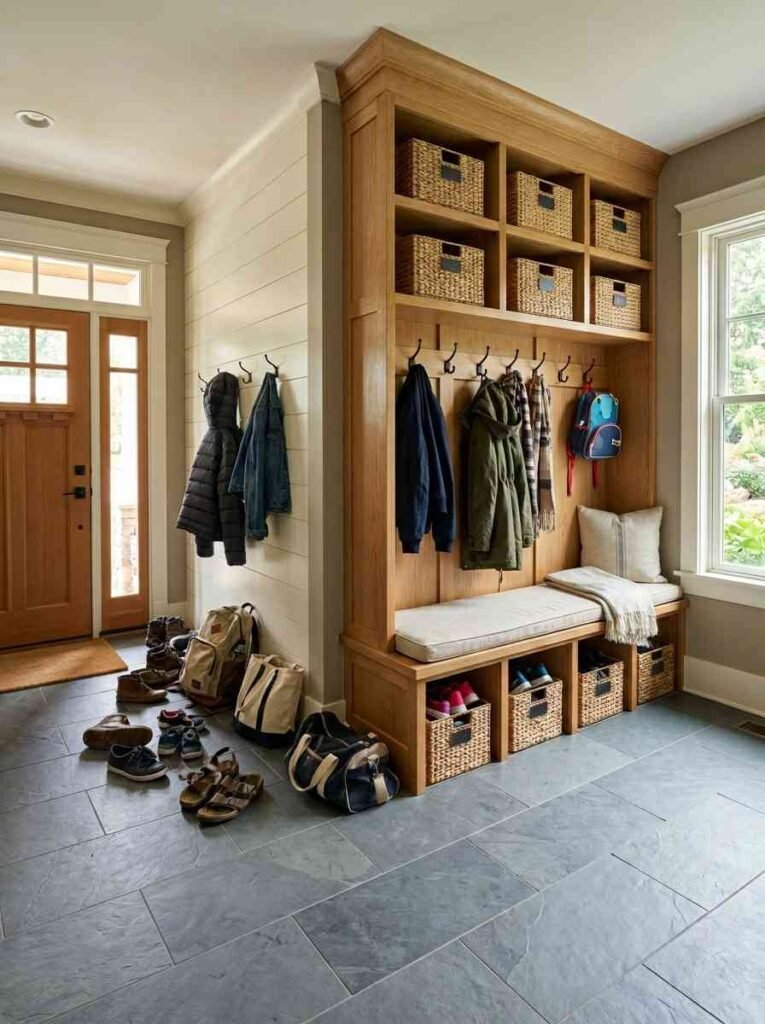
People pin gorgeous mud rooms for the shiplap and the pretty baskets. I get it. But the layout is what actually saves your sanity every single morning.
A badly planned mud room with beautiful decor is still a mess by Tuesday.
What a good mud room floor plan actually does
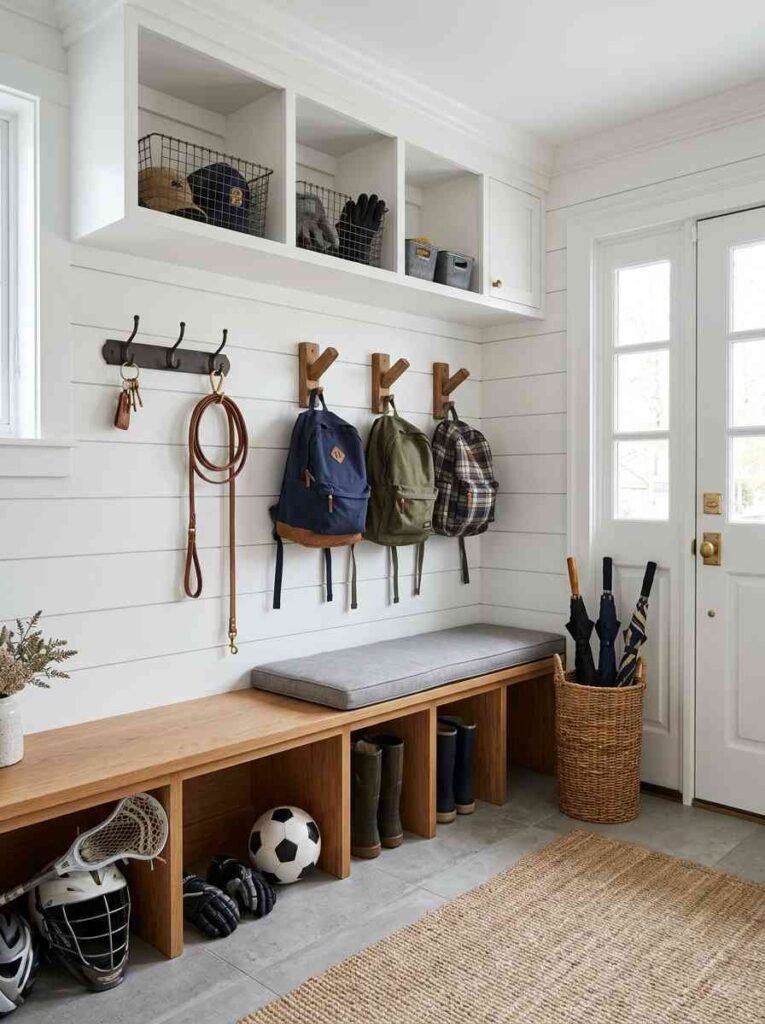
It gives every single item a home. Backpacks, keys, dog leashes, umbrellas, sports gear. Each one lands in the same spot every time because the layout makes that natural.
When I redesigned my entryway last spring with dedicated zones, I stopped losing my keys for the first time in years. Honestly, I nearly cried.
| Layout type | Best for | Key feature | Approx. size |
|---|---|---|---|
| Single-wall | Small spaces | Vertical storage | 6×4 ft |
| L-shaped | Corner entries | Dual-zone flow | 8×6 ft |
| U-shaped | Larger families | Max storage capacity | 10×8 ft |
| Galley/corridor | Narrow hallways | Pass-through access | 12×5 ft |
The 26 layout ideas (and what I actually think of them)
1. Classic single-wall bench and cubbies
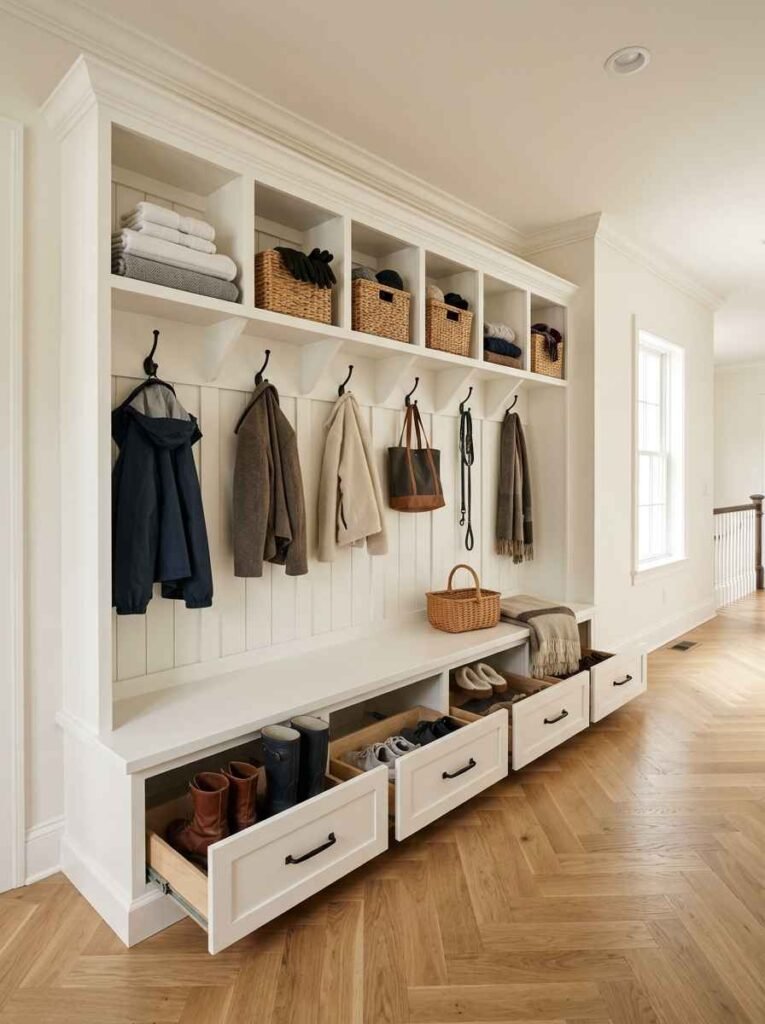
This is the one you’ve seen a thousand times on Pinterest. And honestly, it works. A built-in bench with cubbies above and shoe storage below handles a surprising amount.
I tried this exact setup in my first apartment and it held coats for a family of 4 without looking insane.
2. L-shaped locker system
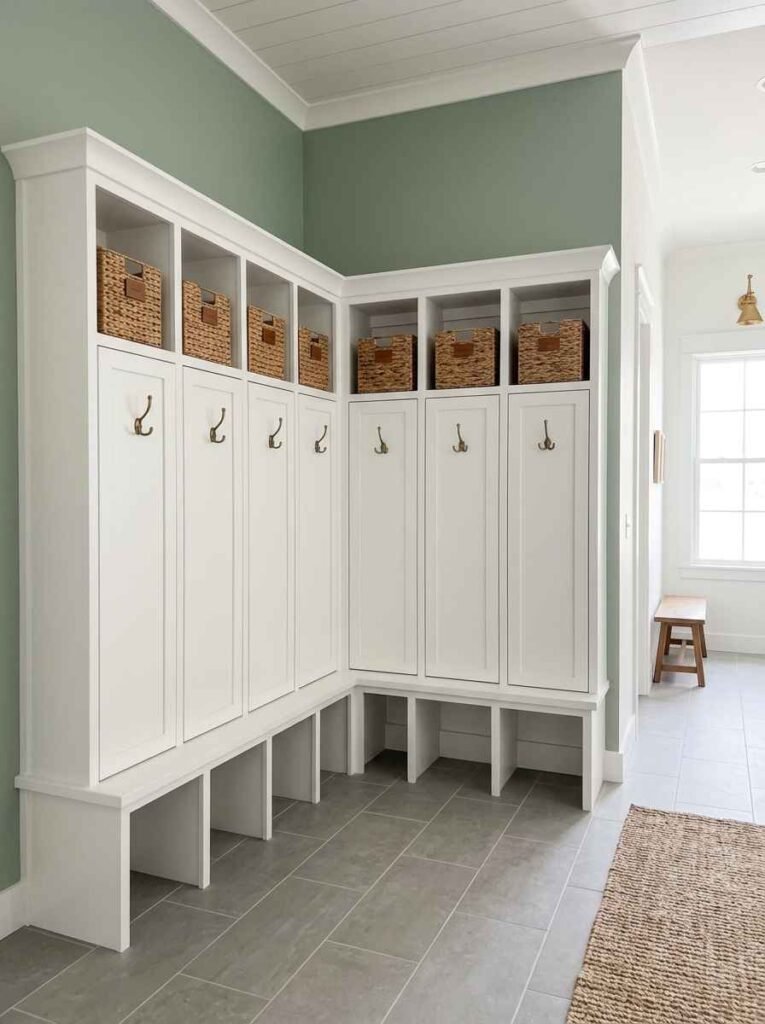
Perfect if you’ve got a corner entry. Each family member gets their own “locker” column with a hook, shelf, and cubby at the bottom.
The L-shape creates two separate zones so morning traffic doesn’t pile up in one spot.
3. Full U-shaped built-in
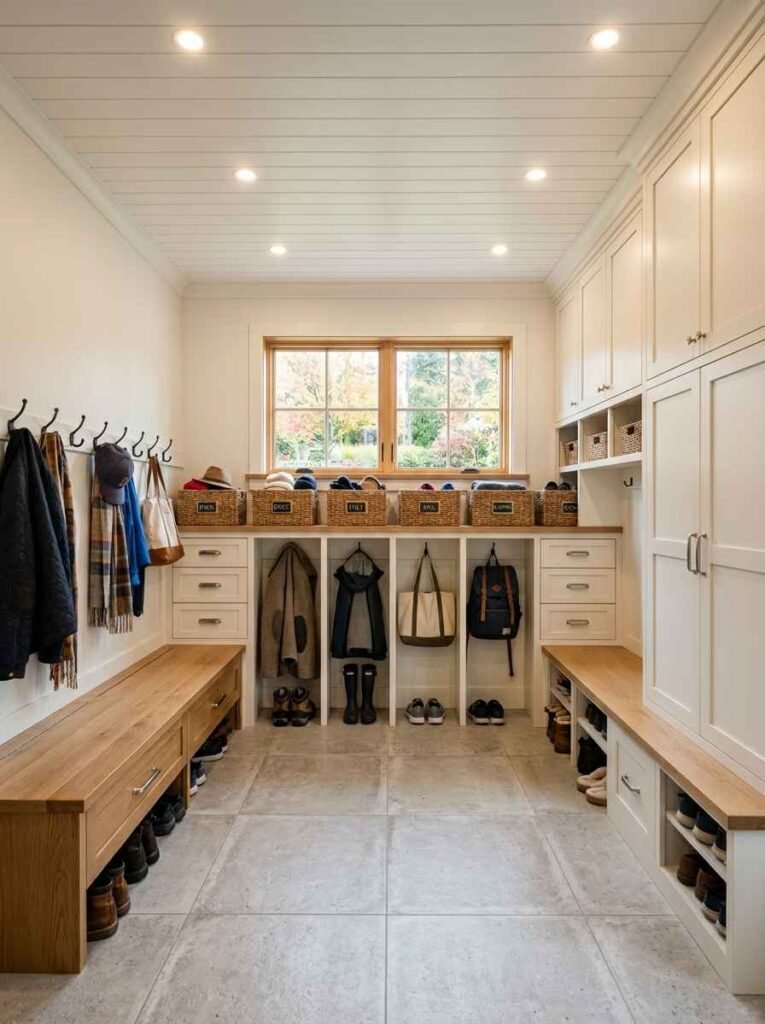
This is the dream setup for bigger families. You wrap 3 walls with storage and suddenly you’ve got space for everyone’s stuff plus a spot for seasonal items.
I’d go full U-shape in a heartbeat if I had a dedicated room for it.
4. Galley-style mud room with pass-through
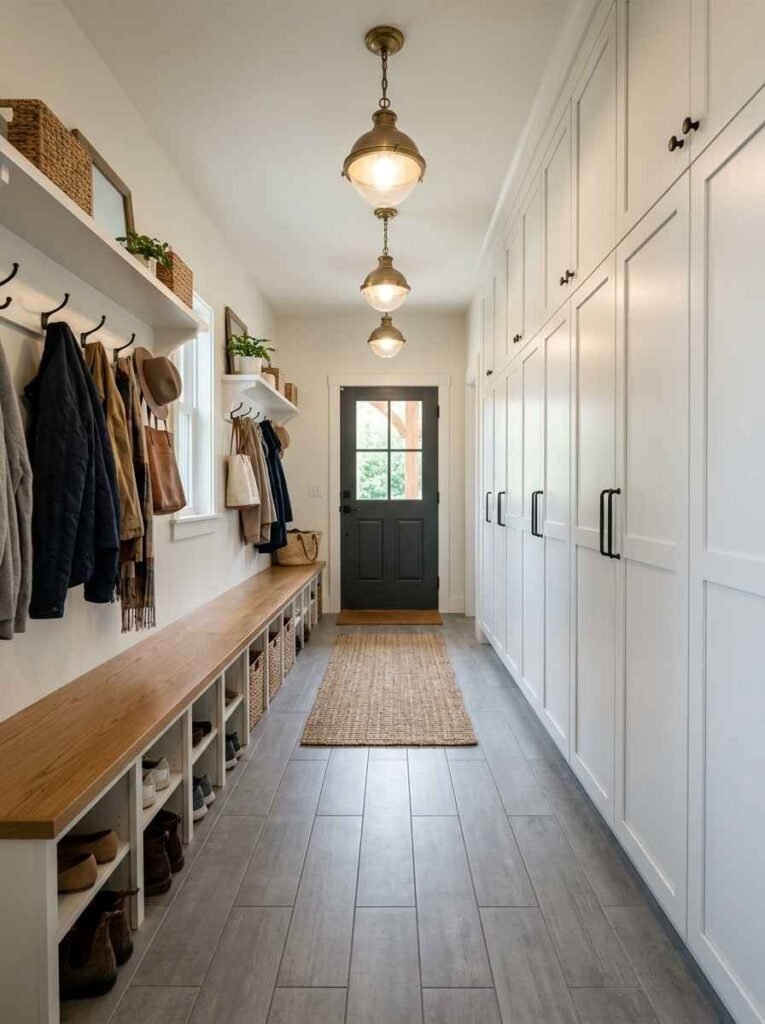
Long and narrow? A galley layout works really well here. You put storage on both sides of a corridor and walk through to the rest of the house.
It’s surprisingly functional and keeps traffic moving.
5. Drop zone with floating shelves only
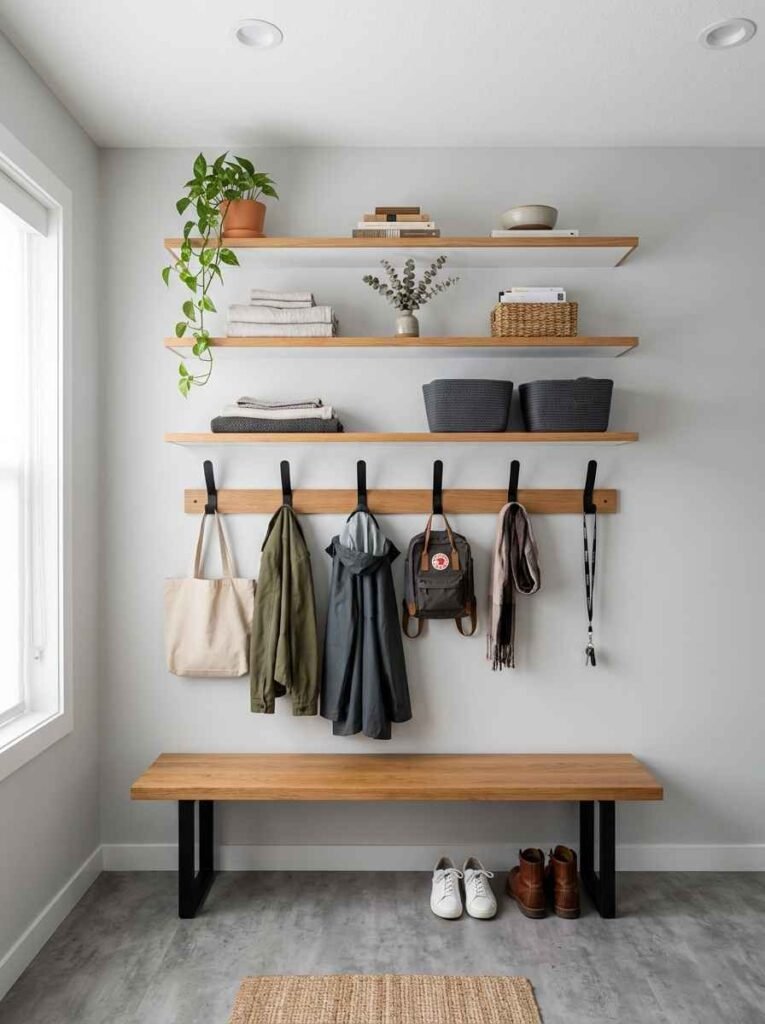
Some people skip the full built-in entirely and go floating shelves plus a few big hooks. Cheaper, easier to change, and looks clean.
This one flopped for me though. My family can’t do open shelving without it turning into chaos in a week.
6. Bench with hidden shoe drawers underneath
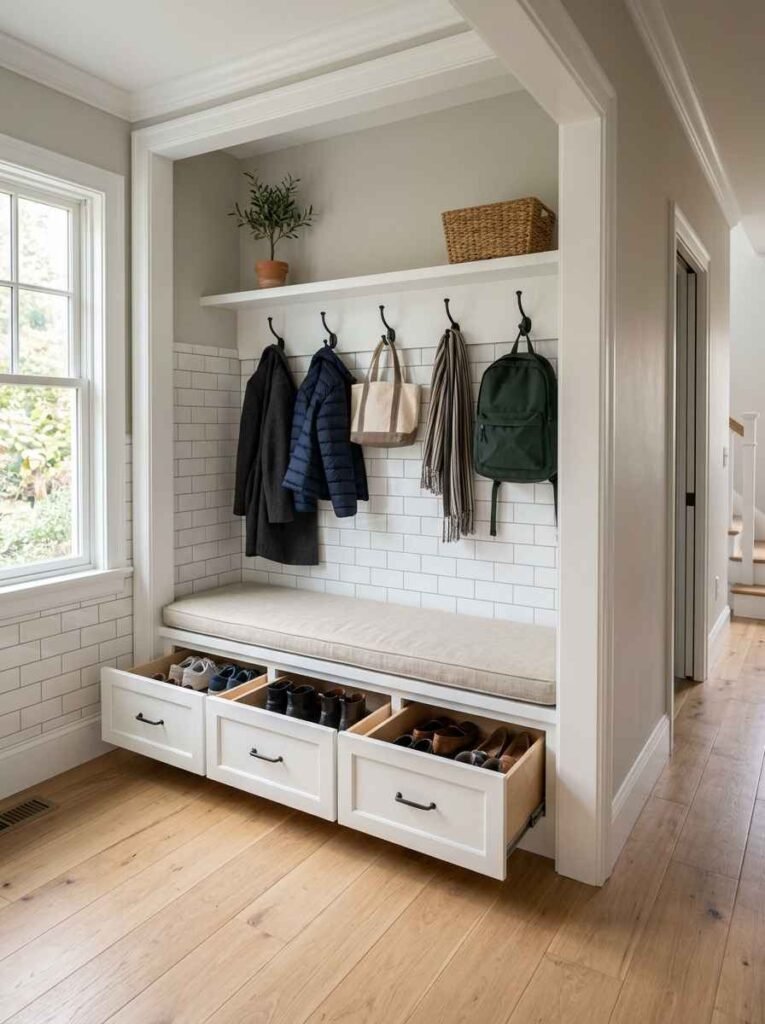
The drawer-under-bench idea is so smart. You lift the bench seat or pull out drawers and your shoes disappear completely.
Great for small spaces where you need every inch to pull double duty.
7. Mud room with a pet station built in
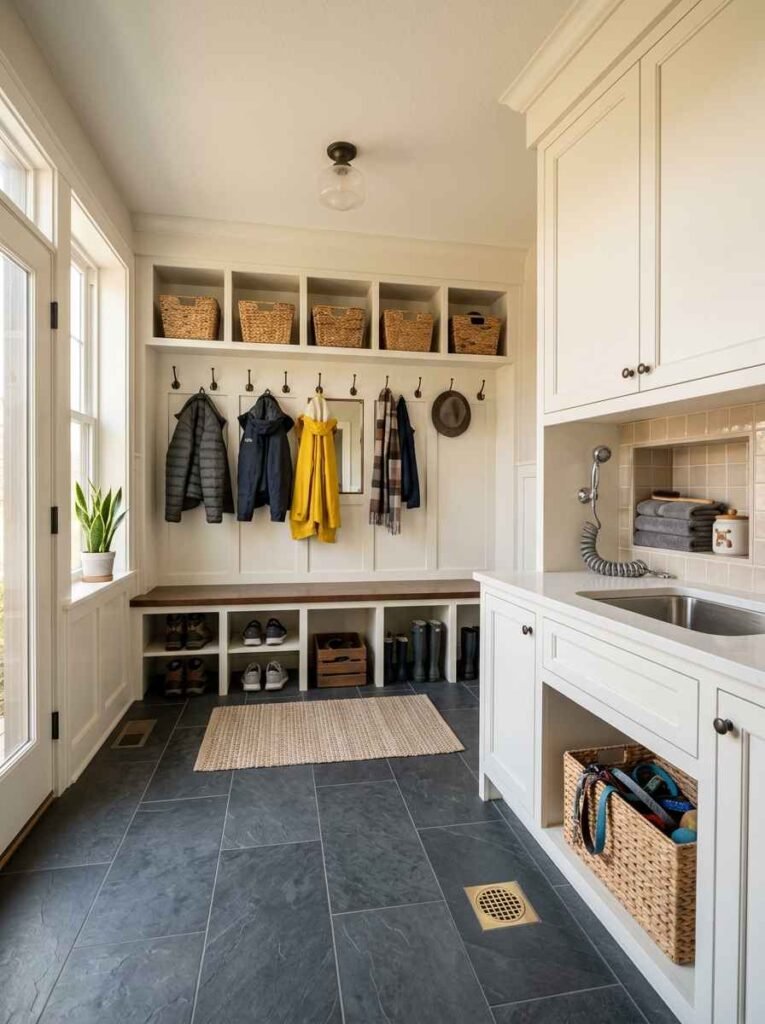
A dedicated corner for dog leashes, food, and a built-in pet wash station (if you have the plumbing for it) is something I wish I’d done from the start. We have a dog who comes in muddy every single walk. Wow, would that have saved our floors.
8. Kid-height cubby row with adult row above
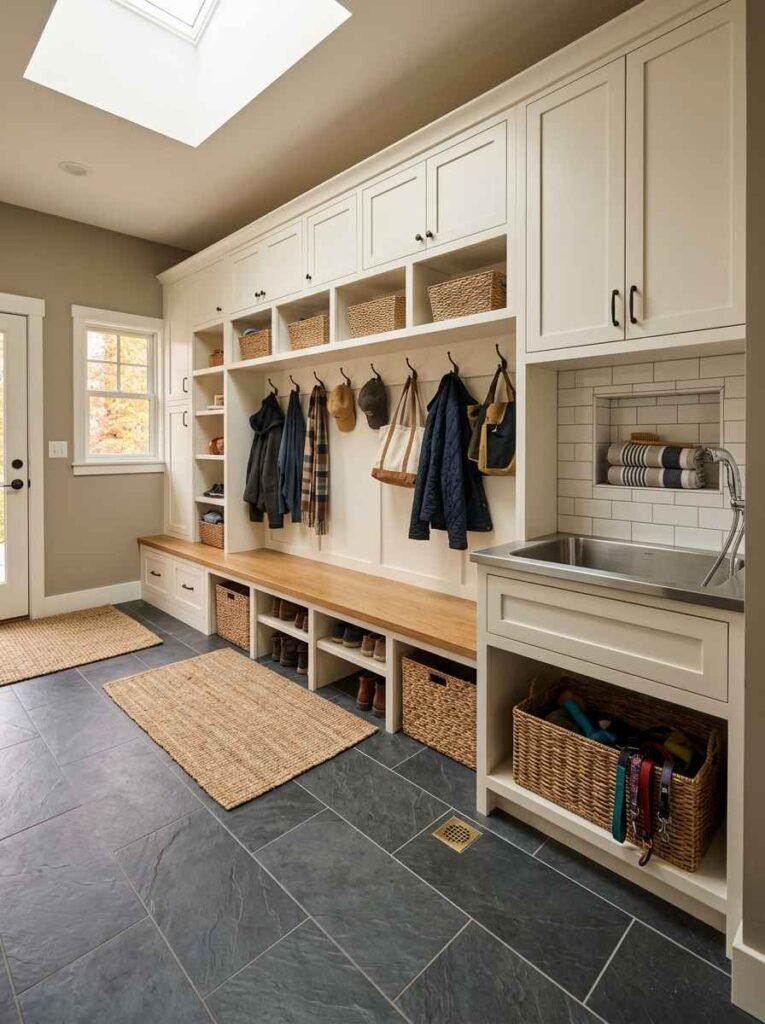
Split your storage by height. Put the kid cubbies and hooks at 3 feet, adult storage above. Kids can actually reach their own stuff, which means they’ll (maybe) use it. IMO this is the most practical family layout going.
9. Mudroom with a laundry room combo
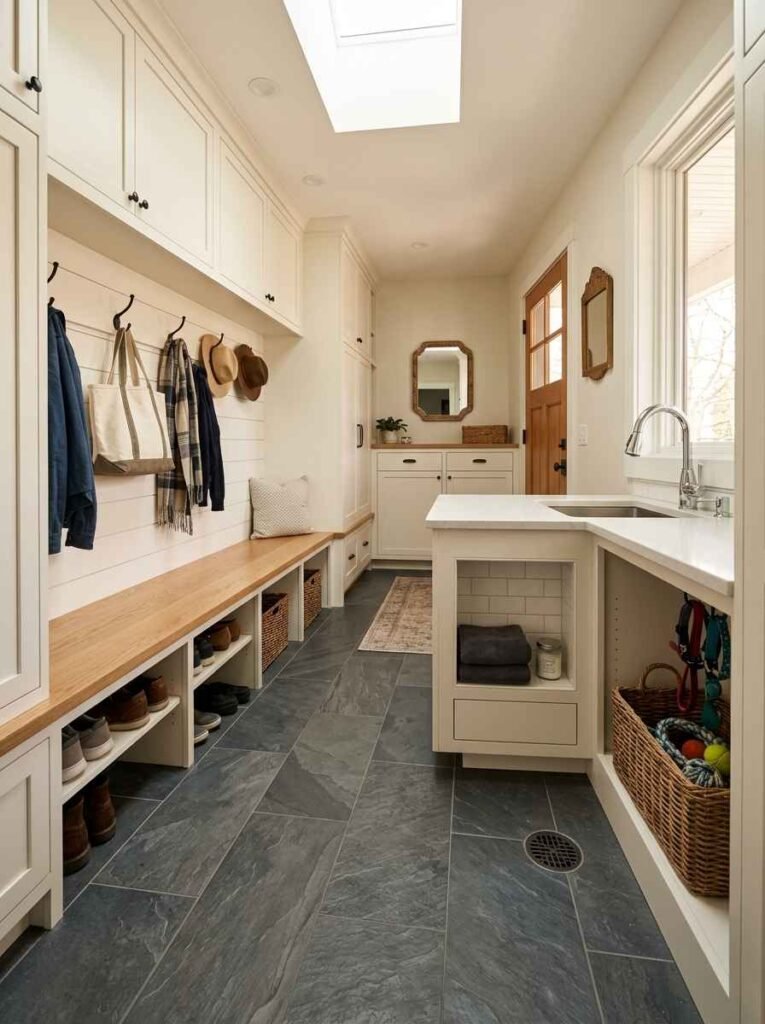
This is becoming really common and honestly makes so much sense. You come in from outside, strip off dirty stuff, and the washing machine is right there. The Spruce has a solid breakdown of mud room and laundry room combos if you want to see how people pull this off spatially.
10. Open concept mud room flowing into kitchen
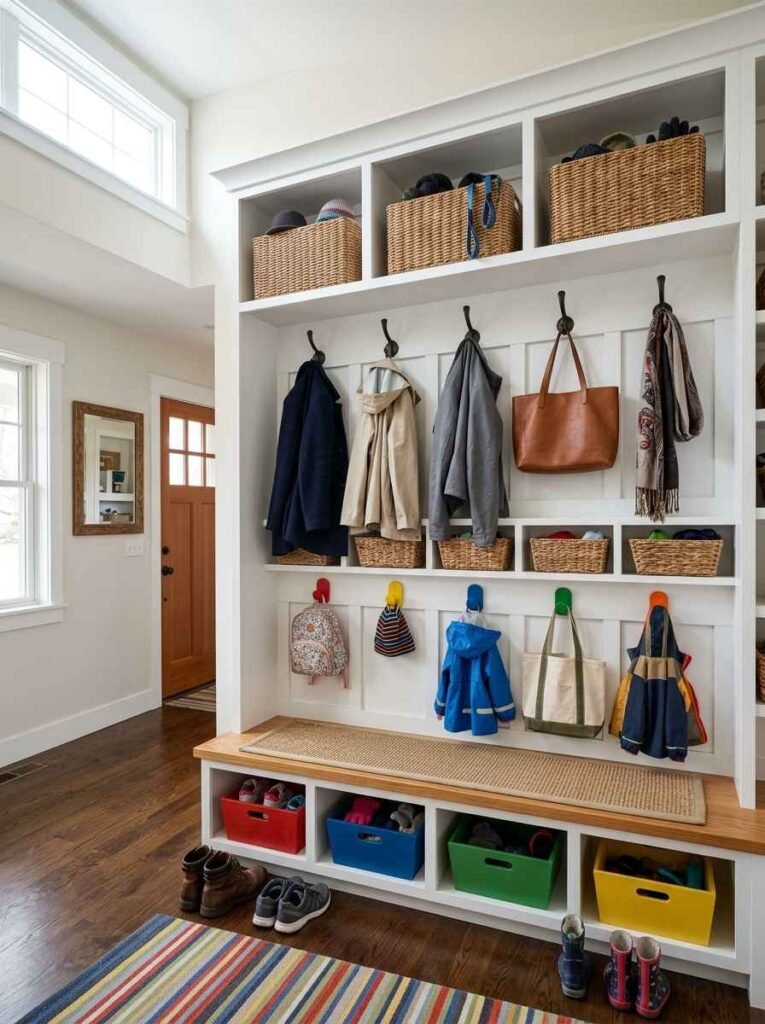
Some newer builds skip the separate room and design an open mud zone off the kitchen or garage door. Works well in open-plan homes but requires seriously good organization habits. Otherwise your kitchen feels like the inside of a school bus.
11. Vintage locker-style with metal doors
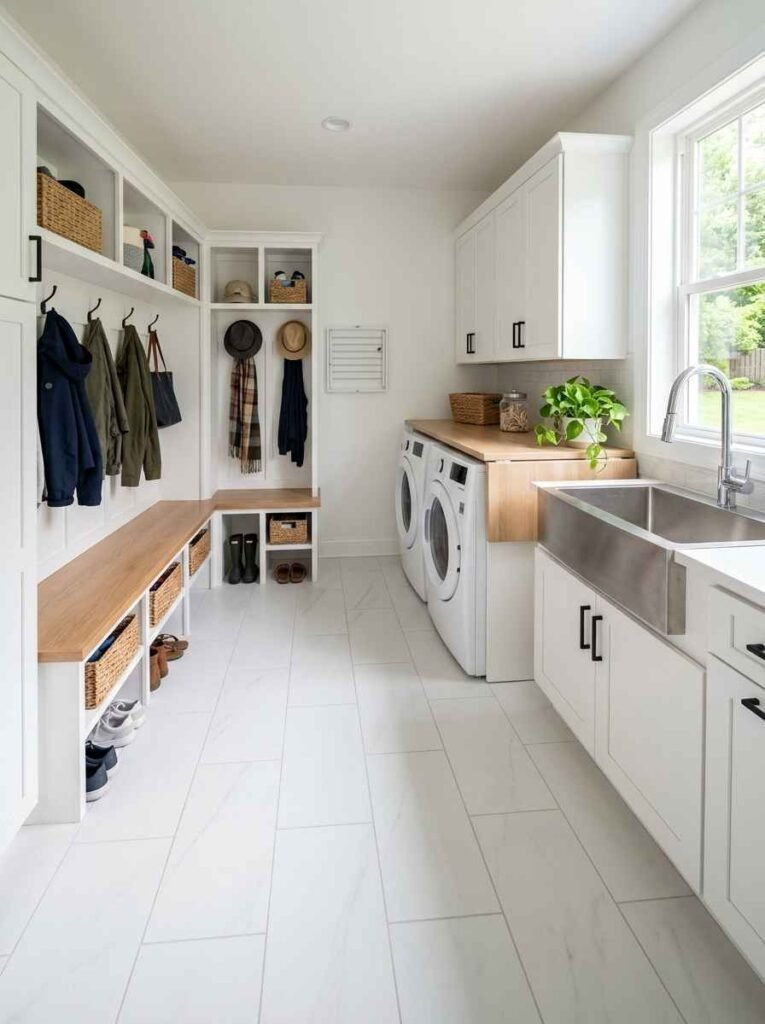
Old gym lockers repurposed as mud room storage. I’ve seen this done really well and really badly. When it works, it’s killer. Industrial, cool, and way cheaper than custom built-ins if you find them second-hand.
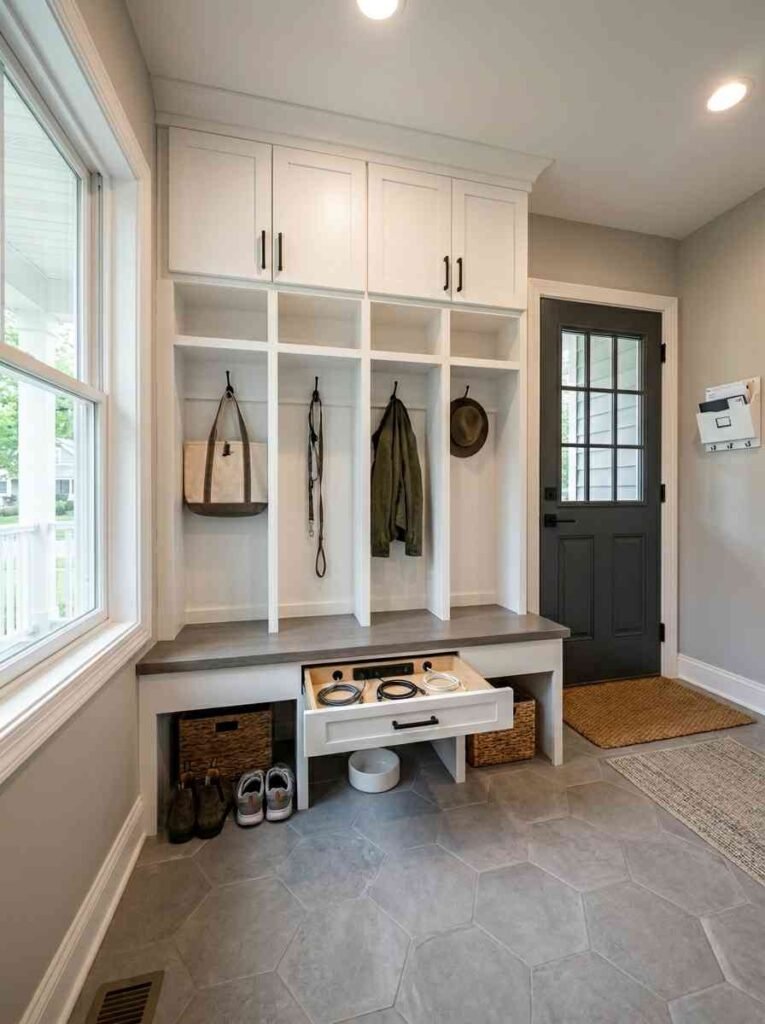
12. Built-in charging station integrated into the layout
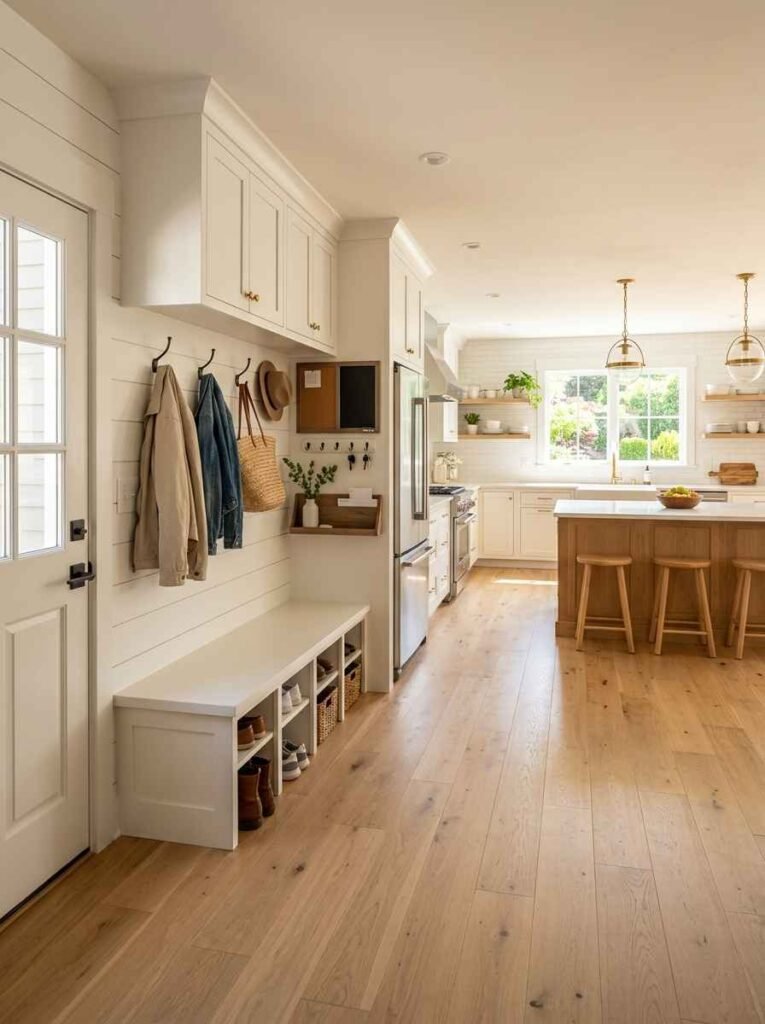
Most mud room plans forget this. A charging drawer or built-in outlet strip near the entry hooks means phones and devices actually get charged overnight.
And you stop hunting for cables in the kitchen.
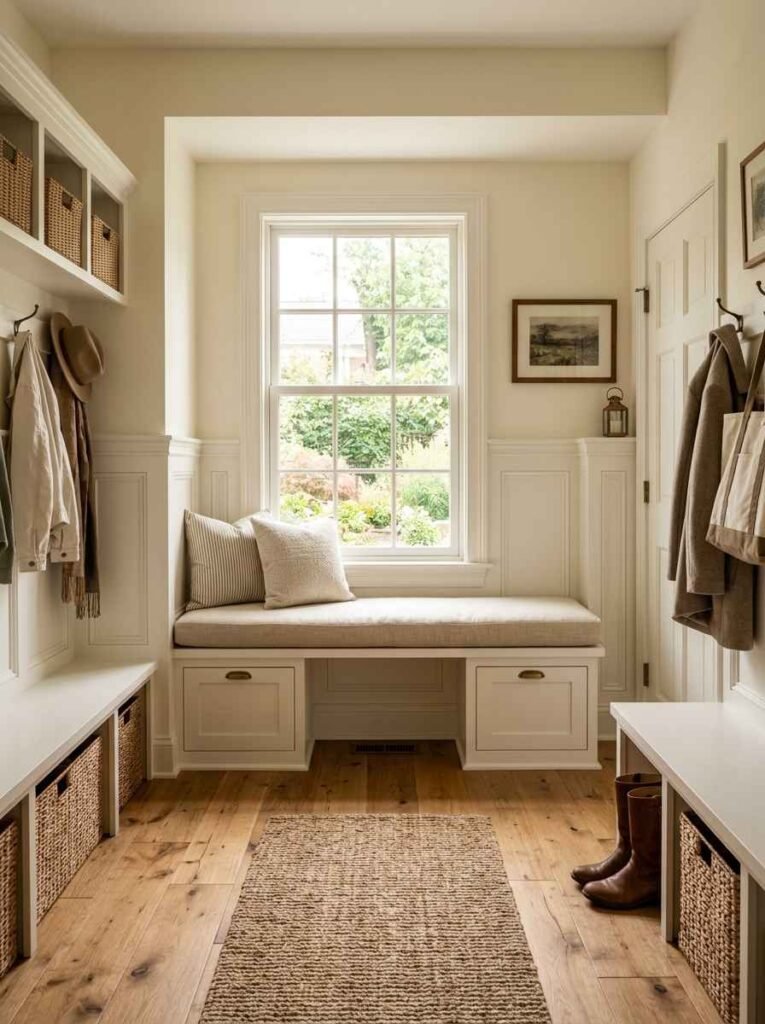
13. Mud room with a window seat and hidden storage
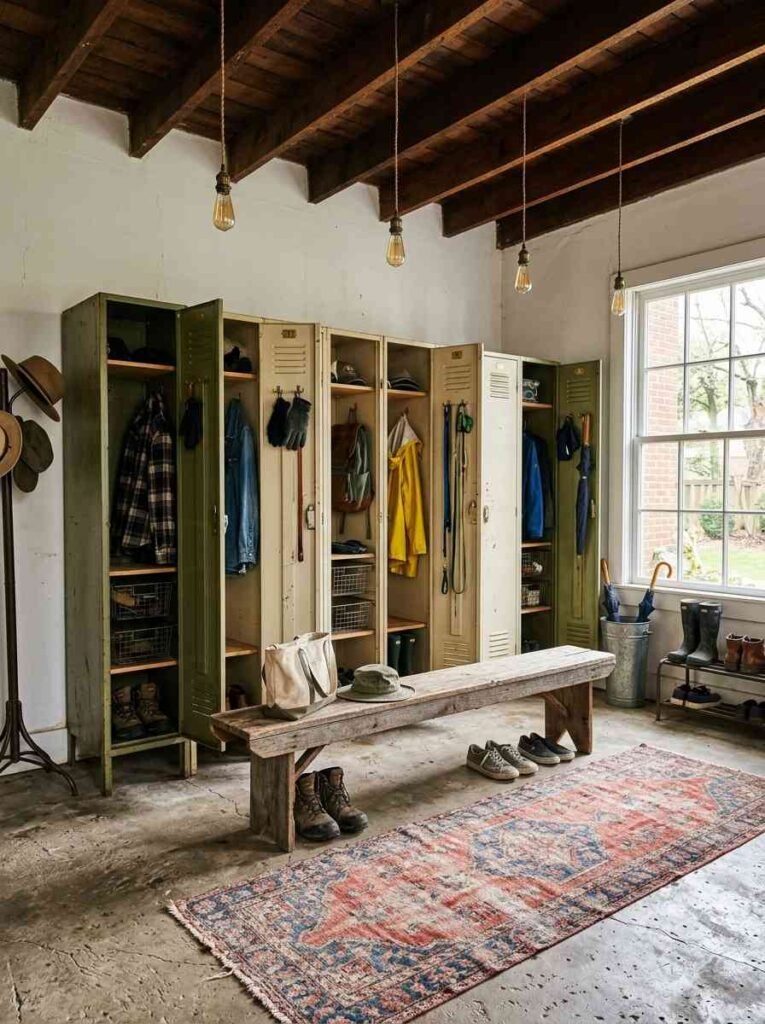
If your mud room has a window, build the bench into it. Lift-top storage underneath, natural light above.
It sounds fancy but it’s one of the more budget-friendly built-in ideas because the window does half the decorative work.
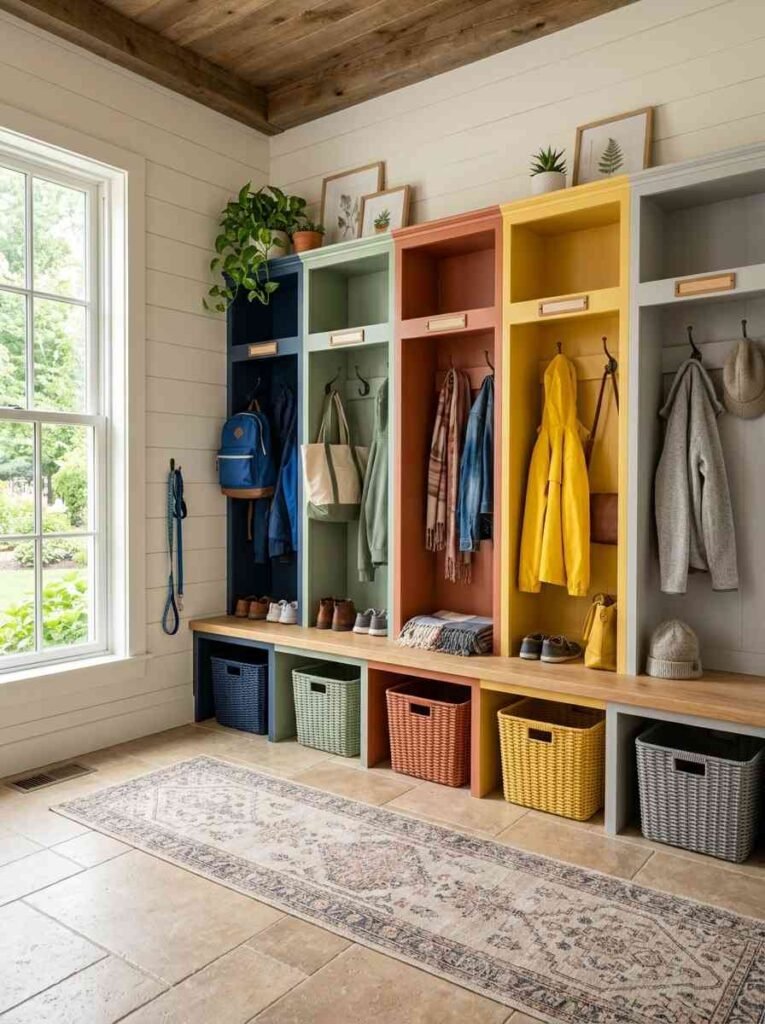
14. Color-coded family system
Each person gets a color. Their hooks, their cubby label, their basket. Kids especially respond to this.
I read about a family in a renovation blog who used this and said their kids started hanging up their own bags at age 3. Color coding, bro. Don’t underestimate it.
15. Mud room with a mail and key command center
Add a small mail sorter, key hooks, and a notepad area into your layout.
This is the kind of thing that sounds minor until you’ve spent 4 minutes looking for your car keys when you’re already late.
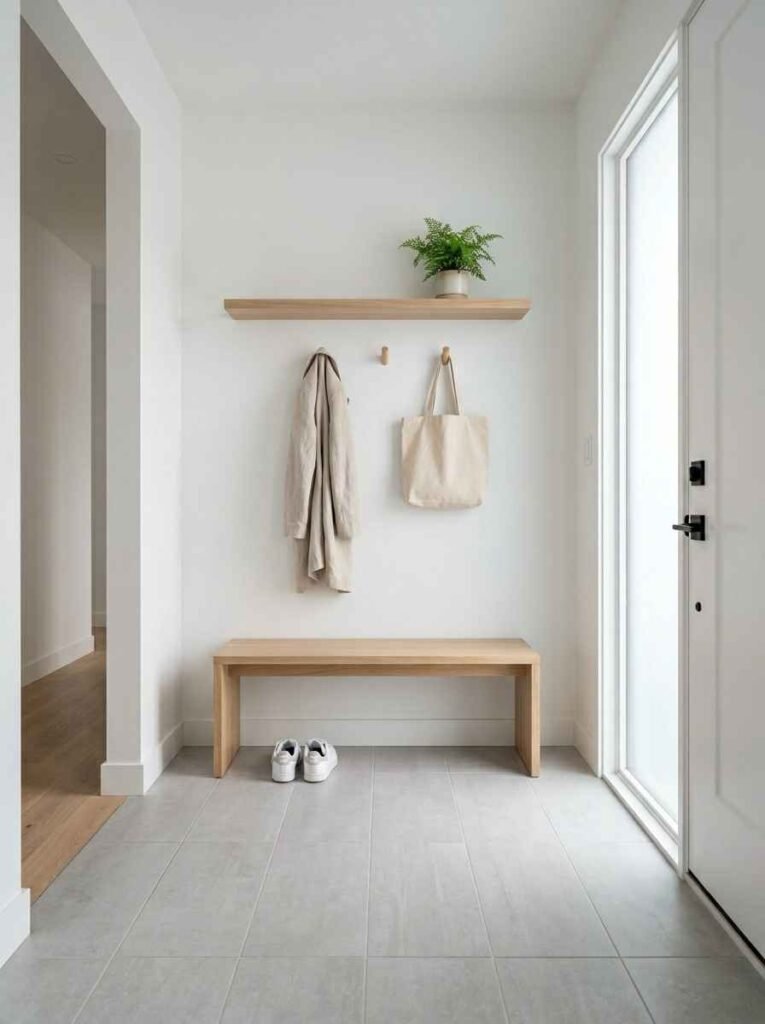
16. Scandinavian minimal layout
White, clean, mostly open. A couple of hooks, one low bench, a basket. This works if you actually keep up with it.
If you don’t, it falls apart fast. I admire it. I couldn’t live with it personally.
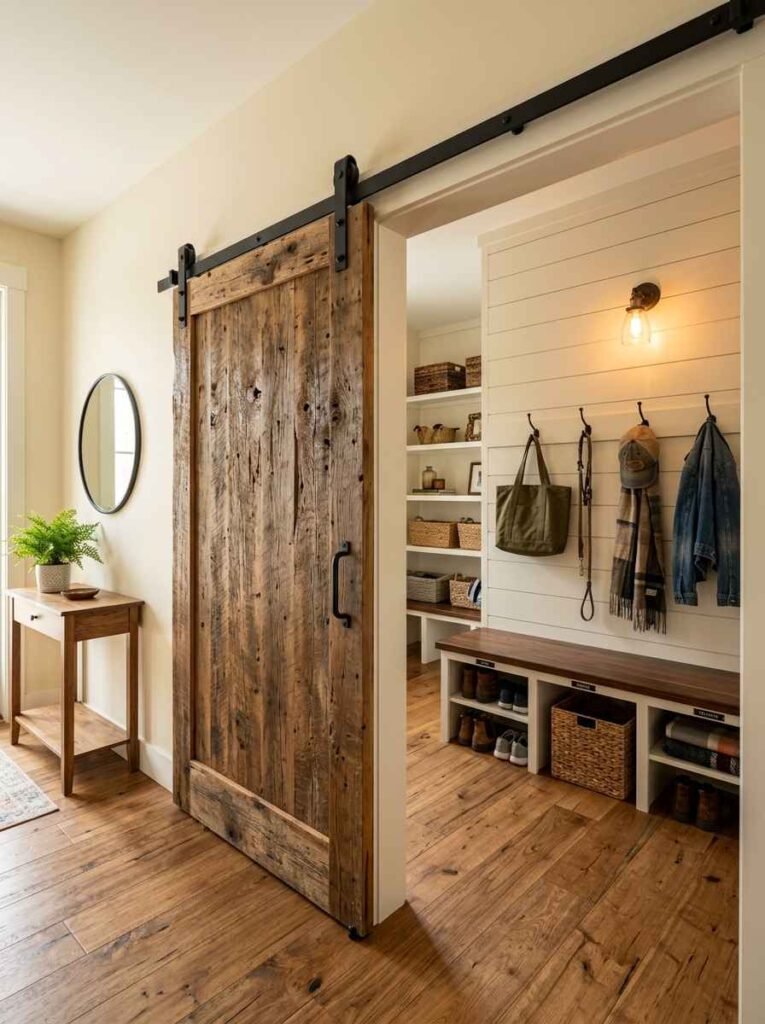
17. Barn door mud room entry
Adding a sliding barn door to close off the mud room from the rest of the house is a really cool move.
You get the function of a separate room without losing square footage to a swing door.
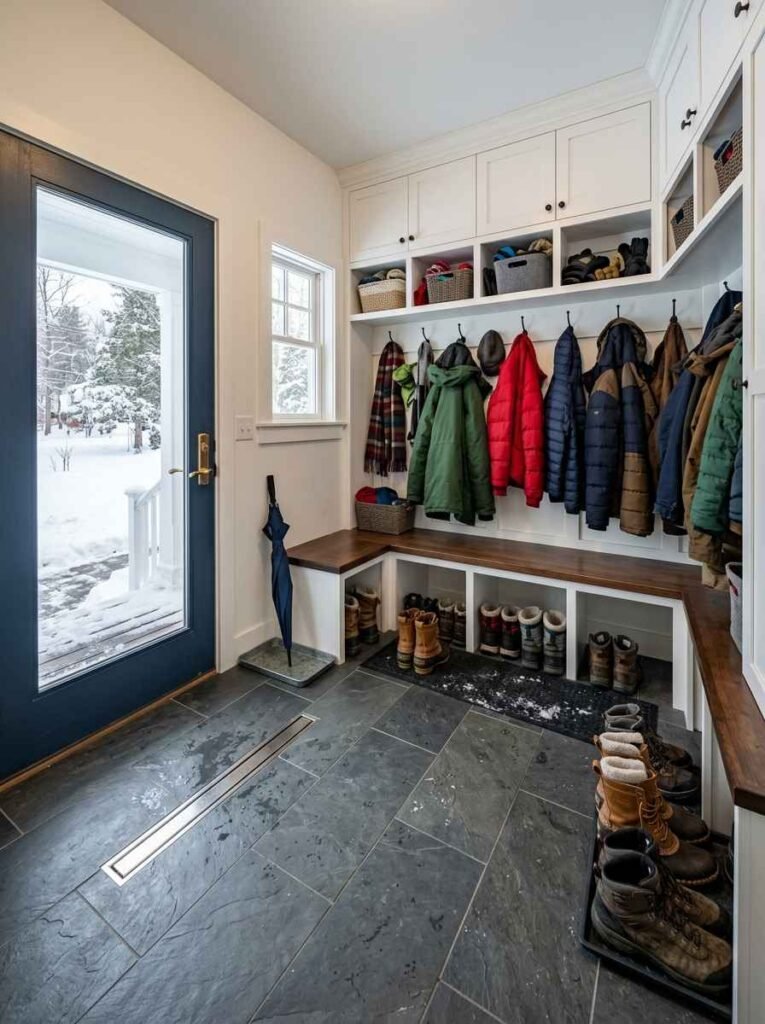
18. Mud room with a floor drain
If you live somewhere wet or snowy, a mud room floor drain is something worth asking your contractor about early.
Tile the floor, add a drain, and mopping becomes a 30-second job. I think this is underused and I’d prioritize it over a lot of cosmetic stuff.
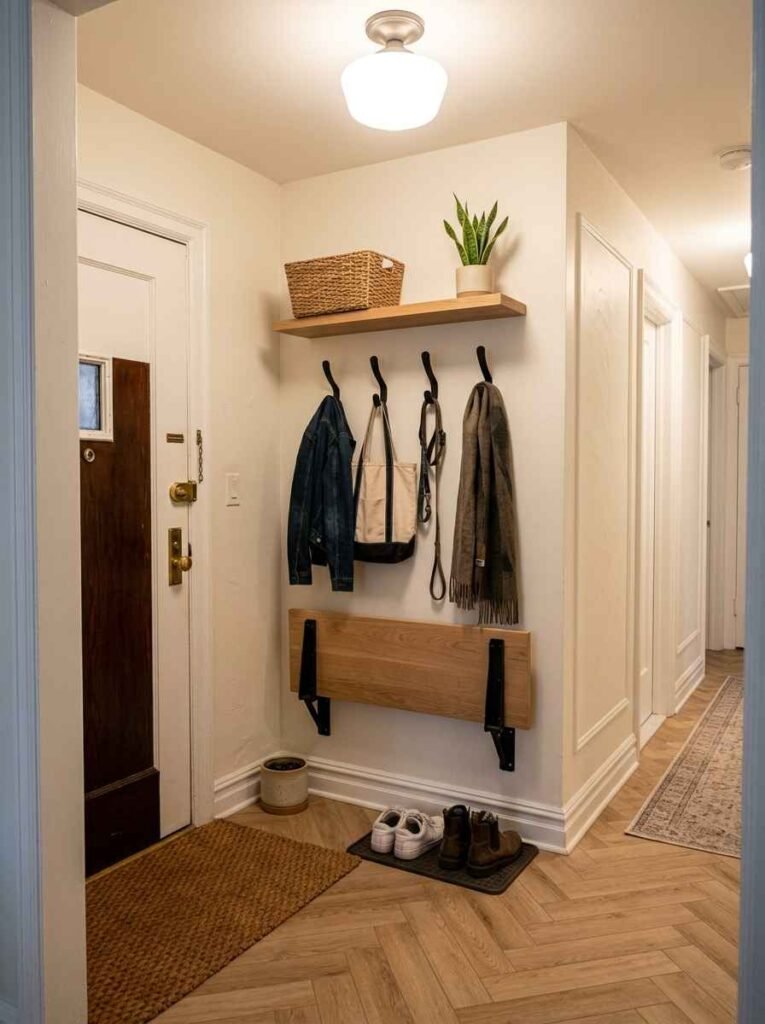
19. Narrow apartment mud zone (not a full room)
No dedicated room? You can carve a mud zone out of 3 feet of hallway space. A wall-mounted bench that folds flat, 4 hooks, a small shelf. Done. It’s tight but it works.
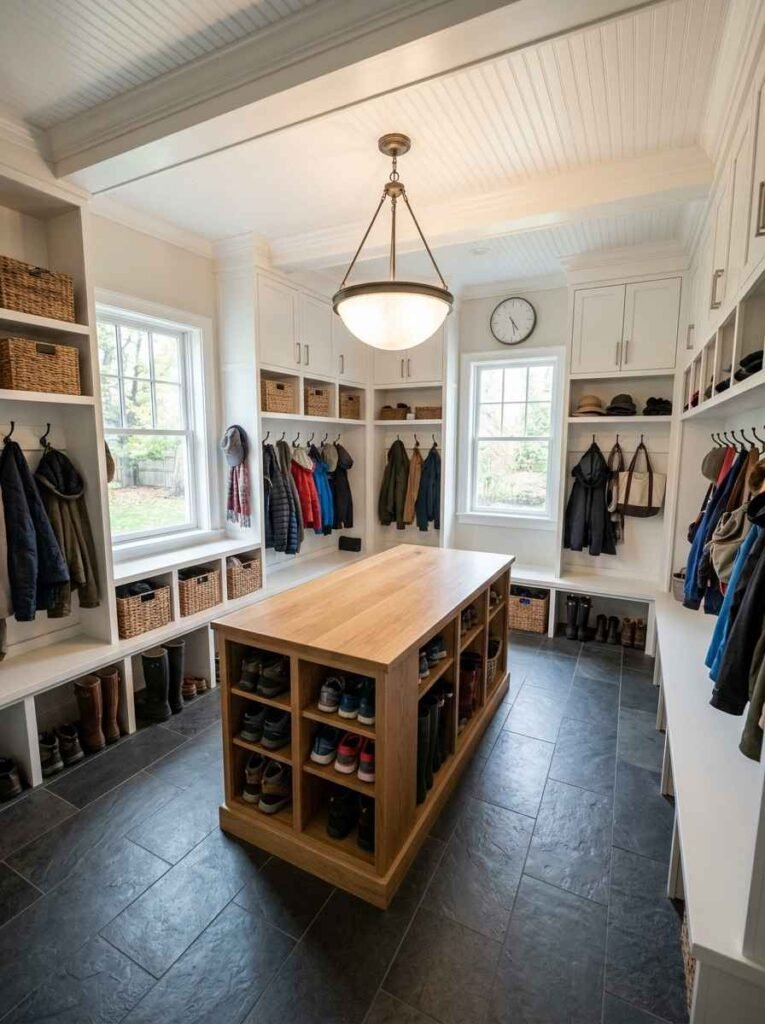
20. Three-wall storage with a central bench island
If you’ve got a big enough room, a central bench island with storage around all 3 walls is genuinely useful for larger families.
Kids can sit in the middle while they put on shoes without blocking everyone else.
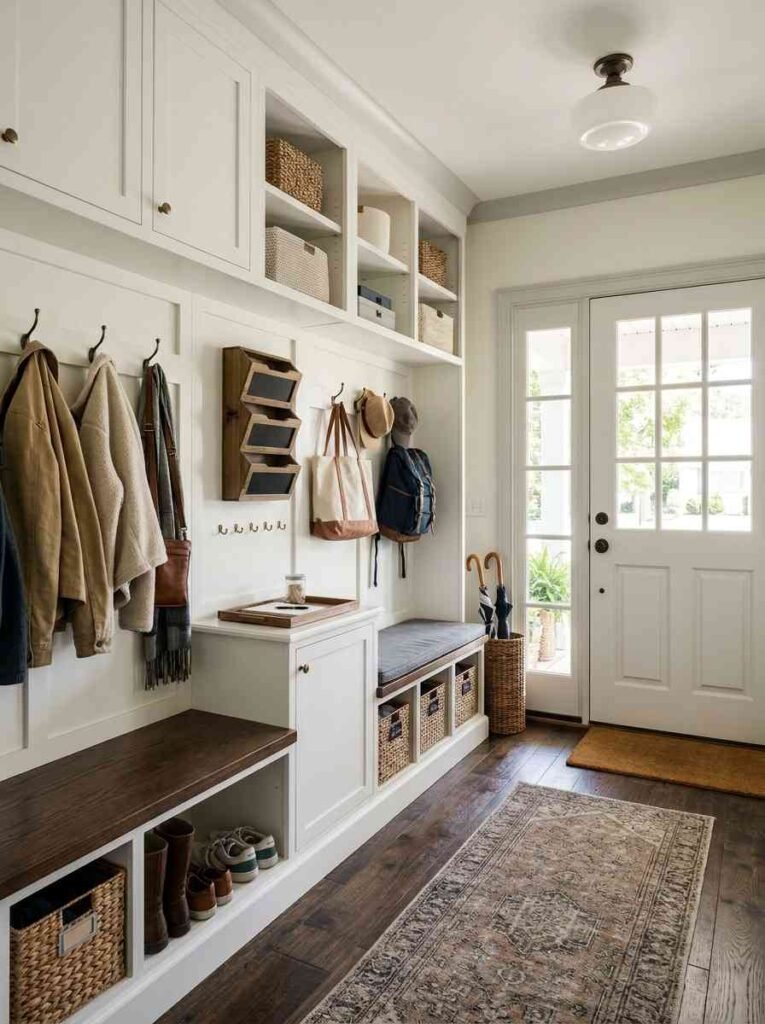
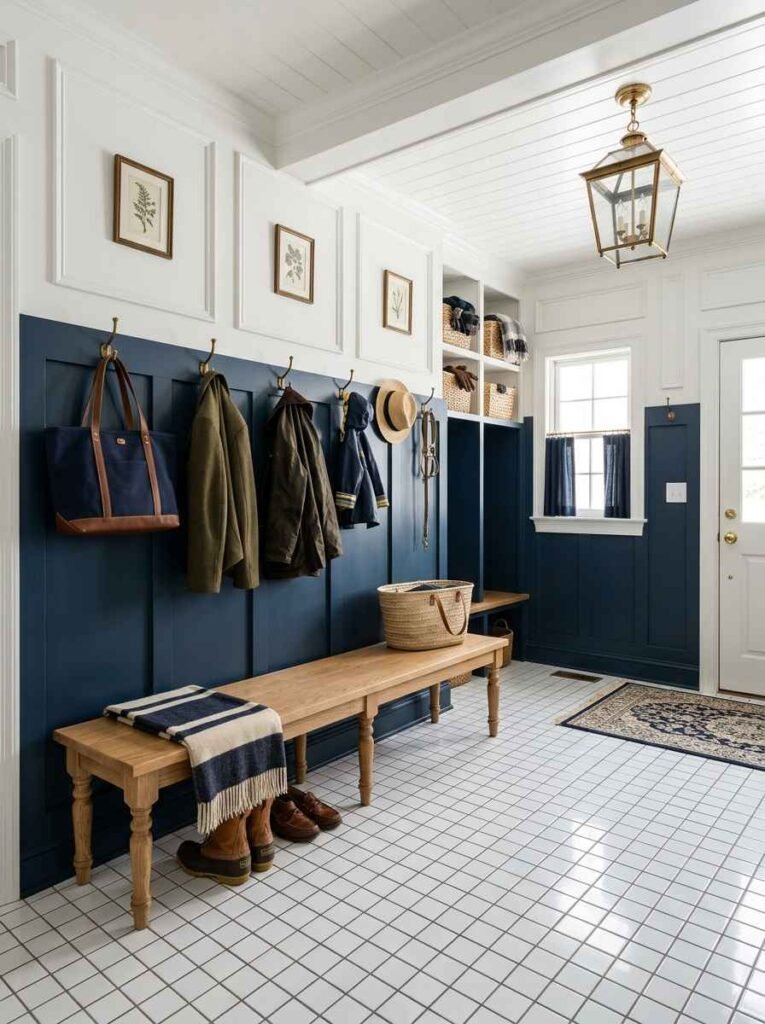
21. Mud room with wainscoting and trim detail
This is purely aesthetic but it’s worth mentioning for the Pinterest crowd. Wainscoting on the lower walls makes the mud room feel finished and also protects the walls from scuffs and backpack damage. Practical and good-looking.
22. Built-in dog crate integrated into cabinetry
I’ve seen this done where the dog crate is built into the base of a storage unit so it looks intentional. The dog has a spot, the crate doesn’t take up floor space, and the mud room still looks clean. Really smart if you’ve got a medium or smaller dog.
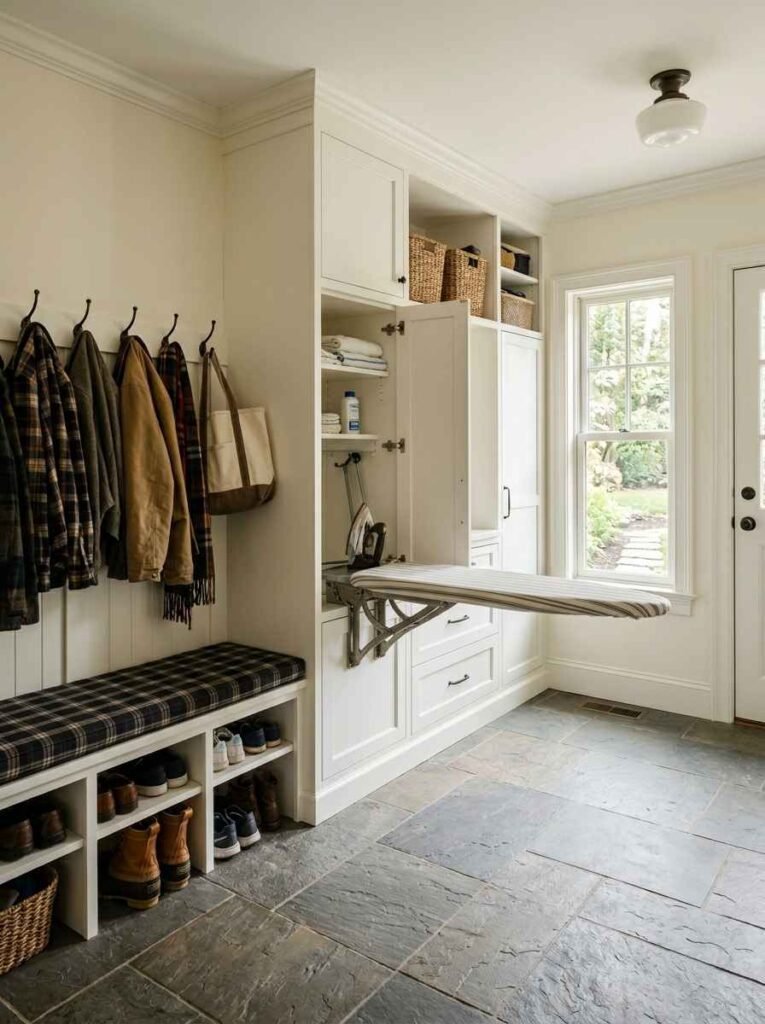
23. Mud room with a fold-down ironing board
Honestly this trend feels a bit outdated now. People went crazy for fold-down ironing boards in mud rooms for a while and I get the appeal, but how often are you actually ironing in your mud room? Most people I know skip it.
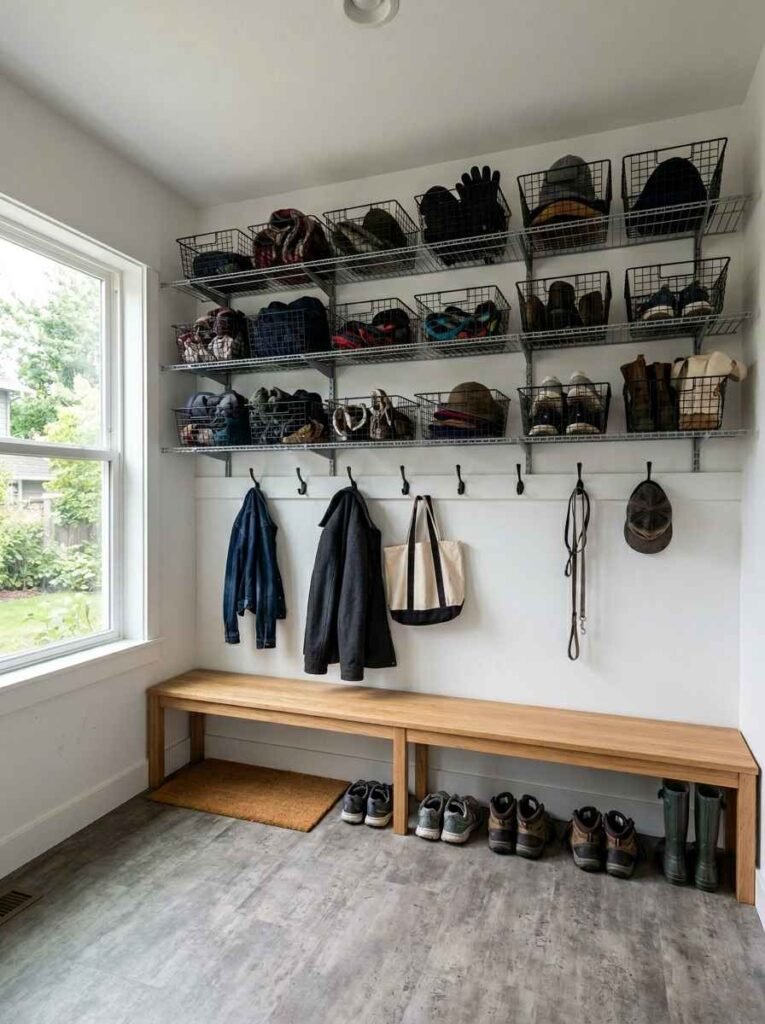
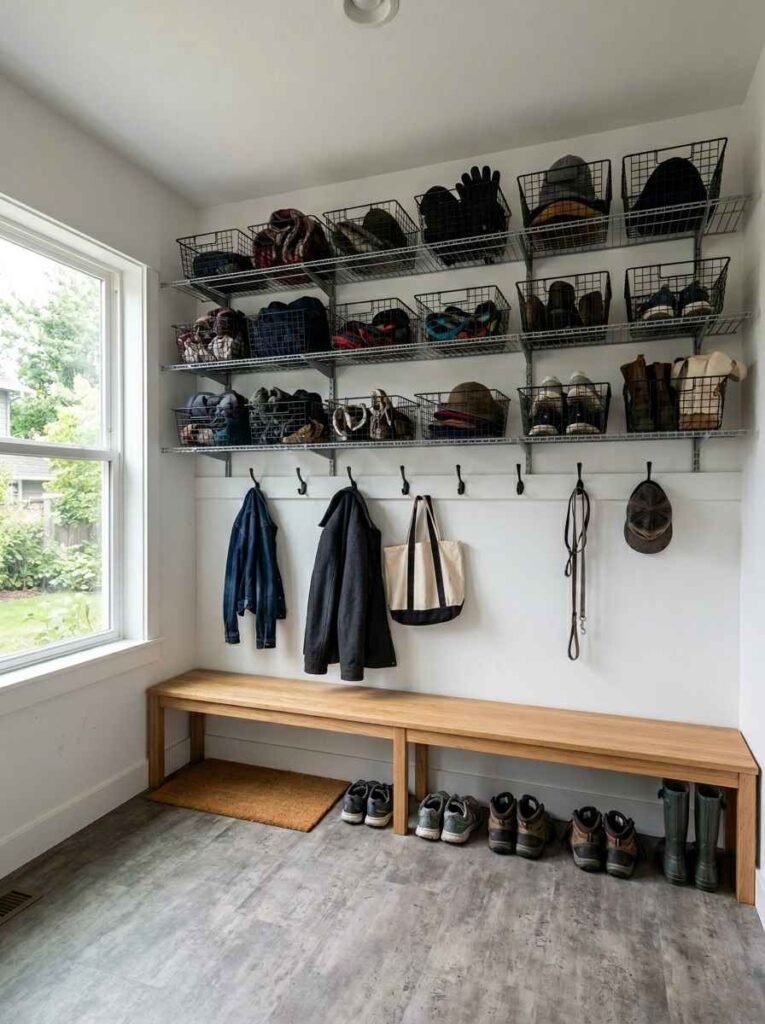
24. Open shelving with labeled wire baskets
Wire baskets on open shelves, each one labeled. Simple, cheap, easy to swap out. Real Simple has some great organization ideas that show this working in real homes. I tried wire baskets and they worked for about 6 months before we got lazy with the labels.
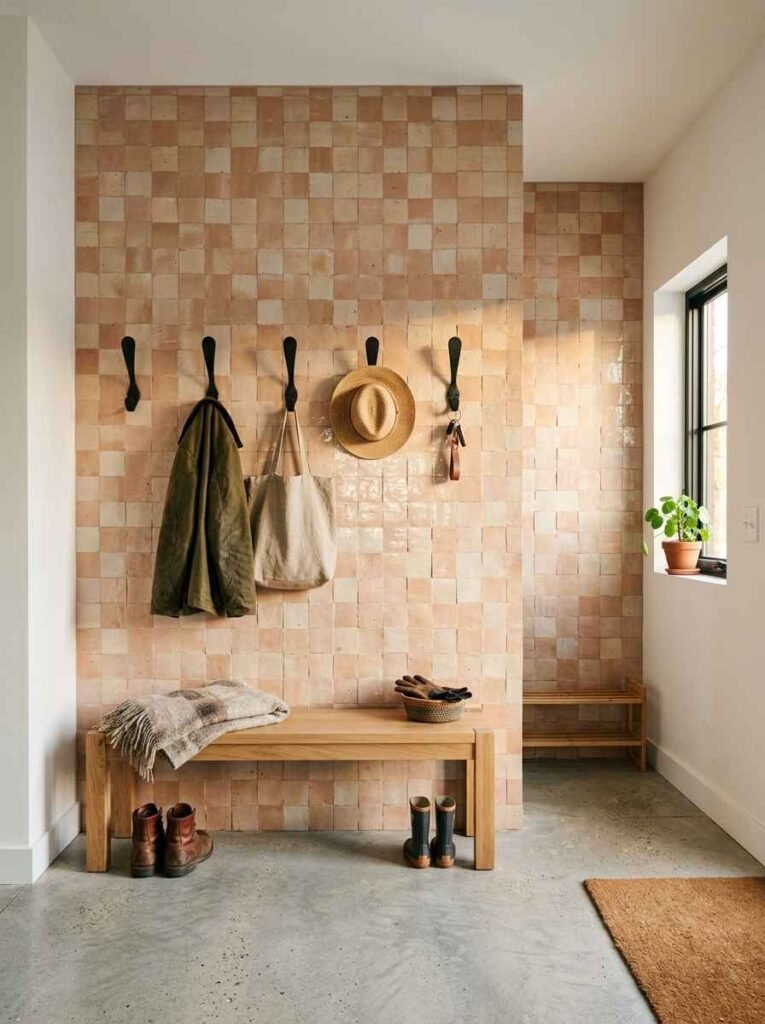
25. Mud room with a tiled feature wall
A cool tile behind the bench area makes the mud room feel like it was designed on purpose. Even a small amount of pattern tile goes a long way. And tile behind hooks means no paint damage from wet coats.
26. Multi-season storage rotation system
This is less about the physical layout and more about how you use it. Build in 2 zones: active season stuff and off-season storage (in bins on high shelves or in a separate cabinet). Rotate twice a year. Your mud room stops feeling cramped because half the stuff isn’t actually in use. This Old House has some good guidance on building flexible storage systems that work year-round.
How to pick the right layout for your space
Don’t start with Pinterest. Start with your floor plan and the number of people (and pets) using the space daily. A single person in a condo needs a completely different setup than a family of 5 with 2 dogs.
Questions worth asking before you plan anything
- How many people use this entry daily?
- Do you need shoe storage for everyone or just seasonal stuff?
- Is there a coat closet nearby or does this space carry all of it?
- What’s your actual square footage to work with?
Grab a tape measure before you save a single image. Seriously. I planned a whole mud room around a bench I loved and it was 4 inches too long for the wall. Four inches.
Budget ranges to know
You can build a decent mud room setup for around $300 to $500 if you go IKEA hacks or prefab units. A mid-range custom built-in runs $2,000 to $5,000. Full custom with cabinetry and tile work? Budget $8,000 to $15,000 depending on your market. Plan the layout first, then figure out what version of it you can afford right now.
A few things I’d do differently
I’d install more hooks than I think I need. You always need more hooks. Every single time.
I’d also tile the floor first before anything else, because retrofitting flooring around built-ins is a nightmare. And I’d add a USB outlet to the bench area from day one instead of running an extension cord later like some kind of animal.
FAQ
Do mud rooms add value to a home? Yes, consistently. Real estate agents report that organized entry and storage spaces appeal strongly to buyers, especially families. Even a small, well-designed mud zone reads as intentional and functional.
What flooring works best in a mud room? Porcelain tile or luxury vinyl plank are the top choices. Both handle moisture, dirt, and heavy foot traffic well. Hardwood can work but it’ll need refinishing more often near an exterior door.
Can I create a mud room without a dedicated room? Absolutely. A wall-mounted bench, 6 hooks, and 2 cubbies in a hallway corner is a functional mud zone. You don’t need a separate room. You need a system.
So which of these 26 layouts actually fits your home? Drop your space dimensions in the comments or pin the layout that matches your vibe. I’m genuinely curious what people are working with out there.
