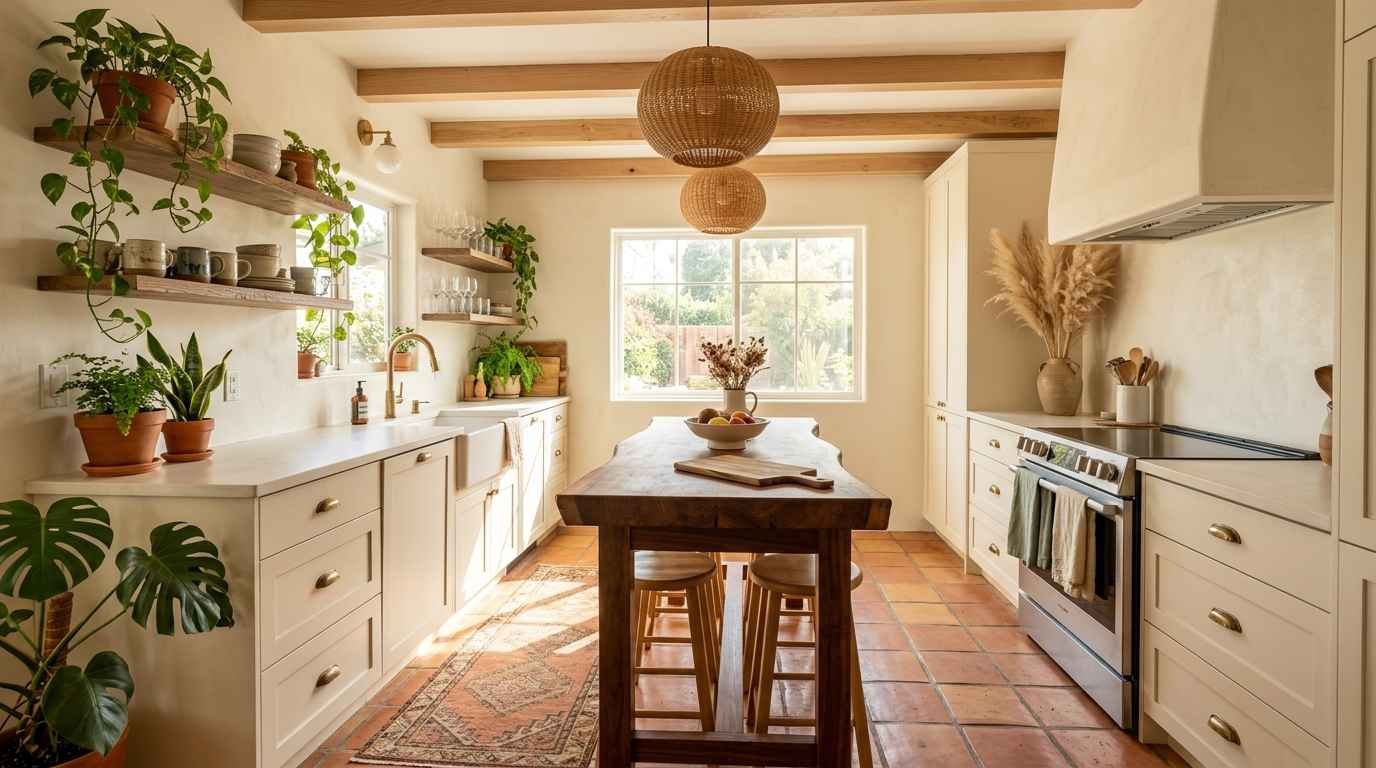
There’s something about a white bohemian kitchen that just stops you mid-scroll.
You’re browsing Pinterest at 11pm, minding your own business, and suddenly you’re mentally rearranging your entire home. We’ve all been there.
I’ve spent an embarrassing amount of time pinning these spaces.
What I’ve noticed is that the best ones share a very specific energy: airy and light but lived-in, patterned but not chaotic, personal but not cluttered.
White gives you the canvas. Boho gives you the soul. Together they’re genuinely hard to mess up.
So here are 31 ideas, broken into the sections that actually matter when you’re designing (or redesigning) your kitchen.
Some are big moves, some are weekend projects. All of them are worth copying.
White as a Base, Not a Finish
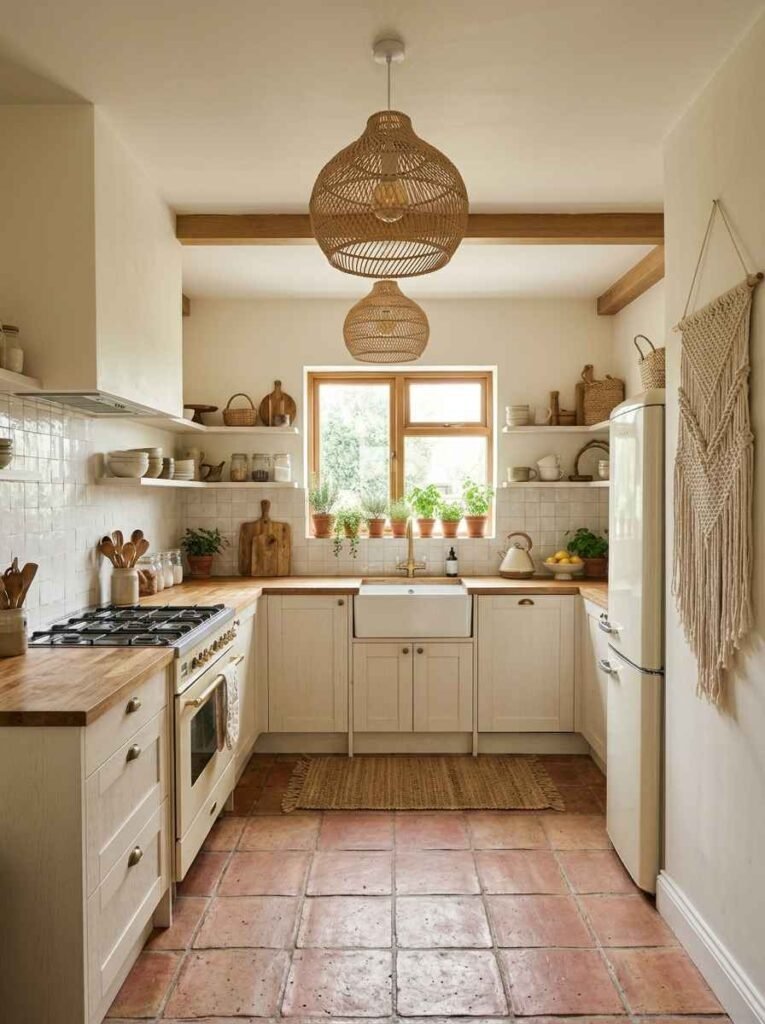
The biggest mistake people make with white bohemian kitchens is treating white as the endpoint. It’s the starting point.
White walls and white cabinets give you a blank surface that every texture, material, and pattern can bounce off of.
Rattan, macramé, terracotta, aged brass — all of these sing louder against white than they ever would against gray or beige.
This is probably the most important principle in this whole list, honestly.
Think of your white surfaces the way a painter thinks about a primed canvas. The white isn’t the art. It makes the art possible.
Warm whites vs. cool whites
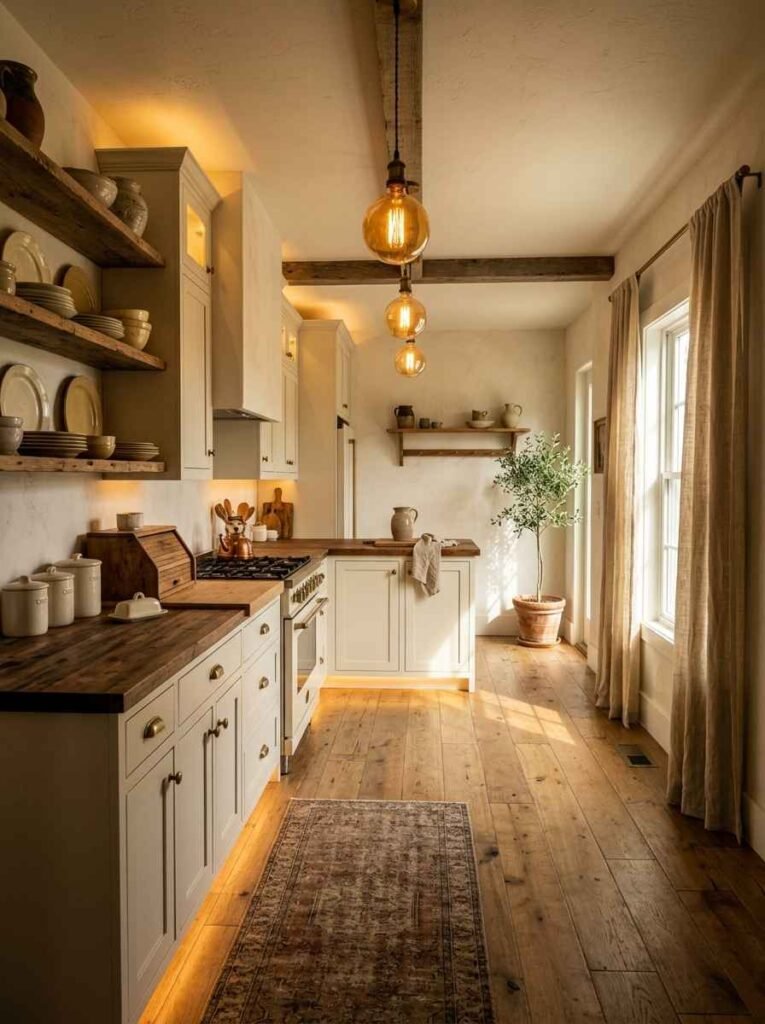
Not all whites are equal, and this distinction matters more than most people realize. A cool, bluish white reads clinical.
A warm, creamy white reads cozy, which is exactly what you want in a boho kitchen.
Shades like “Antique White,” “Navajo White,” or “Swiss Coffee” tend to work better here than a pure stark white.
They warm up quickly when you add natural light, wood tones, and handmade ceramics. That warmth is the foundation of the whole aesthetic.
Cabinet Styles That Actually Work
Shaker cabinets with open shelving
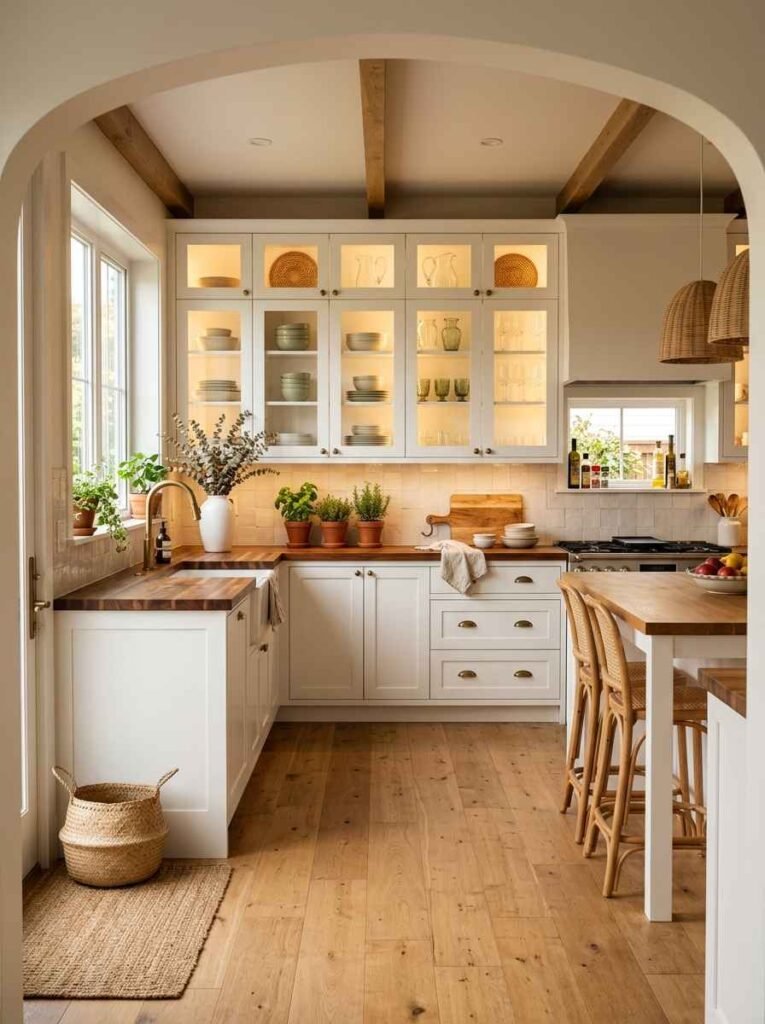
Shaker-style cabinets in white are the most reliable choice for this aesthetic.
The clean lines keep things from going overboard, and the simplicity gives your decorative elements room to breathe.
Mix them with 2 or 3 open shelves above the counter and you’ve got a space that’s both practical and beautiful.
Open shelving is where the boho personality lives. Stack mismatched ceramic mugs, line up vintage glass jars filled with dried goods, hang a small trailing pothos between the shelves.
Functional and gorgeous at the same time.
Glass-front cabinets for displaying curated collections
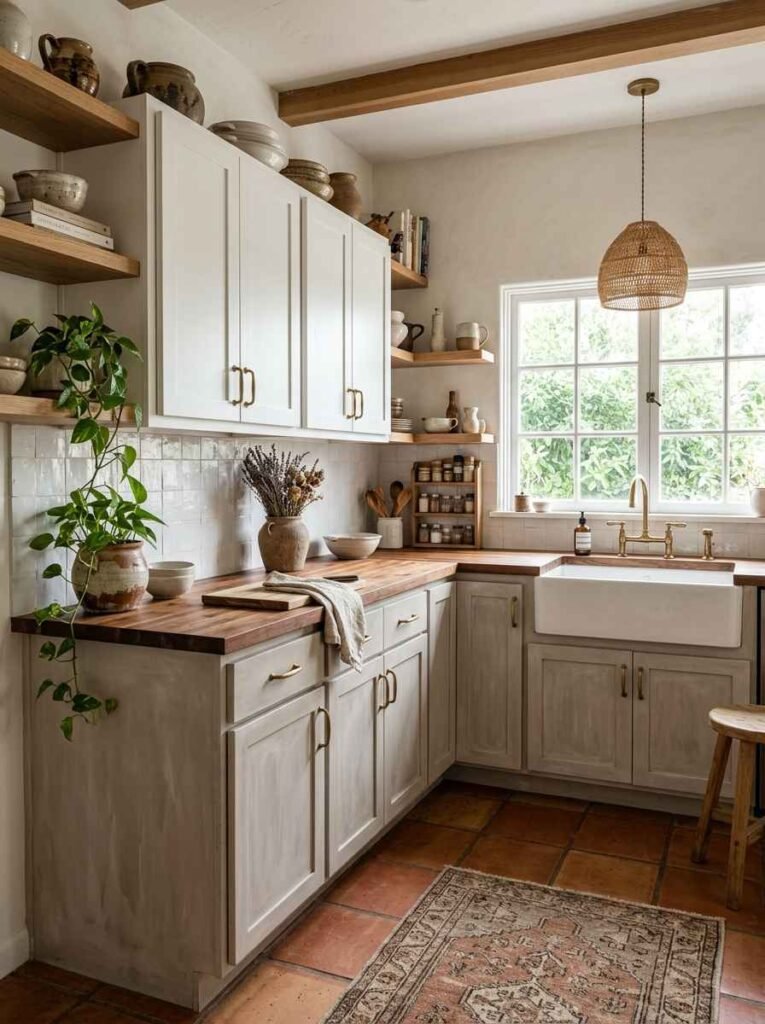
If full open shelving feels too exposed (we all have that one drawer we don’t want the world to see), glass-front upper cabinets are a solid middle ground.
You get the visual openness without needing to style every single shelf perfectly.
Curate what’s visible. Hide the chaos behind solid doors. Nobody has to know.
Unpainted or limewash lower cabinets
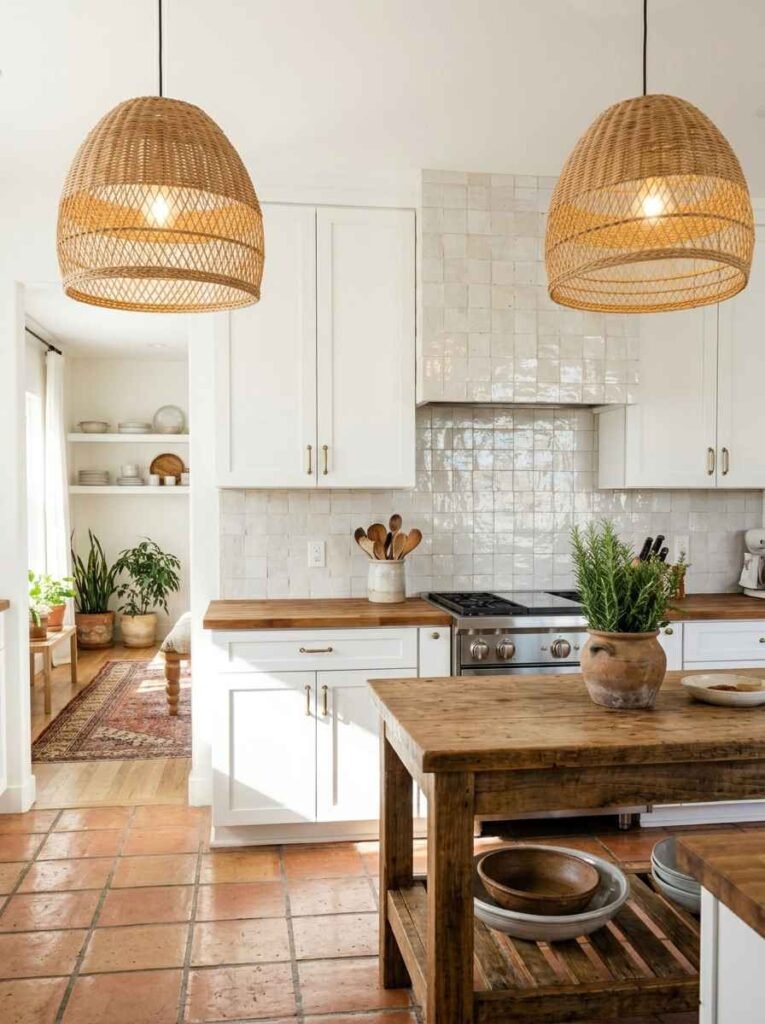
Here’s a combination I’ve seen work really well: crisp white uppers, with lower cabinets left in natural wood or finished in a limewash technique.
The contrast keeps the space from feeling too flat, and the wood tones ground the whole kitchen in something earthy.
Countertop and Backsplash Pairings
Zellige tile backsplashes
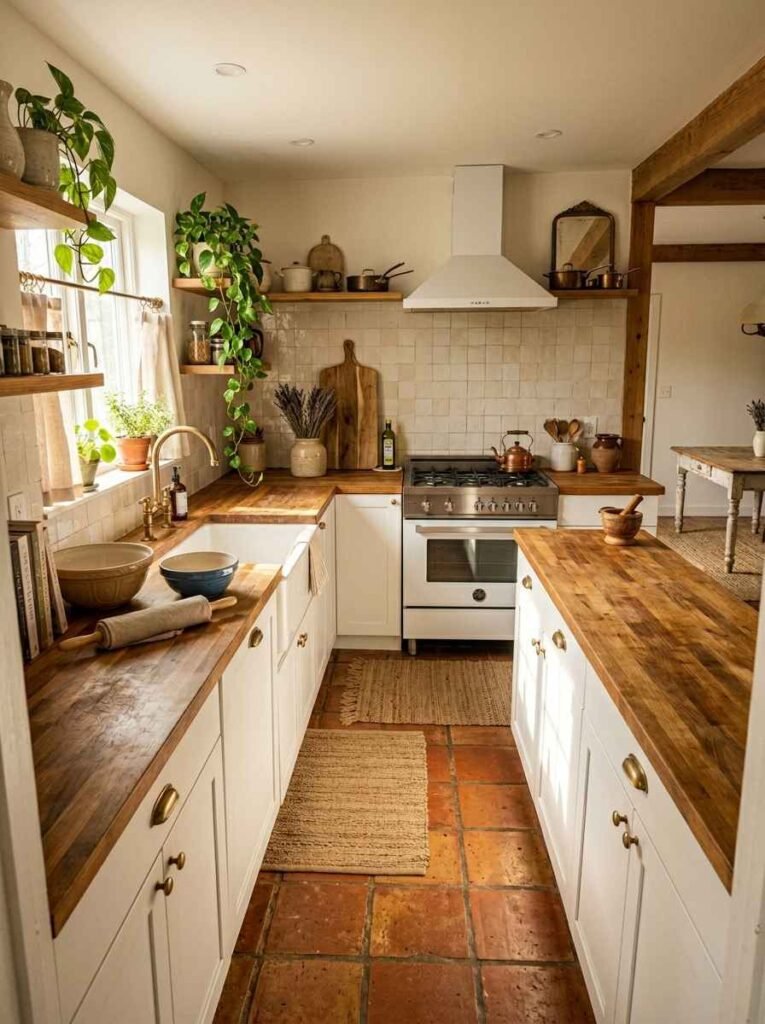
If you do one thing from this list, let it be zellige tiles. These are handmade Moroccan tiles with slight variations in color and glaze, so no 2 tiles are exactly the same.
In a white kitchen, a white or off-white zellige backsplash adds texture and subtle movement without introducing a competing color.
They catch light differently throughout the day, which is a genuinely beautiful thing to live with.
A zellige backsplash in a white kitchen is one of those combinations that photographs incredibly well too, which matters if you’re shooting content for Pinterest or Instagram. FYI.
Butcher block countertops
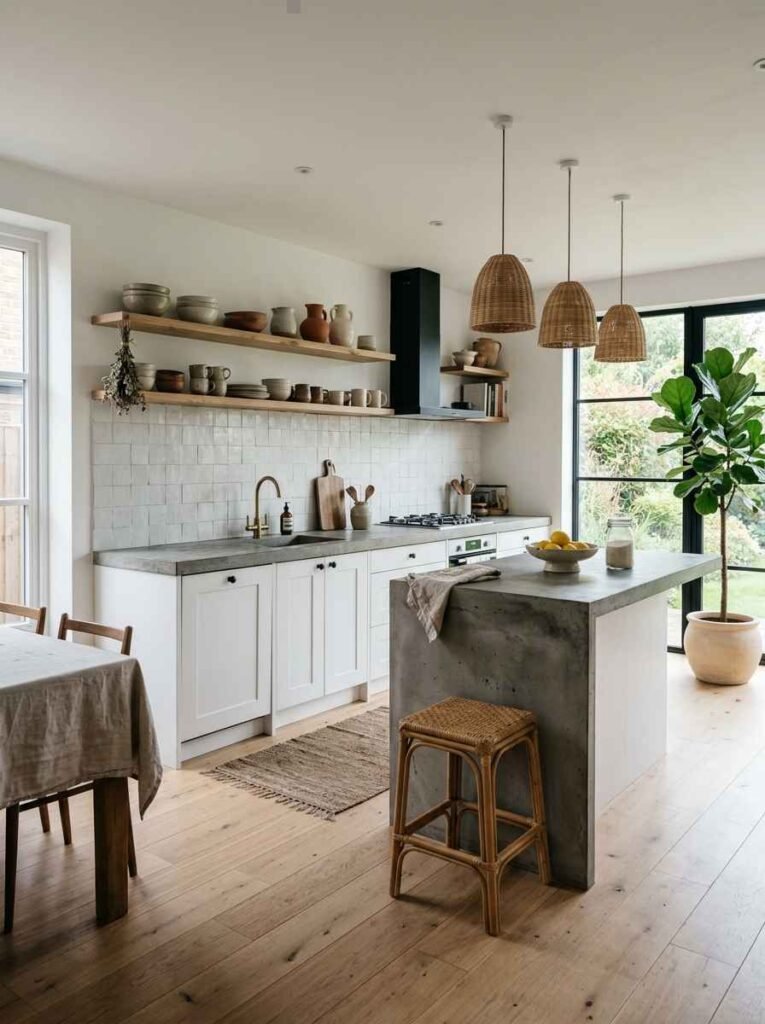
Butcher block is probably the most popular countertop pairing for white boho kitchens, and it’s popular for a reason. The warm wood tones sit perfectly against white cabinetry, and the slightly imperfect grain of the wood keeps things from looking too polished. Sealed properly, it holds up better than its reputation suggests.
Key detail: let the butcher block get a little worn over time. A few marks and patina from actual cooking add character. The boho aesthetic was literally designed for imperfection.
Concrete countertops for an unexpected edge
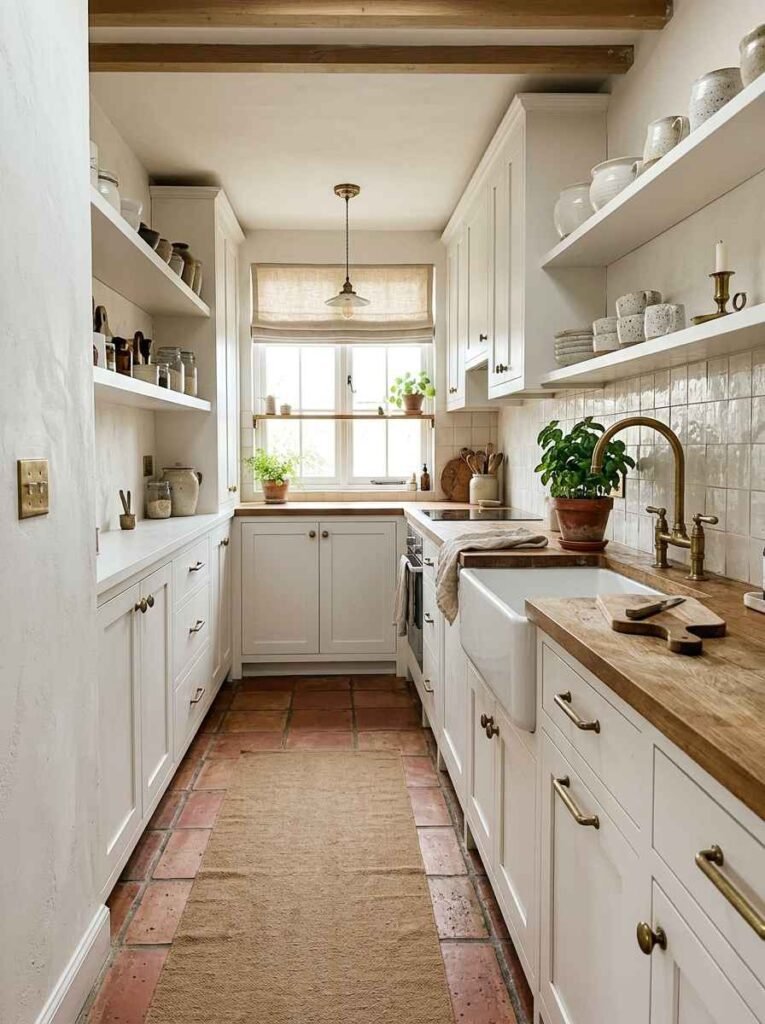
For those who want something less expected, concrete countertops with white cabinets have a slightly raw, artisan quality that pairs well with boho textiles and brass hardware.
The matte finish absorbs light instead of reflecting it, which creates a quieter, more meditative kitchen energy.
Hardware That Does the Heavy Lifting
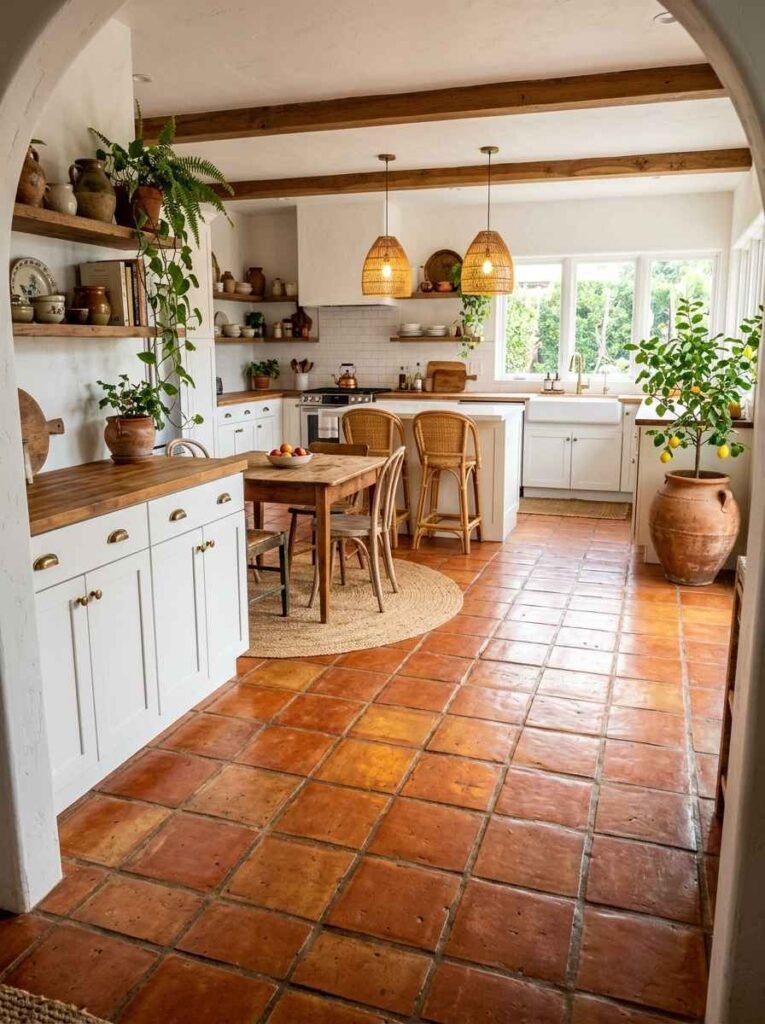
Hardware is the jewelry of a kitchen. In a white bohemian space, it’s doing a lot of emotional work.
Aged brass is the most common choice, and honestly the most reliable. It reads warm, artisan, and a little vintage without being costume-y. You can find aged brass pulls and knobs at almost any price point, from budget-friendly options on Amazon to handmade pieces on Etsy.
Unlacquered brass is worth the slightly higher price if you can swing it. It tarnishes naturally over time, developing a patina that honestly looks better with age. That’s very on-brand for the aesthetic.
Ceramic drawer pulls are another strong option, especially if you want to bring in a painted or hand-decorated detail. A white cabinet door with a small hand-painted ceramic knob is one of the simplest ways to add an artisan feel.
Flooring That Grounds the Space
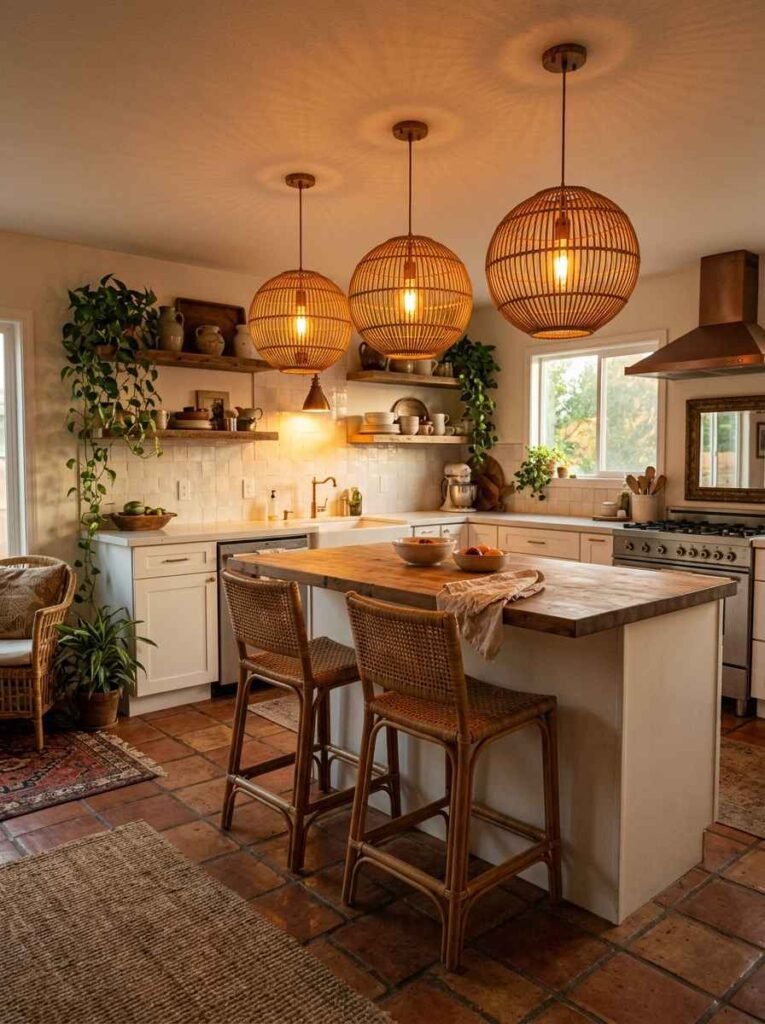
Terracotta tiles
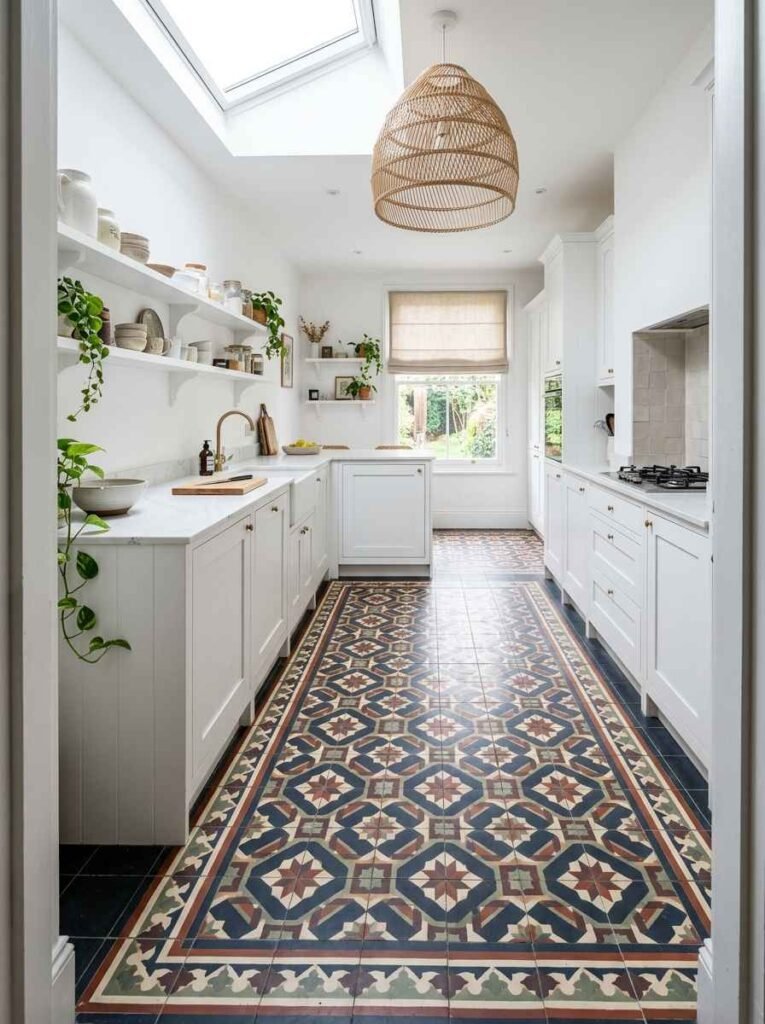
Terracotta floors in a white boho kitchen are probably the single most recognizable feature of this aesthetic.
The warm orange-red clay tones create a striking contrast against white walls and cabinets, and the natural variation in handmade terracotta means every floor is slightly unique.
They also age incredibly well. A terracotta floor in a well-used kitchen develops a patina that’s impossible to replicate artificially.
| Flooring Type | Best Paired With | Maintenance Level | Approximate Cost (sq ft) |
|---|---|---|---|
| Terracotta tile | Warm whites, aged brass | Medium (sealing required) | $3 – $10 |
| Wide-plank wood | Creamy whites, natural wood cabinets | Medium | $6 – $15 |
| Encaustic cement tile | Bold patterns, white shaker cabinets | Medium-high | $8 – $20 |
| Painted concrete | Industrial-boho, concrete countertops | Low after sealing | $2 – $5 |
Encaustic cement tiles in bohemian patterns
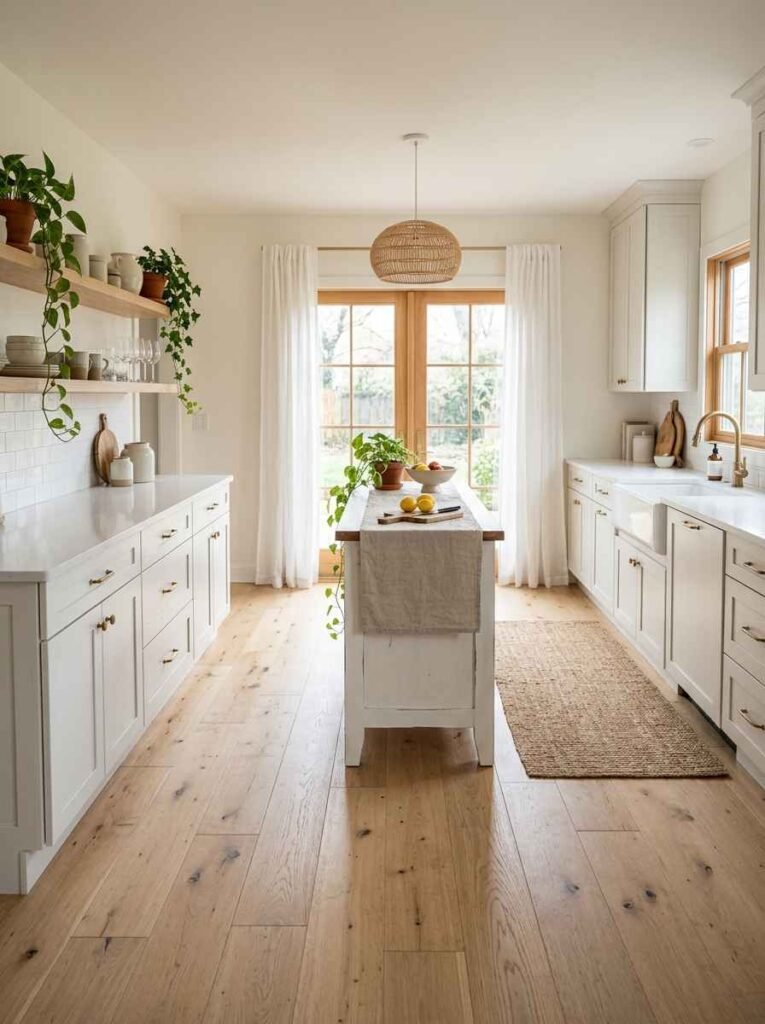
If you want your floor to be the statement piece, encaustic cement tiles with geometric or floral patterns work brilliantly in a white kitchen. Keep everything else simple — white cabinets, minimal open shelving, clean countertops — and let the floor carry the visual weight.
The trick is restraint elsewhere. A patterned floor competes with patterned backsplash tiles. Pick one. Don’t do both.
Wide-plank hardwood in natural finish
For a softer, less dramatic feel, wide-plank hardwood floors in a natural or light oak finish keep the space warm without the visual weight of terracotta.
This pairing tends to skew a bit more Scandinavian-boho, which is a real sub-genre worth knowing if you like things a little cleaner and less maximalist.
Lighting That Changes Everything
Lighting in a boho kitchen isn’t about brightness. It’s about mood.
Rattan pendant lights
Rattan and wicker pendant lights over a kitchen island or dining table are probably the most recognizable boho lighting choice. They diffuse light warmly and add beautiful texture to the ceiling zone — which most people forget to design.
Round woven pendants work well in groups of 2 or 3 over a long island. A single large sculptural piece works over a smaller table or sink. You can find good quality options at places like Lulu and Georgia or World Market.
Edison bulbs and exposed filament lighting
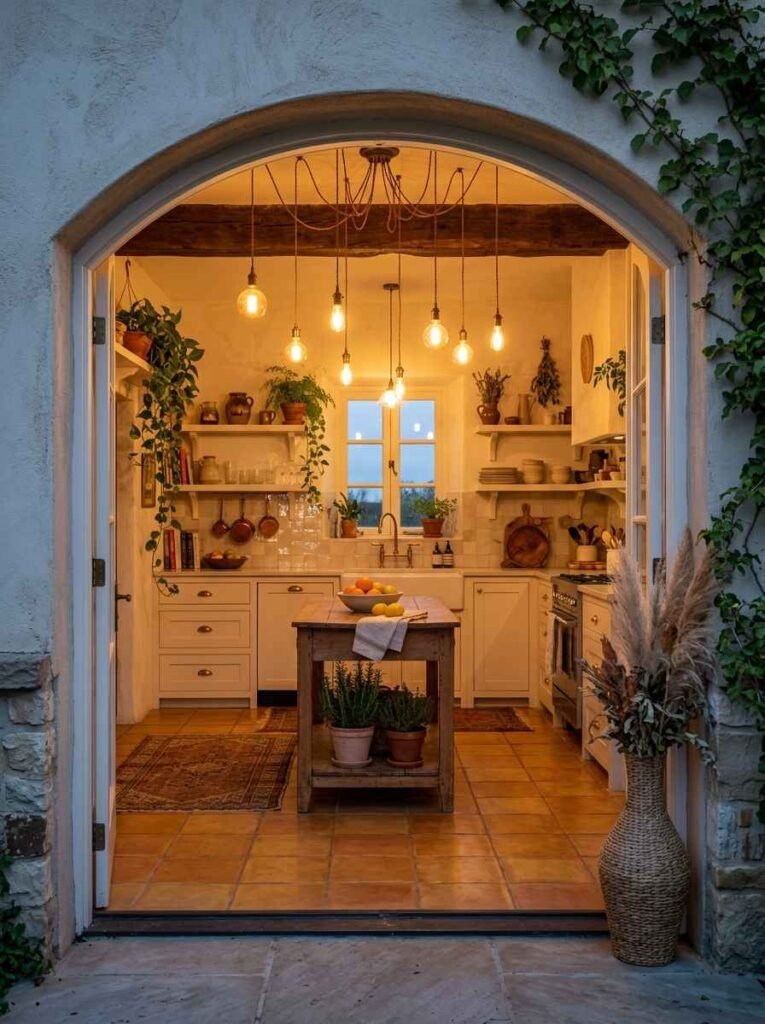
In a white kitchen, Edison bulbs do something specific: they warm the whole room slightly, the way candlelight does. The warm glow hits white walls and bounces back amber. It’s subtle but it shifts the entire feeling of the space.
IMO, this is one of the highest-return, lowest-cost lighting upgrades you can make. Swap out cool LED bulbs for warm Edison-style ones and the room shifts from clinical to cozy almost immediately.
Under-cabinet strip lighting
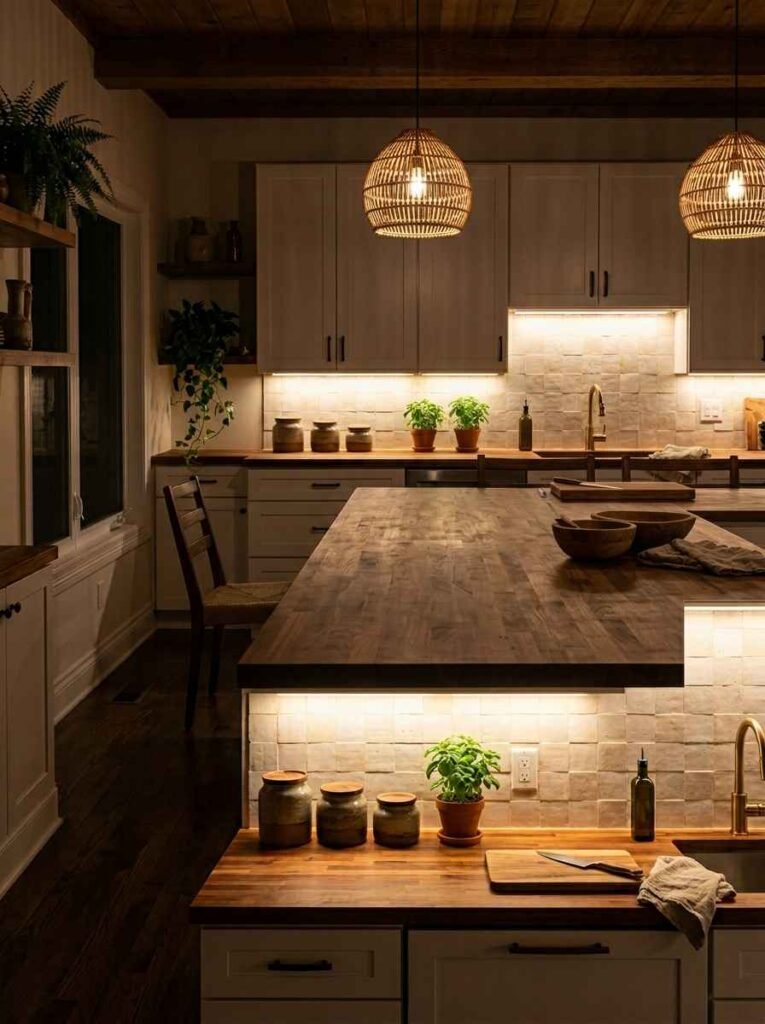
Under-cabinet lighting is a functional detail that also looks beautiful. In a white kitchen, it creates a gentle glow across the backsplash and countertop at night
that makes the whole space feel like a well-designed restaurant rather than a home kitchen. Warm-toned LED strips in a 2700K color temperature are the move here.
Plants, Plants, and More Plants
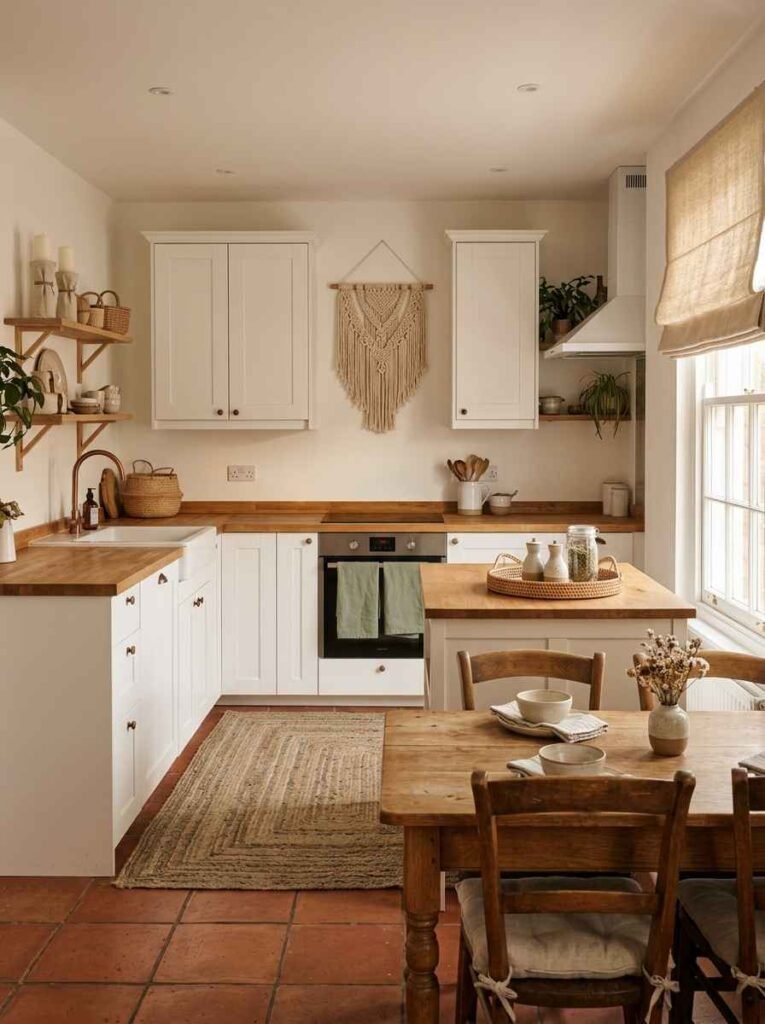
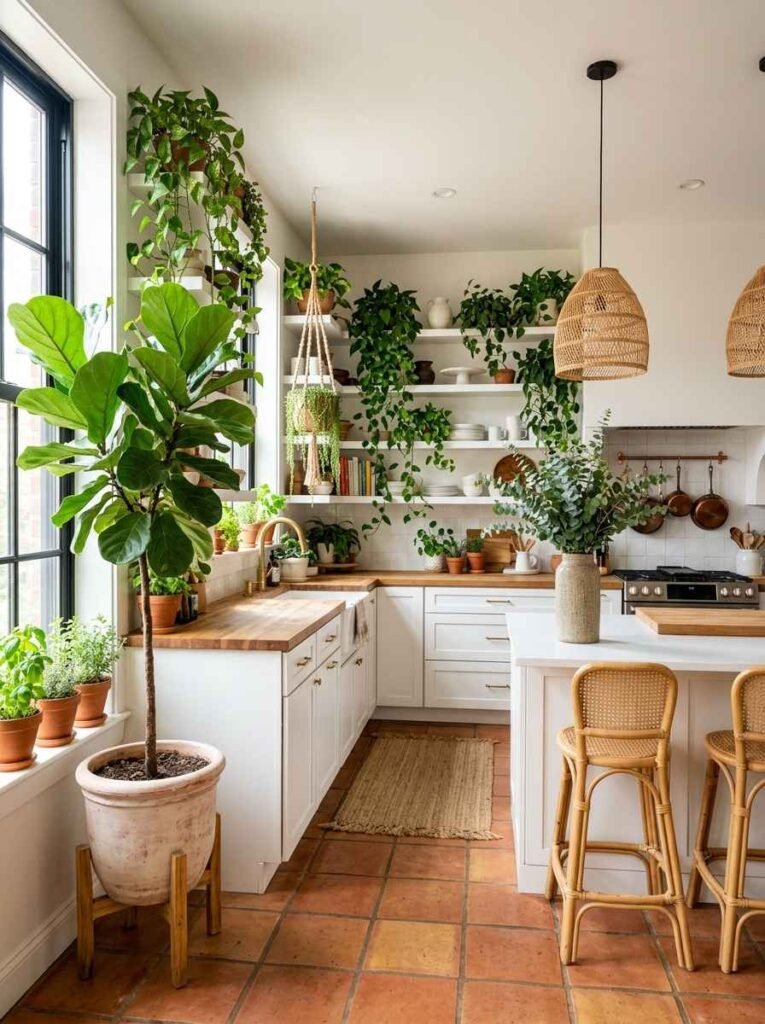
Wow. This is where white bohemian kitchens really separate themselves from every other aesthetic. A white kitchen without greenery is just… a white kitchen. The plants are non-negotiable.
Trailing pothos on open shelves, a large fiddle-leaf fig in the corner, herbs in terracotta pots on the windowsill, eucalyptus stems in a vintage ceramic vase. All of these are correct. All of them work.
The thing about plants in a boho kitchen is that they don’t need to be perfectly arranged. One slightly drooping plant, one pot that’s a little too big, one shelf that’s overcrowded with greenery — that’s the look. Controlled wildness. Nature has an opinion and you’re letting it.
Textiles and Soft Elements
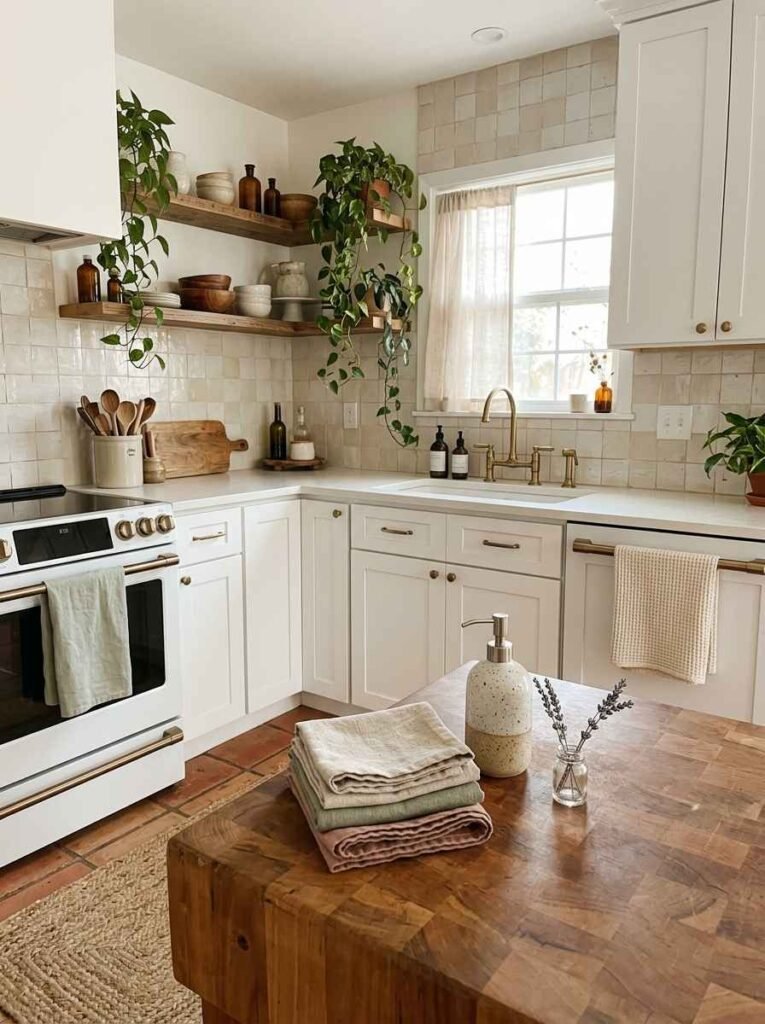
Linen and macramé for wall texture
A white kitchen with no soft elements reads cold. Textiles warm it up fast. A linen runner on a butcher block island, a macramé wall hanging between the cabinets, a woven basket on the counter holding onions and garlic — these details take minutes to add and dramatically shift the feel.
Macramé in particular has made a full comeback (I know, I know) but the key is keeping it small and purposeful. A massive macramé wall hanging might work in a living room. In a kitchen, a smaller piece above a window or between shelves is enough.
Tea towels as decor
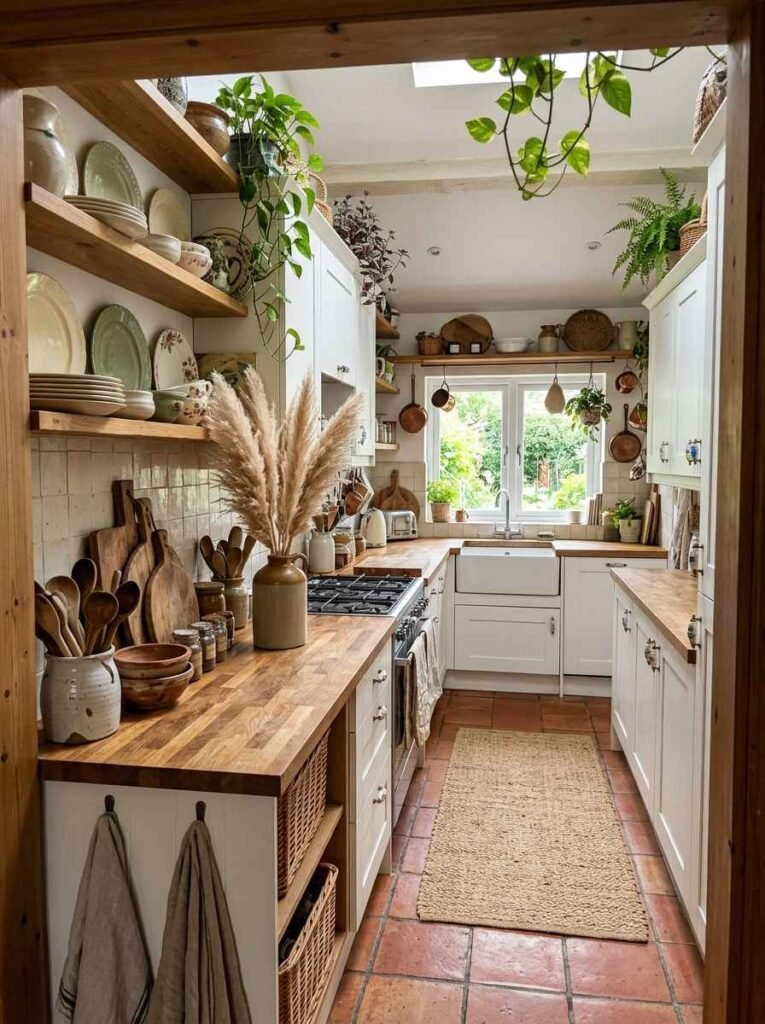
I never thought I’d write this sentence but here we are: your tea towels matter. A stack of linen tea towels in natural, cream, or sage tones hanging from the oven handle or
folded on an open shelf add softness and color in a very low-stakes way. Swap them with the seasons. Buy interesting ones from small shops on Etsy. This is one of the easiest and cheapest ways to refresh a kitchen.
Small Decorative Details That Land Hard
The details are where most white boho kitchens either succeed or fall flat.
- Vintage ceramics: A collection of mismatched vintage plates displayed on open shelves or hung on the wall is both decorative and practical. Doesn’t need to be expensive. Thrift stores are genuinely the best source for this.
- Dried botanicals: Dried pampas grass, dried lavender bundles, or eucalyptus branches in a tall vase on the counter are very low-maintenance and add organic texture. (My personal preference is dried lavender because the kitchen actually smells good, which is a bonus nobody talks about enough.)
- Handmade pottery: A handmade clay bowl on the counter for fruit, a slightly lopsided ceramic utensil holder, an imperfect mug collection on a floating shelf. The handmade quality signals something human and considered. It’s the opposite of a showroom.
- Vintage cutting boards displayed upright: Lean a couple of worn wood cutting boards against the backsplash beside the stove. Functional object, beautiful detail. Costs nothing if you already have them.
- Woven baskets for storage: Woven baskets under the counter or on lower shelves add texture while solving a real organizational problem. White kitchens tend to look sterile when they’re too tidy. Baskets bring warmth and hide chaos. Two functions, one object.
The Island Situation
Not every kitchen has an island, but if yours does (or if you’re planning one), the island is one of the best places to break the all-white rule.
Natural wood island in a white kitche
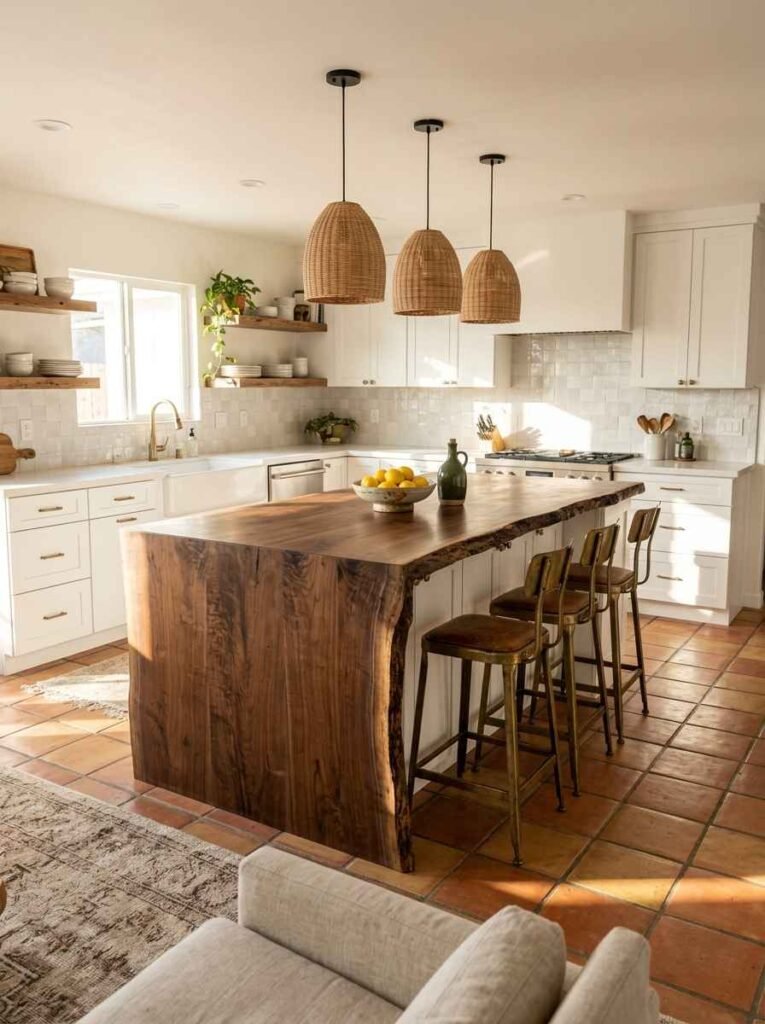
A butcher block or live-edge wood island in a sea of white cabinetry is a classic move for good reason. It anchors the space, adds warmth, and creates a natural visual focal point. The contrast is simple but it always works.
Painted island in a muted earth ton
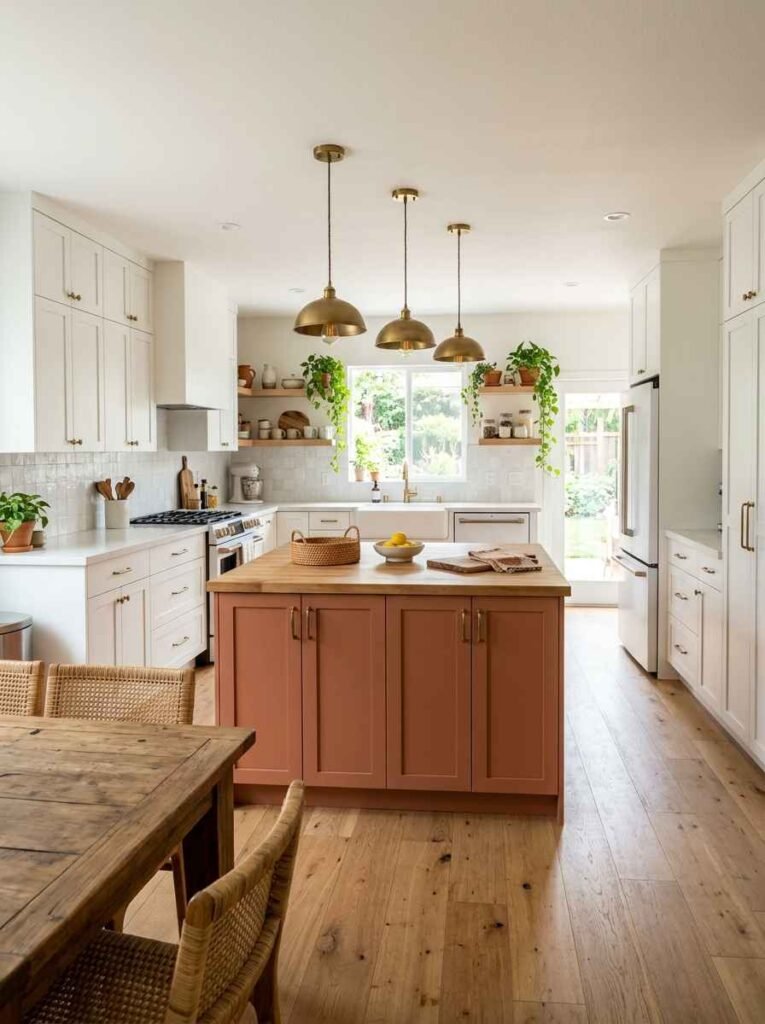
If you want something less expected, paint the island in a muted terracotta, dusty sage, or warm clay tone while keeping the perimeter cabinets white. This adds personality and color without overwhelming the space. It’s also a much smaller commitment than painting all your cabinets — and much easier to redo if you change your mind in 3 years.
Storage Solutions That Look Beautiful
Visible spice storage on open shelving
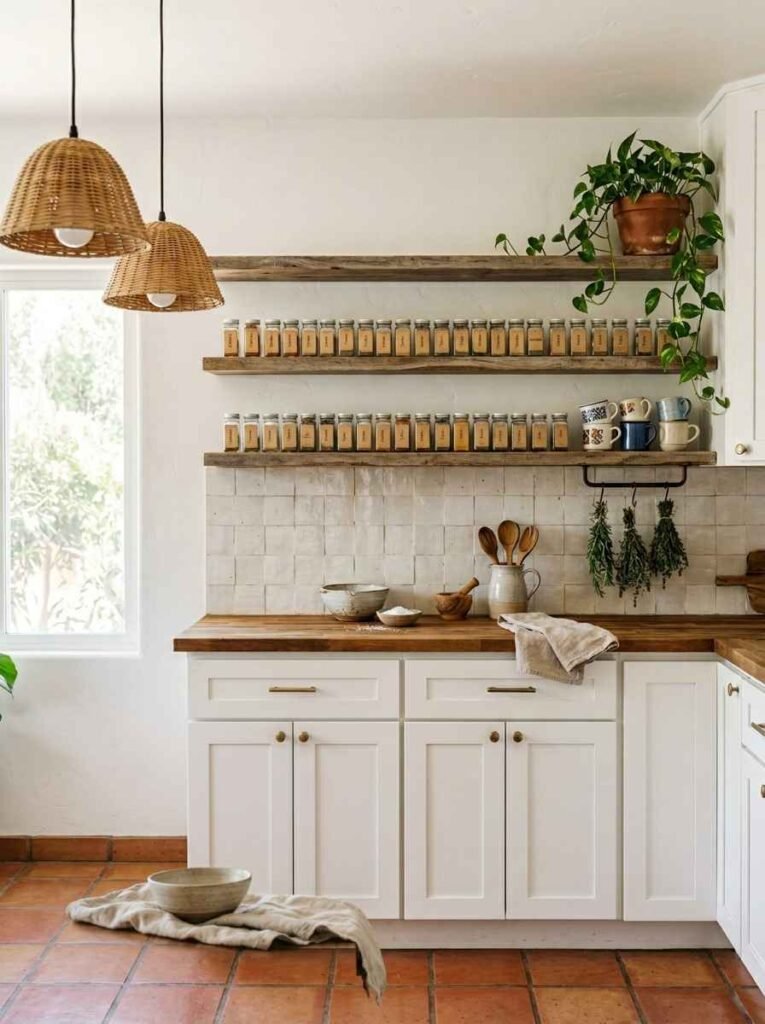
Spices in matching small glass jars on an open shelf look incredible and make cooking faster. It’s the kind of organizational decision that’s both practical and aesthetic, which is the best kind. Label them by hand with a paint marker if you want the full artisan effect.
Woven market baskets mounted on walls
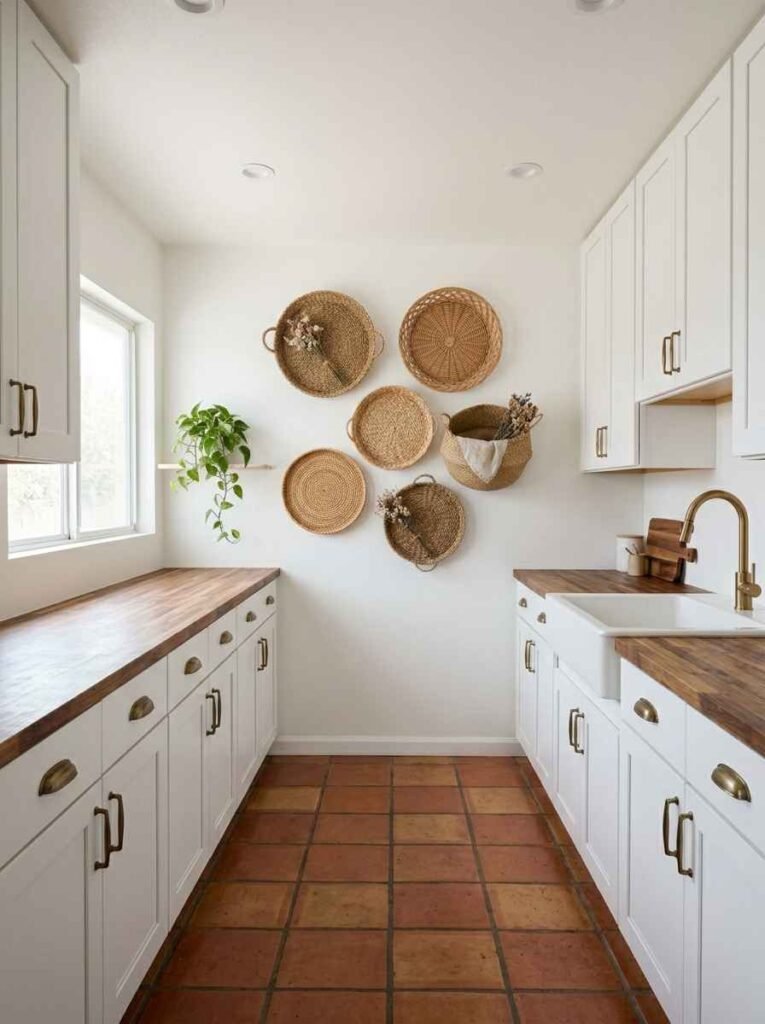
Wall-mounted woven baskets as decorative storage are having a real moment, and they work especially well in white kitchens. Use them to store onions and garlic, hold mail and keys near the kitchen door, or just display them as objects in their own right. They add dimension to a flat white wall without the commitment of wallpaper or art.
Bringing Pattern In Without Chaos
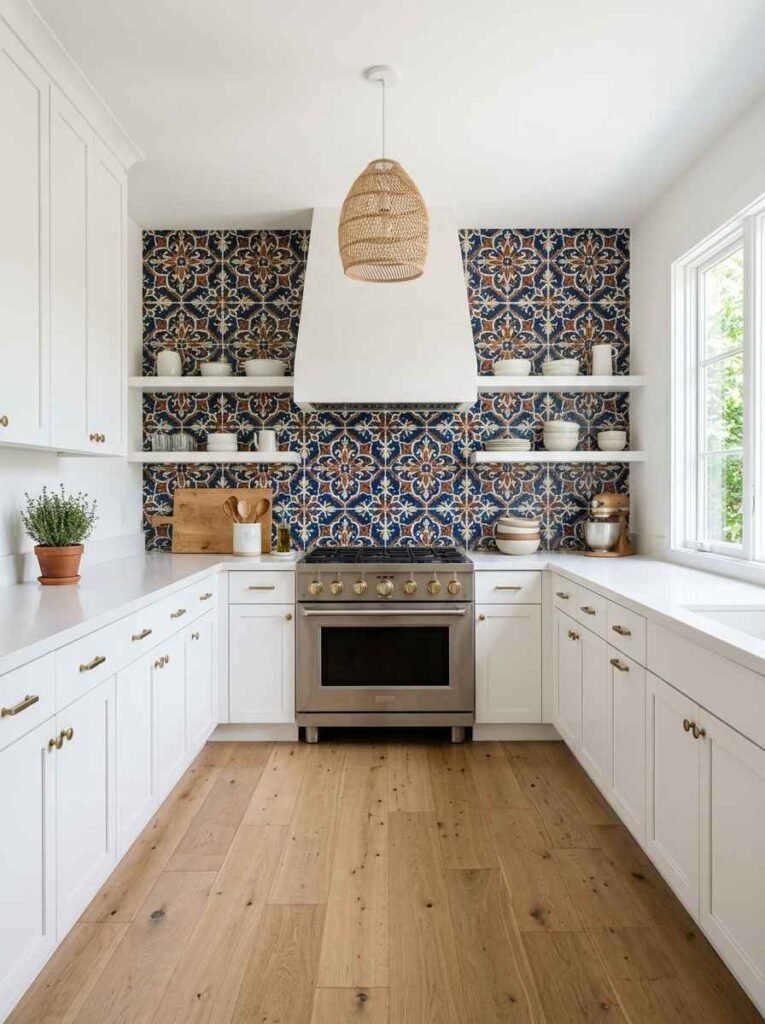
Pattern is the thing most people are afraid of in a boho kitchen. They go all-white everything to avoid it, and then the kitchen feels sterile. Or they go all-in and it becomes overwhelming. The middle path is worth understanding.
The rule I’ve found most reliable: one pattern at a time, applied with confidence. A strong patterned backsplash with plain countertops, plain floors, and plain cabinets reads intentional. That same backsplash with a patterned floor and patterned textiles reads chaotic.
Use pattern to create a focal point, not to wallpaper everything. The white surfaces around it will make the pattern pop harder than it would in a more decorated context.
Boho Kitchen Aesthetics by Style Intensity
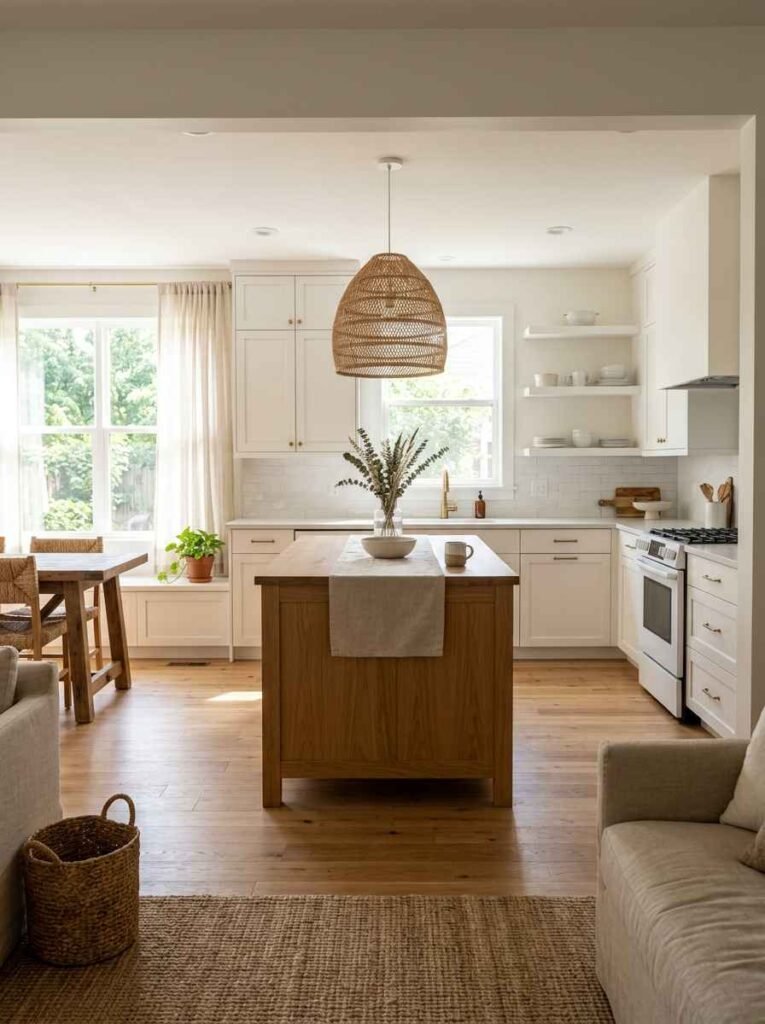
Some people want full-on, deeply committed bohemian. Others want a hint of it. Both are valid. Here’s a rough guide:
Light boho touch:
- White shaker cabinets, clean hardware
- One rattan pendant light
- A few plants, a linen runner, dried stems in a vase
- Warm wood floors
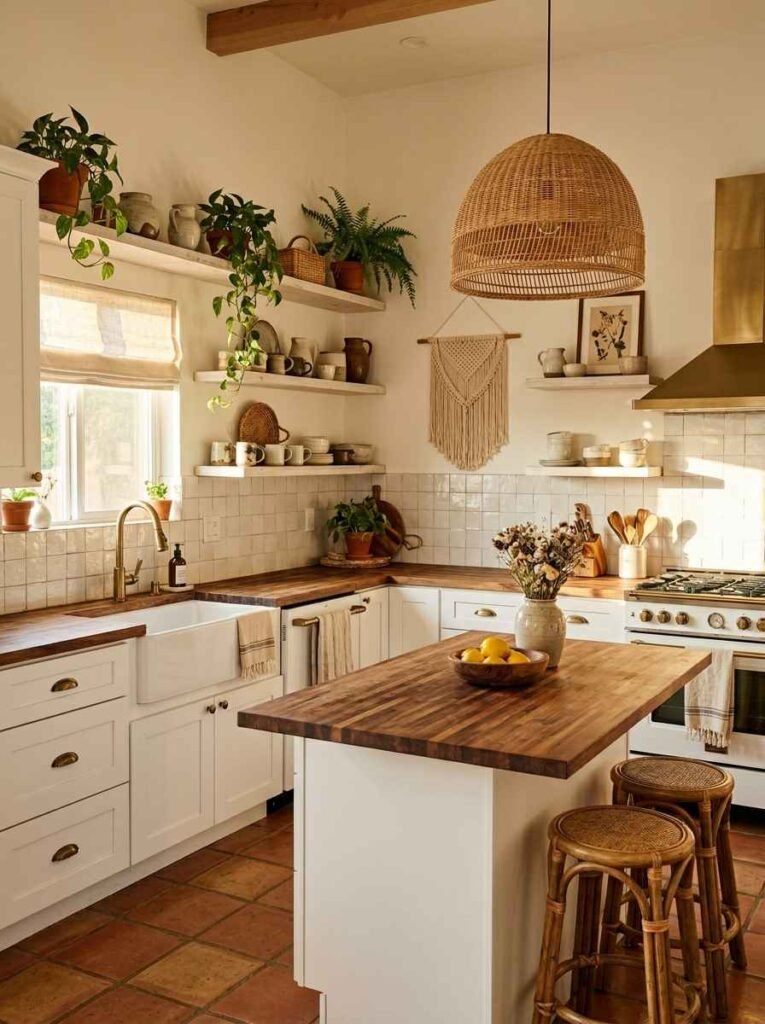
Mid-level boho:
- White cabinets with zellige backsplash
- Open shelving with curated ceramics and trailing plants
- Aged brass hardware, terracotta pots
- Macramé or woven baskets as accents
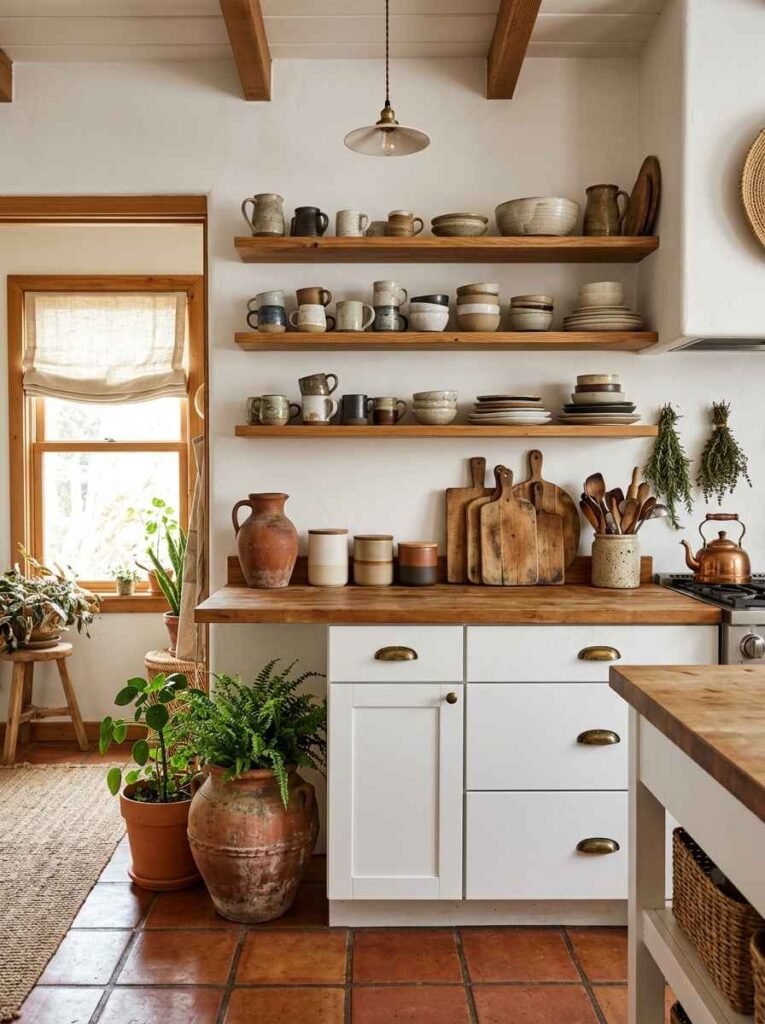
Full commitment boho:
- Zellige or encaustic cement tile backsplash
- Terracotta floors, limewash lower cabinets
- Open shelving everywhere
- Visible collected objects, vintage ceramics, dried botanicals
- Rattan pendants, Edison bulbs, handmade pottery throughout
A Note on Sourcing (This Part Nobody Talks About Enough)
I’d be doing you a disservice if I just showed you photos without talking about where to actually find this stuff. The big-box stores have gotten better, but the soul of a boho kitchen usually comes from smaller, more specific sources.
Etsy is genuinely the best place for handmade ceramics, macramé, and unique hardware. For zellige tiles, check out sources like Cle Tile (https://www.cletile.com) or Granada Tile (https://www.granadatile.com) — both carry beautiful handmade options. For rattan and woven lighting, McGee & Co. and Lulu & Georgia have strong selections.
Thrift stores and estate sales are honestly where the most characterful pieces come from. Vintage ceramic pitchers, worn wood cutting boards, handmade bowls with some history to them. You can’t fake that patina, and you shouldn’t try to.
FAQ
Q: Can a white bohemian kitchen work in a small space?
Yes, and it often works better in small spaces. White expands a room visually, and the natural materials and textures of boho design add warmth without visual bulk. Keep open shelving limited to 1-2 runs, choose a single statement piece (a patterned backsplash or a distinctive pendant), and let the plants do the emotional heavy lifting.
Q: How do I keep a white bohemian kitchen from looking dirty or dated?
The lived-in quality is part of the aesthetic, but there’s a line between “characterful” and “neglected.” The key is intentionality. Handmade ceramics that are slightly worn look collected. Cheap white melamine that’s yellowing looks like a rental. Invest in quality materials that age well — terracotta, real wood, unlacquered brass, linen — and the natural aging process becomes part of the charm rather than a problem.
Q: Do I need a big budget to pull off this aesthetic?
Not at all. Some of the most effective moves in a white boho kitchen cost almost nothing. Swapping cabinet hardware, adding open shelving, hanging dried botanicals, thrifting vintage ceramics, switching to warm-toned bulbs. You can shift the feel of a kitchen significantly with under $200 if you’re strategic about where the money goes.
Final Thoughts
White bohemian kitchens work because they’re optimistic spaces. They let in light, they invite imperfection, and they prioritize feeling over formula. The best ones look like someone actually lives there — cooks there, collects there, makes coffee there at 7am and wine there at 9pm.
There’s no one template. That’s the whole point. You take the white base, you bring in the materials and objects that actually mean something to you, and you let it be a little imperfect. That’s where the beauty lives.
So which of these 31 ideas are you actually going to try first? Drop it in the comments — I’d genuinely love to know.
