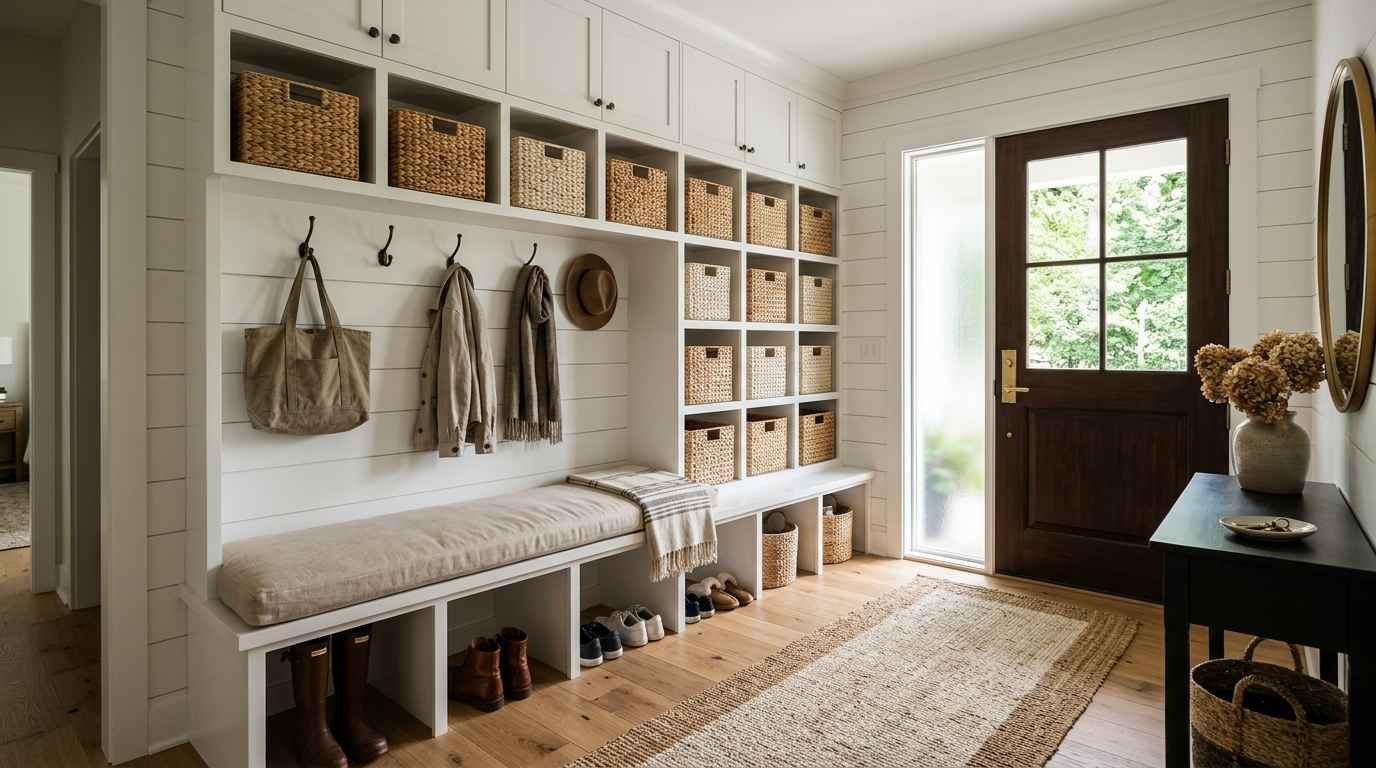
Your entryway is the first thing you see when you walk in and the last thing you see when you leave. So why does it look like a yard sale exploded in there?
Mudroom baskets are one of those deceptively simple fixes that actually work. Not just “Pinterest-pretty” but genuinely functional, day-after-day kind of work.
I’ve tested more basket systems than I care to admit, and this list pulls together the 29 ideas that hold up over time, whether you’ve got a full mudroom or just a narrow wall by the front door.
Why Mudroom Baskets Work Better Than You Think
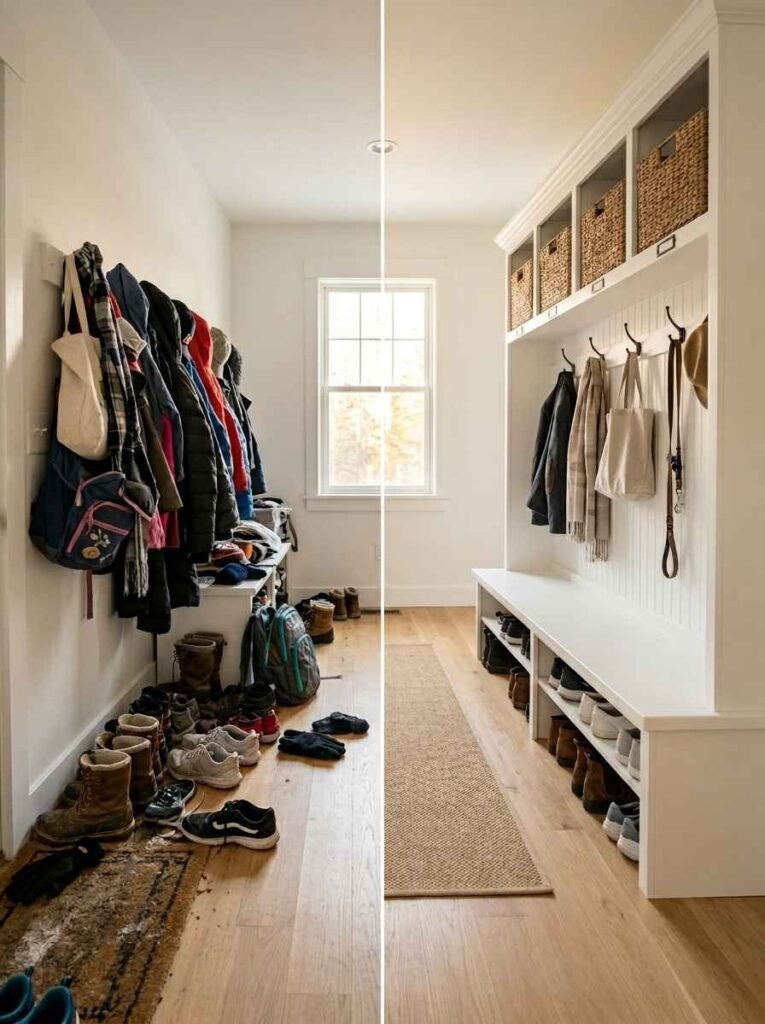
A hook can hold a coat. A shelf can hold shoes. But a basket holds the chaos, the loose gloves, the random charger, the dog leash, the thing you’ve been meaning to return for three weeks. That’s the magic.
Baskets give visual containment to stuff that would otherwise just live on every flat surface. And there’s solid organizing logic behind it: when “put it in the basket” requires zero decision-making, people actually do it. Kids especially. (Okay, sometimes kids.)
29 Mud Room Basket Ideas to Transform Your Entryway
1. Labeled Wire Baskets by Family Member
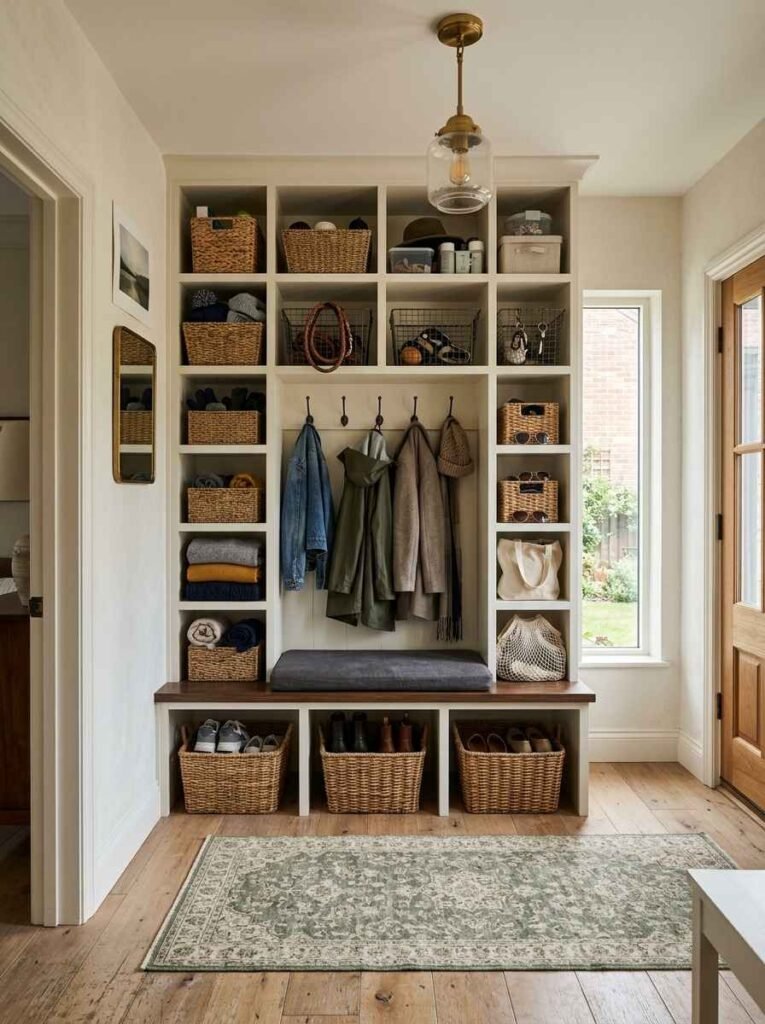
Each person gets a wire basket, labeled with their name, on a low shelf or cubby unit.
Everyone’s gear stays separate. No more fishing through a pile of scarves trying to find yours specifically.
Wire baskets work well here because you can see what’s inside at a glance. No digging.
2. Seagrass Baskets in Open Cubbies
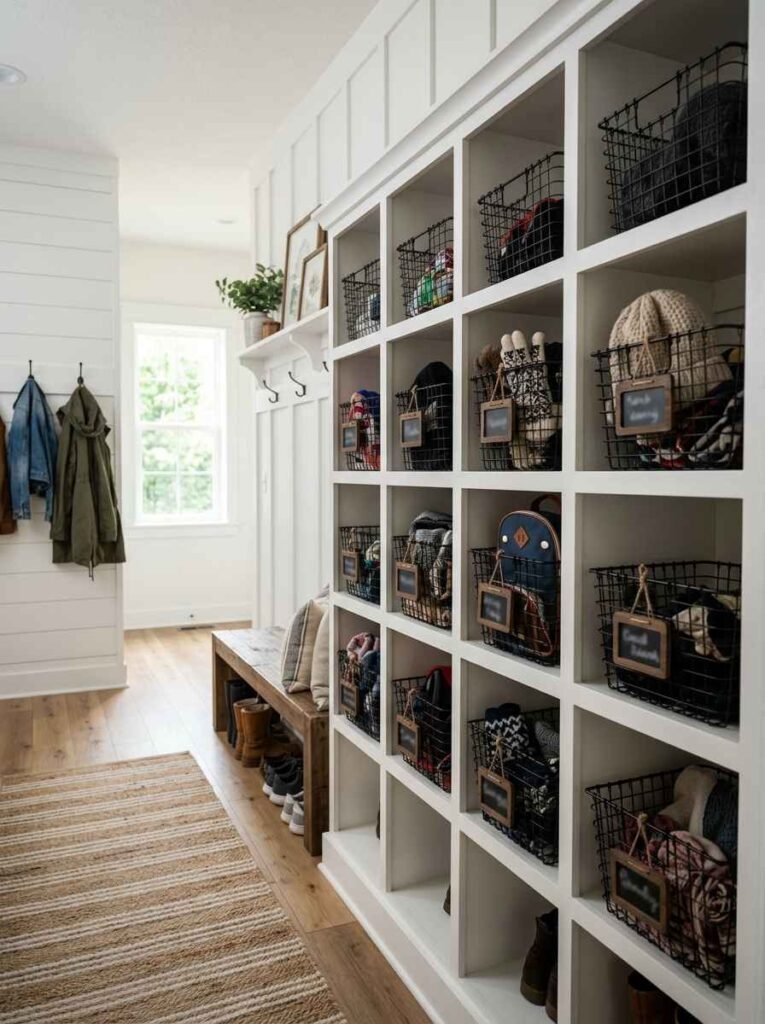
Seagrass brings that warm, natural texture that makes an entryway feel like it was designed on purpose.
Pair them with a simple cubby bench and suddenly your mudroom looks like something from a home decor magazine. These hold up really well in high-traffic spots, too. Seagrass is tougher than it looks.
3. Lidded Baskets for Overflow Storage
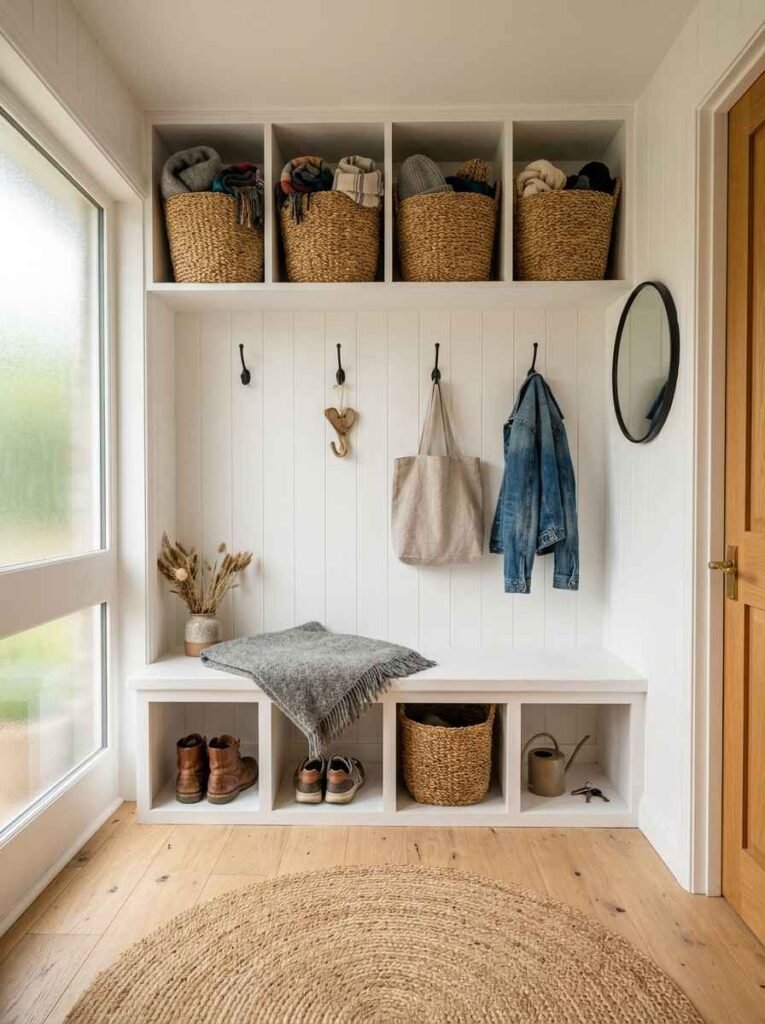
Everything that doesn’t have a clear home but needs to live somewhere. Lidded baskets make it invisible.
Out of sight, manageable. I keep one specifically for the random small items that otherwise migrate to every surface in the house.
4. Rolling Basket Cart
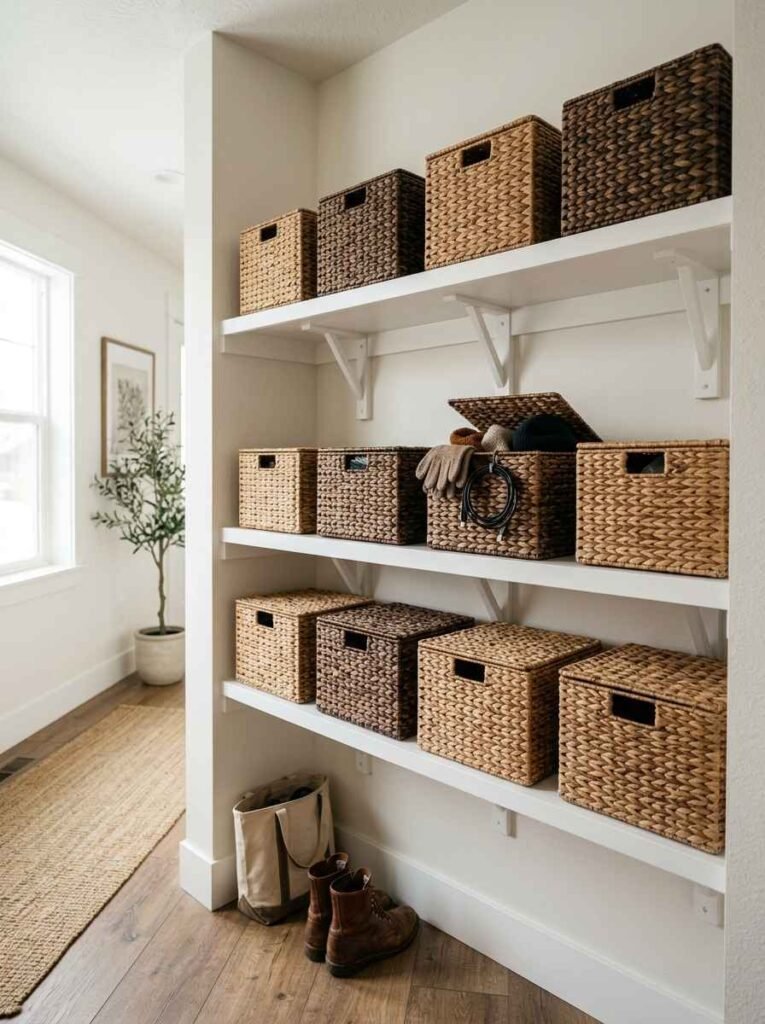
If your mudroom doubles as a laundry-adjacent space, a rolling cart with baskets is genuinely useful.
Pull it out, load it up, wheel it where you need it. Stores flat against the wall when done. It sounds fancier than it is, but it earns its space fast.
5. Over-the-Door Hanging Baskets
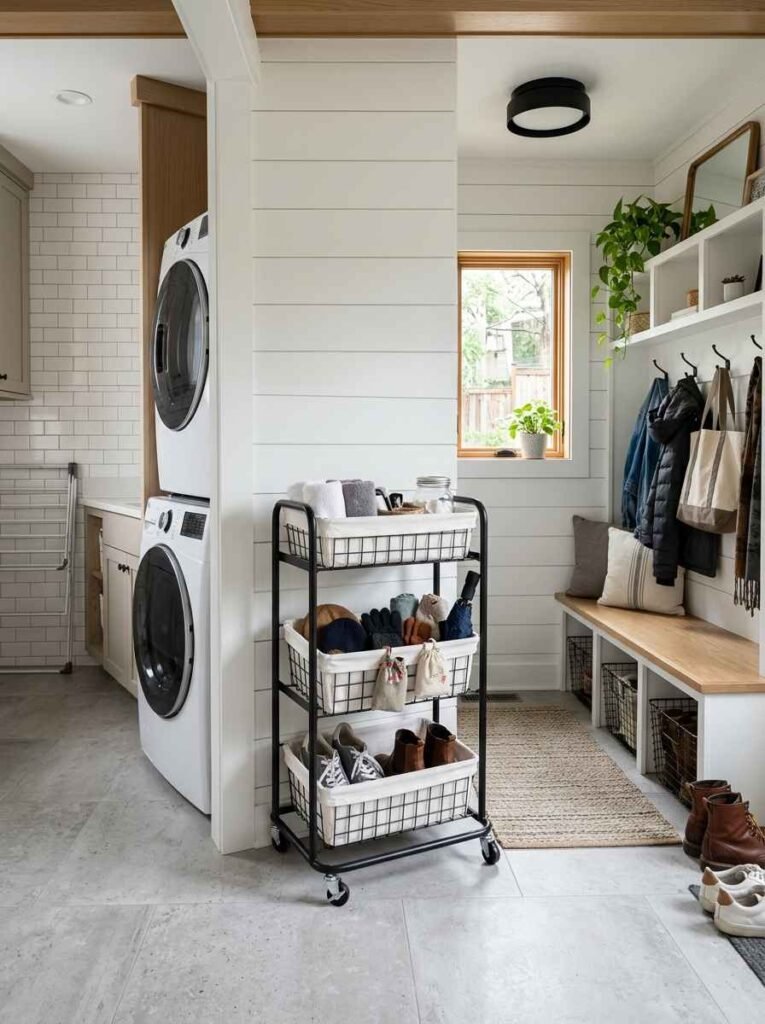
Using the back of the mudroom door is one of those solut
ions that feels obvious once you see it. Hanging wire or fabric baskets there work well for sunglasses, keys, small bags,
things that need to be grab-and-go. No installation beyond the door hooks.
6. Woven Hyacinth Baskets
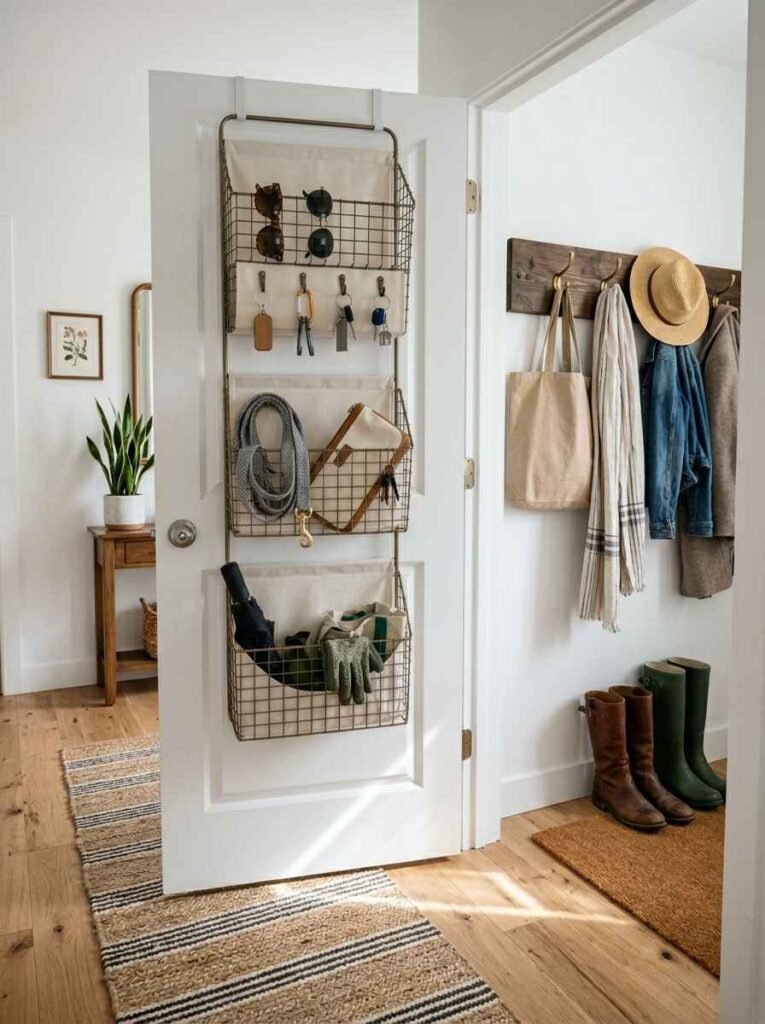
Water hyacinth baskets have a slightly more refined look than basic seagrass, with a tighter weave and a natural shine.
They photograph beautifully (relevant if you’re designing a Pinterest-worthy mudroom) and hold their shape through seasons of use.
7. Galvanized Metal Baskets
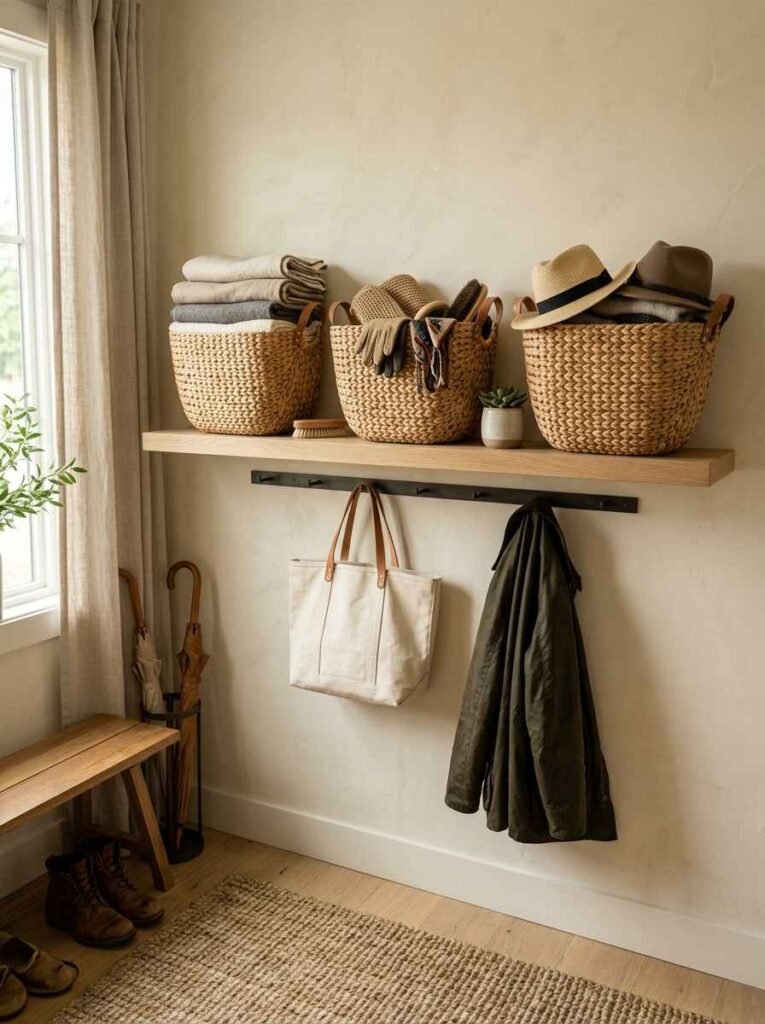
Metal baskets add an industrial edge that works well in mudrooms with darker color palettes or modern fixtures. They’re nearly indestructible, easy to wipe clean, and look better with a little wear.
The scuffs add character, genuinely.
8. Canvas Tote-Style Baskets
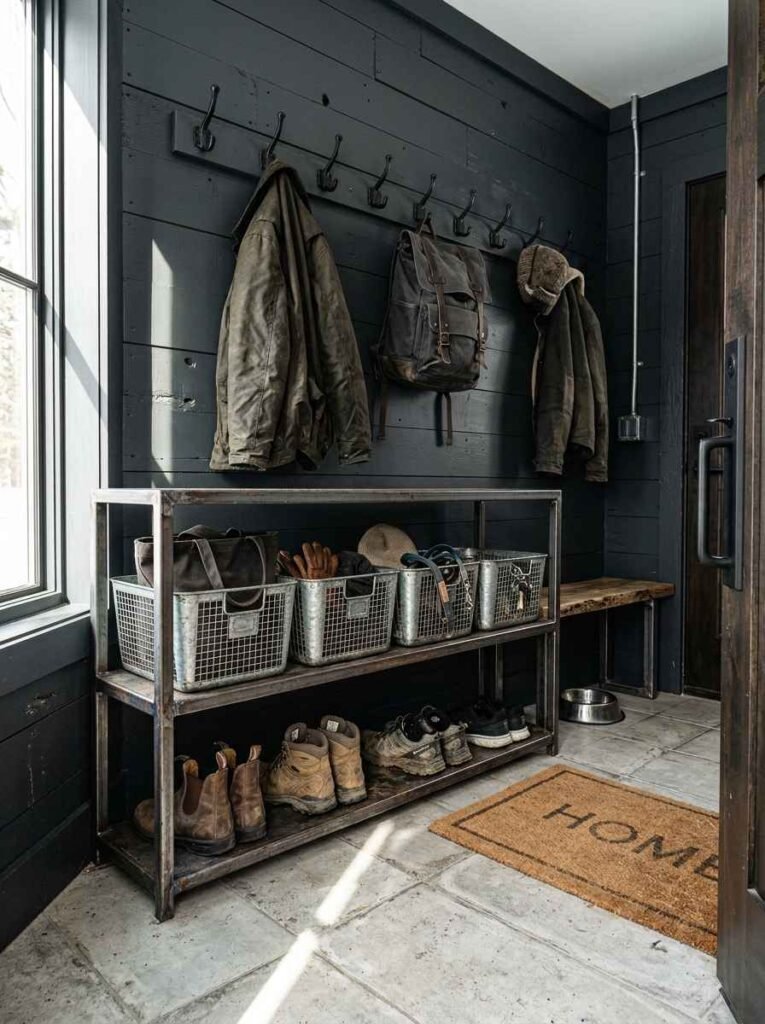
Soft-sided canvas baskets are underrated. They hold a lot, squish when needed, and wash easily.
FYI, these are the ones I actually recommend for mudrooms with kids because when a boot gets thrown in sideways, the basket just adapts.
9. Stackable Open Crates
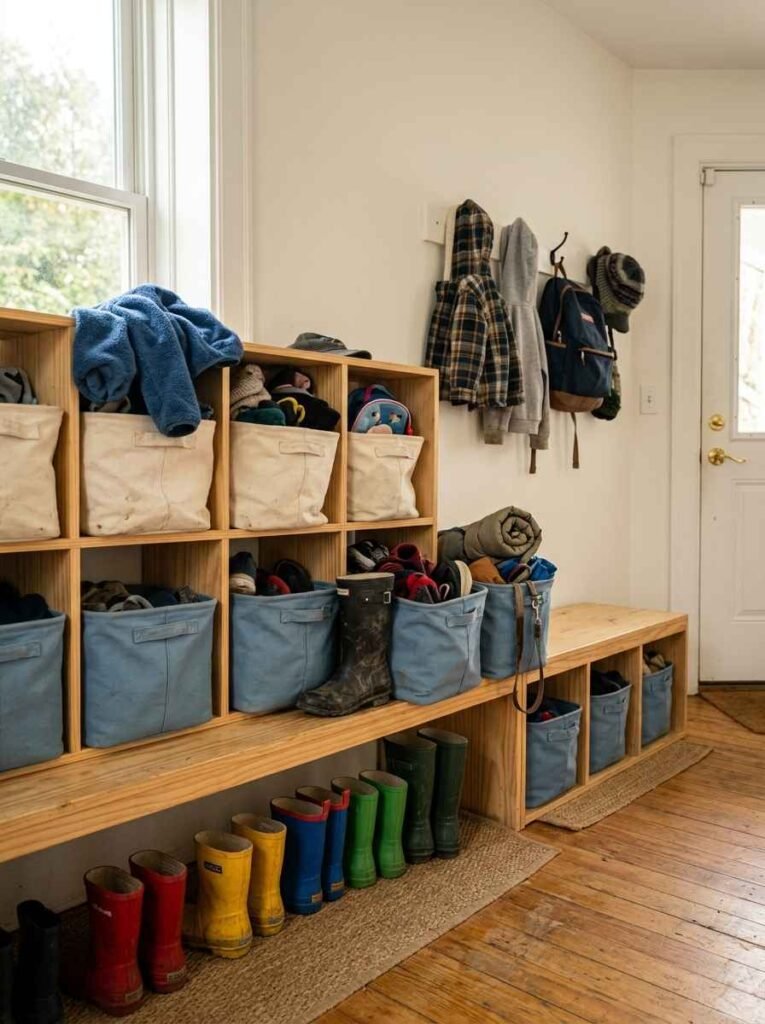
Wooden crates stacked on their sides, fixed to the wall or standing freely, give you a modular storage system that’s surprisingly versatile.
Each crate becomes a basket zone. Shoes in one, sports gear in another, bags in another.
10. Handled Baskets for Easy Grab-and-Go
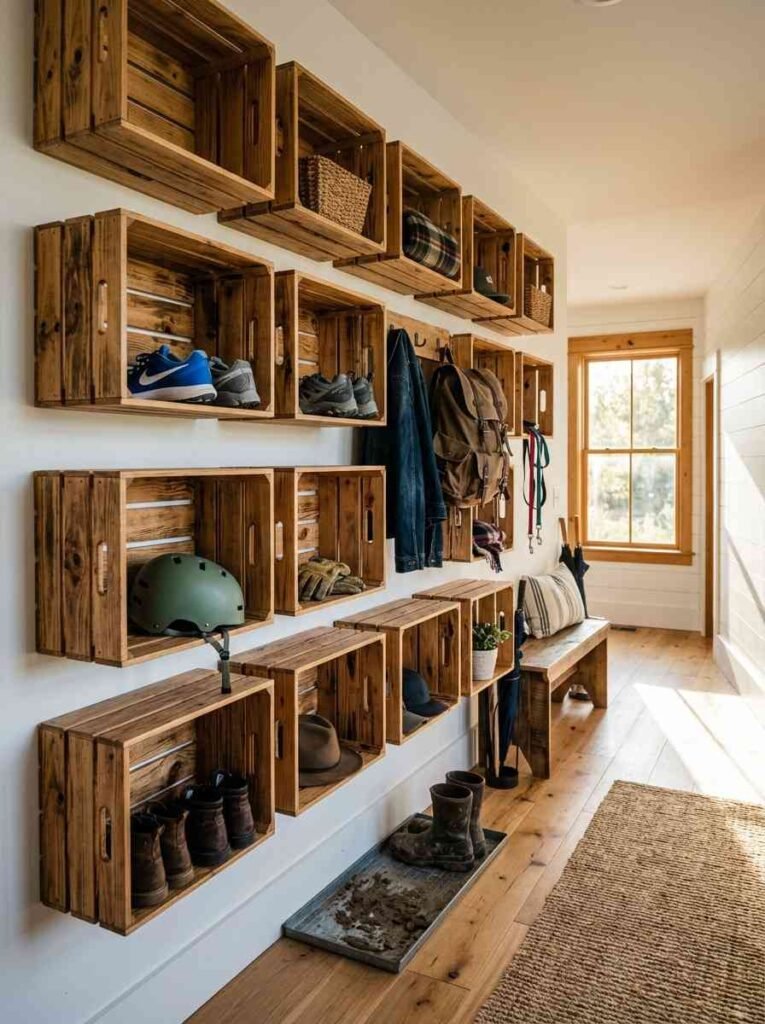
A basket with two sturdy handles is the one you’ll actually pick up and move around. Great for seasonal gear you rotate in and out.
Grab the whole basket, bring it to the closet, swap contents, bring it back.
11. Narrow Tall Baskets for Umbrella Storage
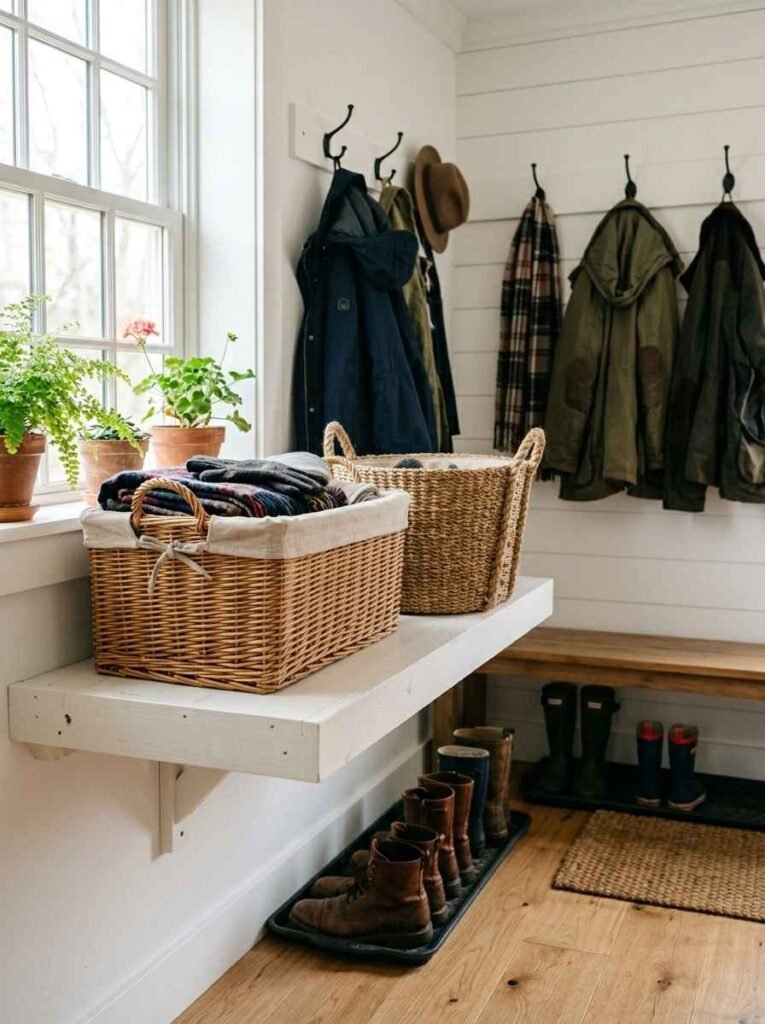
Most mudrooms have nowhere logical to put umbrellas, so they end up leaning against walls and falling over constantly.
A tall, narrow basket fixes this. It takes up almost no floor space and keeps 3 to 4 umbrellas contained.
12. Under-Bench Baskets
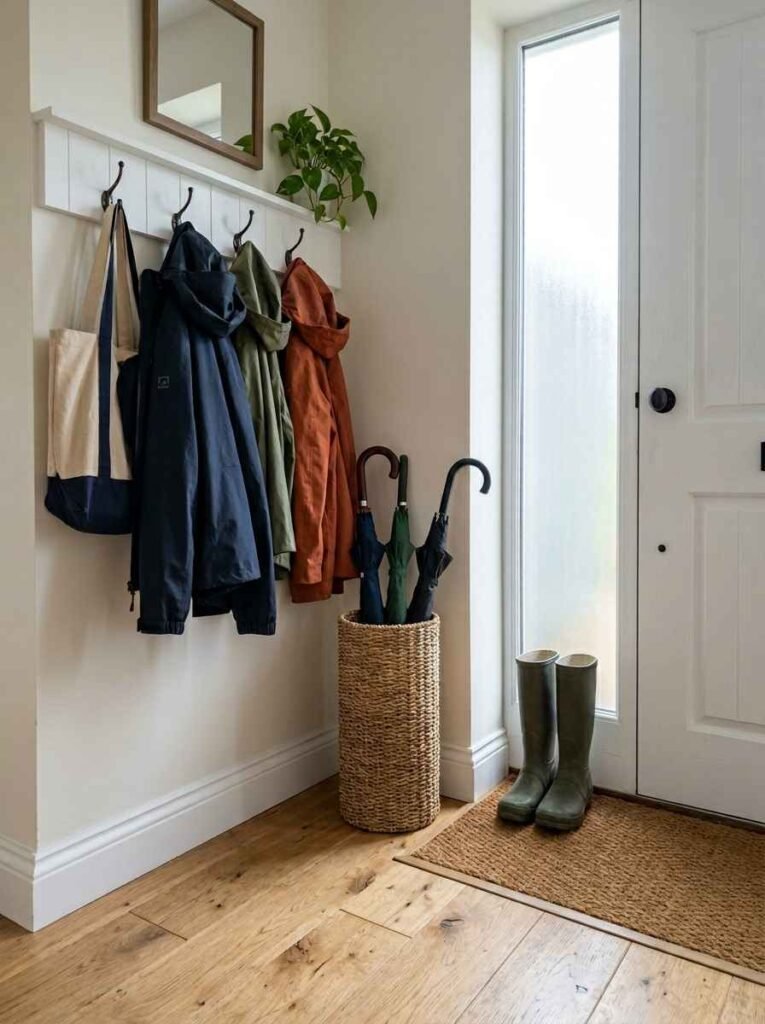
If you have a mudroom bench, the space underneath is prime real estate. Shallow baskets that slide in and out easily are the move here.
Shoes, sandals, slippers. Keeps the floor clear without adding another piece of furniture.
13. Built-In Basket Cubbies with Matching Baskets
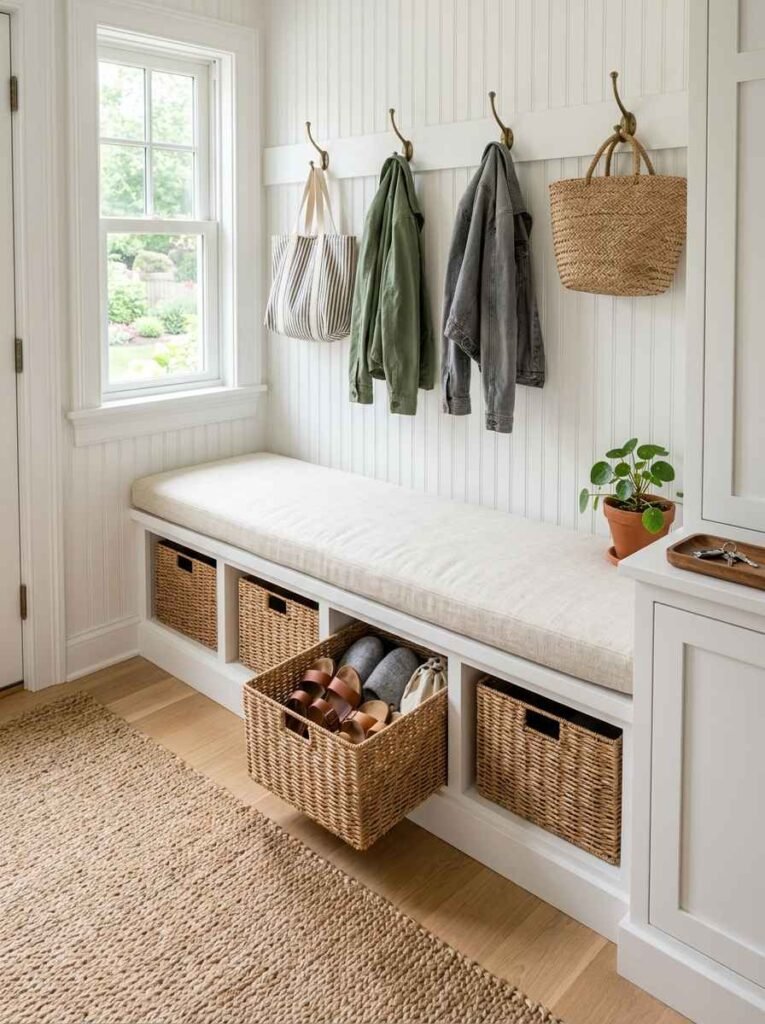
This is the most intentional-looking option. A built-in unit with matching baskets creates that seamless, everything-has-a-place look. It requires the most investment upfront but pays off every single day. If you’re building out a mudroom from scratch, this is worth prioritizing.
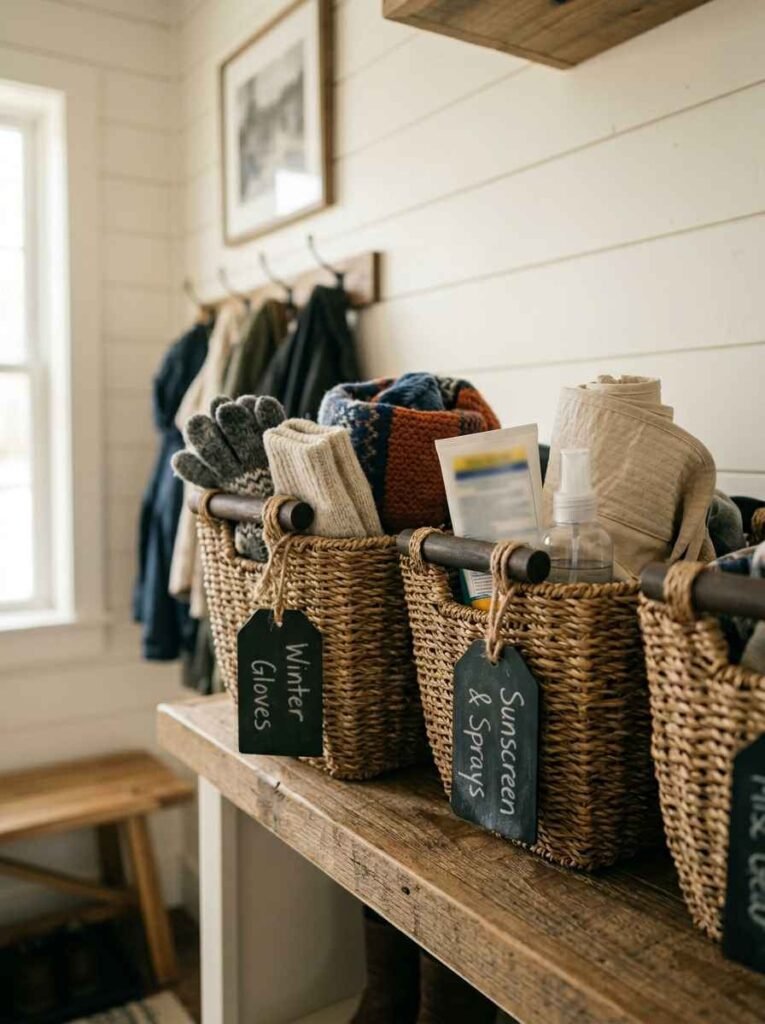
14. Chalkboard-Labeled Baskets
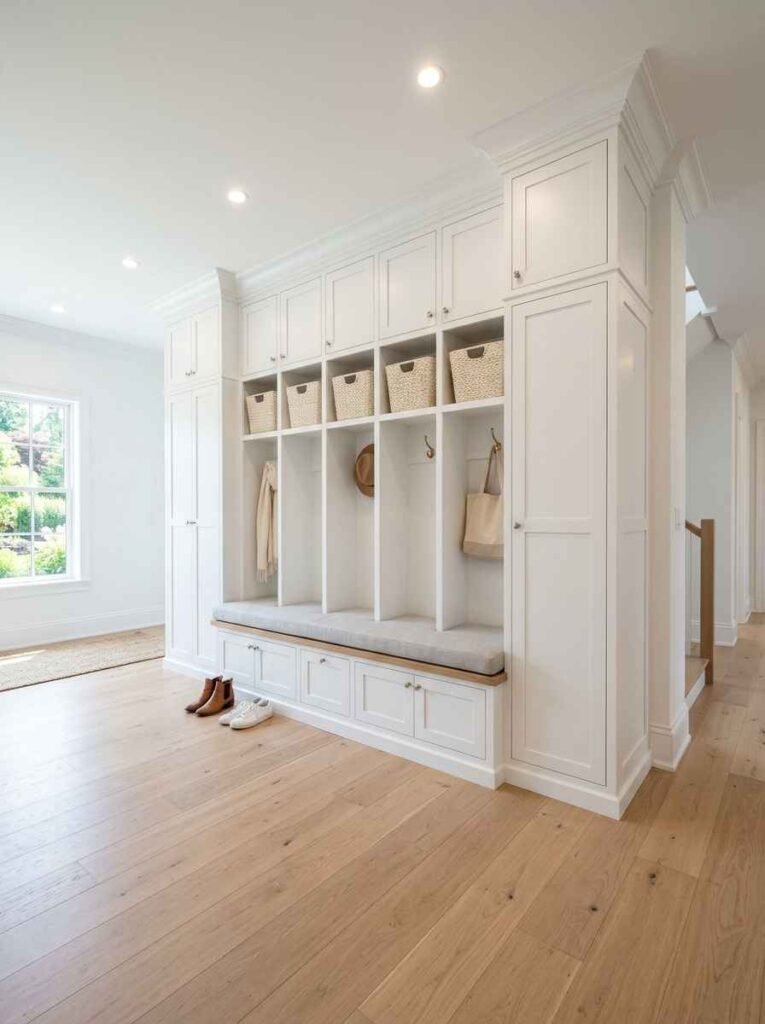
Baskets with chalkboard tags or labels you can write and erase let you change assignments seasonally. Hats and gloves in winter, sunscreen and bug spray in summer. Same baskets, different purpose, zero waste. Smart system.
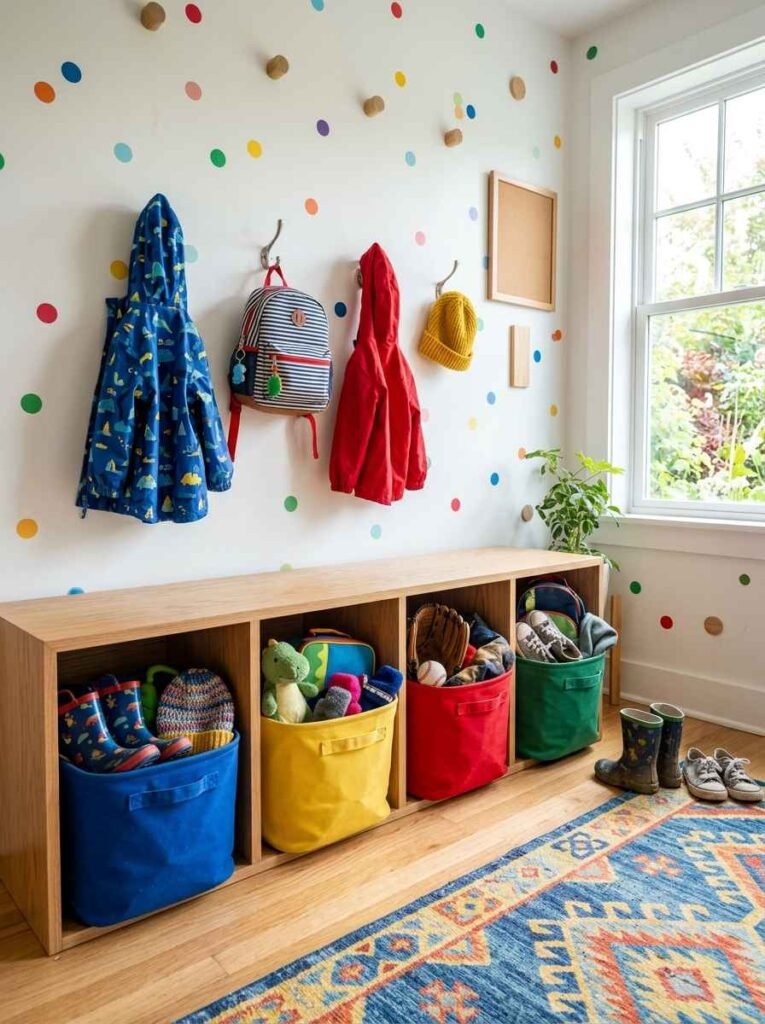
15. Colorful Baskets for Kids’ Zones
If you want your kids to actually use the system, make it theirs. Let them pick their basket color. When the blue basket is “mine,” a 6-year-old will put things in it. This sounds too simple to work. It works.
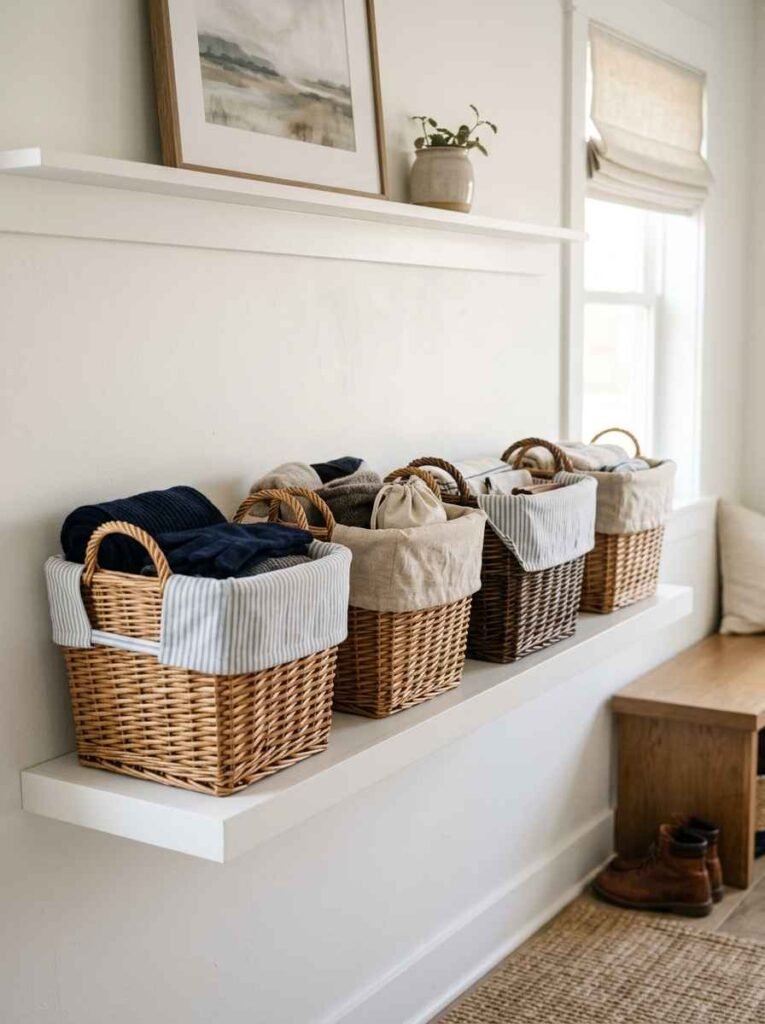
16. Wicker Baskets with Liners
A wicker basket with a fabric liner inside looks polished and keeps smaller items from falling through the weave. The liner is removable for washing, which matters more than you’d think after a soccer season.
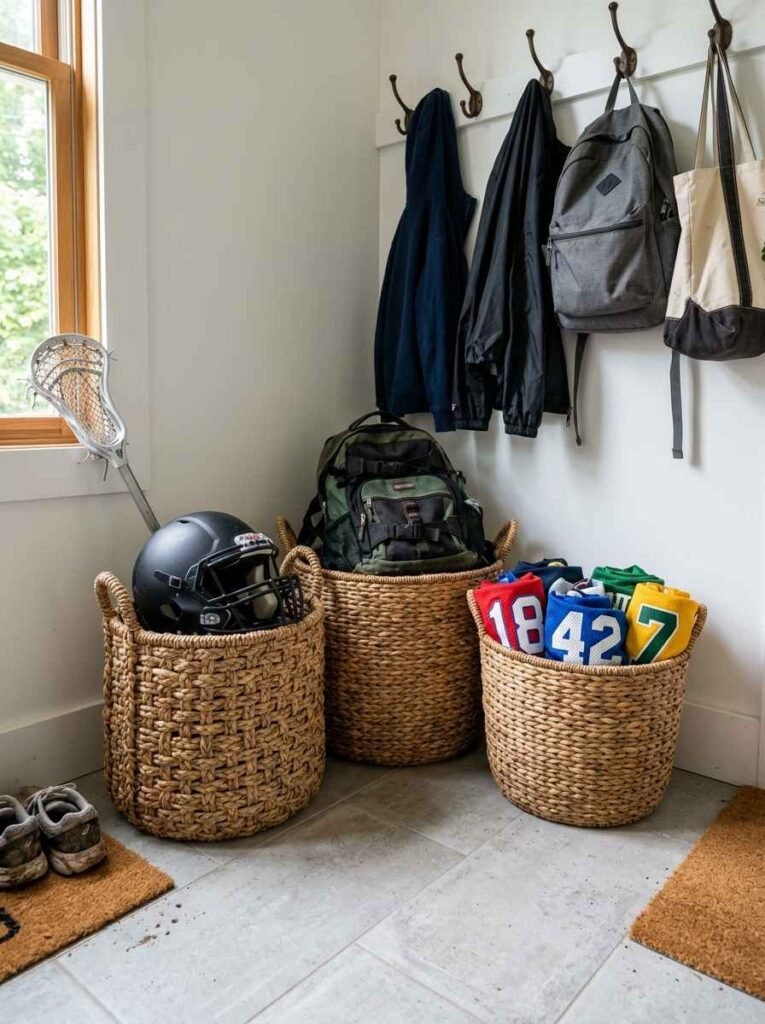
17. Large Floor Baskets for Bulky Gear
Think: football helmets, lacrosse sticks, oversized backpacks. A large, deep floor basket gives these awkward items a home without requiring them to fit in a standard cubby. These are usually some combination of seagrass, rattan, or woven rope.
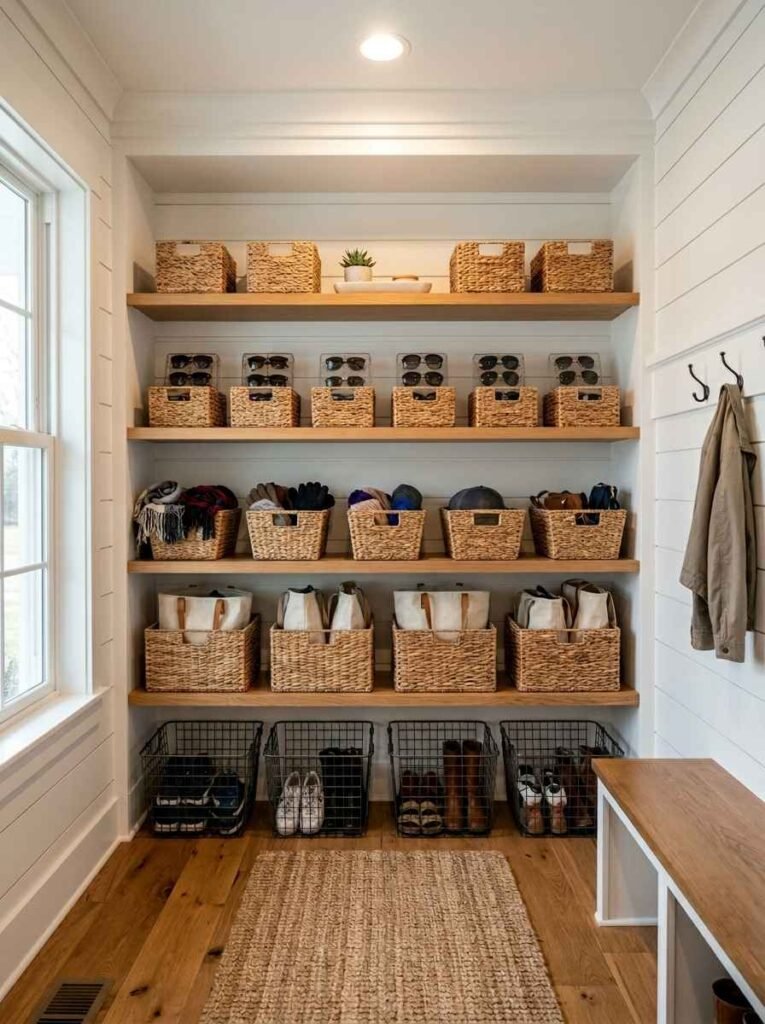
18. Tiered Shelving with Small Baskets
A tiered shelving unit with small baskets at each level is one of the most efficient uses of vertical wall space. Label each tier by category. The top shelf might hold sunglasses and keys, middle tier holds chargers, bottom holds gloves. Everything stacked but accessible.
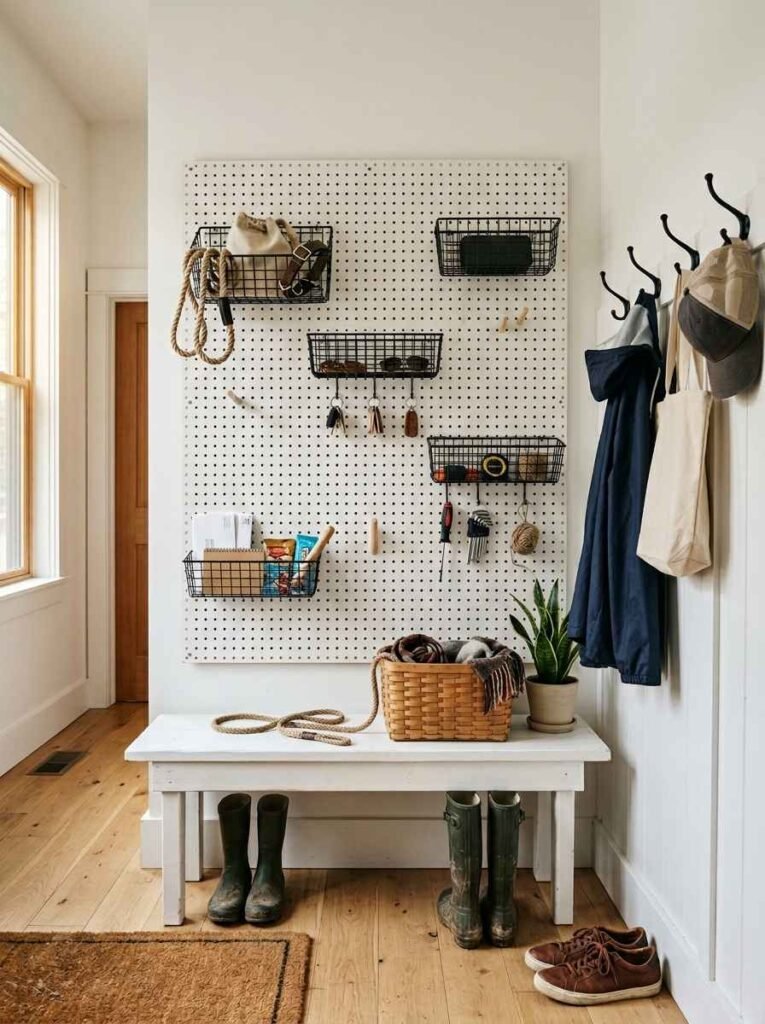
19. Pegboard with Attached Baskets
Pegboard storage gets a lot of attention in garages and craft rooms. It deserves more credit in mudrooms. Mount pegboard to the wall, hang small wire baskets from the pegs, and you have a completely customizable system you can rearrange any time.
Wow, the flexibility of pegboard really does make a difference once you’ve lived with it for a few months.
20. Rope Baskets
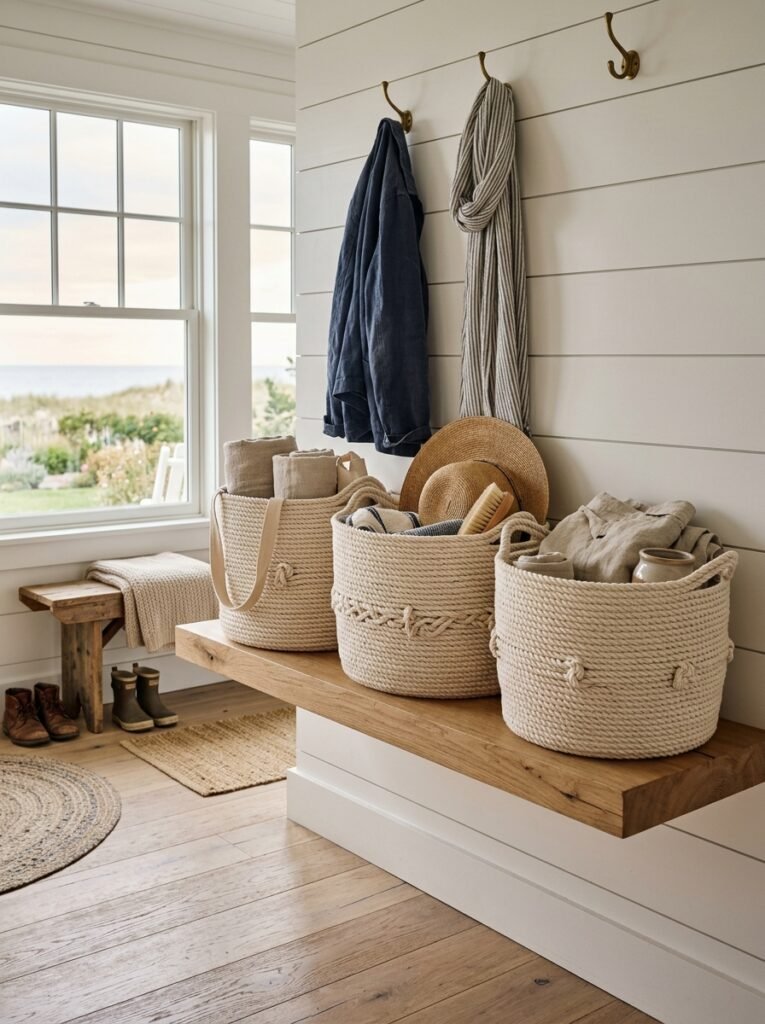
Handwoven rope baskets have a texture that’s hard to replicate with manufactured materials. They look good in coastal or farmhouse-style homes especially. They’re also often handmade, which means each one is slightly different, which I personally find more interesting than rows of identical baskets.
21. Hanging Wall Baskets as Decor
A few smaller baskets hung on the wall as a display also function as storage. This works for frequently needed flat items: mail, permission slips, notes, the things that live on counters. Functional and decorative at the same time.
22. Matching Basket Set in Neutral Colors
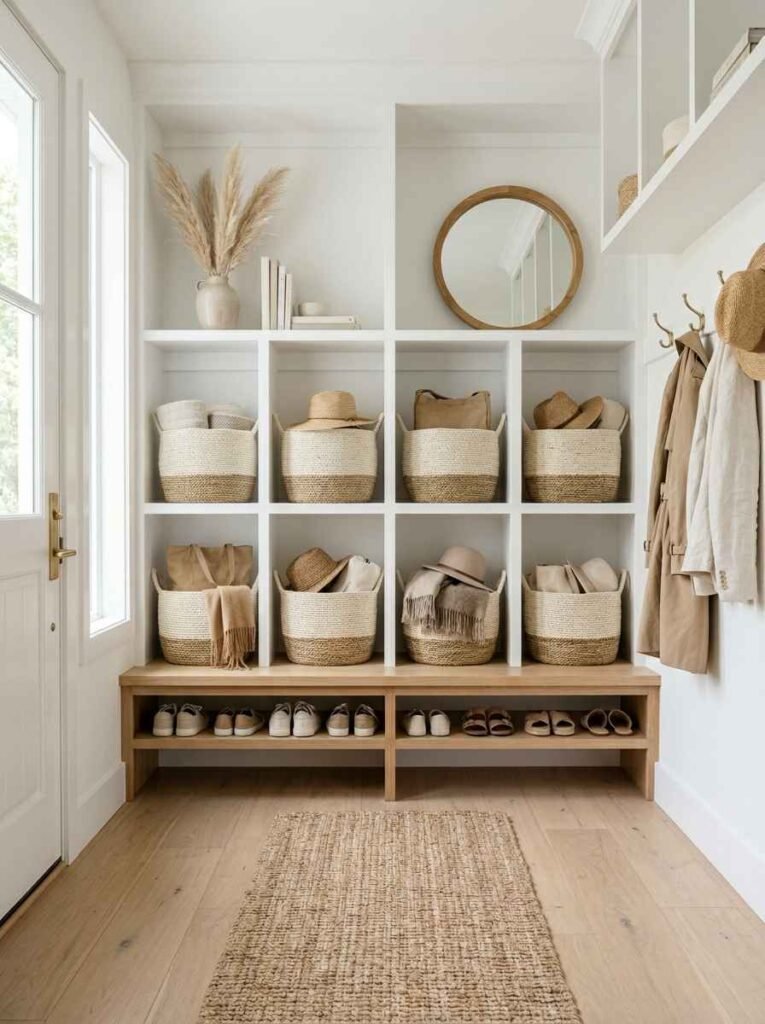
When everything matches, the mudroom reads as organized even on a chaotic day. A set of baskets in cream, tan, or natural tones is a low-stakes design decision that makes the space look cohesive without much effort.
23. Basket Drawers in a Custom Unit
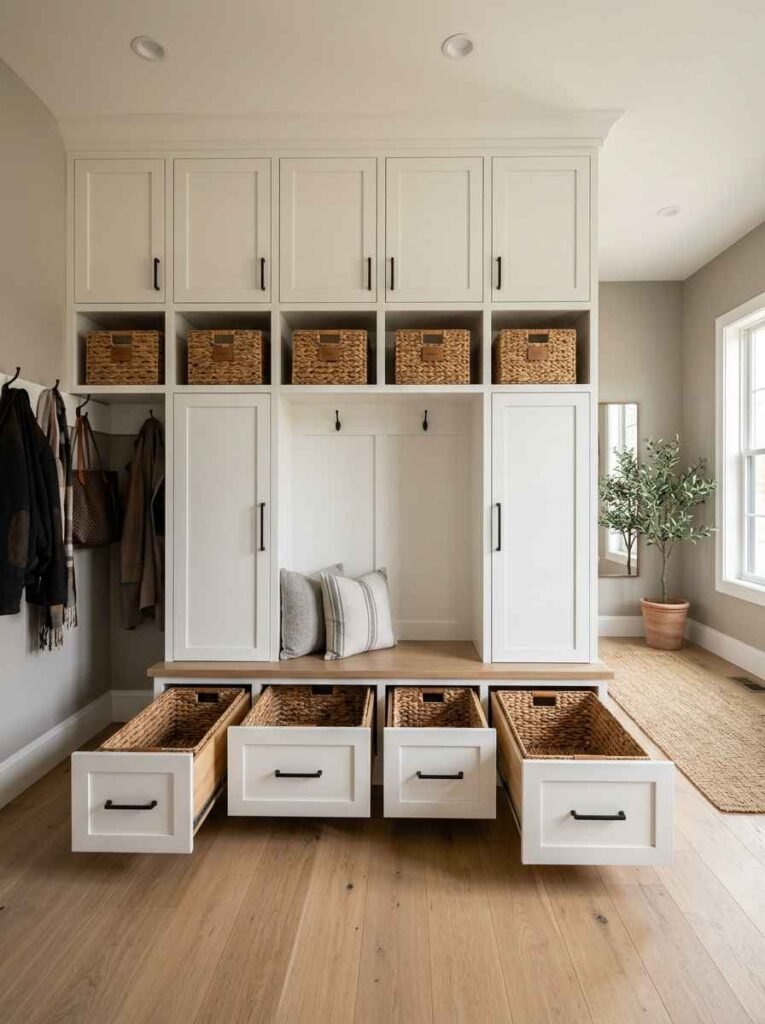
Some custom mudroom units include pull-out basket drawers built into the cabinetry. These are the gold standard for a “I have my life together” mudroom. The baskets slide in and disappear, keeping the look clean.
24. Sports Equipment Baskets by Sport
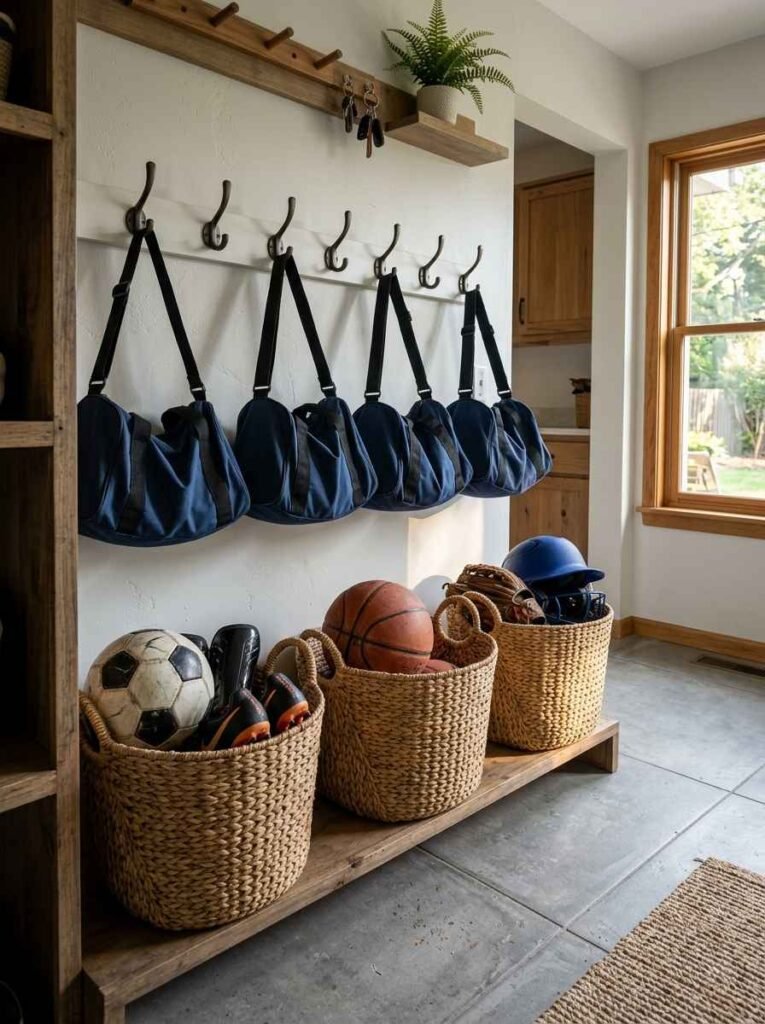
If you have kids in multiple sports, one giant gear pile is the enemy. Dedicate one basket per sport: soccer, basketball, baseball. Even if the baskets are the same, labeling them by sport means each kid knows exactly where to grab from before practice.
25. Seasonal Rotation Baskets
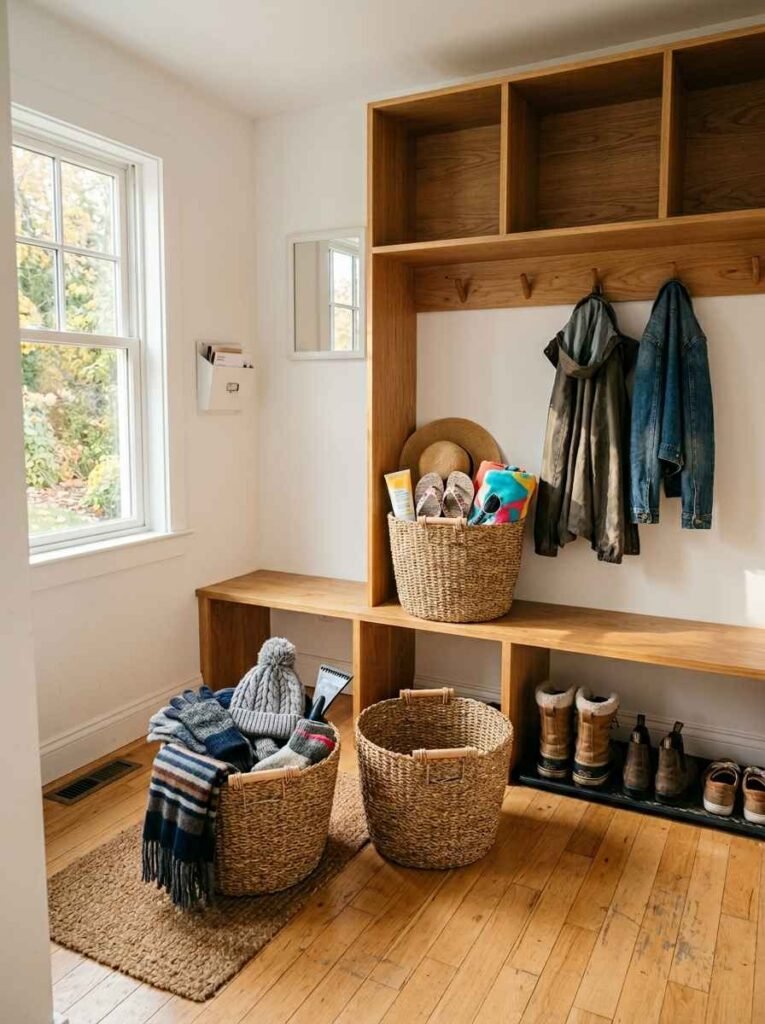
Keep 2 sets of baskets: one in use, one in storage. Swap the contents when seasons change. The baskets themselves stay put; only what’s inside changes. It’s a small habit that keeps the mudroom relevant year-round.
26. Hanging Lanyard and Key Baskets
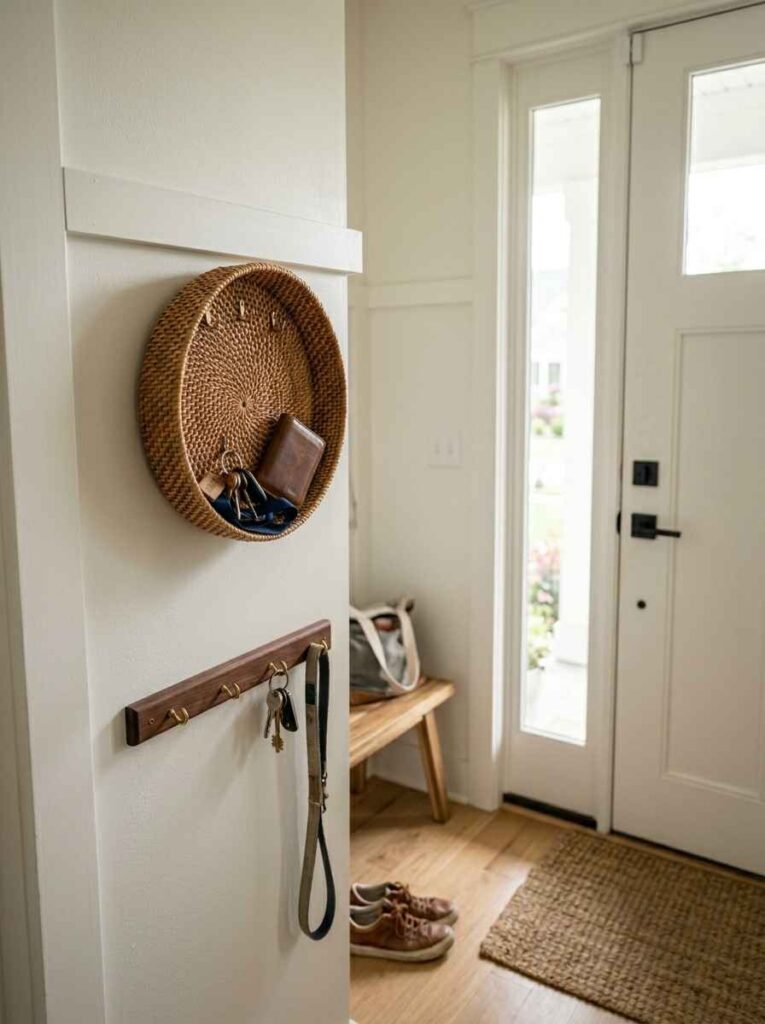
A small basket near the door specifically for keys and lanyards ends the “where are my keys” crisis permanently. IMO this single basket might have more daily impact than every other idea on this list combined 🙂
27. Shoe-Specific Baskets with Ventilation
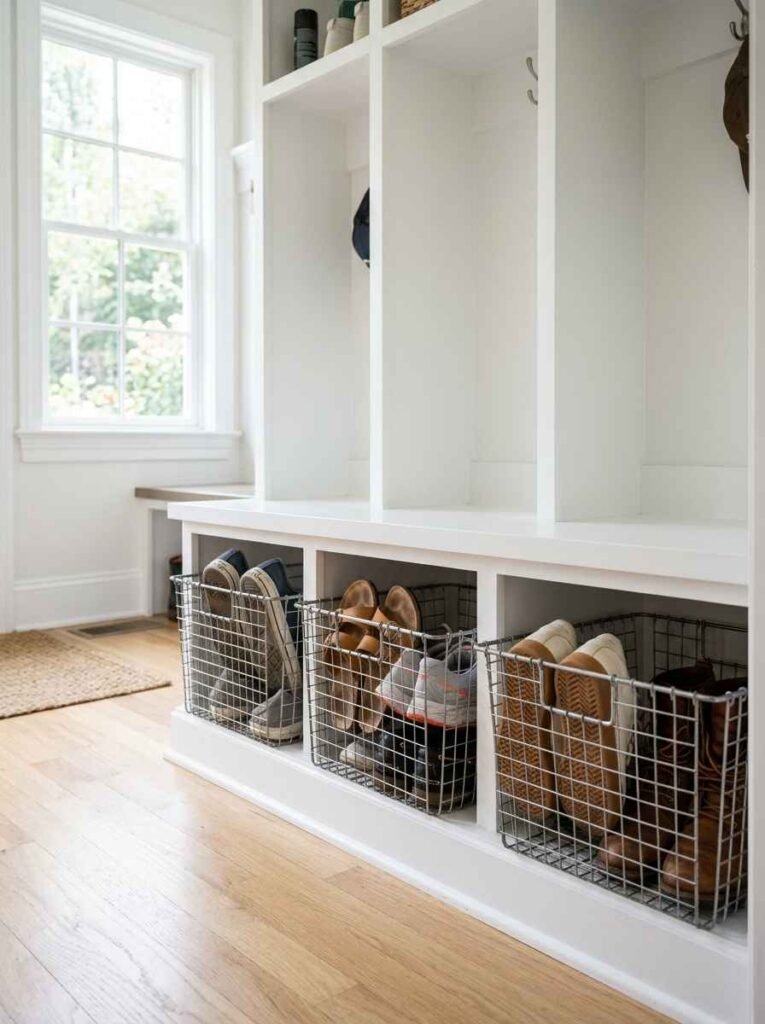
Shoes need airflow or they start smelling bad. Wire baskets are the right choice for shoe storage in mudrooms specifically. The open weave lets air circulate. Your mudroom will thank you.
28. Pet Supply Baskets
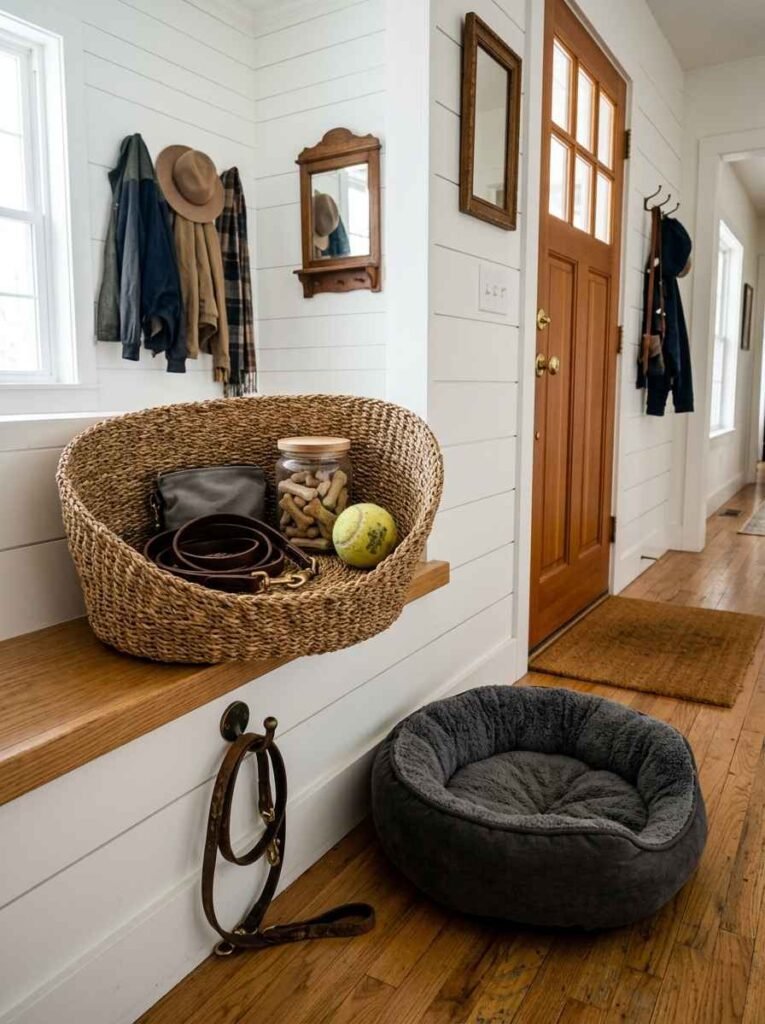
Leashes, treats, waste bags, the tennis ball your dog insists on bringing to every walk. A dedicated pet basket keeps this stuff from spreading through the entire entry zone. Keeps it contained in one place everyone (including you) can find it.
29. DIY Painted Baskets for Personal Style
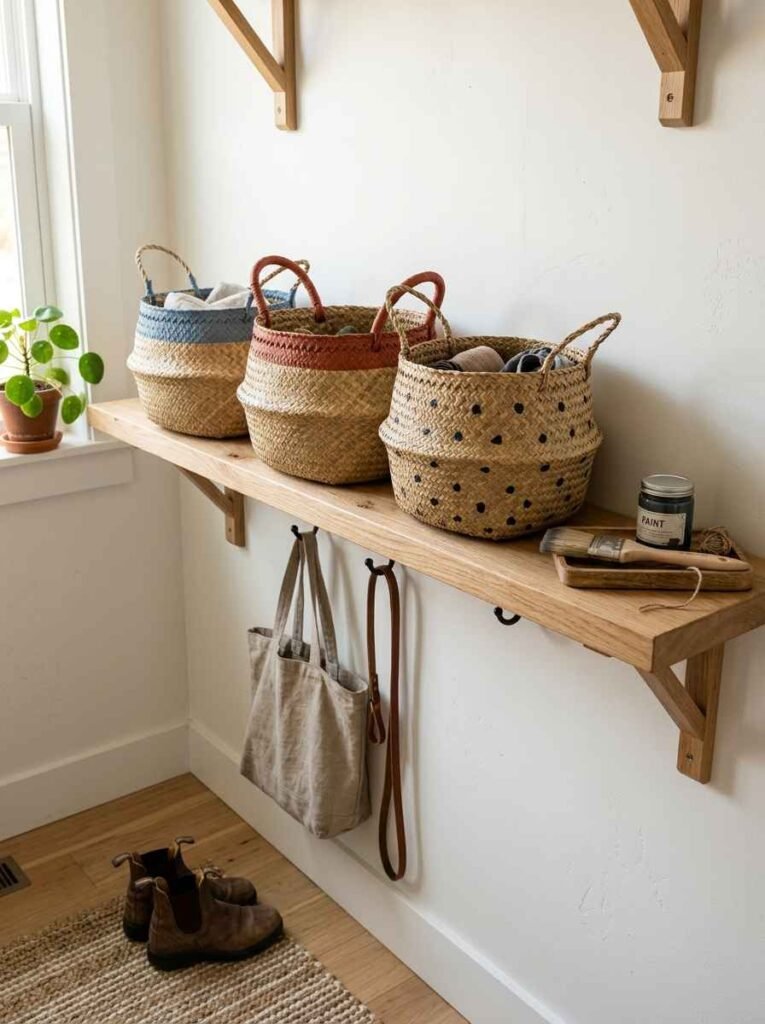
Buy plain baskets and paint the rims, handles, or full exterior to match your home’s palette. This sounds like a lot of effort but takes maybe 20 minutes and transforms a basic basket into something that actually fits your space. Good creative outlet if you’re into that.
Quick Comparison: Basket Materials at a Glance
| Material | Best For | Durability | Price Range |
|---|---|---|---|
| Seagrass | Everyday family use | High | $12 to $45 |
| Wire/Metal | Shoes, heavy items | Very High | $15 to $60 |
| Wicker/Rattan | Decor-forward spaces | Medium-High | $20 to $80 |
| Canvas/Fabric | Kids’ zones, laundry | Medium | $8 to $30 |
How to Actually Set Up a Basket System That Sticks
Most mudroom organization fails because people set it up once, it looks great, and then real life happens. Here’s the version that survives contact with actual people.
Assign a zone before you buy anything. Decide what categories you’re storing: shoes, coats, bags, sports gear, seasonal items, pet stuff. Count the categories. Buy that many baskets, not more.
Label everything during setup, not later. The later never comes. Labels are what turn a basket into a system. Without them, everything migrates to the closest available basket regardless of what’s supposed to go in it.
Size matters more than style. A too-small basket for shoes is useless. A too-deep basket for keys means you’re fishing every morning. Match the basket size to the actual volume of what you’re storing.
Review it once a season. What worked in October might not work in July. A 20-minute seasonal reset keeps the system current instead of turning into a museum of outdated categories.
FAQs
What size baskets work best for a mudroom? It depends on what you’re storing, but for general use, medium baskets (roughly 12 to 14 inches wide, 10 to 12 inches deep) handle most everyday items like bags, hats, and accessories. For shoes, go shallower and wider so you’re not stacking footwear awkwardly. Large deep baskets work well for sports equipment and bulky seasonal gear.
How do I keep mudroom baskets from looking messy? Labels are the biggest factor. When each basket has a clear assignment, stuff goes back where it belongs. Beyond that, matching basket materials (even if colors vary slightly) creates visual cohesion that reads as organized even when it’s slightly full. Lidded baskets for anything miscellaneous also help a lot.
Are woven baskets durable enough for high-traffic mudrooms? Quality woven baskets, especially seagrass and water hyacinth, hold up really well in mudrooms. The weak point is usually moisture: don’t leave wet boots piled directly in a woven basket. Use a boot tray for wet footwear, and keep woven baskets for drier items. With that boundary in place, a good seagrass basket lasts years.
Final Thought
The goal with any mudroom system is to make the right behavior the easy behavior. When a basket is labeled, sized correctly, and placed exactly where the habit already wants to happen, people use it. If you build it around how your household actually moves through the door, it’ll hold up.
Start with 3 or 4 baskets. See what actually gets used. Add from there.
What’s the one spot in your entryway that causes the most chaos? That’s where you start.
For more mudroom inspiration, the Better Homes & Gardens storage guide and The Container Store’s entryway solutions are worth browsing when you’re ready to buy. Both have strong visual filters to help you match materials to your existing space.
