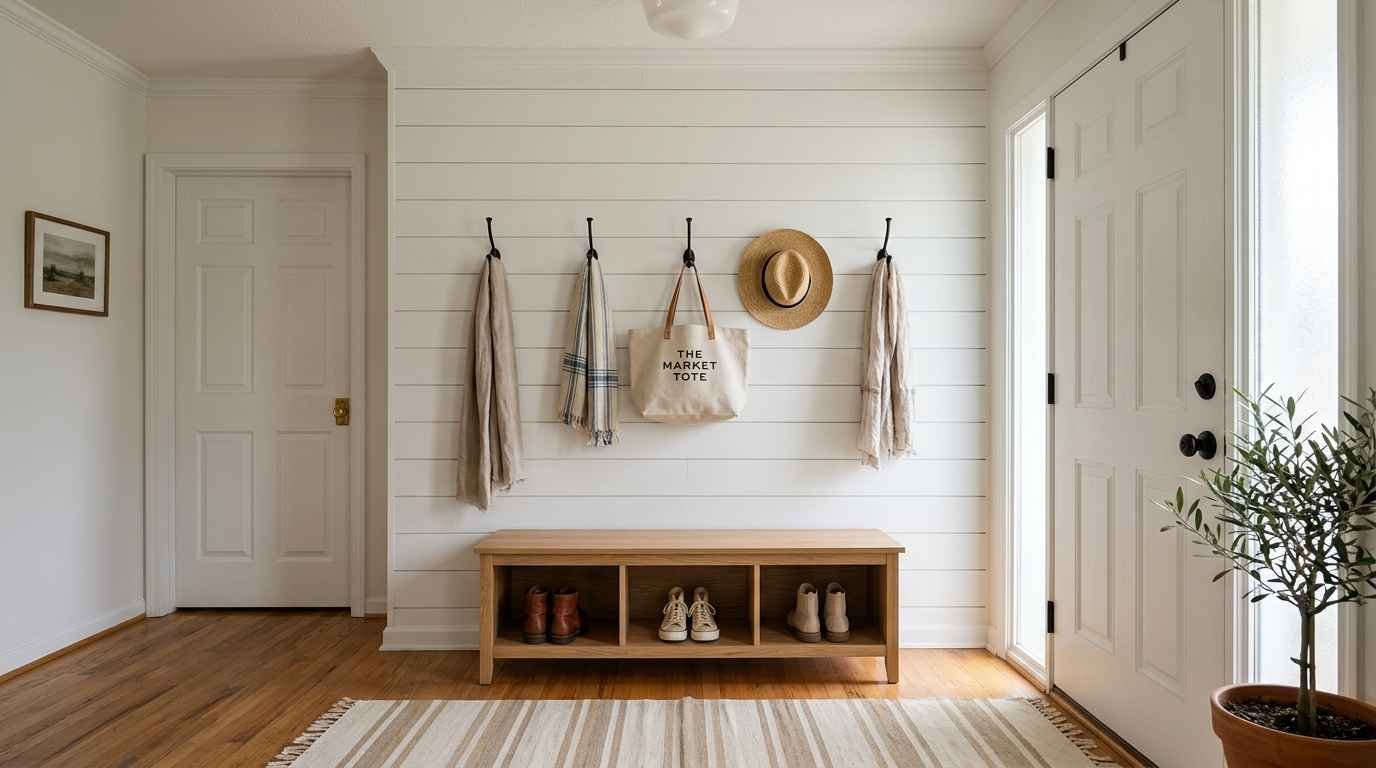
You’ve got about 4 square feet between your front door and the rest of your home. Maybe less.
And somehow, that tiny patch of floor is supposed to hold shoes, coats, bags, dog leashes, mail, umbrellas, and whatever else gets dragged in from outside every single day.
I’ve been there. My first apartment had an entryway so narrow I once knocked a coat hook off the wall just by putting on a backpack. It was not my finest moment.
The good news? A small entryway doesn’t have to be a chaotic dumping ground. You can actually make it work, and work really well, with some smart thinking and a few well-placed shelves.
Here are 26 ideas that genuinely help, pulled from real mudroom setups I’ve obsessed over on Pinterest and tested in my own home.
Hook walls: your fastest win
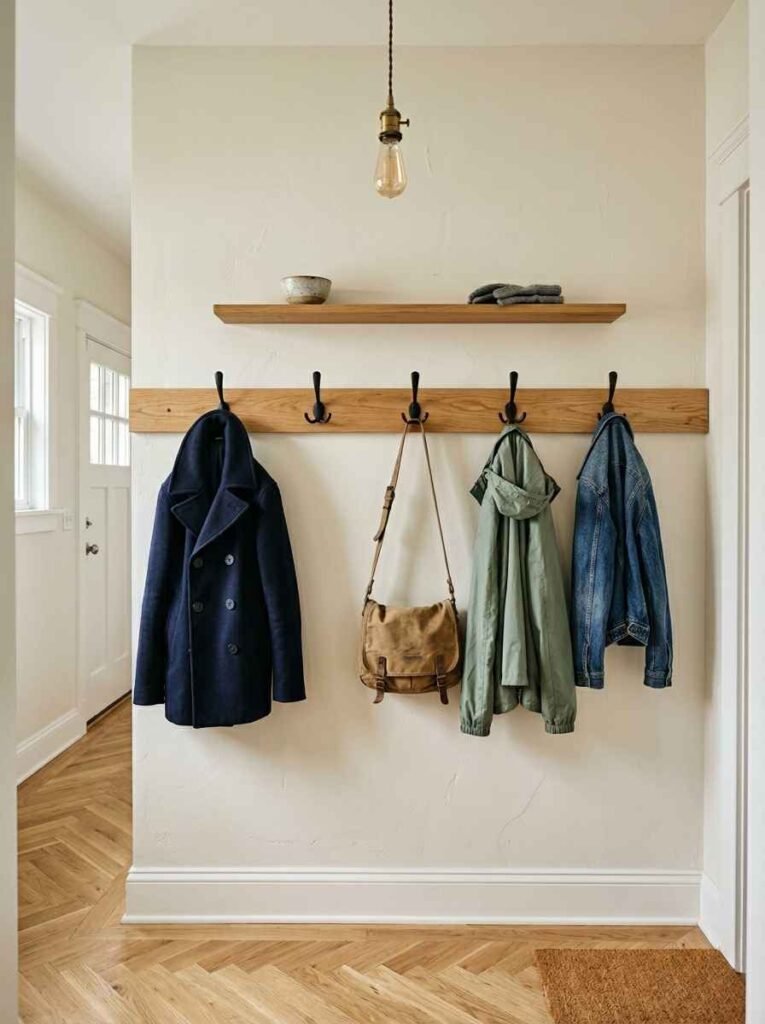
A single row of wall-mounted hooks transforms an entryway overnight. Seriously, this one change does more work than almost anything else.
Mount a row of sturdy hooks at 60 to 65 inches from the floor, so adults can reach them comfortably, and add a lower row at 36 to 40 inches for kids.
Spacing matters here. Give each hook at least 6 inches apart so coats don’t bunch and fall.
I’d personally go with the kind that have a small shelf above them, like the IKEA TJUSIG or similar styles you’ll find on Wayfair’s entryway collection (https://www.wayfair.com/furniture/cat/entryway-furniture-c415608.html). That shelf above the hooks is where hats, sunglasses, and random stuff actually land instead of the floor.
Pegboard for the gear-heavy household
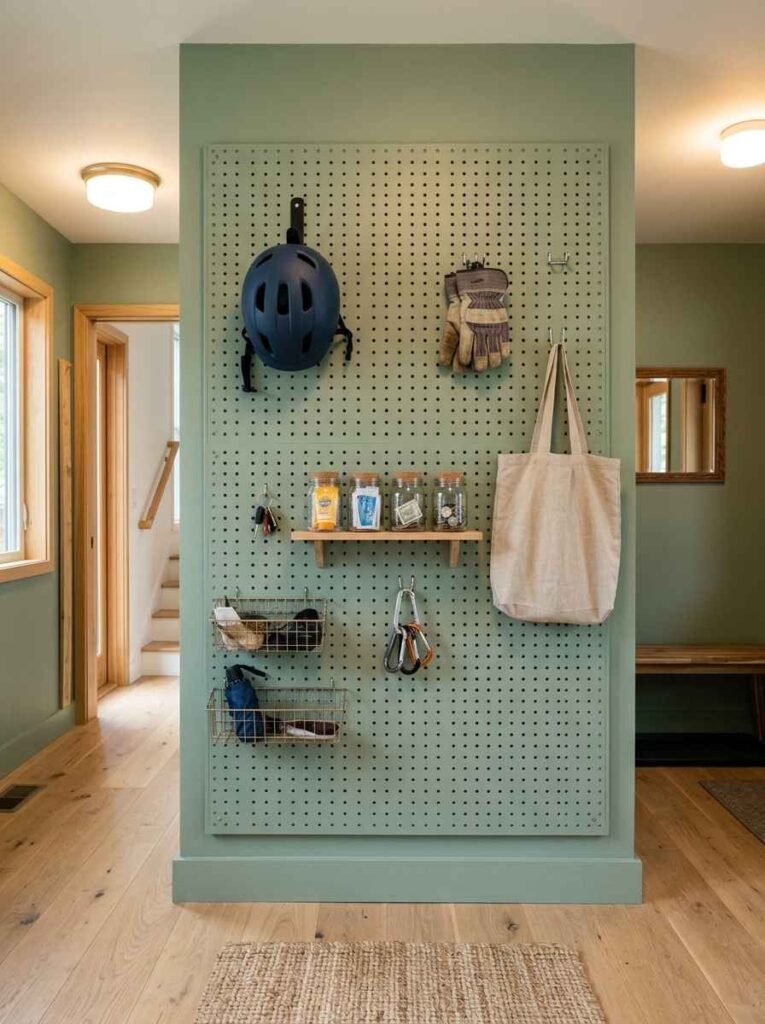
If your entryway sees a lot of gear, whether that’s sports equipment, gardening gloves, or bike helmets, bolt a pegboard panel to the wall instead of individual hooks. You can rearrange it anytime. I
painted mine the same color as the wall and it looks intentional rather than garage-y.
Bench + storage: the classic combo
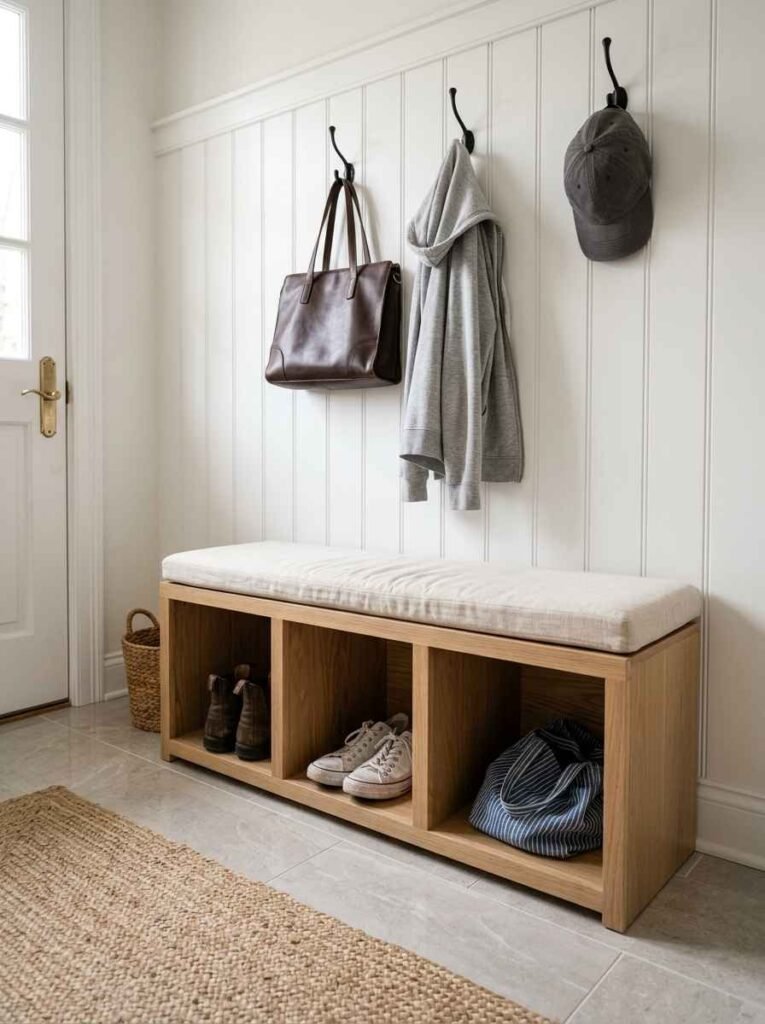
A bench with storage underneath is probably the most-pinned mudroom idea on the internet, and for good reason.
You sit to take off shoes. You store those shoes directly underneath. The whole transaction happens in one spot.
Look for benches with either open cubbies or a lift-top lid. Open cubbies are more accessible; lift-top is better when you want to hide the mess.
IMO, open cubbies win for families with kids because the “put it away” habit actually sticks when the storage is visible.
For tiny entryways under 5 feet wide, look at slim benches in the 14 to 16-inch depth range. Anything deeper and you’ll be turning sideways to get past it.
Fold-down bench for the truly micro entryway
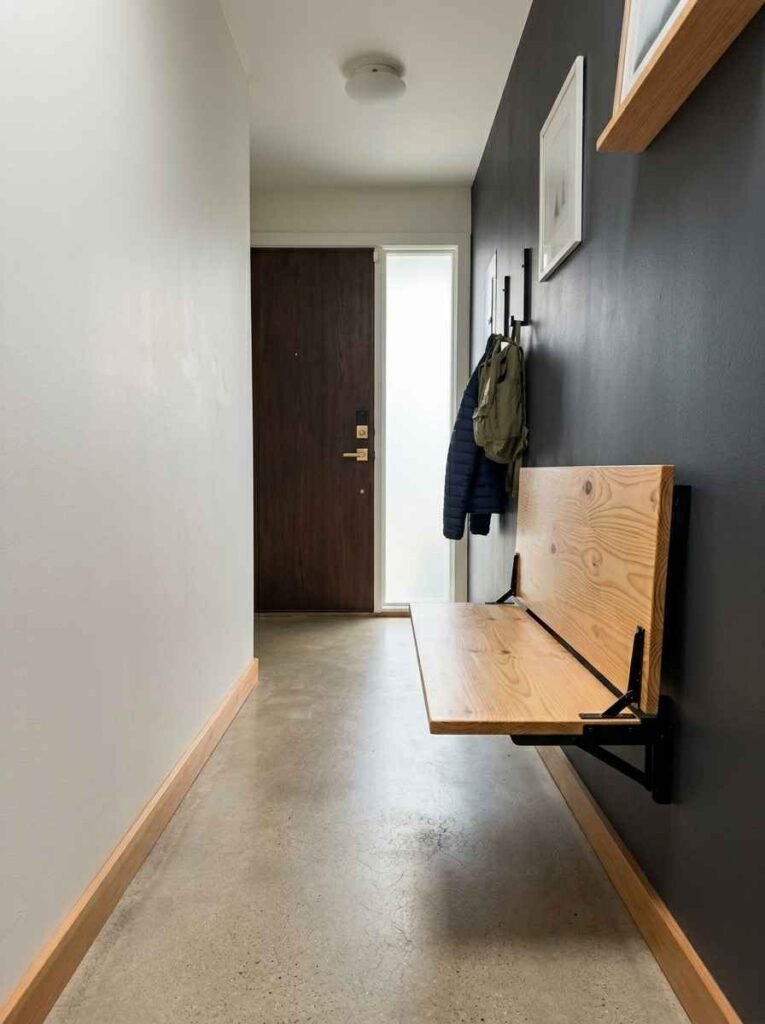
When floor space is genuinely scarce, a fold-down Murphy-style bench is the answer. It folds flush against the wall when not in use, drops down when you need to sit and pull off boots.
You can find solid versions at most home improvement stores, or check Ana White’s free woodworking plans (https://www.ana-white.com) if you want to build one for about $40 in lumber
Vertical shelving: stop thinking horizontally
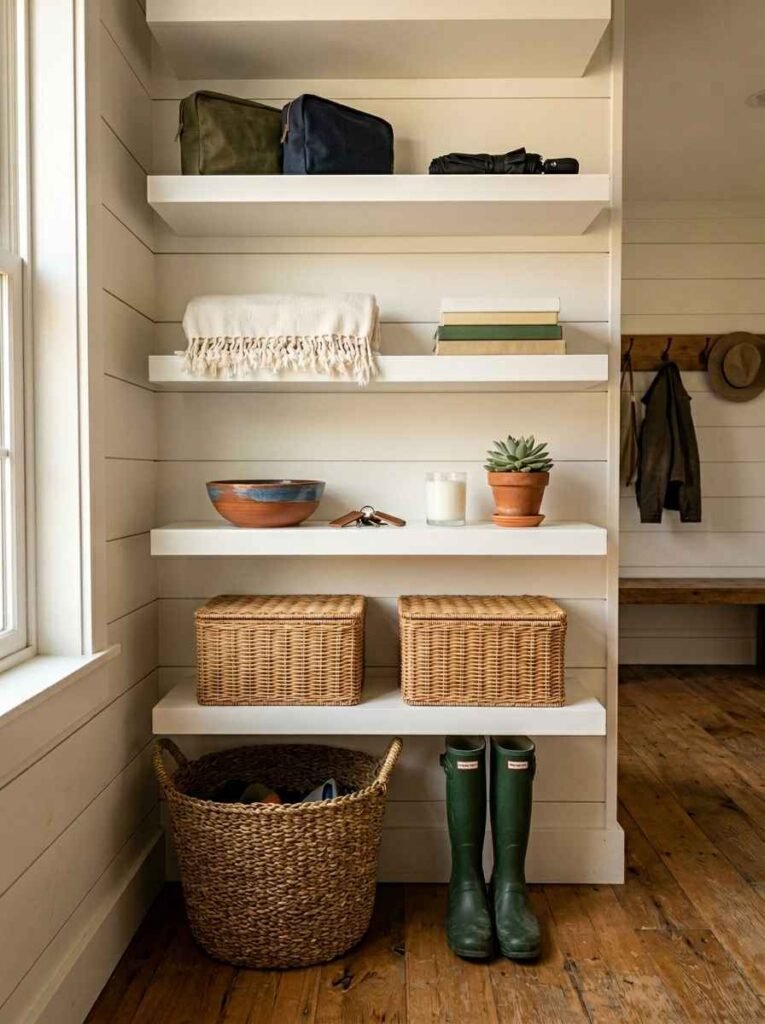
Most people lose entryway storage because they think about floor space. Walls go up 8 or 9 feet and we use maybe 5 of them. The rest is just… air.
Stack shelves vertically. Put everyday items at eye level, seasonal stuff up top, and bulky bags or bins on the bottom shelf.
The top shelf is perfect for things you grab once a month, like holiday bags or extra umbrellas, because they don’t need to be within easy reach.
Floating shelves in a tight vertical column look far cleaner than a squat bookcase shoved against the wall. IKEA’s LACK or BERGSHULT shelves work well in these spots.
The cubby system: assign every person a zone
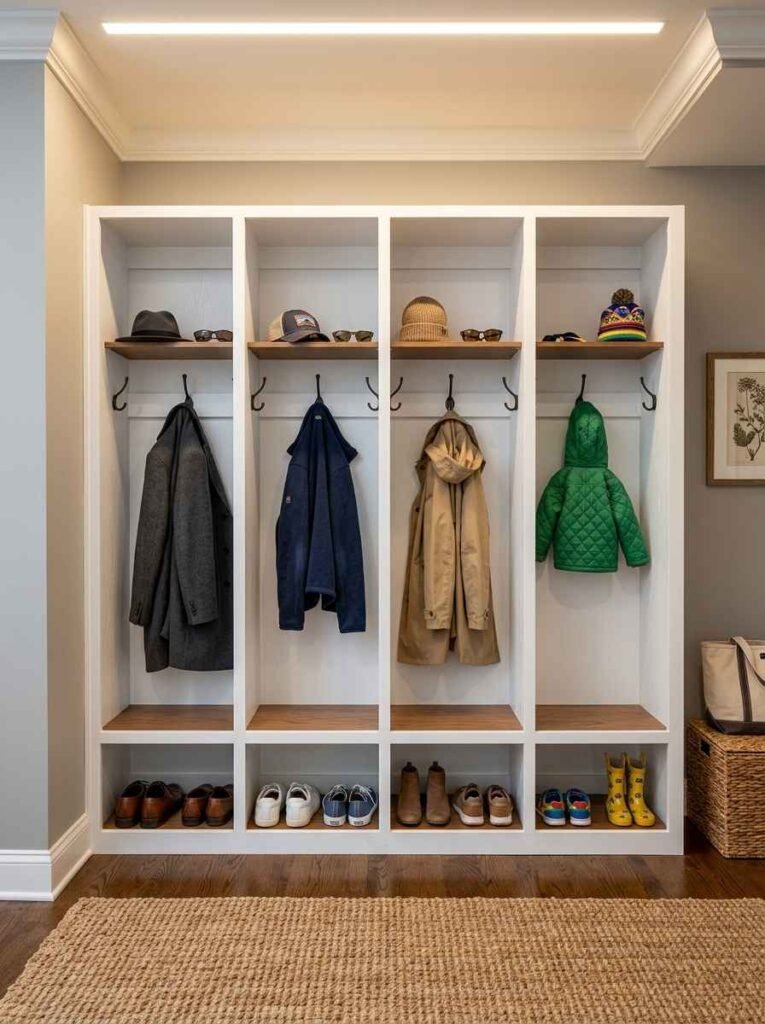
This is the idea that probably changed how I think about mudrooms more than anything else. Assign each family member their own cubby.
Their coats go there. Their shoes go there. Their bag goes there. Done.
When everyone has a designated spot, the “I can’t find my keys” crisis drops dramatically.
You can buy pre-built cubby units from places like Target or The Container Store, or build your own with plywood and a weekend afternoon.
| Setup | Best for | Approx. cost | Effort level |
|---|---|---|---|
| Pre-built cubby unit | Quick install, renters | $80-$300 | Low |
| DIY plywood cubbies | Custom sizing | $60-$150 | Medium |
| Mudroom locker system | Large families | $400-$1,200 | High |
| IKEA hack (KALLAX base) | Budget-friendly, flexible | $100-$200 | Medium |
Shoe storage that doesn’t eat your floor
Shoes are the main villain in small entryways. A pile of 6 pairs of shoes can block 3 square feet of floor.
Vertical shoe racks
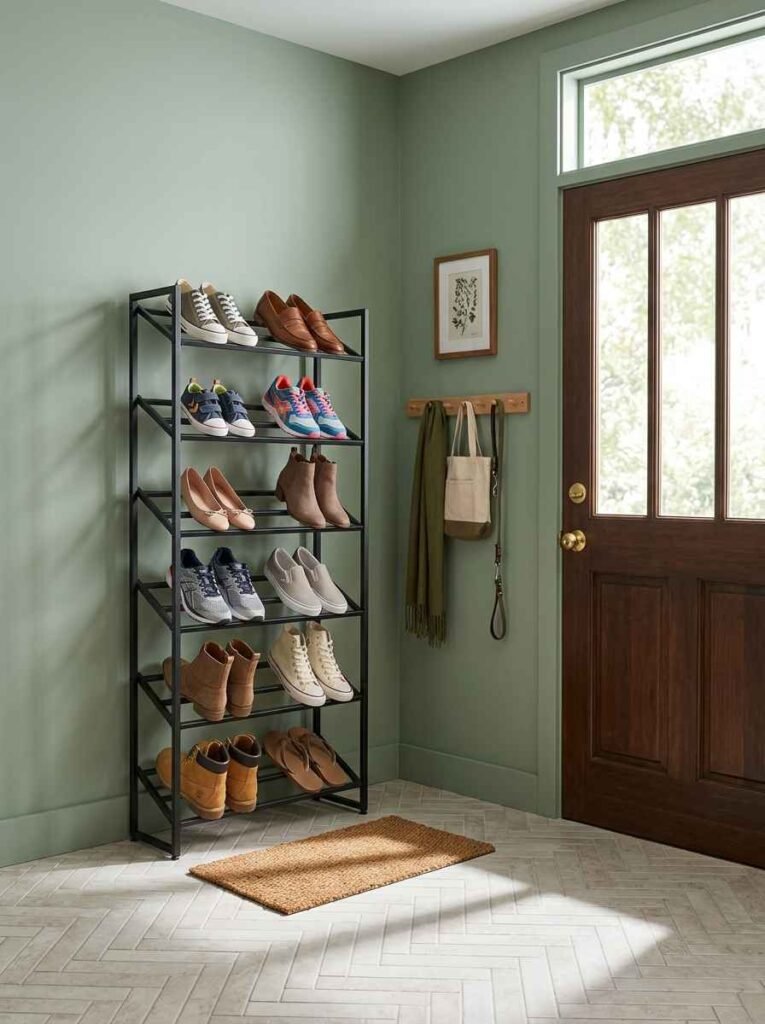
A tall, slim vertical shoe rack stores 12 pairs in a footprint of about 12 by 10 inches. That’s remarkable.
The Whitmor or Songmics brands make decent ones under $30. They’re not beautiful, but they work.
Over-the-door shoe organizers
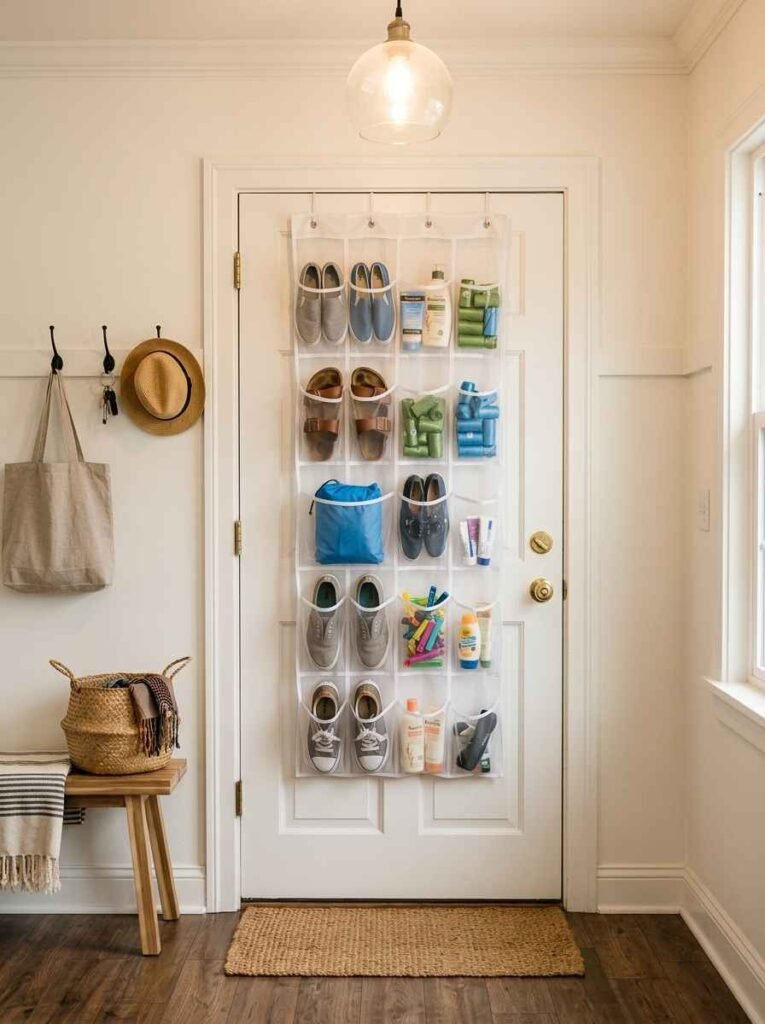
This is low-key one of the best moves for a rental or apartment mudroom. Hang a clear pocket organizer over the inside of your front door.
Shoes slide in, door closes, problem gone. Bonus: the pockets also fit gloves, sunscreen, dog waste bags, and other small items.
Under-bench shoe drawers
If you’re building or renovating, pull-out drawers under a bench seat are the cleanest solution.
Each drawer holds 2 to 4 pairs. You pull it out, drop in your shoes, push it closed. Kids can actually manage this themselves, which is saying something.
A mirror: the one thing most small entryways skip
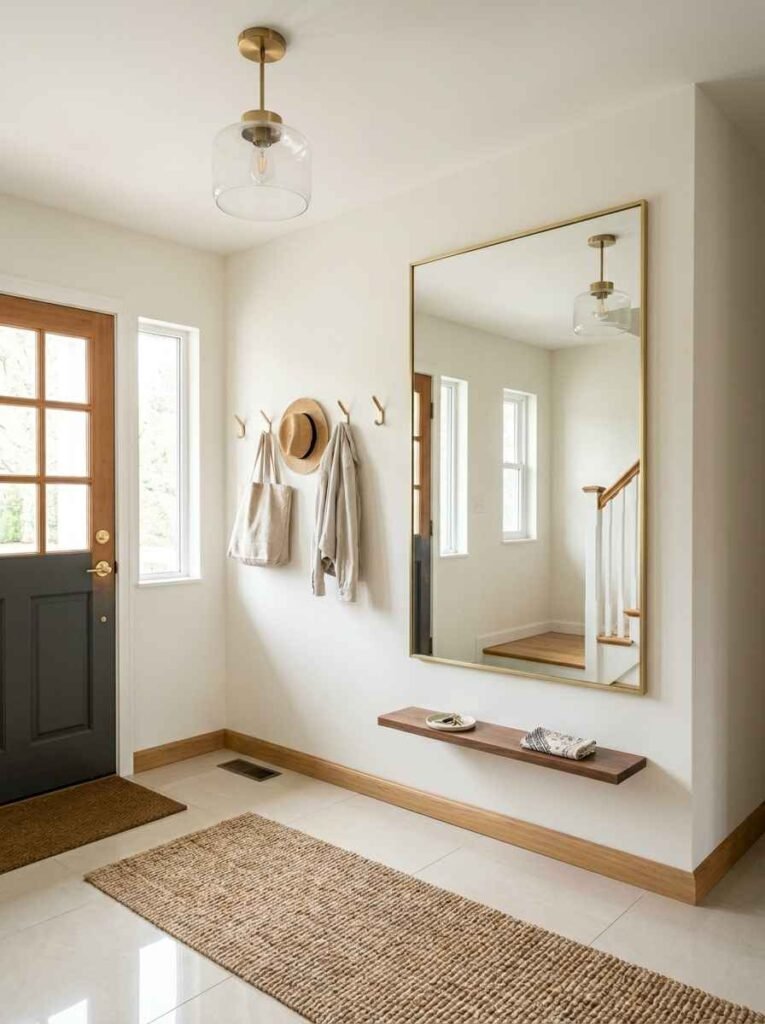
Wow, the difference a mirror makes in a tiny entryway. It bounces light around and makes the space feel twice as big.
Mount a full-length mirror on one wall, or choose one with a small shelf attached at the bottom for keys and sunglasses.
The Umbra Trigg or similar shelf-mirror combos are great for this. You get storage and the optical illusion of space in one piece.
Command center zone: put the chaos in one place
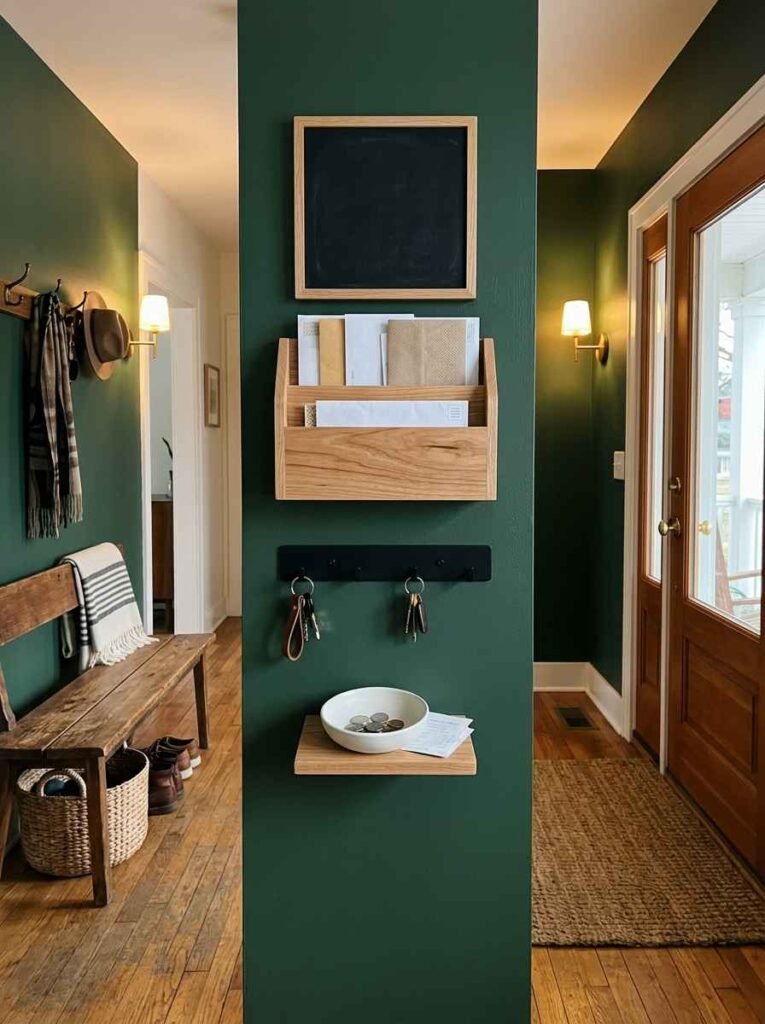
Every entryway needs a spot where “the stuff” lives. Keys, mail, permission slips, that library book you’ve been meaning to return for 3 weeks.
Mount a small key hook strip directly next to or below your mail organizer. Add a shallow tray or bowl for pocket dump items.
Keeping this zone to a single 12-inch-wide section of wall stops it from spreading into the rest of the entryway.
A chalkboard or small whiteboard above this zone works great for quick notes. I know it sounds very Pinterest-circa-2014, but it’s genuinely useful when you’re writing “TRASH DAY” the night before.
Baskets and bins: the underrated workhorse
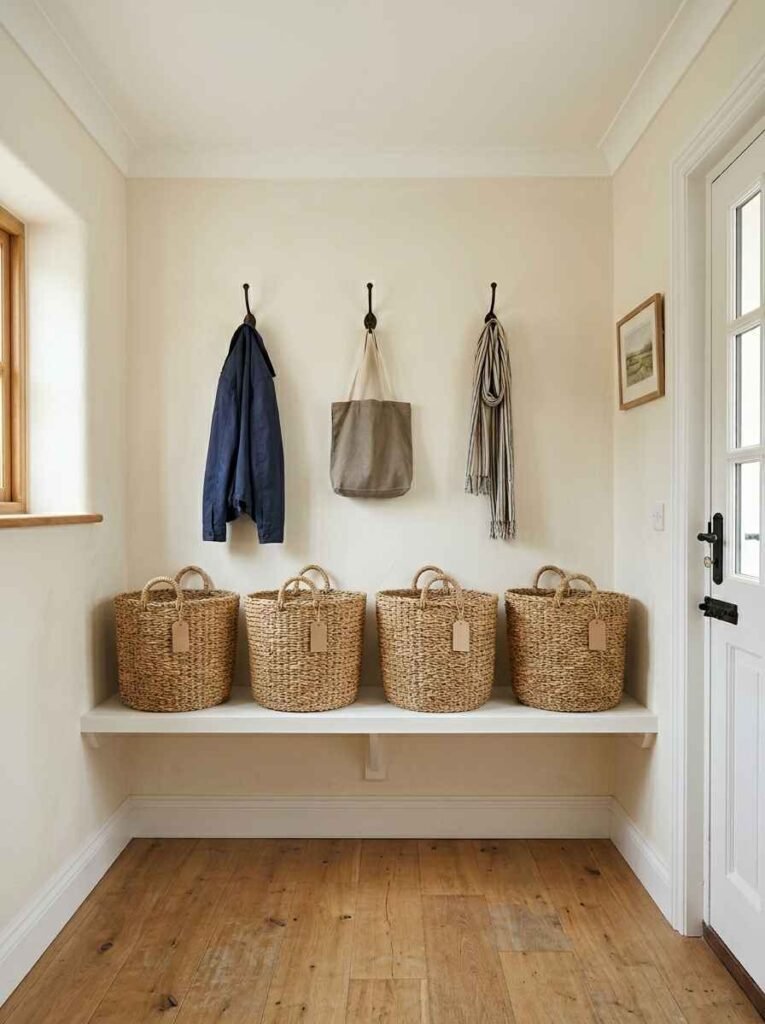
Baskets hide clutter faster than almost any other solution. A row of 3 matching wicker baskets on a shelf looks intentional and put-together,
even when they’re stuffed with scarves, sports balls, and whatever that mysterious bag of stuff is that’s been sitting there since March.
Label them. Seriously. “Scarves and hats,” “Sports gear,” “Dog stuff.” Labeling a basket takes 30 seconds and saves 5 minutes of hunting every single day.
Slim console table instead of a bench
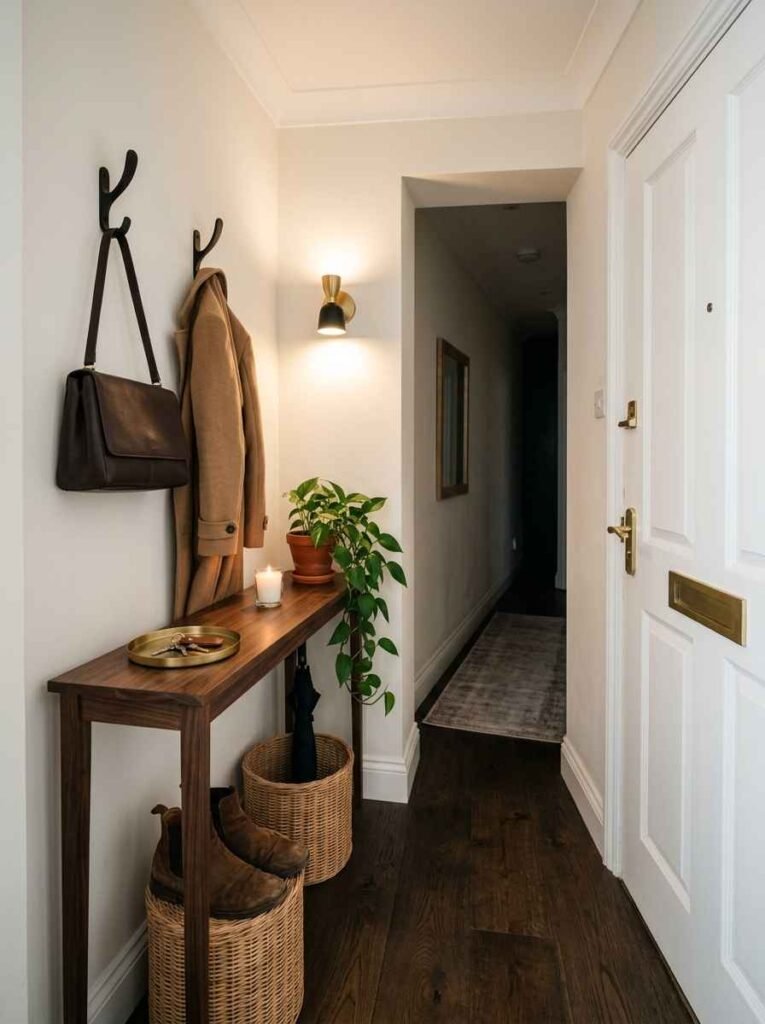
If you don’t need seating, a slim console table can do a lot of work. Look for one that’s no deeper than 10 to 12 inches.
Put a small tray on top for keys and mail. Hang hooks above it. Add a basket or two underneath for shoes.
The whole thing can fit in a 36-inch-wide space and still function like a proper mudroom.
I saw this setup in a Brooklyn apartment that had maybe 3 feet of entryway, and it looked genuinely good.
Built-in lockers: when you can actually build
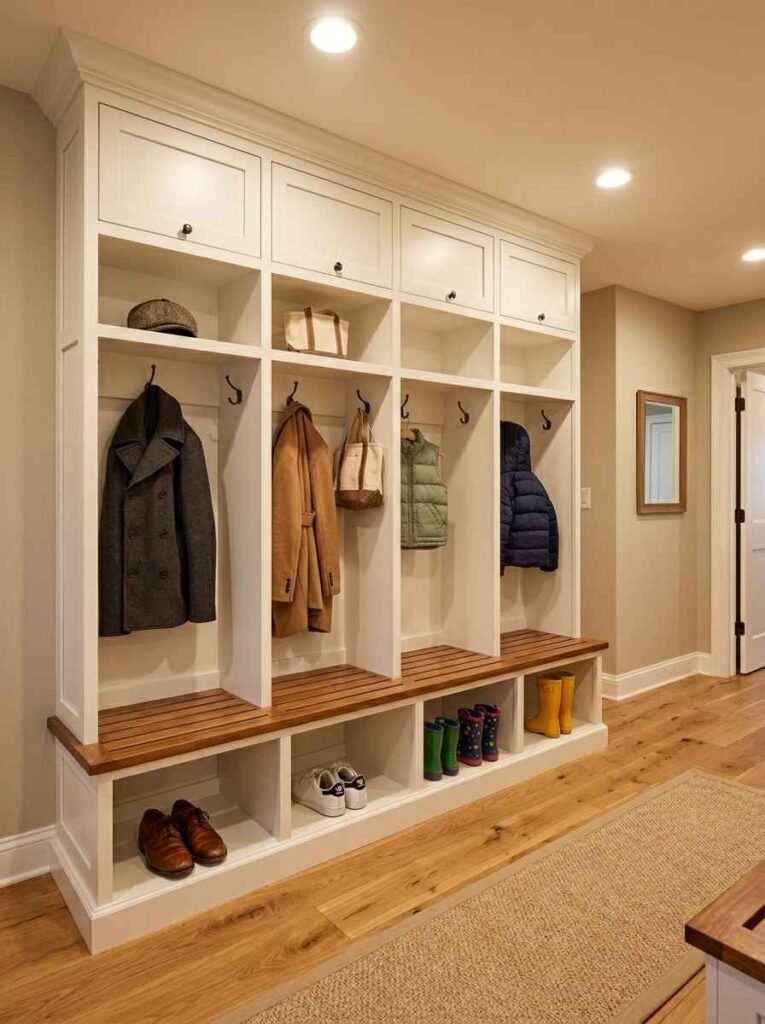
If you’re renovating or own your place, built-in lockers are the gold standard for small mudroom storage.
They go floor-to-ceiling, use every inch of wall depth, and look completely intentional.
Each locker section typically runs about 15 inches wide. For a family of 4, you’d want 4 sections in a 60-inch-wide stretch of wall.
Each locker holds: hooks at the top for coats, a shelf above the hooks for hats, a bench seat in the middle, a shoe cubby at the bottom. Everything in one column, per person.
This is the kind of project where hiring a carpenter pays off.
Check Houzz’s contractor directory (https://www.houzz.com/professionals/contractors) to find local pros who specialize in built-ins.
Mudroom in a closet: the conversion trick
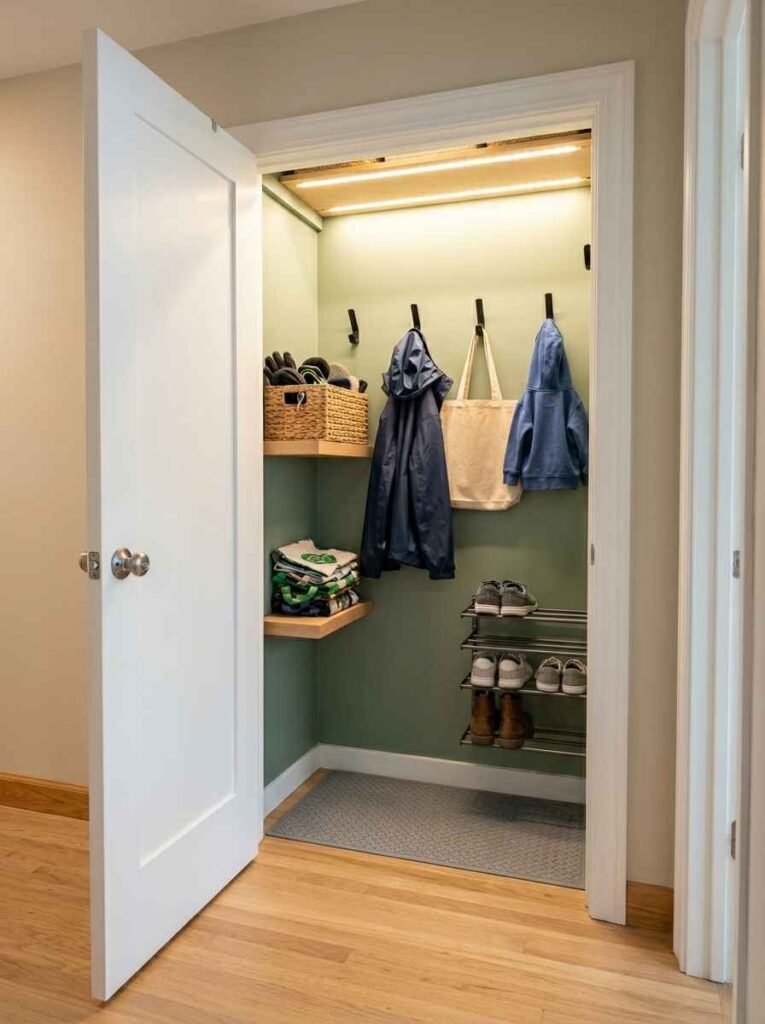
Got a coat closet near your front door? Pull out the rod. Build in shelves and hooks. Suddenly you have an actual mudroom tucked behind a door, invisible when company comes over.
This works especially well because the closet walls give you depth for shoe storage and the door hides everything.
I’ve seen this done in 24-inch-deep coat closets with incredible results: hooks on the back wall, shelves on both side walls, a shoe rack on the floor.
It holds more than most dedicated mudrooms.
Floating cubbies with bins: the wall goes to work
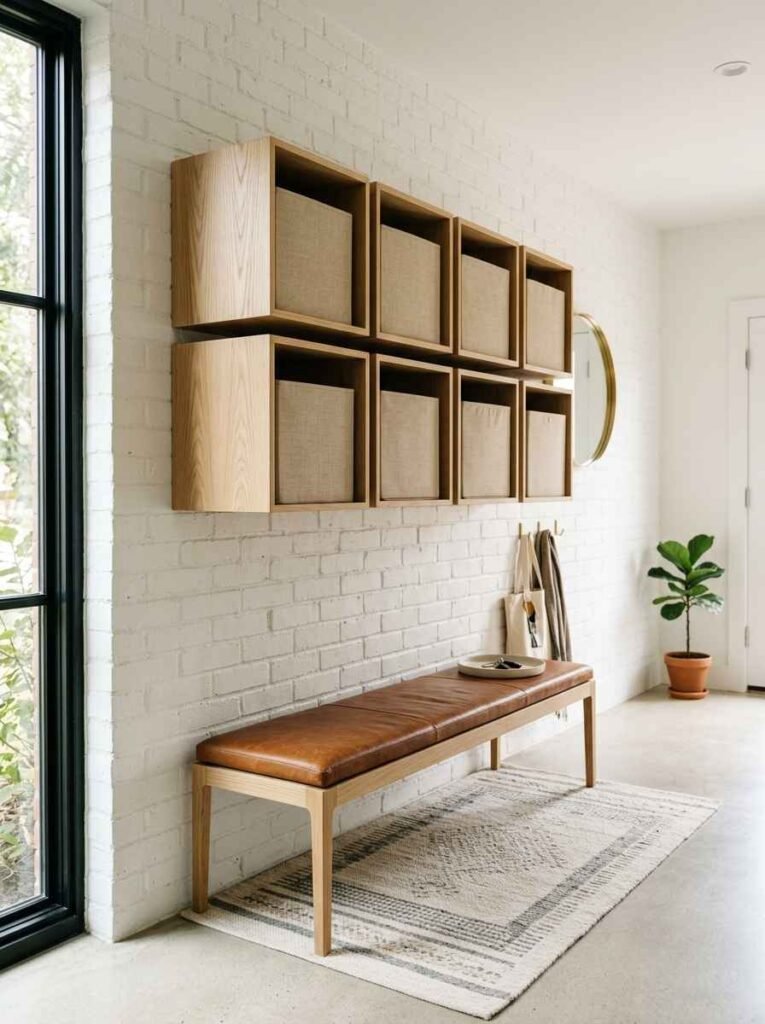
Mount a grid of floating wall cubbies, either wood squares or wire grid panels, and drop bins into each one. Each bin gets a label.
This keeps the floor completely clear and puts all your storage at eye level where you can actually see it.
The IKEA KALLAX grid on its side, mounted to the wall with proper anchors, does this at a very approachable price point.
Wallpaper or paint: making the space feel chosen
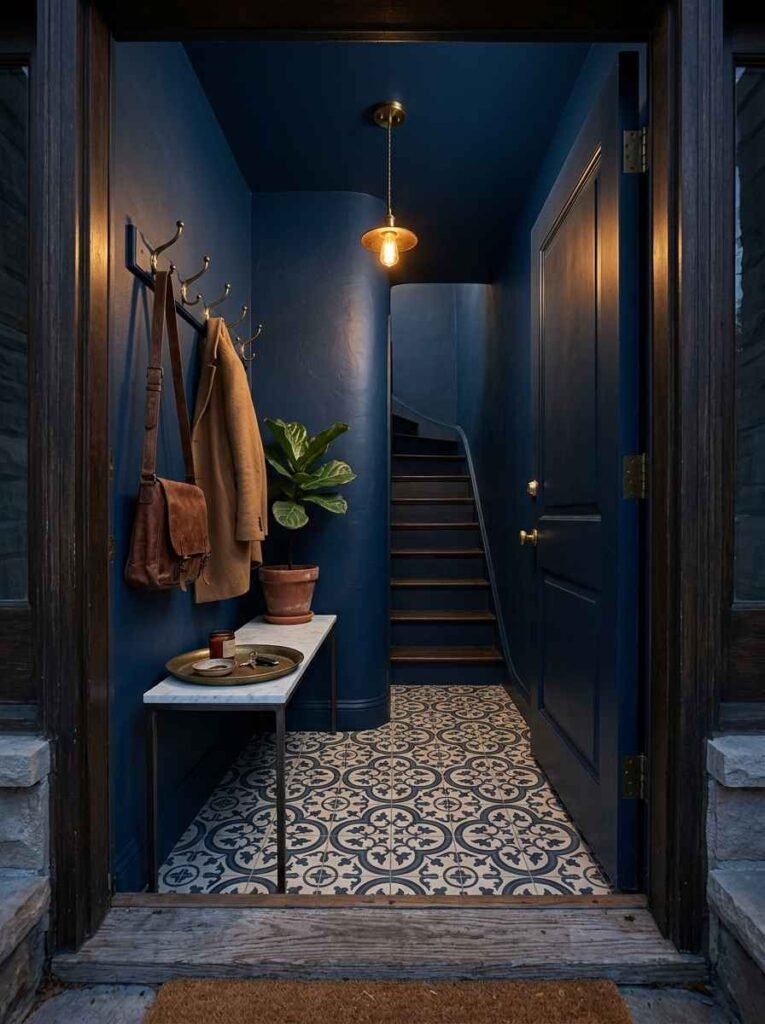
A tiny entryway with boring white walls just feels like a mistake. A tiny entryway with bold wallpaper or a deep paint color feels deliberate, like you designed it on purpose.
Peel-and-stick wallpaper works well here because the square footage is so small. You might use 2 to 3 panels total.
A geometric pattern or classic stripe adds enough visual interest that the space feels finished even when storage is minimal.
FYI, dark paint colors (navy, forest green, charcoal) actually make small entryways feel more defined and cozy, not cramped. Counterintuitive, but it works.
Flooring that handles the abuse
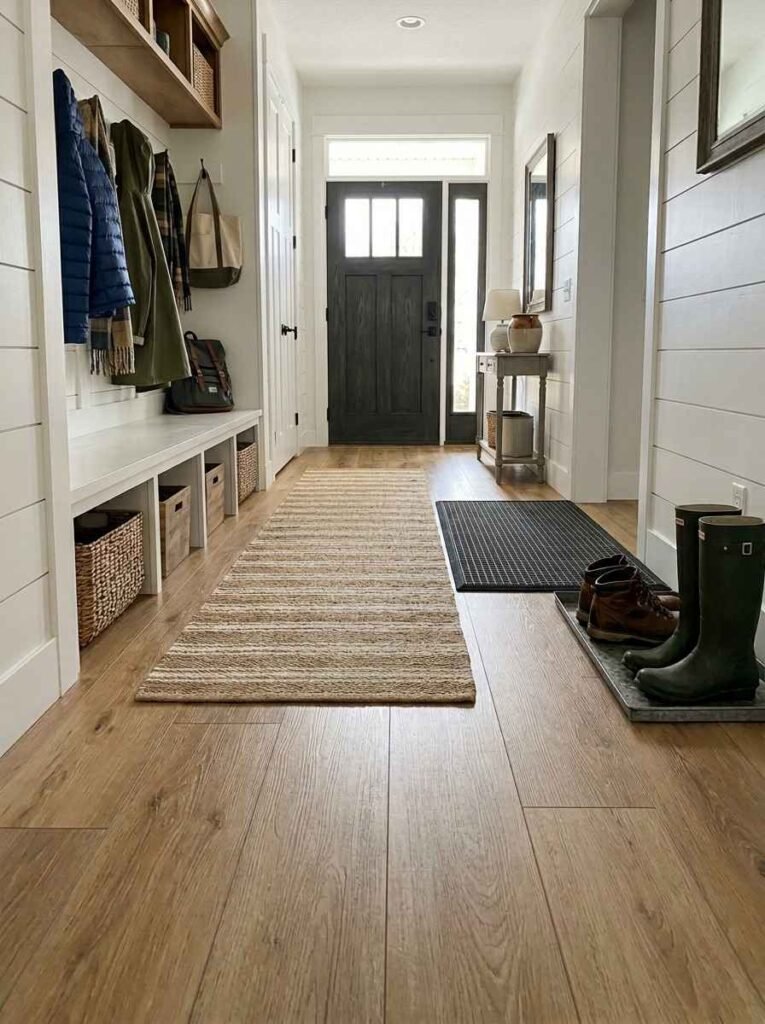
Whatever goes in a mudroom gets dirty. Wet boots, muddy paws, tracked-in gravel. Your flooring needs to handle all of it without looking destroyed.
- Vinyl plank or luxury vinyl tile is the best all-around choice: waterproof, easy to mop, works over most existing subfloors.
- Rubber tile works in rental situations because you can install it without adhesive and pull it up when you move.
- A good indoor/outdoor mat layered over existing tile is the no-commitment solution. The Waterhog brand makes mats that trap dirt and moisture far better than cheap rubber mats.
Lighting: the thing everyone forget
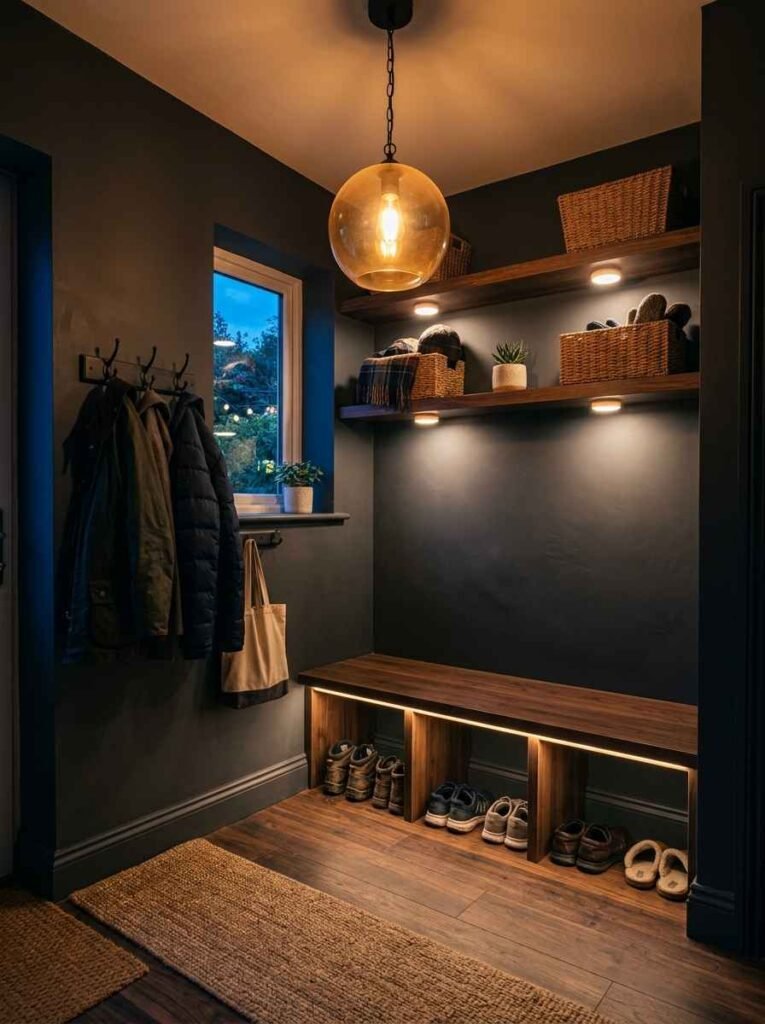
Most entryways rely on one overhead light fixture that does a mediocre job. Add a small plug-in sconce or a battery-operated puck light under upper shelves and the whole space becomes functional at night.
If you’re doing a closet conversion mudroom, a motion-activated LED bar inside the closet is about $20 and genuinely useful.
The charging station nook
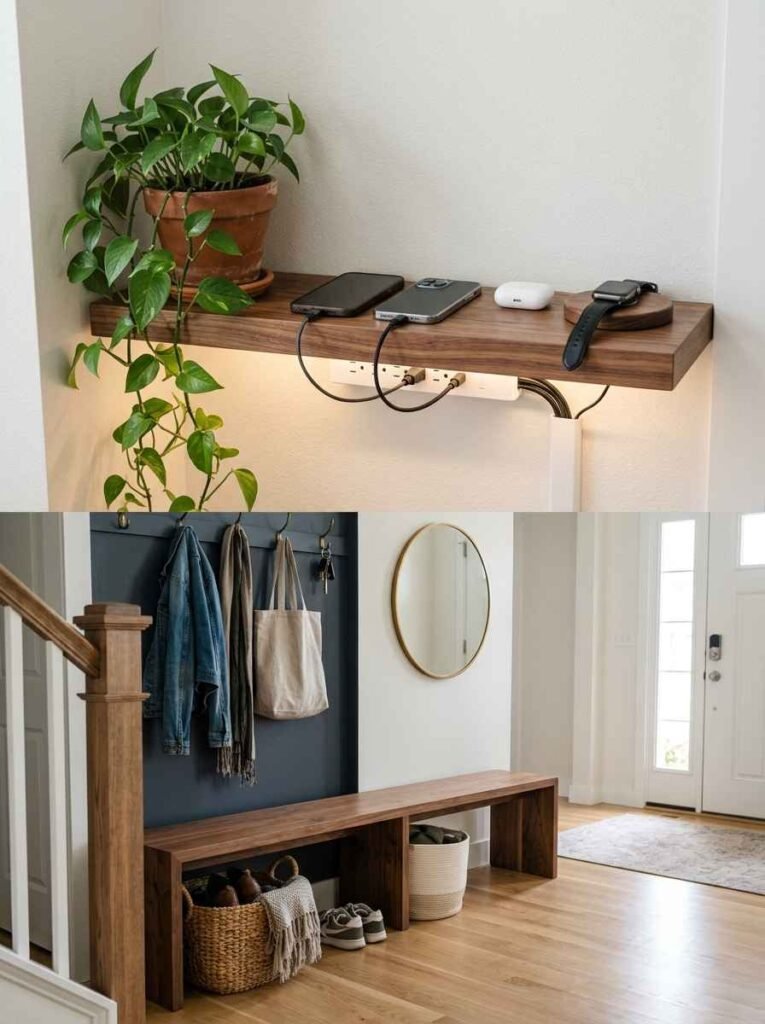
This one is a personal opinion, but I think a dedicated charging spot in the mudroom is worth it. Mount a power strip to the underside of a shelf and run the cord down the wall. Phones, earbuds, and headphones charge overnight right where you’ll grab them in the morning.
It removes the “where’s my phone” panic from the morning routine, which, if you have a household of 3 or more people, is a bigger deal than it sounds.
Umbrella storage that doesn’t tip over
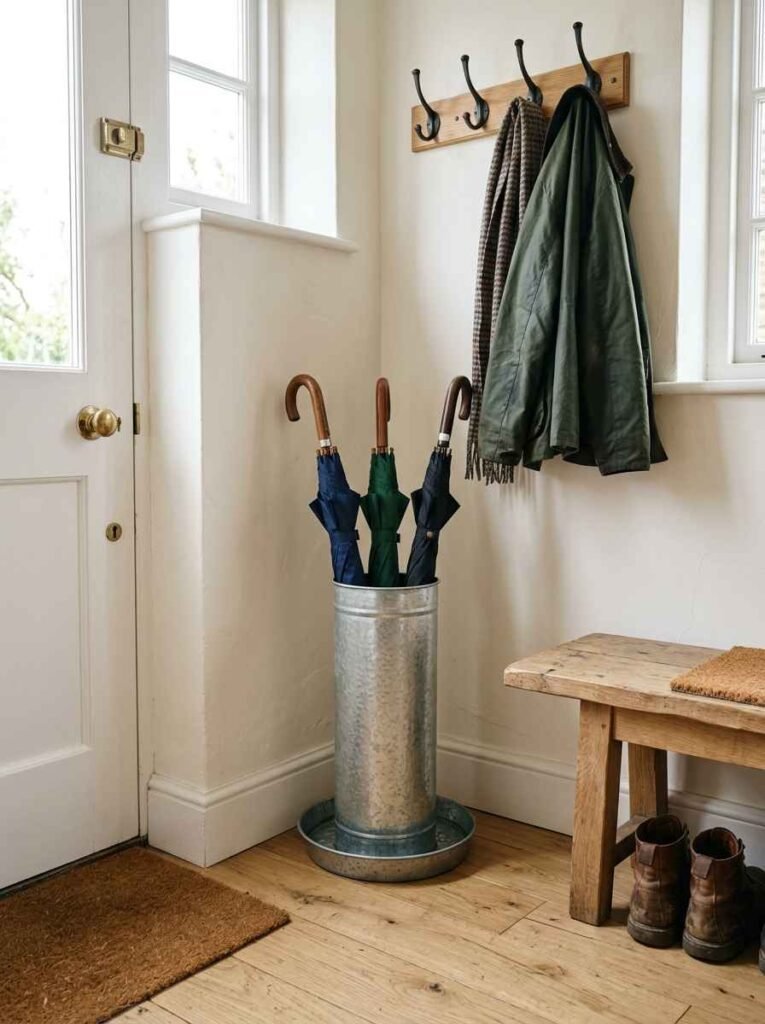
A free-standing umbrella stand takes up almost no floor space and stops the constant “umbrella sliding and falling” situation. Look for ones with a removable drip tray at the bottom. Alternatively, a tall narrow bin or a galvanized metal pail works just as well and costs $8.
A second hook row at kid height
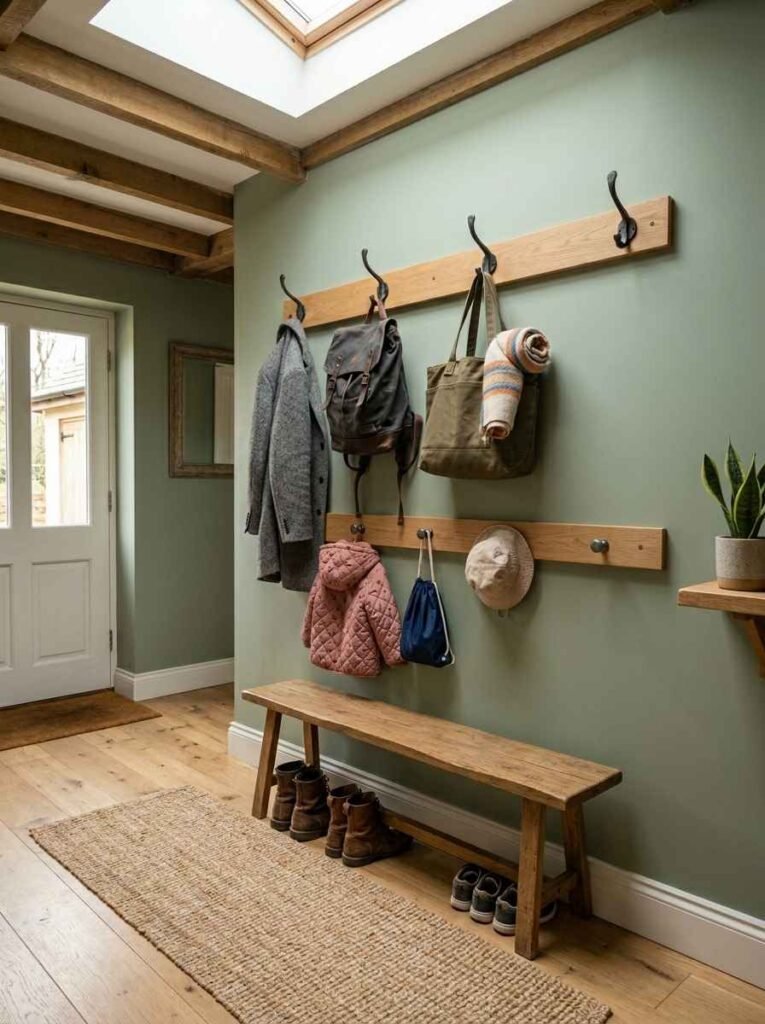
If you have kids, add a second row of hooks at 36 to 40 inches from the floor. Let them hang their own coats and bags. This sounds small but it actually matters for building the habit. When the hook is accessible, kids use it. When they have to reach up, they toss things on the floor.
A small rug that defines the zone
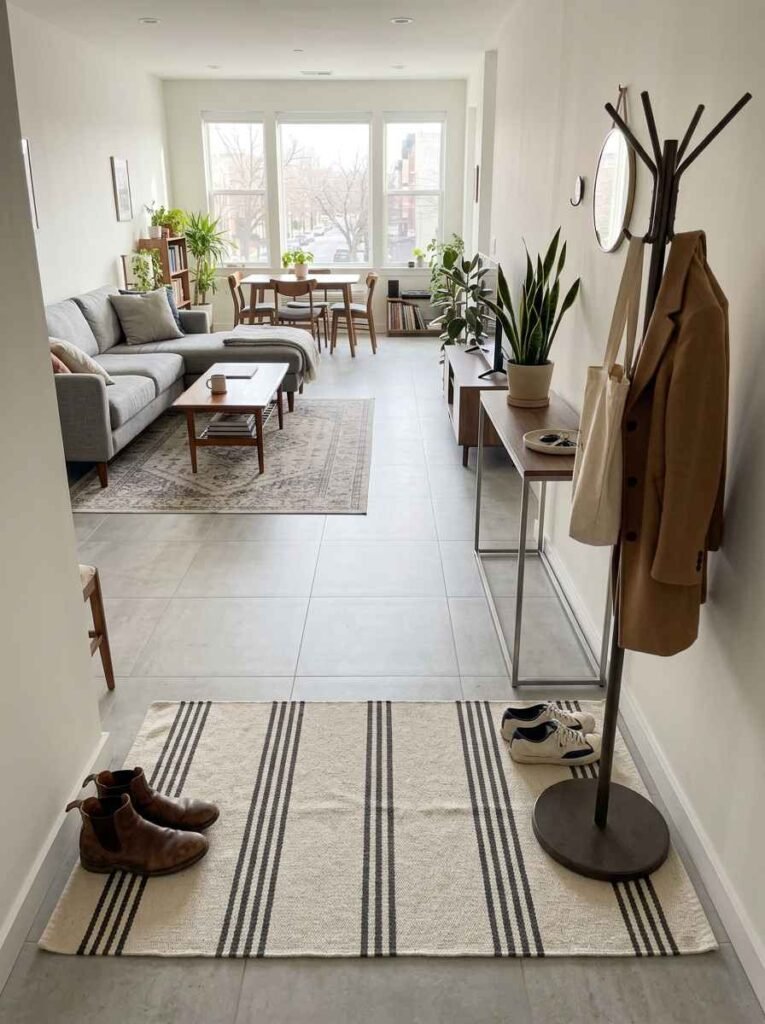
In open-plan homes or apartments where there’s no physical separation between the entryway and living room, a small rug defines where the mudroom “zone” starts and stops. It gives dirty shoes a place to land and tells the eye that this is a separate functional area.
A 2×3-foot rug is usually the right size. Flatweave styles are easier to clean than pile rugs.
Recessed niches: if the wall allows it
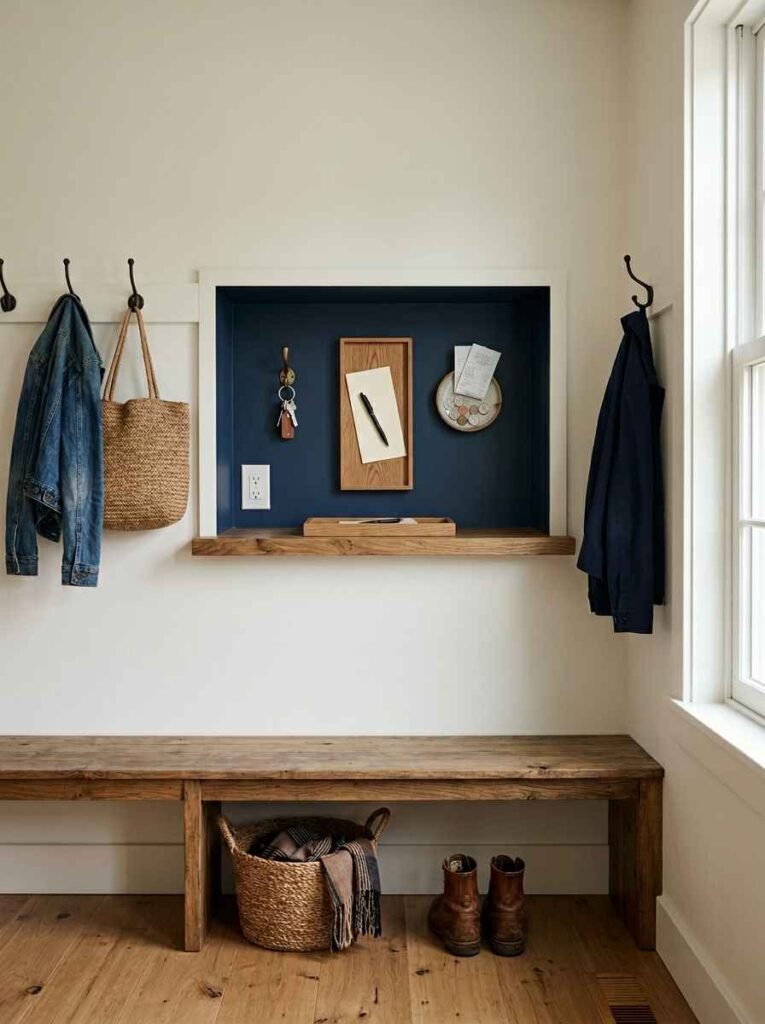
In some homes, especially older construction, the wall between studs is deep enough to carve out a recessed niche. A 3.5-inch-deep niche in a 24-inch section of wall can hold keys, mail, small hooks, and a power outlet. It keeps everything flush with the wall and takes up exactly zero floor space.
This requires some drywall work but no structural changes, so it’s within reach of a handy DIYer.
Hidden storage behind a barn door
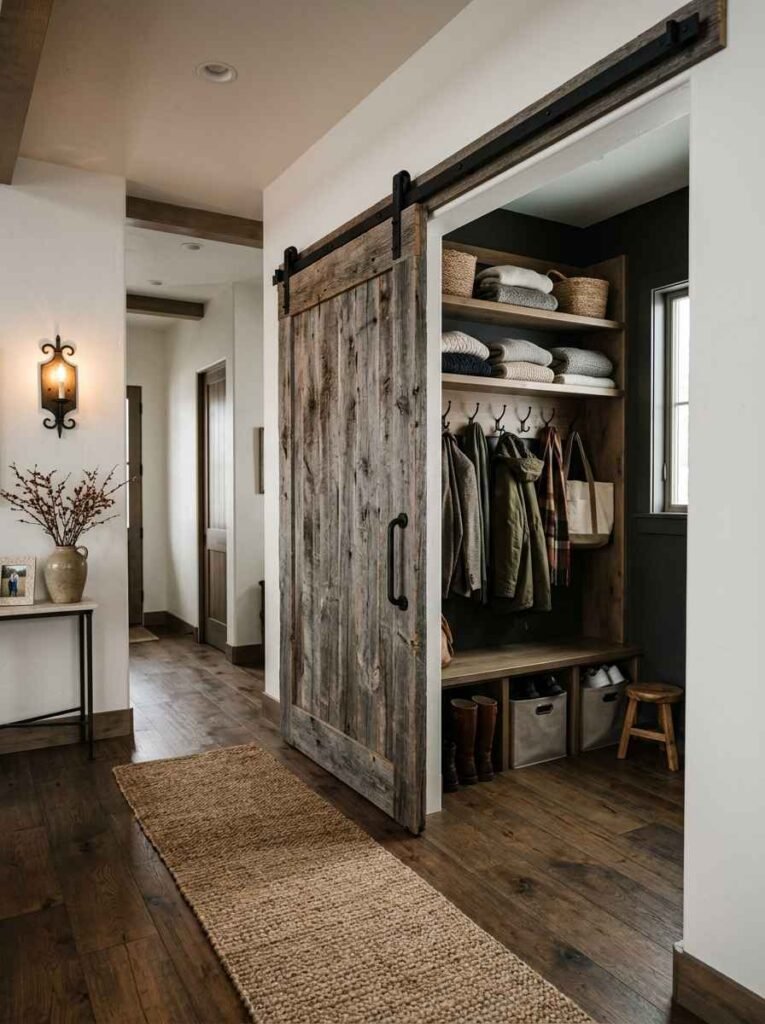
If your entryway connects to a laundry room or closet, a sliding barn door lets you hide the whole situation when guests arrive. Open floor plan mudroom, closed for parties. The barn door hardware actually adds some visual appeal to an otherwise blank wall, so it does double duty.
Labels: the unsexiest idea that actually matters
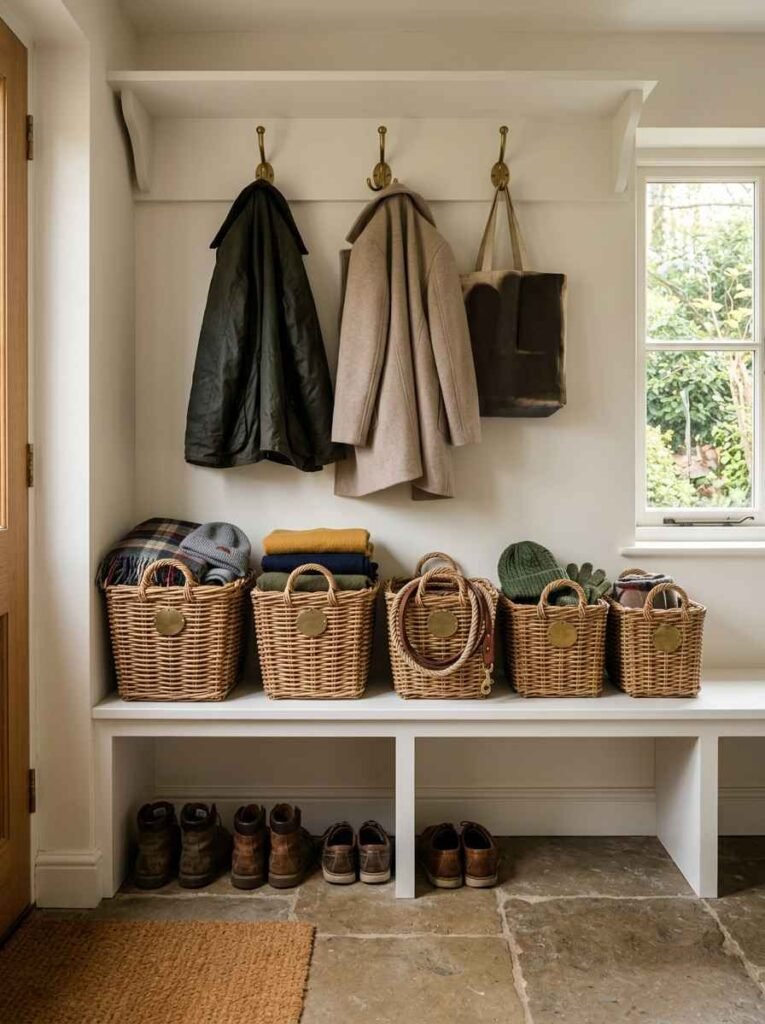
Every bin, basket, hook zone, and cubby in a working mudroom should be labeled. You can do this with a label maker, chalk paint labels, or little brass plate labels for a cleaner look.
When storage is labeled, other people in the household put things back where they belong. Without labels, everything migrates. I cannot stress this enough. 🙂
FAQ
Q: What’s the minimum depth a mudroom bench should be? A: For comfortable sitting and shoe storage underneath, aim for at least 12 to 14 inches deep. Anything under 12 inches starts to feel awkward to sit on, and you lose the ability to store full-size shoes below.
Q: Can I build a functional mudroom in a renter-friendly way without drilling? A: Yes, and it’s more doable than most people think. Over-the-door organizers, freestanding shoe racks, freestanding hook racks (weighted base styles), and peel-and-stick wallpaper give you a full mudroom setup with zero wall damage. The Container Store has a solid renter-friendly entryway section worth browsing.
Q: How do I stop the mudroom from always looking messy? A: Reduce the number of things allowed to live there. Pick a max: maybe 2 pairs of shoes per person in the entryway at once, with the rest stored in bedroom closets. Fewer items with proper spots beat more items with “general storage.” Enforce it for 2 weeks and it becomes a habit.
So, what’s the one change you’re going to make in your entryway first? The hook row? The bench? I’d genuinely love to know, because honestly, sometimes it’s the smallest swap that makes the biggest difference in how a home feels to come back to.
