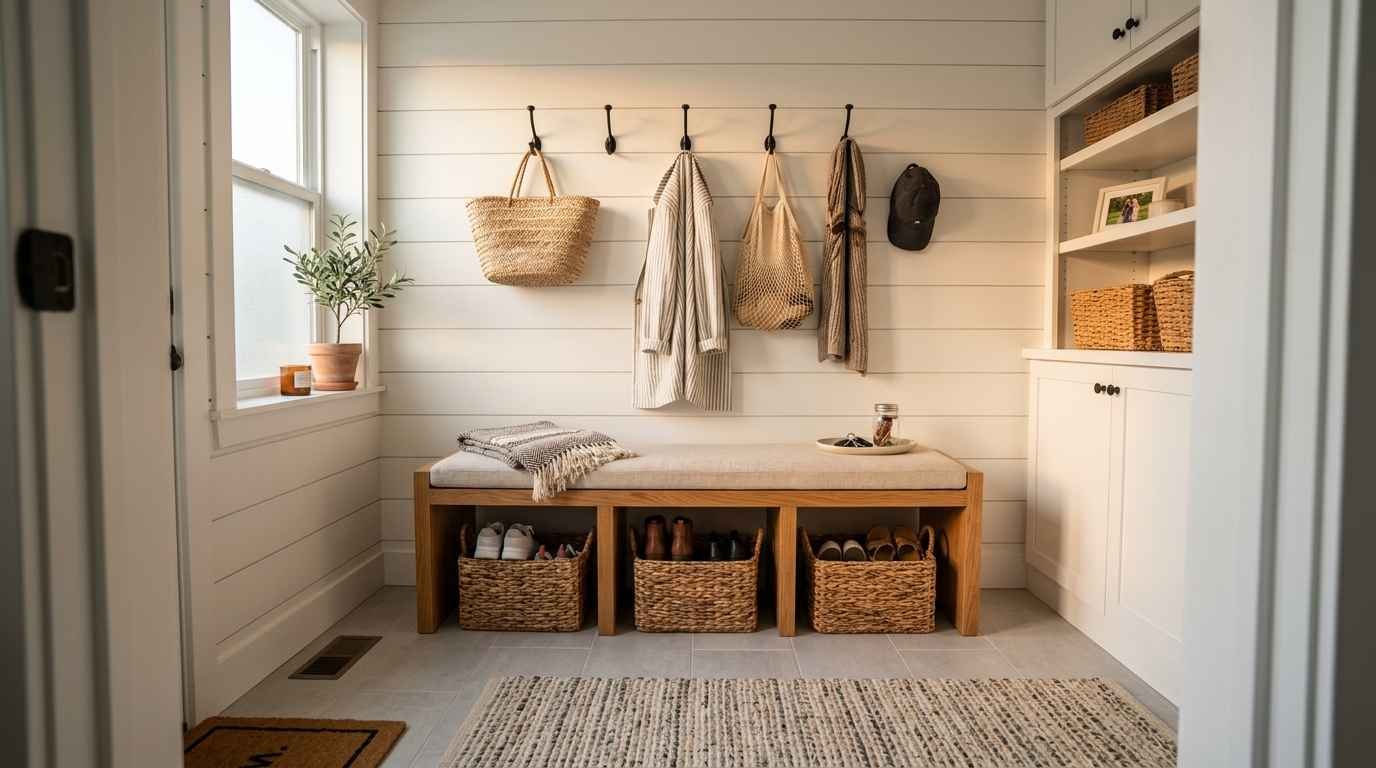
Your entryway is doing too much work for zero credit. It’s catching boots, bags, dog leashes, kids’ backpacks, and somehow always that one random umbrella you forgot existed.
If your small entryway feels more like a pile than a place — this list is for you. I’ve pulled together 21 mudroom ideas
that actually work in tight spaces, without gutting your whole home or spending a fortune.
Small Entryway? Here’s Why It’s Actually an Advantage
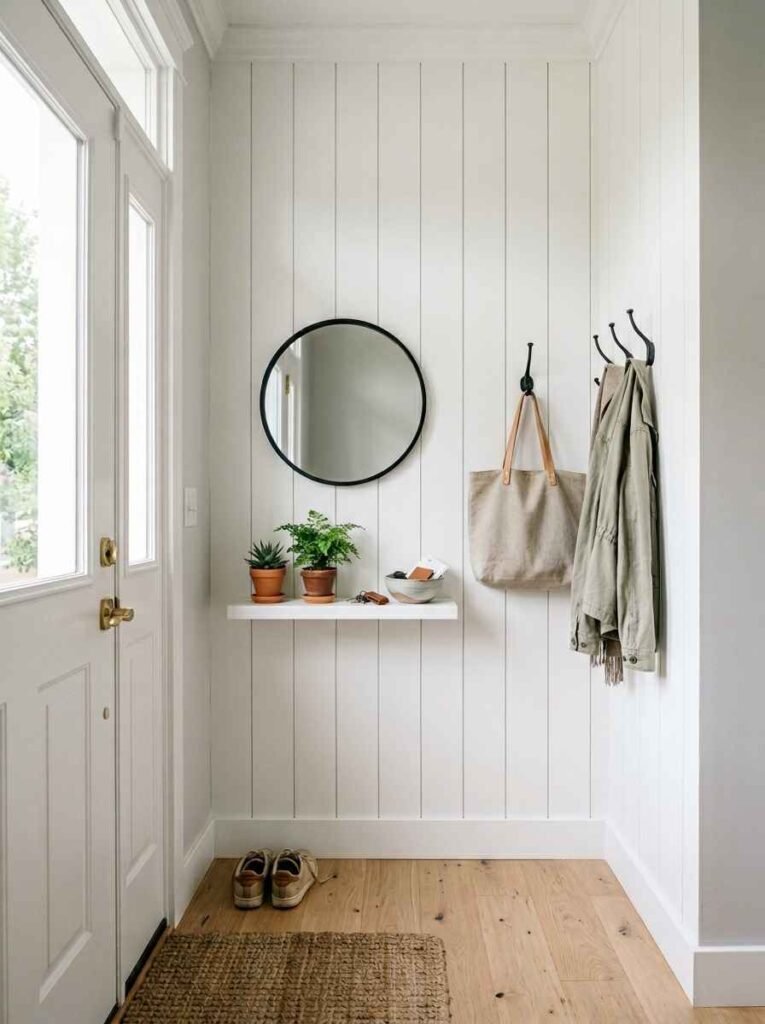
People always assume a bigger space means better design. But honestly, small entryways force you to be intentional.
Every inch earns its keep. You stop throwing random furniture at the wall and start making real decisions.
I renovated a tiny 4×5 entryway last year — no natural light, no closet. It now has hooks, hidden storage, a bench, and a shoe rack.
Zero clutter. Tight spaces are a constraint, and constraints make you creative.
The Real Problem With Most Small Entryways
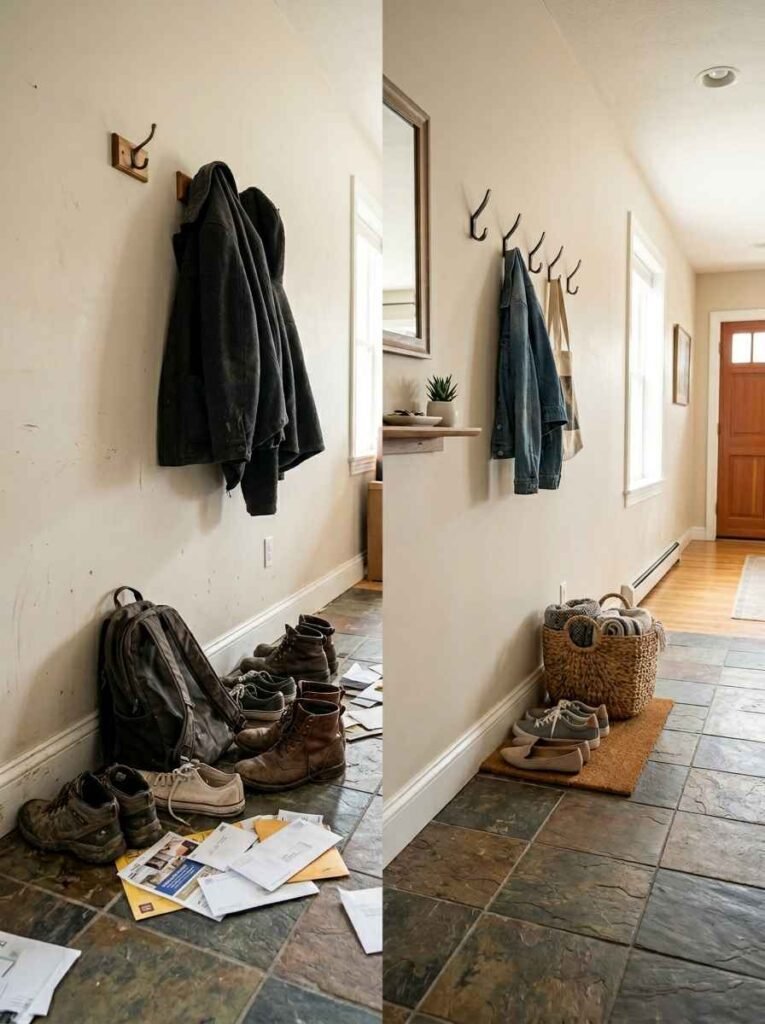
Most people try to solve a storage problem with more stuff. That backfires every time.
The fix is usually vertical space, multi-use furniture, and a clear “drop zone” system — not another basket from Target.
21 Mud Room Ideas That Work Hard in Small Spaces
1. Install a Full-Height Shiplap Wall With Hooks
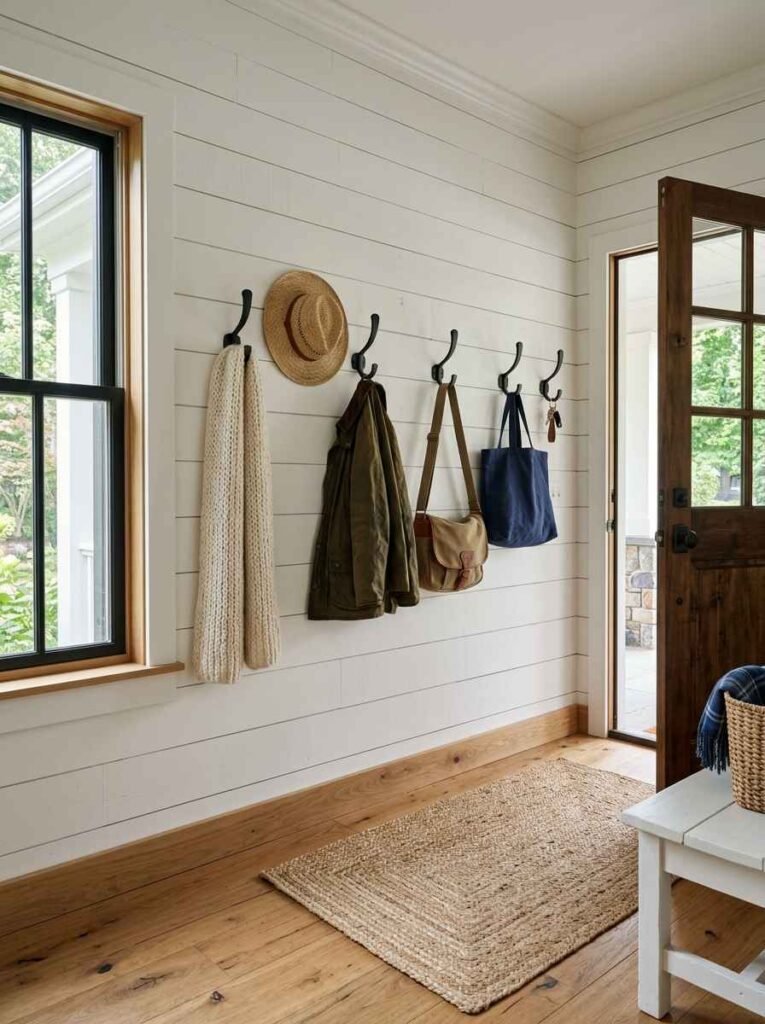
A shiplap accent wall behind your hooks adds texture and that Pinterest-worthy farmhouse vibe everyone’s pinning right now.
The vertical lines make the space look taller. Add 4–6 oversized hooks at different heights so you can hang coats, hats, and tote bags without them all piling on top of each other.
I tried this in a rental (removable shiplap panels — yes, that’s a thing) and it changed the whole room.
2. Built-In Bench With Under-Seat Storage
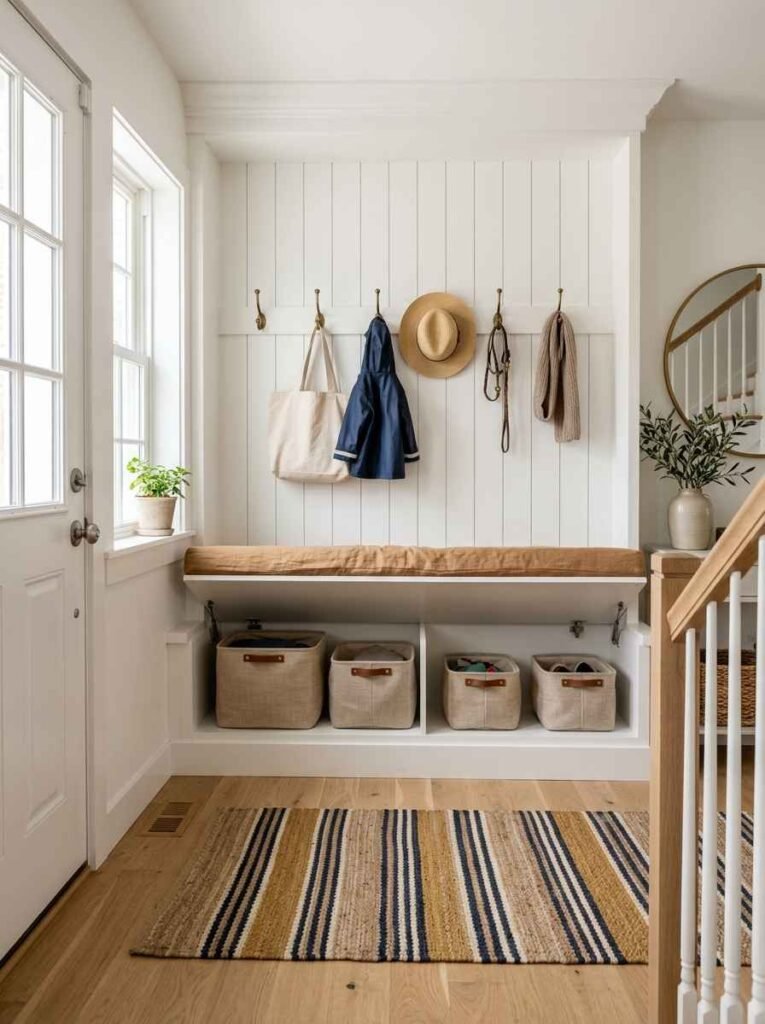
A bench with lift-up storage underneath is the MVP of small mudroom design. You get a seat to pull on shoes AND a place to hide all the stuff you don’t want guests to see.
Use baskets inside to keep it organized — one per family member works well.
This is probably my favorite on the whole list, bro. Seriously. Multi-use furniture in a small space? Game over.
3. Floor-to-Ceiling Open Shelving
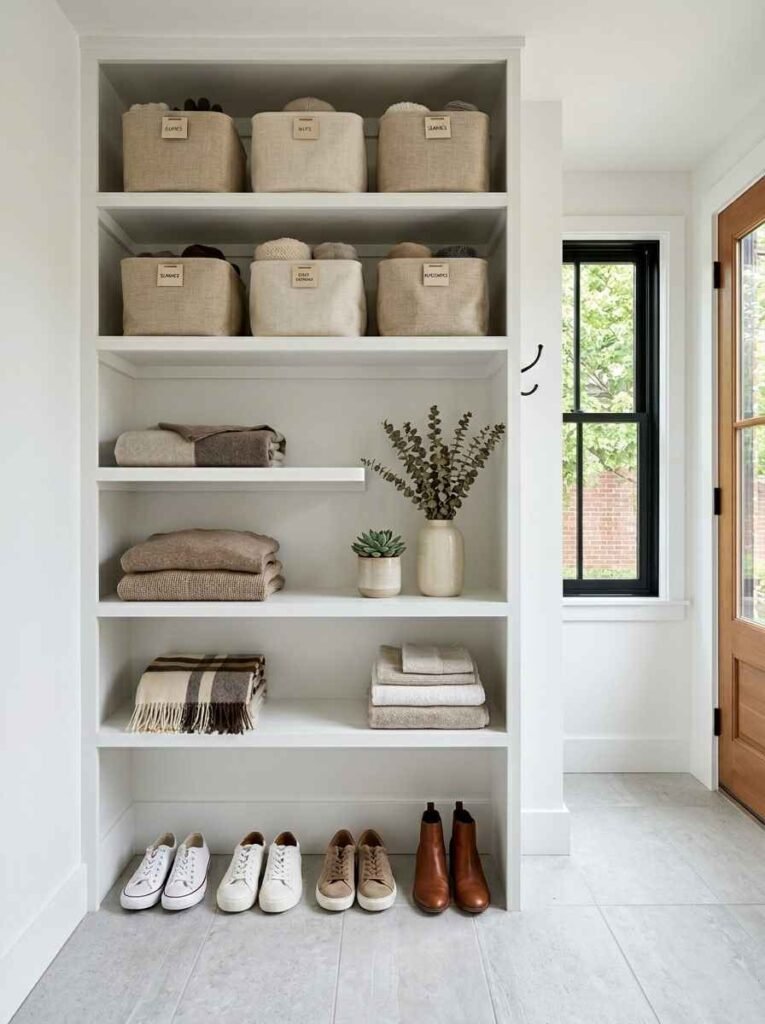
Open shelving gives you storage without the bulk of cabinets. Go floor to ceiling and you’ll be surprised how much fits.
Style the upper shelves with labeled bins for seasonal stuff, and keep the lower ones accessible for daily use.
The key: don’t let it become a dumping ground. Label everything. Enforce the system for at least two weeks and it becomes habit.
4. Pegboard Wall Organizer
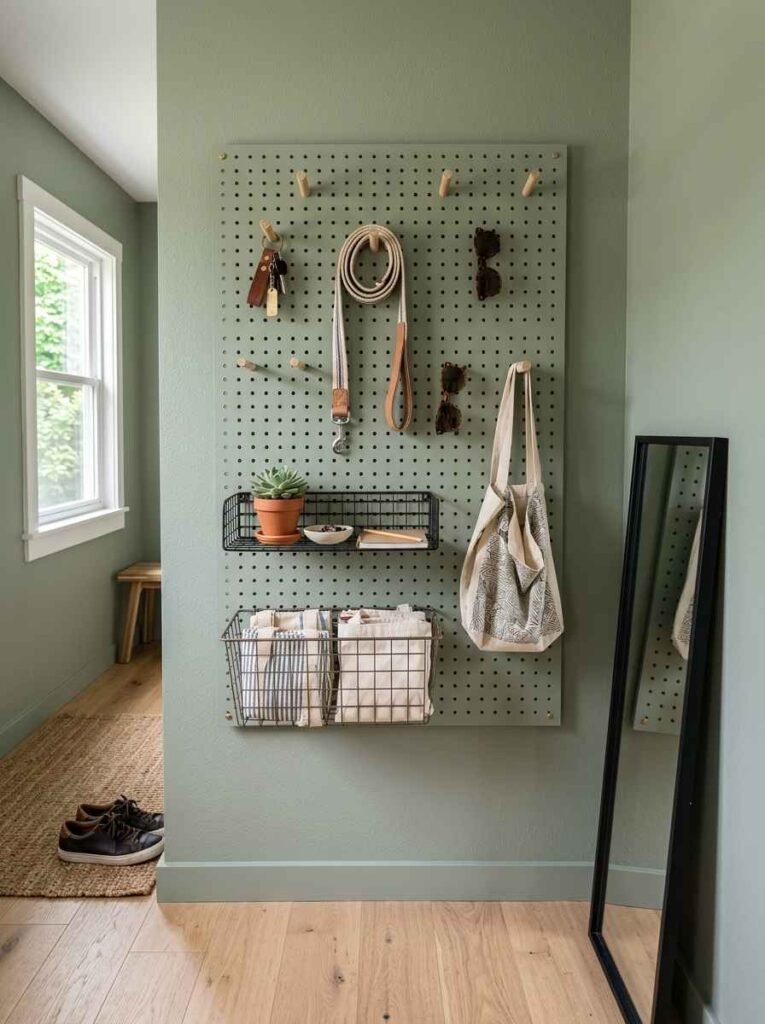
Pegboards aren’t just for garages anymore. A painted pegboard in a mudroom lets you customize hooks, shelves, and bins exactly where you need them.
Move things around as your life changes — new sports season, new bag, new obsession.
This one is honestly underrated. Most people skip it because it reminds them of a workshop. But paint it the same color as your wall and it disappears into the design.
5. Slim Console Table With Baskets Below
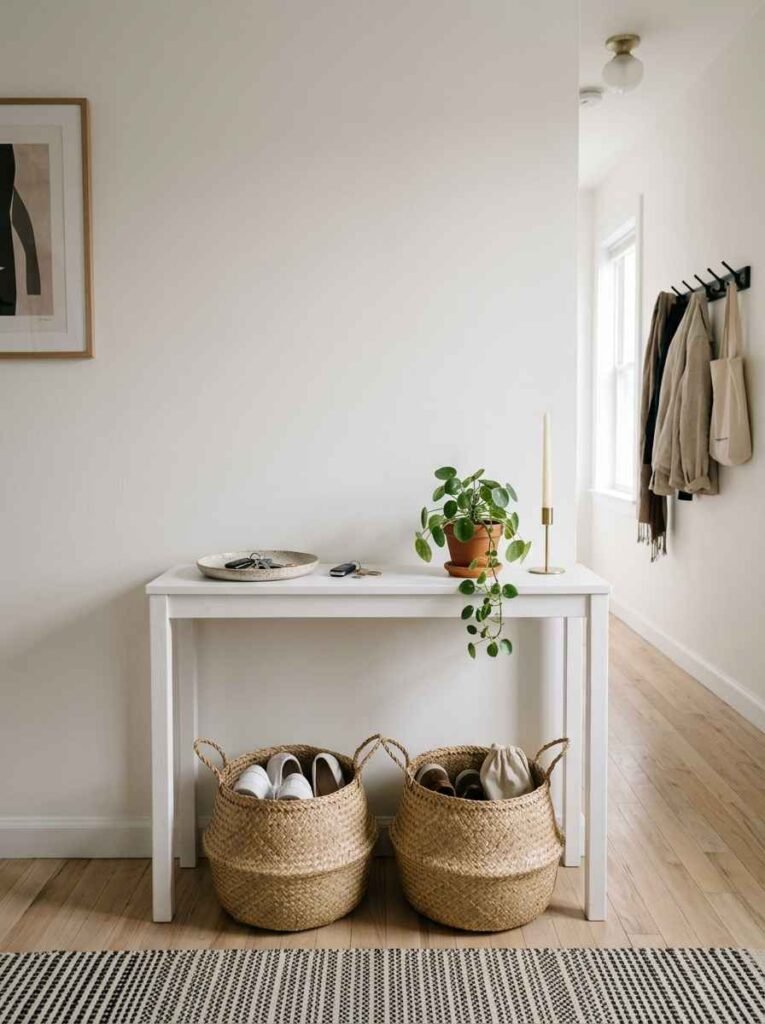
No room for a full bench? A slim console table with woven baskets tucked underneath does the same job.
You get a surface for keys and mail, baskets for shoes, and it takes up maybe 12 inches of depth. Works great in apartments and rental homes where you can’t do built-ins.
Quick Comparison: Storage Solutions for Small Entryways
| Solution | Space Needed | Best For | Approx. Cost |
|---|---|---|---|
| Built-in bench | 18–24 inches deep | Families with kids | $300–$800 |
| Pegboard wall | Wall space only | Renters, DIYers | $30–$80 |
| Slim console + baskets | 10–14 inches deep | Apartments | $100–$300 |
| Floor-to-ceiling shelving | Wall space only | Maximizing vertical | $150–$500 |
6. A Dedicated Shoe Cabinet (Slim Profile)
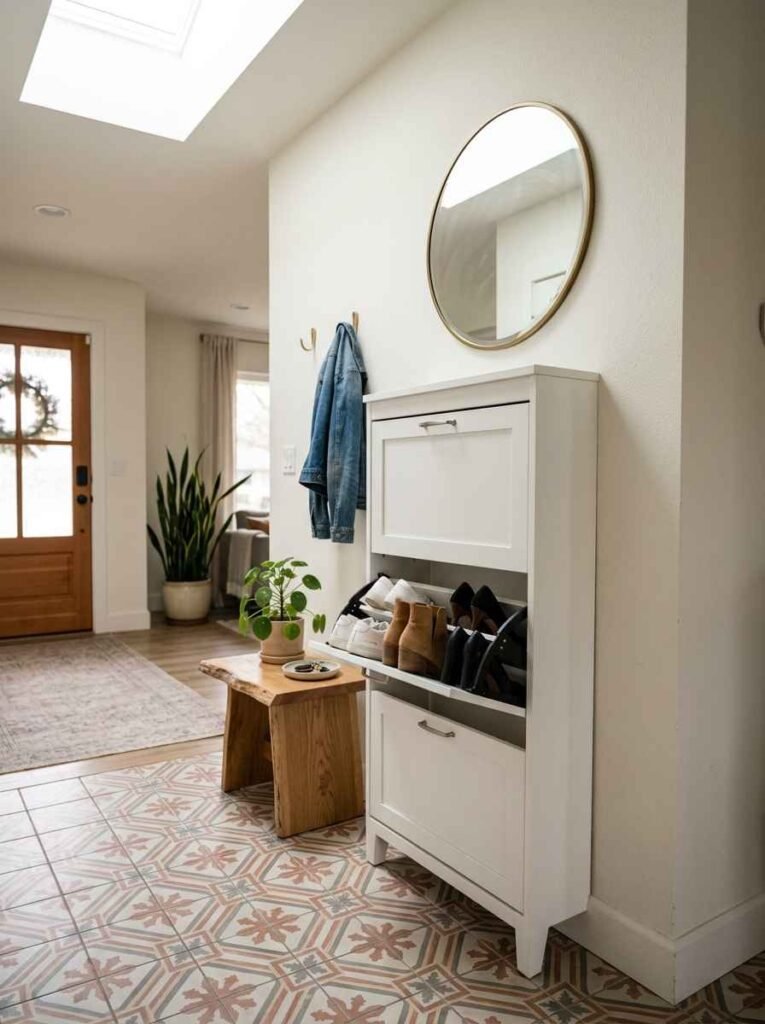
A tall, slim shoe cabinet with flip-down doors keeps footwear hidden and the floor clear. These come in profiles as thin as 10 inches.
If your entryway floor is always a trip hazard — literally — this solves it fast.
I picked one up from IKEA and it holds 16 pairs of shoes. No more kicking sandals across the hallway.
7. Floating Shelves With Labeled Bins
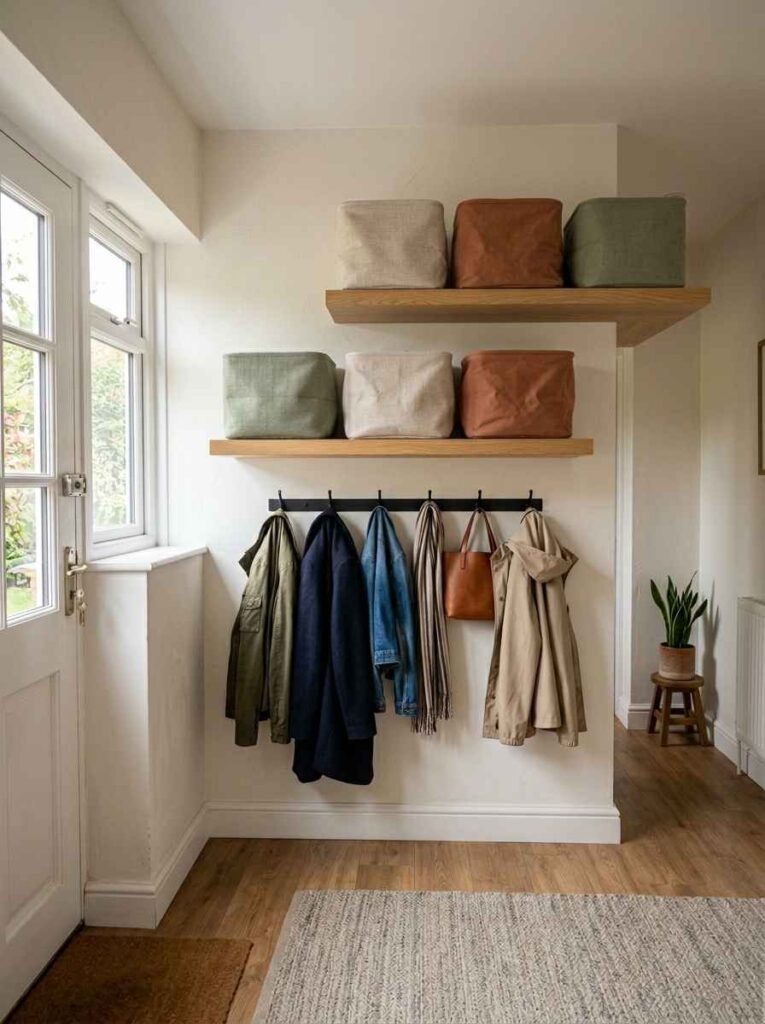
Mount two or three floating shelves at eye level and above. Use labeled bins for each person in the house — or by category (sports gear, school stuff, dog supplies).
This works especially well if you don’t have floor space for furniture.
Honestly, labeling changed my life. Sounds dramatic. It’s not.
8. A Locker-Style System for Kids
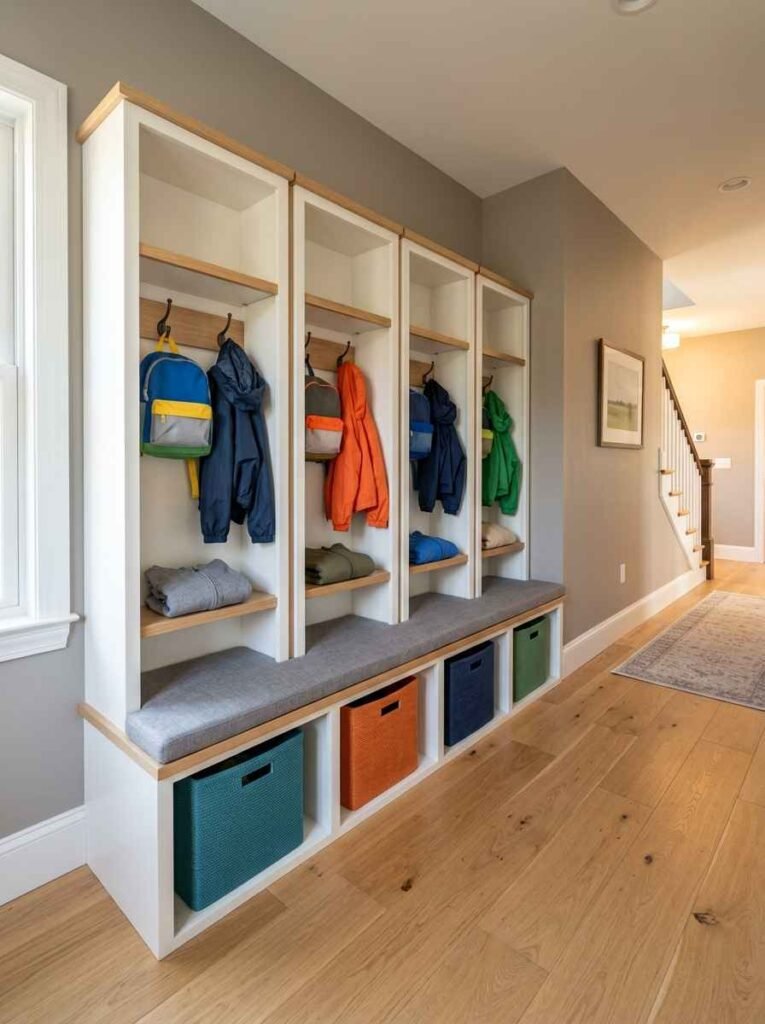
If you’ve got kids, a mini locker setup is the answer. Each kid gets their own column: hooks for their bag and coat, a shelf for their hat and gloves, and a cubby for shoes.
They know exactly where their stuff goes. No more “Mom, where’s my backpack?” at 7:58 AM.
IKEA’s Kallax shelves + some hooks + a few baskets = DIY lockers for under $150. I’ve seen this done beautifully on Pinterest and it actually holds up in real life too.
9. Wainscoting + Hooks for a Classic Look
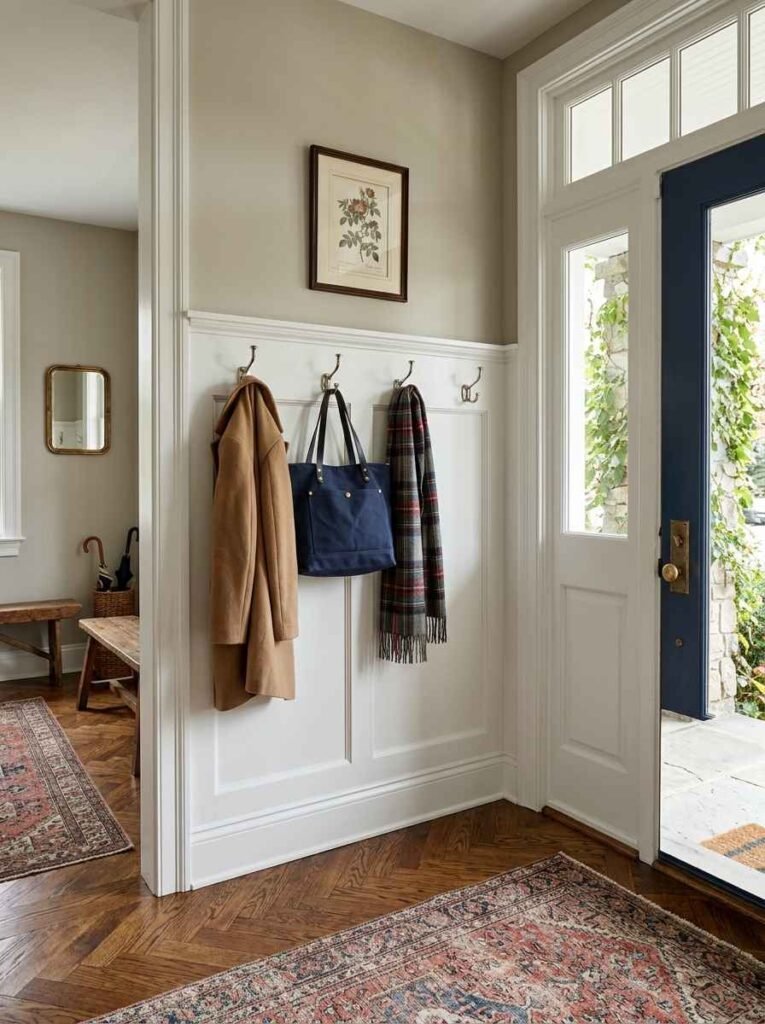
Wainscoting on the lower half of your entryway wall adds structure and protects the paint from scuffs (which, with a busy household, is very real). Mount a row of shaker-style hooks across the wainscoting panel.
It looks polished, put-together, and very “English cottage” — which is a vibe I’m fully here for.
10. A Small Mudroom Nook With Curtain Closure
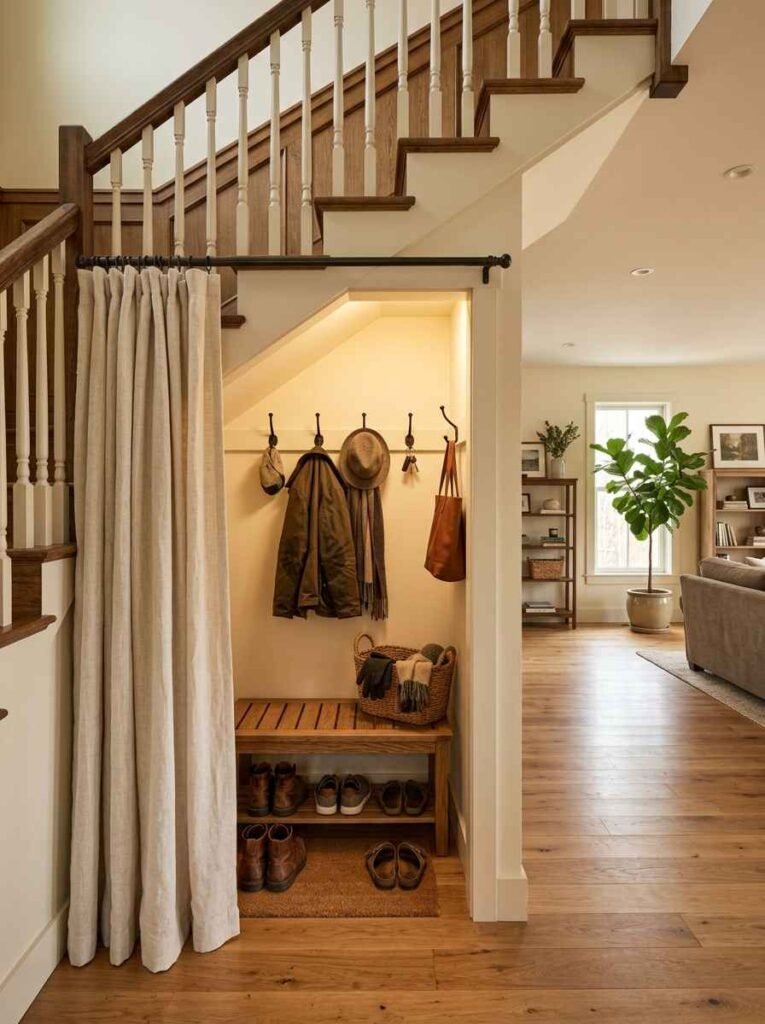
Got an awkward alcove or understairs space? Turn it into a mini mudroom nook. Add hooks, a small bench, and hang a curtain across the front to hide everything when you want it out of sight.
This works really well in open-plan homes where the entryway bleeds into the living room.
11. Magnetic Key Strip + Command Center
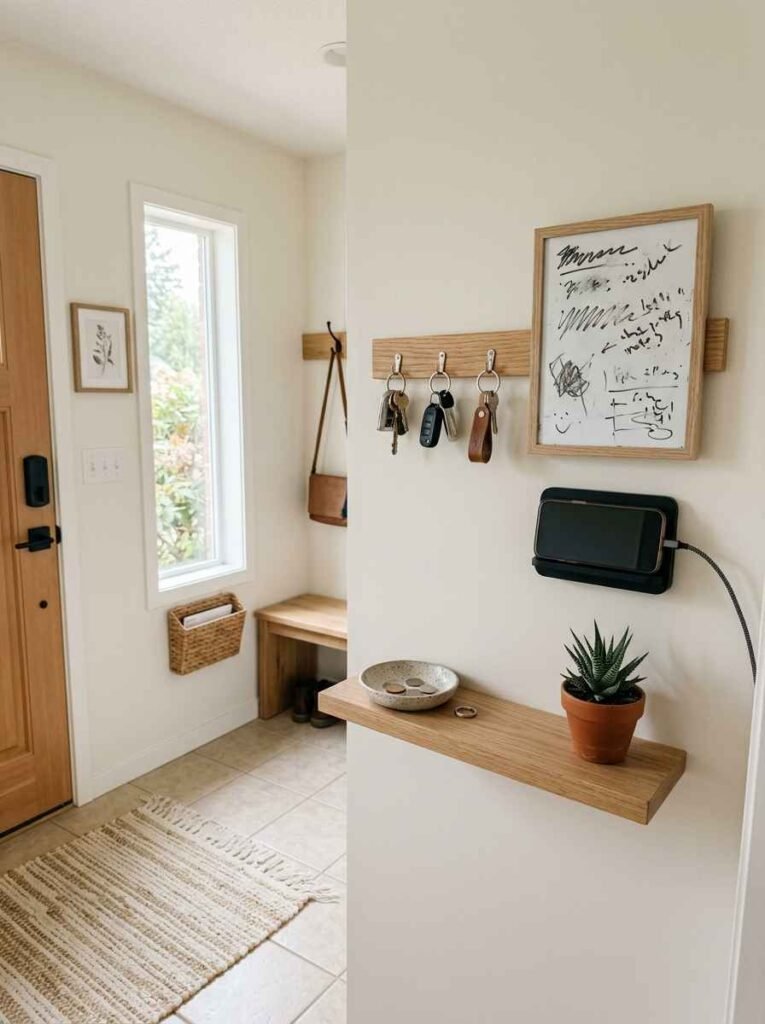
A magnetic strip for keys, a small whiteboard for notes, and a charging dock for phones — this “command center” setup keeps everyday chaos under control.
Mount it right at the door so you grab keys and check reminders on the way out.
This flopped for me the first time because I put it too high up on the wall and stopped using it. Eye level. That’s the rule.
12. Mirror With Hidden Storage
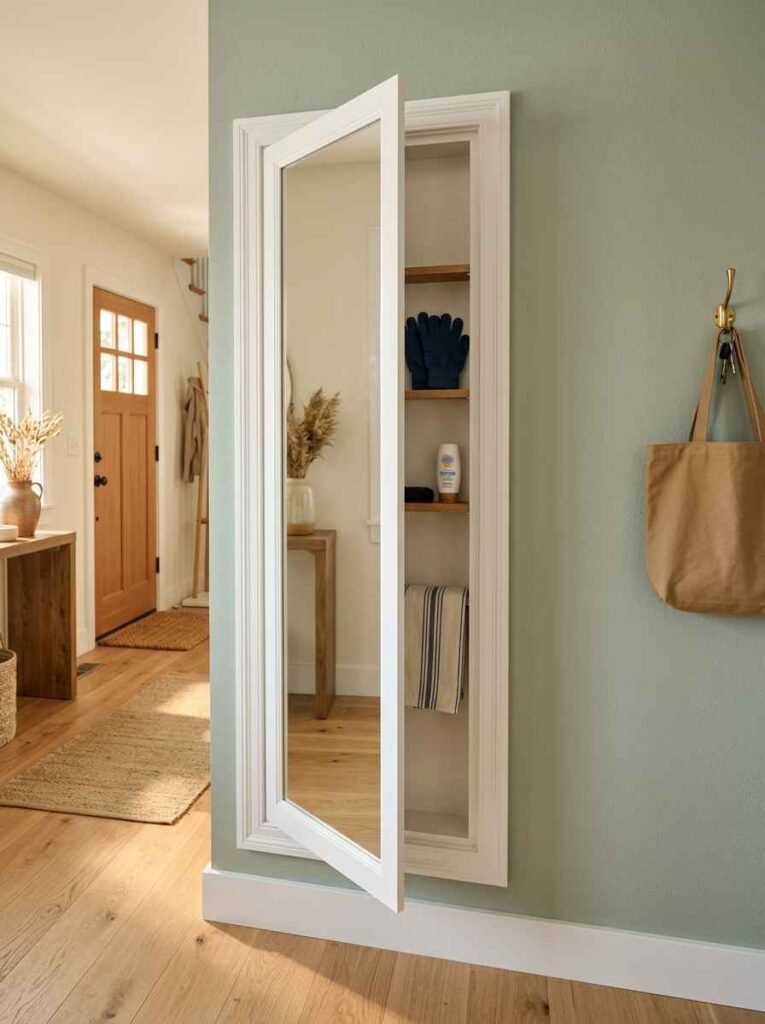
A full-length mirror with a hidden cabinet behind it is chef’s kiss for small entryways. You get a functional mirror to check yourself before leaving, plus hidden storage for gloves, sunscreen, small tools, or whatever random stuff lives near your door.
Looks sleek, hides everything.
13. Wall-Mounted Fold-Down Bench
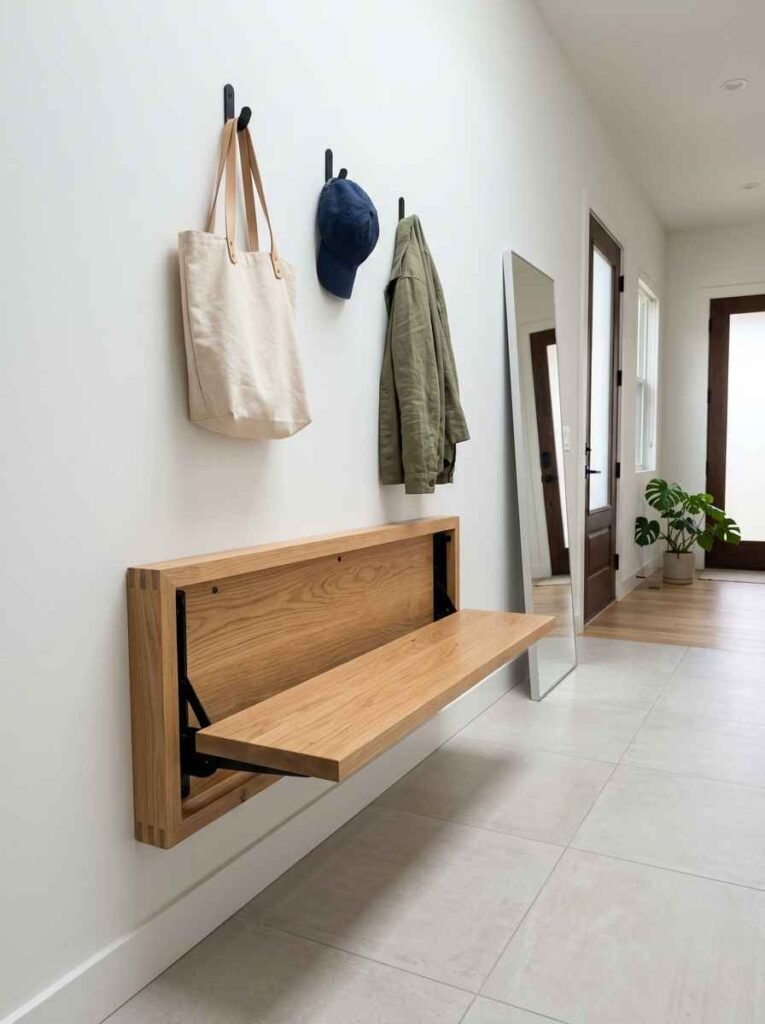
In a super tight entryway — think 3 feet wide — a fold-down bench is the move. It folds flat against the wall when not in use.
You get the function without sacrificing the floor space permanently. Pair it with hooks above and you’ve got a complete system in under 12 inches of depth.
14. Painted Brick + Industrial Hooks
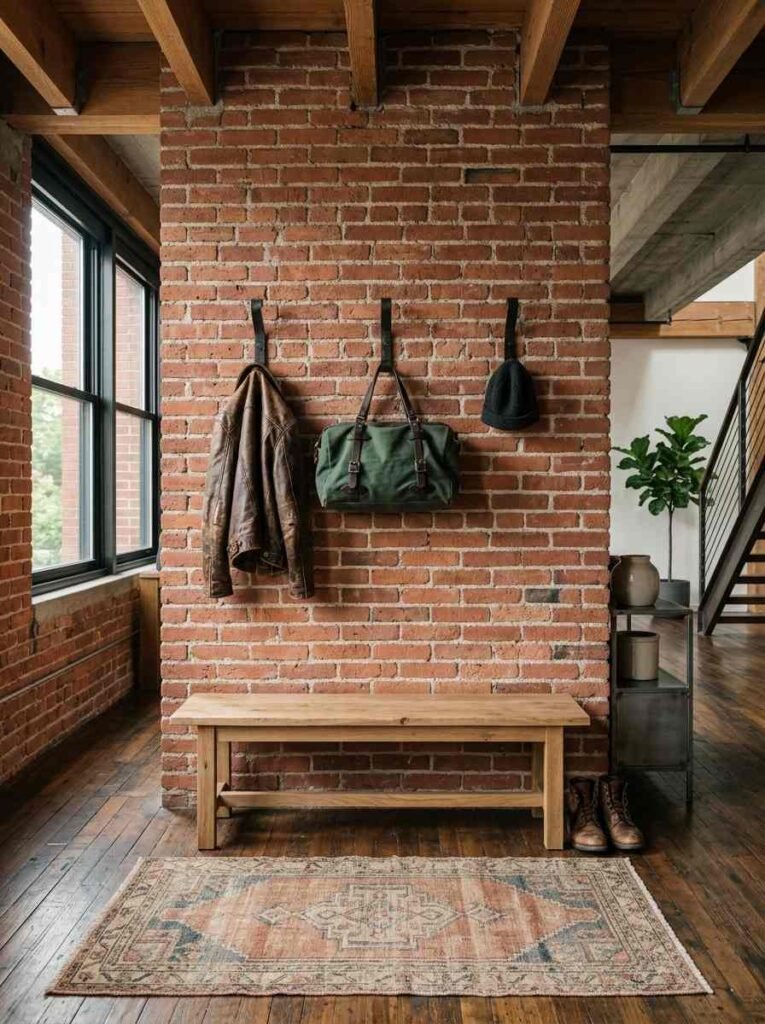
If you’ve got exposed brick in your entryway (lucky you), lean into it. Mount oversized black iron hooks directly into the brick and let the texture do the heavy lifting design-wise. Add a simple wooden bench and a vintage rug. Done.
It takes 20 minutes and looks like something from an interior design magazine.
15. Drop Zone Tray System
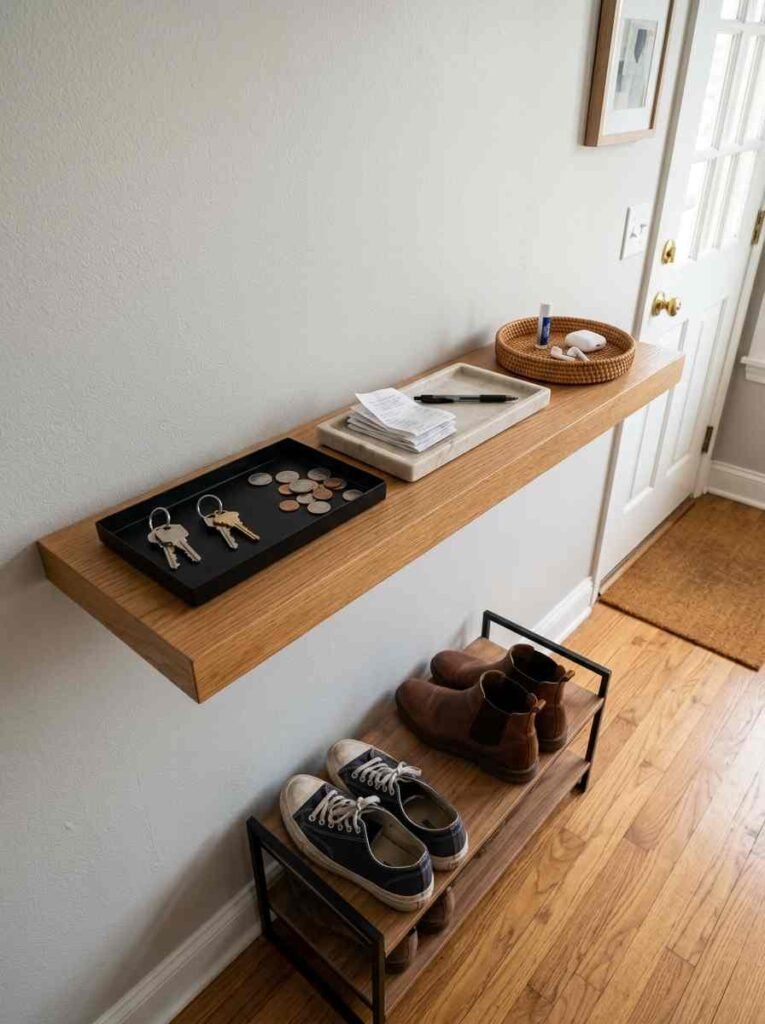
A tray system isn’t glamorous, but it works. Designate one tray for keys, one for mail, one for random pocket items.
Place them on a shelf or console table right at the door. Takes 10 seconds to drop stuff in the right place, saves 10 minutes of searching later.
16. Vertical Bike + Gear Storage
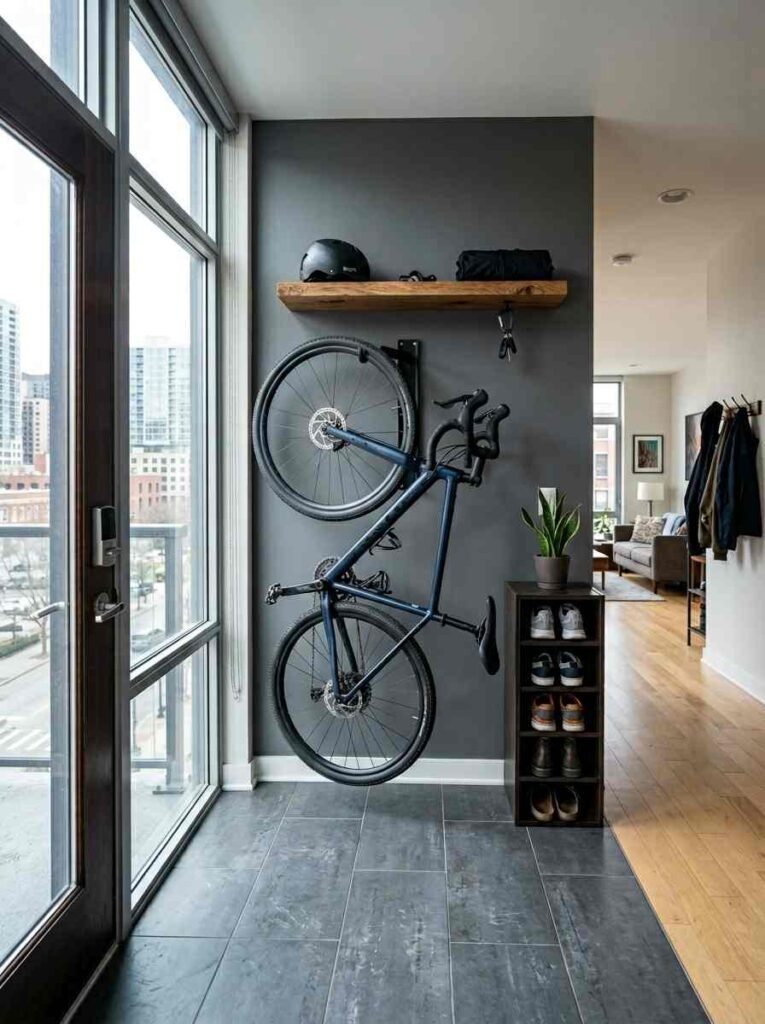
For cyclists or active households, vertical storage for bikes and gear in the entryway saves the garage and keeps everything accessible.
Wall-mounted bike hooks plus a gear shelf above makes the sports equipment part of the design, not just a pile on the floor.
This one sounds wild but I’ve seen it done really well in Brooklyn apartments and it genuinely looks cool.
17. Natural Fiber Baskets + Rattan Details
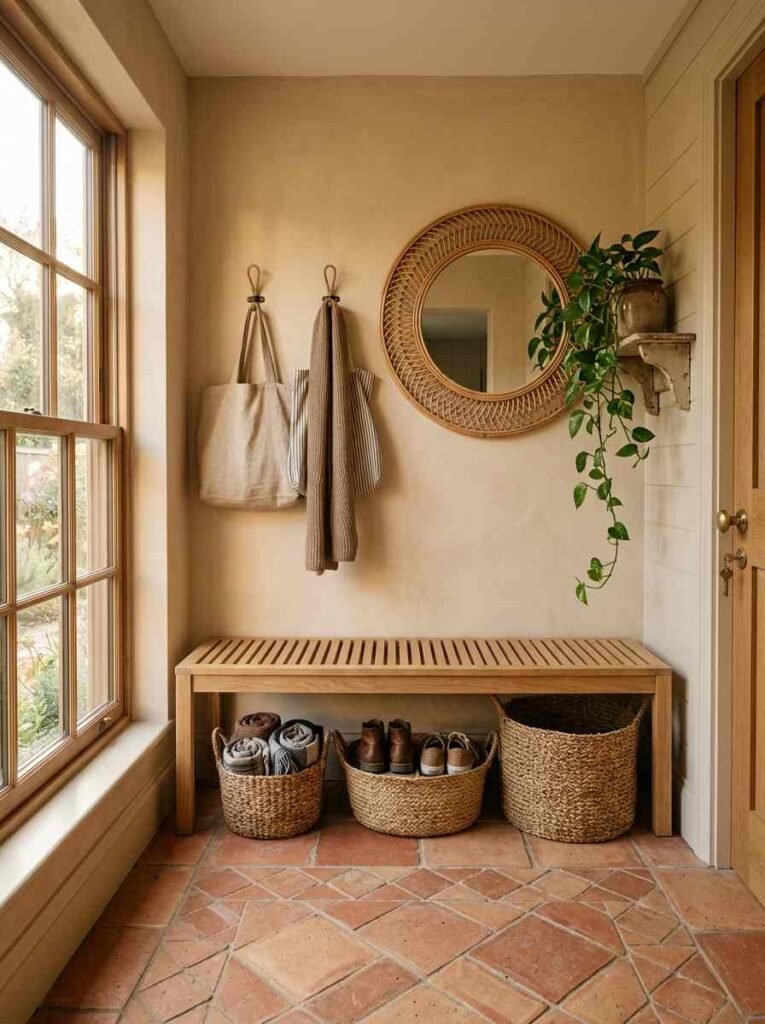
Swap plastic bins for natural fiber baskets and you immediately make the space feel warmer and more considered.
Rattan, seagrass, or jute all work. They’re practical (shoes, hats, scarves fit easily) and they look pulled-together without any effort. This is a Pinterest win every single time.
18. Wallpaper Accent Wall in the Entryway
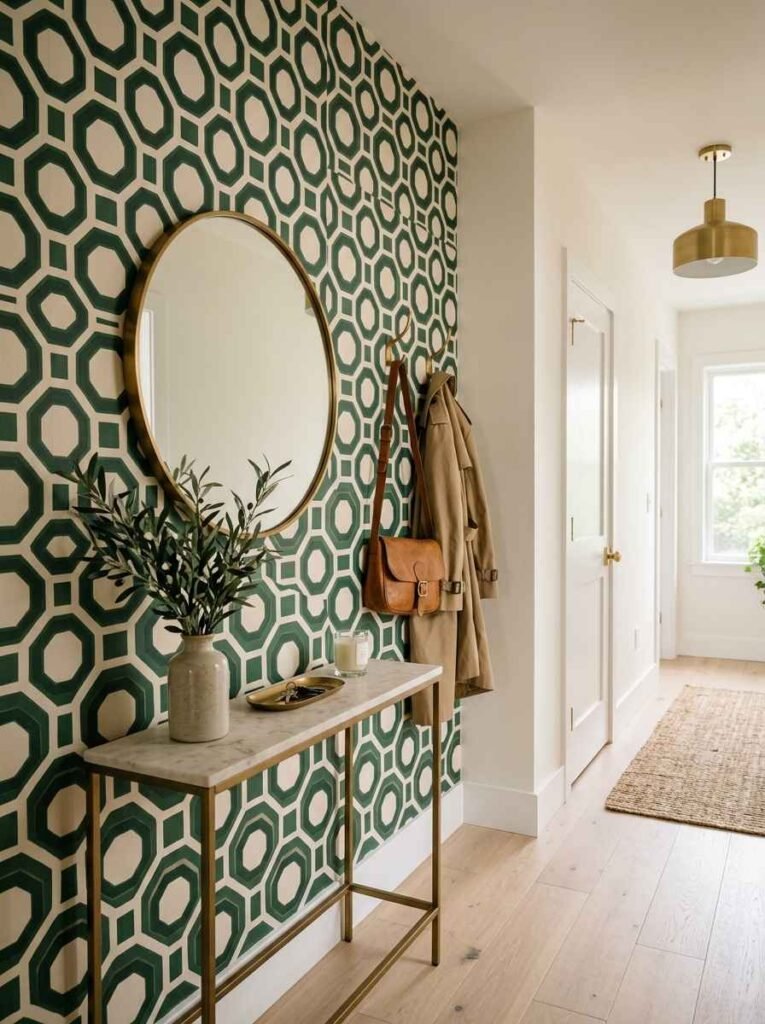
A bold wallpaper on one wall of a small entryway makes it feel intentional instead of cramped.
Go for something geometric, botanical, or a large-scale pattern. The small square footage actually works in your favor — you only need one roll to make a statement.
Honestly, this trend feels a little overdone now with maximalist jungle prints everywhere. But a clean geometric or subtle textural wallpaper? Still killer.
19. Built-In Cubbies With Fabric Bin Inserts
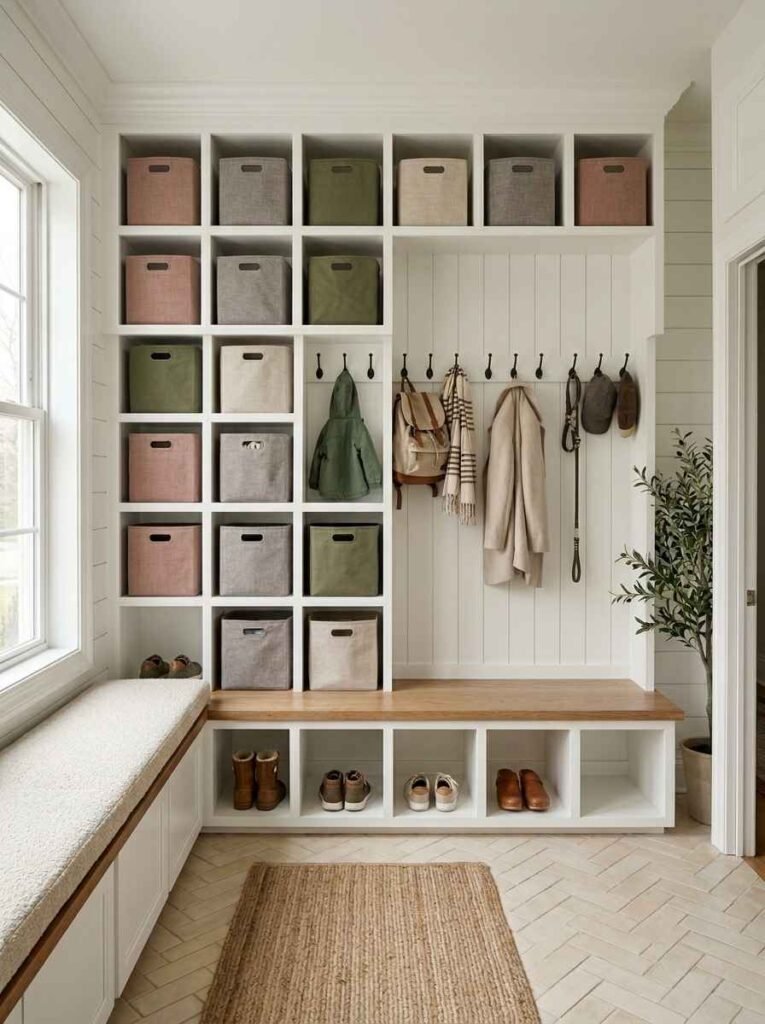
Custom or semi-custom cubbies along one wall give every family member their own section. Drop in fabric bins for soft items, add hooks above each cubby, and put a low shelf at the bottom for shoes.
It’s the most organized a mudroom can possibly get without hiring a professional organizer.
20. Coat Closet Conversion
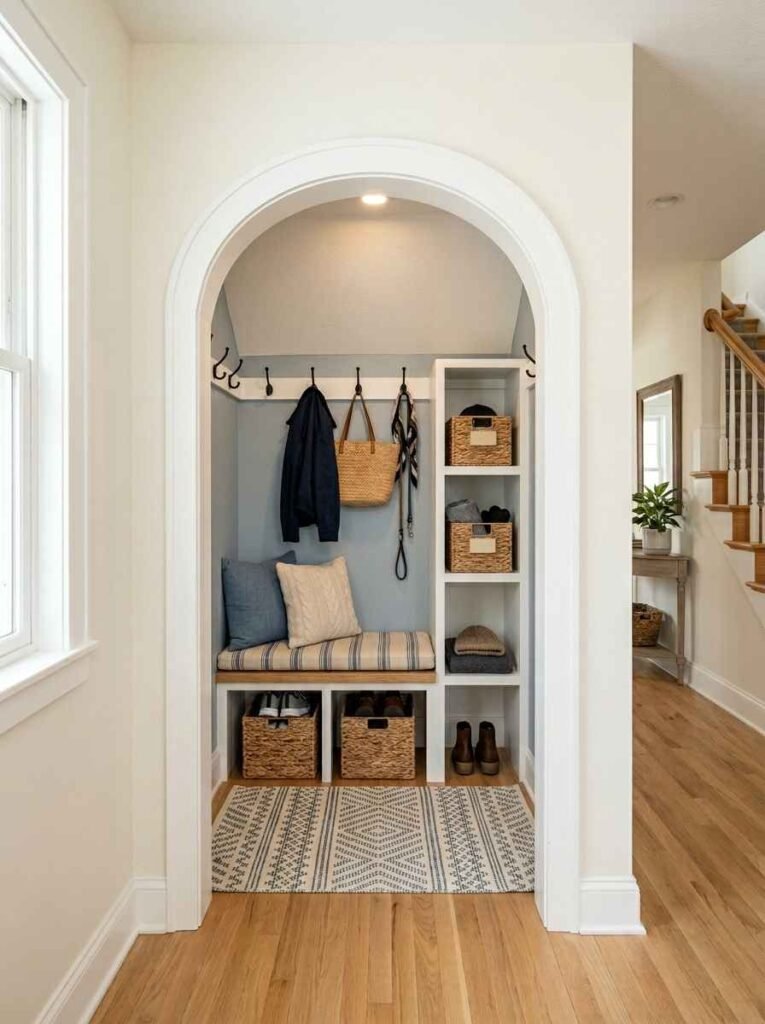
If you have a coat closet right at the entrance, convert it into a proper mudroom. Take the door off (or replace it with a curtain), add shelving, hooks,
a small bench if it fits, and lighting. Suddenly your dead-storage closet is the most functional spot in your home.
This is the single highest-return project on this list. I did it in a weekend. Completely worth it.
21. Minimalist Black + White With One Warm Accent
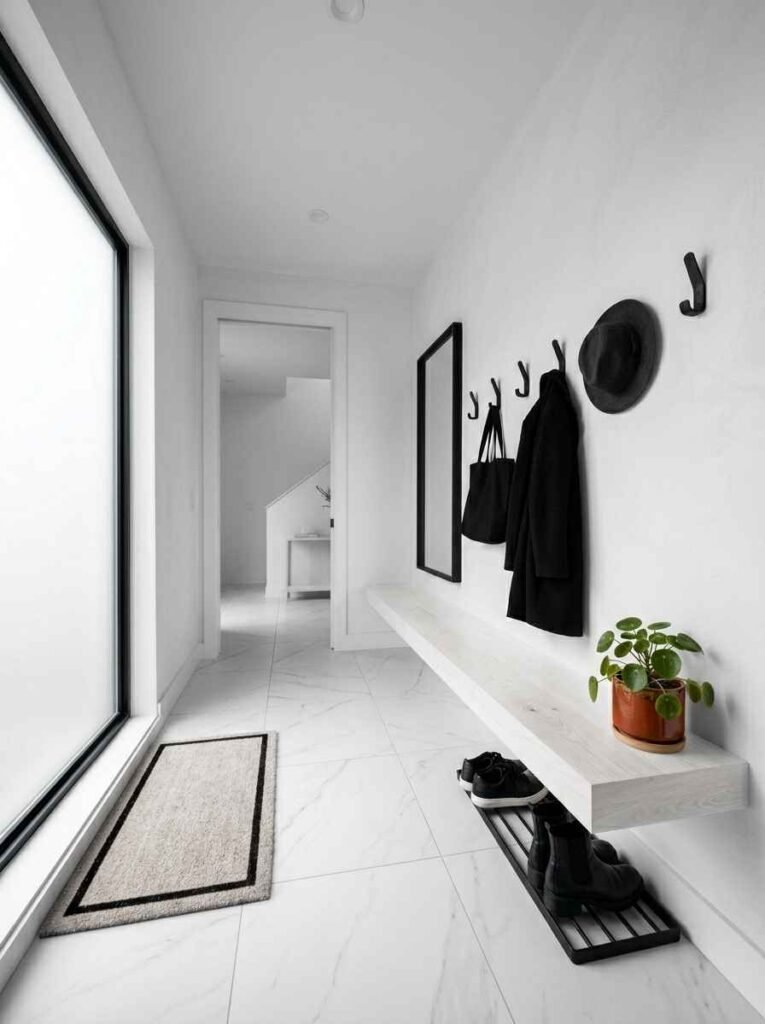
When in doubt, go minimalist. White walls, black hooks, black shelf brackets, a white or light wood bench.
Then add one warm accent — a terracotta pot, a mustard-yellow rug, a woven basket. It’s clean, timeless, and photographs beautifully for Pinterest.
Functional AND pinnable? That’s the goal.
What Actually Makes a Small Entryway Work
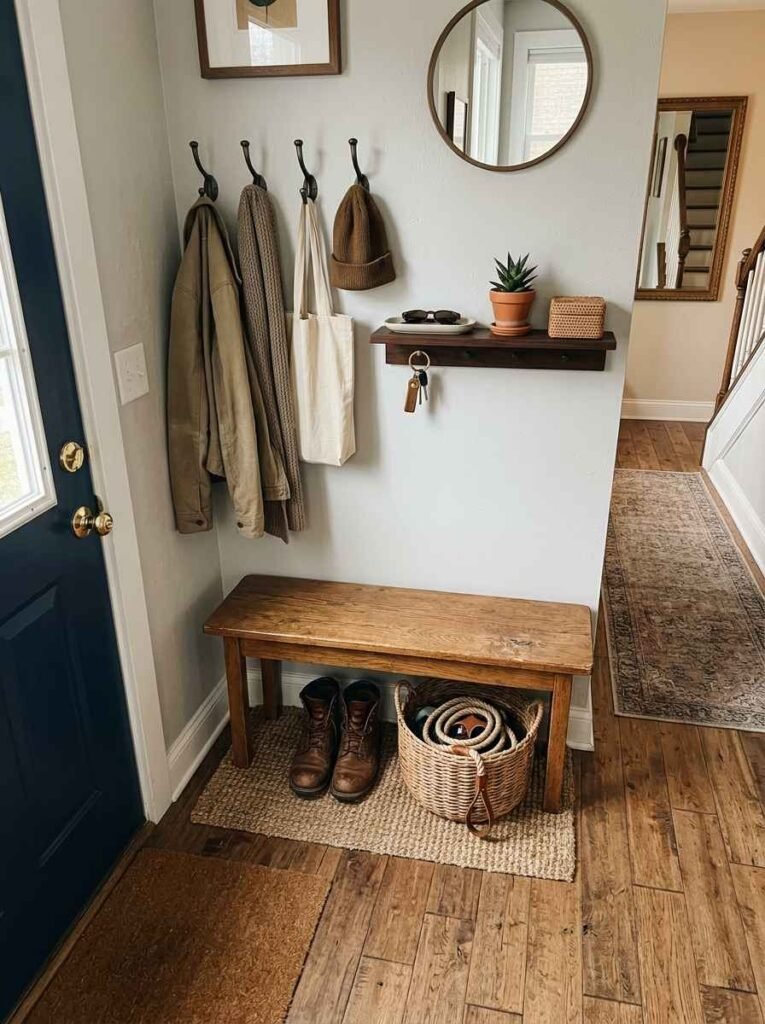
It comes down to three things: a clear drop zone (one spot for keys, bags, shoes), vertical storage (walls are free real estate), and a system the whole household will actually use.
Not the system you want them to use. The one they’ll naturally fall into.
The design can be beautiful, but if the hooks are too high for your kids or the baskets are too small for your boots, nobody uses the system. Function first, always.
Materials That Hold Up in High-Traffic Entryways
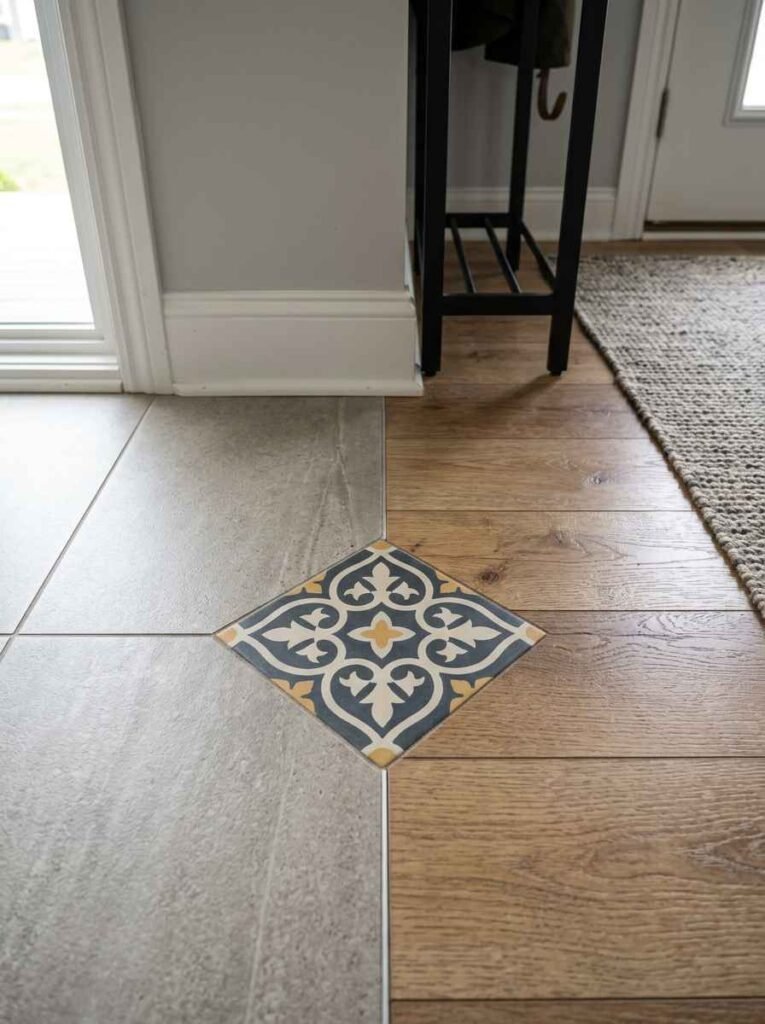
- Painted wood or MDF for shelving (wipes clean easily)
- Metal hooks rated for actual weight — cheap plastic ones snap fast
- Vinyl plank or tile flooring — easier to clean than carpet, obviously
- Washable paint finish — eggshell minimum, satin is better near doors
FAQ
Can I create a mudroom in a really tiny apartment entryway? Yes, and you don’t need built-ins to do it. A slim console table, a wall-mounted key strip, two sturdy hooks, and a basket on the floor is a functional mudroom. It’s about the system, not the square footage.
What’s the best flooring for a mudroom? Porcelain tile or luxury vinyl plank. Both handle water, mud, and heavy foot traffic without looking beat up within a year. Avoid hardwood directly at the door — moisture warps it over time.
How do I make a mudroom look good on a small budget? IKEA hacks, pegboards, and secondhand furniture take you further than most people expect. A $40 pegboard, $20 in hooks, and a $60 bench from Facebook Marketplace can build a fully functional mudroom. The rest is styling — baskets, a rug, a mirror.
Wrapping Up
A small entryway doesn’t have to be a stress point every time you walk through the door. With the right storage, a clear system, and a little bit of style, it becomes one of the most satisfying spaces in your whole home.
These 21 mudroom ideas work because they’re built around real constraints — tight square footage, shared households, actual life. Pick two or three that fit your space and start there. You don’t need all 21.
For more mudroom inspiration, check out Apartment Therapy’s entryway guides or browse Houzz’s mudroom idea book — both are solid resources for real homes, not just staged ones.
Have you tried any of these in your own space? I’d love to know what worked (and what totally flopped). Drop it in the comments — your experience might help someone else figure out their own messy entryway situation.
