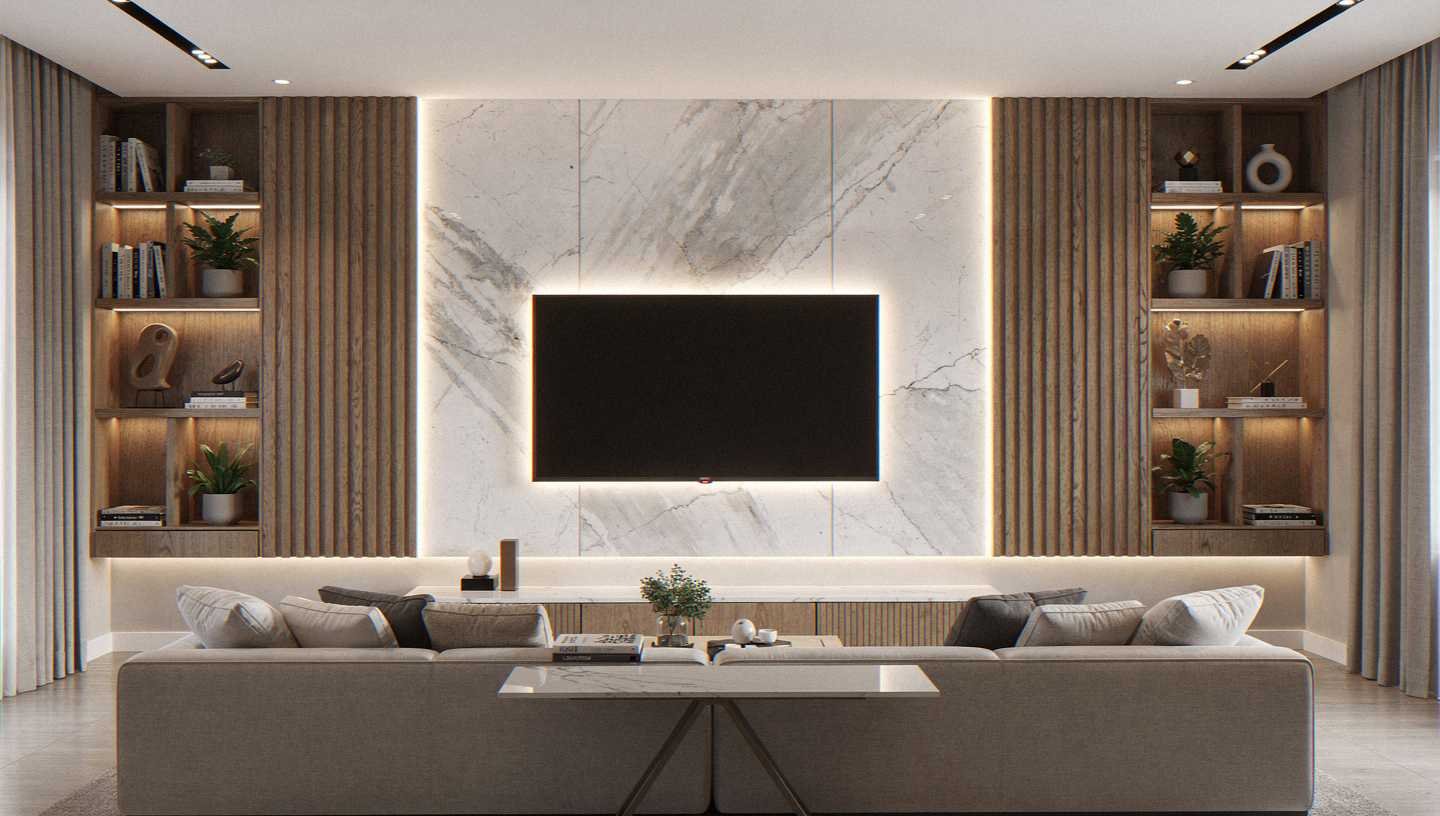
Your TV wall is staring at you right now, looking boring and uninspired. I know, because mine looked exactly the same until I decided enough was enough. That plain wall with a mounted TV and maybe a sad floating shelf underneath? Yeah, we can do so much better than that.
Let me share some creative design ideas that’ll turn your TV wall from “meh” to “wow”—without requiring an interior designer’s budget or a construction crew camped in your living room for weeks.
Floating Shelves: Simple Yet Transformative
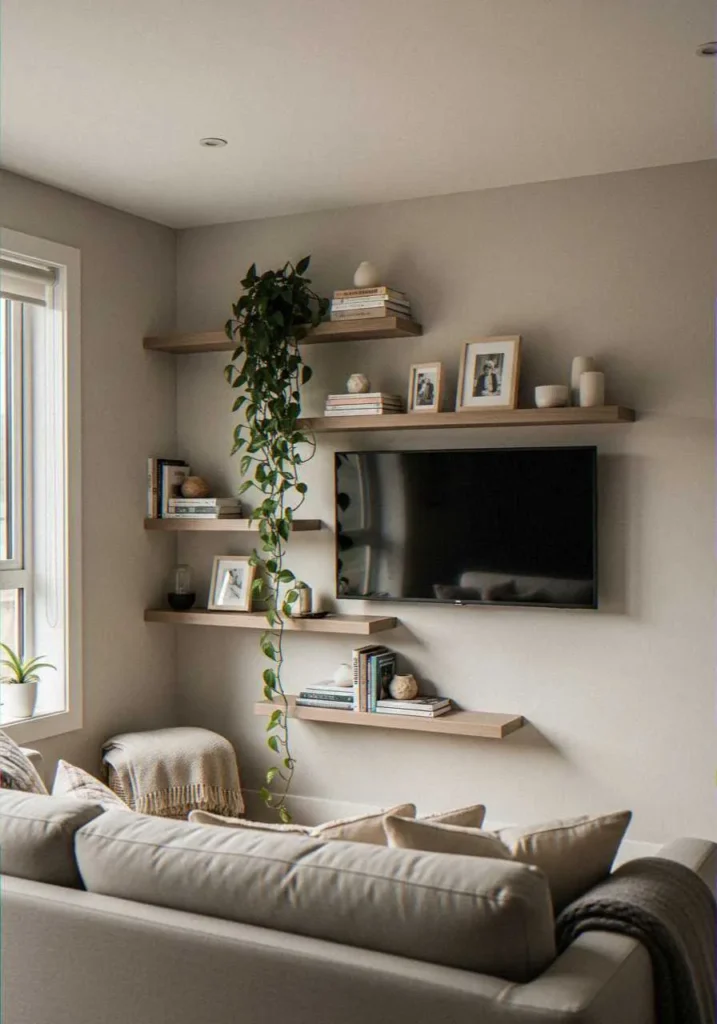
Here’s where most people start, and honestly? Floating shelves are your best friend when you want functionality without the commitment of built-ins.
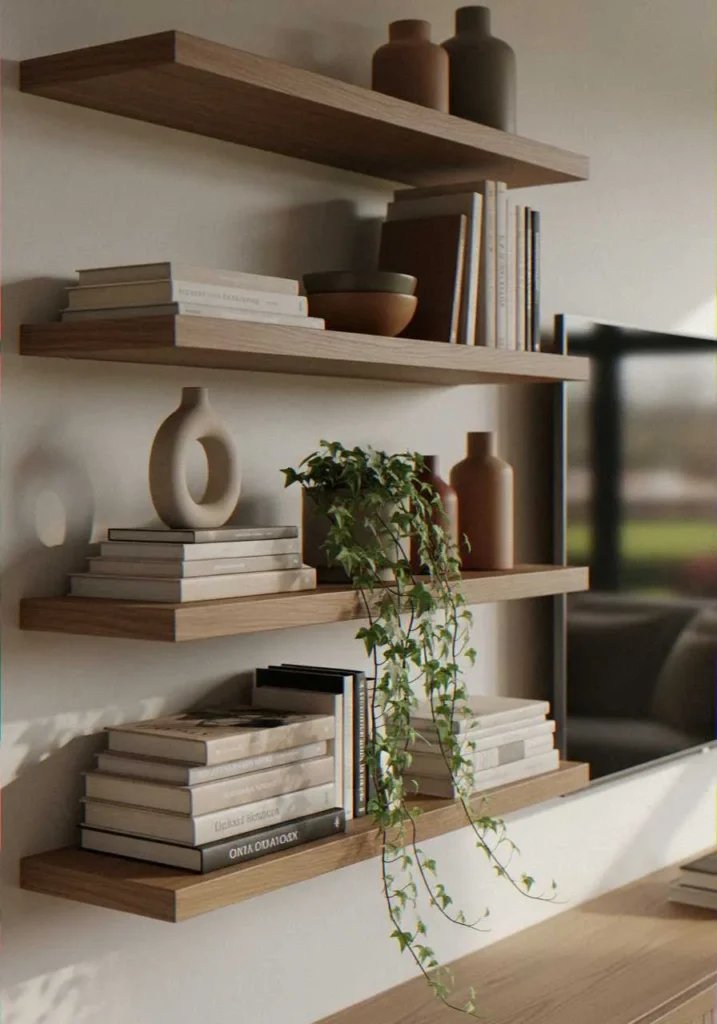
I installed asymmetrical floating shelves around my TV last year, and the difference was instant. Mix different lengths and heights to create visual interest. Style them with books, plants, small sculptures, or framed photos. The key is not making it look like you’re trying too hard—keep it natural and lived-in.
Getting the Arrangement Right
Don’t just slap shelves on either side of your TV and call it a day. That’s boring, and you know it. Try staggering them at different heights, or create an L-shape arrangement that extends beyond the TV’s width. This draws the eye across the entire wall instead of focusing solely on the screen.
Pro tips for shelf styling:
- Group items in odd numbers (3 or 5 items look better than 2 or 4)
- Vary heights by using books as risers or mixing tall and short objects
- Leave some shelves partially empty—negative space prevents visual clutter
- Add one or two trailing plants for that Pinterest-worthy look
Built-In Media Wall Units: The Investment Piece
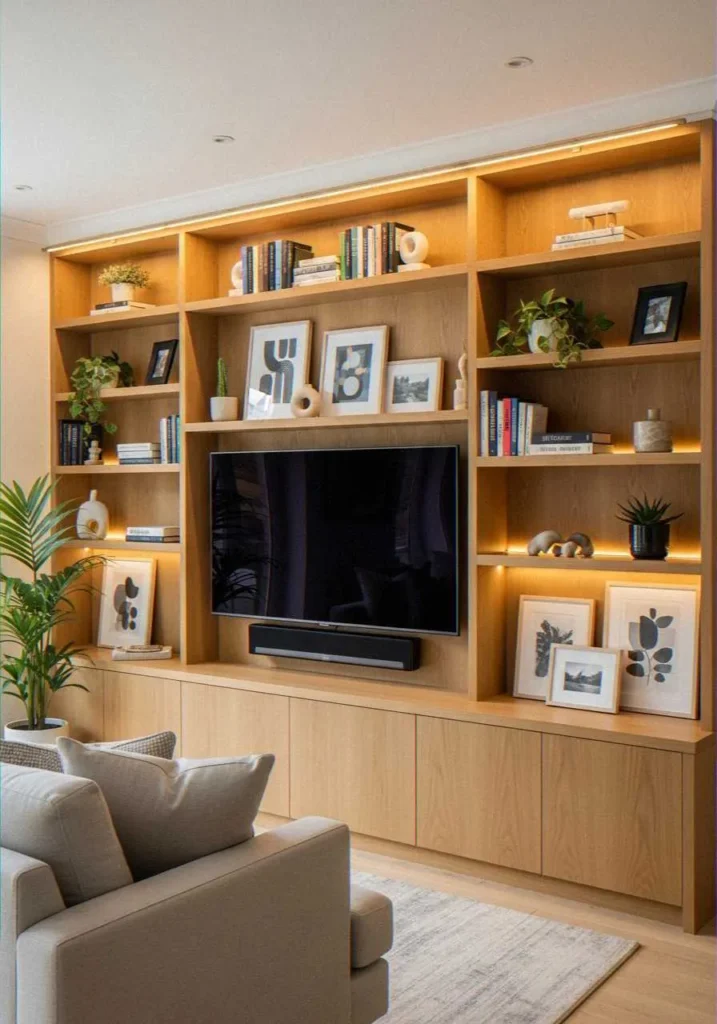
Okay, so this one costs more upfront, but hear me out. Custom built-in units transform your entire wall into a cohesive entertainment center that looks like it belongs in an architectural magazine.
I visited my cousin’s new house last month, and their floor-to-ceiling built-in unit? Absolute game-changer. Closed cabinets hide messy DVD collections and tangled cables (we all have them, don’t pretend), while open shelving displays the pretty stuff.
Why Built-Ins Win
They maximize storage without eating into your floor space. You can customize them to fit your exact dimensions, hide ugly electronics, and create a sleek, integrated look. Plus, they add actual value to your home—future buyers love built-in storage.
If full custom work scares your wallet, consider modular systems like those from IKEA’s BESTÅ series or similar manufacturers. You get the built-in look at a fraction of the cost, and you can reconfigure them if you move.
Gallery Wall Around Your TV: Art Meets Technology
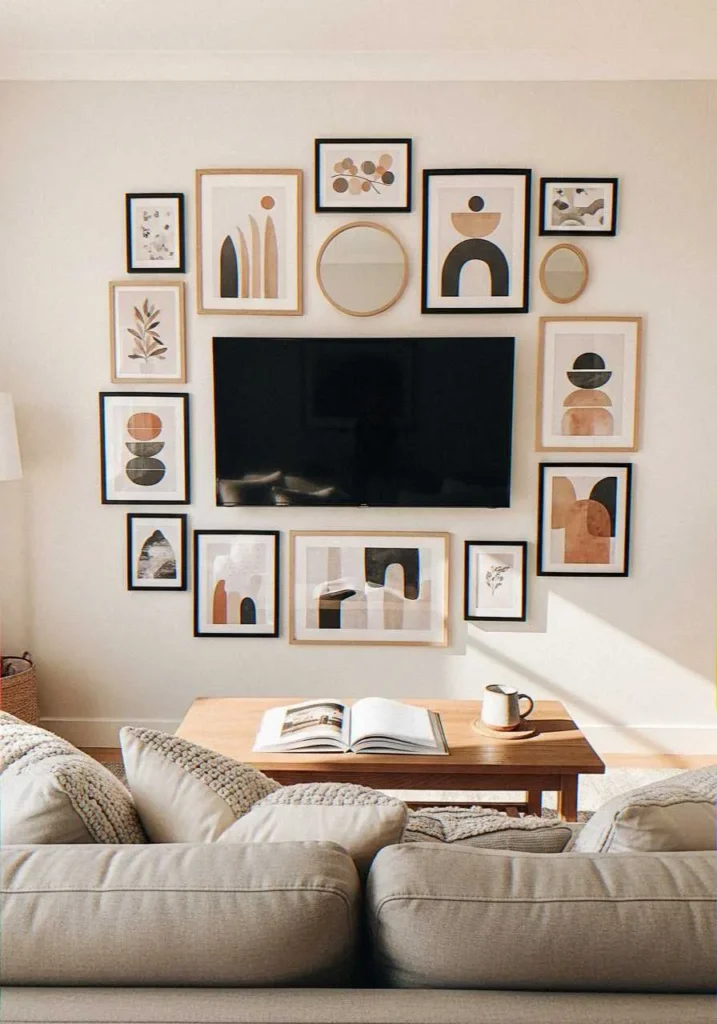
Think TVs and art can’t coexist? Think again. A gallery wall that incorporates your TV as part of the design creates this curated, intentional look instead of “I stuck a TV on the wall and hoped for the best.”
Making It Work
The trick is treating your TV like a large black frame within your gallery. Surround it with art, mirrors, and photos in complementary frame styles. Keep the frames simple if your TV bezel is thick, or go ornate if you’ve got a slim, modern screen.
I recommend sketching your layout on paper first or using painter’s tape on the wall to visualize placement. Trust me, it beats putting 20 nail holes in your wall. :/
Gallery wall essentials:
- Mix frame sizes but stick to a cohesive color palette (all black, all wood, or all metallic)
- Include at least one mirror to reflect light and add depth
- Maintain roughly equal spacing between all elements (2-3 inches works well)
- Start with the TV centered, then build outward symmetrically or asymmetrically
Accent Wall Treatments: Beyond Paint
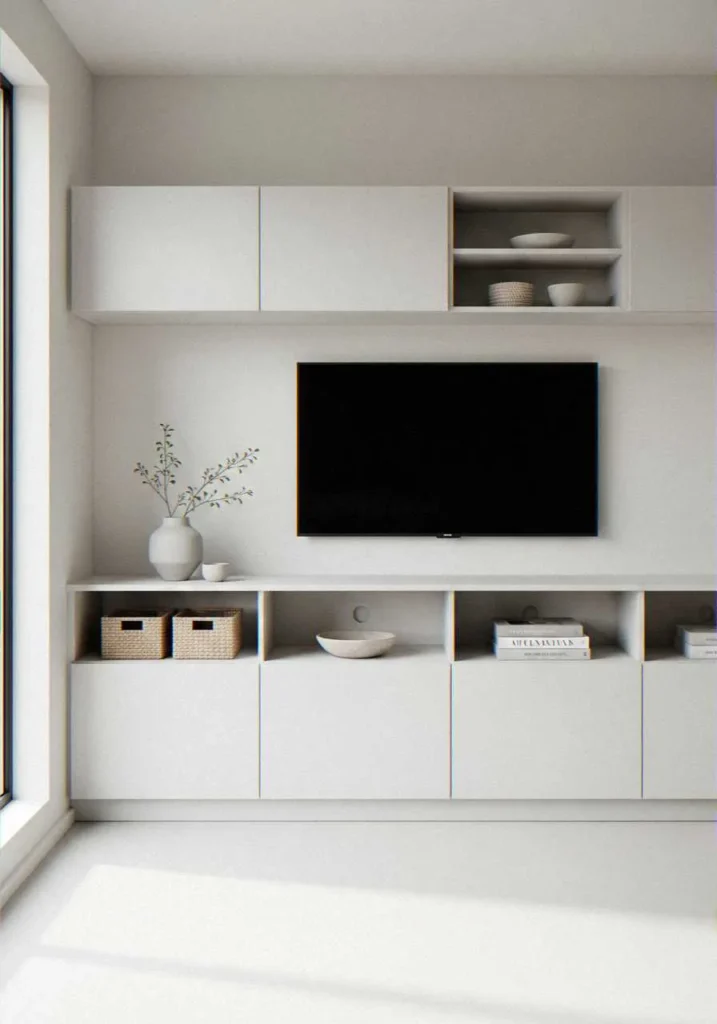
Paint is great (we covered that in color combinations), but textured wall treatments add another dimension to your TV wall. Literally.
Wood Slat Walls
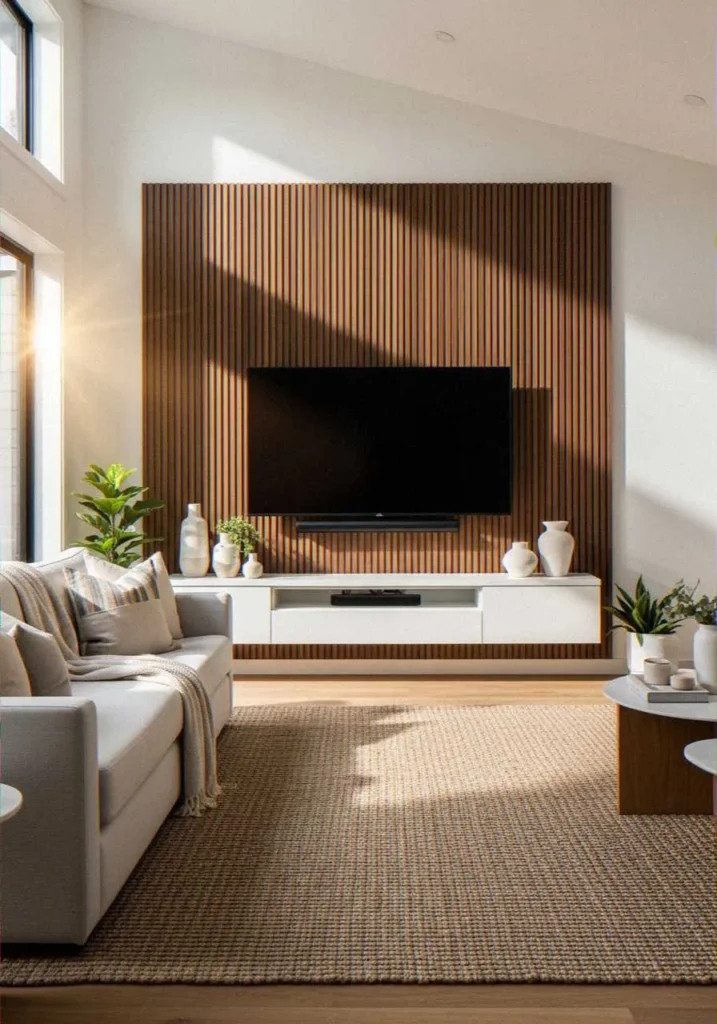
Horizontal or vertical wood slats behind your TV create warmth and texture that photographs beautifully. The linear pattern adds architectural interest without overwhelming the space. I’ve seen this done with everything from reclaimed barn wood to sleek walnut slats, and each version creates a totally different vibe.
You can DIY this with plywood strips and a nail gun if you’re handy, or buy pre-made slat panels that click together. The Home Depot carries several options that make installation pretty foolproof.
Stone or Brick Veneer
Want that industrial loft aesthetic? Stone or brick veneer delivers serious impact. Modern thin veneers weigh way less than real stone and install with adhesive—no mason required.
Natural stone brings organic texture, while painted brick offers a softer, more cottage-like feel. Just keep the rest of your room balanced with smoother textures so it doesn’t feel like you’re living in a quarry.
Wallpaper Accent Walls
Don’t sleep on wallpaper. Modern options are removable, affordable, and seriously stylish. Geometric patterns, subtle textures, or bold florals can define your TV zone without permanent commitment.
I used a textured grasscloth wallpaper behind my friend’s TV, and the depth it added was incredible. It photographs flat but looks three-dimensional in person.
Hidden TV Solutions: Now You See It, Now You Don’t
Not everyone wants their TV as the room’s focal point. FYI, hidden TV solutions are having a major moment right now.
Cabinet Doors That Close
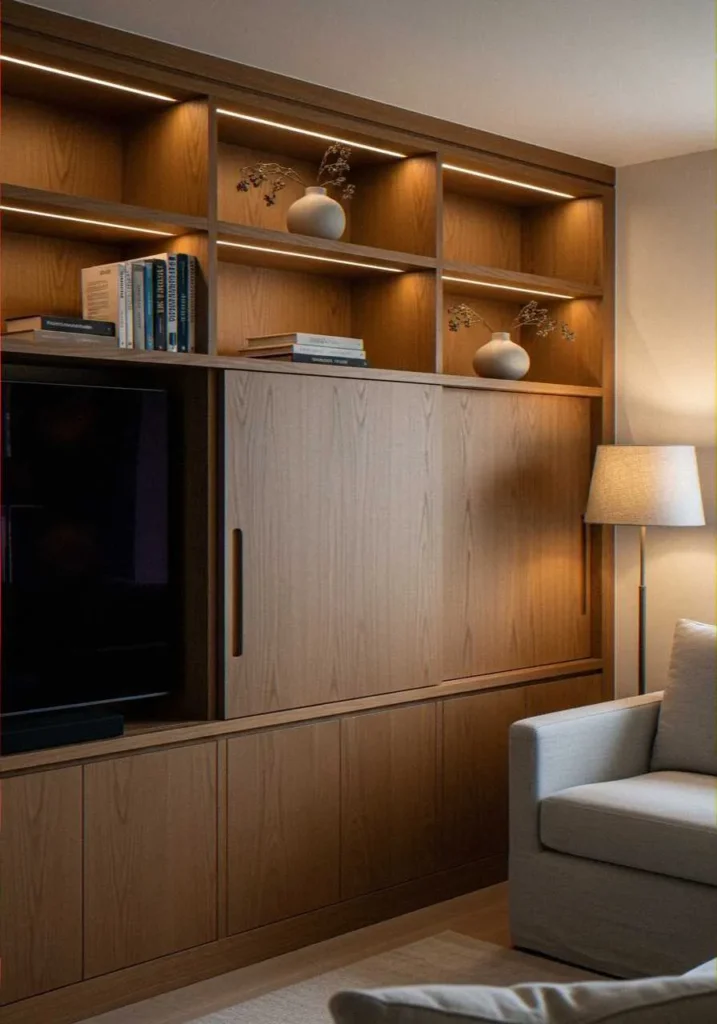
Picture this: sleek cabinet doors that slide or swing closed to completely hide your TV when you’re not using it. Your living room transforms from media center to sophisticated sitting room in seconds.
Built-in cabinets with pocket doors work beautifully for this. When you want to watch something, the doors slide into the wall cavity. When you’re done, close them up and your room looks like a TV-free sanctuary.
Artwork TV Frames
Samsung’s Frame TV popularized this concept, but you can achieve similar results with custom frames around regular TVs. When off, the screen displays art or family photos. When on, it’s your regular TV.
You can also build a hinged frame yourself that literally hides your TV behind a piece of actual artwork. Pull the frame down when you want to watch, flip it back up when you’re done.
TV on a Stand vs. Wall-Mounted: Design Implications
Let’s settle this debate once and for all—or at least give you the info to decide for yourself.
| Feature | Wall-Mounted | TV Stand |
|---|---|---|
| Space Usage | Frees floor space | Requires floor space |
| Flexibility | Permanent until you patch holes | Easy to move/rearrange |
| Cable Management | More challenging | Easier to hide cables |
| Design Impact | Sleek, modern aesthetic | Can add storage/character |
Wall-mounting makes your room feel larger and looks undeniably modern. But it’s commitment—those mounting holes aren’t invisible when you change your mind.
TV stands offer flexibility and storage but take up precious floor space. In small apartments, that trade-off might not be worth it. In larger rooms with space to spare, a beautiful media console can anchor your design.
IMO, wall-mount in smaller spaces and consider quality stands in larger rooms where you want that furniture piece’s visual weight.
Lighting Design for Your TV Wall
Nobody talks about this enough, but lighting makes or breaks your TV wall design. The right lighting creates ambiance, reduces eye strain, and highlights your design elements.
LED Backlighting
Stick LED strips behind your mounted TV for that floating, glowing effect. It looks cool, sure, but it also reduces eye strain by providing ambient light that prevents your TV from being the only light source in a dark room.
You can find color-changing LED strips that sync with your content for an immersive experience, or stick with warm white for subtle sophistication.
Spotlights and Track Lighting
Want to highlight your gallery wall or decorative shelves? Adjustable spotlights or track lighting direct attention exactly where you want it. Aim them at artwork, not directly at the TV screen (glare is not your friend).
Hidden Cove Lighting
Install LED strips in recessed areas or behind crown molding for indirect lighting that washes your TV wall in soft illumination. This creates drama without harsh shadows or hotspots.
Incorporating Storage Solutions Seamlessly
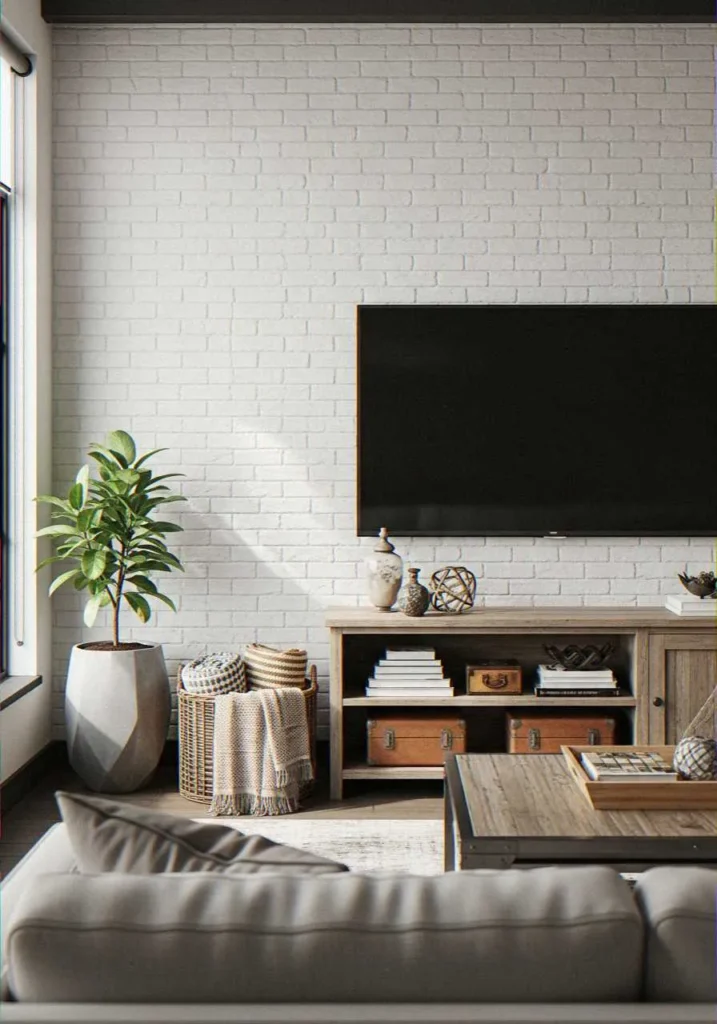
Your TV wall should work hard, not just look pretty. Smart storage integration keeps your living room functional and clutter-free.
Closed vs. Open Storage
Mix both. Closed cabinets hide electronics, gaming consoles, remotes, and all those cables that multiply like rabbits. Open shelving displays your pretty stuff—books, plants, decorative objects.
A good ratio? Aim for 60% closed, 40% open if you have a lot to hide. Flip that if you’re a minimalist with limited stuff.
Cable Management Systems
Nothing ruins a beautiful TV wall faster than a tangled mess of visible cables. Run them through in-wall cable management systems, or use cord covers that paint-match your wall.
For wall-mounted TVs, those flat power kits that go through the wall are worth every penny. Your cables disappear completely, and your wall looks professionally installed.
Styling Around Different TV Sizes
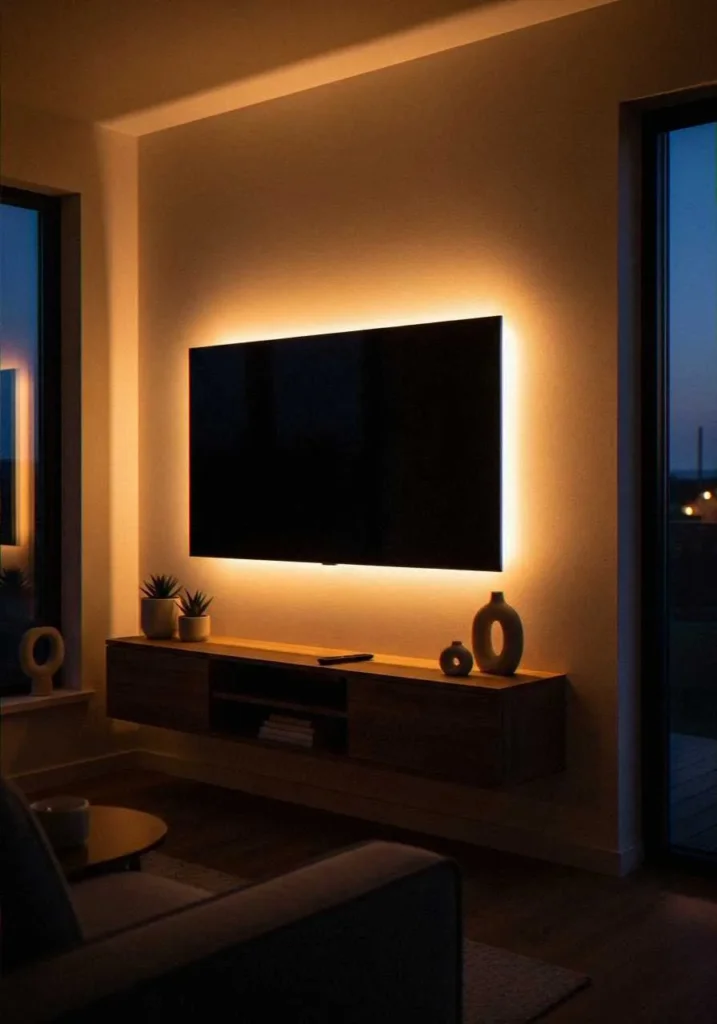
Your TV’s size dramatically affects your design approach. A 40-inch screen has different requirements than a 75-inch behemoth.
Small to Medium TVs (Under 50 inches)
You have flexibility here. Treat the TV as one element in a larger gallery wall, or create a cozy built-in nook that makes the smaller screen feel intentional rather than inadequate.
Surround it with larger design elements so it doesn’t look like a lonely rectangle floating on a massive wall. Pair it with oversized art, tall plants, or substantial shelving.
Large TVs (50-75 inches)
Your TV becomes the dominant element whether you like it or not. Embrace it. Create a dedicated media wall with the TV as the centerpiece. Built-in shelving on either side balances the visual weight.
Keep decorative elements scaled appropriately—small knickknacks will disappear next to a massive screen.
Extra Large TVs (Over 75 inches)
At this size, honestly, just own it. You’ve got a home theater situation happening. Design around that reality with comfortable seating, proper acoustics, and lighting that accommodates serious viewing sessions.
Multi-Functional TV Walls for Small Spaces
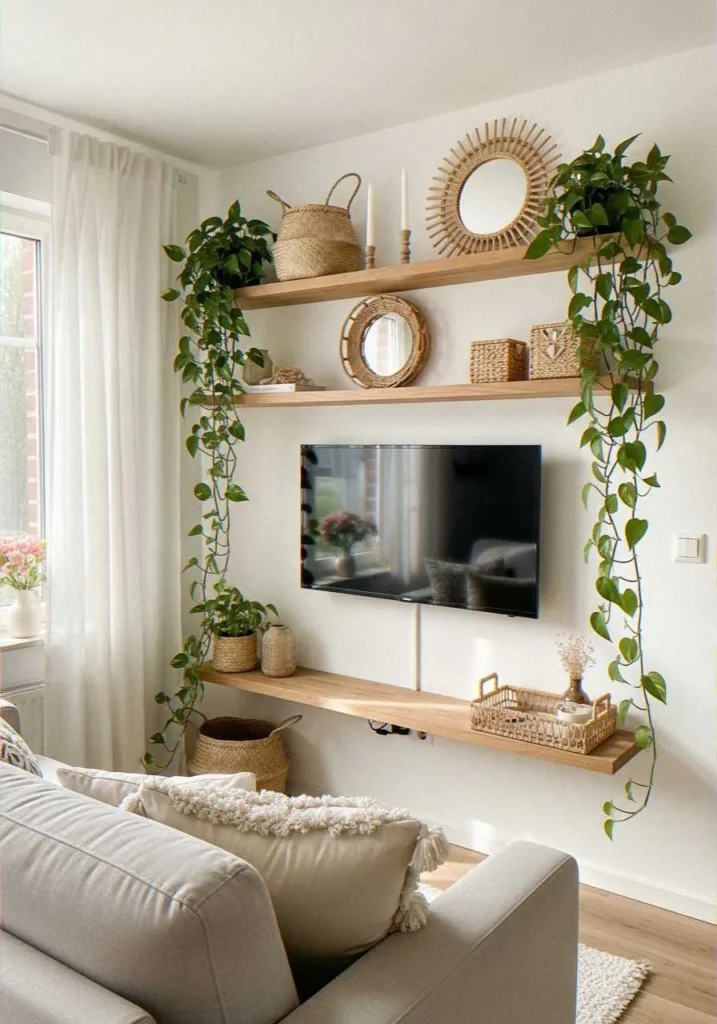
Living in a small apartment? Your TV wall needs to pull double duty—or triple, if we’re being honest.
TV Wall with Home Office Integration
Mount your TV above a long desk that serves as both workspace and media console. When you’re working, the TV’s off and out of mind. When you’re relaxing, you’ve got your entertainment center ready to go.
Add closed storage underneath the desk for office supplies and electronics. This setup works brilliantly in studio apartments where every square foot counts.
Dining-Living Combo Solutions
Need your TV visible from both living and dining areas? Corner mounting or swivel mounts let you adjust the viewing angle depending on where you’re sitting.
Alternatively, create a room divider system with your TV on one side and storage accessible from the dining side. This defines separate zones while maintaining sight lines.
Natural Elements: Bringing Texture and Warmth
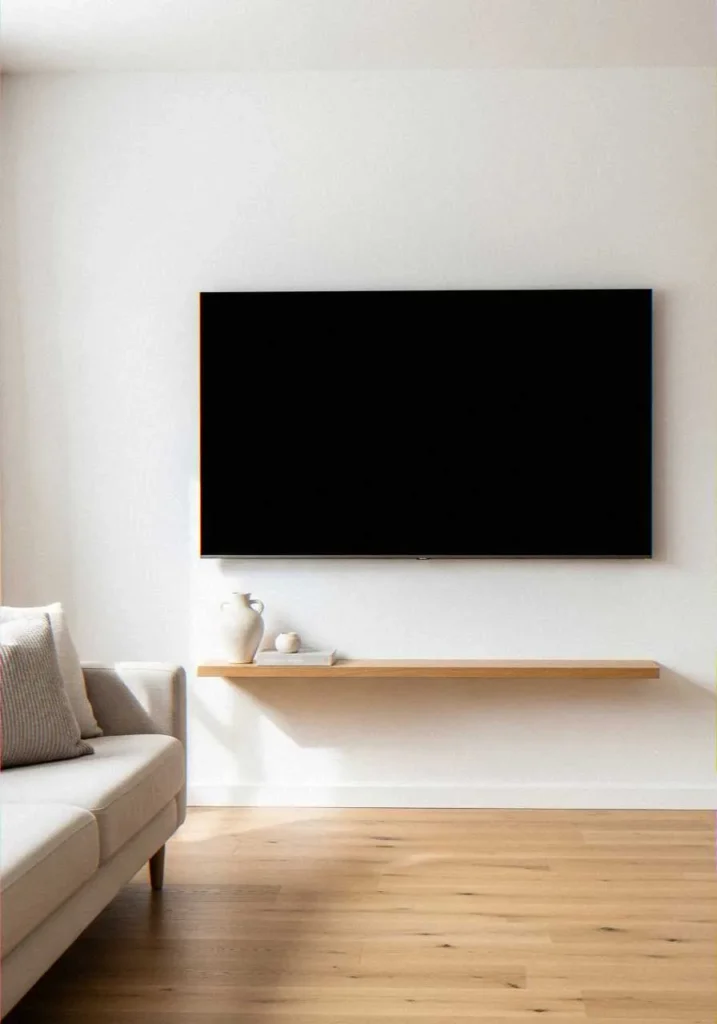
Want your TV wall to feel less tech-focused and more organic? Natural materials soften the electronic presence.
Living Plant Walls
Vertical gardens or carefully arranged plant shelves around your TV create this lush, living backdrop. Pothos, philodendrons, and other trailing plants work beautifully cascading around technology.
Just make sure your plants aren’t blocking ventilation vents if your TV needs airflow. Fried electronics and dead plants? Nobody wants that combo.
Rattan and Wicker Accents
Woven baskets on shelves, rattan light fixtures, or even a rattan-backed media console bring texture and warmth that contrasts beautifully with smooth TV screens.
This works especially well in coastal, bohemian, or Scandinavian-inspired spaces.
Minimalist TV Wall Designs: Less Is More
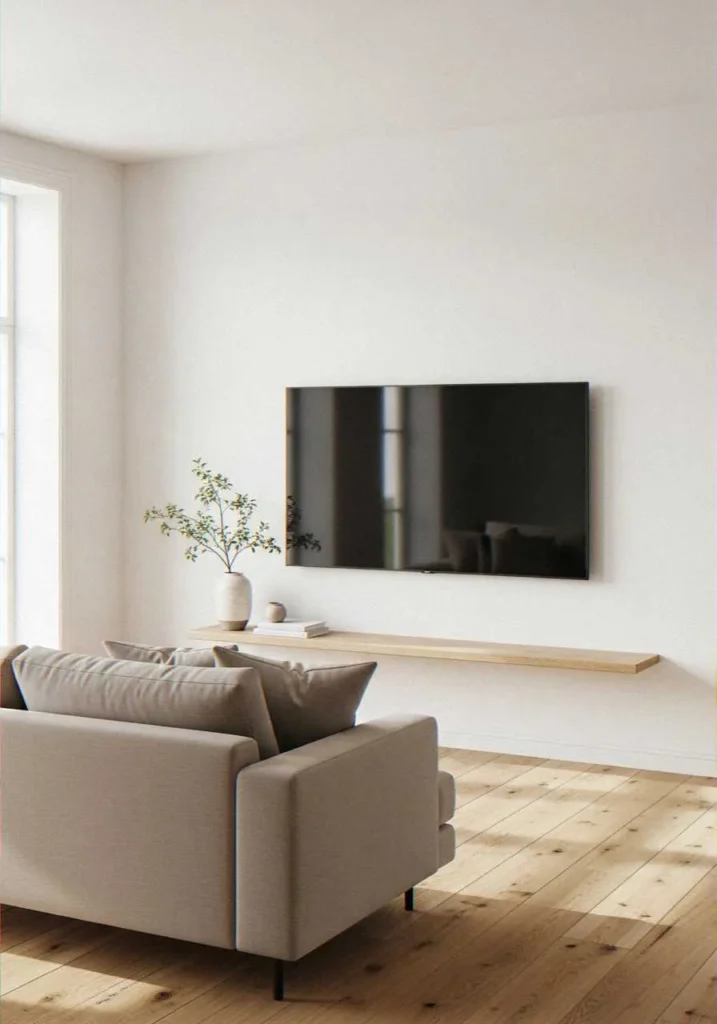
Sometimes, the most impactful design is the simplest one. Minimalist TV walls focus on clean lines and negative space.
Mount your TV on a pristine white wall with zero additional elements. Add a single floating shelf below for your soundbar or a few carefully curated items. That’s it.
The key to pulling off minimalism? Everything you include must be intentional and high-quality. One beautiful ceramic piece beats ten mediocre trinkets every time.
Keep cable management immaculate—visible wires destroy minimalist aesthetics faster than anything.
Budget-Friendly Design Hacks
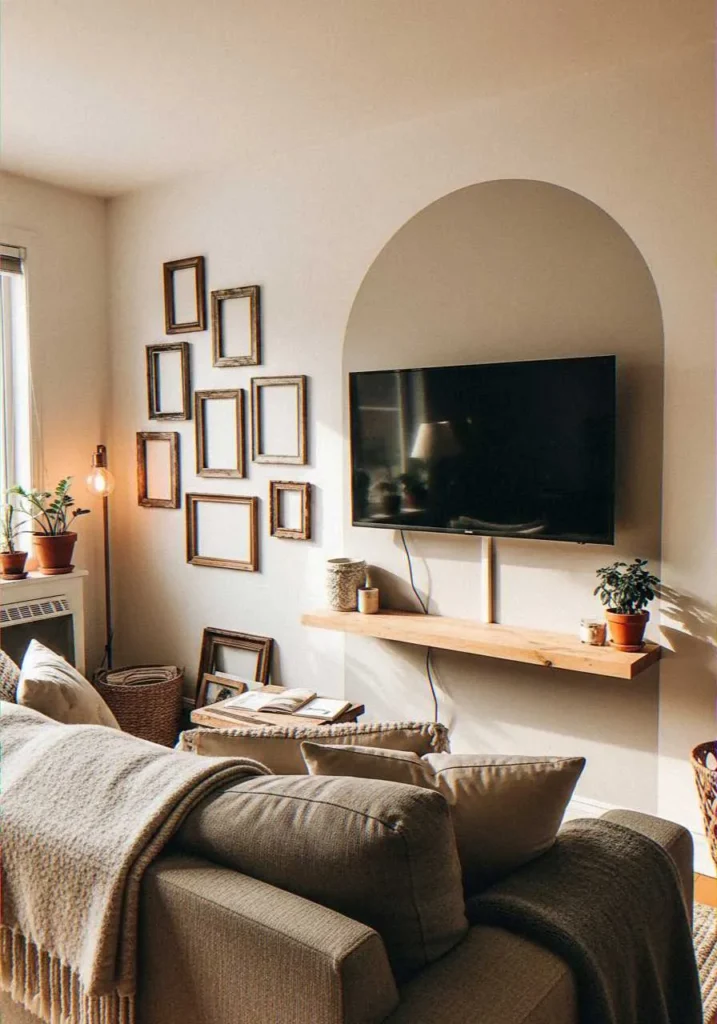
Great design doesn’t require unlimited funds. Here are my favorite affordable tricks that deliver maximum impact:
- Paint an accent shape around your TV instead of covering the whole wall—a large rectangle or arch costs pennies in paint
- DIY floating shelves from lumber cost a fraction of store-bought options
- Thrift vintage frames for your gallery wall instead of buying everything new
- Peel-and-stick wallpaper delivers the look of custom wallpaper at budget-friendly prices
- Fairy lights or string lights create ambient lighting for under $20
I’ve helped friends style entire TV walls for under $200 using these techniques. It’s absolutely doable.
Current Trends Worth Considering
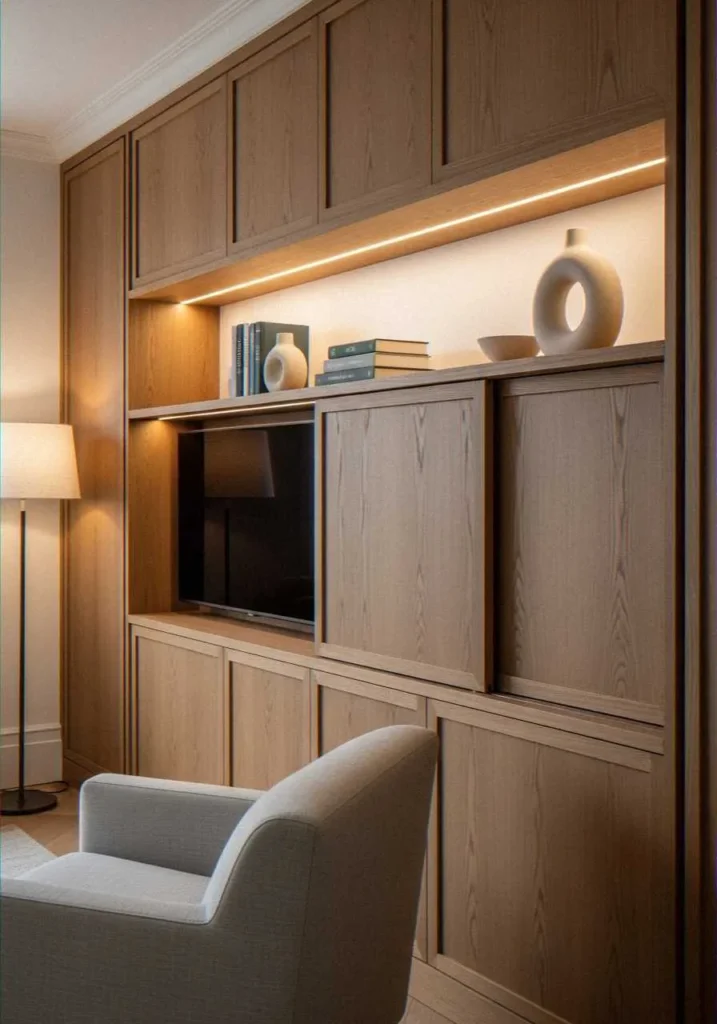
Let’s talk about what’s hot right now in TV wall design. You don’t have to follow trends, but knowing them helps you make informed decisions.
Curved and organic shapes are replacing the rigid rectangles we’ve relied on for years. Think arched alcoves, curved shelving, or organic-shaped accent walls.
Darker, moodier colors are trending over the bright whites that dominated for a decade. Deep greens, navy blues, and charcoal grays create intimate, cozy spaces. Houzz reports that dark accent walls increased 40% in popularity this year.
Mixed materials combine wood, metal, and stone in single designs for visual interest and texture layering.
Smart home integration hides technology while keeping it accessible—voice-controlled lighting, motorized cabinet doors, and wireless everything.
Practical Considerations Before You Start
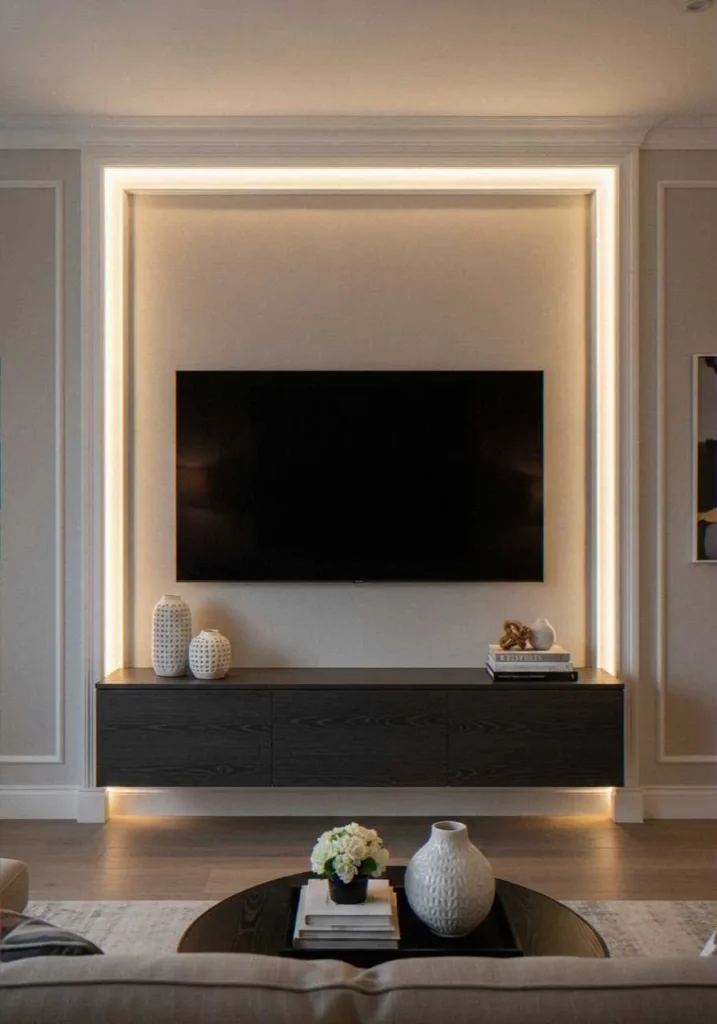
Before you start mounting stuff and painting walls, let’s talk logistics that’ll save you headaches later.
Studs and Wall Structure
Know where your studs are before planning shelf placement. Drywall anchors work for lightweight items, but TVs and heavy shelves need studs. Use a stud finder or knock on the wall—studs sound solid, hollow spaces sound, well, hollow.
Outlet Placement
Nothing’s more annoying than designing your perfect TV wall only to realize your outlets are in terrible spots. If you’re renovating, consider adding outlets behind where your TV will mount and at shelf heights where you’ll need power for lights or devices.
Room Layout and Viewing Distance
Your TV should sit at eye level when you’re seated. Too high causes neck strain (yes, I’m talking to everyone who mounts TVs above fireplaces—that’s rarely the right height).
Viewing distance matters too. A good rule: sit 1.5 to 2.5 times your TV’s diagonal screen size away from it. So a 60-inch TV needs 90-150 inches (7.5-12.5 feet) of viewing distance for optimal comfort.
FAQ: Your TV Wall Design Questions Answered
Q: Should I mount my TV or use a stand?
A: Wall-mounting saves floor space and looks sleeker, but stands offer flexibility and easier cable access. Choose based on your room size, design style, and whether you’re renting (wall mounting leaves holes).
Q: How do I hide ugly cables and wires?
A: Use in-wall cable management kits for the cleanest look, or opt for cord covers that match your wall color. Cable raceways, cable boxes, or strategically placed plants can also disguise wires effectively.
Q: What’s the ideal height to mount a TV?
A: The center of your screen should sit at eye level when you’re seated—typically 42-48 inches from the floor to the TV’s center. Adjust based on your furniture height and personal comfort.
Q: Can I create a stylish TV wall on a tight budget?
A: Absolutely! Paint accent walls, DIY floating shelves from lumber, thrift frames for gallery walls, and use peel-and-stick wallpaper. You can transform your TV wall for under $200 with creativity and effort.
Q: How do I incorporate a TV into a small living room without it dominating the space?
A: Use lighter colors around it, incorporate it into a gallery wall, or choose furniture that creates balance. Hidden TV solutions like cabinet doors or Frame TV setups also minimize its visual impact when not in use.
Q: What materials work best for TV wall accent treatments?
A: Wood slats, stone or brick veneer, textured wallpaper, and board-and-batten all create stunning accent walls. Choose based on your overall design style—rustic, modern, industrial, or traditional.
Look, your TV wall doesn’t have to be an afterthought or design challenge. With a bit of planning, some creative thinking, and maybe a weekend of work, you can transform it into something that makes you smile every time you walk into your living room.
Start with one idea that resonates with you—maybe it’s floating shelves, maybe it’s that wood slat wall you’ve been eyeing on Instagram. Take it step by step, and remember: perfect is the enemy of done. Your living room is waiting for its upgrade, so get started! 🙂

5 thoughts on “Creative TV Wall Design Ideas for a Stylish and Functional Living Room”