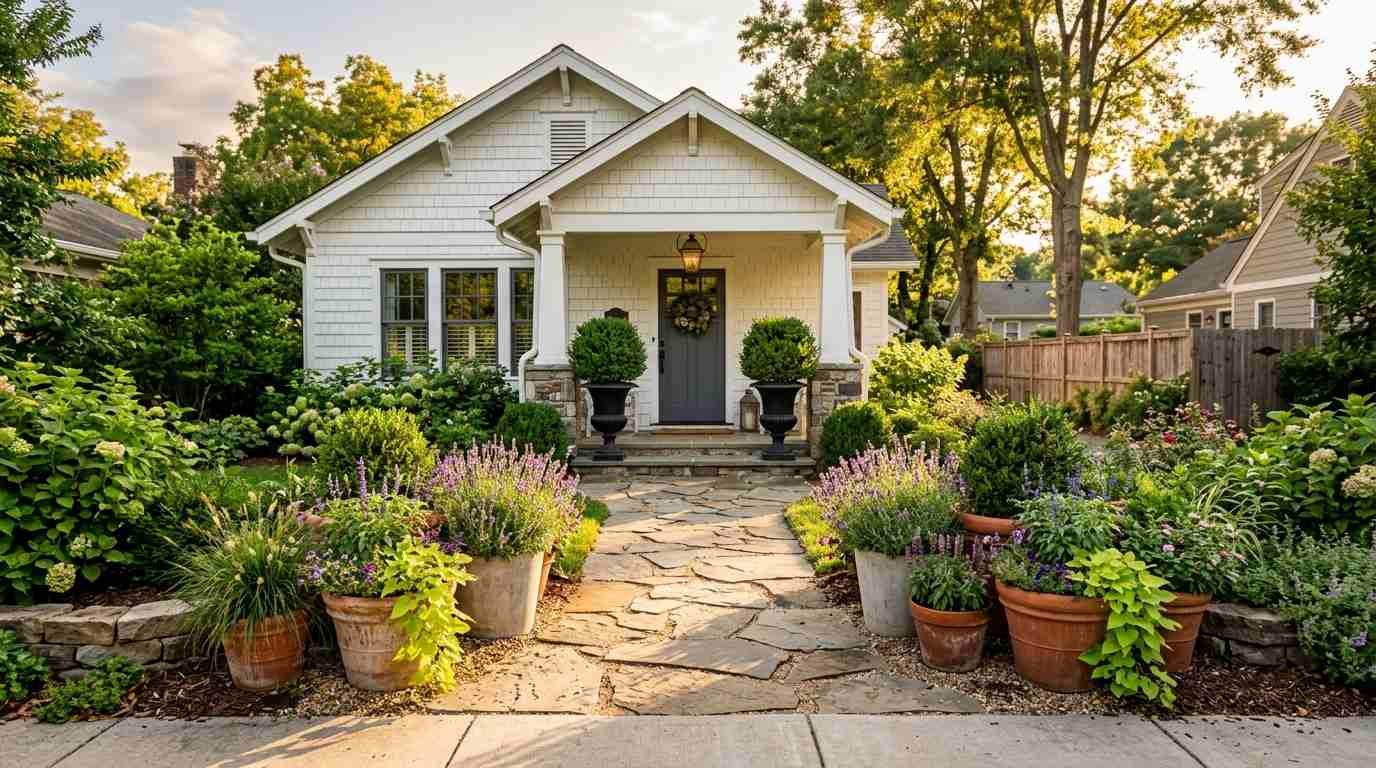
Your front yard is doing a lot of work. It’s the first thing guests see, the last thing you look at when you leave, and honestly, it sets the mood for your whole home.
So yeah — a few sad, mismatched pots plopped by the door just won’t cut it.
Good news: you don’t need a sprawling yard or a landscaper’s budget to pull off a jaw-dropping entrance.
The right pots and planters do the heavy lifting. Here are 23 ideas that actually work — and look great on a Pinterest board too 🙂
Why Pots & Planters Are a Front Yard Game Plan
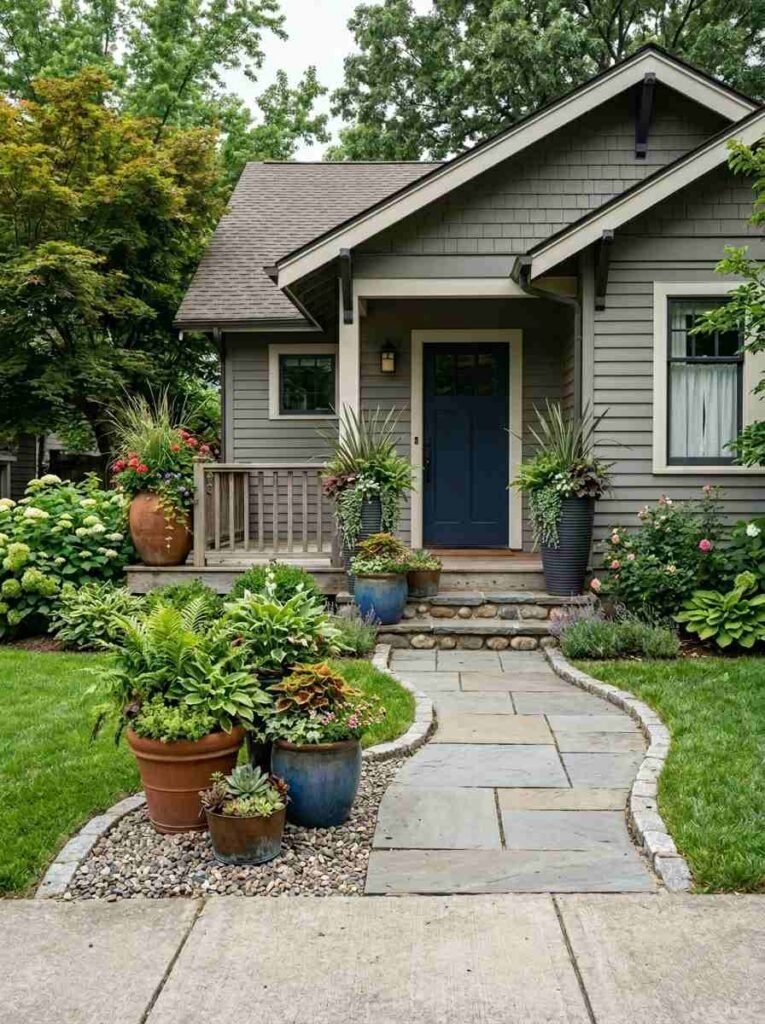
Small front yards have one real advantage that big ones don’t — every element counts. A well-placed planter draws the eye exactly where you want it.
Two flanking the door? Instant symmetry.
A cluster on the steps? Depth and dimension without digging a single hole.
Pots also give you flexibility. Move them around with the seasons, swap out plants without commitment, and style them like furniture. Think of them as your yard’s accessories.
1. The Classic Symmetrical Door Pair
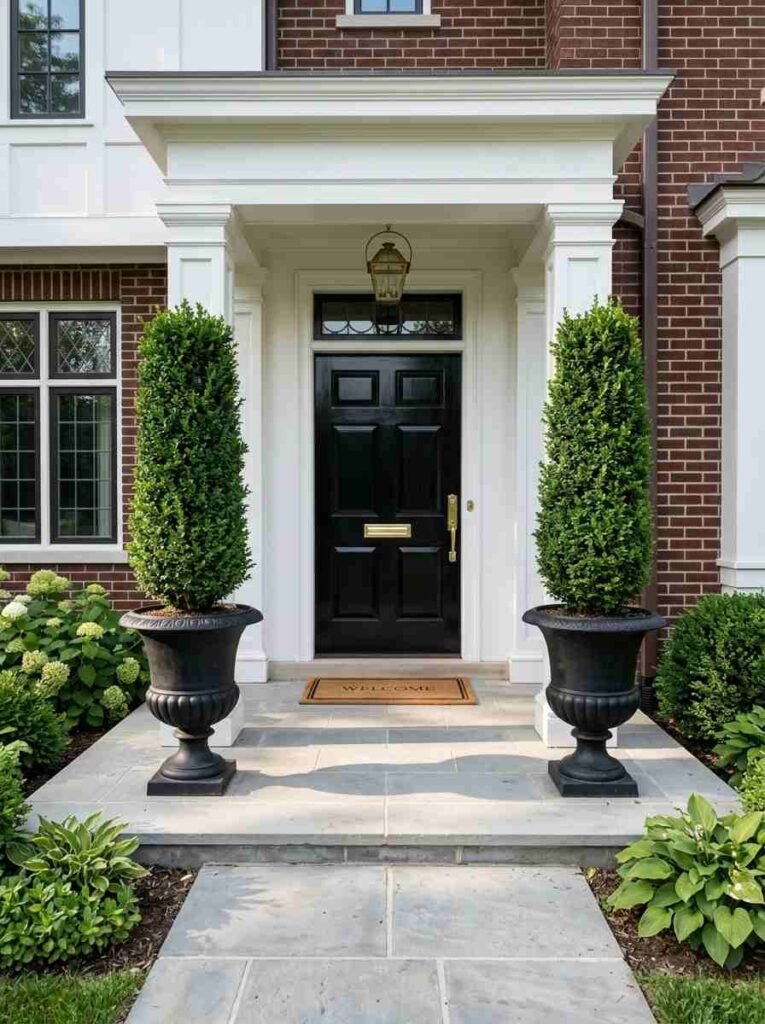
Two identical planters flanking your front door is the oldest trick in the book — and it still works every single time.
Stick to one tall variety (like a columnar evergreen or clipped boxwood) for a clean, polished look.
The key is matching the planter material to your door hardware. Black metal planters with matte black fixtures?
Chef’s kiss. Terracotta with brass? Warm and inviting.
2. Tiered Step Planters
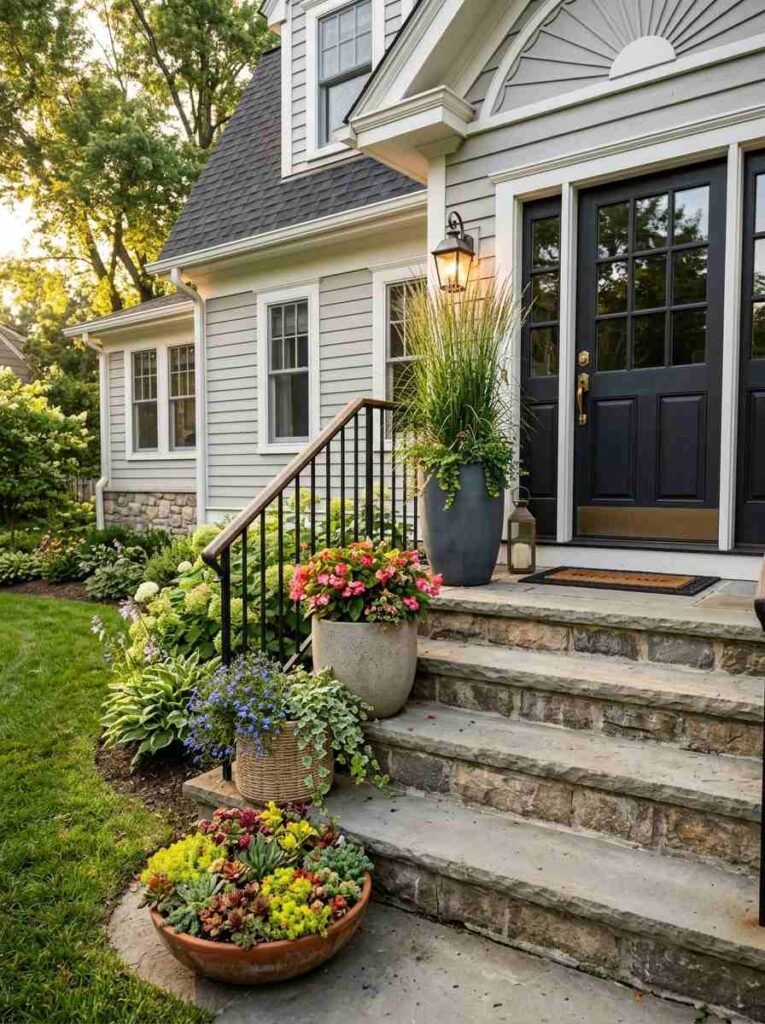
Got steps leading to your door? Use them. Stagger planters of varying heights down the staircase — taller at the top, shorter toward the street.
This creates a visual pathway that naturally pulls people toward your entrance.
Mix textures here: smooth ceramic at the top, woven or concrete lower down. The variety keeps it interesting without feeling chaotic.
3. Window Box Planters
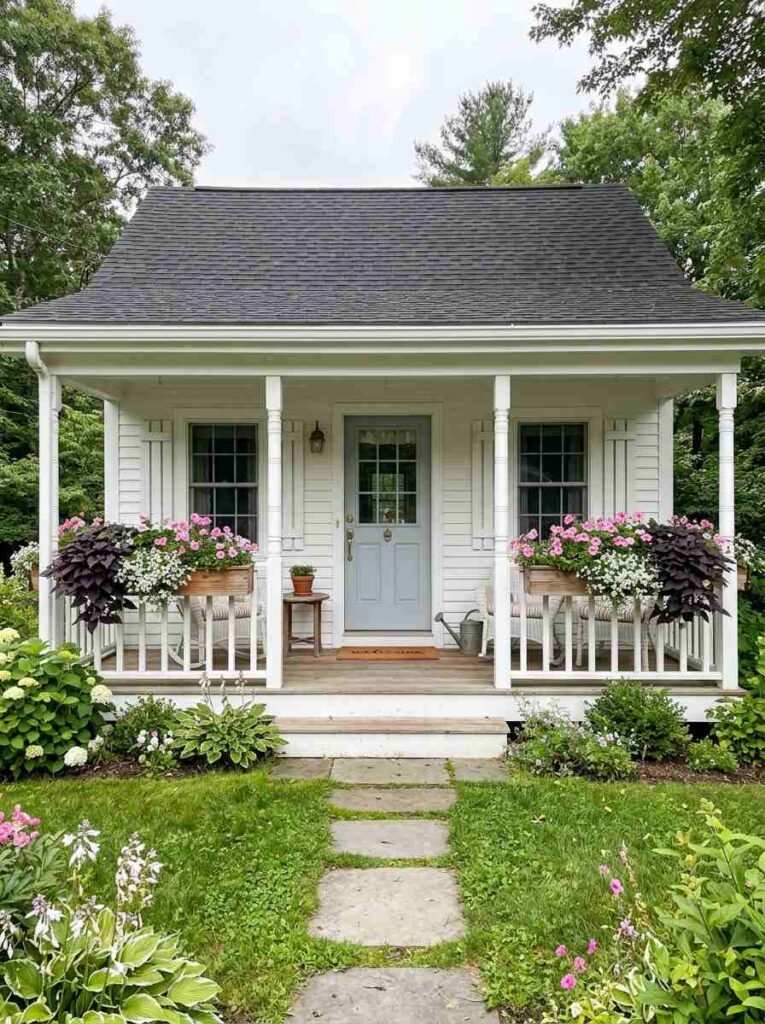
Window boxes aren’t just for, well, windows. Mount them along a low front fence or porch railing and fill them with trailing plants like sweet potato vine or lobelia.
They add horizontal color without eating up any ground space.
IMO, window boxes are criminally underused on front porches. They soften hard lines like nothing else.
4. Oversized Single Statement Planter
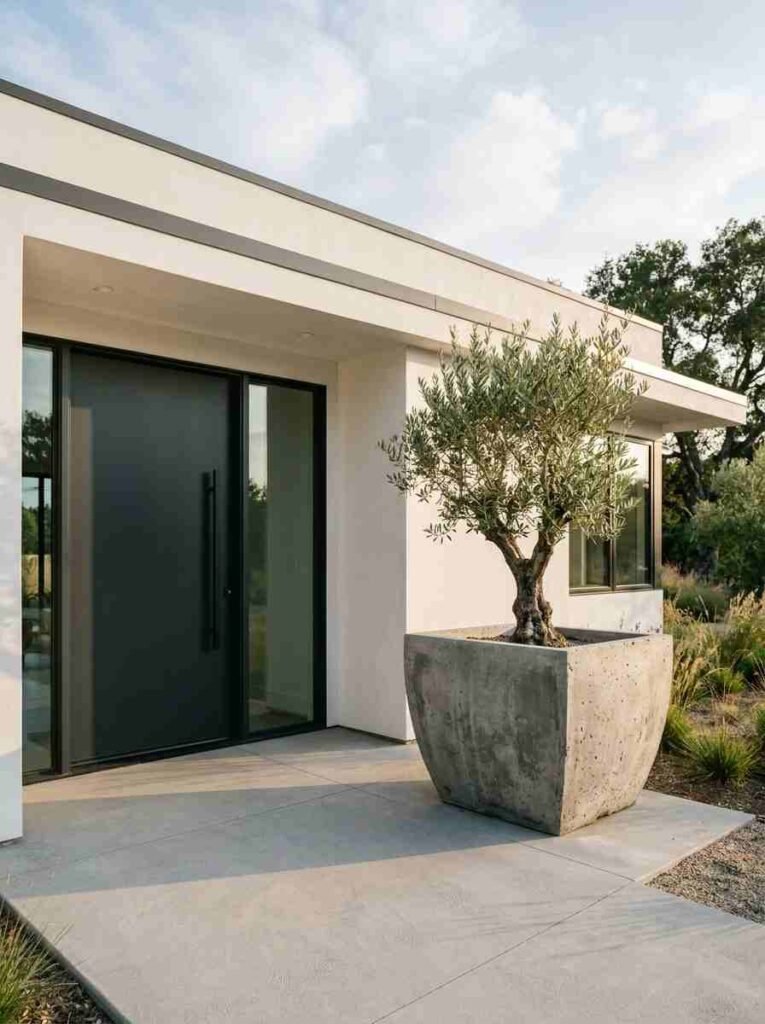
One massive, sculptural planter in a bold material — think raw concrete, glazed ceramic, or aged brass — can anchor an entire entryway all by itself.
Go bigger than feels comfortable. Small yards often look better with one large focal point than ten small, competing ones.
Plant it with something structural: a small olive tree, a Japanese maple, or ornamental grasses.
5. Clustered Pot Groupings
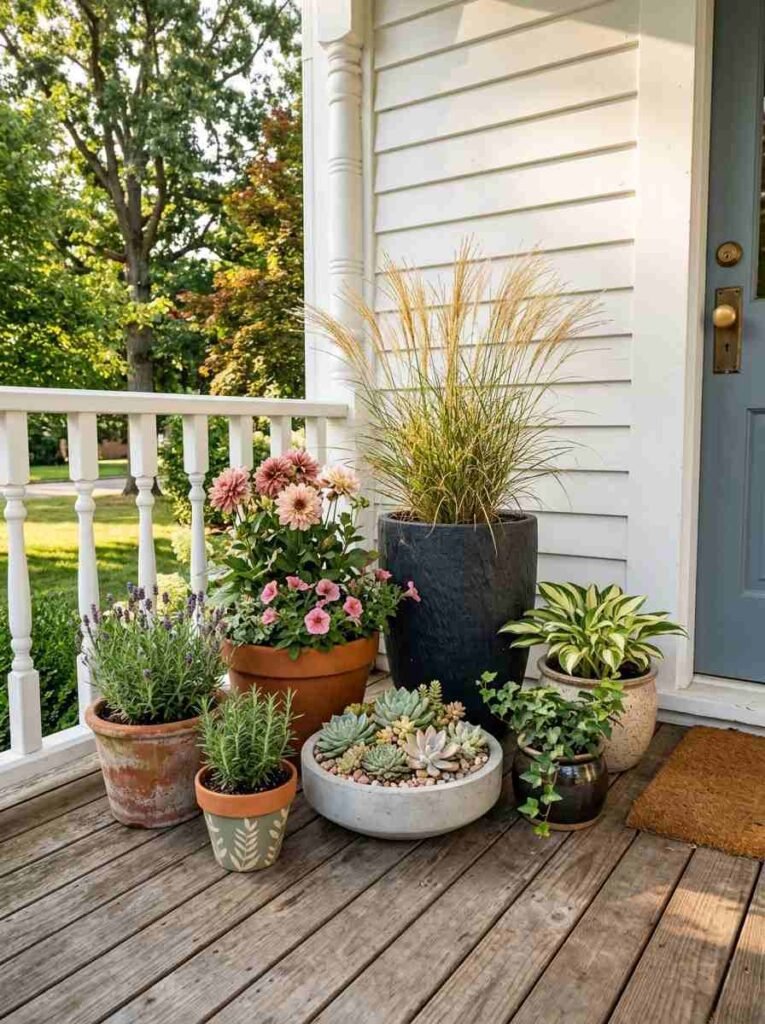
Three pots. Five pots. Seven pots. Odd numbers group better than even — just go with it. Cluster pots of different heights and widths in one corner of your yard for an effortless, collected feel.
The trick is keeping your plant palette consistent. Pick two or three colors and stick to them throughout the group.
6. Tall Pedestal Planters
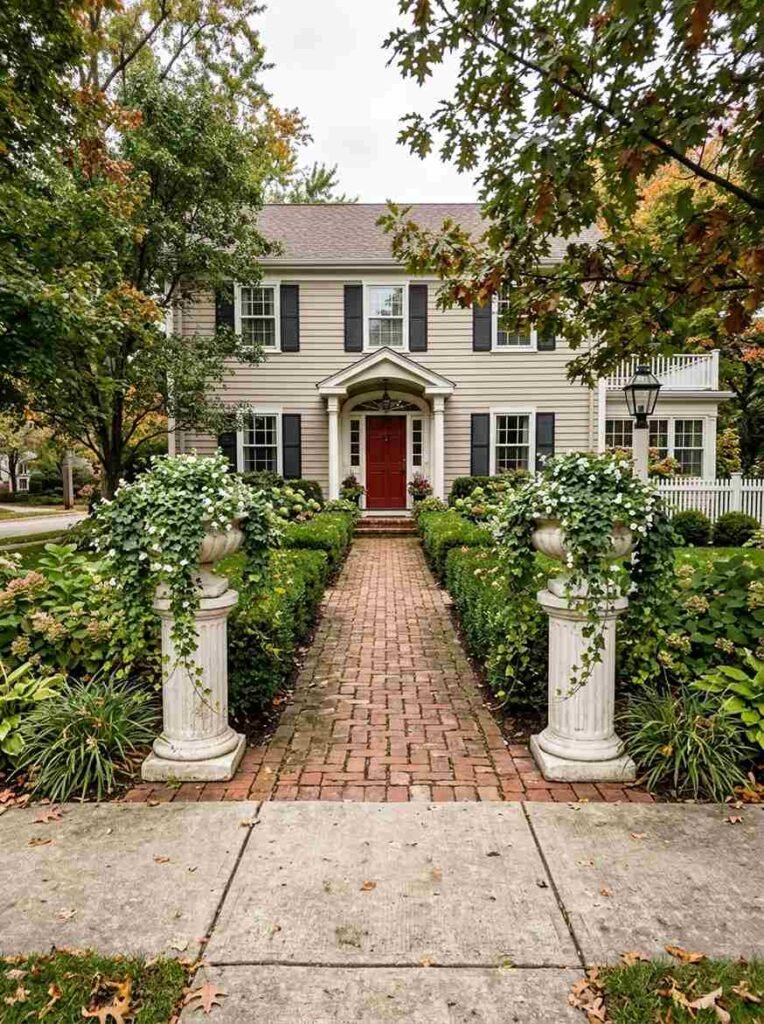
Pedestal-style planters lift plants off the ground and add architectural height to flat yards.
Place a pair at the end of a short walkway, or use a single pedestal planter beside the door as a standalone accent.
Cascading plants — like trailing nasturtiums or ivy — look especially good in these because they spill down the sides naturally.
7. Matching Color-Blocked Pots
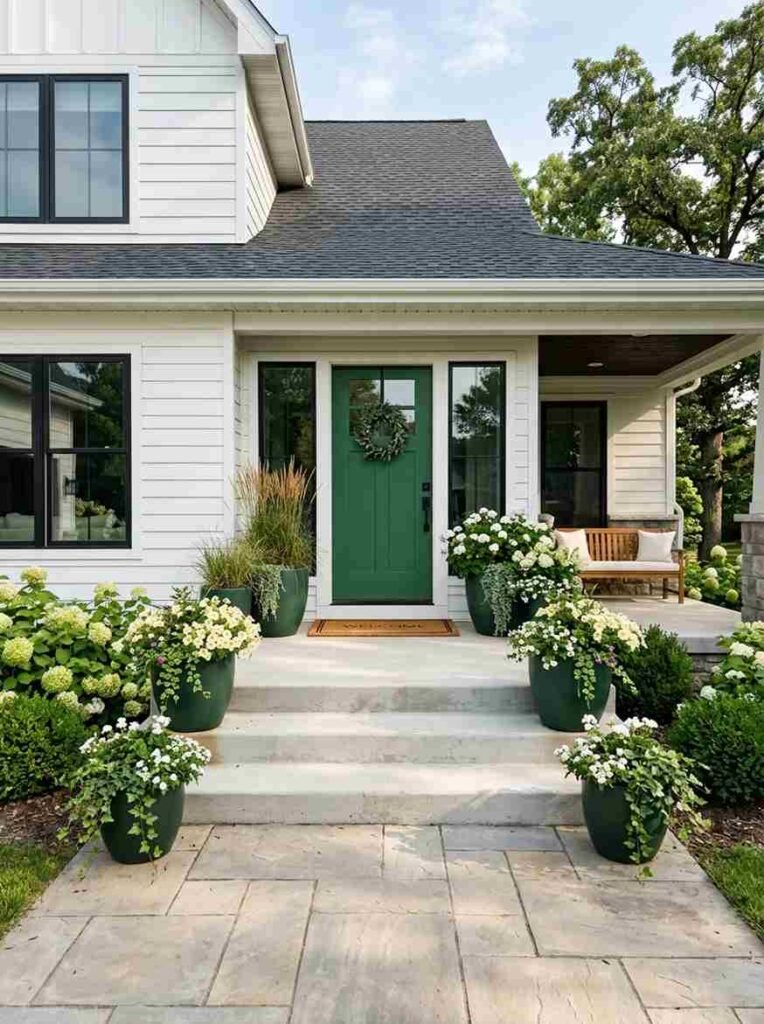
Pick one bold color and commit to it across all your planters.
A set of deep navy, terracotta orange, or forest green pots instantly looks intentional, even if the plants inside are wildly different.
This works especially well on white or gray house exteriors where you want a pop of color without repainting anything.
8. Rustic Wooden Planter Boxes
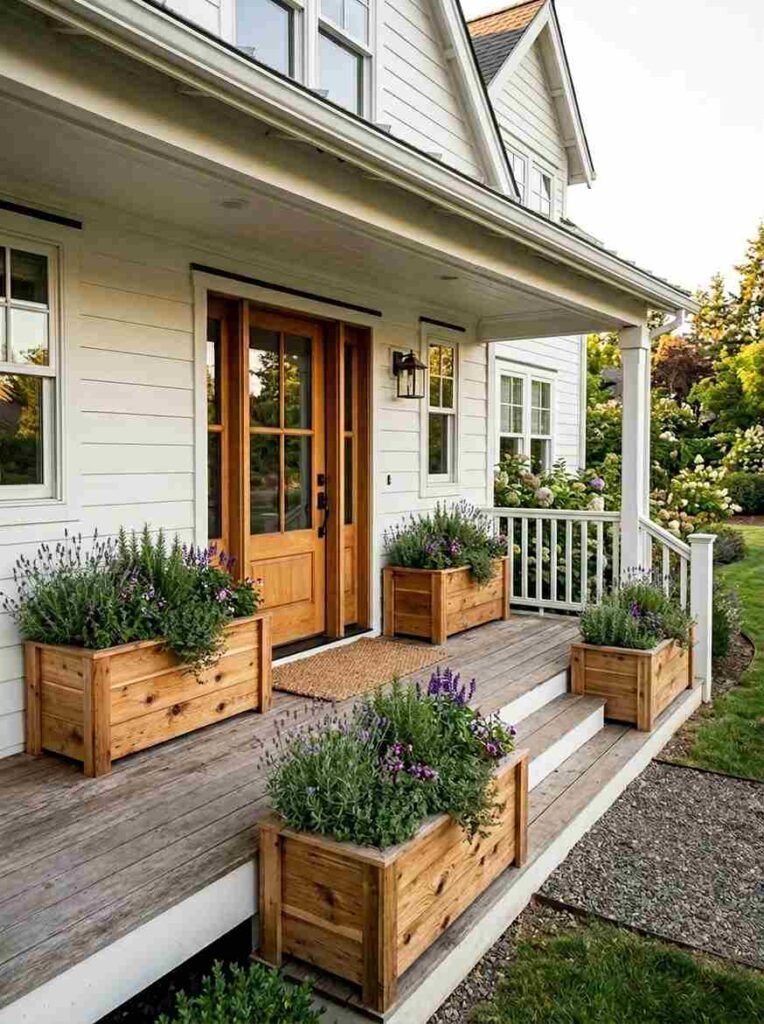
DIY or store-bought, cedar or redwood planter boxes bring warmth to any entrance. They age beautifully, work with cottage, farmhouse, and modern homes alike, and handle outdoor conditions without fussing.
Fill them with herbs near the door (rosemary, lavender) and you get a functional + beautiful combo.
9. Hanging Basket Planters
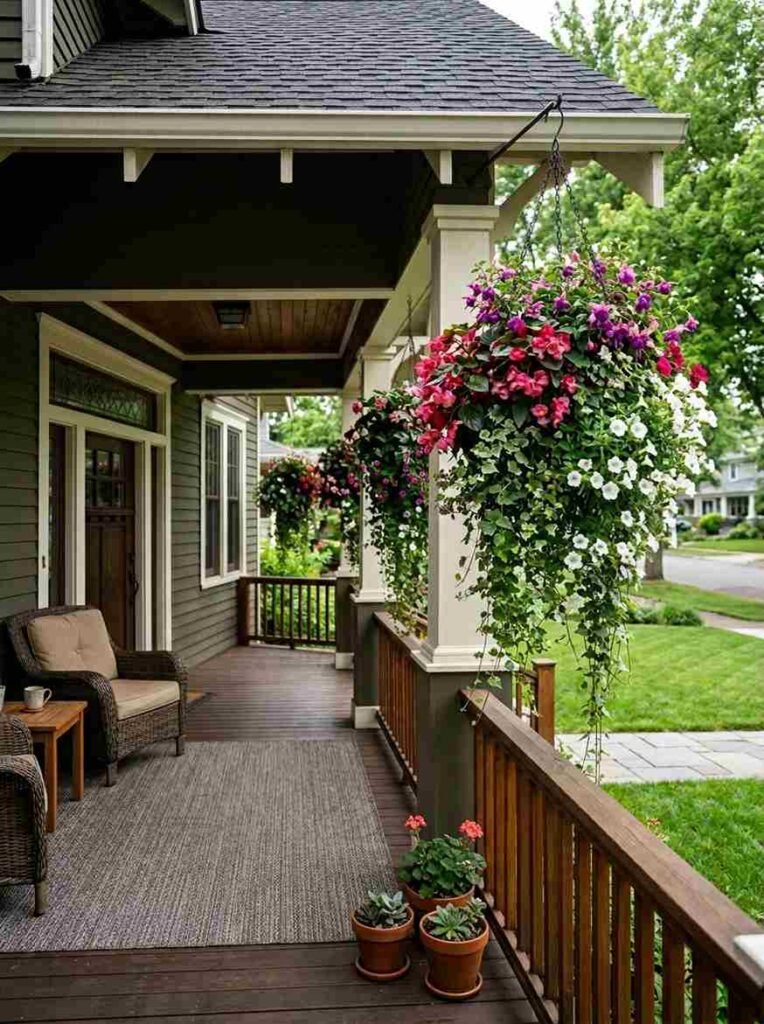
If your porch has an overhang or hooks, use them. Hanging baskets add vertical interest and keep ground space free — great for tiny front stoops where every inch matters.
Go for full, overflowing baskets of fuchsia, begonias, or trailing petunias. Sparse hanging baskets always look a little forgotten.
10. Concrete & Industrial Planters
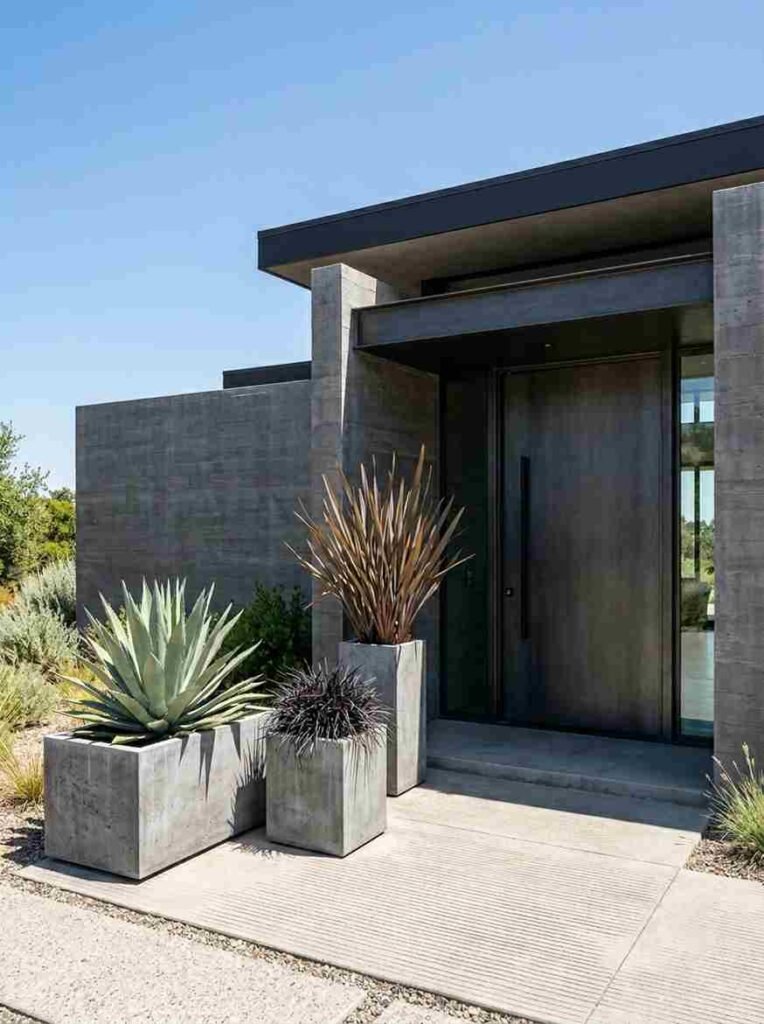
Concrete planters have had their moment, and honestly they’re not going anywhere.
Their muted, textured surface lets colorful plants pop, and they suit modern, minimalist, and industrial home styles perfectly.
Pair them with bold architectural plants like agave, snake plant, or phormium for maximum impact.
11. Urn-Style Planters
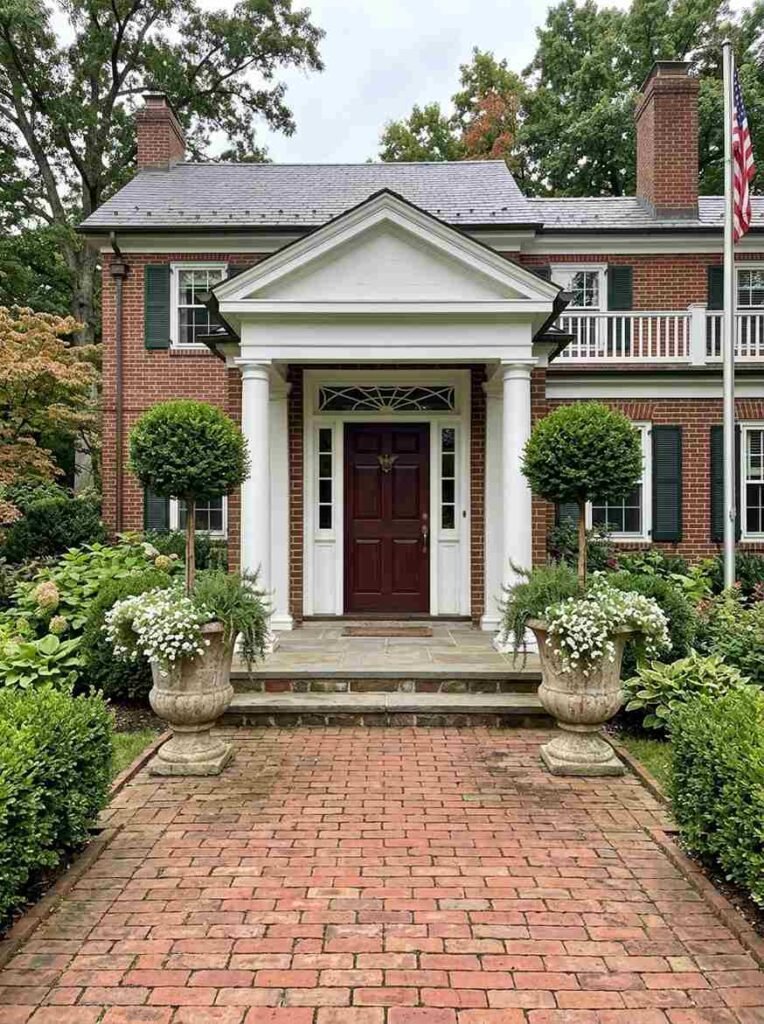
Traditional urns in stone, cast iron, or composite materials bring a timeless quality to any entrance.
They’re especially good for period homes — Victorian, Colonial, or craftsman — where sleek modern pots might feel out of place.
Plant a standard topiary inside for a formal look, or go loose with lavender and trailing rosemary for something more relaxed.
12. Painted Terra Cotta Pots
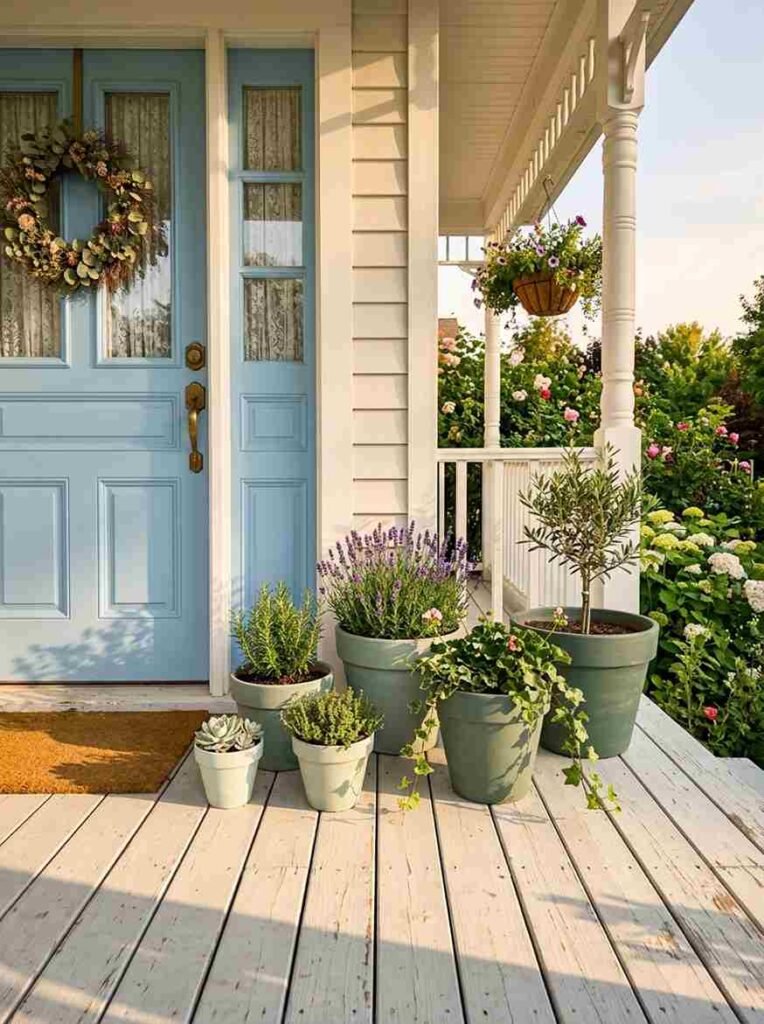
Plain terra cotta is a solid starting point. A coat of exterior paint transforms it completely.
Try painting a set of different-sized pots in gradient shades of the same color — lightest on the smallest, darkest on the largest. It looks intentional and surprisingly sophisticated.
Use chalk paint for a matte finish that ages well outdoors.
Quick Comparison: Planter Materials at a Glance
| Material | Best For | Durability | Price Range |
|---|---|---|---|
| Terracotta | Traditional & cottage styles | Moderate | $ |
| Concrete | Modern & industrial | High | $$ |
| Fiberglass | All styles, lightweight | High | $$–$$$ |
| Cast iron | Classic & formal | Very high | $$$ |
13. Vertical Wall Planters
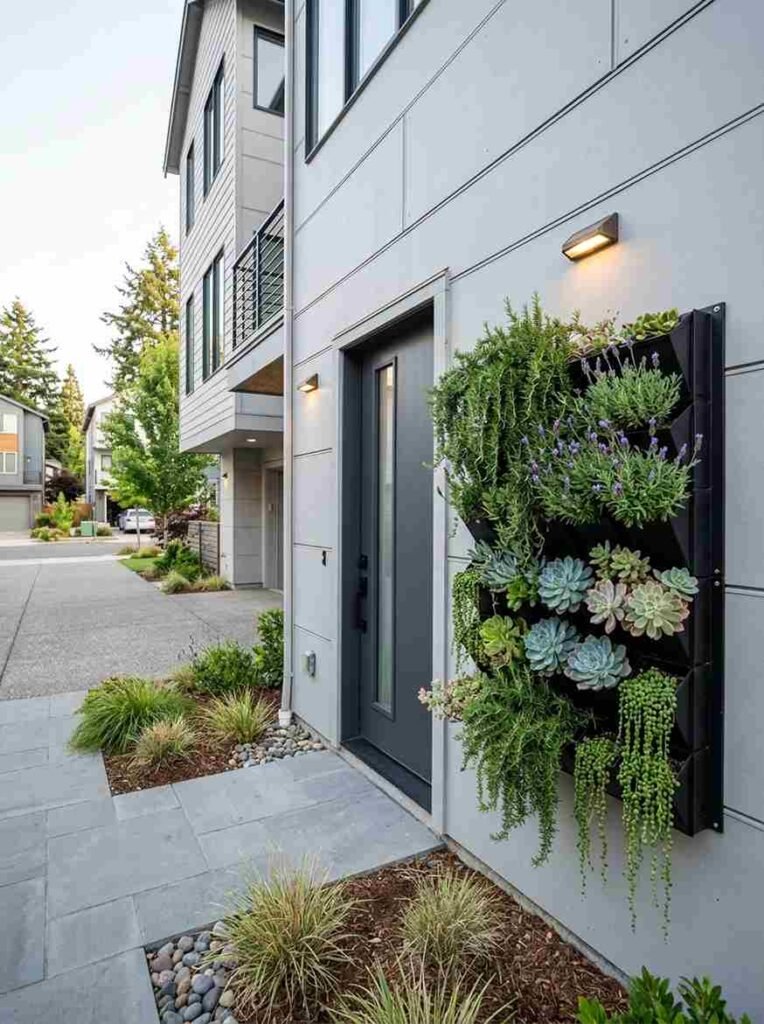
Short on floor space? Go vertical. Wall-mounted planters — pocket-style fabric planters, stacked wooden frames, or modular metal grids — turn a bare fence or exterior wall into a living feature.
Succulents, herbs, and small annuals all work well in vertical setups. They don’t need deep root space.
14. Tall Grass Planters
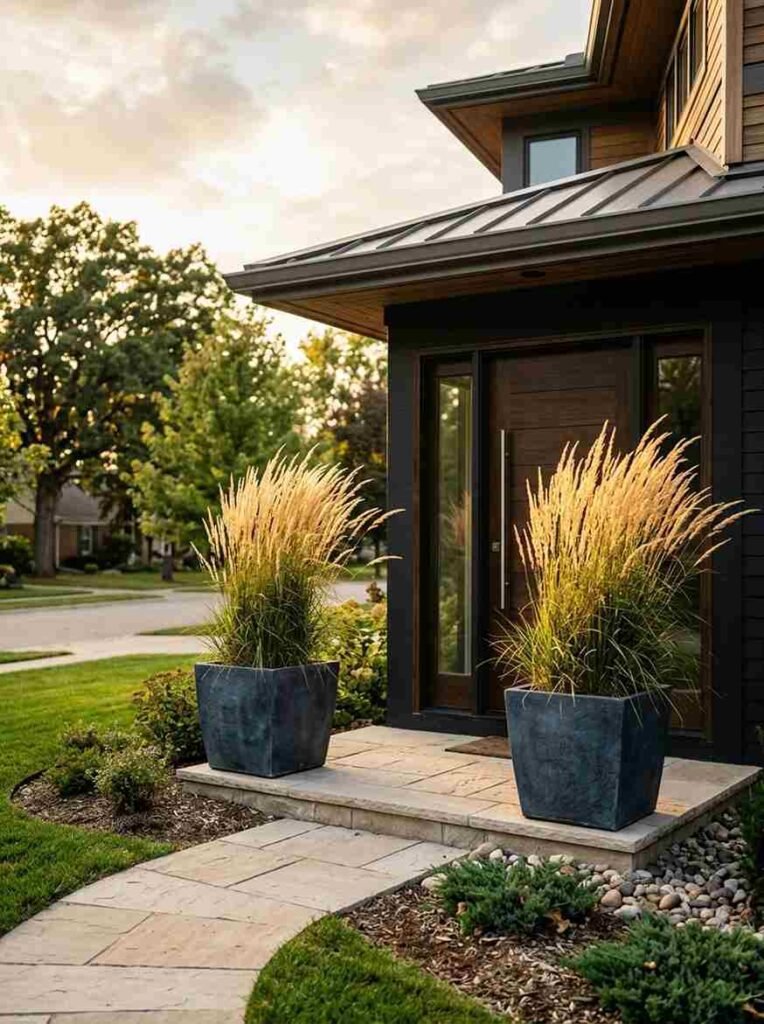
Ornamental grasses in large planters bring movement to a front yard. They sway in the breeze, catch the light in the afternoon, and require almost zero maintenance.
Karl Foerster feather reed grass in a dark slate planter is one of my personal favorites — it’s elegant without trying too hard.
15. Succulent Bowl Arrangements
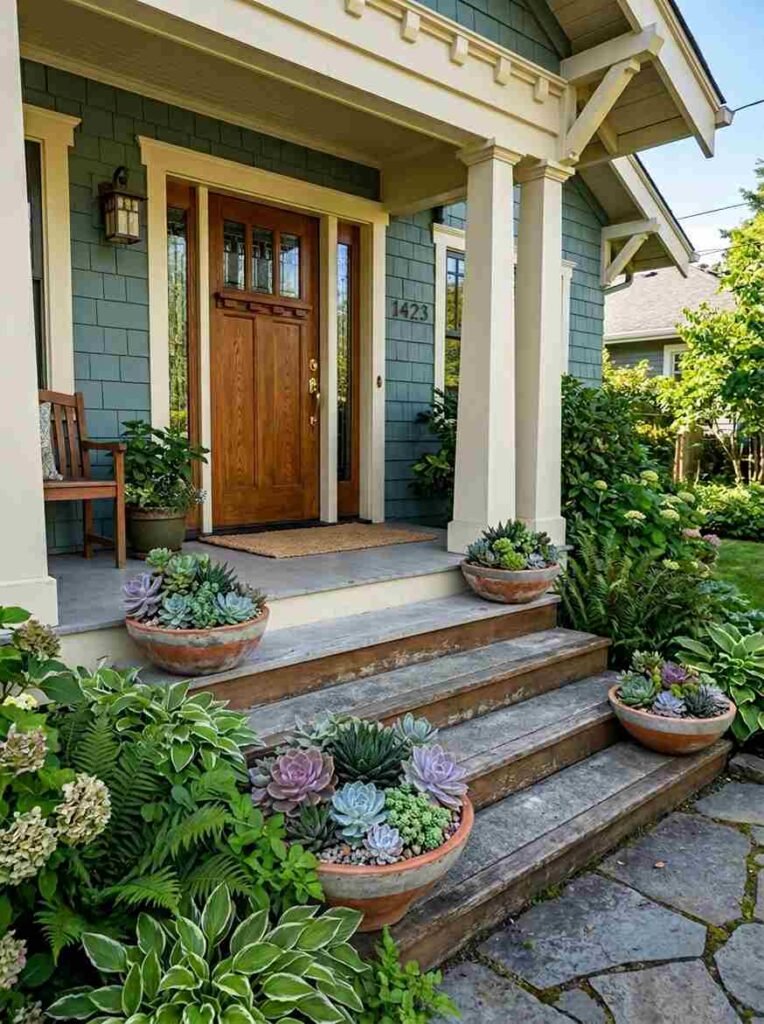
A wide, shallow bowl planted with a mix of succulents is low-maintenance, long-lasting, and genuinely beautiful. Place a few on front steps or group them on a small entry table.
FYI — succulents planted in bowls without drainage holes will eventually rot. Always use gritty mix and go light on the watering.
16. Seasonal Swap Planters
Some planters are really just vessels for rotating seasonal color.
Keep the same pots year-round and swap the plants with the seasons — pansies in spring, petunias in summer, mums in fall, evergreen branches in winter.
It’s one of the easiest ways to keep your entrance looking fresh without overthinking it.
17. Lantern & Planter Combos
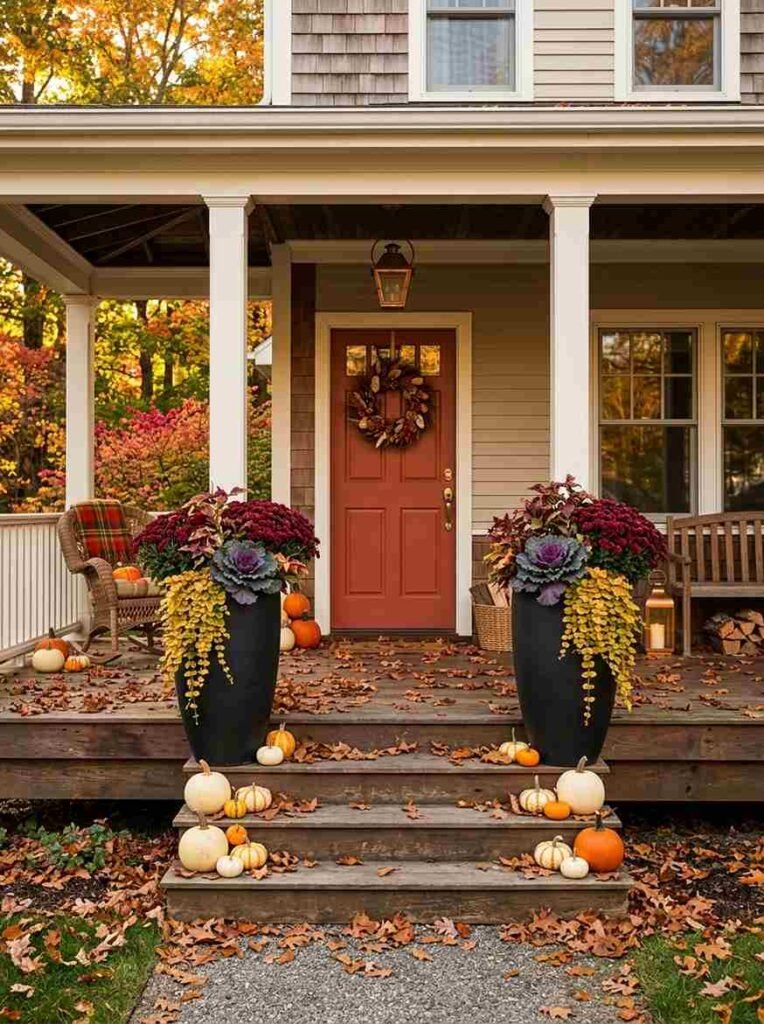
Some outdoor planters come built with integrated lantern posts or solar lights. These are a smart two-for-one: you get a planted accent and pathway lighting without running any wiring.
Look for ones in black powder-coated metal or aged bronze to match most hardware finishes.
18. Geometric Shaped Planters
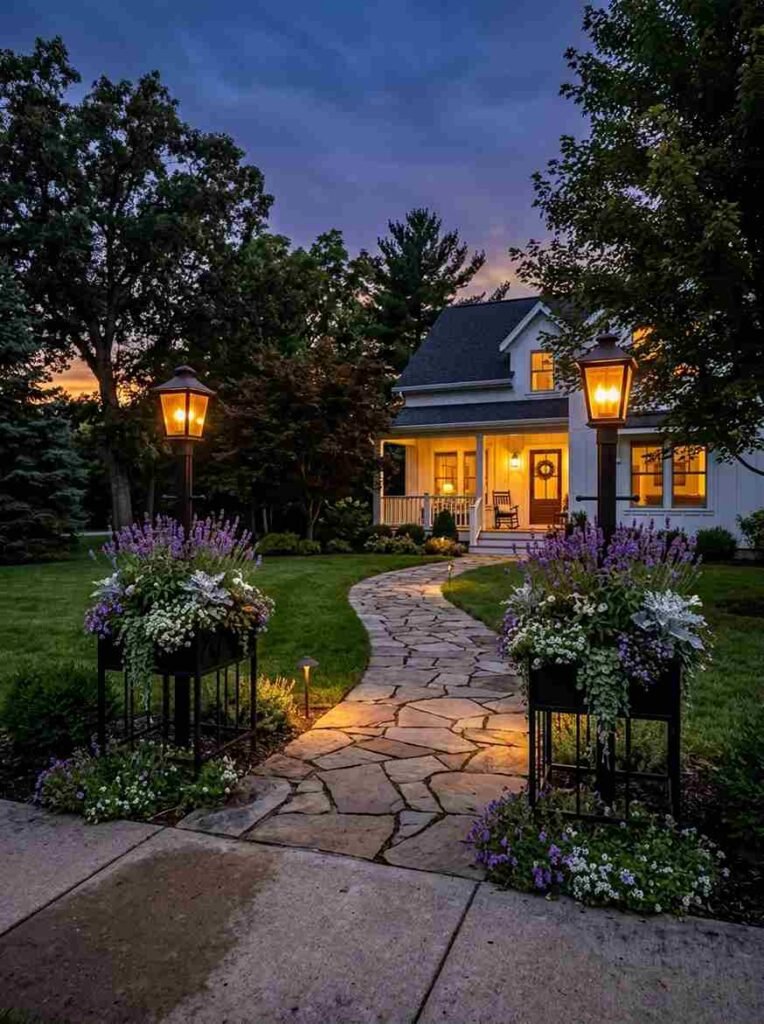
Round, square, hexagonal — the shape of the planter itself becomes part of the design.
Geometric planters in matte black or white suit contemporary homes particularly well and look fantastic in styled flat-lays (yes, very Pinterest of me to mention that).
Pair with structural plants like ZZ plants, cordyline, or spiky dracaena.
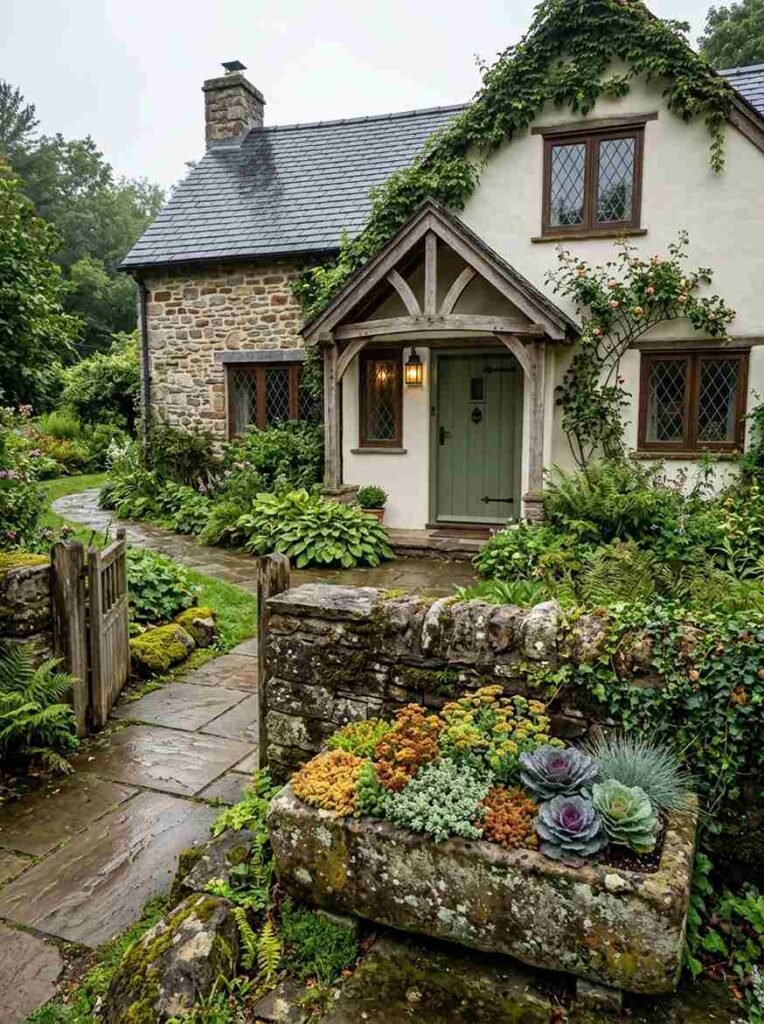
19. Stone Trough Planters
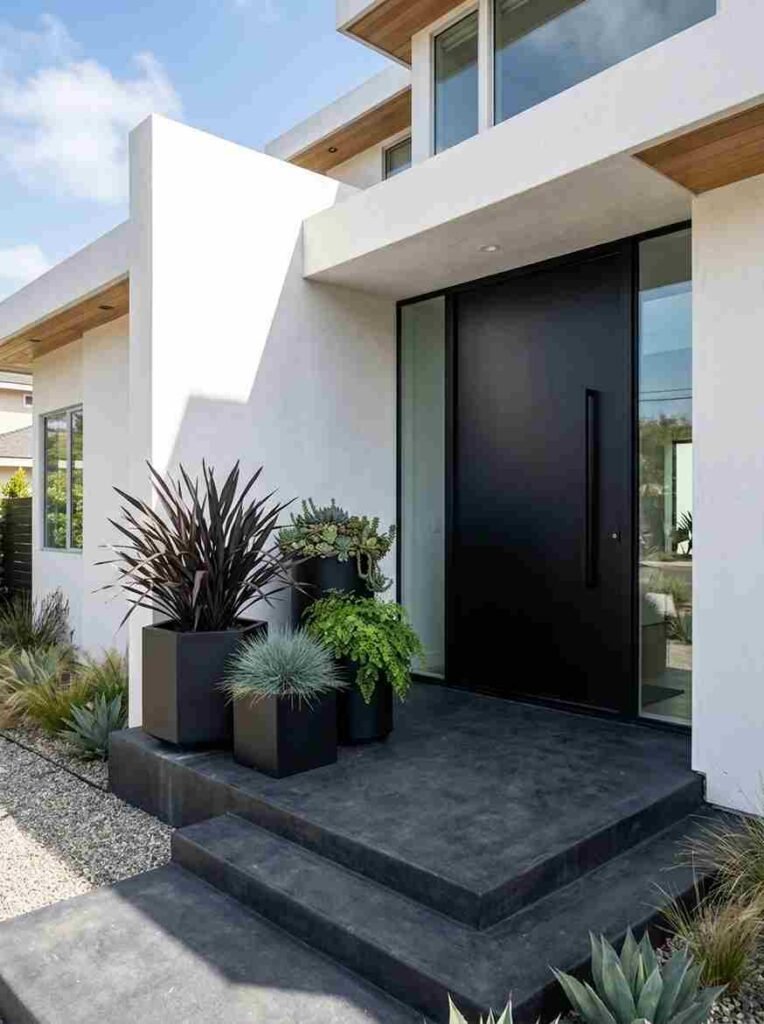
Real stone troughs have serious weight and permanence — once placed, they stay.
Replicas in lightweight cast stone give you the same look without pulling your back out.
These suit cottage gardens and country-style homes perfectly. Fill them with alpines, sedums, or small ornamental cabbages.
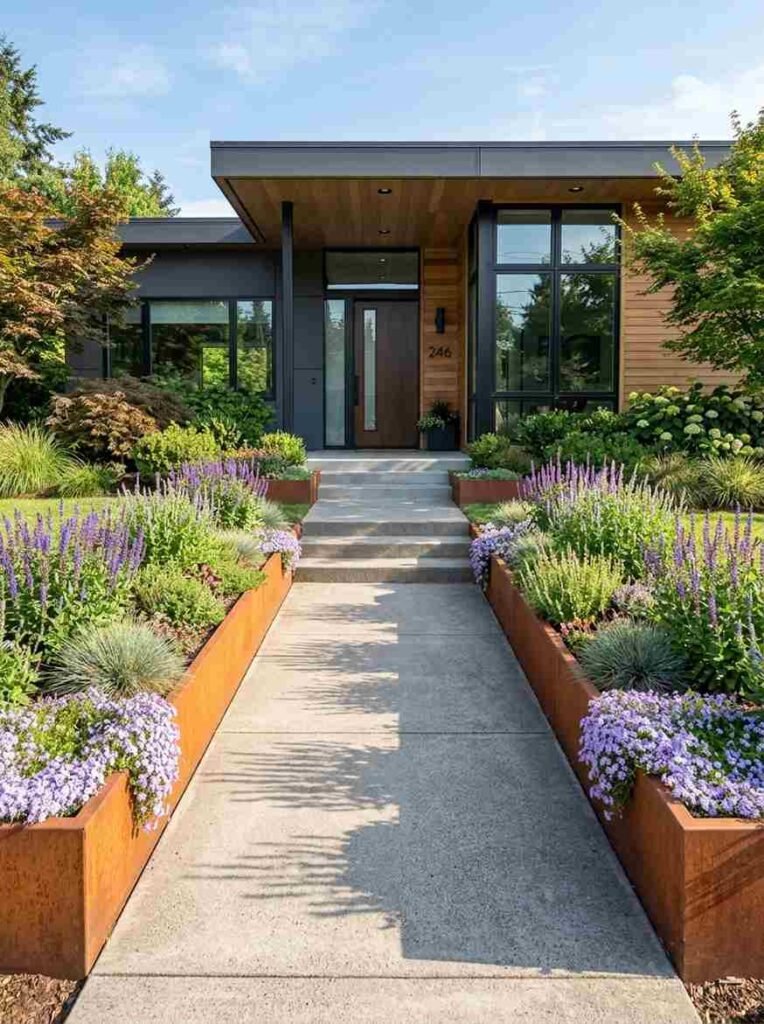
20. Raised Planter Beds Near the Entry
A low raised planter bed framing the walkway or entry path works like built-in landscaping without the permanence. Use treated timber, corten steel, or stacked stone for the frame.
Plant with low-growing perennials or groundcovers so they fill in without constant trimming.
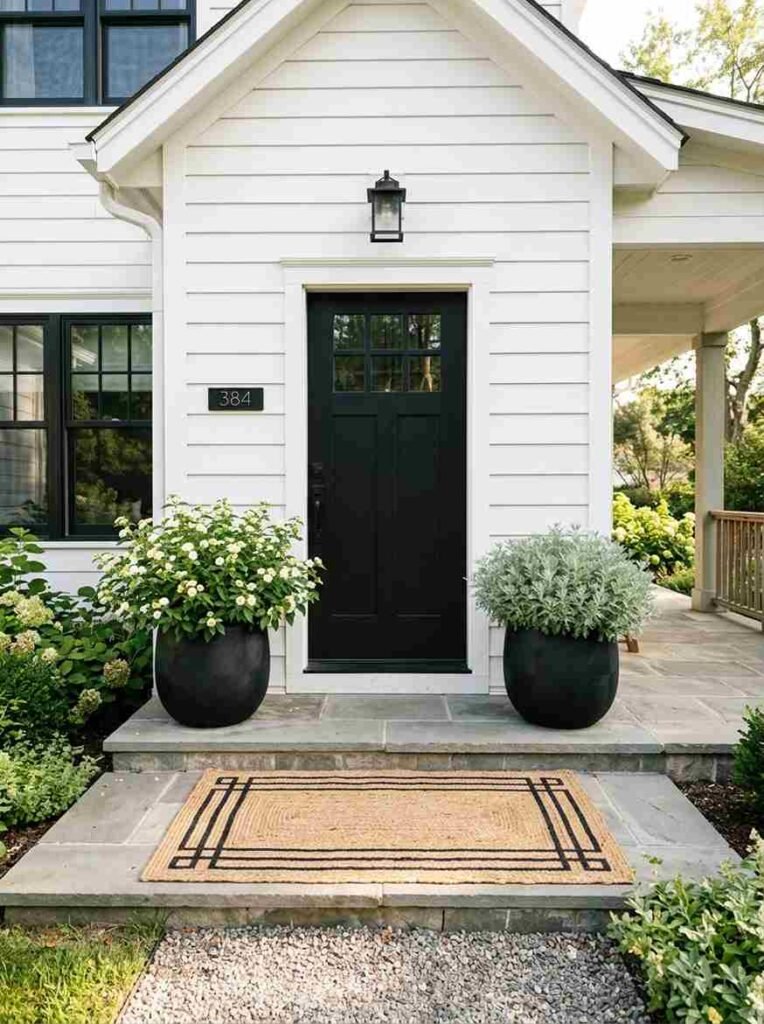
21. Matching Planter & Doormat Set
This sounds minor, but coordinating your planter style with your doormat pattern ties the whole entrance together.
If you’ve got graphic black and white pots, a bold geometric mat echoes that energy. Woven natural fiber mat with terracotta? Perfect.
It’s the front door equivalent of a well-styled coffee table. Small detail, big difference.
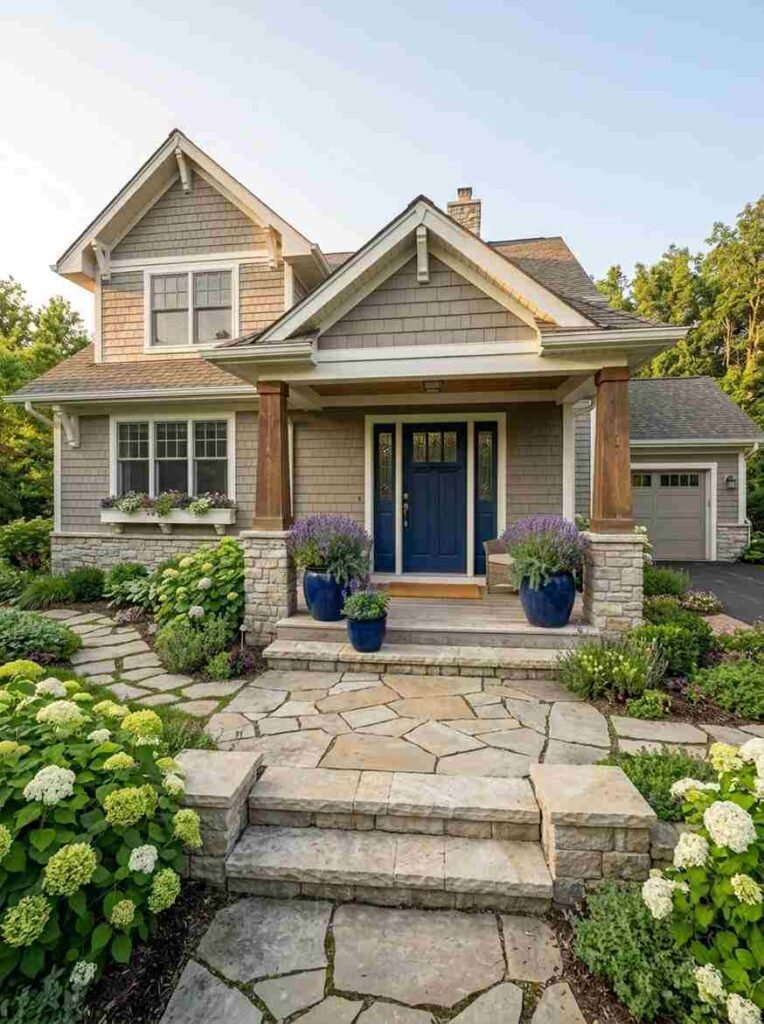
22. Color-Matching Planters to Your Front Door
Your front door color is a strong anchor. Pull one color from your door and use it in your planter choice or plant selection. Navy door? Choose a matching navy glazed pot or lavender plants that echo the blue family.
This creates a cohesive entrance without any design background required.
23. The Layered Foliage Mix
Pack one large planter with the “thriller, filler, spiller” formula: one tall statement plant, one mounding filler, one trailing plant that cascades over the edge.
It works every time and fills out a pot quickly.
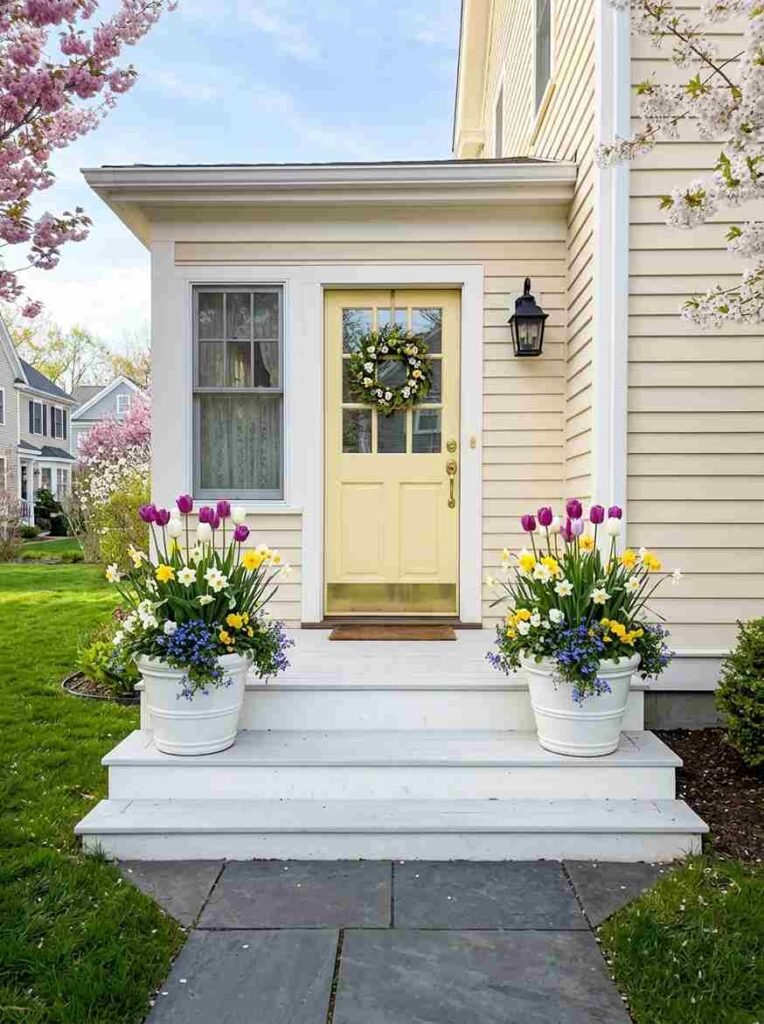
A few good combos:
- Canna lily + dusty miller + sweet potato vine
- Boxwood topiary + begonias + lobelia
- Cordyline + impatiens + bacopa
Final Thoughts
A stunning front entrance doesn’t need a landscaping crew or a big renovation. A handful of well-chosen planters, a consistent plant palette, and a little attention to scale and placement go a long way.
Start with one or two of these ideas, see what resonates with your home’s style, and build from there.
The front yard is your first impression — make it one you’re genuinely proud of every time you pull into the driveway.
Now go find a planter that makes you happy and plant something in it. That’s really all it takes 🙂
