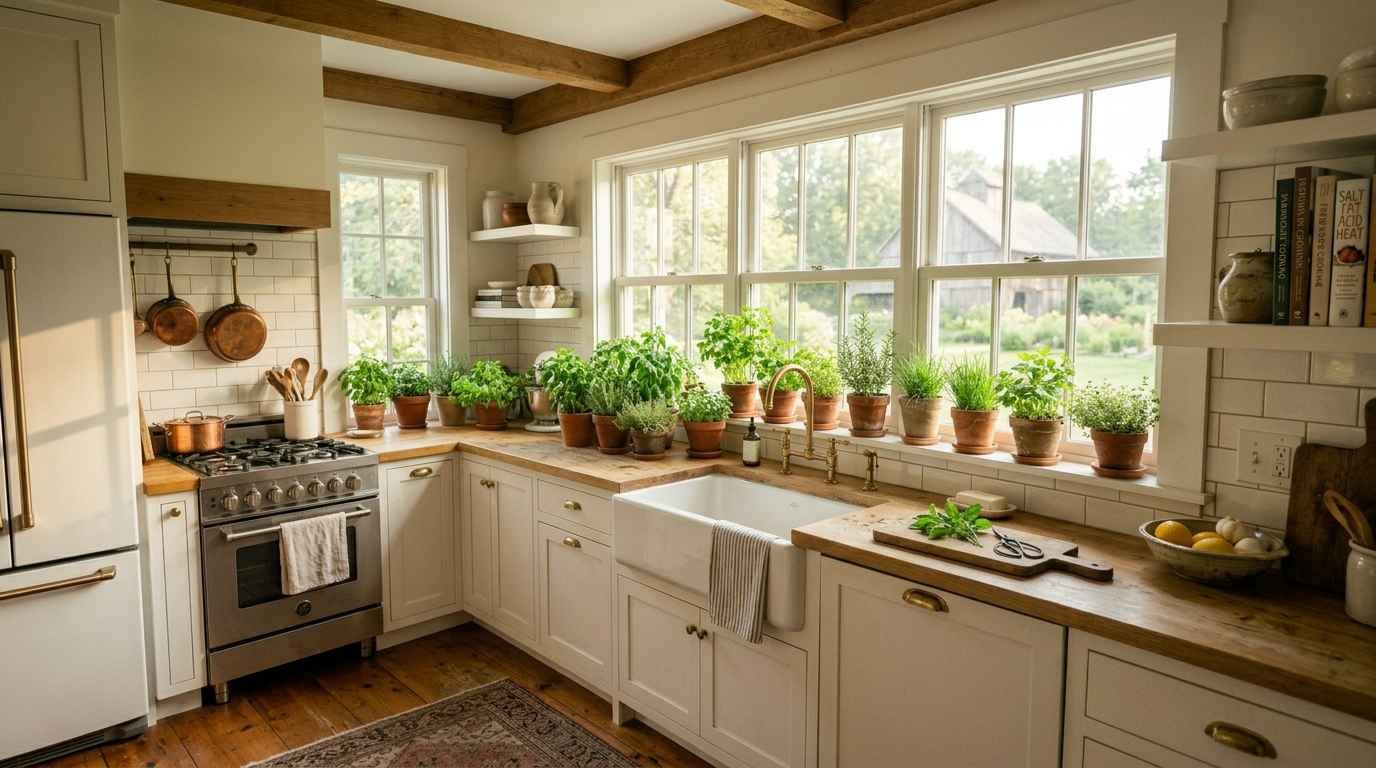
So you killed a cactus once and decided plants hate you. Same, honestly. But herbs are different — they want to live in your kitchen.
They want to be near sunlight and warmth and you accidentally splashing water on them while doing dishes.
This guide is for people who’ve never grown anything indoors but want fresh basil on their pasta by next month.
These 22 ideas go from dead-simple (a single pot on a windowsill) to genuinely impressive (a wall-mounted herb display your guests will photograph). Pick your level and go.
Why indoor herb gardens work so well for beginners
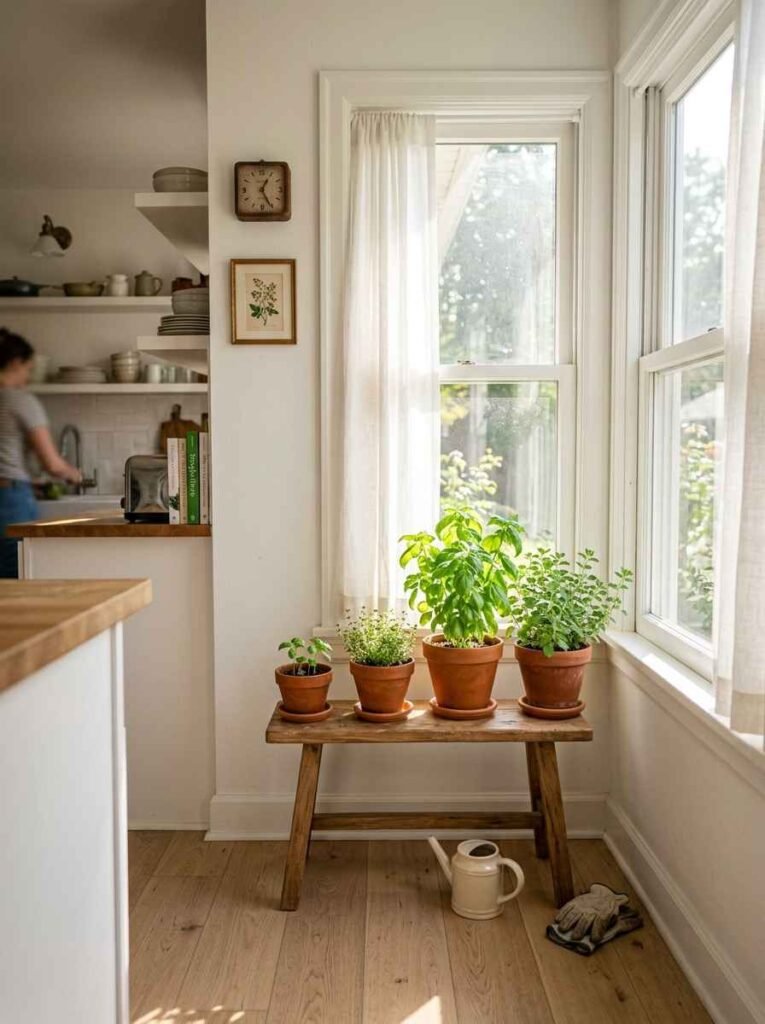
Herbs are forgiving. Most of them grow fast, smell incredible, and bounce back from neglect faster than houseplants do.
You get visual feedback quickly — new leaves in a week or two — which keeps you motivated.
They’re also useful in a way a peace lily isn’t.
You trim them, they grow back. You eat the clippings. It’s the most satisfying gardening loop a beginner can start with.
The beginner non-negotiables before you buy anything
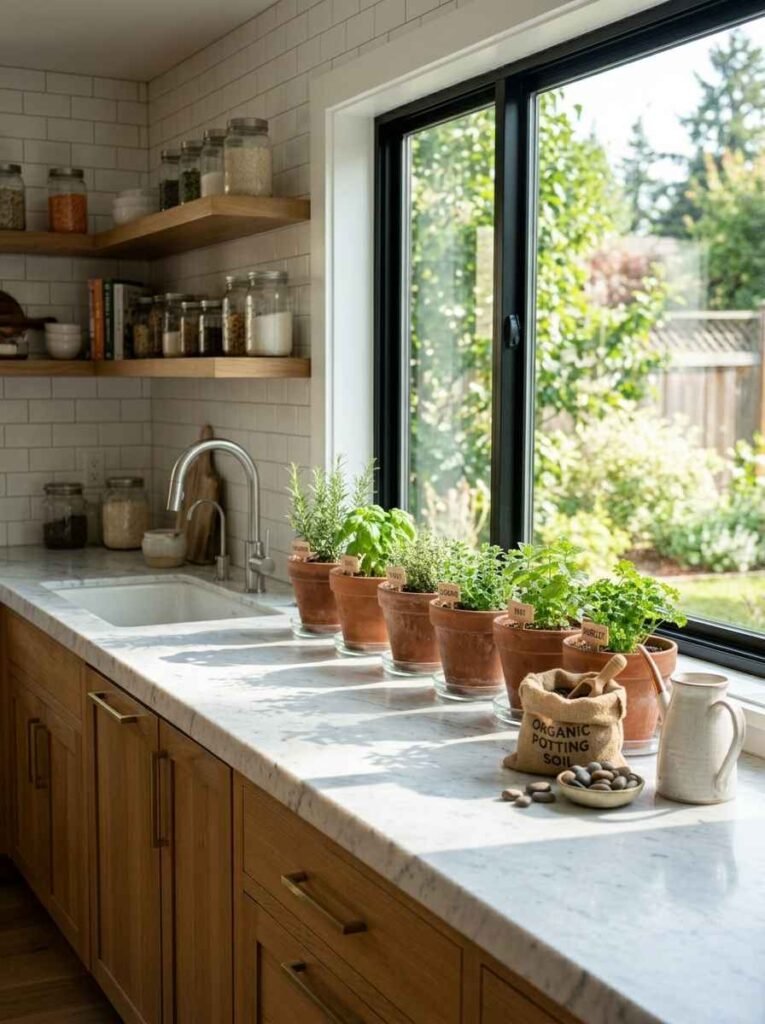
Light is the one thing you can’t fake. Herbs need 6 hours of direct or bright indirect sunlight daily.
South-facing windows are ideal. If yours faces north, you’ll need a grow light — but more on that below.
Drainage matters more than the pot. Herbs hate sitting in water. Whatever container you choose, it needs holes at the bottom.
No holes = root rot = dead herb = you feeling like a plant murderer again.
Here’s a quick reference before you pick your setup:
| Herb | Light needed | Watering frequency | Easiest skill level |
|---|---|---|---|
| Basil | High (6+ hrs) | Every 2-3 days | Beginner |
| Mint | Medium | Every 3-4 days | Very easy |
| Chives | Medium-high | Every 3-4 days | Very easy |
| Rosemary | High | Weekly | Easy |
Windowsill herb garden ideas
1. The classic three-pot windowsill lineup
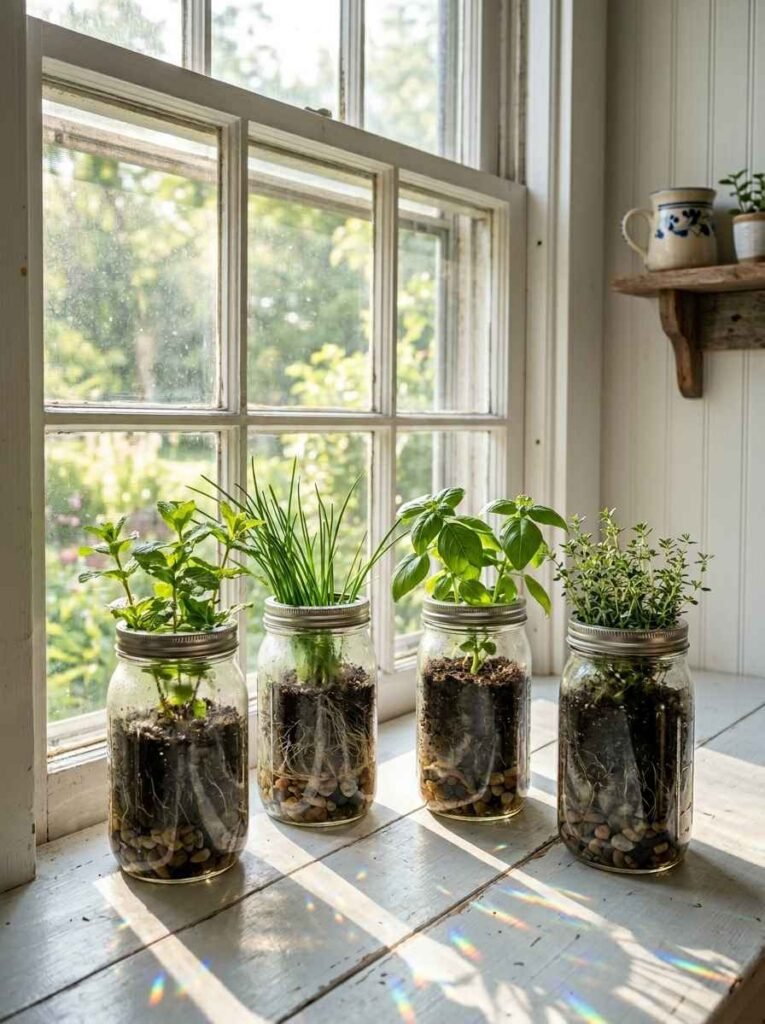
Three terracotta pots in a row. Basil, chives, parsley. That’s it. Terracotta dries out faster than plastic, which is actually good for most herbs — it prevents overwatering.
Keep them on a small tray to catch drainage. Rotate them every few days so all sides get light. You’ll have herbs ready to snip in about 3 weeks.
2. Repurposed mason jars
Mason jars look genuinely beautiful on a windowsill, and they cost almost nothing if you already have them. The catch: no drainage holes. So you need to add a gravel layer at the bottom (about an inch) to keep roots out of standing water, and water very sparingly.
FYI, this setup works better for mint and chives than for basil, which is drama-prone about wet roots.
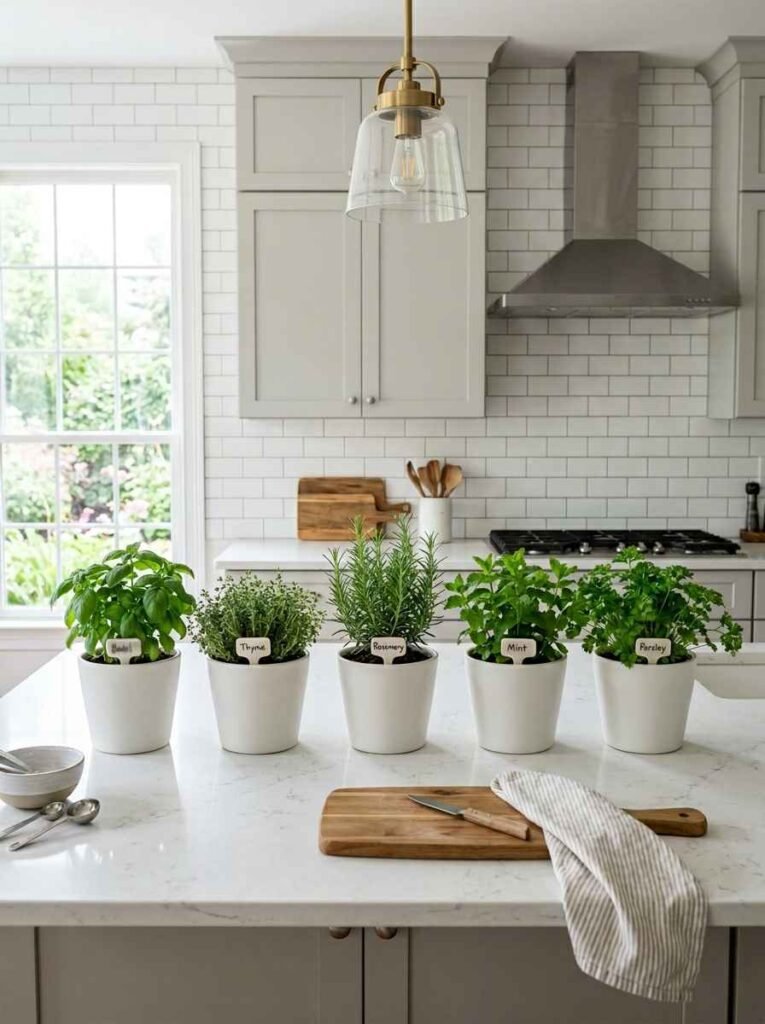
3. Matching ceramic pots in a row
If aesthetics matter to you (this is Pinterest, so yes), matching white or terracotta ceramic pots create a clean, cohesive look.
Add small chalkboard labels. People go insane for this on Pinterest and honestly it looks great in real life too.
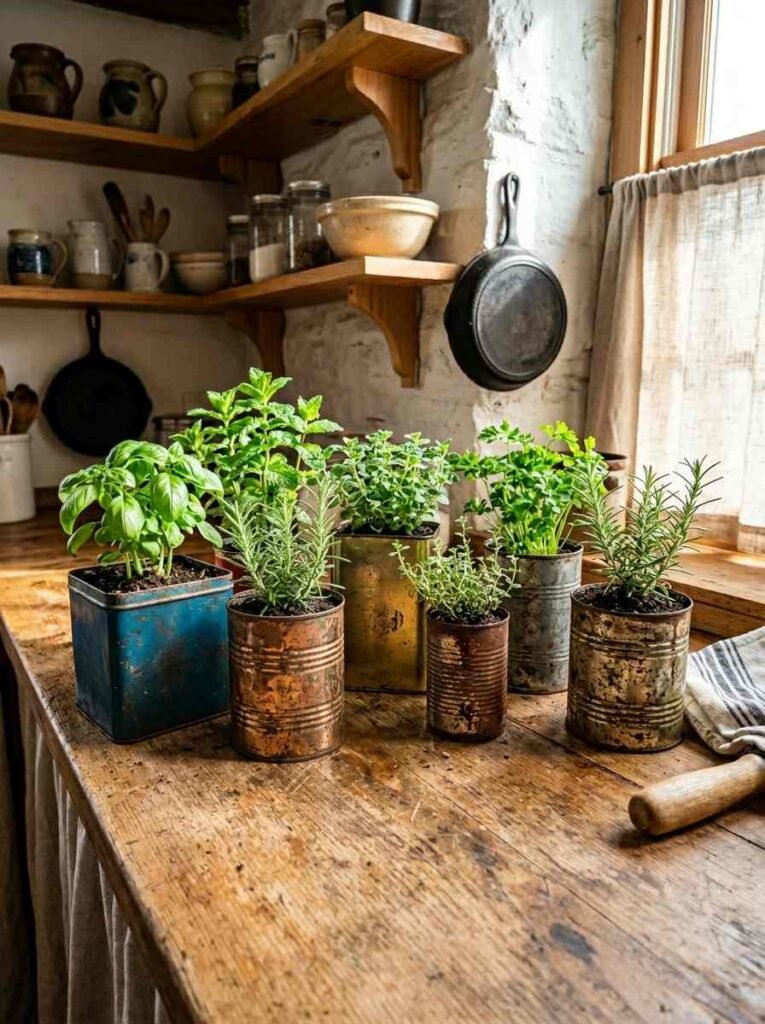
4. Mismatched vintage tins
Collect old coffee tins, soup cans, tea tins. Punch drainage holes in the bottom with a nail and hammer. Paint them if you want, or leave them as-is for a rustic look.
This is one of the cheapest setups possible — seeds cost a few dollars and the containers cost nothing. Great starter project.
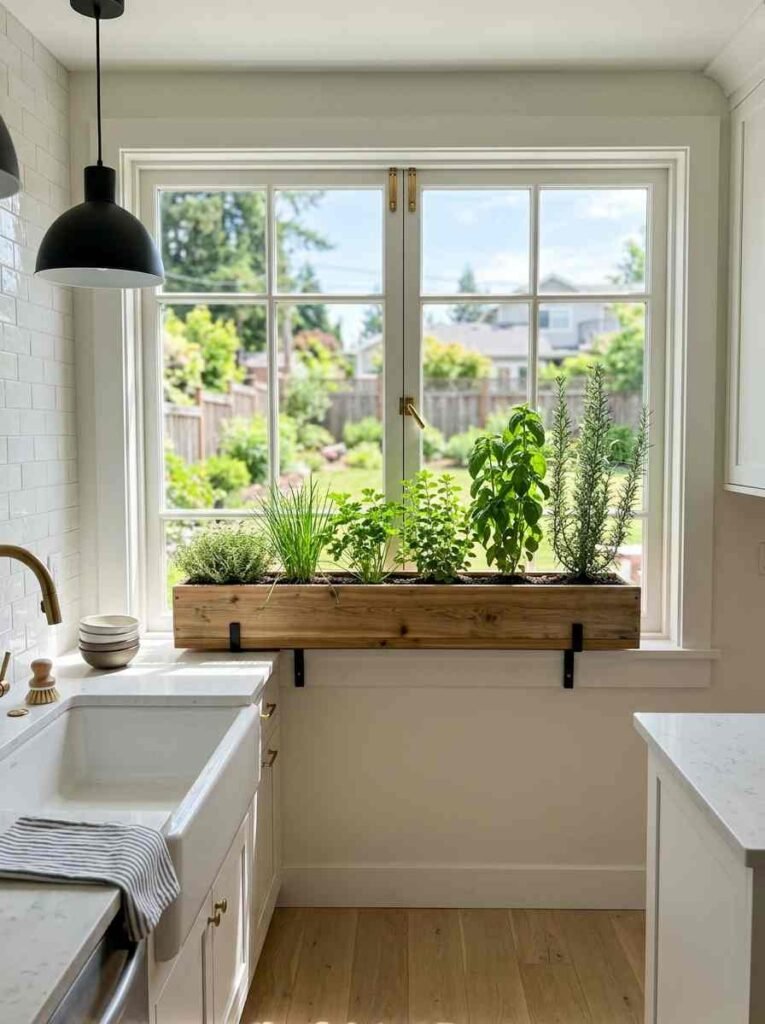
5. Window herb box
A long rectangular planter box that sits on your windowsill or mounts just below it. You can fit 4-6 herbs in one.
Cedar and pine are common wood choices — both hold up well to moisture if you seal them first.
Plant shorter herbs at the front (chives, thyme) and taller ones at the back (basil, rosemary). Looks intentional, even if you just guessed.
Wall-mounted and vertical herb garden ideas
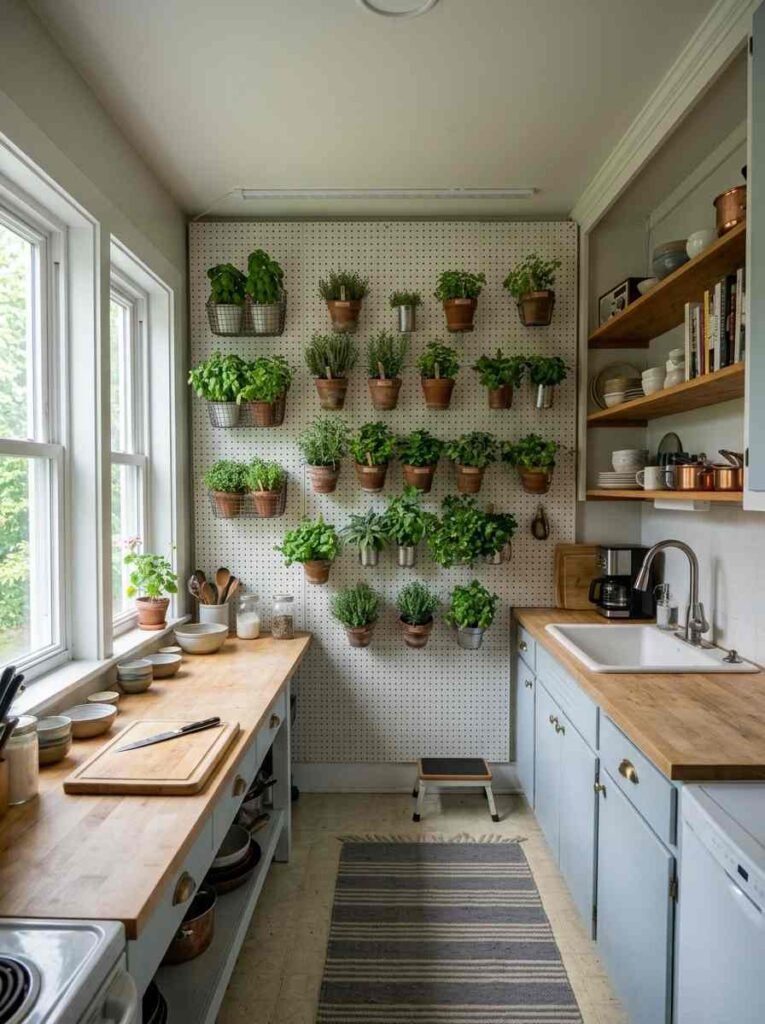
6. Pegboard herb wall
A pegboard from a hardware store, painted and hung on a wall, with small baskets or containers attached via hooks.
Seriously good for small kitchens — you’re using vertical space that was doing nothing.
You control the layout completely. Rearrange containers as herbs grow or shrink. Add a grow light strip along the top if you don’t have a nearby window.
7. Mounted wooden crate shelves
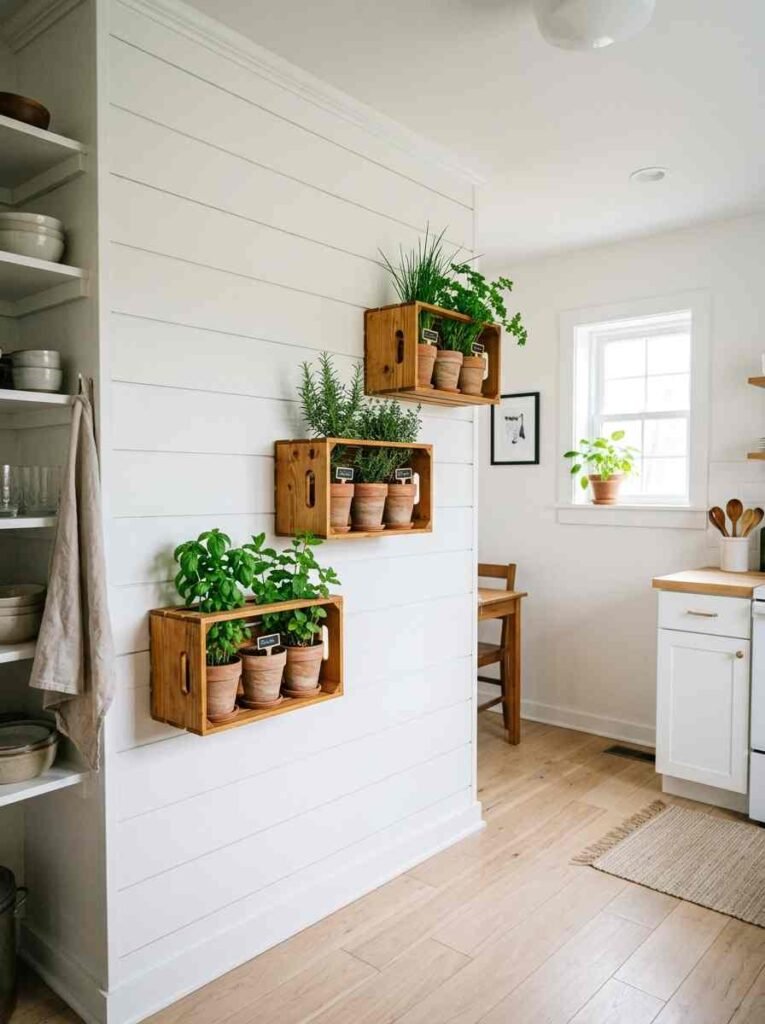
Stack 2-3 small wooden crates horizontally on a wall. Stagger them slightly for a visual step effect.
Each crate holds 2-3 pots. Sand, stain, or paint the crates to match your kitchen.
This looks like something from a Scandinavian kitchen renovation blog. It is not difficult to make. 🙂
8. Pallet herb garden
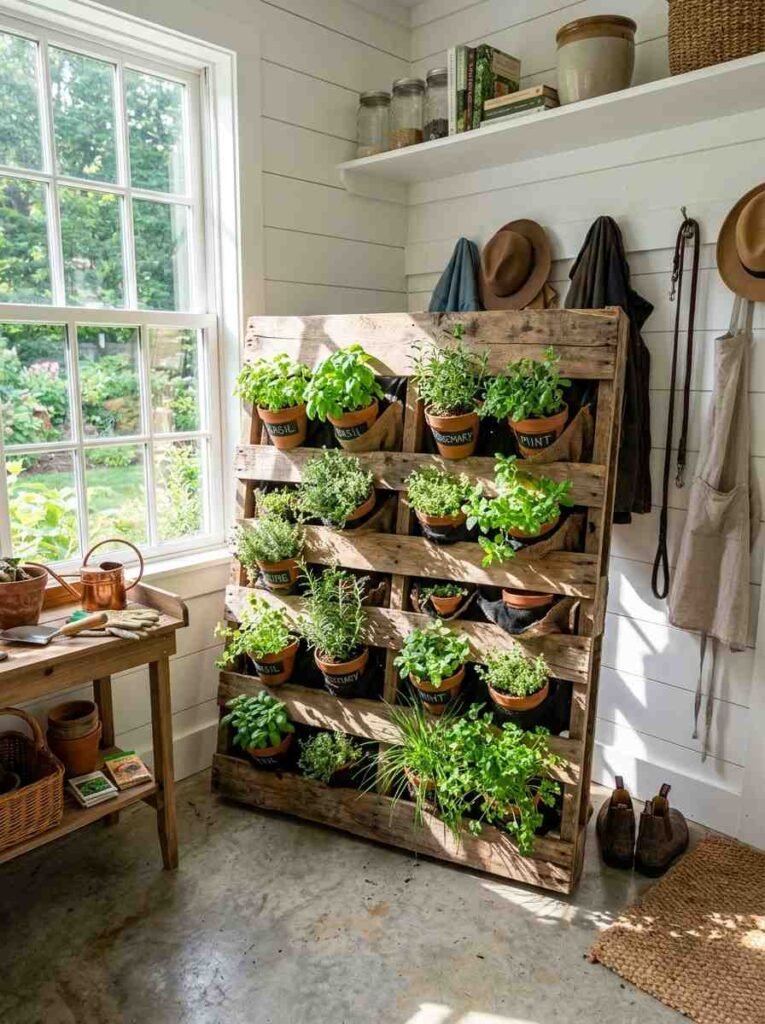
A pallet leaned against a wall or hung flat.
You can nail small containers to it or weave landscape fabric between the slats and plant directly into the pockets.
Pallets are free from hardware stores, furniture delivery spots, or neighborhood apps. Make sure you get heat-treated pallets (stamped HT) — not chemically treated ones.
9. Hanging macramé planters
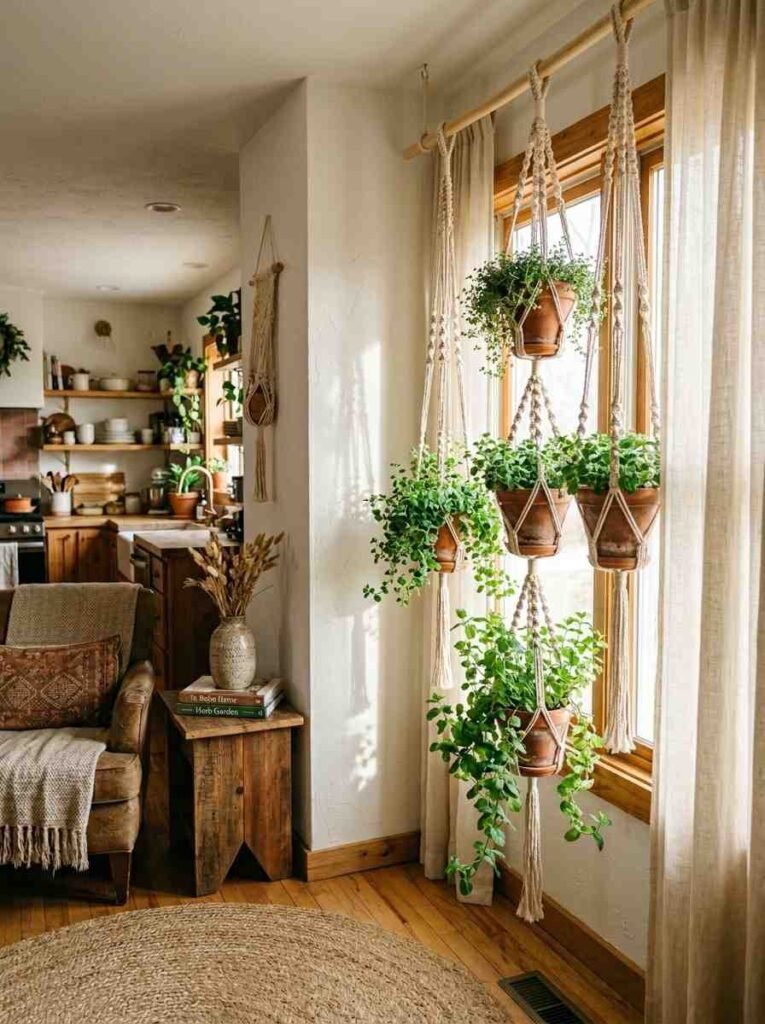
Macramé hangers with small pots. These work beautifully near a bright window and add texture to a bare wall.
You can buy pre-made macramé hangers on Etsy for $10-20 each, or learn the basic knots in an afternoon.
Trailing herbs like thyme and oregano look especially good in these. Let them spill over the sides.
10. Magnetic wall strip with metal containers
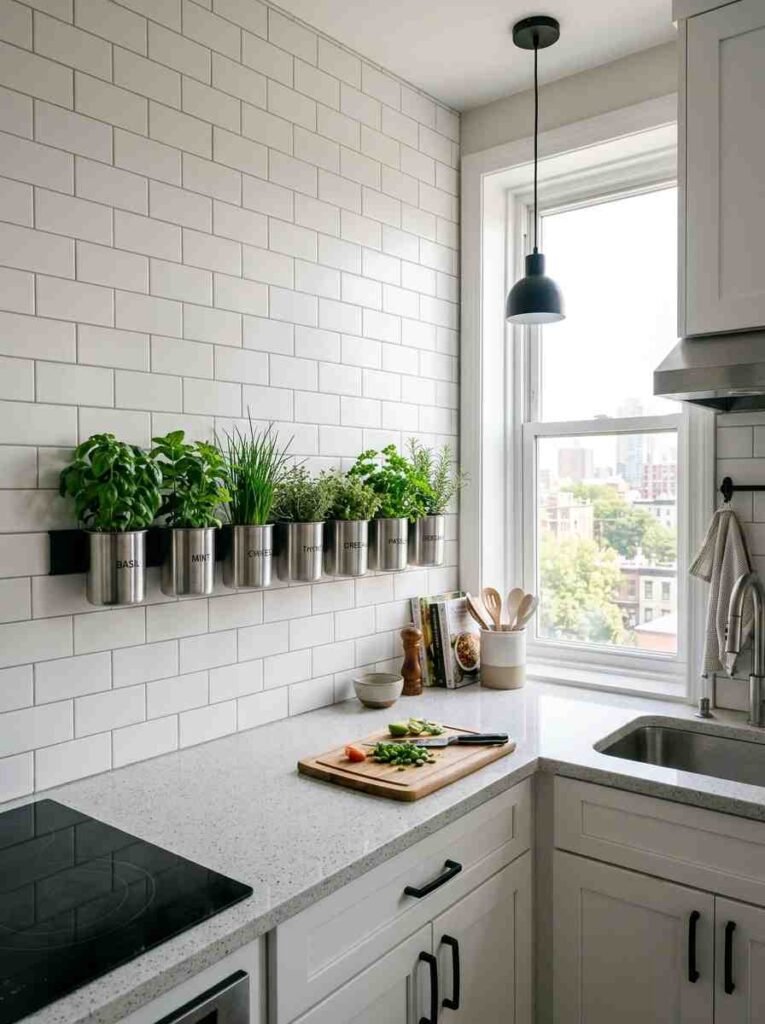
Magnetic knife strips (the kind used for knives in kitchens) mounted on a wall with small metal herb containers attached. Compact, industrial-looking, and surprisingly affordable.
You can find magnetic herb container sets designed for this exact use on Amazon and kitchen supply stores. Great for apartments with tiny counter space.
11. PVC pipe vertical garden
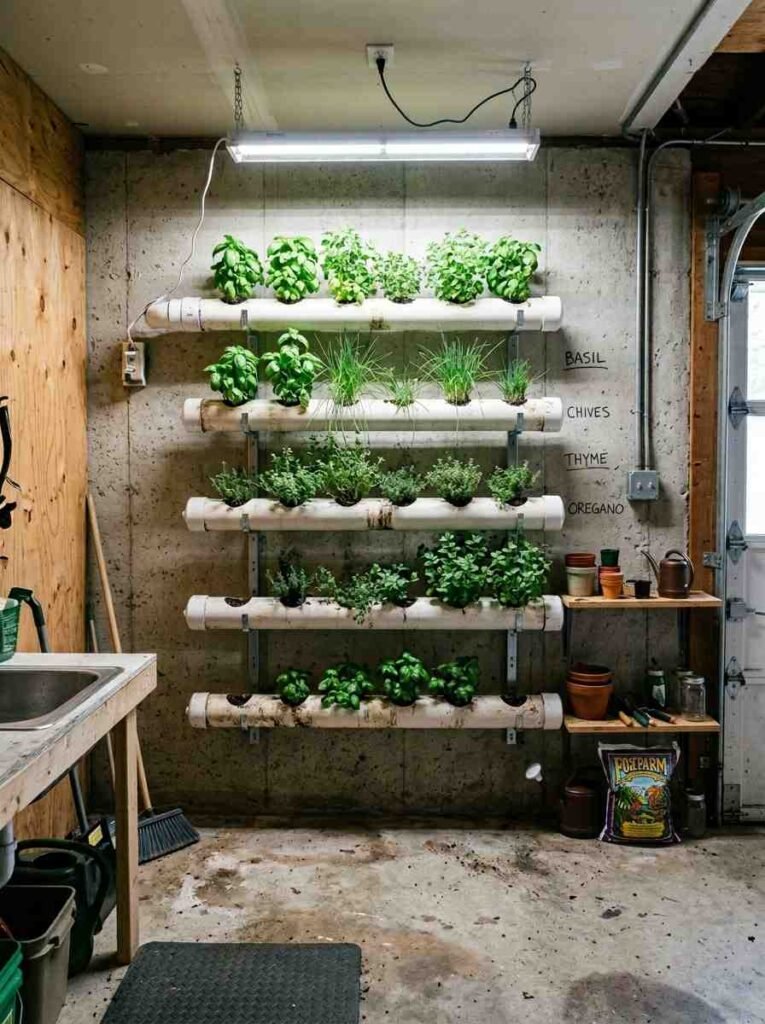
Cut sections of PVC pipe horizontally, drill drainage holes, fill with soil, mount on a wall or fence. You can fit a lot of herbs in a small footprint.
IMO this one looks better outdoors or in a garage-to-kitchen garden setup, but people do it indoors too. It’s very functional even if not the prettiest option.
12. Chicken wire frame with pots
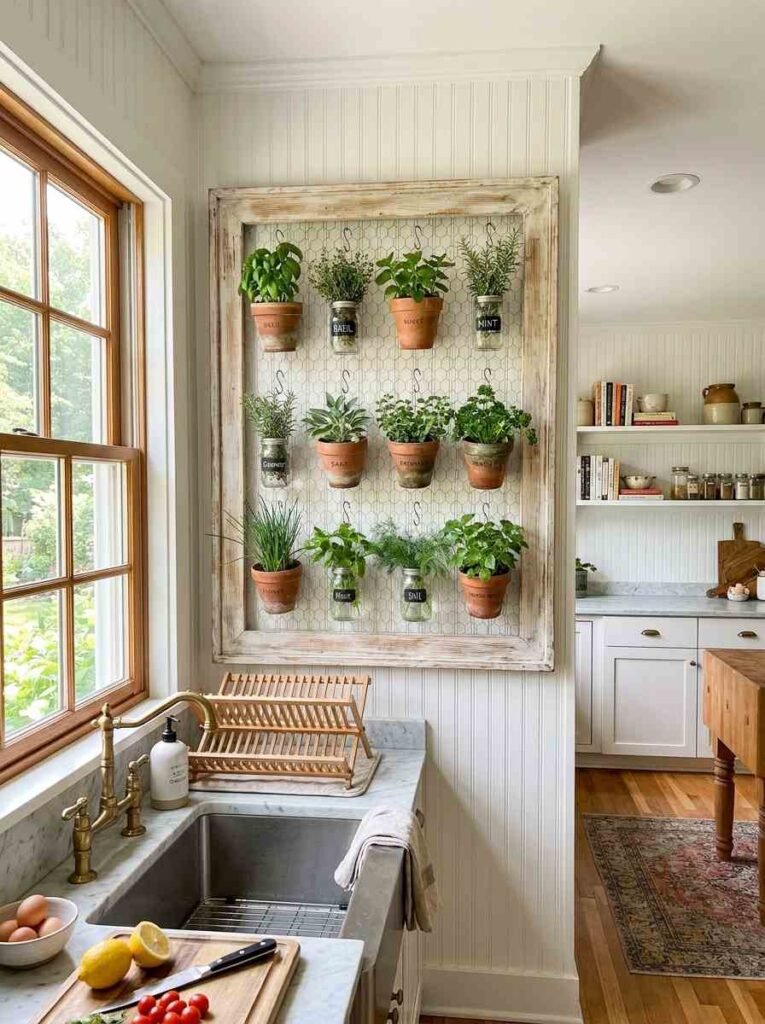
A wooden frame with chicken wire stretched across it. Hang small S-hooks from the wire, then hang lightweight pots or mason jars from the hooks. Adjust the layout any time.
Farmhouse aesthetic. Goes with white kitchens, exposed wood, that kind of thing.
Counter and shelf herb garden ideas
13. Tiered plant stand
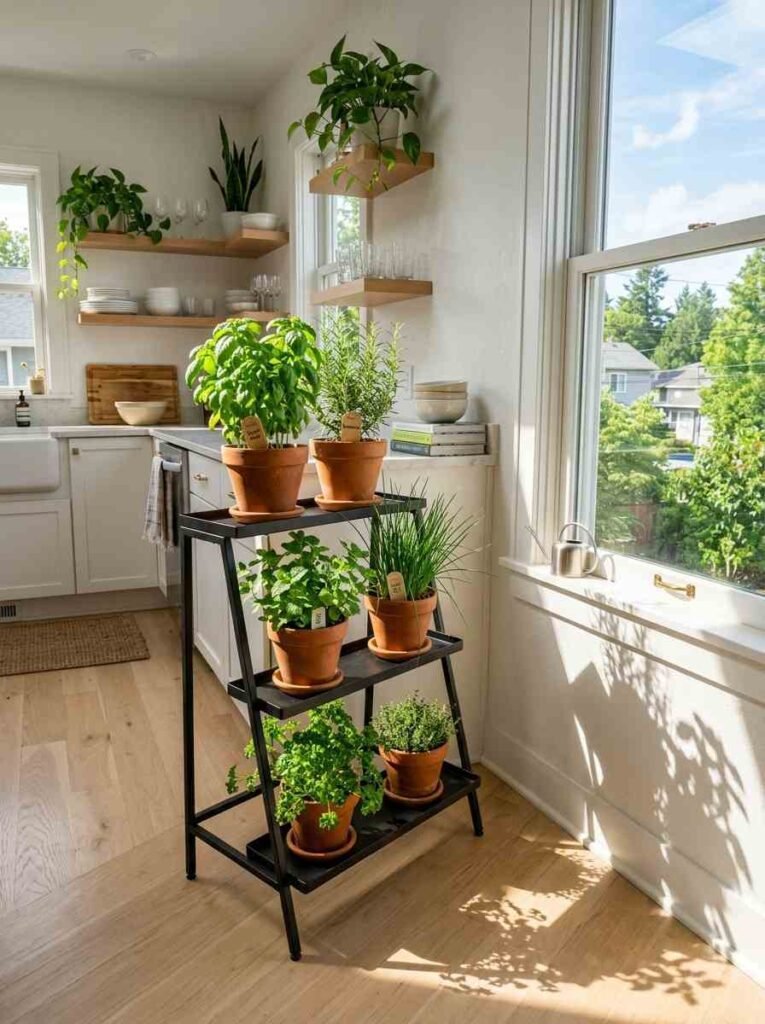
A 3-tier stand (metal or wood) placed on a counter or beside a window. Put your largest, most light-hungry herbs on top and work your way down by light need.
These stands are cheap and widely available. They also look good with a mix of herb and non-herb plants, if you want to eventually expand.
14. Glass cloche herb display
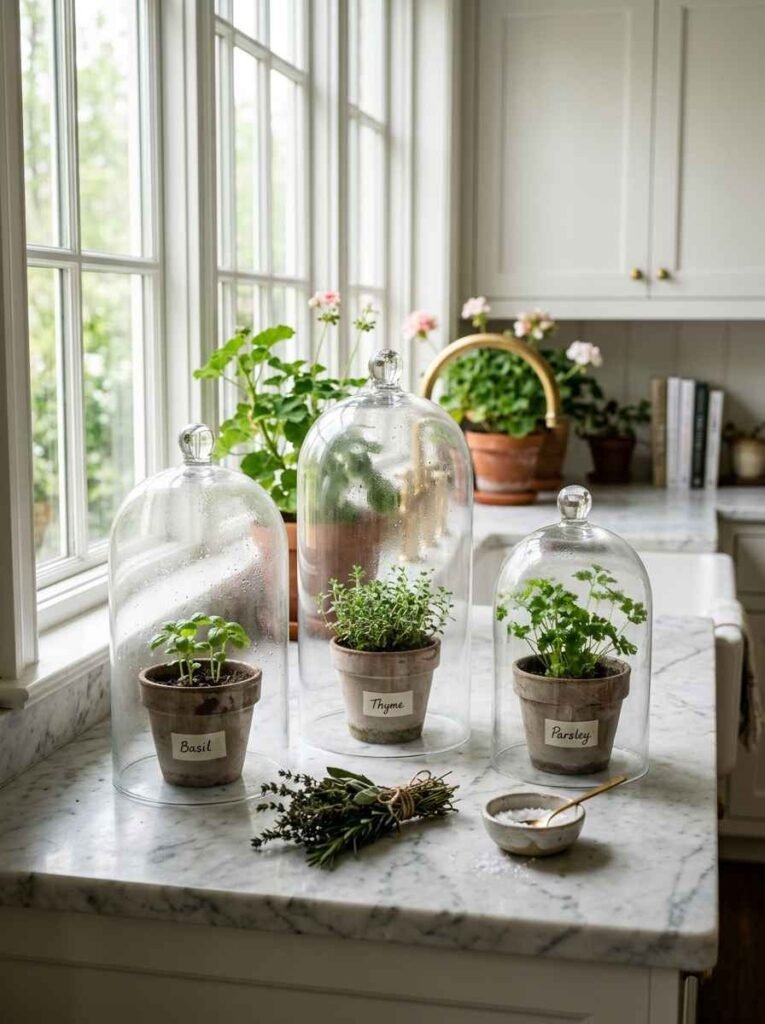
Glass cloches (dome covers) over individual herb pots create a greenhouse microclimate that’s especially good for seedlings. Also looks incredibly elegant.
Not practical for herbs you harvest constantly — removing and replacing the dome gets annoying.
Better for decorative display or getting seedlings established before moving them somewhere more accessible.
15. Wooden cutting board display
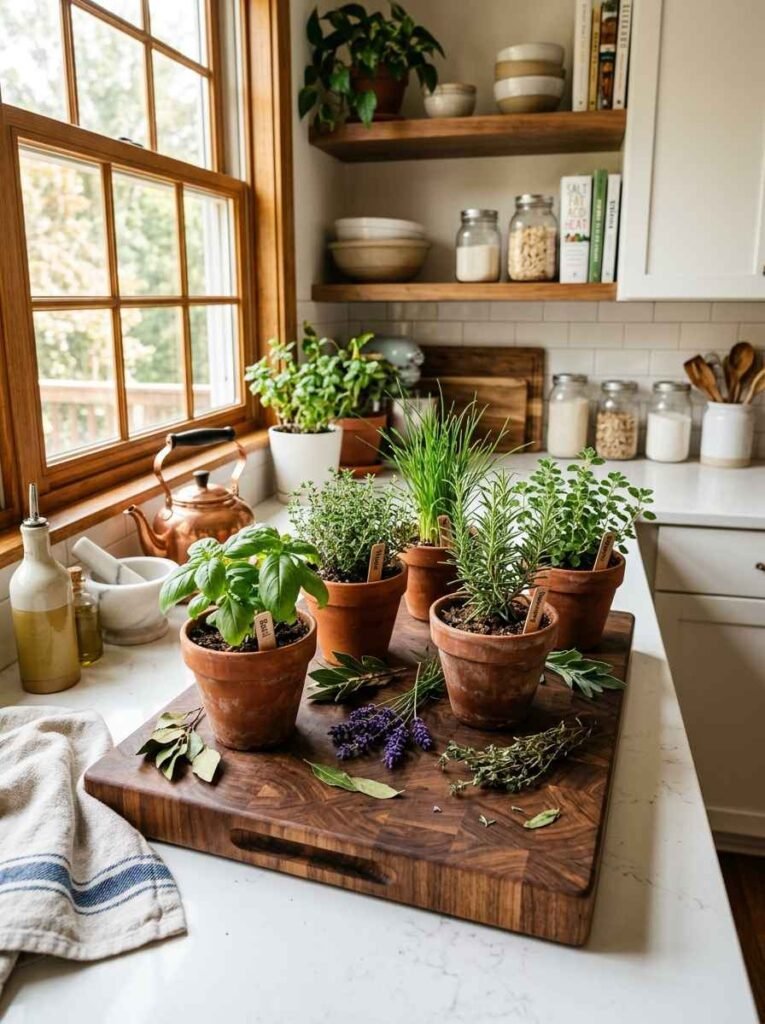
A thick wooden cutting board as a tray, with 3-5 pots arranged on it. Easy to move as a unit. Doubles as a visual centerpiece.
Style the pots with similar materials — all terracotta, or all dark ceramic, or all white — and it looks completely intentional. Add small sprigs of lavender or dried herbs for extra effect.
16. Apothecary jar herb starters
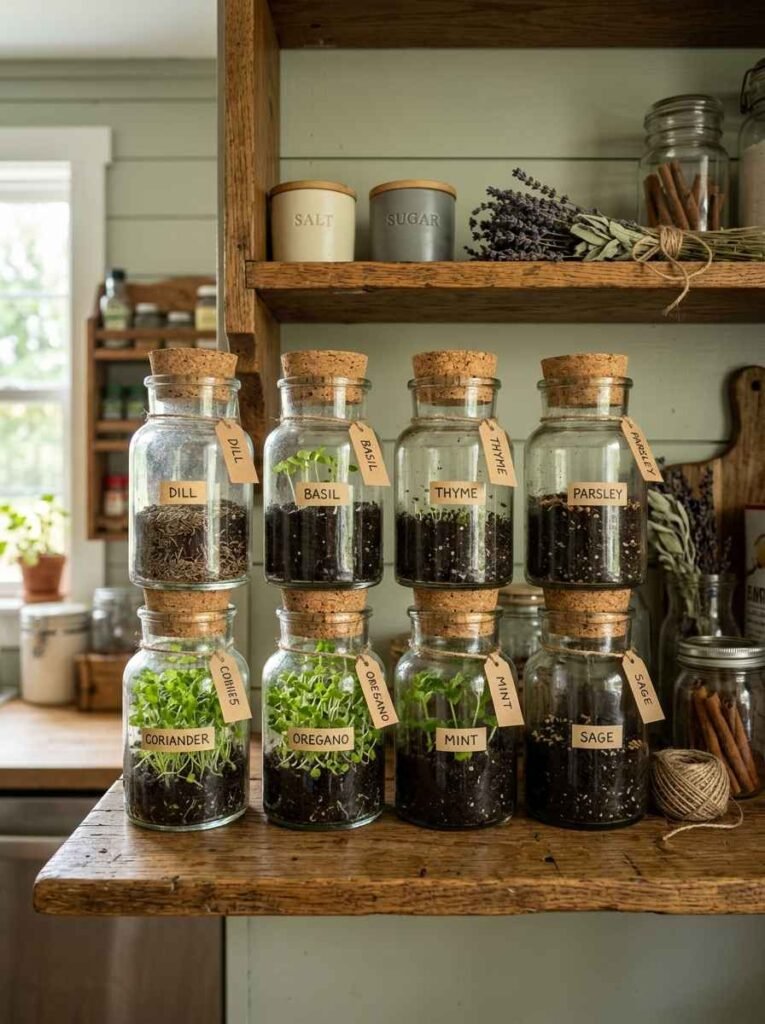
Wide-mouth apothecary jars (the kind with cork or glass lids) for starting herb seeds. Once seedlings have a few sets of leaves, move them to proper pots.
Great visual for a shelf or windowsill while seeds are germinating. The glass lets you see the soil moisture, which helps you figure out watering frequency when you’re new at this.
17. Repurposed colander planter
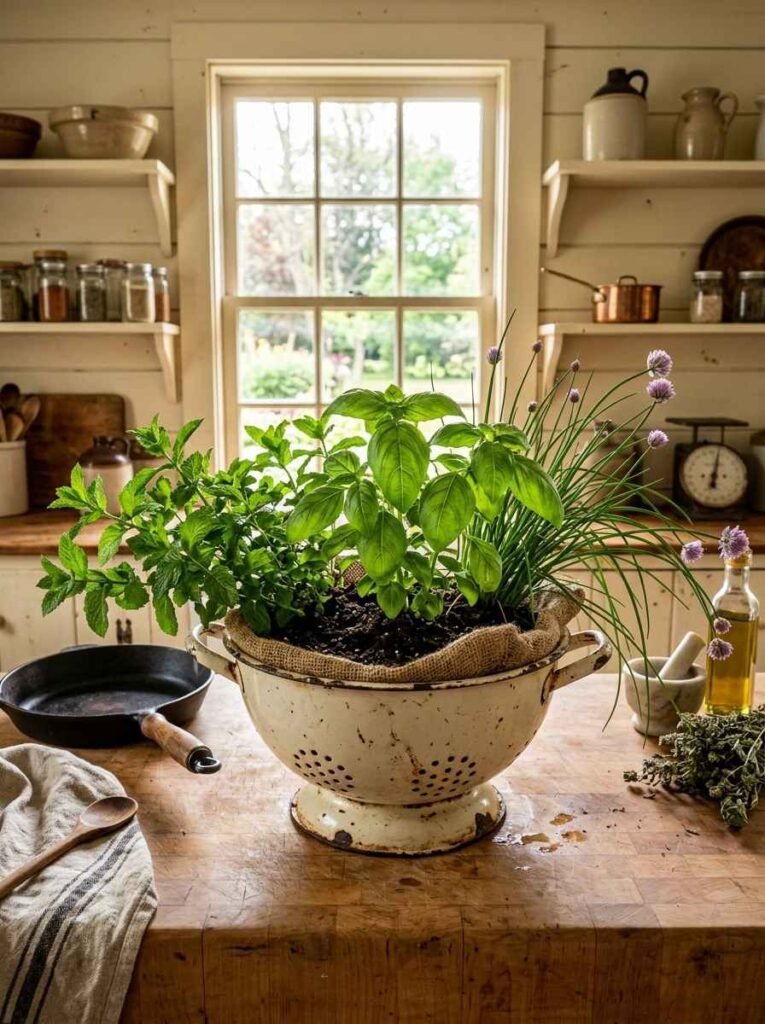
An old metal colander has built-in drainage (every hole). Line it with burlap or coffee filters, fill with potting mix, plant herbs. The rustic look is a Pinterest staple for a reason — it photographs well and costs almost nothing.
Hydroponic and modern herb garden ideas
18. AeroGarden or similar countertop hydroponic unit
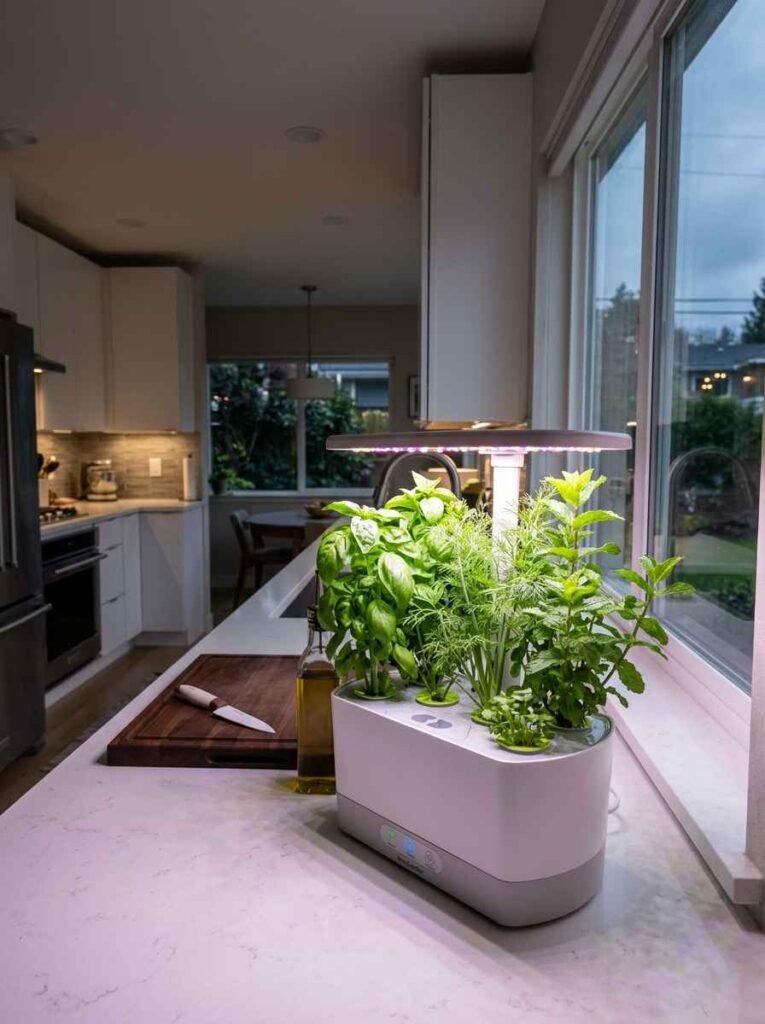
These are the cheat code of indoor herb growing. Everything is handled — water, light cycles, nutrient schedule. You fill the reservoir and the machine does the rest.
Basil grows insanely fast in these. Seriously. Trim it constantly or it’ll bolt.
They’re not cheap ($80-150), but they’re nearly foolproof. Good gift idea if someone in your life says “I can’t keep anything alive.”
19. DIY mason jar hydroponics
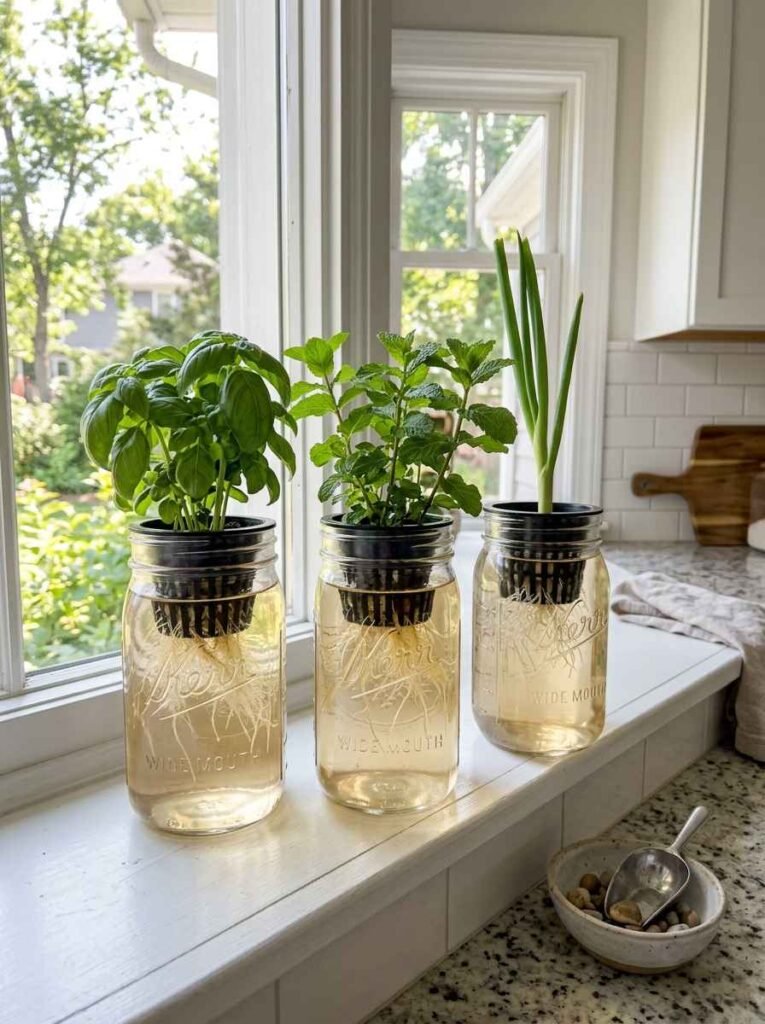
Glass mason jars with net cups suspended in the mouth, filled with water and liquid nutrients. Herbs grow with their roots suspended in the water rather than soil.
You can start with a single jar and a basil cutting (propagation). It’s a low-cost way to try hydroponics without buying a unit. Change the water every 7-10 days and add a few drops of hydroponic nutrients. Works surprisingly well.
20. Ikea KRYDDA/VÄXER indoor garden kit
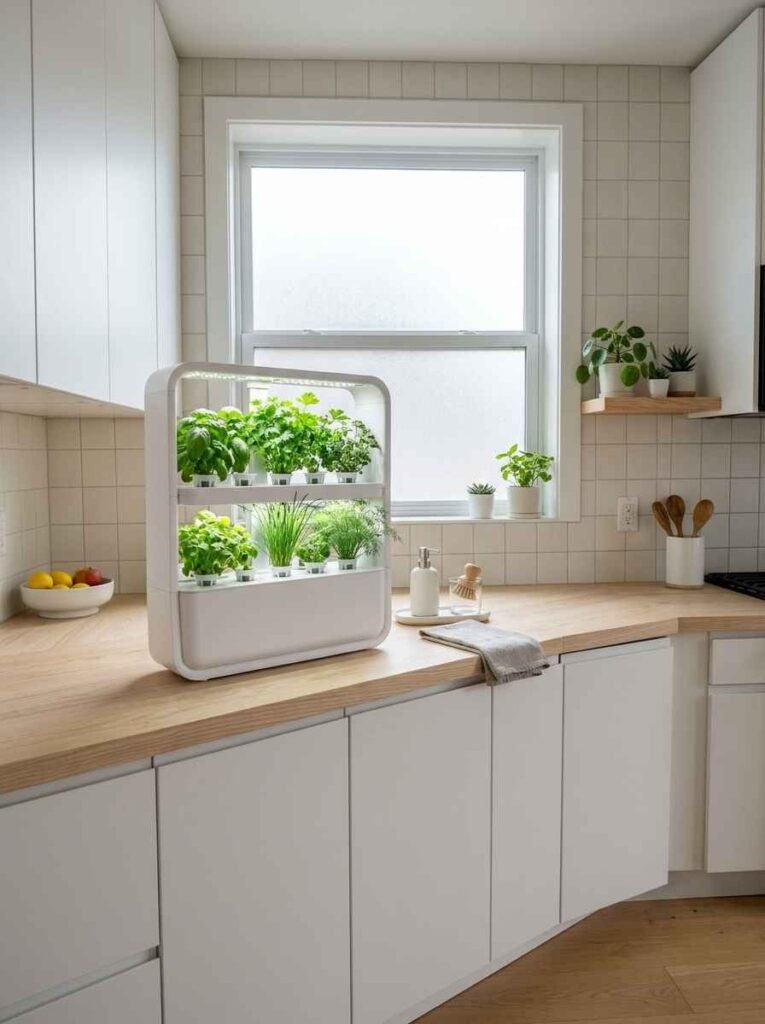
Ikea sells hydroponic growing kits designed specifically for herbs. Very affordable, clean-looking, and beginner-friendly.
You can often find these in-store or online.
The minimalist Scandinavian design means it looks good in almost any kitchen without being visually loud. A solid entry-level purchase.
Creative and Pinterest-worthy herb garden ideas
21. Labeled library of herb seeds in a display rack
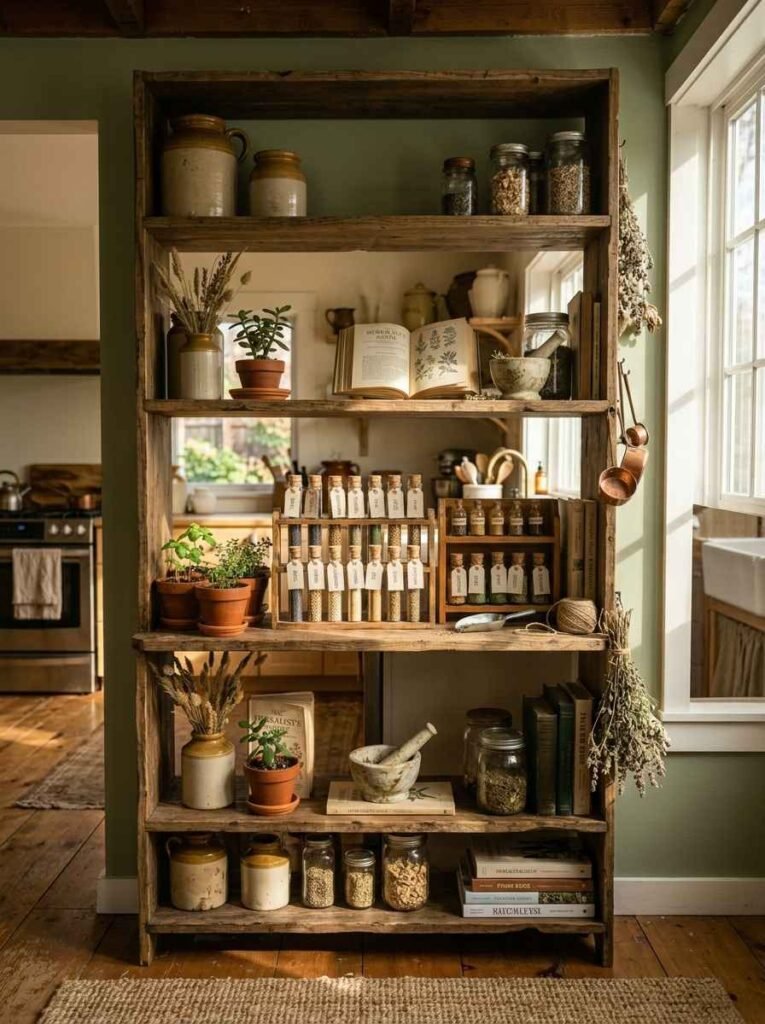
Display a spice rack or test tube rack with small glass vials of herb seeds, each labeled with handwritten tags. Plant from them gradually. The rack itself becomes a decorative element.
It’s a bit of a flex, honestly — but the kind that makes practical sense and photographs beautifully. Good for people who get into the collecting aspect of growing.
22. Herb garden in a vintage wooden ladder
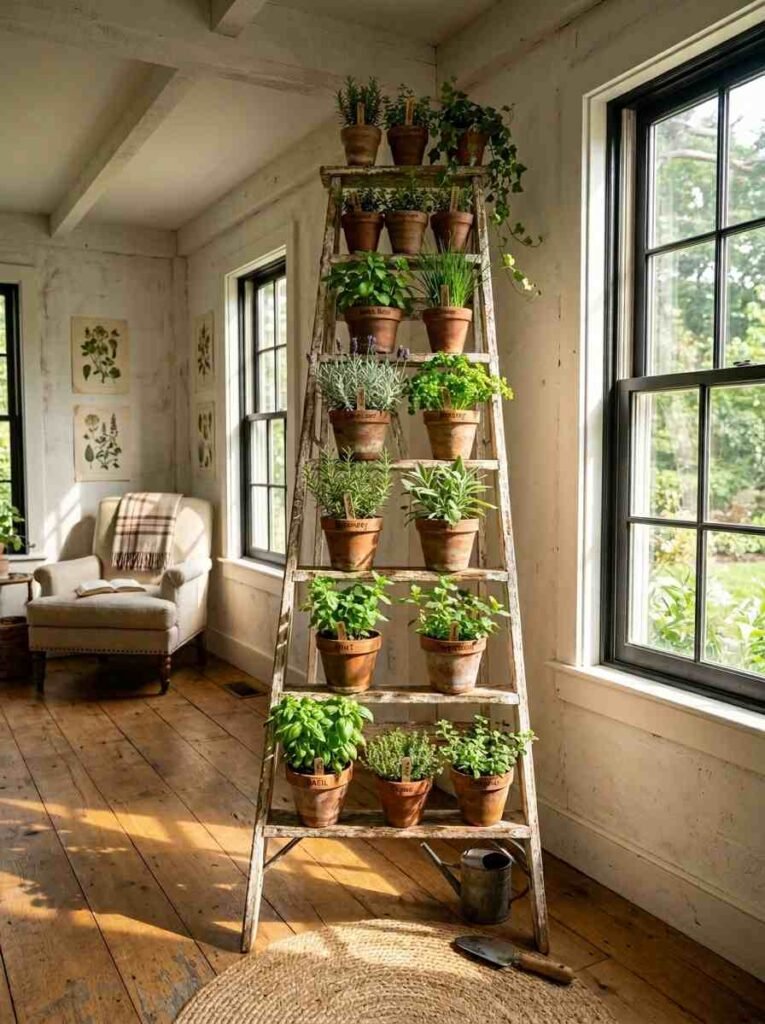
A freestanding old wooden ladder (find one at estate sales or thrift shops for a few dollars) used as shelving. Each rung holds a row of pots. Lean it against a wall near a window.
This is consistently one of the most-saved herb garden photos on Pinterest for a reason. It takes up almost no floor space, holds a lot of plants, and looks genuinely beautiful. Sand and seal the wood if it’s rough.
Quick-start tips that’ll save you a lot of frustration
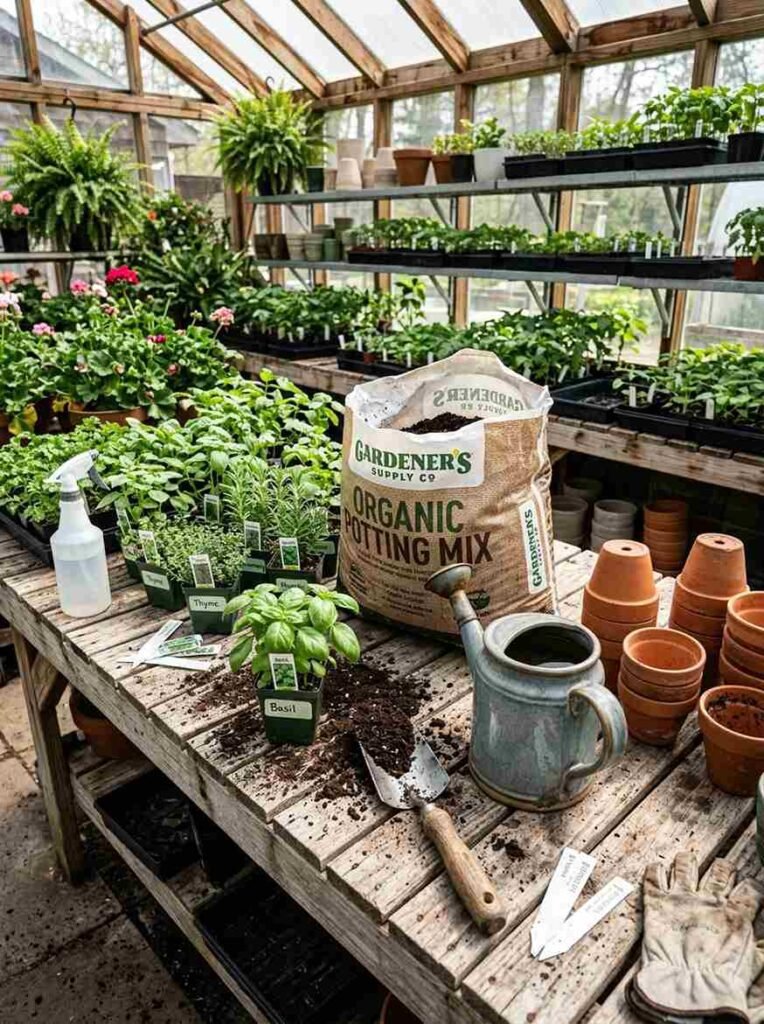
- Start with transplants, not seeds. Garden centers sell small herb plants for $3-5. Seeds are cheaper but slower and more failure-prone for beginners. Grow from seed once you’ve kept a plant alive for 2 months.
- Water less than you think. Most beginner herb deaths come from overwatering. Stick your finger an inch into the soil. If it’s still damp, wait.
- Harvest constantly. The more you trim, the bushier and healthier herbs grow. Waiting until you “need” herbs means they get leggy and bolt. Trim a little every few days even if you don’t need it — add fresh herbs to salads, eggs, whatever.
- Basil needs warmth. Below 50°F and it suffers. Keep it away from cold drafts and windows in winter.
- Mint spreads like wildfire. Keep it in its own container or it’ll crowd out everything else. Consider yourself warned :/
Final thoughts
The best indoor herb garden is the one you’ll actually maintain. One pot of basil on a well-lit windowsill beats an elaborate wall display that ends up neglected.
Start small. Get one thing growing and keep it alive for a month.
Then add another. By the time you’ve got three or four herbs thriving, you’ll feel like a completely different kind of person when it comes to plants — one who keeps them alive.
And when you snip fresh rosemary onto roasted potatoes that you grew yourself, three feet from your stove, in a recycled tin can? Worth every bit of it.
