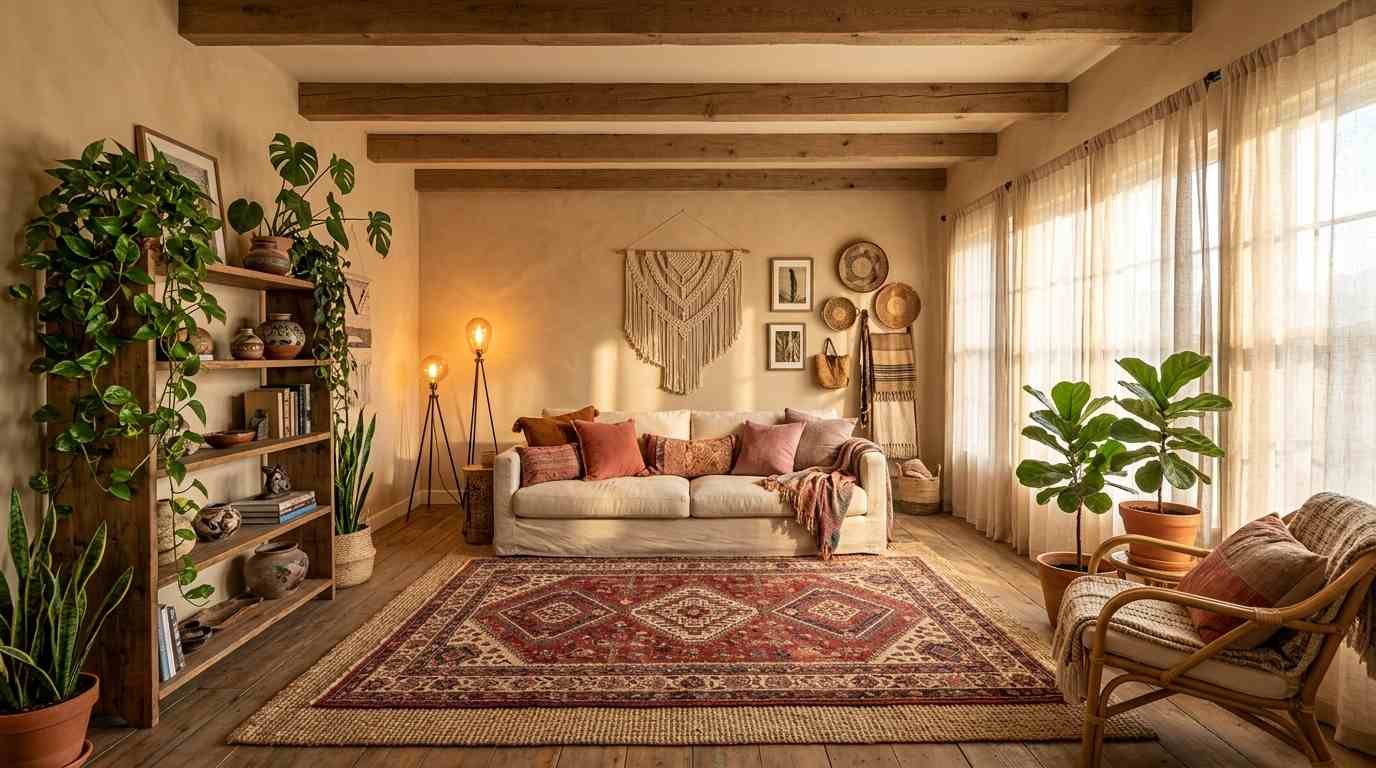
Boho rooms look like they happened by accident. They didn’t.
There’s actually a lot of thought behind that perfectly “chaotic” pile of floor cushions and the macrame wall piece you swear you’ve seen on every Pinterest board since 2019.
I’ve spent a good chunk of time obsessing over this style, redoing my own living room twice (yes, twice), and pulling together the 31 best bohemian living room ideas that genuinely work in real homes, not just in staged photoshoots.
So if you’re tired of rooms that look like an IKEA catalogue had a breakdown, keep reading.
What actually makes a room “bohemian”?
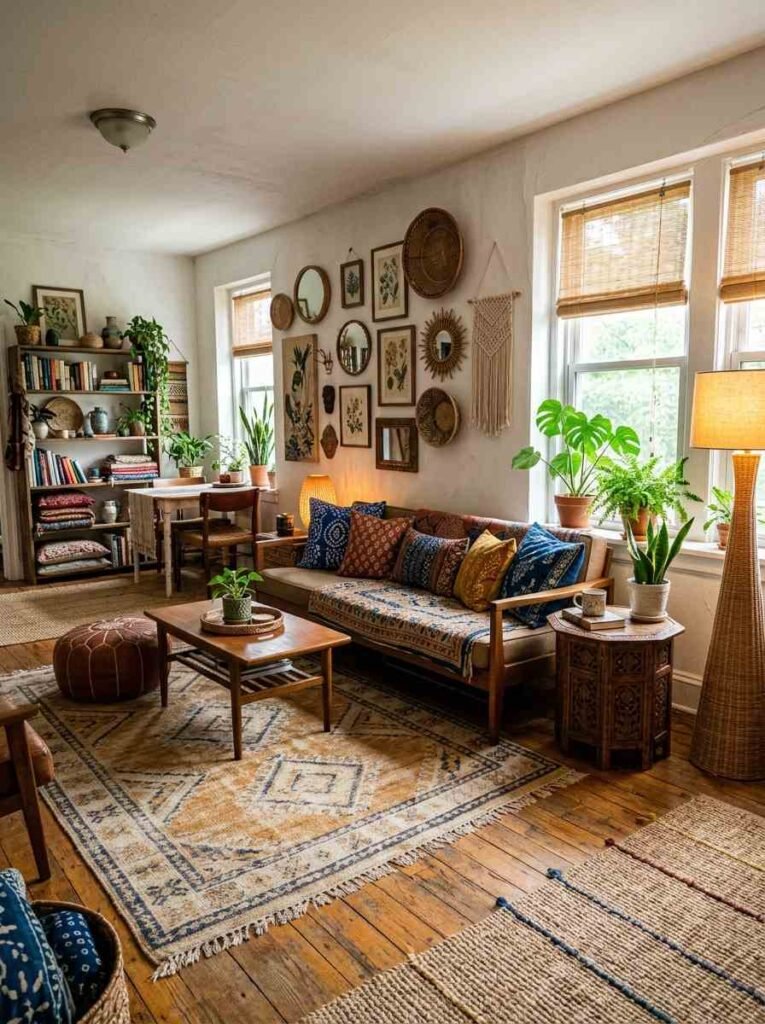
Before we get into the ideas, a quick grounding. Bohemian interior design pulls from global influences, natural textures, and layers of personal collection rather than following any single rulebook.
Think Moroccan rugs next to Indian block-print cushions, next to a vintage lamp you found at a car boot sale.
The common thread is warmth, personality, and the deliberate mixing of patterns, materials, and eras.
For a solid reference on the history of this aesthetic, the Architectural Digest guide to bohemian interiors does a great job walking through where it all comes from.
The 31 ideas, broken down by category
Layered rugs as the foundation
1. Stack a flat-weave over a jute base. Put a thin kilim or dhurrie on top of a chunky natural jute. The contrast in texture is the whole point, and it anchors the room without looking too precious.
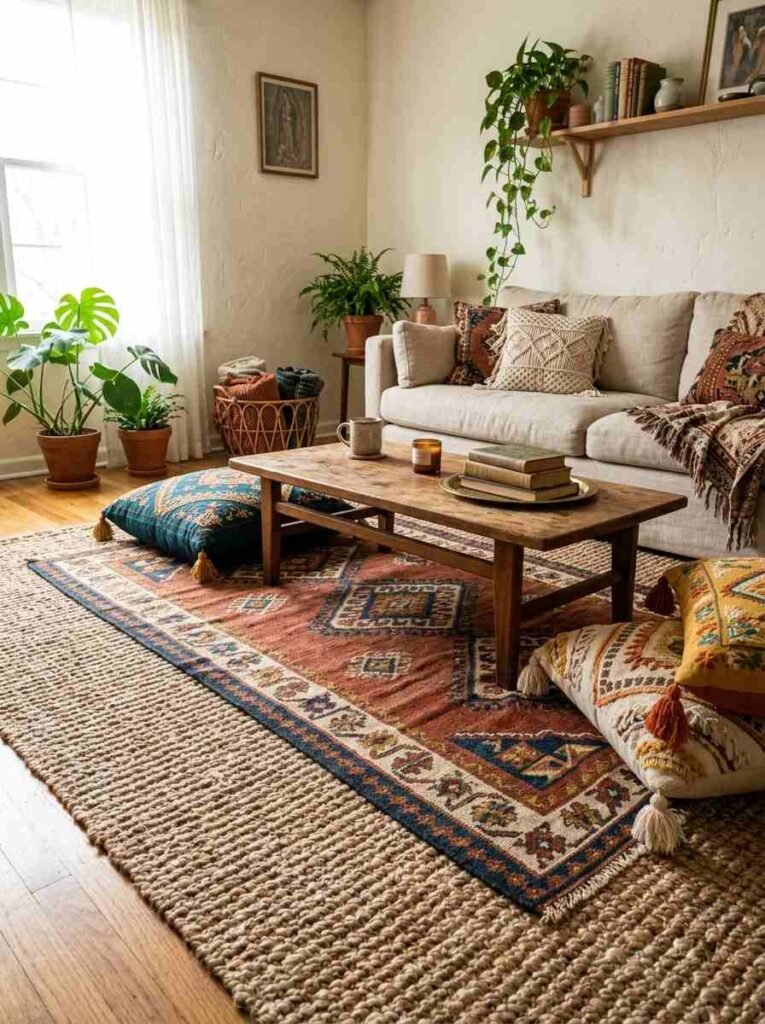
2. Go mismatched on purpose. Two rugs that don’t technically “go together” often work better than a matched set.
A geometric Berber next to a faded Persian? Yes. The trick is keeping the colour palette loosely connected, even if the patterns are completely different.
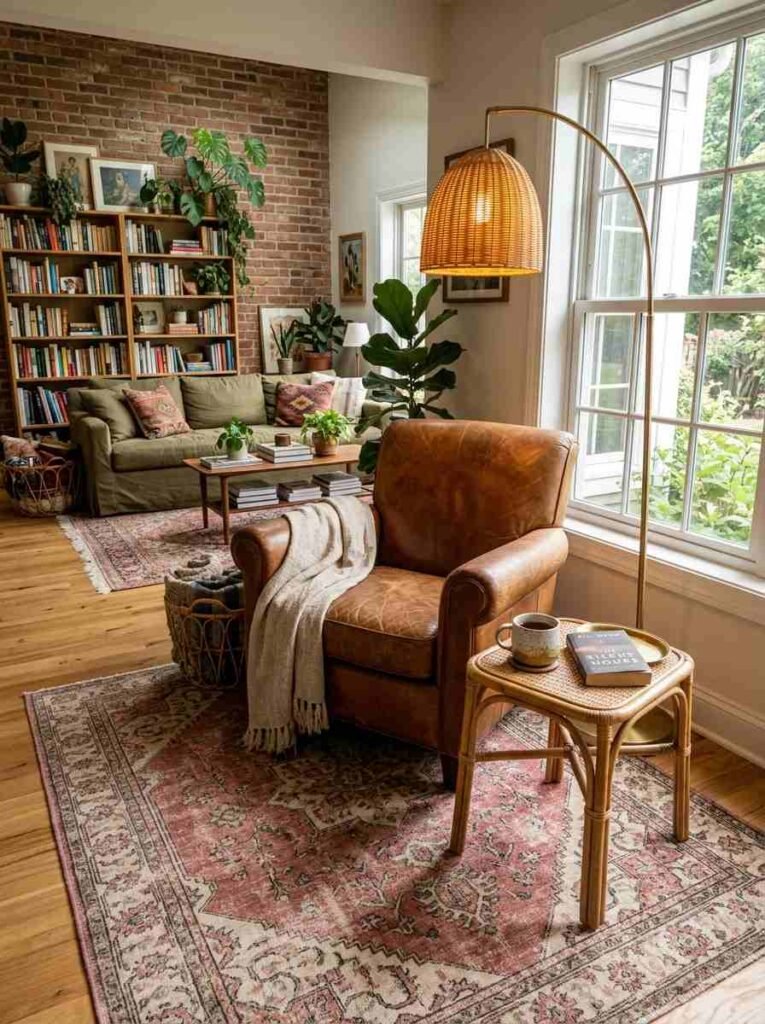
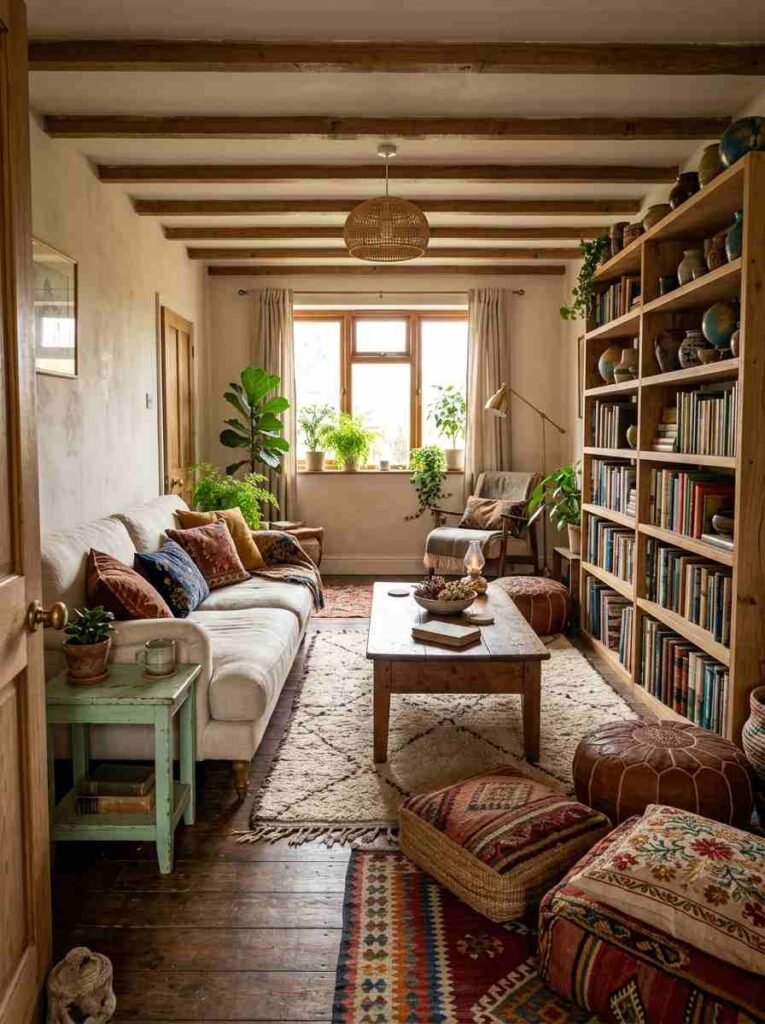
3. Use a rug to carve out a reading nook. Even in an open-plan space, one large rug under a low chair and a floor lamp tells the room there’s a dedicated zone here. It’s one of the easiest ways to create structure without walls.
Furniture that tells a story
4. Mix wood tones freely. The “matching furniture set” instinct is what makes rooms feel like hotel lobbies.
Pull in a walnut coffee table, a raw oak bookshelf, a painted vintage side table. Different heights, different ages.
5. Low seating. Floor cushions, poufs, a low-slung sofa. Bohemian rooms feel grounded (literally) because the furniture sits closer to the floor.
It also makes the room feel bigger, weirdly enough.
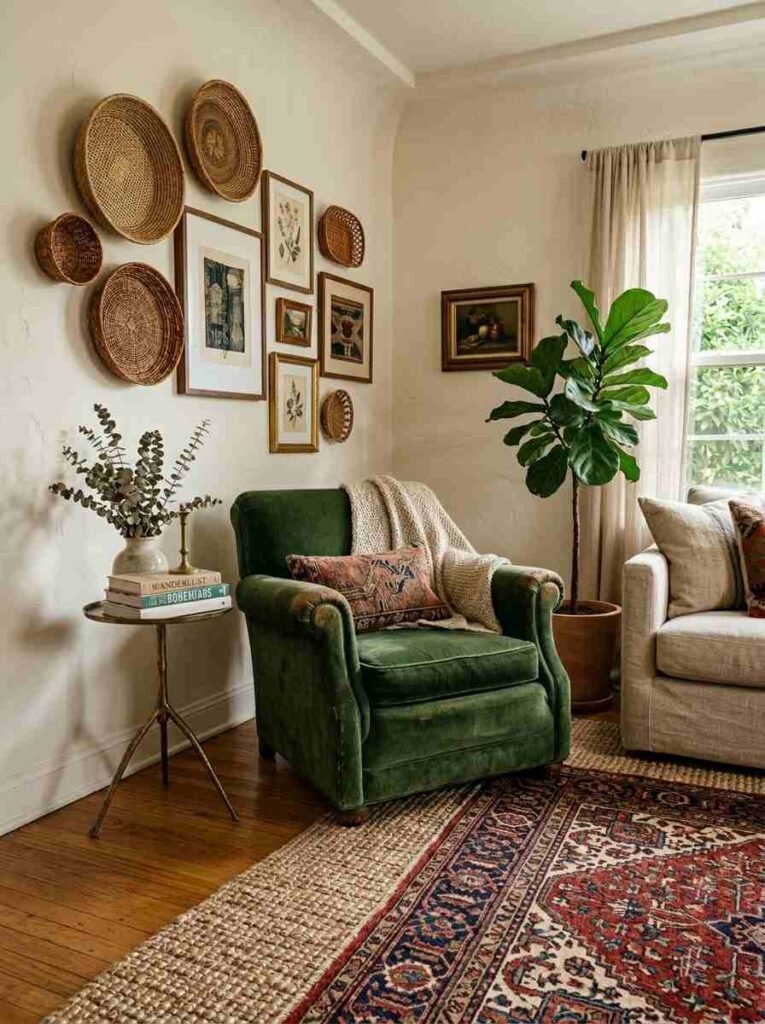
6. A statement vintage armchair. One properly worn, reupholstered armchair in a bold velvet or a worn leather pulls the whole room together.
I found mine at an estate sale for about £40 and it’s now the most commented-on piece in my living room, FYI.
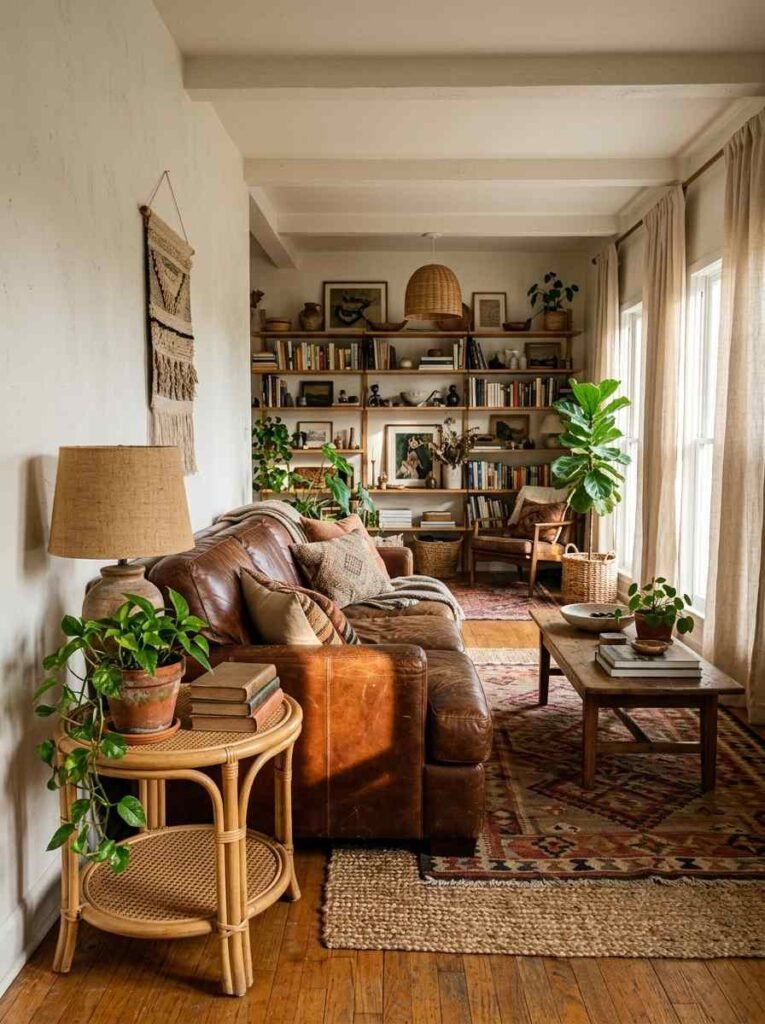
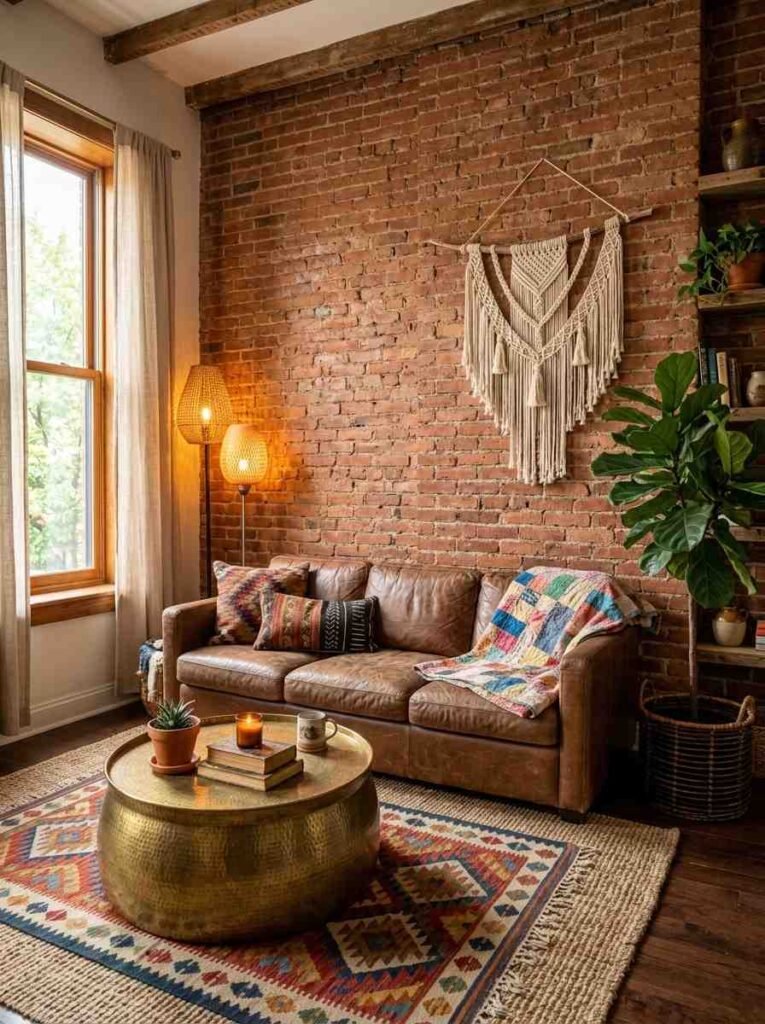
7. Rattan and cane furniture. A rattan side table or cane chair adds that organic texture that no modern reproduction fully replicates.
Check chairish.com for genuine vintage pieces that won’t cost a fortune.
8. A worn leather sofa. Not new. Deliberately aged, or actually aged. The patina is the feature.
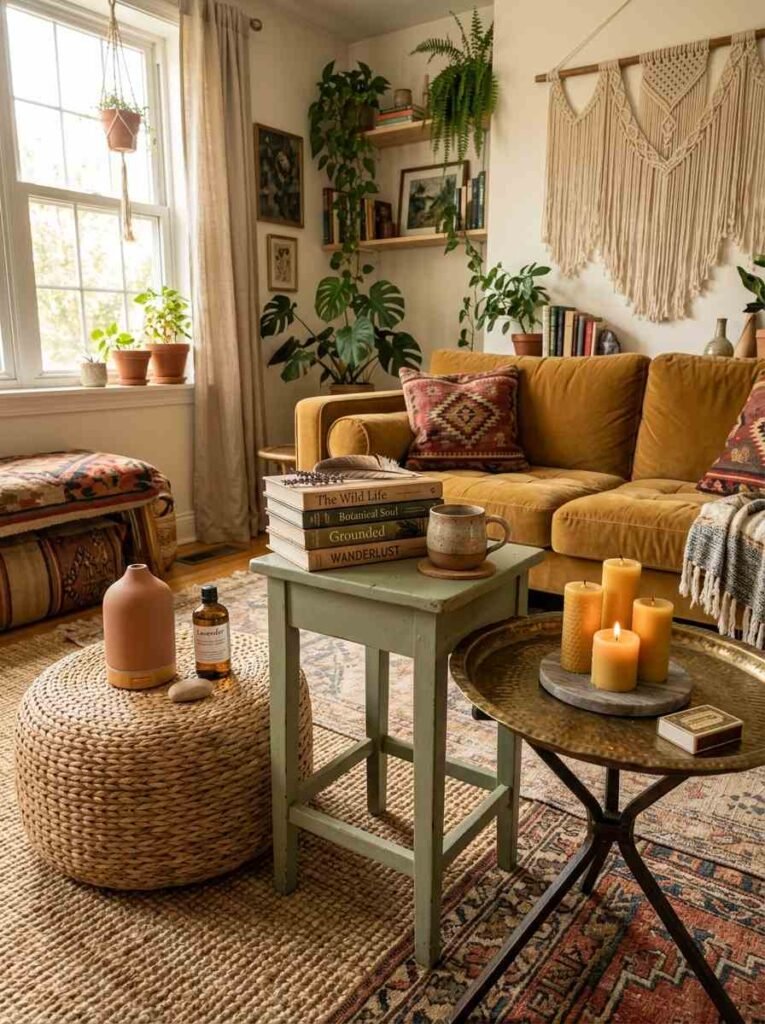
9. Mismatched side tables. One woven, one painted wood, one brass. Each one picked independently.
This approach sounds chaotic on paper but in practice it just looks like you’ve lived in the room for years.
Walls that do real work
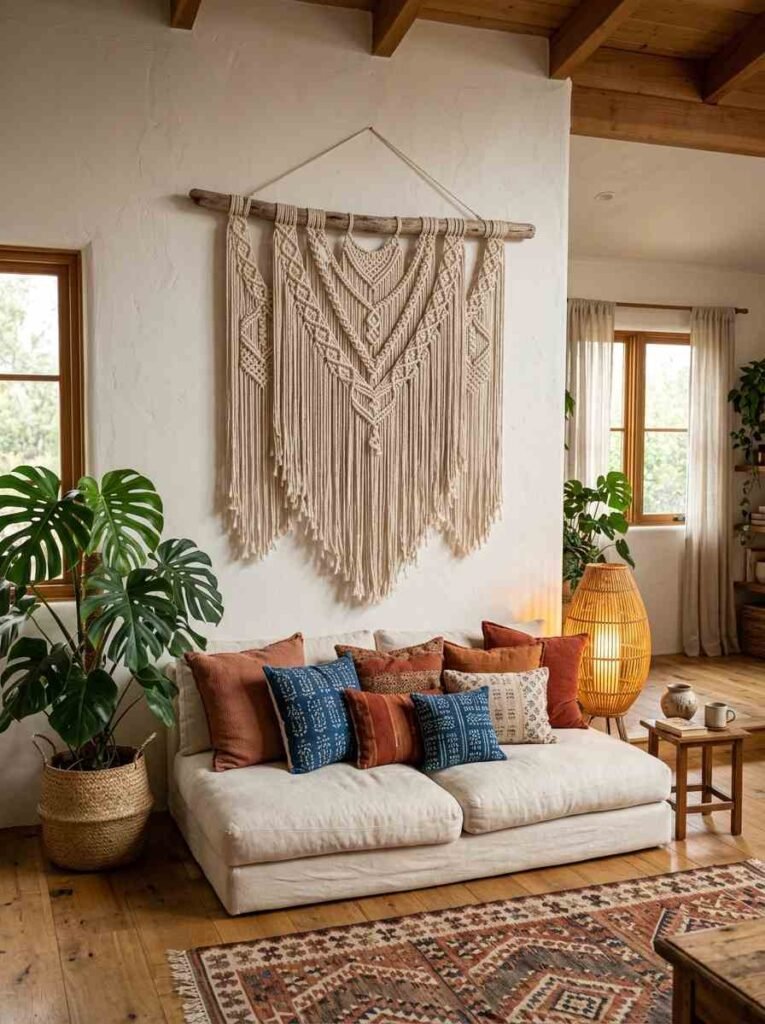
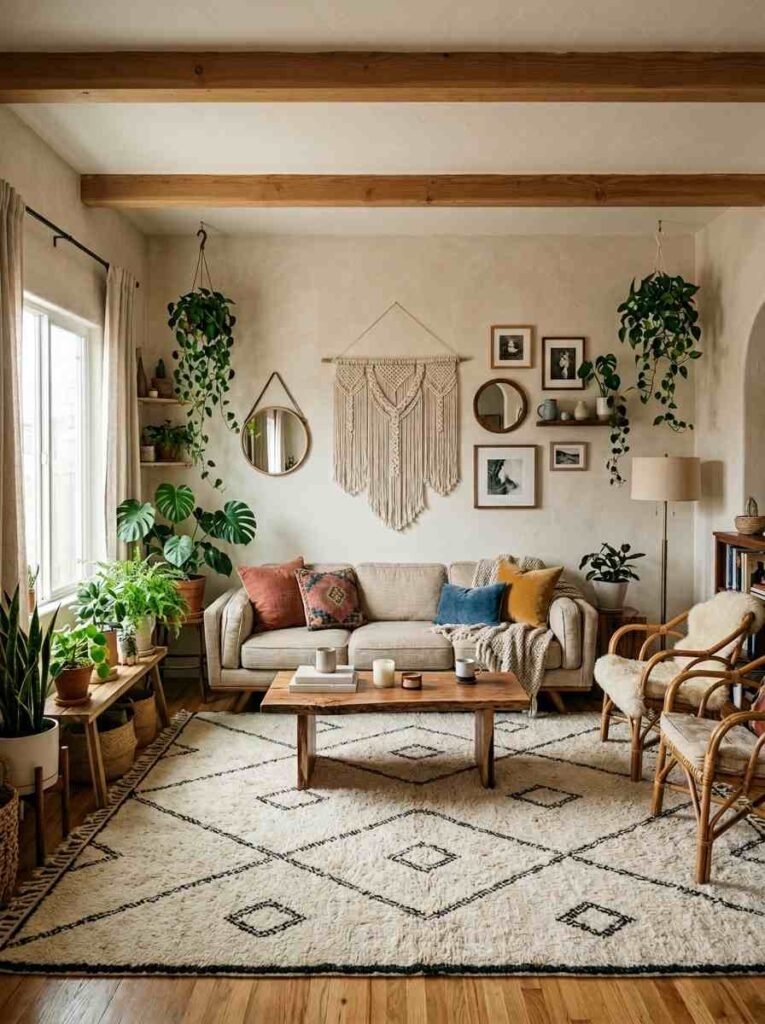
10. Macrame wall hangings. Yes, they’re everywhere. They’re still good.
A large handmade macrame piece on a plain wall adds texture without colour, which keeps the rest of the room free to be wild.
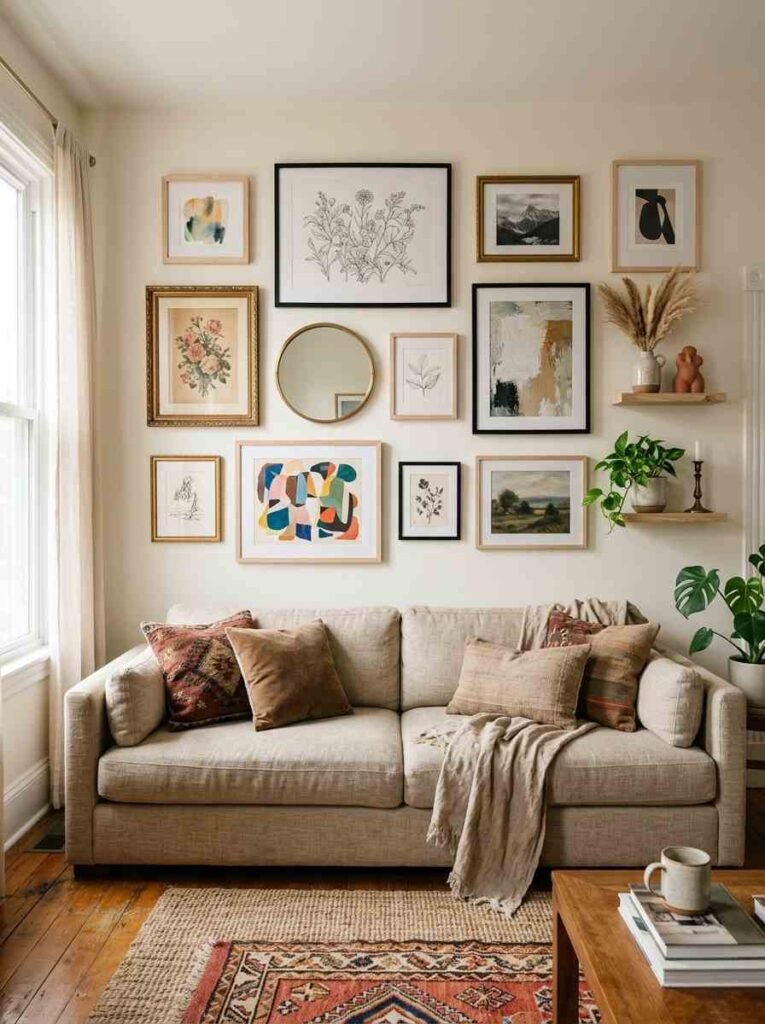
11. Gallery wall with no rules. Mix frames of different sizes, materials, and styles. Prints, original art, photos, mirrors, even small shelves with objects.
The only actual rule: keep some consistent element, whether it’s a recurring frame colour or a shared palette in the artwork.
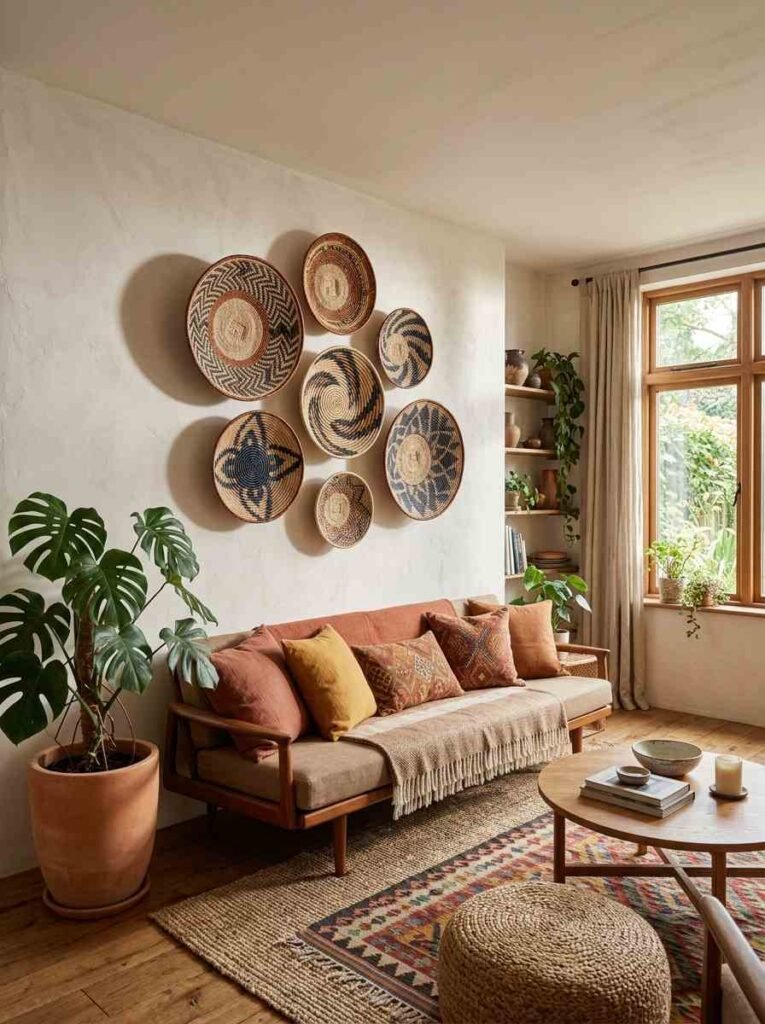
12. Woven wall baskets. Particularly good above a sofa. A cluster of 5 or 7 different-sized African baskets mounted on a wall is one of those ideas that looks incredibly considered but takes about 20 minutes to put together.
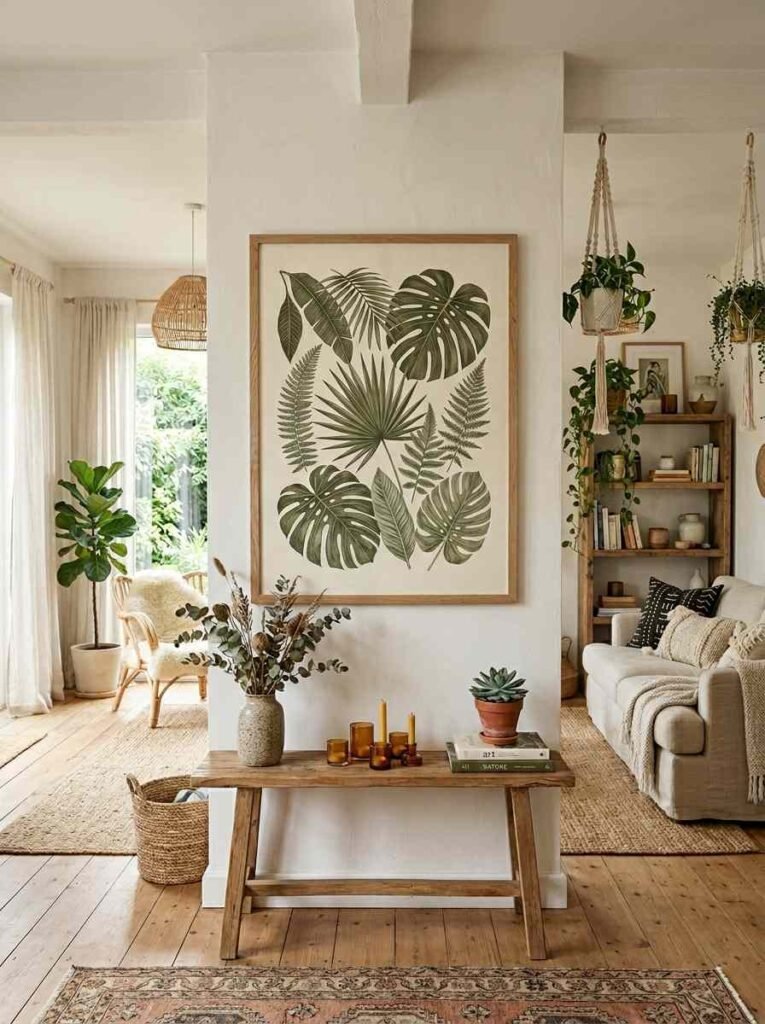
13. A single large botanical print. One oversized framed botanical or landscape print can do more for a room than 6 small ones. Go big, go single.
14. Exposed brick (or faux brick). If you’ve got it, keep it bare. If you don’t, there are some genuinely convincing faux brick panels that work well in a boho context.
Plants and greenery
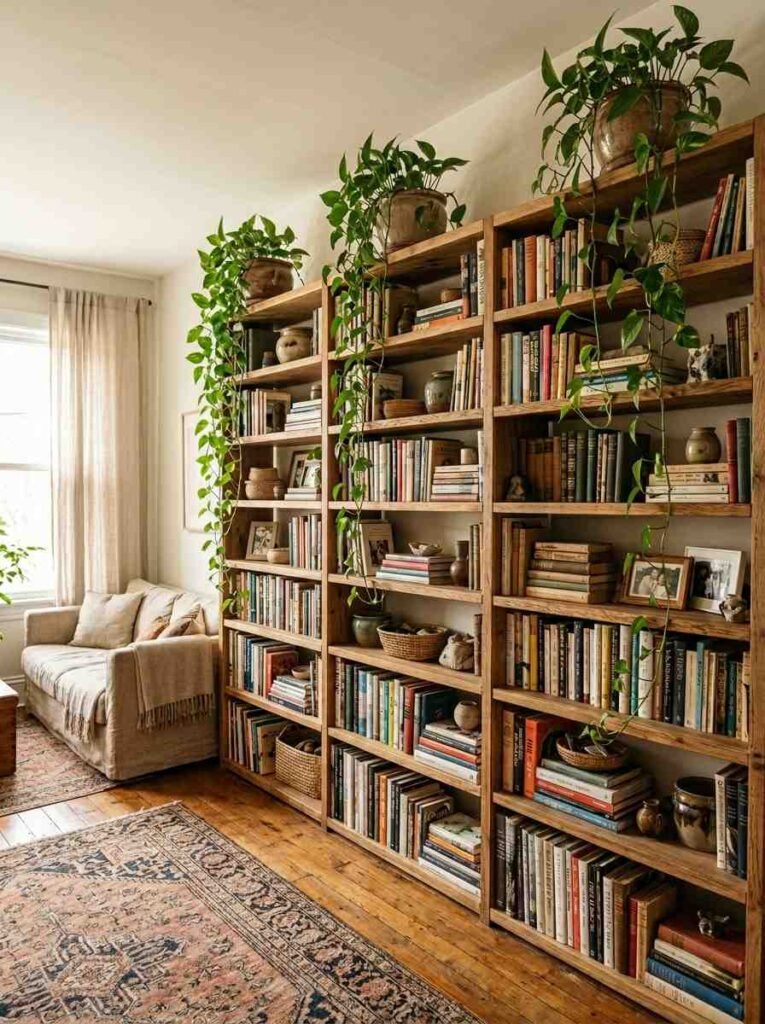
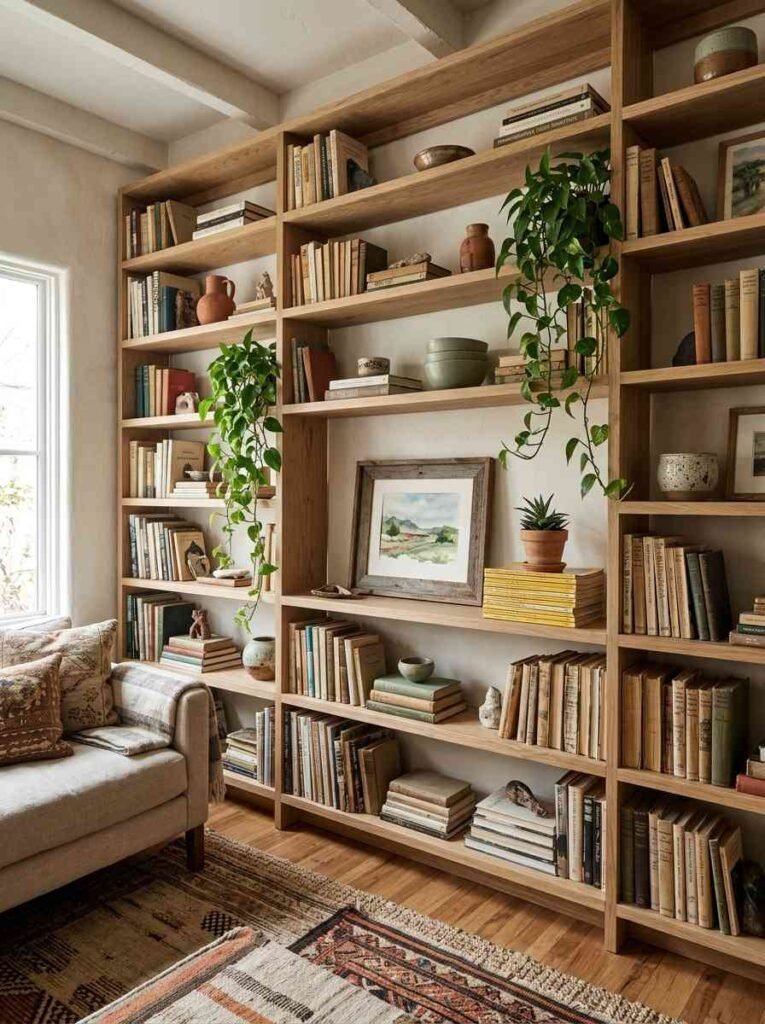
15. Trailing plants at height. A pothos or heartleaf philodendron on top of a bookshelf, trailing down, is practically a free decorating decision.
Costs almost nothing, changes everything about how alive the room feels.
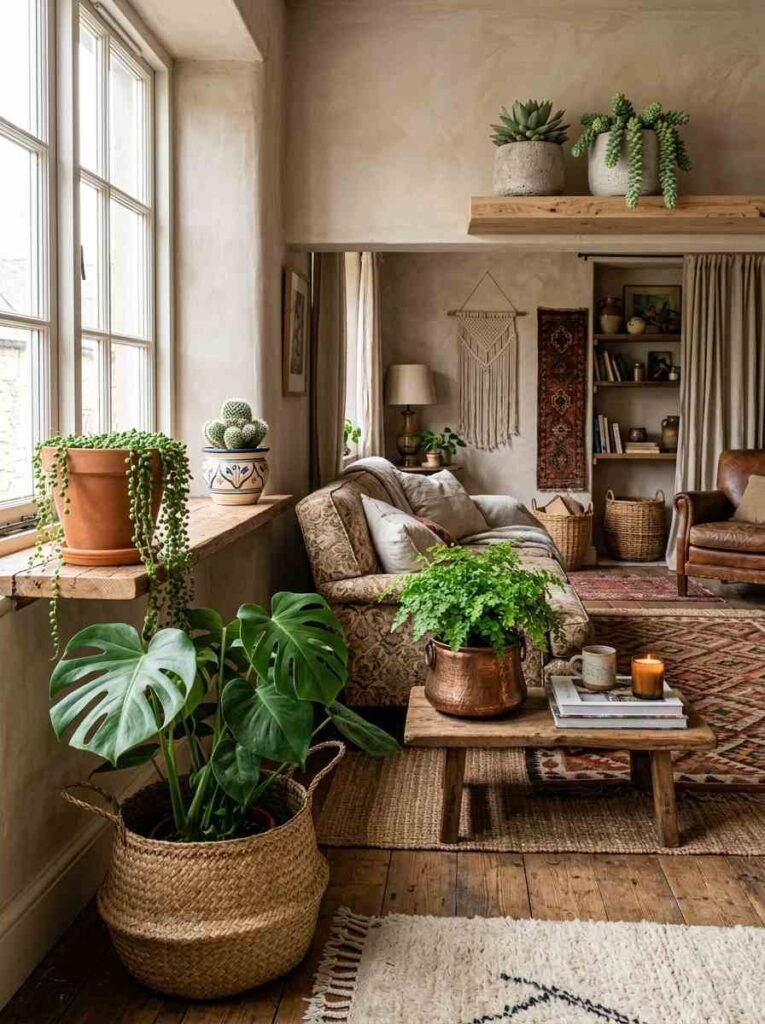
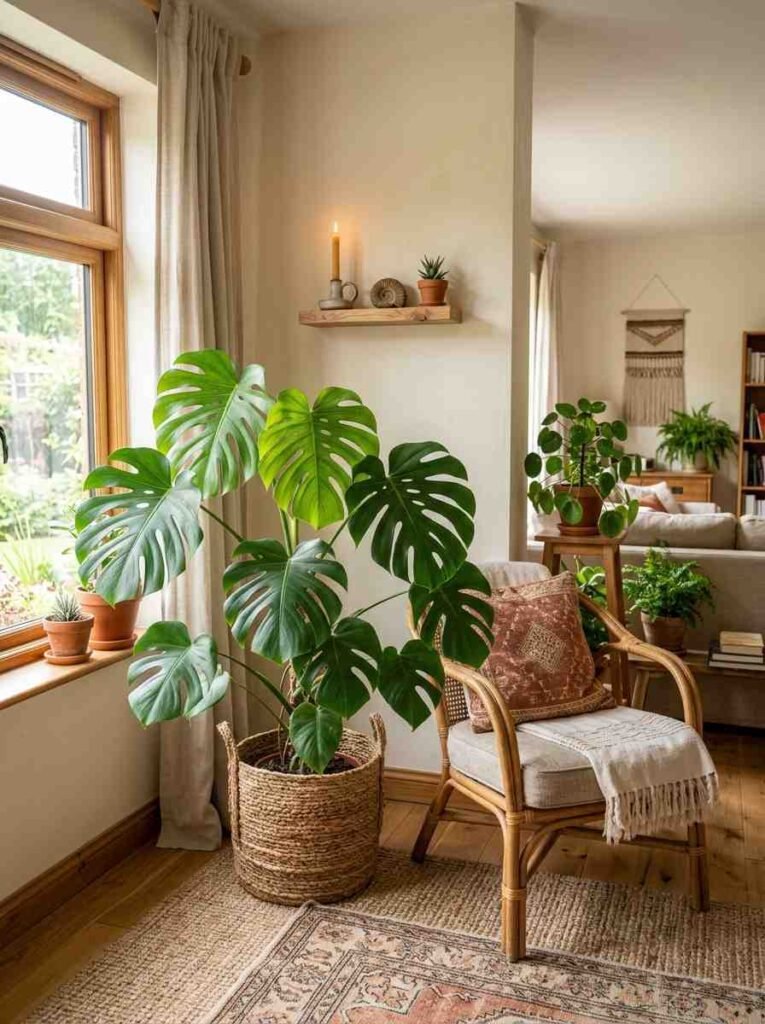
16. A large statement plant. One fiddle leaf fig or monstera in a terracotta or woven basket planter. Not a collection of 12 small plants in white plastic pots. One big one, done properly.
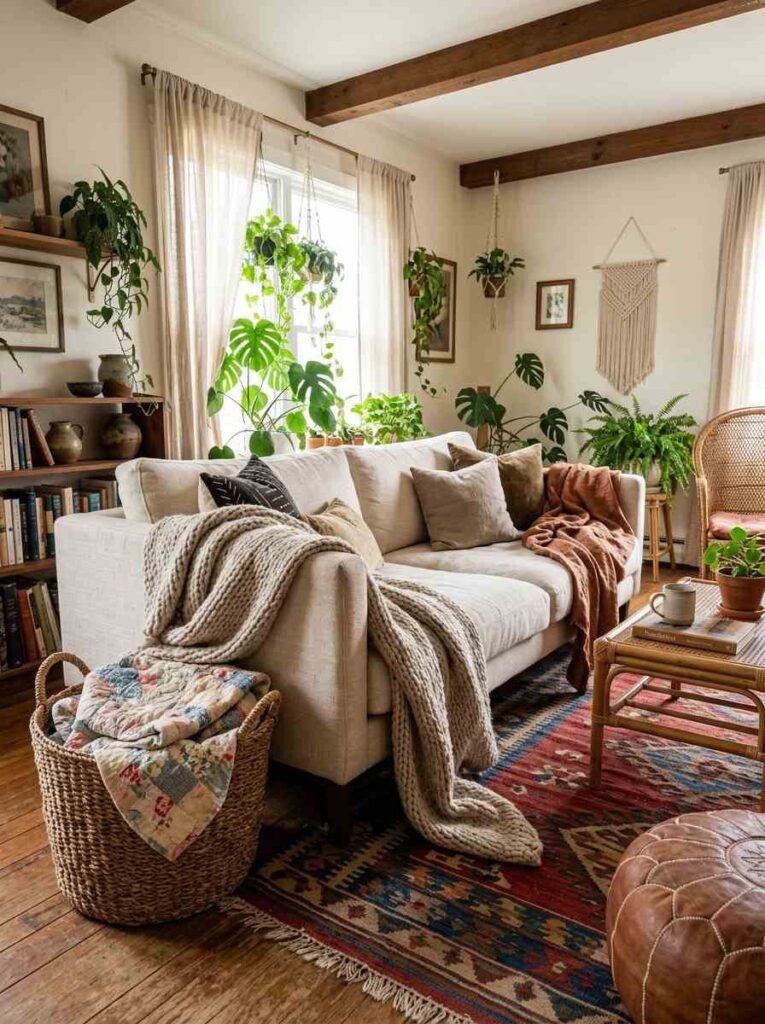
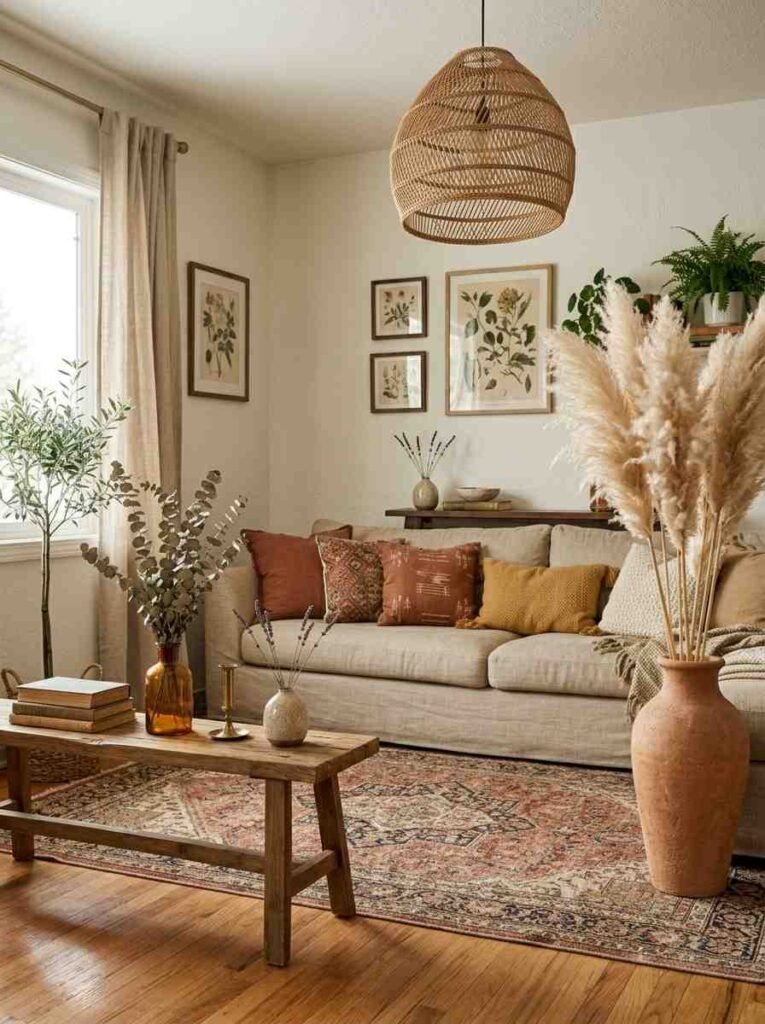
17. Dried botanicals. Dried pampas grass, eucalyptus, dried lavender. No watering required.
They add texture and a slightly earthy, organic smell that works well in a room that already leans warm and collected.
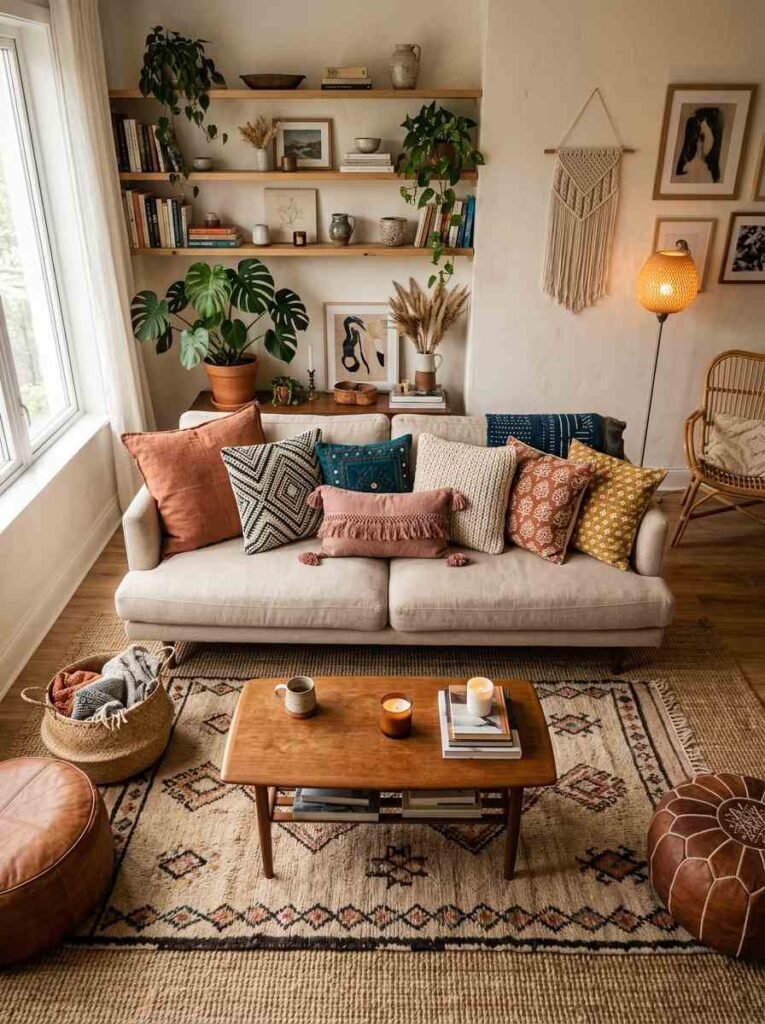
18. Mix terracotta planters with woven baskets. Don’t use matching planters. Deliberately different containers make the plants feel like part of the room rather than props.
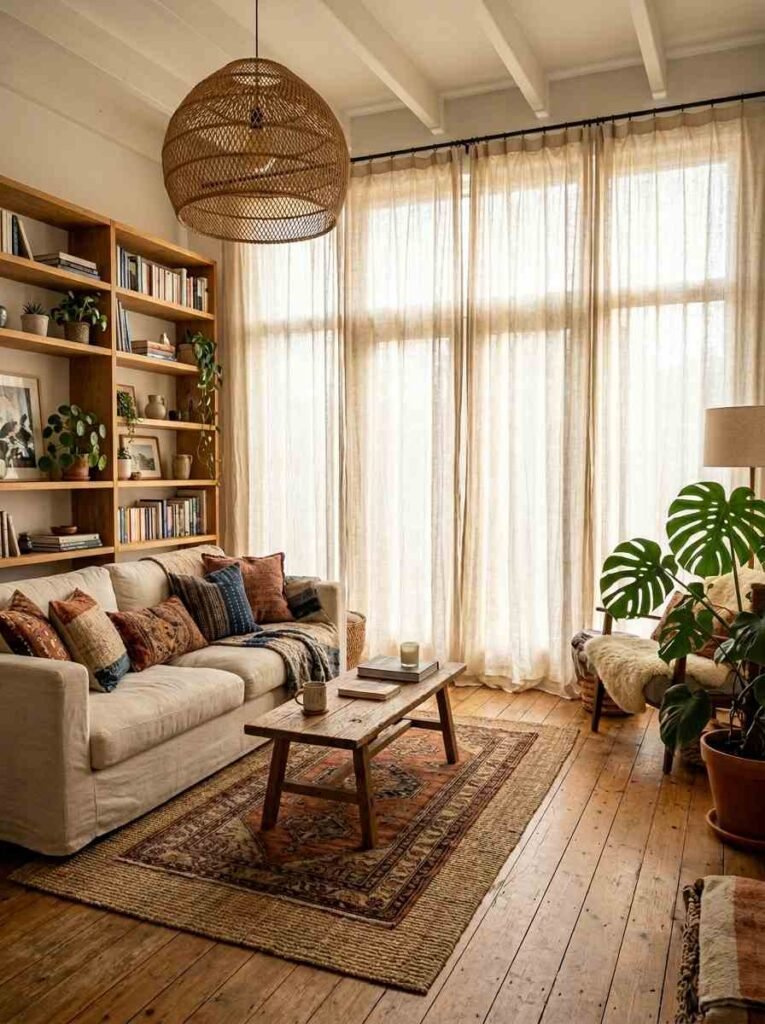
Textiles that layer
19. Throw blankets, plural. One folded over the arm of the sofa. One draped over a chair. Maybe one in a basket on the floor.
They should look like you actually use them, not like they’ve been professionally positioned by a stylist (even if, privately, you’ve repositioned them 4 times).
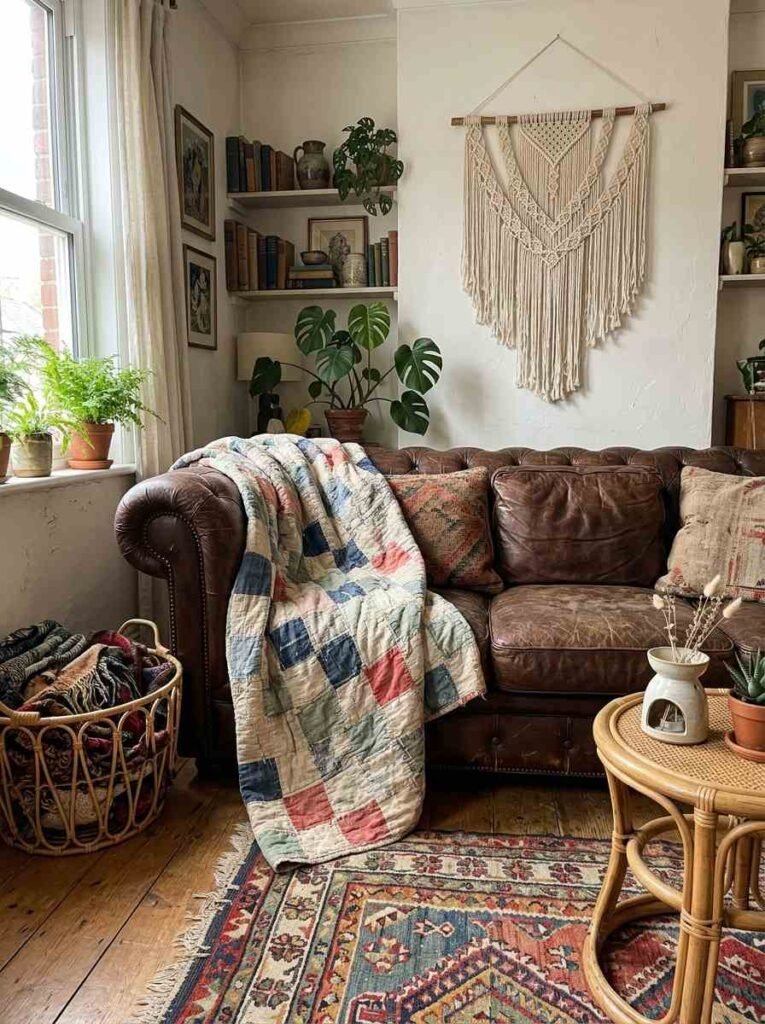
20. Mix cushion patterns. A geometric, a floral, a plain in a bold colour, a textured knit.
The key is pulling at least 2 colours from each piece and making sure those colours appear somewhere else in the room.
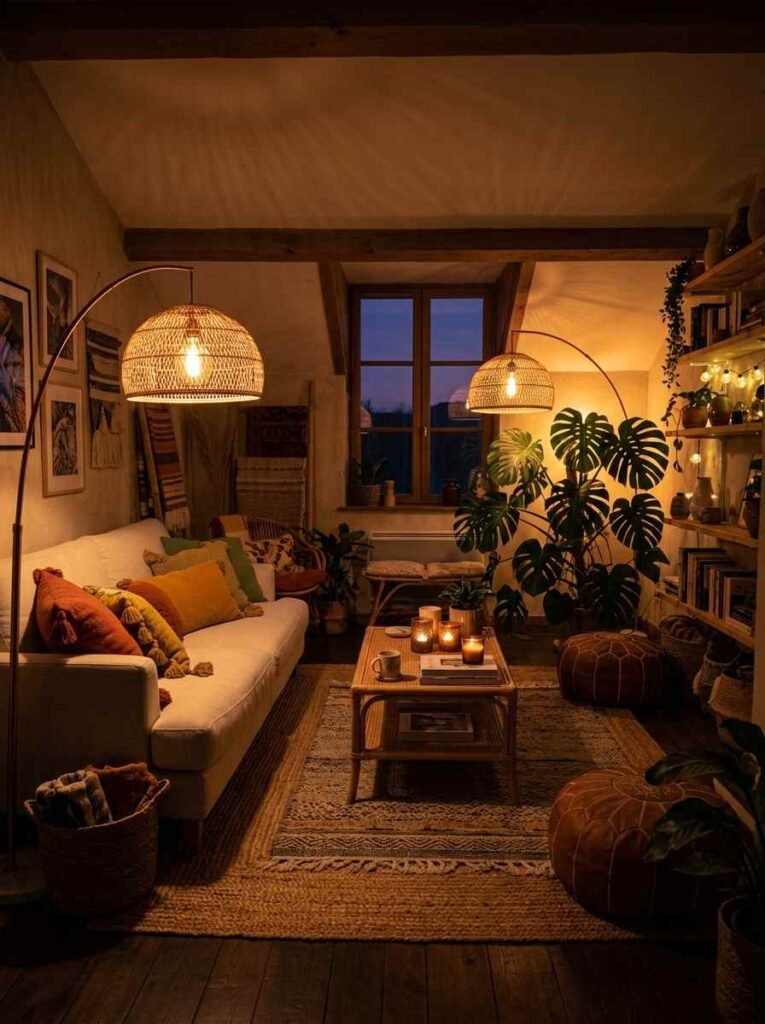
21. Linen curtains in natural or warm tones. Undyed linen, soft terracotta, dusty rose. Floor length.
They should pool slightly at the bottom. This is one of those details that changes how expensive a room looks by about 40%, IMO.
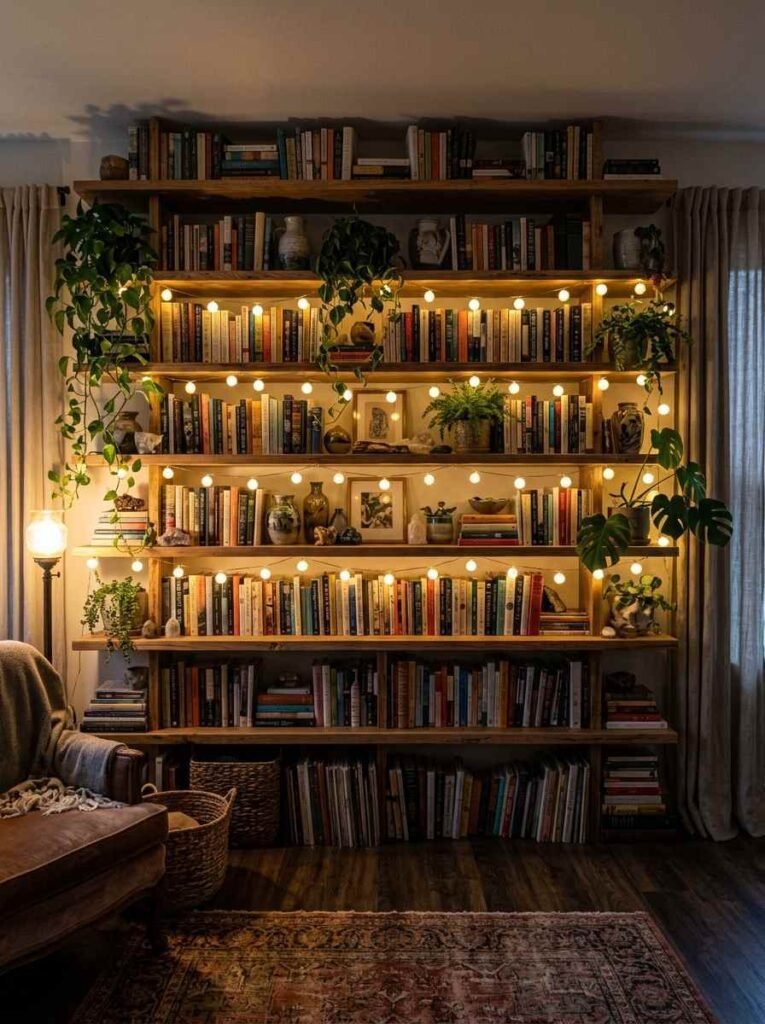
22. A vintage quilt as a throw. Old American patchwork quilts are genuinely beautiful and you can find them at antique fairs for less than you’d expect.
Draped over a sofa arm or folded in a basket, they add instant warmth and history.
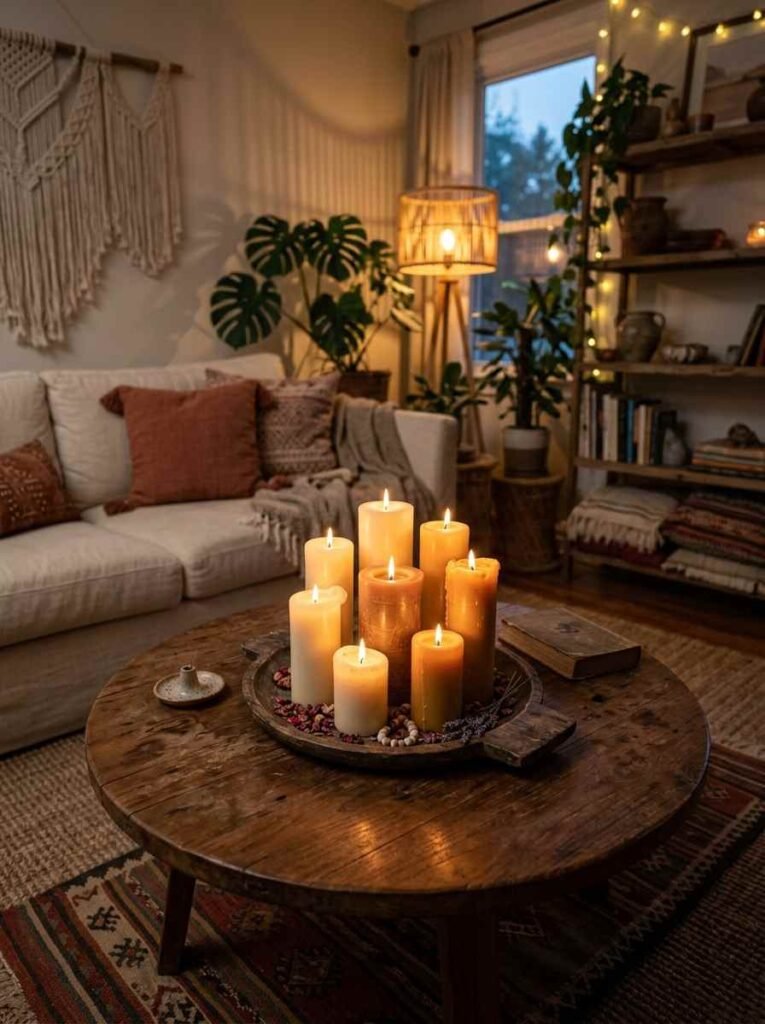
Lighting that’s warm, not bright
23. Floor lamps, not overhead lights. Overhead lighting makes a room feel like an office.
Bohemian rooms live and die by the quality of their ambient light. A floor lamp in the corner with a warm Edison bulb changes the entire mood of the space after 6pm.
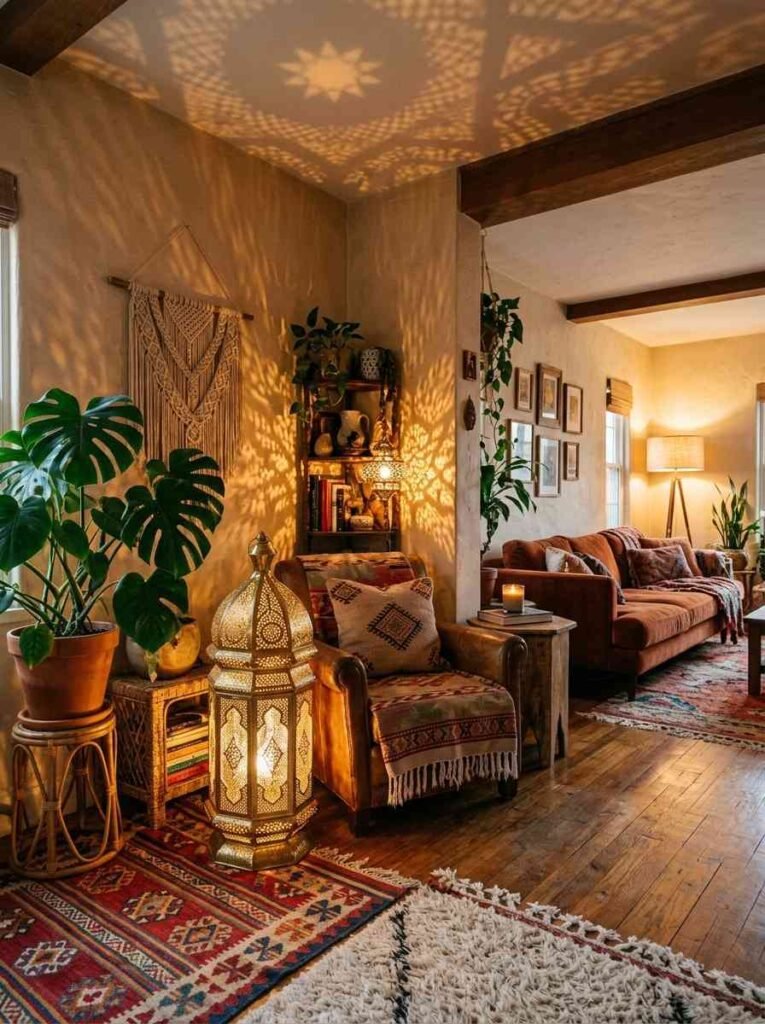
24. String lights. Not in a college-dorm way. Warm white, wound through a bookshelf or draped behind a sofa. Subtle.
They add a glow that overhead lighting absolutely cannot replicate.
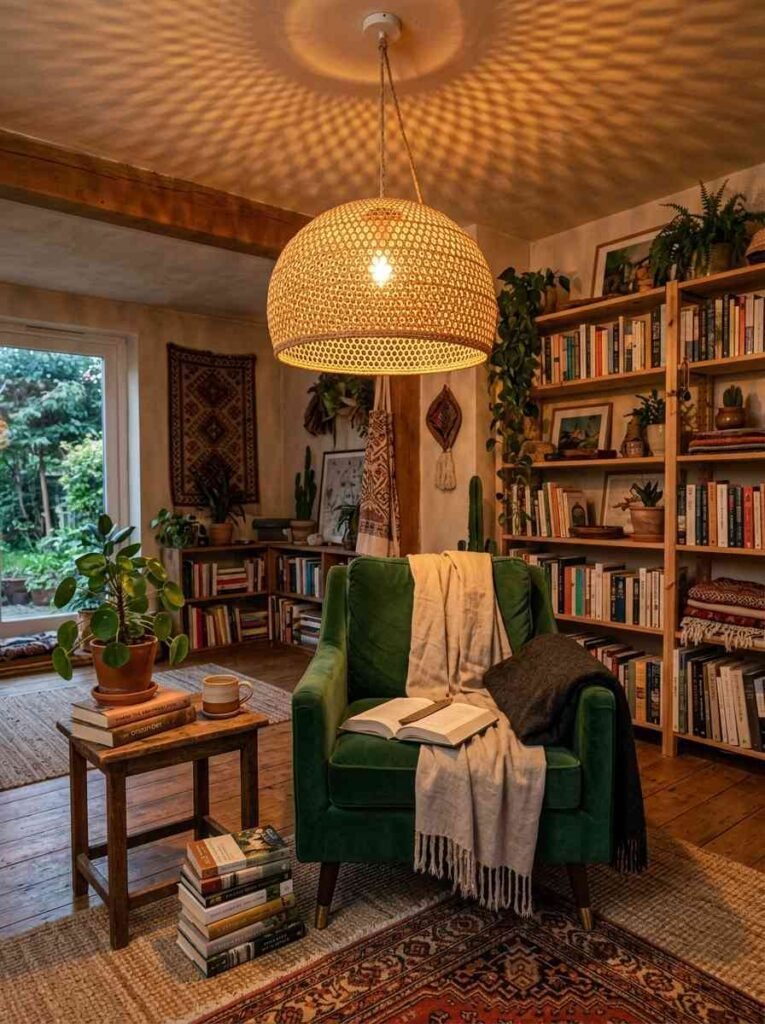
25. Candles in clusters. Pillar candles on a tray, different heights, grouped together. When you actually light them, the room feels like somewhere worth being.
26. A Moroccan lantern. Hanging or floor-standing, the punched metal or coloured glass throws patterns on the walls when lit. One of these is worth 10 other decorating decisions.
27. Woven pendant shades. A rattan or woven jute pendant shade over a reading corner turns a bare bulb into a feature. Affordable and probably available on Etsy right now for under $50.
Shelves as gallery space
28. Open shelving stacked with books, objects, and plants. The trick is alternating between vertical book stacks, horizontal stacks used as platforms, and objects in between. Break the row. Let things hang over the edge slightly.
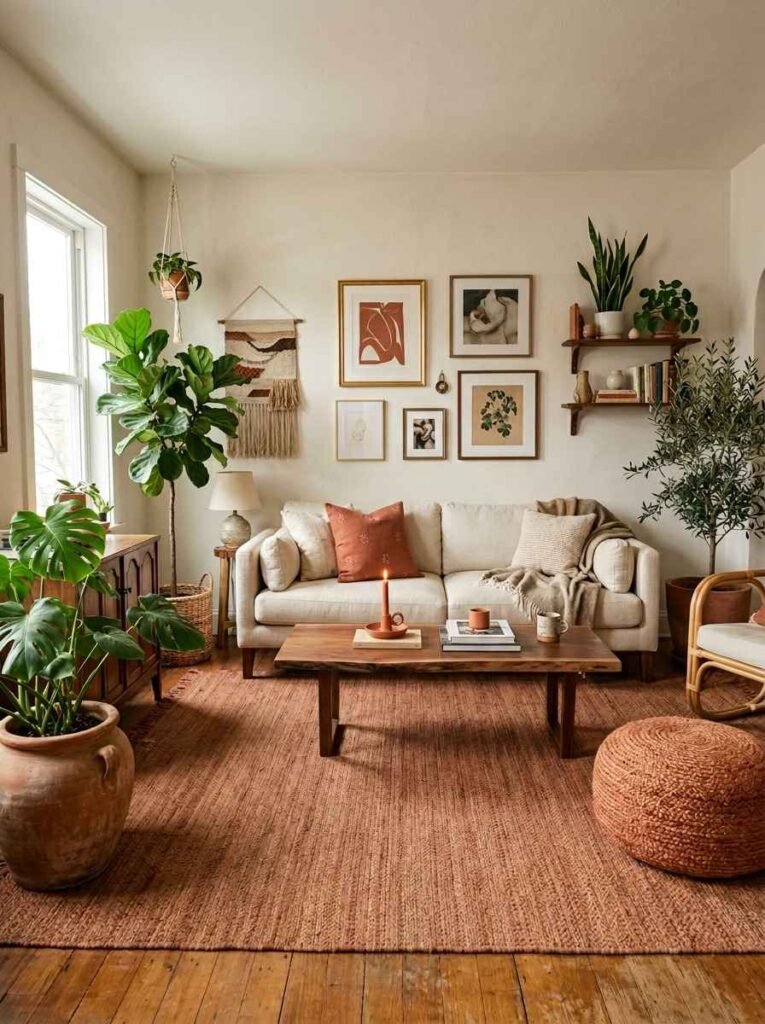
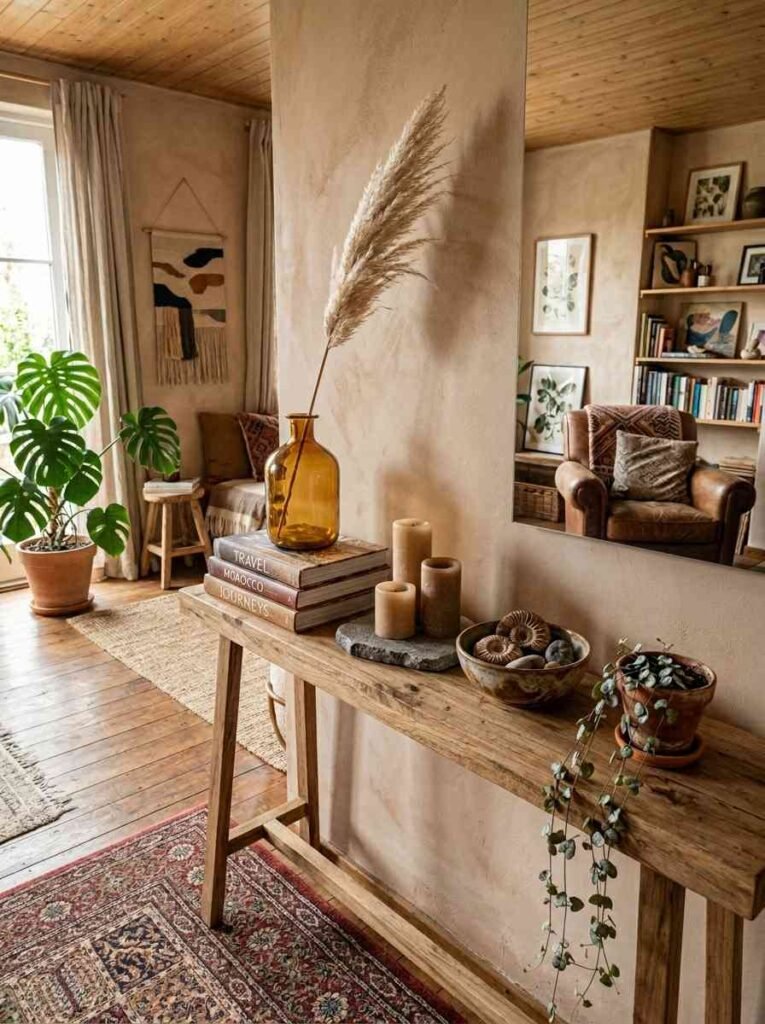
29. A low console table as a display surface. Candles, a plant, a stack of art books, a found object from a trip somewhere. Don’t style it. Just put things on it that you actually like.
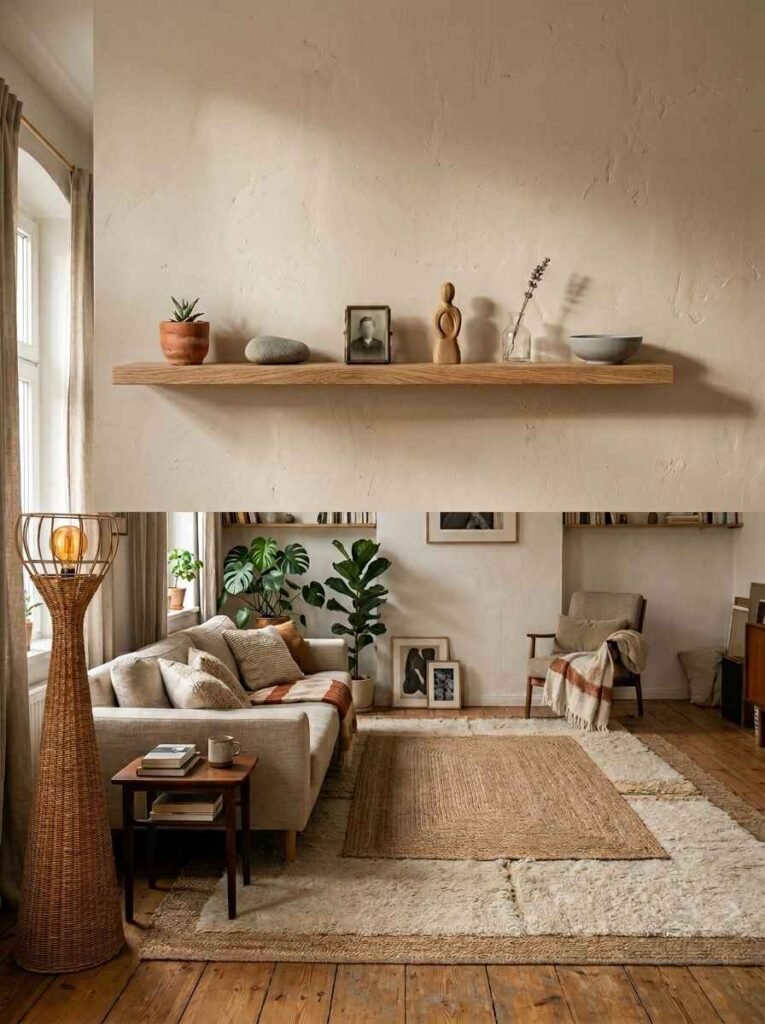
30. A floating shelf for collected objects. One shelf, curated. Shells, pottery, a small framed photo, a wooden figure. The editing is the skill here. Put 10 things on, take 4 away.
The one idea that ties everything together
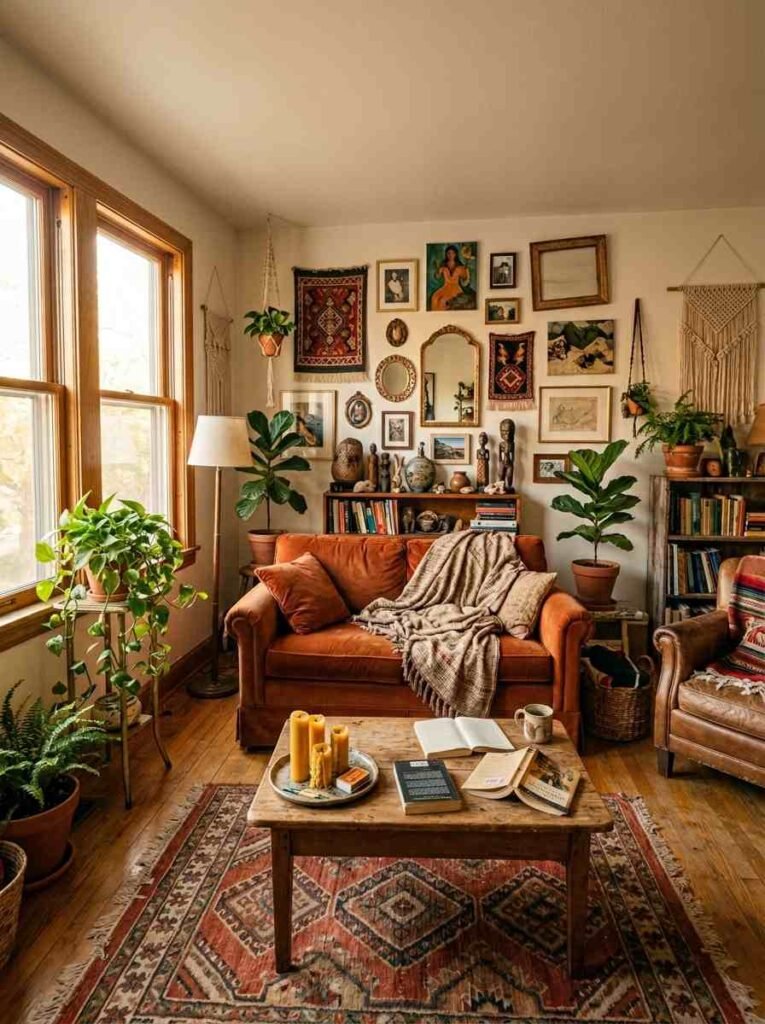
31. Pick one anchor colour and repeat it in 6 places.
This is probably the most practical advice in this whole list. Boho rooms feel rich and considered rather than random when one colour (terracotta, dusty rose, forest green, deep teal) appears in the rug, a cushion, a plant pot, a throw, a piece of art, and a small object on a shelf.
It creates a thread through the room without making it feel matchy.
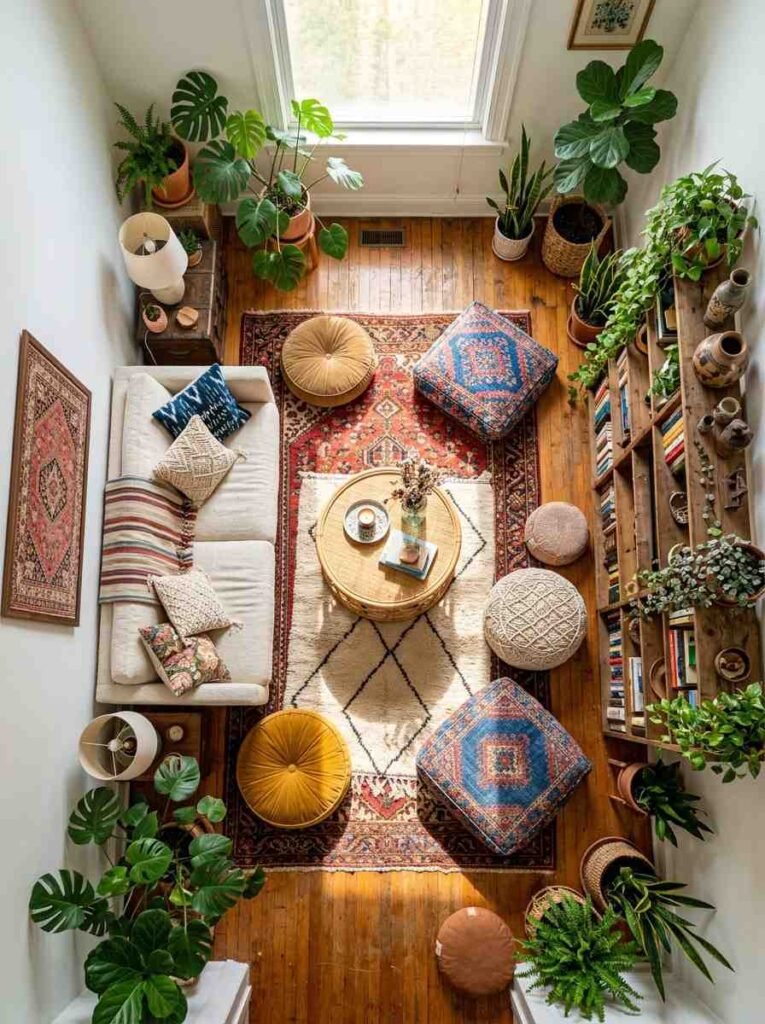
Wow, writing that out I realise how much of this comes down to repetition and restraint working together, which sounds contradictory for a style known for its abundance, but that’s kind of the thing about boho done well.
A quick reference: key boho elements by room function
| Element | Best use | Budget option | Splurge option |
|---|---|---|---|
| Rug | Foundation layer | IKEA flatweave + jute base | Vintage Moroccan Beni Ourain |
| Lighting | Ambient mood | Woven pendant shade ($30) | Handmade Moroccan lantern |
| Textiles | Layering and warmth | Linen throw, estate sale quilt | Hand-block-print cushions from India |
| Plants | Organic texture | Trailing pothos on a shelf | Large monstera in a woven basket |
Things people actually get wrong with bohemian decorating
Buying everything new at once. A bohemian room looks collected because it was collected, over months or years.
When you furnish a room in one Anthropologie order, it looks like a stage set. Buy one thing at a time. Let it breathe.
Going too dark too fast. The warmth in bohemian rooms comes from texture and colour layering, not from painting everything terracotta and adding 40 candles in week one.
Start with neutral walls and layer colour in through soft furnishings. You can always add more.
Ignoring scale. A beautiful tiny rug in the middle of a large room looks lost. A small macrame piece on a huge wall looks like an afterthought.
Scale matters more than almost any other single decision.
For more practical guidance on getting proportions right, the House Beautiful bohemian room guide has some genuinely useful layout diagrams.
FAQs
Q: Can bohemian style work in a small living room? A: Yes, probably better than you’d expect. Low furniture keeps the room feeling open, and layered textiles add richness without taking up floor space. The key in a small room is keeping the wall behind the sofa the feature wall and leaving at least one corner clear. Don’t try to fill every surface.
Q: How do I make a bohemian room feel intentional rather than cluttered? A: The anchor colour rule (idea 31 above) does most of the work. The other thing that separates a collected room from a chaotic one is editing. If you’ve put something on a shelf and it doesn’t give you a small jolt of pleasure when you look at it, it probably shouldn’t be there.
Q: What’s the best starting point if I’m decorating from scratch? A: The rug. Get the rug right first. Everything else in the room, including the sofa colour, the curtains, the cushions, should respond to what’s on the floor. A good vintage or vintage-style rug is the single decision that makes the most subsequent decisions easier.
Final thought
A bohemian living room at its best feels like it belongs to someone specific, someone who travels, collects, reads, and actually uses the room. That’s the goal. So the real question worth sitting with: does your living room look like you live in it?
If the answer is no, start with one rug, one plant, and one thing you genuinely love. The rest follows.
