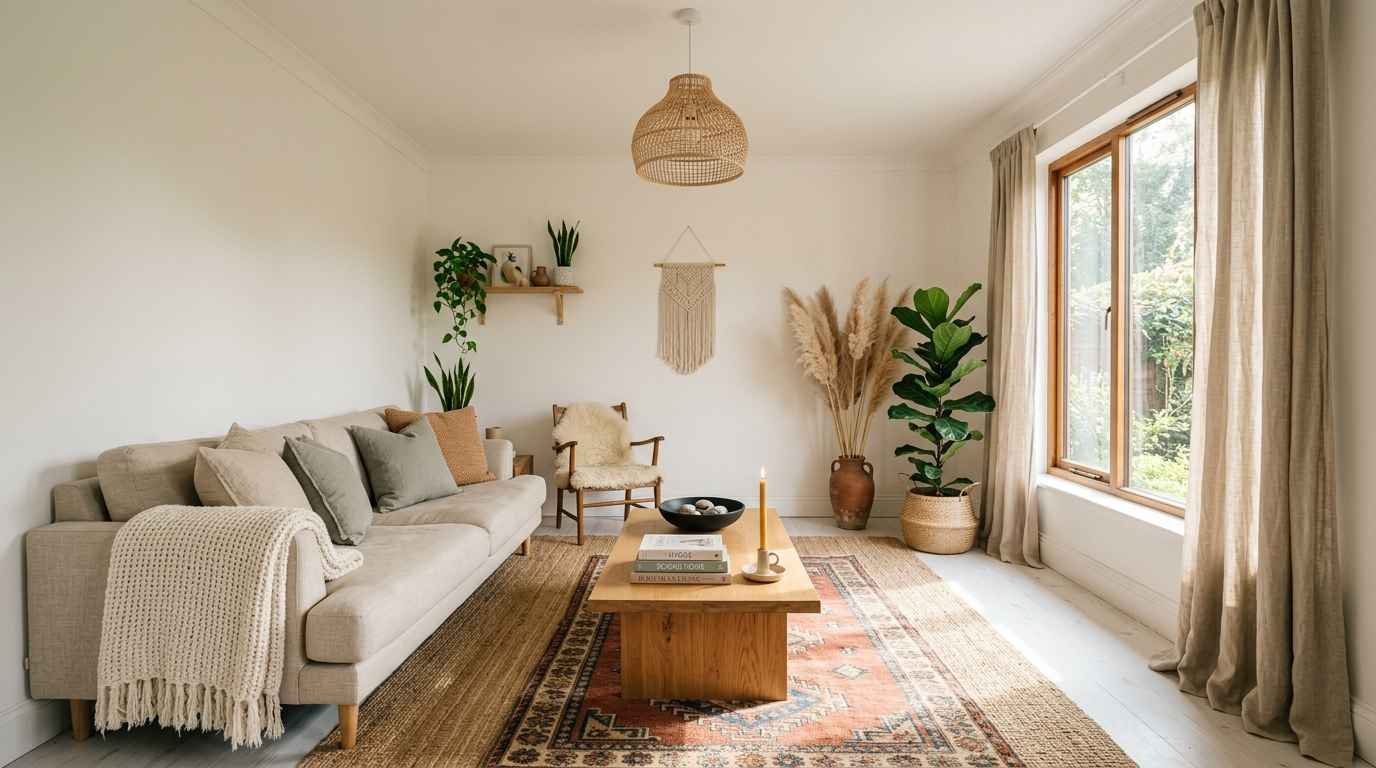
You’ve seen it on Pinterest a hundred times. That bedroom with the linen curtains, the rattan chair in the corner, the little cluster of dried pampas grass that somehow doesn’t look tacky. You pin it. You say “yes, this.”
Then you look around your own living room and wonder how the gap between inspiration and reality got so wide.
Here’s the thing: Scandi-boho is one of the most forgiving aesthetics you can work with. It’s warm enough to be lived in, minimal enough to not require a total gut renovation,
and personal enough that your space ends up looking like you rather than a showroom. I’ve been slowly building this look across two apartments over about 4 years now, and these are the 28 moves that actually changed things.
Start with the bones: walls and floors
1. Go warm white on the walls, not bright white
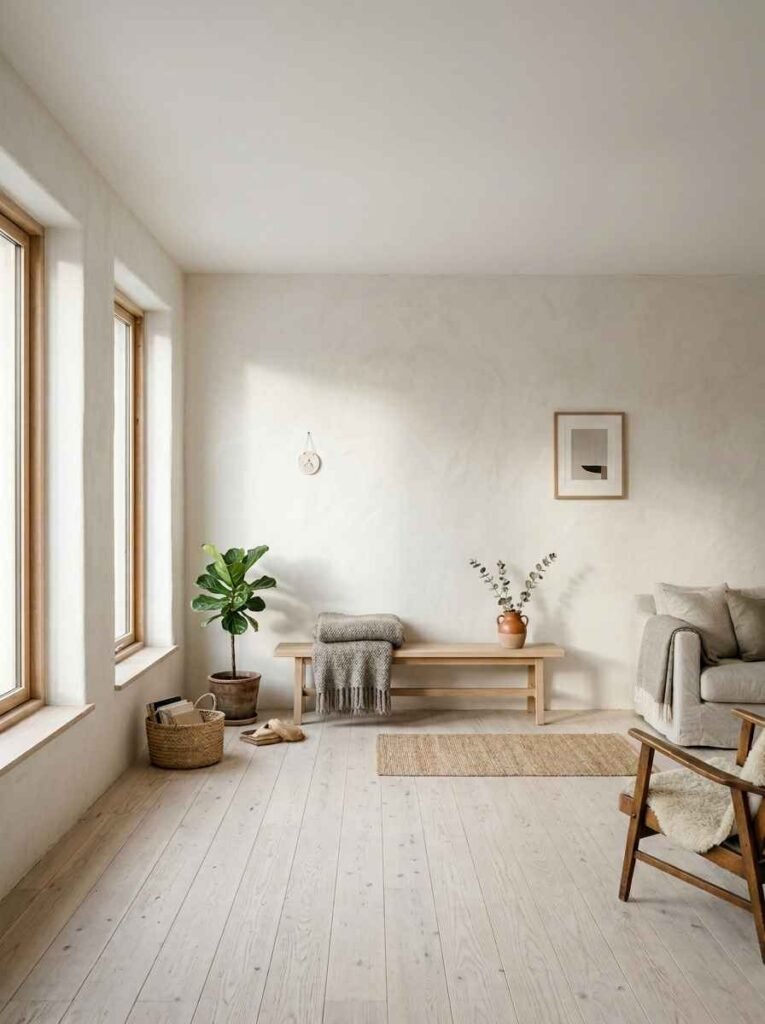
Bright white is cold. It reads clinical in photos and exhausting in real life. The Scandinavian side of this aesthetic wants light, yes, but it wants softness too.
Warm whites like Benjamin Moore’s “White Dove” or Farrow and Ball’s “Pointing” give you that airy openness without the sterile vibe.
The bohemian side adds texture on top of that base. The wall color is the canvas, not the statement.
2. Layer rugs, always
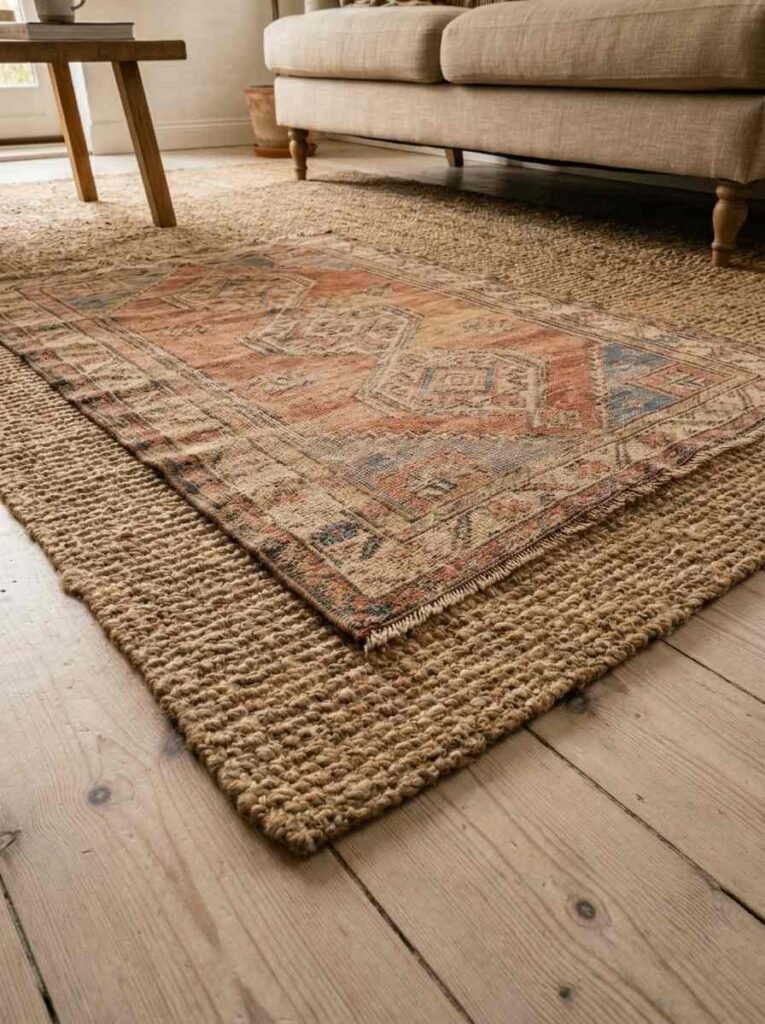
One rug on a bare floor looks flat. Two rugs layered, especially when they differ in texture (think a jute base with a smaller Moroccan wool rug on top) read as intentional and collected. According to interior design guidance
from Apartment Therapy, layering a natural fiber rug under a patterned one is one of the easiest ways to get that “well-traveled but organized” feel without spending a lot.
I personally stacked a IKEA sisal rug under a vintage kilim I found for $40 at a local market. Genuinely one of the best design decisions I’ve made in any home.
3. Sand down and lime-wash wooden floors if you can
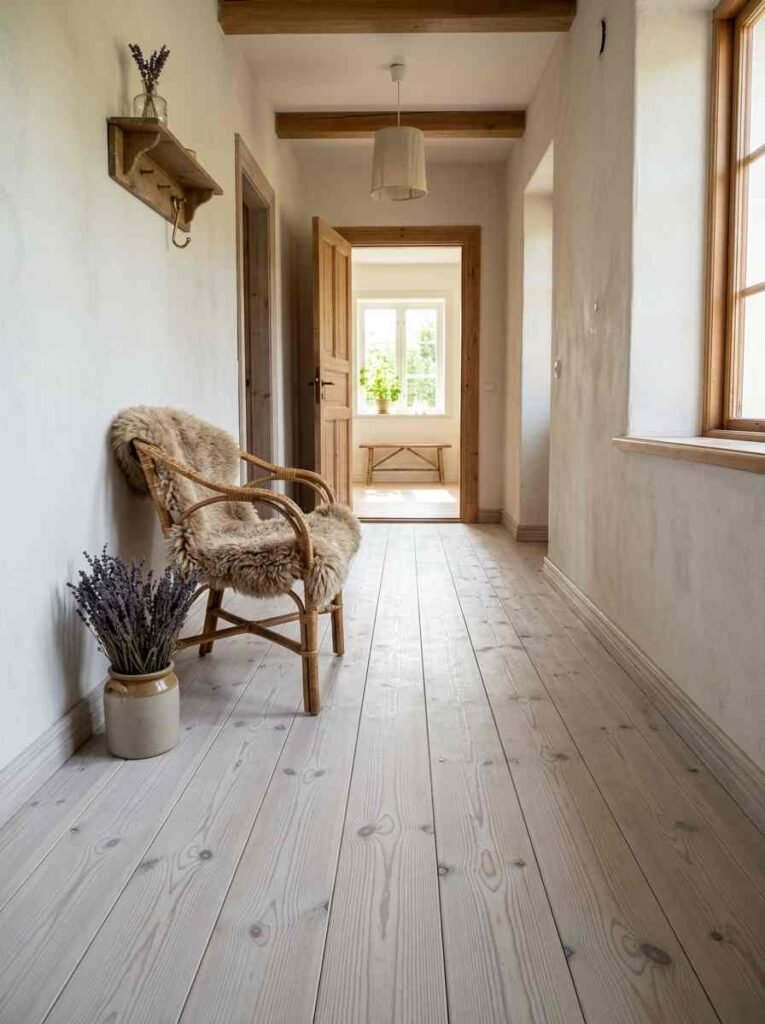
This sounds extreme, and I’ll admit it’s not for everyone, but if you have old wooden floors that look dark and dated,
a lime wash completely changes the energy of a room. It lightens them without stripping all the character. The result looks like something out of a Swedish farmhouse.
If you rent, skip this and go hard on the rugs instead.
4. Keep the ceiling plain
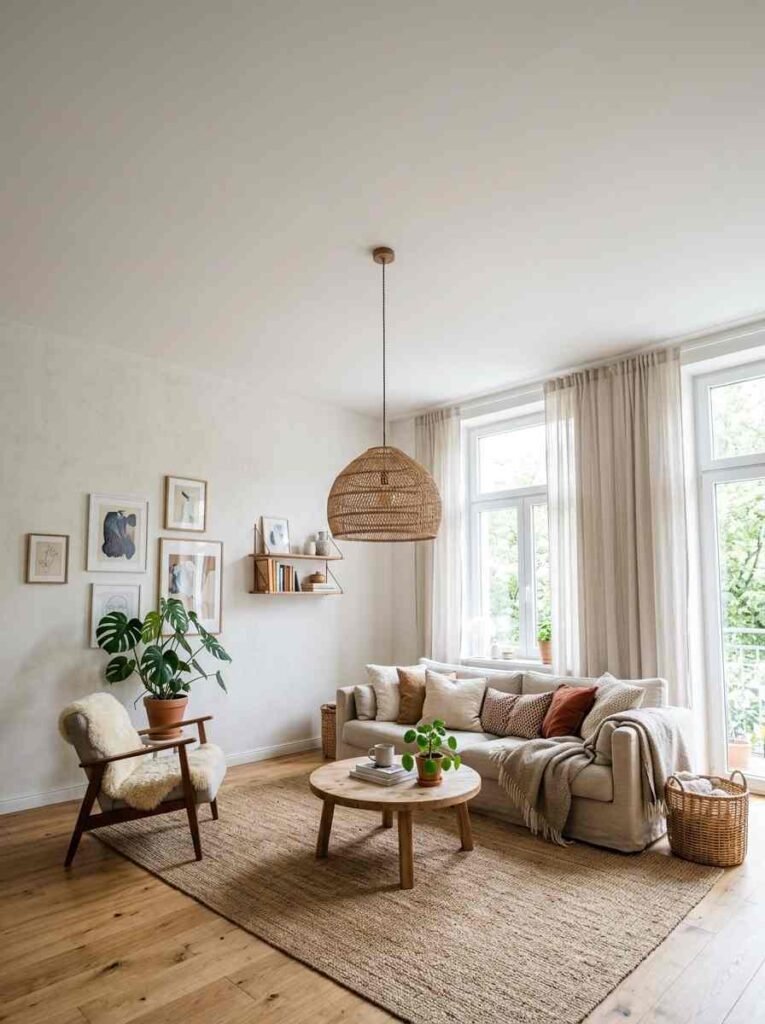
Resist the urge to put anything on the ceiling. The Scandinavian half of this aesthetic breathes through negative space.
A clean white ceiling makes a room feel taller and airier, which then lets the warmth and texture you build at eye level and below feel intentional, not chaotic.
Furniture: the mix that actually works
5. Anchor with one solid, simple sofa
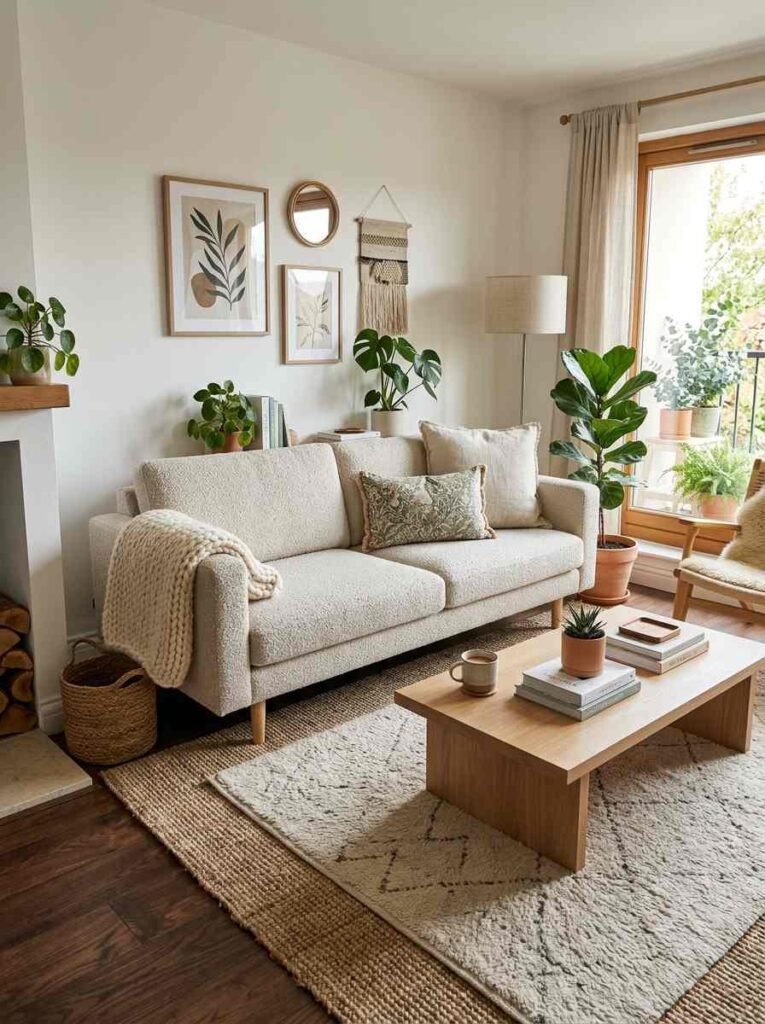
The sofa is where Scandi discipline kicks in. Go for something with clean lines, low arms, and a neutral upholstery: linen, cotton canvas, or a tight-weave boucle in oatmeal or warm gray. The chaos you build around it with throws and pillows gives it life.
A sofa with lots of curves, tufting, or heavy ornamentation pulls too hard in one direction. You want it to be a calm base.
6. Mix at least 2 different wood tones
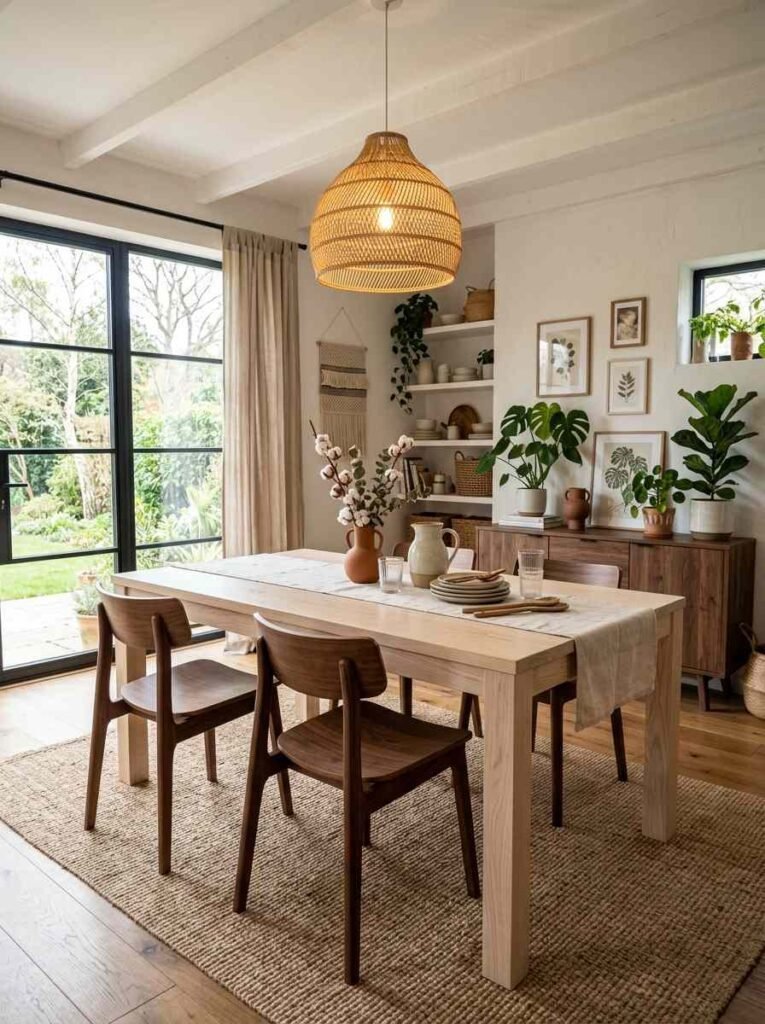
This is probably the most counterintuitive piece of advice I give people, because we’ve all been told to match our wood.
But a consistent wood tone across every piece of furniture reads as showroom-purchased rather than collected over time.
The bohemian feeling comes from things that look like they arrived from different eras and places.
Try: a light ash dining table with darker walnut chairs. Or a pine bed frame with a darker teak bedside table. The eye reads it as intentional variety.
7. Bring in one piece of rattan or cane
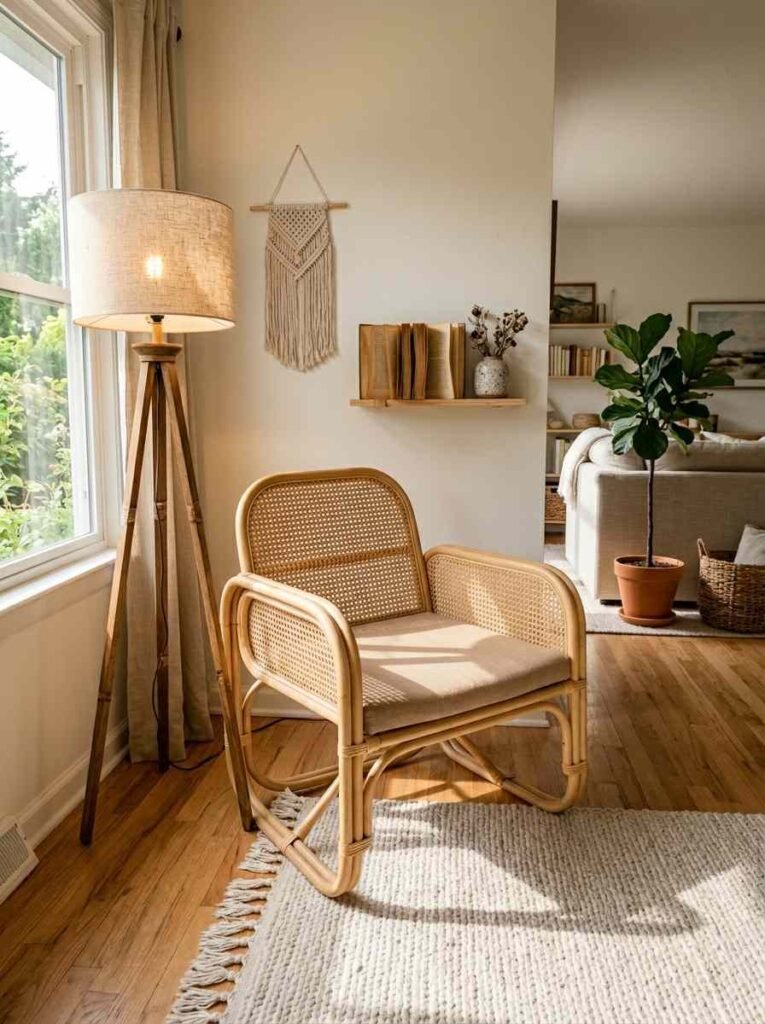
Rattan chairs, cane headboards, woven pendant lights. Pick one and let it be the textural anchor of the room.
Rattan is one of those materials that bridges the two aesthetics perfectly: it has the natural, organic quality the boho side wants, and the simplicity of form the Scandi side demands. The Spruce’s guide to bohemian decorating consistently puts natural woven materials near the top of what defines the look.
8. Use a low-profile coffee table
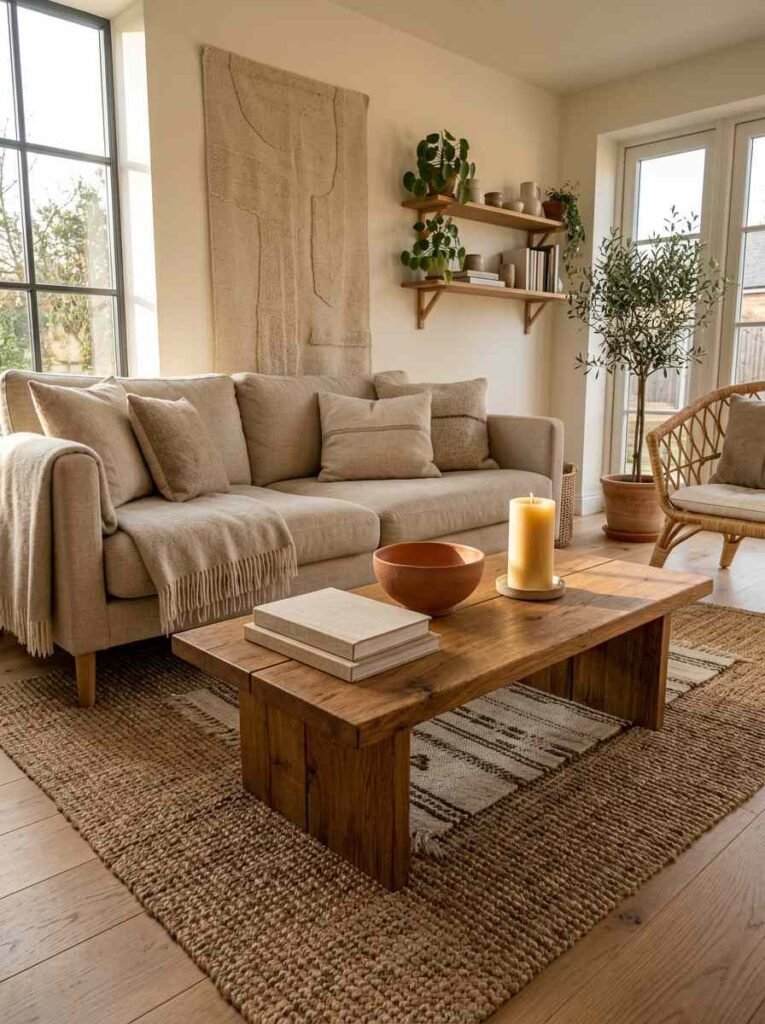
High coffee tables can feel heavy. A low, wide coffee table in wood or stone, one that sits maybe 14 to 16 inches off the floor,
grounds the seating area and makes the whole room feel more relaxed. Style the surface with a small stack of books, a ceramic bowl, and one candle. Three things max.
9. Include something unexpected and slightly personal
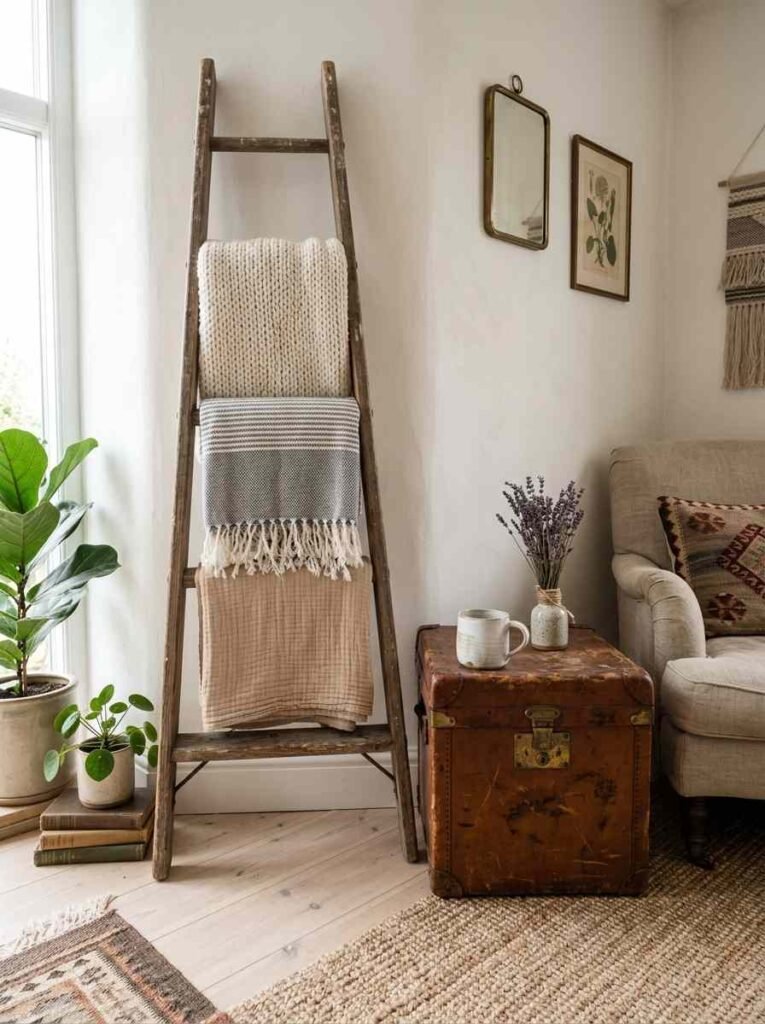
A vintage wooden ladder leaned against a wall to hold throw blankets. A worn leather trunk as a side table.
Something that has a story, or at least looks like it does. This is where the “bohemian” part earns its name. The Scandinavian pieces create structure; the personal pieces create soul.
Textiles: where most of the magic lives
10. Layer linen everywhere
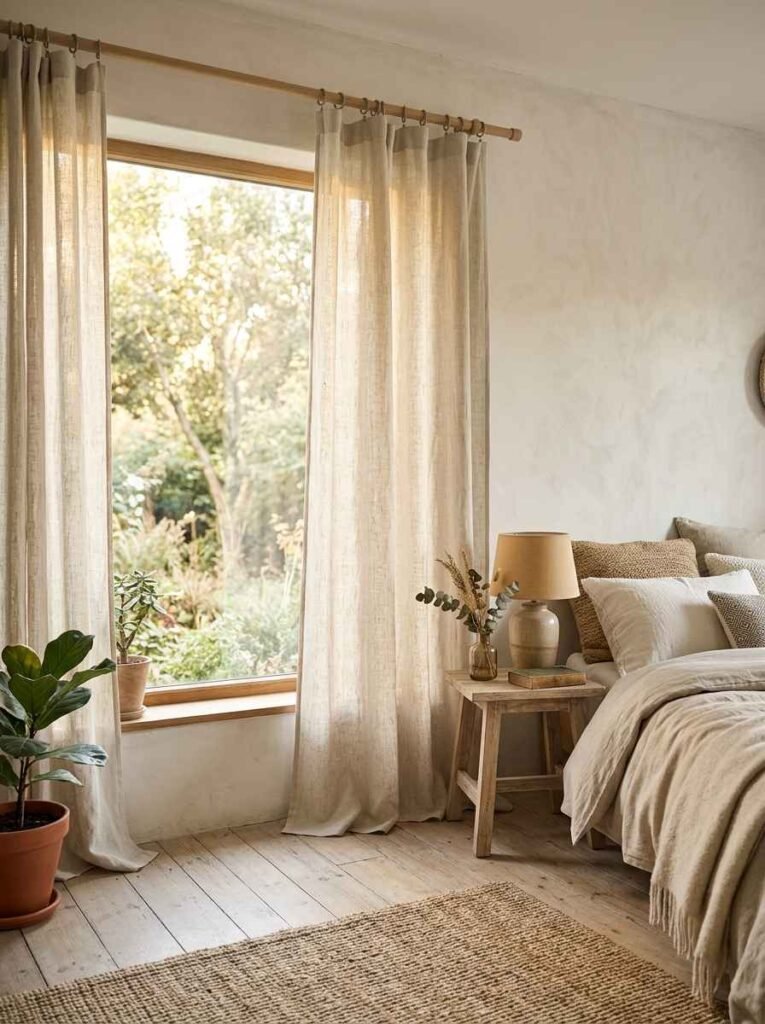
Linen curtains. Linen throw pillows. A linen duvet cover. If you’re only going to do one thing from this list, swap your synthetic or polyester textiles for linen.
It wrinkles naturally (which looks good here, not sloppy), it gets softer over time, and it photographs beautifully.
You don’t need expensive linen. IKEA’s Dytag linen blend curtains are $40 a pair and they look genuinely lovely in the right room.
11. Add a chunky knit throw to every seating area
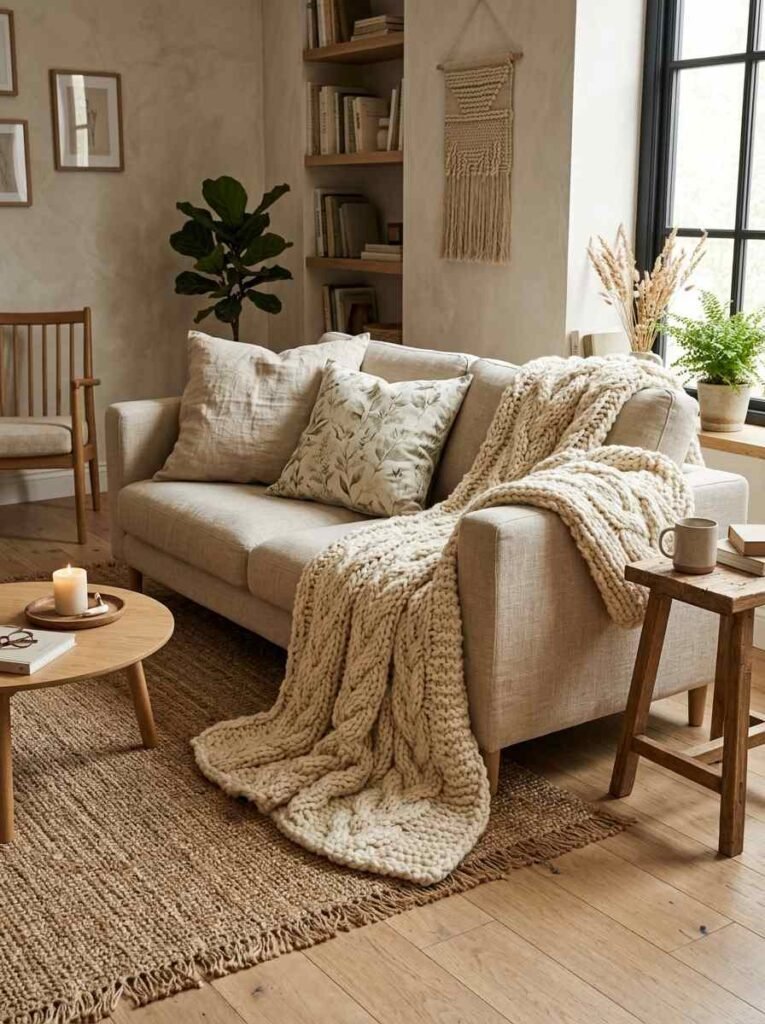
Wool or cotton, thick weave, neutral or earthy tone. Draped casually over the arm of a sofa or folded at the foot of a bed, a chunky knit throw does the work of 3 other styling accessories.
It adds texture, warmth, and that lived-in quality that makes a space feel like someone actually uses it.
12. Mix patterns thoughtfully
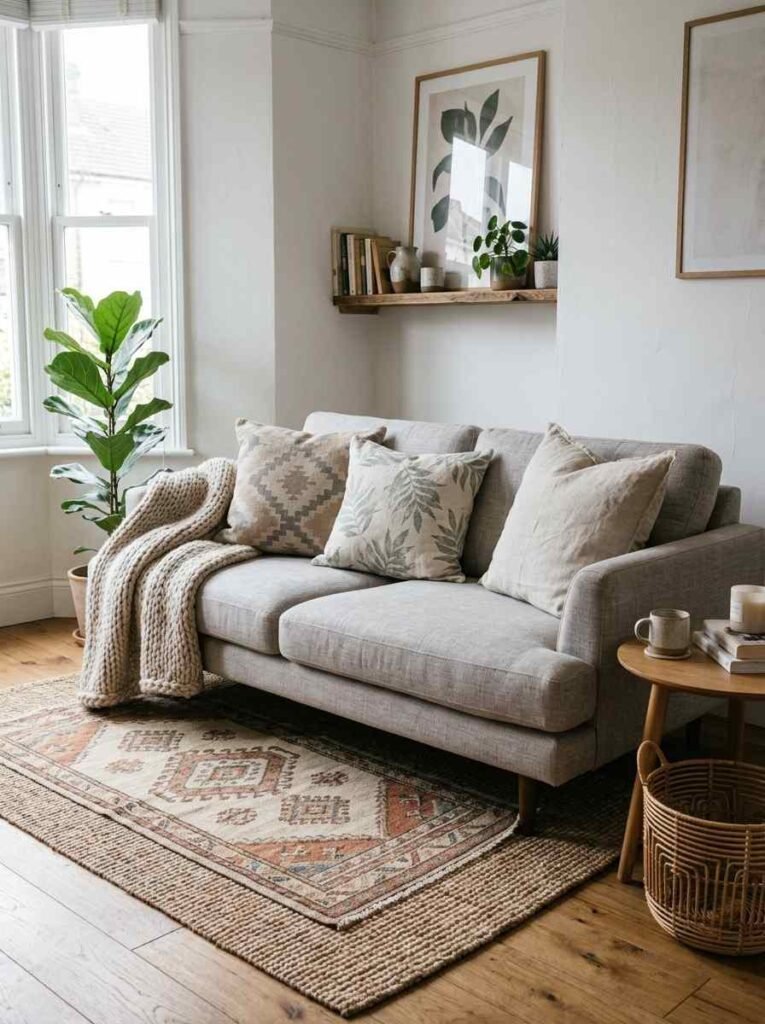
The rule I use: 1 geometric, 1 organic/botanical, 1 solid. So maybe a geometric throw pillow, a floral or leaf-print pillow, and a plain linen pillow.
Keep the color palette consistent across all 3 and the mix reads as curated rather than chaotic.
13. Use sheepskin rugs on chairs
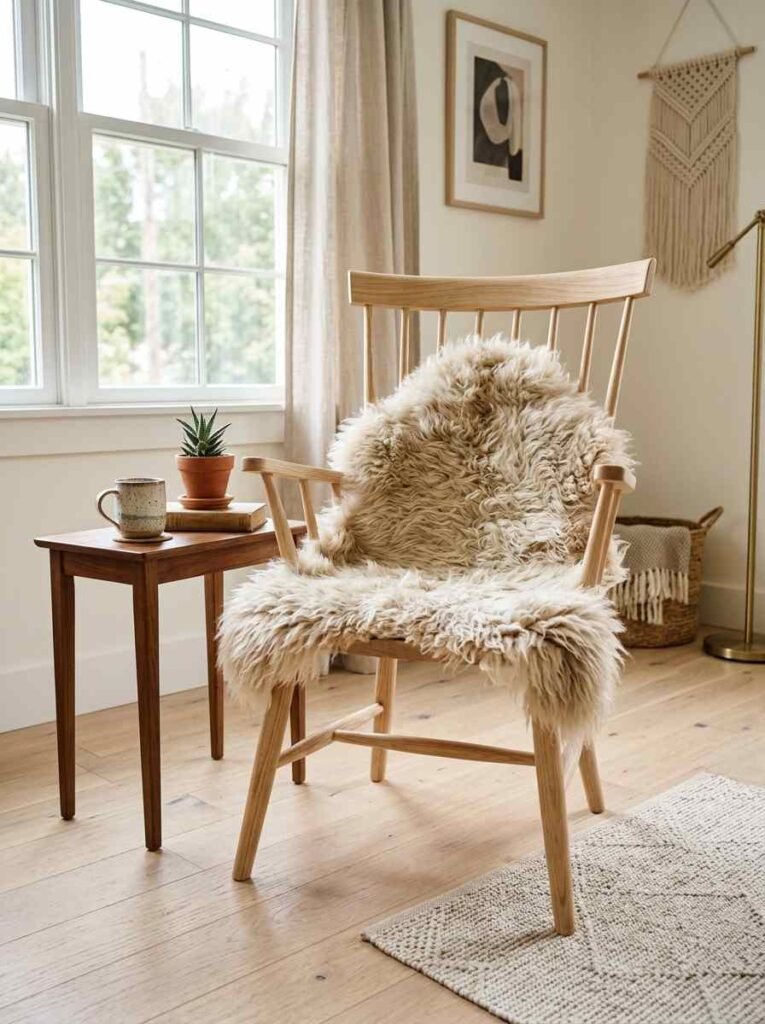
A single sheepskin thrown over a wooden chair or bench does something weirdly effective to a room.
It adds softness, natural texture, and that specific Scandinavian hygge quality that makes a corner feel inviting. IKEA’s Rens sheepskin is $25 and identical to options sold for $80+ elsewhere.
14. Keep curtains floor-length and slightly puddling
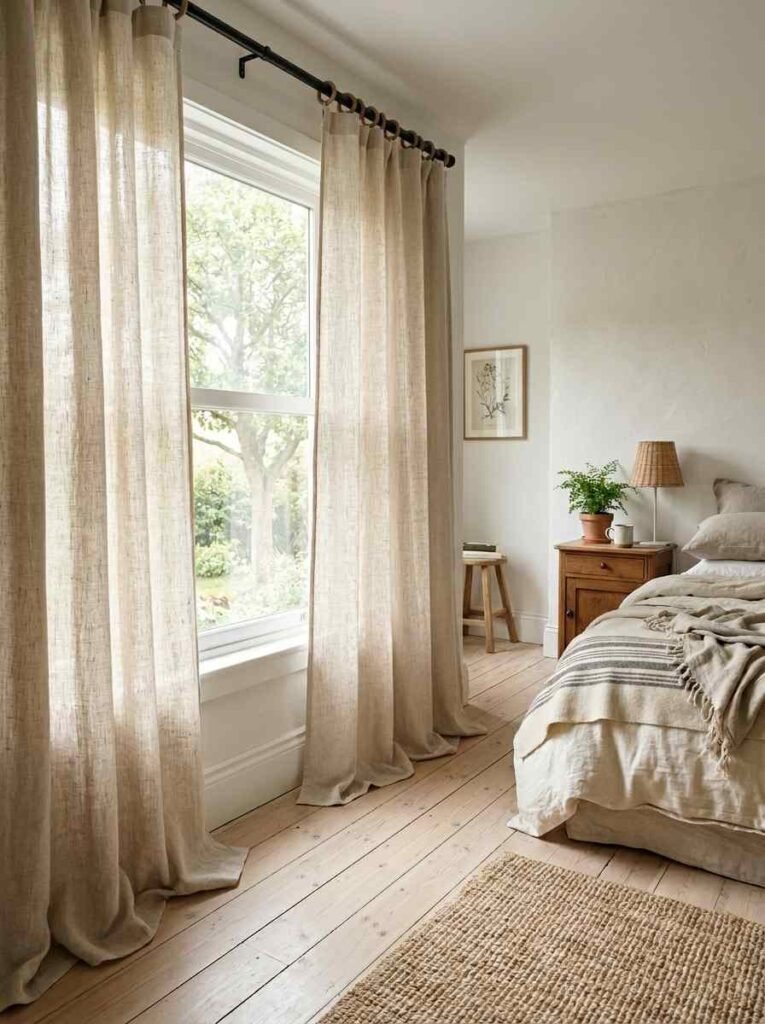
Not pooling dramatically on the floor (that reads as dramatic, not cozy), but hanging just an inch or 2 past the floor.
It makes ceilings feel taller and adds that easy, undone elegance that works perfectly in this aesthetic.
Wow, this one change alone transformed my second bedroom so completely that I didn’t recognize the photos I took before and after.
Plants and natural elements
15. Use dried botanicals strategically
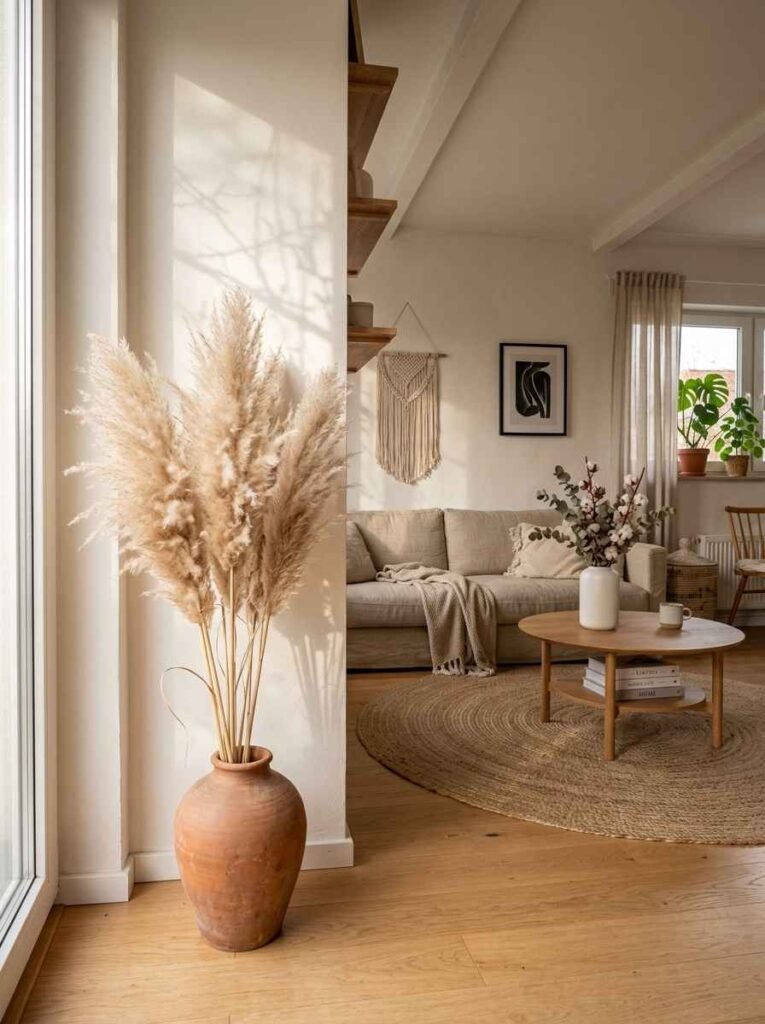
Pampas grass, dried lavender, preserved eucalyptus, bunches of dried cotton. These are a defining detail of Scandi-boho and they work for a reason:
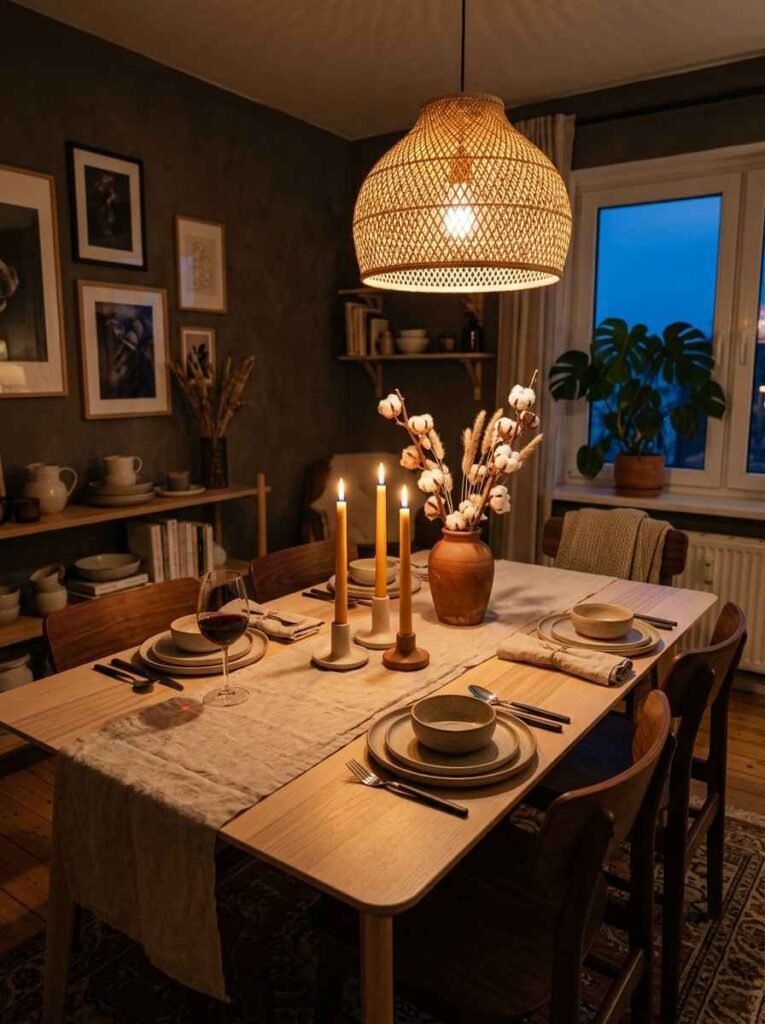
they add organic shape and soft color without requiring any maintenance. A tall dried pampas arrangement in a simple terracotta vase is one of the most-pinned Pinterest looks for a reason.
Go for stems that are 70 to 90 cm tall. Short dried botanicals look a bit sad.
16. Group plants in odd numbers
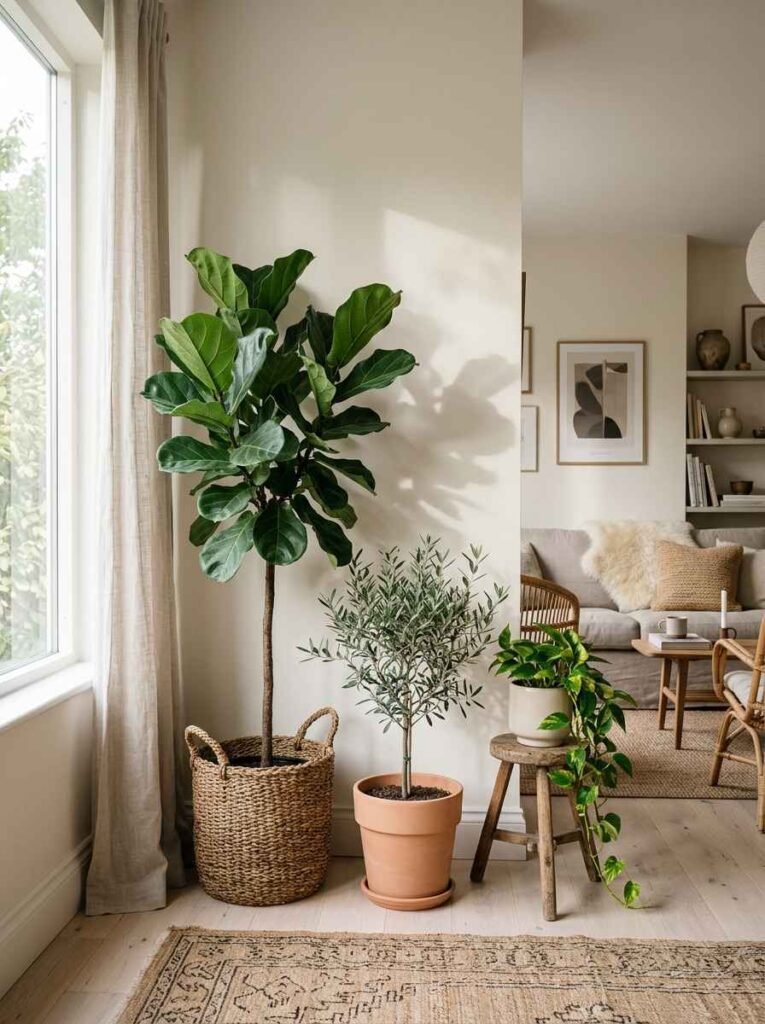
This is basic design theory, but grouping plants in 3 or 5 (rather than 2 or 4) looks more natural because odd numbers are harder for the eye to “solve” symmetrically.
A cluster of 3 plants in varying heights in a corner reads as a vignette, which is what you want.
I’ll be honest: I’ve killed more plants than I care to count. My actual recommendation is 1 real plant that you know you won’t murder (a pothos, a snake plant, something forgiving), surrounded by dried botanicals. No shame in that approach.
17. Bring in stones, shells, and wood slices
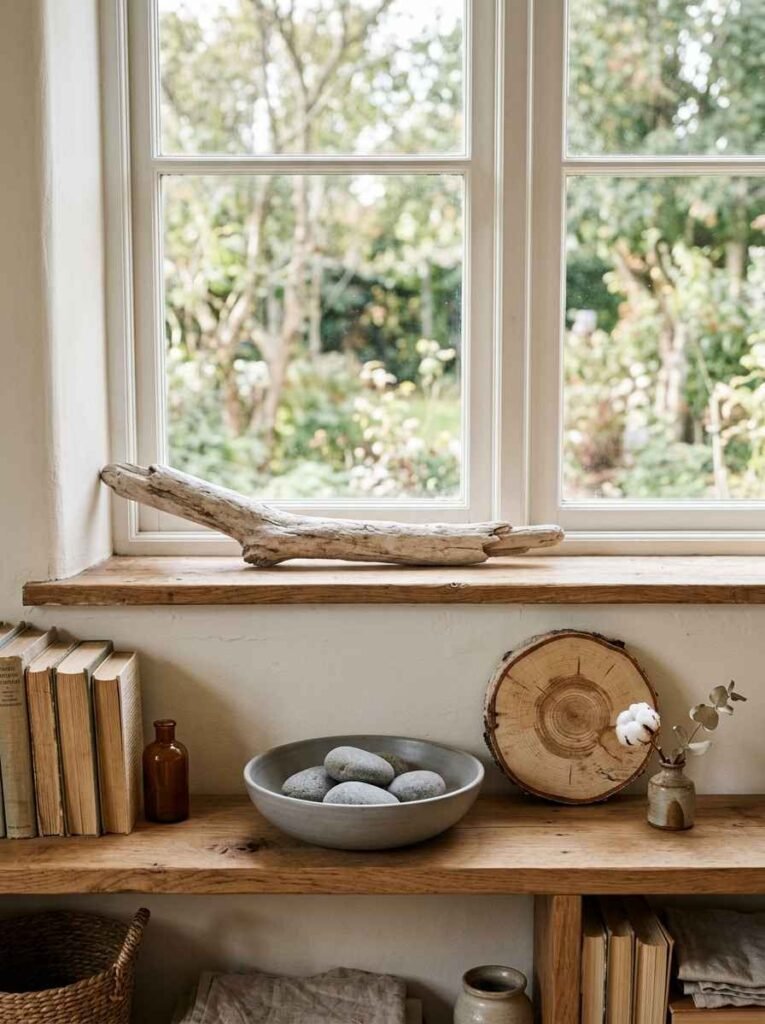
A small bowl of smooth river stones on a shelf. A piece of driftwood on a windowsill. A cross-section of a thick branch used as a coaster or display base.
These small touches feel Scandinavian in their simplicity and bohemian in their earthy, collected quality.
The best ones are genuinely found objects, not purchased ones. Though the purchased ones work fine too :/
18. Use terracotta and ceramic pots
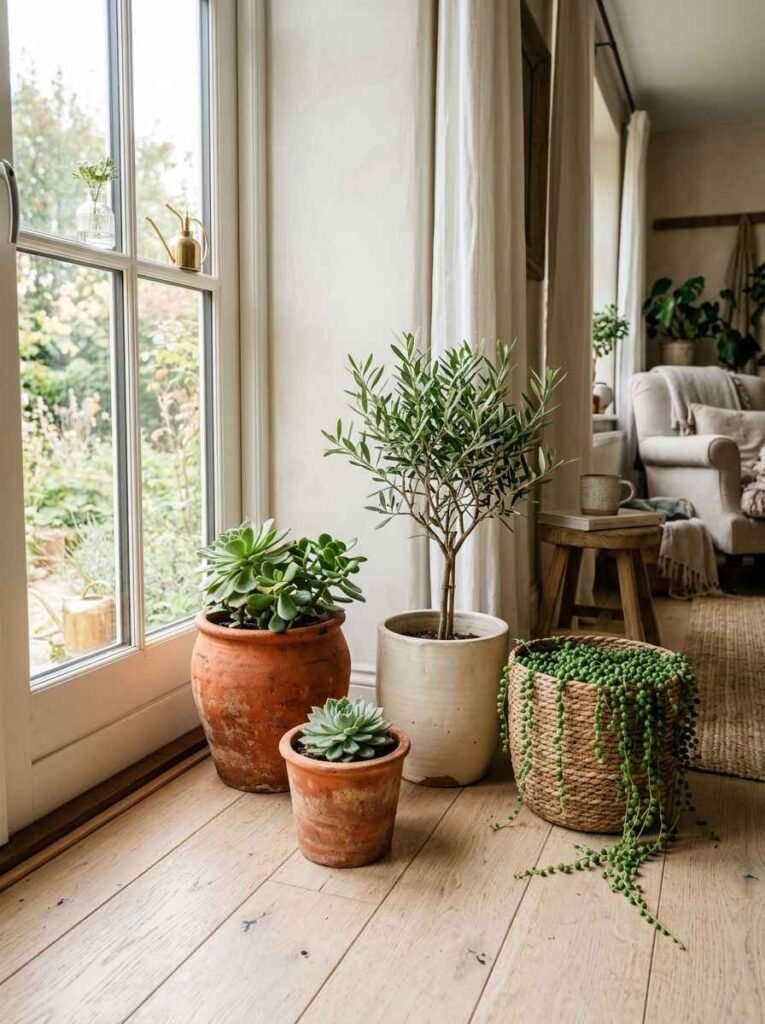
Plastic nursery pots are the enemy of this aesthetic. Move your plants into terracotta, matte ceramic, or woven basket planters.
Terracotta in particular has that warm, slightly imperfect quality that anchors the boho side while staying simple enough for the Scandi side.
A quick comparison of planter materials and how they read in this style:
| Material | Scandi fit | Boho fit | Price range (approx.) |
|---|---|---|---|
| Terracotta | High | High | $5 – $20 |
| Matte ceramic | High | Medium | $15 – $60 |
| Woven basket | Medium | High | $10 – $40 |
| Plastic / shiny | Low | Low | $2 – $15 |
Lighting: the detail most people overlook
19. Layer your light sources
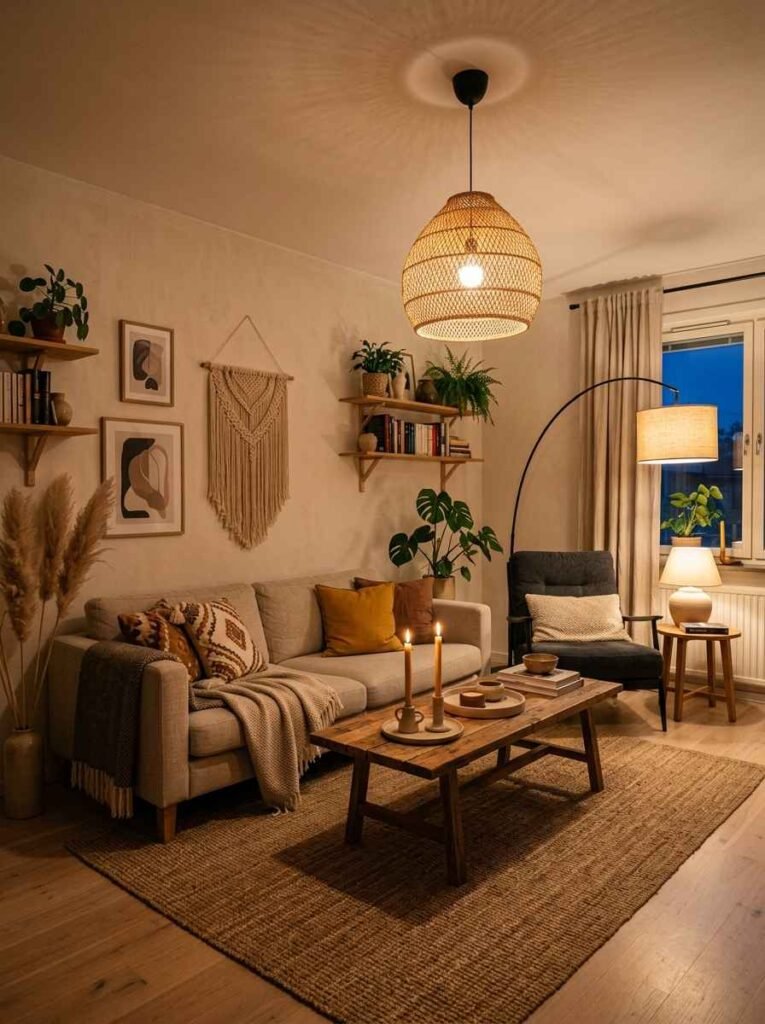
Overhead lighting is fine for function but terrible for atmosphere. Layer it with floor lamps, table lamps, and candles.
Scandi-boho rooms almost never rely on a single ceiling fixture as the primary evening light source.
A good rule: every room should have at least 3 separate light sources you can turn on independently.
The overhead for cleaning and tasks; a floor or table lamp for reading; candles or a small decorative lamp for evenings.
20. Choose warm bulb temperatures (2700K or below)
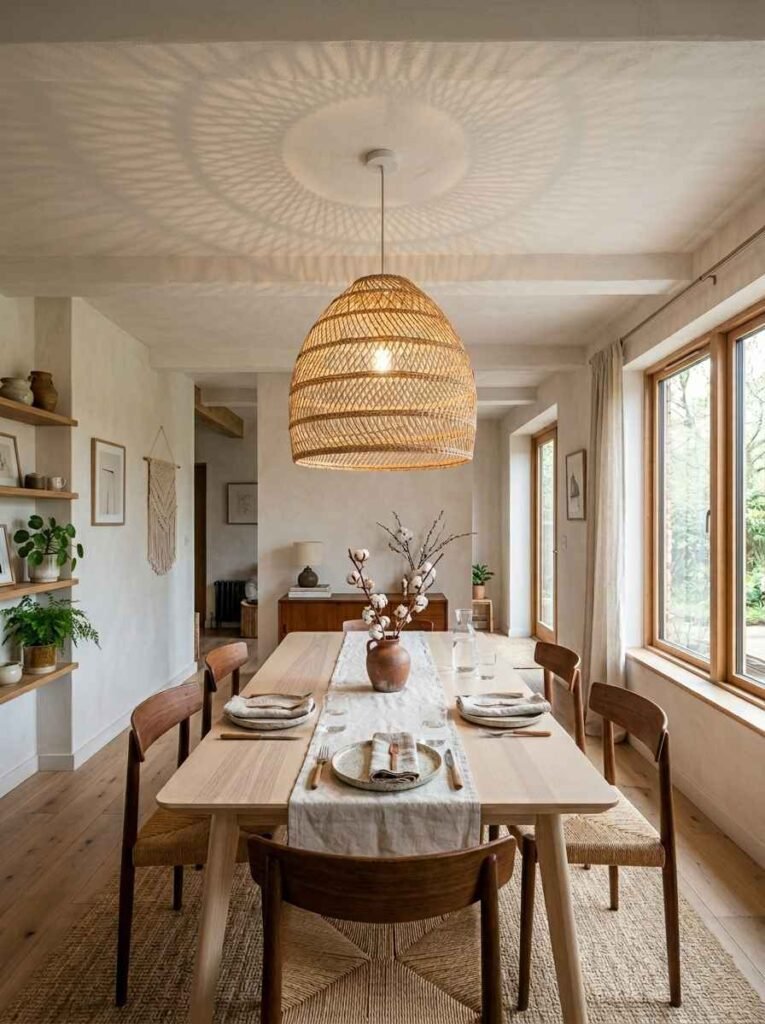
This is specific and it matters more than most people realize. Cool white or daylight bulbs (5000K or above) completely kill the warm,
cozy quality this aesthetic depends on. Swap every bulb in your main living spaces to 2700K or lower.
Philips Warm Glow LED bulbs are the ones I’d recommend to anyone: they dim down to an amber warmth that looks like candlelight.
21. Add a woven or rattan pendant light
A woven pendant over a dining table or a rattan shade over a bedside lamp ties the natural material theme into your lighting. It’s one of those details where you look up and the room suddenly feels coherent. You can find solid options at places like Etsy or World Market without spending a fortune.
22. Use candles as actual decor
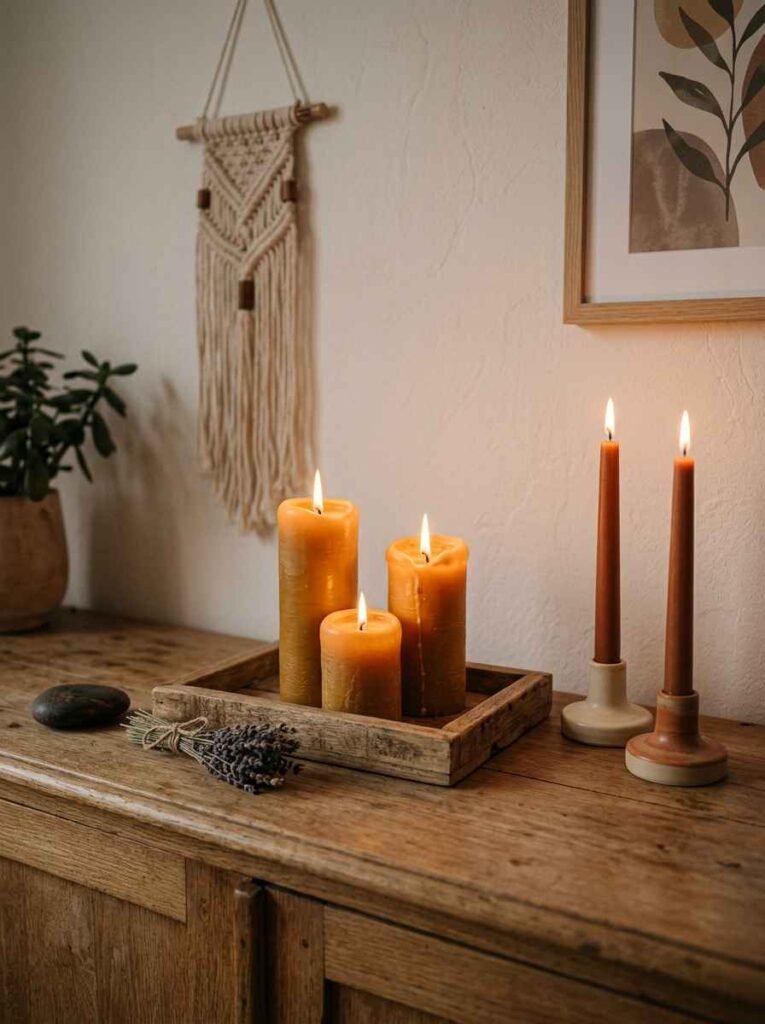
Thick pillar candles in earthy tones grouped on a tray. Taper candles in ceramic holders on a shelf.
Beeswax candles have a warm, honey-colored wax that looks beautiful unlit and smells faintly good when burning.
The Scandi concept of “hygge” is basically built around this one detail.
Color and accessories
23. Build your palette from nature
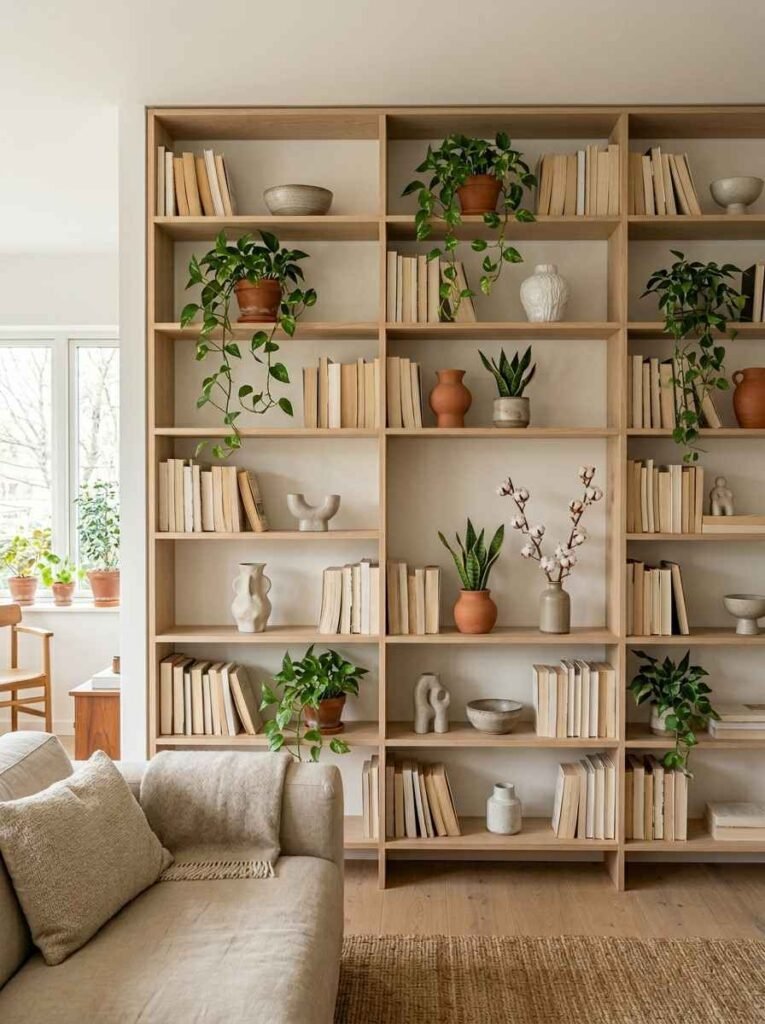
Warm whites, sand, clay, warm gray, rust, dusty sage, terracotta. These are your primary colors. An accent of deep olive or warm ochre can come in through a pillow or a small ceramic piece.
The palette should feel like it came from a walk on a beach or through a dry forest, not from a paint chip display.
Avoid anything too saturated or cool-toned. Cobalt, bright teal, or cool purple pull the aesthetic sideways.
24. Edit aggressively
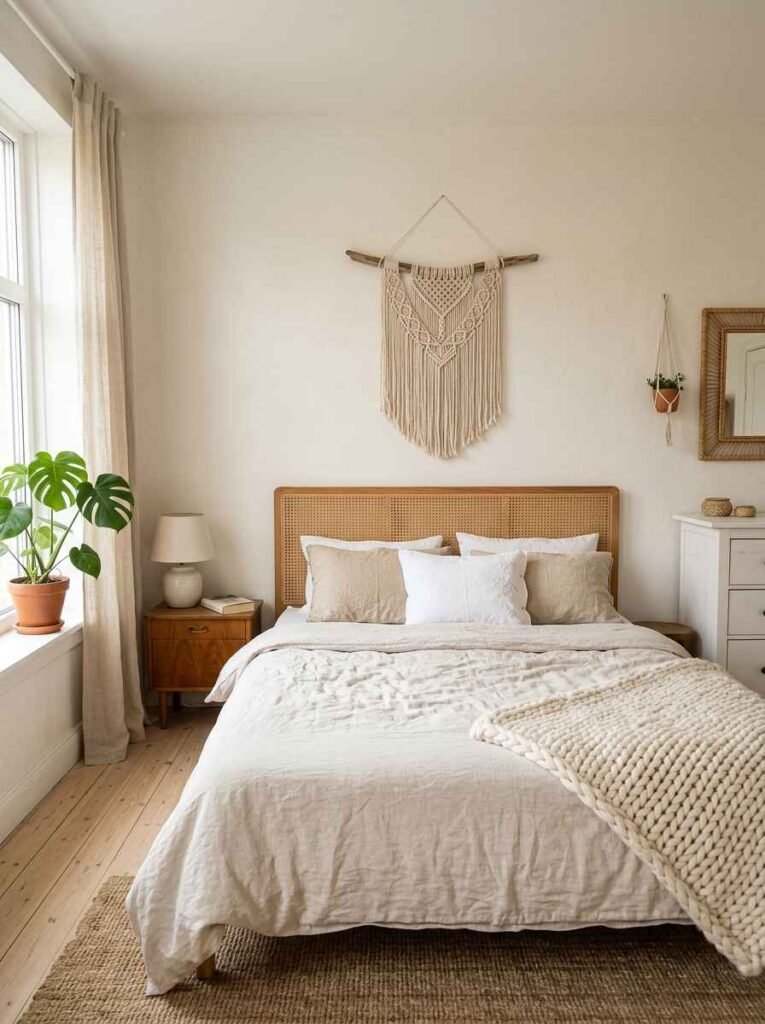
The Scandinavian half of this equation demands restraint. If a surface has more than 3 to 4 objects on it, it probably has too many.
The boho elements (the plants, the textiles, the found objects) do their job better when they have room to breathe.
I go through my shelves every few months and put things in a box for a week. If I don’t notice they’re gone, they get donated.
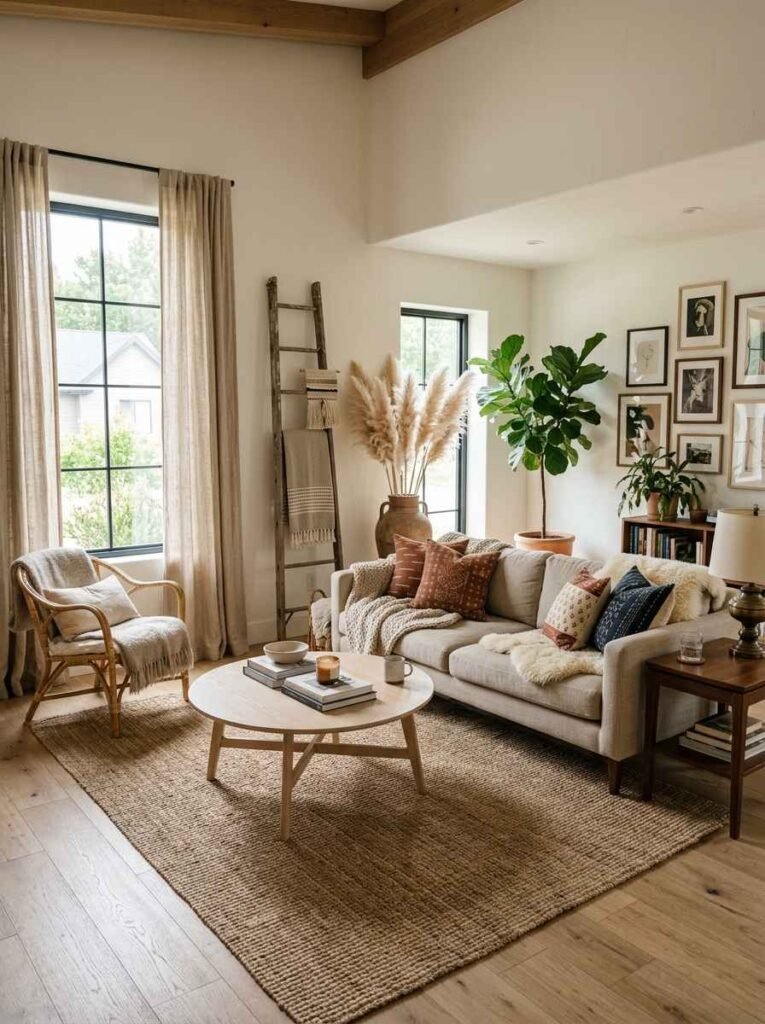
25. Use open shelving to display, not store
Open shelves in this aesthetic are a display surface, not a storage solution. A row of spines, 1 or 2 plants, a small ceramic, and some negative space reads as intentional.
A shelf packed with stuff reads as cluttered regardless of how charming each individual object is.
If you have a lot of books, consider turning some of them so the pages face out rather than the spines. It creates a neutral, paper-toned texture that actually looks great.
26. Introduce macrame or woven wall art selectively
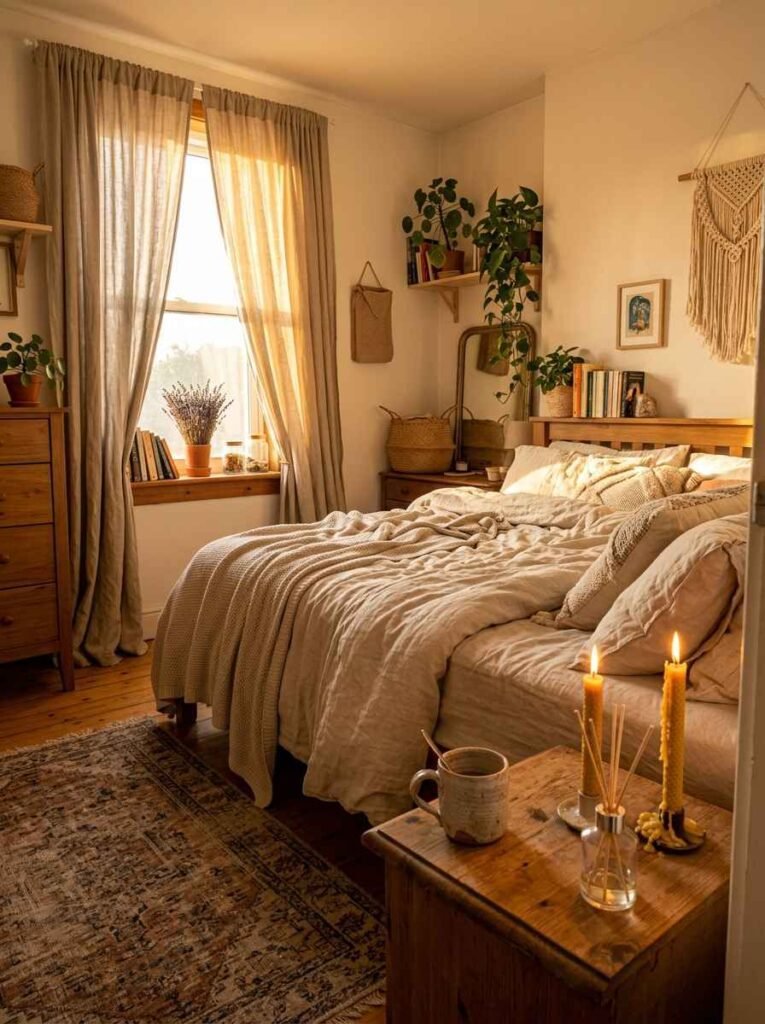
Macrame wall hangings are a polarizing detail (I know, I know), but a small or medium one in a natural cotton cord placed thoughtfully, maybe above a bed or in an entry, adds that handmade, artisan quality the boho side needs.
The key word is “selectively.” One macrame piece reads as a design choice. Three reads as a 2015 time capsule.
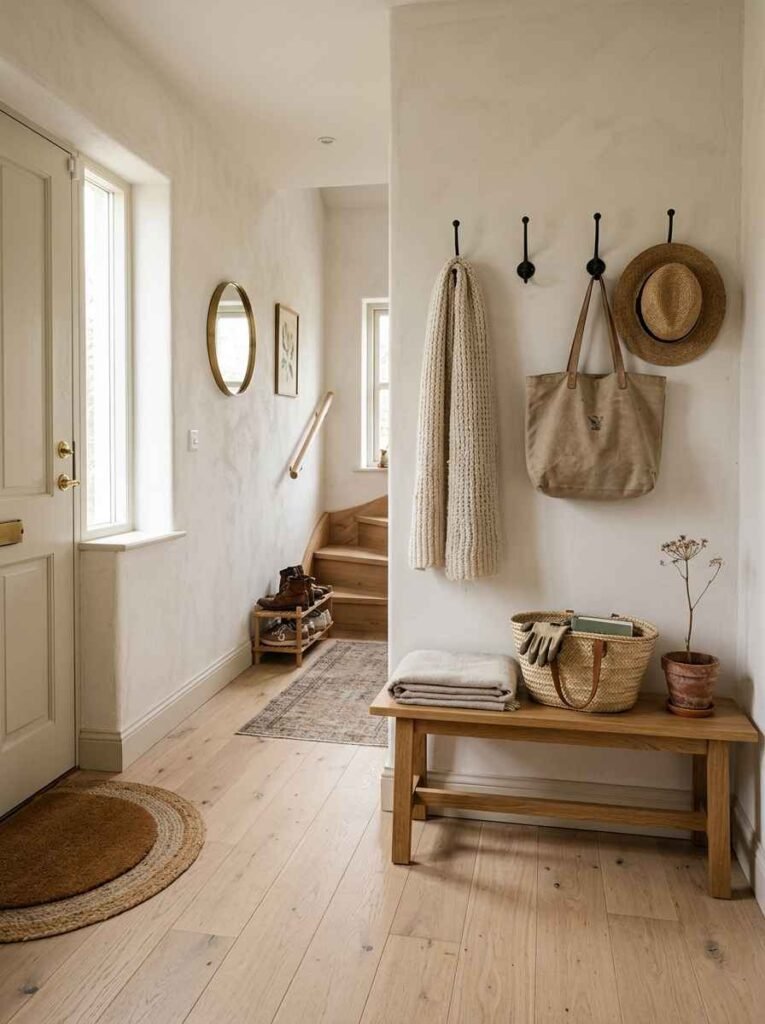
27. Style your entryway with hooks and a bench
A row of simple wooden or black iron hooks on the wall, a low wooden bench, and a small plant or dried botanical arrangement.
The entryway sets the tone for the whole home. If it’s thoughtfully done, the rest of the space feels like it continues that intention.
This is also just functionally useful, which I appreciate. Form and function, etc.
The finishing layer
28. Add scent
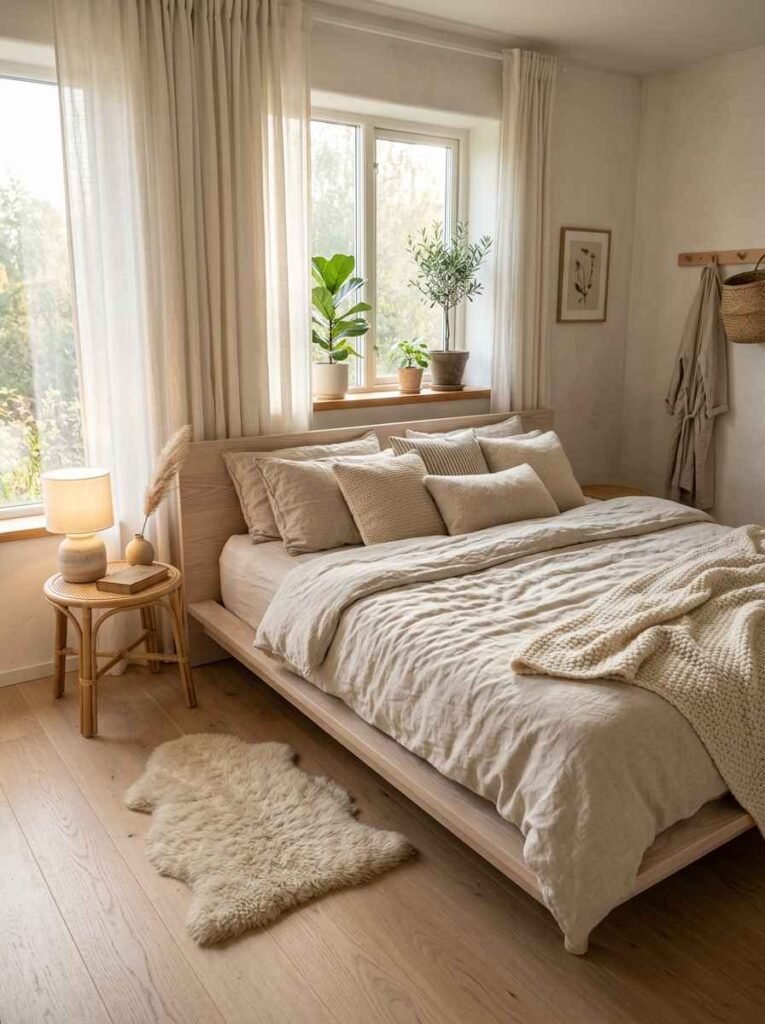
This is the detail that makes a house feel like a home in a way no Pinterest photo can capture. A beeswax candle burning, a diffuser with cedarwood and orange,
or even just the smell of linen bedding washed with a natural detergent. Scent is memory. And that sensory quality is genuinely part of what makes Scandi-boho feel as good as it looks.
Brands like Skandinavisk make candles and diffusers specifically designed around Nordic nature scents. They’re not cheap, but they’re genuinely good. You can find the full range through their website.
FAQs
Can I create a Scandi-boho look on a tight budget? Yes, and honestly some of the best interpretations of this style are built mostly from secondhand finds. IKEA handles the structural, clean-lined pieces affordably (the Kallax shelving unit, the Hemnes bed frame, the Dytag linen curtains).
Thrift stores and Facebook Marketplace handle the personal, collected objects. Dried botanicals are cheap. Terracotta pots are cheap. The expensive version of this look and the budget version genuinely look similar if the editing is good.
How do I keep it from looking messy? The single most effective habit is editing. This aesthetic relies on restraint from the Scandinavian side to keep the bohemian elements from overwhelming the space.
If a surface looks busy, remove one thing. Then check again. The instinct to add more is usually the problem.
What’s the difference between Scandi-boho and just bohemian? Bohemian on its own can get busy: lots of color, lots of pattern, lots of layering with no clear organizing principle.
The Scandinavian influence brings a neutral palette, clean-lined furniture, and an attention to negative space that gives the organic, textured boho elements somewhere to breathe. The result is warmer and more personal than pure Scandi, and more organized than pure boho.
So, which of these 28 ideas are you going to try first? I’d genuinely love to know, because I’m still in the process of tweaking my own space, and there’s something oddly fun about following what other people are doing with theirs.
If you’re saving ideas for your home boards on Pinterest, this is the kind of list worth coming back to. Start with 3 or 4 changes, live with them for a month, then layer more in. That’s how this aesthetic actually builds, slowly and personally, not all at once.
