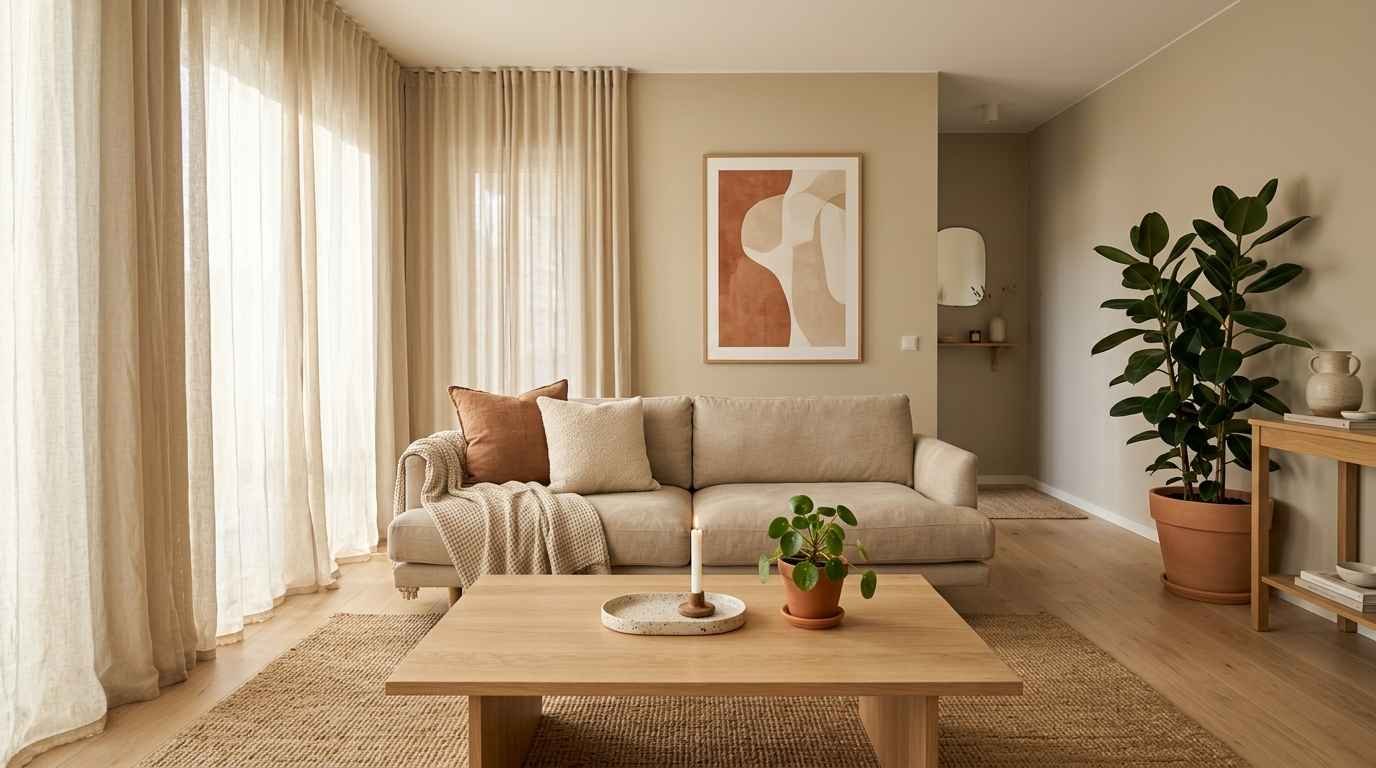
If your living room currently looks like a furniture showroom crossed with a storage unit, you’re not alone.
A lot of us get stuck between wanting clean lines and wanting a space that actually feels warm.
The good news? You can have both. Minimalist cozy — sometimes called “warm minimalism” — is the sweet spot, and once you see it, you can’t unsee it.
I’ve been obsessing over this aesthetic for a few years now. My own living room went through three painful iterations before I landed on something that felt like me.
These 25 ideas come from that process, from hours on Pinterest, and from real spaces that actually work.
Why Minimalist Cozy Works So Well
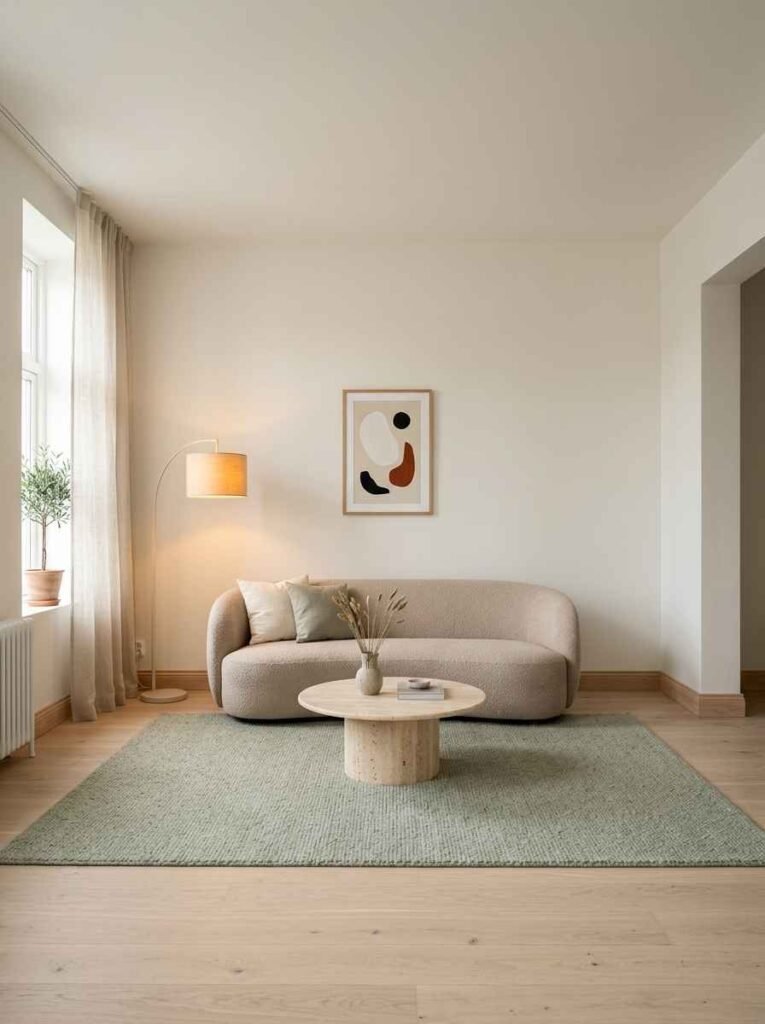
Minimalism, when done wrong, feels cold. Like a hotel lobby nobody booked. Cozy-only, without any restraint, tips into clutter.
The combination solves both problems. You strip back the unnecessary stuff and then invest in texture, warmth, and things that genuinely mean something.
The key principle is that every object earns its place. If it’s there, it’s doing something — adding warmth, serving a function, or telling a story.
1. Start With a Warm Neutral Base
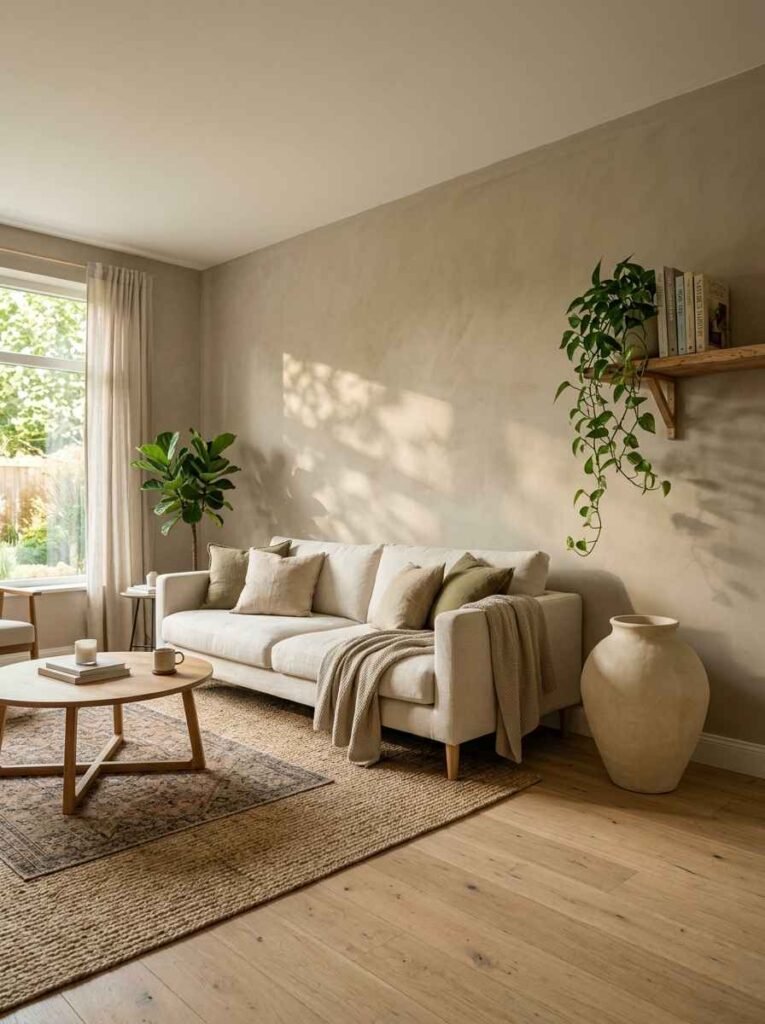
Your wall color sets the temperature of the whole room. Cool whites and stark greys fight against coziness.
Go for warm whites (think Benjamin Moore’s Navajo White or Sherwin-Williams Accessible Beige) or soft putty tones.
These shades catch light beautifully in the evening and make every piece of furniture read as intentional rather than random.
2. One Statement Sofa, Done Right
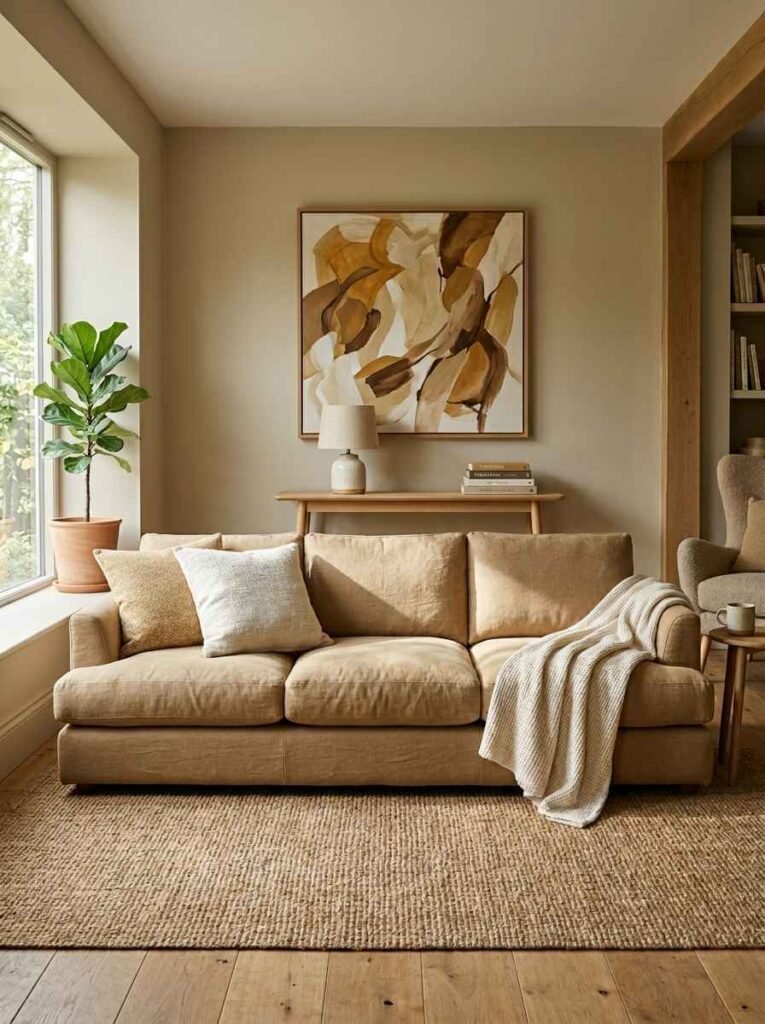
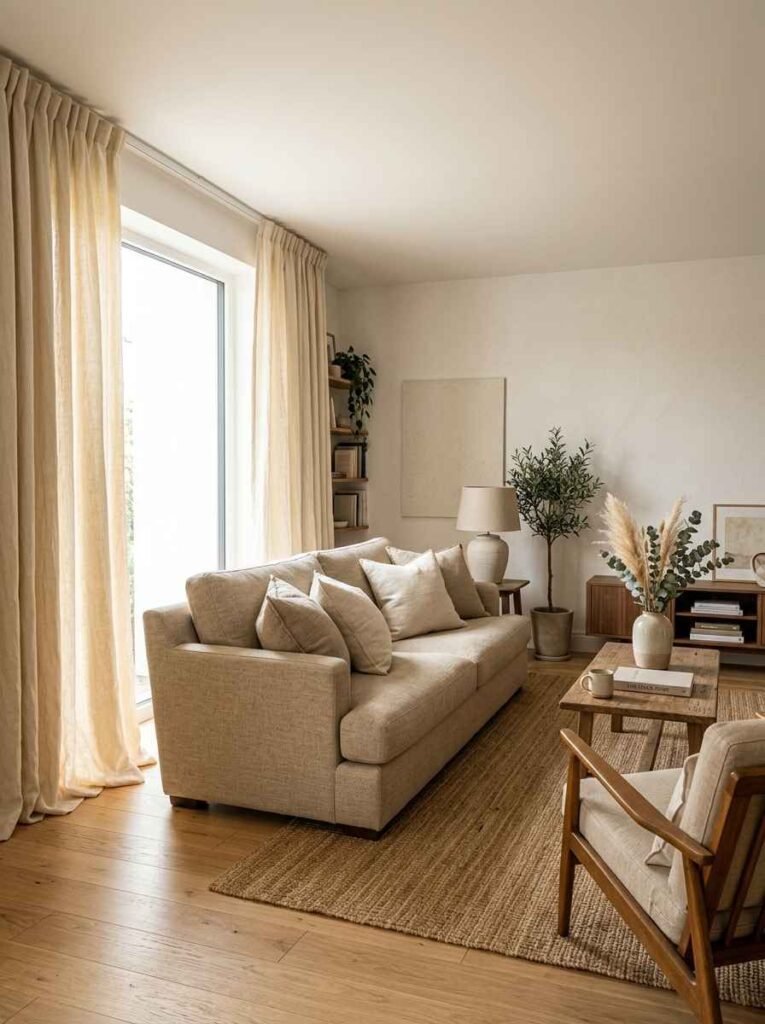
Resist the urge to buy a matching sofa set. One well-chosen sofa — in linen, boucle, or a textured weave — carries the whole room.
I went with a sand-toned linen sofa two years ago and I still think it’s the best money I spent on this space.
Keep it low-profile if your ceilings aren’t high. A chunky, low-slung silhouette reads as both minimal and cozy simultaneously.
3. Layer Your Textiles (This Is Non-Negotiable)
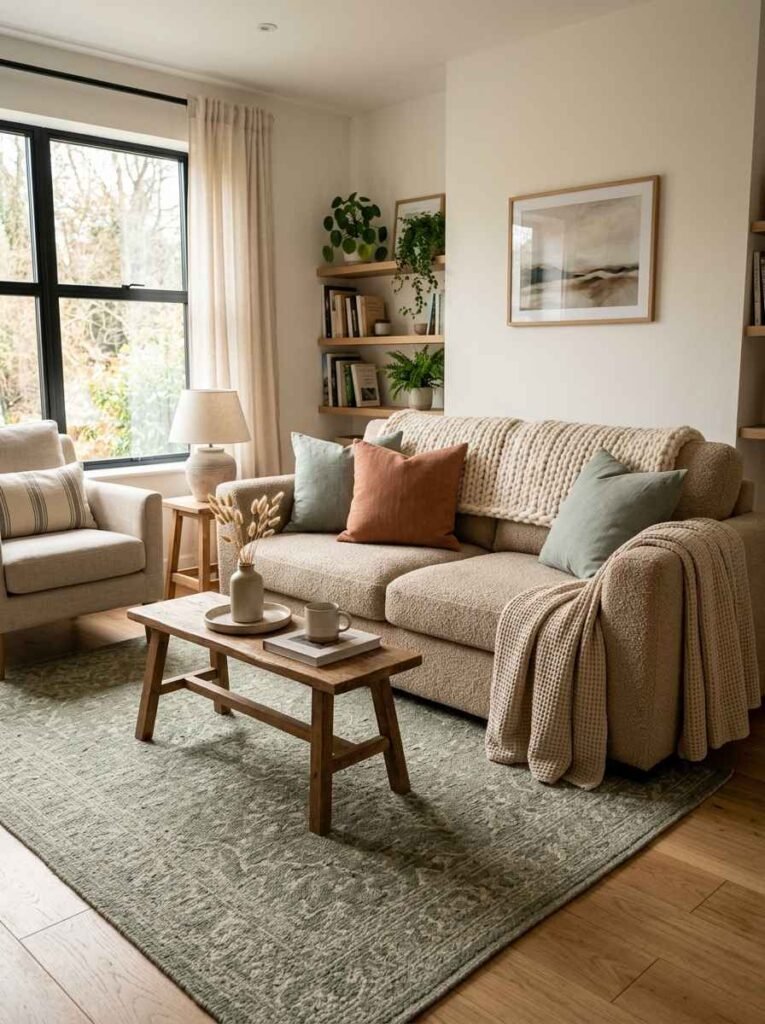
A sofa without throws and cushions looks like it’s waiting for something. You want 2-3 cushions maximum and one or two throws draped casually — not folded, not staged. Just lived-in.
Mix textures: cotton, waffle-knit, a bit of wool. Keep the palette tight. Three shades that sit next to each other on the color wheel. That’s it.
4. The Low Coffee Table Trick
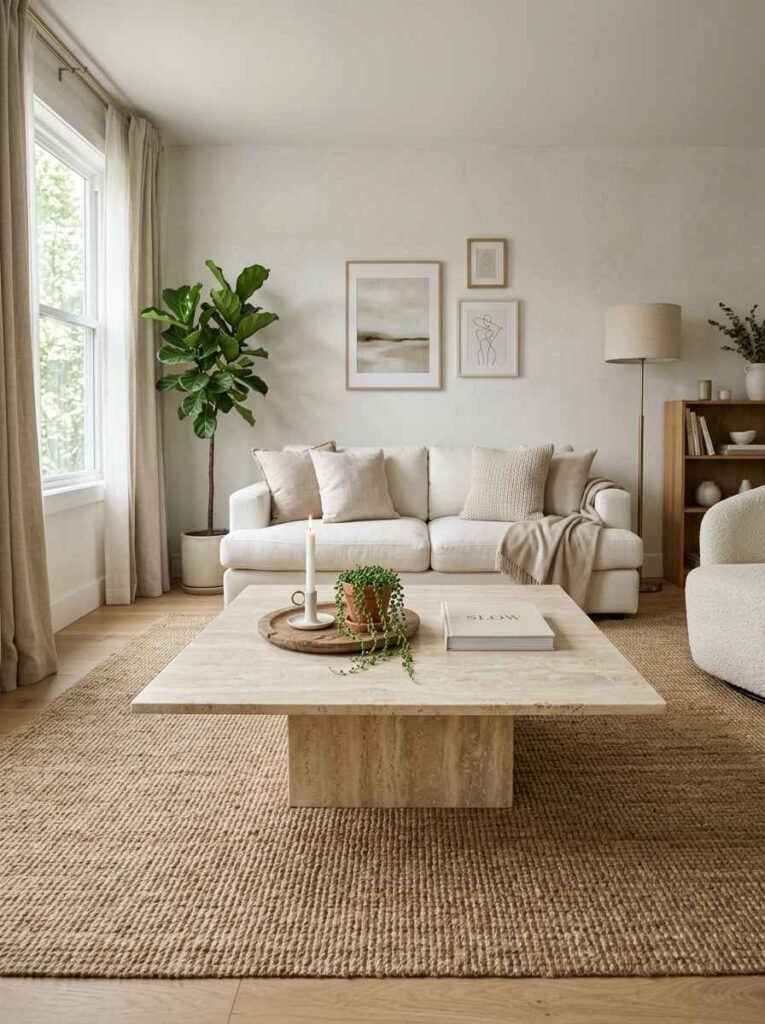
High coffee tables push energy upward and make rooms feel more formal. A low, wide coffee table — ideally in natural wood or travertine — anchors the seating area and keeps things grounded.
Put a small tray on it with 2-3 things. A candle, a small plant, one book you’re actually reading. That’s your styling done.
5. Natural Wood, Everywhere You Can
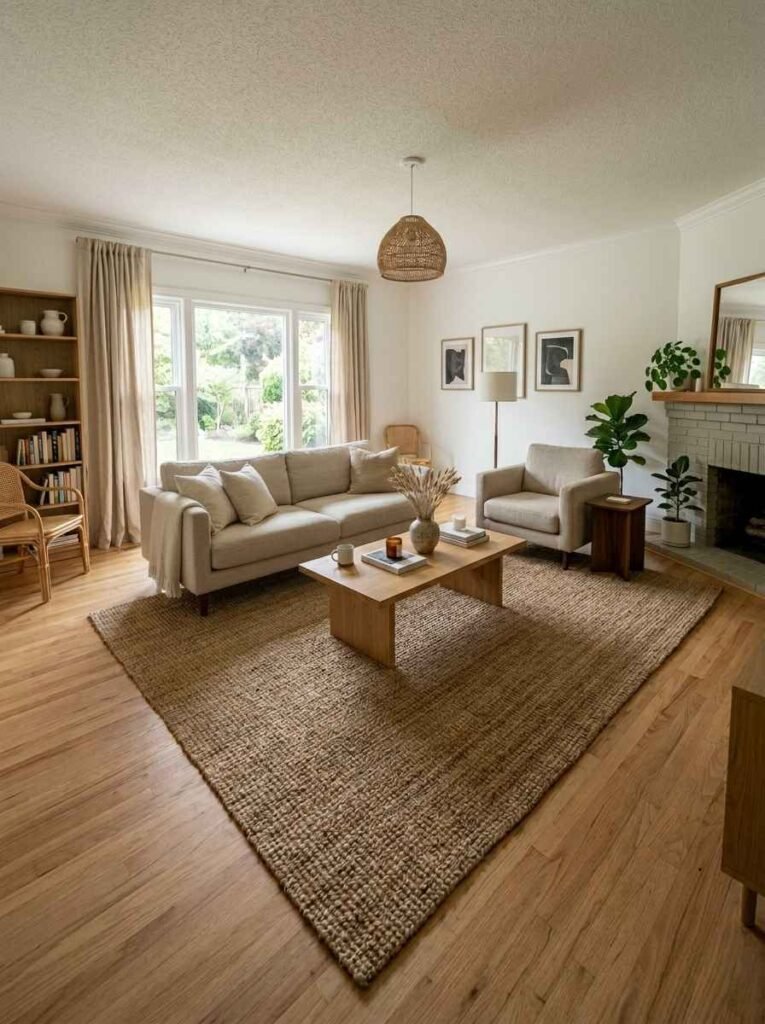
Wood is the fastest way to add warmth to a minimal space.
A wooden side table, a timber shelf, a light oak console behind the sofa. You want pieces that look like they came from the same forest, even if they didn’t.
Avoid mixing too many wood tones. Two max. Light oak and a slightly darker walnut can coexist. Three different finishes starts to look chaotic.
6. A Jute or Wool Rug as Your Foundation
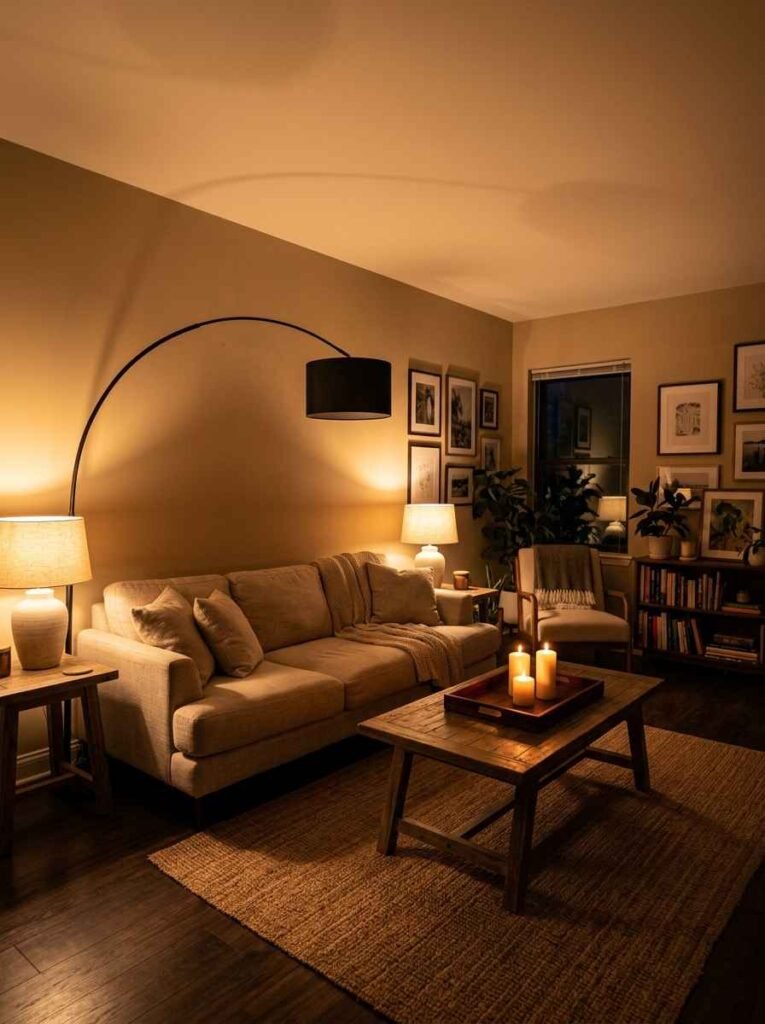
The rug defines the conversation zone. Go large — bigger than you think you need. In most living rooms, a 8×10 or 9×12 is the right call.
Jute rugs bring natural texture without visual noise. Wool rugs add softness underfoot that genuinely affects how the room feels at 9pm with dim lighting. Both work.
Jute is more casual; wool is a little more refined.
7. Reduce Your Light Sources, Then Add Layers
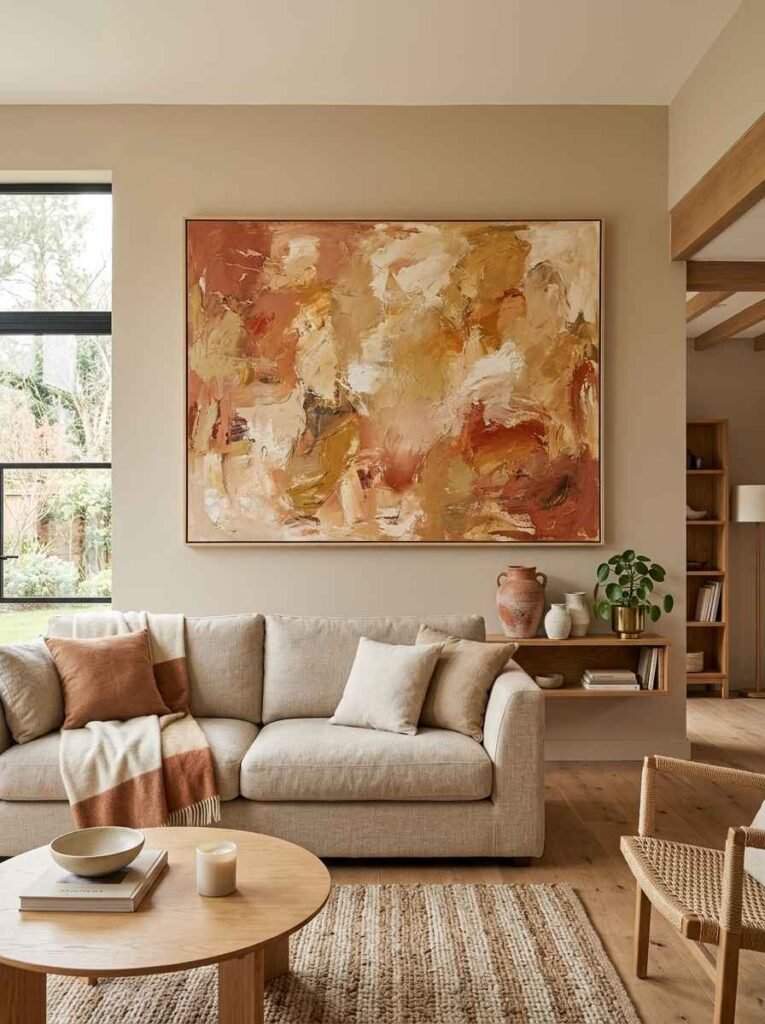
Overhead lighting is the enemy of cozy. If your overhead light is the only source in your living room, the space will never feel warm regardless of what else you do.
Add a floor lamp, two table lamps, and if possible, a few candles. Then dim everything. IMO, a $20 smart dimmer switch is one of the best small investments you can make for your living room.
8. A Single Large Piece of Art
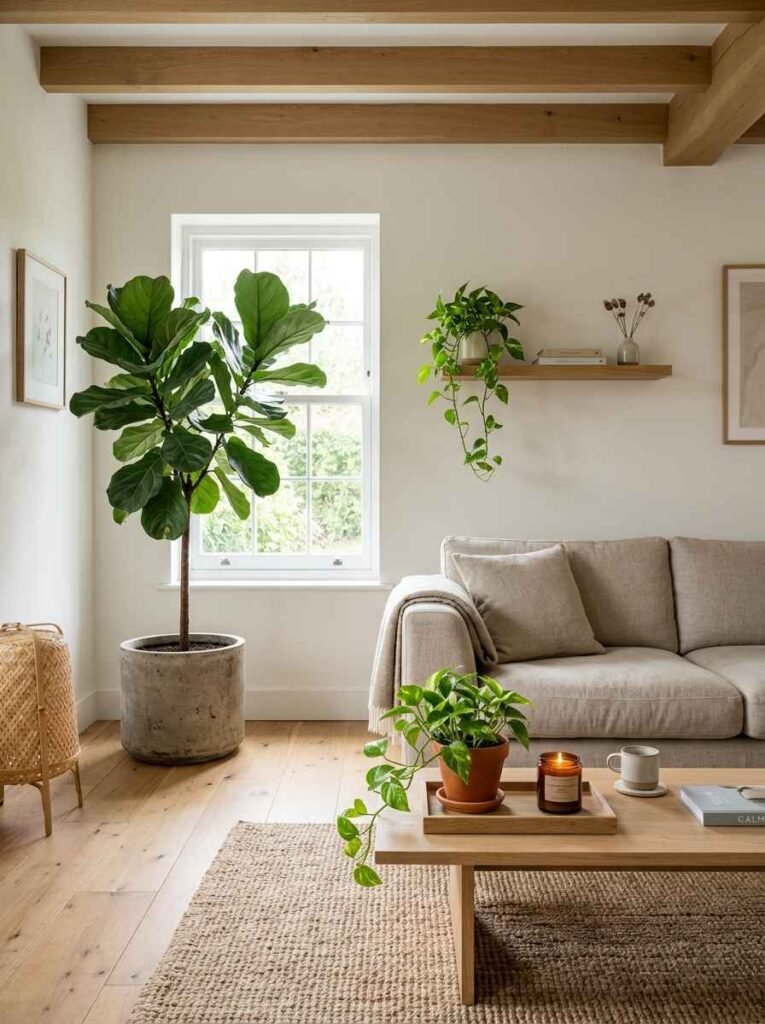
One large piece of art reads as intentional. A gallery wall with 11 frames reads as busy.
For minimalist cozy, go with one piece that’s big enough to make a statement — roughly two-thirds the width of your sofa.
Abstract art in warm tones works especially well. Terracotta, ochre, warm beige.
You can find incredible prints on Etsy for a fraction of gallery prices, and no one will ever know the difference.
9. Bring In Plants — But Not Too Many
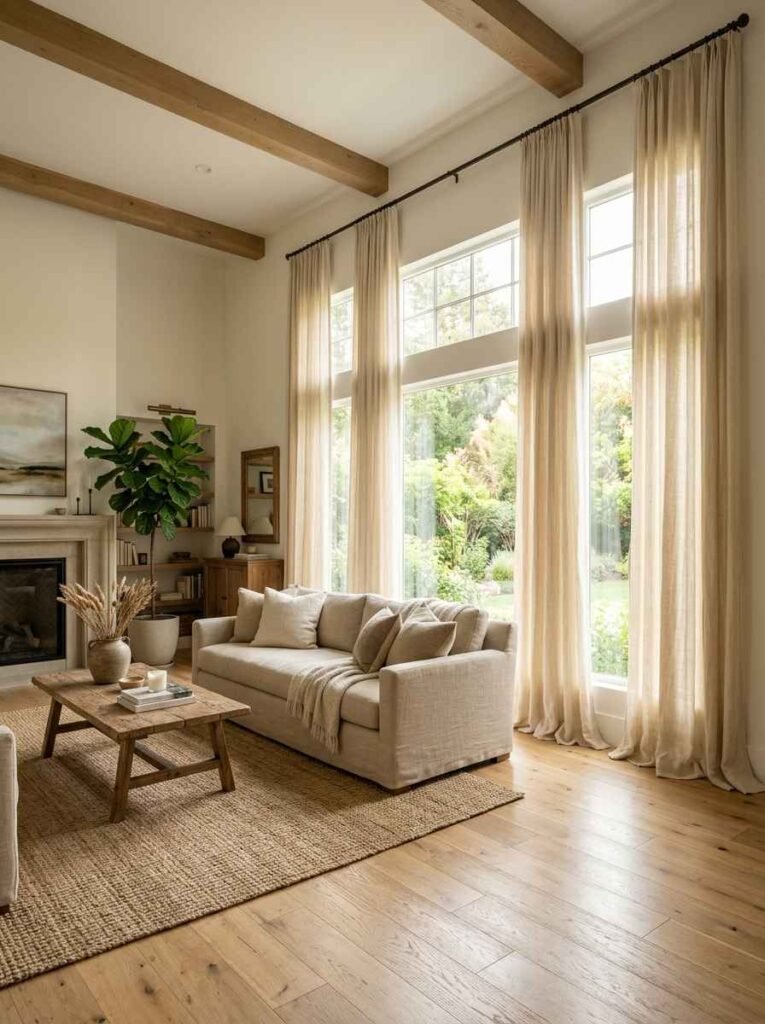
One large floor plant (a fiddle leaf fig, an olive tree, or a rubber plant) makes a huge visual impact. Add one or two smaller plants on shelves or the coffee table tray.
That’s enough. A forest of plants starts to compete with everything else you’re doing. You want the plant to feel like a considered addition, not a collection.
10. The Right Curtains Change Everything
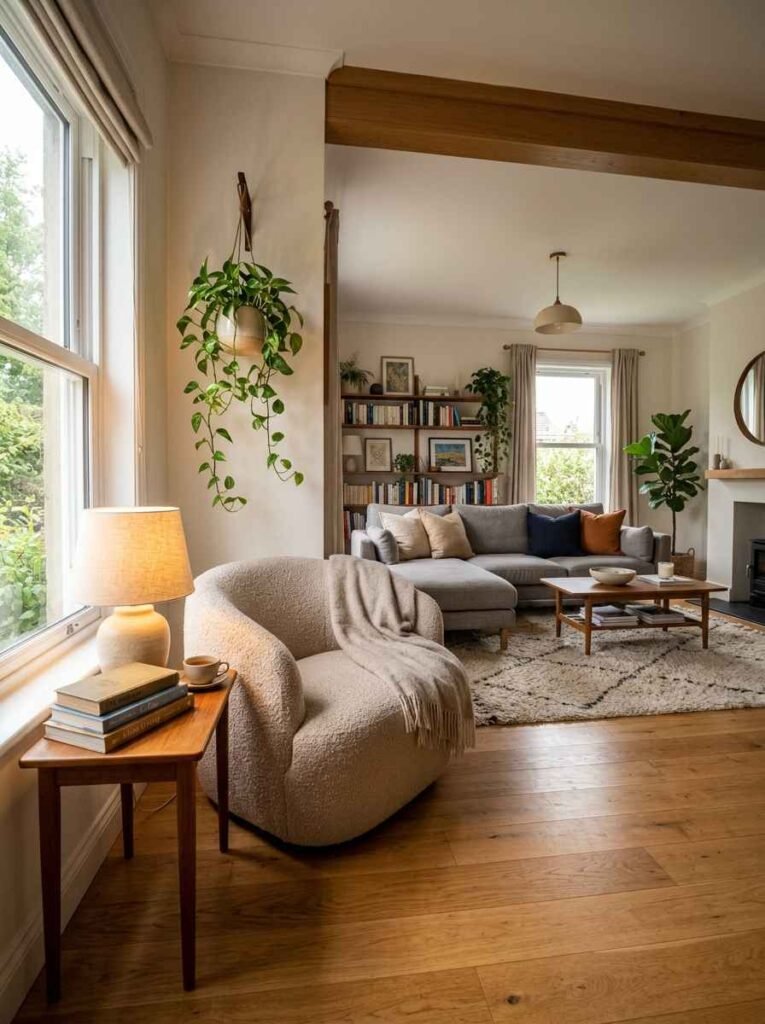
Floor-to-ceiling curtains hung close to the ceiling make rooms feel taller and more luxurious.
Go with linen in an off-white or warm cream. Let them pool slightly on the floor if you want that relaxed, lived-in look.
Avoid anything with a pattern unless you’re very confident. In a minimal space, patterned curtains tend to dominate. You want them to frame the room, not shout at it.
11. A Reading Nook If You Have the Space
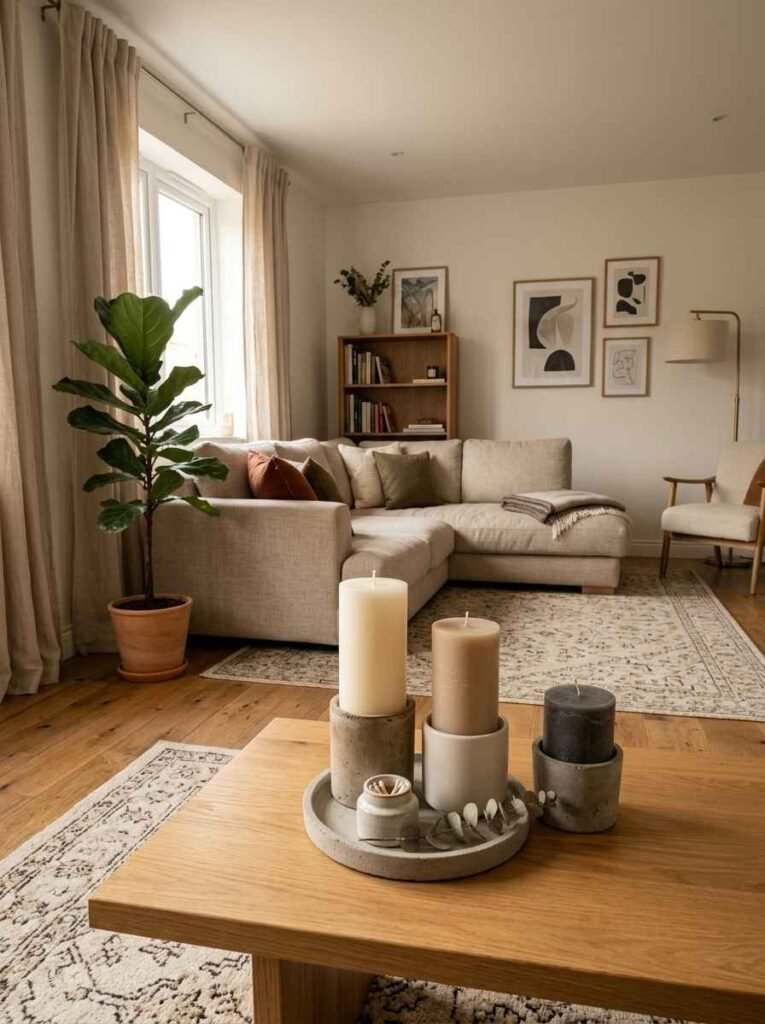
Even a corner with a single armchair, a lamp, and a small side table creates a micro-zone that makes the whole room feel more intentional. It signals that this is a space for actual life — for sitting, reading, being still.
If space is tight, a single curved chair in a corner does the job. You don’t need a whole bay window situation.
12. Candles as Decor and Function
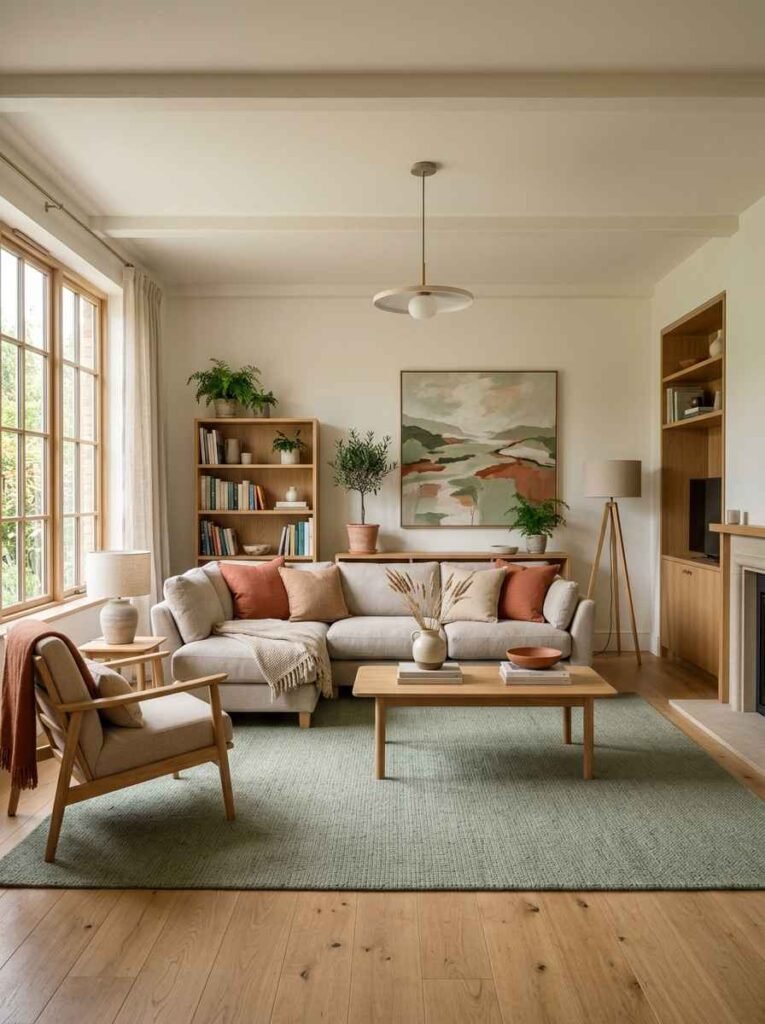
Candles do double duty. They look beautiful when unlit and transform the atmosphere when burning.
Choose candles in simple vessels — concrete, ceramic, clear glass. Scent matters too: cedar, sandalwood, or something warm and slightly smoky works well in living rooms.
Keep them grouped in odd numbers on your coffee table tray or shelf. Three candles in varying heights look considered. Two looks accidental.
13. Limit Your Color Palette to 3-4 Tones
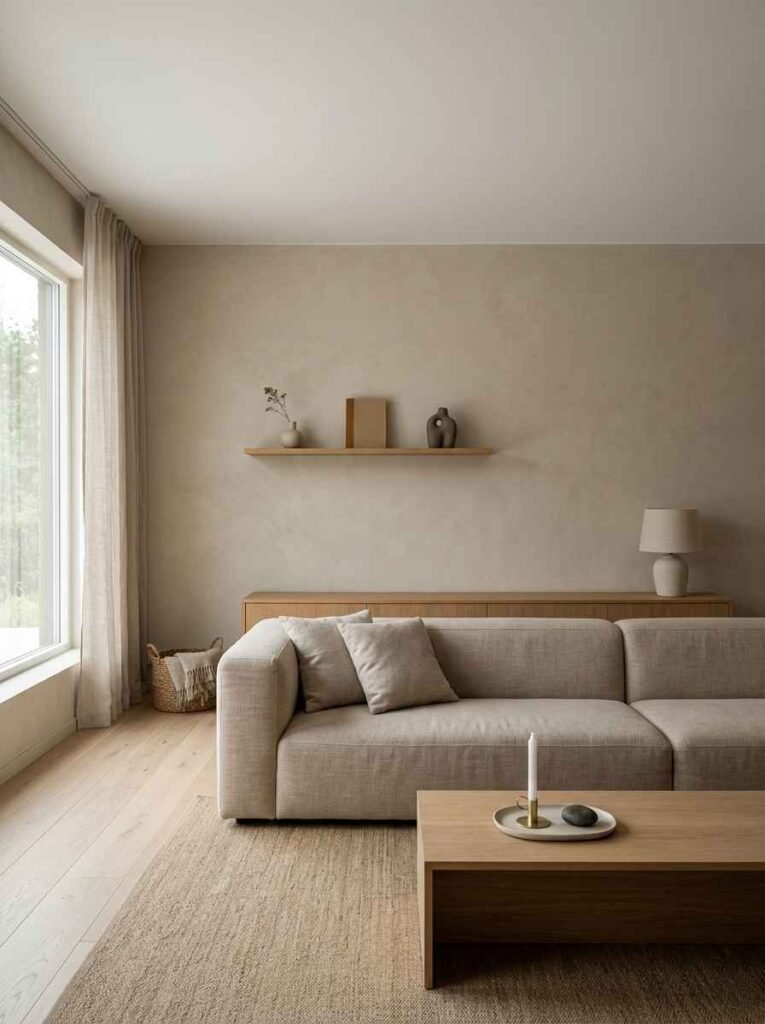
This one single rule prevents 80% of decorating mistakes. Pick your base (usually a warm neutral), one mid-tone (clay, sage, dusty blue), and one accent that appears sparingly.
Here’s a simple palette guide to make this easier:
| Palette Role | Example Color | Where to Use |
|---|---|---|
| Base | Warm white / putty | Walls, large sofa |
| Mid-tone | Soft sage or clay | Cushions, rug |
| Accent | Terracotta or ochre | Throws, small objects |
| Neutral link | Natural wood / jute | Furniture, rug texture |
Stick to this and the room will feel cohesive even as you add pieces over time.
14. Keep Surfaces 70% Clear
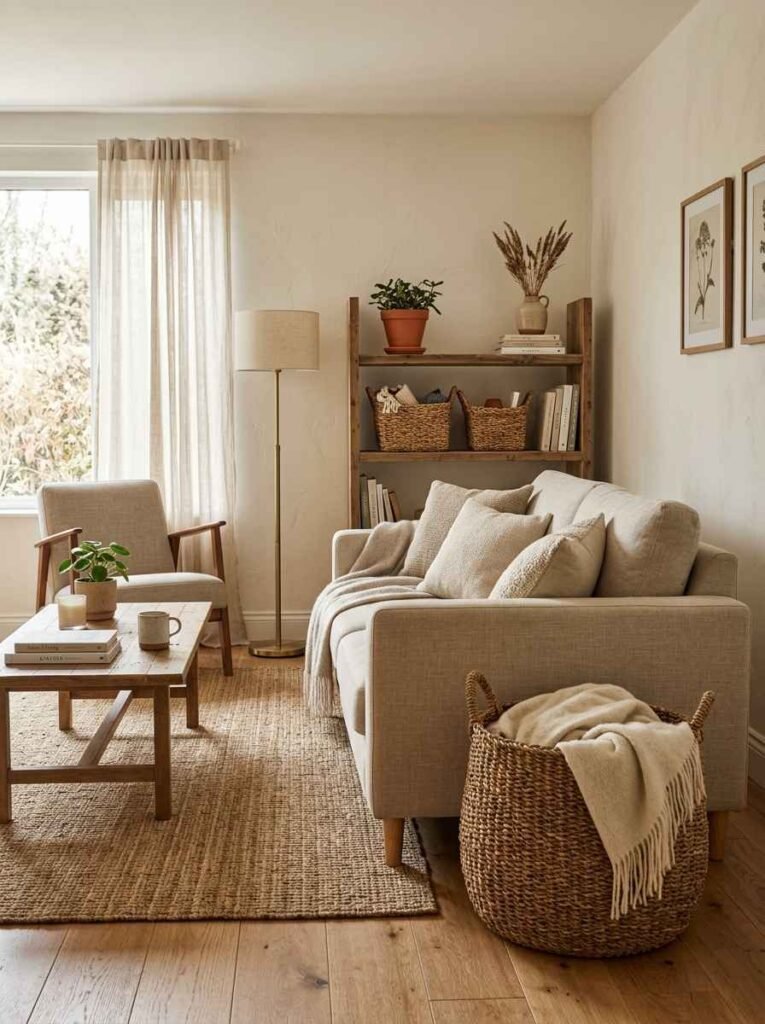
This is the discipline part. On any surface — a shelf, a console, a coffee table — keep roughly 70% of it clear. The items you do place should have breathing room around them.
This is harder than it sounds, especially if you have things you love. But the restraint is what makes each object feel significant rather than cluttered.
15. Woven Baskets for Hidden Storage
Baskets let you have stuff without showing it. A large woven basket next to the sofa for throws, smaller ones on shelves for remote controls and chargers.
They add texture while solving the clutter problem simultaneously.
Seagrass and water hyacinth baskets are the most versatile — they work across different aesthetics without fighting anything.
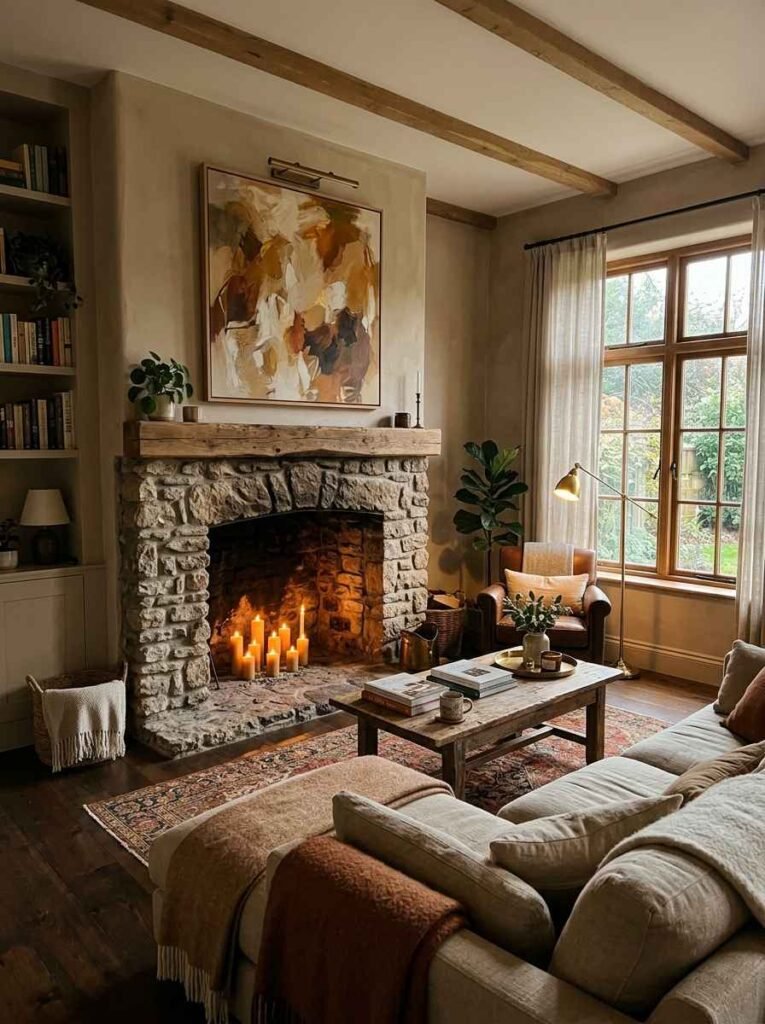
16. A Fireplace or the Illusion of One
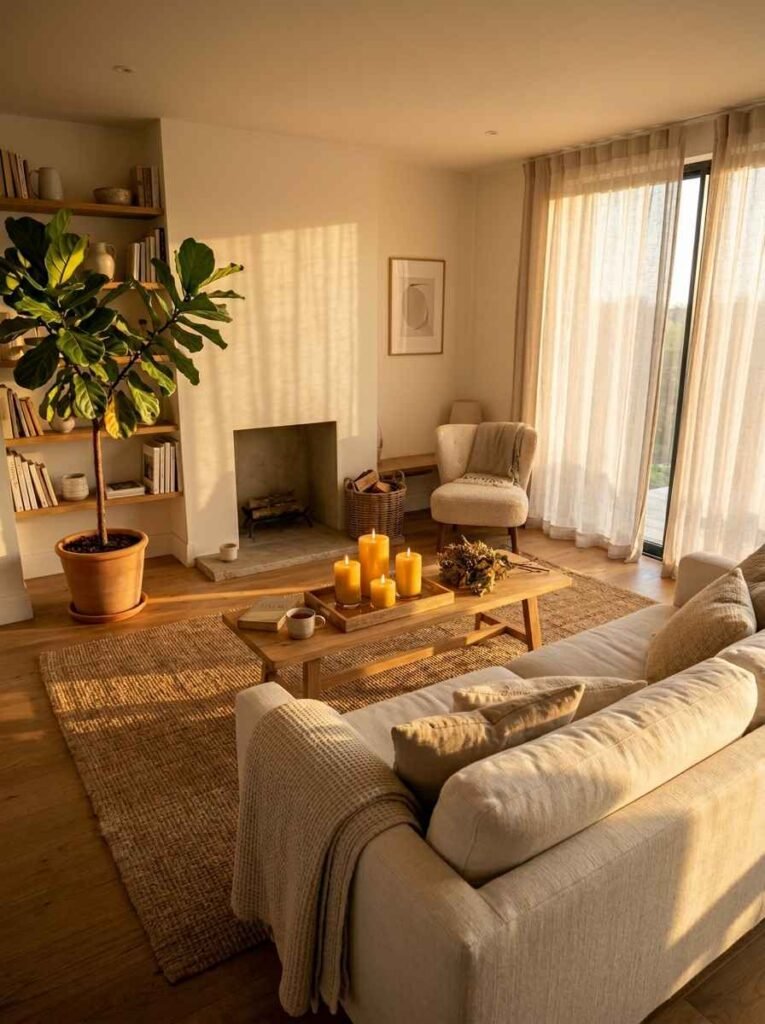
If you have a fireplace, use it as the focal point of the room. Everything should orient toward it. If you don’t — and here’s something I discovered when
I was setting up my current place — an electric fireplace insert in an existing alcove can look shockingly convincing.
Or you go the candle route and cluster a bunch of pillar candles in a hearth-like arrangement. A bit theatrical, admittedly, but it works on cold evenings.
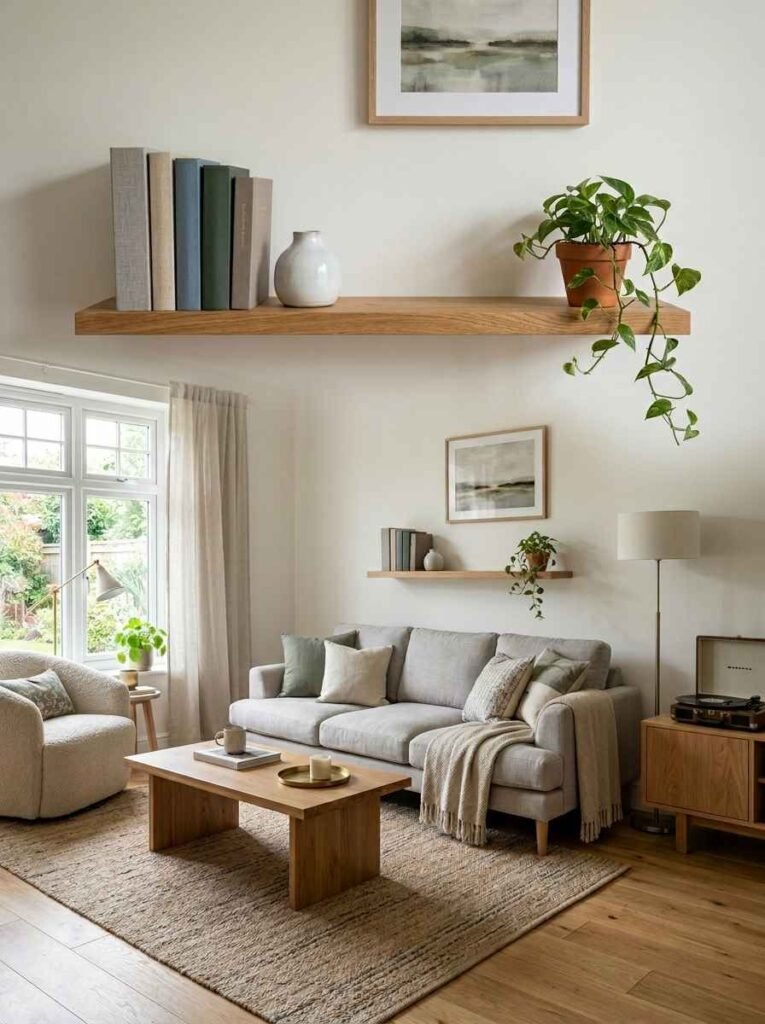
17. Thoughtful Shelf Styling
A shelf with books spine-out, two small objects, and a trailing plant is the entire brief. You don’t need more than that. The mistake most people make is treating shelves as storage. They’re display space.
Remove half of what’s on your shelves right now. Seriously. Then style what remains with breathing room between groups of objects.
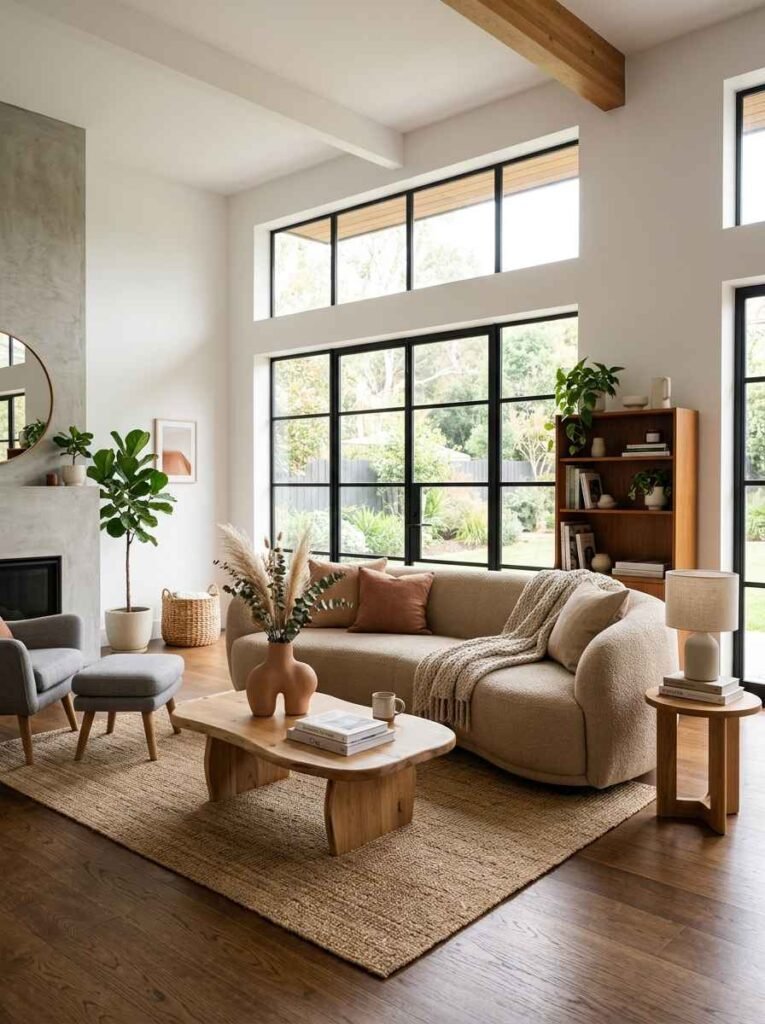
18. Organic Shapes Over Perfect Geometry
Perfectly geometric rooms can feel a bit corporate. Organic shapes — a curved sofa, a rounded coffee table, a blob-shaped vase — soften the minimalism and make spaces feel more human.
The combination of a clean, simple space with one or two organically shaped pieces is genuinely pleasing. There’s real design theory behind why this works (contrast + harmony), but you’ll feel it before you intellectualize it.
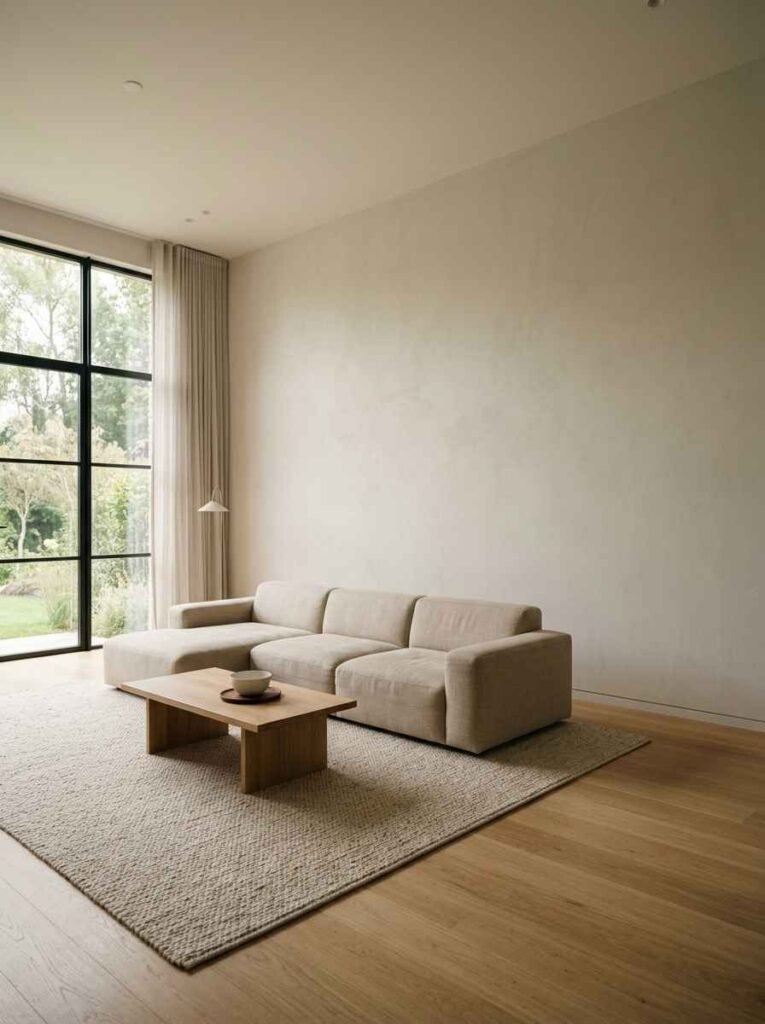
19. The Power of Negative Space
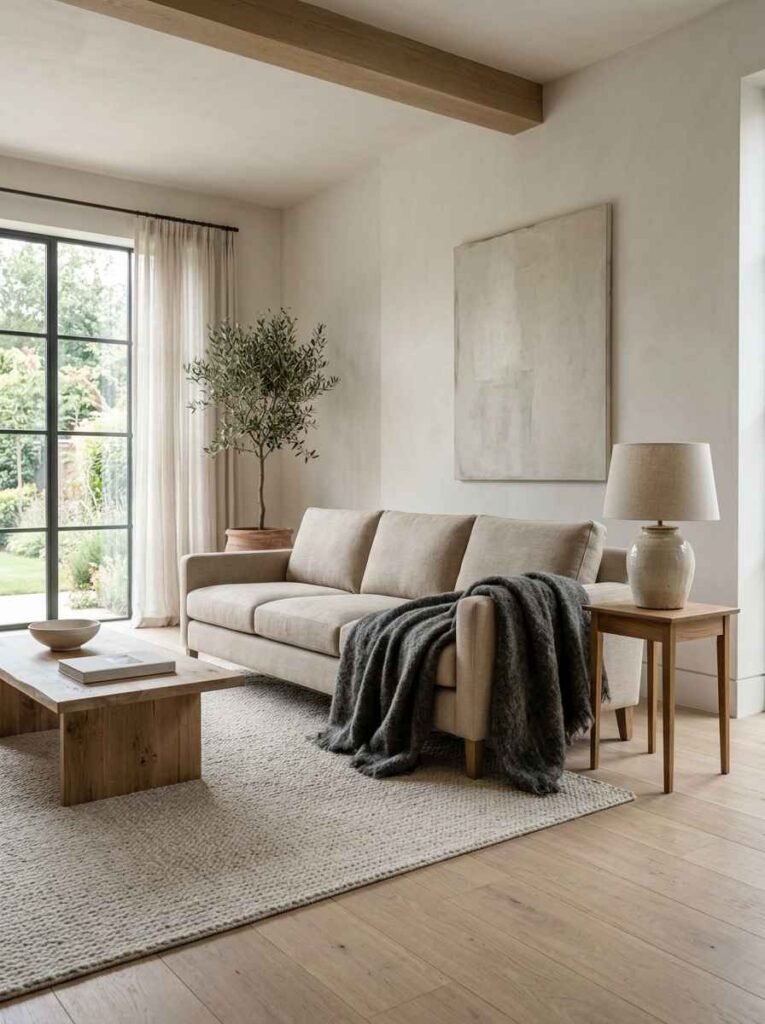
Wow. This sounds obvious but it genuinely took me years to fully get this: empty space is part of the design. The wall you leave bare is doing as much work as the art you hang.
Let corners breathe. Let some wall sections remain untouched. The room will feel intentional rather than under-decorated.
20. Quality Over Quantity, Always
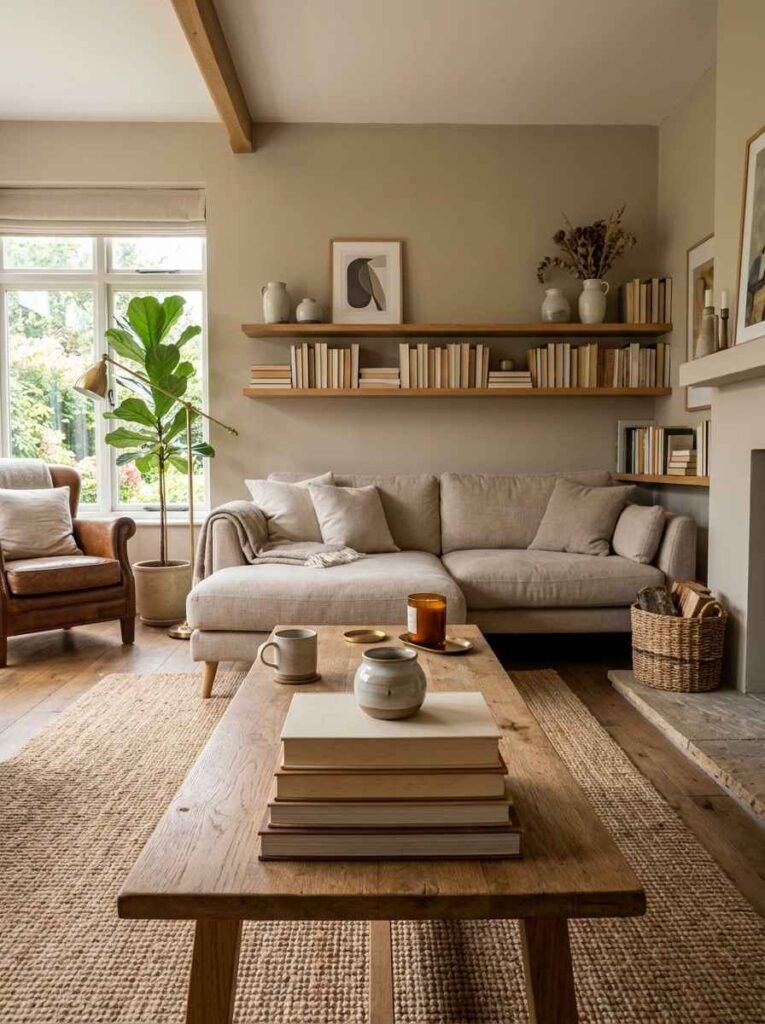
One really good lamp beats three cheap ones. A single well-made throw blanket from Faribault or Pendleton beats five fast-fashion versions. This isn’t about spending more — it’s about spending better on fewer things.
The minimalist cozy aesthetic actually saves money long-term because you stop impulse buying things that don’t fit and start waiting for the right piece.
21. Books as Decor
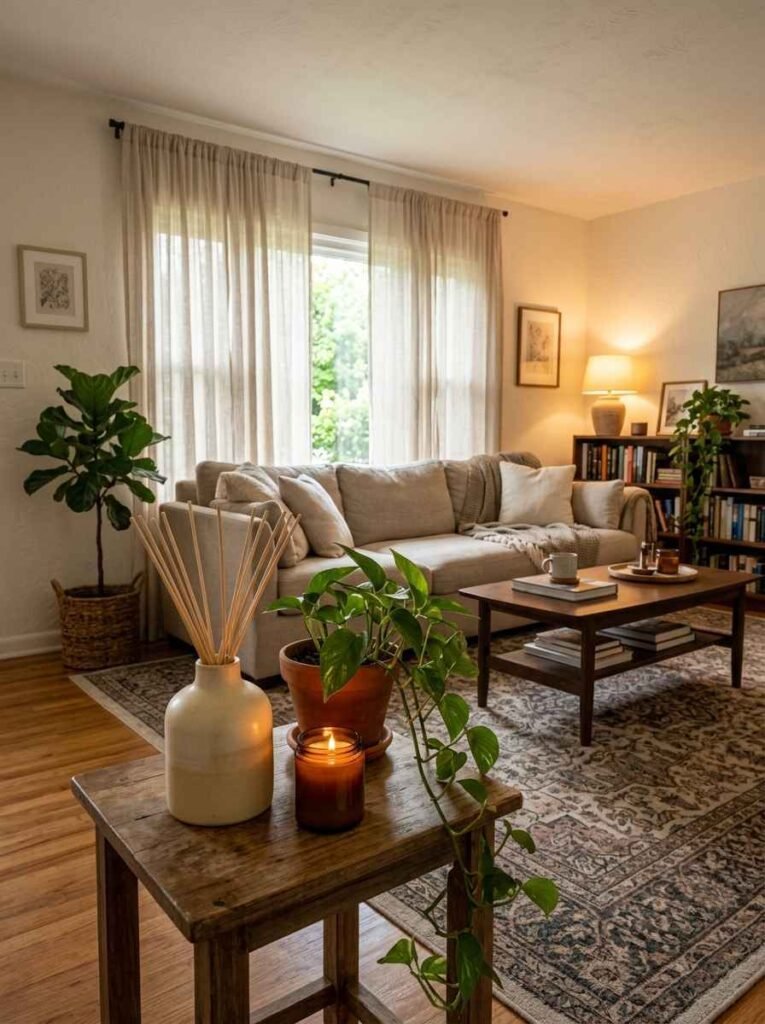
A small curated stack of books on a coffee table or shelf is one of the easiest ways to add personality without cluttering a space. Keep them related in size.
Remove the dust jackets for a cleaner look (yes, this is a thing people do, and yes, it actually looks better).
Stack 3-4 books horizontally, put a small object on top. Done. You’ve styled a surface.
22. Scent as the Invisible Layer
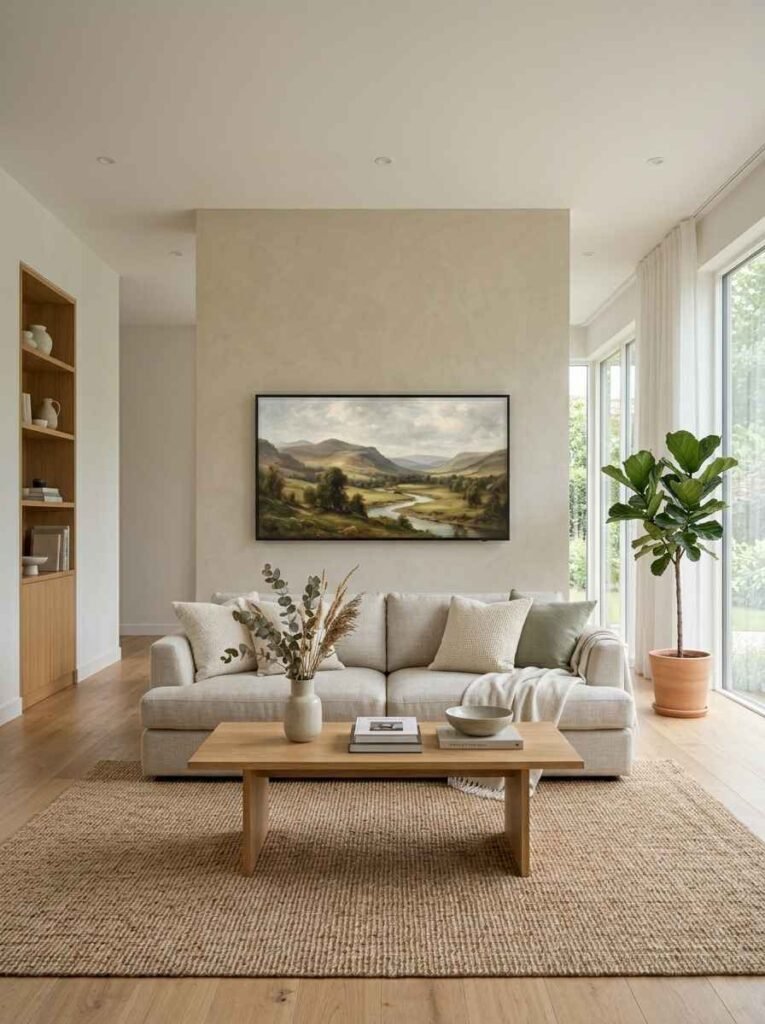
This is the detail most people forget. The way a room smells affects how it feels more than most people realize.
A room diffuser with warm, grounding scents (sandalwood, amber, vetiver) completes the atmosphere in a way that no amount of visual styling fully replicates.
It’s also one of those things that guests notice without knowing what they’re noticing. They just think the room feels really nice.
23. Keep Technology Invisible
TVs, cable boxes, routers — they’re necessary but visually noisy. Mount your TV on the wall (it looks cleaner than a stand). Hide cables. Put the router in a closed cabinet or behind a plant.
A frame TV is genuinely worth considering for a minimalist space — it displays art when not in use and disappears into the room far better than a black screen does.
24. Linen, Everywhere You Can
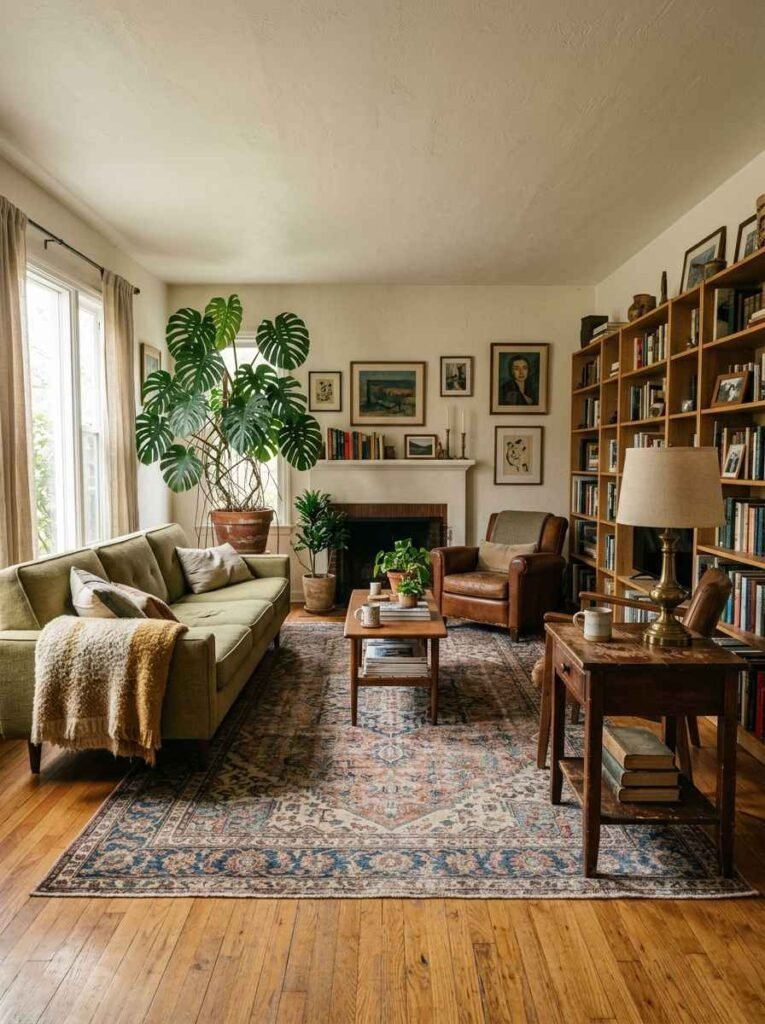
Linen as a fabric has this quality of looking slightly imperfect in a very good way. Linen cushions, linen curtains, a linen slipcover. It photographs beautifully and ages well.
It also reads as expensive without necessarily being expensive. There’s a reason it shows up in every warm minimalist space you’ve ever pinned.
25. Resist the Urge to Finish It All at Once
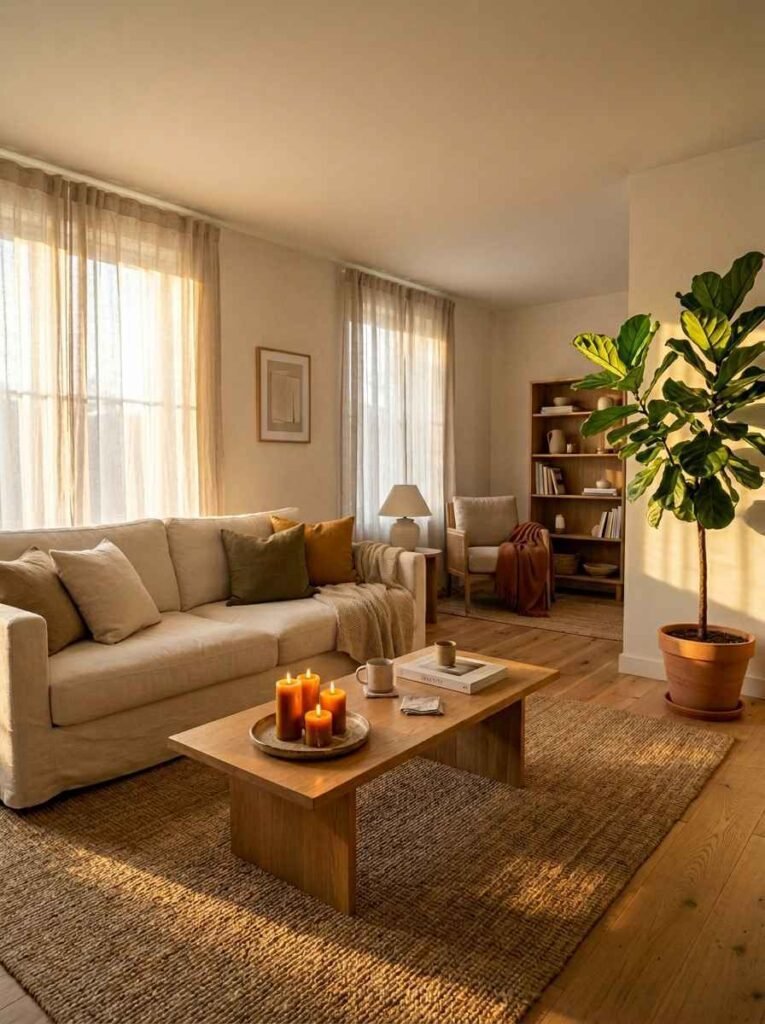
The best minimalist cozy rooms I’ve seen developed over time. They have a piece from a flea market, a lamp found at an estate sale, a plant that’s been growing for three years. They feel considered because they actually were — over months and years, not a weekend shopping spree.
Give yourself permission to live in the space before deciding what it needs. The room will tell you eventually.
Frequently Asked Questions
Q: How do I make a small living room feel cozy without making it feel cramped?
Scale everything down. A smaller sofa, a low coffee table, curtains that go ceiling-to-floor (which draws the eye up). Fewer pieces that fit the room properly will always beat more pieces crammed in. Mirrors help too — a single large mirror on one wall adds depth without visual weight.
Q: What’s the most important single change I can make for a cozier living room?
Lighting, by a wide margin. If you change nothing else, add two table lamps and a dimmer switch to your overhead light. Do this before you buy anything else. The transformation is immediate and it costs less than most throw blankets.
Q: Can I do minimalist cozy on a tight budget?
Yes, and arguably it’s easier. You’re buying fewer things. Spend your budget on one or two pieces that genuinely matter — a good rug, quality curtains — and be patient about everything else. Thrift stores and Facebook Marketplace are excellent sources for wooden furniture and ceramic objects. The patina of second-hand pieces actually fits this aesthetic better than anything brand new.
A Few Links Worth Bookmarking
For rug inspiration and sizing guides, Ruggable’s living room guide (ruggable.com) breaks down the math in a practical way. For art that won’t bankrupt you, Society6 and Desenio both have strong collections of abstract prints in warm tones. And if you want to go deeper on the warm minimalism aesthetic, Apartment Therapy’s minimalist living room archive is genuinely one of the best free resources on the internet.
Final Thought
Warm minimalism isn’t a design style you finish — it’s one you keep editing. You’ll live in your space, notice what bothers you, remove it. Notice what’s missing, find it slowly. The rooms that feel best are the ones that have been lived in and thought about over time.
Which of these 25 ideas are you planning to try first? Drop it in the comments — I’m genuinely curious which direction you’re taking your space.
