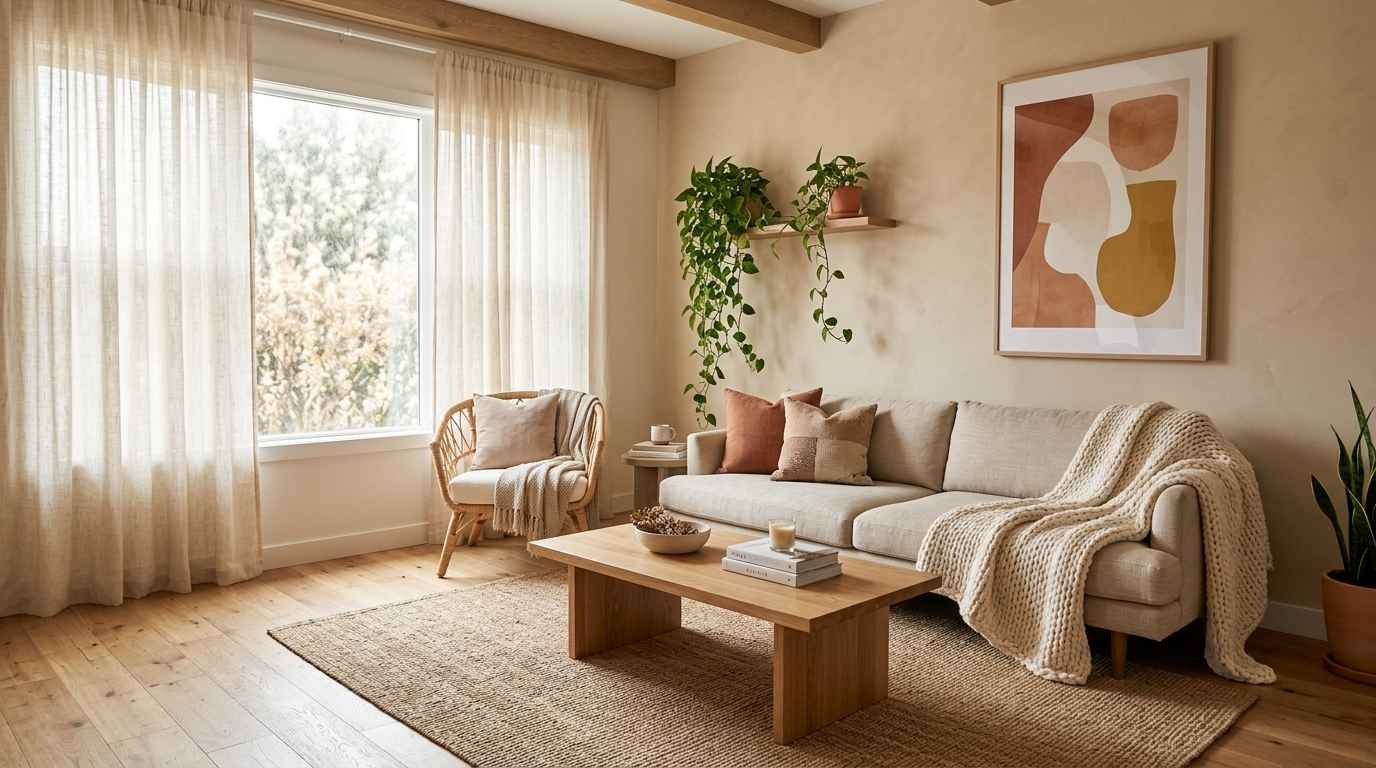
If your living room feels like it’s stuck between “too much stuff” and “weirdly cold and sparse,” you’re not alone.
That awkward middle ground is where most of us live. But here’s the thing — boho minimalism is literally designed for that tension. It takes the warmth and texture of bohemian style and strips away all the clutter and visual noise.
What you get is a room that feels collected, calm, and genuinely livable.
I’ve spent way too many evenings on Pinterest falling down rabbit holes of living room inspo, and I can confidently say the boho-minimalist crossover is having a proper moment right now.
These ideas aren’t just pretty to look at. They work in real homes, with real budgets, and they hold up over time. Let’s get into it.
What Is Boho Minimalism, Exactly?
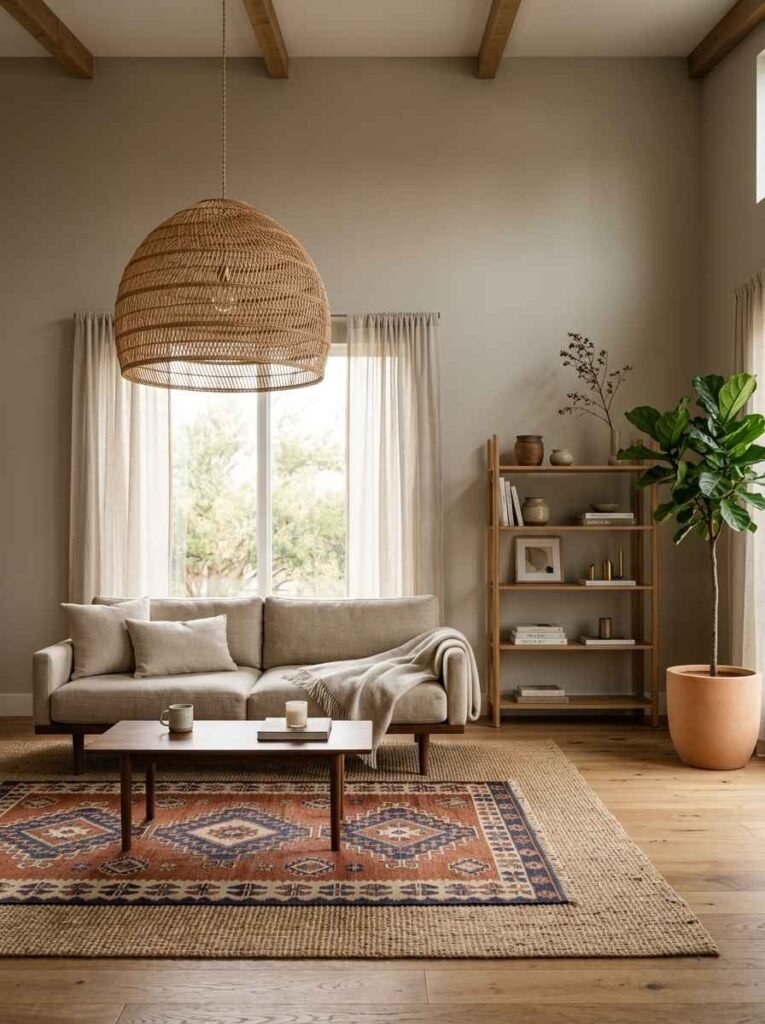
Before we get into the actual ideas, it helps to understand the aesthetic. Boho minimalism isn’t just “neutral colors + one plant.” It’s a design philosophy that picks from two schools of thought.
Bohemian design brings in natural materials, layered textures, handmade or artisan pieces, and a loose, collected feeling. Minimalism brings intentionality — fewer items, cleaner lines, lots of breathing room.
When you combine them well, you get spaces that feel rich without feeling chaotic.
Think warm neutrals, woven textiles, low-profile furniture, and negative space used on purpose. You’re not decorating a room. You’re editing it.
1. Start With a Warm Neutral Base
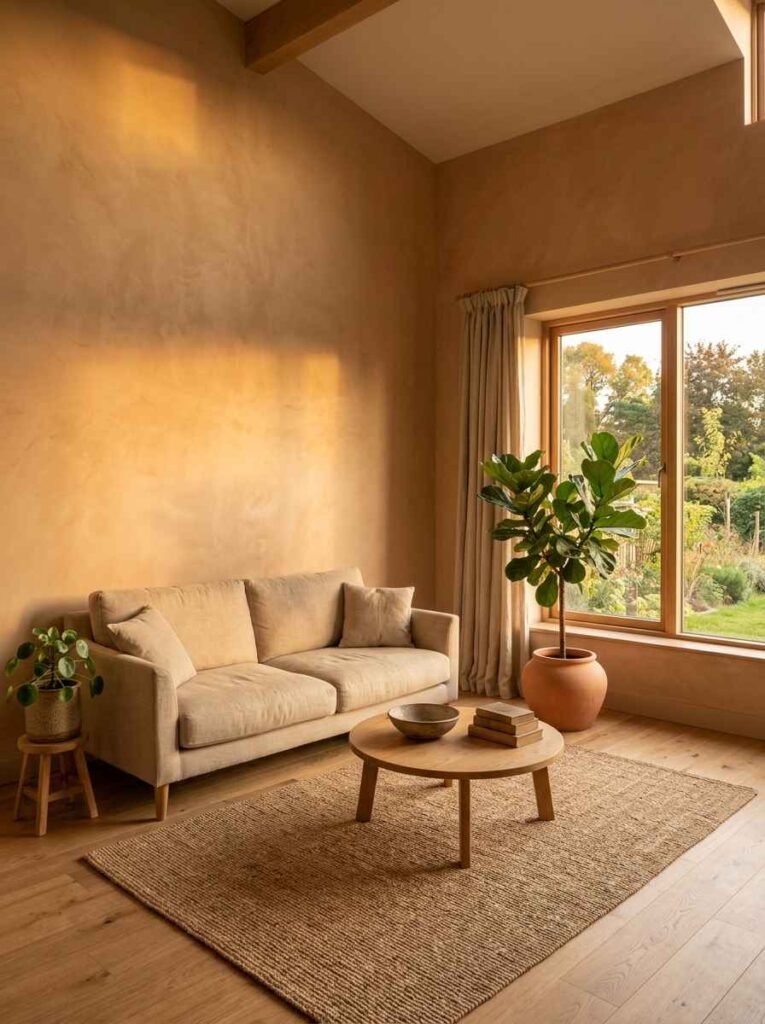
The foundation of any cozy boho minimalist living room is the wall color. Skip the stark white. Go warm.
Think linen, sand, warm greige, or a soft clay tone. These shades do heavy lifting — they make natural materials look richer, and they stop the room from feeling cold or clinical.
Farrow and Ball’s “Joa’s White” or Benjamin Moore’s “White Dove” with warm lighting are personal favorites.
If you’re brave, a warm terracotta accent wall reads incredibly well against minimal furniture.
2. Choose a Low-Profile Sofa
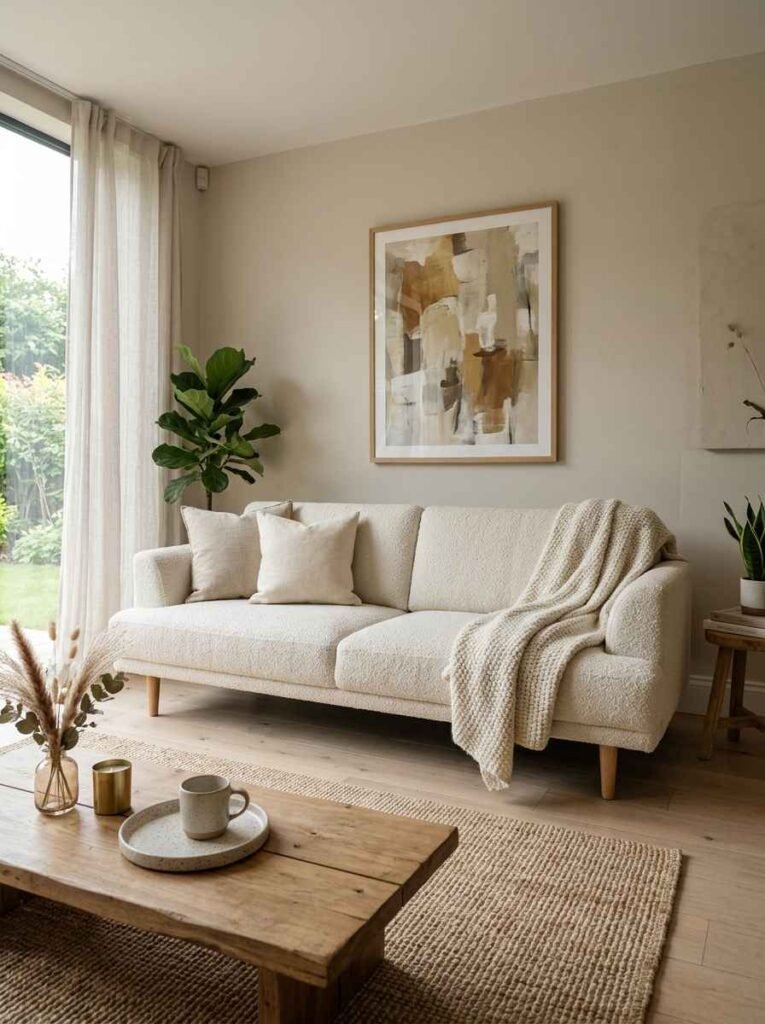
The sofa anchors the whole room, so this decision matters more than most people realize. In boho minimalist spaces, low-slung sofas work beautifully.
They create a horizontal, grounded feeling that makes the room feel bigger and more relaxed.
Look for sofas in natural linen, cotton canvas, or bouclé fabric. Stick to one color — ideally a tone that’s close to your walls.
This keeps the visual quiet that minimalism needs, while the texture does the boho work.
3. Layer Rugs Without Going Overboard
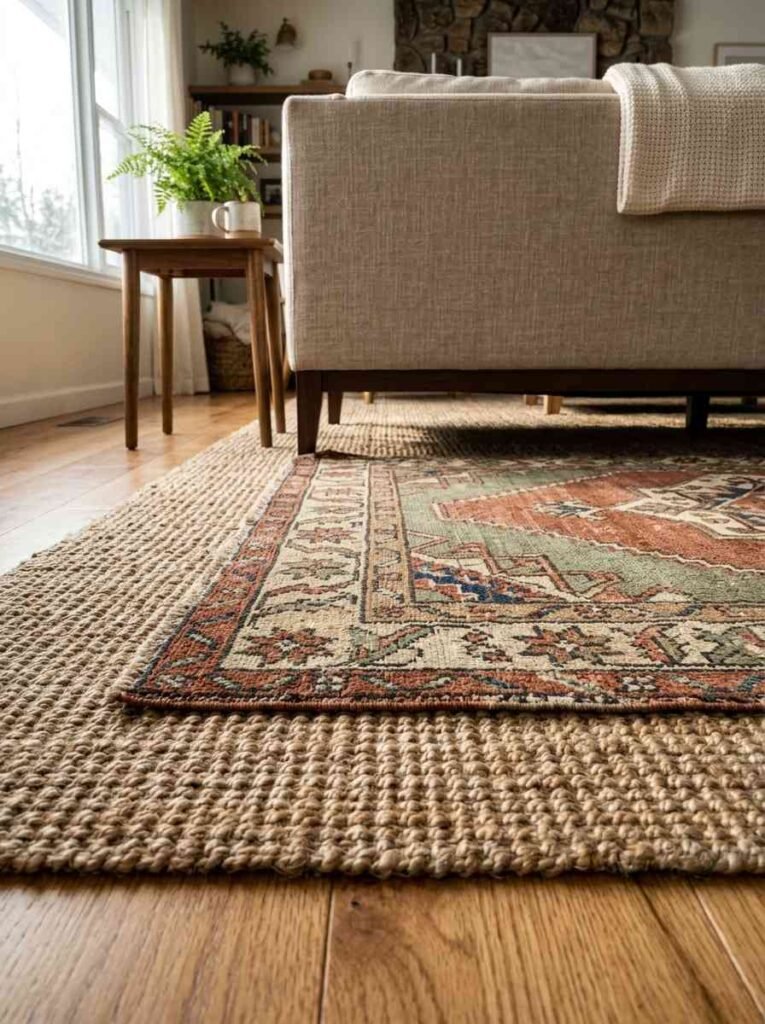
Layered rugs are a signature boho move, and they work in minimalist spaces if you’re disciplined about it.
Use two rugs at most. A larger jute or sisal rug as the base, and a smaller printed or kilim rug layered on top.
The key is keeping the furniture simple so the rugs don’t compete with anything. If your sofa is neutral and your coffee table is minimal, you can afford to let the rug have some personality.
4. Bring In Rattan or Wicker Furniture
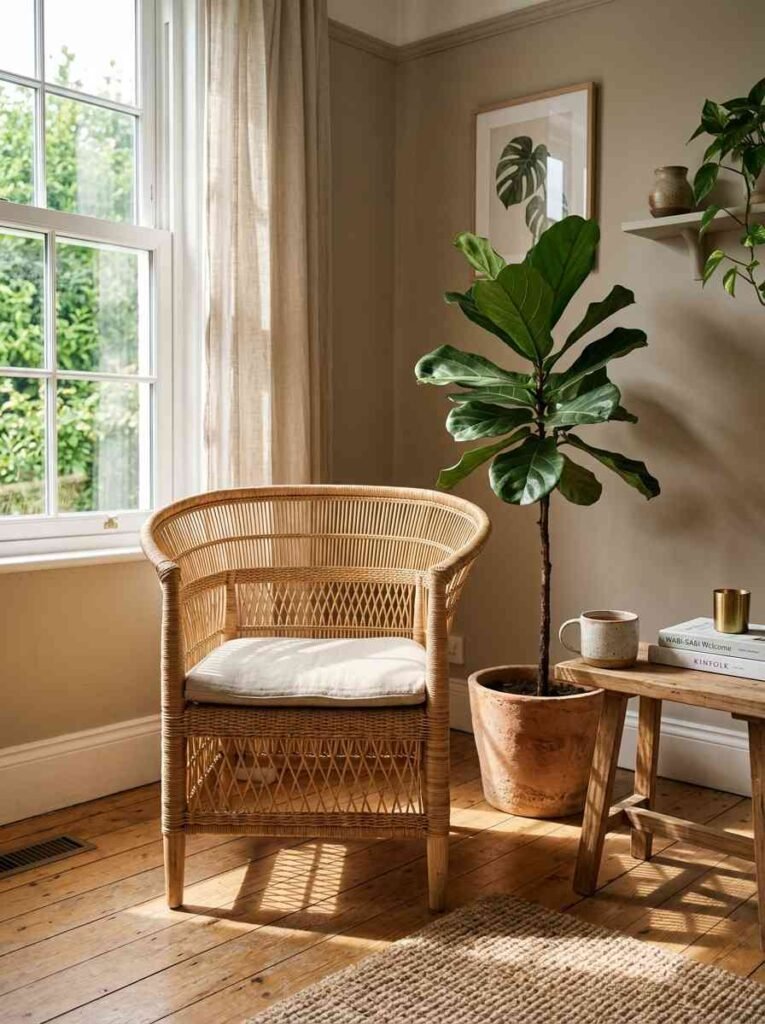
Rattan is having a renaissance, and honestly it deserves every bit of it.
A rattan chair or wicker side table adds that boho warmth without screaming “beach house.” Pair it with cleaner-lined pieces and it reads as considered rather than kitschy.
The contrast between the organic, irregular texture of rattan and the clean surfaces around it is exactly what makes this aesthetic work. One rattan piece per room is usually enough.
5. Use Linen Curtains for Softness
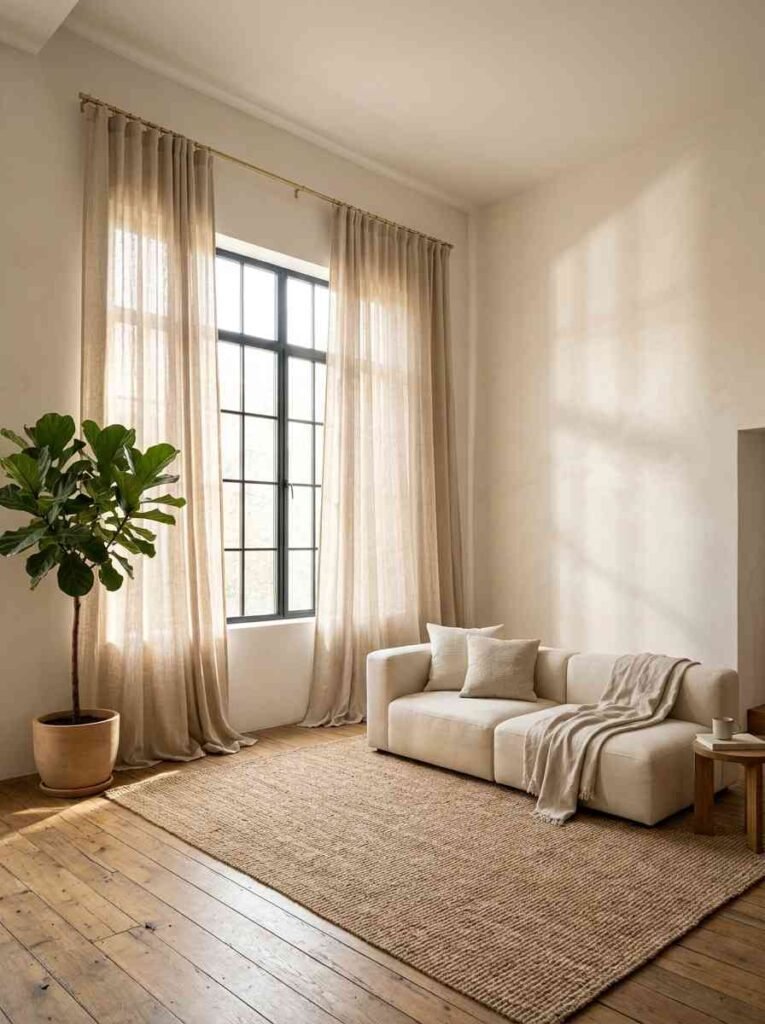
Window treatments make a huge difference in how a room feels. Heavy curtains can make a space feel small.
Blinds alone feel cold. Linen curtains hit a sweet spot — they filter light beautifully, move gently in any breeze, and add texture without visual weight.
Hang them high (close to the ceiling) and wide (beyond the window frame). This makes the ceiling feel taller and the windows feel larger.
Natural, undyed linen is ideal for boho minimalism.
6. Invest in a Statement Lighting Piece
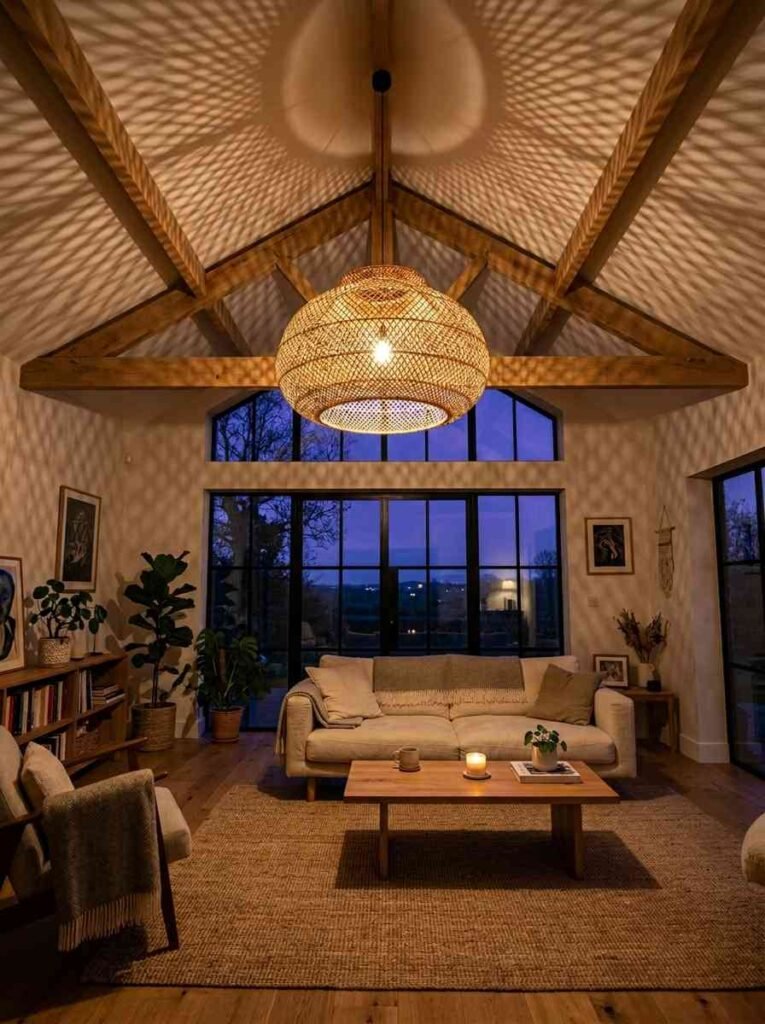
One sculptural light fixture can carry a whole room’s personality.
In boho minimalist living rooms, woven pendant lights, ceramic table lamps, or curved floor lamps with natural shades all work exceptionally well.
This is where you spend a little more and skip buying ten smaller decorative items. One great lamp beats a shelf full of forgettable tchotchkes every single time.
7. Keep Your Coffee Table Low and Simple
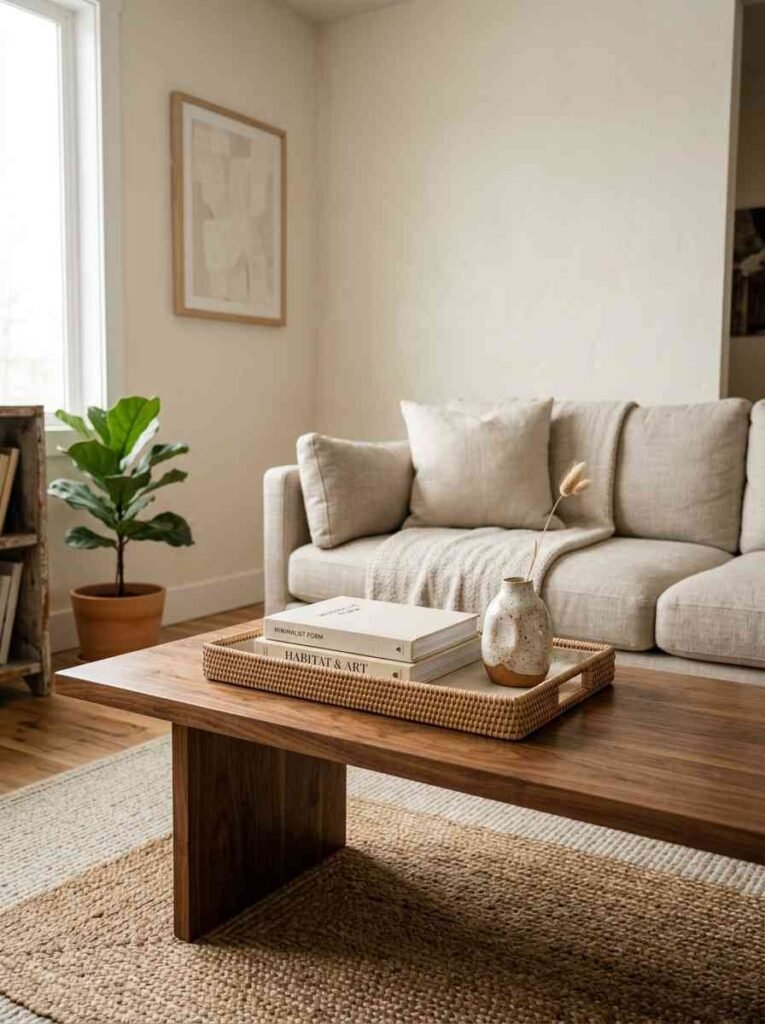
A low wooden coffee table — ideally solid wood with natural grain — reads perfectly in this aesthetic. Nothing with glass tops or ornate legs. Simple forms let the materials speak.
Style it with one tray, one or two books, and maybe a small ceramic object. That’s it. The restraint is the point.
Quick Comparison: Boho vs. Boho Minimalist Approach
| Element | Traditional Boho | Boho Minimalist |
|---|---|---|
| Color palette | Rich, jewel tones + neutrals | Warm neutrals, one or two earthy accents |
| Textiles | Layered, mixed patterns | 1-2 textures, mostly solid |
| Decorative items | Many, collected over time | Few, chosen with intention |
| Furniture | Eclectic, mixed eras | Cohesive, low-profile |
8. Add Plants, But Edit Yourself
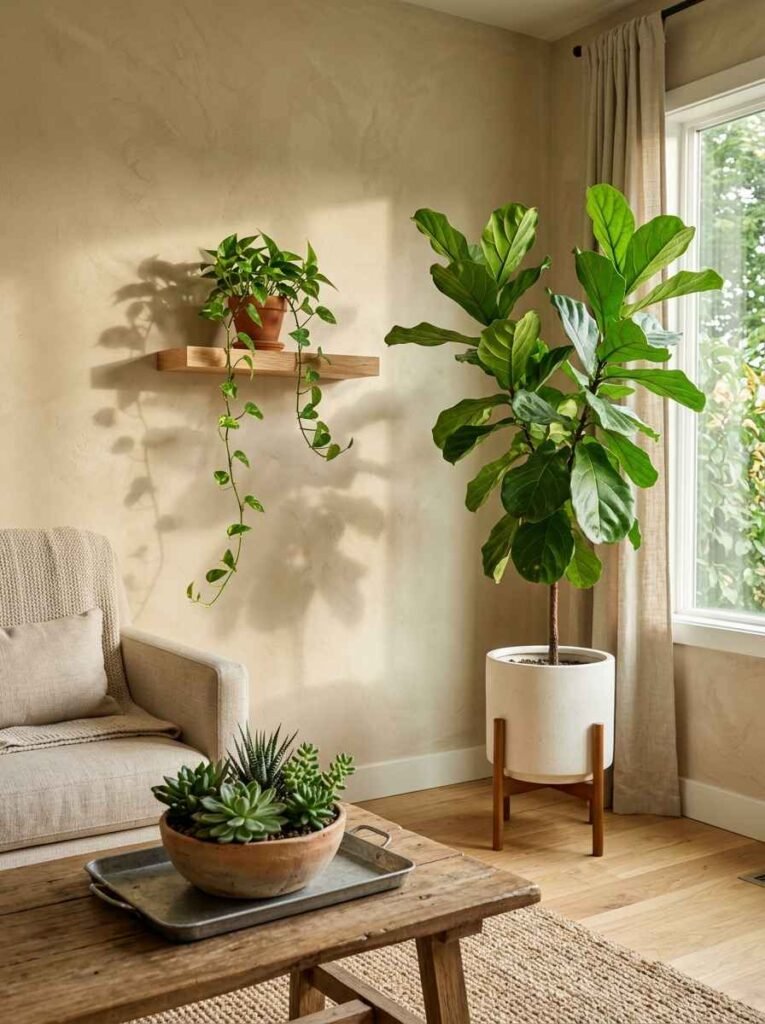
Plants are non-negotiable in boho spaces. But minimalism says you don’t need fifteen of them.
Pick three or four plants max, vary the heights, and choose interesting specimens over generic ones.
A fiddle leaf fig, a trailing pothos on a high shelf, and a small succulent cluster on the coffee table tray.
Done. You want the plants to feel intentional, like you put thought into their placement rather than just filling every corner.
9. Use Macramé Sparingly
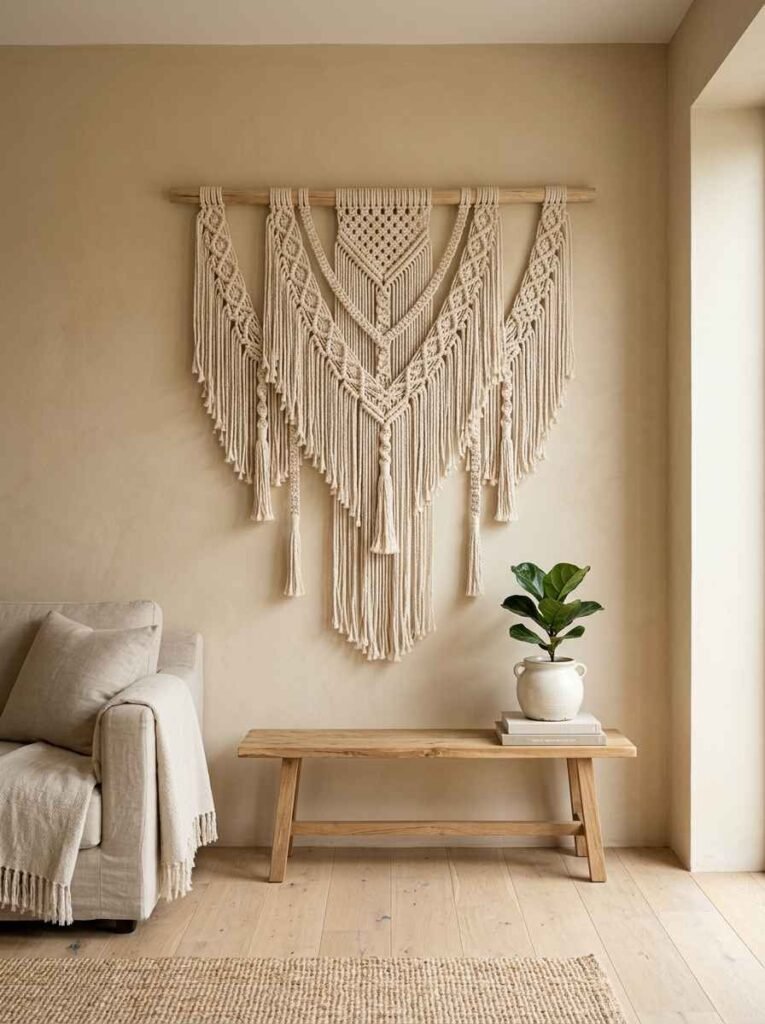
Macramé gets a bad reputation because people go way overboard with it. One well-placed macramé wall hanging or plant hanger is genuinely beautiful.
It adds handmade texture and a human quality that manufactured objects can’t replicate.
The operative word is one. Maybe two if your room is large and they’re in different zones. More than that and you’ve crossed into craft fair territory.
10. Choose Handmade Ceramics Over Generic Décor
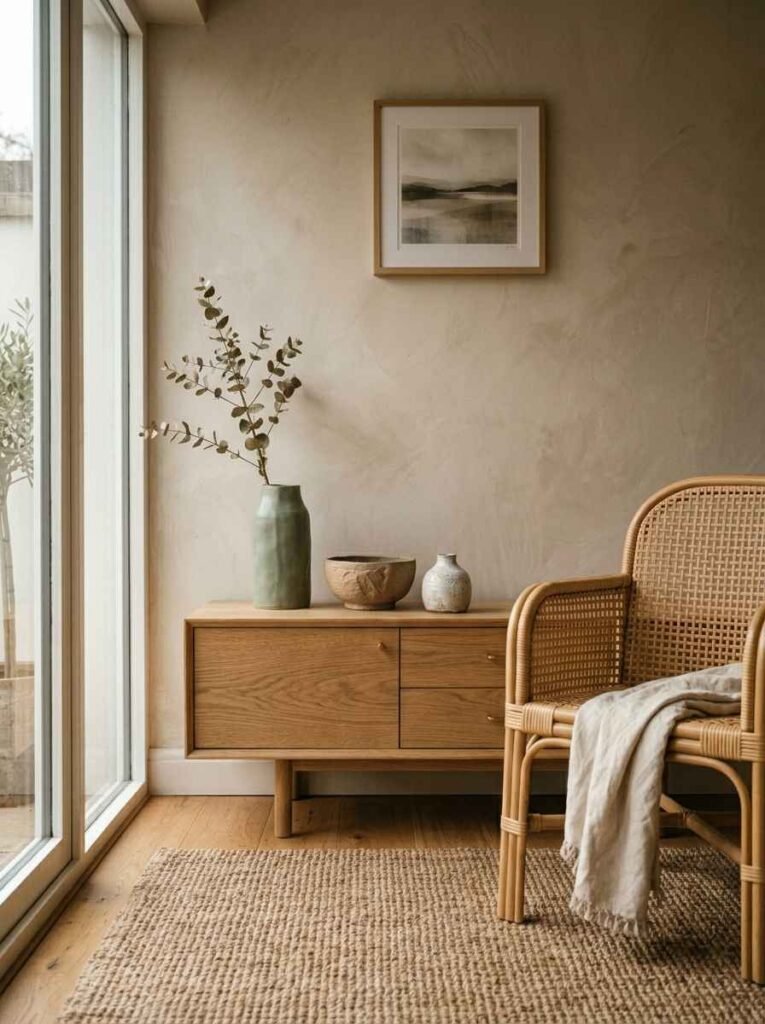
This is a small swap with a massive visual payoff. Replace store-bought vases and decorative objects with handmade ceramics.
Local potters, Etsy shops, or even secondhand markets are goldmines for these.
The irregularity and craft quality of handmade ceramics adds exactly the artisan warmth that boho minimalism needs.
A wonky vase with a matte glaze will always look more intentional than a perfect mass-produced one.
11. Build a Curated Bookshelf
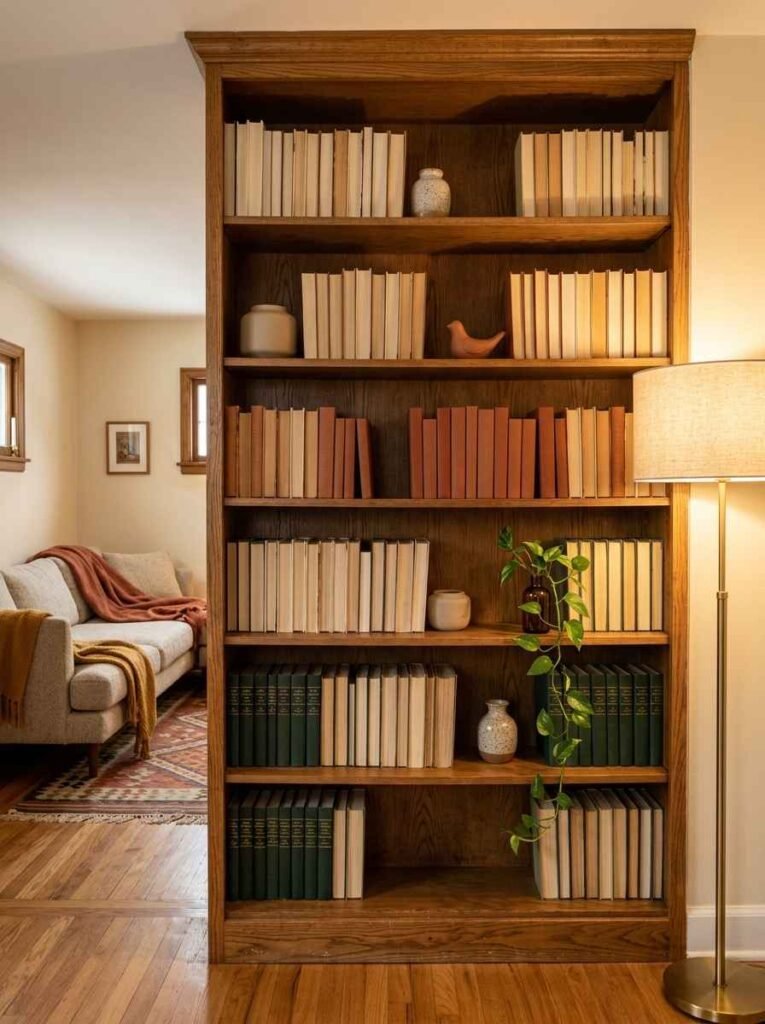
A well-organized bookshelf can be a stunning visual element in a boho minimalist room. The trick is editing ruthlessly.
Remove books with bright, clashing spines. Group by color. Add one or two small objects — a plant cutting, a ceramic — and leave some empty space.
Turning books spine-in is a controversial move, but honestly it looks incredible in this aesthetic. Your books become a texture rather than a collection of titles.
12. Embrace Negative Space
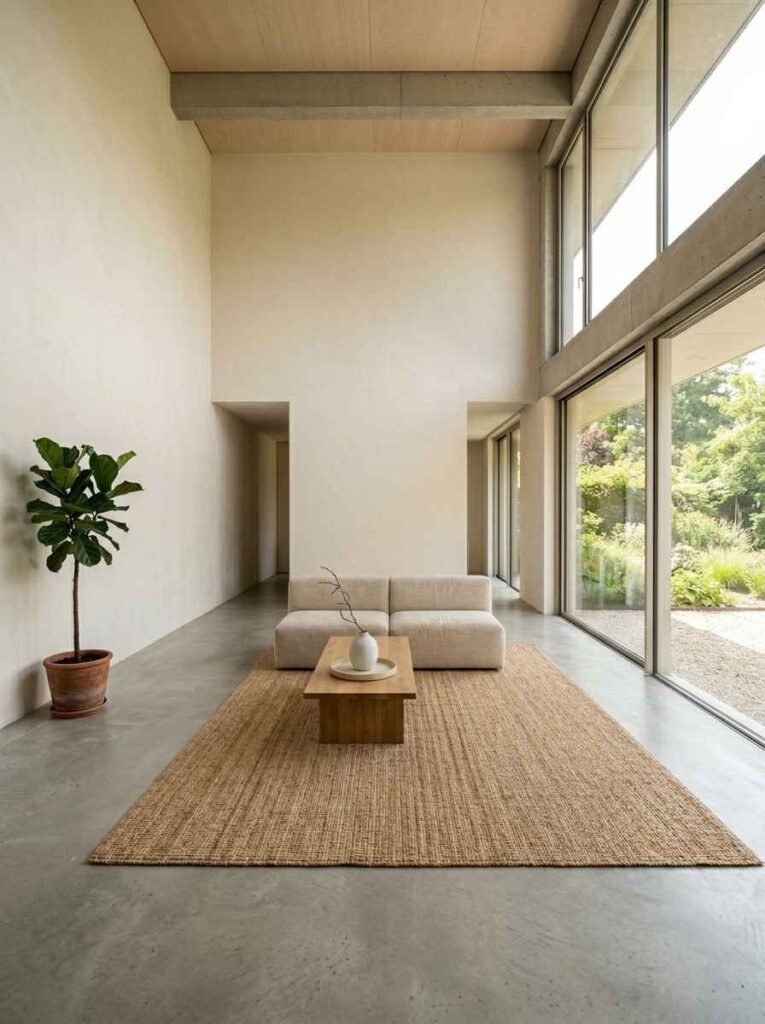
This might be the most important idea in this whole list. Negative space — areas in the room with nothing in them — is not emptiness.
It’s a design choice. It’s what makes everything else feel deliberate.
If every surface has something on it, nothing stands out. When you leave surfaces bare and walls undecorated, the pieces you do choose get all the attention they deserve.
13. Go For a Neutral Gallery Wall (Or Skip It Entirely)
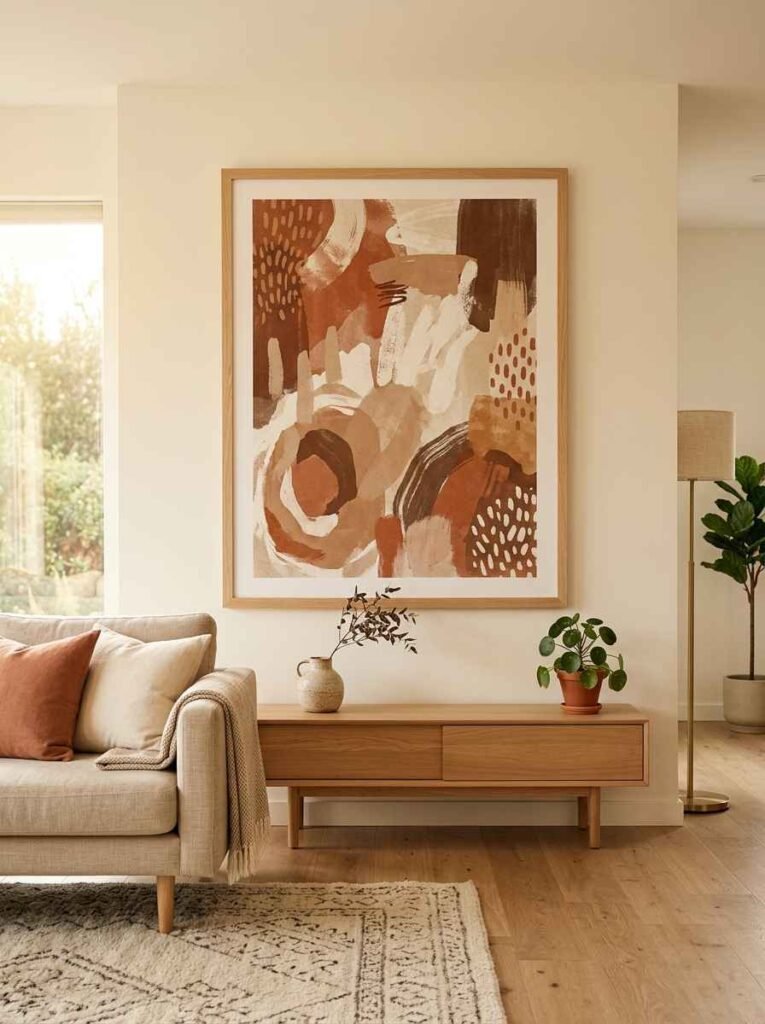
Gallery walls are everywhere on Pinterest, and they can work beautifully in boho minimalist spaces — but only with serious restraint. Stick to three to five pieces max. Use natural wood frames or thin black frames. Choose artwork in a limited palette.
Alternatively, skip the gallery wall entirely and hang one large piece.
A single oversized art print or textile wall hanging often does more for a room than a dozen smaller pieces fighting for attention.
14. Add Texture Through Throw Pillows
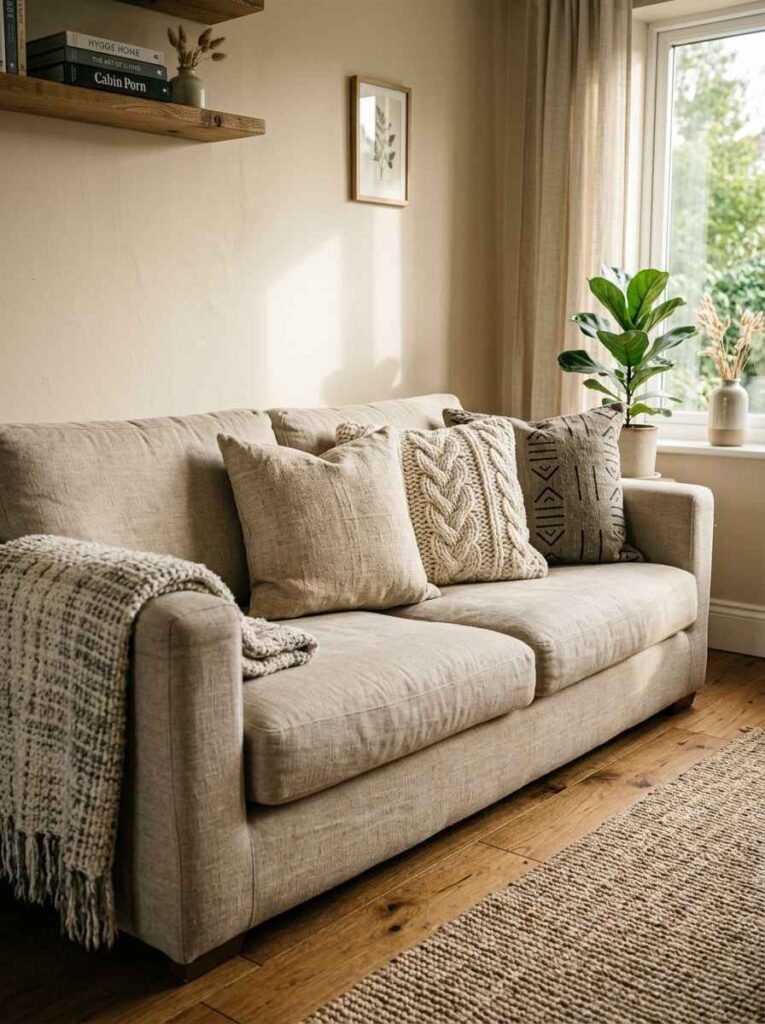
Throw pillows are your lowest-commitment way to add texture. In a boho minimalist room, choose pillows in natural fabrics: linen, cotton, chunky knit, or mudcloth.
Stick to two or three per sofa.
Mixing two or three different textures (say, a linen pillow, a woven pillow, and a solid chunky knit) hits the sweet spot. Patterns should be subtle — think loose weaves, simple stripes, or minimal block prints.
15. Try a Jute or Sisal Rug as Your Foundation Layer
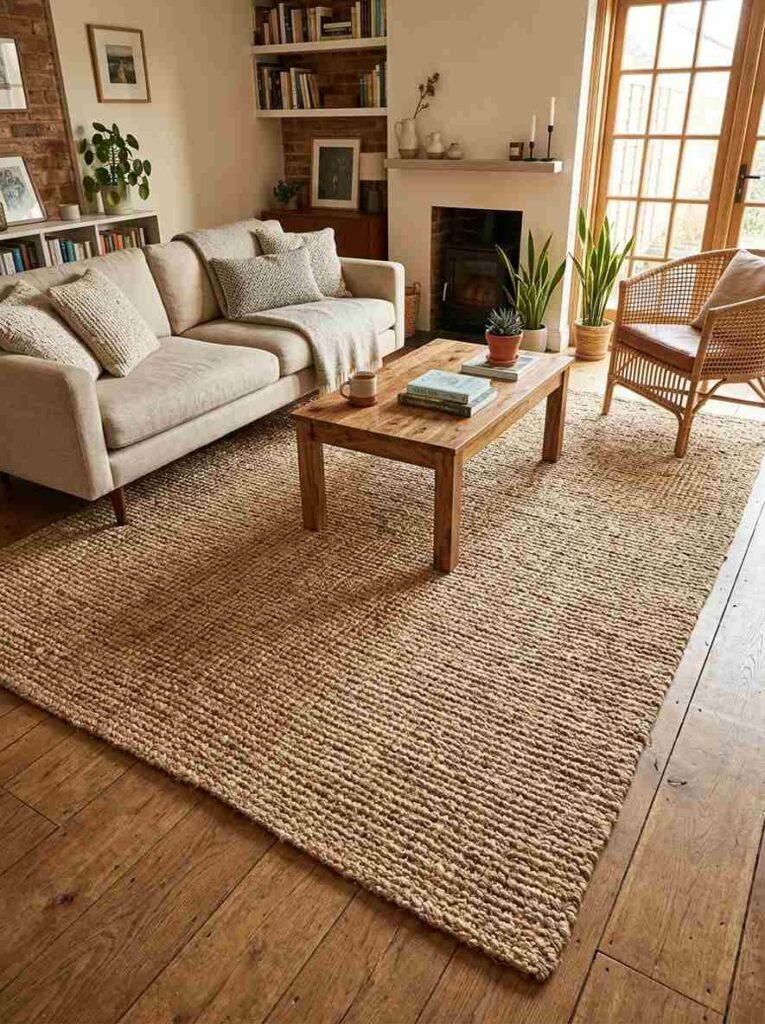
If you’re only buying one rug, make it jute or sisal. These natural fiber rugs ground a room brilliantly, add texture without pattern, and age beautifully.
They also read as intentional and considered rather than generic.
The downside: they’re not the softest underfoot.
Worth it for the look, honestly, especially when you add a softer layer on top or position them under furniture where bare feet don’t typically land.
16. Keep Artwork Earthy and Abstract
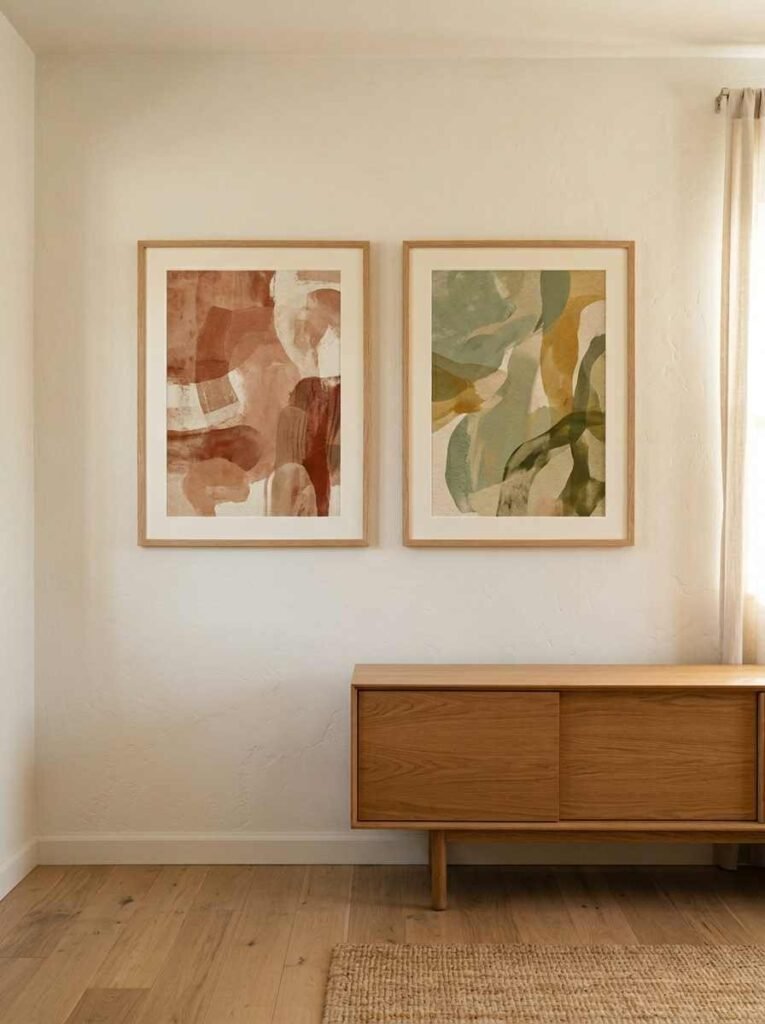
Abstract art in earthy tones — terracotta, ochre, raw umber, sage — fits boho minimalism perfectly.
It adds visual interest without being too literal or decorative. You don’t need to spend a fortune.
Affordable prints from Society6 or Desenio can look genuinely high-end in a well-edited room.
Wow, the difference one well-chosen print can make in an otherwise sparse room is honestly kind of insane.
I moved a single piece from my bedroom into the living room once and it transformed the whole space.
17. Choose Furniture With Natural Wood Tones
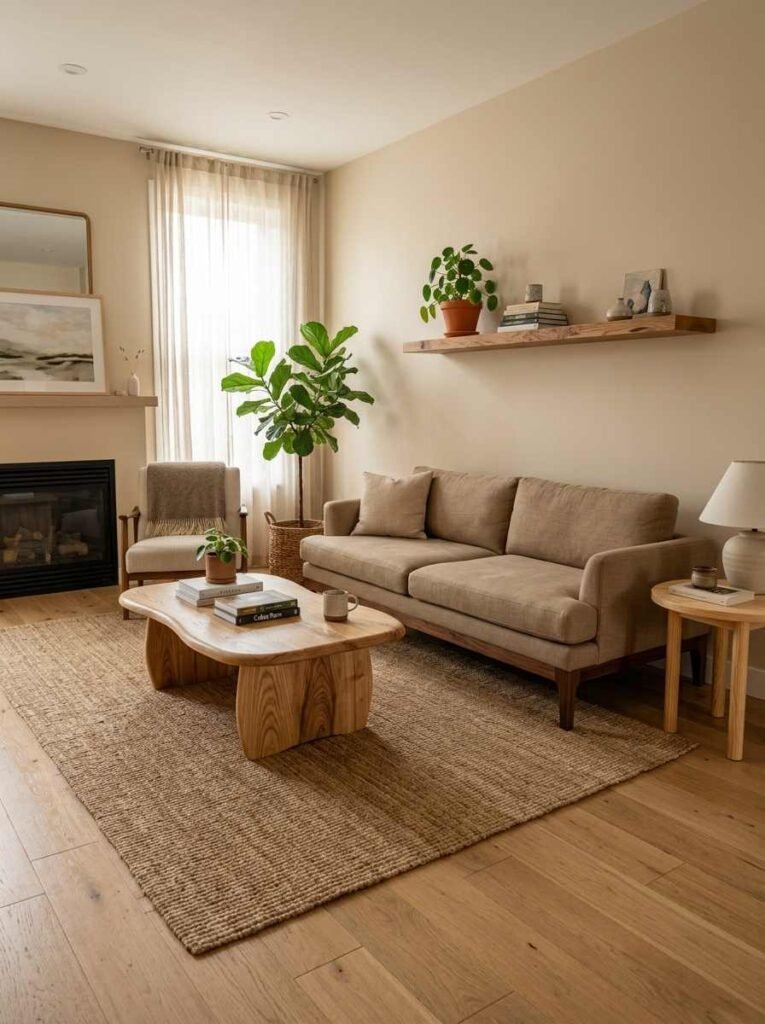
Furniture in natural wood tones — walnut, ash, oak, or light pine — ties the whole room together.
Avoid dark stains or anything that reads as overly polished or lacquered. The more grain you can see, the better.
A wooden side table, wooden legs on the sofa, or a wooden bench at the base of the coffee table all add warmth and earthiness without competing with your textiles.
18. Layer Lighting With Multiple Sources
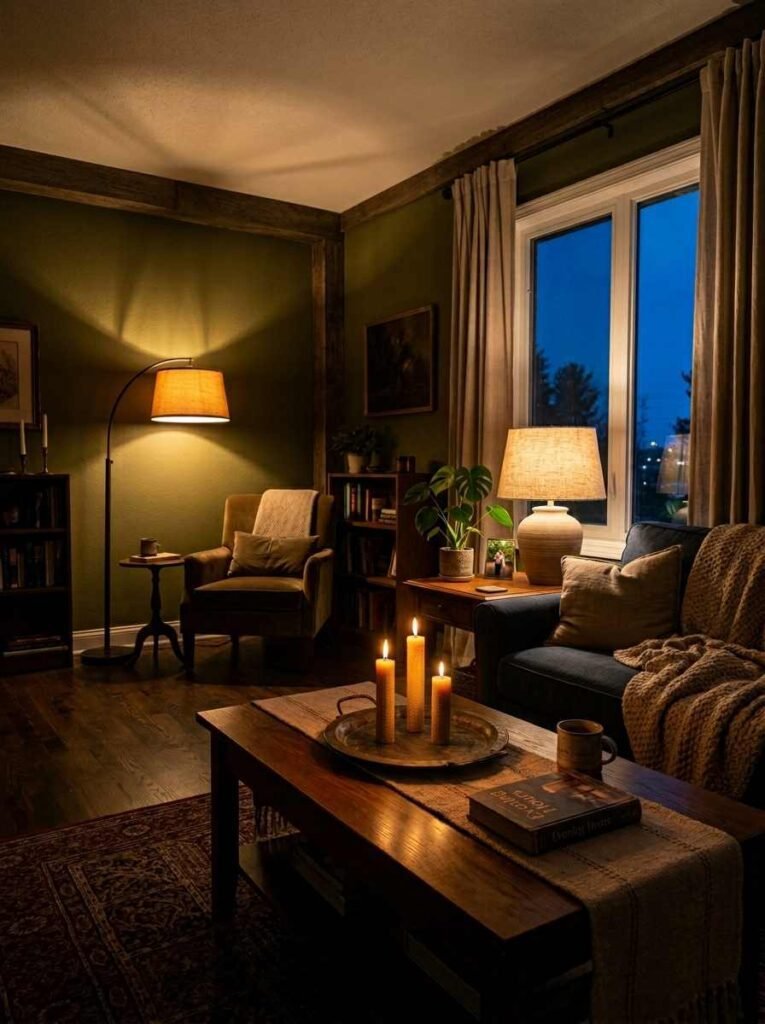
Overhead lighting is the enemy of cozy. In a boho minimalist living room, you want layered light: a floor lamp in one corner, a table lamp on a side table, and maybe a few candles on the coffee table tray.
This approach lets you adjust the mood depending on what you’re doing. Reading needs brighter, directed light.
Evenings with friends call for warm, ambient light from multiple low sources. One overhead fixture can’t do all of that.
19. Add a Woven Blanket Throw
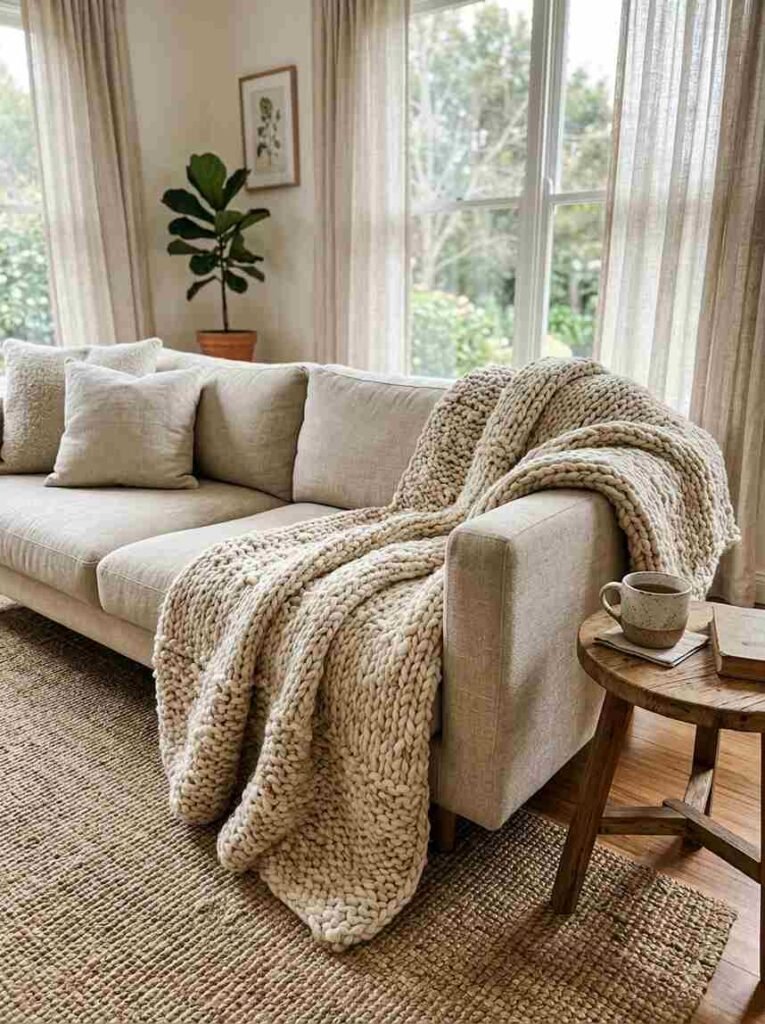
A chunky woven throw draped over the arm of the sofa or folded over a basket is a simple, inexpensive addition that adds a lot of warmth.
Choose natural fibers — cotton, wool, or a cotton-linen blend — in a tone that complements your sofa.
The casual placement of a throw signals that this is a room people actually live in. Which, FYI, is kind of the whole point of boho design. It should feel lived-in, not staged.
20. Use a Wooden Ladder as Styling Prop
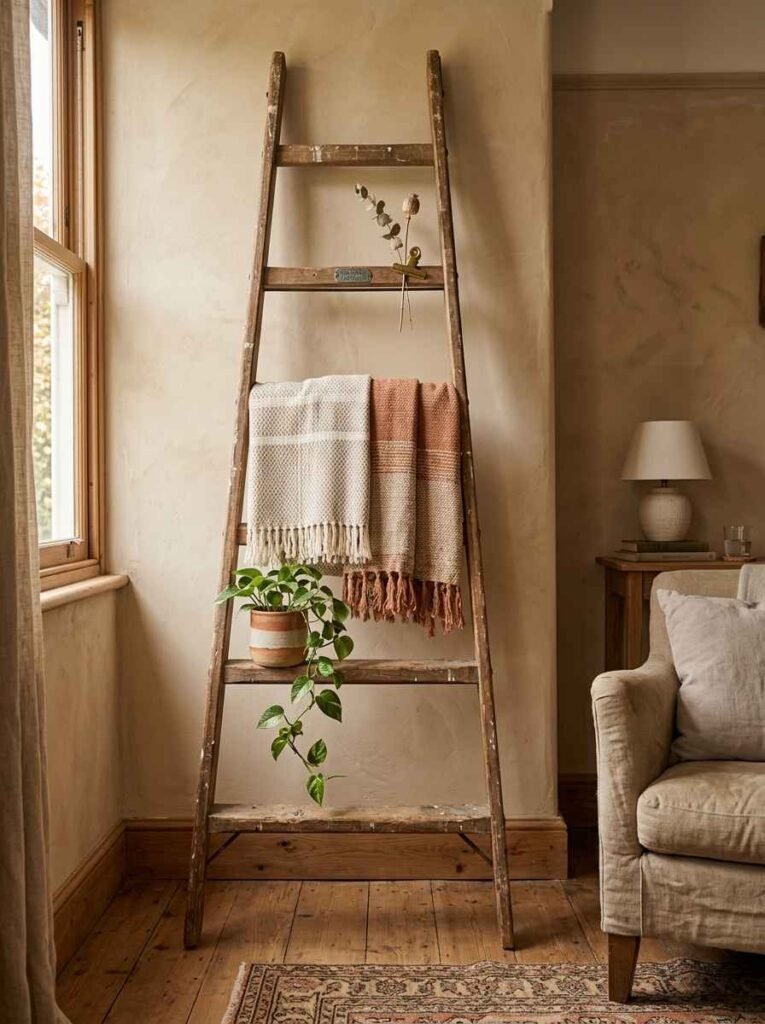
A simple wooden ladder leaned against a wall can hold blankets, a plant, or a few folded textiles. It’s a genuinely functional piece that also adds height and a handmade quality to the room.
The best ones are old, worn, slightly imperfect. If you find one at a thrift store or barn sale, grab it immediately.
21. Consider Floor Seating
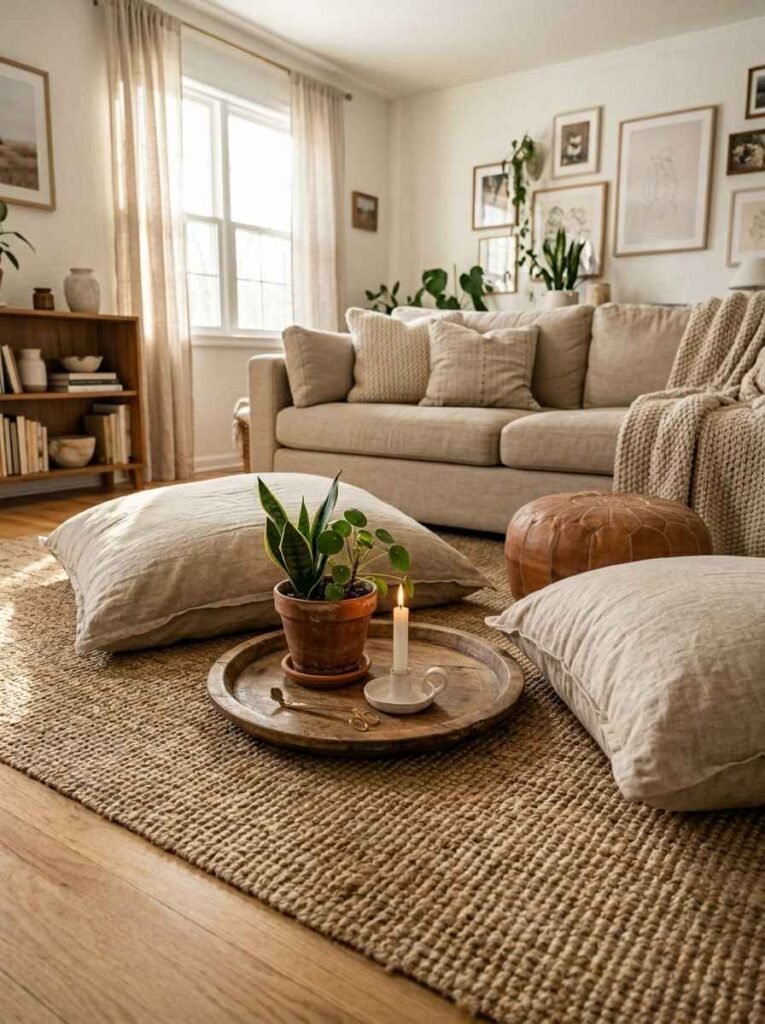
Low floor cushions or poufs are an underused addition in boho minimalist living rooms.
They add casual, relaxed energy, can be tucked away when not in use, and give guests another comfortable place to sit.
Moroccan poufs in natural leather, large cotton floor cushions, or a simple linen pouf all work well. The key is keeping them consistent with the rest of the room’s palette.
22. Go Minimal on Electronics and Cords
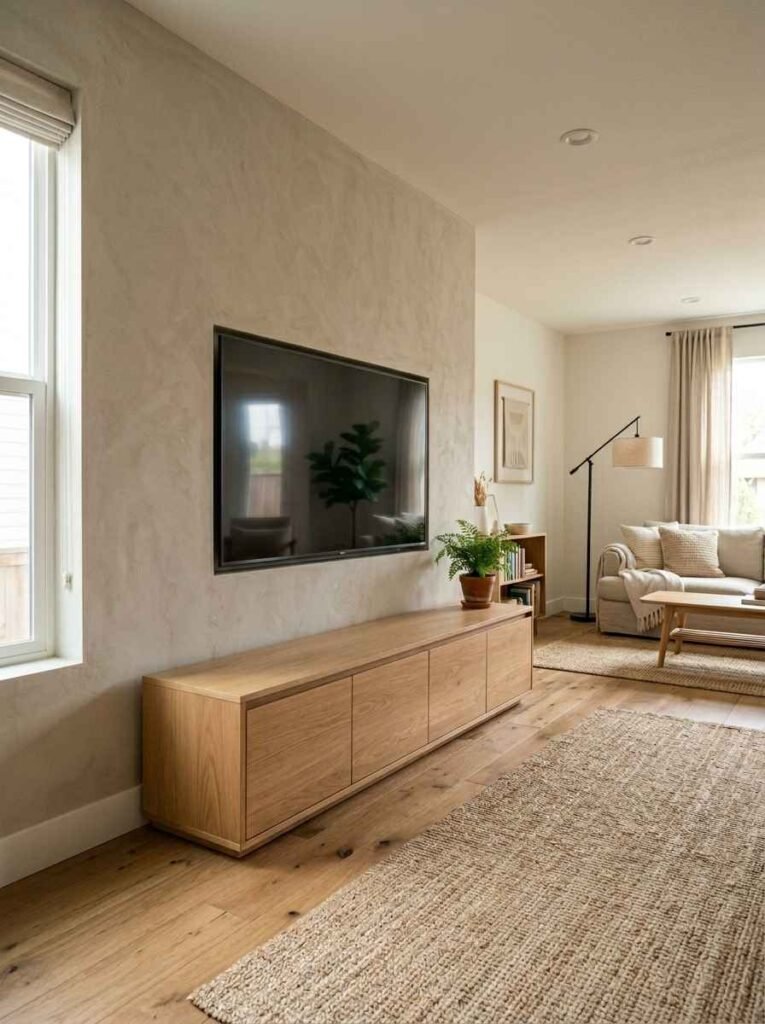
Nothing breaks a cozy boho vibe faster than a tangle of visible cords or a big black TV dominating the room.
If you have a TV, consider mounting it flush with the wall and running cables through a conduit. Or build a simple media console that hides equipment.
This is one of those behind-the-scenes details that most people skip. But it makes a genuine difference to how intentional the room feels.
23. Add a Vintage or Secondhand Element
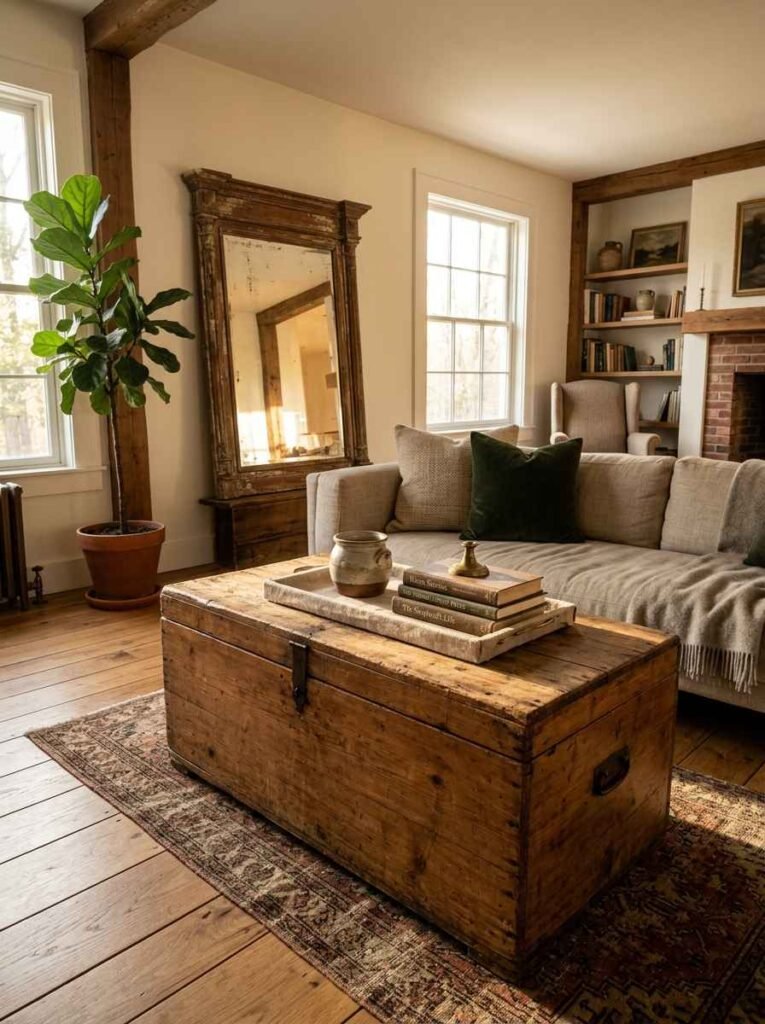
Boho design has always had a relationship with the found, the inherited, and the secondhand.
A vintage mirror, a worn leather chair, or an old wooden chest as a coffee table brings history into the room in a way that new furniture never can.
Thrift shops, estate sales, Facebook Marketplace, and local antique markets are excellent sources.
The piece doesn’t have to be expensive — it just needs to feel like it has a story.
For more inspiration on mixing vintage finds into modern spaces, Apartment Therapy consistently has excellent real-home examples worth bookmarking.
24. Don’t Forget the Entry Into the Room
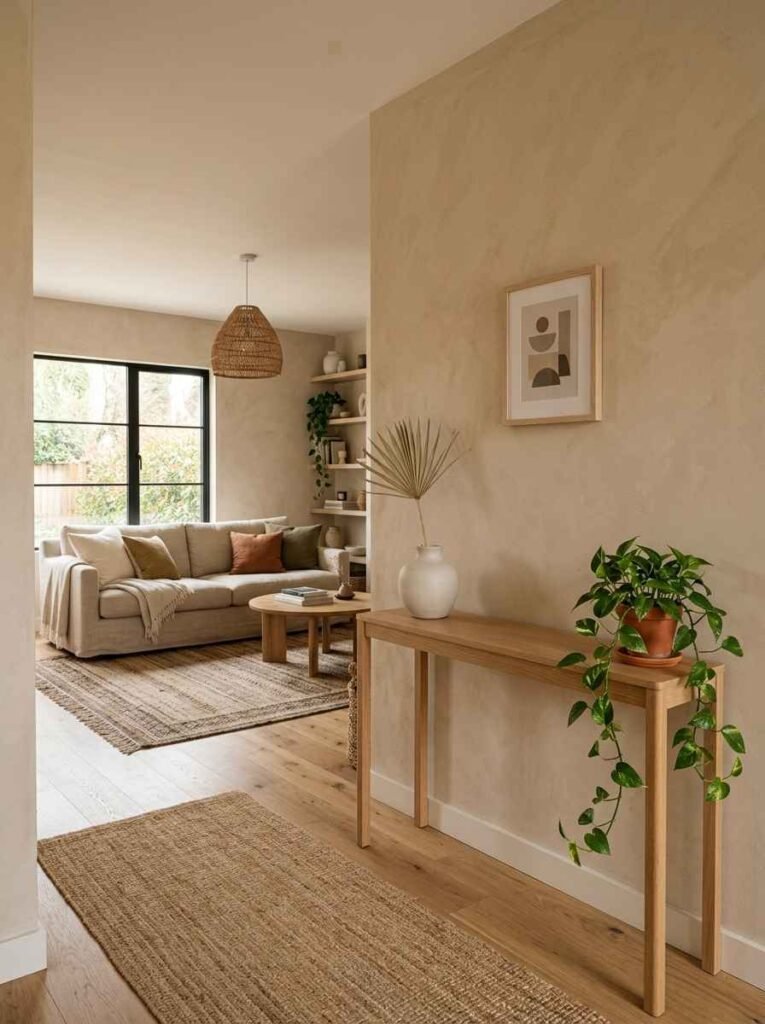
The way you enter a room shapes how it feels before you’ve even fully stepped in.
A simple entry moment — a narrow console table, a small piece of art, one or two plants — signals to guests (and to yourself) that this is a considered space.
It doesn’t take much. One cohesive moment at the threshold sets the tone for everything beyond it.
A Few Things to Keep in Mind When You Shop
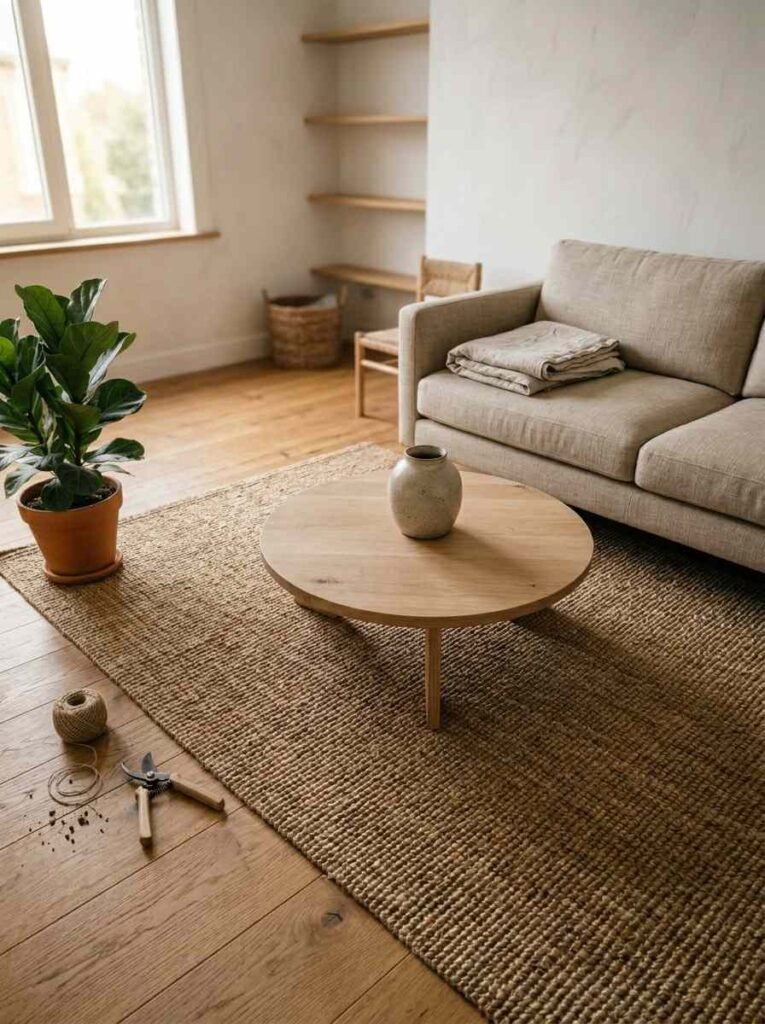
If you’re building this look with a real budget, the order of investment matters. Here’s a rough priority list:
- Sofa first — it’s the biggest visual anchor
- Lighting second — people underestimate this every single time
- Rug third — it defines the zone and sets the palette
- Textiles (pillows, throws) — these are affordable and high-impact
- Decorative items last — and only the ones you truly love
Pinterest is a wonderful reference tool for this aesthetic. Boards like Boho Minimalist Living Rooms on Pinterest are genuinely useful for building a mood board before you commit to anything. Visual planning prevents expensive mistakes.
For sourcing quality natural-fiber textiles and handmade ceramics, BDDW and Hawkins New York both have strong offerings. For more accessible price points, H&M Home and Zara Home often carry pieces that fit this look without the premium markup.
Frequently Asked Questions
Q: What’s the difference between boho and boho minimalist design? Traditional boho is layered, pattern-heavy, and collected over time with little concern for visual order. Boho minimalism applies an editing lens — you take the warmth and natural materials from boho, but you consciously reduce the number of items and keep the palette tighter. The result is warmer than pure minimalism and cleaner than traditional boho.
Q: How do I make a small living room feel cozy without cluttering it? Focus on texture over quantity. A jute rug, linen curtains, a woven throw, and one or two plants can make a small room feel warm and layered without adding visual clutter. Lighting is crucial in small spaces too — warm-toned bulbs (around 2700K) make a dramatic difference.
Q: Can I do boho minimalism on a budget? Absolutely. Thrift stores and Facebook Marketplace are your best friends for wooden furniture and vintage finds. For textiles, IKEA, H&M Home, and Target’s natural fiber range have solid options at accessible prices. The philosophy of “fewer, better things” also naturally saves money over time — you’re buying less, just choosing more carefully.
Final Thought
Boho minimalism is one of the most livable, enduring aesthetics in home design. It ages well, it works across seasons, and it’s forgiving enough to evolve as your taste shifts. The core idea — that a room can feel warm and collected without feeling crowded — is genuinely worth building toward.
You don’t have to do all 24 of these ideas at once. Pick three or four that resonate, start there, and let the room tell you what it needs next.
What’s the one change you’ve been putting off that you think would make the biggest difference in your living room?
