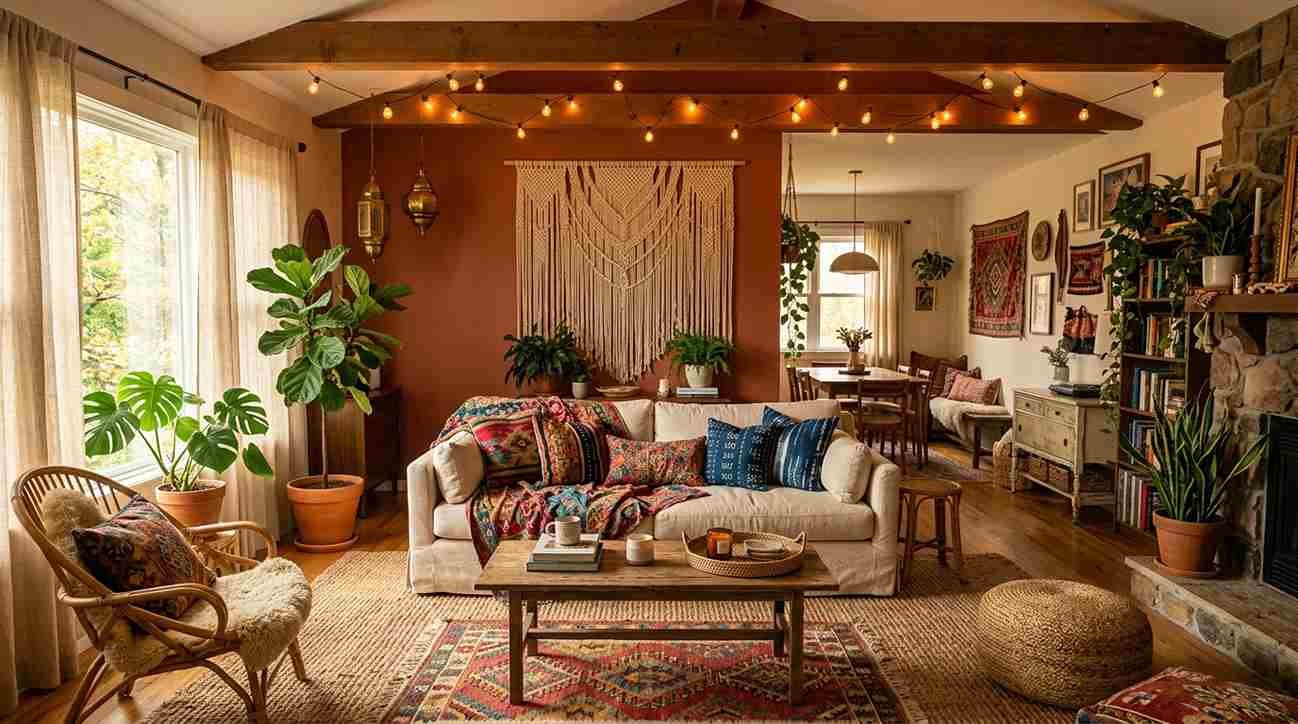
Let me tell you something. The first time I walked into a truly boho living room, I stood at the door for a solid 10 seconds just taking it in.
Layers of textiles. A macrame wall hanging the size of a small car. Plants everywhere. It looked like organized chaos, but somehow it felt more like “home” than any spotless, symmetrical room I’d ever seen.
That’s the thing about bohemian style. It doesn’t ask permission.
If you’ve been staring at your living room wondering why it feels flat, or you’re starting fresh and want something that feels genuinely personal instead of like a furniture showroom, you’re in the right place.
I’ve pulled together 30+ boho living room ideas that actually work in real homes, not just on a perfectly staged Pinterest board.
What Makes a Living Room Truly Bohemian?
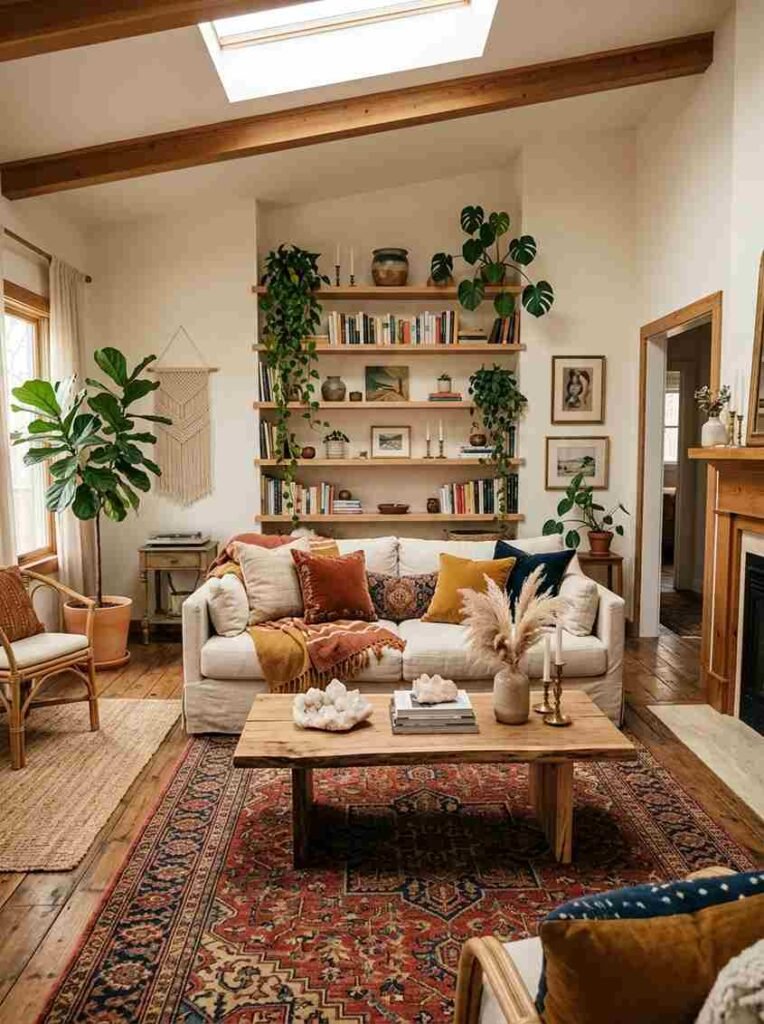
Before we get into the ideas, it helps to understand what boho actually means. And no, it’s not just “throw a bunch of plants around and call it a day” (though plants absolutely help).
Bohemian style draws from global influences, artisan craftsmanship, and a general philosophy that more is more, as long as it means something to you.
The roots go back to 19th-century European artists and writers who rejected conventional living. Today’s boho aesthetic is a modern evolution of that spirit: collected, layered, rich with texture and color.
Three core principles define it:
- Mix of patterns, textures, and materials that feel curated rather than cluttered
- Warm, earthy tones offset by jewel accents (terracotta, ochre, deep teal, rust)
- Personal objects, handmade pieces, and vintage finds that tell a story
If your room looks like it could belong to anyone, it’s probably not boho enough.
30+ Bohemian Living Room Ideas Worth Stealing
1. Layer Rugs Like You Mean It
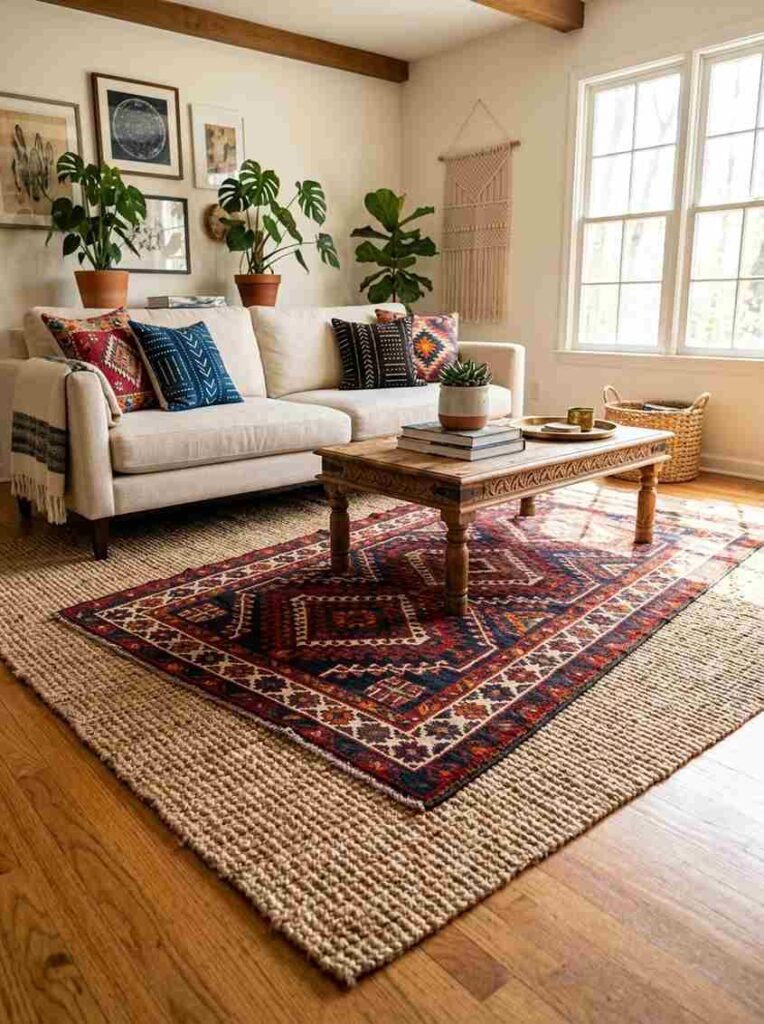
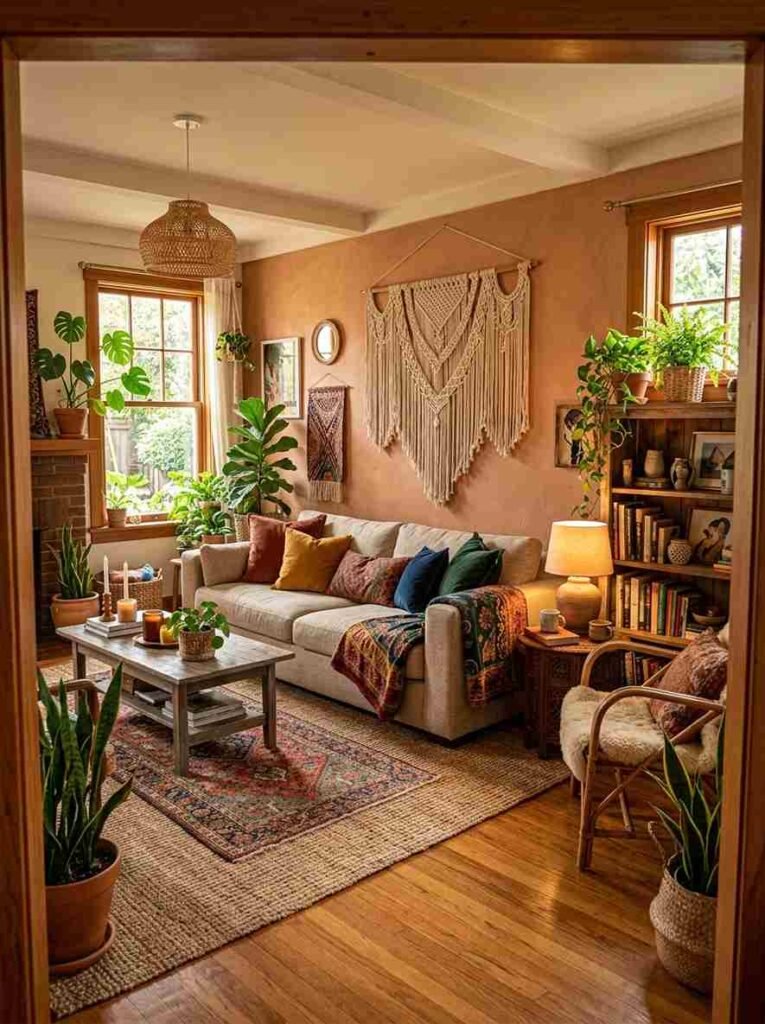
This is probably the single easiest way to make a living room feel bohemian overnight. Put a large jute or sisal rug down first, then layer a smaller, patterned rug on top.
A Moroccan-style rug or a vintage kilim works perfectly for the second layer.
The combination of textures grounds the space and adds immediate visual interest. It also helps define the seating area, which matters a lot in open-plan spaces.
You can find a solid layering guide over at Architectural Digest’s rug layering breakdown if you want to get the scale right.
2. Go Heavy on Throw Pillows (Seriously, Go Heavier)
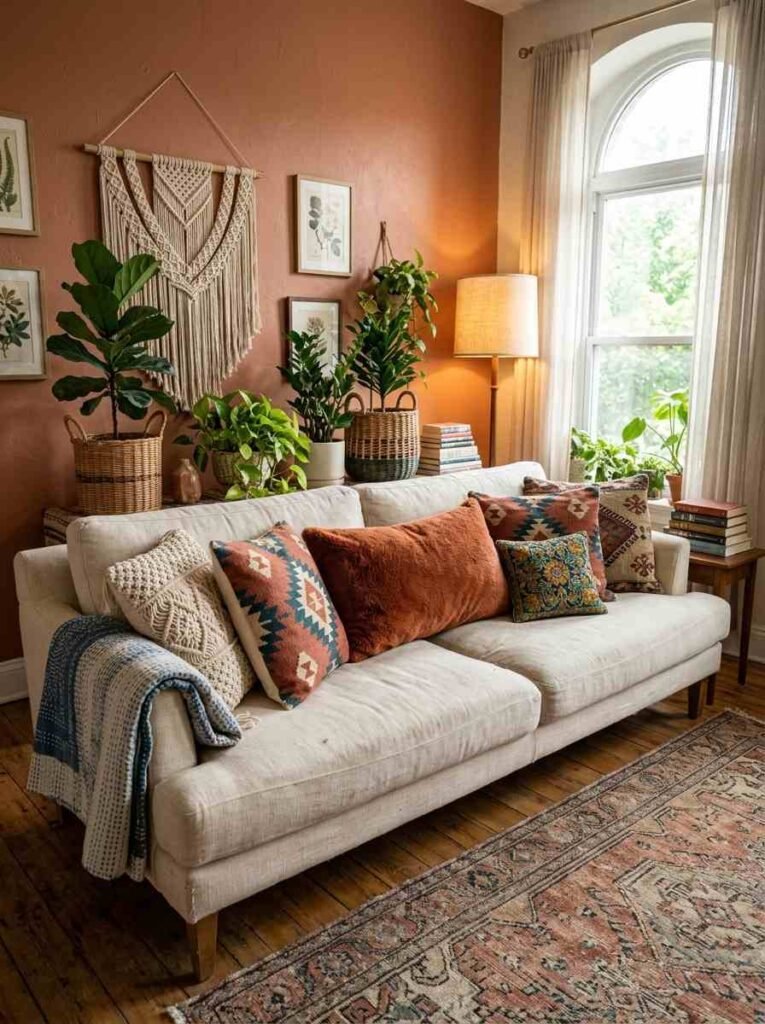
Your sofa needs at least 5 pillows minimum. I mean it. Mix sizes, textures, and patterns. Velvet next to linen next to woven cotton. Don’t match them. The goal is collected, not coordinated.
A good mix might look like this:
| Pillow Type | Texture | Pattern |
|---|---|---|
| Large lumbar | Velvet | Solid jewel tone |
| Medium square | Woven cotton | Geometric print |
| Small accent | Embroidered | Floral or medallion |
| Round bolster | Macrame | Neutral/natural |
Mixing these creates that layered, lived-in look that feels effortlessly boho.
3. A Macrame Wall Hanging as the Focal Point
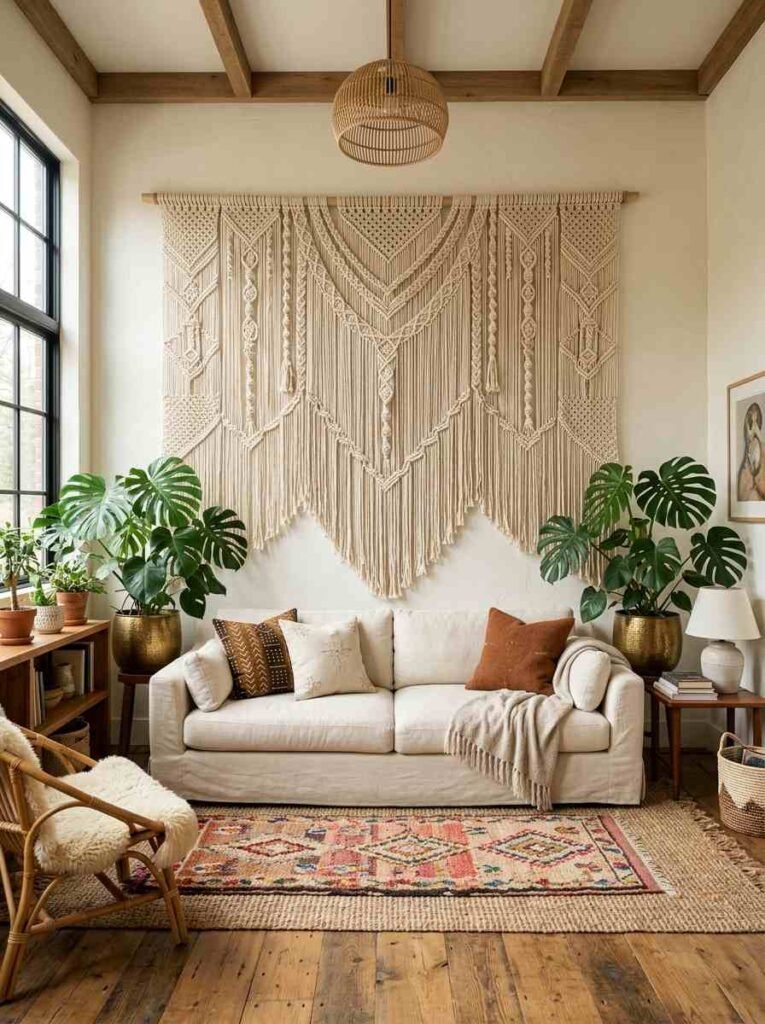
If you’re going to invest in one statement piece, make it a large macrame wall hanging. These work especially well behind the sofa or above a fireplace.
The knotted texture adds dimension that no print or painting can replicate.
You can find handmade options on Etsy’s macrame collection from independent artisans, which also fits the boho ethos of supporting craftsmanship over mass production.
4. Rattan Furniture, Always
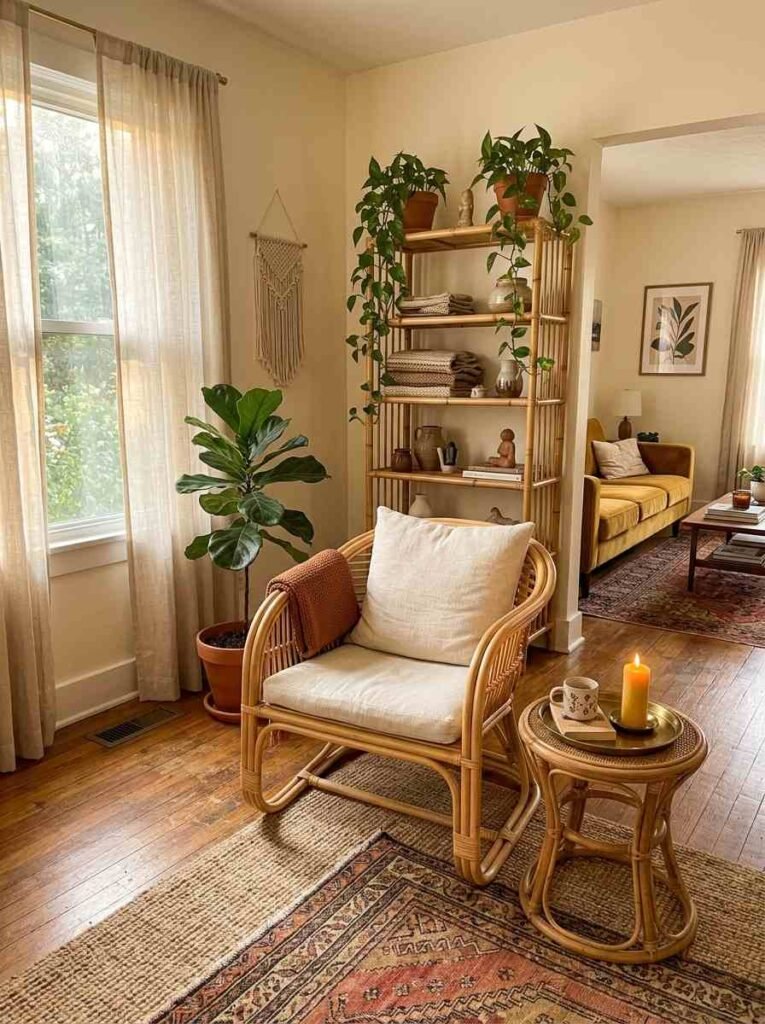
Rattan and wicker have never really gone out of style in bohemian spaces. A rattan accent chair, a wicker side table, or even a bamboo shelving unit adds that natural, warm tone that anchors the whole room.
Pair it with a linen cushion in a warm neutral and you’re done.
5. Plants, but Make Them a Collection
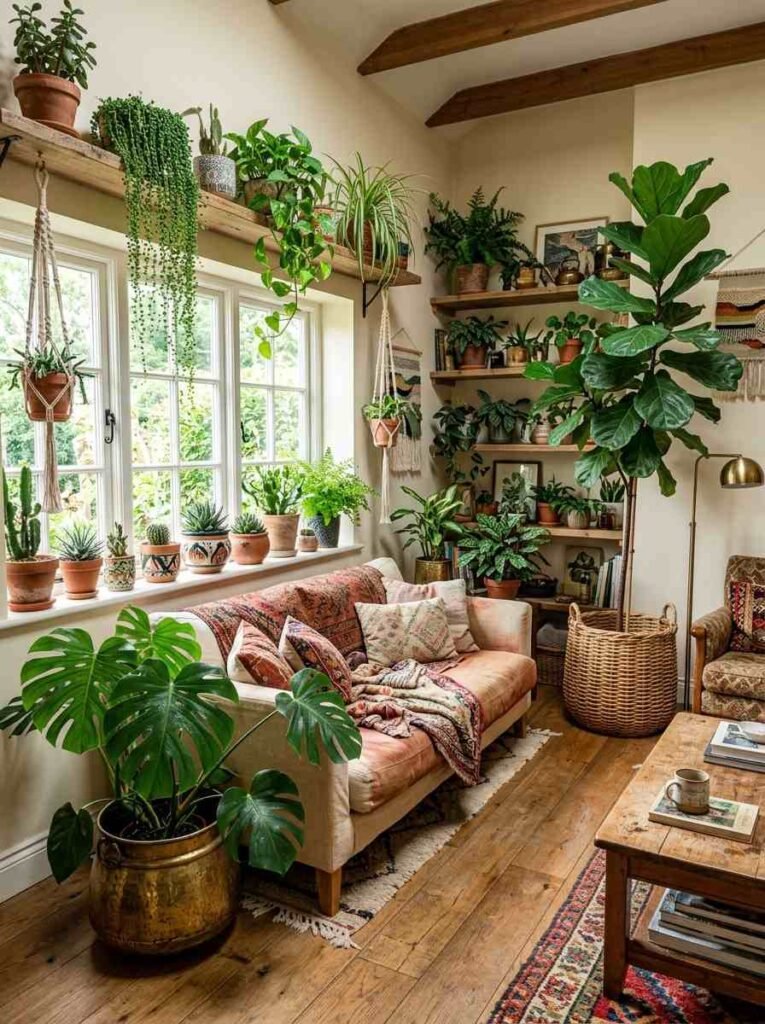
One plant is decoration. Eight plants is a statement. Bohemian living rooms tend to go all-in on greenery, mixing trailing plants (pothos, string of pearls) with large architectural ones (fiddle leaf fig, monstera) and smaller cacti or succulents on shelves.
The variety of pot materials matters too. Terracotta, woven baskets, hammered brass, painted ceramics.
The mix of vessels reads as collected over time, which is exactly the vibe.
6. Low Seating and Floor Cushions
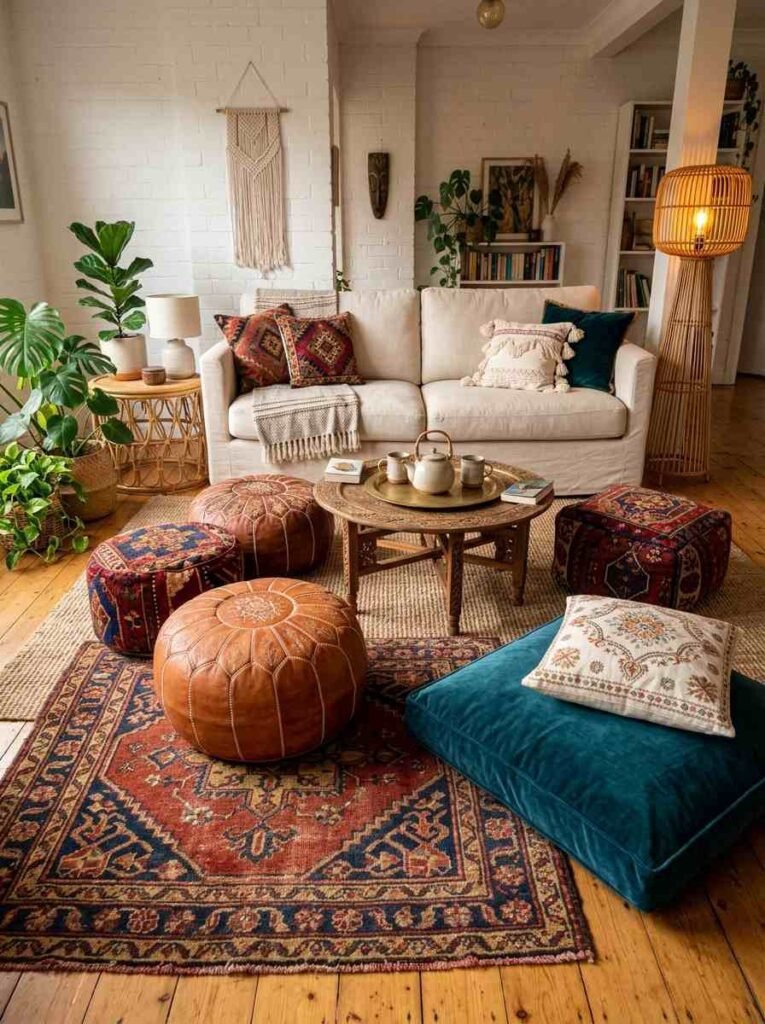
This is one of those ideas that feels a bit unconventional until you actually do it. Floor cushions or poufs next to your main sofa create that relaxed, communal feel that boho spaces do so well.
Think Moroccan-style ottomans or large kilim floor cushions.
It also gives you extra seating without crowding the room with more furniture.
7. Warm Lighting Only
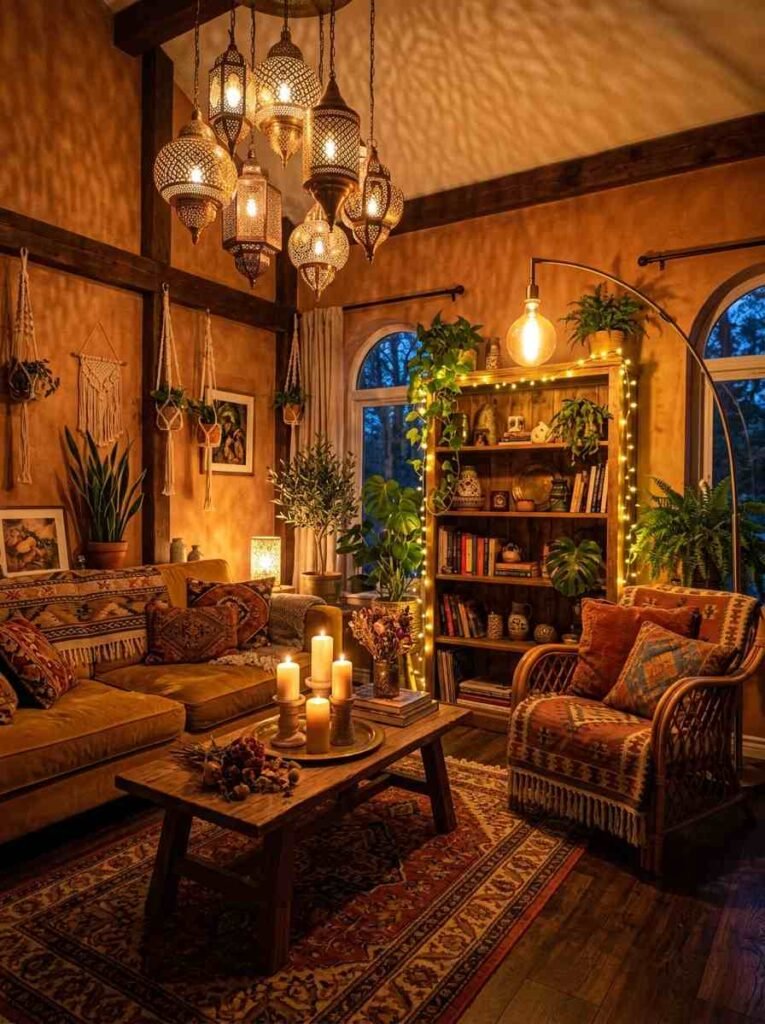
Overhead bright white lighting will kill a boho room instantly. Swap it out for warm-toned bulbs, then layer in floor lamps, string lights, and even candles.
Moroccan lanterns hanging from the ceiling or clustered in a corner add that golden, intimate glow that makes textiles and wood tones look their best.
The Rejuvenation lighting guide has some good examples of how to layer ambient and accent lighting in a way that feels intentional.
8. A Gallery Wall With No Rules
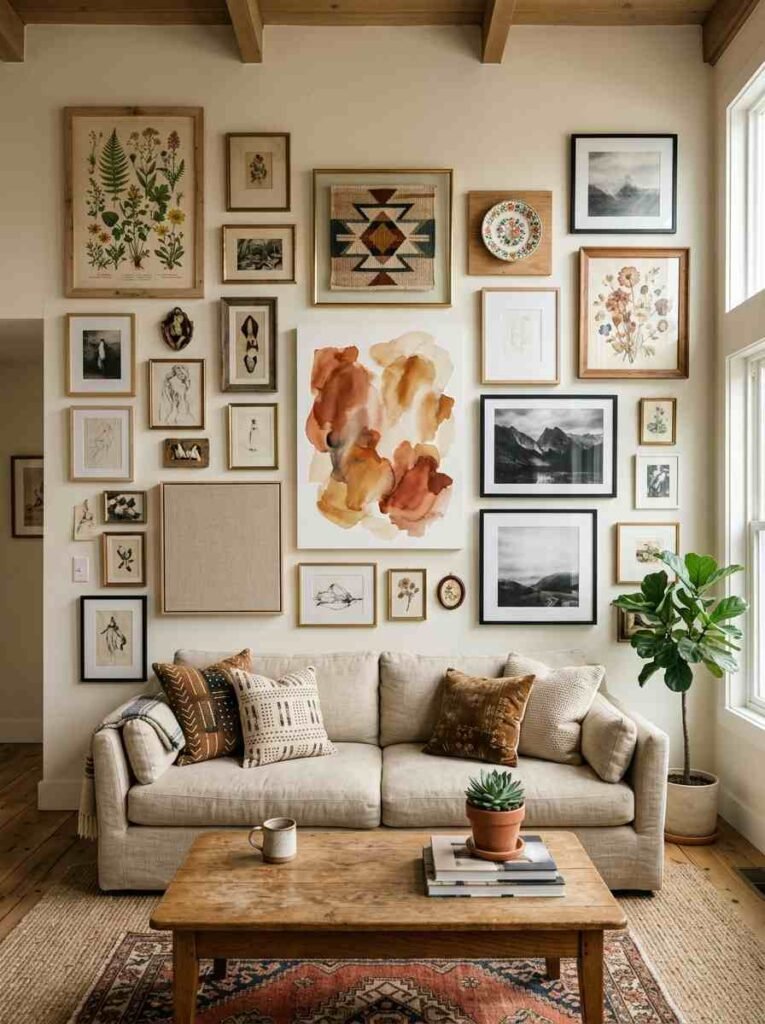
Forget matching frames and symmetrical grids. A boho gallery wall mixes sizes, frame materials (wood, brass, simple black), and subjects.
Family photos next to a vintage botanical print next to a handmade ceramic plate. The arrangement should feel like it grew over time.
Start with your largest piece, hang it slightly off-center, then build outward from there.
9. Curtains That Pool on the Floor
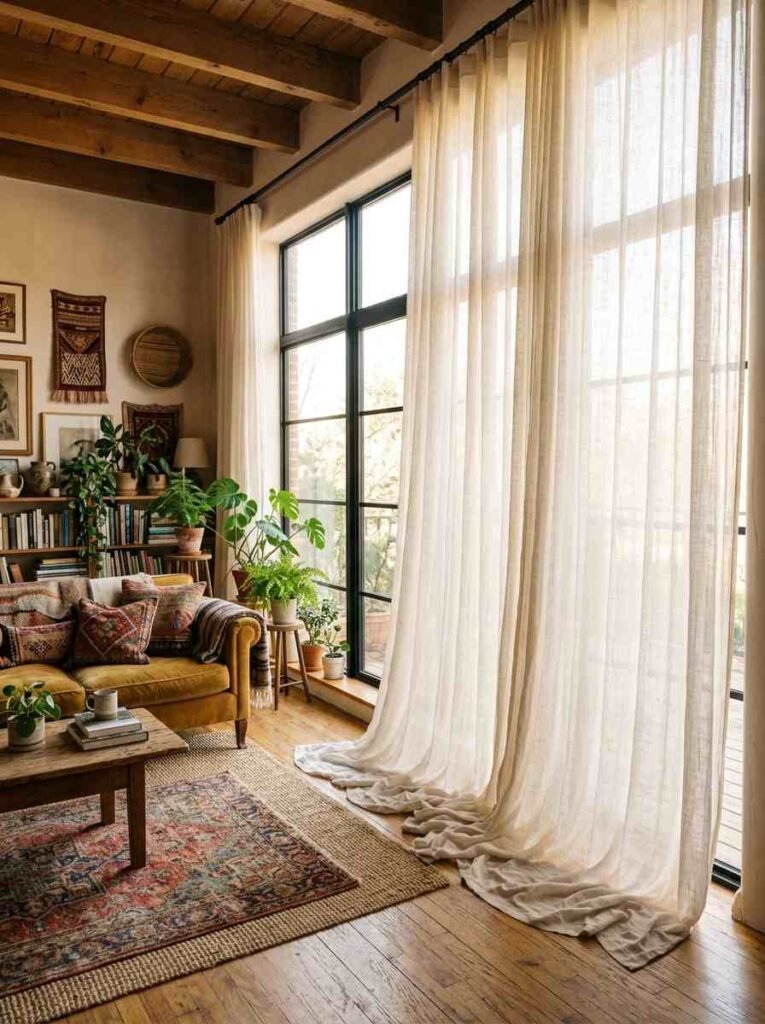
Floor-length curtains, hung high and wide, make ceilings feel taller and windows feel bigger. In a boho room, go for linen, cotton gauze, or even a patterned block-print fabric.
Let them be slightly too long so they pool just a little. It looks intentional.
10. A Vintage or Antique Coffee Table
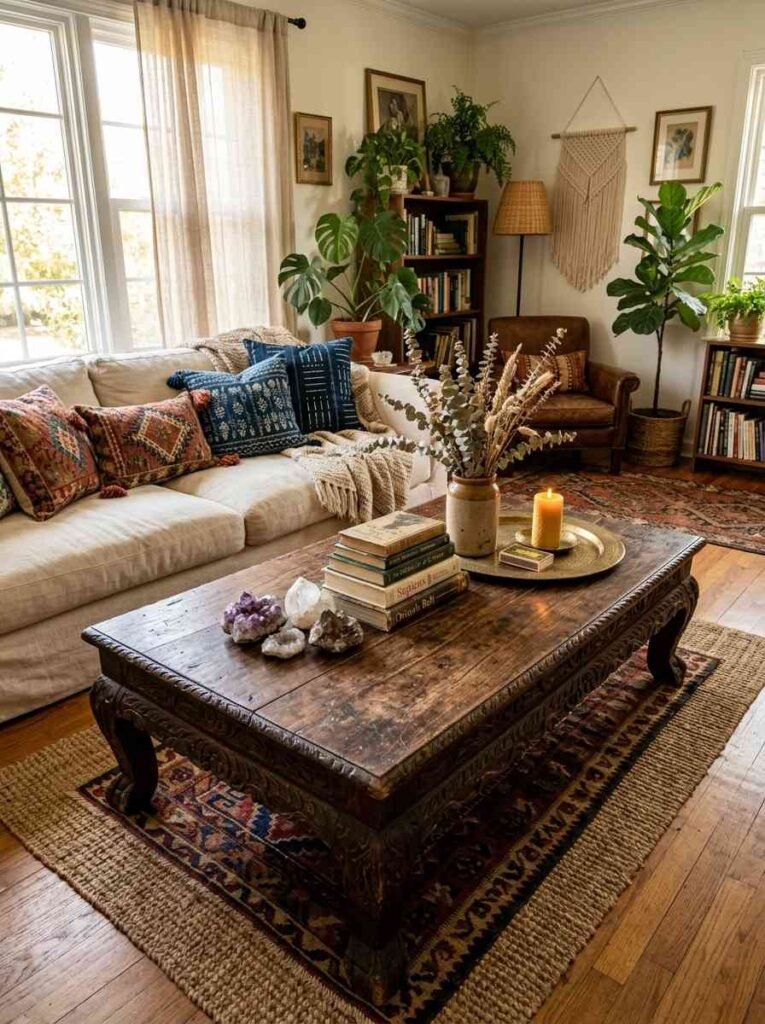
Skip the matching furniture sets entirely. A carved wood coffee table, a vintage trunk, or even a hammered metal piece creates that eclectic mix that defines boho style.
The imperfection of vintage pieces, the wear and patina, reads as character.
Flea markets and estate sales are obvious sources. Facebook Marketplace also has genuinely surprising finds if you search consistently.
11. Earthy Color Palette as the Foundation
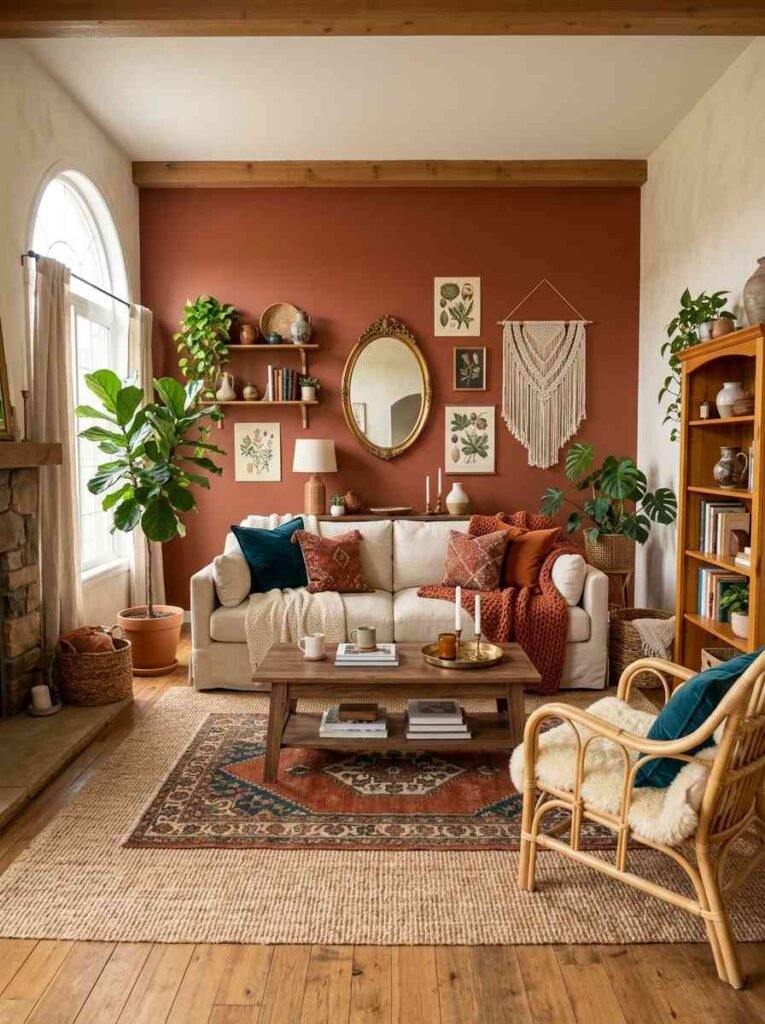
The base of most boho rooms leans warm and earthy. Think terracotta walls, warm white or cream as the primary neutral, natural wood tones throughout.
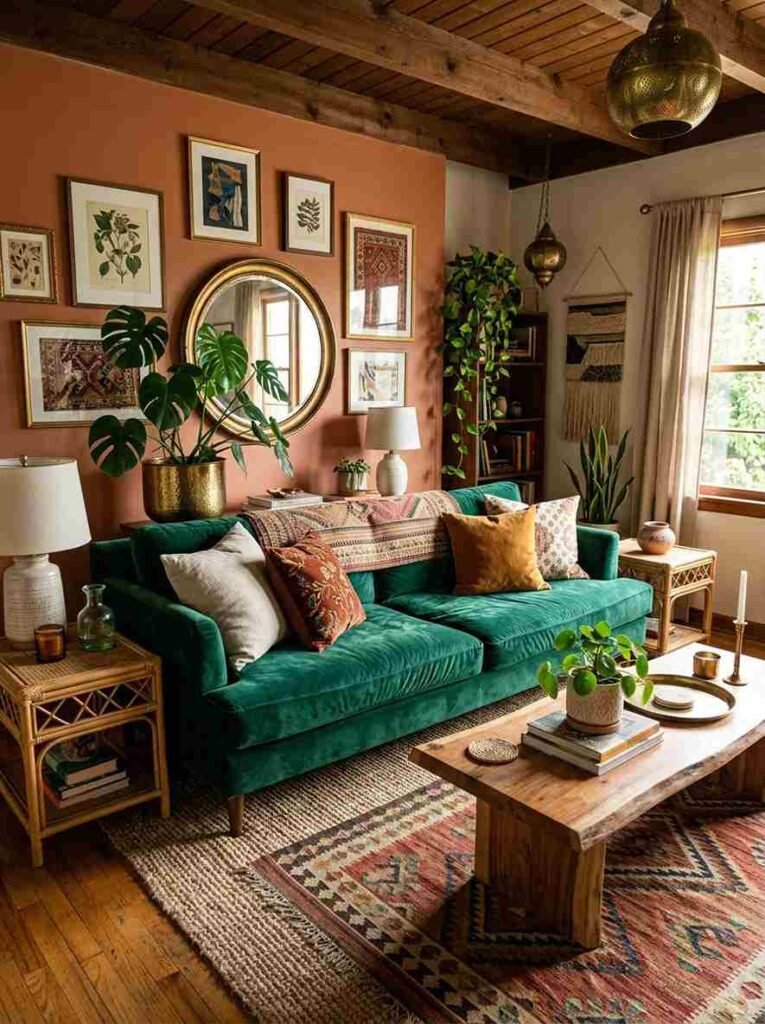
From that foundation, you bring in jewel tones as accents, deep teal in a pillow, a rust-colored throw, a gold-framed mirror.
The earthy base keeps everything from feeling chaotic even when you’re adding lots of layers and patterns.
12. Open Shelving Styled Like a Curio Cabinet
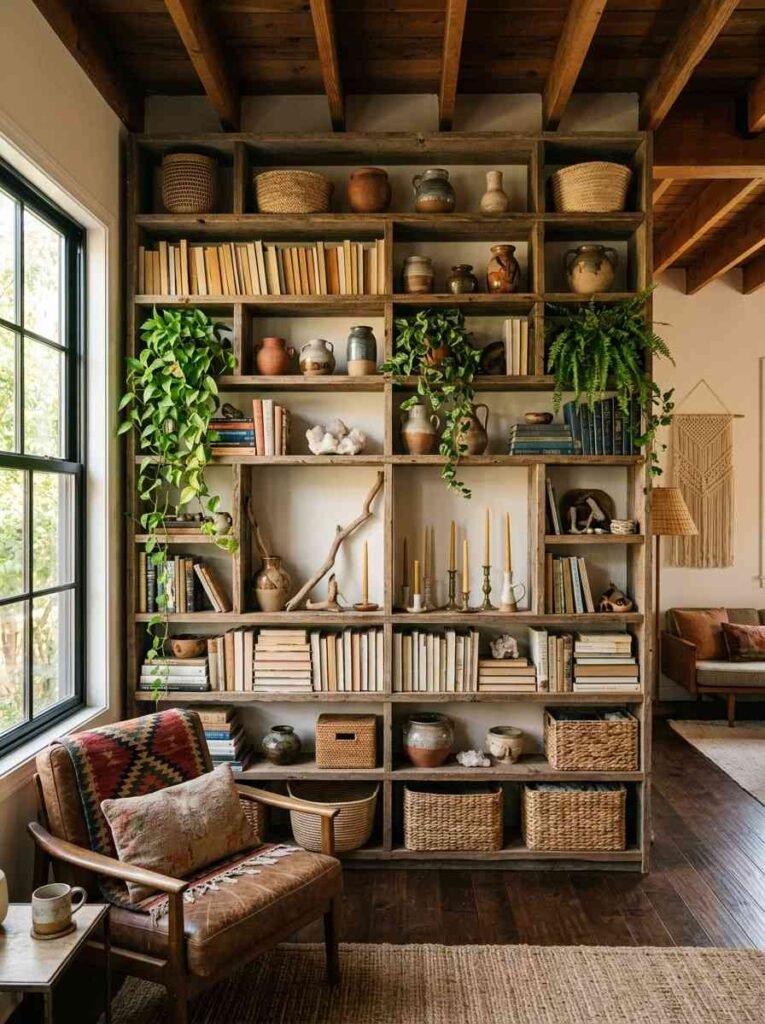
Open shelves in a boho room should look like someone interesting lives there. Stacked books with horizontal piles mixed in. Small sculptures. A few air plants. Candles at different heights. Woven baskets.
A piece of quartz or driftwood.
The trick is density without clutter. Fill the shelves, but leave a little breathing room so the eye can rest.
13. A Hammock Chair in the Corner
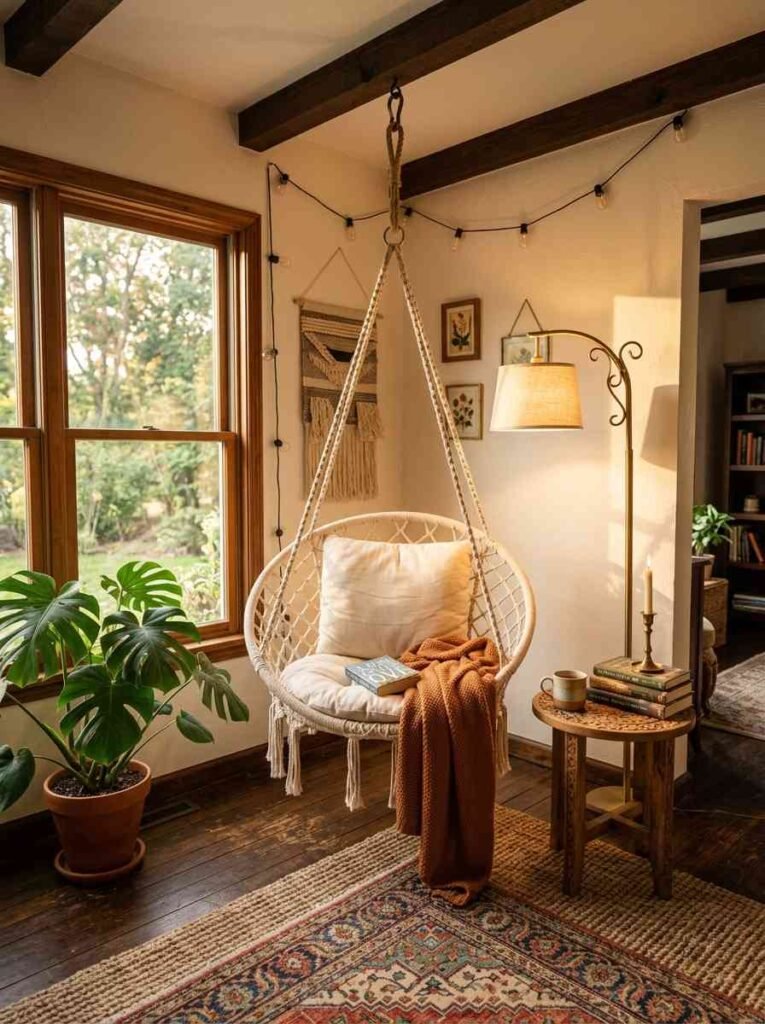
This is insane how much personality a single hammock chair adds to a living room corner. It’s functional, it’s unexpected, and it signals immediately that this room prioritizes comfort over formality.
Pair it with a small side table and a floor lamp and you have the best reading nook that ever existed.
14. Kilim Patterns Everywhere
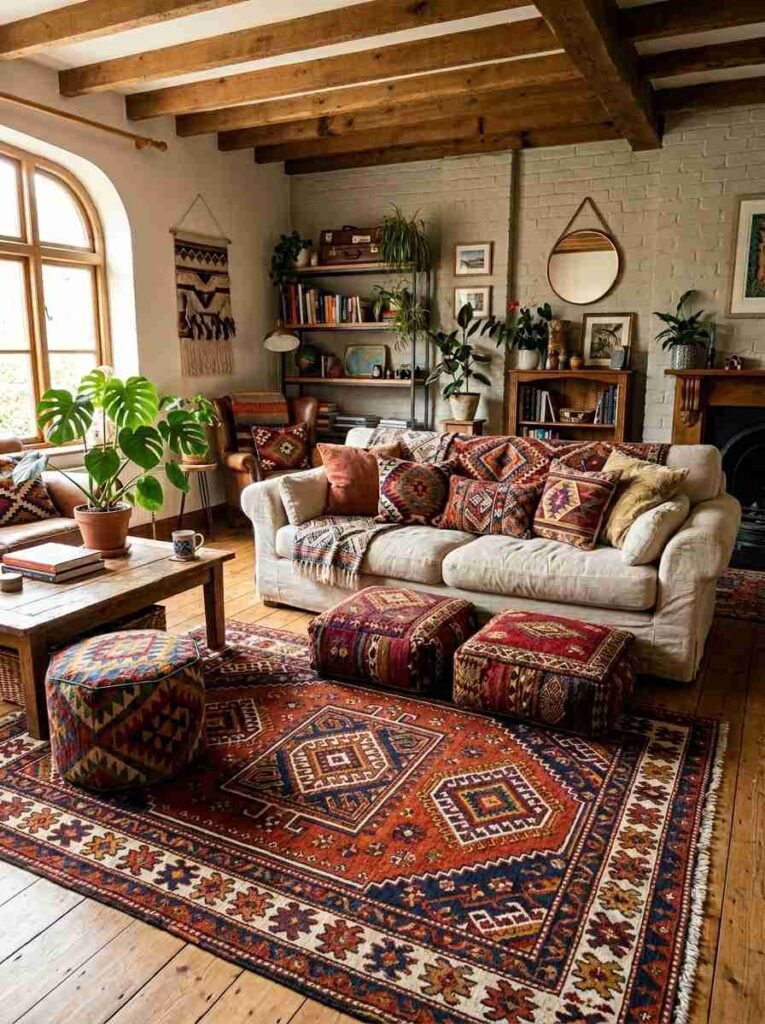
Kilim (the flat-woven Turkish textile) is practically the unofficial fabric of bohemian design. You can bring it in through rugs, throw pillows, poufs, or even upholstered furniture. The geometric patterns and warm reds, blues, and oranges pair well with natural materials and add global influence to the space.
15. A Statement Bookshelf
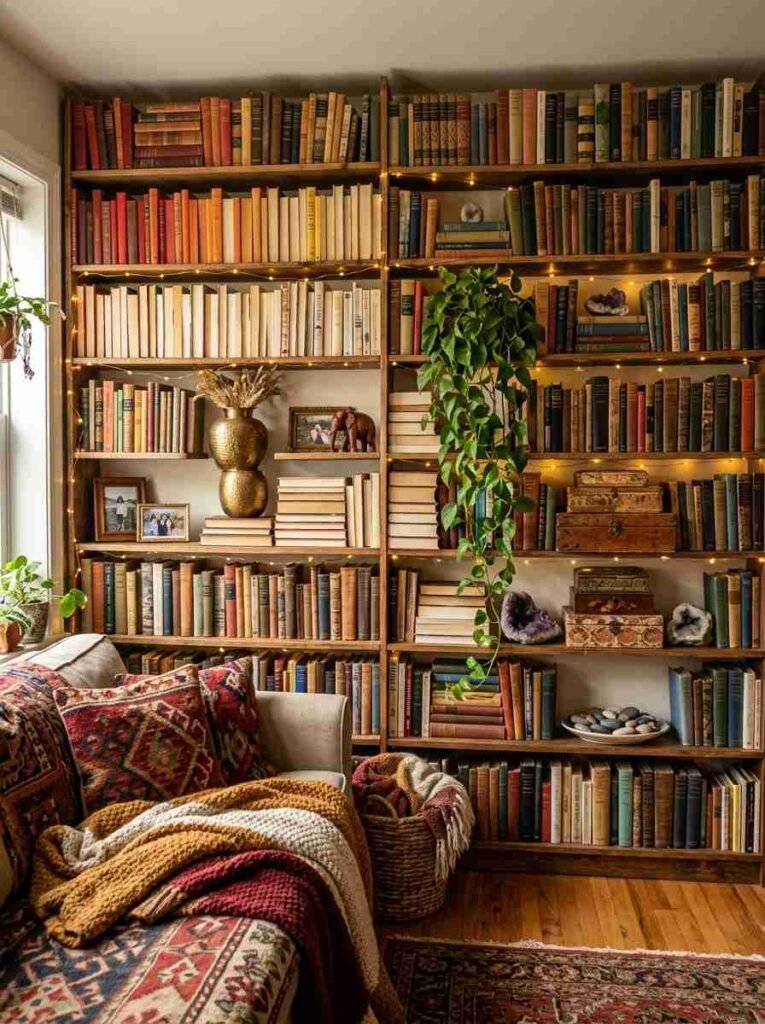
Maximalist bookshelves are a bohemian living room essential. Books arranged by color, stacked horizontally, mixed with objects. Travel souvenirs. Small framed photos. A trailing plant that spills over the edge. The shelves become a portrait of whoever lives there.
16. Canopy or Draped Fabric Over the Seating Area
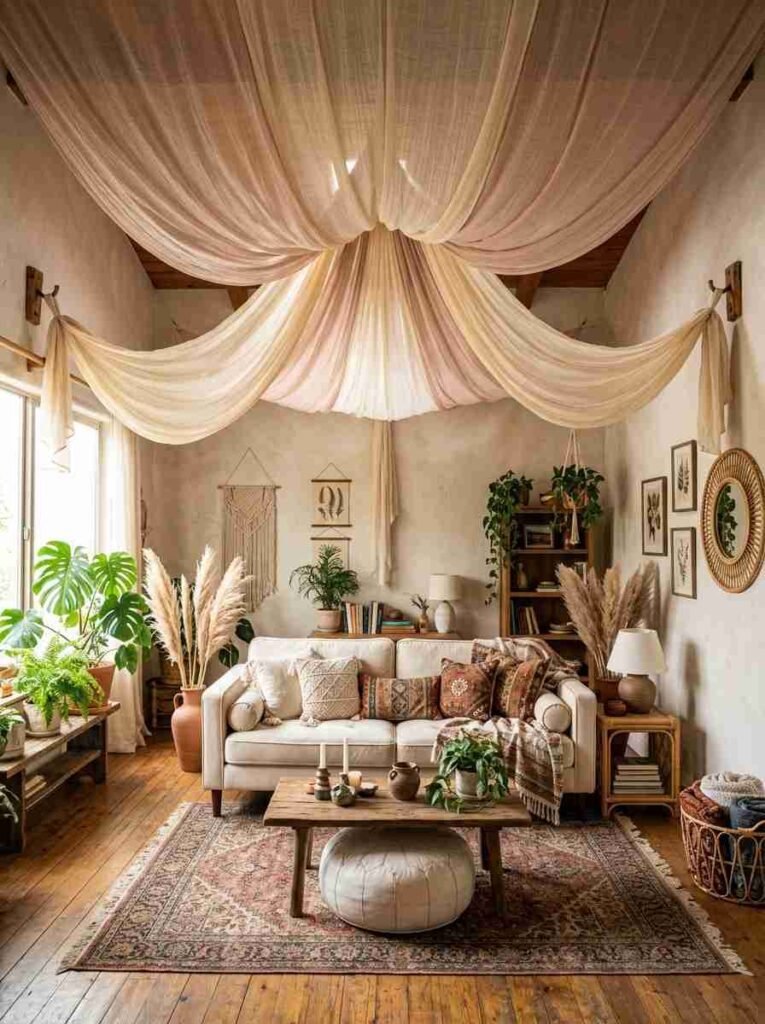
Draping sheer fabric from the ceiling above your seating area creates this dreamy, tent-like effect that’s pure boho.
It doesn’t require permanent installation. A few ceiling hooks and some gauzy cotton fabric gets you there. This works especially well in rooms with higher ceilings.
17. Woven Wall Art Beyond Macrame
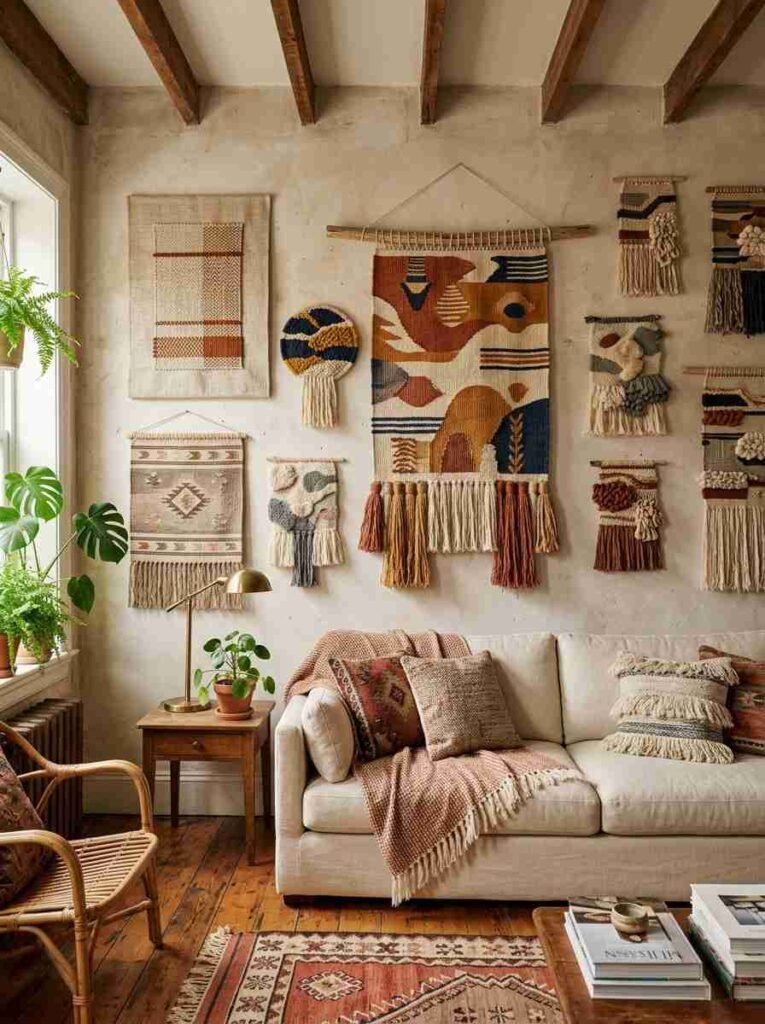
Macrame gets all the attention, but woven textile art comes in much more variety. Tapestries, hand-knotted fiber art, woven wall panels in natural tones.
These add texture without weight and work well in spaces that need warmth but don’t have room for much furniture.
18. Mixing Metals Freely
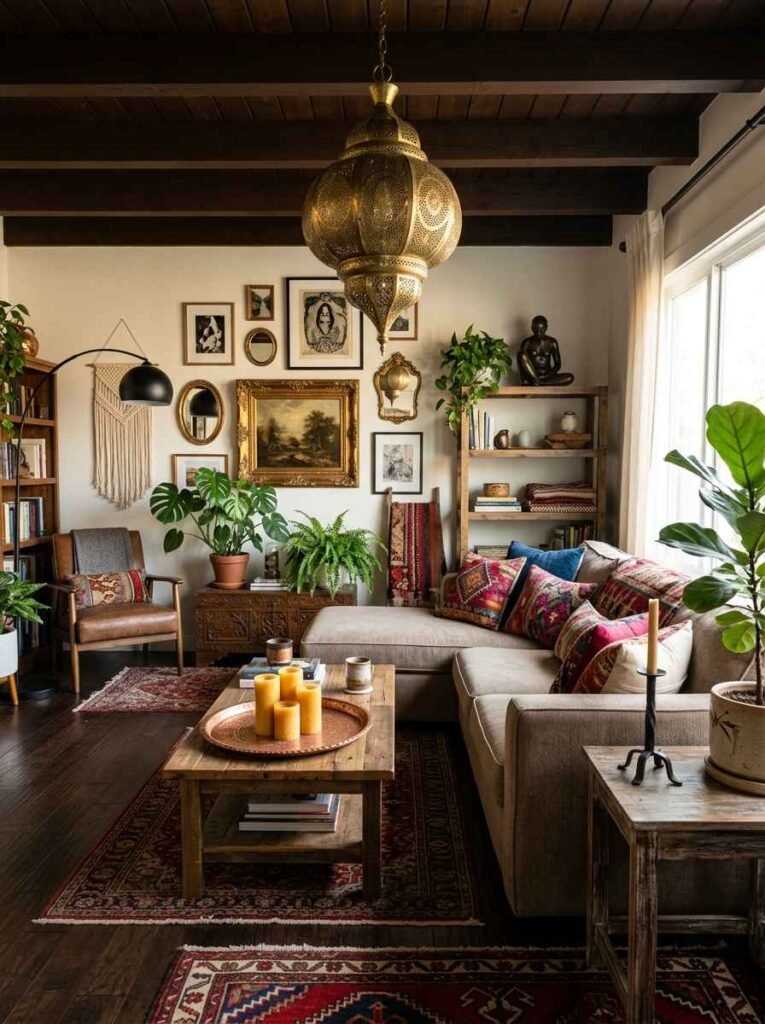
Boho style doesn’t follow the “pick one metal finish” rule that more formal design styles enforce.
Brass, copper, bronze, matte black, even some chrome can coexist. The key is that they appear in enough pieces that the mix looks intentional rather than accidental.
19. A Vintage Velvet Sofa
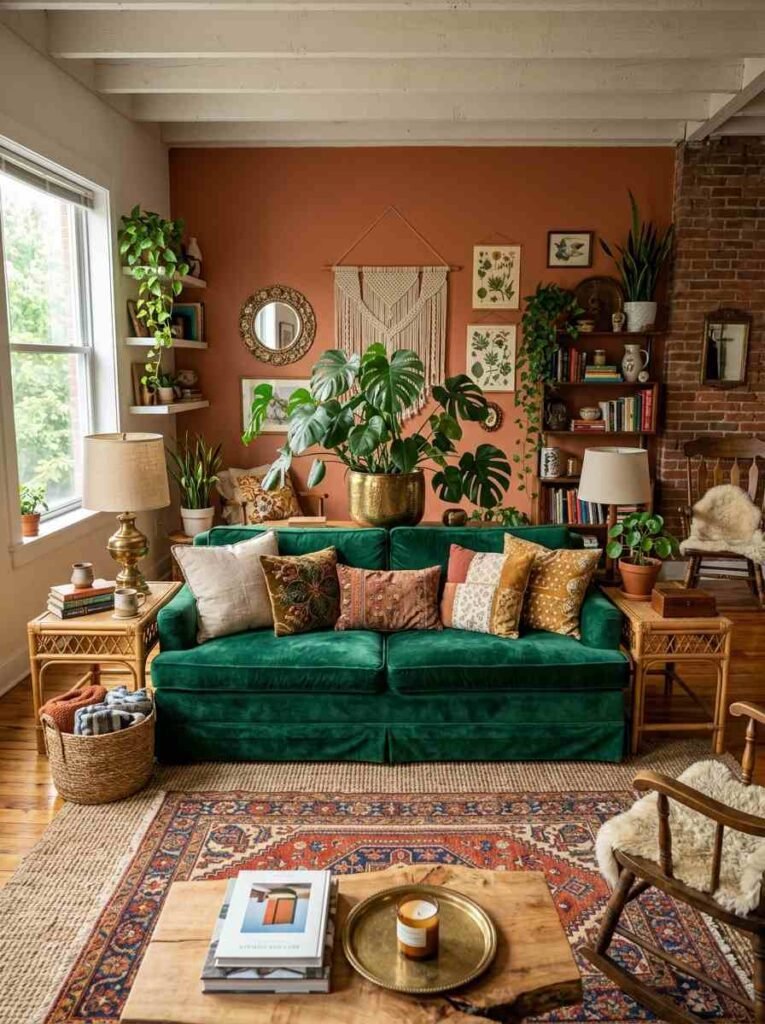
If you can find a vintage velvet sofa in a deep jewel tone, teal, emerald, aubergine, rust, you’ve found the centerpiece of your boho room.
Pair it with natural materials like jute, rattan, and wood to keep it from feeling too formal. Velvet’s richness reads as maximalist luxury, which balances beautifully against organic textures.
20. Crystals and Natural Objects as Decor
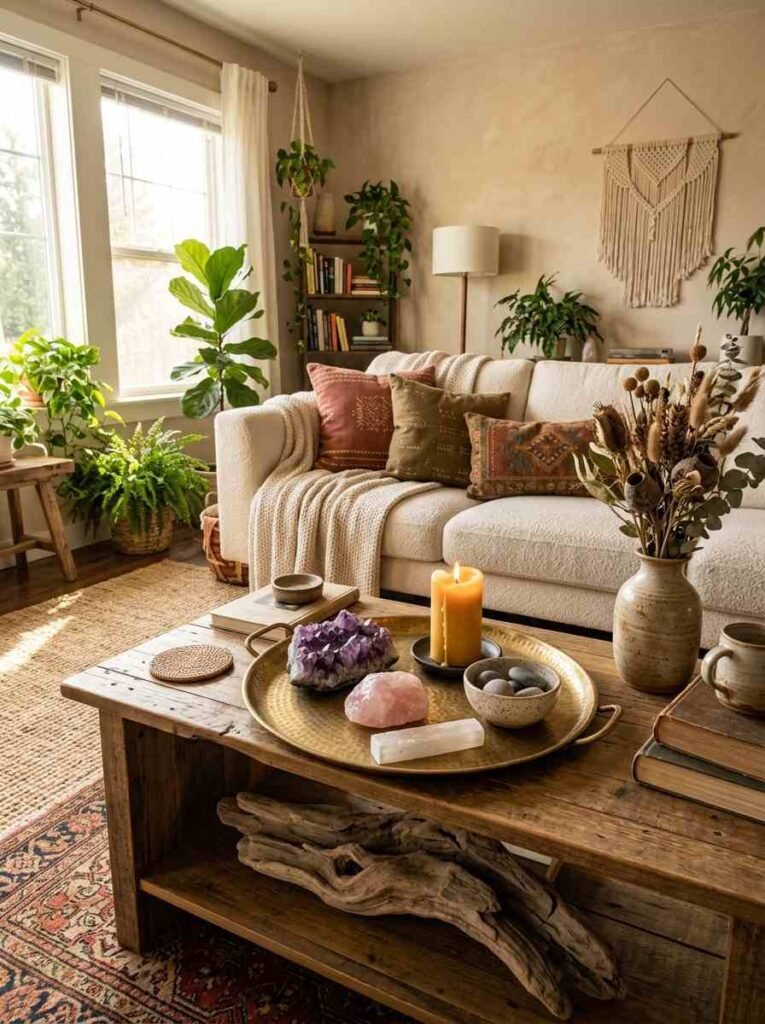
This might sound a little out there to some people, but hear me out.
Pieces of quartz, amethyst, or raw selenite on a coffee table or shelf add color, texture, and a slightly otherworldly quality that fits perfectly in a boho space.
Driftwood, interesting stones, dried seed pods, these natural objects bring an organic quality that manufactured decor rarely achieves.
21. Painted Accent Wall in Terracotta or Burnt Sienna
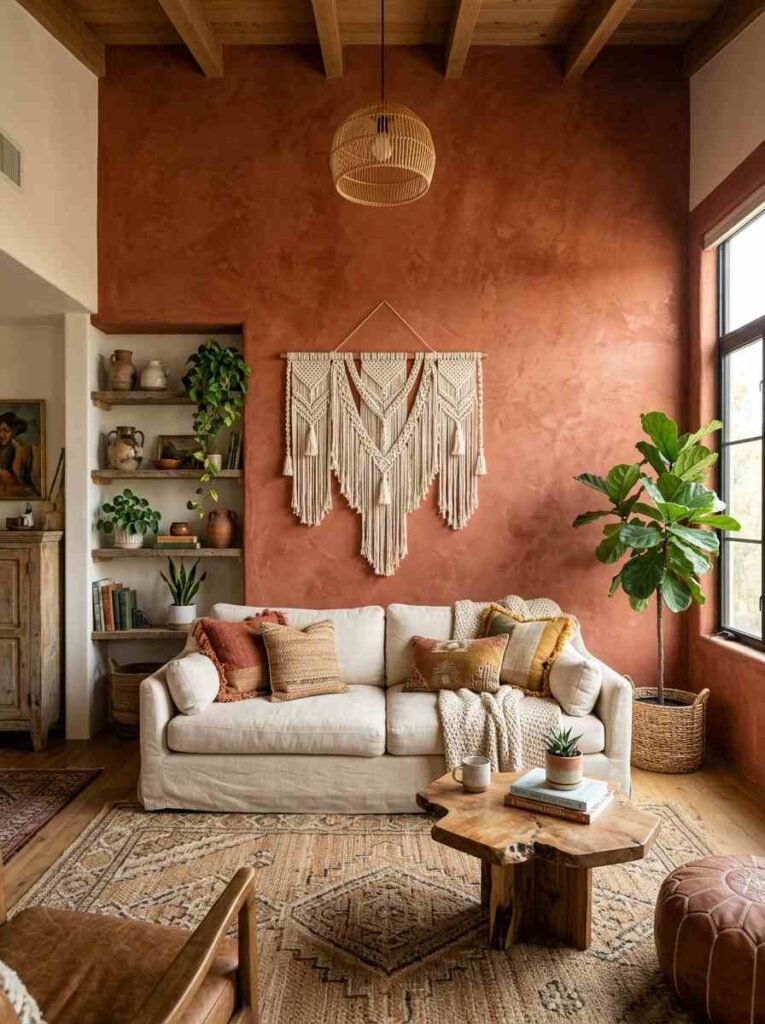
One painted wall in a warm earthy tone transforms a room immediately.
Terracotta specifically has a warmth and depth that works with almost every other boho element.
It doesn’t require you to commit to painting the entire room, and the color reads completely differently depending on the light throughout the day.
22. Layered Textiles on Every Surface
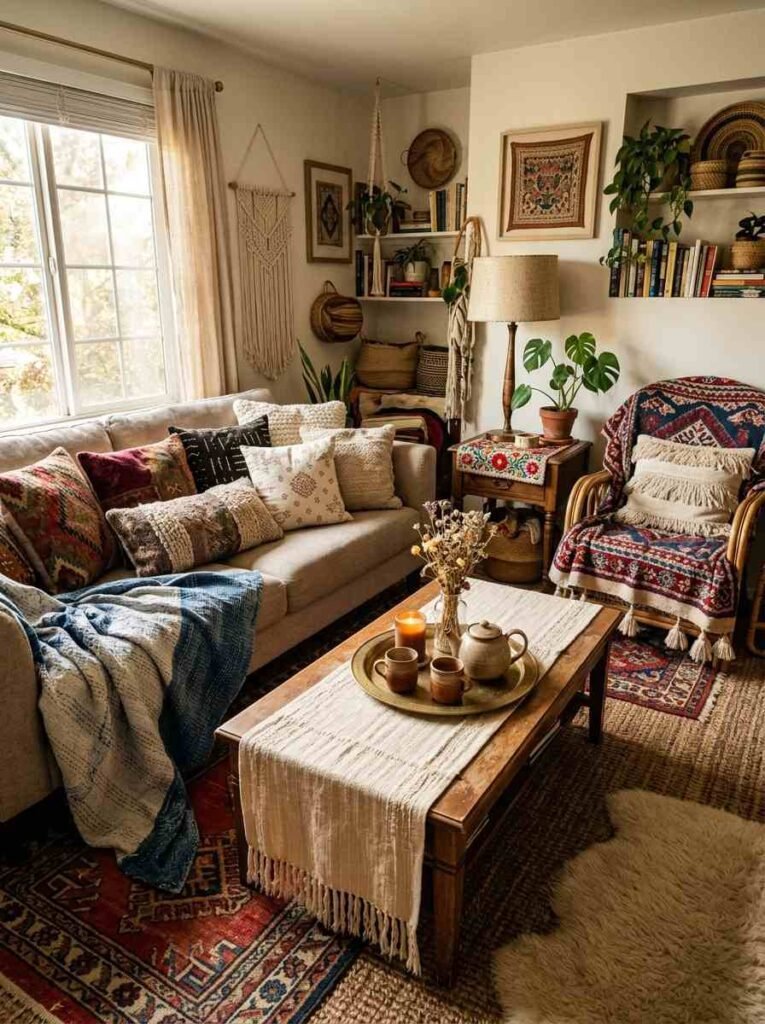
In boho design, bare surfaces are missed opportunities. Throws draped over the sofa arm. A table runner on the coffee table.
A small woven piece under a lamp on the side table. Textiles soften hard surfaces and add the layered richness that makes boho rooms feel so cozy.
23. Moroccan-Inspired Tile Accents
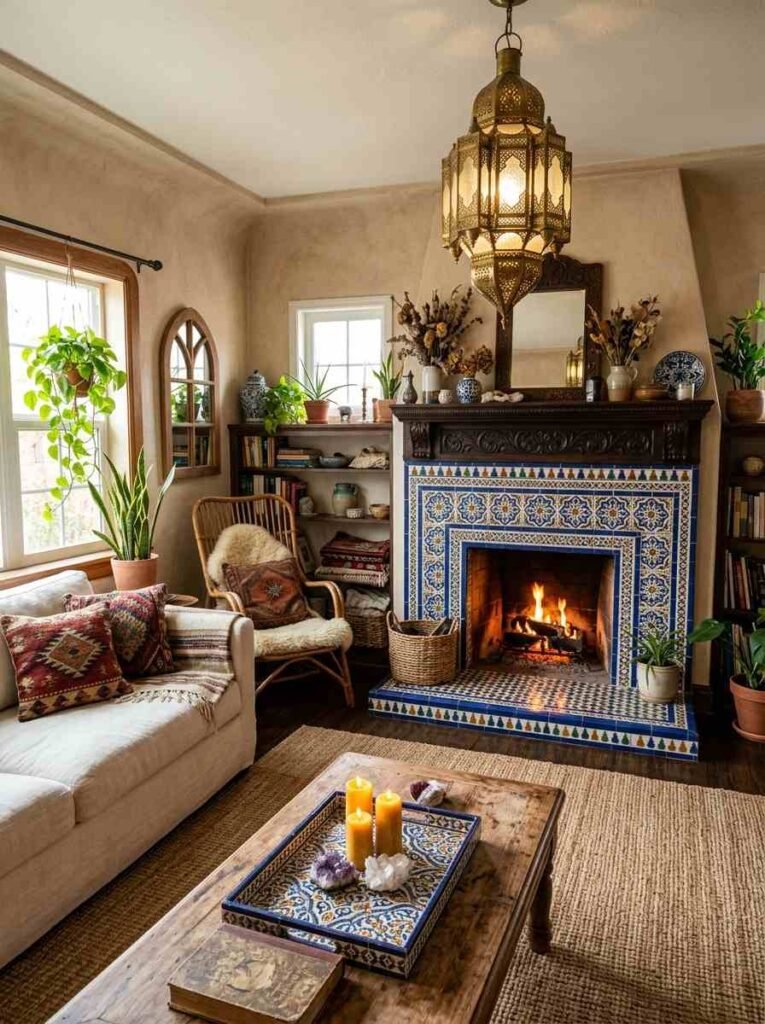
If you have any say over the fireplace surround, a small side table surface, or even a tray used as a coffee table centerpiece, Moroccan-style patterned tile makes an incredible boho accent.
The geometric patterns and rich colors (cobalt, terra cotta, white, black) add that global, well-traveled quality to the room.
24. A Freestanding Indoor Water Feature
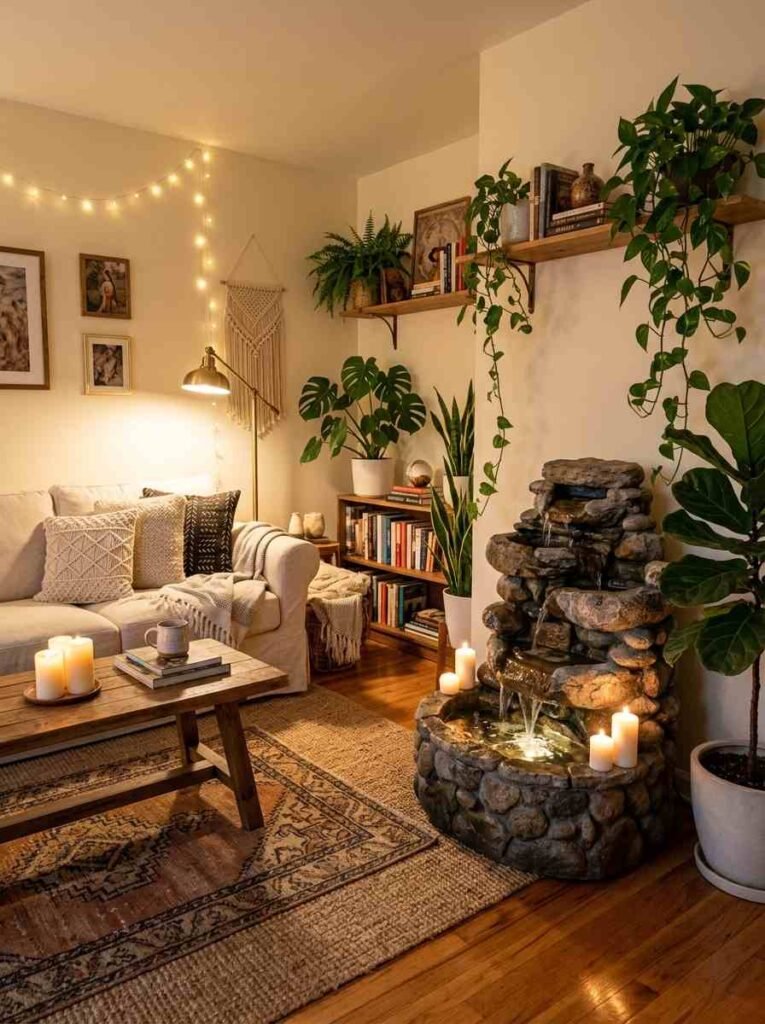
Okay, this one’s a bit more of a commitment, but a small indoor tabletop fountain or even a standing water feature adds sound, movement, and a meditative quality to a boho living room that’s hard to replicate any other way.
The sound of water changes how a room feels, period.
25. Botanical Prints and Nature-Inspired Art
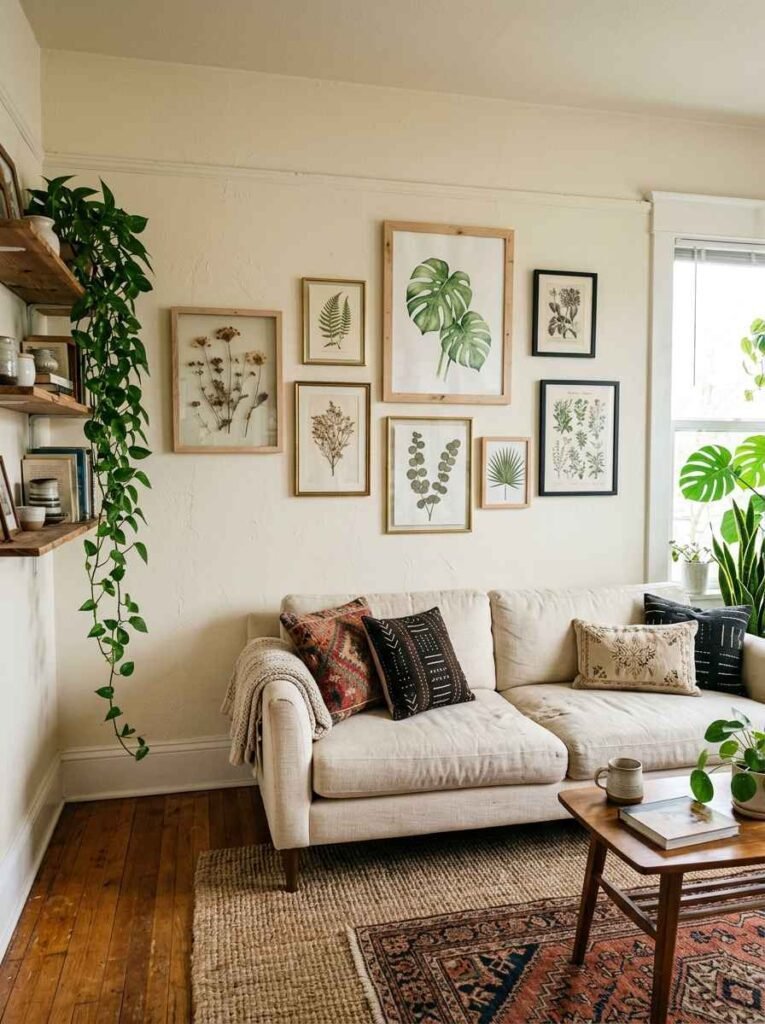
Vintage botanical prints (the kind you find at estate sales or on sites like Society6) bring color and organic imagery to walls without requiring the budget for original art.
They work especially well in clusters, mixing different plants, different frame sizes, maybe a pressed flower framed alongside a printed illustration.
26. An Eclectic Mix of Side Tables
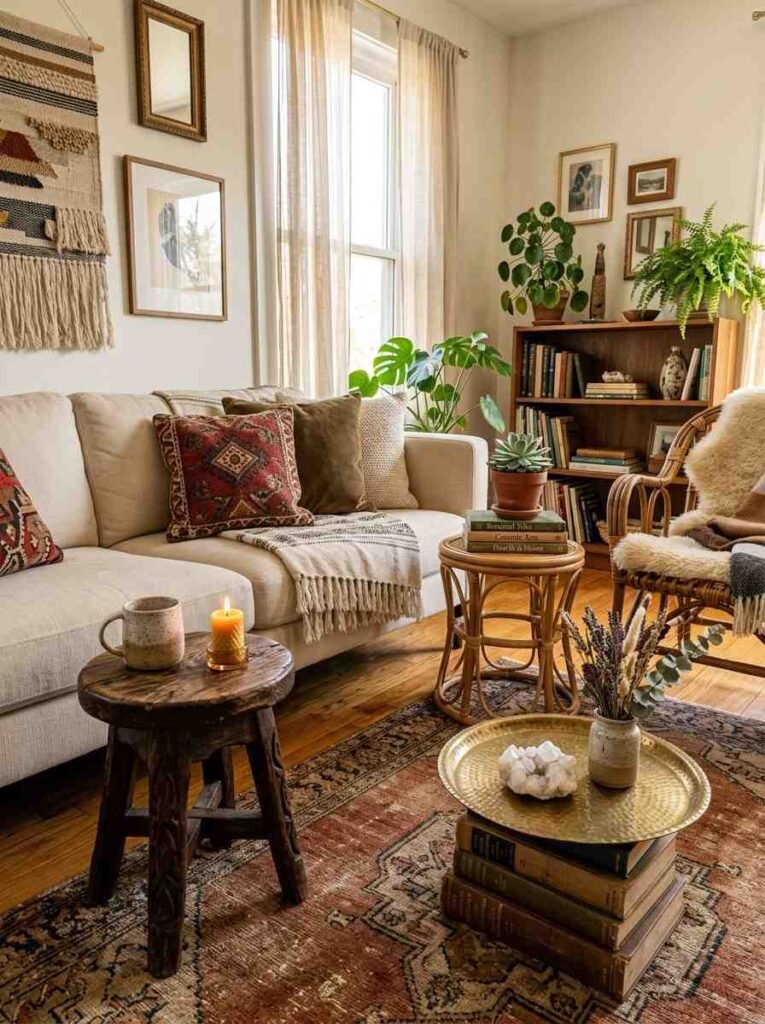
Matching side tables belong in a different kind of room. In a boho space, one side table might be a carved wooden stool, another a stacked pile of vintage books with a tray on top, another a small rattan table.
The variety of forms and materials at different heights creates visual movement.
27. Global Textiles as Throws
Indian kantha quilts, Turkish peshtemal towels, Guatemalan woven blankets. These make incredible throws for sofas and chairs, and they bring color and cultural richness that mass-produced blankets can’t touch. Each one has a history and a craft tradition behind it.
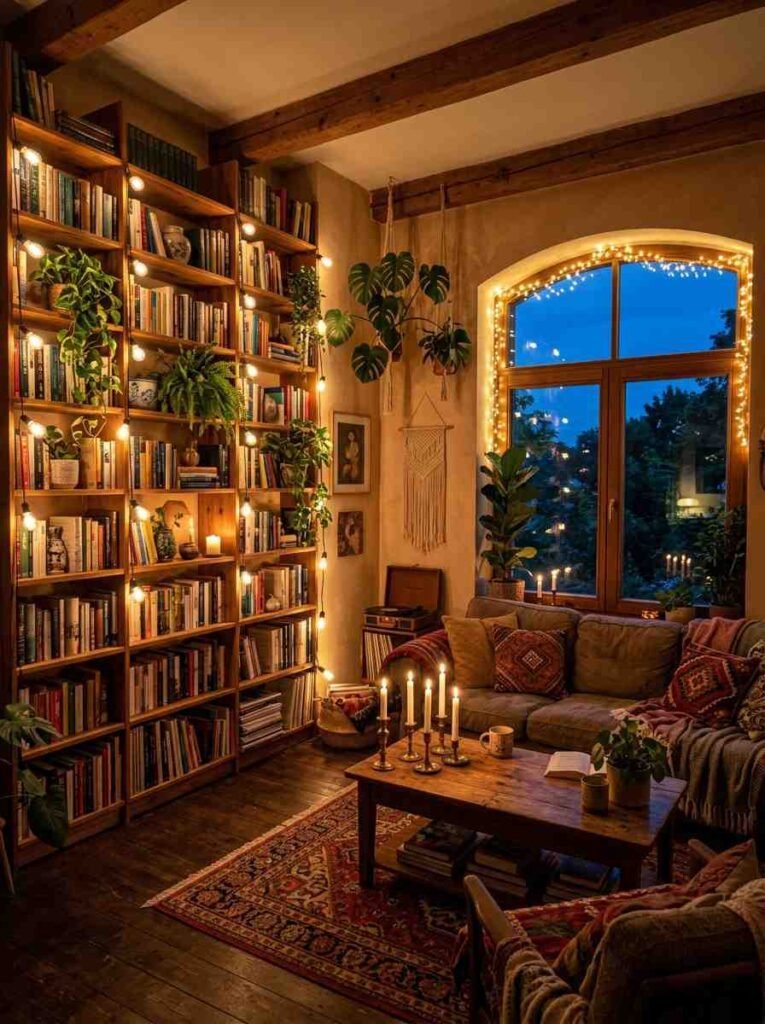
28. String Lights as Permanent Decor
IMO, string lights shouldn’t be seasonal. In a boho living room, warm white string lights draped along a bookshelf, above a window, or woven through a gallery wall create a glow that makes the whole room feel more magical at night.
Pair them with candles for maximum effect.
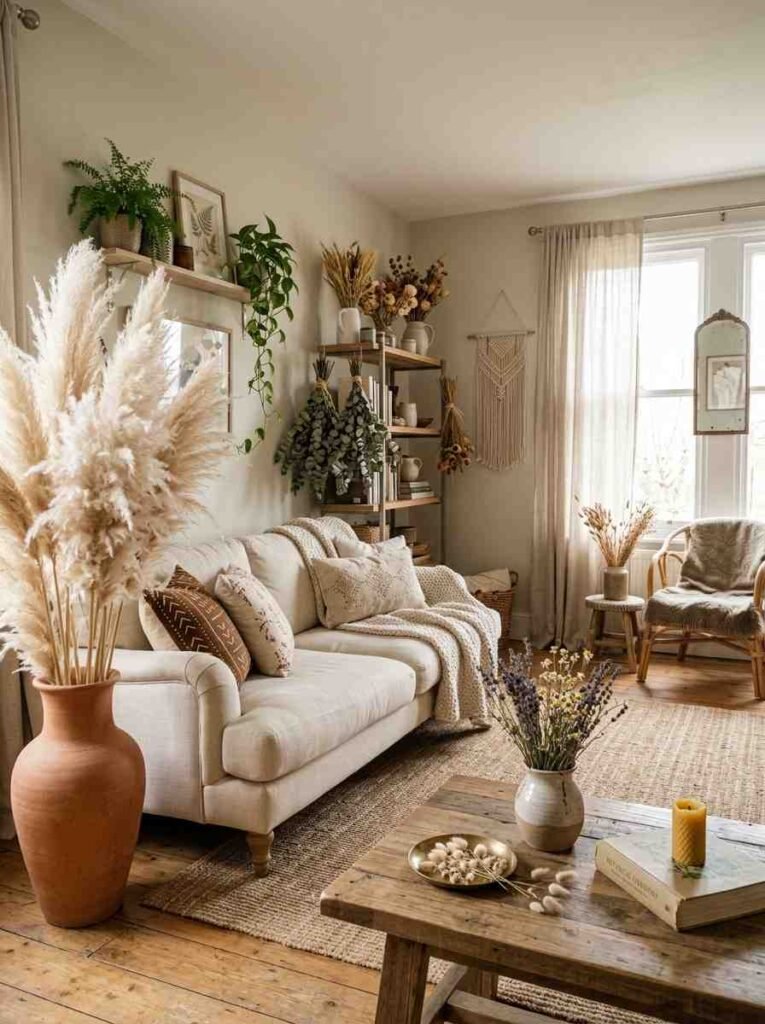
29. Dried Flowers and Pampas Grass
Dried botanicals have become practically synonymous with modern boho design. Pampas grass in a tall vase, dried lavender bundles tied with twine, bunches of dried eucalyptus. They add organic texture,
they’re low maintenance, and they last a very long time. The muted tones fit perfectly with earthy boho palettes.
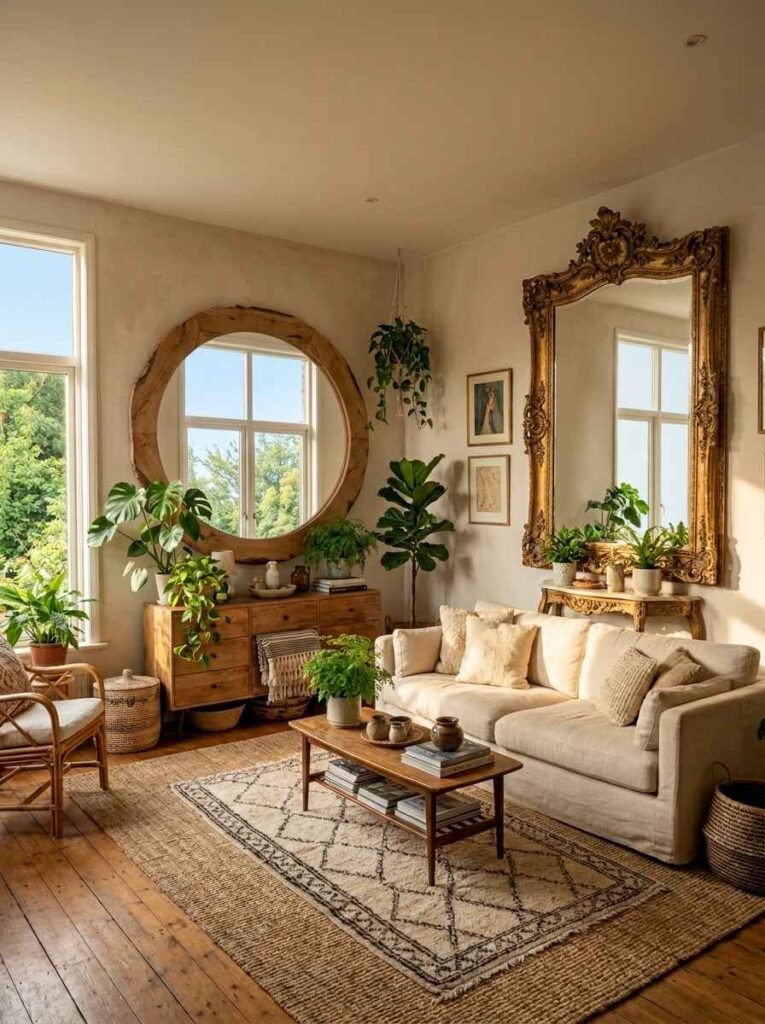
30. A Statement Mirror in a Raw or Ornate Frame
Mirrors do two things in a boho room. They reflect light (crucial for making warm, layered spaces feel open rather than heavy) and they add another opportunity for an interesting frame.
A round mirror in a raw wood or woven rattan frame reads as organic and casual. A heavily ornate vintage gilded mirror reads as maximalist and bold. Both work.
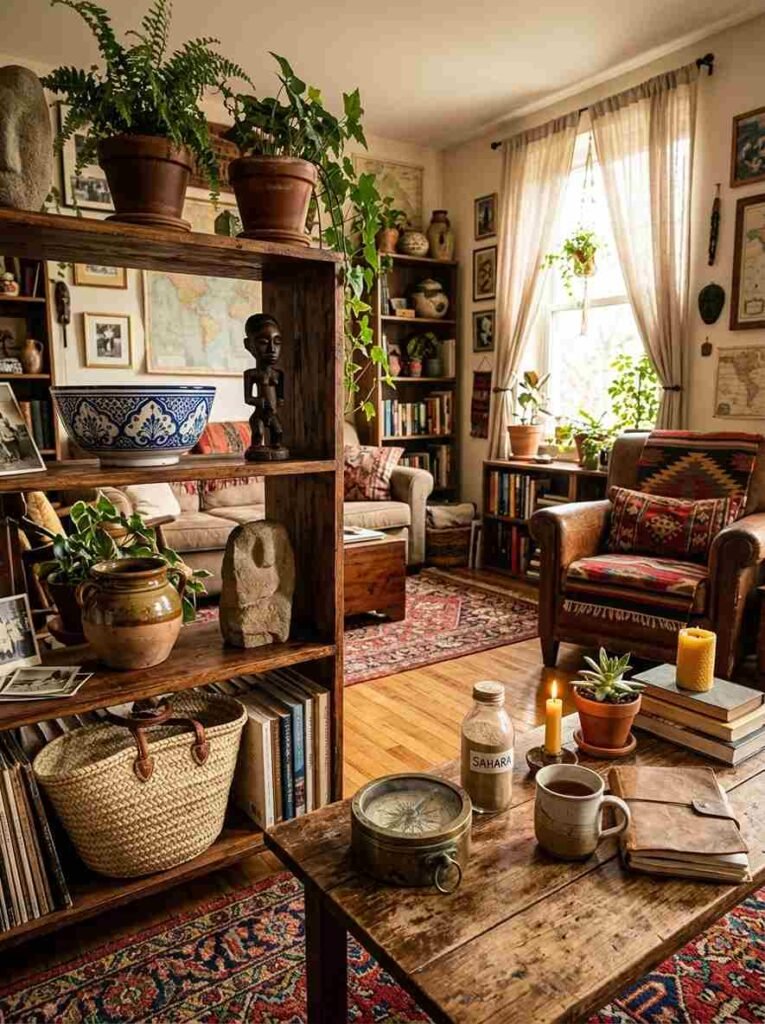
31. Personal Souvenirs and Travel Finds as Decor
This might actually be the most important idea on this list.
The objects you bring back from places you’ve traveled, or inherited from people you love, or found at a market you stumbled into, those are the things that make a boho room feel genuinely lived in rather than styled. A ceramic bowl from a trip to Portugal.
A small carved wooden figure from a flea market in another city. The story behind the object matters as much as the object itself.
A Few Practical Notes on Pulling It Together
Something that trips people up with boho style is the fear of going “too far.” But honestly, the more common mistake is going too safe. Boho rooms reward commitment. If you’re going to layer rugs, layer three.
If you’re adding plants, add eight. The style has a built-in capacity to absorb a lot before it tips into chaos.
A quick framework for getting started without feeling overwhelmed:
- Start with your sofa and rug as anchors, then build layers outward
- Pick your color palette first (earthy base plus 2-3 jewel accent tones)
- Add one large statement piece (macrame, gallery wall, velvet sofa)
- Fill in with textiles, plants, and personal objects over time
The “over time” part matters. The best boho rooms weren’t designed in a weekend. They accumulated. Which, honestly, is kind of the point.
What to Avoid in a Bohemian Living Room
Just so we’re being thorough:
- Too much matching. If your throw pillow, your rug, and your curtain all have the same print, that’s not boho, that’s a theme.
- Cold lighting. Fluorescent or cool-white bulbs flatten the warmth of natural materials entirely.
- Plastic or synthetic materials as the primary surface. Natural fibers, wood, stone, and clay breathe differently and photograph better.
- Overworking the “beachy” version of boho. Nautical elements, white walls, and driftwood lean more coastal than boho. They can coexist, but know which direction you’re going.
Quick Reference: Boho Living Room Essentials
| Element | Budget Option | Statement Version |
|---|---|---|
| Rug | Layered jute from IKEA | Vintage handmade kilim |
| Lighting | Warm-tone Edison bulbs | Moroccan brass lanterns |
| Textiles | Kantha quilt as throw | Vintage velvet sofa |
| Wall art | DIY macrame | Large commissioned fiber art |
FAQ
Q: Can a bohemian living room work in a small apartment?
Yes, and sometimes better than in a large space. Small rooms benefit from the cozy, layered quality boho creates. Focus on vertical elements (tall plants, hanging art, floor-to-ceiling curtains) to make the space feel bigger, and keep larger furniture pieces to one or two anchors.
Q: How do I make a boho room feel curated rather than cluttered?
The difference is usually negative space and repetition. Make sure some surfaces stay clear. And repeat a few key tones throughout, even if the patterns and textures vary wildly. The color thread is what holds it together.
Q: What’s the easiest single change to make a living room feel more bohemian?
Swap your lighting. Add a floor lamp with a warm bulb, move the overhead fixture to a dimmer, and bring in a couple of candles. The shift in atmosphere is immediate and costs almost nothing.
So, where do you start? If I had to pick one thing to do this weekend, it would be the rug layer. It’s low commitment, immediately transformative, and it’ll show you exactly what direction you want to take the rest of the room. Once you see how a second rug changes the whole feel of a space, the rest of the ideas start to make a lot more sense.
What’s the one element from this list you’re most excited to try first?
