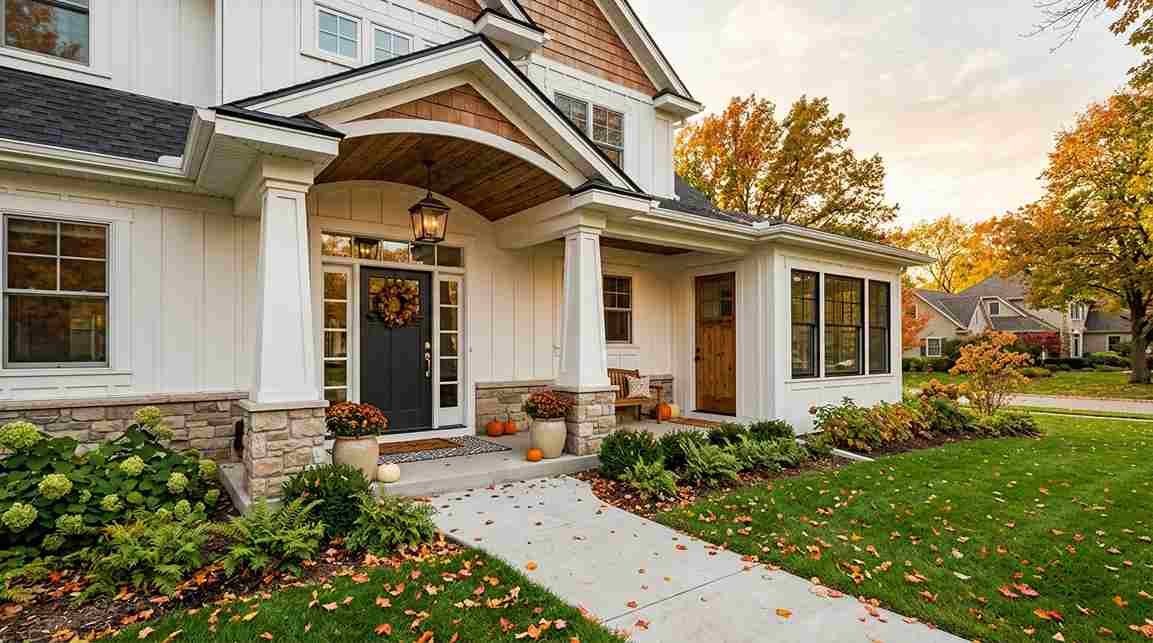
Your front entrance says everything before you even open the door. And a mud room that flows right from the outside?
That’s the kind of upgrade that genuinely changes how you live in your home — not just how it looks from the street.
I’ve spent way too many hours obsessing over entryway ideas on Pinterest, tested a few myself, and collected the best ones here.
Whether you’re building from scratch or working with a tight budget, there’s something on this list for you.
Why a Mud Room Addition Actually Matters
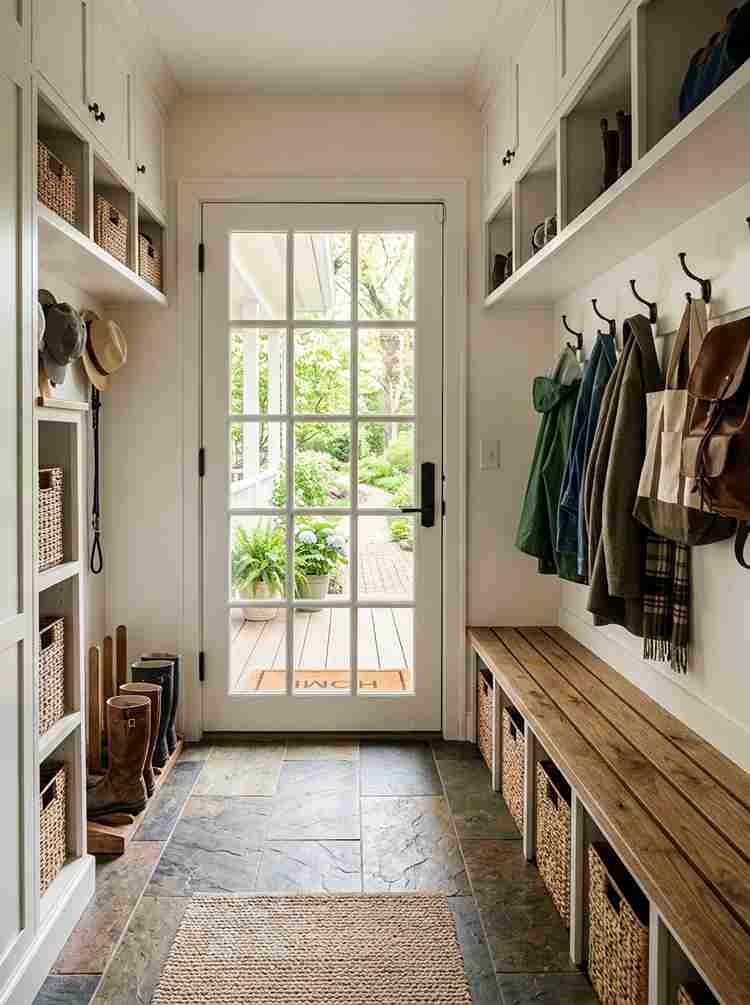
Most people underestimate this space. They think it’s just a spot to kick off boots. But a well-designed exterior mud room addition does three real things:
it keeps your main living areas cleaner, it adds serious curb appeal, and — if done right — it can bump your home’s resale value.
Trust me, once you have one, you’ll wonder how you survived without it.
Quick Reference: Mud Room Addition at a Glance
| Feature | Budget Option | Mid-Range | High-End |
|---|---|---|---|
| Size | 6×8 ft | 8×12 ft | 12×16 ft+ |
| Avg. Cost | $3,000–$7,000 | $10,000–$20,000 | $25,000+ |
| Best For | Small lots, rentals | Family homes | Custom builds |
| ROI Potential | Moderate | High | Very High |
The 25 Ideas (Let’s Actually Get Into It)
1. Classic Covered Entry Porch With Built-In Storage
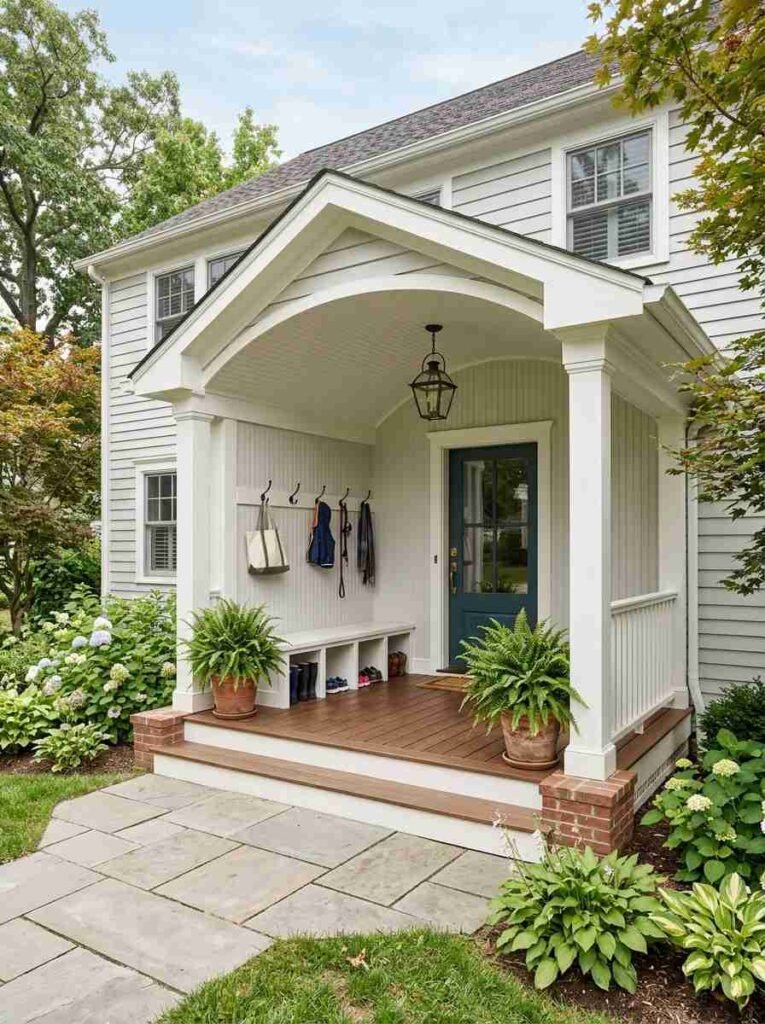
A simple covered porch with built-in cubbies along the wall is honestly the easiest win here. Add a bench with shoe storage underneath and hooks above.
It doesn’t need to be huge — even a 6×8 space works beautifully if the layout is smart.
I tried a version of this at my sister’s house and the whole project cost under $4,000. The family uses it every single day.
2. Board and Batten Exterior Mud Room Addition
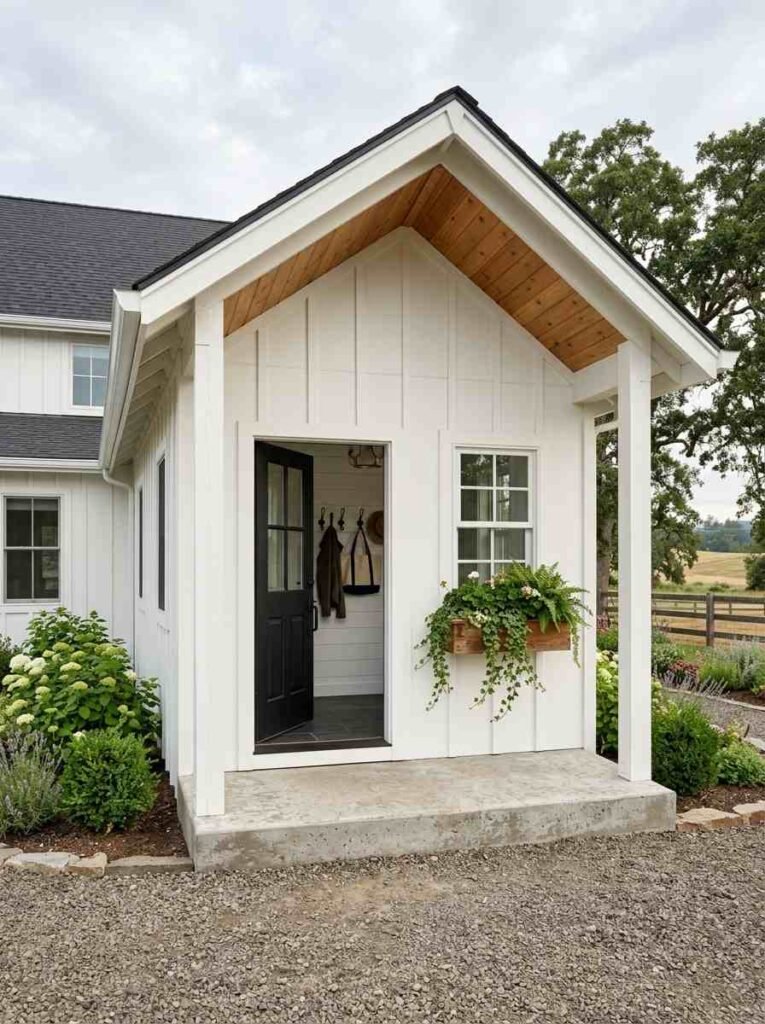
Board and batten siding on a small mud room addition gives it a farmhouse character that photographs incredibly well — which is probably why it absolutely dominates Pinterest right now.
Pair it with black hardware and a wooden ceiling and you’ve got something people will save forever.
3. Glass-Front Entry Vestibule
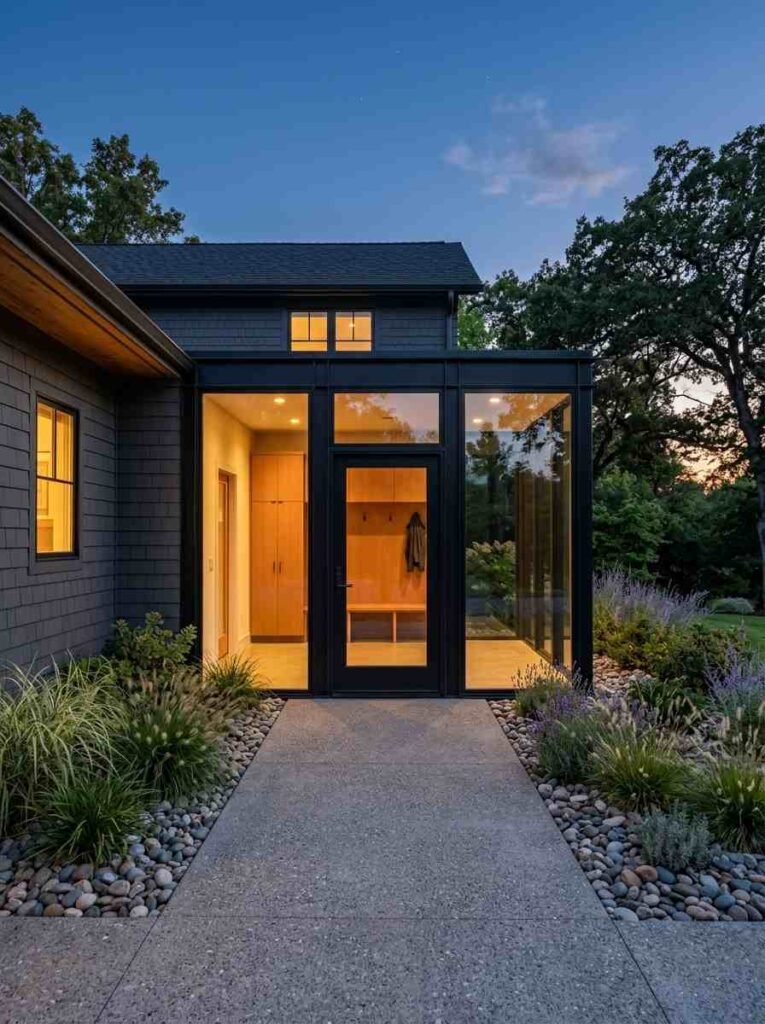
A small glass vestibule addition between your front door and the outside creates a beautiful transition. It lets in natural light, protects your main door from weather, and looks genuinely upscale.
FYI, this one works especially well on older homes where you want a modern contrast.
4. Brick Exterior With Arched Entry
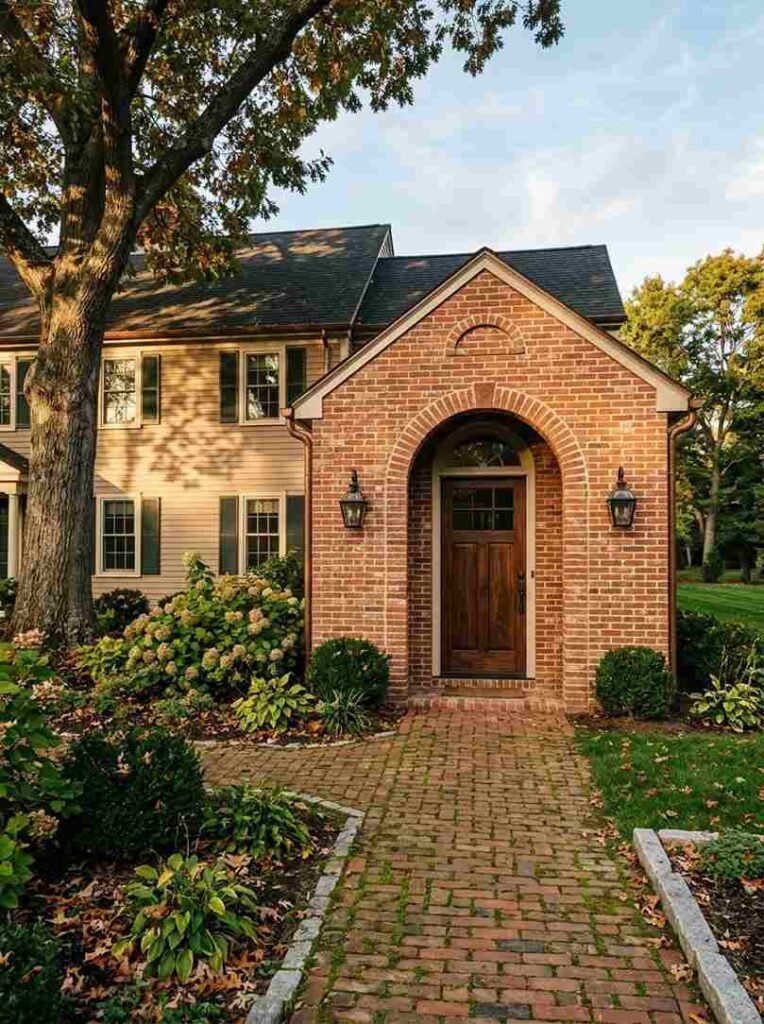
If your home already has brick detailing, extending that material into a mud room addition creates seamless architectural flow.
An arched entry opening — even a simple one — adds character that feels intentional rather than tacked on.
5. Dutch Barn Door Entry
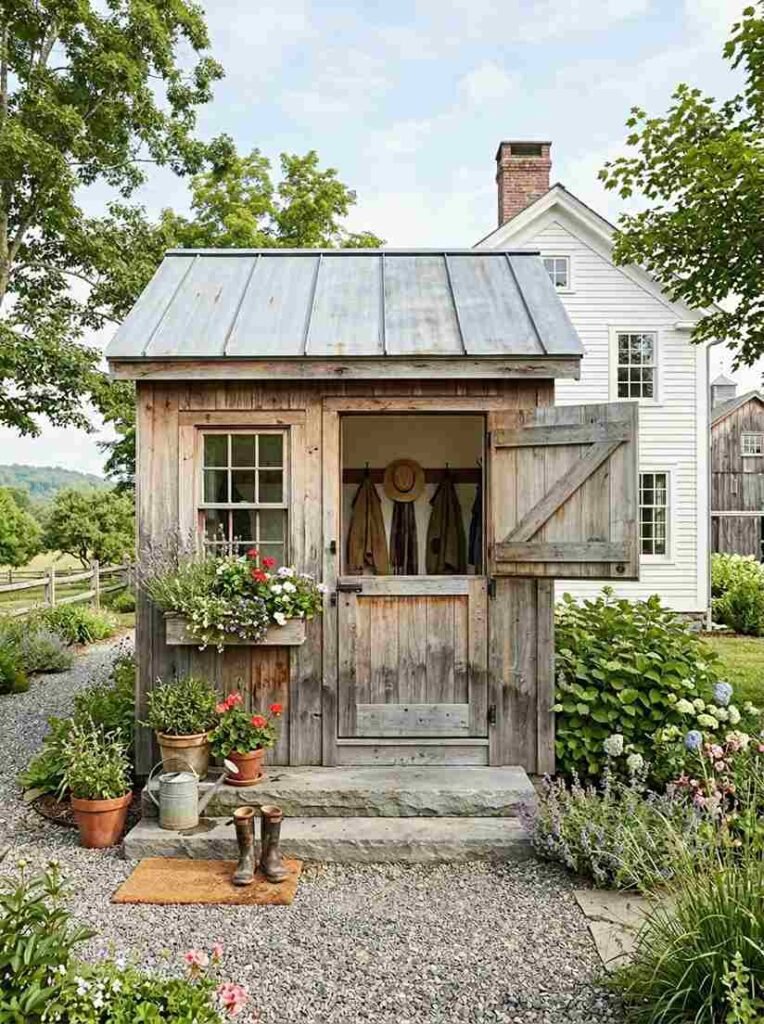
A Dutch barn door (the kind that opens in two halves) on your mud room exterior is both practical and seriously cool-looking.
You can open just the top half for ventilation while keeping the bottom closed for pets or kids. I’ve seen this in a lot of farmhouse-style homes and it always stops people.
6. Wraparound Bench With Overhead Pergola
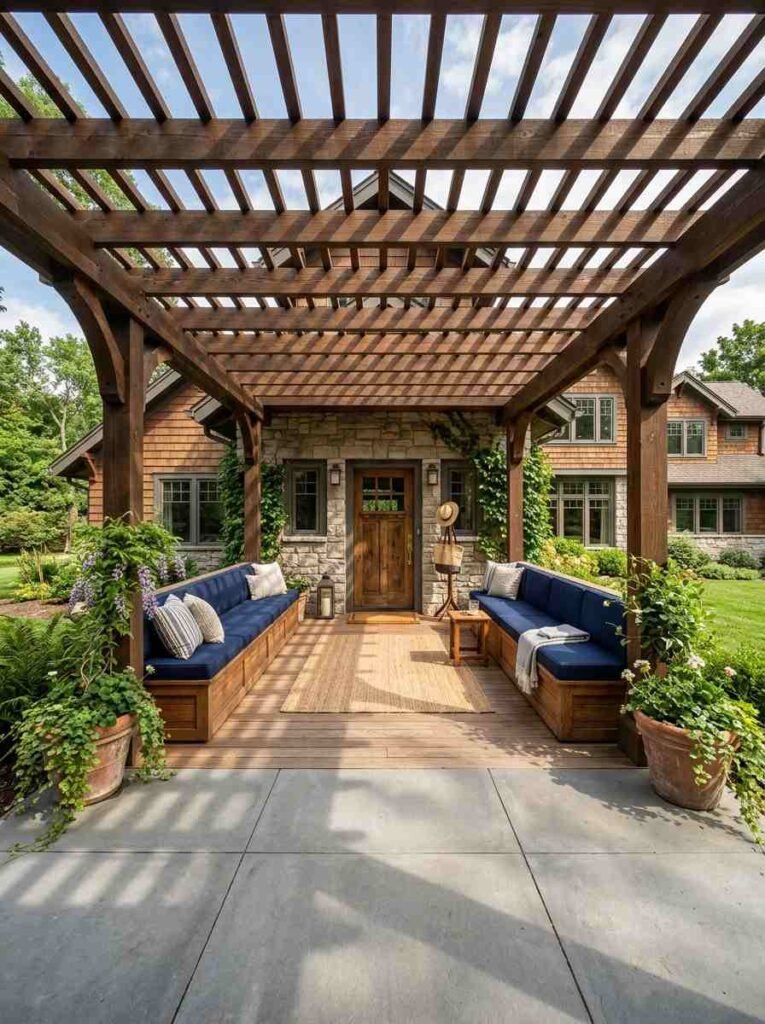
Extend your mud room addition outward with a pergola overhead. Add a wraparound bench along one or two walls with under-seat storage.
It’s part functional entryway, part outdoor sitting area. Two spaces for the price of one — you can’t argue with that.
7. Stone Veneer Exterior Mud Room
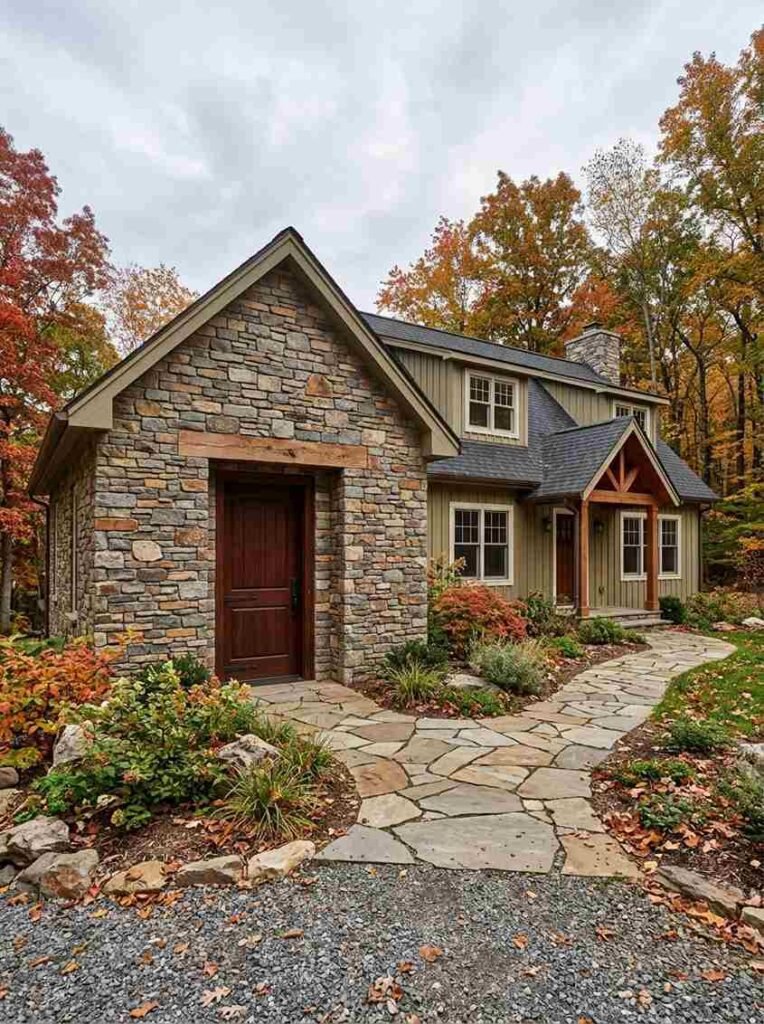
Stone veneer is one of those things that looks way more expensive than it actually is. Applied to the exterior of a small mud room addition, it creates a cottage or craftsman aesthetic that’s genuinely timeless.
8. Craftsman-Style Addition With Exposed Beams
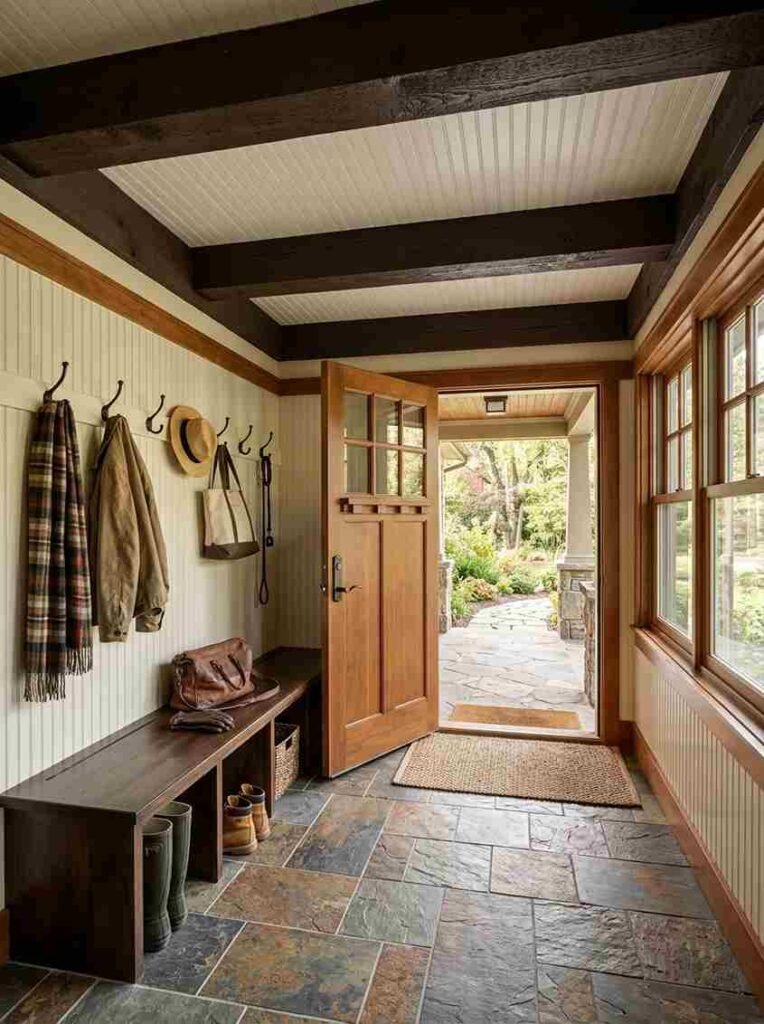
Exposed wooden beams on the ceiling of a covered mud room entry are a craftsman signature that photographs beautifully.
Pair them with a beadboard ceiling, a slate tile floor, and board-form walls. This combo is warm, grounded, and works with almost any home style.
9. Modern Minimalist Steel and Glass Entry
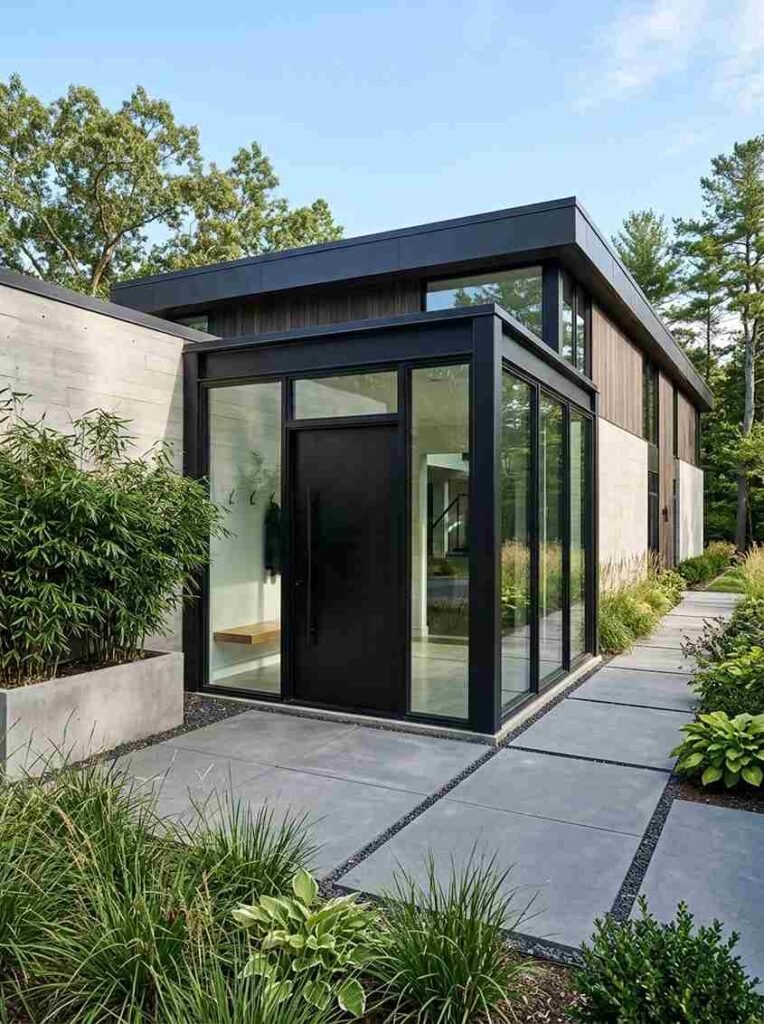
Honestly, this trend feels a little cold to me personally — but if you have a contemporary home, a steel-framed glass enclosure as a mud room addition is stunning.
Clean lines, black steel, oversized hardware. It’s the kind of entryway that shows up in architectural magazines.
10. Pebbled Pathway Leading Into a Covered Entry
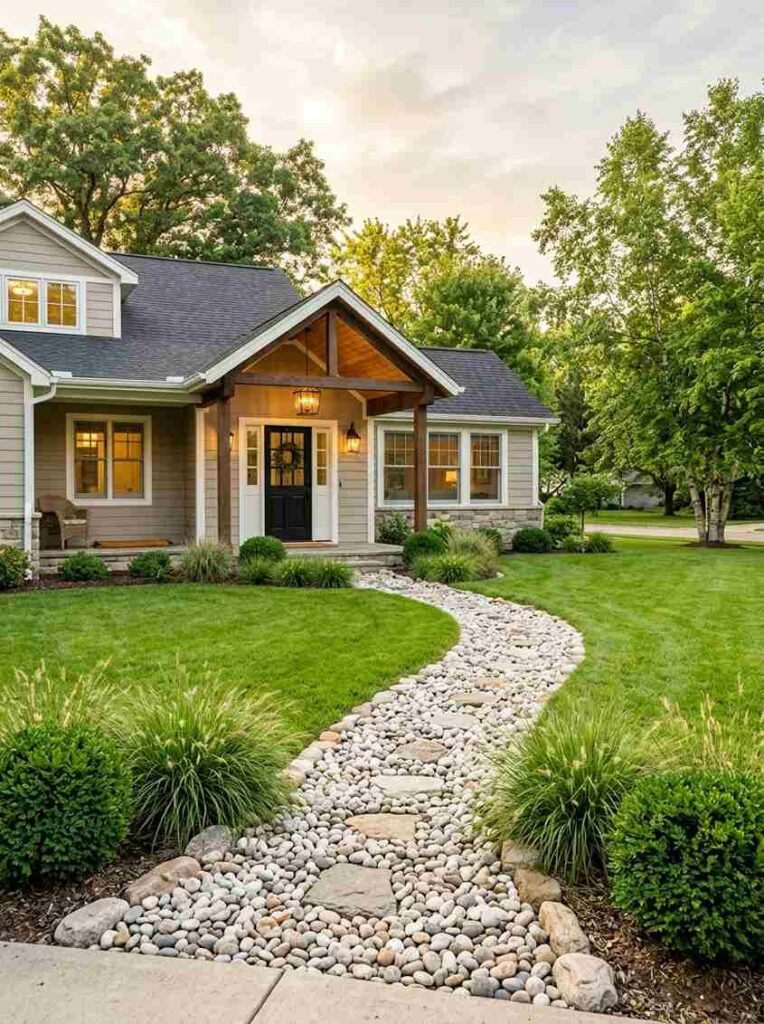
The exterior entrance starts before you even reach the door. A curved pebbled pathway leading into a covered mud room entry creates a sense of arrival.
Add low landscaping on either side and suddenly your entrance feels considered.
11. Reclaimed Wood Ceiling and Rustic Hooks
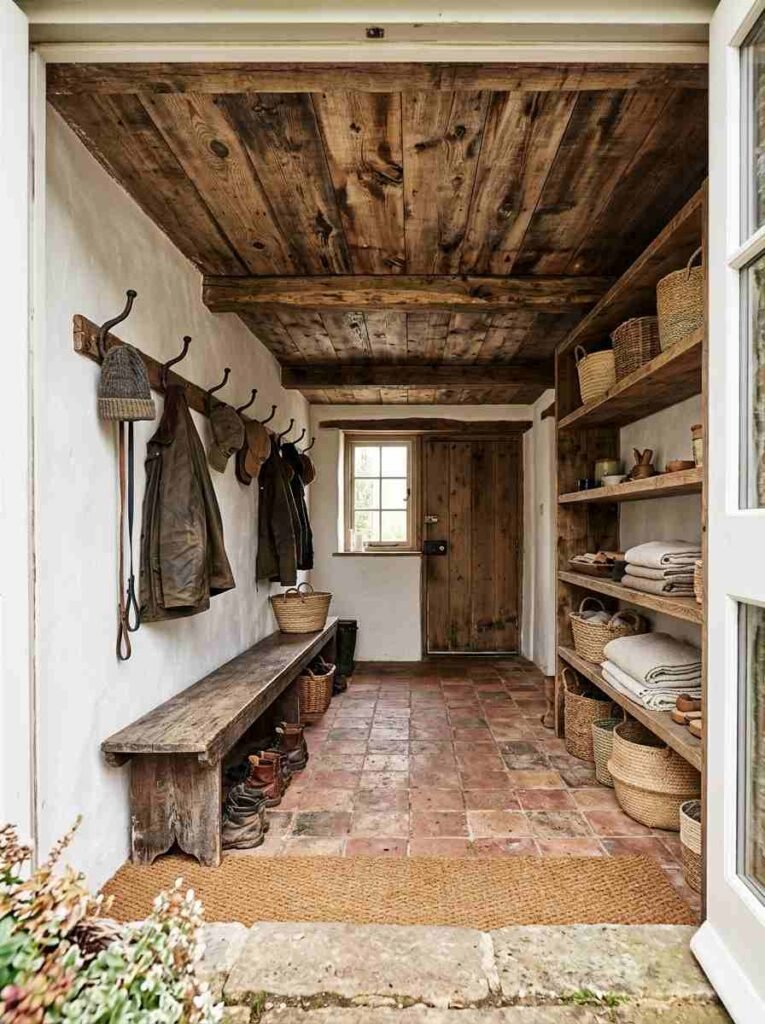
Reclaimed wood as a ceiling material in an exterior mud room addition adds texture and warmth that new lumber just can’t replicate. Pair it with heavy cast-iron hooks for a rustic, lived-in feel that Pinterest users absolutely love.
12. Mudroom With Laundry Passthrough
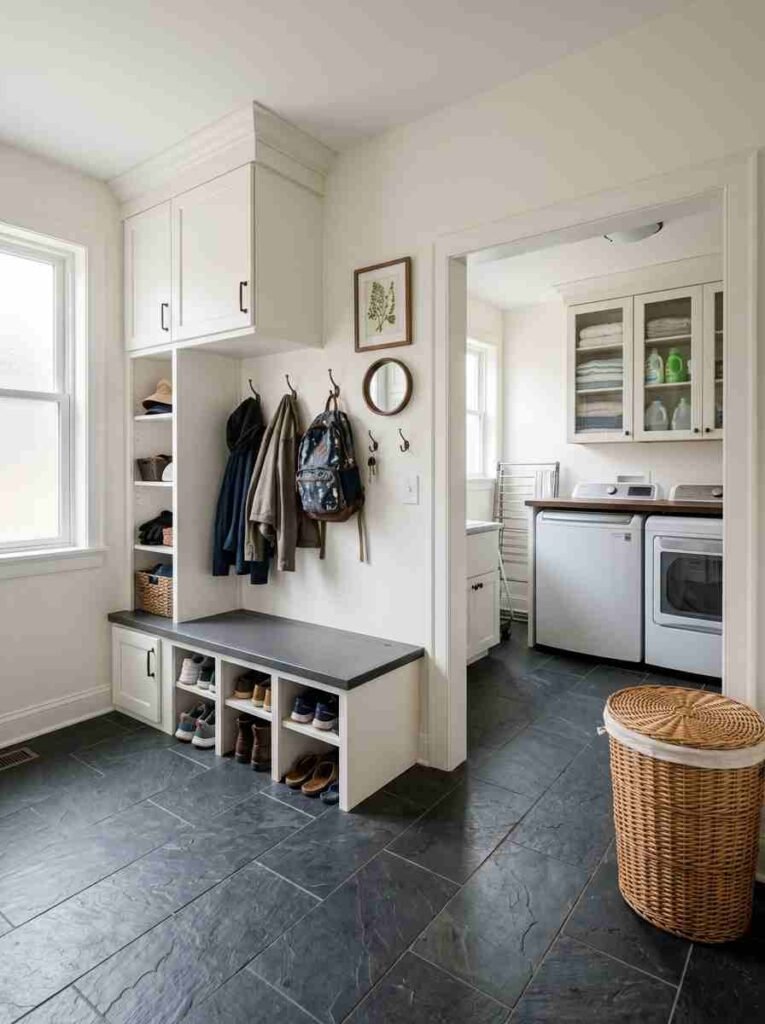
If you’re adding square footage anyway, consider connecting your mud room addition directly to a laundry area.
Dirty clothes go straight from the entry to the washer — zero tracking through the house. Practical and Pinterest-worthy? Rare combo.
13. Painted Brick With Window Boxes
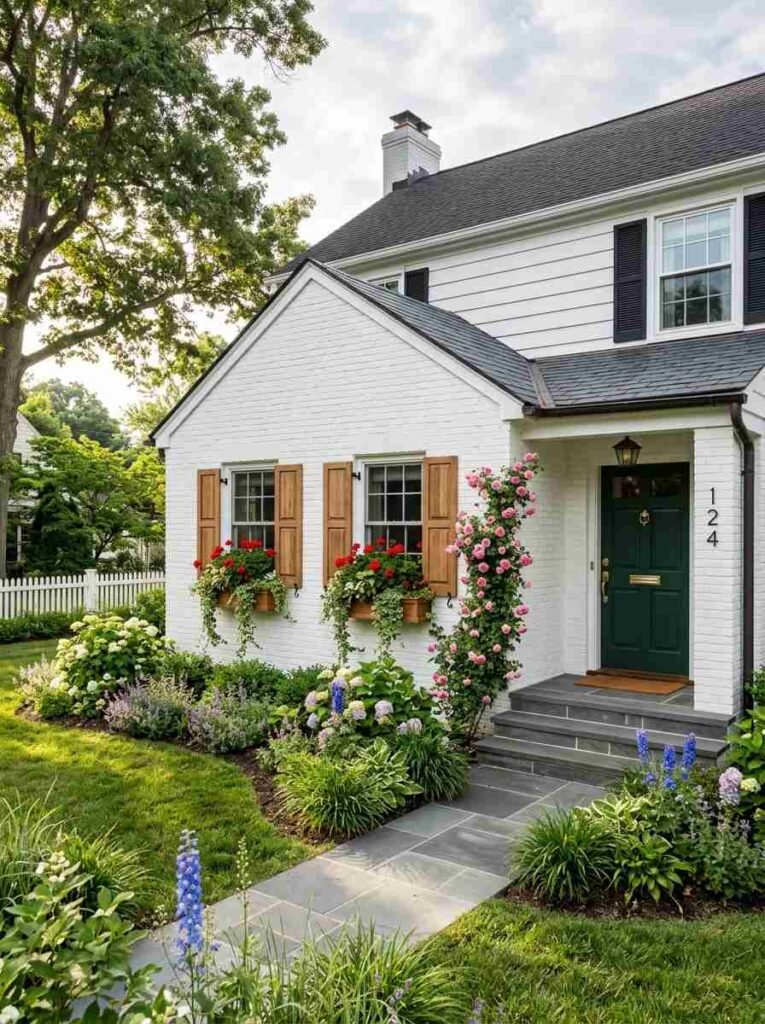
A painted brick mud room addition with window boxes on either side of the door is one of the most charming exterior ideas I’ve seen.
The window boxes add color and softness against the painted brick, especially in spring and summer.
14. Cedar Shake Siding for a Pacific Northwest Look
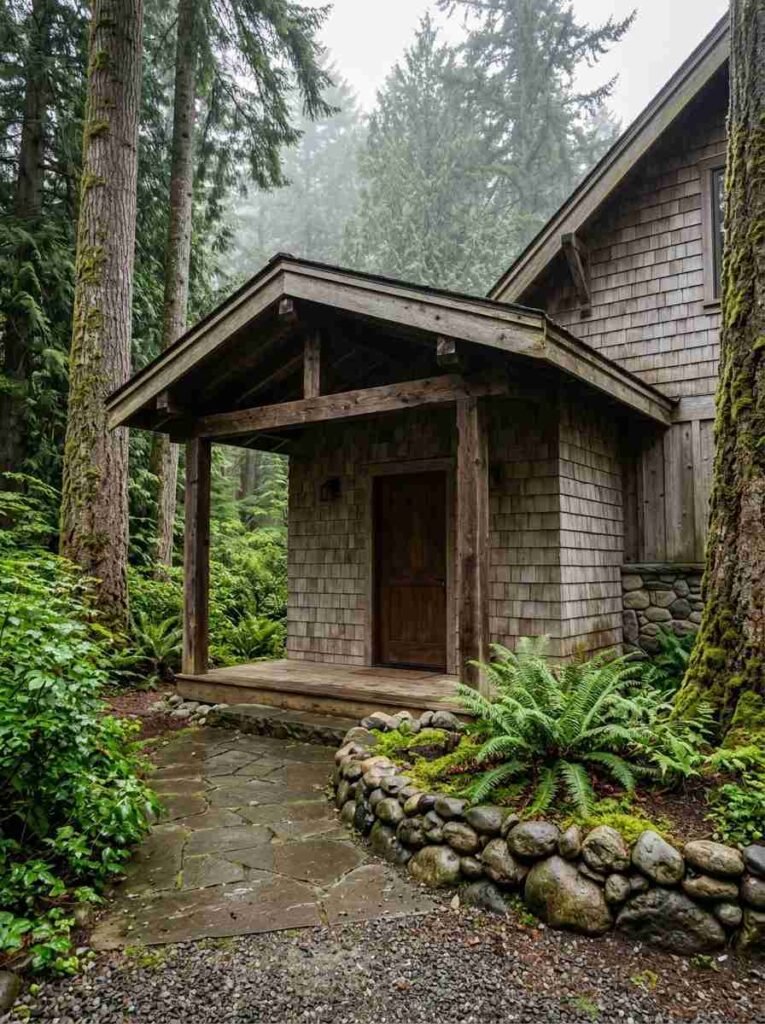
Cedar shake siding on a small mud room addition has this organic, cabin-in-the-woods quality that’s genuinely cozy.
It weathers beautifully over time and requires less maintenance than most people assume.
15. Tall Entry With Vaulted Ceiling
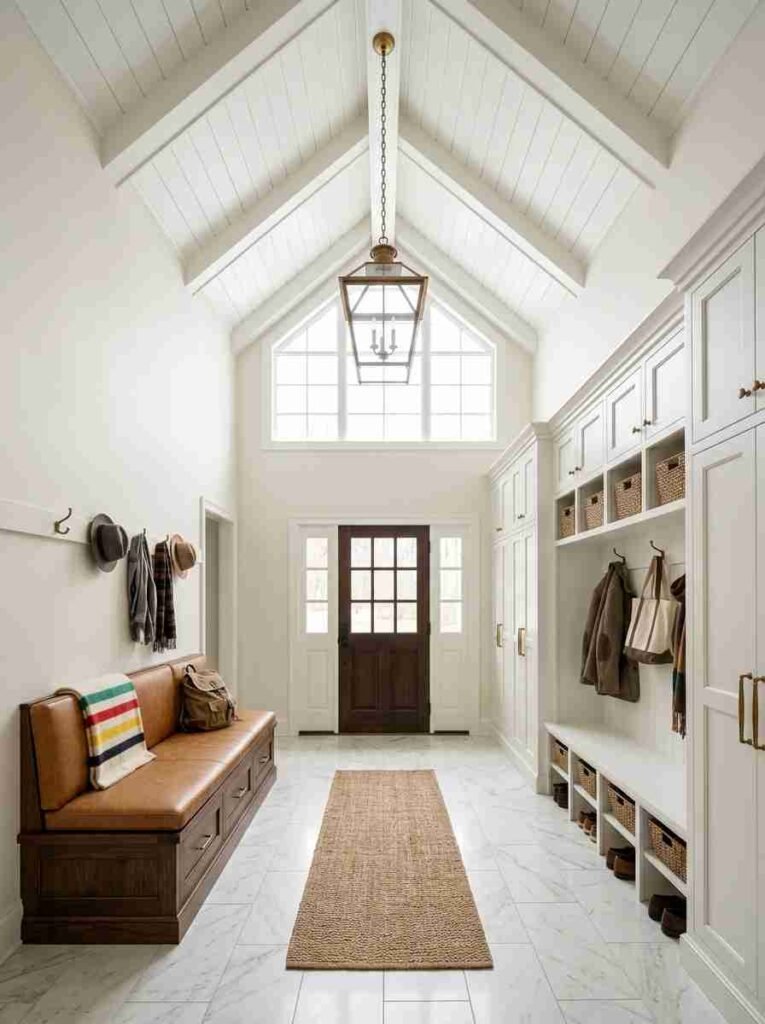
Scale matters. A mud room addition with a vaulted or cathedral ceiling feels airy and generous even in a small footprint. Use the height for tall storage cabinets or a dramatic light fixture.
16. Side-Entry Mud Room Addition
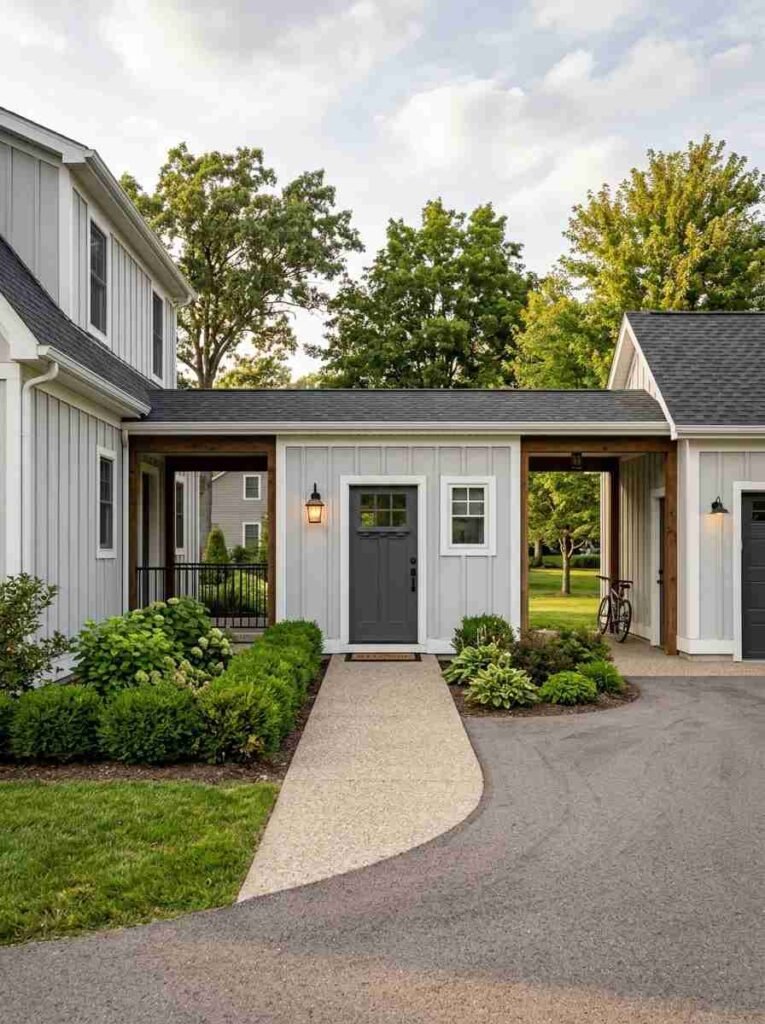
Front-of-house doesn’t have to be the default. A side-entry mud room is actually more practical for most families since it connects more naturally to the garage or backyard. It also keeps the front of your home cleaner-looking.
17. Porch Swing Meets Mud Room
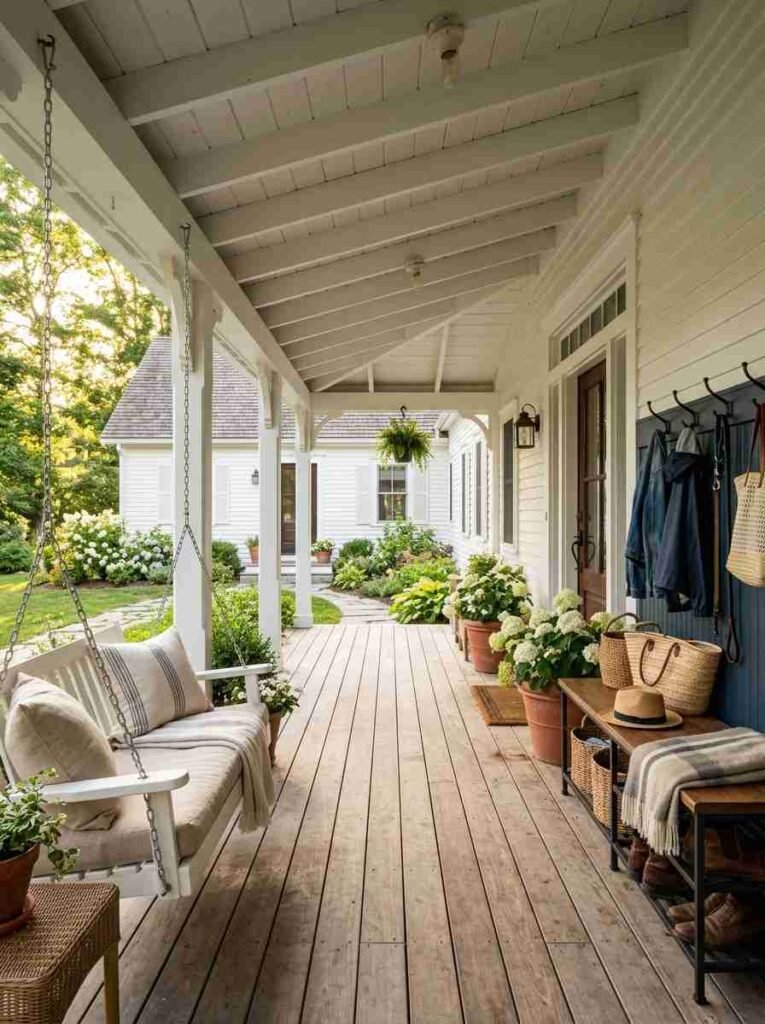
A deep covered entry addition with a porch swing on one side and mud room storage on the other is the kind of hybrid design that makes people stop scrolling. The swing adds lifestyle — it says “this family actually uses their porch.”
18. Herringbone Brick Floor for the Entry Step
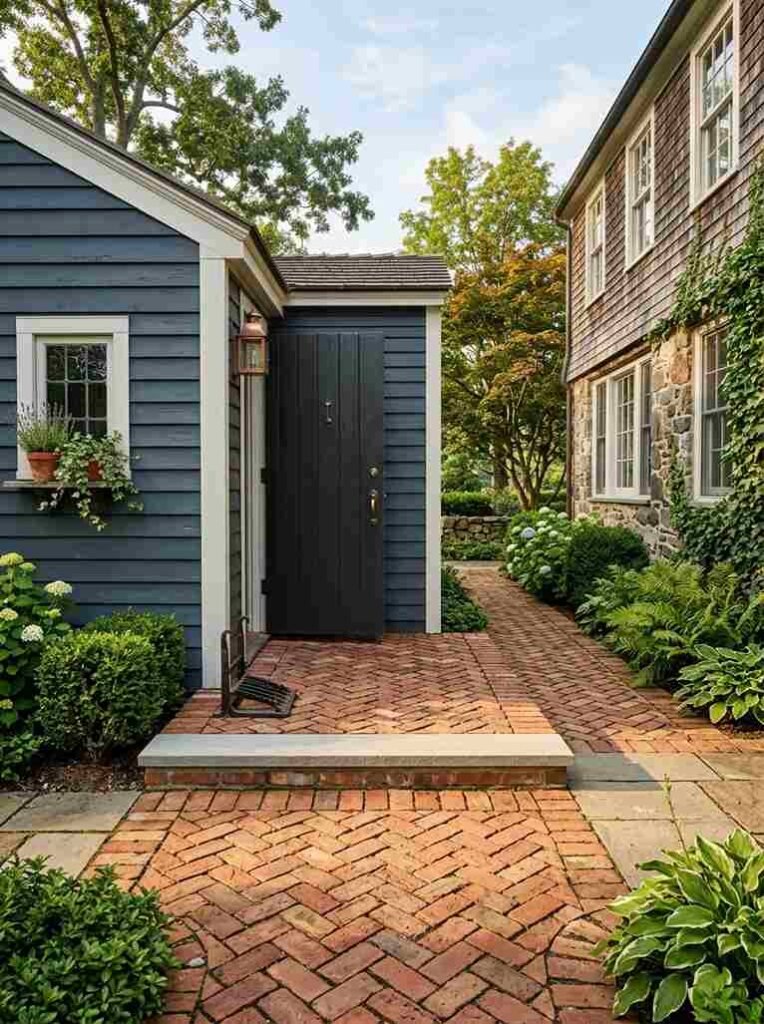
The floor of your exterior entry is part of the design. Herringbone-laid brick for the approach and step into your mud room addition adds pattern and texture that elevates the whole entrance. It’s one of those small decisions that makes the whole thing look custom.
19. Corrugated Metal Roof With Wood Walls
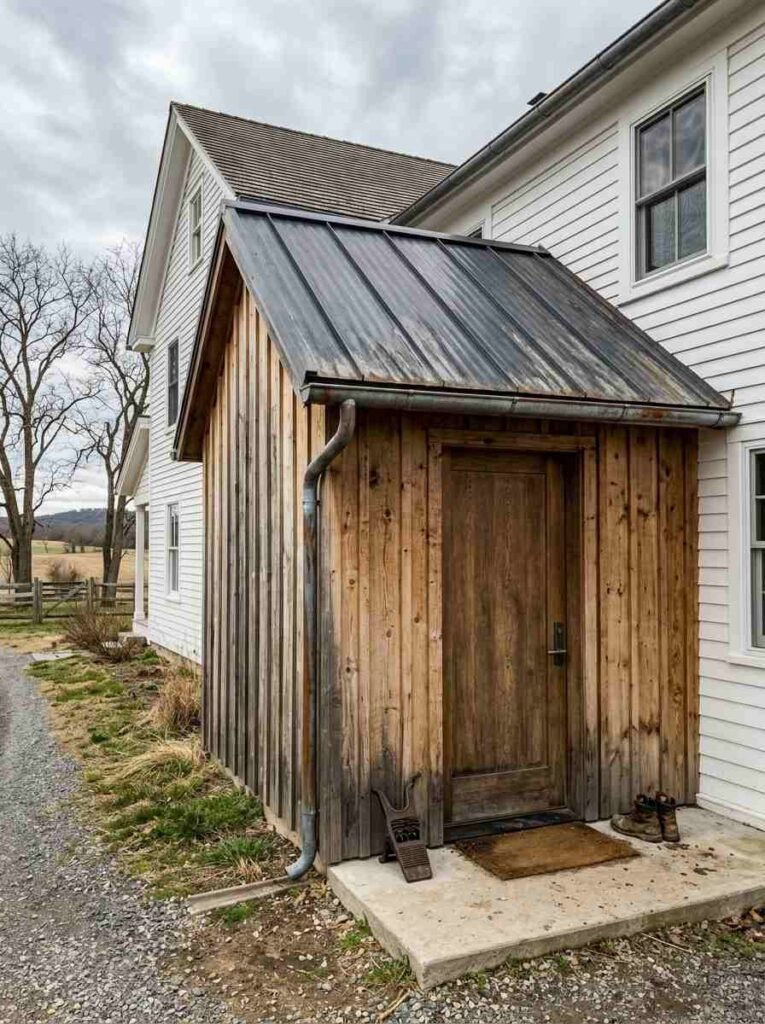
A corrugated metal roof panel on a covered mud room extension has a kind of industrial-farmhouse appeal that works surprisingly well with modern and traditional homes alike. I was skeptical at first — but once I saw it in person, I got it.
20. Painted White Brick With Black Trim
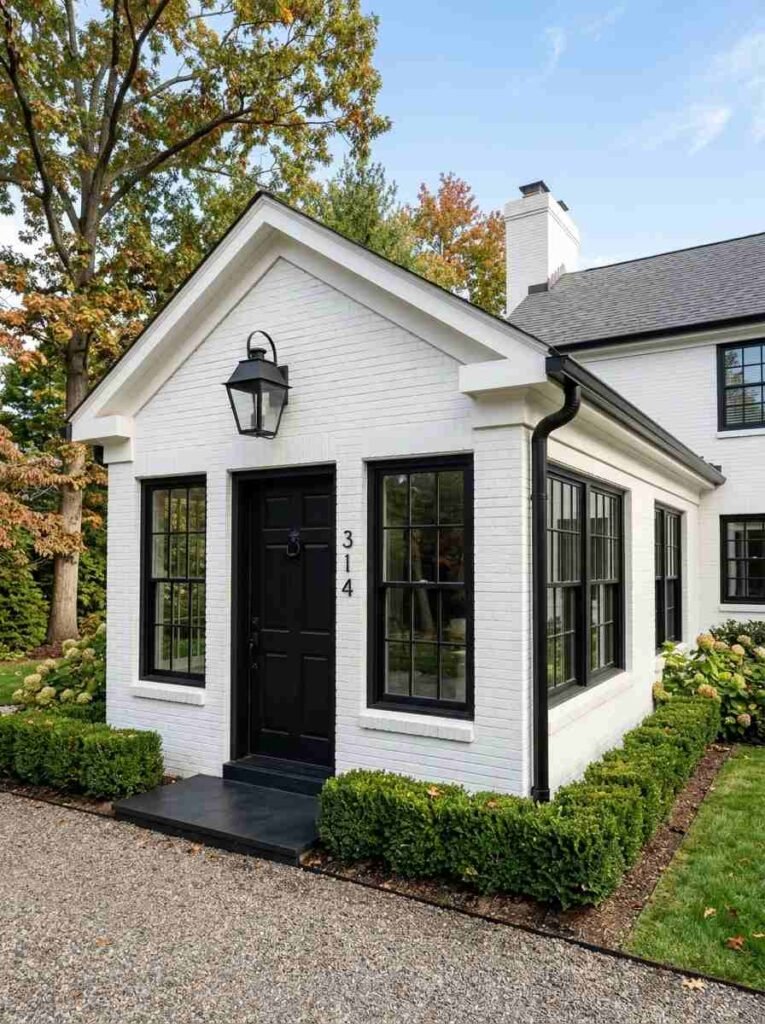
This is one of those combinations that just works every single time. White-painted brick exterior, black door, black trim, black hardware. Classic, bold, and totally timeless. Works on any home style from colonial to contemporary.
21. French Door Entry Into a Glass Mud Room
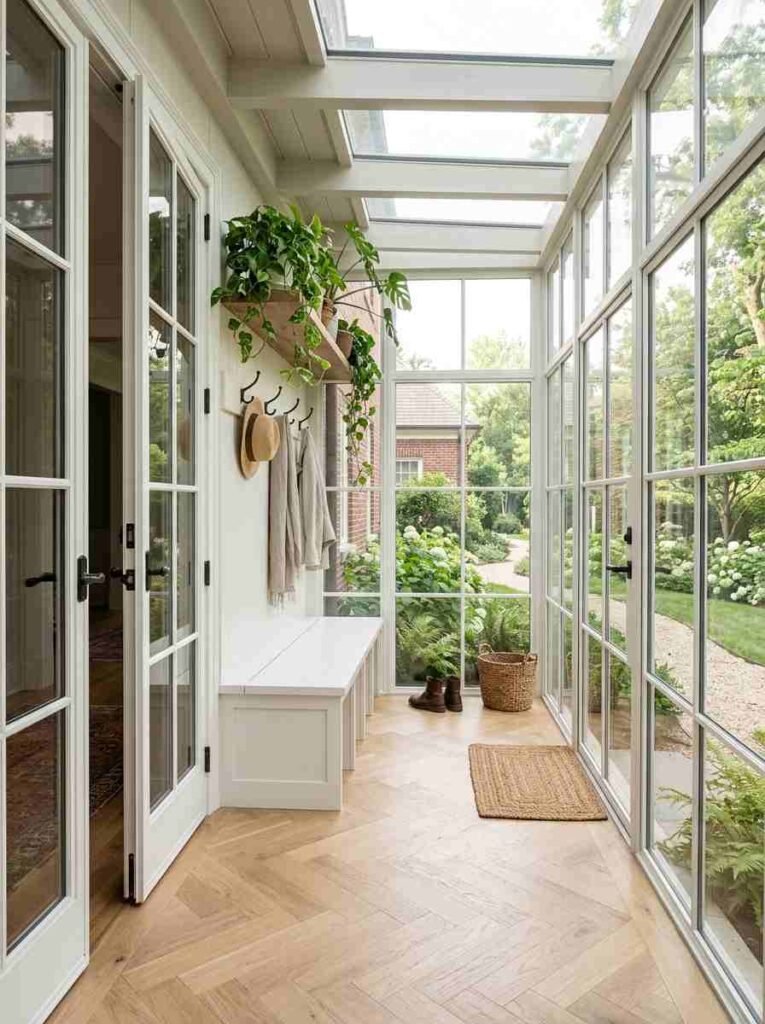
French doors opening into a glass-enclosed mud room give you interior mud room functionality with an exterior aesthetic that feels European and elegant. Especially nice if your home has high ceilings and you want to carry that light all the way through.
22. Dry-Stack Stone Walls With a Cedar Roof
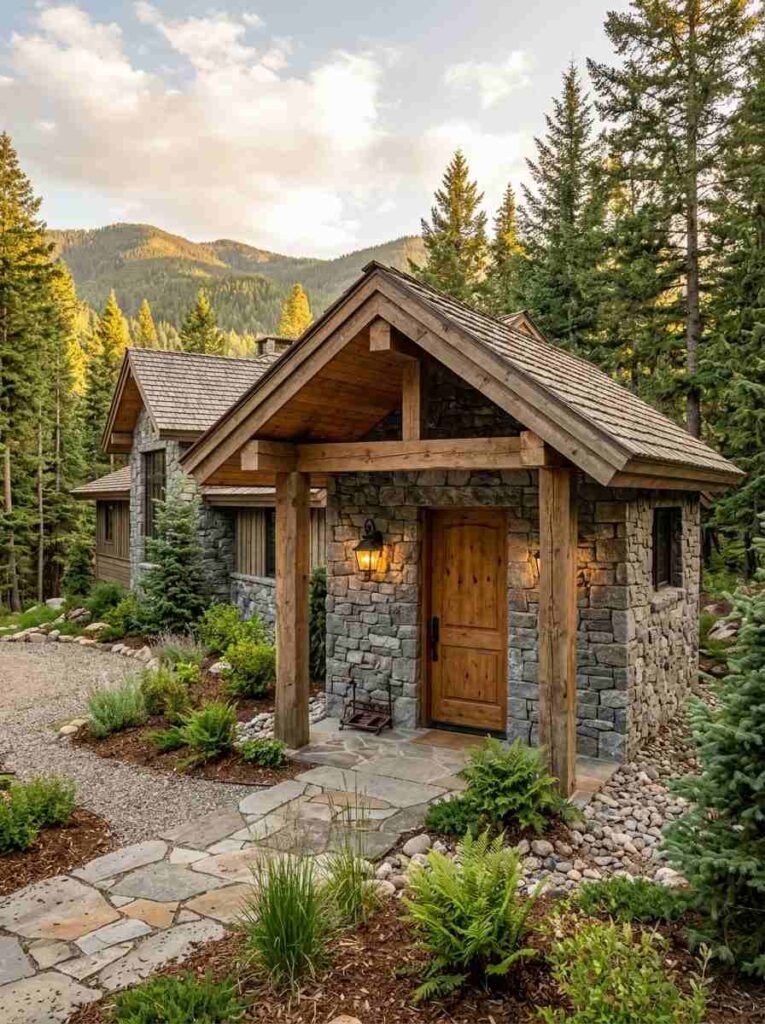
A mud room addition with dry-stack stone walls (or stone veneer panels) and a cedar-planked ceiling feels like a mountain lodge. Warm, grounded, and genuinely beautiful. Works especially well on homes surrounded by mature trees.
23. Tongue-and-Groove Ceiling With Farmhouse Lanterns
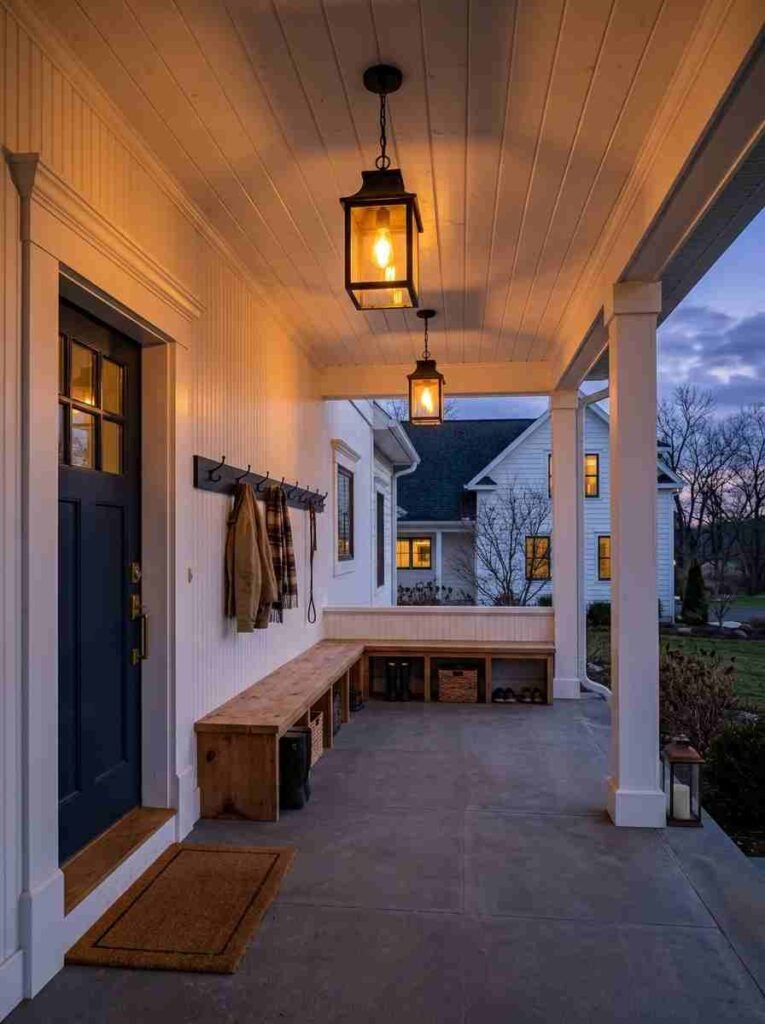
A tongue-and-groove wooden ceiling in a covered mud room entry — painted white or left natural — combined with black farmhouse pendant lanterns is a combination that consistently performs on Pinterest. Clean, warm, and immediately recognizable as a well-designed home.
24. Enclosed Breezeway as a Mud Room
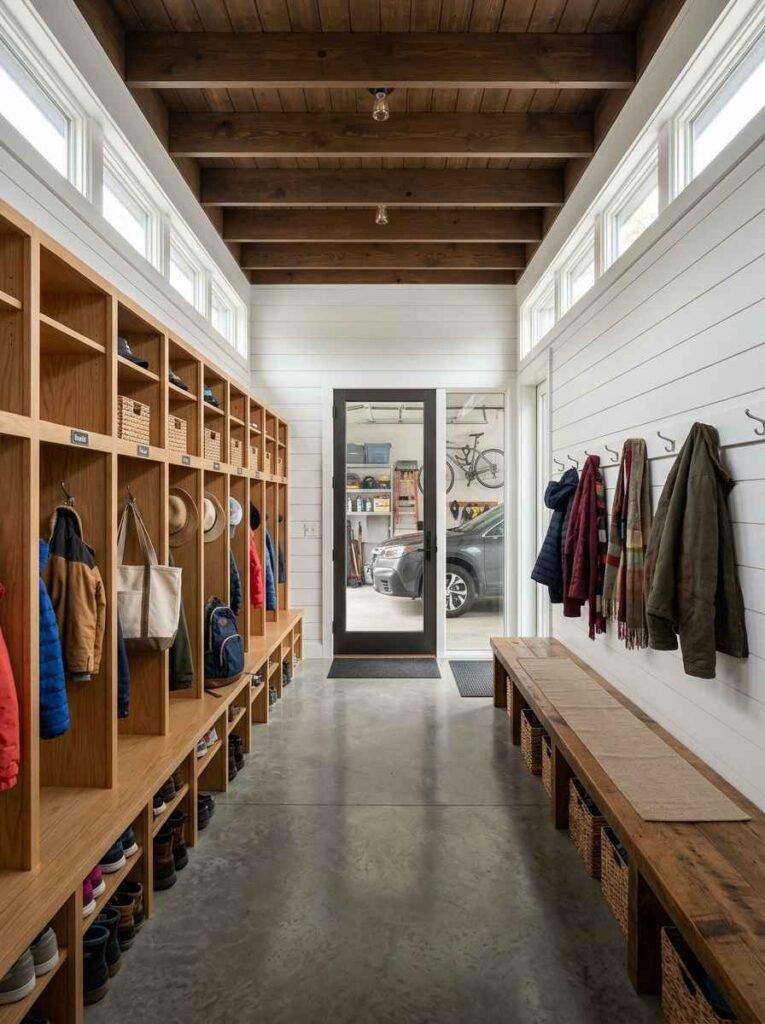
If you have a detached garage, an enclosed breezeway connecting it to the house is essentially a long mud room addition. You get covered passage in bad weather AND a functional storage/changing area. This one flopped a bit for me budget-wise (went over by about 20%), so plan for contingency costs.
25. Oversized Plank Wood Door With Sidelights
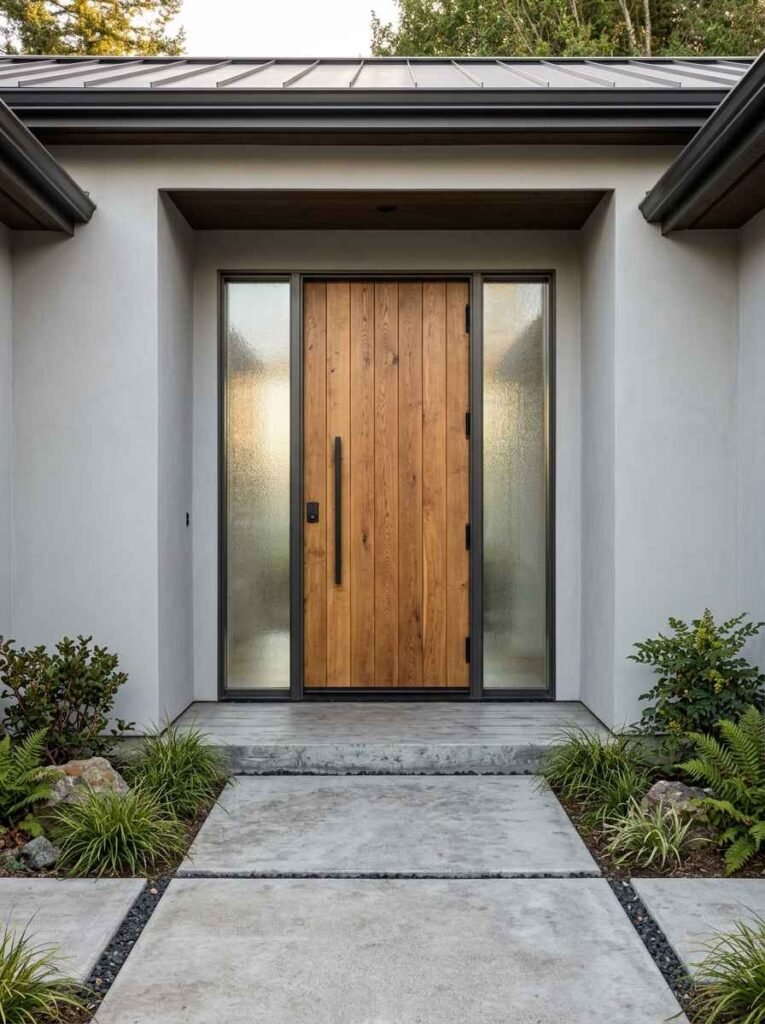
Sometimes the door itself is the whole idea. An oversized plank-style wood door flanked by narrow sidelights transforms your entrance from ordinary to genuinely memorable. Pair it with a concrete plank threshold and simple side lighting. Wow — the detail alone is worth it.
Exterior Materials Worth Knowing
When choosing materials for your mud room addition exterior, keep these in mind:
- Fiber cement siding — durable, low maintenance, paint-friendly
- Cedar wood — beautiful but needs sealing every few years
- Brick and stone veneer — best long-term investment for resale value
- Board and batten — affordable, very Pinterest-popular right now
- Corrugated metal — modern option, weather-resistant, low cost
IMO, fiber cement paired with natural wood accents hits the sweet spot for most budgets.
Design Tips That Actually Make a Difference
A few things I’ve learned from researching (and doing) a few of these:
- Proportion matters more than style. A mud room that’s too small looks like an afterthought. Go at least 6×8 ft if you can.
- Lighting is underrated. Exterior lanterns on either side of the door completely change the nighttime curb appeal.
- Match your home’s existing roof pitch. One of the most common mistakes is adding a mud room with a roof that clashes. Keep it consistent.
- Storage goes vertical. Especially in a smaller addition — tall cabinets, tall hooks, tall shelving. Work the height.
- Use durable flooring. Slate, concrete tile, or porcelain. Anything that can handle wet boots and mud.
Common Mistakes to Skip
These come up over and over in renovation projects:
- Skipping proper drainage near the entry floor
- Choosing hardware that doesn’t match the home’s existing style
- Under-budgeting for permits (mud room additions almost always need one)
- Forgetting electrical — at minimum, you want exterior lighting and an outlet
- Making the door swing the wrong direction (outward swings are better for most climates)
External Resources Worth Bookmarking
If you’re planning a real project, these are worth a look:
- Houzz Mud Room Design Ideas — one of the best visual libraries online
- This Old House Entryway Addition Guide — solid practical advice on structural additions
- National Association of Realtors: Home Improvement ROI Report — useful if you’re thinking about resale value
FAQ
How much does a mud room addition typically cost? It varies a lot depending on size and materials, but most homeowners spend between $8,000 and $25,000 for a proper exterior mud room addition. A very small covered entry with basic storage can come in under $5,000 if you’re handy.
Do I need a permit for a mud room addition? Almost always yes — especially if it involves a foundation, electrical, or changes to the roofline. Check with your local municipality before starting. Skipping this is one of those shortcuts that creates real problems at resale.
What’s the best flooring for an exterior mud room? Slate tile, porcelain tile, or sealed concrete are the top picks. They handle moisture, heavy foot traffic, and muddy boots without showing damage. Avoid hardwood or laminate anywhere that could get wet.
Final Thought
A mud room addition doesn’t have to be a massive project. Even a covered entry with a bench, a few hooks, and a durable floor changes the way your home feels — from the outside in. Start with one idea from this list, adapt it to your space, and go from there.
Which of these 25 ideas caught your eye? Have you already tackled a mud room addition? Drop your experience in the comments — I’d genuinely love to know what worked and what didn’t.
