
Let me be real with you — I spent way too many weekends obsessing over my cottage bathroom floor. Like, it’s a floor. People walk on it. But somehow, once you fall down the rabbit hole of rustic tiles, reclaimed wood, and vintage stone, there’s no coming back. And honestly? I don’t regret a single hour of it.
If you’re here, you’re probably at that exact same crossroads. You want something warm, cozy, and full of character — not the kind of floor that looks like it belongs in a hospital waiting room. So let’s talk about the best cottage bathroom flooring ideas that actually deliver that warm, rustic feel we’re all chasing.
Why Cottage Bathroom Flooring Actually Matters More Than You Think
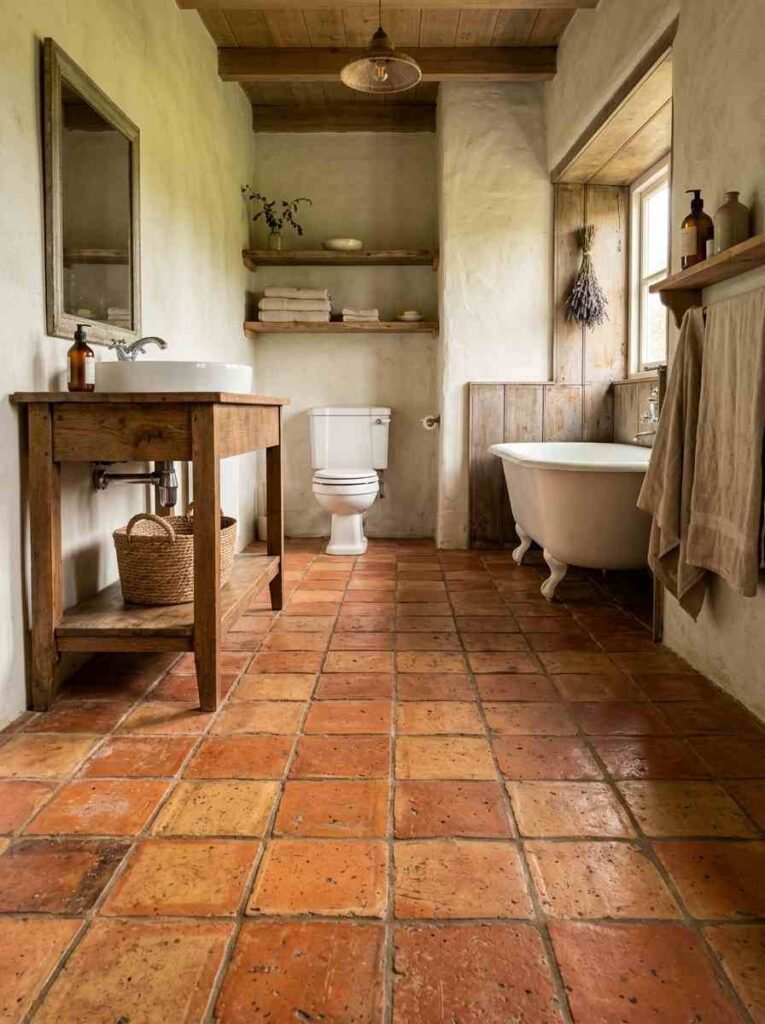
Most people spend their entire renovation budget on vanities and fixtures, then panic when they realize the floor looks like an afterthought. Big mistake. The floor sets the entire mood of the room. It’s the first thing you feel under your feet in the morning and the last thing you see when you leave. Get it wrong, and even the prettiest shiplap walls won’t save you.
Natural Stone Flooring Ideas
Tumbled Travertine Tiles
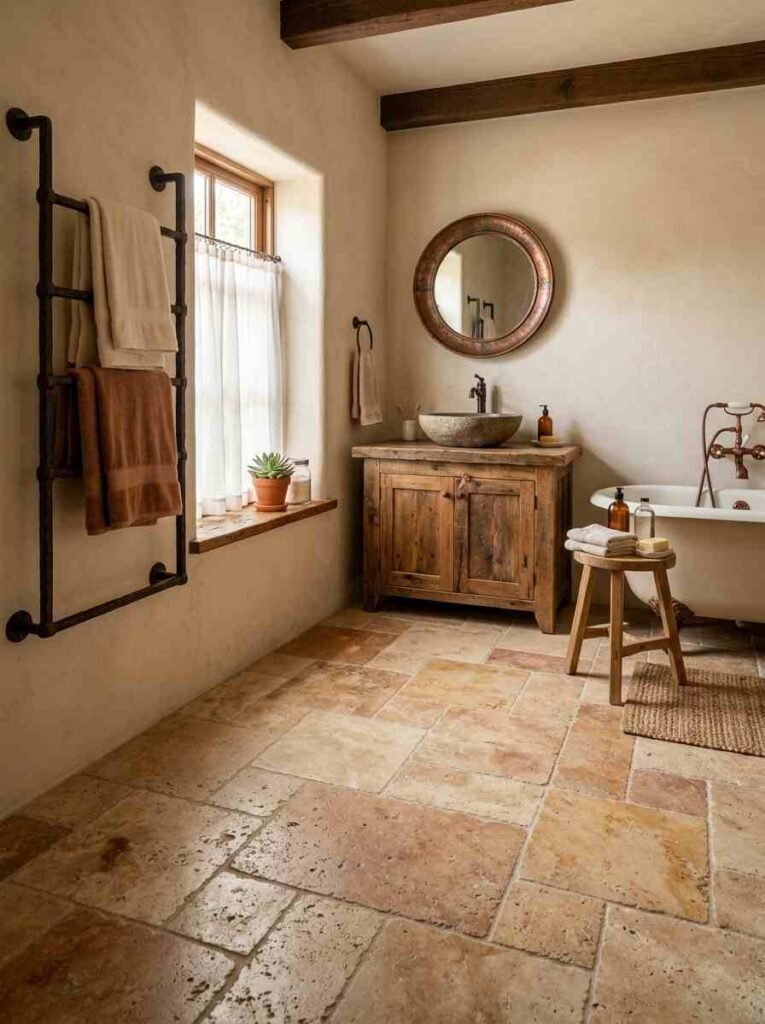
Tumbled travertine is one of my all-time favorites, and I’m not even close to ashamed about it. The slightly uneven, pitted surface gives it that aged, sun-baked look that just screams old English countryside cottage. It’s warm in tone — think creamy beiges and soft terracottas — and it pairs beautifully with wooden vanities or wrought iron fixtures.
Quick tip: Seal it properly. Travertine is porous, and a bathroom without good sealing turns into a mold situation fast. Ask me how I know. :/
- Natural variation in every tile
- Works with underfloor heating
- Available in 4×4, 6×6, and 12×12 sizes
- Needs sealing every 1–2 years
Slate Stone Flooring
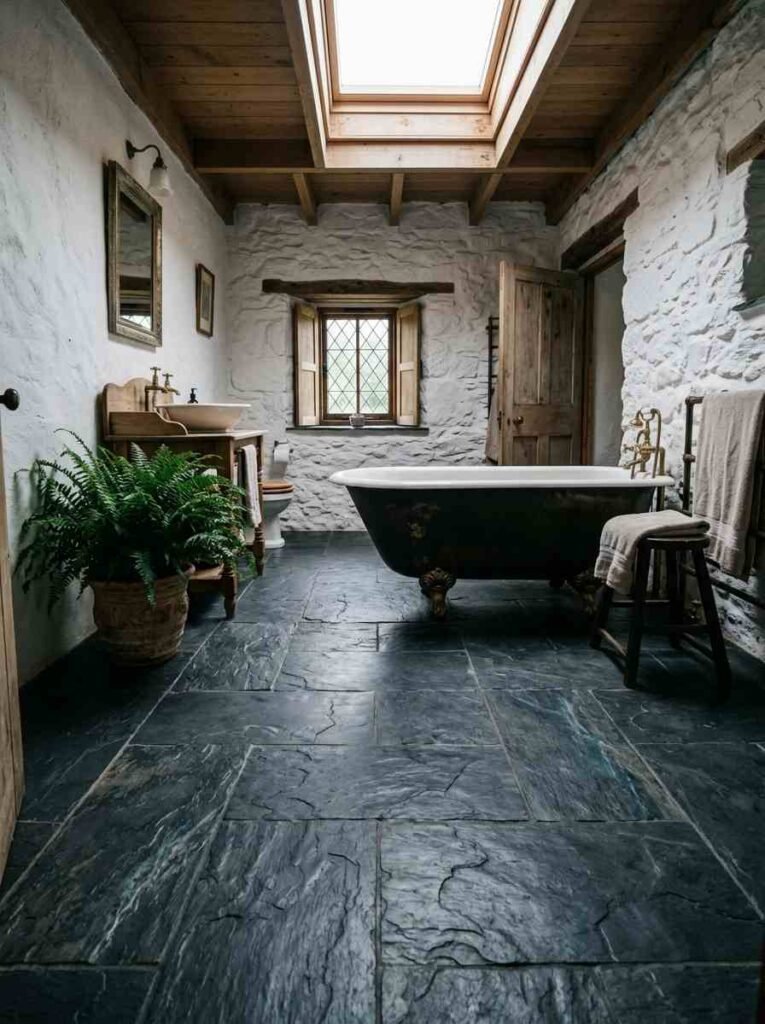
Slate brings a darker, moodier energy to a cottage bathroom — and sometimes that’s exactly what a space needs. I used a charcoal slate in my guest bathroom, and honestly? It looks like something out of a Scottish Highland retreat. The natural cleft texture is also non-slip, which is a massive bonus in a wet space.
| Feature | Travertine | Slate | Limestone | Sandstone |
|---|---|---|---|---|
| Warmth | High | Medium | High | High |
| Slip Resistance | Low-Med | High | Low | Medium |
| Maintenance | Medium | Low | Medium | High |
| Price Range | $$–$$$ | $–$$ | $$$–$$$$ | $$–$$$ |
Wood and Wood-Effect Flooring Ideas
Reclaimed Wood Planks
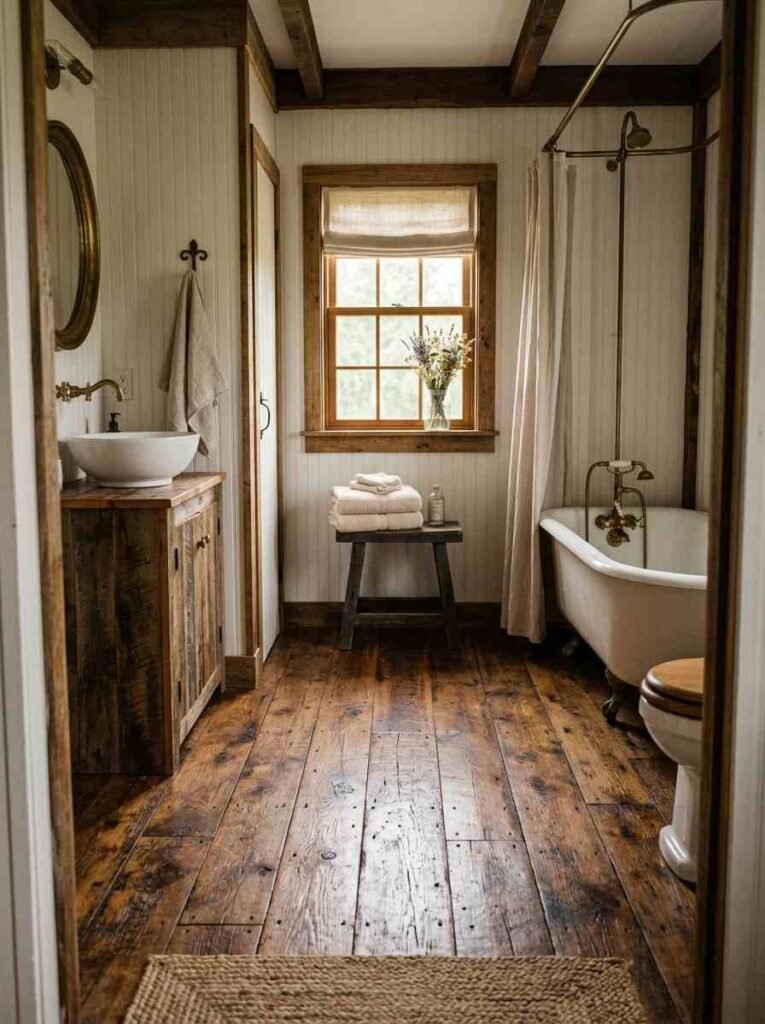
Okay, reclaimed wood in a bathroom — I can already hear the gasps. “Won’t it warp?!” Yes, if you use solid hardwood without proper treatment, it absolutely will. But reclaimed wood that’s been properly sealed or engineered for moisture resistance? Absolutely stunning and totally doable. The knots, nail holes, and color variations in reclaimed timber tell a story that no new material can replicate.
I actually sourced some old barn wood planks for a friend’s lakeside cottage bathroom, and the result was jaw-dropping. Every guest comments on it. Trust me, done right, it’s worth the extra effort.
Engineered Hardwood
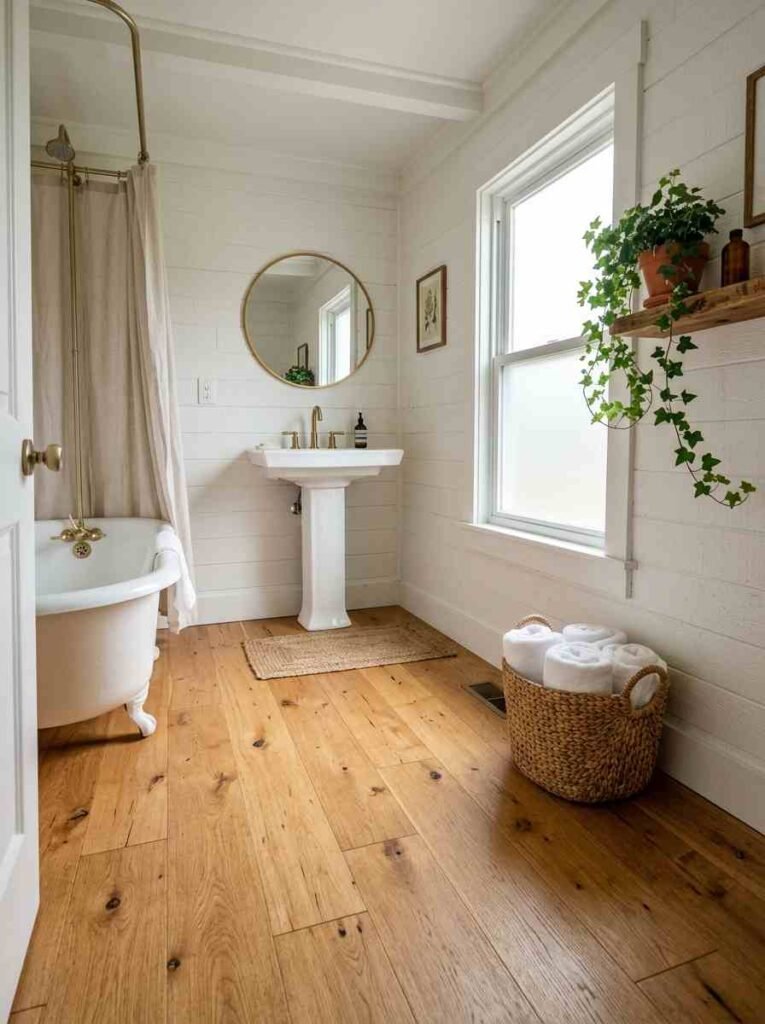
This is the smarter sibling of solid hardwood — engineered for stability in humid environments. You still get that real wood look and feel on the surface, but the layered core handles moisture changes far better. It’s one of the most popular cottage bathroom flooring choices right now, and for good reason.
- Real wood veneer on top
- Dimensionally stable in humidity
- Comes in wide-plank formats (gorgeous for cottages)
- Easier to install than solid wood
Luxury Vinyl Plank (LVP) — Wood Effect
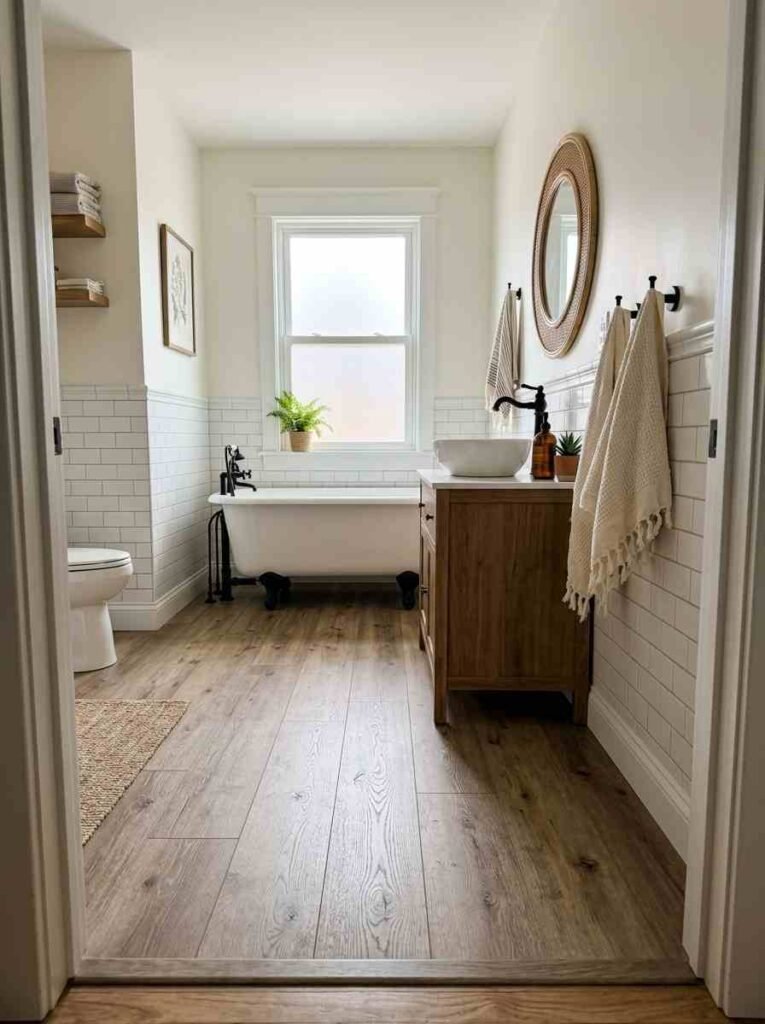
FYI — if your budget isn’t stretching to real wood, LVP has come a long way. Modern luxury vinyl plank flooring looks almost identical to real hardwood, handles moisture like a champ, and costs a fraction of the price. For a rental cottage or a second home, this is honestly the smart play.
Terracotta and Clay Tile Ideas
Classic Terracotta Tiles
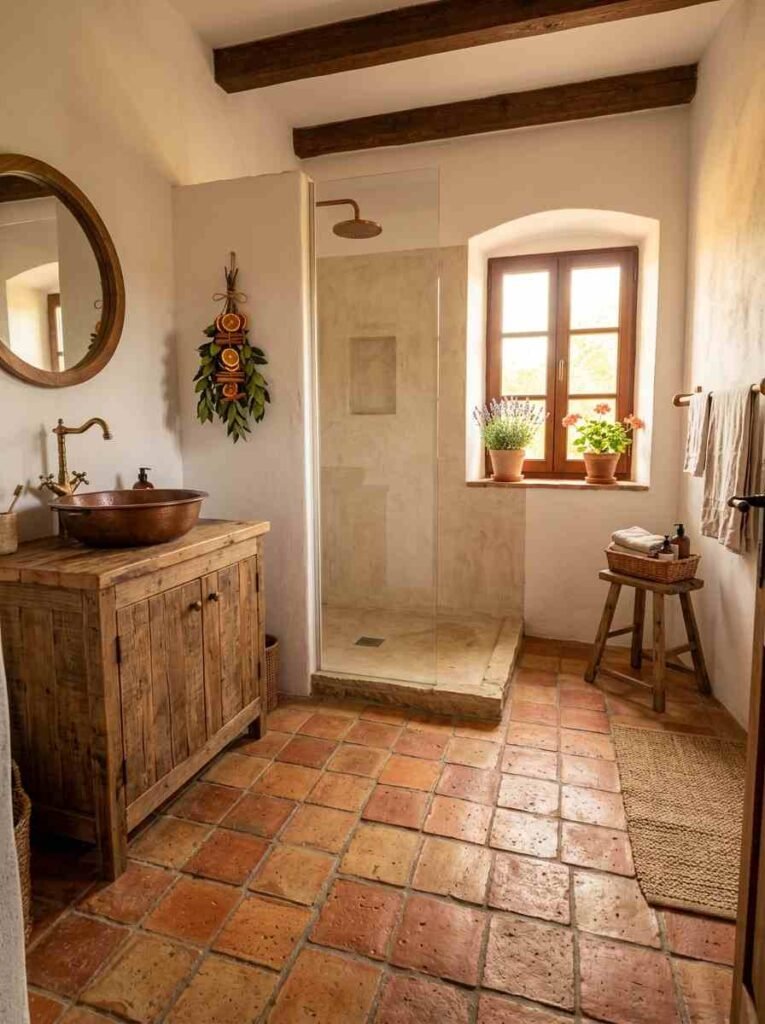
If cottages had a spirit animal, it would be terracotta. These warm, burnt-orange clay tiles have been used in rural European homes for centuries, and they never go out of style. Ever. I love how they warm up a bathroom instantly — you walk in and it just feels different.
Terracotta is best used with a low-sheen matte sealer to preserve that natural, earthy look. Avoid high-gloss finishes — it makes them look cheap and totally kills the vibe.
Encaustic Cement Tiles
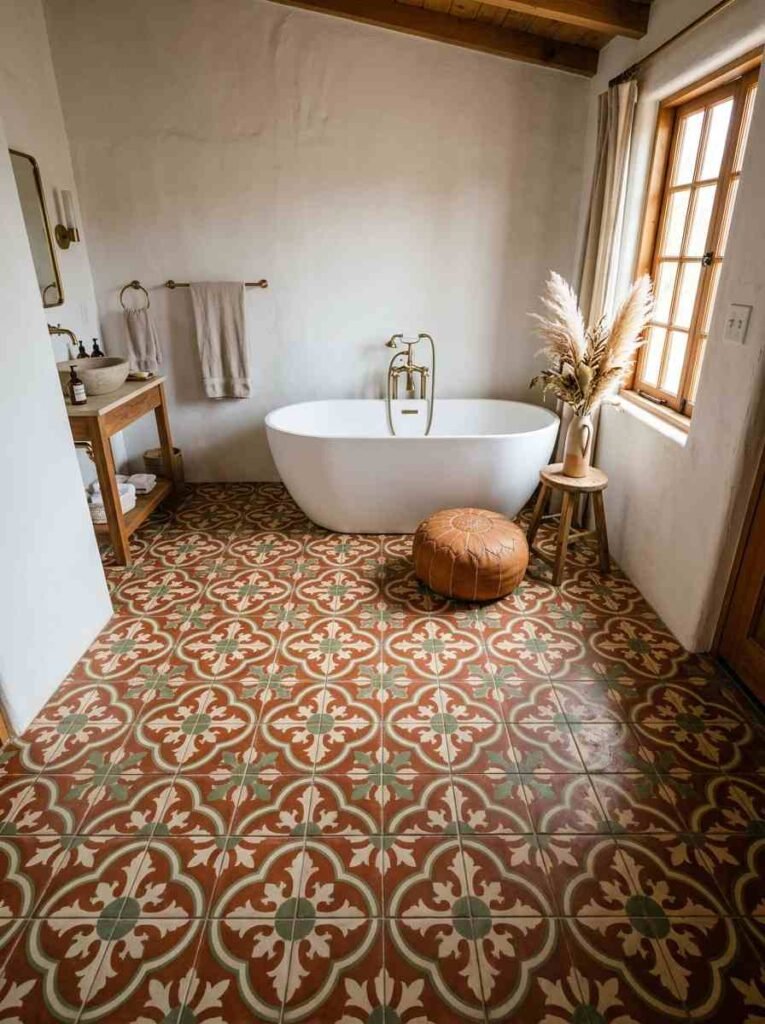
These are the showstoppers. Encaustic cement tiles come in an insane variety of patterns — geometric, floral, Moroccan-inspired — and they add an artisan, handcrafted feel that no other flooring can match. I’ve seen them used in tiny cottage bathrooms as a statement floor, and Wow! The impact is immediate.
Honestly, this trend feels a little overdone in some design circles now, but when you find the right pattern for a cottage aesthetic, it still works beautifully.
Pebble and Mosaic Flooring Ideas
River Pebble Mosaic Tiles
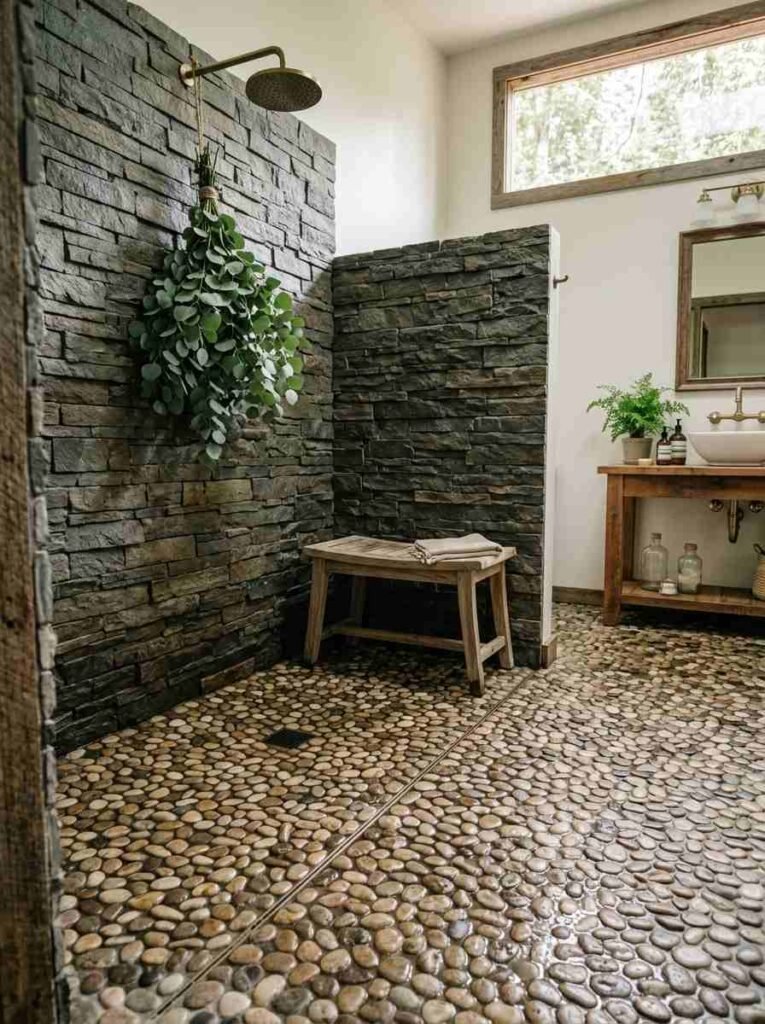
These are genuinely one of the coolest flooring options for a cottage bathroom, and I’ll die on this hill. River pebble mosaics give you a spa-like, nature-immersed feeling underfoot. The rounded pebbles provide natural drainage in shower areas and the texture is a built-in massage for your feet every morning. What’s not to love?
They work best in small sections — like a shower floor — rather than wall-to-wall in a full bathroom. Too much pebble and it starts feeling like you’re walking through a riverbed (which, sure, sounds fun in theory, but…)
- Natural rounded pebble surfaces
- Excellent grip and drainage
- Available in grey, beige, brown, and mixed tones
- Best used in wet zones or shower areas
Mini Subway Tile Mosaics
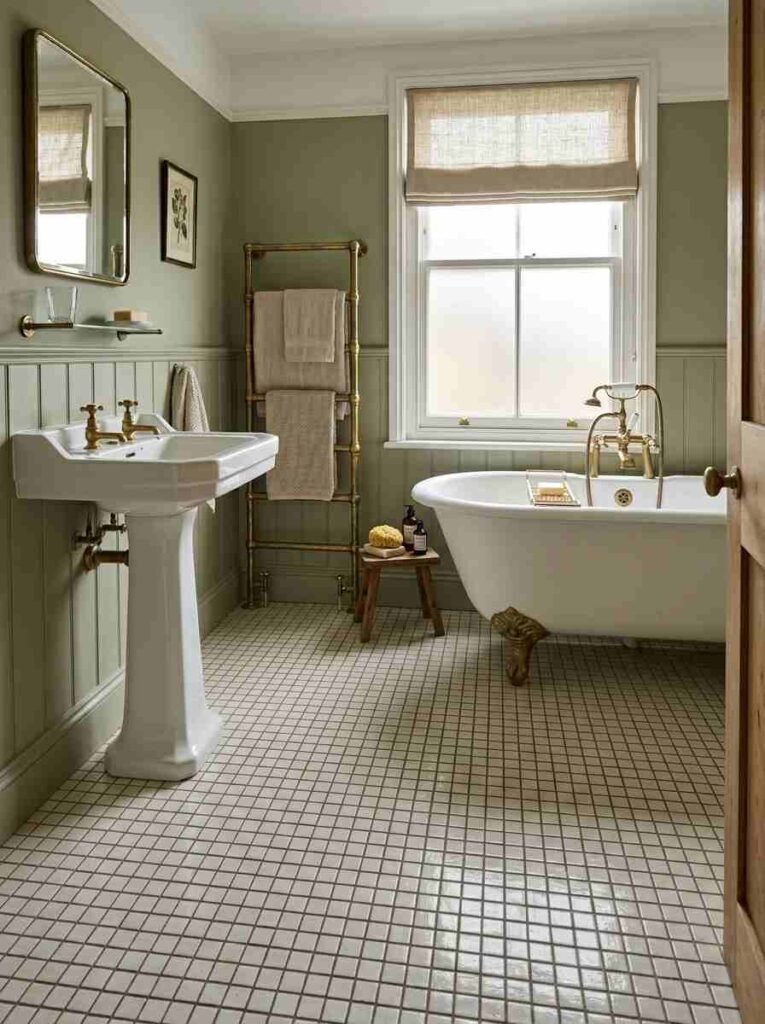
Classic white or off-white subway tile in a mosaic format brings a vintage, early-20th-century cottage feel that’s timeless. I personally love the slightly off-white “antique white” versions over bright white — it feels more organic and less sterile. Pair with dark grout for extra character.
Brick and Cobblestone Effect Flooring
Brick-Effect Porcelain Tiles
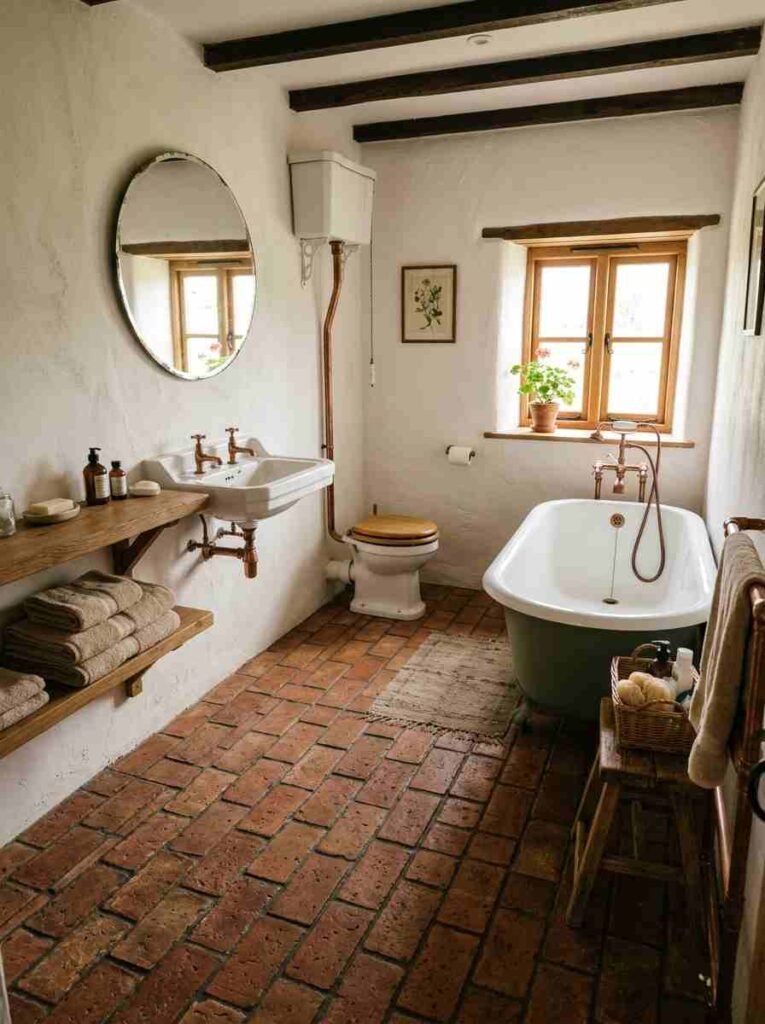
Real brick is too rough and porous for a bathroom floor, but brick-effect porcelain? That’s the sweet spot. You get all the rustic, warm character of exposed brick without the maintenance nightmare. I’ve seen this used in farmhouse-style cottage bathrooms paired with copper fixtures, and it looks absolutely killer.
The key is going for a running bond (offset) pattern instead of straight stacking — it looks far more authentic and adds movement to the floor.
Cobblestone Effect Vinyl
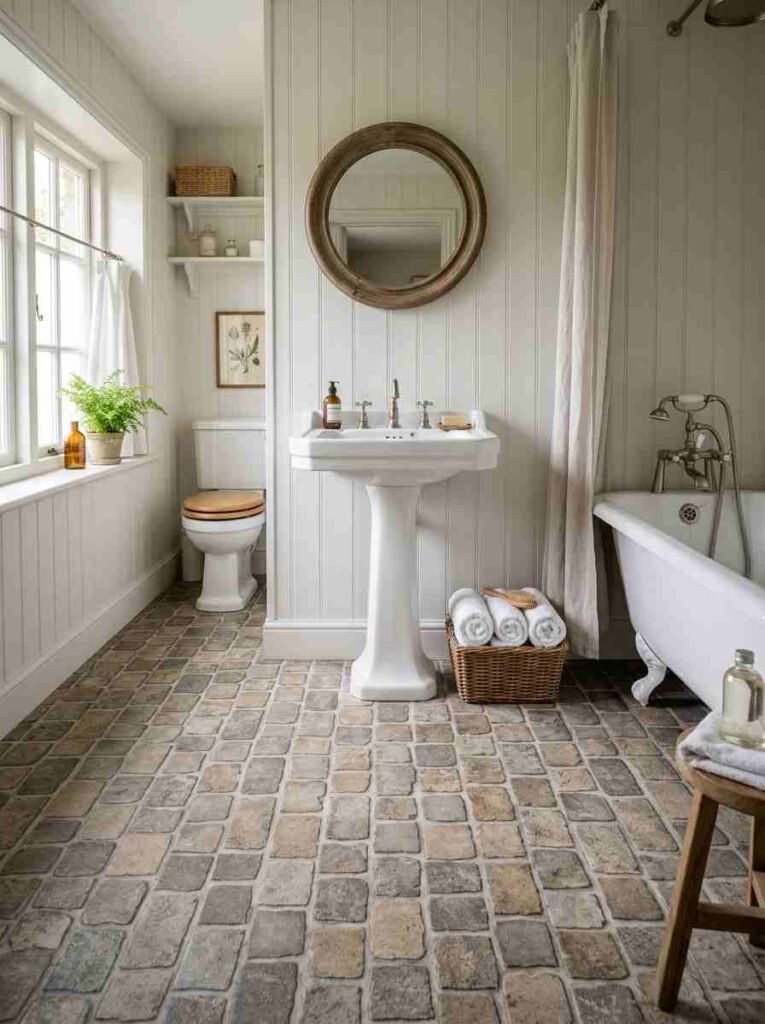
For high-traffic, budget-conscious cottage bathrooms, cobblestone effect vinyl tiles hit above their weight class. Modern printing techniques make these look surprisingly realistic, and they’re comfortable underfoot (unlike actual cobblestone, which your feet will never forgive). IMO, for a vacation rental cottage bathroom, these are the unsung heroes.
Light and Pale Stone Flooring Ideas
Limestone Tiles
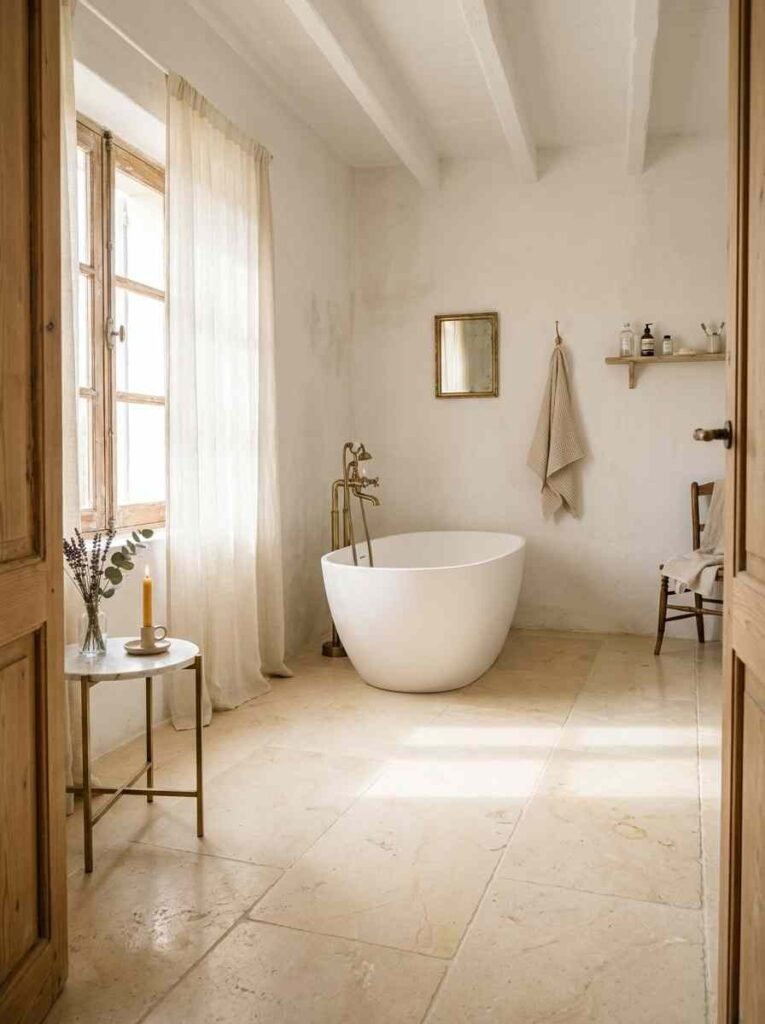
Limestone brings a soft, pale warmth that’s completely different from the darker rustic stones. It feels almost Mediterranean — warm and sun-washed. In a cottage with lots of natural light, limestone floors can make the space feel twice as big and ten times more elegant.
The downside? Limestone scratches and stains more easily than harder stones. It needs regular maintenance and careful sealing. Beautiful but high-maintenance — like that one friend we all have.
Sandstone Tiles
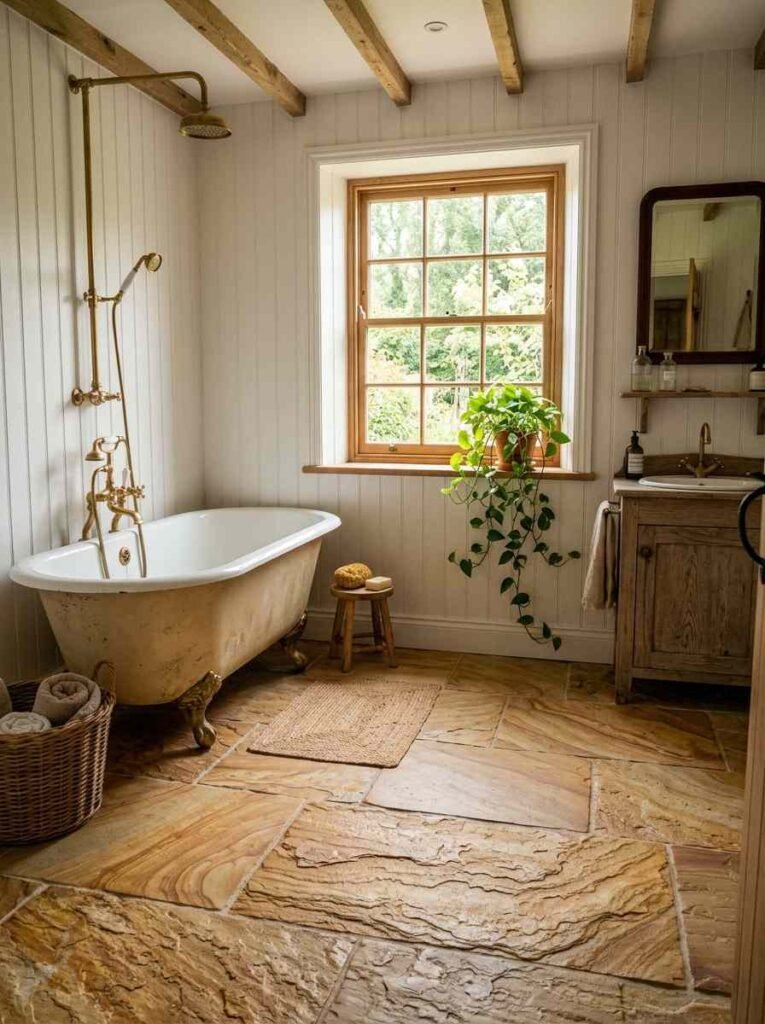
Sandstone has this incredible layered look — you can actually see the sediment layers in the stone, which gives it a completely organic, earthy feel. It’s warmer in tone than limestone and a bit more forgiving in smaller spaces. I love it paired with white beadboard walls and a freestanding clawfoot tub.
Painted and Stenciled Concrete Flooring
Polished Concrete with Warm Stain
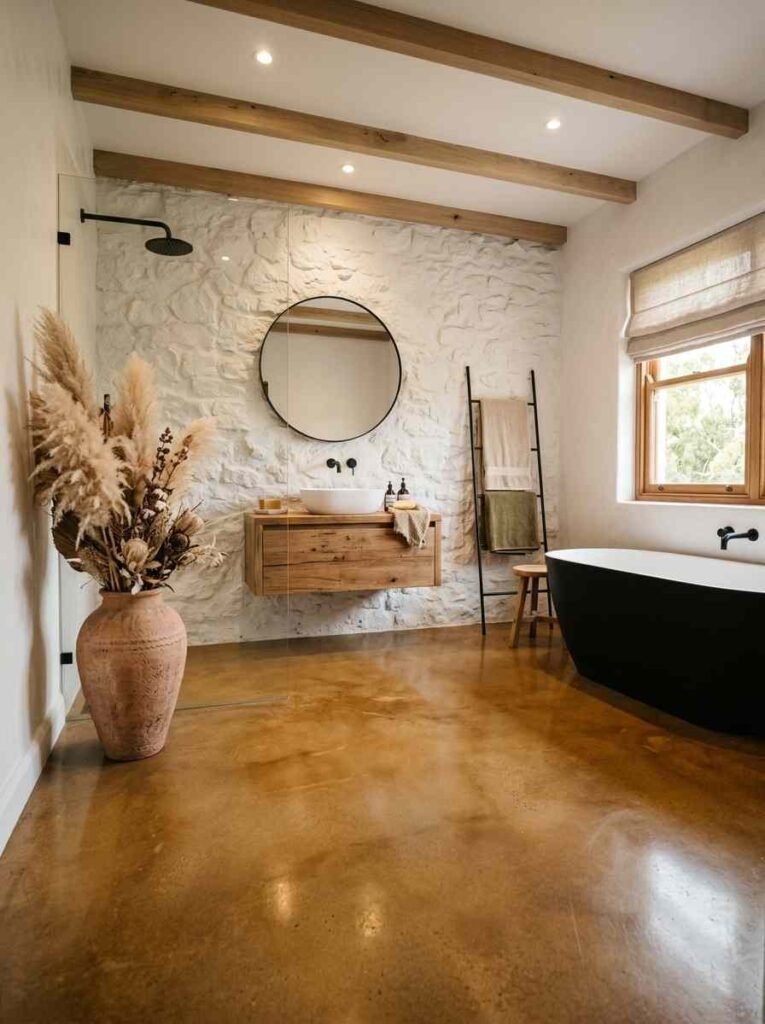
Not the first thing you think of for “cottage,” right? But hear me out. Polished concrete with a warm amber or terracotta stain can look incredibly rustic and organic — especially in a smaller cottage bathroom. It’s seamless, easy to clean, and surprisingly warm-looking when done right.
The trick is the stain color. Cool grays and blues give you an industrial vibe. But go warm — think amber, ochre, or even a soft clay tone — and suddenly it feels like a Provençal farmhouse. Wild, bro.
Stenciled Concrete Floors
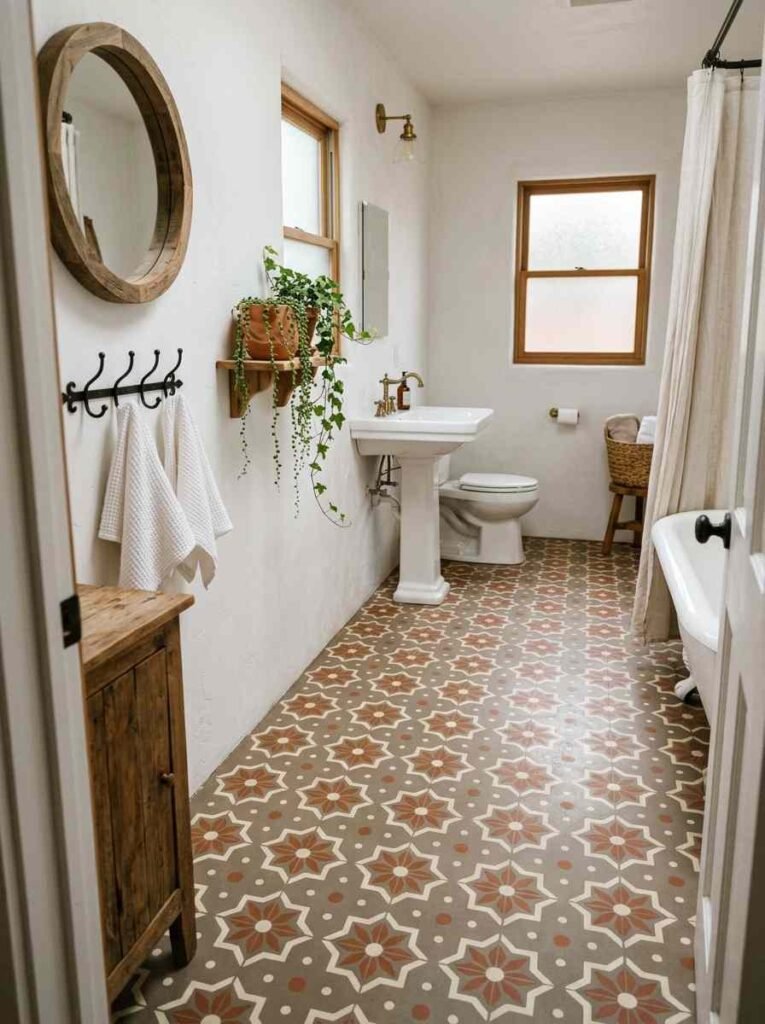
Stenciled floors are having a moment, and I’m genuinely here for it. You start with a plain concrete or painted plywood subfloor, then apply a repeating stencil pattern in earthy tones. It mimics the look of encaustic tile at a fraction of the cost. I tried a star-and-dot Moroccan stencil in a small powder room, and it came out so good people thought I’d spent a fortune on real tiles.
Mosaic and Pattern Flooring Ideas
Victorian Black and White Mosaic
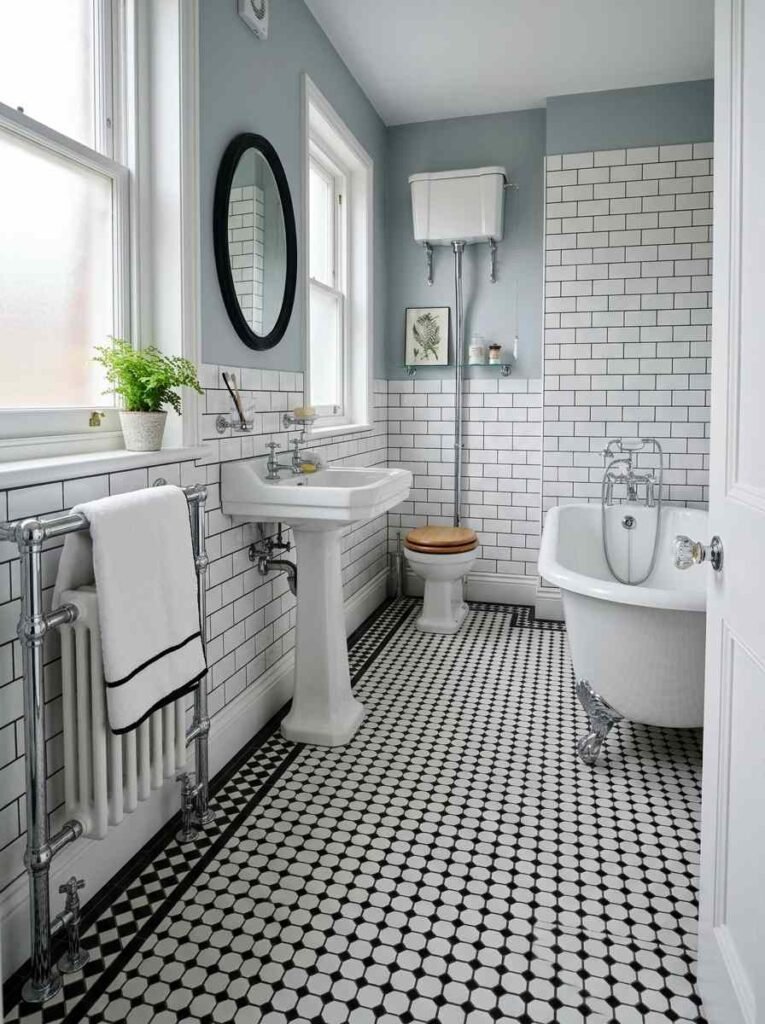
Nothing says “old cottage charm” quite like a black-and-white Victorian mosaic floor. This classic combo has survived every design trend for the last 150 years, and it shows no signs of stopping. Use it in a small cottage bathroom and it instantly becomes the focal point.
Keep the rest of the room calm — white walls, simple fixtures — and let the floor do all the talking.
Hexagon Patterned Tiles
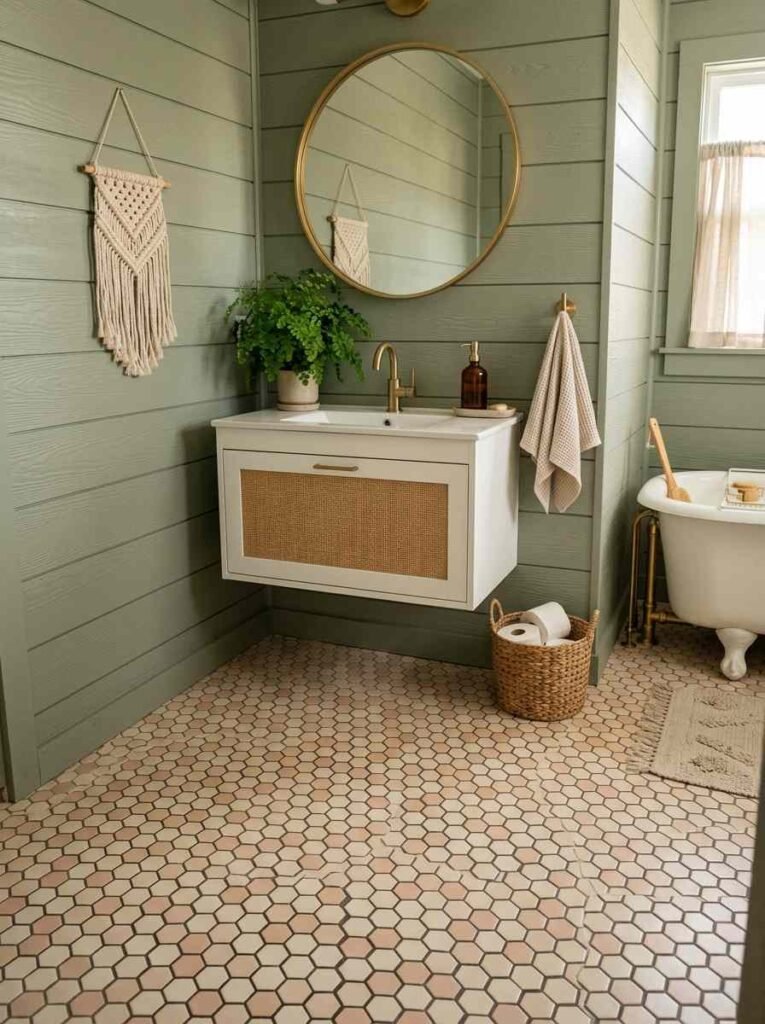
Hexagon tiles are one of those ideas that sounds trendy but is actually rooted in very old design traditions. In cottage bathrooms, go for small-format hexagons in warm tones — cream, blush, sage — and the effect is charming without being fussy. I love the mini hex format (1-inch) for shower floors specifically.
Sustainable and Eco-Friendly Flooring Options
Cork Flooring
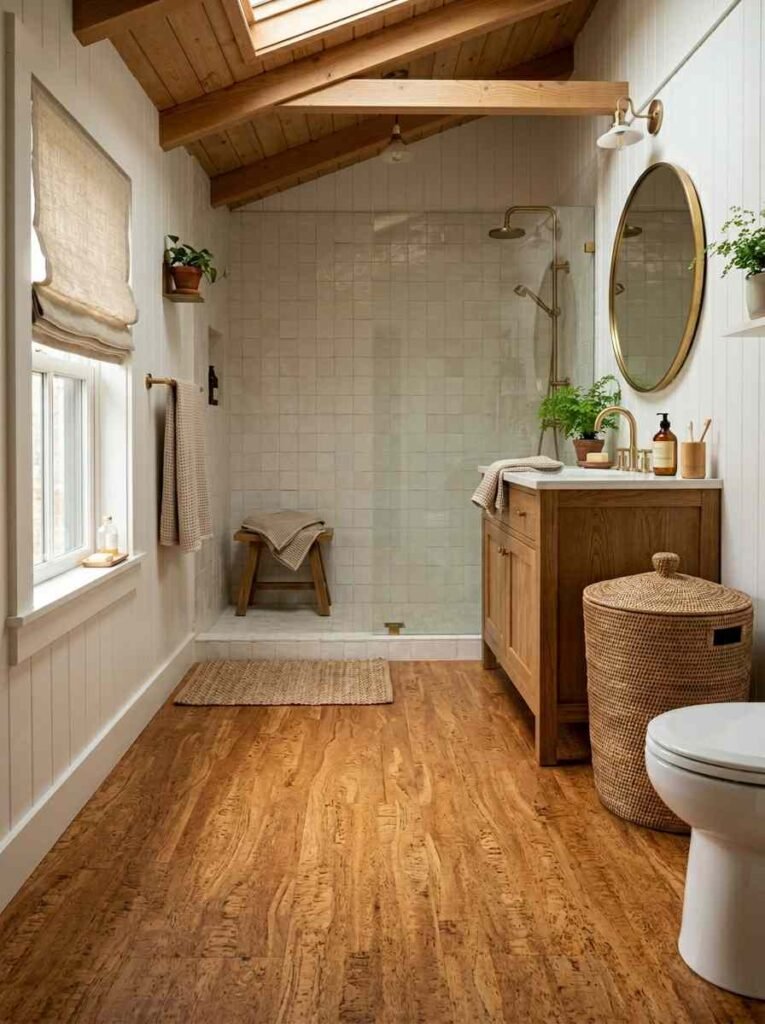
Cork is one of the most underrated bathroom flooring choices, full stop. It’s warm underfoot, naturally mold-resistant, and harvested sustainably. It also has a natural insulating quality — so those cold winter mornings won’t send you sprinting back to bed. Just make sure you get the waterproof sealed version, not standard cork.
Bamboo Flooring (Engineered)
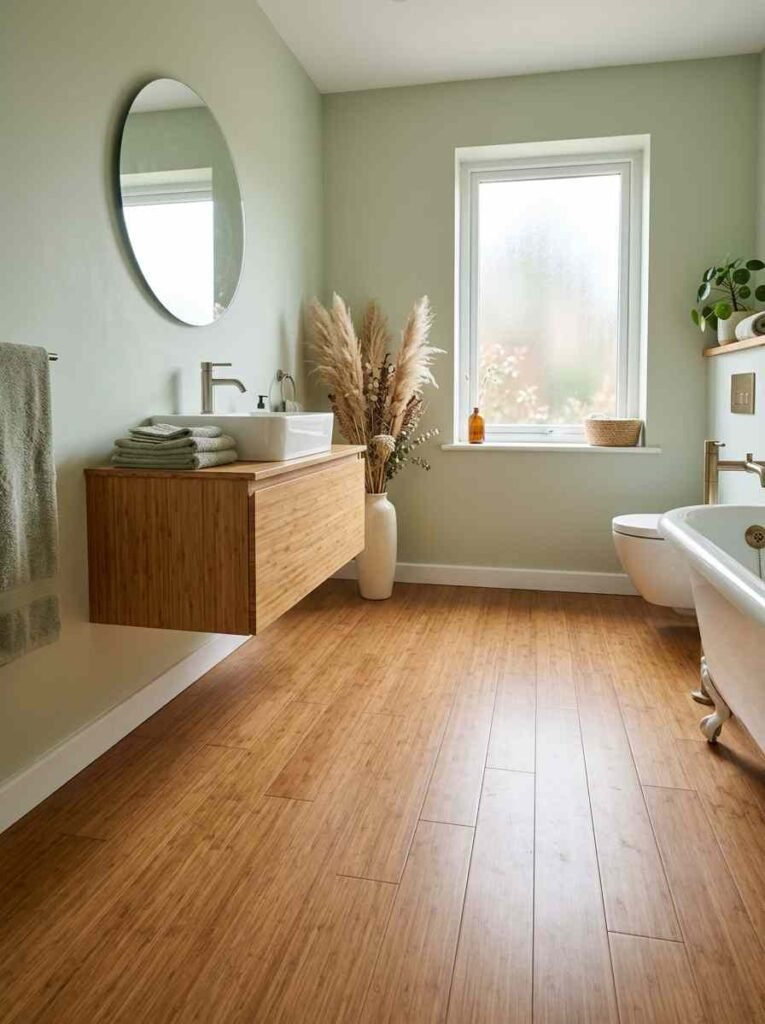
Bamboo grows incredibly fast, which makes it one of the most sustainable flooring materials around. Engineered bamboo handles bathroom humidity reasonably well and gives a warm, natural look that fits the cottage aesthetic perfectly. It’s harder than most hardwoods too — bonus points for durability.
| Eco-Option | Sustainability | Moisture Resistance | Warmth Underfoot |
|---|---|---|---|
| Cork | ⭐⭐⭐⭐⭐ | ⭐⭐⭐ | ⭐⭐⭐⭐⭐ |
| Bamboo | ⭐⭐⭐⭐⭐ | ⭐⭐⭐ | ⭐⭐⭐⭐ |
| Reclaimed Wood | ⭐⭐⭐⭐ | ⭐⭐ | ⭐⭐⭐⭐⭐ |
| LVP | ⭐⭐ | ⭐⭐⭐⭐⭐ | ⭐⭐⭐ |
Unique and Creative Flooring Ideas
Penny Tile Floors
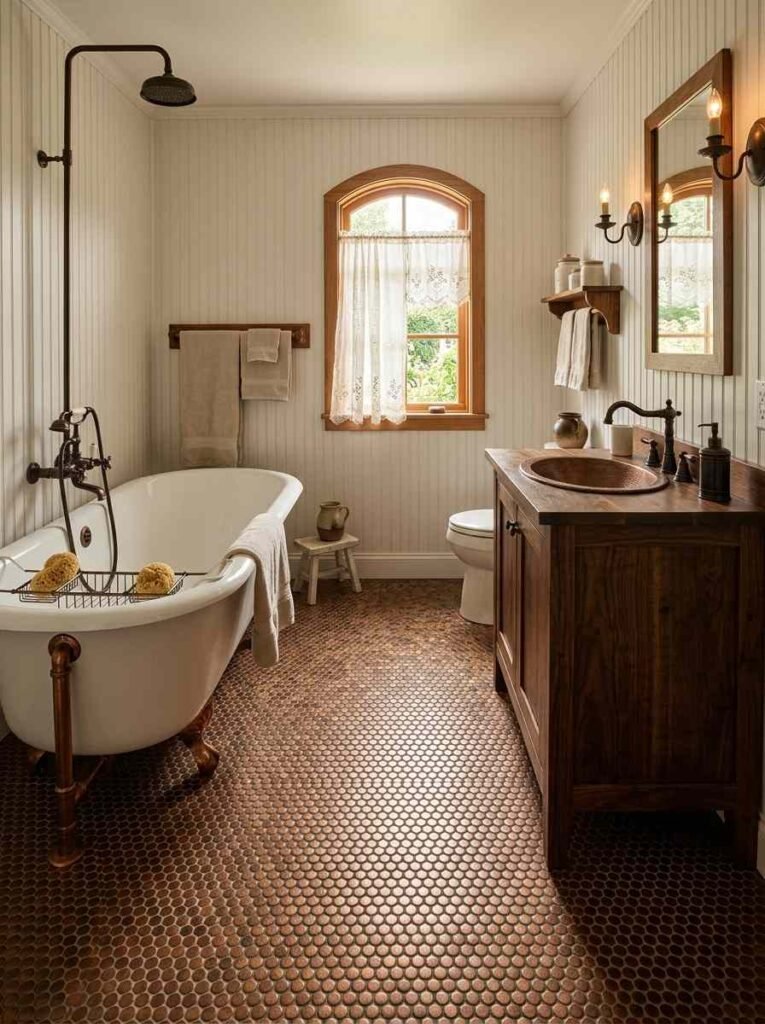
Literally. Pennies. Okay, not real pennies (that’s a whole different project), but penny-style round ceramic tiles in copper, gold, or bronze tones are an incredible choice for a cottage bathroom. They add warmth, texture, and a handcrafted feel that’s totally unique.
Wood Plank Ceramic Tiles (Plank Tiles)
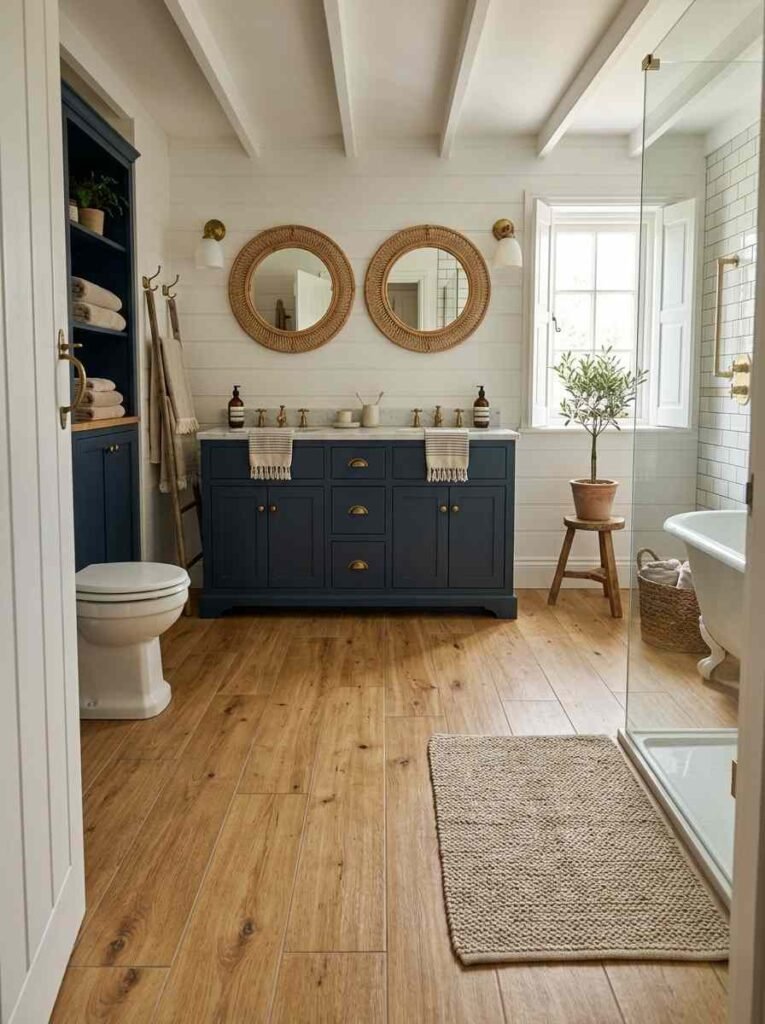
These are porcelain tiles printed to look exactly like wood planks. You get all the warmth and visual charm of wood with the waterproofing and durability of ceramic. This is probably the most practical solution on this entire list, and it’s what I’d recommend to anyone who loves the wood look but lives in a humid climate.
Painted Hardwood with Distressed Finish
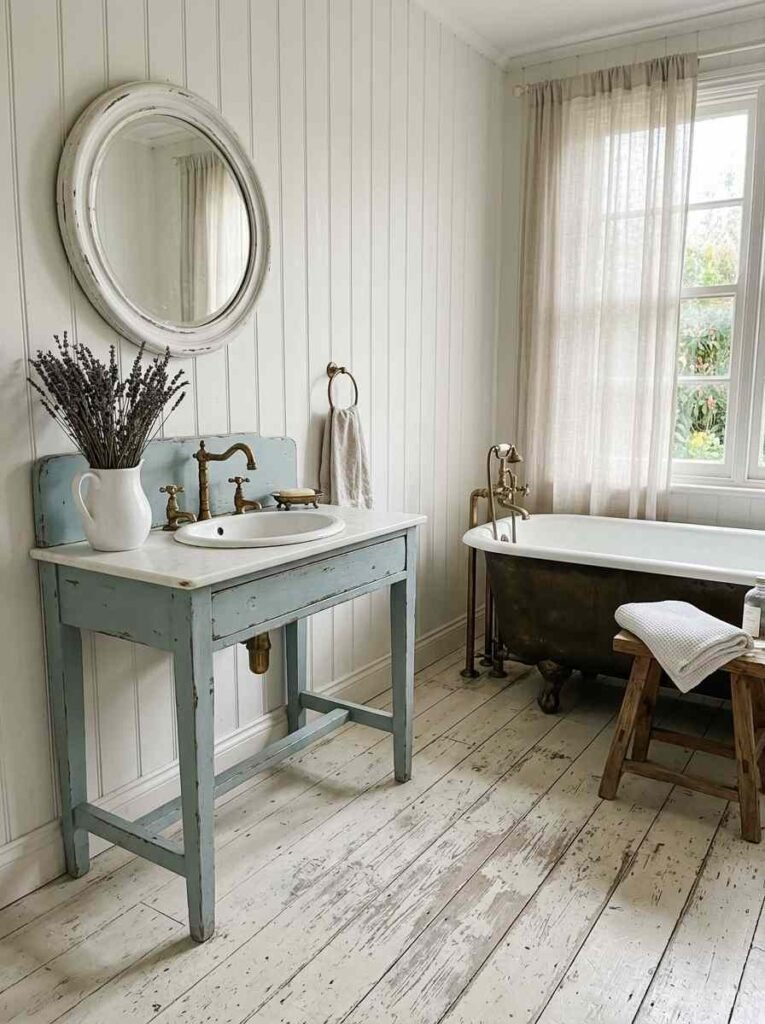
If you already have hardwood floors but they’re looking tired and dated, don’t rip them out. Paint them. A distressed, chalky paint finish in warm white, sage, or soft grey turns old hardwood into a charming cottage feature. Seal well, and you’re set for years.
Flagstone Flooring
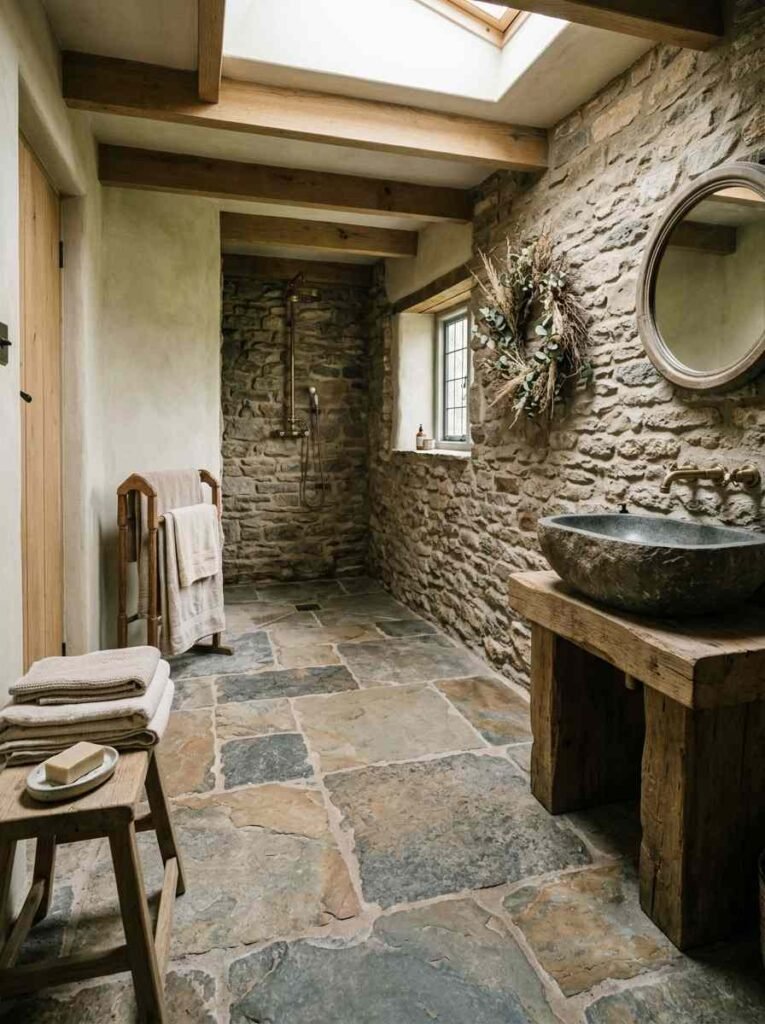
Flagstone has that rugged, outdoor-comes-inside quality that works brilliantly in a rustic cottage setting. It’s irregular in shape and color, which is exactly the point — no two flagstone floors ever look the same.
Practical Tips Before You Choose Your Cottage Bathroom Floor
Moisture and Waterproofing
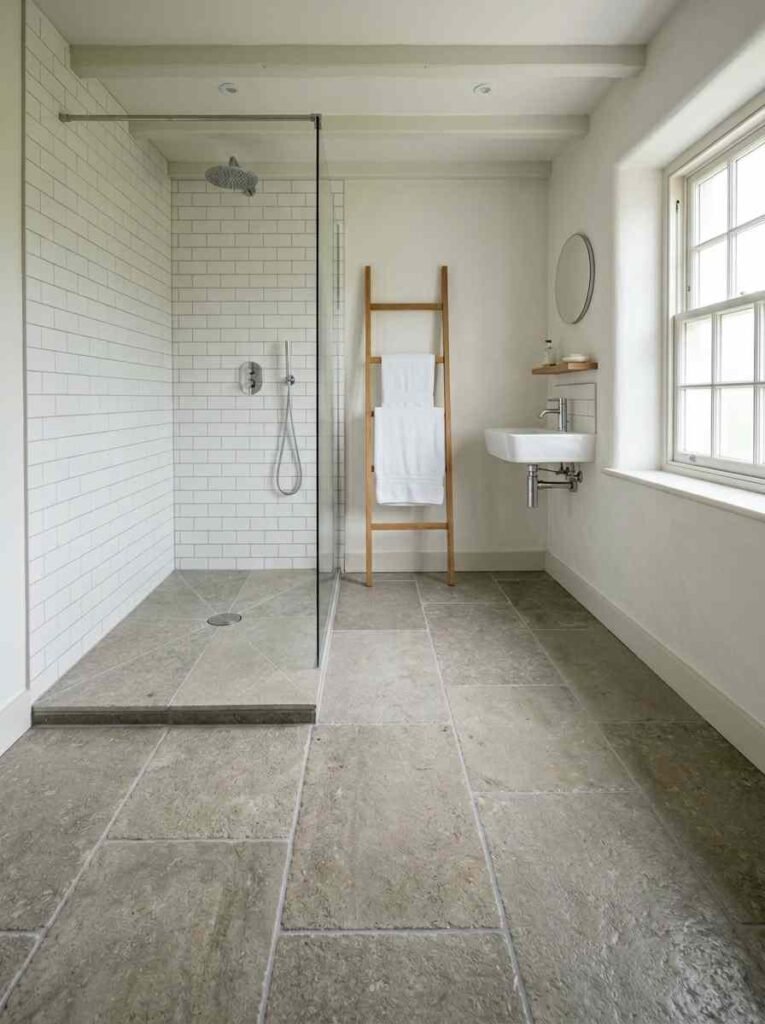
Whatever you choose, moisture management isn’t optional. Bathrooms are wet environments, and every flooring decision you make needs to account for this. Proper waterproofing membranes, correct sealing, and adequate ventilation will make or break your floor’s longevity.
Slip Resistance Ratings
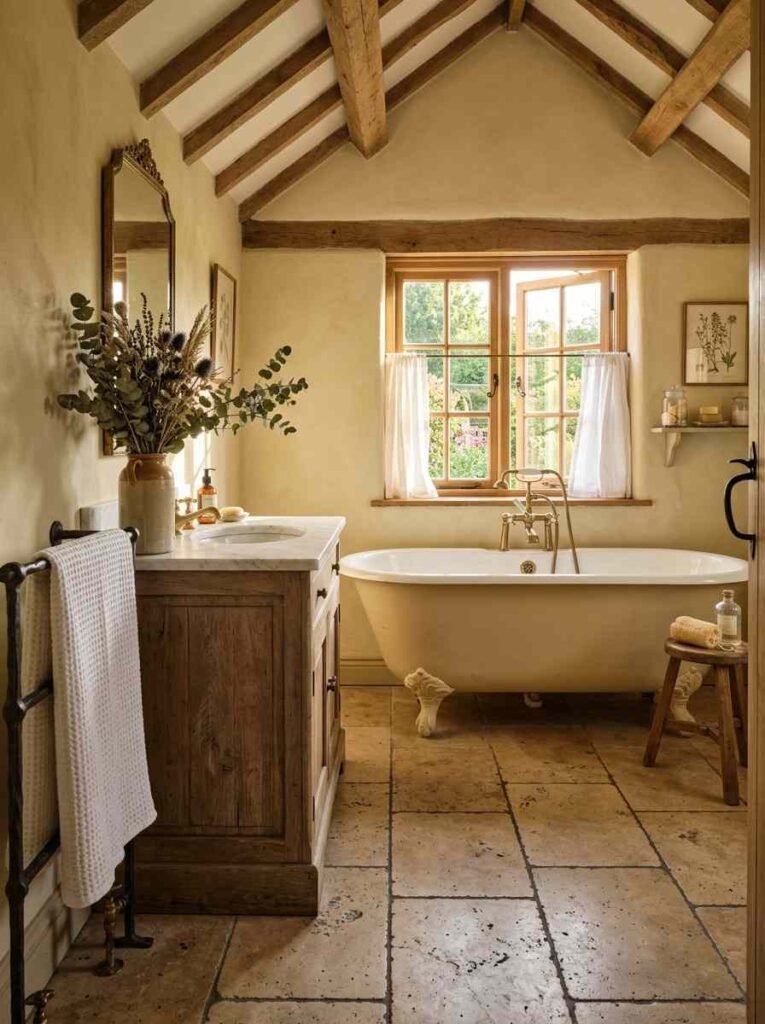
Look for a COF (Coefficient of Friction) rating of 0.6 or higher for bathroom floors. This is especially important if you have kids, elderly family members, or just tend to be a bit clumsy first thing in the morning (no judgment — same here).
Grout Color Choices
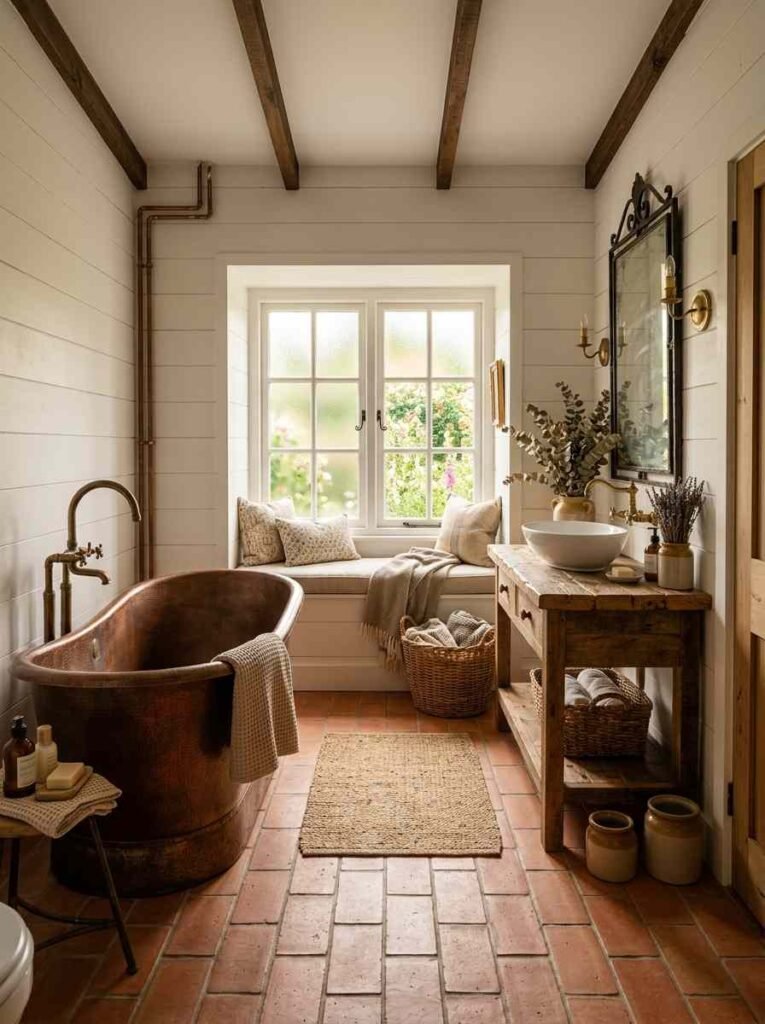
Never underestimate the grout. Dark grout in a cottage bathroom gives you that aged, authentic look. Light grout is cleaner but stains faster. My personal recommendation? Go medium — a warm putty or sand tone that splits the difference beautifully.
For more guidance on choosing the right flooring materials, check out The Spruce’s Bathroom Flooring Guide — genuinely solid resource. And if you want to explore sustainable flooring certifications, FloorScore’s official site is worth bookmarking.
Putting It All Together: My Favorite Combos
Here’s how I’d personally pair these ideas for different cottage bathroom styles:
- Traditional English Cottage: Tumbled travertine + dark grout + wrought iron fixtures
- French Farmhouse: Terracotta tiles + white beadboard + vintage brass
- Lakeside Cabin: Engineered hardwood + pebble shower floor + natural stone accents
- Scandinavian Cottage: Pale limestone + white grout + minimal wood accents
- Bohemian Retreat: Encaustic cement tiles + colorful textiles + copper fixtures
Wrapping It Up
Honestly, choosing a cottage bathroom floor is one of those decisions that seems overwhelming until you realize there’s no wrong answer — as long as it’s warm, has character, and makes you smile when you step on it in the morning. That’s the whole point of a cottage aesthetic, right?
Whether you go full-on reclaimed barn wood or keep it practical with a wood-effect LVP, the most important thing is that the floor feels like you. Don’t just follow trends blindly. Pick something with soul.
So — have you already picked your favorite from this list? Drop it in the comments, I’d genuinely love to know what direction you’re going! And if you’re still torn between two options, just remember: the floor you’ll regret is the one you chose because it was “safe.”
FAQ
What is the most durable flooring for a cottage bathroom?
Porcelain tile (especially the wood-plank or stone-effect varieties) is the most durable option for a cottage bathroom. It handles moisture, heavy foot traffic, and daily cleaning without breaking a sweat. Properly sealed natural stone comes in a very close second.
Can I use real wood flooring in a bathroom?
Yes, but with conditions. Engineered hardwood or properly sealed reclaimed wood works well in a bathroom with good ventilation. Solid hardwood is risky in high-humidity bathrooms and may warp over time. If you’re committed to the real wood look, engineered is the smarter call.
How do I make a small cottage bathroom floor look bigger?
Use large-format tiles laid diagonally, or go with a consistent, light-toned floor without too many pattern interruptions. Pale limestone, large-format wood-effect tiles, or even a simple light hex tile can make a compact bathroom feel noticeably more spacious.
