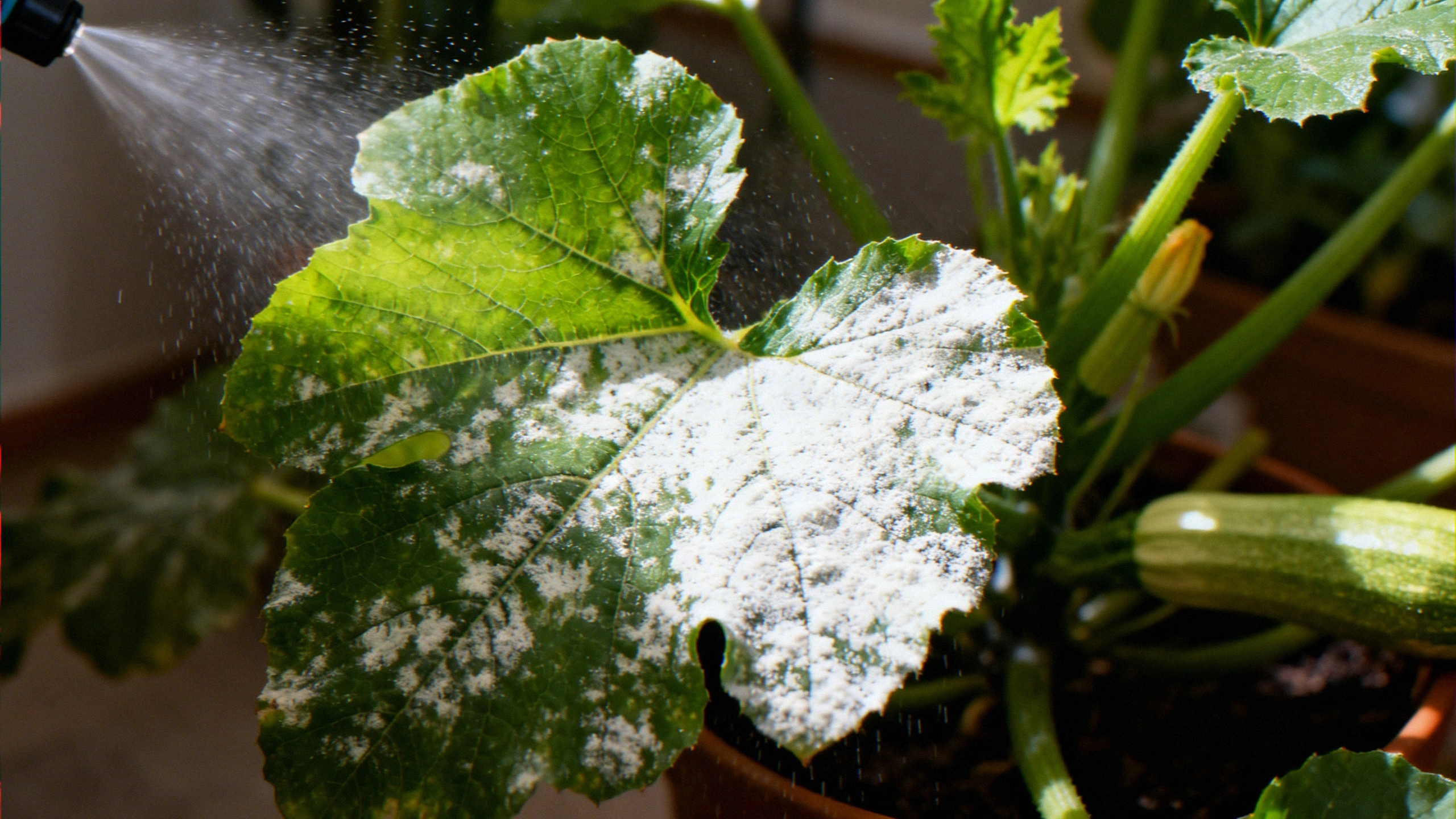
So you walked over to your indoor zucchini plants, coffee in hand, feeling like an absolute gardening legend — and then you spotted it. That chalky, white dusty coating on the leaves, like someone went wild with a bag of flour. Yep, that’s white powdery mildew, and honestly, I’ve been there more times than I care to admit.
The good news? It’s completely beatable. The better news? You probably already have most of what you need sitting in your kitchen right now.
Let me walk you through everything I know about this frustrating fungal problem — how to kill it fast, stop it from coming back, and keep your
ndoor zucchini thriving like the green giants they’re meant to be.
Can Zucchini Plants Get Powdery Mildew?
Short answer — absolutely yes, and they’re actually one of the most susceptible vegetables out there. Zucchini belongs to the cucurbit family, which is basically powdery mildew’s favorite buffet. The fungus responsible is most commonly Podosphaera xanthii, and it has a particular love affair with zucchini leaves.
The environment is what is more susceptible to indoor zucchini. Natural wind, rain, and useful insects outside allow the maintenance of fungal spores. Inside your home? It is warm, it is stifling, that it has no natural rain to cleanse the spores. It is a five star milk and roses resort. :/
I noticed my first outbreak when a small white patch appeared on one lower leaf. I wiped it off and thought nothing of it. Three days later, half the plant looked like it had been dusted with powdered sugar. Don’t make my mistake — act immediately at the very first sign.
What Does White Powdery Mildew Actually Look Like?
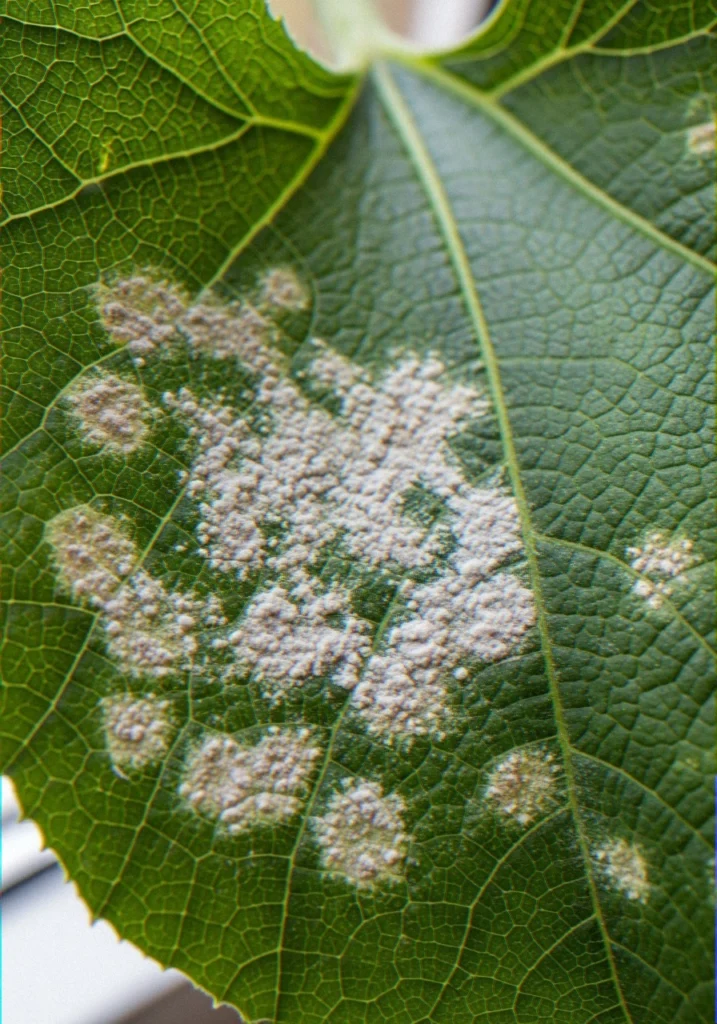
Before you panic over every white speck, let’s make sure you’re dealing with the right thing. Powdery mildew has some pretty distinct characteristics:
- Starts as small, circular white or grayish powder spots
- Spreads quickly across the entire leaf surface
- Appears on both the top and underside of leaves
- Leaves may eventually turn yellow, curl, and die
- In severe cases, it spreads to stems and even the fruit
It does not resemble water drops or dust that is easily blown off. When you touch it and it leaves a powdery residue, then you know you are right. Time to get to work.
Why Are Indoor Zucchini Plants So Vulnerable?
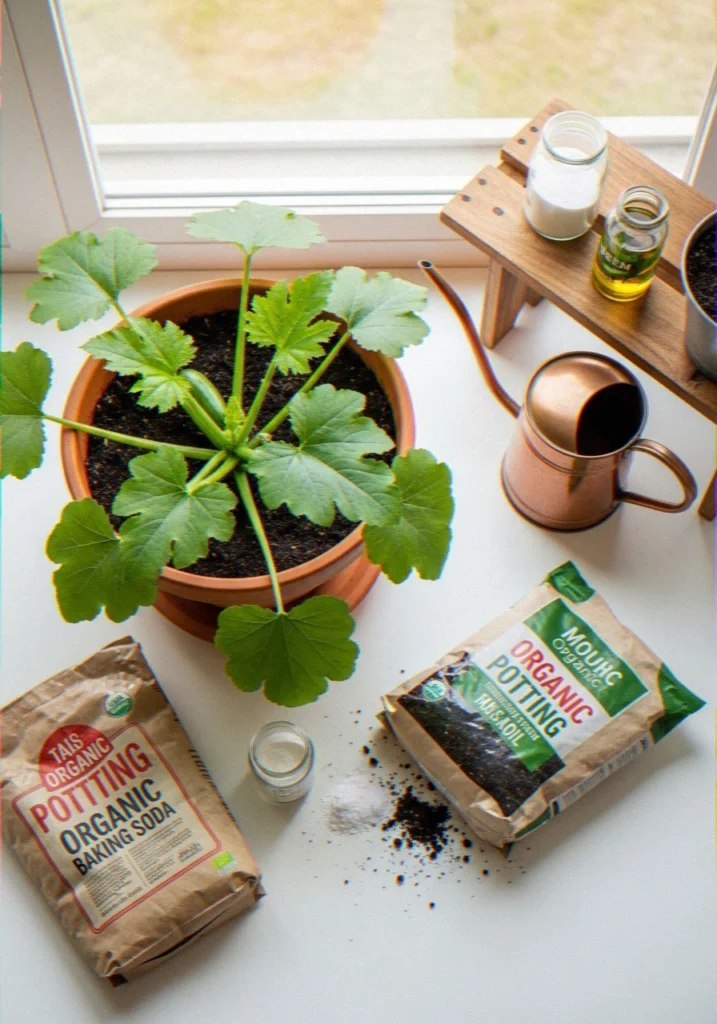
Ever wondered why your outdoor neighbor’s zucchini never seems to have this problem, but yours indoors keeps struggling? The conditions inside our homes are low-key perfect for powdery mildew to thrive.
Here’s what creates the ideal mildew environment:
- Poor air circulation — stagnant air lets spores settle and multiply undisturbed
- Warm temperatures — mildew loves the 60–80°F range, which is exactly how most homes feel
- Overcrowded plants — overlapping leaves trap heat and moisture between them
- Inconsistent watering — plant stress weakens the immune response
- Insufficient light — low light slows plant metabolism and disease resistance
- Dry air paradox — unlike most fungi, powdery mildew actually thrives in low humidity
Whoops, in case your plants are close to a heating vent or on the corner where air is not flowing, you have already identified your suspect.
How to Get Rid of White Powder on Zucchini Leaves — Step by Step
Okay, let’s get practical. Here’s exactly what I do whenever I spot an outbreak, in the order I do it.
Step 1 — Remove Affected Leaves Immediately
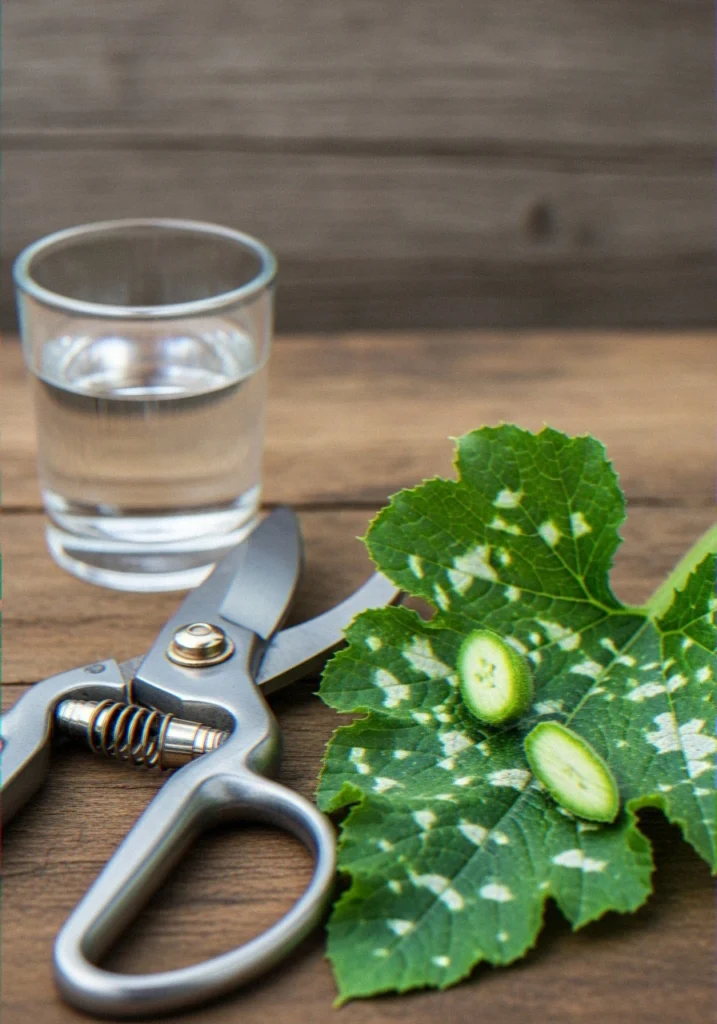
First of all, peel off all the leaves that have mildew on them, before spraying anything. I understand that it is painful to cut off a healthy appearance of a plant, but the infected leaves continue to produce spores and infect all the surrounding areas.
Quick pruning rules to follow:
- Use clean scissors or pruning shears sterilized with rubbing alcohol
- Cut at the base of the stem — don’t leave a stub
- Seal removed leaves in a plastic bag immediately
- Never toss infected leaves into your compost bin
- Wipe your tools with alcohol between every single cut
This step alone stops the spread dramatically. Think of it as emergency damage control before your treatments kick in.
Step 2 — Choose Your Treatment Method
Here’s where most guides get vague and unhelpful. I’m going to give you real, specific options based on how bad the situation actually is.
What Kills Powdery Mildew Instantly — Best Treatments Ranked
Baking Soda Spray — My Personal First Responder
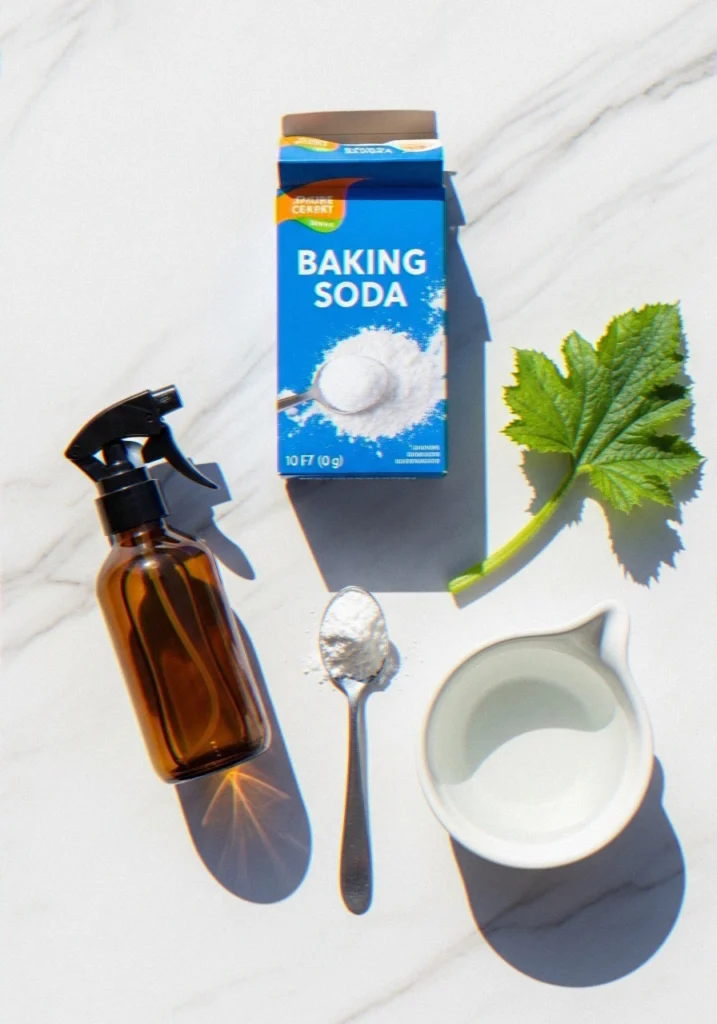
This is genuinely the first thing I grab when I spot early mildew, and it works better than most people expect. Baking soda raises the surface pH of the leaf, creating an environment where the fungus simply can’t survive.
Recipe:
- 1 tablespoon baking soda
- 1/2 teaspoon liquid dish soap (acts as an emulsifier)
- 1 gallon of water
Mix, pour into a spray bottle, and coat leaves thoroughly — top and bottom surfaces. Reapply every 7–10 days. I’ve had plants recover completely from early-stage outbreaks using just this method. For more on this technique, The Old Farmer’s Almanac covers it really well.
Neem Oil Spray — The All-Rounder
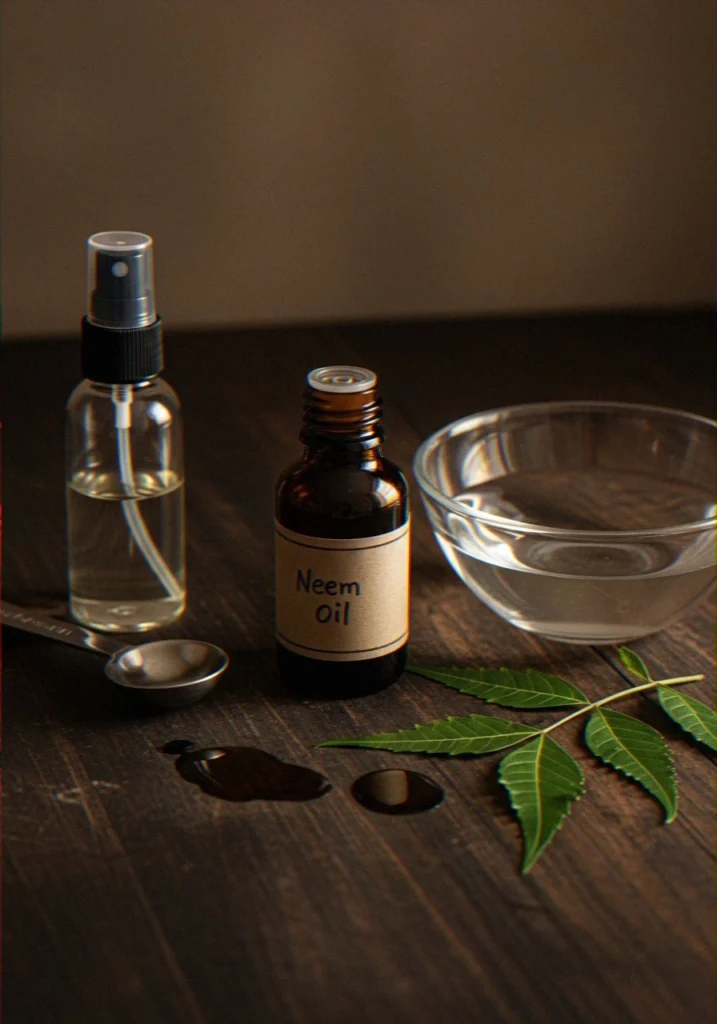
My ride-or-die neem oil in taking care of indoor plants. It functions as a fungicide, insecticide as well as plant immunity enhancer together. Neem oil would be my first choice in keeping any form of treatment in my cupboard.
Recipe:
- 2 tablespoons neem oil
- 1 teaspoon mild liquid soap
- 1 quart warm water
Shake before every use and apply in the morning so it absorbs before your grow lights hit full intensity. Neem under direct intense light can cause leaf burn — learned that one the hard way. The University of California IPM Program endorses neem-based products specifically for powdery mildew on cucurbits. Solid scientific backing there.
Milk Spray — Sounds Weird, Actually Works
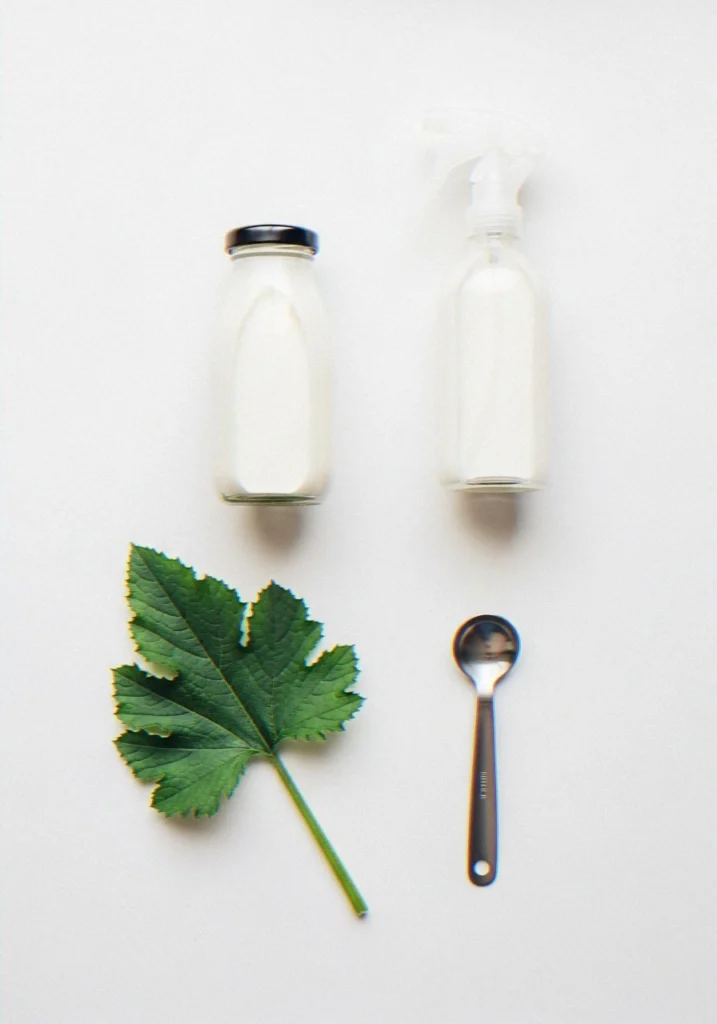
I’ll be honest — when I first read about this I rolled my eyes so hard. Spraying milk on plants? Really? But the research genuinely supports it. A 10:90 milk-to-water solution has shown measurable antifungal properties, likely due to proteins that activate the plant’s own immune response. Published research on Science Direct specifically tested this on cucurbits and found it effective. The white residue it leaves behind is completely harmless — don’t panic when you see it.
Apple Cider Vinegar Spray — Better as Prevention
Mix 2–3 tablespoons of apple cider vinegar per gallon of water. The acidity disrupts fungal cell membranes. IMO, this works better as a preventative spray than a cure once mildew is visibly spreading, but it earns its place in the rotation. Spray weekly as maintenance after you’ve cleared an outbreak.
Commercial Fungicides — When You Need the Big Guns
If mildew has spread to more than 30–40% of your plant, home remedies alone might not cut it. Look for these active ingredients:
- Potassium bicarbonate — highly effective, organic-approved, my top commercial pick
- Sulfur-based fungicides — classic, reliable, widely available
- Copper fungicides — broad-spectrum but use carefully in enclosed indoor spaces
Always take label instructions to the letter. Fungicides are not better at all but too much of it may burn your plants and create more stress than the fungus itself.
Is Vinegar or Baking Soda Better for Powdery Mildew?
This is one of the most common questions I see, and the honest answer is — it depends on your situation.
Here’s a quick breakdown to help you decide:
Quick Comparison Table — Powdery Mildew Treatments
| Treatment | Best For | Effectiveness | Safety for Plants | Cost |
|---|---|---|---|---|
| Baking Soda Spray | Early-stage outbreaks | ★★★★☆ | High | Very Low |
| Neem Oil | Moderate infestations | ★★★★★ | High (avoid heat) | Low |
| Milk Spray | Prevention + mild cases | ★★★☆☆ | Very High | Very Low |
| Apple Cider Vinegar | Prevention only | ★★★☆☆ | Medium | Very Low |
| Potassium Bicarbonate | Serious outbreaks | ★★★★★ | High | Medium |
| Sulfur Fungicide | Severe infestations | ★★★★☆ | Medium | Medium |
| Copper Fungicide | Broad-spectrum control | ★★★★☆ | Low-Medium | Medium |
In my personal experience, baking soda wins for early intervention because it’s immediate, gentle, and you probably have it right now. Neem oil wins overall for a combination of effectiveness and versatility. Vinegar is best saved as a weekly preventative once you’ve cleared the active outbreak.
What Is the Best Homemade Solution for Powdery Mildew?
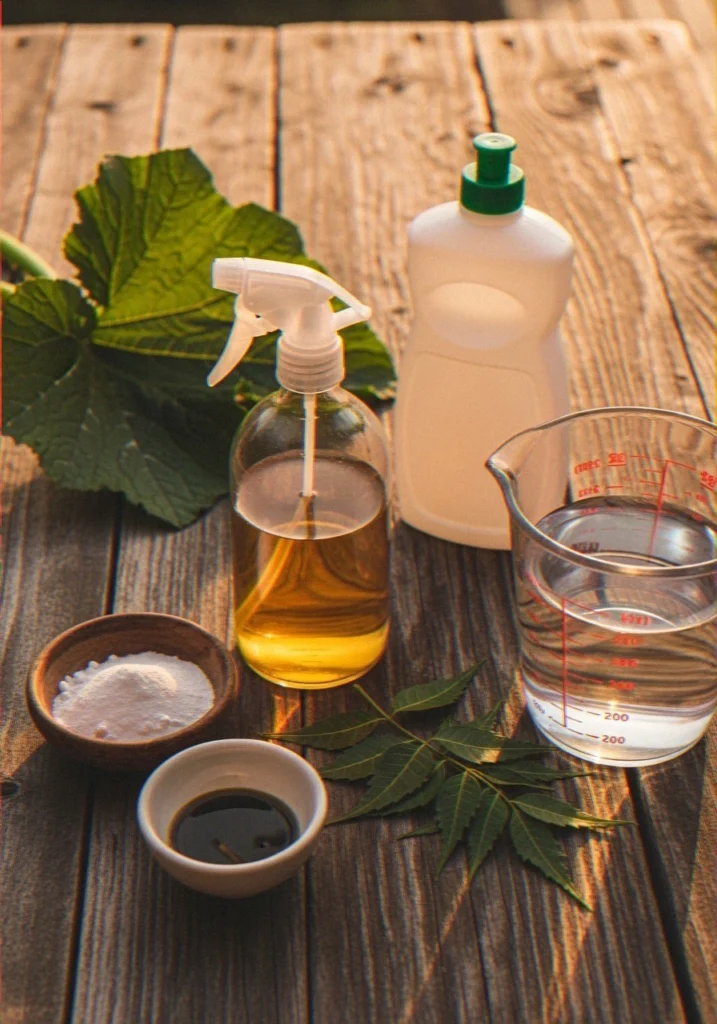
If I had to pick one single homemade recipe that delivers the best results, it’s this combination spray I’ve been using for the last two years:
The Ultimate DIY Powdery Mildew Spray:
- 1 tablespoon baking soda
- 1 tablespoon neem oil
- 1 teaspoon dish soap
- 1 gallon warm water
The addition of the pH-increasing nature of baking soda to the antifungal and immune-enhancing nature of neem oil makes this a one-two punch, since it works more quickly than either of those ingredients separately. Use every 57 days when there is the active outbreak and every 2 weeks as a maintenance use. This has actually become my default, and I sincerely promise by it at this stage.
How to Treat Powdery Mildew on Indoor Plants — Fixing Your Environment
Killing the current outbreak is only half the job. If you don’t fix the conditions that caused it, mildew will keep returning like that one houseguest who never checks the vibe in the room.
Improve Air Circulation First
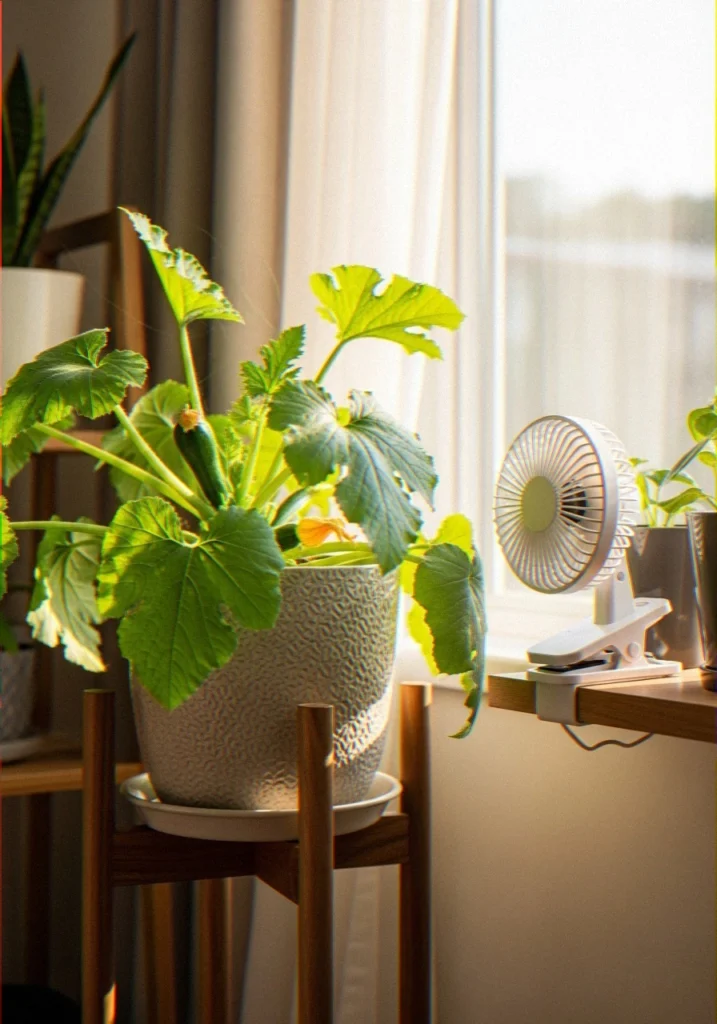
Get a small fan running near your plants. This is the single most impactful change I ever made to my indoor growing setup. A gentle, consistent breeze disrupts spore settlement and keeps leaf surfaces drier between waterings. A basic clip-on desk fan pointed nearby works perfectly — nothing fancy needed.
Stop Overcrowding Your Plants
Zucchini plants are spread out leafy plants, which require ample breathing space. When leaves intersect everywhere, you form warm, stuffy spots of which mildew is an absolute bacillus.
Allow the plants a minimum spacing of 18 -24 inches with other plants. This distance is the difference between the world and me in case you happen to have several plants in your house.
Fix Your Watering Technique
Always water at the base, directly at the soil level — never from above. Wet foliage creates exactly the surface conditions mildew needs to establish itself. I switched to bottom watering my zucchinis and saw a noticeable reduction in fungal problems within just a few weeks.
Maximize Your Light Setup
Healthy, vigorously growing plants resist disease significantly better than weak, light-starved ones. Make sure your zucchini gets at least 8–10 hours of quality light daily. If you’re relying on grow lights, choose a full-spectrum option with adequate intensity for fruiting vegetables — not just a basic seedling light.
How to Get Rid of White Fungus on Plants — General Rules That Apply Everywhere
The approach to powdery mildew translates well across most indoor plants, not just zucchini. Whether you’re dealing with white fungus on tomatoes, cucumbers, squash, or even ornamental plants, these core principles hold true:
- Identify early — white fungus spreads exponentially once established
- Remove infected material immediately before treating
- Treat the whole plant, not just visible spots — spores travel
- Address environmental conditions or the fungus will simply return
- Rotate your treatments to prevent resistance buildup
These rules have saved more than a few of my ihttps://urbannookcreations.com/how-to-organize-an-indoor-plant-potting-station-without-looking-cluttered/ndoor plants over the years, and they apply whether you’re growing food crops or houseplants.
Choosing Mildew-Resistant Zucchini Varieties
Should the problem of powdery mildew continue to bother you on a regular basis, then it may be time to seriously consider changing your variety. There are zucchini varieties that have been genetically engineered to be highly resistant to diseases.
Top mildew-resistant varieties worth growing:
- ‘Dunja’ — widely regarded as one of the most resistant zucchini varieties available
- ‘Astia’ — compact, container-friendly, and reasonably disease-resistant
- ‘Patio Star’ — specifically developed for indoor and container growing
- ‘Cavili’ — parthenocarpic (sets fruit without pollination) and has good mildew tolerance
Seed companies like Burpee and Johnny’s Selected Seeds clearly flag disease resistance ratings in their variety descriptions — makes comparison shopping genuinely easy.
FAQ — People Also Ask
How to Get Rid of White Powder on Zucchini Leaves?
Start by removing heavily infected leaves using sterilized scissors. Then apply either a baking soda spray (1 tbsp baking soda + 1/2 tsp dish soap per gallon of water) or a neem oil solution. Reapply every 7 days and improve airflow around the plant. Caught early, most plants recover fully within 2–3 weeks of consistent treatment.
How to Stop Powdery Mildew on Indoor Plants?
Prevention is genuinely easier than treatment. Run a fan near your plants for consistent airflow, space plants so leaves don’t overlap, water only at the base, and make sure your plants get adequate light.
A weekly preventative spray of diluted neem oil or apple cider vinegar solution during high-risk periods keeps spores from getting a foothold.
Can Zucchini Plants Get Powdery Mildew?
Yes — zucchini is actually one of the most susceptible vegetables to powdery mildew. As a cucurbit, it’s a prime target for Podosphaera xanthii, the fungal species most commonly responsible. Indoor zucchini faces even higher risk due to warm, still air and inconsistent growing conditions.
Is Vinegar or Baking Soda Better for Powdery Mildew?
For an active outbreak, baking soda is more effective because it physically alters the leaf surface pH to kill existing fungal growth. Vinegar works better as a weekly preventative spray to stop spores from establishing. For the best results, use baking soda to clear the outbreak, then switch to diluted vinegar as ongoing maintenance.
What Is the Best Homemade Solution for Powdery Mildew?
The best personal recipe that I have used is 1 tablespoon baking soda, 1 tablespoon neem oil, 1 teaspoon dish soap, and 1 gallon of warm water.
This mixture approaches the fungus in a variety of ways – the baking soda alters the pH, the neem oil interferes with the biology of the fungi, and the soap aids all the rest to adhere to the surface of the leaf. Administer every 57 days in the middle of an epidemic.
See related content
17 Creative Deck With Planter Boxes Ideas for a Dreamy Outdoor Space
23 Easy Deck Railing Planters DIY Ideas to Upgrade Your Outdoor Space
Final Thoughts
White powdery mildew on your indoor zucchini is genuinely one of those problems that looks worse than it actually is — especially when you catch it early and know exactly what to do.
With the right treatment, some smart environmental tweaks, and a bit of consistency, your plants can bounce back completely and go on to produce more zucchini than you’ll know what to do with 🙂
Here’s your quick action checklist before you close this tab:
- Spotted mildew? Remove infected leaves immediately
- Apply baking soda + neem oil combo spray every 5–7 days
- Get a small fan running near your plants today
- Water at the base only — never overhead
- Space plants properly — 18–24 inches minimum
- Switch to resistant varieties if this keeps recurring
You’ve got this. Go show that white fungus who’s boss.

1 thought on “How to Get Rid of White Powdery Mildew on Indoor Zucchini Plants?”