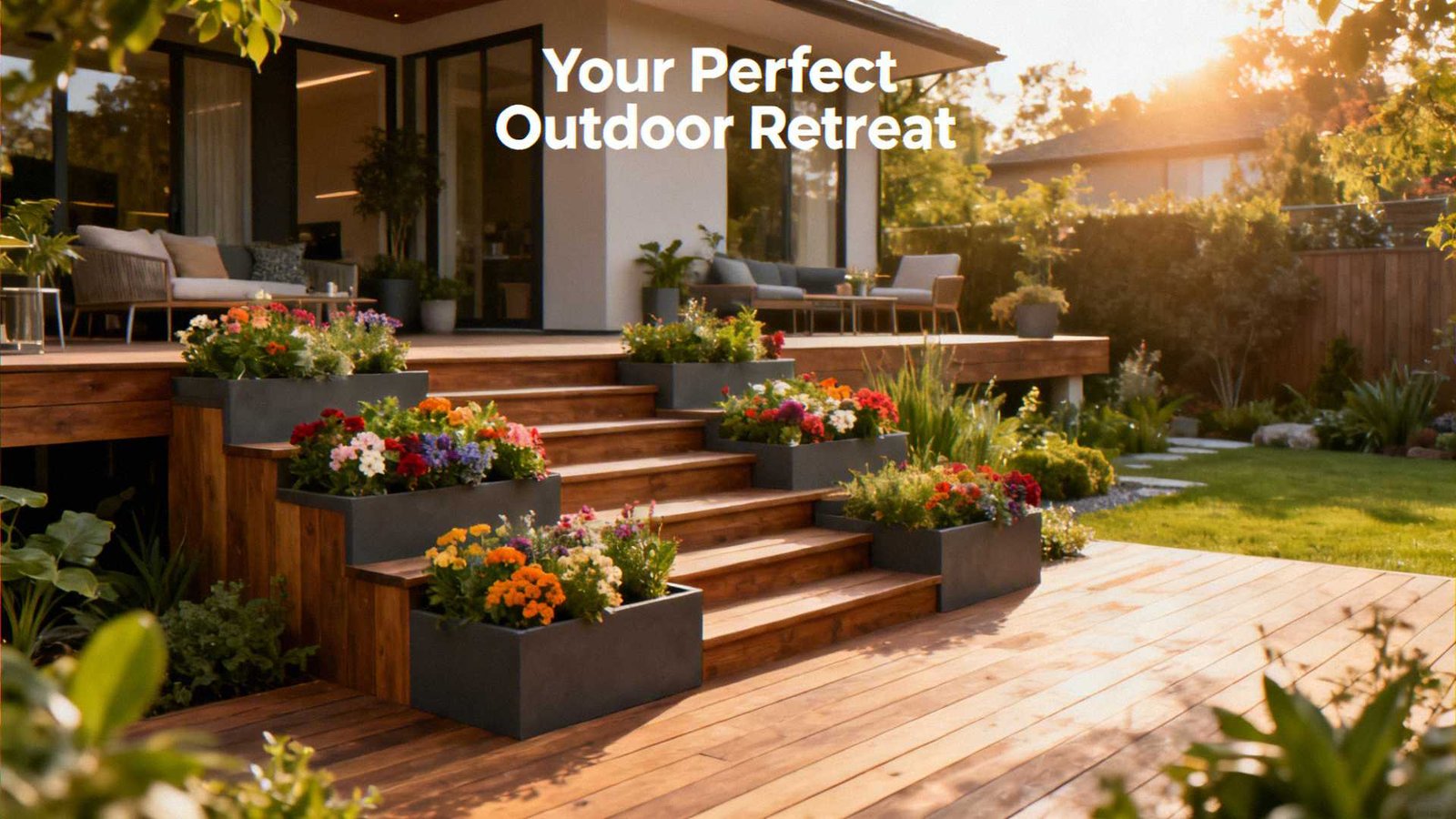
Look, I’ll be straight with you—deck stairs don’t have to be boring. For years, I walked past my plain wooden steps thinking, “There’s gotta be something better than this,” and you know what? There is. Adding planters to your deck stairs transforms them from a basic necessity into an actual design feature. It’s like giving your outdoor space a personality upgrade 🙂
Think about it: you’re already building stairs, so why not make them work double duty? These 17 ideas combine function with serious curb appeal, and honestly, some of them are so clever I wish I’d thought of them first.
Built-In Side Planters
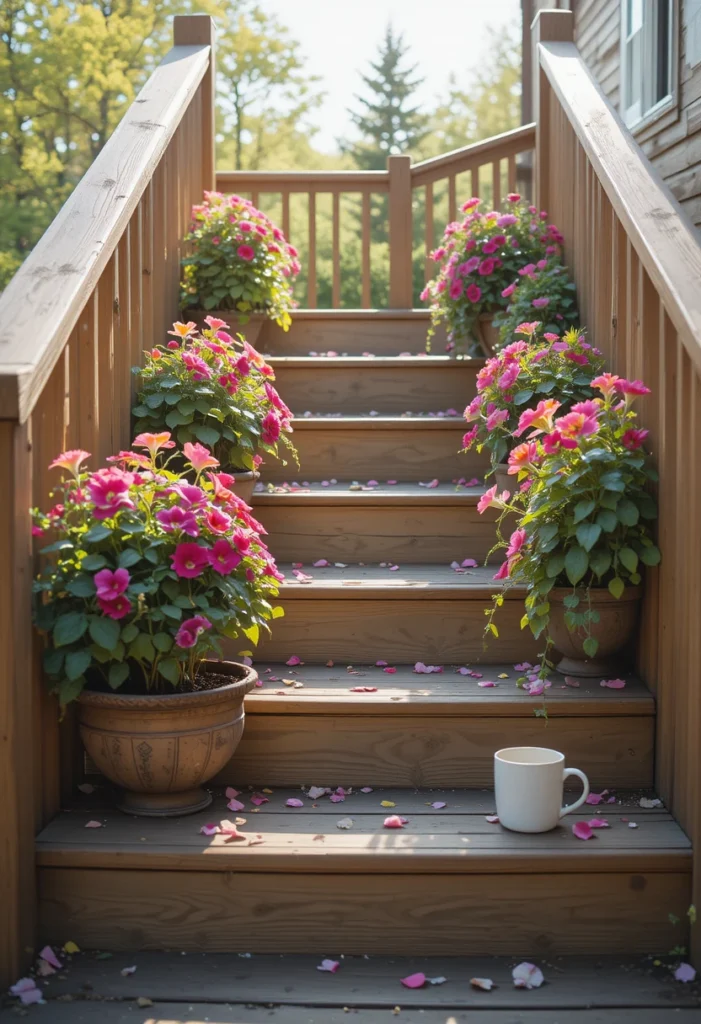
This one’s my go-to recommendation because it just makes sense. You install planter boxes directly into the sides of your stair stringers, creating a cascading garden effect as you walk up or down.
Here’s what makes this work:
- Provides structural support while adding greenery
- Water drainage flows naturally downward
- Perfect for herbs or trailing flowers
- Doesn’t eat up your actual step space
I built these on my own deck last summer, and let me tell you—watching those petunias spill over the edges while I’m sipping morning coffee? Chef’s kiss. The installation took a weekend, but the payoff is year-round visual interest.
The trick is making sure your planters have proper drainage holes. Trust me on this—I learned the hard way when my first attempt turned into a mosquito breeding ground. Not cute.
Riser Pocket Planters
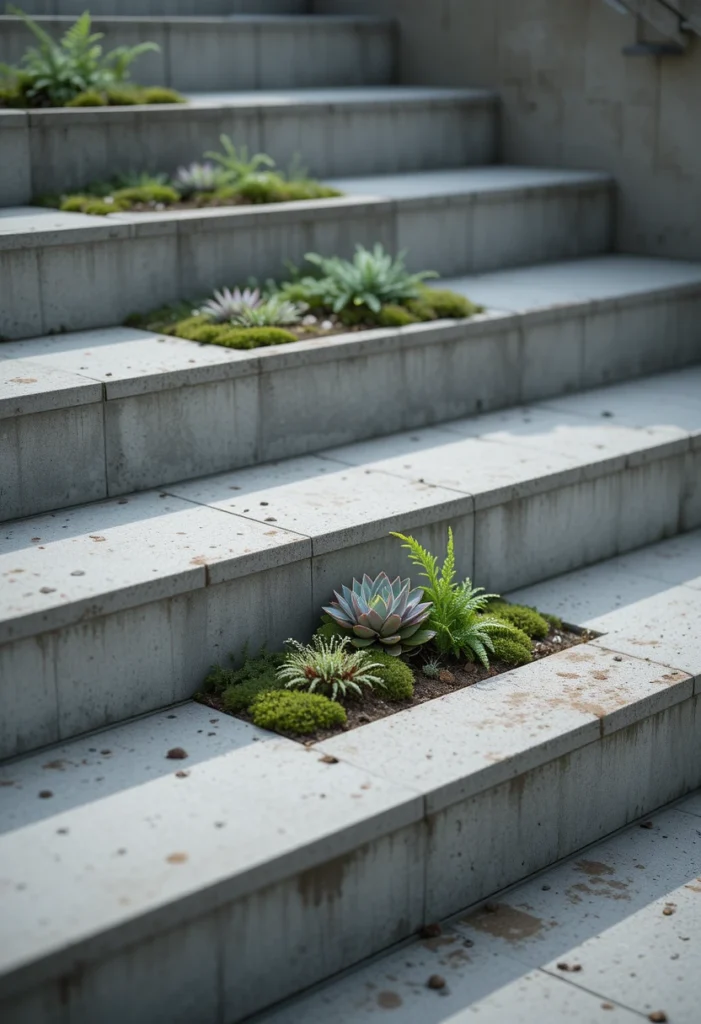
Ever looked at the vertical part of your stairs (the risers) and thought they’re wasted space? Yeah, me too. Riser pocket planters solve that problem beautifully.
You cut shallow pockets into each riser and insert small planters or mount flat-backed containers. The result? A living wall effect that doesn’t interfere with foot traffic.
Best plants for riser pockets:
- Succulents (low maintenance FYI)
- Moss varieties
- Small ferns
- Air plants
These work especially well on wider staircases where you’ve got room to play. IMO, the visual impact per square inch is unbeatable with this approach.
Corner Post Planters
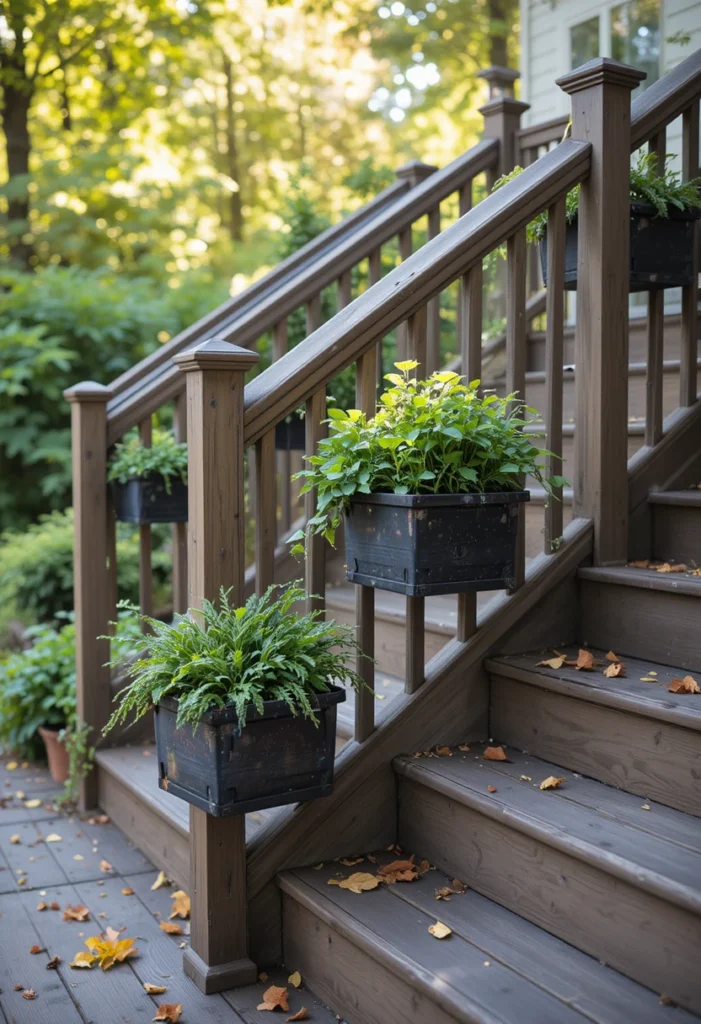
Simple. Classic. Effective. You mount planter boxes at the corners where your railings meet the stairs. It frames everything nicely and adds symmetry.
I’ve seen people go two routes here: either matching planters on both sides for that formal garden vibe, or mixing it up with different heights and textures for something more casual. Both work—just depends on your style.
The installation couldn’t be easier. Most corner post planters come with brackets that attach right to your existing posts. No major carpentry required, which is great for those of us who are, shall we say, “carpentry-challenged.”
Tiered Step Planters
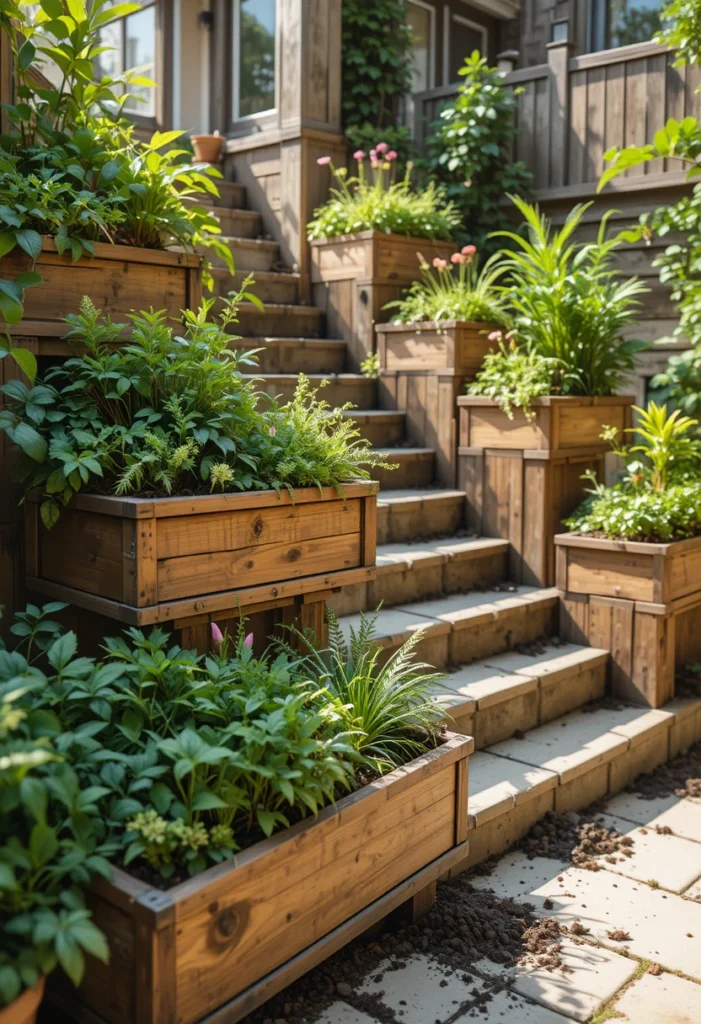
This design stacks planters in a stepped formation that mirrors your actual stairs. Each planter sits one level lower than the previous one, creating this cool tiered garden effect.
What I love about tiered planters is the flexibility. You can use:
- Wooden boxes for a rustic look
- Metal containers for modern vibes
- Terra cotta for that Mediterranean feel
- Recycled materials for an eclectic approach
Quick comparison of materials:
| Material | Durability | Maintenance | Best Style |
|---|---|---|---|
| Wood | Moderate | High | Rustic/Traditional |
| Metal | High | Low | Modern/Industrial |
| Terra Cotta | Moderate | Moderate | Mediterranean |
| Composite | Very High | Very Low | Contemporary |
The spacing between tiers lets each plant get adequate sunlight, which means everything actually thrives instead of just surviving.
Hanging Basket Rails
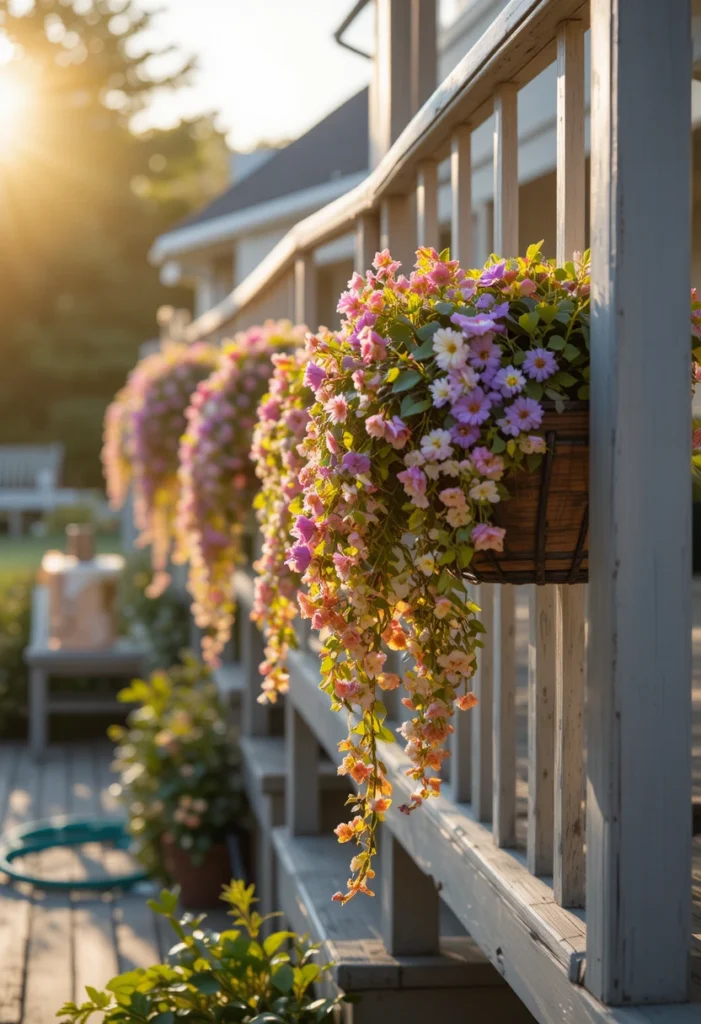
Why not go vertical? Attach hanging basket hooks to your stair railings and let gravity do the visual work.
This approach is perfect for renters or anyone who doesn’t want permanent modifications. You can swap out seasonal flowers, try different arrangements, and move things around whenever you feel like it.
https://en.wikipedia.org/wiki/ChrysanthemumI rotate my hanging baskets with the seasons—pansies in spring, impatiens in summer, mums in fall. Keeps things fresh and gives neighbors something new to compliment every few months :/
Underneath Stair Planters

Got space under your stairs? Put it to work. This often-ignored area makes an excellent spot for larger planters or even a mini shade garden.
The underside of stairs creates natural shade, which means you can grow plants that would normally fry in direct sunlight. Think hostas, ferns, and shade-loving perennials.
Pro tip: Add some low-voltage lighting under there too. It highlights your plants at night and makes the whole stairway feel more intentional and designed.
Integrated Wooden Box Planters

These babies become part of the actual stair structure. You build wooden boxes directly into your stair design, so they look like they’ve always belonged there.
The key here is planning. You need to account for these planters during the initial construction or renovation. But if you’re already building new stairs? This is the time to do it right.
I’ve seen gorgeous examples where the planter boxes use the same wood and stain as the stairs, creating this seamless, cohesive look. It screams “professional design” even if you DIY it.
Railing-Mounted Window Boxes
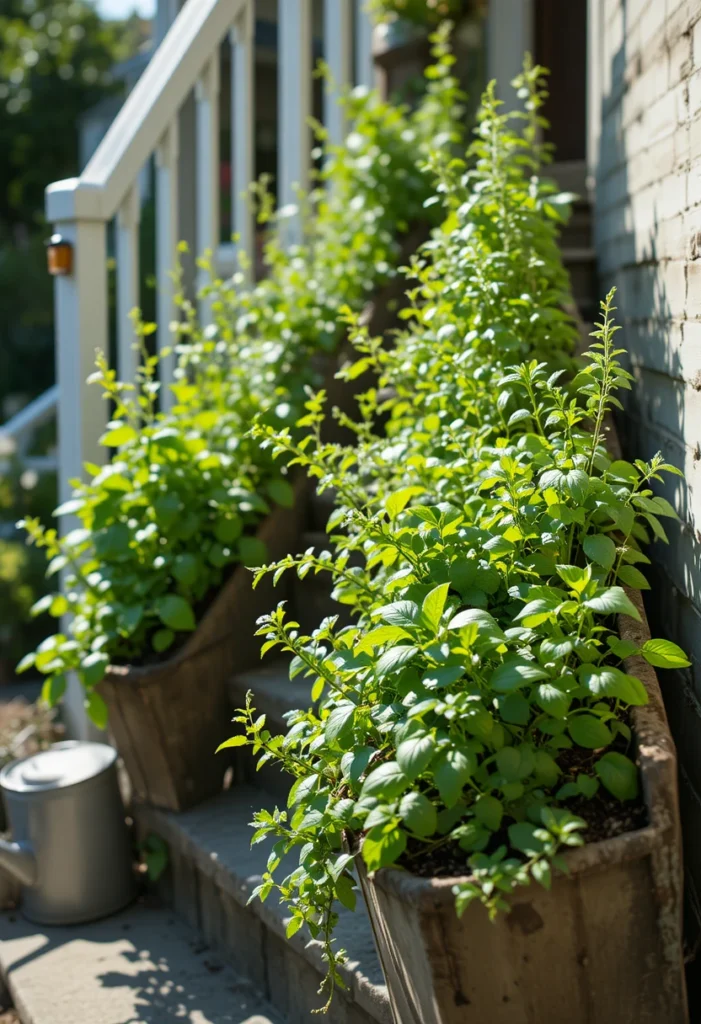
Borrow a classic window box design and adapt it for your stair railings. These long, narrow planters clip or bolt onto your railing and create a continuous ribbon of greenery.
They work particularly well for edible gardens. Imagine walking up your stairs and grabbing fresh basil for dinner. That’s living, folks.
The weight distribution matters here—make sure your railings can handle the load, especially when the soil is wet. Nobody wants a planter box crashing down mid-dinner party.
Spiral Stair Planters
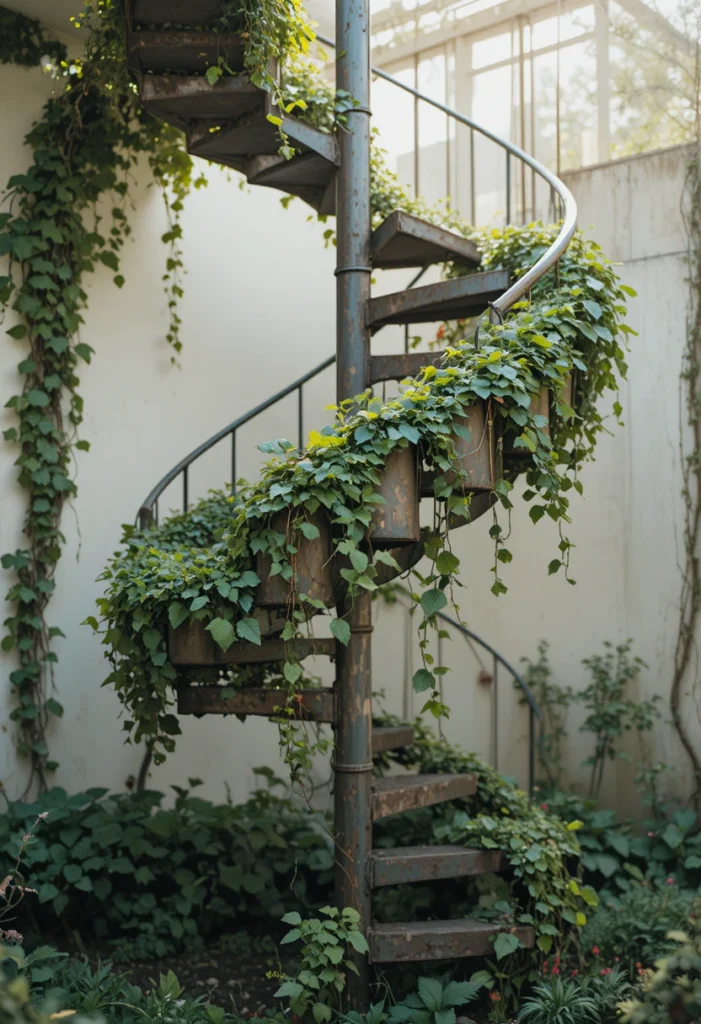
Got a spiral staircase on your deck? (Fancy!) These deserve special treatment. Wrap planters around the outer edge, following the spiral’s curve.
It creates this ascending garden effect that looks way more complicated than it actually is. Trailing vines work especially well here—they’ll cascade down and soften those metal or wooden spirals.
Fair warning: watering can be a bit of a workout since you’re climbing and carrying a watering can. Maybe that counts as your exercise for the day?
Step Riser Boxes
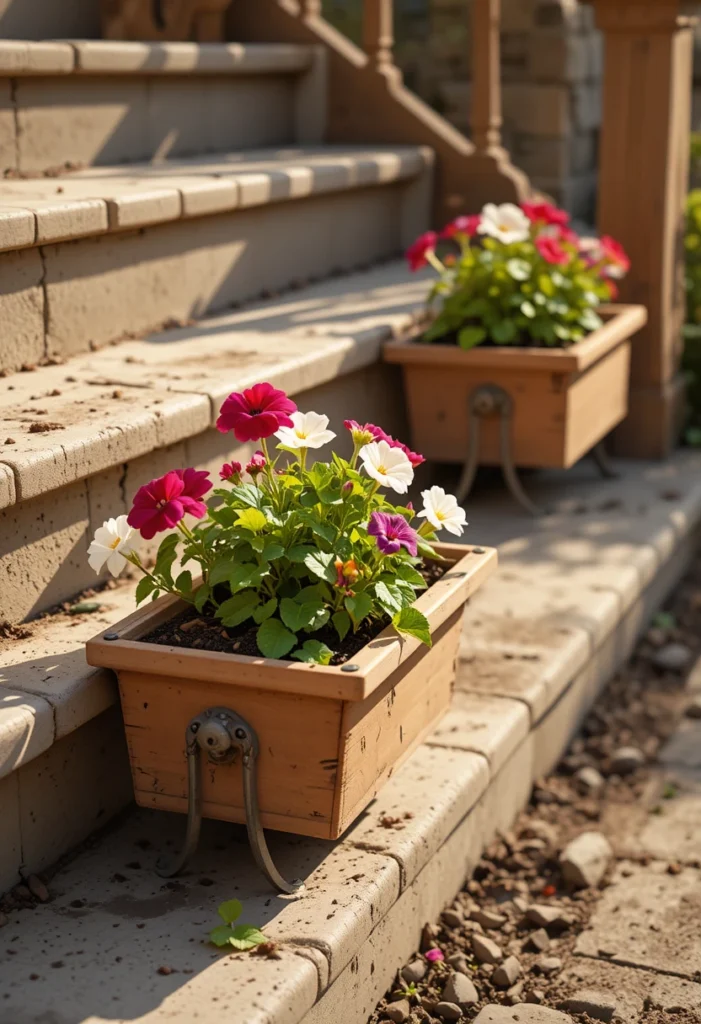
Similar to riser pocket planters but more substantial. These are actual boxes that attach to the riser face, jutting out slightly to create more planting depth.
You get more soil volume, which means healthier plants and more options for what you can grow. I’ve successfully grown everything from petunias to small pepper plants in these.
Installation considerations:
- Must clear foot traffic (obviously)
- Needs sturdy mounting brackets
- Requires good drainage
- Should complement stair width
Multi-Level Landing Planters
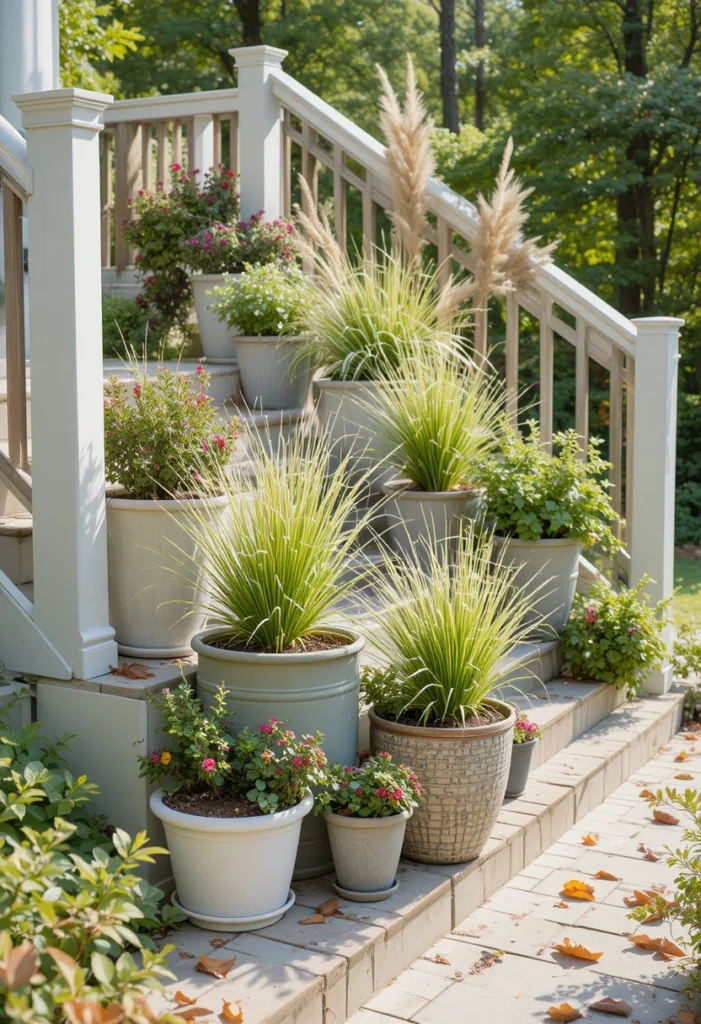
If your deck stairs include a landing or platform, you’ve hit the jackpot. This flat space is prime real estate for grouping multiple planters at different heights.
Create visual interest by varying the heights—use plant stands, stack boxes, or mix tall and short containers. The landing becomes a little garden vignette that breaks up the climb.
I keep larger statement plants on my landing—ornamental grasses, small shrubs, even a dwarf Japanese maple in a big container. It creates a natural pause point where people actually want to stop and look around.
Vertical Garden Panels

Mount vertical garden panels on the wall adjacent to your stairs. These modular systems let you create living walls that transform boring siding into green focal points.
The panels typically use a pocket system where plants grow in individual compartments. You can create patterns, spell out words, or just go wild with color and texture.
Maintenance is easier than you’d think. Most systems have built-in irrigation, so you’re not hand-watering a hundred little pockets. Technology for the win.
Floating Shelf Planters

Install floating shelves along the wall beside your stairs and place planters on them. This works brilliantly for covered deck stairs where rain won’t be an issue.
The “floating” look keeps things modern and minimalist. You control exactly how many planters you want and where they go. Plus, you can swap them out seasonally without any permanent changes.
I stagger mine at different heights for a less predictable, more organic look. Symmetry is overrated sometimes.
Baluster Planters

These clever designs slip right between your existing balusters (the vertical posts in your railing). No tools required—they just wedge in place.
Perfect for people who rent or want zero-commitment greenery. You can add or remove them anytime, and they come in tons of sizes to fit different baluster spacing.
The downside? They’re usually smaller, so plant selection is limited. Stick with things that don’t need deep roots—succulents, herbs, and small annuals work great.
Stairway Pot Clusters

Group multiple pots of various sizes at the base, middle, or top of your stairs. This is the “I’m not ready to commit to built-ins” approach, and honestly? It totally works.
Pot clustering tips:
- Use odd numbers (3, 5, or 7 pots)
- Vary heights for visual interest
- Keep the color palette cohesive
- Ensure they don’t create tripping hazards
I like this method because you can rearrange whenever the mood strikes. Feeling the orange and yellow combo? Go for it. Want to switch to all green foliage next month? Done.
Deck Stair Herb Garden
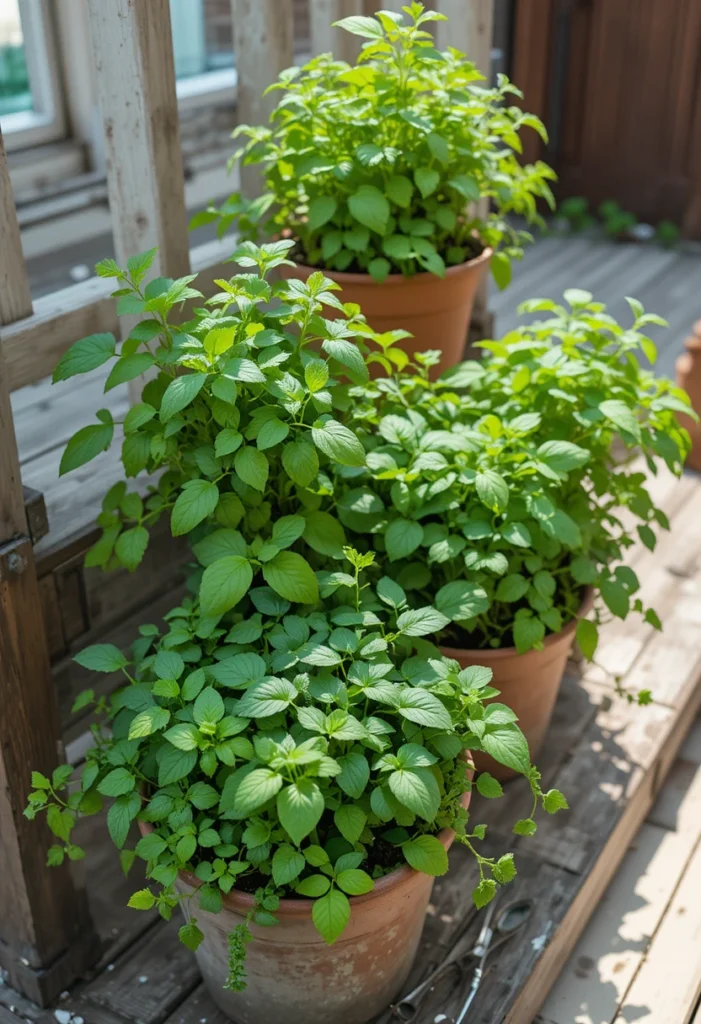
Dedicate your stair planters entirely to culinary herbs. Fresh basil, thyme, rosemary, mint, oregano—all within arm’s reach as you head to and from your deck.
This might be my favorite functional application. There’s something deeply satisfying about cooking with herbs you literally just picked while walking through your backyard.
Best herbs for stair planters:
- Basil (sun-loving superstar)
- Thyme (trailing varieties look great)
- Mint (contains it or it’ll take over!)
- Parsley (both curly and flat-leaf)
- Oregano (hardy and productive)
Keep your culinary herbs on the side you use most often. I’m right-handed, so mine are on the right going up. Saves me from doing an awkward reach-across every time I need cilantro.
LED-Lit Planter Boxes
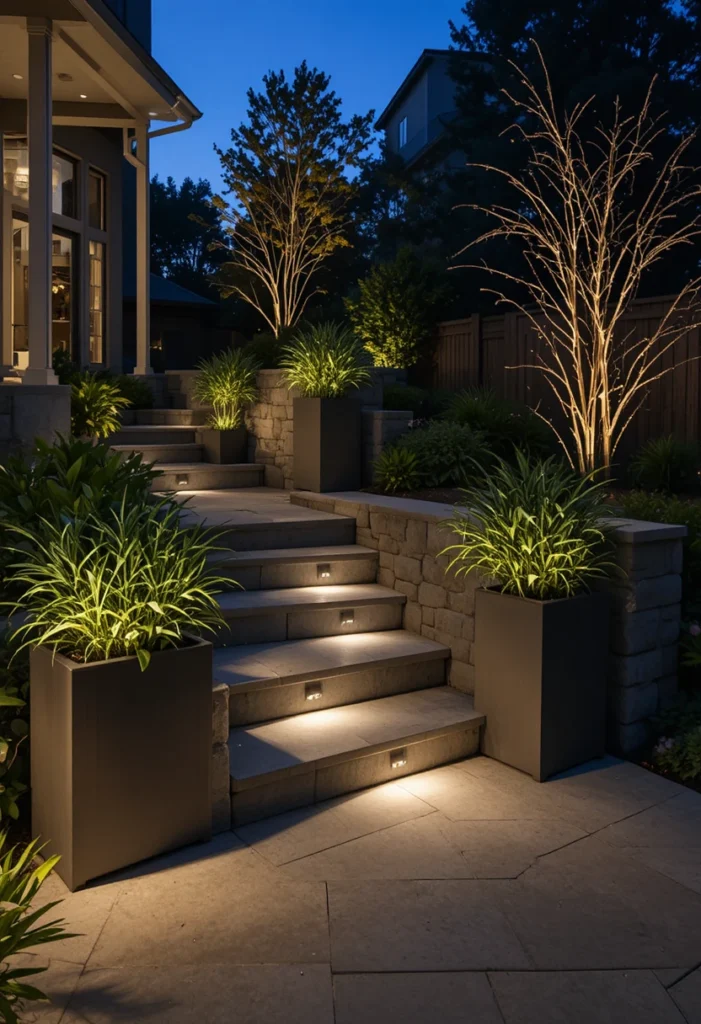
Combine planters with LED strip lighting for nighttime drama. The lights can go inside the planter rim, underneath for an uplighting effect, or along the stair edge for safety and style.
This turns your deck stairs into an evening focal point. Warm white lights create ambiance, while color-changing LEDs let you match holidays or just your mood.
The solar-powered options mean no wiring headaches. They charge during the day and automatically illuminate at dusk. Set it and forget it.
Making It Work For You
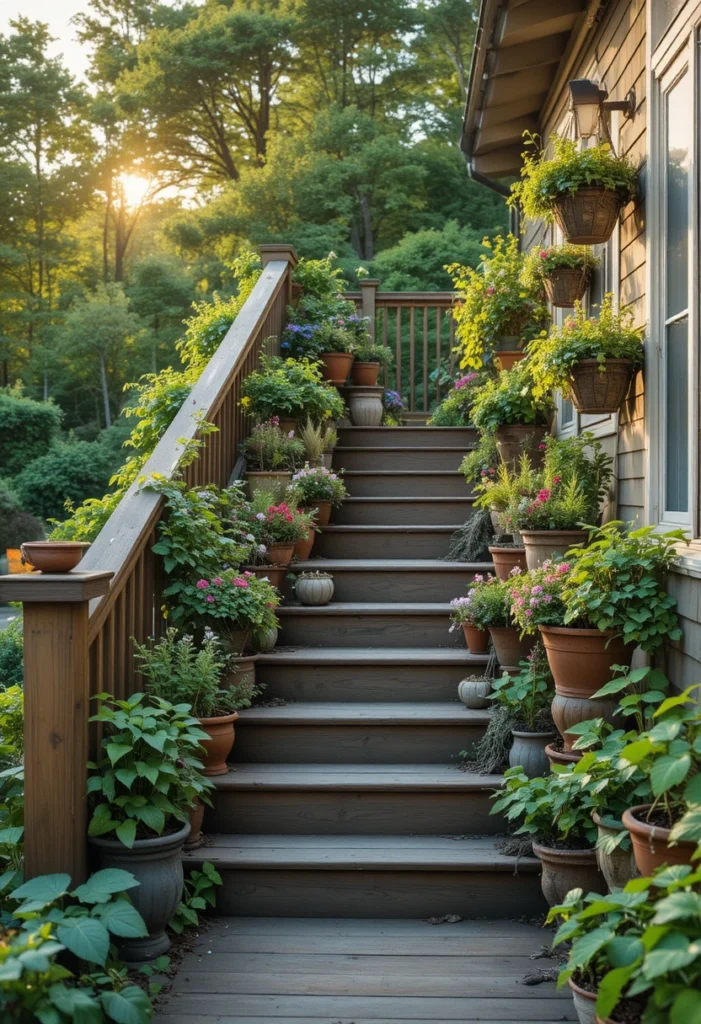
Here’s the thing—you don’t need to pick just one of these ideas. Mix and match. Combine built-in side planters with hanging baskets. Add corner post planters and riser pockets. The magic happens when you create something uniquely yours.
Consider your maintenance commitment too. Some of these designs require regular watering and deadheading, while others thrive on benign neglect. Be honest about how much time you’ll actually spend on upkeep. There’s no shame in choosing low-maintenance options—brown, crispy plants help nobody.
Final thoughts: Your deck stairs connect your home to your outdoor space. They’re transitional zones that deserve more attention than they usually get. Adding planters transforms them from purely functional into something that brings genuine joy every time you use them.
Start small if you’re unsure. Try one or two planters this season. See what works, what you enjoy, and what drives you crazy. Then expand from there. Gardening is iterative—nobody gets it perfect on the first try, and that’s completely fine.
Now get out there and make those stairs something worth looking at. Your future self (and your neighbors) will thank you.

3 thoughts on “17 Creative Deck Stairs With Planters Ideas”