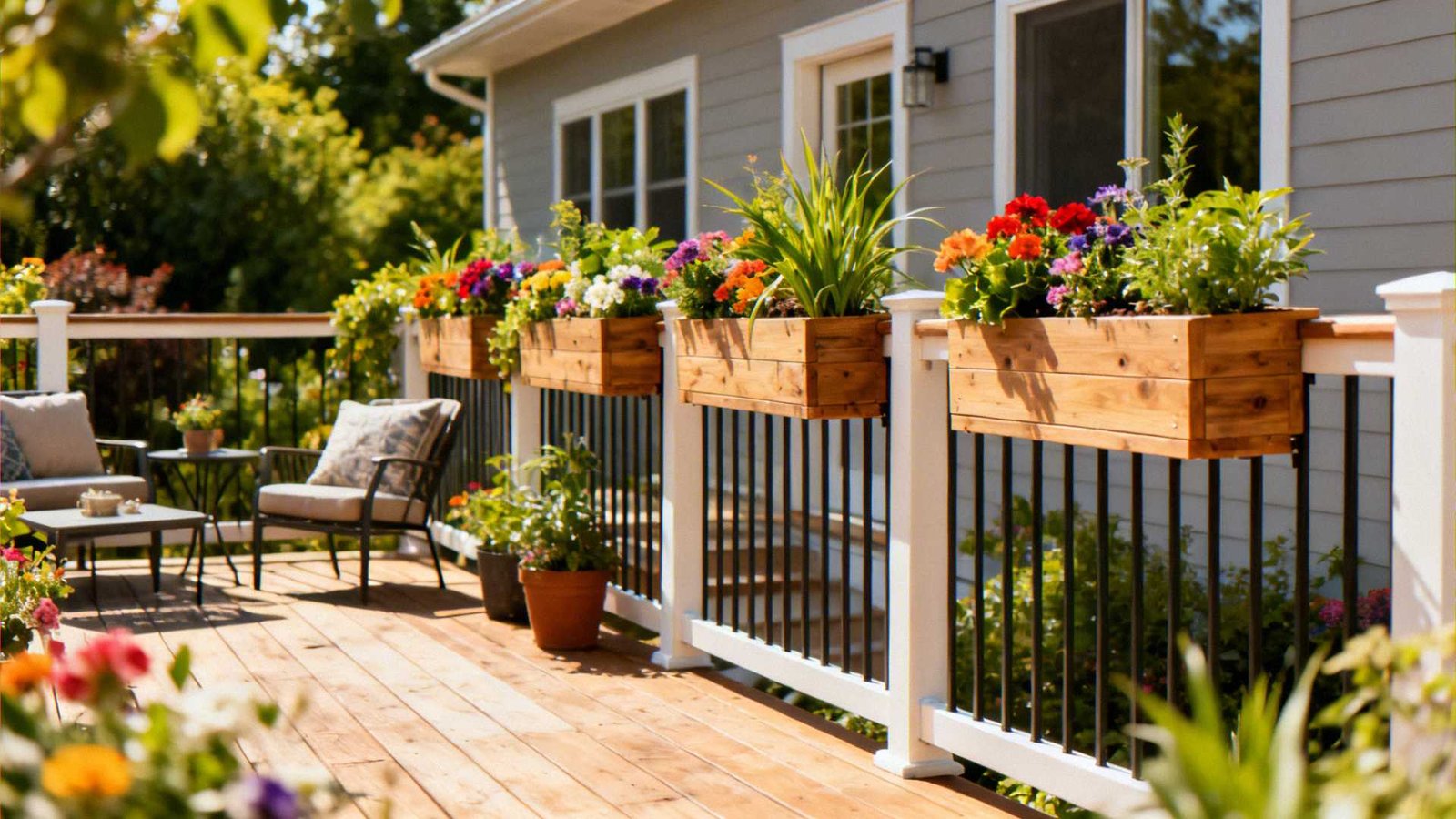
Look, I’ll be honest with you. The first time I tried to jazz up my deck railing with planters, I basically zip-tied a flower pot to the rail and called it a day. Spoiler alert: it looked terrible. 🙂
But here’s the thing—deck railing planters can completely transform your outdoor space from “meh” to “wow, did you hire a designer?” And the best part? You don’t need a trust fund or a degree in carpentry to pull it off. I’ve spent the last few years experimenting with different DIY planter ideas, and I’m pumped to share what actually works (and what’s just Pinterest pretty but real-world terrible).
Ready to turn your boring deck into an Instagram-worthy oasis? Let’s get into it.
Why Deck Railing Planters Are a Game-Changer
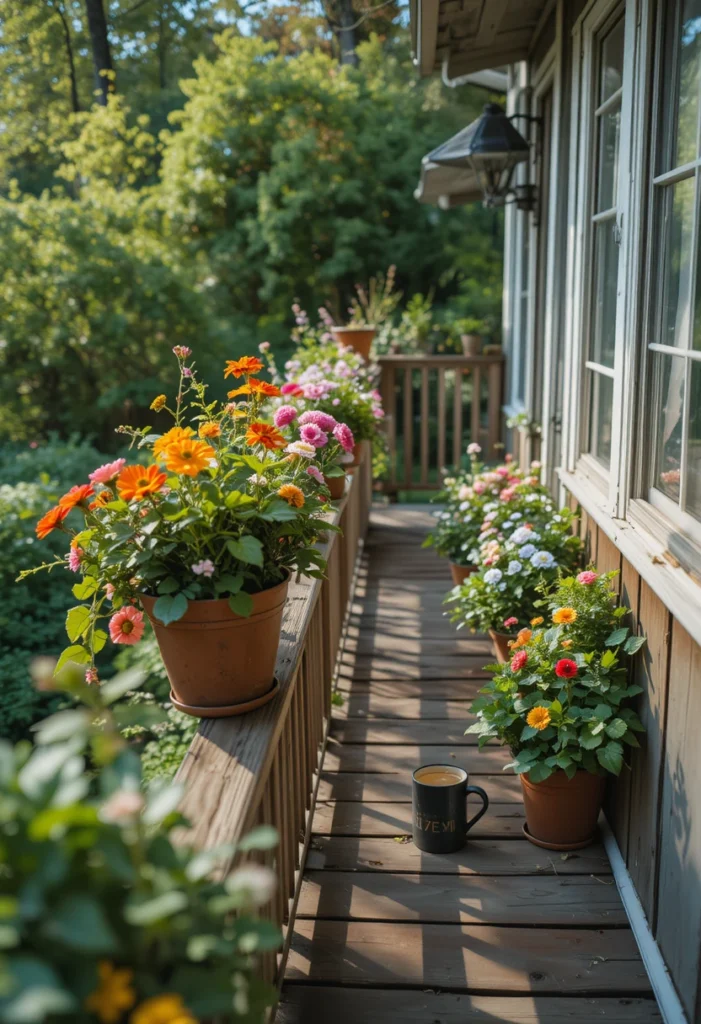
Could we first discuss why railing planters are so clever before we dive into the concepts? They conserve floor space, which is very helpful if your deck is small. Additionally, they create an incredible vertical garden effect that makes your entire outdoor space feel lush and purposeful by bringing flowers and greenery right up to eye level.
The big wins: You maximize space, add privacy (hello, leafy barrier between you and nosy neighbors), and create tons of visual interest without sacrificing your deck’s square footage. IMO, that’s a pretty solid return on investment.
What Makes a Great DIY Deck Railing Planter?
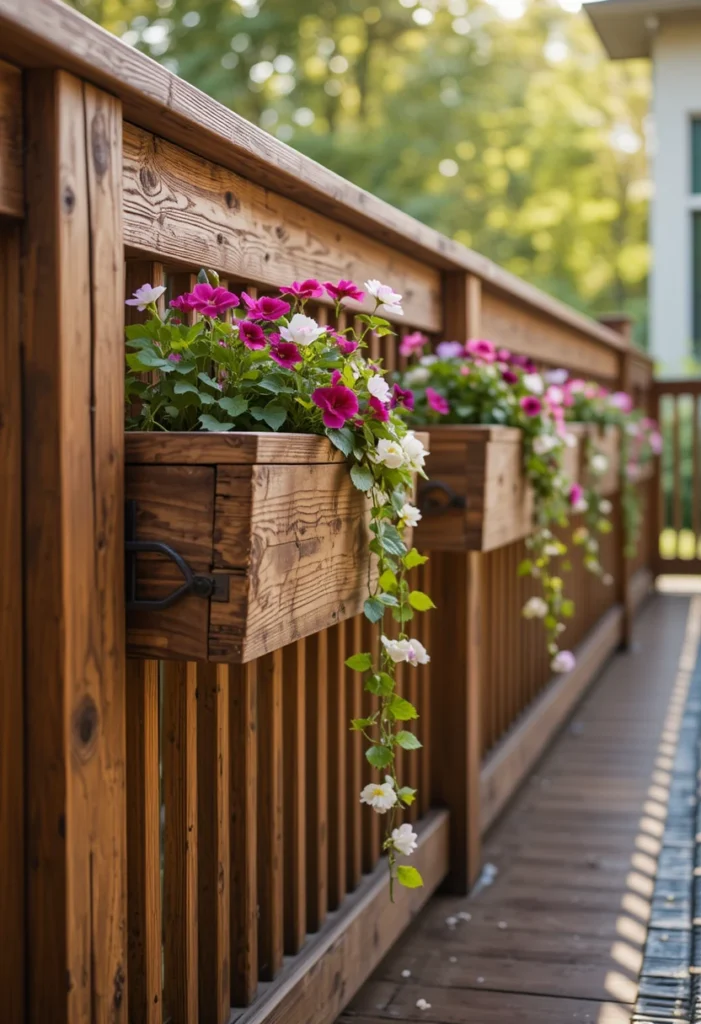
Believe me, not every planter is made equal. You want something that is easy to maintain, drainage-friendly (no one wants swamp planters), and sturdy (wind will test your skills). The best do-it-yourself projects strike a balance between functionality and aesthetics. After all, what good is a beautiful planter if it destroys every plant you put in it?
Here’s what I look for:
- Secure mounting system that won’t dump your petunias on the patio below
- Proper drainage holes to prevent root rot
- Weather-resistant materials that can handle sun, rain, and your local climate’s mood swings
- Easy access for watering and plant care
1. Cedar Box Planters with Metal Brackets

Cedar is my go-to wood for outdoor projects. Why? It naturally resists rot and insects, which means your planters won’t turn into soggy messes after one season.
The build: Cut cedar boards into rectangular boxes (I like 24 inches long by 6 inches deep), attach them with galvanized screws, and mount them using heavy-duty metal brackets. Drill drainage holes in the bottom, line with landscape fabric, and you’re golden.
Pro tip: Stain or seal the cedar to make it last even longer. Or don’t—the natural weathered gray look is pretty gorgeous too.
2. Repurposed Gutter Planters
Ever wondered what to do with those leftover gutters from your roofing project? Boom—instant planters. This one’s perfect for herbs or shallow-rooted flowers.
Cut gutters to your desired length, cap the ends with gutter end caps (sealed with waterproof caulk), drill drainage holes every few inches, and mount them to your railing with gutter brackets. Super affordable and surprisingly stylish.
The long, horizontal lines create a modern look that works especially well on contemporary decks. Plus, herbs love these—I’ve got basil, cilantro, and parsley thriving in mine.
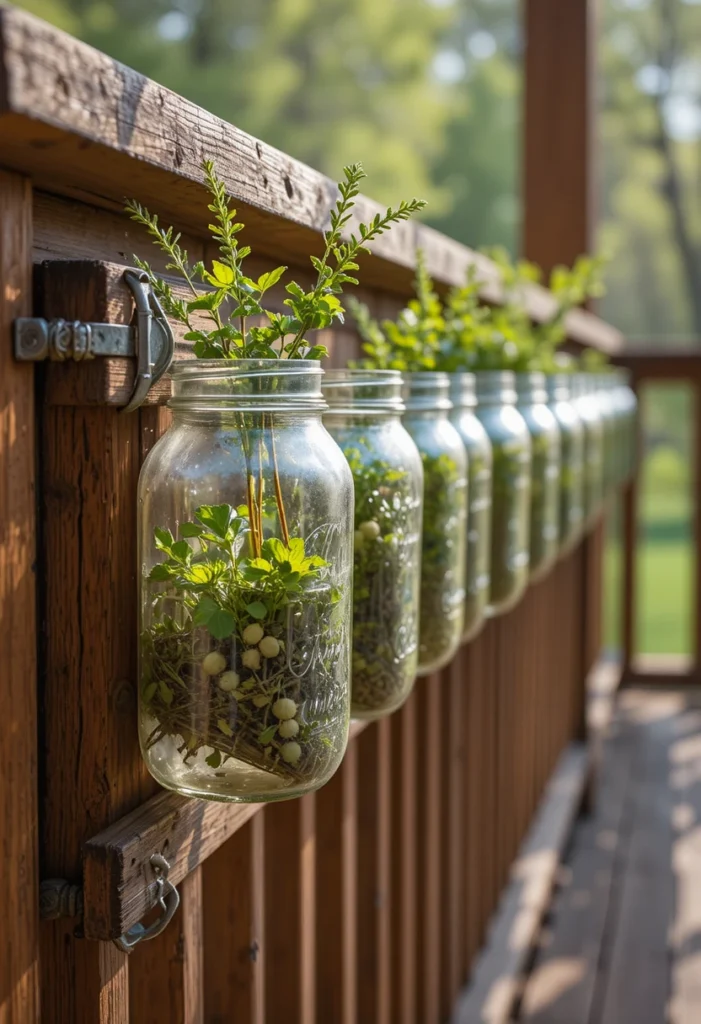
3. Mason Jar Hanging Planters
Okay, this one’s more cute than practical for big plants, but hear me out. Mason jars attached to wooden boards create the most charming little herb garden or succulent display.
Secure hose clamps around mason jars, screw them onto a stained piece of wood, and mount the whole thing to your railing. Fill with herbs, small flowers, or succulents. It’s rustic, functional, and gives serious farmhouse vibes.
FYI, this works best on railings that get partial sun—full sun can overheat the jars and cook your plants.
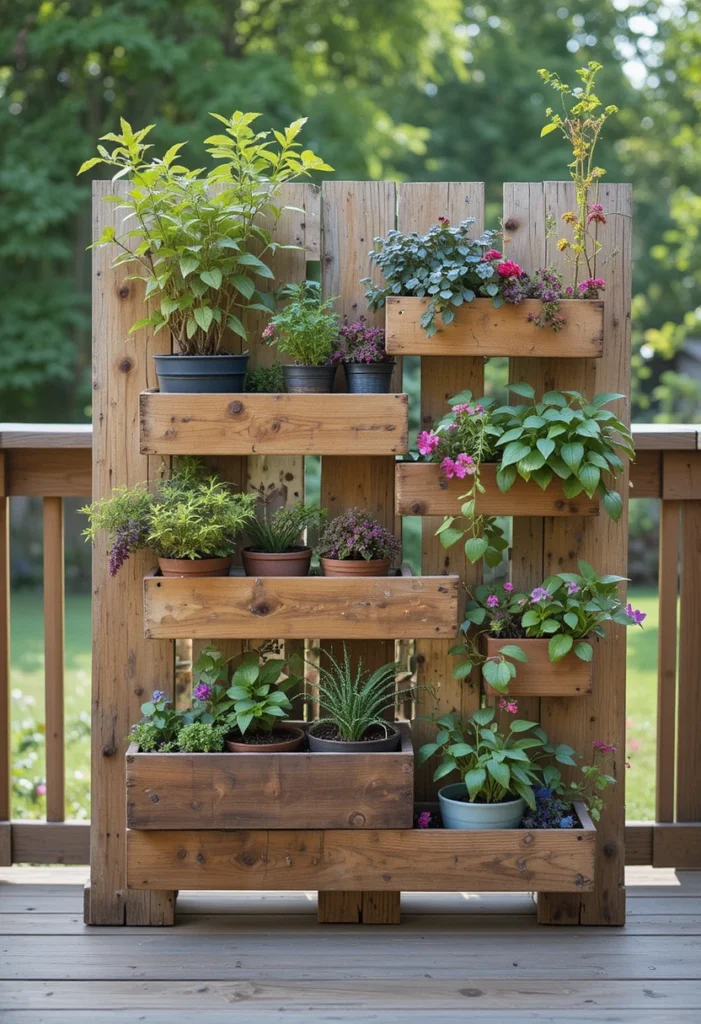
4. Pallet Wood Vertical Garden
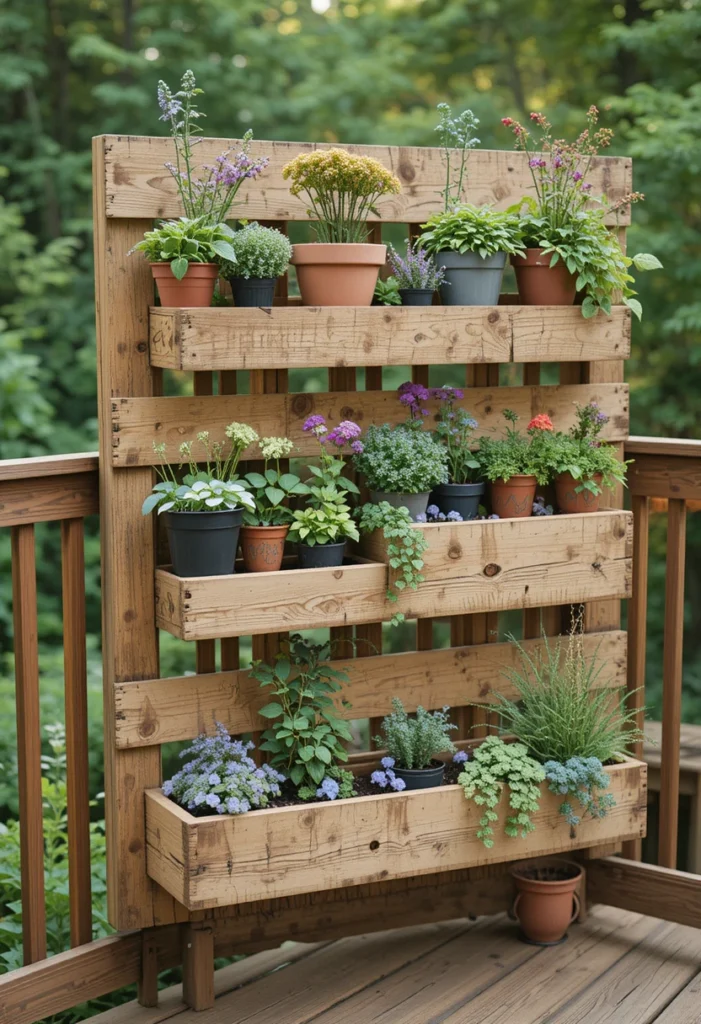
For do-it-yourselfers, pallets are essentially free gold. Disassemble a pallet, attach small pots or built-in planter boxes at varying heights, and use the slats to form a vertical backing.
The setup: Sand the pallet wood (splinters are not the vibe), stain or paint it, then attach small metal buckets, terracotta pots, or build shallow boxes directly onto the slats. Secure the whole panel to your deck railing.
This creates an amazing living wall effect that’s perfect for mixing different plant heights and colors.
5. Copper Pipe Modern Planters

Want something sleek and modern? Copper pipe planters are unexpectedly gorgeous and easier to make than you’d think.
Create rectangular frames from copper pipes and fittings, insert cedar boards as the planter base, and mount with brass brackets. The copper develops this beautiful patina over time, going from shiny penny to weathered elegance.
Materials needed:
- Copper pipes and elbow joints
- Cedar boards for the bottom
- Waterproof liner
- Mounting brackets
The industrial-modern look pairs perfectly with minimalist or contemporary deck designs.
6. Rope-Suspended Wooden Planters
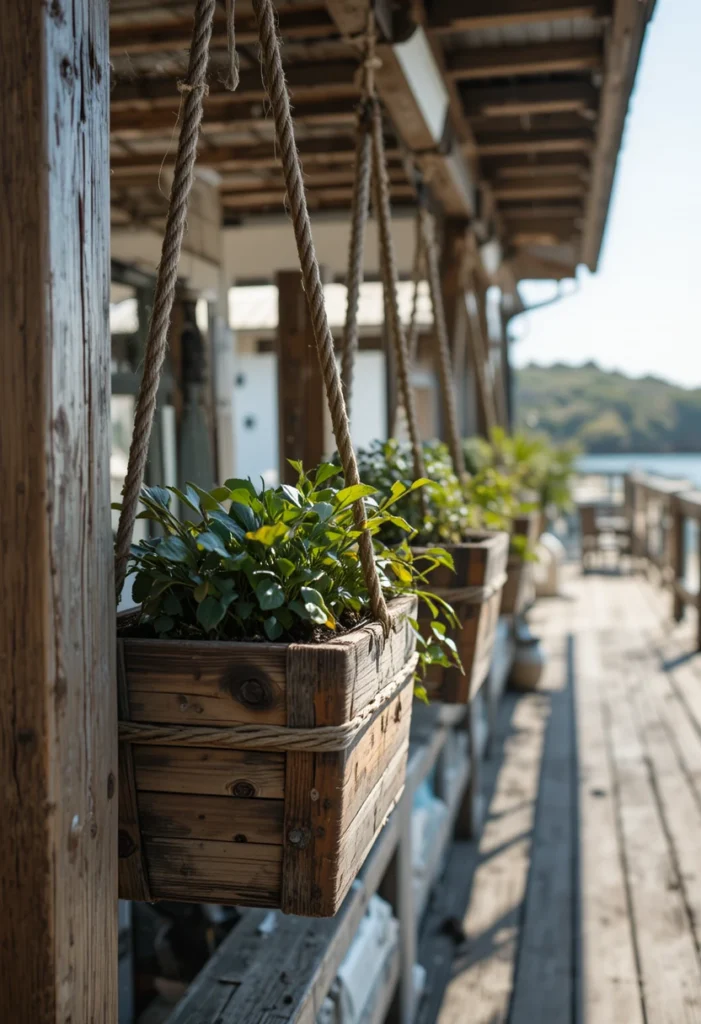
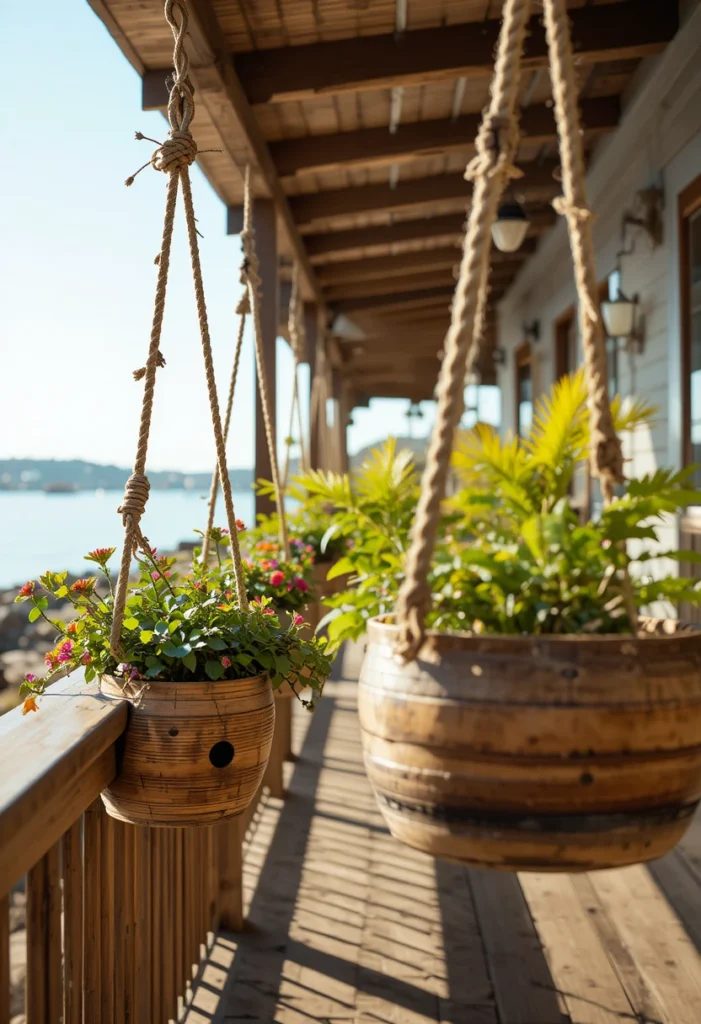
These babies float along your railing, creating visual intrigue without permanent mounting. Build simple wooden boxes, drill holes at each corner, and thread thick nautical rope through to create adjustable hangers.
The rope adds texture and a coastal feel that works whether you’re seaside or landlocked. Plus, you can adjust the height or move them around as needed—flexibility for the win.
7. Wine Barrel Half Planters
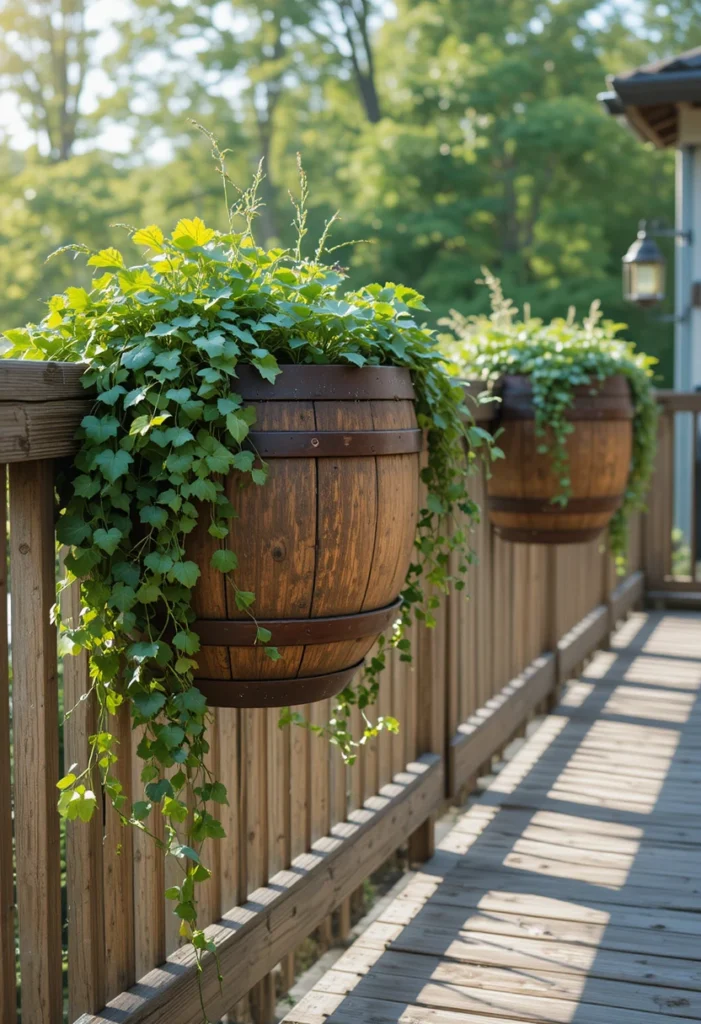
Got access to wine barrel halves? They make stunning oversized planters. Cut them in half lengthwise, attach mounting brackets underneath, and secure them to wider railings or posts.
These work best for larger decks with substantial railings because they’re heavy and dramatic. Fill them with trailing plants that cascade over the edges for maximum impact.
8. PVC Pipe Strawberry Tower
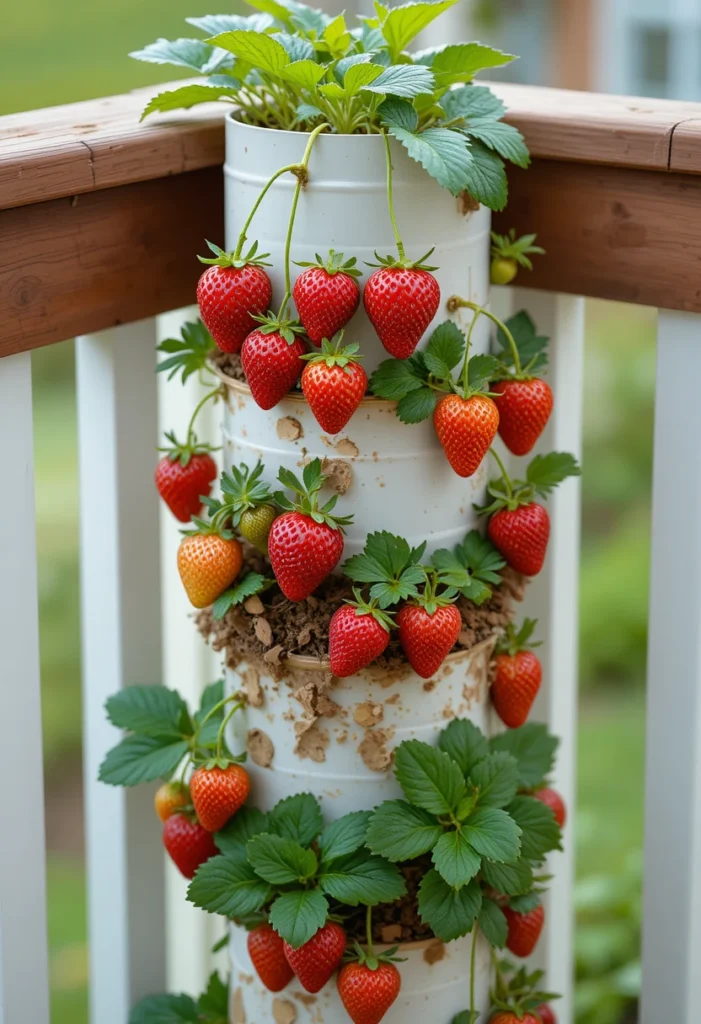
Okay, this one’s more functional than decorative, but growing strawberries on your deck railing is pretty cool. Drill holes in large PVC pipes, mount them vertically along corner posts, fill with soil, and plant strawberry crowns in each hole.
Bonus: Fresh strawberries all summer while saving tons of space. Your kids (or let’s be real, you) will love plucking berries right off the deck.
9. Fabric Pocket Planters
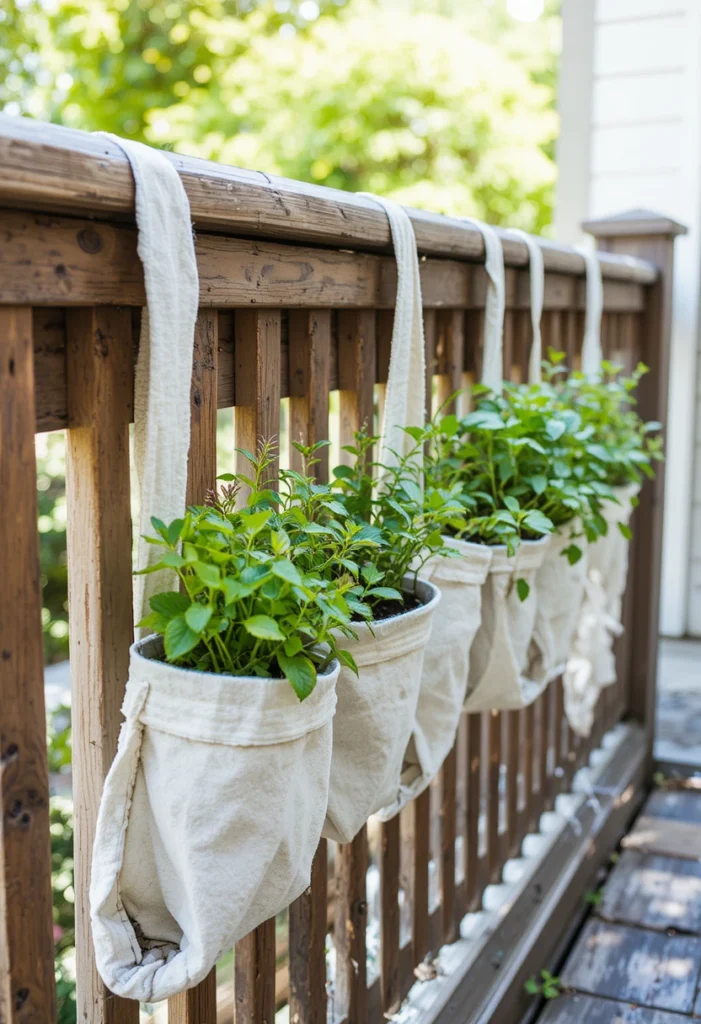
These felt or canvas pocket planters attach directly to railings with straps or hooks. They’re lightweight, affordable, and perfect for renters who can’t drill into their railings.
Best for: Herbs, lettuce, small flowers, or succulents. They work surprisingly well, though you’ll need to water more frequently since fabric dries out faster than traditional containers.
The vertical rows create a lush wall effect that’s both practical and pretty.
10. Ladder Shelf Planters
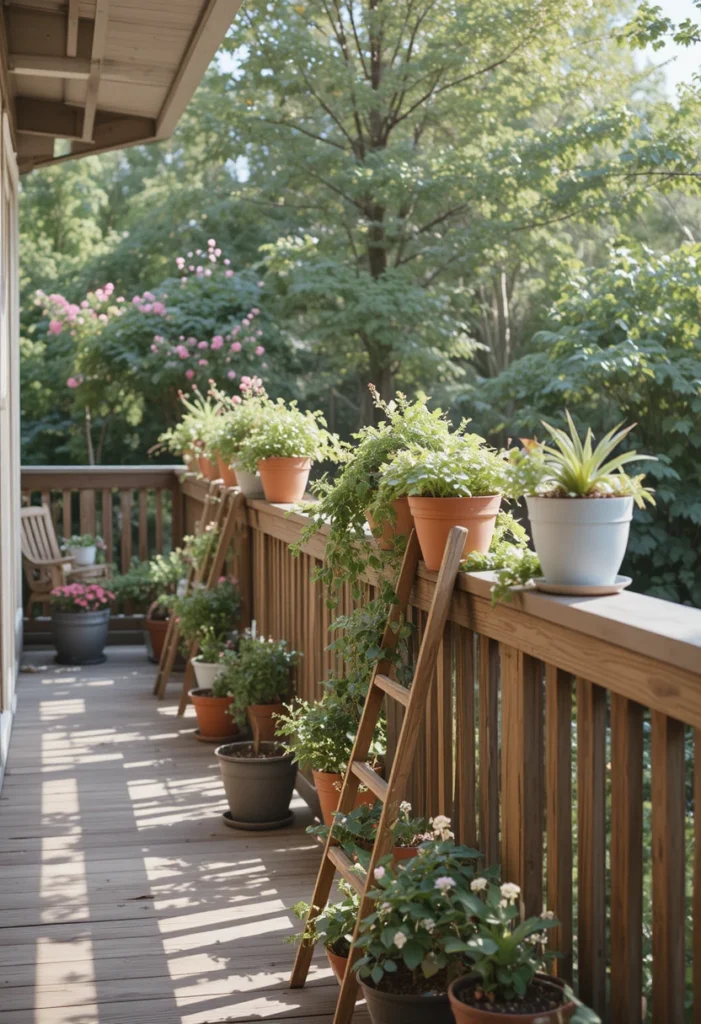
Repurpose an old wooden ladder by securing it horizontally along your railing. Each rung becomes a shelf for potted plants, creating graduated levels of greenery.
Style tip: Paint the ladder a pop color (I’m loving sage green lately) or keep it natural wood for rustic charm. This works especially well on longer deck runs where you want continuous visual interest.
11. Concrete Block Geometric Planters

There are other uses for cinder blocks besides building sites. To make contemporary geometric planters, stack and arrange them along your railing, fastened with construction adhesive and rebar if necessary.
The blocky, architectural look adds an urban edge, and the hollow centers are perfectly sized for plants. Paint them in coordinating colors or leave them raw concrete for an industrial vibe.
12. Hanging Basket Rail Hooks

Sometimes simple is best. Heavy-duty S-hooks designed for deck railings let you hang traditional baskets without any building required.
The trick: Choose hooks rated for outdoor use and pair them with quality hanging baskets that have built-in water reservoirs. This reduces watering frequency and keeps your plants happy.
Mix heights and plant varieties for a cottage garden effect that’s effortlessly charming.
13. Bamboo Roll Planter Sleeves
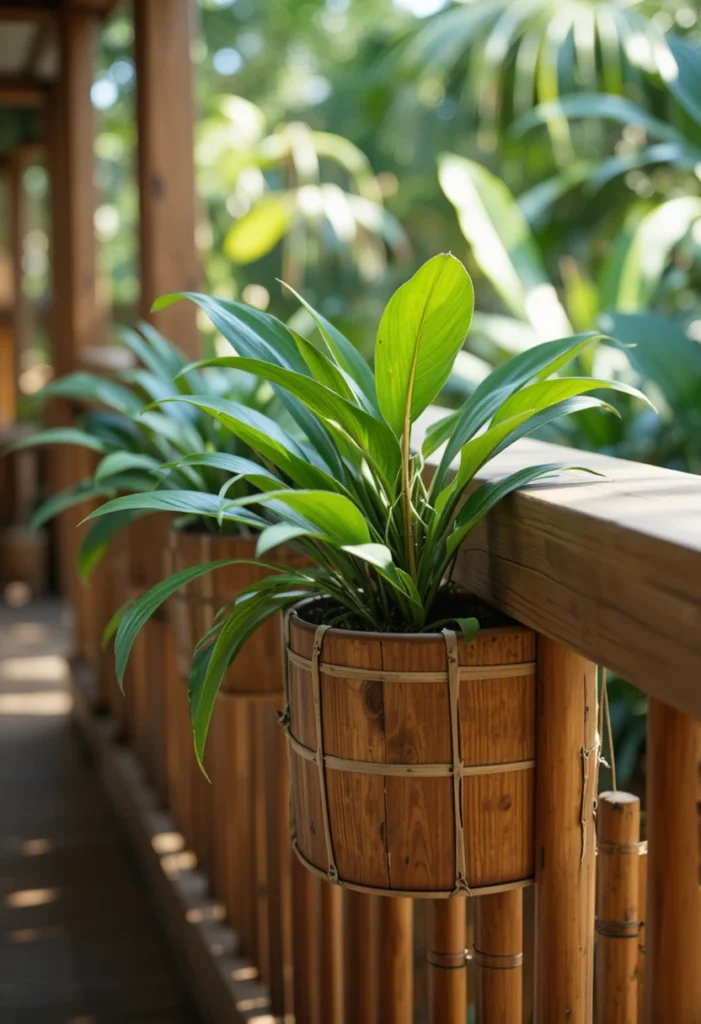
Bamboo rolls (the kind used for privacy screens) can wrap around existing railing planters to give them an instant tropical makeover. Secure with zip ties or twine.
This is perfect when you have basic plastic planters that work great but look, well, basic. The bamboo adds texture and warmth while hiding the utilitarian container underneath.
14. Painted Terracotta Rail Planters

Old terracotta pots are made to shine using outdoor paint and bespoke mounting bracketry. Etching patterns, ombre effects or color-blocking patterns on terracotta and then using metal brackets to fix on your railing.
Why terracotta? It’s porous, which means better air circulation for roots. Plus, it’s cheap enough that you can create a whole collection without breaking the bank.
| Planter Style | Best For | Difficulty | Cost |
|---|---|---|---|
| Cedar Boxes | Permanent install | Medium | $$ |
| Gutter Planters | Herbs | Easy | $ |
| Mason Jars | Small plants | Easy | $ |
| Copper Pipe | Modern decks | Medium | $$$ |
15. Tire Planter Wall

Before you roll your eyes—hear me out. Painted tires stacked and secured to your railing create bold, colorful planters that are basically indestructible.
Cut tires in half, paint them in bright colors, and mount them to create circular planter pockets. They’re weatherproof, free (if you hit up a tire shop), and surprisingly stylish when done right. Plus, they hold a ton of soil, so you can grow bigger plants.
16. Window Box Style Rail Planters
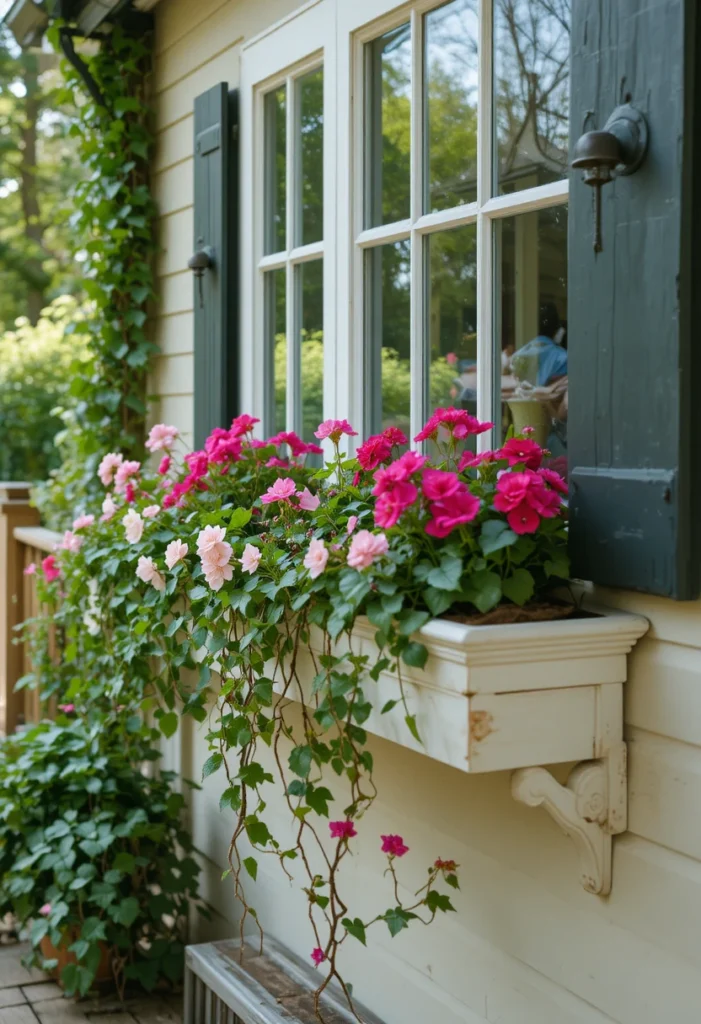
Traditional window boxes adapted for railing mounting give you that classic cottage feel. Build or buy rectangular boxes, attach them to the outside of your railing, and fill with cascading flowers.
Plant combo I love: Geraniums for height, petunias for color, and trailing ivy or sweet potato vine spilling over the edges. It’s a foolproof formula that looks expensive but costs maybe $30 per box.
17. Colander Herb Garden

Old fashioned colanders are fitted with drainage (genius, right?), so they are ideal planters. Stick them onto a boardboard or hang them separately using chain.
The retro kitchen vibe adds personality, and you can find colanders in tons of colors and styles at thrift stores. Bonus points if you go full rainbow with different colored colanders down your railing.
18. Succulent Living Frame

Create a vertical succulent garden using a shallow wooden frame backed with chicken wire and landscape fabric. Plant succulents in the pockets, let them establish for a few weeks lying flat, then mount vertically on your railing.
This living art piece requires minimal watering (succulents are the ultimate low-maintenance plants) and creates a stunning focal point. The texture and variety you can achieve with different succulent types is incredible.
19. Magnetic Planter System
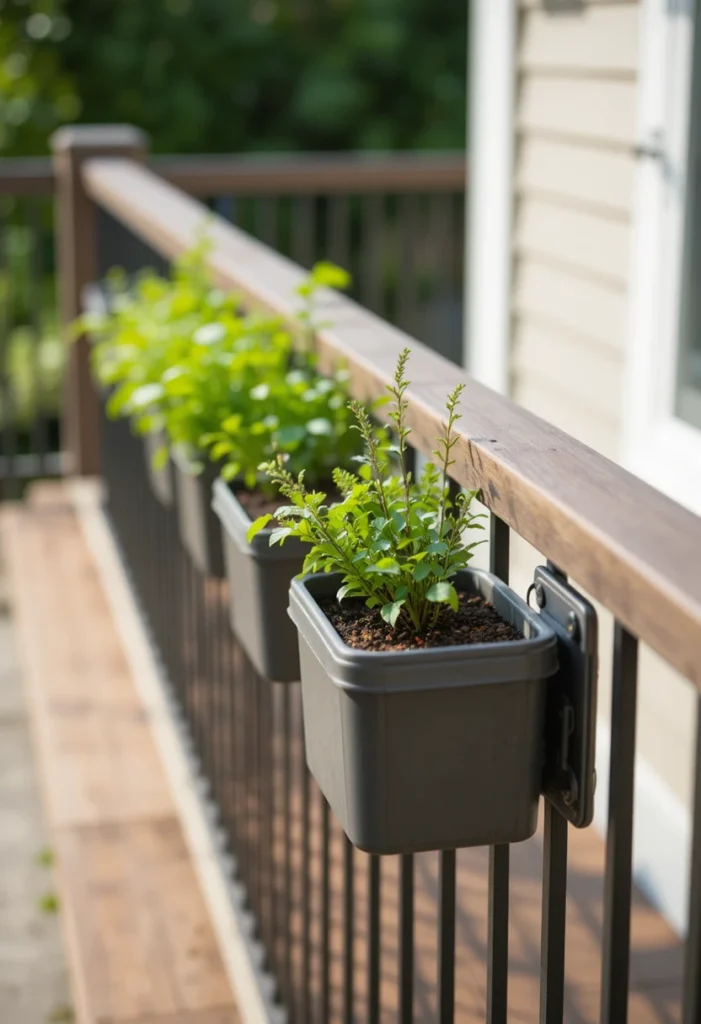
For metal railings, magnetic planters are genius. Buy or DIY containers with strong magnets attached, and boom—instant moveable garden.
The flexibility is unreal. Rearrange your plants weekly if you want, move them to follow the sun, or change up your color scheme with the seasons. No drilling, no permanent commitment, just magnetic magic.
Making Your DIY Planters Last

Real talk—I’ve built plenty of planters that looked amazing for about three weeks before falling apart. Here’s what I’ve learned about making them last:
Seal everything. Even naturally rot-resistant wood benefits from a good outdoor sealant. Hit it with a couple coats and reapply annually.
Use the right hardware. Galvanized or stainless steel screws and brackets won’t rust out and fail when you least expect it. Worth every extra penny.
Plan for drainage. Seriously, this is where most DIY planters fail. Drill adequate holes, use potting mix (not garden soil), and consider adding a layer of gravel at the bottom.
Choosing Plants for Railing Planters
Not every plant thrives in railing planters. You need varieties that can handle limited soil depth, potential wind exposure, and varying moisture levels.
My proven winners:
- Petunias (trailing varieties are spectacular)
- Herbs (basil, thyme, oregano, cilantro)
- Succulents (if your climate allows)
- Geraniums (tough and colorful)
- Sweet potato vine (for trailing drama)
- Million bells (like tiny petunias, super hardy)
Deep-rooted or plants that require regular watering should be avoided – they will only frustration in shallow planters on railing.
Final Thoughts: Make It Your Own

The beautiful thing about DIY deck railing planters is there’s no wrong answer. Your deck, your style, your plants. Whether you go full Pinterest-perfect with matching cedar boxes or embrace eclectic chaos with a mix of repurposed containers, the goal is creating an outdoor space you actually want to hang out in.
Start with one or two planter styles that excite you. See what works with your railing type, your climate, and your plant-keeping skills (no judgment if you’re a serial plant killer—some of us are still learning). Then expand from there.
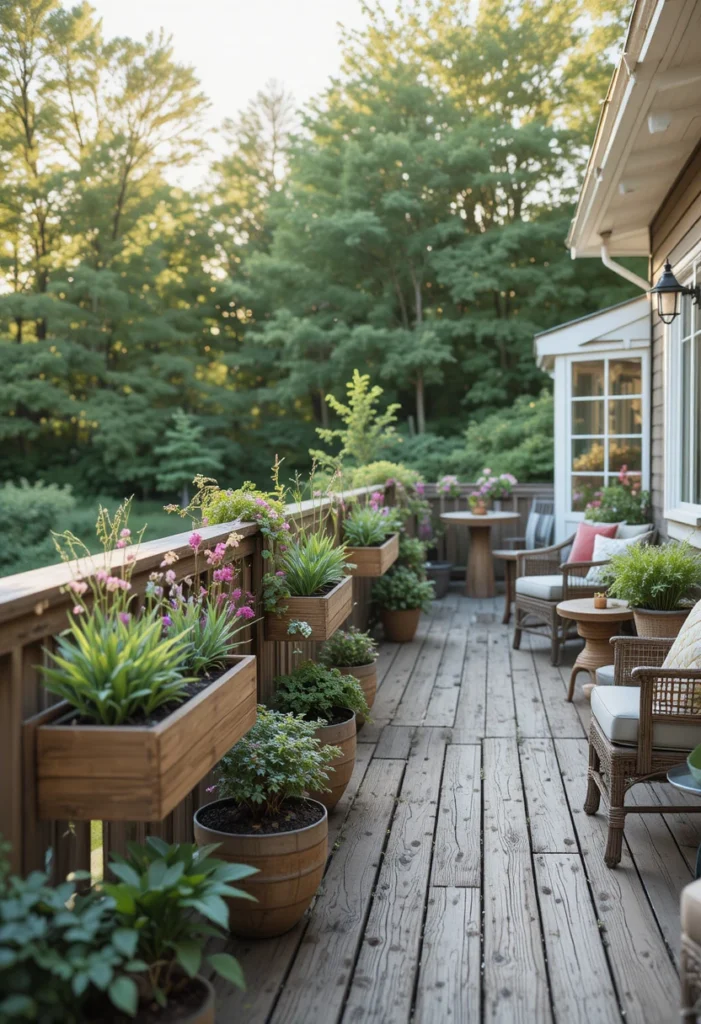
Your deck is about to get a major glow-up. And unlike my first sad zip-tied attempt, these ideas actually work. :/ Happy building!

3 thoughts on “19 TOP Deck Railing Planters DIY Ideas for a Stunning Outdoor Makeover”