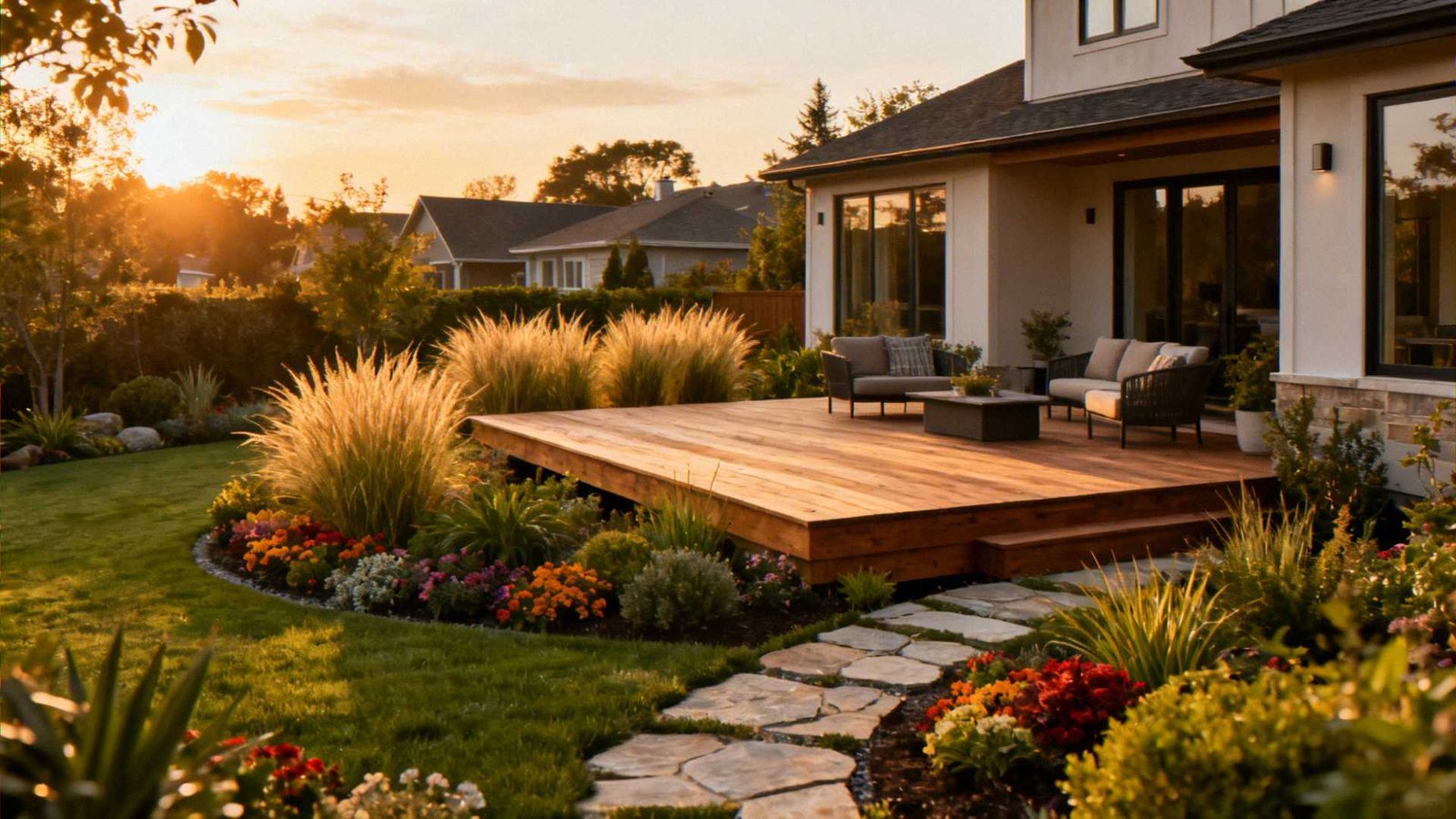
Look, I get it. You finally built that gorgeous raised deck you’ve been dreaming about, and now it’s just… sitting there. Like a stage without a show. The deck looks great, but the area around it? Total missed opportunity.
I’ve been there myself, staring at that awkward gap between my deck and the yard, wondering how to make it all flow together without spending my entire weekend budget at the garden center. Here’s the thing: landscaping around your raised deck doesn’t have to be complicated or crazy expensive. You just need the right ideas to get those creative juices flowing.
So grab your coffee (or wine, no judgment here), and let’s explore some seriously stunning ways to transform that deck surround into something Pinterest-worthy.
Why Deck Landscaping Actually Matters
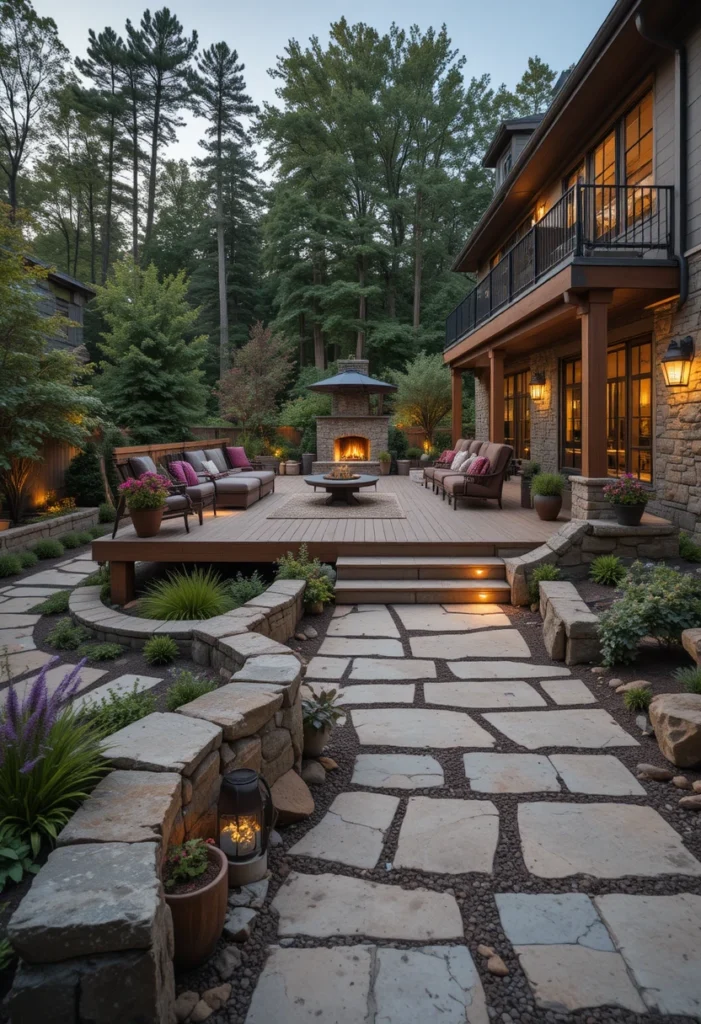
Before we jump into the good stuff, let me ask you this: ever notice how some decks look like they were just plunked down randomly, while others seem to grow naturally from the landscape? That’s intentional design at work.
Proper landscaping around your raised deck creates visual flow, adds privacy, and honestly just makes your outdoor space feel complete. Plus, it hides all those structural bits underneath that nobody really wants to see. Win-win, right? 🙂
Layered Garden Beds: The Classic That Never Fails

Creating tiered garden beds around your deck base is like adding depth to a painting. I started with this approach on my own deck, and wow, the difference was immediate.
Here’s what works:
- Plant taller shrubs closest to the deck base to create a natural screen
- Add medium-height perennials in the middle layer for color and texture
- Edge everything with low-growing ground covers that spill over slightly
So as not to have a green blob the whole season, it is advisable to choose plants that are going to bloom at different times. By incorporating some moving grasses you can make a piece of art come alive.
Pro tip: Use landscape fabric underneath to keep maintenance manageable. Future you will thank present you.
Rock Gardens with Personality
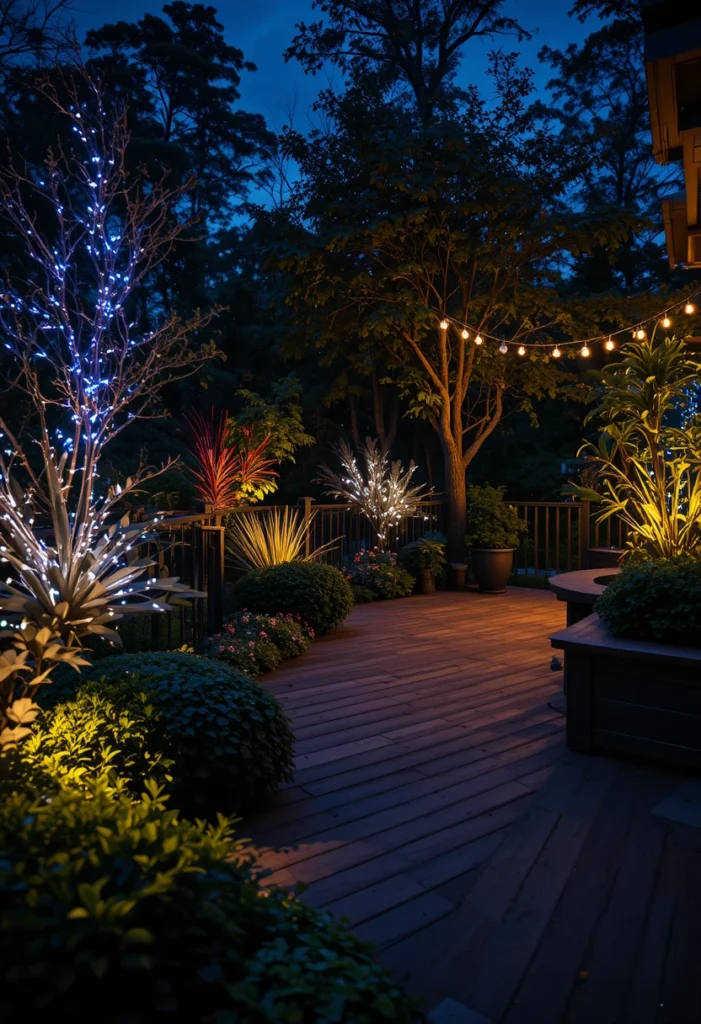
Okay, hear me out. Rock gardens get a bad rap because people think “boring beige rocks.” But done right? They’re absolutely stunning and practically maintenance-free.
I’m talking about mixing different rock sizes and colors to create visual interest. Throw in some drought-tolerant plants like sedum or hens-and-chicks between the rocks, and suddenly you’ve got this cool, modern vibe going.
Rock Size Guide:
| Rock Type | Size Range | Best Use |
|---|---|---|
| River rocks | 2-4 inches | Ground cover, drainage |
| Boulders | 12-24 inches | Focal points, corners |
| Pea gravel | 0.25-0.5 inches | Pathways, filling gaps |
FYI, this option is perfect if you live somewhere with water restrictions or you’re just not into constant watering.
Climbing Vines on Lattice Panels

Want to add instant vertical interest? Install lattice panels along your deck’s lower section and let climbing plants do their thing.
I planted clematis and climbing hydrangea around mine three years ago, and now it looks like my deck emerged from an enchanted forest. Dramatic? Maybe. Gorgeous? Absolutely.
The best climbers for this job:
- Clematis – shows off with big, colorful blooms
- Climbing roses – classic and fragrant
- Wisteria – if you’re patient (seriously, it takes its sweet time)
- Boston ivy – for that cottage-core aesthetic
Just make sure whatever you choose works with your climate zone. Nothing sadder than a dead vine clinging to lattice :/
Strategic Lighting: Ambiance Game-Changer
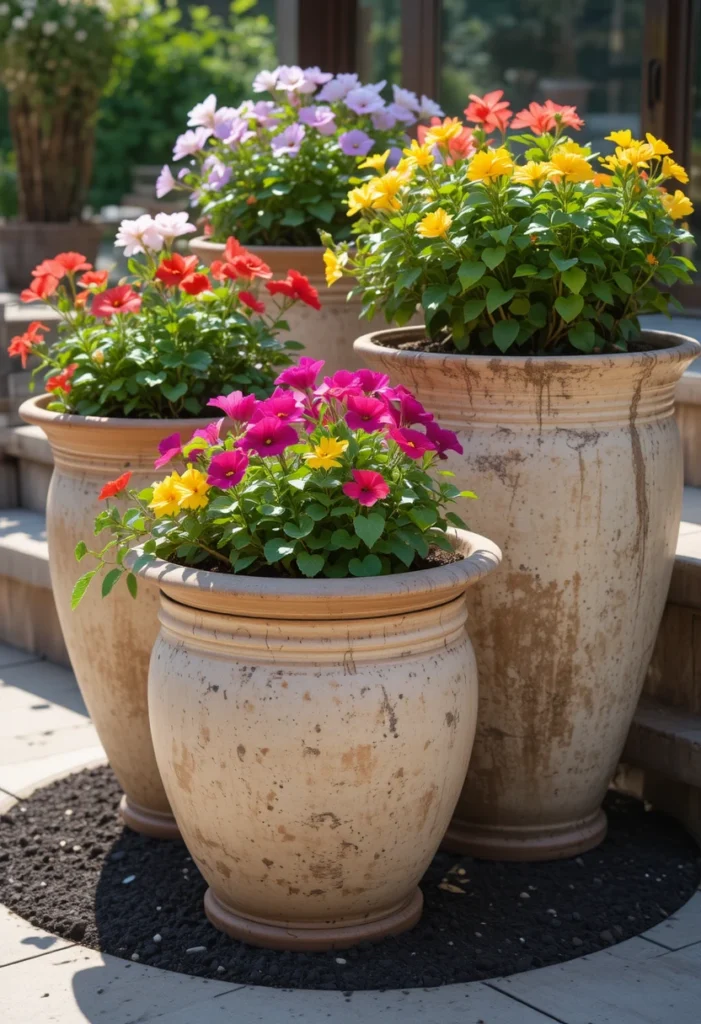
What people do not know is that landscape lighting by your deck provides magic during the night after the sun goes down. I do not mean the solar stake lights that barely shine. I am talking of decent, deliberate lighting.
Uplighting taller plants near the deck creates dramatic shadows on the structure itself. Downlighting from the deck railings highlights the landscaping below. String lights woven through surrounding trees? Chef’s kiss.
Mix warm and cool tones strategically. Warm lights near seating areas feel inviting, while cooler lights work great for highlighting architectural plants or water features.
Container Gardens: Flexible and Fabulous
Not ready to commit to permanent plantings? Large container gardens placed strategically around your deck base give you all the beauty with none of the permanence.
I rotate mine seasonally, which means my deck surround never looks the same twice. Spring tulips and daffodils, summer petunias and geraniums, fall mums and ornamental kale. You get the idea.
Go big or go home with your containers. Those tiny pots look lost next to a raised deck. We’re talking 18-24 inch diameter minimum. Bonus: larger containers need less frequent watering.
Natural Stone Veneer: The Luxury Look
Okay, this one’s an investment, but covering your deck’s foundation with natural stone veneer transforms it from “DIY weekend project” to “professionally designed outdoor living space.”
I’ve seen people use brick veneer, river rock panels, and stacked stone for this. The effect is always breathtaking. It significantly improves curb appeal and grounds the deck both physically and aesthetically.
IMO, this is worth splurging on if you’re planning to stay in your home long-term or want to boost resale value.
Shade Gardens for Under-Deck Areas
Got a shady situation under your raised deck? Embrace the shade with hostas, ferns, and other woodland plants.
I planted a shade garden under the north side of my deck, and it’s become this cool, peaceful spot that stays lush even during summer heat waves. The contrast between the sunny deck and the shady garden below creates interesting microclimates too.
Mix different hosta varieties for a tapestry effect. Throw in some astilbe for height and color. Add a few strategically placed ferns. Done.
Mulch Beds with Defined Borders

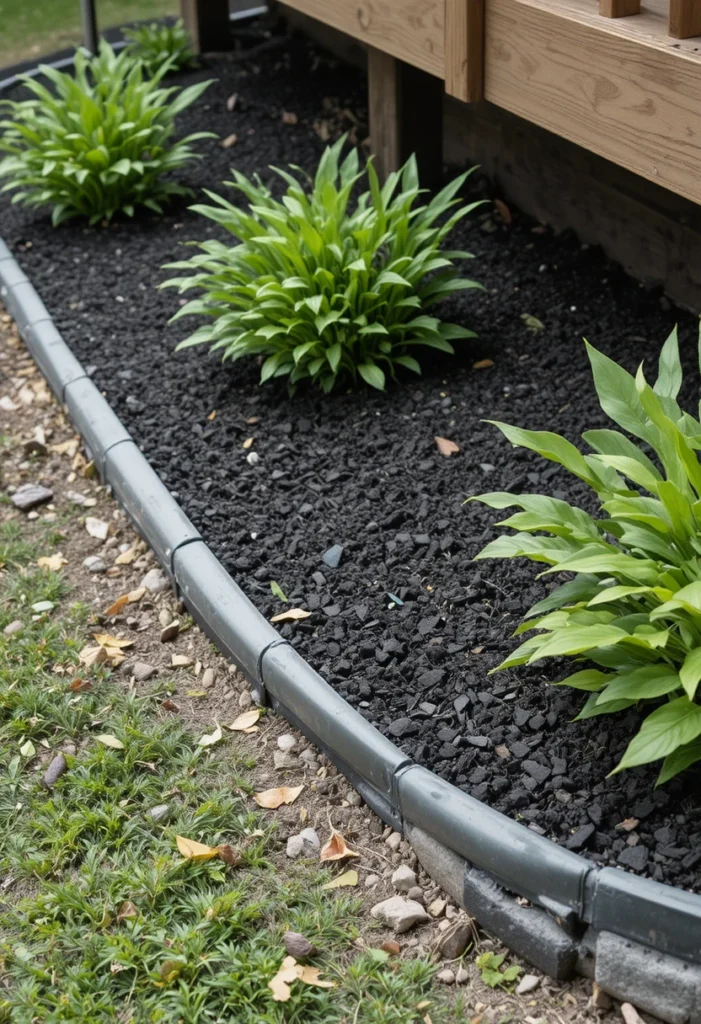
Sometimes simple is best. A clean mulch bed with crisp edges around your deck looks polished and keeps maintenance minimal.
The trick is using proper edging material – steel, stone, or thick plastic edging that actually stays put. I’ve tried the flimsy stuff, and it’s a waste of money. You want borders that will last and keep grass from creeping into your beds.
Mulch depth matters: 2-3 inches is the sweet spot. Less than that, and weeds laugh at your efforts. More than that, and you’re suffocating plant roots
Water Features for Tranquility
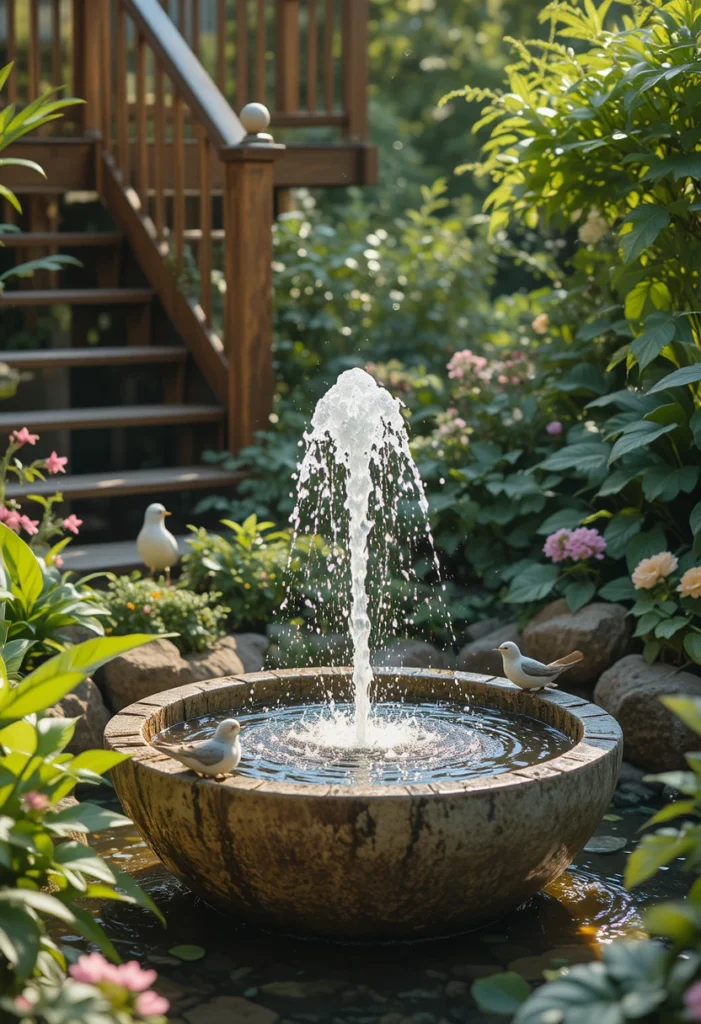
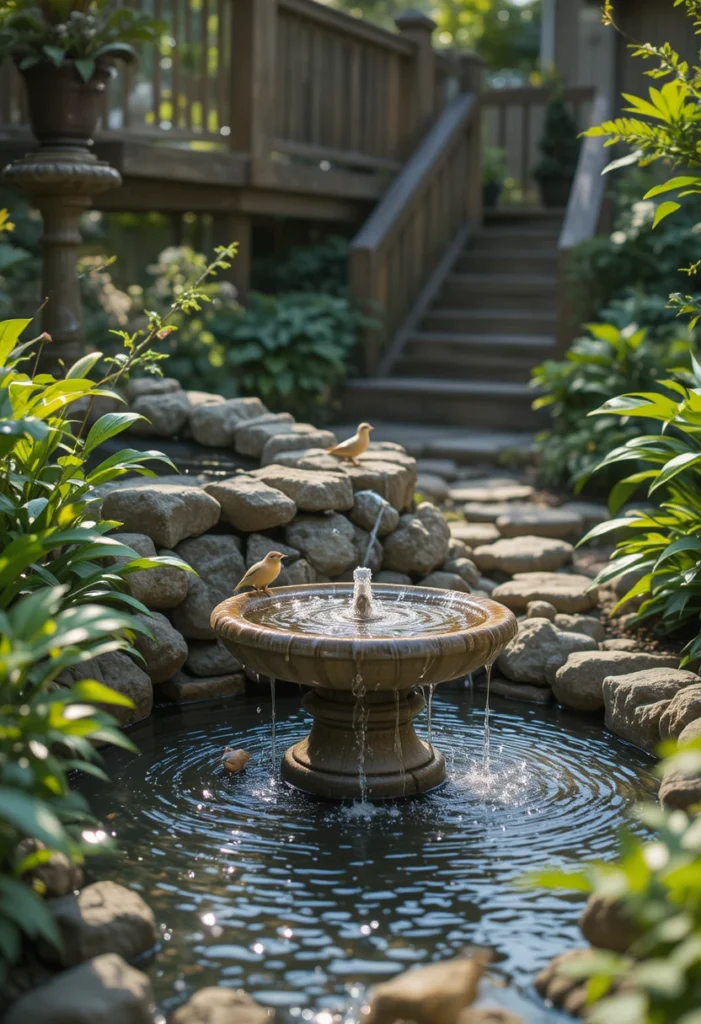
Ever wondered why every fancy outdoor space includes water? Because the sound of flowing water literally changes the entire vibe of your yard.
You don’t need a massive pond or waterfall either. A simple bubbling fountain tucked among plants near your deck stairs creates that spa-like atmosphere without the spa-like price tag.
Two summers ago I put in a small recirculating fountain, and now I would even like to spend time on my deck. Water sound drowns out the noise in the neighborhood and it is a good bonus to have birds.
Gravel Pathways with Stepping Stones

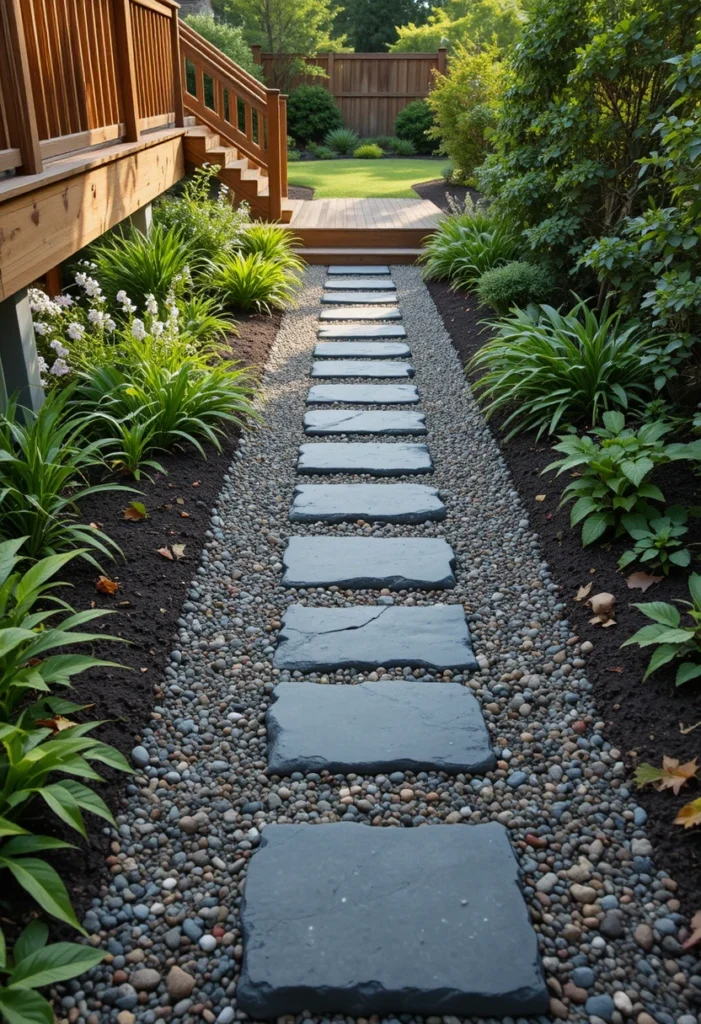
Creating a defined pathway from your deck to the yard using gravel and stepping stones adds functionality and visual interest. Plus, it keeps people from trampling your carefully planned landscaping.
Choose stepping stones that complement your deck material. I used slate pavers with pea gravel, and the color coordination makes everything look intentional instead of random.
Space the stones according to an average stride – about 18-24 inches apart. Trust me on this. I spaced mine too close initially and felt like I was doing some weird mincing walk every time I used the path.
Native Plant Borders: Eco-Friendly and Gorgeous

Going native is having a moment, and for good reason. Native plants require less water, fewer pesticides, and basically take care of themselves once established.
I’ve transitioned most of my deck landscaping to natives, and my maintenance time has dropped significantly. Plus, the bees and butterflies are obsessed with the native wildflowers I planted.
Find out what is indigenous to your area. You can find out what grows well in your area without babysitting by consulting the plant lists that your local extension office typically has.
Vertical Gardens on Deck Skirting

Turn your deck skirting into living art with a vertical garden installation. Pocket planters, wall-mounted containers, or even pallet gardens can transform that boring lattice into something Instagram-worthy.
This works especially well for herbs and small vegetables. Imagine stepping onto your deck and picking fresh basil or strawberries right there. Yeah, it’s as awesome as it sounds.
Just make sure whatever system you use has proper drainage. Nobody wants water damage on their deck structure from overzealous gardening.
Mixed Texture Plantings
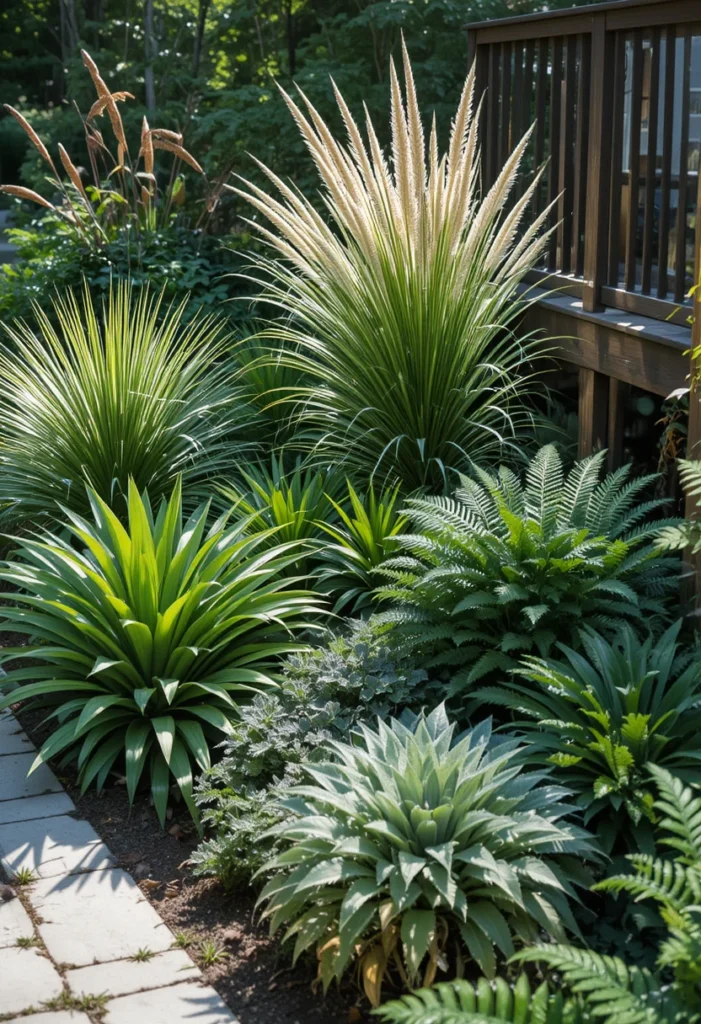
Here’s a design principle that sounds fancy but is actually simple: combining plants with different textures creates visual interest even when nothing’s blooming.
Pair spiky yucca with soft, flowing ornamental grasses. Add some broad-leafed hostas next to delicate ferns. Throw in plants with interesting bark or seed heads for winter interest.
I learned this the hard way after planting all similar-looking evergreens. Functional? Sure. Exciting? Not even a little.
Raised Planter Boxes at Deck Level
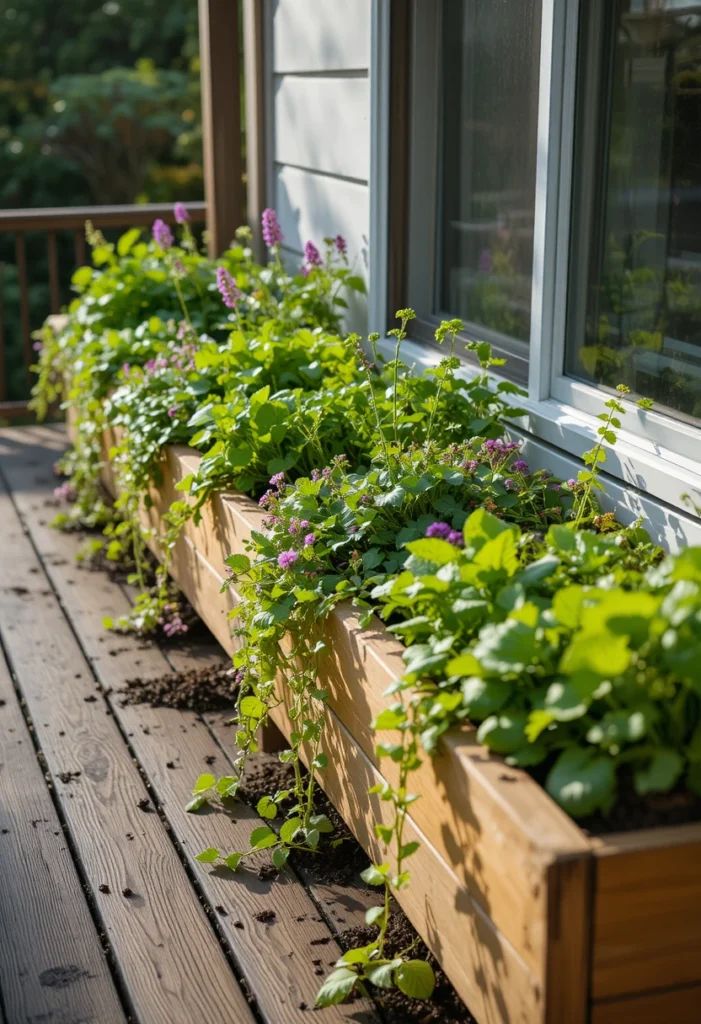
Building planter boxes that sit at the same height as your deck creates a seamless transition between the structure and your yard.
I surrounded mine with three big planters boxes that are made of similar materials and everyone always feels like asking them whether they were initially part of the deck set-up. This is a built-in appearance that they make truly refined.
Fill them with a mix of edibles and ornamentals for both beauty and function. My boxes have lettuces, herbs, and trailing flowers that spill over the edges.
Ground Cover Solutions
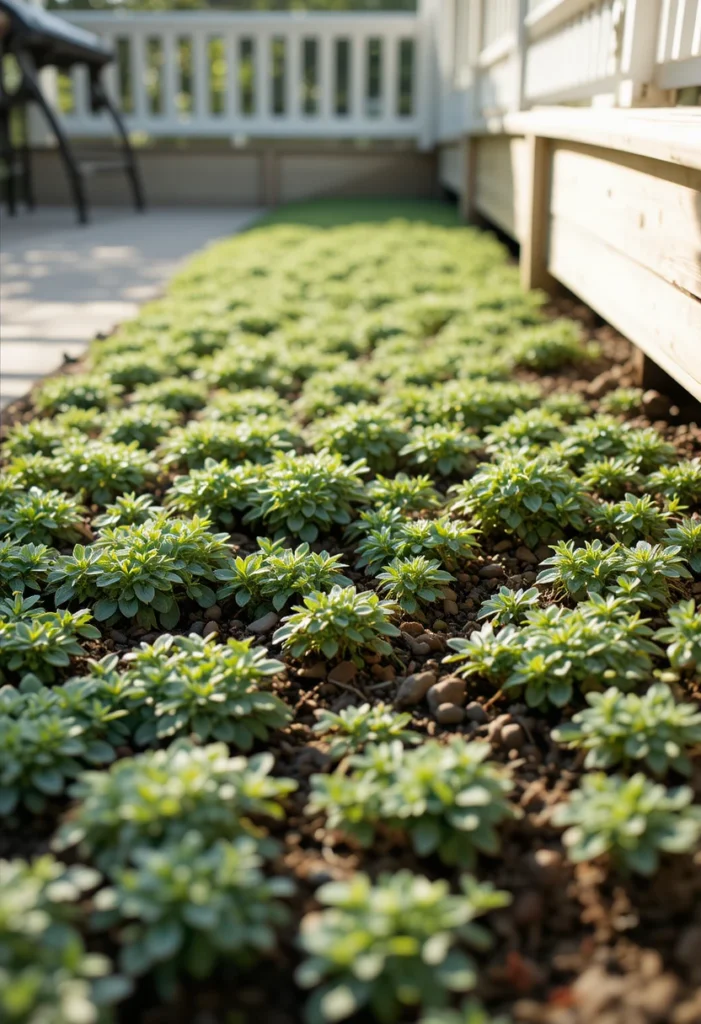
Bare dirt under and around a deck looks unfinished. Strategic ground cover plantings solve this while preventing erosion and reducing weeds.
For sunny spots: creeping thyme, sedum, or creeping Jenny For shade: pachysandra, vinca minor, or sweet woodruff
Ground covers spread naturally and fill in gaps, creating that lush, established look much faster than waiting for larger plants to mature.
Color-Coordinated Seasonal Displays
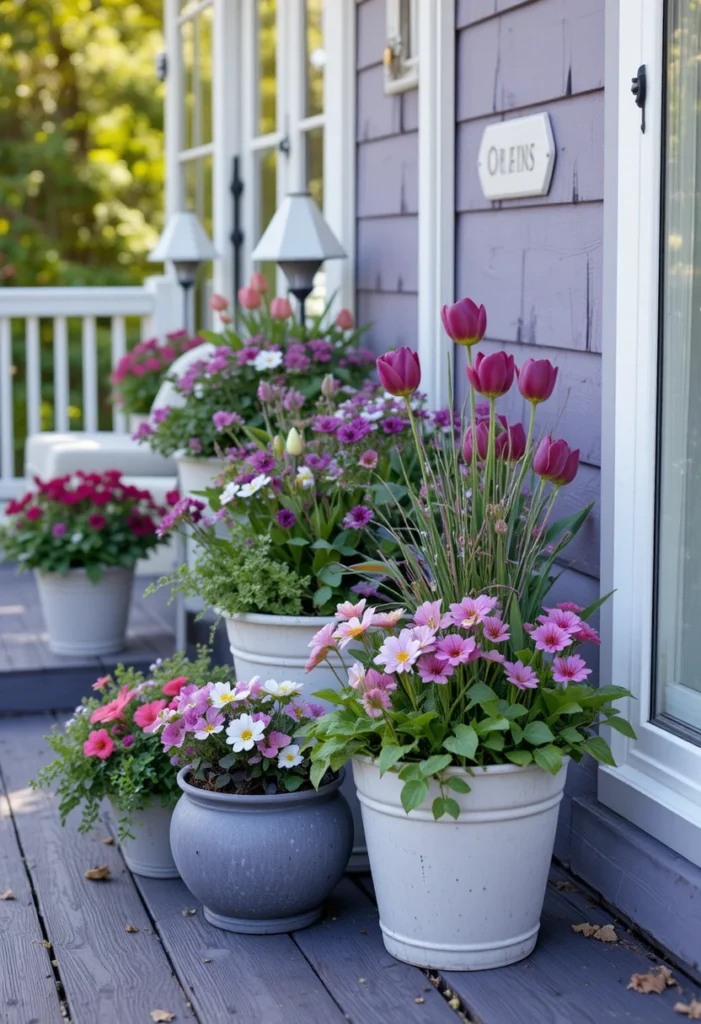
Planning your deck landscaping around a color scheme makes everything look cohesive and intentional. This doesn’t mean everything matches perfectly – that looks weird. But having a general color palette ties things together.
I stick to purples, whites, and silvers around my gray deck. In spring, I’ve got purple tulips and white daffodils. Summer brings purple salvia and white petunias. You get the idea.
Switch out a few seasonal containers to keep things fresh without replanting everything.
Privacy Screening with Tall Grasses
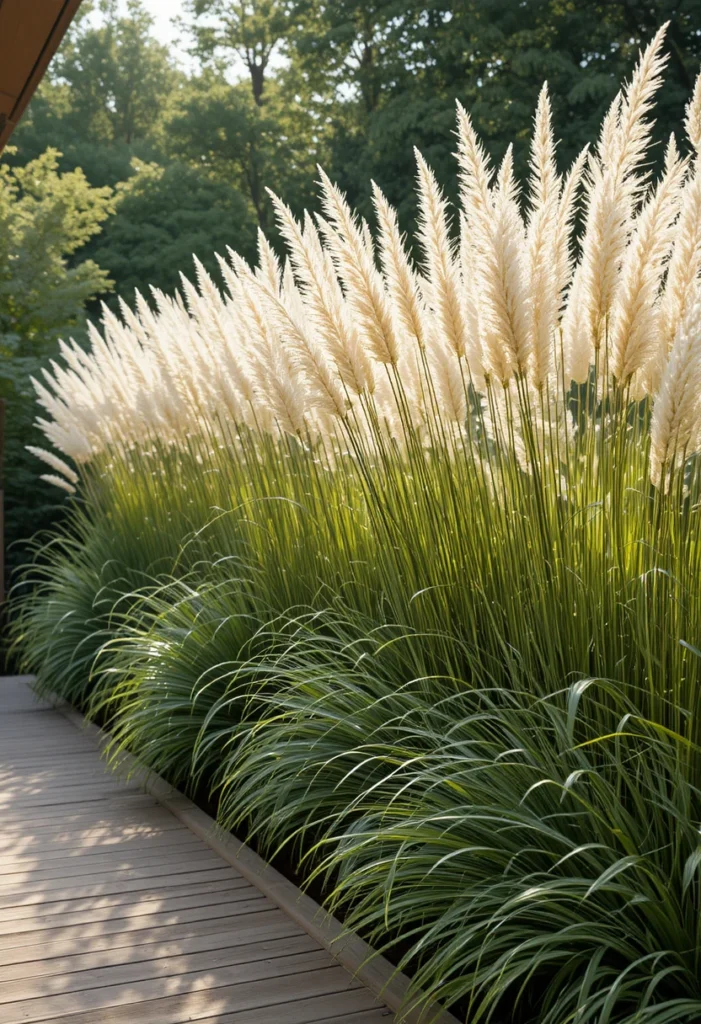
Need to block an unsightly view or nosy neighbors? Ornamental grasses planted in a row create a soft, flowing privacy screen that doesn’t feel fortress-like.
Miscanthus, switchgrass, and pampas grass all grow tall enough to provide screening without looking like you’re hiding something. They move in the breeze, which is way more interesting than a static fence.
Plant them well spaced in accordance with their full-grown size. I had my planted too near at first and now they are competing on space. Learn from my mistakes.
Integrated Seating Areas
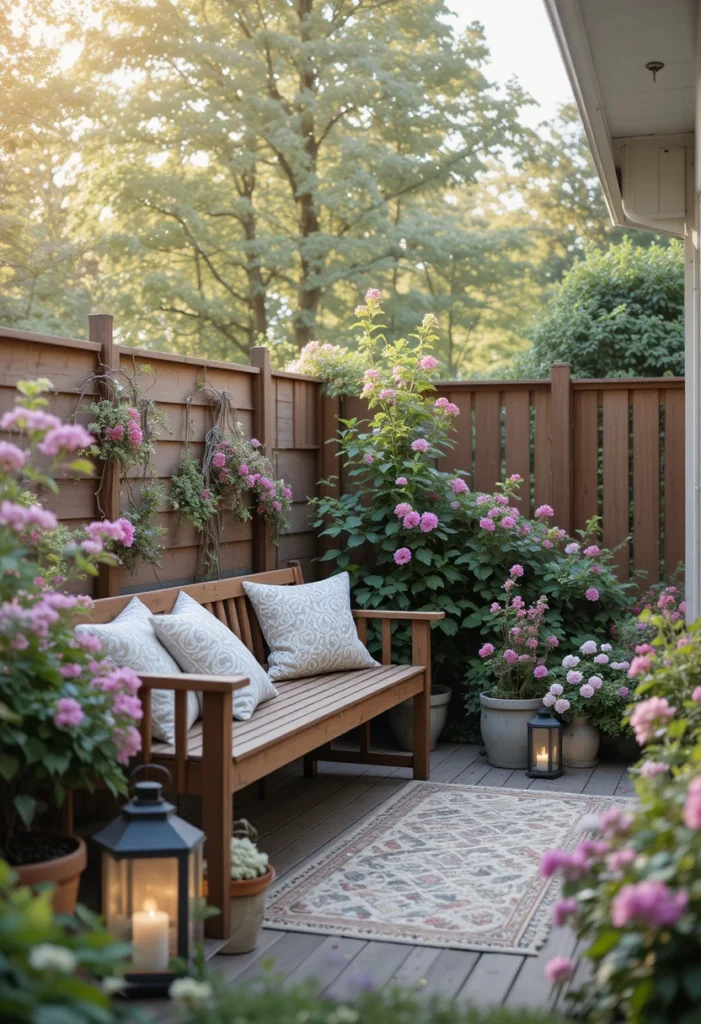
Creating a small seating area within your deck landscaping extends your outdoor living space and gives people a reason to actually experience your beautiful plantings up close.
It is a mere bench that is placed between larger plants with fragrant flowers, this makes this place, this perfect little retreat. Festoon some solar lanterns around to have evening atmosphere and you have yourself a refuge.
I put a small bistro set in a corner of my landscaped area, and it’s become my favorite spot for morning coffee.
Final Thoughts
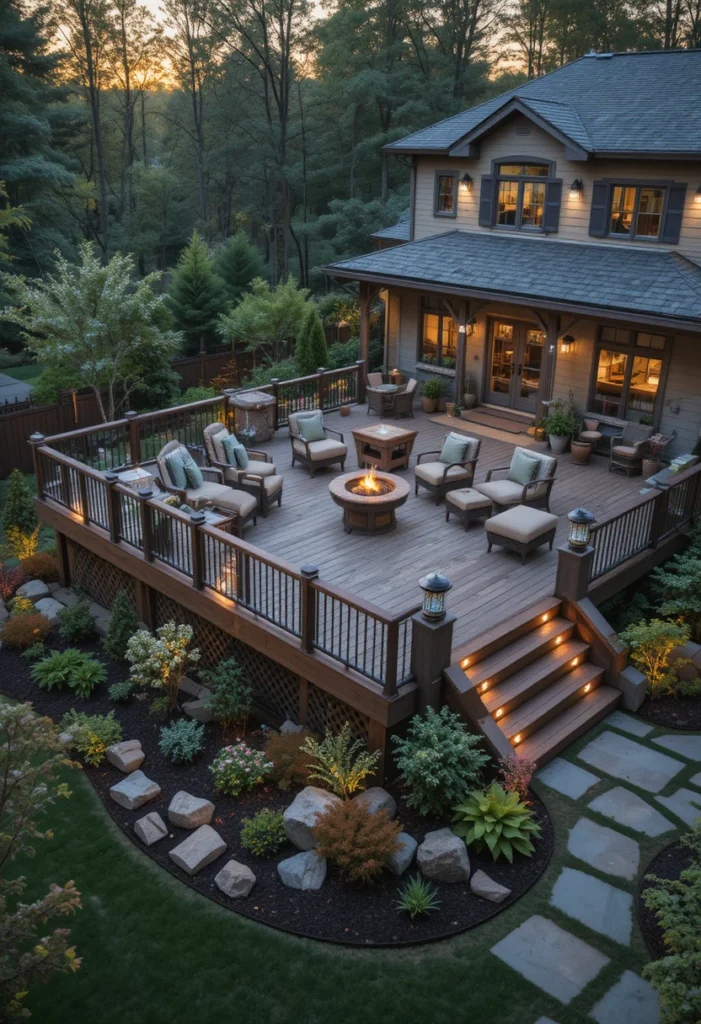
Transforming the area around your raised deck from “meh” to “magnificent” doesn’t require a landscape architect degree or unlimited funds. It just takes some planning, a bit of elbow grease, and willingness to experiment.
Begin with one or two ideas which you really feel. Perhaps it is the garden beds in layers or a fountain of water. Start there, what you can afford, and what you can put in. The deck landscaping will change with the time and it will be a part of fun, truly.
The goal isn’t perfection – it’s creating an outdoor space that makes you actually want to be outside. And if your neighbors start casually walking by more often to “admire” your handiwork? Well, that’s just a bonus.
Now get out there and make that deck area something special. You’ve got this!

1 thought on “19 TOP Landscaping Around Raised Deck Backyard Ideas You’ll Love”